Nine months later, Brady Black was fed up—and inspired.
Last August, one of the largest non-nuclear explosions in human history leveled Lebanon’s main port and thousands of homes.
Charities and churches scrambled to help, as 204 people were killed.
The government has done next to nothing.
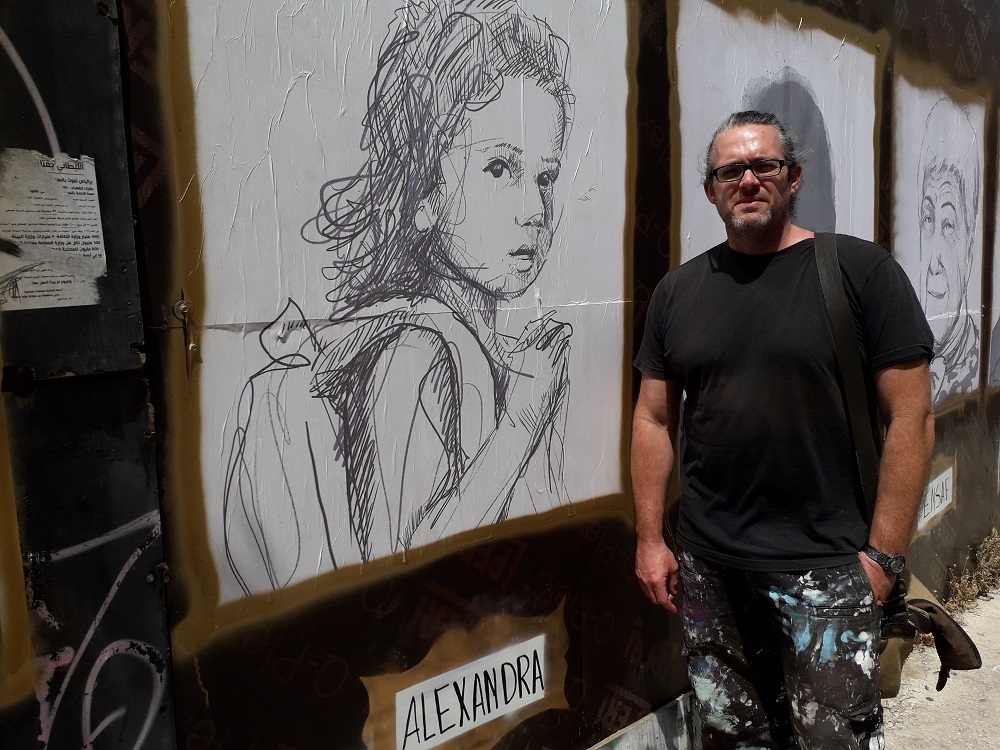
But now, each victim has a portrait across from Beirut’s famed Martyrs Square.
“Families were protesting, holding up pictures of their relatives as they demanded justice,” said Black.
“They wanted them to be seen. So we made it loud.”
An American street artist resident in Lebanon since 2015, Black teamed up with Art of Change to illegally create the capital city’s largest informal portrait gallery. Run by a secular British artist and a Lebanese Muslim from the heterodox Druze sect, the art institute co-founders sponsored Black’s evangelical idea for “good mischief.”
Scouring the internet for every name and image that could be found, Black digitally drew each face with the utmost care—with one caveat. No matter the importance of the victim or the degree of fame achieved in their death, each was limited to one hour of his creativity.
An hour he bathed in prayer for the surviving family.
“People come up to me, frantically asking, ‘Where is my son?’” said Black of his installation.
“‘Come with me,’ I tell them. ‘I know exactly where he is.’” Each victim’s portrait is…
This article was originally published at Christianity Today, on May 10, 2021. Please click here to read the full text.
These come from within, God. But we give you the praise.
In advance.
In faith.
In prayer.
Amen.
To receive Lebanon Prayer by WhatsApp, please click this link to join the closed comments group.
Lebanon Prayer places before God the major events of the previous week, asking his favor for the nation living through them.
It seeks for values common to all, however differently some might apply them. It honors all who strive on her behalf, however suspect some may find them.
It offers no solutions, but desires peace, justice, and reconciliation. It favors no party, but seeks transparency, consensus, and national sovereignty.
How God sorts these out is his business. Consider joining in prayer that God will bless the people and establish his principles, from which all our approximations derive.
Lebanon Prayer places before God the major events of the previous week, asking his favor for the nation living through them.
It seeks for values common to all, however differently some might apply them. It honors all who strive on her behalf, however suspect some may find them.
It offers no solutions, but desires peace, justice, and reconciliation. It favors no party, but seeks transparency, consensus, and national sovereignty.
How God sorts these out is his business. Consider joining in prayer that God will bless the people and establish his principles, from which all our approximations derive.
Sometimes prayer can generate more prayer. While mine is for general principles, you may have very specific hopes for Lebanon. You are welcome to post these here as comments, that others might pray with you as you place your desires before God.
If you wish to share your own prayer, please adhere to the following guidelines:
1) The sincerest prayers are before God alone. Please consult with God before posting anything.
2) If a prayer of hope, strive to express a collective encouragement.
3) If a prayer of lament, strive to express a collective grief.
4) If a prayer of anger, refrain from criticizing specific people, parties, sects, or nations. While it may be appropriate, save these for your prayers alone before God.
5) In every prayer, do your best to include a blessing.
I will do my best to moderate accordingly. Thank you for praying for Lebanon and her people.
To receive Lebanon Prayer by WhatsApp, please click this link to join the closed comments group.
Lebanon Prayer places before God the major events of the previous week, asking his favor for the nation living through them.
It seeks for values common to all, however differently some might apply them. It honors all who strive on her behalf, however suspect some may find them.
It offers no solutions, but desires peace, justice, and reconciliation. It favors no party, but seeks transparency, consensus, and national sovereignty.
How God sorts these out is his business. Consider joining in prayer that God will bless the people and establish his principles, from which all our approximations derive.
Lebanon Prayer places before God the major events of the previous week, asking his favor for the nation living through them.
It seeks for values common to all, however differently some might apply them. It honors all who strive on her behalf, however suspect some may find them.
It offers no solutions, but desires peace, justice, and reconciliation. It favors no party, but seeks transparency, consensus, and national sovereignty.
How God sorts these out is his business. Consider joining in prayer that God will bless the people and establish his principles, from which all our approximations derive.
Sometimes prayer can generate more prayer. While mine is for general principles, you may have very specific hopes for Lebanon. You are welcome to post these here as comments, that others might pray with you as you place your desires before God.
If you wish to share your own prayer, please adhere to the following guidelines:
1) The sincerest prayers are before God alone. Please consult with God before posting anything.
2) If a prayer of hope, strive to express a collective encouragement.
3) If a prayer of lament, strive to express a collective grief.
4) If a prayer of anger, refrain from criticizing specific people, parties, sects, or nations. While it may be appropriate, save these for your prayers alone before God.
5) In every prayer, do your best to include a blessing.
I will do my best to moderate accordingly. Thank you for praying for Lebanon and her people.
Image: Maja Hitij / Getty Images The Armenian Genocide memorial complex in Yerevan, Armenia.
I was able to contribute additional reporting to this AP article. Here is an excerpt of testimony from 2 of 4 Armenian evangelical sources:
“The American people honor all those Armenians who perished in the genocide that began 106 years ago today,” Biden said in a statement. “We affirm the history. We do this not to cast blame but to ensure that what happened is never repeated.”
Rene Leonian, president of the Union of Armenian Evangelical Churches in Eurasia, told CT he “salutes the courage” of the US president.
“Biden will open a new page for the American nation. This new page will also allow other countries to follow his example,” he said. “I deeply hope that in the future, the Turkish State will do an in-depth work collectively with its own people, to acknowledge the guilt of the Turkish authorities of 1915.”
“In a Christian spirit, reconciliation is possible when the culprit recognizes his fault, regrets, and asks for forgiveness,” Leonian told CT. “What is impossible for men is possible for God! I believe that through prayer, patience, and perseverance, we will get there.”
Paul Haidostian, president of evangelical Haigazian University in Beirut, Lebanon, told CT he found Biden’s word choice to be “gratifying.”
“Late recognition is naturally better than no recognition. However, for me the use of the term genocide in a statement is not a simple sound bite,” he said. “It is a commitment to justice, and those who have recognized genocide as a historical fact must know that this is not a posthumous medal on a coffin; rather, a commitment for pursuing the matter in various ways, academic, political, curricular, economic, etc.”
Haidostian described how he has expected a US pronouncement every year of his adult life, as has the wider Armenian diaspora.
“Having to wait year after year for 106 years for presidents or parliaments of countries of the world to remember and call the atrocities in the proper way has been painful and has represented the defeat of a sense of justice in the face of political strategy,” he told CT.
“Armenian advocacy is not a political act or maneuver. It is the voice of the Armenian heart that has ached for so long.”
This article was originally published at Christianity Today on April 24, 2021. Please click here to read the full text.
To receive Lebanon Prayer by WhatsApp, please click this link to join the closed comments group.
Lebanon Prayer places before God the major events of the previous week, asking his favor for the nation living through them.
It seeks for values common to all, however differently some might apply them. It honors all who strive on her behalf, however suspect some may find them.
It offers no solutions, but desires peace, justice, and reconciliation. It favors no party, but seeks transparency, consensus, and national sovereignty.
How God sorts these out is his business. Consider joining in prayer that God will bless the people and establish his principles, from which all our approximations derive.
Lebanon Prayer places before God the major events of the previous week, asking his favor for the nation living through them.
It seeks for values common to all, however differently some might apply them. It honors all who strive on her behalf, however suspect some may find them.
It offers no solutions, but desires peace, justice, and reconciliation. It favors no party, but seeks transparency, consensus, and national sovereignty.
How God sorts these out is his business. Consider joining in prayer that God will bless the people and establish his principles, from which all our approximations derive.
Sometimes prayer can generate more prayer. While mine is for general principles, you may have very specific hopes for Lebanon. You are welcome to post these here as comments, that others might pray with you as you place your desires before God.
If you wish to share your own prayer, please adhere to the following guidelines:
1) The sincerest prayers are before God alone. Please consult with God before posting anything.
2) If a prayer of hope, strive to express a collective encouragement.
3) If a prayer of lament, strive to express a collective grief.
4) If a prayer of anger, refrain from criticizing specific people, parties, sects, or nations. While it may be appropriate, save these for your prayers alone before God.
5) In every prayer, do your best to include a blessing.
I will do my best to moderate accordingly. Thank you for praying for Lebanon and her people.
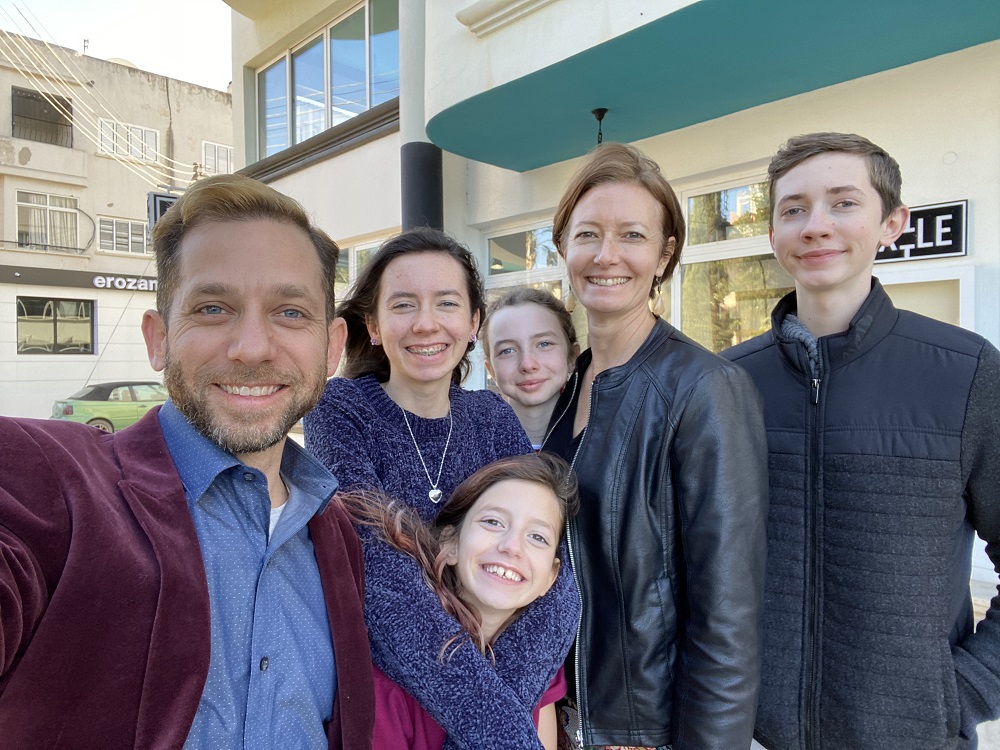
Image: Ryan Keating Pastor Ryan Keating and his family, in front of his cafe
Will the Turks create another Andrew Brunson?
On the Mediterranean island of Cyprus, they claim to have found his disciple.
Three months ago, American pastor Ryan Keating was detained for 11 hours by the self-proclaimed Turkish Republic of Northern Cyprus, a state unrecognized by every nation except Turkey. Its police raided the café and wine shop that housed his church, and then proceeded to his home.
They confiscated dozens of Arabic and Farsi language Bibles.
Keating, 44, was released on nearly $20,000 bail, after local friends bonded deeds to their property, vehicles, and even a tractor.
Last month, Keating was charged with illegally importing Christian materials. His passport has been confiscated while he awaits trial. A fine has been assessed of at least $60,000—ten times the value of the Bibles, which he said is “wildly inflated” to begin with.
The raid, however, was based on the accusation that he did not have a permit to make wine. Yet Keating showed CT his 2018 license to operate the café, his 2019 license for winemaking from the municipality, and the additional requested paperwork from 2020, when his permit renewal was delayed by the customs department.
The interrogation focused only on his ministry.
“This country, its government, and our neighbors have been friendly to us,” he said. “But there are not insignificant pockets of hostile nationalism.”
Keating linked his arrest to the changing political environment. Last October, the pro-Turkey prime minister defeated the incumbent president to assume the territory’s top office.
“My case is an example of localized opposition,” Keating said. “But now, Turkish-style politics is being enforced in Cyprus.”
He was the victim of such politics once before. Resident on the island since 2017, Keating previously lived…
This article was originally published at Christianity Today, on April 23, 2021. Please click here to read the full text.
Image: Press Service of the Republic of Azerbaijan Azerbaijan President Ilhan Aliyev visits St. Astvatsatsin Church in newly controlled Nagorno-Karabakh with his wife and daughter in March 2021.
Armenian fears of a new genocide were put on hold following the fall of Shusha, the crown jewel of Nagorno-Karabakh, high in the Caucasus Mountains. Last November, Azerbaijani forces captured the city—known to Armenians as Shushi—after which a ceasefire ended the military hostilities.
But not the cultural.
Last month, satellite imagery allegedly revealed the destruction of Shusha’s Armenian Genocide Memorial. Constructed in 2009, it leaves a bitter taste during this year’s April 24 remembrance of the 1.5 million lives lost when Turks expelled Armenians from their homes a century ago.
President Joe Biden may recognize the atrocity by stating the word genocide in his commemorative speech.
But the horrors witnessed in Turkey reached also to Shusha, where Azerbaijanis massacred the local Armenian population.
“As in 1915, the Turco-Azeris are committing not only a human genocide against the Armenians, but also a cultural genocide,” said Rene Leonian, president of the Union of Armenian Evangelical Churches in Eurasia.
“Unfortunately, nations and international organizations are too passive to firmly condemn these abuses.”
They can now add the case of the disappearing church.
Following the war, video footage emerged of an Azerbaijani soldier shouting “Allahu Akbar” from the rooftop of the Holy Mother of God church in the town of Jabrayil.
In search of the simple stone-built chapel, the BBC discovered no trace whatsoever.
The escorting policeman first said it was destroyed in the war. He then changed his story saying the Armenians dismantled it before they left.
Presidential advisor Hikmat Hajiyev told the BBC the matter would be investigated, but then shifted the discussion to the nearly 30-year Armenian occupation.
It was not wholly inappropriate. The church in question was built on a military base, after Armenia seized the disputed Caucasus enclave during the first Nagorno-Karabakh war in 1993. Jabrayil became…
This article was originally published at Christianity Today, on April 23, 2021. Please click here to read the full text.
Image: USCIRF, from the cover of their 2021 report
As a new administration takes over leadership of America’s commitment to religious freedom worldwide, Gayle Manchin believes President Joe Biden is “very aware” of its importance.
But given global developments, the watchdog work of the US Commission on International Religious Freedom (USCIRF), which she chairs, sometimes feels like “treading water.”
Others agree. For example, an 800-page study released this week by Aid to the Church in Need concludes that 1 in 3 nations of the world do not respect religious freedom.
And in 95 percent of these, the situation is growing worse.
USCIRF, created to provide recommendations to the US government, released its 22nd annual report today. Its analysis identifies significant problems in 26 countries, down from 29 last year. It also marked a surge in worldwide antisemitism.
Following the commission’s advice, last December then-Secretary of State Mike Pompeo announced the designation of Burma [Myanmar], China, Eritrea, Iran, Nigeria, North Korea, Pakistan, Saudi Arabia, Tajikistan, and Turkmenistan as a Country of Particular Concern (CPC). USCIRF’s 2021 report recommends that new Secretary of State Anthony Blinken add…
…
Last year, Nigeria was added as a CPC by the State Department. How did USCIRF’s work contribute to the decision?
USCIRF has a unique ability to focus on religious freedom, while the State Department looks at the relationship with a country in balance. But they take our work very seriously, and know the research and credibility behind it. They watch, and when the information is overwhelming—and when they are comfortable—they will join us in a recommendation.
But I never question when they don’t. There may be details going on that we are not aware of.
So how do you interpret the State Department additions of Cuba and Nicaragua to the SWL? Maybe they are not the most egregious violators of religious freedom, compared to others on the USCIRF list?
Both of these countries are continuing to trend worse. When we are able to travel again, these are nations we will reach out to for a visit, to get a clearer picture of what is going on. There is always a political aspect, from the government’s perspective.
But now that Cuba is without a Castro for the first time, there are things happening that may change. Of course, it could also be toward the negative, so we will continue to monitor.
What nations generated the most controversy and discussion among USCIRF commissioners? …
This article was originally published at Christianity Today on April 21, 2021. Please click here to read the full text.
Image: Wilayat Sinai / Telegram screenshot Nabil Habashi Salama, a Coptic Christian kidnapped from Bir al-Abd in North Sinai, speaks before his execution in the propaganda video of an Egyptian ISIS affiliate.
The Islamic State has claimed another Christian victim.
And Egypt’s Coptic Orthodox Church has won another martyr.
“We are telling our kids that their grandfather is now a saint in the highest places of heaven,” stated Peter Salama of his 62-year-old father, Nabil Habashi Salama, executed by the ISIS affiliate in north Sinai.
“We are so joyful for him.”
The Salamas are known as one of the oldest Coptic families in Bir al-Abd on the Mediterranean coast of the Sinai Peninsula. Nabil was a jeweler, owning also mobile phone and clothing shops in the area.
Peter said ISIS targeted his father for his share in building the city’s St. Mary Church.
In a newly released 13-minute propaganda video entitled The Makers of Slaughter [or Epic Battles], a militant quotes the Quran to demand the humiliation of Christians and their willing payment of jizya—a tax to ensure their protection.
Nabil was kidnapped five months ago in front of his home. Eyewitnesses said during his resistance he was beaten badly, before being thrown into a stolen car. It may be that these were kidnappers, because in the video that shows Nabil’s execution, he said he was held captive by ISIS for 3 months and 11 days.
On April 18, he was shot in the back of the head, kneeling.
“As you kill, you will be killed,” states the video, directed to “all the crusaders in the world.”
It addresses all of Egypt’s Christians, warning them to put no faith in the army. And Muslims which support the Egyptian state are called “apostates.” Two other Sinai residents—tribesmen who cooperated with the military—are also executed in the video.
Peter said that in the effort to drive Nabil from his faith, his teeth were broken.
His daughter Marina joined in the tribute. “I will miss you, my father,” she wrote on Facebook. “You made us proud…
This article was originally published at Christianity Today on April 19, 2021. Please click here to read the full text.
For the earth shall be filled with the glory of God,
Just like the waters cover the sea.
Then, God, no borders will be needed.
Now, God, give Lebanon its rights.
Amen.
To receive Lebanon Prayer by WhatsApp, please click this link to join the closed comments group.
Lebanon Prayer places before God the major events of the previous week, asking his favor for the nation living through them.
It seeks for values common to all, however differently some might apply them. It honors all who strive on her behalf, however suspect some may find them.
It offers no solutions, but desires peace, justice, and reconciliation. It favors no party, but seeks transparency, consensus, and national sovereignty.
How God sorts these out is his business. Consider joining in prayer that God will bless the people and establish his principles, from which all our approximations derive.
Lebanon Prayer places before God the major events of the previous week, asking his favor for the nation living through them.
It seeks for values common to all, however differently some might apply them. It honors all who strive on her behalf, however suspect some may find them.
It offers no solutions, but desires peace, justice, and reconciliation. It favors no party, but seeks transparency, consensus, and national sovereignty.
How God sorts these out is his business. Consider joining in prayer that God will bless the people and establish his principles, from which all our approximations derive.
Sometimes prayer can generate more prayer. While mine is for general principles, you may have very specific hopes for Lebanon. You are welcome to post these here as comments, that others might pray with you as you place your desires before God.
If you wish to share your own prayer, please adhere to the following guidelines:
1) The sincerest prayers are before God alone. Please consult with God before posting anything.
2) If a prayer of hope, strive to express a collective encouragement.
3) If a prayer of lament, strive to express a collective grief.
4) If a prayer of anger, refrain from criticizing specific people, parties, sects, or nations. While it may be appropriate, save these for your prayers alone before God.
5) In every prayer, do your best to include a blessing.
I will do my best to moderate accordingly. Thank you for praying for Lebanon and her people.
American evangelicals often find themselves frustrated in their approach to Islam.
Two options are consistently placed before them: a polemical argument few are educated enough to engage in, or an awkward dialogue urging friendship but emptied of theological significance.
Help, therefore, may come from abroad—where evangelicals interact with Muslims everyday.
A new book, The Religious Other: Toward a Biblical Understanding of Islam, the Quran, and Muhammad, answers both concerns. An anthology of recent academic contributions to Arab Baptist Theological Seminary (ABTS), located in Beirut, Lebanon, the publication delves into the details of the debate over how evangelicals should view the rival religion.
But it also promotes a “kerygmatic method,” based on the New Testament Greek word for proclamation and connoting among biblical scholars the core message of early church gospel preaching. The book applies the term to seek a middle ground between polemics and apologetics on the one hand, and syncretistic and common ground approaches on the other.
Built on a foundation of academic rigor, this method aims for a tone of love within a spirit of Jesus-centered proclamation.
CT interviewed Martin Accad, editor of the anthology and associate professor of Islamic studies at ABTS. Though he remains on faculty, he recently resigned from his leadership positions at the seminary to found Action Research Associates, seeking holistic application of the kerygmatic method within the troubles of sectarian Lebanese society.
Accad described the value of the book for evangelical engagement with Islam, but also how its principles can guide interaction with “the religious other” in both Lebanon and the United States:
Out of the 30 contributors to this book, only 9 are from the West, while 16 are Arab voices. What is the impact of this diversity?
Having so many Arabs is unusual for this type of book, especially those who are not of a polemical bent. Much of the agenda of missions and dialogue has been driven by Western questions, girded by the theology of the provider.
The contributions, therefore, de-objectify the conversation. We do not claim to be authoritative, but I hope that our voices will come with some authority, as we highlight our primary concerns in this part of the world.
“Toward” a biblical understanding suggests you have no definitive Christian conclusion about Islam, the Quran, and Muhammad. What message does the book want to give?
The primary goal of the book is theological, and is the crowning of years of work at ABTS. The Religious Other wants to explore what Islam really is. But I have come to the realization that a lot of what drives evangelical approaches to ministry among Muslims is polemical, rather than conciliatory and collaborative.
One of the book’s central hypotheses is that Islam cannot be oversimplified. Essentializing the “other” leads to conflict, because it fails to see them in their entirety, or as they perceive themselves.
There can be no definitive biblical understanding of Islam, because…
This article was originally published at Christianity Today, on April 9, 2021. Please click here to read the full text.
Cut our ties to the vices that keep us in deception:
Self-righteousness, pride, and hardness of heart.
Our barns have been broken, and also our spirit.
But not yet the soul that you still can redeem.
With it, God, rebuild the storehouse.
Fill it with blessing,
With all that is good.
Amen.
To receive Lebanon Prayer by WhatsApp, please click this link to join the closed comments group.
Lebanon Prayer places before God the major events of the previous week, asking his favor for the nation living through them.
It seeks for values common to all, however differently some might apply them. It honors all who strive on her behalf, however suspect some may find them.
It offers no solutions, but desires peace, justice, and reconciliation. It favors no party, but seeks transparency, consensus, and national sovereignty.
How God sorts these out is his business. Consider joining in prayer that God will bless the people and establish his principles, from which all our approximations derive.
Lebanon Prayer places before God the major events of the previous week, asking his favor for the nation living through them.
It seeks for values common to all, however differently some might apply them. It honors all who strive on her behalf, however suspect some may find them.
It offers no solutions, but desires peace, justice, and reconciliation. It favors no party, but seeks transparency, consensus, and national sovereignty.
How God sorts these out is his business. Consider joining in prayer that God will bless the people and establish his principles, from which all our approximations derive.
Sometimes prayer can generate more prayer. While mine is for general principles, you may have very specific hopes for Lebanon. You are welcome to post these here as comments, that others might pray with you as you place your desires before God.
If you wish to share your own prayer, please adhere to the following guidelines:
1) The sincerest prayers are before God alone. Please consult with God before posting anything.
2) If a prayer of hope, strive to express a collective encouragement.
3) If a prayer of lament, strive to express a collective grief.
4) If a prayer of anger, refrain from criticizing specific people, parties, sects, or nations. While it may be appropriate, save these for your prayers alone before God.
5) In every prayer, do your best to include a blessing.
I will do my best to moderate accordingly. Thank you for praying for Lebanon and her people.
Ashur Sargon Eskrya, president of the Assyrian Aid Society–Iraq (AASI), passed away today from COVID-19 complications.
A champion of the Assyrian Christian minority, he was also a central figure in US efforts to shelter refugees from ISIS and later rebuild the Nineveh Plains.
AASI was honored for its work with a Nobel Peace Prize nomination in 2016.
“Ashur has played a prominent role in being a voice for our people in international forums, speaking on behalf of us all especially on the subject of indigenous rights,” stated the official account of the Assyrian Democratic Movement (ADM), of which Eskrya was a senior member.
“He will always be remembered for his leadership.”
Fellow ADM member Jessi Arabou called him one of the Assyrian nation’s “biggest assets.” Born in 1974, Eskrya was a civil engineer and graduate of Baghdad University. He became a member in AASI in 2003, and assumed the presidency in 2010. Founded in 1991 to respond to the humanitarian crisis following the first Gulf War, the nonprofit…
This article was originally published at Christianity Today, on April 9, 2021. Please click here to read the full text.
God, the crowds may be different. And maybe they are right.
But it is not your spirit.
Are there innocents among them?
Are there pure of heart?
There is no one righteous.
But are there sincere?
Does the president mean it when he despaired of his job?
Does he really prefer his grandfather’s grove?
Does the president mean what he said to the patriarch?
Does the government form when the PM returns?
Does the patriarch mean it when he names the militia?
Does the video leak come from his command?
Does the militia mean it now urging a government?
Does their deal with Christians deadlock the whole?
Does the Shiite head mean it of Lebanese unity?
Does ‘preservation of Christians’ mean citizenship?
Does the minister mean it: No Syrian trouble?
Does the deal with Russia have maritime threat?
Does the Germany offer come with conditions?
Does their real interest lie in bumping the French?
God, you know.
You sift the wheat from the chaff.
You sort the sheep from the goats.
But this does not come ‘til the end of the age.
Until then we are left in confusion.
Those who cry, “Crucify,” are only half right.
Better the whisper that groans out, “I thirst.”
In truth it is Lebanon hanging in anguish.
But is it the criminal, on right or on left?
Will it join in the mocking of sinners despondent,
Waiting for death that will come to us all?
Or seek out the blessing that hungers for righteousness,
Pleading for mercy for sins of its own?
There are officials with integrity.
There are activists with grace.
There are diplomats with principles.
And they, too, must repent.
There is no cry of “Resurrection,” God.
It comes at dawn, with most asleep.
It is found by the faithful, ministering quietly.
Tending the dead, hopeless in grief.
Bless those who toil, without ambition.
May they see their reward.
May Lebanon rise.
Amen.
To receive Lebanon Prayer by WhatsApp, please click this link to join the closed comments group.
Lebanon Prayer places before God the major events of the previous week, asking his favor for the nation living through them.
It seeks for values common to all, however differently some might apply them. It honors all who strive on her behalf, however suspect some may find them.
It offers no solutions, but desires peace, justice, and reconciliation. It favors no party, but seeks transparency, consensus, and national sovereignty.
How God sorts these out is his business. Consider joining in prayer that God will bless the people and establish his principles, from which all our approximations derive.
Lebanon Prayer places before God the major events of the previous week, asking his favor for the nation living through them.
It seeks for values common to all, however differently some might apply them. It honors all who strive on her behalf, however suspect some may find them.
It offers no solutions, but desires peace, justice, and reconciliation. It favors no party, but seeks transparency, consensus, and national sovereignty.
How God sorts these out is his business. Consider joining in prayer that God will bless the people and establish his principles, from which all our approximations derive.
Sometimes prayer can generate more prayer. While mine is for general principles, you may have very specific hopes for Lebanon. You are welcome to post these here as comments, that others might pray with you as you place your desires before God.
If you wish to share your own prayer, please adhere to the following guidelines:
1) The sincerest prayers are before God alone. Please consult with God before posting anything.
2) If a prayer of hope, strive to express a collective encouragement.
3) If a prayer of lament, strive to express a collective grief.
4) If a prayer of anger, refrain from criticizing specific people, parties, sects, or nations. While it may be appropriate, save these for your prayers alone before God.
5) In every prayer, do your best to include a blessing.
I will do my best to moderate accordingly. Thank you for praying for Lebanon and her people.
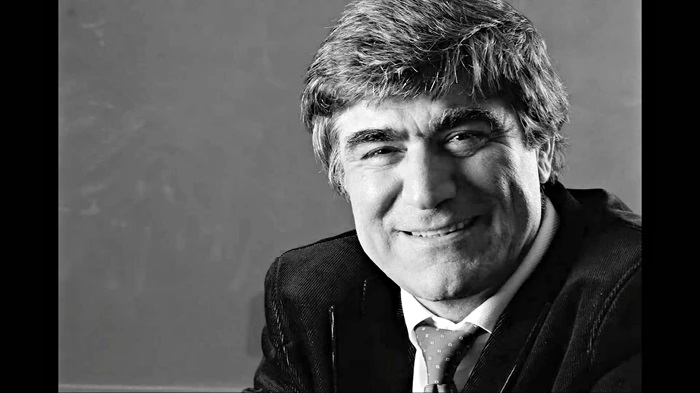
Fourteen years later, there is some resolution for the family of the assassinated Turkish-Armenian journalist, Hrant Dink.
But not enough.
“The judgment given today is quite far from the truth,” said the family in its official statement on March 26.
“Not the evil itself but its leakage was punished.”
In 2007, Dink was shot four times in front of the Istanbul office of his bilingual newspaper, Agos. A proponent of reconciliation between Turks and Armenians, he aroused official opposition through his passionate focus on the 1915 genocide. Two years earlier he had been arrested and convicted of “insulting Turkishness.”
The killer, a 17-year-old unemployed youth, was given a 23-year sentence in 2011.
But one week before his death, Dink had written an article stating he felt “like a pigeon,” targeted by the deep state “to make me know my place.“
Around 100,000 people attended his funeral, chanting, “We are all Armenians.”
Last week, the Turkish judiciary put 76 people on trial, convicting 26 and handing out 4 sentences of life imprisonment. Two were given to the former director of police intelligence and his deputy, for murder and the subsequent cover-up. The family is not convinced this includes…
This article was originally published at Christianity Today, on March 31, 2021. Please click here to read the full text.
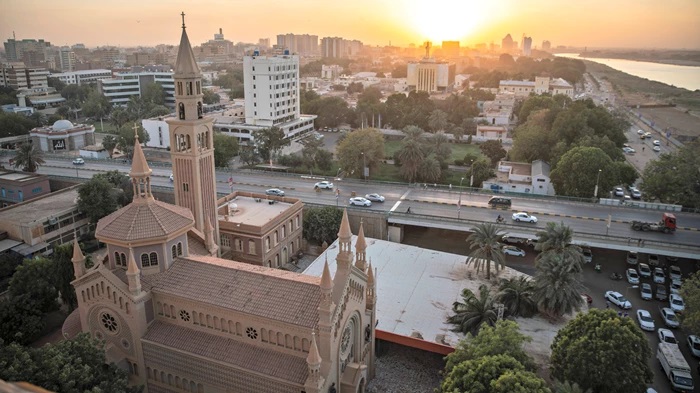
Sudan has taken another step toward religious freedom.
This time, it is a confirmation.
On Sunday, the joint military-civilian Sovereign Council signed a peace agreement with the rebel Sudan People’s Liberation Movement-North (SPLM-N), based in the Nuba Mountains, where there is a significant Christian population.
“Freedom of belief and religious practices and worship shall be guaranteed to all Sudanese people,” stated the Declaration of Principles, “by separating the identities of culture, religion, ethnicity, and religion from the state.”
Prior to the revolution which overthrew 30-year dictator Omar al-Bashir in April 2019, Sudan was governed by sharia law. It also imposed an Arab identity on its multiethnic population, contributing to longstanding conflict in Darfur.
The region’s Sudan Liberation Army (SLA), led by Abdel Wahed el-Nur, is now the last remaining rebel holdout.
Three other armed groups signed a peace deal last September. In February, these were integrated into an expanded Sovereign Council and afforded places in the still to be formed parliament. Abdelaziz al-Hilu, leader of the SPLM-N, refused to join without…
This article was originally published at Christianity Today, on March 30, 2021. Please click here to read the full text.
Sitting around a dinner table in a fancy restaurant, Talia is uncomfortably nervous. Her two colleagues in pristine attire anticipate a delicious meal—and then exult in the immaculate but meager portions provided them.
Earlier in the evening, the disappointed Talia had noticed a confused villager with a picnic basket ushered out of the establishment. Later, she peeks outside. Beckoned to join a family gathering, Talia discovers all the delight of nature on offer.
A new world had opened, wide and wild.
The fictional scene is a compelling metaphor for religious freedom.
“The idea was to move people from an awareness of scarcity to a desire for abundance,” said Shirin Taber, director of Empower Women Media (EWM), of the nine-minute Portions, produced by fellow Iranian American Naji Hendrix and Nancy Sawyer Schraeder.
“Short films can shift hearts, and after only a few minutes, rigid opinions begin to thaw.”
The key lies in storytelling, which Taber believes is a better method than the declarations and sanctions that have traditionally been tried to advance religious freedom in the Muslim world.
Rigid opinions thrive in confrontation.
“Many people are singing to the choir, but few come up with strategies that can actually move the needle,” she said. “And notably, they don’t include women.”
Her own story proves the difference. Taber’s commitment to religious freedom was developed early. Her Muslim father…
This article was originally published at Christianity Today, on March 29, 2021. Please click here to read the full text.
But may they turn to you—for justice, righteousness, and forgiveness.
This is true oxygen, sustaining the soul.
Amen.
To receive Lebanon Prayer by WhatsApp, please click this link to join the closed comments group.
Lebanon Prayer places before God the major events of the previous week, asking his favor for the nation living through them.
It seeks for values common to all, however differently some might apply them. It honors all who strive on her behalf, however suspect some may find them.
It offers no solutions, but desires peace, justice, and reconciliation. It favors no party, but seeks transparency, consensus, and national sovereignty.
How God sorts these out is his business. Consider joining in prayer that God will bless the people and establish his principles, from which all our approximations derive.
Lebanon Prayer places before God the major events of the previous week, asking his favor for the nation living through them.
It seeks for values common to all, however differently some might apply them. It honors all who strive on her behalf, however suspect some may find them.
It offers no solutions, but desires peace, justice, and reconciliation. It favors no party, but seeks transparency, consensus, and national sovereignty.
How God sorts these out is his business. Consider joining in prayer that God will bless the people and establish his principles, from which all our approximations derive.
Sometimes prayer can generate more prayer. While mine is for general principles, you may have very specific hopes for Lebanon. You are welcome to post these here as comments, that others might pray with you as you place your desires before God.
If you wish to share your own prayer, please adhere to the following guidelines:
1) The sincerest prayers are before God alone. Please consult with God before posting anything.
2) If a prayer of hope, strive to express a collective encouragement.
3) If a prayer of lament, strive to express a collective grief.
4) If a prayer of anger, refrain from criticizing specific people, parties, sects, or nations. While it may be appropriate, save these for your prayers alone before God.
5) In every prayer, do your best to include a blessing.
I will do my best to moderate accordingly. Thank you for praying for Lebanon and her people.
“Manipulation,” some say. “Fear,” said the others.
But no one can claim any semblance of health.
The banks will make efforts to rein in the dollar.
Exchange houses given more leeway to work.
After new rounds of rancor, the leaders give signals:
Maybe on Monday a government forms?
Meetings with Russia. Egypt-Turkey come closer.
Will a semblance of peace settle Lebanon too?
From deep desperation a new hope emerges?
Could this be the reason the lira has gained?
God, may it be.
But what if on Monday the impasse continues?
Already the signals are starting to chill.
Politicians are needed, said the Shiite militia.
The world refuses, hinted Sunni PM.
Head of state keeps his office, said the top Christians.
So back where we started, the people may groan.
What will happen to the lira?
What will happen to the food?
Medicine. Gasoline. Banking reserves?
A loan for electricity – the power stays on.
But for how long, God?
Where is our hope?
In all the above Lebanon has experience.
And also in faith; you have tried them before.
In Hussein, and in Charbel – their icons inspire.
In Mary so many of all sects converge.
It is good, God.
But you are greater.
People find their peace in you.
This is a truth Lebanon must remember.
But it is also a truth they have known before.
In war and in famine. Amid slaughters and strife.
But can you fix what is broken?
Can you make right the wrong?
Here, God, there is little experience.
Here many conclude you are no help at all.
So plans by the thousands are offered by think tanks.
Civil society offers so much.
But still nothing changes while brain drain continues.
The nation is emptied of brightest and best.
How do Lebanese live like this, God?
Bang your head against a wall. Or: eat, drink, and be merry. What else can be done?
But now the head is bloodied. Merriment, no more.
God, come and rescue.
God, fill the void.
In our spirits.
In our systems.
In the hopelessness surrounding.
Be our help.
Amen.
To receive Lebanon Prayer by WhatsApp, please click this link to join the closed comments group.
Lebanon Prayer places before God the major events of the previous week, asking his favor for the nation living through them.
It seeks for values common to all, however differently some might apply them. It honors all who strive on her behalf, however suspect some may find them.
It offers no solutions, but desires peace, justice, and reconciliation. It favors no party, but seeks transparency, consensus, and national sovereignty.
How God sorts these out is his business. Consider joining in prayer that God will bless the people and establish his principles, from which all our approximations derive.
Lebanon Prayer places before God the major events of the previous week, asking his favor for the nation living through them.
It seeks for values common to all, however differently some might apply them. It honors all who strive on her behalf, however suspect some may find them.
It offers no solutions, but desires peace, justice, and reconciliation. It favors no party, but seeks transparency, consensus, and national sovereignty.
How God sorts these out is his business. Consider joining in prayer that God will bless the people and establish his principles, from which all our approximations derive.
Sometimes prayer can generate more prayer. While mine is for general principles, you may have very specific hopes for Lebanon. You are welcome to post these here as comments, that others might pray with you as you place your desires before God.
If you wish to share your own prayer, please adhere to the following guidelines:
1) The sincerest prayers are before God alone. Please consult with God before posting anything.
2) If a prayer of hope, strive to express a collective encouragement.
3) If a prayer of lament, strive to express a collective grief.
4) If a prayer of anger, refrain from criticizing specific people, parties, sects, or nations. While it may be appropriate, save these for your prayers alone before God.
5) In every prayer, do your best to include a blessing.
I will do my best to moderate accordingly. Thank you for praying for Lebanon and her people.
American Catholics are signaling a dramatic surge in concern about the persecuted church.
And prayer, alone, is no longer good enough, as more say money and arms are needed too.
Asked their opinion about Christian persecution worldwide in the fourth annual survey by Aid to the Church in Need–USA (ACNUSA), 67 percent stated they were “very concerned.”
Last year, only 52 percent said the same.
Similarly, 57 percent stated the level of persecution suffered by Christians is “very severe.”
Last year, only 41 percent said the same.
The increase is “heartening,” said George Marlin, ACNUSA chairman.
“Christian persecution around the world is very grave,” he said. “[Catholics] want both their church and their government to step up efforts to do more.”
They have already been praying: 7 in 10 stated prayer is a “very important” initiative to help—the same share as last year, and up from 64 percent in the first survey in 2018.
But now, 62 percent say it is “very important” to donate to agencies that support the persecuted, up from 53 percent last year. Half say they are “very likely” to do so, up from 35 percent. And 61 percent say they gave within the last year, up from 53 percent in 2020.
And while about half believe Pope Francis is “very engaged” on the issue of persecution (52%, up from 47%), they believe their local bishop lags behind. Only 3 in 10 (30%) find him “very engaged,” marginally improved from the perception of 27 percent the year before.
The local parish seems to them similarly disconnected, with only 28 percent perceiving it to be “very engaged,” up from 22 percent last year. It is not enough, per American Catholics: 2 in 3 said…
This article was originally published at Christianity Today, on March 18, 2021. Please click here to read the full text.