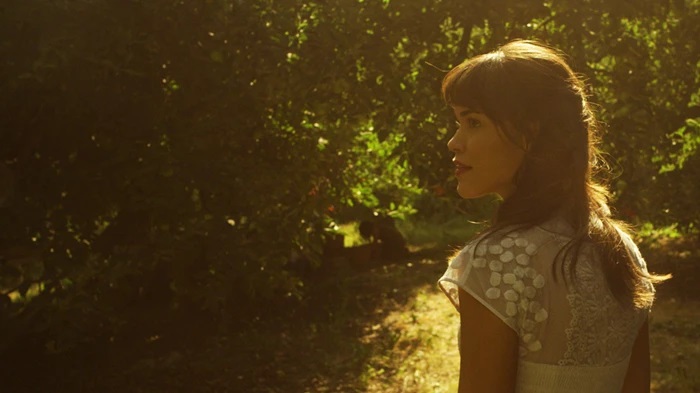
Sitting around a dinner table in a fancy restaurant, Talia is uncomfortably nervous. Her two colleagues in pristine attire anticipate a delicious meal—and then exult in the immaculate but meager portions provided them.
Earlier in the evening, the disappointed Talia had noticed a confused villager with a picnic basket ushered out of the establishment. Later, she peeks outside. Beckoned to join a family gathering, Talia discovers all the delight of nature on offer.
A new world had opened, wide and wild.
The fictional scene is a compelling metaphor for religious freedom.
“The idea was to move people from an awareness of scarcity to a desire for abundance,” said Shirin Taber, director of Empower Women Media (EWM), of the nine-minute Portions, produced by fellow Iranian American Naji Hendrix and Nancy Sawyer Schraeder.
“Short films can shift hearts, and after only a few minutes, rigid opinions begin to thaw.”
The key lies in storytelling, which Taber believes is a better method than the declarations and sanctions that have traditionally been tried to advance religious freedom in the Muslim world.
Rigid opinions thrive in confrontation.
“Many people are singing to the choir, but few come up with strategies that can actually move the needle,” she said. “And notably, they don’t include women.”
Her own story proves the difference. Taber’s commitment to religious freedom was developed early. Her Muslim father…
This article was originally published at Christianity Today, on March 29, 2021. Please click here to read the full text.
But may they turn to you—for justice, righteousness, and forgiveness.
This is true oxygen, sustaining the soul.
Amen.
To receive Lebanon Prayer by WhatsApp, please click this link to join the closed comments group.
Lebanon Prayer places before God the major events of the previous week, asking his favor for the nation living through them.
It seeks for values common to all, however differently some might apply them. It honors all who strive on her behalf, however suspect some may find them.
It offers no solutions, but desires peace, justice, and reconciliation. It favors no party, but seeks transparency, consensus, and national sovereignty.
How God sorts these out is his business. Consider joining in prayer that God will bless the people and establish his principles, from which all our approximations derive.
Lebanon Prayer places before God the major events of the previous week, asking his favor for the nation living through them.
It seeks for values common to all, however differently some might apply them. It honors all who strive on her behalf, however suspect some may find them.
It offers no solutions, but desires peace, justice, and reconciliation. It favors no party, but seeks transparency, consensus, and national sovereignty.
How God sorts these out is his business. Consider joining in prayer that God will bless the people and establish his principles, from which all our approximations derive.
Sometimes prayer can generate more prayer. While mine is for general principles, you may have very specific hopes for Lebanon. You are welcome to post these here as comments, that others might pray with you as you place your desires before God.
If you wish to share your own prayer, please adhere to the following guidelines:
1) The sincerest prayers are before God alone. Please consult with God before posting anything.
2) If a prayer of hope, strive to express a collective encouragement.
3) If a prayer of lament, strive to express a collective grief.
4) If a prayer of anger, refrain from criticizing specific people, parties, sects, or nations. While it may be appropriate, save these for your prayers alone before God.
5) In every prayer, do your best to include a blessing.
I will do my best to moderate accordingly. Thank you for praying for Lebanon and her people.
“Manipulation,” some say. “Fear,” said the others.
But no one can claim any semblance of health.
The banks will make efforts to rein in the dollar.
Exchange houses given more leeway to work.
After new rounds of rancor, the leaders give signals:
Maybe on Monday a government forms?
Meetings with Russia. Egypt-Turkey come closer.
Will a semblance of peace settle Lebanon too?
From deep desperation a new hope emerges?
Could this be the reason the lira has gained?
God, may it be.
But what if on Monday the impasse continues?
Already the signals are starting to chill.
Politicians are needed, said the Shiite militia.
The world refuses, hinted Sunni PM.
Head of state keeps his office, said the top Christians.
So back where we started, the people may groan.
What will happen to the lira?
What will happen to the food?
Medicine. Gasoline. Banking reserves?
A loan for electricity – the power stays on.
But for how long, God?
Where is our hope?
In all the above Lebanon has experience.
And also in faith; you have tried them before.
In Hussein, and in Charbel – their icons inspire.
In Mary so many of all sects converge.
It is good, God.
But you are greater.
People find their peace in you.
This is a truth Lebanon must remember.
But it is also a truth they have known before.
In war and in famine. Amid slaughters and strife.
But can you fix what is broken?
Can you make right the wrong?
Here, God, there is little experience.
Here many conclude you are no help at all.
So plans by the thousands are offered by think tanks.
Civil society offers so much.
But still nothing changes while brain drain continues.
The nation is emptied of brightest and best.
How do Lebanese live like this, God?
Bang your head against a wall. Or: eat, drink, and be merry. What else can be done?
But now the head is bloodied. Merriment, no more.
God, come and rescue.
God, fill the void.
In our spirits.
In our systems.
In the hopelessness surrounding.
Be our help.
Amen.
To receive Lebanon Prayer by WhatsApp, please click this link to join the closed comments group.
Lebanon Prayer places before God the major events of the previous week, asking his favor for the nation living through them.
It seeks for values common to all, however differently some might apply them. It honors all who strive on her behalf, however suspect some may find them.
It offers no solutions, but desires peace, justice, and reconciliation. It favors no party, but seeks transparency, consensus, and national sovereignty.
How God sorts these out is his business. Consider joining in prayer that God will bless the people and establish his principles, from which all our approximations derive.
Lebanon Prayer places before God the major events of the previous week, asking his favor for the nation living through them.
It seeks for values common to all, however differently some might apply them. It honors all who strive on her behalf, however suspect some may find them.
It offers no solutions, but desires peace, justice, and reconciliation. It favors no party, but seeks transparency, consensus, and national sovereignty.
How God sorts these out is his business. Consider joining in prayer that God will bless the people and establish his principles, from which all our approximations derive.
Sometimes prayer can generate more prayer. While mine is for general principles, you may have very specific hopes for Lebanon. You are welcome to post these here as comments, that others might pray with you as you place your desires before God.
If you wish to share your own prayer, please adhere to the following guidelines:
1) The sincerest prayers are before God alone. Please consult with God before posting anything.
2) If a prayer of hope, strive to express a collective encouragement.
3) If a prayer of lament, strive to express a collective grief.
4) If a prayer of anger, refrain from criticizing specific people, parties, sects, or nations. While it may be appropriate, save these for your prayers alone before God.
5) In every prayer, do your best to include a blessing.
I will do my best to moderate accordingly. Thank you for praying for Lebanon and her people.
American Catholics are signaling a dramatic surge in concern about the persecuted church.
And prayer, alone, is no longer good enough, as more say money and arms are needed too.
Asked their opinion about Christian persecution worldwide in the fourth annual survey by Aid to the Church in Need–USA (ACNUSA), 67 percent stated they were “very concerned.”
Last year, only 52 percent said the same.
Similarly, 57 percent stated the level of persecution suffered by Christians is “very severe.”
Last year, only 41 percent said the same.
The increase is “heartening,” said George Marlin, ACNUSA chairman.
“Christian persecution around the world is very grave,” he said. “[Catholics] want both their church and their government to step up efforts to do more.”
They have already been praying: 7 in 10 stated prayer is a “very important” initiative to help—the same share as last year, and up from 64 percent in the first survey in 2018.
But now, 62 percent say it is “very important” to donate to agencies that support the persecuted, up from 53 percent last year. Half say they are “very likely” to do so, up from 35 percent. And 61 percent say they gave within the last year, up from 53 percent in 2020.
And while about half believe Pope Francis is “very engaged” on the issue of persecution (52%, up from 47%), they believe their local bishop lags behind. Only 3 in 10 (30%) find him “very engaged,” marginally improved from the perception of 27 percent the year before.
The local parish seems to them similarly disconnected, with only 28 percent perceiving it to be “very engaged,” up from 22 percent last year. It is not enough, per American Catholics: 2 in 3 said…
This article was originally published at Christianity Today, on March 18, 2021. Please click here to read the full text.
Growing up in civil war–era Lebanon, Rita El-Mounayer’s family often had to hook up the television to a car battery.
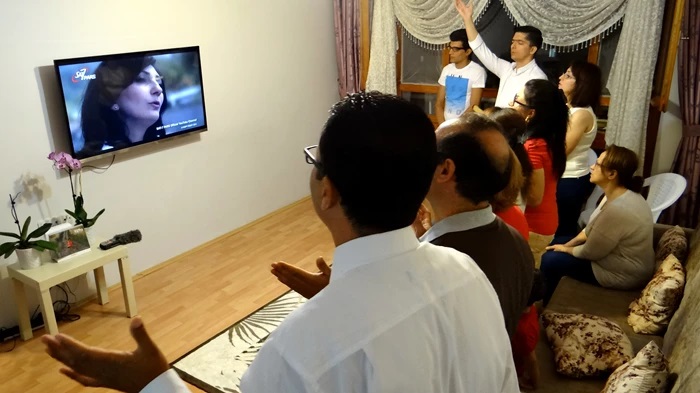
Last month, her ministry launched the first Christian on-demand streaming service in the Middle East.
“Television was our only refuge during the war, and was a communal activity,” said the international CEO of SAT-7. “This is what we will miss with , but we have to be where the technology leads.”
SAT-7 is a pioneer in the field. Beaming Christian satellite TV programming into the Arab world since 1996, it now hosts channels specializing also in Turkish and Farsi.
In 2007, it launched a dedicated kids channel. Ten years later, a separate academy brand was created to provide schooling to Syrian refugees and later to assist with at-home COVID-19 education.
Each is now available at SAT-7 PLUS, through web and mobile apps accessible via Android or iOS. Approximately 20 percent of the broadcaster’s 25 years of content can be streamed, along with all current live programming.
“In Morocco, it used to be that viewers had to wait for days until the Christian teaching program was scheduled,” El-Mounayer said.
“Now, they can binge watch.” While the advantages for the ministry are obvious, the drawback lies in…
This article was originally published at Christianity Today, on March 18, 2021. Please click here to read the full text.
Many Americans are troubled by the state of the nation. It is an unusual feeling.
Our national psyche is accustomed to being on top. To progress. To winning. Our challenges, for the most part, were external. And while we have always had political divisions, there was rarely any doubt we shared a broad consensus.
What do we do now?
The first and most important step is prayer. But it is a different type of prayer to which I would like to call our country. It is a form of prayer I have learned from being a foreigner, living abroad. Before that, however, there is hard work to do first.
Fall on your knees, and pour out your heart to God.
It is far easier to complain to like-minded people—often on social media. Instead, take your frustrations to the one who will not offer you an echo chamber, but a refiner’s fire. To him, curse the darkness. Plead your case. And as you cry out before him, allow the slow but steady transformation as he nudges you closer to the image of Christ.
And then consider next this form of prayer—additionally.
For me, it started in Egypt. Having grown to appreciate the country of my residence for two non-eventful years, the outbreak of the Arab Spring in 2011 filled me with hope for positive change. Before too long, it filled me with dread. Riots in the street. Police violence. Demonization of opponents.
It took about four months of anguish, but I began writing a prayer for the country. It started as above, as I wept for a nation I had grown to love. But I wanted to push through, and offer my plea publicly, so that others might pray also. This, however, confronted me with a dilemma. Every segment of society interpreted events according to their own viewpoint. How could I get them to pray, together?
I had my own personal interpretation, of course. But if I wrote my concerns, surely some would applaud, while others would cringe. Some actors, certainly, only pursued their own interests, manipulating and cheating to gain the upper hand. But who was who, and were any pure?
Even so, I believed most people wanted to see the victory of peace, justice, and reconciliation. They valued transparency, consensus, and the common good. They calculated them differently—often vastly so. But if I could model a prayer that all could pray together, then God could sort out the details.
Remember, this is the second prayer. The first is to do your own hard work. God has given you unique discernment in the affairs of the nation. Beg God to accomplish the good that you see—and then work in the world to convince others.
But do not neglect the work of unity.
I have since moved to Lebanon, another nation that now breaks my heart. Please join me in prayer for the Land of the Cedars, every Sunday.
But more to the point, would you consider a broader prayer for America, or whatever nation in which you dwell, and call others to join you?
If so, here are five principles to keep in mind:
1) The sincerest prayers are for God alone. Do the hard work with him before sharing your prayer with others.
2) If it is a prayer of hope, strive to express a collective encouragement.
3) If it is a prayer of lament, strive to express a collective grief.
4) If it is a prayer of anger, refrain from criticizing specific people, parties, religions, or nations. Such a prayer may be appropriate—but save it for your prayers alone before God.
5) In every prayer, do your best to include a blessing.
As Americans, we are not used to our nation being in such need. In your personal prayer, long for your vision. But in your public prayer, call our nation together. Then each of us can place our vision before God in pursuit of his kingdom principles, from which all our approximations derive.
Please click here to read this article at the blog page for IDEAS.
A Protestant mother. A Shiite son. A plea for vengeance on his killers.
But unlike many responses to political martyrdoms in Lebanese history, she yields it to God.
Last month in the Hezbollah-controlled south of Lebanon, unknown gunmen shot Lokman Slim in the head. It was a targeted assassination of a man dedicated to the hope that his small Middle Eastern nation might overcome sectarian divisions.
He was his mother’s son.
“I will not go and kill them, but ask God to avenge him,” said the grieving 80-year-old, Selma Merchak. “This comes from my faith in God as the great authority.”
But her next response reflects the family’s—and Lebanon’s—complex religious identity.
“And as it says in Islam: Warn the killer he will be killed, though it tarries.”
Born in Egypt, Selma’s Protestant lineage traces back to her grandfather in Syria, who found Christ through the preaching of the first wave of Scottish missionaries to the Middle East. As a child, she attended the American School for Girls—now Ramses College—founded in 1908 by American Presbyterians.
The family attended Qasr el-Dobara Church, located in Cairo’s Tahrir Square. And Selma continued in the Protestant educational heritage, graduating with a degree in journalism from the American University in Cairo, which by then had become a secular institution.
The Merchak family mixed freely in an Egyptian upper class that was open to all religions, vacationing often in Lebanon’s mountains. But in the chaos of Gamal Abdel Nasser’s nationalizing of the Suez Canal, in 1957 Newsweek relocated its regional headquarters to Beirut, and Selma went with it.
She reconnected with Muhsin Slim, her childhood friend from the family vacations. The Slims were an influential Shiite family known for its good relations with the Lebanese Christian elite. Muhsin’s father served as a member of parliament in the 1960s, and during the civil war advocated against the use of Lebanon as a staging ground for the Palestinian armed struggle against Israel.
Now a lawyer, Muhsin married Selma shortly after her arrival in Lebanon. Her Egyptian accent was the toast of the town, aiding the political career of her parliamentary husband.
While Muhsin would only “pray in his heart,” Selma said, she worshiped on-and-off at the National Evangelical Church in Beirut, the oldest indigenous Protestant congregation in the Middle East.
Lokman, their second of three children, was born in 1962. Registered as Shiites within Lebanon’s sectarian system, Muhsin and Selma raised them to be moral, but to make up their own minds about religion. Statues of Buddha were part of the décor of their 150-year-old home. On property located in what was once known…
This article was originally published at Christianity Today on March 15, 2021. Please click here to read the full text.
In darkness no one knows the sin. Every criminal can hide.
Lebanon is not there yet.
It is the lowest level of responsibility to say: I cannot do my job.
But it is responsibility still.
Honor them for it, God.
But give the nation men who can.
The army cannot feed its troops.
Police equipment goes to rot.
In two weeks, the lights go out.
The lira falls in market black.
But a color cannot be arrested, God. Darkness cannot be shouted away.
It is creeping ever closer.
Even the hope of some is eroding. The World Bank loan nets them half of its gain.
Fresh dollars delivered will help out the bankers. While oversight monies are slashed in the fray.
At least it is something?
For even the hope of others is poisonous. Burning tires pollute the air.
When roads shut down all are impeded.
Save for those who do not move.
It is hard to move in darkness, God.
But it is not here yet: Why is there no government?
Are they blind already?
Perhaps they cannot sense the region. Which way will the powers pull?
In darkness, the frightened will latch on to anything.
They grab and they squeeze and they clutch what they have.
Meanwhile surroundings are trampled to pieces.
All huddle together, bound by their sect.
The job becomes protection.
Even this has honor, God. We must keep safe our own.
But Muslim and Christian are both pushed to poverty.
The price of bread has risen for all.
The lowest level of responsibility: Can they say that they have failed?
Some call them criminals. Some call it: sin.
But still, all are guilty.
The people love darkness, rather than light.
Is there a glimmer?
The pope said he’s coming.
Some grimace. Some strengthen. Some hope beyond hope.
At least it is something.
It is less than you.
And you are needed. Your light must shine.
Let it come through our blessing of others.
Let it come through embrace of the good.
It profits not to curse the darkness.
Those entangled must be saved.
This is our lowest level of responsibility, God.
For the sake of Lebanon, please do the rest.
Amen.
To receive Lebanon Prayer by WhatsApp, please click this link to join the closed comments group.
Lebanon Prayer places before God the major events of the previous week, asking his favor for the nation living through them.
It seeks for values common to all, however differently some might apply them. It honors all who strive on her behalf, however suspect some may find them.
It offers no solutions, but desires peace, justice, and reconciliation. It favors no party, but seeks transparency, consensus, and national sovereignty.
How God sorts these out is his business. Consider joining in prayer that God will bless the people and establish his principles, from which all our approximations derive.
Lebanon Prayer places before God the major events of the previous week, asking his favor for the nation living through them.
It seeks for values common to all, however differently some might apply them. It honors all who strive on her behalf, however suspect some may find them.
It offers no solutions, but desires peace, justice, and reconciliation. It favors no party, but seeks transparency, consensus, and national sovereignty.
How God sorts these out is his business. Consider joining in prayer that God will bless the people and establish his principles, from which all our approximations derive.
Sometimes prayer can generate more prayer. While mine is for general principles, you may have very specific hopes for Lebanon. You are welcome to post these here as comments, that others might pray with you as you place your desires before God.
If you wish to share your own prayer, please adhere to the following guidelines:
1) The sincerest prayers are before God alone. Please consult with God before posting anything.
2) If a prayer of hope, strive to express a collective encouragement.
3) If a prayer of lament, strive to express a collective grief.
4) If a prayer of anger, refrain from criticizing specific people, parties, sects, or nations. While it may be appropriate, save these for your prayers alone before God.
5) In every prayer, do your best to include a blessing.
I will do my best to moderate accordingly. Thank you for praying for Lebanon and her people.
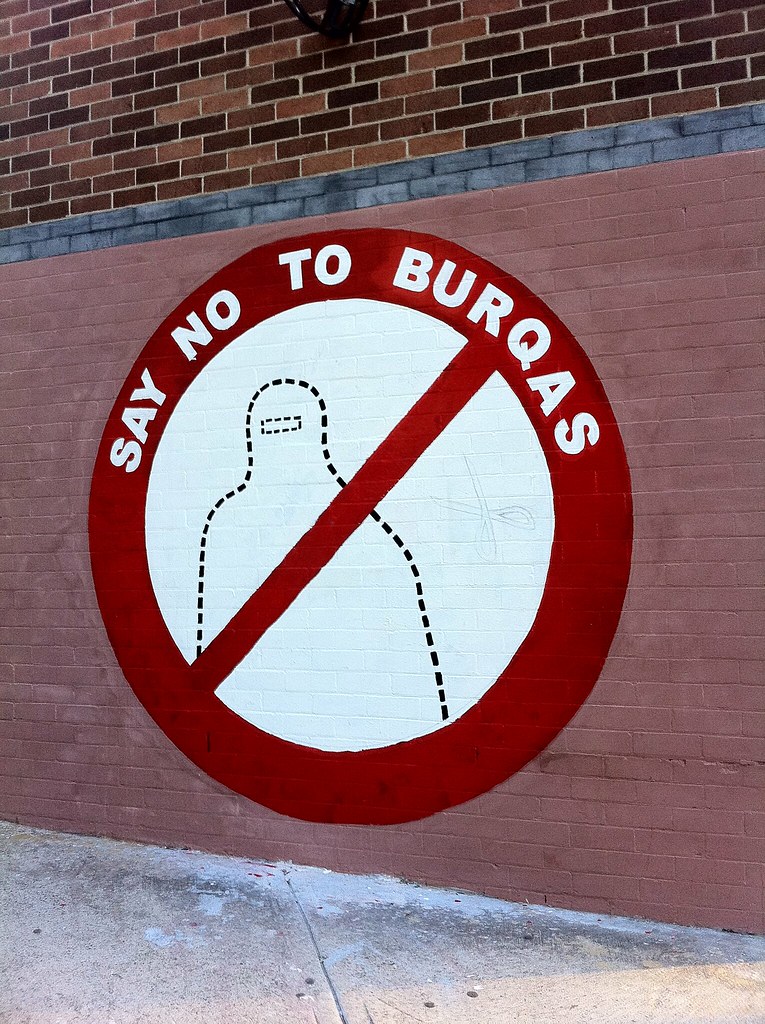
In a vote that divided Switzerland’s evangelical community, voters narrowly approved on Sunday a referendum to ban face coverings. The new law includes both the niqabs and burqas worn by a few Muslim women in the country, and the ski masks and bandanas used by protesters.
One of two political parties with ties to the Swiss evangelical community supported the Yes vote. The other took no position. The state-affiliated Swiss Reformed and Roman Catholic churches supported the No vote.
After initially supporting the measure, the Swiss Evangelical Alliance (SEA), which represents about 250,000 believers across 650 churches and 230 member organizations, instead issued an orientation paper outlining both the pro and con positions.
“Showing each other our faces … promotes trust and security,” the alliance stated. “But there are legitimate questions if prohibition would restrict religious freedom.”
The measure will outlaw…
This article was originally published at Christianity Today on March 11, 2021. Please click here to read the full text.
I contributed additional reporting to this AP article, including its conclusion below:
At Qaraqosh, Francis urged its residents to continue to dream, and forgive.
“Forgiveness is necessary to remain in love, to remain Christian,” he said.
One resident, Doha Sabah Abdallah, told him how her son and two other young people were killed in a mortar strike August 6, 2014, as ISIS neared the town. “The martyrdom of these three angels” alerted the other residents to flee, she said. “The deaths of three saved the entire city.”
She said now it was for the survivors to “try to forgive the aggressor.”
Francis wrapped up the day—and his visit—with a Mass at the stadium in Irbil, in the semi-autonomous northern Kurdish region. An estimated 10,000 people erupted in ululating cheers when he arrived and did a lap around the track in his open-sided popemobile, the first and only time he has used it on this trip due to security concerns.
On the makeshift altar for the Mass was a statue of the Virgin Mary from the Mar Adday Church in the town of Keramlis, which was restored after ISIS militants chopped off its head and hands.
“Religion is love, grace, forgiveness,” said Louis Sako, patriarch of the Chaldean Catholic Church, in advance of the visit. “Religion is a message, and humanity is its core.
“[And] as for us, we are staying until the end.”
But perhaps some Iraq Christians have a vision for even more.
“This is a time of healing for our country,” Farouk Hammo, pastor of Baghdad Presbyterian Church, told CT.
“But we are still praying for a visitation by the Lord Jesus—a revival—and it will happen.”
This article was originally published at Christianity Today on March 11, 2021. Please click here to read the full text.
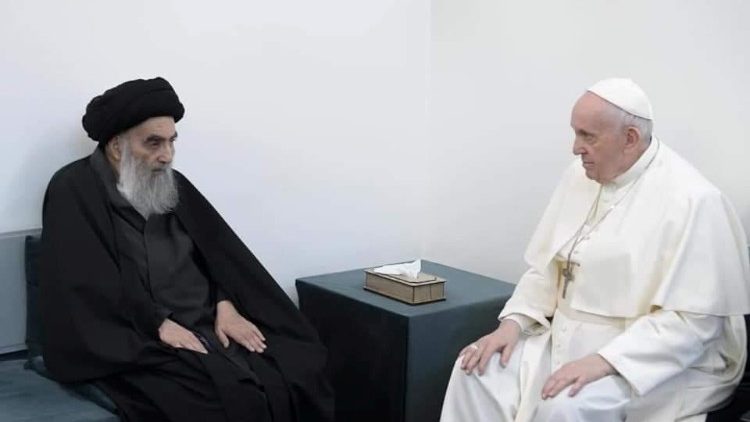
Pope Francis, a “pilgrim of peace” to Iraq, has made history by becoming the first pontiff to meet a grand ayatollah: Ali al-Sistani, whose hawza (seminary) in Najaf, 100 miles south of Baghdad, is considered the foremost center of learning in Shiite Islam.
Two years ago, the pope met the grand imam of Egypt’s al-Azhar, considered the foremost center of learning in Sunni Islam. With Ahmed al-Tayyeb, Francis signed the “Declaration of Human Fraternity,” calling on both Christians and Muslims to embrace religious diversity with freedom and respect.
This weekend, Francis came to Iraq to support and encourage the nation’s beleaguered Christians, whose numbers have decreased from 1.4 million in 2003 to about 250,000 today.
But he also wished to sign a similar document with the reclusive leading figure in Shiite Islam, which represents 1 in 10 of the world’s Muslims—and 6 in 10 Iraqis.
The result with Sistani was more modest than with Tayyeb, but Francis did secure a very important fatwa (religious ruling).
“[Christians should] live like all Iraqis, in security and peace and with full constitutional rights,” said Sistani in an official statement. “The religious authority plays [a role] in protecting them, and others who have also suffered injustice and harm in the events of past years.”
Francis removed his shoes upon entering Sistani’s modest home. And while the ayatollah usually sits to receive visitors, he stood to welcome the pope.
Will the ruling make a difference? Will it have any impact in Iran, the neighboring theocratic Shiite state? And what really drives the regional conflict: religion or politics? In Muslim history, the answer is…
This article was originally published at Christianity Today, on March 7, 2021. Please click here to read the full text.
My uncle has fallen from COVID. My money is stolen from banks.
My nation is falling to pieces.
Maybe a different verse calls out instead:
“How could two put ten thousand to flight,
“Unless their Rock had sold them?”
Have you washed your hands of Lebanon, God?
So many others appear to.
There are riots in the streets. There are sanctions in the air.
And the caretaker head might stop working.
An aged King David once went out to war,
“No sire,” they said, “You are equal
“To ten thousand men. If they fall by the sword they don’t matter.”
Too many in Lebanon view themselves so.
And their subjects are left to lie fallow.
Which one am I, God?
A servant to all?
Do I search out the one from the hundred?
But what when the hundred need so much help?
What when they become ten thousand?
“Still my soul will sing your praise unending?”
But there is little for my heart to find.
So what now, God?
So be it?
Some will fight – they are in the streets.
Some will push – they need a government.
Some will pray – they hold to your promises.
Bless them all, God, in their efforts.
But…
Maybe the lira will never recover.
Likely the money is gone.
Maybe your justice will find out the guilty.
Likely the worst is to come.
It is hard to find a word of hope, God.
As we brush aside our blessings.
But we have life. We have love. We have truth. We have beauty.
We have you – if only we seek you.
Are you enough?
Please be so.
For the one.
For the ten thousand, four hundred, and fifty-two*.
Amen.
*For non-Lebanese, this number equals Lebanon’s area in square kilometers.
To receive Lebanon Prayer by WhatsApp, please click this link to join the closed comments group.
Lebanon Prayer places before God the major events of the previous week, asking his favor for the nation living through them.
It seeks for values common to all, however differently some might apply them. It honors all who strive on her behalf, however suspect some may find them.
It offers no solutions, but desires peace, justice, and reconciliation. It favors no party, but seeks transparency, consensus, and national sovereignty.
How God sorts these out is his business. Consider joining in prayer that God will bless the people and establish his principles, from which all our approximations derive.
Lebanon Prayer places before God the major events of the previous week, asking his favor for the nation living through them.
It seeks for values common to all, however differently some might apply them. It honors all who strive on her behalf, however suspect some may find them.
It offers no solutions, but desires peace, justice, and reconciliation. It favors no party, but seeks transparency, consensus, and national sovereignty.
How God sorts these out is his business. Consider joining in prayer that God will bless the people and establish his principles, from which all our approximations derive.
Sometimes prayer can generate more prayer. While mine is for general principles, you may have very specific hopes for Lebanon. You are welcome to post these here as comments, that others might pray with you as you place your desires before God.
If you wish to share your own prayer, please adhere to the following guidelines:
1) The sincerest prayers are before God alone. Please consult with God before posting anything.
2) If a prayer of hope, strive to express a collective encouragement.
3) If a prayer of lament, strive to express a collective grief.
4) If a prayer of anger, refrain from criticizing specific people, parties, sects, or nations. While it may be appropriate, save these for your prayers alone before God.
5) In every prayer, do your best to include a blessing.
I will do my best to moderate accordingly. Thank you for praying for Lebanon and her people.
Pope Francis traveled to war-torn Iraq today “as a pilgrim of peace, seeking fraternity [and] reconciliation.”
The trip’s official logo, written in three languages, comes from Matthew 23: “You are all brothers.” Iraq’s evangelicals, therefore, have asked for the pope’s help.
“The other churches don’t want us, and accuse us of everything,” said Maher Dawoud, head of the General Society for Iraqi National Evangelical Churches (GSINEC).
“But we are churches present throughout the world. Why shouldn’t the government give us our rights?”
Dawoud sent a letter to the Vatican, asking Francis to intercede—on behalf of evangelical Christians—with the Catholic church in Iraq, and ultimately with the government in Baghdad.
The World Evangelical Alliance (WEA) had gone straight to the United Nations, long before.
One year ago, the WEA filed a report with the UN Human Rights Committee, protesting the denial of legal recognition for Iraqi evangelicals. Fourteen other denominations are currently counted within the Christian, Yazidi, and Sabaean-Mandaean Religions Diwan (Bureau).
Now estimated at less than 250,000 people, Christians are a small minority of Iraq’s 40 million population, 97 percent of which is Muslim. Evangelical numbers are even smaller.
The Chaldean Catholic Church represents 80 percent of the nation’s Christians, with 110 churches throughout the country. Syriacs, both Catholic and Orthodox, constitute another 10 percent, with 82 churches. Assyrians, primarily through the Church of the East, have a 5 percent share, and Armenians, 3 percent. (Other estimates count 67 percent for the Chaldeans, and 20 percent for the Assyrians. Their identity and history are disputed.)
Evangelicals have 7 churches, Dawoud said. Representing the Baptist, Pentecostal, Nazarene, Alliance, Assemblies of God, and Armenian Evangelical denominations, the GSINEC has petitioned Baghdad for recognition since 2003.
While their churches are open and able to conduct services, they lack the authority to perform marriages, conduct funerals, and interact with the government. This prevents them from owning property, opening bank accounts, and producing religious literature.
It also keeps Protestants from invitations to official events—like the visit of a pope.
But not all of them. “I will ask Pope Francis to agree with me in prayer,” said…
This article was originally published at Christianity Today, on March 5, 2021. Please click here to read the full text.
“Do not stay silent,” the patriarch urged, proposing a path of neutrality.
Hundreds arrived to his place in the hills, as he invites the global community
To act where the nation is stuck in its ways
And cannot form even a government.
Illegal arms. Unfaithful judges. And plots to passport Palestinians.
Stalled reforms. Dishonored martyrs. His list was long and passionate.
It was bold—the Shiite militia had warned it was war.
It was clear—the Lebanese knew his full meaning.
But was it of you?
Some say the patriarch is being political. Some say clerics themselves are at fault.
The sectarian root poisons all, they proclaim. Religion should not have power.
Maybe. But it does, God.
The question is: How is it used?
Will it lay down its life for its friend?
Politicians have power, and are also accused.
Some cut to the front of the line for vaccines.
Maybe they need to. By rights they serve. They shepherd the state of the nation.
If they fall ill who will rise to their place? Things fall apart if they fail.
So many wish them ill, God. So many say they are failures.
But not you.
You will judge them, yes. Their power is from you. They will answer for what they were given.
Yet still they are human, bearing your image.
We all fail you, in our sin.
You want our redemption. You long to restore.
Your grace invites even the evil.
So what of politicians?
Bless them.
We pray for them. We need them to do well.
We need—electricity.
And what of the clerics? Only the same.
We need their prayers—from humility.
God, pick and choose. Sort the wheat from the chaff.
Shape Lebanon how you desire.
Yet well said the patriarch in his command:
Speak out.
Each one has his share.
Give wisdom, God.
Help each one find it.
Help Lebanon find it.
Help Lebanon find itself—and with it, proper power.
Amen.
To receive Lebanon Prayer by WhatsApp, please click this link to join the closed comments group.
Lebanon Prayer places before God the major events of the previous week, asking his favor for the nation living through them.
It seeks for values common to all, however differently some might apply them. It honors all who strive on her behalf, however suspect some may find them.
It offers no solutions, but desires peace, justice, and reconciliation. It favors no party, but seeks transparency, consensus, and national sovereignty.
How God sorts these out is his business. Consider joining in prayer that God will bless the people and establish his principles, from which all our approximations derive.
Lebanon Prayer places before God the major events of the previous week, asking his favor for the nation living through them.
It seeks for values common to all, however differently some might apply them. It honors all who strive on her behalf, however suspect some may find them.
It offers no solutions, but desires peace, justice, and reconciliation. It favors no party, but seeks transparency, consensus, and national sovereignty.
How God sorts these out is his business. Consider joining in prayer that God will bless the people and establish his principles, from which all our approximations derive.
Sometimes prayer can generate more prayer. While mine is for general principles, you may have very specific hopes for Lebanon. You are welcome to post these here as comments, that others might pray with you as you place your desires before God.
If you wish to share your own prayer, please adhere to the following guidelines:
1) The sincerest prayers are before God alone. Please consult with God before posting anything.
2) If a prayer of hope, strive to express a collective encouragement.
3) If a prayer of lament, strive to express a collective grief.
4) If a prayer of anger, refrain from criticizing specific people, parties, sects, or nations. While it may be appropriate, save these for your prayers alone before God.
5) In every prayer, do your best to include a blessing.
I will do my best to moderate accordingly. Thank you for praying for Lebanon and her people.
Egyptian Christians have long struggled to build their churches.
But now, they can have Muslim help.
Last month, Egypt’s Grand Mufti Shawki Allam issued a fatwa (religious ruling) allowing Muslim paid labor to contribute toward the construction of a church. Conservative scholars had argued this violated the Quranic injunction to not help “in sin and rancor.”
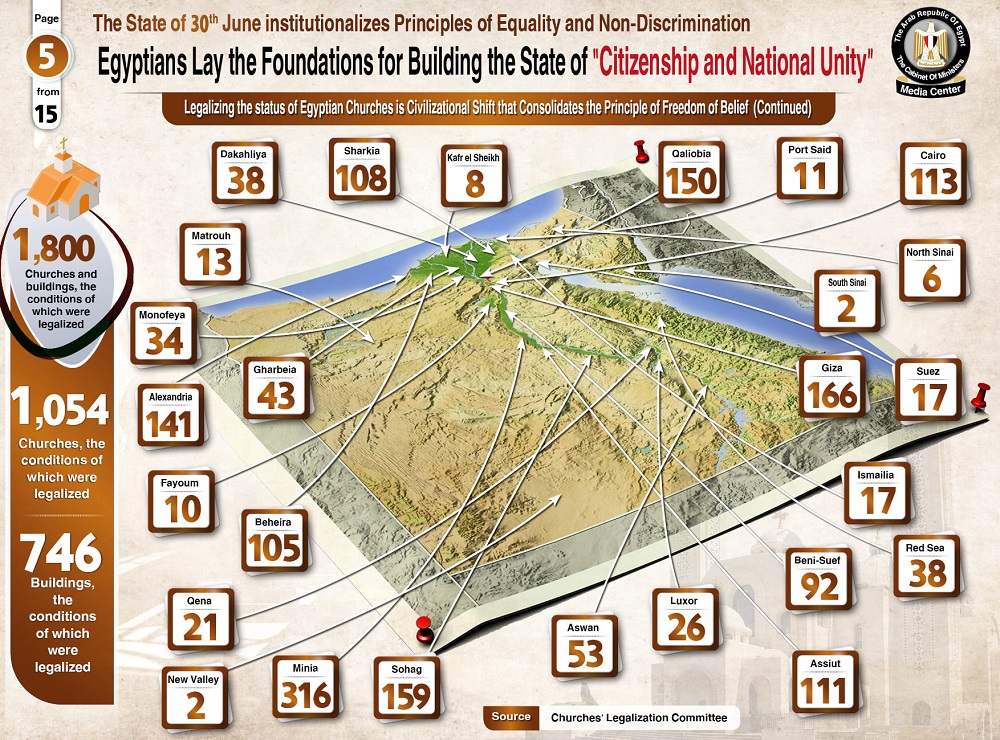
The ruling is timely, as the governmental Council of Ministers recently issued an infographic highlighting the 2020 land allocation for 10 new churches in eight Egyptian cities. An additional 34 are currently under construction.
Prior to this, two prominent examples stand out. In 2018, President Abdel Fattah al-Sisi inaugurated the Church of the Martyrs of Faith and Homeland in al-Our, a village in Upper Egypt, to honor the Copts beheaded by ISIS in Libya. And in 2019, he consecrated the massive Cathedral of the Nativity of Christ in what will become the new administrative capital of Egypt, alongside its central mosque.
This is in addition to restoration work at 16 historic Coptic sites and further development of the 2,000-mile Holy Family Trail, tracing the traditional map of Jesus’ childhood flight from King Herod.
And since the 2018 implementation of a 2016 law to retroactively license existing church buildings, a total of 1,800 have now been registered legally.
Persecution has long been a term applied to Copts in Egypt, ranked No. 16 on the Open Doors 2021 World Watch List of nations where it is hardest to be a Christian. But shortly after the mufti’s fatwa, which restated a ruling last given in 2009, the Grand Imam of al-Azhar gave a pronouncement of his own…
[But there are dissenting cases also.]
Ramy Kamel, a 33-year-old activist, was once dodgingtanks near Tahrir Square, protesting for Coptic equality. Ten years later, he is in jail for “spreading false news” about Coptic discrimination, and “financing a terrorist group.”
Soad Thabet, a 74-year-old Coptic grandmother, was in the Upper Egyptian village of al-Karm, minding her own business. Ten years later, she is fighting for justice after having been stripped naked and paraded through town, with her Muslim attackers acquitted.
These examples show that the term persecution remains “appropriate,” said Kurt Werthmuller, a USCIRF policy analyst specializing in Egypt…
This article was originally published at Christianity Today on February 22, 2021. Please click here to read the full text.
Image: STR / picture alliance / Getty Images People in Algiers wave a big Algerian flag during a protest held today to mark the second anniversary of the mass demonstrations, commonly known as the Hirak Movement, that pushed long-time ruler Abdelaziz Bouteflika out of office in April 2019.
Algeria’s Christians hope that a one-two punch may reopen their churches.
Last December, a letter from the United Nations asked the North African government to give account. And in recent days, popular protests resumed after crackdowns and a COVID-19 hiatus.
Two years ago, Protestants cheered when the Algerian Hirak [Arabic for movement] forced the resignation of then 82-year-old president Abdelaziz Bouteflika, following his announcement that he would run for a fifth term in office. Protests continued, however, as the ruling clique was slow to make changes.
“Hirak supports human rights, and I have no doubt they will help the churches,” said Youssef Ourahmane, vice president of the Algerian Protestant Church (EPA).
“And the letter from the UN shows something else is wrong, and now they will have to deal with it.”
Its language reads like a teacher scolding a recalcitrant student.
“Please explain in detail the factual and legal basis that justified the closure of the 13 places of worship and churches,” stated the 7-page letter, written in French.
“Please provide information on the re-registration procedure of the [EPA], and explain the reason why this has not been finalized to date.”
Signed by three UN experts specializing in the freedom of religion and belief, peaceful assembly, and minorities, the now-open letter represents the latest chapter of international advocacy for the persecuted Protestants of Algeria.
The nation ranks No. 24 on the Open Doors World Watch List of the most difficult countries for Jesus followers. Only three years ago, it ranked No. 42.
“2020 was a very difficult year for us Protestants, who have been deprived of our places of worship,” said Salah Chalah, president of the EPA. “[But] we love our country and we regularly pray for its prosperity.”
Algerian Protestants number between 50,000 and 100,000 believers, with the great majority concentrated in the Atlas Mountains regions populated with Kabyle, a non-Arab indigenous ethnic group.
Besides the 13 churches forcibly shut down, the UN noted 40 other Protestant places of worship threatened with closure. It also rebuked the “physical force” used against church members, as well as discriminatory treatment against Christians in airports and other border crossings.
In 2018, the Algerian government denied Christians were persecuted, stating churches were closed for “nonconformity with the laws.”
But in October 2019, Chalah was one of several kicked and beaten with batons while protesting the closure of the Full Gospel Church of Tizi-Ouzou, 60 miles east of the capital Algiers. Understood to be Algeria’s largest church, 300 of the congregation’s 1,200 members gathered in solidarity as 20 police officers sealed its doors.
“May everyone know that we have been beaten and abused for one reason only—our Christian faith,” Chalah said at the time. “And because that’s the cause of our pain…
This article was originally published at Christianity Today on February 22, 2021. Please click here to read the full text.
Left behind by the judge tossed aside for his work.
Then he must weigh if those efforts were true.
Were figures indicted the right ones to fall?
And are there still others, and how will he know?
Is there a trail that pinpoints the guilt?
Or if everyone shared in a system corrupted
Is any one person a scapegoat for all?
All this takes time, God.
Victims’ families have no closure.
Damaged shops await their claims.
With the nation stuck on neutral
People say: Its by design.
But Lebanon has other frustrations also.
Still no government. Still no aid.
Parliament questions exchange rate equations,
While the needy are suffering, someone else gains.
The Maronite patriarch pleads to the world:
Let the UN guide our path back to health.
The Shiite militia rejects this agenda.
“Our problems are here. We will solve them ourselves.”
There is honor in both answers, God.
But they also called it: War.
Judge between them, for the good.
Judge.
Judge.
But God, let us fear your judgment. You are righteous, we are not.
And your verdict is eternal.
Can the young man solve the mystery?
If pressured, can he walk this path?
Give him courage. Give him wisdom.
Protect his heart. Protect his life.
Too many have been killed already.
And what of the others, God?
Do they serve the nation? Do they serve their friends?
And what do we pray for? That our side would win?
Judge them, God.
They deign to speak for the country.
We do not know their hearts.
Expose the ones of selfish interest.
Promote the ones who fear your name.
And make us like them—faithful to the right, committed to the true.
Humble in assessment of ourselves.
Yet firm in conviction, where in line with yours.
Teach us to balance:
Judge with right judgement.
Judge not lest you be judged.
God, there is a way forward.
Let Lebanon find it.
Amen.
To receive Lebanon Prayer by WhatsApp, please click this link to join the closed comments group.
Lebanon Prayer places before God the major events of the previous week, asking his favor for the nation living through them.
It seeks for values common to all, however differently some might apply them. It honors all who strive on her behalf, however suspect some may find them.
It offers no solutions, but desires peace, justice, and reconciliation. It favors no party, but seeks transparency, consensus, and national sovereignty.
How God sorts these out is his business. Consider joining in prayer that God will bless the people and establish his principles, from which all our approximations derive.
Lebanon Prayer places before God the major events of the previous week, asking his favor for the nation living through them.
It seeks for values common to all, however differently some might apply them. It honors all who strive on her behalf, however suspect some may find them.
It offers no solutions, but desires peace, justice, and reconciliation. It favors no party, but seeks transparency, consensus, and national sovereignty.
How God sorts these out is his business. Consider joining in prayer that God will bless the people and establish his principles, from which all our approximations derive.
Sometimes prayer can generate more prayer. While mine is for general principles, you may have very specific hopes for Lebanon. You are welcome to post these here as comments, that others might pray with you as you place your desires before God.
If you wish to share your own prayer, please adhere to the following guidelines:
1) The sincerest prayers are before God alone. Please consult with God before posting anything.
2) If a prayer of hope, strive to express a collective encouragement.
3) If a prayer of lament, strive to express a collective grief.
4) If a prayer of anger, refrain from criticizing specific people, parties, sects, or nations. While it may be appropriate, save these for your prayers alone before God.
5) In every prayer, do your best to include a blessing.
I will do my best to moderate accordingly. Thank you for praying for Lebanon and her people.
Image: Courtesy of The Middle East Council of Churches
Pope Francis will make the first papal visit ever to Iraq in March to encourage the dwindling faithful. War and terrorism have hemorrhaged the nation’s Christians, but he hopes they might return.
Meanwhile in Lebanon, Michel Abs, recently selected as the new leader of the Middle East Council of Churches (MECC), agrees with the pontiff. But in an interview with CT, he said that schools and hospitals have distinguished Christians, who he hopes might even increase in number—and quality.
And Protestants, he said, have a lever effect that raises the whole. Representing only 7 percent of the regional Christian population, they have a full one-quarter share in the council.
The MECC was founded in 1974 by the Protestant, Greek Orthodox, and Oriental Orthodox denominations. Catholics joined in 1990 to complete its diverse Christian mosaic.
According to the Pew Research Center’s 2010 Global Christianity report, Orthodox believers represent 65 percent of the Middle East’s Christians, with Catholics an additional 27 percent.
But it was the Protestants who helped give birth to the ecumenical movement that joined them together. The 1934 United Missionary Council became the Near East Christian Council in 1956, and the Near East Council of Churches in 1964.
It was renamed the Middle East Council of Churches when the Orthodox joined 10 years later. Today it includes Protestant church associations in Egypt, Syria, Lebanon, Jordan, Palestine, Sudan, Iran, Kuwait, Algeria, and Tunisia.
Council leadership rotates between the four denominations. Last September, Patriarch John X. Yazigi of the Greek Orthodox Church nominated Abs for the Eastern Orthodox four-year term. (Protestants are next in line.)
“Despite the difficulties we face today, being one is the solution,” Abs said in his acceptance address last October.
“This vine that the Lord planted two millennia ago will continue to spread, to include ever-growing areas of the planet.”
A Lebanese Orthodox, Abs represents the ecumenical diversity of the Middle East. His father was educated by Protestants, and married a Catholic. An economist and sociologist, he is a lecturer at the Jesuit St. Joseph’s University in Beirut.
CT interviewed Abs about the regional influence of Christians, the nature of persecution, and the witness of the gospel in the Middle East:
Congratulations on your election as general secretary. From this position, how do you describe the current situation of Christians in the Middle East?
It has been a difficult decade. The emerging movement of fundamentalism has harmed both Christians and Muslims. Everyone is in danger. We have to deal with turbulent times with much wisdom and solidarity. We need a long-term vision.
But I don’t think we will be eradicated from this area. Maybe we will diminish in numbers, or increase later on, but numbers are not the most important thing, despite their importance and their psychological effects.
The quality of their presence is important too. Christians are known for the quality of what they do. With respect to others, they developed efficient institutions, like universities, schools, and media. This helps, but I am still concerned with…
This article was originally published at Christianity Today on February 19, 2021. Please click here to read the full text.
But why should it be otherwise? Our lives are full of conspiracy.
Our lives are full of sin.
Some trust not the Western make. Others reject Russia.
Even in medicine rivalry reigns. A zero-sum game of interests.
But much of the questioning hits closer to home.
“Lebanon: corrupt and incompetent.”
Can it keep the vaccine cold?
Will it distribute fairly?
God, you know.
Few others do.
At the main COVID hospital the head figure urges.
And his overworked staff deserves first in line.
But less than a third signaled solid acceptance.
A full four-in-ten will not take it at all.
What then of the nation?
The lockdown makes the cases fall. But with it the economy.
Another week. And then two more. And still two stages evaluating.
But now: A prick. And then one more. Eventually four million.
Herd immunity.
Or are we sheep?
Or are we rats—trapped in a lab?
God, you are our shepherd.
You lead us beside still waters.
But through the valley of death.
COVID has taken many, conspiracy or not.
Corruption has taken many—but that death is eternal.
And it has poisoned Lebanon far more than any virus.
It has ruined trust.
So what now?
Take the vaccination? Wait it out and wear a mask?
See if others fall ill first?
But if no trust in Lebanon, what of the world?
Are scientists, chemists, complicit?
Errors are possible. Money is made.
But is the whole world out to get me?
All we know, God, is you are not.
And yet, in the end, I will die.
You control the times and seasons.
COVID, somehow, is of you.
But so is grace, and faith, and love.
So is trust—which we must give.
Help us build it ever slowly.
One-to-one, where friendships lie.
Then let us risk to trust the stranger.
Maybe, even, rivals too?
Trust demands we become vulnerable.
As, in fact, we always are.
COVID has reminded us. Death has no escape.
And love leads to a cross.
Do we trust you, God?
The vaccine is here, and some will doubt it. Who can say if they are wrong?
Bless them. Bless us.
Walk with us to unknown future.
Give us wisdom. Heal the sick.
Amen.
To receive Lebanon Prayer by WhatsApp, please click this link to join the closed comments group.
Lebanon Prayer places before God the major events of the previous week, asking his favor for the nation living through them.
It seeks for values common to all, however differently some might apply them. It honors all who strive on her behalf, however suspect some may find them.
It offers no solutions, but desires peace, justice, and reconciliation. It favors no party, but seeks transparency, consensus, and national sovereignty.
How God sorts these out is his business. Consider joining in prayer that God will bless the people and establish his principles, from which all our approximations derive.
Lebanon Prayer places before God the major events of the previous week, asking his favor for the nation living through them.
It seeks for values common to all, however differently some might apply them. It honors all who strive on her behalf, however suspect some may find them.
It offers no solutions, but desires peace, justice, and reconciliation. It favors no party, but seeks transparency, consensus, and national sovereignty.
How God sorts these out is his business. Consider joining in prayer that God will bless the people and establish his principles, from which all our approximations derive.
Sometimes prayer can generate more prayer. While mine is for general principles, you may have very specific hopes for Lebanon. You are welcome to post these here as comments, that others might pray with you as you place your desires before God.
If you wish to share your own prayer, please adhere to the following guidelines:
1) The sincerest prayers are before God alone. Please consult with God before posting anything.
2) If a prayer of hope, strive to express a collective encouragement.
3) If a prayer of lament, strive to express a collective grief.
4) If a prayer of anger, refrain from criticizing specific people, parties, sects, or nations. While it may be appropriate, save these for your prayers alone before God.
5) In every prayer, do your best to include a blessing.
I will do my best to moderate accordingly. Thank you for praying for Lebanon and her people.
Frustrated by years of terrorism inflicted by radical Islamists, France’s parliament is debating a law to end Muslim separatism.
French evangelicals fear their churches will become collateral damage.
“This is the first time, as president of the Protestant Federation of France, that I find myself in the position of defending freedom of worship,” said François Clavairoly.
“I never imagined that in my own country something like this could happen.”
Officially named “the Law to Uphold Republican Principles,” the 459-page bill has been the subject of fierce debate this month, receiving over 1,700 proposed amendments.
The aim, interior minister Gerald Darmanin told parliament, is to stop “an Islamist hostile takeover targeting Muslims” that “like gangrene [is] infecting our national unity.”
With Muslims often crowded into the many impoverished banlieues of France’s major cities, officials fear imported extremist ideologies are leading the religious minority to avoid national integration. In addition, recent terrorist attacks have rallied popular demand for increased security measures.
In the last six years, France has suffered…
This article was originally published at Christianity Today on February 9, 2021. Please click here to read the full text.