This article was first published at Christianity Today on January 10, 2018.
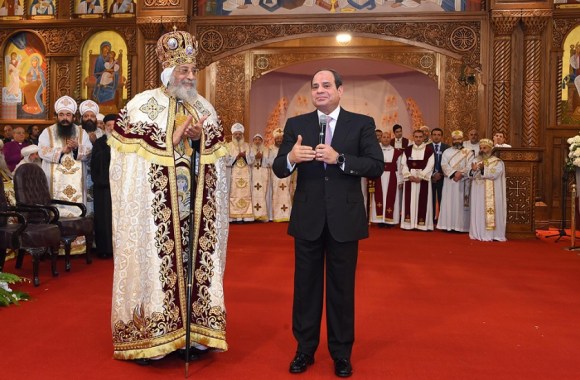
Celebrating Christmas with Egyptian Christians for the fourth consecutive year, President Abdel Fattah al-Sisi presented the largest gift under the tree: A new cathedral.
Sisi was the first president in Egypt’s history to even attend a Christmas mass. During last year’s celebration, he promised to build Egypt’s largest church and largest mosque in a yet-to-be-developed new administrative capital.
Three weeks earlier, 27 people had been killed in a suicide bombing in a chapel adjacent the old cathedral and papal residence, St. Mark’s in Cairo.
“Evil, destruction, and killing will never defeat goodness, peace, and love,” Sisi said at this month’s cathedral inauguration. “We are one, and you are our families. No one can ever divide us.”
Coptic Orthodox Pope Tawadros II called the new church, named The Nativity of Christ, a “divine arrangement.”
But also…
One week prior to the Helwan incident, a church in Atfih, 60 miles south of Cairo, was ransacked—not by terrorists, but by dozens of local Muslims offended by the rumor that a bell would be installed in the unlicensed village church.
In a recent report by EIPR, Egypt witnessed 20 similar sectarian incidents at churches over a 13-month period. Ibrahim said the total is now up to 24.
EIPR’s reporting timeframe began with the issuance of Egypt’s new church building law, meant to eliminate such problems…
Please click here to read the full article at Christianity Today.
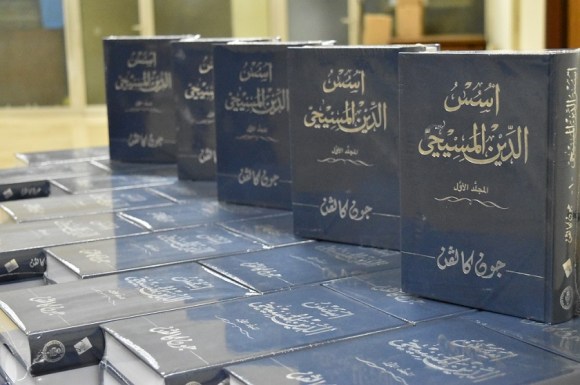
Translation: Foundations of the Christian Religion, vol. 1, John Calvin. (via LSESD)
This article first appeared in the December edition of Christianity Today.
Most of the theological writings that shaped Western society over the last 500 years cannot be found on Middle Eastern bookshelves. Few Arabs have ever read anything from John Calvin, Jonathan Edwards, or Karl Barth.
The reason is simple: Almost none of the Protestant canon has been translated into Arabic.
The dearth of Christian religious texts in the world’s fourth-largest language is especially pronounced within Protestantism, which developed in European languages such as Latin, French, German, and English. The Reformation has barely broken into the Arabic-speaking world, dominated by Islam and where most local Christians—whose numbers are dwindling fast—are inheritors of Orthodox or Catholic theologies.
Nearly a decade ago, George Sabra, president of the Near East School of Theology (NEST) in Beirut, had the notion to translate perhaps the most influential writing of the Reformation, John Calvin’s Institutes of the Christian Religion, into Arabic for the first time.
Written by my colleague Griffin Paul Jackson, I contributed a section on Catholic efforts:
After years of checking thousands of footnotes, Sabra—who settled on a Baptist publisher based in Egypt for his 1,500-page tome—has realized the weight of clear, quality translation. But he’s not the only one counting the cost.
For Middle East Catholics, less than one percent of key texts are available in Arabic, said John Khalil, a priest who works at the Dominican Institute for Oriental Studies in Cairo. “Our bishops can access works in Italian or French,” he said. “But having nothing in Arabic results in fewer theologians. It is a problem.”
Khalil recently secured permission to publish translated and original Christian works, naming his imprint after Aquinas. He has begun revision of the Summa Theologica, translating volume two and hoping to complete the rest in the near future.
But the problem is not just with the classics. Few modern theological works have been translated into Arabic either. Only one book is available from the leading theologians behind the Second Vatican Council.
Khalil’s primary interest is social justice, and in May he published the first Arabic translation of Gustavo Gutiérrez’s benchmark A Theology of Liberation. A handful of books about liberation theology exist in Arabic, but until now, no original texts.
But even these pushed Christians toward participation in Tahrir Square demonstrations that led to the overthrow of Egypt’s government in 2011. One celebrated martyr of the revolution, Mina Daniel, was a leader in Khalil’s study group.
Since then, however, many Christians have soured on such theology. Khalil hopes translation can make a difference.
“I don’t imagine we will become like Latin America,” he said, “but I hope we will at least stop blaming our young people who are struggling for justice. Religion should criticize every political system, and the church must have a prophetic voice.”
Please click here to read the full article at Christianity Today.
Many have been impressed by the forgiveness Coptic Christians have offered to their enemies. Beheaded, ambushed, churches bombed, shot in cold blood – they have not retaliated. Instead, though anger boils, they pray for their persecutors.
In the links above you can explore the opportunities I have had to write about this suffering community, and in one article I partially translated a poem circulated on social media that one Copt directed to ISIS. The Arabic original is here, and the full translation is below:
I will not speak (as some have done)
And curse your religion whatever its name.
I have come that it be known:
My fathers’ religion and what it proclaims.
My fathers’ religion has love at its heart,
The meaning of which will call you to peace.
My fathers’ religion, right from the start
Offers forbearance that conflict will cease.
Your hatred and killing in no way suffices
To stop us from loving and praying for you.
My father’s religion, oh dear Uncle ISIS,
Is not a weapon to pierce you straight through.
I wish that you could come to see
Or just one time the answer seek.
That while you bomb and murder, we
Stay strong as if a mountain peak.
My fathers’ religion of spirit consists.
It is not a body whose end is the dust.
And for the spirit—despite death persists—
Awaiting are loved ones residing in trust.
My fathers’ religion, if you could discern,
Offers each wounded the medic of life.
Tomorrow when you will repent and return,
You will come to know just who is the Christ.
It is a phenomenal sentiment. Which is why I was surprised – and then cut to the core – when my Egyptian friend helping me translate it called it: Haughty.
When I showed him my translation he said: Well done. It is even more arrogant than the original.
My friend is a Muslim, but non-practicing, with a respectful dismissal of religion in general. Perhaps one can say such a person of any background might be offended by strong claims of religious conviction. I have previously written critically when it is labeled bigotry.
I don’t think this is true of my friend. He has a generous heart and speaks tongue-in-cheek. But while I cannot judge the heart of the one who wrote the poem, I can discern the heart of the one who translated it.
And my friend is right.
It is my job to represent what I understand to be the reality of Egypt. This poem, I believe, is an authentic expression of the Coptic community.
But it is more than that. It is an expression of the way I would like the Coptic community to be. Many are not there. Many struggle. Yet many of them hold as an ideal that this is what their Christianity calls for.
So the poem represents also my conviction, but once again more. It represents my triumphalism, my sense of the moral superiority of Christianity. I have written about this before, and it is not necessarily damning. We all judge deficient that which we find to be false.
These days, much of the world says this should not be done with religion. Fair enough. It is hard to weigh between metaphysical matters. Even so, is it not right to let each religion be tested according to its merits, its morals, and its history? Few issues are as important, once one believes in an eternity.
But set all that aside. When I translated the poem I was rejoicing in more than my conviction, I was rejoicing in my identity. When I shared it in the article I was not just encouraging fellow Christian readers with the example of brothers-in-faith. I was encouraging also an us-versus-them mentality.
The ‘them’ is everyone else. There is nothing in it particularly against Islam, but Islam is the context. In Egypt, Christians are surrounded. In America, we are media saturated. I wish to be of generous heart toward Muslims and their faith. This too, with the yearning expressed in the poem, is part of what I understand to be Christianity.
But is that yearning for the glory of God, or the wholeness of my fellow man? Too often, it is the yearning for a pat on the back, the placement on a pedestal. And who better to offer, than a forgiving, grieving woman turned into an icon? Do I truly care for her in the loss of her son or husband? Or do I care for the message we can make out of her?
This is haughtiness. This is arrogance. My friend knows me well, and I’m afraid he exposed me. At the least, he helped God reveal.
Perhaps a bit of Arabic and Egyptian context is helpful. The opening line of the poem, my friend explained, recalls a verse from the popular poet Gamal Bakheet. “Their fathers’ religion, what is its name?” was written at the time of the 2011 revolution, and is a thinly veiled jibe at the Muslim Brotherhood. (See his Arabic recital here.)
The poem speaks of “our fathers’ religion” in the context of sublime values. It praises not only Islam, but also Christianity and Judaism – and even the non-monotheistic religions. And it criticizes those outsiders who want to bring something more defined, more exclusive, and more politically instrumental to Egypt.
My friend has no love for the Muslim Brotherhood, but his father – of whom he speaks respectfully – was a regional leader.
There is another context, even more illustrative. “Your fathers’ religion” is a common insult in Egypt. You can say it to anyone, regardless of their faith, to curse them and their whole ancestry.
In this light, the Coptic poem dips deep into Egyptian waters. It says it will not curse – but even in mentioning the phrase it practically does. It is a redirect, yes, to speak instead of “my fathers’ religion.” But it is soaked in the context from which it emerges. How many Copts have heard this expression hurled by wayward Muslims?
So let us salute them all the more, when they rise above and bless those who go far beyond insult. But remember, and be chastened by, the inherent temptation to pride.
The Bible tells a story of Abraham coming back from a battle, reclaiming his goods taken during a regional war. Upon meeting a friendly king he receives a blessing and yields a tenth of the spoils.
New Testament commentary establishes this king as a prefiguration of Jesus, establishing his covenant of grace as superior to the covenant of law that would be developed through Abraham’s descendants.
For the non-Christian reader, allow the logic to be complicated. But note the verse concerning Abraham and the king. “And without doubt, the lesser person is blessed by the greater.”
How easy it is, when we rightly note and idealistically contemplate the near-impossible calling to bless the enemy, to put ourselves in that superior posture. How easy it is to imagine ourselves in a greater community.
How easy it is to be haughty.
Is the poem a healthy encouragement and impassioned exhortation, or an arrogant celebration and smug self-validation? Only the poet knows.
The translator? The question hits too close to home. It is better to lean toward repentance.
This article was first published at Christianity Today, on December 29, 2017.
In the latest terrorism to strike Egypt, nine people died in Friday morning attacks around St. Mina Church in the southern Cairo suburb of Helwan.
Two Coptic Christians were shot and killed in their nearby storefront. Six others died as they exited morning worship.
The remaining victim was a Muslim police officer guarding the church.
Local reports suggest there were two gunmen. One was apprehended by security forces, foiling his efforts to enter the church. State television showed a second attacker killed, wearing a suicide belt. ISIS claimed responsibility.
The church guard, meanwhile, was hailed as a martyr.
One week earlier, Egypt’s Minister of Islamic Endowments declared the guarding of churches to be “a legitimate and national duty.” Those who die defending Christian houses of worship are to be considered martyrs.
“In our war against terrorism,” said Mokhtar Gomaa, “there’s no difference between Muslims and Christians.” Last month, 300 people were killed in a terrorist attack on a mosque in the Sinai, where Christians have fled violence.
President Abdel Fattah al-Sisi praised the police effort against the “vicious” attack, and urged heightened security. Two weeks ago, Egypt assigned more than 230,000 police to guard churches in advance of the Christmas holidays.
Even so, last week hundreds of local villagers ransacked an unlicensed church in Atfih, 60 miles south of Cairo. They were offended at rumors the nondescript building would install a bell.
Meanwhile, the Coptic Orthodox Church will hold its primary Christmas celebration in the largest church in Egypt, on land donated by the state in its still-under-construction new administrative capital city. (Orthodox Christians commemorate Christmas on January 7.)
Muslims should join Christians in solidarity, said Ahmed al-Tayyib, grand imam of al-Azhar…
Please click here to read the full article at Christianity Today.
Buried in an Ahram Online story about Egypt’s efforts to develop the restless northern Sinai region is a testament to the nation’s insistence on shared identity.
Terrorism in the region has killed Muslim and Christian alike. Part of the problem, analysts say, is that Sinai has been long neglected.
Isolated from the Egyptian mainland, tribal society has been penetrated by militants who draw on a sense of frustration with the state.
President Sisi has promised “utmost force” to eliminate terrorism. But he also recently inaugurated projects to address the economic conditions. These include pathways across and below the Suez Canal, to better link with the rest of Egypt.
Two of which bear special names.
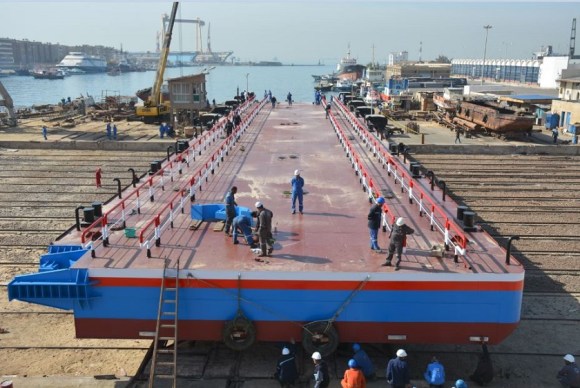
El-Sisi also inaugurated two floating bridges in Ismailia and Qantara, which are named after Ahmed El-Mansi and Abanoub Gerges; two army personnel who were killed in Sinai in the line of duty in recent years.
As every Egyptian knows, Ahmed is a Muslim name, and Abanoub is Christian.
Dozens of security personnel have been killed fighting terrorism. I wrote recently of how casualties cross religious lines.
But to commemorate an bridge connecting Sinai to the mainland, Egypt connects its martyrs from each faith.
The nation has a long way to go to defeat sectarianism, and many may look cynically at a bridge when a church gets ransacked. Just this week a mob attacked in offense of a rumor that a nondescript, not-yet-licensed church would add a bell.
Do not unduly laud Egypt over the name commemoration; it is a far simpler task than civic education.
But neither underestimate its symbolism. Egypt would be much poorer without it.
Video of the opening of both bridges, issued by the Suez Canal Authority (Arabic only). The man on the right is from Bir al-Abd, the Sinai village that suffered the mosque attack, and interrupts the proceedings to say he hopes this accomplishment will help the blood to dry.
Creation is alive with the spark of God, often witnessed in the innocence of children. For those made curious by the title, it is actually an amalgam of two oddly related God moments recently experienced through the pen of two celebrated English writers.
The first came through reading Watership Down to my children. The classic Richard Adams epic is the adventure of several rabbits who break away from their warren. A note of foreboding by the youngest of the herd has not been heeded, but his history of keen perception convinces his colleagues among the rabble.
At a resting place along the way, Dandelion comforts the tired rabbits with the tale of Frith, their god.
It is a “How the Elephant got his Trunk” story, for rabbits. Their chief ancestor engaged in friendly witticism with Frith, and eventually found himself in conversation with the deity while bottom-up stuck in hole.
Earlier in the story, Frith multiplied the rabbit’s enemies as the ancestor thumbed his nose at the request to curb his prodigious copulation.
Impressed by the ancestor’s pluck while still vulnerable, Frith blessed the rabbit’s bottom with quickness and speed, with which it can ever evade them—but must run.
It is a delightful creation account, but my oldest daughter remarked Frith isn’t a real god. He is too much akin to his creatures, and too involved in playful banter with his creation.
I explained that the stories of many gods are similar. They live with humans and interact with them.
My younger daughter then piped in, “That’s kinda like our story, too.”
I was struck by her use of the word “story.” To my daughter the Christian story is the implicitly true account of the universe, but her instinctive description of it is as narrative. Unlike her elder sibling, she didn’t mind the resemblance.
A few hours later I was reading a Christianity Today article about a recently discovered article of C.S. Lewis, called “A Christmas Sermon for Pagans,” originally published in a forgotten issue of the once popular The Strand magazine, but nowhere listed within Lewis’ extensive bibliography.
The article notes Lewis’ observation that despite post-Christian peoples sometimes being called “pagans,” they are nothing of the sort. True pagans inhabited a world full of mystery, magic, and wondrous creatures.
Comparing the two, Lewis wrote, is:
like thinking … a street where the houses have been knocked down is the same as a field where no house has yet been built. … Rubble, dust, broken bottles, old bedsteads and stray cats are very different from grass, thyme, clover, buttercups and a lark singing overhead.
The enchantment of pagan reality is superior to a dreary modernity, Lewis thought. He found danger in modern man’s machine-like approach to nature, even to humanity itself.
But Christianity is an interesting middle-ground:
It looks to me, neighbours, as though we shall have to set about becoming true Pagans if only as a preliminary to becoming Christians. … For (in a sense) all that Christianity adds to Paganism is the cure.
It confirms the old belief that in this universe we are up against Living Power: that there is a real Right and that we have failed to obey it: that existence is beautiful and terrifying.
It adds a wonder of which Paganism had not distinctly heard—that the Mighty One has come down to help us, to remove our guilt, to reconcile us.
In some sense, coming back to my youngest daughter, Christianity is the fulfillment of Frith.
[To note for those truly interested: G.K. Chesterton explored very similar themes in his The Everlasting Man.]
Islam, a post-Christian religion held by most Egyptians we live among, takes great offense at the Christian claim of incarnation. While Allah intervenes in human affairs and may extend his great mercy, it is not fitting that he would become a man, sleep, snore, and defecate.
Frith, meanwhile, created the universe from his droppings. The Muslim impulse is very similar to that of my daughter, where a real god should not be so intimately involved with his creation.
It took the younger child to see it right.
“Every evening, when Frith has done his day’s work and lies calm and easy in the red sky,” wrote Adams, “[the ancestor and his descendants] come out of their holes and feed and play in his sight, for they are his friends, and he has promised them that they can never be destroyed.”
The magic of our ancestors fed the stories of our childhood. Modern man has grown too sophisticated to believe them, and Christianity played a significant role. We are not to fear the world.
The pagans did. Post-pagans, with much Christian help, shook their fear and enslaved their former enchanter. What will set the world—and us—free again?
Christmas is coming.
In one corner there may be snark at notions of traveling stars and virgin birth amid inebriation and the best of consumerism.
In another corner there may be snark at the right number of wise men and the seasonal location of a manger, amid legalism and the best of consumerism.
This year, around the Christmas tree appropriated from our pre-Christian ancestors, be rightfully pagan. Feast. Revel. Sing.
Be also rightfully Christian. Share. Serve. Marvel.
As Lewis wrote to the pseudo-pagans of his day, this may be our “way back not only to Heaven, but to Earth too.”
It is a lesson far more easily grasped by children. Perhaps also, by rabbits.
Egypt has long been sick. Nurse her to health, and strengthen her immune system.
Some vital organs show signs of life. Others lag behind.
Parliament passed an anticipated national health insurance law. Vigorously debated, a point of contention was on the cost to the state versus the cost to the citizen.
Perhaps it was settled well, but it will still take time. Only one governorate will be covered first; the nation not for several years.
God, may it be better than what was. Strengthen the quality of care in all facilities. Extend coverage to as many as possible. Balance the finances, and neglect not the poor.
Mindful of them, Egypt is also trying to buttress her industry. Underdeveloped Asyut houses the factory for the first locally-made smartphone, but the launch was delayed when the batteries were stolen.
Criminals have been caught, and the phone will soon ship. But too much illness is self-inflicted.
God, reopen factories. Employ the youth. Inspire entrepreneurs. Streamline efficiency. But curb corruption and criminality, wherever it is found.
Mindful of this, a ripe new field has begun production. Natural gas discovered in Zohr is extracted by Italians, but promised for domestic gain. Export is restricted, and imports will soon be unnecessary.
It is a panacea for Egypt’s energy.
God, let the circulation be smooth as it pulses through her veins. May she steward well.
But you are the healer, you are the cure. Breathe new life into Egypt, to nurse others in turn.
Often in popular understanding they of the long beard are the chief perpetrators of religious violence and terrorism.
Many are, but it does not have to be so. Another popular version of Salafism adopts political quietism, believing Islam commands them to obey the ruler — almost no matter what.
The ‘almost’ is because the ruler is required to allow the practice of prayer, and in some fashion implement sharia. If he willingly flaunts this, he forfeits his rule.
But they also believe that Islam teaches that the chaos of rebellion far outweighs the chance that a revolution against defects might possibly be successful.
But where is the sharia line to be drawn, and what calculation of chance might animate a Salafi toward jihad?
Meet Muhammad Surur, a Syrian recently deceased and commemorated in the National as the one who normalized extremism.
Surur was a leader of the Muslim Brotherhood in Syria until the 1960s. He broke away from the Muslim Brotherhood and moved to Saudi Arabia, where he was influenced by Salafism there.
A decade later, he left Saudi Arabia for Kuwait. In the 1970s, he was part of a leaderless and unorganised religious movement that combined traditional and revolutionary ideas, dubbed the Islamic awakening.
The Sahwa, as the movement was known in Arabic, led to the transmutation of Salafism from a traditional school of thought (dawa) to an activist one (haraki), through the foreign influence of political revolutionaries such as Surur.
In short, political quietism met political Islam.
Still, this doesn’t mean his movement was bloodthirsty. The author notes jihadis and anti-jihadis both hurl insults against one another in Surur’s name.
Even so, Surur believed the Shia were not true Muslims, says the author, and praised himself for anticipating the intra-Muslim divides characterizing the post-Iranian revolution Middle East.
Surur also embraced the Syrian uprising, and was eulogized by the Syrian National Coalition, the political arm of the Syrian Islamic Council.
“He focused in his work on activism and traditionalism, rejecting apathy and passivity, and established a current that combines intellectual work with political activism, in addition to religious knowledge.”
The coalition’s statement is an example of the dangerous tendency to misconceive of the man’s legacy. The political body ignores the impact Surur had on the kind of extremism that sweeps his country five decades after he left it.
Praise for his movement shows the rampant normalisation of extremist ideas prevalent not only by the opposition’s bodies but also by watchers of the conflict.
The article is noteworthy for highlighting an individual who nuances our understandings.
But I find it lacking in one way: Why did the Salafism side of the equation produce such wanton violence?
Traditional political Islamic groups have a more nebulous approach, sometimes embracing non-violence or defined, forceful actions for revolutionary goals. Perhaps I’m being too generous.
Salafi-jihadis have been shaken into political activism, certainly, but where then does the violence come from?
Salafis esteem the earliest Muslim ages and seek to replicate as much as possible. Does the new revolutionary fervor spark imitation of early Islamic wars?
Or does the Salafi tendency to reject the other and the modern world simply explode when driven to an activist cause?
Political Islamists might utilize violence, or pursue insurrection, but there is something very different about Salafi-Jihadis. Why?
Surur himself is not enough to explain this, however much he may have set it in motion. The author does well to bring us his example, but the article is too short to articulate everything.
But everything is what we need to know, to properly understand and appreciate the other.
Inasmuch as that is impossible, let us try within the space we have. For now, just realize that not all Salafis are violent, even if many have long beards.
Christian pilgrims carry palm branches during the Palm Sunday procession on the Mount of Olives in Jerusalem. UPI/Debbie Hill
This article was first published at Christianity Today, on December 15, 2017.
American evangelicals rediscovered their brethren in the Middle East in recent years. The promise of the Arab Spring, followed by the threat of ISIS. Beheadings and other martyrdoms, followed by forgiveness.
Many decided we must become better friends, and work harder for the persecuted church’s flourishing in the land of its birth.
However, President Donald Trump’s recognition of Jerusalem as the capital of Israel is putting that new friendship to the test, as Middle East Christian leaders have almost unanimously rallied against the decision.
Trump’s decision would “increase hatred, conflict, violence and suffering,” said the patriarchs and heads of churches in Jerusalem in a statement in advance of his anticipated announcement.
The Coptic Orthodox Church warned of “dangerous consequences.” The head of Egypt’s Protestant community said it was “against justice” and “not helpful.”
But the strongest testimony may have come from Jordan, where the national evangelical council pleaded against “uncalculated risks” that “may well expose Christians in this region to uncontrollable dangers.
Despite these dire cries, many conservative US evangelicals rejoiced in Trump’s announcement…
Please click here to read the full article at Christianity Today.
Presidential elections will take place in Egypt sometime this coming spring. The incumbent is expected to run for a second term.
But as of now no opposition is certain. There is time, and there are those who are interested.
A former prime minister and presidential runner-up is meeting with his party to determine best course of action. He declared his intention abroad, maintained he was prevented from leaving, then got deported, and is now back home.
Another candidate, an army officer, declared his attention and was then detained. He broke regulations and engaged politically while still commissioned and wearing his uniform.
A third, a leftist human rights lawyer who also ran previously, declared his intention early and often. But a court case is pending that might bar his candidacy. Only those with clean record may seek office.
God, sift them to let your choices remain. Sift Egypt, to bring your choices forward.
Many or few, make her president known. For the good of Egypt, for the good of the world.
Some say the good will come via strong competition, cementing democratic gains achieved in the constitution.
Others fear a strong contest will shake Egypt’s stability, and a change in course will threaten the economy.
God, you know.
Guide Egypt through this crucial coming period. Teach her the ways you want her to walk. Honor her people in all of their choices. Give her good leaders who rightly fear you.
For peace. For freedom. For sovereignty. For flourishing.
In truth, for all, these are always pending, awaiting your ultimate fulfillment. Give Egypt vigilance and wisdom, God, to secure the present as best she can.
Friends don’t always agree. But not all issues are the same. Jerusalem is, and has often been, historically different.
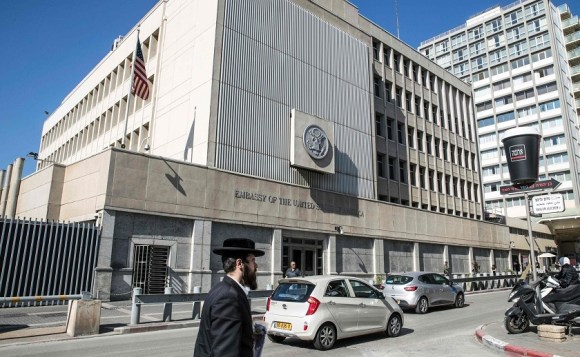
Changing longstanding US policy, the American president recognized the city as Israel’s capital, and began the process of moving the embassy.
The Egyptian president warned against it, and then spoke against it. Most of the world sides with him.
Parliament is now debating sanctions against America. The Azhar and the Coptic Orthodox Church will not meet with the vice-president during his upcoming visit.
Sporadic protests have broken out. Pressure may – or may not – be mounting.
God, the three religions of Egypt consider Jerusalem important to you. Consequently, it is to them. So it is to many in America.
But though they read you differently, do they read you correctly?
Guide all in proper conviction toward land, promise, people, and politics. Give consensus.
But God, in this your will has long been unrealized. Decades. Centuries. Millenia.
For those with conviction, no matter how proper, give them patience with the others. Give them fair arguments. Give them fairer attitudes.
And until realization comes, give love.
Help them to talk. Help them to pray. Help them to see themselves. Help them to see your principles.
Grant justice. Grant peace.
Where there is sincerity, spare the cynicism. Where there is callousness, call it out. May all speak from the heart.
May they stay friends. May they become friends. May they repent. May they be different.
God, this change is historical. Make it more so. Perhaps you are the only one who knows how.
The United States embassy currently located in Tel Aviv may be moved to Jerusalem. (Image: Jack Guez / AFP / Getty Images, via the LA Times.)
President Donald Trump is expected tomorrow to recognize Jerusalem as the capital of Israel.
Doing so would fulfill a campaign promise. It would upend decades of American foreign policy.
And it would simultaneously encourage and unnerve the Christians of the Middle East.
“I am obviously pleased, as an Israeli,” said David Friedman, a professor at the Messianic Jewish Theological Institute and former dean of King of Kings College in Jerusalem.
“Jerusalem is the capital of Israel, de facto, concretely. Our government sits there. So why should President Trump continue ignoring reality?”
But 65 miles north in Arab-majority Nazareth, another Christian educator has a dramatically different response.
“It is a bad idea,” said Botrus Mansour, a Baptist elder and co-chair of the Lausanne Initiative for Reconciliation between Israel and Palestine. “It will increase resentment and possibly spark unnecessary violence, making peace harder to obtain.
“America will lose any remaining legitimacy it had as a fair broker.”
Israel occupied Arab East Jerusalem in 1967, and passed a law in 1980 declaring the city its eternal, united, and undivided capital. The United Nations declared the act null and void, by a unanimous resolution in which the United States abstained.
Palestine also desires Jerusalem as the capital of a future state. So American policy has been…
Please click here to read the full article at Christianity Today.
After over 300 people were killed at a mosque, the state must do something. The president issued a directive to the army and police: utmost force, within three months.
Terrorism must be eradicated from the Sinai.
And may it be so. God, but with the utmost care.
There are civilian lives at stake, unmercifully meddled as militants mix in.
There are terrorist lives at stake, still creatures of a compassionate God.
There is the reputation of the state, widely accused of haphazard strategy.
There is the regard of the state, required to be strong in response to insult.
And that is what it was, God. An insult to humanity, to religion, to Egypt, to you.
They showed in their actions the utmost contempt. They deserve nothing more than the utmost chastisement.
In truth, they deserve death. They deserve hell. Equip the military and police to bring them right to its gates.
And once there, overcome.
Overcome conflict in the Sinai with prosperous development. Overcome hatred in the heart with sincere repentance.
Overcome evil with good.
God, utmost force is necessary in the face of wanton violence. But let strong resolve not extinguish compassion. Let broad mandate not diminish precision. Spare the innocent; rescue the region.
Photo Credit: Church and mosque in Egypt. By kmf164, via Flickr.
In what is being called the largest terrorist attack in modern Egyptian history, over 235 people were killed at a village mosque. Militants detonated explosives as worshipers exited the Rawda Mosque in Bir al-Abd, 25 miles west of the North Sinai capital of Arish. Several then fired upon the fleeing masses.
There has been no immediate claim of responsibility, but suspicion falls upon the Islamic State. The Rawda mosque is affiliated with the Gaririya Sufi order, and ISIS has previously vowed to attack what it deems to be heterodox Muslims, warning them to stop their distinctive rituals. ISIS represents an extreme Wahhabi interpretation of Islam, and is offended by Sufi practices that seek a mystical connection with God through chants and visits to the shrines of Muslim saints.
In 2013, a Sufi shrine was bombed with no casualties. But in 2016 two prominent Sufi sheikhs were kidnapped and decapitated.
Coptic Christians, who have seen over 100 people killed under an ISIS vow, responded with condemnation and sympathy. The next day, Saturday the 25th, the Coptic Orthodox Church spokesman announced all churches in Egypt would ring their bells in solidarity at noon.
“We pray to God that Egypt is preserved from such unprecedented brutal terrorism,” the church announced in its first statement, released shortly after the bombing. “We offer our sincere condolences to the families of the martyrs, praying for the healing of all who are injured,” stated the second announcement about the bells.
Such a public display of Christianity will only further infuriate ISIS…
Please click here to read the full article at Providence Magazine.
This article was originally published in the October print edition of Christianity Today, co-authored with Griffin Jackson.
When Haitham Jazrawi started working at Kirkuk Presbyterian Church in Iraq in 1991, there were 72 families. Today, there are still 72 families—but only two of the originals remain. During his 26-year tenure as caretaker and then pastor, Jazrawi has seen a turnover of more than 300 families due to emigration.
Such an outward flow has been the norm in churches across the Middle East. In Iraq and Syria, countries ravaged by years of war and the terror of the Islamic State, roughly two-thirds of Christians have fled.
Among Jazrawi’s congregants, 50 percent are internally displaced from elsewhere in Iraq. “They come as refugees from inside our country,” said the Kirkuk pastor, “from the Nineveh Valley, from Nineveh, from other villages and cities.”
Soon, they may also come from outside of Iraq. With the Trump administration threatening to deport more than 1,400 Iraqis, hundreds of whom are Christians, a rare irony may present itself: the forced movement of Christians into the Middle East.
This summer, hundreds of Iraqis were behind bars in holding centers around the United States, slated for deportation to Iraq. The majority were Christians, and most were rounded up in Detroit in a massive June raid executed by Immigration and Customs Enforcement (ICE).
“Not only would they be breaking up families that have been here for decades,” said Nathan Kalasho, a local advocate for the detainees, “but they would be sending an already targeted minority to a country that no longer welcomes them…”
Please click here to read the full article at Christianity Today.
Small developments can multiply. Small disagreements can explode. For those involved there is no small. For the nation, wait and see.
The region’s largest fish farm opened in one of the nation’s poorest districts.
The pollution from burning post-harvest rice straw witnessed significant reduction.
The negotiations with Ethiopia over Nile dam construction reached an impasse.
The police brought charges against several creatives threatening social norms.
God, some developments are undoubtedly positive. May the economy strengthen through good food and good jobs. May the environment purify through proper waste management.
But other disagreements are harder to measure.
May two nations find consensus. May society find the same.
You have given Egypt resources, God. Natural and human. May she steward well.
If care is not taken, Ethiopia could bring Egypt to ruin. If morality is not heeded with mercy, Egypt may fall libertine or legalistic.
Spare her these trials. Bless her where she has proved faithful.
With you there is no small. May Egypt wait, but see you multiply.
Amen.
UPDATE: After publishing this post, 155+ people were killed in a combination bomb and gunfire attack at a mosque in Northern Sinai. God have mercy, and may they rest in peace.
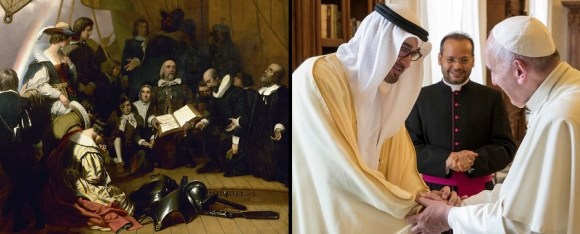
via Mormon Newsroom and Mohamed Al Hammadi / Crown Prince Court – Abu Dhabi
Happy Thanksgiving to all American friends. Religious freedom is one item of gratitude, as well as positive signs it may be developing around the world.
Consider again these promising signs I’ve been privileged to report on the past two years:
Arab Gulf — Why Christianity is Surging in the Heart of Islam
Indonesia — World’s Biggest Muslim Organization Wants to Protect Christians
Morocco — Arab Christians and the Marrakesh Declaration
Not allisrosy, of course, and some nations pretend nothing is wrong.
Sudan is one of them. But in recent engagement, the United States has religious freedom on the agenda for improvement of ties and removal of sanctions.
A leading U.S. diplomat visiting Sudan said the United States is willing to work with the Sudanese government to help it achieve the conditions necessary to remove its designation as a “Country of Particular Concern” in the U.S. State Department’s annual International Religious Freedom Report.
Deputy Secretary of State John J. Sullivan was speaking on Nov. 17 at the Al-Neelain Mosque in Omdurman, located on the western bank of the Nile River, which separates it from the national capital.
Sullivan said “supporting human rights, including religious freedom, has been, and will continue to be, a critical part of the United States’ bilateral engagement with Sudan.”
The event at the mosque included leading Muslim and Christian clergy. Sudan is 97 percent Muslim, and the small Christian community has faced harassment, especially since the predominantly Christian and animist south of the country became the independent state of South Sudan in 2011.
The State Department’s 2016 International Religious Freedom Report cited reports of government arresting, detaining, or intimidating Christian clergy and church members, denying permits for the construction of new churches, closing or demolishing existing churches and attempting to close church schools, restricting non-Muslim religious groups and missionaries from operating in or entering the country, and censoring religious materials and leaders.
There is always room for cynicism, and perhaps frequently it is warranted.
Does the United States care more for counterterrorism and military contracts, and will let this item slide if progress is seen elsewhere?
Will Sudan put on a nice face and make superficial improvements, only to squeeze non-Muslim communities once the diplomats leave?
Maybe. But this Thanksgiving, let not cynicism be a landing place. Even the public rhetoric of religious freedom is something to celebrate. It sets a tone; attitudes can adjust over time.
And as the US ambassador told his Sudanese audience, it took a while in America.
“I am the grandson of Irish-Catholic immigrants who arrived in Boston, Massachusetts in the 1880s. At the time they arrived – and for many decades that followed – Catholics in the United States faced widespread prejudice based on their religion,” he said.
“When John F. Kennedy – another Catholic from my home state – ran for president of the United States in 1960, he even had to give a prominent speech to reassure the nation that his faith was compatible with the duties of the office of president.”
Sullivan said recalling such history “seems quaint” today, but added it took many decades – “it was not easy” – to reach the point where it is “nearly unthinkable” that one’s status as a Catholic in the United States would serve as a disadvantage to a person’s ambitions for life.
“The American experience in this regard underscores that respect for the human dignity of every person – regardless of religious belief or origin – is a key component of not only protecting human rights, but also fostering a society that can flourish, build upon each other’s strengths, and move forward together,” he said.
America has had flaws, too. She still has some, and may be developing others.
But today, around the table, give thanks to God for what exists — both at home and abroad.
Those who love God do not need freedom to follow their faith. But ample facilitation makes our world a better place.
Appreciate, and pray for more. And then, enjoy your turkey.
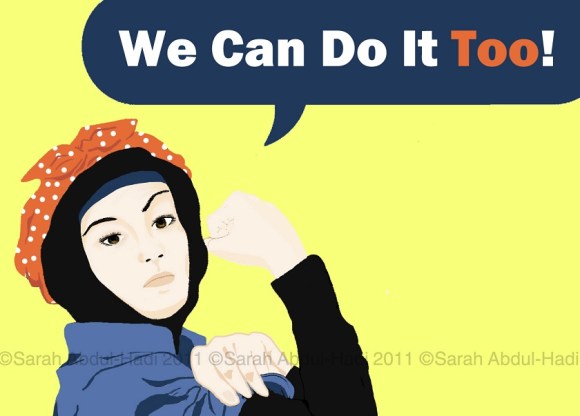
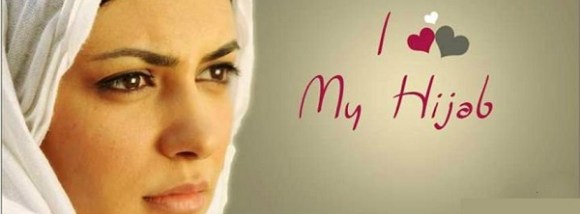
Identity politics are dangerous. Unfortunately Muslims have long been swept up into the fray. Sometimes willingly.
In many traditional and conservative societies, women have covered their heads. This is not exclusive to Islam, whatever the Quran says about it.
But a time came also when Muslims were mobilizing on the basis of faith, using it as a rallying cry. It roughly corresponded with an ascendant European colonialism that weakened the political power Muslims once possessed. It revived in the 1970s, with the surge in popularity of political Islamism.
And one symbol of resistance was the woman. The headscarf became a statement.
It is far more than that, of course. It is a symbol of piety, of faith. It is an act of modesty in an immodest world. Perhaps it is an act of acquiescence to culture, or obedience to husband.
In the end it is a piece of cloth, and from an American perspective we believe a woman should be (mostly) free to wear what she wants.
But to be a good Muslima, must the woman wear a scarf?
I will not delve into the perspectives that say yes, or the traditional interpretations that seem to govern much of the Muslim world. They may well be right.
But in a recent article, the Huffington Post highlighted five scholars who say no. I know some of the names. One is famous and generally well celebrated. Another was marginal and called an apostate.
Here are their arguments.
Khaled Abou el-Fadl
El-Fadl mentions that the illa (operative cause) for the injunction to cover was to protect women from harm and to avoid undue attention from mischief mongers.
He also states that the ma’ruf (generally accepted as good) and the munkar (socially recognized as unacceptable) are based on pragmatic and practical experience.
Therefore, he argues that if the headscarf itself causes women to stand out and put them in the way of harm, and if uncovering the head is not considered socially immodest or licentious, then it would be permissible for Muslim women to not wear the headscarf.
One would hope a well functioning society would not harass women who cover their heads. Does his reasoning then suggest that the headscarf is otherwise an obligation? Should the power of decision be yielded to the mischief mongers?
Javed Ahmad Ghamidi
Like El-Fadl, Ghamidi opines there were injunctions exclusive for the wives of the Prophet. He argues that there are only four instructions that pertain to Muslim women.
These include lowering the gaze, wearing modest clothing, covering the bosom with a piece of cloth, and not displaying ornamental embellishments before unrelated men.
No other injunction other than these has been imposed on Muslim women.
This seems straightforward enough. A general command for modesty may require a headscarf in some cultures, but not in others. But who is to decide? The individual woman? Islam teaches that God judges the individual, so she alone bears the consequences. But who protects society?
Abdullah bin Bayyah
Bin Bayyah adopts an approach based on necessity.
He argues that hardships allow for uncovering of body parts and mentioned how the shins of two of the Prophet’s wives, Aishah and Umm Salamah, were uncovered when they were giving water to wounded soldiers on the battlefield. He also mentions the minority position of Ibn Ashur that women may uncover their hair in public.
Bin Bayyah’s student Hamza Yusuf even asserts that:
“The laws are there to serve human beings; we are not there to serve the law. We are there to serve Allah, and that is why whenever the law does not serve you, you are permitted to abandon it, and that is actually following the law. …
The law is for our benefit, not for our harm. Therefore, if the law harms us, we no longer have to abide by it.”
If uncovering hair is admitted to be a minority position, bin Bayyah’s does not seem a very strong argument. A pillar of sharia law is the consensus of community.
His student Yusuf pulls a principle of Jesus, but the Huffington Post excerpt does not go far enough to demonstrate the validity of the principle in Islam. For now it must be enough that some scholars argue so.
Ahmad Ghabel
The late Shia cleric, who had the prominent title of Hojjat el-Islam (authority on Islam), offered ten arguments in support of the viewpoint that covering the head was not obligatory but recommended.
He opined that there was no consensus amongst jurists as to whether hair constituted the awrah (intimate parts) that must be covered.
For the reader desiring demonstrations of validity, the link will offer an academic treatise. But even if something is only recommended, should it not be done? Perhaps it cannot be enforced, but does the woman risk her standing with little recourse?
But as above, the second claim is more powerful. If there is no consensus on what must be covered, then again we come back to modesty, not compulsion.
Nasr Abu Zayd
According to the late Abu Zayd, both the awrah (intimate parts) and the hijab (veil) are subject to socio-cultural norms and therefore are changeable and not fixed. He opined that both are not legislated by Islam but are rather specific to the Arab culture.
Fair enough, but again, on what basis? Not enough here to tell.
For what it is worth, this is the scholar labeled an infidel by an Egyptian court, and forcibly divorced from his wife. I don’t know his story well enough to say which of his opinions most offended the judge.
All religions impose obligations; all societies have their norms. The former is of individual faith; however related, the latter is not wise to transgress.
But some always will, and society needs their creativity. Just not too much of it. It is difficult to know where the line must be drawn.
If this was the only matter, we would probably work it out. Not to justify any particular outcome, but traditional societies seemed to do so, with diverse application.
Some highlight the hijab as a symbol of oppression. Others compel it as a means of control. Some thrust it in your face demanding respect. Others find ways to seduce men all the same.
Too much of this issue is wrapped in identity politics. Let’s just leave each other alone.
Mostly. Unfortunately, the headscarf at this time hits at a collective world conscience on how to balance rights with freedoms, the individual with society.
Maybe we can’t just leave each other alone, but we can be charitable. How wonderful if this was our collective identity.