Categories
Prayers

Friday Prayers for Egypt: World Youth

Flag Cross Quran

God,

They came from around the world. They discussed much local and regional.

If they paid attention, they watched leaders consult and sign million dollar contracts.

And they lent presence to an effort to give a strong message: Egypt wants to listen to the youth. The world should do the same.

So they should, God. Everyone should listen.

Much of the developing world is demographically skewed. Youth are the majority; leadership is old. This is not a bad thing. Wisdom takes time.

But revolutions have sprung from less. Egypt knows. She is still recovering.

And some are still angry. They see the World Youth Forum as hypocrisy. Far too many are still in jail.

Some have been pardoned. A program is launched to help remove stigma. And the forum itself was sparked by presidential youth meetings.

Only you can judge sincerity, God.

But you can also aid forgiveness. You can also strengthen persistence. You can lead the youth in both, as appropriate.

Perhaps some in opposite directions. There is a wealth of virtues to pursue. But many vices also to waylay.

Youth may rush to judgment. They may wallow in depression.

They do best with guidance, when given sufficient freedom.

God, help Egypt find the balance. Help the youth heal, and thrive.

And with the world present, may they cross-pollinate. May they learn. May they inspire.

They are a challenge, but also a hope. A danger, but also a strength.

May they contribute to both local and regional. May they pay attention.

We have to talk, said the forum. Indeed we do, said the youth. May all messages be heard, and find resolution.

Egypt, and the world, works better together.

Amen.


Categories
Personal

What’s in Your Lunchbox?

Egypt Sandwich

One morning before school, Alexander, our newest kindergartener, was fiddling with Egyptian coins and thinking through options at the school canteen. His eyes lit up when he realized he could buy a milk box … maybe chocolate, maybe strawberry, or maybe banana!

He looked up and asked, as if he had a revelation. “Mom, how do I say, ‘Can I try a sip of that?’ in Arabic?”

My mind immediately thought of a gross juicebox straw that some kid was slobbering all over. Conditioned by American cafeteria germ paranoia, my first answer was, “You can’t ask for a sip of something. Please don’t ever ask for a sip of something, especially at school!”

So instead he asked, “Mom, how do I ask for a bite of something?”

Alexander was just beginning his time on the school playground; clearly this was something he wanted to learn.

But I still wasn’t thrilled. “Iskander [as his name translates in Arabic], do kids ever ask you for a bite? Do they ever ask for some of your food?”

He frowned. “Yes, they always want a pretzel.” At the breakfast table his three sisters immediately chimed in. “Yes, they always want the pretzels!”

It was a cultural revelation. My kids, the Americans, bring weird snacks to school.

Egyptian culture breeds generosity, usually. When a child opens a bag of chips it is common practice to offer to friends. Same with a packet of cookies. What you have is meant to be shared.

Earlier this summer as we visited a school friend, she told her mother, “Layla [our daughter] never brings a sandwich.” She couldn’t comprehend it. She thought we were starving her.

But the system here does not include a lunch break, and to me, a sandwich is lunch. Egyptian kids eat when they get home around between 2-4pm, depending on the traffic.

For them a sandwich is breakfast, eaten at the beginning of the day, often at school.

I grew up on peanut butter and jelly, or perhaps ham and cheese. My kids, meanwhile, have encountered a whole variety of sandwiches, and often get a taste. Usually they are made in a long, thin Kaiser-type roll or pita-type bread.

Inside: French fries. Or scrambled eggs. Perhaps some strange sort of salty white cheese. Maybe liver. Beans, mashed or falafeled.

Our oldest daughter recently attended a church retreat for expat kids. Hosted by Egyptians, she was surprised at the shock other campers had at the French fry sandwiches.

“What could be better to eat for breakfast?” she wondered, telling us over her morning corn flakes.

I am sure our littlest kindergartener will try many “bites” of things in the years to come. Unlike me growing up, hopefully it will expand his palate and encourage him to try new things.

And maybe he’ll also stop frowning when friends ask him for something, and instead, like them, will learn to offer freely.

He has freely received, as the Biblical saying goes.

What’s in your lunch? Can I have a bite?


Categories
Middle East Patheos Published Articles

Secondary Separation, in Islam

Secondary Separation Islam

In fundamentalist Christian circles there is an approach to the world known as ‘secondary separation’. While the Bible notes Christians are not of this world, there is tension when Jesus says they are also in this world, and should not expect to be removed.

Fundamentalism is one expression of this tension, that leans in the direction of withdrawal. A key verse is II Corinthians 6:17, “Come out from them and be separate,” quoting an Old Testament passage focusing on holiness.

Separation from the world is therefore a necessary Christian posture, though defining ‘them’ and ‘separate’ can be difficult. Fundamentalists take it a step further, saying that ‘them’ includes also those Christians who do not separate sufficiently.

This is secondary separation, and it has been most famously applied against Billy Graham. The renowned evangelist has been celebrated by most Christians for his gospel fidelity and salvation message.

But it that ‘most’ that offends this fundamentalist spirit. His crusades have cooperated with too many insufficiently fundamentalist churches, which they believe compromises the call to be separate.

In partnering with those who are not theologically pure, he risks endorsing their relative liberalism.

It is interesting to note a similar approach exists in Islam.

The posture of takfir is the process of declaring someone a kafir, an infidel. Longstanding Islamic jurisprudence says this should almost never be done to a Muslim, unless he or she openly renounces their faith.

But there is a verse in the Quran that provides Muslim fundamentalists, if the term is appropriate, a powerful retort. Sura 5:44 says, “And whoever does not judge by what Allah has revealed, then it is those who are the disbelievers,” using the plural of the Arabic word kafir at the end.

This verse has been applied by Muslim insurrectionists throughout the ages against their Muslim rulers who they accuse of not properly implementing sharia.

Certainly Muslims also struggle with the tension of their texts, and they are invited to provide proper interpretation.

But leave it to ISIS, the so-called Islamic State, to take it a step further.

Should it be necessary: There is little similarity between Christian fundamentalists and Islamic terrorists. But a devotion to God and a commitment to his way may sometimes prompt an antagonistic stance not only to the world, but also to fellow believers.

And from an article in Jihadica, “The Caliphate in Disarray,” there is also a similarity in secondary takfir.

Turki al-Bin’ali, the self-proclaimed ‘Grand Mufti,’ or chief cleric, of ISIS, was killed several months ago in a US airstrike. His death set off a wave of eulogies, but also counter-eulogies and accusations. Some even speculated his location was tipped off to the enemy that he be eliminated as leader.

Takfir is one of the issues that divides ISIS and al-Qaeda, with the latter being slightly more reticent to call non-affiliated Muslims non-believers. It is a sensible position if you are trying to recruit, not to limit your pool of applicants.

Then again, the number willing to die in their cause is considerably limited by their viciousness. Perhaps then it is best to recruit only the purest of the pure. But as seen with Christian fundamentalists, purity is easily nitpicked.

As a result: theological division among those who believe they have already most dedicated to God’s path through jihad.

Al-Bin’ali’s nemesis on this issue, the Meccan-born Ahmad ibn ‘Umar al-Hazimi, preached a rigorous approach to takfir. The following excerpt may be challenging in its Arabic references, but careful reading will establish a clear similarity with secondary separation:

In his lectures, he [al-Hazimi] espoused a controversial doctrine known as takfir al-‘adhir, or “the excommunication of the excuser.”

The notion of takfir al-‘adhir is derived from two concepts in Wahhabi theology. The first is the requirement of takfir; the second is the inadmissibility of al-‘udhr bi’l-jahl, or “excusing on the basis of ignorance.”

According to the founder of Wahhabism, Muhammad ibn ‘Abd al-Wahhab (d. 1792), it is incumbent upon all true believers to excommunicate—that is, to make takfir of—those deemed unbelievers, as well as to excommunicate those who fail to excommunicate them.

As Ibn ‘Abd al-Wahhab stated—and this is the line around which the Hazimi-Bin‘ali debate revolves—“Whoso fails to make takfir of the polytheists, or has doubts concerning their unbelief, or deems their doctrine to be sound, has [himself] disbelieved.”

The duty of takfir is generally accepted in Jihadi Salafism, but there is some debate over al-‘udhr bi’l-jahl, that is, over whether ignorance may serve as a legitimate excuse for holding errant beliefs, and so shield one from the charge of takfir.

For al-Hazimi, who follows the traditional Wahhabi view, al-‘udhr bi’l-jahl is categorically invalid, meaning that the ignorant heretic is to be declared an unbeliever.

Moreover, as he says, anyone who regards ignorance as an excuse for the heretic’s unbelief is also to be declared an unbeliever. Hence the idea of “the excommunication of the excuser.”

Perhaps in truth this is a tertiary takfir, with standard Wahhabism being the secondary. But herein is the problem: Once you start judging a fellow believer’s faith, where does the cycle stop?

Fortunately for Christian fundamentalists, it does not continue to the bombing of a Billy Graham crusade. But there is many a former fundamentalist who has become jaded when he or those he respected found themselves on the wrong side of a Christian fatwa. Sometimes it moves them to a more nebulous evangelicalism; sometimes they leave the faith entirely.

But they are not killed. ISIS, while flip-flopping repeatedly on the issue, did not hesitate to execute proponents of the at-the-time-minority outlook. Others died in airstrikes under what is described as ‘murky circumstances’. The article features more of the back-and-forth diatribe, which revealed also a discontent in ISIS over corruption, dishonesty, unfulfilled prophecies, and the loss of territory.

All the above is a reminder that the tension in religious faith is not only maddening for the sincere believer, but necessary. If God said both this and that, both are true no matter the apparent inconsistency or challenge of application.

It is easy to side with that (or this) most congenial to personal temperament, but mature faith must grapple with both and live accordingly.

In the world, but not of it. Judge by God’s sharia, but don’t judge. The challenge applies to more than we might at first imagine.

My article was first published at Patheos.
Categories
Prayers

Friday Prayers for Egypt: Accountable

Flag Cross Quran

God,

It was too big a disaster. After 16 security personnel were killed in an ambush in the Western desert, several top police and military brass took the fall.

Among them, Sisi’s son’s father-in-law, the chief-of-staff. The message is powerful: All are accountable.

It was too big an opportunity. After contentious debate about two islands and free trade zones with Saudi Arabia, the kingdom announced a new megacity sharing territory with Jordan and Egypt.

Between them, there has been little public discussion. The absence is powerful: Who is accountable?

God, be with Egypt. May she do all things well.

Give the new leadership vision, wisdom, and execution. Help them win this war.

Give the new project efficiency, transparency, and success. Help it grow the economy.

In these and in all, let accountability filter through the state.

The bureaucracy is large, the private sector small. Help merit be rewarded, mediocracy released. There are many barriers, some of them good. People need their jobs.

But God, make them meaningful. May Egyptians work as unto you.

Let your pleasure find expression also in this world. Peace. Prosperity. Dignity.

Your final accounting is coming. Be merciful, now and then.

Amen.

Categories
Americas Christianity Today Published Articles

What Arab Leaders Think of USAID Funding Persecuted Christians

This article first published at Christianity Today on November 2, 2017.

USAID Christians
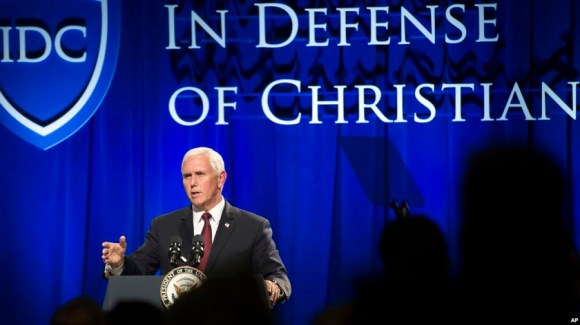
Vice President Mike Pence addresses the In Defense of Christians’ fourth-annual national advocacy summit in Washington, Oct. 25, 2017. Credit: AP, via VOA News.

Here are a few excerpts from my new article.

First, the reason:

Zalal Life distributed 300 food baskets and bottles of water. The government of Hungary donated $2 million in aid for reconstruction. The United Nations wasn’t there.

“People are not happy with the UN; they are using money for administration,” said Bahro. “The help is coming from churches and Christian organizations.”

Second, the condition:

“If the US can help Christian organizations directly, it will be good—if it can be done without discrimination,” he said.

“They must serve Muslims and other minorities also. We live together, and want to remain together in our communities.”

Third, the complication:

“Having the US transfer funds directly to persecuted Christians could be a good thing, but American politics will surely mingle in,” the Israeli Arab Christian said.

“They will want to brag about the aid to show their success, and to prove to the Christian Right that [President Donald Trump] delivers on his promises.”

Fourth, the danger:

Farouk Hammo, pastor of the Presbyterian church in Baghdad, agreed. “The bottom line is that we do not recommend direct aid from the States to Christians,” he said.

“It will agitate our Muslim brothers negatively against the Christian community.”

Fifth, the reality:

But the Jordanian leader respects Trump and is cautiously in support of the USAID policy change if done well, as it will empower the church to do the ministry.

“Maybe we will be targeted more,” he said. “But in some countries, it can’t get worse.”

Sixth, the possibility:

If USAID offered to help, Bitar would accept it—if it is not conditioned on any political agenda. He has little fear of local reaction.

“Muslims will be happy,” he said. “They like to send their children to schools run by Christians.”

Finally, the outcome:

Amid conflicting Christian reactions and unknown Muslim response, the policy change represents a new approach. Will it make things better or worse?

“Here in our area, the Kurdish Muslims trust Christians,” Bahro said. “In Arab areas, I don’t know.”

Please click here to read the full article at Christianity Today.


Categories
Personal

Distributing Aid to Iraqi Christians

Zalal 7

Five days ago Iraqi Christians were displaced from their city – again. As Fox News reported, they had only recently returned to Teleskof following its liberation from ISIS.

Here are pictures from those trying to help.

The recent Kurdish referendum effort led the Iraqi government to reclaim disputed land held by the Peshmerga forces. Christians were caught in the crossfire, and my Christianity Today story has some of the details.

It also features Ashty Bahro, the head of Zalal Life Civil Society Foundation, and former head of the Evangelical Alliance of Kurdistan.

On the day the refugees fled to nearby al-Qosh, his organization was there to distribute 300 parcels of food and water.

The following pictures were supplied by Zalal Life.

Zalal 8
The license plate reads: Dohuk, Iraq. Bahro is a pastor in Dohuk, 25 miles to the northwest of al-Qosh.
Zalal 1
Bahro described the area as mountainous, with the journey taking about 40 minutes.
Zalal 2
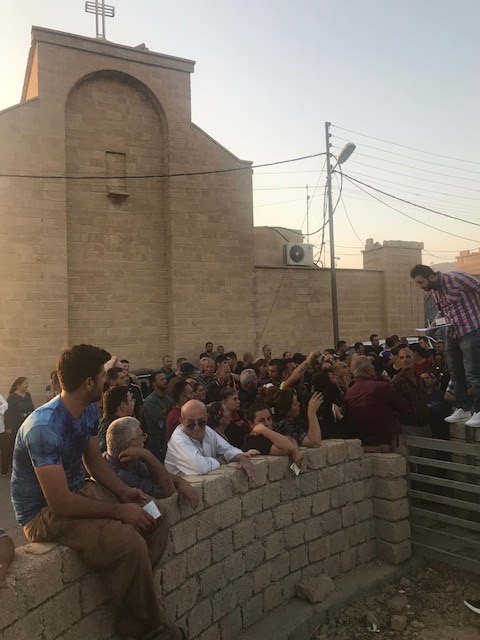
Refugees gathered at the local St. Qarbakh church. Al-Qosh is roughly 30 miles north of Mosul and is home to what is believed to be the burial place of the prophet Nahum, who preached against the Assyrian Empire of his day.
Zalal 4
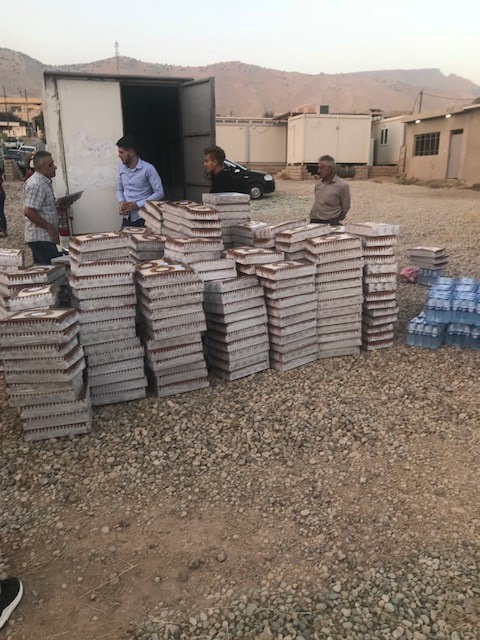
Containing cheese, meat, tuna, beans, and other foot items.
Zalal 5
Boxes filled with bread. Iraqi bread is traditionally flat and round, shaped similarly to a pizza.

Zalal 6

There is always a cost to war. There are always real people on both sides of charity.

Pictures help us visualize what we are too often able to overlook: Faces.

You don’t have to do anything. In most cases you can’t. Some are chosen to suffer, others are able to help.

Just remember the dignity of all.

UPDATE:

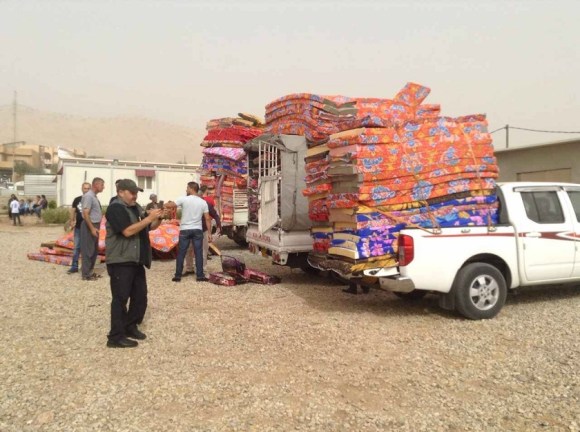
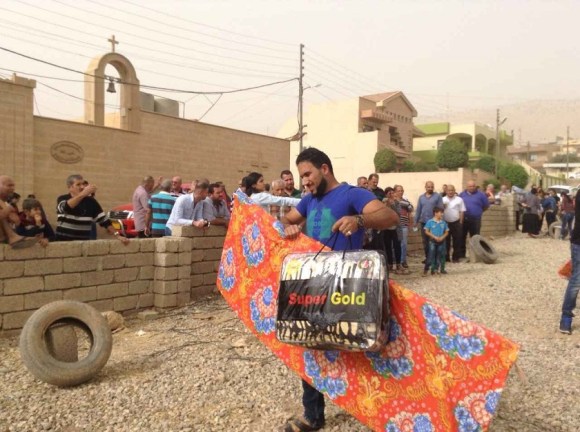
On October 30, Zalal Life was able to return and complement the emergency food supplies with 300 mattresses and blankets. Bahro specifically thanks Steadfast Global and L4L.

Zalal 10
It is not uncommon in the Middle East to see all sorts of vehicles piled high with supplies.
Zalal 11
I liked this picture because it shows a little more of the neighborhood near the church. Looks nice – that doesn’t always come through in refugee situations.
Zalal 13
And this one: Just because kids are so frequently cute.


Categories
Middle East Providence Published Articles

How Do Copts Endure their Martyrdoms?

From my article published at Providence Magazine:

Copts Endure Martydrom
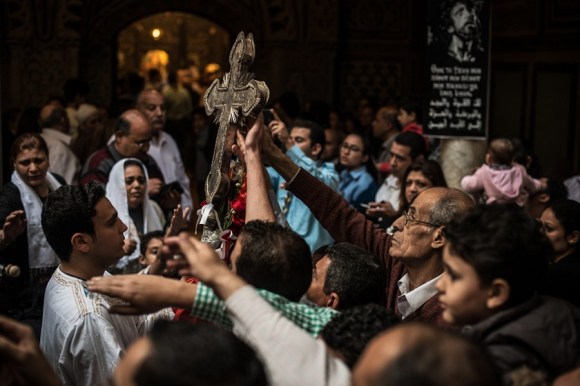
Photo Credit: Egyptian Coptic Christians attend Orthodox Good Friday mass at the Hanging Church in Coptic Cairo, Egypt, on April 10, 2015. Xinhua/Pan Chaoyue, via Flickr.

“On a day like today,” Fr. Samaan Shehata was murdered in Cairo. The day was October 12, but he likely read those very words in mass just one day earlier, introducing the lives of the saints.

Hunted down and stabbed repeatedly by a Muslim extremist, his name now joins their list. Dozens have preceded him in the last few years alone, gunned down in a bus, bombed in a church, beheaded in Libya.

Godfather to Shehata’s children, Fr. Yuannis Anton said these deaths are a “tax” that Copts must pay for the peace of the church and nation. These are difficult days for Egypt, he said, and the fight against terrorism is a fight for stability.

“In the language of the church, it is our cross to bear,” he said. “But we pray with Jesus not to hold this sin against them. We are not angry nor ask for vengeance, this is not our spirit.”

Similar stances have repeatedly wowed the world as Coptic faithful forgive their enemies. But even when their call instead emphasizes justice, there is an odd sense of jealousy that indwells many in the community.

“I wish I was with him, and lost my life with him,” Fr. Biemen Muftah told C-Sat, who was with Shehata at the time of the murder. “I wish I was as ready as he was, and could be in the place he is now.”

Choking back tears, he said, “We have lost a good priest on the earth, but gained the best intercessor in heaven.”

It is these intercessors Copts learn about “on a day like today,” every time the mass is celebrated.

Called the Synaxarium, the liturgy features daily hagiographic biographies of the celebrated saints of the Coptic Orthodox Church. Read after the Acts of the Apostles and before the Gospel, it features 726 entries, 237 of which involve martyrdom. In daily readings, nearly half the year encourages the faithful to suffer even unto death…

Please click here to read the rest of the article at Providence Magazine.


Categories
Prayers

Friday Prayers for Egypt: Death and Dishonor

Flag Cross Quran

God,

All life is precious, all that exists. Even in death you care for their life.

But those that never existed? What then if they did?

Last week sixteen policemen were killed in a shootout with terrorists. Foreign news agencies put the death toll much higher, relying on unnamed security sources.

Egypt reacted angrily, and demanded the names of the dead be listed. So far it has not been done, but they stand by their reporting.

God, honor the dead and their sacrifices, no matter the number.

How awful if some are neglected. How awful if others invented.

The confusion helps no one, God, so settle the score.

Trust is essential commodity.

Unnamed sources are ok in journalism, if multiple and verifiable. But they are not best, and invite questioning.

Government statements are ok in journalism, if transparency is established. Official and best, they invite questions if lacking.

Egypt has released the names of the dead, and promised access to records. Grieving families are hard to silence.

Let the sources give the rest, God, or be silent.

If the sources are up to sabotage, make wise the agencies and empower the government to remove them.

If the agencies are up to sabotage, make wise the industry and expose them.

If the government sabotages its own dead, make wise the people.

These are dirty games, God. Bring forth the truth.

Give Egypt success against those who wish to harm her. Too many have died already.

Let not dishonor surround them. Trust, like life, is precious.

Amen.

Categories
Excerpts

Can Polygamy be Curbed in Islam?

Islam Polygamy

Islam grants a man the right to take up to four wives, as long as he can provide for and treat them equitably.

As it has been explained to me, the original allowance came early in Muslim history when the male population was greatly reduced by warfare.

Some Muslims argue the original reason for revelation indicates the provision was temporary. Others argue the high standard of practice is nearly impossible, rendering the provision irrelevant.

But many others see it as God’s eternal permission. Only Turkey and Tunisia have outlawed polygamy, though restrictions exist in many nations.

Egypt, apparently, may enter this minefield.

According to al-Monitor, a draft law has been proposed to require the permission of a first wife before her husband can legally marry a second. The marriage would become null and void unless he can submit to the court her written agreement.

The article does not delve into the details of Islamic jurisprudence, and I am in no position to judge. But it does provide several reactions that illustrate how modern Muslims in Egypt regard the practice.

Here are a few excerpts:

Asserting that the draft law is compatible with Islamic Sharia, he [the draft law author] indicated that the Islamic Research Academy would approve it because Islamic Sharia allowed both spouses to add conditions to protect their rights, to preserve their interests and to have guarantees.

One traditional Salafi parliament member deferred to the Azhar to decide if the law is compatible with Islamic sharia. But he had an objection of relevance, akin to the original Muslim situation:

Khalil added, “What second marriage are we talking about at a time when the number of spinsters in Egypt stands at more than 11 million? Egyptian young men are barely capable of getting married once, let alone a second marriage.”

The head of Azhar University’s fatwa committee did not object:

“This is a permissible condition that has a sound purpose, which is to prevent the harm that may be caused to the first wife in case her husband decided to marry a second woman without her consent.

If a man has the right to marry more than one and consents to waive this right, then the condition [of the first wife’s prior approval] would therefore be valid.

A man can still be capable of having another wife without harming his first wife, since in Islam doing justice between wives is a prerequisite for polygamy.”

The female head of the Arab League’s Women Department disagreed:

“At the beginning of their marriage, both spouses would have strong emotional feelings and would rule out the idea of a second marriage. But as life goes on, a man could consider a second marriage.

I think that the husband should submit to the court the reasons for which he wants a second marriage, and it would be up to the judge to decide whether to allow him or not to do so. The first wife is not a neutral party, and certainly she would not want her husband to take on a second wife.”

A member of Egypt’s National Council for Women said the stipulation is already in personal status law, though not in the marriage contract. But she supports the amendment because there is a one year statute of limitations for divorce, from the time the wife becomes aware of the second marriage. Lawyers (and husbands) have exploited this loophole and kept women in the dark.

But she also finds a supporting rationale:

She further pointed that Muhammad did not allow Ali bin Abi Talib to take on another wife besides Muhammad’s daughter Fatima Zahra because this would hurt her, which confirms that the marriage contract condition of the first wife’s approval on the second marriage is in accordance with Islamic Sharia.

But a Salafi leader dismissed this reasoning:

“Prophet Muhammad and his companions were married to several women, and no one reported that they ever waited for their first wife’s permission.”

He explained that Muhammad’s rejection of Ali bin Abi Talib is a special case related exclusively to Fatima because the second wife was the daughter of Abu Jahl, an infidel.

Hawari added, “Moreover, the prophet did not forbid Ali from getting another wife, but he asked him to divorce Fatima if he insisted on marrying the daughter of Abu Jahl.

After Fatima’s death, Ali married eight women. Therefore, this example cannot be cited when talking about polygamy.”

We had one friend who kept giving birth to girls. She was constantly afraid her husband would take a second wife.

We have another friend whose father’s second marriage proved a source of tension with his children.

A third friend invited us to the marriage of his first wife’s son. We had previously only met his second, but at the door he told us not to mention her name. The first wife didn’t know about it. We had the impression the children did, though, and didn’t object.

Polygamy is complicating, certainly.

Instead of parliamentarians, it would be better to probe instead the Muslim sources and what their commentators have ruled throughout history. It would be better to explore the process by which Turkey and Tunisia outlawed the practice, and see if it had socially acceptable legal justification.

Sometimes bypassed in interpretation of law – divine or otherwise – are the personal stories of those involved.

But in lieu of further study, please make do with the examples above. What do you think?

Here, I only advise to speak with graciousness and humility, holding whatever convictions you deem appropriate.


Categories
Personal

A Christian Death in the Western Desert

Desert Martyr 4

Egypt suffered another terrorism setback this week, as a shootout with militants in the Western Desert resulted in the death of at least 16 policemen.

That is the official, government tally. International media reported much higher figures, though the government dismissed their numbers and an alleged recording describing the chaos in the field, saying they were unsourced and reflecting unprofessional conduct.

Much speculation focused on the groups behind the attack, whether ISIS from the Sinai, Muslim Brotherhood linked militants, or a rogue army officer perhaps affiliated with al-Qaeda.

The government has launched an investigation, but it is also conducting funerals. Less well reported is this human side of the tragedy, causing Egypt to cancel even a major tourist festival in solidarity with the slain, when the sun shines directly on the face of Ramses II in Abu Simbel.

Desperate to revive the tourism industry, Egypt is more keen to maintain security commitment and morale.

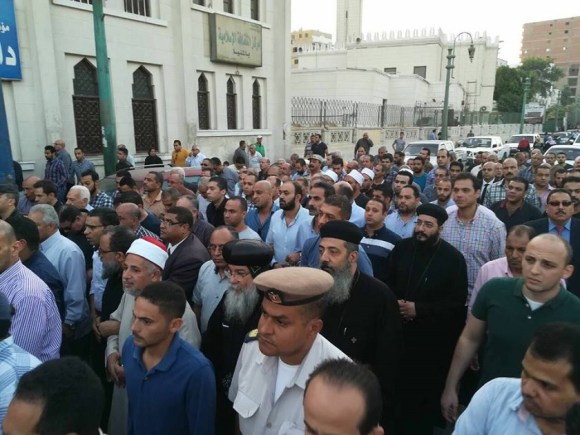
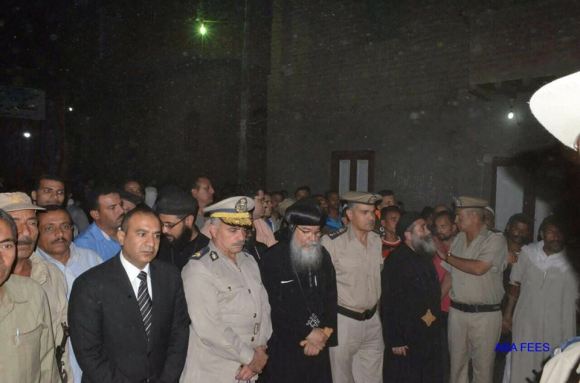
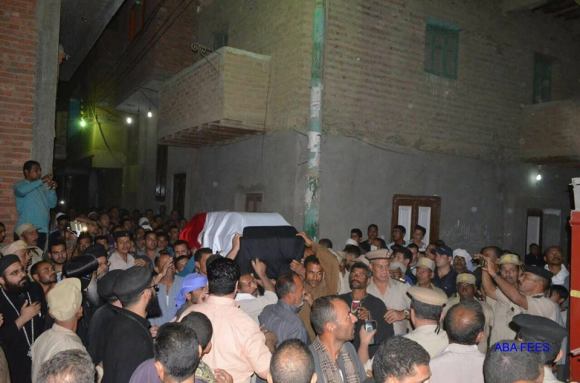
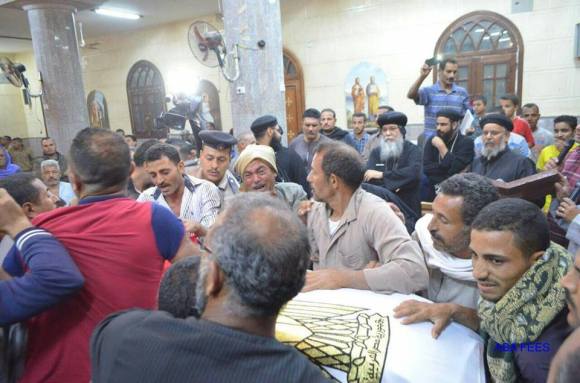
Part of the task is to honor all dead. And among them was Boutros Sulimian Masoud, a Coptic Christian conscript from Ezbat Yacoub Bibawi in Minya. Military figures and Azhar sheikhs were on hand, draping his casket with an Egyptian flag.

Also honored was an army officer named Muhammad Wahid Musalhi. Bishop Makarios of Minya represented the church in both occasions.

And both figures are called ‘martyrs’, as per Egyptian practice, by both church and state.

Consider what you will theologically, but Egypt has suffered a multiplication of martyrs in recent years.

On the one hand, where the term is more familiar, Christians have been targeted by terrorists, though Muslims have also died in the carnage.

On the other, the army and police have been targeted by terrorists, irrespective of religion. Egypt is understood to be 10 percent Christian, and they die beside their brothers in the service.

The Egyptian security services are integrated, drawing all in general conscription. Copts sometimes complain they are kept out of senior positions until promotion at retirement, and that conscript deaths sometimes are under-investigated. But they are grateful for their place in the national army.

It was only in the mid-19th century that the Muhammad Ali dynasty lifted the jizia tax and enrolled Copts. Classical Islamic jurisprudence says that jizia is meant in part to protect Christians living in a Muslim country, that they need not participate in foreign jihad or defense of the nation.

But one of the most powerful proofs of citizenship is mingled blood, fighting side by side against a common enemy.

The pictures here were distributed by the Coptic Media Center and represent Egypt as she idealizes herself. One nation, three religions, one people mourning all.

It does not cover up the flaws, but it is a reminder to Muslim and Christian alike of what Egypt is meant to be.

This, too, is important to report.

Desert Martyr 2

Desert Martyr 3

Desert Martyr 1

Tahya Masr, al-baqa’ li-llah, nayyihhum.


Categories
Prayers

Friday Prayers for Egypt: Starts and Fits

Flag Cross Quran

God,

It can be difficult to begin again. Promising signs give way to more trouble. Egypt is looking to rebuild after several hard years of revolution.

Be with her.

The president has launched a new administrative capital city to house government by the end of the decade. But will it end as previous efforts, Cairo conquering all?

A new traffic law is drafted to better driving habits and reduce congestion. But is there will for proper enforcement, culture conquering all?

New Japanese-model schools are ready to open to instill better sense of discipline and education. But delays come with lack of transparency; corruption conquering all?

The military appears to be making gains against militants to quell terrorism and quiet the Sinai. But attacks continue as desperation rises; can a security commitment conquer all?

Tourism is rebounding from historic lows as beach and history are made more beautiful by depreciation. But the economy falters as inflation increases; can foreign currency conquer all?

God, give patience. God, give urgency.

Egypt is in a tricky place. There is enough stability to move forward. There is enough inertia to hold back.

So give wisdom. Give competence. Give vision. Give realism.

Give hope to the people. Give systems of merit and justice. Give space to live and thrive.

Give a new start, and fit all together. Trouble will come, and hard years continue. But rebuild.

Begin again, with your promise firm. Bless Egypt’s people. May they be yours.

Amen.

Categories
Excerpts

Islamists Elsewhere

Islamism Asia

The Atlantic has an insightful piece on the history of American engagement with political Islam. It is written by authors previously recommended as scholars of the movement.

The whole is worth reading, but here is an excerpt describing non-Arab Islamist success — outside of the political process.

It is often assumed politics and governance is the standard of judgment. But is that the case?

Pakistan’s Islamists provide an intriguing counterpoint to the Moroccan “model.” Yet it is a counterpoint that very few Moroccans—or Arab Islamists anywhere—seem much interested in.

Jamaat e-Islami, Pakistan’s Muslim Brotherhood analog, usually wins only a handful of parliamentary seats, yet, as Spiegel points out, the movement may very well be more influential than its Moroccan counterpart, in terms of “influencing judicial appointments, religious tradition, educational mores, and societal norms writ large.” There are other ways of winning besides, well, winning.

In Southeast Asia, Islamist parties, while gaining a significant share of the vote, have not been able to win outright on the national level.

They have, however, helped “Islamism” spread throughout society and become normalized, with even ostensibly secular parties embracing the idea that Islam—and even explicit sharia ordinances—have an important role to play in public life. The lesson here may appear counterintuitive.

The worse Islamists do in elections, the less of a threat they pose to their non-Islamist competitors, who, in turn, seem to have less of a problem appropriating Islamist styles for their own electoral purposes.

Of course, the causal relationships become complicated: One of the reasons that Islamists don’t do as well in South and Southeast Asia is because they’re less distinctive, since these societies seem to have coalesced around a relatively uncontroversial conservative “middle.”

Democracy empowers and encourages all parties, Islamist or otherwise, to seek the center, wherever that may be. As the center shifts rightward, Islamist groups are further emboldened, particularly in polarized societies where candidates pay little price for their radicalism.

It is little surprise, then, that Indonesia, the largest Muslim democracy in the world, has seen a sectarian upsurge. (In May 2017, a Muslim candidate who had developed a reputation as a young “moderate” played on hardline conservative sentiment to unseat the governor of Jakarta, a Christian, who was subsequently imprisoned for blasphemy.)

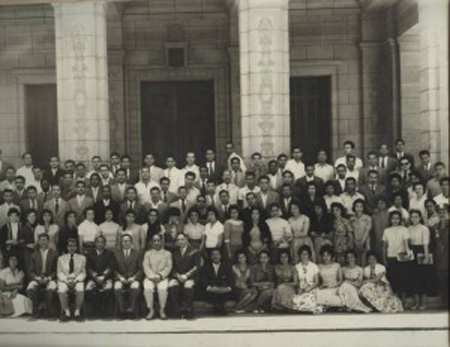
People often say that Islamism has already conquered Egypt, even if the Brotherhood lost. There is a conservatism to society that wasn’t always here, at least as judged by photos of teachers and students from the 1950s and earlier.

Cairo University Islamism
Cairo University, 1959.

There is also this interesting nugget on Islamists at home:

By the time the Arab uprisings toppled regimes in Tunisia, Egypt, and Libya in 2011, the United States had already begun thinking about a new approach toward Islamists.

In 2010, the National Security Council began work on a Presidential Study Directive focused on the question of what a push for genuine political reform in the Middle East would look like—including the normalization of Islamists as political actors.

The immediate challenge after the revolutions of 2011 was therefore not one of deciding whether to increase engagement with Islamists—the Obama administration had already come around on that issue—but rather the question of how and to what extent to undertake such a shift.

I either didn’t know or had forgotten this data point. With all the Egyptian accusations that the US was plotting the Muslim Brotherhood takeover of the nation, it would have been poignant consideration at the time — and now.

Categories
Middle East Published Articles Religion Unplugged

Religious Freedom for the Muslim World: The Unlikely Activism of Kamal Fahmi

Kamal Fahmi

A few excerpts from my article for The Media Project.

Kamal Fahmi sat with Mazen, a Yemeni teenager at a community center in Taiz, Yemen’s third-largest city and cultural capital. Mazen’s father was there, who arranged the meeting.

Impressed with the boy’s intelligence and demeanor, Fahmi learned of their troubling problem.

Mazen didn’t want to study Islam in school.

Fahmi had heard this story before. Visiting Yemen as he had in nations across the region, converts were considered Muslim by birth and in all official paperwork. And for those underage, Islamic education came as part of the package, even if they didn’t believe in it.

Fahmi was sympathetic, but tried to downplay the problem. After all, born into a Christian family in Sudan, he had studied Islam in school also. Hold to your faith, he counseled, but pass the tests.

Yet something in the boy stirred him, as well as the nature of his family. Mazen was not a convert, and neither was his father. His grandfather was, decades earlier. Three generations of Christians, yet still considered Muslims. The injustice gnawed at him.

“They love their country, they are not criminals, they are not spies,” Fahmi said. “If anything, they have become better citizens.

“They should be free to follow what they believe.”

It is not only an issue in the Muslim world, of course:

Worldwide, 26 percent of nations criminalize blasphemy, including Russia, Italy, Myanmar, and the Bahamas. But apostasy law is more characteristically Islamic, with only India and Nigeria as non-Muslim-majority countries.

Please click here to read the full article at The Media Project.

Categories
Prayers

Friday Prayers for Egypt: Competition, Good and Evil

Flag Cross Quran

God,

There is pleasure in struggle, but spite is so easy. Egypt found a long-lost joy, an international opportunity, and a rare but familiar reminder.

For the first time since 1990, the national soccer team qualified for the World Cup. Frequently the African champion, the streets filled and horns honked after the stoppage time winning goal.

God, thank you for the popular release. Times have been tough, and sport matters little. But you have been pleased to give us diversions. Let the unity created last.

For the first time ever, an Arab nation could have led UNESCO. Egypt and Qatar vied with France to head the UN cultural body, but both fell short. Still at odds with the wealthy peninsula, Egypt threw her support behind Europe, in the end.

God, bless the work of international cooperation. There are rifts in the Gulf, rifts with America, and controversy over Palestine. But place culture above it all. Let it, in unity, craft.

For the first time in a long while, a Coptic priest has been murdered. Visiting an area in lower-class Cairo, an assailant stabbed him to death. Details are unclear, extremism is suspected.

God, comfort his family, his church, and his country. Rid Egypt’s specter of sectarianism, protect her streets from violence. Some see religion as contest, while others are offended. Let not her unity pass.

The fight is worthwhile, God. We prove ourselves against others. Let the winners be humble, the vanquished esteemed.

But not all is competition. Good or evil, there is always better.

Bring Egypt together, and the world with her. For our greater pleasure, and in us, for yours.

Amen.


Categories
Middle East Published Articles World Watch Monitor

The Public Spectacle of a Slain Coptic Priest

Fr. Samaan Shehata
Fr. Samaan Shehata, with Pope Tawadros. From an image circulating on social media.

This article was first published at World Watch Monitor.

The images are horrific. Fr. Samaan Shehata, a 45-year-old Coptic Orthodox priest lay dead on the ground, stabbed and beaten by a young man wielding a meat cleaver.

Blood dripped down his face into his long, black beard. Dirt discolored his flowing, black robe. His cross pendant rested peacefully on his chest, eerily imitated in the cross-like stabbing etched onto his forehead.

Many details remain unknown, but early indications point to extremism. Fr. Samaan was from Beni Suef, visiting a family in Cairo 150 kilometers north in a lower-class, urban suburb of Cairo.

It may well be he was targeted only for the clothes he was wearing – in Egypt, a clear indication of his religious profession.

He was left a public spectacle. So far, no claim of responsibility, no message of intention. There are possible hints circulating of mental instability.

Perhaps. Outright murder is rare in Egypt. Despite the increased terrorism suffered by Copts in recent years, this killing is unusual. There is a chance it was random.

But few think so. Coptic social media immediately proclaimed Fr. Simaan a martyr, adding him to the growing scroll.

The image, however, may have lasting effect, reinforcing a decades-old message: The streets are not the place for priests…

Please click here to read the rest of the article at World Watch Monitor.

Categories
Books

Wisdom and Foolishness in Abrahamic Faith

Wisdom Abraham

“Knowledge is power,” is an oft-repeated saying. In an information economy this makes perfect sense, and our educational system is geared to develop know-how.

Wisdom, on the other hand, sometimes seems a neglected virtue. It is the realm of philosophers, maybe, who have little to do with practical life. Or religion, often considered a private domain.

The Abrahamic religions, however, esteem the cultivation of wisdom over and above simple knowledge. Baghdad built the famed “House of Wisdom” when Islam represented the pinnacle of human civilization, translating classical texts that eventually reached the West.

Jewish writings nearly deified “Sophia” as a personification of wisdom. Along with Christianity, these traditions have produced philosophical minds among the greatest the world has ever known.

Which may make it surprising to hear St. Paul esteem being a fool for Christ. In view of the Greek tradition of his day, he said, Christianity is foolishness.

Paul is not subverting this tradition by any means, only highlighting how the wisdom of God in Christ is nonsense in the estimation of the world. Not non-rational, it simply reflects how God’s thoughts are higher than man’s.

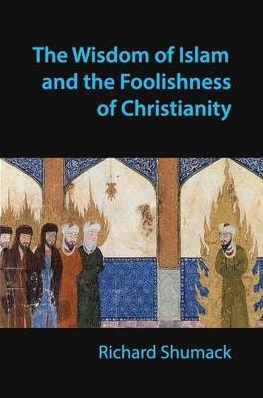
Nonetheless, one of the tasks of faith is demonstrating its plausibility to the world. The effort is nobly undertaken by Richard Shumack, in one of the most contested of fields. His book, The Wisdom of Islam and the Foolishness of Christianity, was shortlisted as the Australian Christian book of the year in 2014.

A philosopher by training, Shumack is a professor at Melbourne School of Theology and part of the Ravi Zacharias International Ministry team. It can be said at the outset: he finds Christianity superior to Islam. Not surprising – he is a Christian.

Two things are noteworthy about his book, however. First, the absolute respect his gives the Islamic tradition, interacting in friendship with men he considers to be among the Muslim world’s top philosophical minds. There is great wisdom in their faith, he agrees.

And second, the difference in paradigm that makes all the difference. Islam conceives a legislative model between God and man; Christianity, a relational. Wisdom follows from both, he says, but the latter is preferable and better accords with the world.

Shumack does not presume to prove the truth of Christianity’s claims. Similar to Islam, the challenge of monotheism is dealt with elsewhere. But finding his Muslim scholar friends assert the philosophical superiority of Islam over an incoherent Christianity, Shumack was compelled to pick up the gauntlet. He fully admits, of course, that key Christian concepts appear to place Muslims at an advantage.

But in each chapter he builds his case sequentially. Certainty. God’s Hiddenness. Sin. Trinity. Incarnation. Cross. Revelation. Divine Ethics. Politics. Each is a problem to tackle in the Muslim-Christian conversation. On some points monotheists share similar challenges. On others, the Christian is on the defensive.

With deference and respect, at times Shumack tries to turn the tables. But for the most part he simply returns to his central thesis:

Islam makes sense if one sees God as creator, legislator, and master. But Christianity makes sense if God is in addition, father.

To many Muslims this is foolishness. God has no son; he is utterly different from his creation. But it is the central point of Christianity: God’s word made flesh, crucified, and resurrected.

Perhaps both are fools to the atheist or modern secularist, so let Muslims and Christians be friends. Shumack’s book is polemical but warm, inviting response from his Muslim philosopher-friend.

There is no reason religious debate cannot be so. The world is much in need of wisdom, and the Abrahamic faiths possess it in abundance.

Unfortunately, their mutual conversation often demonstrates the opposite, showing that living out wisdom is another question entirely.

If we be fools, let it be for the right reason, in the right spirit. Abraham left the security of his land and family, and nearly sacrificed his son. Today he is honored by over half of humanity, a blessing to the whole world.

May this be true of his descendants, Muslims, Christians, and Jews altogether.

Wisdom of Islam Foolishness of Christianity

Categories
IDEAS Published Articles

Dealing with Death at a Distance – 5 Tips for Saying Goodbye

Death at a Distance

The expat life has many benefits, but one of the hardest challenges is being far from family.  This can be felt the most when you hear of someone who is sick, receives a bad medical prognosis, or is in an accident.  Living in a foreign country is hard when a loved one is dying.

What can you do if you can’t travel home as they near the end of their life? Sometimes job, school commitments, or extenuating circumstances prevents travel.  This was our situation last Spring when my mother-in-law succumbed to cancer.  Fortunately, my husband made it home the day before she died, but her health declined too quickly for all of us to travel in time.  My four children and I had to say our good-byes from afar.

1)      Be creative in saying “I love you” and other significant emotional statements.  When I heard my mother-in-law entered hospice care, I knew her time was short. I videoed each of my children telling their grandmother the things they appreciated about her and doing with her. Then I did the same, and was in tears the whole time. Over Skype, we played them for her.  Whatever she heard in her deteriorating shape, it was healthy and healing for us.

2)      Communicate honestly and openly with your children about what is happening.  Sometimes we have the idea that we must “be strong” for our children, our spouse, or others around us.  Actually, this is unhelpful in grief as emotions are better verbalized.  I sat down with my children and we talked candidly that their grandmother would die very soon and we would not see her alive again.  I cried as I said this, and all four kids followed suit.  We talked about what was happening.  We said what made us sad.  We said what we wished could be different.  And we hugged and we cried.  Together.

3)      Make special time to grieve.  That night I received the message that my mother-in-law passed away.  In the morning, I held the kids home from school so we could remember her, cry when we wanted to, and laugh when we could.  We did some favorite activities from times together, like play-doh and blowing bubbles.  We knew that we would be grieving for a while, but though the day was hard, it was memorable and set us on the path toward healing.

4)      Travel to attend the funeral or memorial service.  Though we made a good beginning in Egypt, I still felt like her death would not sink in until we traveled to New Jersey.  We figured out missing school work and made preparations, but time and money are resources well spent on grieving together with family.  The memorial service or funeral brings even more friends together, allowing memories to be shared and sorrow expressed.

5)      Give your kids a picture or special memento of the one who died as a physical reminder.  Even though it hurts to see it at times, triggering emotions for all the things we will miss about her, it is still better to remember.  That which is tangible connects best with our senses and emotions.

To be honest, I don’t want to go through this again.  I don’t want to have to say good-bye from afar.  But I have many more loved ones that may die or go through serious illnesses when I am living overseas.  Following these steps has helped our whole family grieve well, even at great distance. I hope they will also be helpful for you.

Click here to read the original post, as Julie tells the full story of how she processed grief from afar. This summary reflection was requested by our organization, IDEAS, to help expats around the world dealing with similar situations.

Categories
Prayers

Friday Prayers for Egypt: Palestine, Parliament

Flag Cross Quran

God,

To make peace, to make law – men must meet together.

Egypt has played a primary role in fostering unity between Fatah and Hamas. There can be little progress in just peace with Israel when Palestinians are feuding.

And now Egypt’s parliament opens a new session. The first word: Do not defame the body. There can be little progress in stabilizing society in a house divided.

God, keep the unity of spirit through the bond of peace.

There is much bad blood in Palestine, with different visions and different pressures. It will not be easy to make amends, let alone to engage Israel.

And there is much bad blood in parliament, with accusations of subservience and sabotage. It will not be easy to check and balance, let alone to achieve consensus.

God, when men meet together not all is peace. Perhaps it must be so to get there. Give space for all grievance. Give patience with all charity.

Set the Holy Land straight, God. Make Egypt merciful.

May their peoples achieve peace, domestic and foreign, inside and out.

May they argue as necessary but meet together, and love.

Amen.

Categories
Excerpts

Copts in Egypt’s Textbooks


Copts Egypt Textbooks
Translation: Some pictures of the Roman persecution of Christians. Via Mada Masr.

There is a general understanding that Egypt’s Christians are marginalized in the educational curriculum.

An additional idea is that this came during an Islamization period in the 1970s, or perhaps during Nasser’s presidency.

A researcher examined this question and described them on Mada Masr. Here is his evaluation:

Based on an analysis of Egyptian history textbooks from 1890 until the academic year 2016/2017, it is clear that Egyptian history is narrated from a perspective that values an Arab Muslim identity over other perspectives and voices.

While the tone generally revers and paints Christianity in a positive light, the narrative as a whole is exclusionary in both explicit and subtle ways.

The article as a whole is insightful, and here is an example — of how textbooks changed:

Current history textbooks do not include explicit derogatory references to Christianity or Christians — as some of the earlier textbooks did. In fact, they include extremely positive mentions, albeit concise.

For instance, in explaining why ancient Egyptians embraced Christianity, a 2016 textbook explains that they were attracted by its values of justice, equality, mercy, empathy, tolerance, renouncement of worldly pleasures, and valuing of the afterlife.[11]

However, we need to also be cognizant of more subtle ways that might give value to one identity while diminishing or silencing others. In addition to continuing to use explicit and extensive Muslim referents as highlighted above, more subtle exclusions can also be found in current textbooks.

For instance, they use the word “Arab” to characterize countries such as Egypt and Lebanon even before they had been taken over by Arab Muslim armies. Such references give the historically inaccurate and false impression that these countries have always embraced an Arab identity, eclipsing the richness of their pre-existing civilizations and cultures.[12]

Additionally, several of these history textbooks have continued to address students as if they are all Muslim. For instance, an 1893 history textbook explains that the religious story of David and his son Solomon “must be learned by all Muslims.”[13]

Similarly, a 1988 history textbook encourages students to learn about the annual Muslim pilgrimage to Mecca by asking their relatives who might have performed it.[14]

In discussing civic engagement, current textbooks encourage students to be proud of our Islamic principles and values that encourage us to volunteer in the community and peacefully co-exist with others different from ourselves.[15]

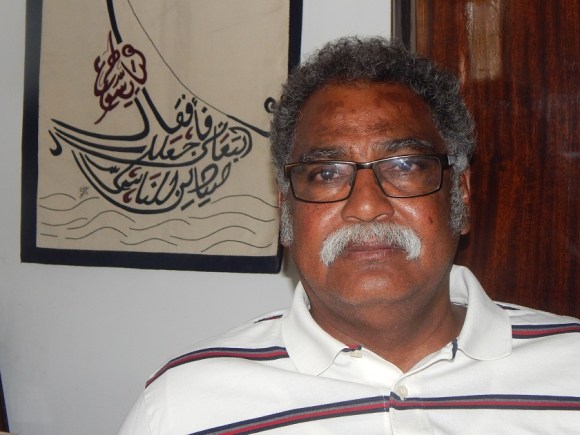
In Egypt it is sometimes necessary to ask the religion of the researcher, often indicated by name. Ehaab Abdou — I believe these names are shared by Muslims and Christians alike.

What is important, however, is quality. The article is too brief to fully evaluate, but he claims a comprehensive scope of research. I don’t have the background in the subject to know if he left out damning specifics; other Egyptians, please weigh in.

The one thing I noticed is that he did not specifically state he evaluated textbooks in the Azhar educational curriculum. Copts sometimes claim this is a source of bias against them.

But on the whole, the article appears to be an evenhanded treatment of a controversial subject.

Few things are as important as the education of our children — and ourselves.

Categories
Excerpts

Is the Muslim Brotherhood Linked to Violence?

Muslim Brotherhood Violence
A Muslim Brotherhood flag from Jordan, via the National Review. Credit: Khalil Mazraawi/AFP/Getty. Translation: It is a Holy Quran; God is Great, to God be Praise; Prepare [see Quran 8:60]; The Muslim Brotherhood.
The link between the Muslim Brotherhood and the ongoing terrorism in Egypt is a controversial question.

The government says yes, the MB leadership says no, and Western analysts appear split on the issue. Some see the Brotherhood as the fount of all Islamist violence, others note decades of proclaimed nonviolence in a gradualist strategy to transform Egypt.

But not many have done the exhaustive investigative work of Mokhtar Awad, writing here for the Small Arms Survey of the Security Assessment in North Africa Project.

His 16 page report details the emergence of two allegedly MB-linked violent actors, Liwaa al-Thawra and Hassm. Here are his conclusions:

Perhaps the most explicit and significant indication of a connection between the MB and Liwaa al-Thawra is found in the latter’s statement of responsibility for the assassination of Brigadier General Raga’i.

In it, the group says that the operation was in part revenge for the security forces’ killing of MB leader Mohamed Kamal (Liwaa al-Thawra, 2016c).

In the group’s follow-up video after claiming responsibility for the attack, it eulogized slain MB leaders by showing their pictures, including that of Kamal (Liwaa al-Thawra, 2016d).

Read Awad’s full report about Kamal, who served in the upper echelon of Brotherhood leadership and was responsible for mainland Egypt after many others fled abroad.

As for Hassm, there are also indications of connections between the group and the MB.

The one known leader of Hassm who was killed by the authorities, Mohamed Ashour Dashisha, was an Arabic teacher and graduate from the prestigious Dar al-Ulum college at Cairo University. An examination of Dashisha’s social media profiles indicates that he was at least a supporter of the MB and likely a member as well (Awad, 2017b).

More importantly, in November 2016 the Egyptian Ministry of the Interior released a video statement claiming the arrest of several Hassm members. The arrested members’ confessions alleged a direct operational link to the MB (Egyptian Ministry of the Interior, 2016).

Interestingly, the MB admitted that the persons arrested by the government were MB members, but said that they were simply ‘rights activists’ (MB, 2016a).

Notably, neither of the two rival MB factions has yet released any statement explicitly condemning Hassm or Liwaa al-Thawra, or any of their attacks.

Is this enough evidence to establish a Brotherhood connection? Is such establishment even possible?

Certainly, aside from evidence presented by the Egyptian government of such connections, there is little independent, verifiable, and open-source information that sheds light on potential operational connections.

This will likely continue to be the case unless and until an MB leader explicitly admits to a connection on the record. Such a scenario seems unlikely, however, because the violence allegedly used by the MB and Ikhwani jihadi groups serves a specific political purpose.

Unlike Salafi jihadi groups, the MB does not see violence as its sole tactic, nor does it see benefit in claiming responsibility for attacks that would diminish its international standing.

Without a leak or verified interception of official communications, open-source research cannot easily identify or provide definitive confirmation of any linkages between MB and Hassm or Liwaa al-Thawra, or penetrate a clandestine operation that would reveal such a connection.

Regardless of the degree of connection to the MB as an organization, there is little doubt that Hassm and Liwaa al-Thawra have in their ranks and among their supporters either current or former members of the MB and allied Islamist groups. The political context in which they operate makes this all but a certainty (Awad, 2017b).

For your evaluation. Any thoughts?

Postscript: Read also this investigative report from Mada Masr, on how the prosecutor-general was assassinated.