Categories
Lapido Media Middle East Published Articles

After the Terror: How Egypt’s Museum of Islamic Art is Fighting Back

museum-of-islamic-art
Photo: Michael Adel

This article was first published at Lapido Media.

THREE years after the car bomb that devastated world-famous Museum of Islamic Art, in Cairo, Egyptian culture is thumbing its nose at Islamic terror.

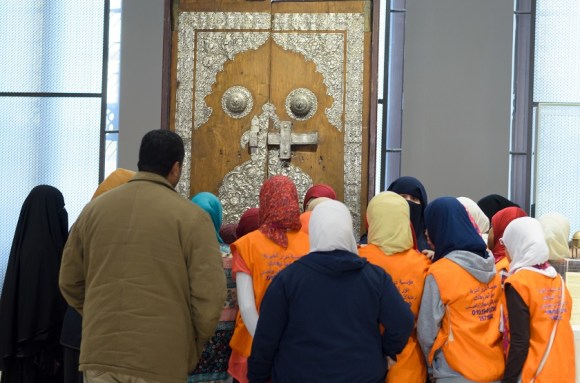
And in pride of place in the central rotunda is a nineteenth-century mosque door carved by Yehuda Aslan, a Jewish craftsman.

On 24 January, 2014 the Museum of Islamic Art (MIA) in Cairo was the secondary casualty of the bomb that killed six, and injured dozens in a blast targeting the Cairo Security Directorate across the street. The attack was claimed by the Sinai Province of the Islamic State.

It also smashed the façade of the historic museum built in 1903, damaging 179 pieces, ten beyond repair.

Two weeks ago the museum reopened in grand ceremony.

‘This is our heritage, not only for Egypt or Muslims, but for humanity,’ said Ahmad al-Shoky, the museum director.

‘If you destroy it, we will rebuild it, and make it better than before.’

Considered the largest museum of Islamic art and artifacts in the world, the MIA holds more than one hundred thousand pieces from throughout the Muslim world.

The earliest dates back to 652AD, a tombstone from year 31 of the Muslim era that bears signs of the Umayyad regime.  It is the oldest mark of Islam in Egypt.

Al-Shoky presided over the opening of sixteen additional exhibits, tripling the items on show to the public. The richness of Islamic history, he believes, blunts the appeal of terrorism.

‘The museum is not only about good art, but a good message,’ al-Shoky told Lapido. ‘We have reworked our displays to show how Islamic art contributes to world civilization.’

Tolerance

And a central part of this civilization, he says, is religious and cultural tolerance. The door to the as-Sayyida Zaynab Mosque by Yehudah Aslan is just one example.

Zaynab whose shrine is at the mosque named after her in Old Cairo, was the prophet Muhammad’s granddaughter, and ‘patron saint’ of Cairo.

‘We are not against any religion, and welcome anyone who can produce something for the world,’ said al-Shoky. ‘This message is short, but powerful, and you can find it in many of our halls.’

Umayyad era art (661-750 AD) is introduced with a note of influence from Byzantine, Coptic, and other civilizational sources.

The medicine and science exhibits highlight the contributions of the Christian Bakhtishu family doctors, and the Muslim, Mary the Astrolabe, from the Abbasid era (750-1253 AD).

And the Fatimid era (909-1171 AD) speaks of joint celebrations with ‘Christian fellow citizens’ for the holidays of Epiphany and Maundy Thursday.

Renovations were supported by a £2.1 million equivalent grant from the United Arab Emirates. Additional donations and expertise were shared by the United States, Italy, Germany, Austria, Switzerland, and UNESCO.

Before the explosion, if two hundred visitors came, it would be terrific, al-Shoky said. Since the reopening, the MIA has averaged more than two thousand.

Children

And not only adults. The redesign includes an educational wing for children. Around 150 have come every day.

‘Art teaches children that Islam is not a terrorist religion,’ said Yumna Khalid, a 20-year-old volunteer guide studying Islamic archaeology at Egypt’s Ain Shams University.

‘It is not like what people say now about Islam. No, we have had brilliant artists and scientists.’

Maher Daniel agrees.  He is an award-winning cartoonist and animation director for Egyptian state television – and a Christian.

He contributed the illustrations to the children’s guidebook free of charge. Aladdin and the Magic Shirt spins a fantasy tale introducing the reader to the main pieces of each exhibit.
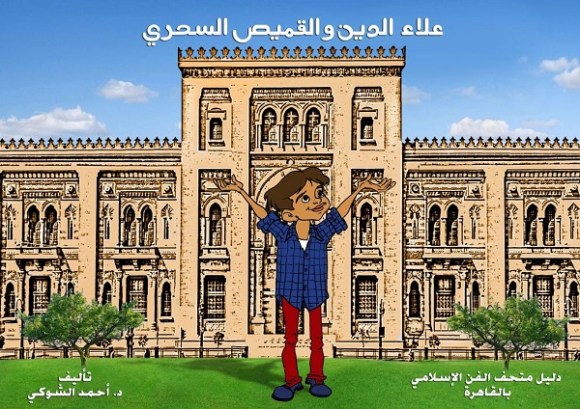
aladdin-and-the-magic-shirt

‘Egypt has passed through several crises, and children have not received enough attention,’ says Daniel. ‘The museum strives to address [the child’s] mind, promoting our shared heritage, for both Muslims and Christians.’

This does not mean he whitewashes the past, or the present. But Daniel says the space for extremism in Egypt is shrinking, and if there is an opportunity to help, you must help.

‘Our hope is in the enlightened Muslims, who are seeking reform and trying to shake the dirt from Egypt,’ he said.

‘But God only knows, in history these things ebb and flow.’

Manal Salah brought her twelve-year-old son to see the museum. He particularly liked the hall of weapons, marveling at the ninth-century Ottoman sword bearing the name of Mohamed the Conqueror.

‘The reopening of the museum is a positive sign,’ she said. ‘And we are optimistic for the future. If God wills, all will be well.’

museum-of-islamic-art-building

Categories
Prayers

Friday Prayers for Egypt: Quiet Revolution

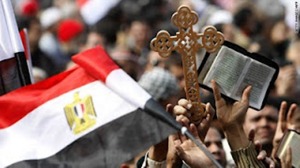
Flag Cross Quran

God,

January 25, 2011 was a momentous event. But if the president hadn’t said something, in 2017 Egypt might hardly have noticed.

It was a turning point in history, he declared, though it brought on many troubles. But he praised the people and the martyrs, giving assurance Egypt is on the right path.

May it be so, God. But the day itself passed quietly. Maybe that is good news?

Unlike previous years there were no demonstrations, no celebrations, no clampdowns. The metro at Tahrir closed, but it seemed more out of habit.

There are some who would like to erase the memory altogether, God. There are others who want to cling to it. The history is still complicated, contested between parties.

Help Egypt remember correctly. Help her celebrate where honorable, help her repent where necessary.

Help her discern the wide spectrum in between.

And help her move forward, God. The issues of the day are no less serious. Perhaps they are more so. There is much to repair, much to rebuild.

Economy. Institutions. Trust.

God, bless the nation and her people. Provide for her needs, strengthen her loins.

Give her peace and prosperity. Give her justice and sovereignty.

Give her a right understanding of herself, of her revolution, and of you.

Keep her on the right path, no matter the troubles. Momentous, but quiet.

Amen.


Categories
Personal

Where Credit is Due

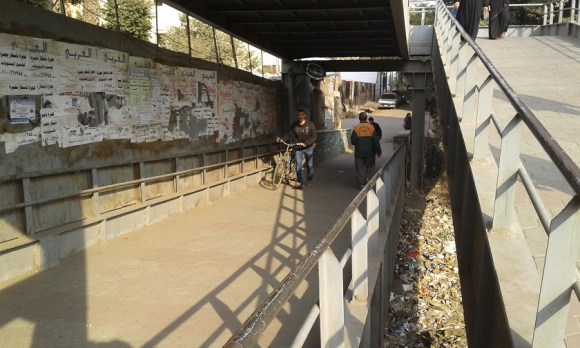
fath-bridge

Two years ago I wrote about Egypt and her struggle to return to normal. Protests were still being waged on the streets, as terrorism assaulted the post-Morsi regime.

But that article featured also the mundane. A foot bridge was repaired by local authorities in the Maadi neighborhood of Cairo, but for a long time left uncompleted.

Pedestrians could cross, and it was quite fun to slide down-slope on the dust that gathered on the ironwork base.

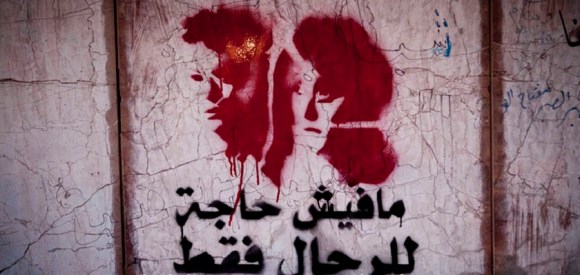
But it didn’t feel fully safe, and crass revolutionary graffiti covered the walls.

I’m not sure when exactly it was made right, but crossing the other day reminded me of my earlier criticism. It is now in quite good shape, tiled, relatively clean, secure.

It is covered in crass advertising, but still.

I do miss the sliding, especially if my children are with me. But the bridge is a great improvement over what was.

In the two years that passed Egypt has basically put an end to the demonstrations. But terrorism is still present, and now the economy has taken a downturn. Life is not yet back to normal.

But the bridge is. So are many other minor but essential aspects of life. Stoplights have been installed, and they are generally working.

So as you survey the news from around the world and wonder how everything falls apart, please remember that it also gets put back together. So often this is left unreported, but it is the reality for ordinary millions.

Not that life is necessarily great, nor up to our comparatively wealthy standards in America. But life goes on, life is good, and people make it work.

Credit, where credit is due.

Categories
Prayers

Friday Prayers for Egypt: Red Sea Verdict

Flag Cross Quran

God,

The court has spoken, and the land is Egyptian. Perhaps.

Months ago the president and the Saudi king concluded an agreement that included return of sovereignty over two small islands in the Red Sea. Opponents called it an illegal transfer, as Egyptians died in war defending their home soil.

This week the High Administrative Court sided with opponents. The Supreme Constitutional Court may yet have a say, but the immediate question is parliament.

The speaker says they will proceed with discussion and vote anyway, with many backing the president. Other members say this is would be a violation. Another legal dispute may yet be pending.

Several rejoiced, others groaned, and some fear. What does it mean when branches of government are at odds with themselves? Normal balance of power in some systems, in Egypt discord can be threatening.

God, resolve and normalize. Settle the issue of ownership, and buttress the role of each branch.

Let there be confidence in the judiciary. Let there be representation in the parliament. Let there be leadership in the executive.

Together, and in conflict, help them know and serve their land.

Amen.


Categories
Prayers

Friday Prayers for Egypt: Law, Left and Letter

Flag Cross QuranGod,

The law carries many meanings, but among them is license. Neither state nor citizen may act as they wish; the law – in principle – standardizes behavior.

In Egypt, two laws in particular are illustrative. God, may the proper lessons be both learned and applied.

Several weeks ago the parliament passed a controversial draft law regulating civil society. It was panned even by the government, but sent to the president to sign or return for further discussion. Yet with no comment at all and the mandated period elapsed, many wonder where is the law? Is the president stalling? Was it given to him at all?

God, the law itself is worthy of prayer, and the effect it will have on civil society. You know the importance of the sector; you know the dangers of manipulation.

Whether or not the current draft is optimal, guide Egypt to the balance necessary.

But guide Egypt also to a law. Help her institutions to function properly, and transparently. May the mechanisms of government mesh with the will of the people and the wisdom of experience, from home and abroad.

The struggle therein is good and healthy, God. At least it can be so. Bless Egypt with a winsome fight.

Meanwhile the protest law is contested to the letter. Recently ruled upon by the Supreme Court, protest is allowed with proper notification, not permission.

A group opposed to ceding two Red Sea islands to Saudi Arabia followed proper procedure, and then did the state. A judicial ruling denied access to the preferred location. The legal and political struggle continues.

God, the issue itself is worthy of prayer, and the effect it will have on both map and relations. You know the owner of the land; you know the stakes involved.

Whether or not this protest is worthy, guide Egypt to the balance necessary.

But guide Egypt also to an understanding. Help her to promote the rights of expression, and to regulate them properly. May the freedom of the individual mesh with the duties of society and the wisdom of experience, from home and abroad.

The balance therein is fundamental and foundational, God. At least it should be so. Bless Egypt with a worthy consensus.

There is a constitution, God. There are laws. There are laws emerging. There is reform. Set Egypt’s path straight in all navigation.

And in her behavior, regulate and license in the light of your word. May it, to all, be illustrative.

Amen.

Categories
Excerpts

Creative Solutions to Sexual Crime

Women's march in Cairo
Arabic: There is no need for men only. (Photograph: Virginie Nguyen, via Mada Masr.)

Official Egyptian statistics departments have recently published sobering numbers concerning domestic violence:

At least 18 percent of adult Egyptian women have reportedly experienced physical or sexual violence at the hands of family members or close acquaintances in 2015, according to official estimates by Egypt’s Economic Cost of Gender Based Violence Survey (ECGBVS), published in June 2016.

Around 46 percent of married women aged 18 to 64 years in Egypt have experienced some form of spousal violence, whether physical, emotional or sexual, according to the same survey, which was conducted by Egypt’s official statistic body the Central Agency for Public Mobilisation and Statistics (CAPMAS), the National Council of Women (NCW) and the United Nations Fund for Population Agency (UNFPA).

One out of four married women has been subjected to physical violence at one point in their lives by their current or former husband, according to 2014 statistics from the Demographic and Health Survey.

(via Ahram Online)

And according to the UN, it is even worse for women outside the home. Back in 2014 I wrote about a Sunday School teacher training children to defend themselves against sexual harassment, and conveyed these figures:

According to a survey published by the United Nations Entity for Gender Equality and the Empowerment of Women, more than 99 percent of Egyptian women have been subjected to sexual harassment.

This goes far beyond playful catcalls, with 96 percent reporting their bodies have been touched and 55 percent of these having had their breasts groped.

Egyptian society and government recognizes the problem and has recently increased fines and jail terms for offenders. But this article by Mada Masr concerns a victim who thought beyond punishment into transformation. And she went the extra mile to secure a greater justice.

When one woman was sexually harassed this month in Cairo, she made an unusual move: she came to an informal agreement with her attacker’s family and juvenile prosecution to drop charges on condition that the boy get therapy and do community service.

Having caught the boy who groped her hard from behind, after quite a chase, Mariam felt more confused than victorious. Quite a crowd gathered when she caught him. It was the evening of a match and having run through a few streets, the boy tripped by a full café.

“People assumed that I was chasing him because he’d stolen something from me. They asked me and I said yes, he stole something very important, my dignity.” Some of those who had gathered suggested she leave it now, she had caught, hit and insulted him, that he was young and she should forgive him. But those who stayed on the scene, all men Mariam says, encouraged her.

Then, when the police came and the 14-year-old was being put in the van, they hit him on the back of his neck. “I freaked out,” Mariam recounts. “We all know what happens in Egyptian prisons and police stations and detention centers. I felt I was caught between two fires. Either I get my rights and this boy is subjected to violence, or I let him go, he will carry on doing it, I’ll be passive and other things I can’t accept for myself.”

Fortunately, she found allies in the 14-year-old’s parents, and in the public prosecutor. They worked out an arrangement, one the court may even return to:

She told the prosecutor about HarassMap, an NGO that encourages bystanders and institutions to speak up against harassers and have a zero-tolerance attitude toward harassment. He was not dismissive, as she had expected, and took a contact so that he could deal with HarassMap in similar cases, also informally.

There are many problems in Egypt, but also good people. And often unreported are the small changes that ripple through society, as these good people labor on:

“There has been a huge shift, primarily around the question of who should be ashamed,” Abdel Hameed says.

Perhaps one day, none will need be.

Categories
Prayers

Friday Prayers for Egypt: Christmas, Safe and Suicide

Flag Cross Quran

God,

There were two disturbing deaths in Egypt this week, but in perverse praise, at least they were individual.

Coptic Christmas passed safely. Two weeks ago a suicide bomber killed 28 worshippers near the papal cathedral, raising fears of holiday carnage.

God, thank you for the necessary security. Hasten the day it will not be required.

Help the president join you in making it so. For the third year running he visited the pope during Christmas celebrations, the first head-of-state ever to do so even once.

May this example spread to the people. May it encourage the many who need not the impetus. May it cower the few who by it are enraged.

Facts and motivations are not yet clear, God, but it appears one of these few slit the throat of a Coptic shop owner. A ‘bearded man’ was offended by the alcohol business, and took his understanding of sharia into his own hands.

Bring justice in the case, God, and may the president’s example spread beyond the holiday. May all crimes be prosecuted equally. May rule of law and citizenship be established.

And may the suicide of this week, in perverse hope, raise fears in the culture of corruption.

A high official in the judicial system hung himself in custody. He and others were charged with accepting bribes and profiting millions.

God, comfort his family. Have mercy on his soul. But if indeed he was guilty, follow relentlessly those of his ilk.

Stamp out corruption through proper investigation. Narrow its odds through judicious transparency. Let the examples that remain, in perverse relief, be individual.

Save Egypt from the systemic in all but peace and goodwill toward men. God, through the coming year may she be safe.

Amen.


Categories
Middle East Published Articles Religion Unplugged

Did the Bombing of Cairo’s Copts Also Hold a Message for Muslims?

isis-sufi-mosque
ISIS destroys a Sufi shrine in Mosul, Iraq.

This article was first published at The Media Project.

When a bomb ripped through the women and children praying together at the St. Peter and St. Paul Church in Cairo on Dec. 11, the nation’s grief was expressed through a Muslim doll.

The suicide attack claimed by the Islamic State – Sinai Province took place on the national holiday of moulid al-nabi, the Prophet Muhammad’s birthday. The larger Islamic State has since called for bombings of Christian churches in the USA, with the aim of creating “bloody celebrations” there, as well.

Egyptians have begun trying to make sense of this latest wave of violence in Cairo, and the arousa doll has propelled expressions of grief. A popular cartoon depicted the arousa, traditionally given to Muslim girls, weeping in the black clothes of mourning. Behind her stood a somber crucifix.

Twenty-seven people died in the bombing, and their families have been changed forever. The Coptic community is approaching the Christmas season with fear wondering if another church will be targeted.

But does the timing of the attack suggest Muslims also have reason to be afraid?

The moulid, popular with most Egyptians and in particular the mystical Sufi trend, is rejected by many Salafi interpretations of Islam to which the Islamic State belongs.

It is a day for sweets, visiting family, and giving gifts. It is also a day Christian religious leaders congratulate their Muslim counterparts, reciprocated on Christmas.

But celebration of the moulid is condemned by Salafis as a religious innovation.

Coincidence or not, their extremists chose this day to escalate their insurrection and signal their willingness to inflict mass casualties.

“The message could be, ‘You love the moulid, and you like the Christians?’” said Sheikh Alaa al-Din Abul Azayim, head of the Azamiya Sufi order. “’Then on this day we’ll kill your friends – and you are next.’”

Please click here to read the full article at The Media Project.

moulid-al-nabi-arousa

Categories
Prayers

Friday Prayers for Egypt: Corruption, Resolution

Flag Cross Quran

God,

As Egypt made one statement, it deferred on another. May wisdom couple with pragmatism, but only where is right.

An official at one of the nation’s highest courts was exposed for taking bribes. As his case was paraded in the media, the extent of corruption is not yet clear.

But the president took occasion to renew the call to clean the system, asking that all be held accountable.

May it be so, God. Establish the systems necessary to create the fear of stepping out of line. And in conjunction, develop the integrity necessary that it might not be considered.

In process, move anti-corruption efforts from the spectacular to the mundane. Equip a cadre to ferret out irregularity. Expand their influence to change a culture.

And protect them, God. From without, from any enemies created. From within, from the enemy of the soul. How easily they themselves could be corrupted. How easily their work might manipulate in turn.

So as Egypt reaches out to assist those troubled by the economy, may it reach the needy at every level.

Support has been extended not only to the poor, but to struggling tourism facilities in need of renovation and to import-dependent businesses in fear of bankruptcy.

Meanwhile internationally, it is Egypt who stands in need of support. Keep her honorable in the pursuit thereof.

After raising a resolution at the UN against Israeli settlements, Egypt withdrew it in deference to Trump. She later voted in favor of a multi-national resolution she did not join in sponsoring.

Some say she buckled in support of the more needy Palestinians. Others say she brokered favor with the strong while not abandoning a principle.

God, decipher motivation and judge accordingly. But help Egypt to be true, and support her if she is.

For Egypt has also taken complicating positions toward Syria and Yemen. She dances with Saudi as the disputed Red Sea islands remain in court. She must resolve tourism issues with Russia and Britain. America gives millions in military aid; Israel is essential in border control.

God, give Egypt resolution. Free her from corruption.

Help her to wade through troubled waters with her head held high, with the confidence that comes only from uprightness.

Wisdom, God. Pragmatism, too. Peace, justice, prosperity. May they come in their fullness, and soon.

Amen.

Categories
Arab West Report Middle East Published Articles

The Insanity of a Travel Ban to Siwa

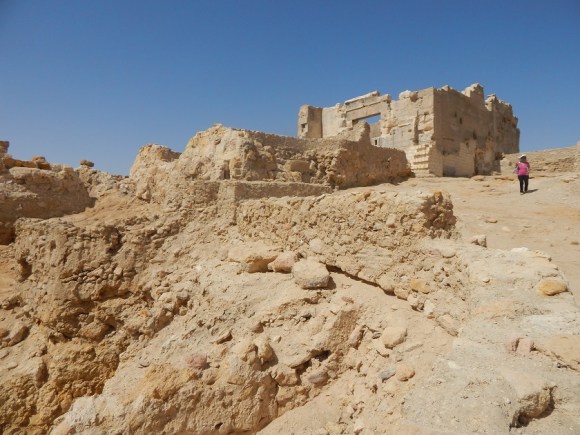
temple-of-the-oracle
The temple of Jupiter Amun, whose oracle proclaimed Alexander the Great to be a god.

In defiance of his own nation’s restrictions, Cornelis Hulsman not only went to Siwa, he invited international student interns, Egyptian nationals, media professionals, and just about everyone else in Egypt to travel with him.

“Western travel advice to Siwa is insane,” said Hulsman, the Dutch deputy head of the Center for Arab West Understanding (CAWU). “We are taking this trip to make a statement. You say it is unsafe, we’ll show you it is safe.”

On the surface, insanity might look a lot like prudence. Siwa, an oasis in Egypt’s Western Desert, is only 50-70 kilometers from the porous border with Libya. Last year in the Bahariya Oasis, 400 kilometers southeast, eight Mexican tourists were killed accidentally by an Egyptian army hunting for militants. In Sinai on the opposite border, an Islamist insurgency continues to plague the peninsula, with terrorist attacks sporadically spilling over into the mainland. And in broader context, Russia and Britain have restricted flights to Egypt after a Russian airliner crashed in the Sinai desert on October 31, 2015, with responsibility claimed by the Islamic State.

Many nations have responded by issuing various travel restrictions to Egypt in general, and CAWU has compiled a complete list. But The Netherlands, France, and Canada have specifically included Siwa, and Hulsman believes this is preposterous. The successful return of his trip of 29 suggest he may be right. So also do the daily and nightly buses departing from Cairo.

Off the beaten path of traditional Egyptian tourism, Siwa’s remoteness has always been the chief hindrance preventing development of the sector. Ten hours is required to move from Cairo to the North Coast, over to Marsa Matrouh, and then 300 kilometers south through barren and desolate desert.

But compared to Alexander the Great’s eight day journey in 331 BC it is practically instantaneous. Modern day travelers can see the ruins of the Temple of Jupiter Amun, whose oracle declared Alexander a god and blessed him in conquest of the world. They can also visit natural hot springs and sand baths, as well as mingle among the only Berber culture indigenous to Egypt. The Siwan people have guarded their independence for centuries and still speak their own language.

Hulsman has looked for opportunities to link CAWU’s internship program with local organizations such as the Desert Research Center. ‘Amr ‘Abd al-Hamīd, head of the DRC in Marsa Matrouh, told him the government has been cutting funding. But universities in countries applying a travel ban to Siwa are prohibited from sending students to restricted area. Interns on Hulsman’s trip went in their personal capacity, not as part of his official program.

But normal tourists are scared off on their own. One issue is insurance, explained Muhammad Hassan, the owner of Siwa Shali Resort, with 36 years of experience in the tourism industry. If anything goes wrong, whether terrorism or a simple car accident, a policy will not be honored if the tourist went against his own nation’s warning. Egyptian insurance is available, says Hulsman, but would the average tourist know how to find it?

At the height of the Egyptian tourism boom in 2010 and before the Arab Spring, 30,000 international tourists spent part of their summer in Egyptian Mediterranean resorts, Hassan said. Eight thousand of these chose to continue on to Siwa. But by 2015 traffic dried up almost entirely, and only an estimated 300 foreigners visited Siwa from abroad. In 2016, no one.

“When you issue warnings like this, you are waging war against our primary economic sector,” Hassan said. “You harm not the government, but the people, who then get angry with the government. I’m not being political, I’m just a businessman.”

There is no military or police authorization needed to reach Siwa, Hassan noted, though several checkpoints are set up between Marsa Matrouh and Siwa to check identification. But to go into the desert on a safari to surf the dues needs three. He first secures license from military intelligence, border patrol, and the local police before dispatching any tourist.

And the military is in constant surveillance of the desert area between Siwa and Libya, Hassan said. Terrorists go where the land is empty, which might be a problem further south. He has no problem with a travel restriction issued for Jilf al-Kabīr in southwest Egypt, for example, where Libya, Chad, and Sudan come together.

Hulsman also noted the different security atmosphere in Siwa. Apart for the normal tourist policeman assigned to the bus, there was no police convoy. Traveling to Upper Egypt, however, he has had vehicles travel in front or behind.

Similar was the on the ground experience. In Upper Egypt police ask that any large group be kept together, as easier to secure. But the foreigners and Egyptians alike freely roamed the grounds during an annual Sufi festival in Siwa, chatting with locals and wandering off with them. The security apparatus is much more relaxed there than elsewhere, Hulsman said, confident in the area’s safety.

Unfortunately, this is a reality lost on many Western governments. Mounir Neamatalla, Siwa’s wealthiest investor and owner of the Adrere Amellal: Desert Ecolodge that welcomed Prince Charles in 2006, is eager to change this. In early October he flew an 80-plus mostly foreign delegation to Siwa, including ten heads and deputy heads of diplomatic missions. But the message has not yet filtered through to decision makers in Western foreign ministries, and the travel restrictions remain.

Not for long, if Hulsman has his way. And now he has 29 more who can attest to his vision.

This article was first published at Arab West Report.

Categories
Prayers

Friday Prayers for Egypt: More Money

Flag Cross Quran

God,

Egypt’s economy is still not doing well. But at least she has more money to play with. May she play wisely.

The second tranche of the World Bank loan was received, along with another installment from the African Development Bank. Together they represent well over a billion dollars.

Egypt has many outstanding debts to pay. She has a budget to meet. She has poor mouths to feed.

But she also has jobs to create, projects to complete, and infrastructure to repair.

God, help this money stimulate the economy. May it stabilize the pound and spark new investment. May it give breathing room for necessary reform.

But these loans also must be repaid. From now until then, fill Egypt’s coffers from the sweat of her own brow. Restore tourism. Develop the canal.

End corruption.

God, international lenders have confidence in Egypt. Help her to be worthy. Help her nourish a society that can put it to good use. May competition, quality, and capital flourish.

Otherwise, more money risks being the root of more evil.

Money is a great blessing, God. With it may Egypt bless many beside. Care for her people, and help them to prosper.

Amen.


Categories
Personal

Mothers and Daughters, Mothers and Sons

victims-cairo-cathedral
(via Egyptians Streets)

A reflection from Julie:

Today marks a strange day.  Just one week ago, a suicide bomber killed over 25 people, mostly women and children, as they worshipped in church here in Cairo.  And one week from today, people all around the world will celebrate the joyous birth of a Savior during Western Christmas.  On one end of the bookend is a most tragic event; on the other, a most joyful one.  And yet for both events, that is only part of the story.

The bombing last week hit close to home. Although we are not from the Orthodox tradition of faith, we have worshiped at the local Coptic Orthodox church since we arrived in Cairo seven years ago.  We are familiar with the layout of the sanctuary, including the segregation of men and women.  The right side of the pews, facing the altar, is for the women and consequently most of the children.  The men sit on the left side of the church.  In our church there can be some mixing toward the back, and that is often where our family sits.  But for the suicide bomber, whether this was his target or just the nearest group he could reach, his bomb exploded in the women’s section.

Mothers and daughters lost their lives.  Sisters, friends, aunts, and grandmothers.  Mothers lost daughters and daughters lost mothers.  In at least one family, both the mother and daughter died, and another daughter was injured.  In another family, two sisters died, just graduated from school.  As I looked at the pictures of some of the victims, I couldn’t help thinking about the Sunday school teachers with my kids every week.  Young, vibrant, with their whole lives ahead of them.

One report mentioned the timing of the explosion.  During mass there is always a “giving of the peace.”  This has been a favorite time for our children as they slide their hands between the hands of other congregants, their siblings, and us, and then kiss their own fingertips, while saying “peace of the Messiah.”  This was the time, purposefully for not, that the suicide bomber entered the church.  Instead of peace, how tragic this man would give only violence.

Yet the Coptic Orthodox Church, thought mourning, still rejoices.  It is a church built on a history of pain, persecution, and suffering.  Children hear the stories of martyrs from centuries past and marvel at their strong faith and unwavering resolve to follow Jesus despite the threat of death.  Adults aspire to stand firm in the face of fear.  One friend told us he wished he was counted worthy to be there and die.  We are glad he wasn’t one of 25-plus now added to the church roster.

Such hope can sound trite.  A band-aid for the pain or an elixir to numb feelings after tragedy.  But it is not.  Mothers are grieving.  Fathers are burying their children.  Children try to understand where their mom has gone.  All of the pain is real and felt.  Yet they have a deeper faith that can help support those who are mourning.

Though the Coptic Orthodox calendar has Christmas on January 7, most of the world will celebrate just one week from today.  There is so much joy and happiness that surrounds this event.  For me it means baking, spending time with my family, fellowshipping with friends, making Christmas ornaments, and attending special church services.  And of course, we know the Christmas story where angels appeared to shepherds and announced the good news with great joy!  Amazing things happened more than 2000 years ago.

But tragic things happened too.  As I reflected this week on the bombing—with Christmas so near—I thought of the mothers in Bethlehem who lost their sons.  As Herod’s jealousy grew over the rumors of a new king, he ordered his soldiers to kill all the baby boys in Bethlehem two years and younger.  Can you imagine?  Murdered as they slept in their beds.  Seized while nursing. Moments earlier they were crawling down the corridor or toddling toward their moms.  What pain, what tragedy.

Christmas is a joyous celebration because it signals the birth of the Prince of Peace who will—one day—bring peace to this world. But this year not all are festive with blinking lights and wrapping paper. Besides the families of the Egyptian martyrs, some are dealing with debt, divorce, death, and disease. The world is dealing with refugees, war, terrorism, and racism.  Not exactly the happiest Christmas message.

How do we, how do I, handle all the tragedy in the world and still somehow celebrate the birth of my Savior?  This reflection is how I will start; I will remember the bigger picture.  Some are suffering; some are rejoicing.  I will pray for both.  I will help others.  I will be kind.  I will teach my children what I must continually learn: To not just focus on my own joy this Christmas, but to look outward and consider others.

We are mothers and daughters, mothers and sons.  Let us pray for peace on earth and goodwill toward men.

Categories
Audio Middle East

Podcast: How the Coptic Christian Church Endures

This ‘Quick to Listen‘ podcast was first published at Christianity Today, on December 15, 2016.

quick-to-listen-podcast

Egypt’s Coptic Christians are in a state of mourning after a suicide bomber killed at least 25 people at a Cairo church on Sunday.

“Egypt always tends to rally around Christians at moments like this,” said Jayson Casper, CT’s Middle East correspondent. “But over time, [ISIS is] trying to hammer and hammer and hammer the Christians in Egypt and put so much pressure on the internal government that it itself may collapse.”

But even when suffering does come, the Coptic Church “is equipped to deal with it,” said Casper.

“They can say, ‘This has always happened to us in our history. It is how God has treated us and he perseveres with us through it.’”

While the attack was the worst to target Copts since the 2011 New Year’s bombing of a church in Alexandria that killed 23 people, the population has been the victim of sectarian violence for years. In 2015, ISIS, who also claimed responsibility for the latest attack, beheaded 21 Coptic Christians in Libya.

Casper joined assistant editor Morgan Lee and editor-in-chief Mark Galli this week to discuss the fascinating and important history of Coptic Christians, how the Egyptian church relates to a changing government, and why this most recent attack is unique.

Please click here to listen to the podcast at Christianity Today (38 minutes).

Categories
Prayers

Friday Prayers for Egypt: Cathedral Bombing

Flag Cross Quran

God,

If the video is authentic, the suicide bomber strolled into the church grounds. Reports say the guards were distracted, perhaps having breakfast together.

A church doorman followed him to inquire. Seconds later – the bomber likely ran though the near door leading to the women’s entrance – the roof and outside wall shook. Twenty-five people were dead.

There are many to pray for, God. Perhaps we can start with those least among them.

It is not ours to pray for the bomber, God. But the victims can if they are able and willing: Do not count this sin against him.

Is the doorman still alive? Comfort him in what he was unable to stop. Surely he is torn apart internally, weeping over those torn apart literally.

He did what he could, God. It was not enough. Maybe in hurrying the bomber he stopped greater carnage? Make him content in the not-knowing. Make him aware of your great love for him even so.

Comfort also the guards in what they were negligent to stop. How condemning is their guilt? How scarring is their shame? They failed, God, and the consequences were immense.

Hold them accountable before the law. But let them first weep in recognition of their crime. Heal them in it, and draw from them repentance.

And neither is this for us to pray, God. But the victims can if they are able and willing: Let them experience the forgiveness of those they wronged.

Whether it comes or not, make them aware of your great love for them also.

God, there are those who smirk, even rejoice in this atrocity. There are those who helped plan it and threaten more. Pierce the conscience of the former in powerful contrition. Pierce the conspiring of the latter in rapid arrest.

The wicked laugh and plot, God. Bring them to failure, then bring them to yourself. Make them aware of your great love for those they hate, a love that draws them in as well.

We mention the victims, and many have prayed for them already. Add these thoughts to their ledger, and forgive us for presuming an ideal upon them.

Comfort them, God. Strengthen them. Illumine them. Indwell them. And may they be for our sake a fulfillment of your best ideal.

May your mercy flow through them.

In this, may they know your great love. May they know you, love itself.

Have patience with them God, and with the many who are angry. Be with them as they rend their clothes in rage and mourning. In it rend their hearts.

Give them others to weep with. Give them healing in their trauma. Give them good memories of their loved ones, to eventually smile.

God, in this horror transform Egypt. Make her a place of welcome for all her people. Make her strong, and make her soft. Help her stand. Help her kneel.

Help her know of your great love. Help the murdered rest in peace.

Amen.

Categories
Middle East Providence Published Articles

A Rough Stretch in a Season of Waiting: Egypt’s Christians and the Cathedral Bombing

cathedral-bombing
Photo by Omar Elhady, via Twitter (@ElHady).

This article was first published at Providence Magazine.

“There has been a bombing at the cathedral,” said the pastor at the local Methodist church in a lower-class area of downtown Cairo. “Several are dead, and we pray for our nation.”

It took me a moment to comprehend, but the gravity of his words indicated more than a simple illustration. I opened my cell phone to check the news and saw the bold headline: 25 dead and 49 injured in an attack on the Coptic Orthodox cathedral. The spiritual center of Egyptian Christianity had been mercilessly violated.

Only a few minutes earlier, the sermon considered John the Baptist and how his life of faithfulness ended with his head on a platter. Here again now was another modern Egyptian example of martyrdom, one more in a long line since the similar bombing of a church in Alexandria six years earlier. Several women sobbed quietly, as the men sat in stunned silence.

But a little later as they exited the service, the collective sense felt more like resignation. The men exchanged pleasantries and went home; the women lingered a little longer in conversation. What was unthinkable at the start of the Arab Spring had become unsurprising. In Alexandria 23 Copts died when a car bomb went off outside the church, but that attack, at least, soon gave way to the hope of a new revolution. The cathedral atrocity gives no inspiration, as Egypt remains muddled in a regional fog of war and terrorism.

In-between the two bombings were the 2013 revenge attacks on dozens of churches throughout the nation, as frustrated Islamists blamed Christians for the overthrow of the Muslim Brotherhood-affiliated President Mohamed Morsi. And the usual stream of sectarian incidents continued apace, as the state failed to hold accountable the mob violence of Muslims objecting to a church in their village, or an interfaith love affair, or any other typical but ill-justified collective form of Coptic punishment. It has been a rough stretch for Egypt’s Christians.

But not nearly as rough as the Christians of Iraq and Syria, or the Muslims of Libya, Yemen, and elsewhere have endured—and the Copts know this. They stand behind their Muslim Brotherhood-vanquishing president, and give much slack to a government they know is under tremendous pressure. Everywhere they turn it seems some new conspiracy is bent on dragging Egypt into the Middle East morass. The economy is in shambles, tourism is nonexistent, and save for the mandatory utterances of support following terrorism, they feel the international community never speaks except in censure. For this reason many have expressed favor at the election of Donald Trump. He likes our president, they say, and at least he’ll leave us alone.

For Copts are tired of being treated as pawns. A few days before the bombing, Foreign Policy ran a story entitled, “How Egypt’s Copts Fell Out of Love with President Sisi.” Even Chuck Colson’s Breakpoint piled on, ostensibly seeking to help by demanding the US president support Egypt’s Christians. “Meet the new persecutor,” said the article subtitle, “same as the old one.” Some on the left seem intent on buttressing the narrative of Copts in the way of a deserved Islamist democratic future. Some on the right seem intent on painting Muslims as sharia-inspired agents of Christian antipathy.

Both articles do well to draw on actual Coptic voices, and important ones. The news they convey is vital to learn in a world where, unless made a pawn, the Copt is often ignored. But they miss the nuance of the Coptic reality. Perhaps they can be forgiven for not knowing enough; perhaps they are guilty of pushing an agenda.

Back in Egypt, the Copts are well aware of incumbent discrimination and state weakness. But they cheer on a president who attends Christmas mass with the pope, and a military that rebuilds the churches Islamists destroyed. A new law for church building may or may not fully address the issues surrounding freedom of worship, but at least this regime—the first in 160 years—issued a law at all.

And following every tragedy, the common Muslim tends to open his or her bosom. Private taxi services Uber and Careem offered free rides to the hospital for blood donations. Many have missed the fact this bombing took place on the birthday of Islam’s prophet, a traditional day of merriment. The attack was therefore an assault on Muslims as well, Christians note. A popular cartoon draws the traditional holiday doll in the black clothes of mourning, as behind her stands a somber crucifix.

Thus between the kindness of the Egyptian soul and the sectarianism latent in an identity-driven society, the Copt is left waiting for national transformation. The rhetoric of the current regime seeks to revive a spirit of Egyptian nationalism, if only it can sludge through current challenges to reach a modicum of stability. Every maltreated Copt who fails to obtain justice is another reminder of how far the country has to go. And the cathedral bombing is another example of the powerful forces that stand against an idealized future.

But from the demonized past and lingering present, the Muslim Brotherhood condemns the bombing in one breath and blames it on regime-church collaboration in another. As long as this is the alternative, Copts find their best option in the preservation of a strong-handed government and a nominally secular society. Some in their community continue faithfully to agitate for human rights and a less political role for the church. Many agree but feel security and economy must be prioritized. Most hope for an open society of enlightened Egyptians, if only a generation away.

The Methodist church sermon that ended with John’s head on a platter began with the miracle that led to his birth. Elderly Zachariah and sterile Elizabeth likely long gave up hope of a child, the pastor surmised. Even so, “Your prayer has been heard,” said the angel. God is faithful, even when his people falter. John, the pastor noted, also doubted the one he baptized.

Where in this parable are Egypt’s Copts? Soon to be beheaded, or of pious prayers fulfilled? Likely somewhere in between, still inclined to pray for their nation.

Categories
Christianity Today Middle East Published Articles

Cairo Church Attack Kills 25 at Center of Egyptian Christianity

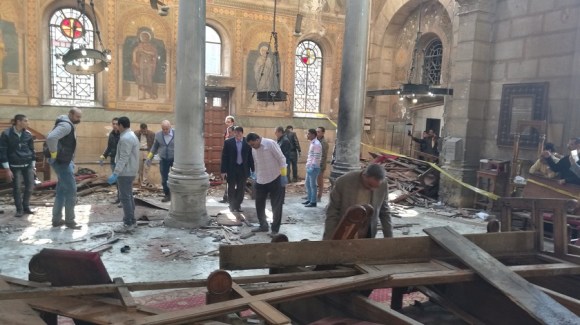
coptic-cathedral-bombing
KHALED DESOUKI/AFP/Getty Images

This article was first published by Christianity Today, on December 11, 2016.

At least 25 people were killed and 49 injured when a bomb exploded around 10 a.m. this morning during a worship service at the spiritual center of Christianity in Egypt.

It is the worst terrorist attack on Copts since the New Year’s bombing of a church in Alexandria in 2011 that killed 23 people.

A worship service of mostly women was targeted in the St. Peter and St. Paul church, adjacent to the St. Mark’s Cathedral and papal residence of Pope Tawadros II, the leader of the Coptic Orthodox community in Egypt and worldwide.

Tawadros was traveling in Greece at the time of the attack. He will cut short his visit and lead funeral prayers tomorrow in the Nasr City district of Cairo.

So far, there has been no claim of responsibility for the attack.

“This is an unbelievable act against Egypt first and Christians second,” Andrea Zaki, president of the Protestant Churches of Egypt, told Christianity Today.

Please click here to read the full story at Christianity Today.

Categories
Prayers

Friday Prayers for Egypt: Internal Organs

Flag Cross Quran

God,

Inflation hit a high of 20 percent this month. Egyptians are suffering as the state seeks to stop years of internal bleeding.

But the response of some only does more damage – to themselves and the country. Egypt this week arrested a ring of doctors involved in the illegal trafficking of organs, attached even to prominent hospitals and medical schools.

Poverty has driven some to desperation. Greed has driven others to exploit them.

God, thank you for exposing this circle, and may it lead to finding others. Protect the integrity of the medical profession, upon which so much depends.

But protect also the integrity of the citizen, to live within a healthy means. Too many are adversely affected by the economy, no matter how necessary the reforms.

And in this, God, protect the integrity of the state. Give wisdom to balance the needs of the budget with the needs of the poor and middle class. May none grow rich on the sufferings of others.

In the end, God—and may it be soon—ensure these days strengthen the organs of Egypt. A society free from corruption. An economy free for enterprise.

And a people free to develop their nation. God, gird the loins of Egypt; bring her to peace and prosperity.

Amen.

Categories
Prayers

Friday Prayers for Egypt: NGO Medicine

Flag Cross Quran

God,

As with all people, sometimes society falls sick. Help Egypt restore herself to health.

But first, the people need medicine. Since the floating of the Egyptian pound essential drugs have been hard to come by. The price of imported raw materials nearly doubled overnight, while a cap is placed on consumer prices.

Drug manufacturers are pinched, and the sick suffer.

God, help Egypt find an equilibrium. So many interests, so many sectors to balance. Give foresight to anticipate coming struggles, and discernment to solve those of the present.

But another present problem is the role of civil society. Some see foreign money pursuing its own agenda. Some see government seeking to restrict the whole.

God, weigh motivations and inspire good policy. Many abroad just want to help. Others may intend discord. Many in government just want to protect. Others may intend control.

Sort and shuffle, God. Place good men in position to judge. Bring honest brokers to the task of implementation. Populate civil society with Egyptians who love their country. Populate government with people of wisdom.

Heal, God. There are long-suffered wounds and nurtured mistrust. The health of society is at stake, and the needed medicine is in your presence.

Lend it liberally, God. You are the great physician.

Amen.

Categories
Personal

No Shave November

no-shave-november

It started simply because I forgot to take my razor on a trip to a desert oasis. But with November around the corner, I thought, there is a good excuse to continue.

And a good cause. No Shave November raises money and awareness about cancer. Particularly directed to men, it provides an answer to the obvious question:

Why are you doing that to your face?

The American Cancer Society recommends all men at age 50 speak with a doctor about colon and prostrate cancer screening. Early detection can stop a killer.

I’m not at age 50 yet, no matter what the gray may suggest.

But cancer does not discriminate. In December we plan to visit and offer a donation to Hospital 57357, the foundation number of the Children’s Cancer Hospital of Egypt.

At 320 beds it is considered the largest in the world. Modeled after St. Jude’s in Tennessee, it treats patients completely free of charge.

We have visited once before, and it can be a difficult thing to introduce yourself and offer words of encouragement to the innocents suffering. But it is a good thing to do, and we trust our children will learn even from our discomfort.

Mine, perhaps. My wife was much more natural. Our kids were a mixed bag. Perhaps next time will be easier.

But whether I go with my semblance of a beard will be up to our children. Today as November ends I’ll put it to a vote if they want me to shave or continue growing for another month.

My wife will break a tie. Of course, she can veto the whole process if she likes.

I must say, though, it has been fun. Please let us know if you would like to donate also.


Categories
Prayers

Friday Prayers for Egypt: Turf


Flag Cross Quran

God,

Men will always defend their turf. But doing so can shake the whole.

Make Egypt more than the sum of her parts. Being her together in consensus with all.

The state has proposed an agricultural investment project in the underdeveloped areas of the south.

But doing so sells off the land of the marginalized Nubians. Displaced by construction of the High Dam, the constitution guarantees their right of return.

They now protest against further loss of turf.

The state is prosecuting violations of the protest law, among them journalists who demonstrated against the ceding of two Red Sea islands.

They took refuge in their syndicate, which was eventually stormed by police.

Now the head of the syndicate is also arrested, and the general body is studying how best to protect their turf.

The state has imprisoned many Brotherhood members for participation in violence and betrayal of the nation. Court cases resulted in rapid convictions, some of which have been confirmed.

But higher courts have overturned others, ordering a retrial. The Brotherhood struggles to fight for survival. But the judiciary also has its own turf.

God, guide Egypt in each issue.

Develop the economy, in cooperation with the people. Ensure necessary stability, with guarantee of rights. Weigh justice judicially, with due process on every charge.

Bless those who strive honestly for all they believe to be their right. But guard against partisanship and selfish insistence.

Bless those who struggle in defense of their kin. But temper the strong who may press upon the small.

Make Egypt united in support of her turf.

But remind Egypt also that all turf is yours.

Amen.