Categories
Prayers

Friday Prayers for Egypt: Mashrou3

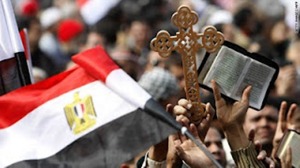
Flag Cross Quran

God,

Some people have a project. Others like to project.

And some just like to sing. Judge between them, God. Their intentions and their cause.

An upscale district in Cairo invited a popular Lebanese band to a concert festival. The lead singer is well known as a homosexual.

Some in the crowd raised a rainbow flag in solidarity. Shared on social media, the firestorm began.

Talking heads and politicians continued the hubbub. Seven concertgoers were arrested, with investigations into the organizers. The band may yet be banned.

God, all praise to you for the gift of music. May your creation craft creatively in honorable imitation.

But some creation, yours and ours, deviate from the norm. Give wisdom, God, in what to do.

You esteem freedom, God, but not license. You create diversity, but not deformity.

Guide your creation in knowing where to draw the line.

For those on the wrong side of society’s norm, may they find mercy within judgment.

For those on the right, may they respond with the right. At times, the law. At others, grace.

For those who wish to erase and adjust, may they know well your will. If in one direction, give them compassion. If in the other, courage.

For all, may they know your love for all creation. Your love embraces, but also transforms. Bring all to your desired end.

You have the best of all projects, God. Creatively change us. Bring us to sing.

Amen.

note: Mashrou3 is Arabic for “project” and is part of the name of the Lebanese band, Mashrou3 Laila.

Categories
Personal

Muslims Work for Religious Freedom, in Italy

MWL1
(via the Muslim World League)

Some of the articles I’ve written concern interfaith efforts to secure religious freedom, particularly in Muslim nations.

Two days ago, the Saudi-based Muslim World League met with the Italian Minister of the Interior to best secure Muslim rights in the traditionally Catholic nation.

In a helpful explanation from the 2016 US Report on International Religious Freedom, Italy has a series of “accords” with recognized religious groups in the nation.

The Catholic Church is separate from the government but does have a unique accord privileging it somewhat above the 12 other Christian denominations and religious groups. Accords are signed through the Ministry of the Interior, and grant tax-deductible status, state financial support, property rights, clergy recognition, and religious holiday waivers for students and employees. Non-accord groups can apply for these benefits on a case-by-case basis.

Muslims do not have an accord with the government.

Part of the issue may be that Muslims have no administrative entity governing their affairs. Among the topics discussed with the minister is the role of the Muslim World League to help unify the local Muslim community, and secure Islam as a recognized religion.

Italy lauded the MWL for its role in spreading the values of tolerance and coexistence.

A few days earlier the secretary-general of the MWL met Pope Francis, and agreed to set up a joint committee to pursue the values issued in their statement:

  • Religion and violence are incompatible
  • Religions have moral resources capable of contributing to fraternity and peace
  • The phenomenon of fundamentalism, in particular when violent, is troubling and joint efforts are required to counter it
  • Situations exist where freedom of conscience and of religion are not entirely respected and protected
  • There is an urgent need to remedy this, renewing religious discourse and reviewing school books

This is a worthy statement, though the urgent need would seem to require more than the suggested remedies. Yes, these would help change a culture over the long term. But laws guaranteeing freedom of conscience and religion are currently lacking in several countries within the Muslim World League.

Perhaps the statement is a polite and friendly way to begin to address this, without the shame associated with naming names – as does the US Report on International Religious Freedom.

The statement of religion and violence being incompatible is also curious. Islam has a well-defined tradition of religiously sanctioned jihad. It need not be equated with terrorism, but neither is it exactly equivalent to Christian just war theory. I find it strange the Muslim World League could sign on to such a clause, without further delineation.

But they are discussing the right things. The common criticism of interfaith statements of toleration is that Muslims do not practice what they preach in their own countries.

It remains to be seen if the Muslim World League will act on these principles, but it is encouraging that the Vatican has a joint committee to hold them responsible.

And, to be held responsible. In coordination with the MWL, Italy has taken steps to better ensure the religious freedom of minority faiths.

Do note when Muslim nations do the same.


Categories
Personal

Why Egyptians Get Confused by Our American Children’s Names

Arabic English Names

Names don’t work the same in every culture.

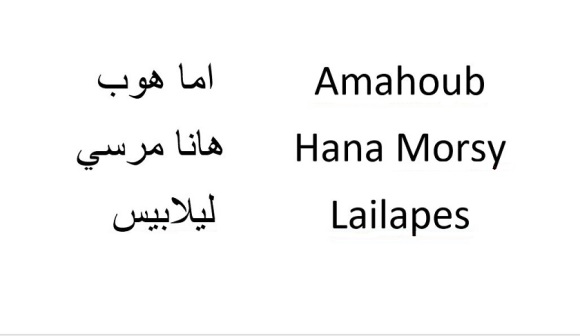
We realized this six years ago, when our oldest daughter came home from her first days of school with “Emma Jaison” printed on her books. Her name is Emma Hope Casper, which I clearly wrote on all her official forms.

But I also filled out the ever-important question of her father’s name, my husband, Jayson. As per Egyptian pattern, her name became Emma Jayson, though in practice Ema or Amy, Jaison or Jasen, depending on how they guessed these strange names to be spelled.

A quick lesson in the Egyptian naming system is required. When a baby is born, parents choose the first name, just as they would in America. But that is the choice available, and the rest of the name is determined by family.

Every baby’s second name is its father’s name, even if she is a girl. The third name is the baby’s grandfather’s name—that of the father’s father. The fourth and final name for official paperwork is that of the great-grandfather, and unofficially stretches back through the generations.

To be honest, we are still confused about any actual “family name”. Some people seem to have something to correspond with Smith or MacDonald, although it would be something along the lines of Masri (from Egypt) or Tantawi (from Tanta). But we can’t quite figure out how that works with the pattern above.

Each of our three daughters have similarly returned from kindergarten with their name changed. Our second became Hannah Jayson, though alternately spelled: Hanah, Hana, or Hanna.

Trying to get it right in discussion with school administration, our third daughter’s first name, Layla, got combined with her second, Peace. But her papers came back:  Lailapes Jaison. I almost couldn’t figure out what it said.

Granted, transliteration between English and Arabic isn’t easy. But he mix-ups in name have sometimes bothered our girls. A simple name like Emma Hope has become Amahoub. Hannah Mercy was eventually spelled correctly, with her a different issue emerged.

In kindergarten, Hannah was known only as Hannah Jayson, but when she entered first grade, they added her actual middle name. This happened the same year that the former president Mohamed Morsy was deposed.

But when you write Mercy in Arabic script it looks just like Morsy, since Arabic writing leaves out the short vowels. And since the word “mercy” in English looks nothing like its translation in Arabic (rahma), everyone assumed she was similarly named to the Muslim Brotherhood leader.

Plenty of people here hated the Brotherhood, but Morsi is a fine and common name—among Muslims. While plenty of names have no religious marker, Abanoub or Shenouda signify a Christian, while Mohamed or Morsi indicate the child is a Muslim.

So the teachers wondered: Why is Hannah Morsy enrolled in the Christian religion class?

Click here to read more about our kids and religious education in Egypt.

Even more confusing for the teachers is how Emma “Hobe” and Hannah “Morsy” are sisters to begin with, with different names for their father. Add in Lailapes Jaison and you really confuse them!

We thought we would make things easier for our son Alexander, who is now entering kindergarten.

Click here to read the different naming options we considered, with pros and cons for each in Egypt.

My husband’s middle name is the same as his father’s, so to honor both the family and the Egyptian pattern, we did the same. He is Alexander Jayson (father’s name) Charles (grandfather’s name). His last name is still Casper, as we can’t imitate them in everything.

But it won’t be that easy. We commonly call him by the Arabic equivalent of Alexander, Iskander. He goes by both, and much as a four-and-a-half-year-old understands these things, he knows they are both his names.

But when he gets to school, what will he say his name is? Will he write Iskander in Arabic class, but Alexander in English? And how many people will just call him Alex, anyway?

Despite the confusion for each of our kids, we teach them their names were chosen with care. We display them in our living room, that they might be esteemed by child and guest alike.

English-speaking friends sometimes curiously notice the semi-strange middle names, and Arabic-speaking friends are often altogether confused. But wholesome discussion usually follows.

Hope, Mercy, and Peace—each a desirable virtue for life, paired with a corresponding Bible verse we trust they will internalize.

Our son’s pattern is different, and his sign requires more explanation. Alexander was the son of Simon of Cyrene, who carried Jesus’ cross. Of his two middle names, may he follow and become a third generation of faith.

Children grow old and develop their character. But a name is the one thing we give them they keep their whole lives. Their identity will be shaped by many, and their path is their own.

But we have the responsibility to shape their foundation, beginning with that first official form.

Our Hope is that they grow up with the Mercy to let others misunderstand them, the internal Peace to know who they truly are, and a family history to teach them whose cross they are privileged to carry.

Name Signs


Categories
Prayers

Friday Prayers for Egypt: United Nations

Flag Cross Quran

God,

Significant things happened within Egypt this week. A prisoner was acquitted after four years detainment. Two churches reopened after security concerns. Police station spot inspections were begun by parliament.

But the president was in New York at the United Nations, significantly negotiating the path of the nation.

He earned praise for helping un-divide the Palestinians. He urged better coordination in combatting terrorism. He signed memorandums on illegal migration. He lobbied for increased foreign investment.

He took his place on the world stage, mingling with world leaders.

Interests govern foreign affairs, God. But relationships can make a significant difference.

So does domestic policy. Help Egypt do what is right by her own people.

But in the world, give the president grace. In precarious times, help him balance sovereignty and support. Help him challenge allies, and win over foes.

Help him represent Egypt.

It is a significant task, God, but in your sovereignty, support him. Of the people, and for them, challenge, and win over.

Amen.


Categories
Excerpts

Did the Muslims Conquer Jerusalem?

Syriac Conquest History
A Syriac hymn, manuscript dated to the 14th century.

Did the Muslims conquer the Middle East? History says they did, from both the Western and Islamic perspectives. Much of the self-understanding of modern civilization has been built upon this premise, the resulting Crusades, and eventual colonization by European powers.

Some fear there are signs of a renewed animosity between the Western and Muslim worlds, a quasi-religious competition, even as Christianity has lost much of its ethos and Islam has lost much of its power.

But new research into a third resource questions the history. Scholars and historians know Latin and Greek. Arabic is also readily translated and studied.

But not Syriac, the neglected lingua franca of 7th century life in the Levant, and the language of its native, non-imperial peoples.

The Institute of Advanced Studies recently published one scholar’s research:

Syriac literature was produced by—and conversely sheds light on—communities living on the borders of the Near Eastern polities, considered as a religious minority in the Zoroastrian Empire of the Sasanians, as heretics in the eyes of the Byzantine Orthodox (since the “universal” councils of Ephesus in 421 and Chalcedon in 531 that they refused), and as one of the religions of the book under Islamic powers.

Syriac thus offers a crucial “internal” source for the history of the Mesopotamian region reaching as far as South Arabia and the Far East from the late antique to the medieval era.

Shortly before the rise of Arab/Islamic empire, the Byzantine and Persian Sassanid empires were at war, taking and then losing Jerusalem and possession of Jesus’ True Cross.

The literature produced by Syriac Christian communities did not celebrate the triumph of the Byzantine empire, the author described, nor mourn the victory of the Zoroastrian Persians who briefly held the Holy City. They were rather nonplussed by regional politics, and awaited God’s ultimate redemption through one of their own anticipated champions.

So when the Arabs came:

It is striking to see that the second capture of Jerusalem in 636 by the Arabs, only a few years after its retaking by Heraclius, is hardly mentioned in the Syriac chronicles where it is a non-event.

Since the siege ended peacefully, after a negotiation between the Byzantine patriarch of Jerusalem and the caliph, and the city was not stormed by the Arab troops, the capture of the city is not mentioned in the most ancient Syriac sources.

Produced by the communities who were at the heart of the events, Syriac sources compel us to reconsider what “conquests” means.

Modern historians talk about the Sasanian and then Arab-Muslim conquests, but Syriac sources never use the word or concept. There were sieges, battles, military operations that could be catastrophic and dramatic for the local populations, but there were also negotiations and cities taken by treaty.

Contrary to Arab-Muslim sources that would subsequently create the genre of “futuh,” or “conquest” literature, in order to celebrate those who took part in the campaigns and the distribution of the booty, Syriac sources present a situation of occupation and change of rulership more than a conquest as such.

They invite us thus to reconsider the categories, and the agendas, that we have inherited from later Arab-Muslim sources.

There is also an interesting sub-discussion on how intra-Christian debate on the nature of Jesus’ crucifixion mirror some of the issues mentioned in the Quran.

I am wading into deep historical waters, and I am not the scholar to do so. New research often threatens to upend the academy, only to be counter-argued and put in its place. Perhaps the same will happen here.

But the language of local people is a useful counter-balance to official histories, written by either the winners or losers. In this case, both had a vested interest in labeling the actions a ‘conquest’.

Certainly the Muslims would go on to conquer further, only to be conquered later in turn. Such is the history of the world.

But lest it repeat itself unwarrantedly, both sides might do well to revisit their language and understanding of history.

For once again, the Syriac heritage stands in the middle. An ancient faith, outside of power. We have much to learn, and consider.

Image via https://hmmlorientalia.wordpress.com/2013/02/08/a-short-hymn-in-syriac-attributed-to-severos/


Categories
Prayers

Friday Prayers for Egypt: Militant Human Rights

Flag Cross Quran

God,

Egypt is abuzz over human rights allegations, accusing security of systemized torture.

Egypt is ablaze in militant conflict, attacking security in systemized violence.

Clarity, God, and safety. Settle the challenges Egypt must face.

The government refutes the charges of torture, stating any examples are individual, investigated, and prosecuted. It states the research into the report was shoddy, reliant on inadequate sources, and overtly politicized.

The government raided a terrorist cell in a neighborhood of urban Cairo, killing several. It then suffered losses when a convoy was ambushed in the Sinai. It asserts progress is being made and pressure exerted on the militants, but still faces an intransigent and virulent threat.

God, assist the authorities to fully establish a culture of human rights and the accountability thereof. And assist the self-appointed accountants to both chronicle and communicate well.

Give them discernment between exposure and advice. Give them wisdom in opposition and partnership. And give humility to the authorities in refutation, with courage, in reform.

But as for militancy, silence it. Channel frustrations into legal and viable options. Save violence only against recalcitrant evildoers. And even these, convict to repentance.

God, there are many paths to legitimacy. There are many more ways to undermine.

Establish Egypt upon your path—abuzz in expectancy, ablaze in creativity—systemized both as secure and human.

Amen.

Categories
Christianity Today Middle East Published Articles

Saudi Arabia’s Neighbor Defends Religious Freedom of Individuals

This article was originally published by Christianity Today, on September 13.

Bahrain Declaration 2
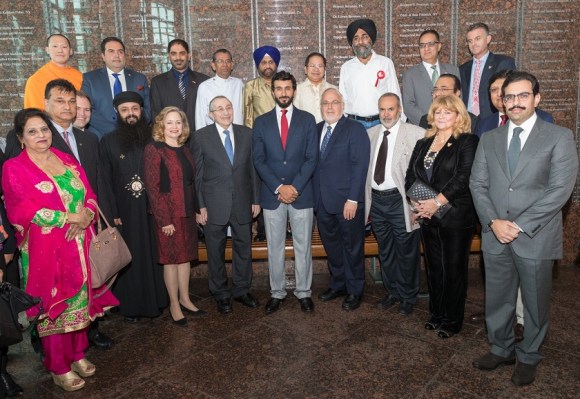
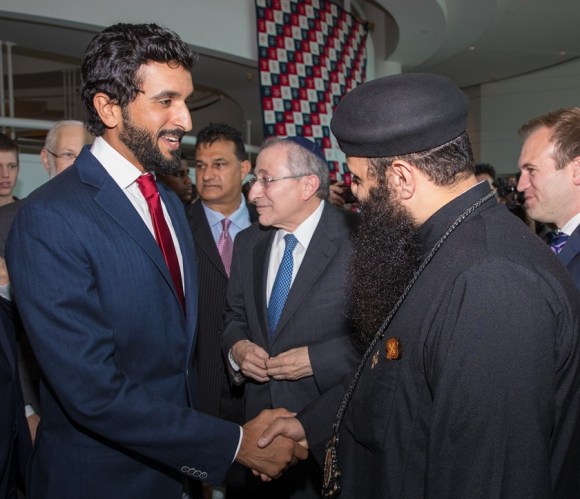
Prince Nasser bin Hamad al Khalifa (center), with Bahrain Declaration attendees. Credit: Simon Wiesenthal Center.

The cause of religious freedom received a significant boost from the Muslim world today. The island Kingdom of Bahrain—connected by bridge to Saudi Arabia—has declared “freedom of choice” to be a “divine gift.”

“We unequivocally reject compelled observance,” states the Bahrain Declaration for Religious Tolerance, released September 13 in Los Angeles with Muslim, Christian, and Jewish leaders in attendance. “Every individual has the freedom to practice their religion, providing they do no harm to others, respect the laws of the land, and accept responsibility, spiritually and materially, for their choices.”

Prince Nasser bin Hamad al Khalifa of Bahrain signed as an official envoy of the Gulf nation’s king. Johnnie Moore, a board member of the National Association of Evangelicals, and Rabbi Marvin Heir of the Simon Wiesenthal Center also participated, joining ambassadors from Saudi Arabia, the United Arab Emirates, Egypt, and Israel.

“The King is acting decisively, courageously, and seriously,” said Moore, noting also Bahrani sponsorship of a religious tolerance center in the capital city of Manama, as well as the sponsorship of a chair in religious coexistence at La Sapienza University in Rome.

“The declaration goes farther than any similar document that I’m aware of.” …

Please click here to read the full article at Christianity Today.

Bahrain Declaration
Prince Nasser bin Hamad al Khalifa, with a Coptic priest. Credit: Simon Wiesenthal Center.
Categories
Personal

A Long Good-Bye, From Far Away

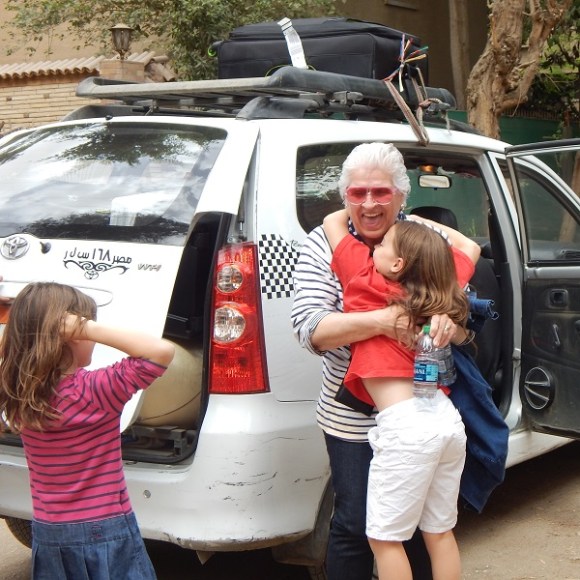
Tayta and Taxi

Today, September 12, would have been my mother-in-law’s 67th birthday.

Tayta, as our children call her, passed away six months ago. She fought courageously through two bouts of cancer, and the first time she triumphed. The second time, she succumbed. We remember her well, but the relationship will never be the same.

Complicating things completely is that we live in Egypt, an ocean away, where she visited us consistently. Jayson, my husband, got word she wasn’t doing well, and should come home immediately, just in case.

One day later, Tayta breathed her last. She was surrounded by her children and husband, and died peacefully.

But the children and I were not there. Immediate preparations are difficult for a large family, and we had the idea that we would follow Jayson a bit later. There was no guarantee she would die.

With only a few hours before Jayson had to travel, we tried to gently explain to the kids that Tayta was not doing well and it was important for Daddy to go be with her. And as she might die soon, all of us will go to see her as soon as we can.

The kids were saddened by this news, yet not totally surprised. Through Skype a few days earlier they saw that Tayta was not feeling well, even though she still had her same spirit and sense of humor.

But with Jayson in the air, the message came that Tayta entered hospice care. My prayer was that the boys would make it in time to see their mom, but it also hit me that we likely would not. And almost as bad, I had to tell the kids.

Funny the things you don’t think about, and living abroad perhaps it should have been obvious. But I never expected I’d lose a loved one and not be there, nor that my husband and I would not be together.

Years ago, Jayson and I were privileged to receive training in how to handle grief. One of the principles is to communicate clearly with your kids about what is happening, without trying to be strong for them. To let them see how this loss affects you, and learn appropriately.

Another principle is the importance of saying good-bye and communicating important statements, if possible, while the person is still alive.

I wasn’t sure how much time we had, so before school I recorded each of them saying, “I love you, Tayta,” recalling different memories and things they appreciated. It was somewhat easy for them, as they didn’t know the full reality, and now was not the time to tell them.

But privately, I blubbered through my whole recording, knowing that I wasn’t going to see her alive again.

After school, it was time to talk honestly. It was a hard conversation. They loved her very much, and it was a shock to hear she would die before they saw her. We cried together a long time.

Meanwhile, Jayson was grieving in New Jersey. He had spent most of his day with his father and brothers by his mom’s bedside, holding her hand, sometimes talking to her, and not seeing much response.

It was hard to grieve with him and for him from so far away.

Skyping later, we gave the kids the option of seeing a very sickly Tayta on screen as we played their videos in front of her near-comatose body. They chose not to, at first. I did, and it was hard to look. She was no longer who I remembered, and she didn’t respond as I talked.

But perhaps she heard; hospice workers say that it is often the last sense to go.

Afterwards the kids came back into the room one by one, and bravely looked at Tayta and said their good-byes. They cried with Sidu, as we call my father-in-law.

Our oldest daughter recited Psalm 23, and we also laughed and smiled at some good memories. It was a hard time, but a good time.

Tayta died later that evening, and the kids stayed home from school. We had a full day to cry when we wanted to, laugh when we could, and do some things that Tayta would do with them … like Play-doh and bubbles. It was a hard day, but a good day.

We Skyped with Jayson a few hours later, and I saw the empty living room where we had so many memories, but also where her hospice bed had held her. Just like that it was gone, as was Tayta.

It hit me: The loss of a special mother-in-law. The loss of a grandmother to my kids. The loss of a mother to my husband. The loss of a wife to my father-in-law, who now has his whole life turned upside down. And the loss of a friend, as her many close relationships reached out through Facebook and email.

If I was there, I could have more easily shared in this grief, at least some of it. But as we made plans to travel back for the memorial service, I grieved also that we must continue to grieve apart, and from afar.

The tears still come sometimes. They did as I wrote this and remembered the pain of saying good-bye. They will flow again when we return to the states for a visit, and she isn’t there to read books to the kids or laugh at her sons’ playful arguments at the game table.

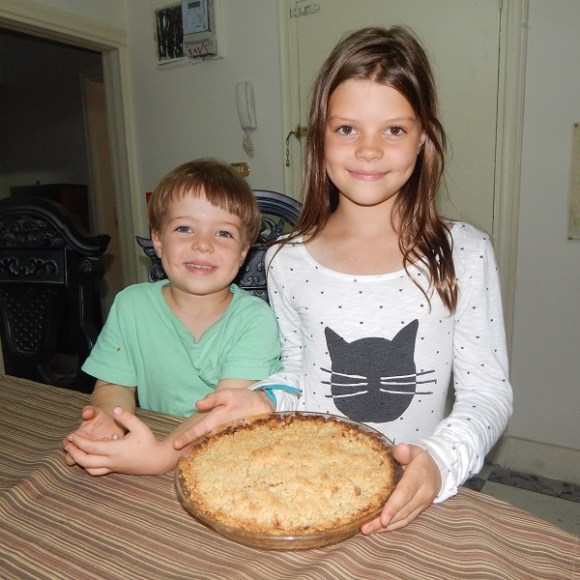
But sadness isn’t the only emotion that fills me when I think of Tayta. There are good memories every time we discuss her with the kids. They have her dolls; we have her pictures. Today we made apple pie, her favorite dessert.

We miss her a lot, but we said good-bye well. It was hard, but it was good.

Tayta and Apple Pie

Categories
Prayers

Friday Prayers for Egypt: Rohingya

Flag Cross Quran

God,

The Azhar spoke out about the death and displacement of Muslims from Myanmar. It called on the world’s conscience to care, and the international community to do something about it.

It also asserted—rightly or wrongly—that if they were Jews, Christians, or Buddhists, there would have been action already.

God, some of the images are horrific. Villages burned, children killed. Stop the violence, end the hatred.

Myanmar says the Muslim community are illegal immigrants from Bangladesh, appropriating land over many years.

Whatever the truth, God, may problems be solved appropriately.

Perhaps the Azhar is right. Few outside of Southeast Asia pay much attention to the region.

But God, all have blind spots. Many support their own. Hypocrisy is everywhere—none can equitably spread their compassion, none can completely ensure justice.

Except you. Intervene, God. There and everywhere. Motivate your world to join you.

Give wisdom to the Azhar, and the world’s Muslims, in how to compel the cause.

Give wisdom to Myanmar, and the Rohingya’s neighbors, in how to solve their grievances.

And give wisdom to the world, to find the path toward peace.

May mankind care, God. May mankind act.

May religion have little to do with it. May you have much.

Amen.


Categories
Personal

Happy Birthday: The First Coptic Church in North America


St. Mark's Church Toronto
St. Mark’s Coptic Orthodox Church, Toronto

At least in urban and suburban America, it seems like Copts are everywhere. There is an

Orthodox Church a town over from where I grew up in New Jersey. I played soccer with an Egyptian Christian in high school.

Strange to think then, the church in North America is only 39-years-old, today.

Technically that is not quite true. The first weekly liturgy was held over a decade earlier in 1964, and spiritual meetings began in 1959, if not earlier.

But on September 8, 1978, St. Mark’s became the first Coptic Orthodox church built in North America, in Toronto, Canada.

The story is simple, and as a North American who has received much Coptic kindness, I am glad to report my continental forefathers helped along the way.

Elias Wagdy Abdel-Messih, who came to the US to study ethnomusicology, met with other prominent Copts and helped organized the first meetings in New York. By 1961 they drew together the first wave of Coptic immigrants from across the eastern seaboard, and celebrated Easter in a small town in Pennsylvania. That same summer in Chicago the Coptic American Association was established during a conference in Chicago.

Fr. Makary El-Souriany was dispatched from Egypt on repeated visits, and eventually ordained Abdel-Messih as Fr. Marcos Marcos, on August 9, 1964

As an aside, Fr. Makary would eventually be consecrated Bishop Samuel, responsible for nationwide Coptic social services. He was killed during the assassination of President Anwar al-Sadat in 1981.

But Fr. Marcos became responsible for all of North America, and moved to Toronto in 1964, holding regular services also in Montreal and New York. His choice was not particularly strategic – the United States granted him a visitor’s visa, while Canada offered immigration.

Eventually churches would be established in New Jersey, Los Angeles, Chicago, Houston, Philadelphia, Detroit, Cleveland, San Francisco, and Boston in the United States, and Halifax, Winnipeg, Edmonton, and Vancouver in Canada.

Fr. Marcos became known as ‘the flying priest’ for his extensive travels. The pattern continued until the arrival of Fr. Raphael Nakhla from Egypt in 1967, when they divided responsibilities into east and west.

St. Mark's Church Toronto 2

The early Toronto liturgy, however, was held in a kindergarten at St. Mildred’s College, an Anglican school, serving 36 Coptic families. In 1965 the Anglican Holy Trinity Church offered their upstairs chapel to the Coptic community, and in 1968 the Anglicans gave full use of St. Matthias. In 1970 they moved again, leasing the United Church for $1 per year.

In 1977 this building was sold, and the church had to move again into a school auditorium. But that same year the church obtained an acre of land, in the neighborhood of Agincourt, Scarborough, Toronto, for $1.

The church specifically thanks Revs. Hunt, Chote, Fisk, Palmer, Roberts, and Lee for their kindness. Dr. McClure offered the lease; Mr. McClintoch sold the land.

Groundbreaking took place quickly, to coincide with the visit of Pope Shenouda to Toronto. And today, 19 years ago, Bishop Ruweis of the diocese of North America presided over the church consecration. Seventeen Coptic Orthodox priests from around the region helped officiate.

The church underwent expansion in 1992, and now includes a cultural center and Coptic museum.

Today St. Mark’s serves 500 families and 4000 parishioners. It is one of 37 Coptic Orthodox churches in Canada; the United States has over 200. The population estimate of the Coptic diaspora worldwide ranges from 1-2 million. Country estimates vary widely, from 100,000 to one million in the US, and up to 50,000 in Canada. The 2011 Canadian census listed their number at 16,000, which dramatically rose from 5,000 in the 1991 census.

I have not visited the church personally, though it would be nice to do so one day. I hope I will find continuing good relationships with the surrounding churches and community.

I would be surprised if it was not so.

Perhaps we can play soccer together.

The information above was collected from a pamphlet issued by St. Mark’s Church shortly before its 1978 consecration, a 2008 MA thesis of Rachel Loewen, for McMaster University, and the St. Mark’s church website. The photos are from the Away with Joanna blog.

UPDATE: Michael Akladios provides additional information and a different timeline in this Facebook comment.

He also writes: “Documentation for this history is available in the Toronto Anglican Diocesan Archive, the Toronto United Church Archive, and Library and Archives Canada in Ottawa; once again proving that Copts must find better means of preserving and maintaining their own history.”

I would trust his version above my own, but a thorough and more fitting article would do well to verify his and multiple sources.

This post is simply meant to make a digital record of an interesting pamphlet I stumbled upon in Cairo, for purpose similar to his: To promote a memory and further understanding.

Preserving history is much more difficult, and all are welcome to help iron it out here – and more importantly, in the archives he references.

The comment below, from Sylvia Marcos, daughter-in-law to the flying priest, is welcome reference for all who are interested.

St. Mark's Church Toronto 3

Categories
Personal

The Uneasy Life of a Middle East Skeleton

Max the Skeleton and Family

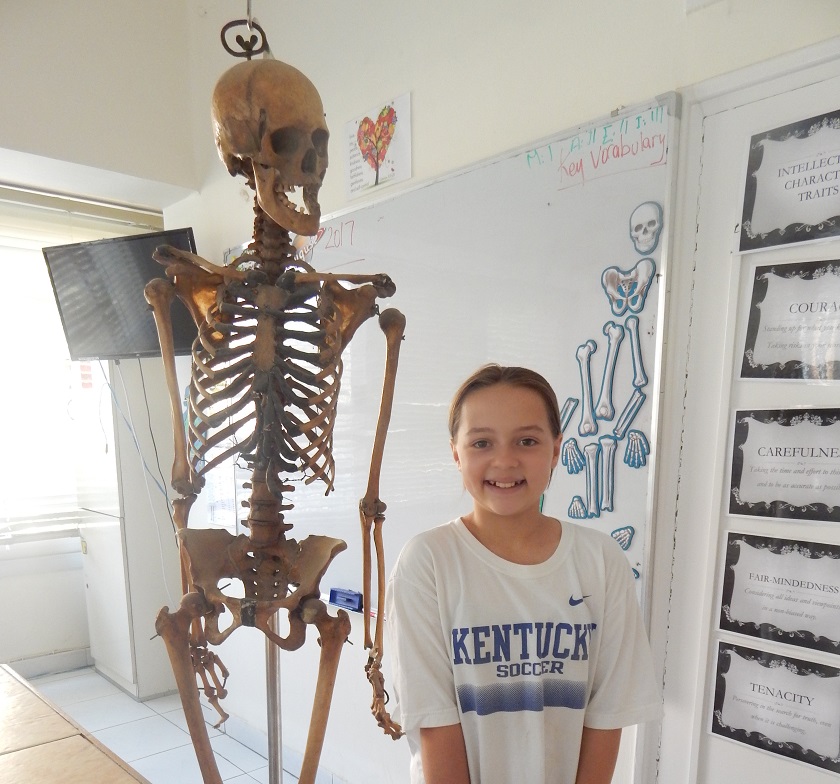
Meet Max. In skeleton-years he is at least 55.

Max came to our home about three years ago, and I must confess we have not treated him very well. At the time of his arrival our young children had Egyptian friends playing over the house, and we are unsure if there was any unspoken trauma from a dead man being hauled through the front door.

The friends have continued to come, so no great damage done. But uncertain comments from parents convinced us to keep him in the storage room thereafter.

Accessible, but out of the way. Part of the house, but not part of life. I suppose that’s fitting—being dead and all—but it still seems cruel.

In the Middle East it is often observed that some parents hide away children with mental or physical disabilities. This pattern is changing, but a sense of shame has condemned many to at-home isolation.

Have we treated Max similarly?

The cultural pattern for death is somewhat similar. Muslim tradition demands a body be buried almost immediately. Unlike the West where a mortician will preserve for final goodbyes at a later-scheduled funeral, the shock of death is quickly muted. So also is grief, at least for half of society. Women may wail and cry out in pain. Men are expected to resign themselves to the will of God, and move on.

So for those who knew, it must have been very strange that we have dead bones in our closet.

Or, had. We recently moved Max to a suitable institution, finding for him a welcoming home. But we signed no paperwork, neither to receive him nor pass him on.

Here also we may resemble Middle East culture. Children in difficult situations may be taken in by relatives or others, but there is no formal adoption. Islam forbids the transfer of family heritage, lest ancient lineages become corrupted.

But we should pause here and say a word about Max. Consistent with all the above-mentioned taboos, we have so far ignored him and spoken only about ourselves and the expectations that press upon the region.

Unfortunately, we cannot say much.

Max likely belonged to a medical school in Cairo at least as far back as 1962. The sister of an Egyptian friend graduated from the university, did her internship, and somehow came in possession of what must have been a favored learning tool.

In time, much like in our story but considerably worse for him, Max wound up in a trunk in her parent’s basement. Several years later our friend found him, and passed him on to her friend taking a dental exam. Max doesn’t have too many teeth, but I suppose his jaw was sufficient.

This was around the same time we visited our friend. It is hard to recall the conversation, but one of our daughters must have expressed an interest in science. Perhaps we even asked about a skeleton, if the plastic versions were available in Egypt.

Little did we know our friend had the real thing. After succeeding in the dental exam, our friend’s friend drove Max to our home, where he has resided since.


Until now. We have changed apartments, and in the purge we had to make a decision about Max. I would love for him to rest next to one of our children’s beds, or even dwell with us in the family room. We value learning – we have maps on our walls, we have books on our shelves.

But we also have friends who visit. I recently brought back from America a favored wall hanging of a ‘Wise Old Owl who lived in an oak,’ that was in my room since childhood. We displayed it prominently, until Egyptian friends reminded us that an owl is an ill omen in Arab culture. So much for wisdom.

The owl poem continues: ‘The more he saw, the less he spoke. The less he spoke, the more he heard. Why can’t we all be like that bird?’

Applying the poem with its cultural implications suggested we should at least move the owl to the privacy of our bedroom. And perhaps it suggested also the fate of Max.

Until fate intervened. In lamenting Max on Facebook during our moving process, friends in the administration of a local international school mentioned they had long desired a skeleton. Our oldest daughter was joining the student body after doing her elementary years in the Egyptian system, so it seemed a perfect match.

We restore Max to his original educational purpose, but family is still there to help with his transition.

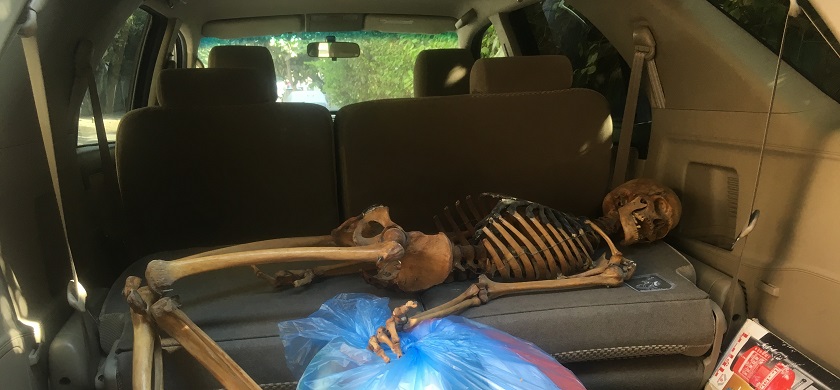
The last question was how to move him. Around the time Max came to our home I purchased a medical IV stand, and the hook in his head hung him in place.

We amusedly considered rolling him down the street in procession with our family, but thought the neighbors already consider us odd enough foreigners.


Max in Car

In the end the school came with a car, and we laid Max down on the lowered back seat.

Perhaps it recalled one of no-longer-alive-Max’s first memories.

Despite the lightness of this post, there is a serious point. Christians believe two things about Max: He was made in God’s image, and he will be bodily resurrected.

Different cultures demand different customs concerning the dead. But immediate burial, final viewing, preserving relics, quiet cremation, and funeral pyres are all expressions of the same impulse: Honor.

A principle means of honoring life is right treatment in death. There is something sacred that lingers. It must be remembered.

It may also be employed. God intends us to enjoy our life, but to find this enjoyment in service of others. Death can be an extension: When my mother died, she donated her body to science.

Maybe Max did the same.

In any case, he has a new home. The school may or may not struggle with the same issues we did, but at least Max is now back to his proper place in education.

We don’t know the details, but perhaps Max also knew God’s proper place in life. May we all, before we all become Max.

Emma and Max the Skeleton

Categories
Personal

Is Sex Slavery Legal in Islam?

Yazidi Sex Slaves
(via REUTERS/Ari Jala)

In my recent post about al-Azhar and the doctrine they spread around the world, one reader offered this question in the comments:

Someone I know wrote an article about Islam recently and made the statement that, according to his knowledge, official Islam has never condemned the action of ISIS soldiers in raping Yazidi women. He made several other statements I didn’t particularly like, but on this point, he is saying they cannot condemn such treatment because Muhammad did this sort of thing and even gave his troops permission to do the same. Have you ever come across any statement that al-Azhar believes such action is wrong?

First of all, a little context, excerpted from an article in the National Catholic Register on the same topic:

In the Quran, slave girls are referred to as “those whom your right hand possess,” … Verse 4:3 allows a man to have up to four wives but advises that if he can’t deal fairly with all of them, he should marry only one, or else resort to “those whom your right hand possess.” Verse 4:2 says that men are forbidden to have sex with married women “except those whom your right hand possess. It is a decree of Allah for you.”

The article also draws from traditions about Muhammad. These have varying degrees of reliability but are regarded as an authentic source in principle. I cannot comment on these specific traditions mentioned, but they are provided in well-attributed collections.

After the assault on the Jews of Khaybar, Muhammad ordered that a leader of the tribe, Kinana bin al-Rabi, be tortured until he disclosed the location of the group’s treasure. A fire was lit on Kinana’s chest but, as he still refused to reveal the secret, Muhammad had him beheaded. Muhammad had promised Kinana’s young wife, Safiya, to another Muslim, but, after hearing of her beauty, he went back on his word and took her in “marriage” for himself. By some accounts, this occurred only hours after he dispatched her husband. (Ishaq, p. 515; Bukhari, 1. 8. 367).

The issue of sex slaves in Muslim history and interpretation is of course contested, but what do Muslim authorities do with it today?

Egypt’s highest Islamic authority, al-Azhar, has strongly denounced the Takfiri Daesh [ISIS] terrorists’ newly-released rules for sex slavery, stressing that they have nothing to do with Islam.

“This organization is a criminal and terrorist organization, and one of the goals of terrorism is the spread of its ideologies and the spread of its propaganda that will attract people’s attention,” Mohamed Mehna, a member of al-Azhar’s Grand Sheikh’s Technical office, said on Wednesday. (from Press TV)

This alone should satisfy the question from the original comment, asking only if official Islam condemned the action.

But maybe something in ISIS’ rationale was deficient, it could be asked. That is, while their specific action is condemned, does the practice still has an Islamic basis?

Consider then this document, called A Letter to Baghdadi, the self-appointed caliph of the Islamic State. The list of signatories includes representatives of official Islam from around the world, including Egypt.

It criticizes the Islamic State on several points, and this is from the executive summary:

10. It is forbidden in Islam to harm or mistreat—in any way—Christians or any ‘People of the Scripture’.

11. It is obligatory to consider Yazidis as People of the Scripture.

12. The re-introduction of slavery is forbidden in Islam. It was abolished by universal consensus.

‘Consensus’ is an important word here. While it does imply anti-slavery developments around the world, in which Muslim nations share, it also is a term of Islamic jurisprudence.

Sharia is developed from different sources, but ijma’, or consensus of the scholars, is one of the essentials. Here is how point 12 is developed in the letter:

No scholar of Islam disputes that one of Islam’s aims is to abolish slavery …

For over a century, Muslims, and indeed the entire world, have been united in the prohibition and criminalization of slavery, which was a milestone in human history when it was finally achieved …

After a century of Muslim consensus on the prohibition of slavery, you have violated this; you have taken women as concubines and thus revived strife and sedition (fitnah), and corruption and lewdness on the earth.

You have resuscitated something that the Shari’ah has worked tirelessly to undo and has been considered forbidden by consensus for over a century. Indeed all the Muslim countries in the world are signatories of anti-slavery conventions.

Where I have placed three dots it represents the letter quoting from the Quran to establish its points. I admit I followed some of the logic, but not all of it. But I am hardly a scholar. Read yourself to review.

But the fact is that these are the words of many of the highest Islamic authorities around the world. It is a shame this fact is not more widely known.

Still, though I know the basics of the principle of ijma’, I am still curious about the question posed in the comment and cemented in the Catholic journal. If something was permitted by Islam at Muhammad’s time, can it really be condemned absolutely?

One scholar I asked told me that in the story above, Muhammad married Safiya in order to end the practice of sex slavery. When their prophet set her free and married her, his companions could do no less with those they captured. He tells me this related in the literature.

Getting into the details of this question requires far more study than I have yet done and this post allows. Here are two links to competing sides. But here are a few principles as it is considered.

One, there are many Muslims whose interpretive system requires near-absolute fidelity to the earliest practices of the Islamic community. Through them we are often convinced this is normative Islam. It makes sense, but is it necessary? Islam has a long history and an interpretive framework that has adjusted to time and place. Shall Muslims not be given the freedom of development, if they work to claim it in fidelity with their sources?

Two, there are many commands and practices in the Bible that Christians today consider obsolete, though they came through God’s command. There is not absolute symmetry here with Islam; the religions are different and have different interpretive systems. But give pause before declaring offensive an attribute of Islam, lest the accusation be returned. For those who reject all religion in general, of course, this is less applicable.

Three, for everyone, find a balance in critical charity and charitable criticism. Islam, like all religions and worldviews, deserves its hard questions given its universal claims. But Muslims are individual human beings . Like many others, many Muslims cherish their faith without delving into all the details. Take care before bludgeoning anyone with details we also know little about.

Islam may be true or erroneous, it may engender virtue or vice. But of Muslims, honor them to the degree they seek to honor both God and humanity. Where they are deficient, remember, we all are too.


Categories
Prayers

Friday Prayers for Egypt: Eid Precaution

Flag Cross Quran

God,

As Muslims celebrate, keep their joy. As Egyptians observe, keep them safe.

In Egypt and around the region, security is stepped up in prevention of extremist attacks. The pilgrimage, a time of piety for many, is a time of advertising for others.

May the eid pass peacefully, God. May peace come in their supplication.

Amen.


Categories
Personal

An Iraqi Refugee Leads Us Home

Iraqi Refugees
(via Time, Muhammed Muheisen—AP. Image is of Yazidis.)

Abu Rafi surveyed what once was a familiar scene.

Displaced from Qaraqosh, Iraq by the marauding ISIS forces, his family of ten fled to Kurdistan where he secured a two bedroom apartment.

Now with ISIS in retreat, he traveled back to see the wreckage.

Their home was robbed and burned. They used to host many friends; now the sofa and dining table are gone. They had a garden; it is ruined. Grandkids picked oranges, and ran barefoot on the green grass.

Now they are just memories, though the process of repair and repainting has begun.

From Kurdistan he lamented with Lilian Samaan, the American Bible Society’s strategic ministries advisor for the Middle East and North Africa.

“It’s okay,” he told her. “I have my daughters and son around me, alive and well. That is what matters most.”

Samaan asks us to empathize, but also more. We must recognize first that Arab refugees in America almost universally share this desire to go home.

“Their old home, their garden, their church, their priest, their community,” she said, “all that once was is now lost, all gone.”

We might want to help, she says, but it is not that simple. These were a proud people, violated thoroughly. Their honor has been damaged, and their need of assistance is a further source of shame.

“A gentle approach and a posture of learning, listening and asking the right questions,” she counsels, “will allow access to support in a dignified way.”

It is kind and wise advice, but also personal. Samaan is originally from Jordan – not a refugee but an immigrant who sees herself in many she now comes along side of.

What made the difference for her was respect.

“I was welcomed into homes, cherished like a daughter, and trusted like a friend,” she said. “At work and at church on the North Side of Chicago, my contributions and gifts were acknowledged and appreciated, as an immigrant.”

And if American Christians can go a step further, they might reverse their roles. Samaan urges the church to become disciples of those washing up on their shore.

“I believe the American church is in a privileged position to have such people of history and faith in its midst,” she said. It’s a golden opportunity to come alongside refugees from these areas, hear their story, acknowledge their pain, affirm their honor and resilience, and minister to them with presence and friendship.”

And in the process, learn.

“Can we become disciples of the minority church, the persecuted church?” she asked. “Can we allow ourselves to be vulnerable, to commune with a church that has suffered but survived persecution over many centuries, demonstrating patient resilience?

“It could be that this is a moment for us in the West to step aside, lay down our ideologies and agendas, and allow the Church in the East to propose its own solutions, and with our support, lead us.”

Abu Rafi will soon lead his family home. Can we, in spirit, join him?

Categories
Personal

The Coptic Church in Japan

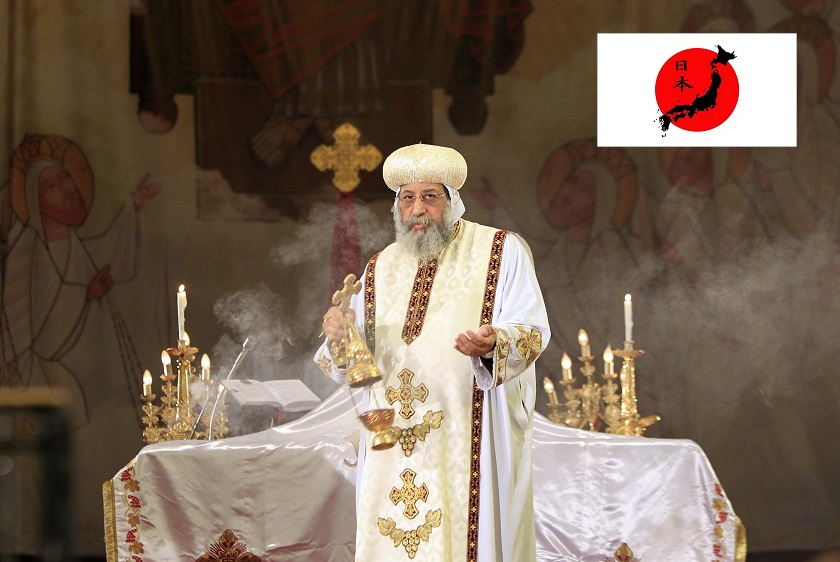
Pope Tawadros II leads mass prayers for Egyptians beheaded in Libya, at Saint Mark's Coptic Orthodox Cathedral in Cairo
(via Reuters/The Japan Times)

There may be three million Christians in Japan, one percent of the population. They now have a Coptic Orthodox Church among their options.

Egypt’s Pope Tawadros arrived on August 26 to consecrate Japan’s first Coptic Orthodox congregation, the Church of St. Mary and St. Mark.

Tawadros hailed the cooperation between Japan and Egypt, especially the new initiative to establish Japanese schools to better the education system. He praised the Japanese people for their renaissance following nuclear disaster, and their ongoing commitment to peace.

The church, he said, preaches love in every place. The church is a mother, who searches for her children wherever they are.

And the church does not stay still. As St. Mark traveled the ancient world to come to Egypt, so the church today comes to Japan.

The church was first built one year ago in Kyoto, on July 16. Around 100 people attended in the opening, including many nationalities of Eastern Orthodox rite. There are around 20 member families, though the church welcomes all and seeks to serve Japanese society. Language lessons in Arabic and Japanese are one expression of this desire.

The first mass, however, was held in 2004 by Bishop Daniel of the Sydney Diocese of Australia, to which the Japanese church belongs. St. Mary and St. Mark Church has also joined the Japanese Confederation of Christian Churches.

Nestorian Christianity was the first to reach Japan, perhaps as early as the 5th century. St. Francis Xavier is credited as the first modern missionary, in 1549. His efforts faced severe persecution, chronicled in the book Silence, by Shusaku Endo, and now made into a feature film starring Liam Neeson.

Protestants and Orthodox came in the 19th century. Interestingly, eight Japanese prime ministers have been Christians.

“God loves the world and everyone in it,” said Tawadros. “The church knows no geography.”

Coptic Japan
(via the Coptic Media Center)

UPDATED:

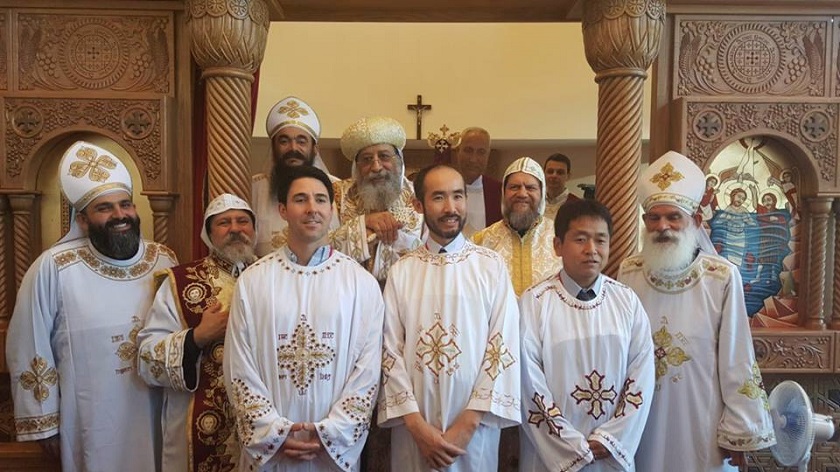
Perhaps the best evidence is the Japanese character of the church. In addition to a Japanese language mass, two of the three deacons consecrated by Pope Tawadros were Japanese.

Japan Coptic Deacons
(via Coptic Media Center)

Even so, they were identified by their Coptic/Christian names: Tawadros, Makarios, and Athanasius.

“We hope that God will bless them and they will become great servants of this church,” said Tawadros, interviewed in Japan by CTV.

“The church has a spiritual role to present salvation and encourage repentance, but it must also have a role in society according to the local needs,” he continued.

“This is the idea of St. Mark himself.”

Pope Tawadros was received in Japan by the Egyptian ambassador, toured the Tokyo Museum, and met the mayor of Tokyo.

His visit also attracted the attention of the Japanese media, with this clip presented by NHK, Japan’s national public broadcasting organization.


The Coptic Media Center provided translation:

Title: People: Egyptian Christian Church- First visit to Japan for the Pope of the Coptic church

Picture: Pope Francis & H.H. Pope Tawadros II

Reporter: The person here standing next to Pope Francis is the Coptic Orthodox pope, His Holiness Pope Tawadros II. The first Coptic Orthodox church was established in Japan and H.H. came to Japan for the first time. Yesterday, he conducted a holy liturgy.
What kind of holy liturgy was it, I wonder?

Beyond the doors, you can hear a unique sound of prayers. Last year in October, a Coptic church was established in Japan. H.H. Pope Tawadros II conducted a holy liturgy there. At the holy liturgy, there were 100 church members gathered from around Japan.

Mr. Michel Youssef (church member): This is the first Coptic church in Japan and we are very happy that H.H. Pope Tawadros from Egypt had come today.

Reporter: The Coptic holy liturgy style had been continuing from ancient times. Icons of saints are on the wall and that had been brought from Egypt. The ladies cover their heads with scarves and (the Copts) respect and follow the traditions. But on the other hand, Japanese is used in the holy liturgy, and the clergy use PC tablets in their holy liturgy and it shows that they are keeping up with the modern technology.

The Coptic Orthodox church was founded around the 1st century, it is said that 10% of the Egyptian population are Coptic Christians. The Copts (Coptic community) have spread overseas to other countries such as Japan and Canada. One of the background reason for this is the presence of a group of Muslims (in Egypt) that considers Copts like enemies.

Rosemary: I think when they hear hate speeches like “kill people from other religions” that turns into persecution (against Copts).

Reporter: Continuously churches have been attacked because I.S. terrorists’ main aim is to attack churches. Regarding this issue, H.H. Pope Tawadros II commented on this:

H.H. Pope Tawadros II (Japanese subtitle): Terrorism divides the Egyptian people but Egypt is a strong country. (Addressing to Japanese people): let’s meet in Egypt.

Tomorrow night we will broadcast a Coptic studies researcher from Göttingen university (Mr. So Miyagawa) who will talk about how the Coptic clergy gives out information for Copts around the world. Please look forward to it tomorrow night.

I will update this post further if the follow-up video becomes available.


Categories
Prayers

Friday Prayers for Egypt: Trump Trial

Flag Cross Quran

God,

They started out friendly. Probably they still are. But the American president played an unexpected wild card, with developments still uncertain.

The US cut its military aid.

Trump has repeatedly praised Sisi, who has returned the admiration. But even so his administration followed an Obama pattern in holding back some aid pending better progress in human rights and democracy.

One reason: The controversial NGO law. Sources said they were told by Egypt it would not pass.

God, international relations are built on interests, but also through relationship. Strengthen communication between the two leaders.

Did Egypt promise and not deliver? Did she deceive to begin with? Or is it an erroneous report?

Let there be clarity in the relationship, God. Let Egypt know exactly what the US requires, and act accordingly.

No games. No guessing.

But also no free ride. Help Egypt judge the demands of her sovereignty. If accepting aid, in exchange for what? Is it a price worth paying?

Help her reach a place no aid is needed.

Develop Egypt in human rights and democracy, God. Develop also the American understanding.

Where there is a gap, narrow it.

Preserve friendly relations, God. In international relations, wild is risky. Put cards on the table, and play them well.

All is uncertain, but you know the way. Lead Egypt to the right and good.

Amen.

Categories
Excerpts

The Muslim Brotherhood’s Fatal Mistake

Brotherhood's Fatal Mistake
(via the Washington Post)

In his recent article for Foreign Affairs, Eric Trager says the Brotherhood miscalculated at Rabaa, and in post-Morsi policy in general.

It certainly hasn’t worked out well for them, but I have one small quibble, perhaps:

Indeed, from the moment of Morsi’s July 3 overthrow, the Brotherhood’s leaders understood that they were in a kill-or-be-killed struggle with the new military-backed government.

A ‘be-killed’ moment, maybe. There were extensive negotiations going on at the time, between both international and domestic forces. The official discourse held that there was a way for continued Brotherhood political participation.

Trager outlines the pre-Rabaa violence against Brotherhood protests, though. Many, perhaps including the Brotherhood, didn’t really believe the official discourse.

But the possible quibble is with ‘kill’. Did the Brotherhood realize success depended on their violence? That was not part of their official discourse, nor did it seem an underlying reality, as Trager notes:

Although the Brotherhood mobilized violence against its opponents multiple times during Morsi’s presidency, its leaders called for nonviolence following Morsi’s overthrow, with Supreme Guide Mohamed Badie infamously proclaiming, “Our peacefulness is stronger than bullets.”

The article is full of great quotes, with links. But why is this ‘infamous’? It seems honorable. The Brotherhood was certainly willing to ‘be-killed’:

“If they want to disperse the [Cairo] sit-in, they’ll have to kill 100,000 protesters,” Brotherhood spokesman Gehad el-Haddad told journalist Maged Atef two weeks before the massacre. “And they can’t do it [because] we’re willing to offer one hundred thousand martyrs.”

If honorable, it was still tragic, and tragically wrong. Several hundred died, thousands more jailed. But tens of thousands were not willing to pay the price boldly promised.

And it is honorable to risk so much blood? Maybe. Many senior leaders are in prison, but others fled to safety abroad. A good number had family members killed. They bet their organization, and perhaps the prize was worth it.

But Trager shows some were willing to bet more, perhaps undoing my quibble:

From the younger Brothers’ perspective, this was a dangerously naïve strategy, leaving them and their comrades defenseless during the assault that followed.

“Our dear brothers were saying, ‘we are peaceful,’” Amr Farrag, a prominent Brotherhood youth based in Istanbul, later lamented in a Facebook post. “‘Our peacefulness is stronger than bullets.’ Fine, so we got smacked on our necks.”

Another prominent Brotherhood youth, Ahmed El Moghir, later revealed that the Cairo demonstration site was “sufficiently armed to repel the Interior Ministry and possibly the army as well,” but that most of these arms were removed only days before the massacre due to senior Brotherhood leaders’ “betrayal.”

So maybe the ‘kill’ is appropriate to go with ‘be-killed’. Take all testimony with a grain of salt.

A good number of policemen died clearing the square. The great majority of protestors were not armed. When the Interior Ministry displayed weapons captured after the operation, they were not that many.

But is that because they were removed? Why? Cold feet? Conscience? Facilitation of martyrdom and political sympathy?

Much more is needed to understand, but the quote is clear.

The Brotherhood is complicated. But they also miscalculated. What next?

Categories
Excerpts

Rethinking Political Islam, but then What?

Rethinking Political Islam
(Image: A painting of Mohamed Morsi in France. Flickr/ThieryEhrmann, via The Islamic Monthly.)

The first part of the title is the name of a very good explanatory piece in The Islamic Monthly. It also is the name of a new book by Shadi Hamid and Will McCants, collecting analysis from Islamists published individually at Brookings.

The trouble is, this article leaves me with more questions.

First the good stuff:

In the early 1990s, a new debate around the role of Islam and politics — and more specifically “Islamist” movements — emerged. In an alternate universe, if certain things at that moment had turned out differently, the Middle East’s path might have diverged considerably.

In the first round of Algeria’s elections in 1991, the Islamic Salvation Front, or FIS, won 47.5% of the vote and 188 of 231 seats. For the first time, an Islamist party was on the verge of coming to power, not through revolution (as had happened in the case of Iran) but through democratic elections. The country’s staunchly secular military quickly stepped in and aborted the elections, plunging Algeria into a civil war from which it has yet to recover.

And so the debate erupted over the “Islamist dilemma” — would Islamists who came to power through elections cede power if they were voted out of office? Or, as U.S. Assistant Secretary of State Edward Djerejian famously put it, would it be “one man, one vote, one time”?

Two opposing camps formed: those who believed these groups could be incorporated within the democratic process, as long as they played by the rules, and those who thought their ideology rendered them irreconcilable.

It’s been more than 25 years, and the debate is more or less where it started. In some ways, it’s worse.

The article describes it as worse in the Trump desire to criminalize the Muslim Brotherhood, and I largely agree. There is a significant risk:

Even more worrying [is that] it would affect not just U.S. foreign policy, but American politics and the safety and security of American Muslims.

The camp of Trump chief strategist Steve Bannon sees designation of the Brotherhood as an opening salvo against U.S. Muslim organizations and Muslims more broadly, blurring the lines between extremists, Islamists, and ordinary American Muslims.

As The Atlantic’s Peter Beinart has argued, the Bannon camp “uses the specter of the Muslim Brotherhood and Sharia law to depict American Muslim political participation, and even religious expression, as a security threat.”

Whatever real challenges there are from Islamism, they must not be manipulated to demonize Muslims. This is happening all too frequently these days.

But there is a historical insight Bannon-types latch onto:

Some of the most prominent American Muslim organizations today were started by members or supporters of the Muslim Brotherhood decades ago.

Although most of these organizations were never formally linked to the Brotherhood and the influence of their Brotherhood founders has since evaporated, the Trump administration could argue that they should be subject to legal sanction once the Brotherhood is criminalized as a terrorist organization.

Yes, again, the criminalization aspects are very worrisome. But I am curious: Has the Brotherhood influence really faded? The authors know better than I do, for I do not know the American Muslim scene well. But I would be interested to know more about that assertion.

In any case, there are certainly challenges from Islamism, which the authors put forward well:

The illiberal policies pursued by many Brotherhood or Brotherhood-like organizations would harm the cause of human rights in Muslim-majority countries.

Therefore:

On the one hand, the Brotherhood’s many illiberal branches could set back the cause of human rights should they come to power in Muslim-majority countries. On the other, denying them the opportunity to come to power denies another fundamental human right — the freedom to participate in elections — and sets back the cause of democracy.

This is a dilemma. But I’m afraid the concluding advice raises more questions:

The U.S. should chart a middle way.

It should not help illiberal Brotherhood groups win democratic elections but neither should it prevent them. It should not cheer the electoral success of Brotherhood groups but neither should it refuse to work with them once in power if it serves other important U.S. interests.

In other words, it should treat the Brotherhood like any other illiberal political movement.

That seems like sound advice, but one – is it ‘rethinking’? It sounds like what we have always done, at least officially.

And two – is it sound?

On the first count, if our official policies have not been actual reality, we must delve into competing quasi-conspiracy theories. Some say the US has indeed backed the Brotherhood in Egypt, pushing for the ouster of Mubarak knowing full well the Brotherhood was the primary organized political force, perhaps wishing to entrust a new Middle East to Islamists rather than autocrats. Some versions of the conspiracy say we even went further, and funded and nurtured them.

Or alternately, some say we prevented their continuing in power by not adequately opposing the overthrow of Morsi and designating it a coup. Some versions of the conspiracy say we quietly cheered on as his administration was undermined, and are glad for a return of a military backbone status quo.

So which is it? The official reading of US policy is that we accepted the election results that brought Morsi to power, worked with him once there, and then worked with the administration that removed him and subsequently won a popular election. That sounds exactly like the article’s advice.

Except that the publication of the article was timed to correspond with the fourth anniversary of the clearing of the pro-Morsi protest camp, when hundreds of his supporters were killed. It is a news hook, yes. Is it also political sympathy?

If so, why not? They won the elections, though they thereafter lost much of the population. But American policy? Under the advice of the article, should we have stepped in against Morsi’s removal, or let it be?

On the second count, could it not be argued that the US should work to deny illiberal parties from coming to power, of any stripe? Right-wing neo-Nazis in Europe, for example? There are many strands of American politics that wish to isolate and limit their influence in the US. That seems quite right.

So without crossing the line into undermining democracy, if the Brotherhood-type groups are as illiberal as the author’s suggest, would it not be reasonable for the US to seek to prevent their ascendance – openly and publicly?

Perhaps there are wise reasons not to – non-interference in other nations’ internal affairs being a primary one. But I have never liked the one they propose, even if it has logical merit:

On national security grounds, criminalizing non-violent Islamists risks pushing them into the arms of violent groups targeting the U.S., increasing the risk to American lives.

Again, the criminalizing argument is necessary. Human rights extend to those you disagree with. But if a group can be so easily pushed to violence because it doesn’t get its way – that is not a good indication they should be given their way. Quite the opposite, in fact.

The Brotherhood proudly proclaims that jihad is its way and martyrdom is its highest aspiration. Islam allows for non-militant explanations of these terms, but Brotherhood groups in Gaza and Syria and Libya have all embraced militancy. The Egypt branch is torn, but even then, its prior choice of peacefulness was tactical.

Would it not be reasonable to work to prevent them from achieving the power necessary for implementation? Reasonable, that is, without undermining democracy and national sovereignty?

But there again is the dilemma, and perhaps the gap between official and unofficial policy.

The article did a very good job setting the scene. I only wish they wouldn’t have cut off the depth of their analysis right when it started to get interesting.

Then again, the authors are prolific on this topic. Surely their answer is found in other texts. Explore freely.

And please read for yourself, and comment with your thoughts. It is a fairly crucial part of American debate these days.


Categories
Prayers

Friday Prayers for Egypt: New Proposals

Flag Cross Quran

God,

Egypt is debating significant changes. Give her the wisdom to walk the right path.

Some have proposed the constitution be amended to allow the president a six-year term. Others say leave the constitution alone, and implement it.

Some have proposed the marriage age be lowered to 16 to legalize longstanding practice. Others say there are too many Egyptians already, and it is backwards.

Some (in Tunisia) have proposed inheritance be divided equally between the sexes, and marriage made open to non-Muslim men. The Azhar says it is against Islamic sharia, and condemns it.

Some have proposed the train system be mechanized. No one opposes, but who will fund it?

God, your discernment is needed.

Grant the president wisdom to achieve agenda, and the people a choice in approving their leader.

Grant Egypt wisdom in population control, and women a choice in the details of marriage.

Grant the Azhar wisdom in Islamic interpretation, and Tunisia a choice in religion and state.

Grant the ministry wisdom with limited resources, and funders the choice of both safety and gain.

God, develop Egypt to function well – government, institutions, and citizens.

In all the above, lead her. Changes must come, may they be the right ones.

Amen.


Categories
Personal

God in the Little Things, For Us

Car Keys Syria

For the first time in my life, I locked the keys in the car. Worse, it was borrowed. All the movie tricks with wire hangers came into my mind, but none seemed like they’d work. I was stuck.

Stuck an hour away from home. With two of my kids, picking them up from camp. One eager dorm leader suggested we break the back window. It would be cheap and easy to fix, he said. He’d do it right now with his fist. Seemed like the only way out at the time.

But then one after another, God brought solutions.

There was a spare key back in Cairo, but in the apartment of our friends who let us borrow the car. I called my wife, who was at Bible study in the international church offices.

She quick asked a friend, who coincidentally was right then going to that apartment to take the house sitter to the beach for the weekend.

My wife got a ride over, and got the key. Fifteen minutes later and we would have been lost.

Back at the campsite, another father overheard the dilemma and offered us a ride home.

Once there, spare key in hand, our whole family piled into the Uber. I had planned to take the two girls to the near-to-camp expansive mall to hear about their experience. Now, we could all go, and experience their joy all at once.

And this week, Uber even offered a 30 percent discount.

An hour later we unlocked the car. Several hours later, we came home exhausted.

It could have been a disaster. But one small coincidence after the other had the handprint of God, making the day even better than we expected.

It also came with a valuable lesson to discuss with the kids: All things work together for good, to those who love God. Let’s not complain, but wait expectantly.

I believe this.

But don’t you think it is also a little crass and self-serving? One day later marked the four-year anniversary of several hundred protestors killed, as their sit-in camp was cleared by authorities.

Our nation borders a territory that is hemmed in on all sides, an open-air prison. One nation over is torn by civil war and terrorism.

Yet God arranged quick access to a spare key, so I could get home more conveniently. So I could take my whole family to a food court.

That’s a different lesson to share with the kids, isn’t it? Believe me, I tried. Their eager celebration of God’s goodness shifted into sullen confusion. Death and destruction can do that to a dinner conversation.

We talked through the possibilities. A Syrian refugee opened our favorite ice cream shop across the street, and is doing great business. God did well to work that out for good, right?

Our good, absolutely. Best and cheapest ice cream in town. But I’m sure he’d rather be back home.

The Syrians are Muslims, was one possibility. Maybe God worked things out for us because we’re Christians?

Perhaps there is some fidelity there to the verse above. But a good number of those Syrians are Christians, too. One kid shot it down more broadly. God would want to do good to everyone.

Maybe that’s it? There are bad people in the world, destroying God’s good? Certainly, but is God’s good coming? It’s hard to see, and a long time in coming.

One child recalled the Israelites in the wilderness. Already in a tough situation, God sent snakes to kill many when they grumbled. Sometimes disaster is discipline, even punishment.

True, but hardly satisfying when we consider the tragedies of another.

Sullen, and glum. There are no easy answers.

There are things we don’t understand, I told them. Even more so, Jesus foretold difficulties for those who follow him. He was not saved from the cross, and this should not be forgotten in the hope of ‘all things good’.

God has given different promises to those who suffer. He is with them in the middle of it. Many have said their fellowship with him has been closest during the harshest times of trial.

And we must not forget, in heaven, one day, all will be good. The resolution is coming.

Until then, we have a choice.

Was the car key episode simply a series of well-timed coincidences? Yeah, maybe.

Or was it the loving hand of a personal God upon his wayward creation and adopted son?

Which would you rather?

We do not need to extrapolate the universe to find his favor in the little things. But neither should we believe the universe revolves around us.

There is blessing, and there is suffering. In faith we hold that both work out for good, even when we cannot see it.

It is not my place to find the good in Syria. That is up to the Syrians. It is up to God. I can help as I am able, but I dare not interpret.

Sometimes lessons are simpler for children than adults; I don’t think this is one of them. But best they hear them now, I think, than struggle with them later. There is mystery in our faith, and it cannot be avoided forever.

But likely, a child will take it to heart much more readily than we will.

If this is the good from a neglected car key, it is sufficient. Far better than a ride home and a family night out.

But thank you, God, for those little things also. For us.

And, take care of the Syrians. Amen.