Categories
Christianity Today Europe Published Articles

Montenegro’s Churches Get a Religious Freedom Do-Over

Image: Filip Filipovic / Getty Images
Priests and Orthodox nuns watch the funeral service for Metropolitan Amfilohije Radovic from the balcony on November 1, 2020 in Podgorica, Montenegro.

Europe’s second-newest nation made a second effort this week at greater religious freedom.

And evangelicals in Montenegro, the Balkan nation independent from Serbia since 2006, couldn’t be more pleased.

“This is a great blessing, we are out of the gray zone and drawn into legal existence,” said Sinisa Nadazdin, pastor of Gospel of Jesus Christ Church located in the capital city of Podgorica.

“We were permitted before, but now we know our rights and duties.”

Montenegrin evangelicals were pleased with the new law’s first iteration a year ago as well. But in between, the controversial text split Montenegro’s 75-percent Orthodox community, and nearly tore the nation apart.

Controversially passed last February by lawmakers aligned with the 30-year ruling Democratic Party of Socialists (which ran the regional government when the nation was part of Serbia), ethnic Serbian politicians stormed out of the session in protest.

At issue were not the general provisions of the law, which guaranteed the right to change religion, to establish religious schools above the elementary level, and to conscientiously object from military service.

Replacing a 1977 communist-era law, it also eased licensing procedures and permitted foreign-born leadership and international headquarters.

Rather, a clause in the religious freedom law required all religious communities to provide evidence of ownership for properties built prior to the 1918 integration of Montenegro into the Kingdom of Yugoslavia.

Critics interpreted it as a challenge to the Serbian Orthodox Church.

Failure to do so would transfer ownership of hundreds of ancient churches and monasteries to the state, to be regarded as part of Montenegro’s cultural heritage.

Church leadership rallied the faithful in protests throughout the year. The end result was a narrow electoral victory for an alliance of opposition parties, including the ethnic Serbian-led Democratic Front.

Their first priority was to change the religious freedom law.

“This is the ‘Year of Justice’ in Montenegro,” Vladimir Leposavic, newly appointed Minister of Justice and Human and Minority Rights, told CT.

“Our amendments are an example of how we will fight for the rule of law, with clear norms and nondiscrimination.” Seeking to strengthen the law further, the amendments also…

This article was originally published at Christianity Today, on January 22, 2021. Please click here to read the full text.

Categories
Christianity Today Middle East Published Articles

Word or Deeds: Shiite Firebrand Pledges to Restore Iraqi Christian Property

Muqtada al-Sadr

If Pope Francis can avoid the complications of COVID-19 travel and get to Iraq in March, he will hear a lot about stolen property. Muqtada al-Sadr, a leading Shiite politician fiercely opposed to the US military presence, has told Christians he will do something about it.

The issue is not new.

As Iraq’s pre-Gulf War Christian population of 1.25 million dwindled to about 250,000 today, opportunistic non-Christians laid claim to their unoccupied homes and lands. The city of Mosul, next to the traditionally Christian Nineveh Plains—where Pope Francis is scheduled to visit— located 220 miles north of Baghdad, provides telling examples of the problem.

In 2010, in the waning days of official US occupation, Ashur Eskrya’s father decided to sell his family home. Years of chaos had depleted the once 60,000-strong Christian population of Iraq’s second-largest city, representing 10 percent of its total. Property values were plummeting. Especially in hindsight, Eskrya felt fortunate to get 25 percent of its market value.

Four years later, his neighbor got nothing.

ISIS invaded Mosul, putting its Christian population to flight. In 2015, the International Organization for Migration (IOM) surveyed 240 individuals displaced by the fighting throughout Iraq. Nearly 9 in 10 (89%) had their homes confiscated.

A 2014 study estimated that ISIS made more money from selling stolen real estate than it did from oil revenue.

After the liberation of Mosul, some Christians returned, including Eskrya’s neighbor. While 42 percent had lost their property documentation altogether, according to IOM, the neighbor was able to enter a lengthy legal process and eventually regain ownership of his home.

But uncomfortable with the security situation, he returned to Erbil, 55 miles east of Mosul in Iraqi Kurdistan, where thousands of displaced Christians still reside.

He lives there today with his children, which is more than a third family can say.

This neighbor benefited from Mosul’s earlier oil boom, and lived in a home valued at $1.2 million in one of the plush city districts. But in 2006, his daughter was kidnapped and killed. In 2012, another daughter tried to emigrate through Syria, and was killed there. The parents eventually moved to Australia—with the deed to their home. But last year, they were stunned to receive news…

This article was originally published at Christianity Today, on January 21, 2021. Please click here to read the full text.

Categories
Prayers

Lebanon Prayer: Solomon and Kipling

God,

How do you pray for those who accuse each other of lying and cheating? One of them must be right.

Maybe both?

These are the leaders you have raised up for Lebanon.

These are the leaders who raised up themselves.

God, in the first, we lift them ourselves. We ask that you bless them and give them success.

Join them together in all solidarity. Grant them discernment to chart the best course.

Knit the nation united and give it a government.

The people will perish if no vision found.

And God, in the second, you curse not ambition. You honor the servants who risk and who lead.

But selfish ambition you toss on the dung heap. Mix justice with mercy; expose every wrong.

God, they are many.

They may not all be Lebanon’s. They may not all be clear.

A shepherd was snagged on the border with Israel. Accused as a spy, does he just do his job?

“Violate not our borders,” shouts out from the south.

Drowned out by the din of their jets overhead.

And even as aid finds the poor of the nation, the banks make a profit off foreign exchange.

A vaccine is coming to combat Corona.

But only once lawsuits get pushed to the state.

Yet the slightest of hope emerges from Syria. A plane from Aleppo arrived in Beirut.

Dozens of passengers came for some reason. Let trade and exchange increase week-by-week.

But even now wrong is attached to Damascus. An explosive report links regime to the blast.

Meanwhile the people sit home under lockdown. Yet COVID is filling each hospital bed.

God, what to do?

One of the accusing hurled the insight of Solomon.

“Wisdom dwells not in the soul sold to sin.”

But he also took refuge in the poem of Kipling.

“Keep your virtue with crowds; be authentic with kings.”

God, of the first, guard the hearts of these servants.

Let your scriptures inspire and reproach and transform.

And God, of the second, discernment diffuses. It found in the sages and artists and scribes.

The politicians?

Maybe.

It can be, God.

If one is right, then vindicate.

If both are wrong, rebuke.

But raise up the leaders who seek out your wisdom.

For the sake of the nation, spur zeal in the good.

Amen.


To receive Lebanon Prayer by WhatsApp, please click this link to join the closed comments group.

Lebanon Prayer places before God the major events of the previous week, asking his favor for the nation living through them.

It seeks for values common to all, however differently some might apply them. It honors all who strive on her behalf, however suspect some may find them.

It offers no solutions, but desires peace, justice, and reconciliation. It favors no party, but seeks transparency, consensus, and national sovereignty.

How God sorts these out is his business. Consider joining in prayer that God will bless the people and establish his principles, from which all our approximations derive.

Lebanon Prayer places before God the major events of the previous week, asking his favor for the nation living through them.

It seeks for values common to all, however differently some might apply them. It honors all who strive on her behalf, however suspect some may find them.

It offers no solutions, but desires peace, justice, and reconciliation. It favors no party, but seeks transparency, consensus, and national sovereignty.

How God sorts these out is his business. Consider joining in prayer that God will bless the people and establish his principles, from which all our approximations derive.


Sometimes prayer can generate more prayer. While mine is for general principles, you may have very specific hopes for Lebanon. You are welcome to post these here as comments, that others might pray with you as you place your desires before God.

If you wish to share your own prayer, please adhere to the following guidelines:

1) The sincerest prayers are before God alone. Please consult with God before posting anything.

2) If a prayer of hope, strive to express a collective encouragement.

3) If a prayer of lament, strive to express a collective grief.

4) If a prayer of anger, refrain from criticizing specific people, parties, sects, or nations. While it may be appropriate, save these for your prayers alone before God.

5) In every prayer, do your best to include a blessing.

I will do my best to moderate accordingly. Thank you for praying for Lebanon and her people.
Categories
Americas Christianity Today Published Articles

Trump and Biden Disagree on Sanctions. So Do Evangelicals Outside the US.

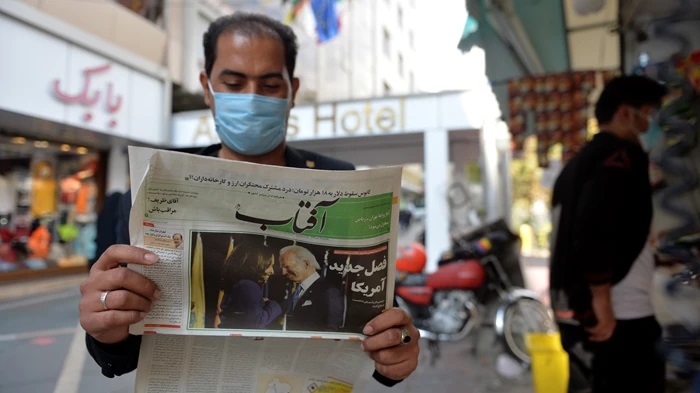
Image: Anadolu Agency / Getty Images The headline reads: A New Era for America

If President-elect Joe Biden makes good on his campaign rhetoric, his sanctions policy will meet the approval of the World Evangelical Alliance (WEA).

Back in April, as even the strongest nations reeled from COVID-19, then-candidate Biden petitioned the Trump administration for sanctions relief on the hardest-hit nations—including Iran and Syria.

“In times of global crisis, America should lead,” he said.

“We should be the first to offer help to people who are hurting or in danger. That’s who we are. That’s who we’ve always been.”

In September, the WEA joined Caritas, the World Council of Churches, and others to similarly petition the United Nations’s Human Rights Council.

“We are deeply concerned about the negative economic, social, and humanitarian consequences of unilateral sanctions,” read their statement, ostensibly singling out the United States and its European allies.

“It is a legal and moral imperative to allow humanitarian aid to reach those in need, without delay or impediment.”

One month later at the UN, China led 26 nations—including sanctions-hit Cuba, North Korea, Iran, Russia, Syria, and Venezuela—to assert that the economic impact impedes pandemic response and undermines the right to health.

This is “disinformation,” said Johnnie Moore, appointed by President Donald Trump to serve on the independent, bipartisan US Commission on International Religious Freedom (USCIRF).

He called the WEA statement “almost indefensible.”

“Sanctions against countries that imperil their citizens and the world is good policy,” Moore said. “It has proven to be an effective alternative to save lives, alongside diplomatic channels to coerce long-term positive behavior.”

Western nations had already issued fact sheets to undermine China’s claim.

Detailing food, medical, and humanitarian exemptions, the US and European Union (EU) demonstrated that sanctions target regimes and their supporters, not the general population. Christian Solidarity International, however…

This article was originally published by Christianity Today on January 15, 2021. Please click here to read the full text.

Categories
Christianity Today Middle East Published Articles

After Israel, Will Morocco Normalize with Christians?

Image: Illustration by Mallory Rentsch / Source Images: Fadel Senna / Getty Images/ Nagesh Badu / Fabio Santaniello Bruun / Unsplash / WikiMedia Commons

An excerpt, which follows an introduction about the three nations which signed the Abraham Accords to normalize with Israel:

This month, the fourth, Morocco, was granted US recognition of its longstanding claim to the Western Sahara, a mostly desert region on the northwest coast of Africa, which seeks independence.

But absent from the accords is any emphasis on religious freedom, despite the Trump administration making it a central feature of its foreign policy. And in relation to Christians, each nation has a unique situation.

The Emirates is officially 100 percent Muslim, though it facilitates the worship of its majority population of migrant workers. And following normalization, the UAE relaxed its sharia-based laws.

Bahrain has a native Christian population of about 1,000 people, descended from communities in Lebanon, Syria, and India. Three years ago, its king signed a declaration esteeming individual “freedom of [religious] choice” as a “divine gift.”

Sudan’s Christians, though only 3 percent of the population, are indigenous citizens. And following the 2019 popular revolution, Sudan implemented religious reforms, including repeal of its apostasy law.

Morocco is in between.

Long lauded for its treatment of local Jews, Morocco’s constitution recognizes Judaism and considers the 3,000-strong community as an integral part of its society. And during last year’s visit by Pope Francis, King Muhammad VI interpreted his official title of “Commander of the Faithful” as “the Commander of all believers … [including] Moroccan Jews and Christians from other countries, who are living in Morocco.”

But the omission stood out.

“He didn’t mention us,” said Zouhair Doukali, a Moroccan Christian.

“I want the government to recognize all minorities, so that we can live as Moroccan citizens.”

Estimates of the North African nation’s unofficial Christian citizens vary widely, from 5,000 to 50,000. Foreign-resident Christians are estimated at about 30,000 Catholics and 10,000 Protestants, who enjoy religious freedom in legally registered churches.

But whereas the UAE and Sudan have been improving their religious freedom image, Morocco has moved backwards, according to a new report on blasphemy laws by the US Commission on International Religious Freedom (USCIRF).

One of eight nations to have expanded blasphemy provisions since USCIRF’s last report, in 2018 Morocco doubled its fines and jail terms. It also expanded the law’s jurisdiction from only official publishers to include any individuals in public or online forums.

And proselytizing, described as “shaking the faith of a Muslim,” can be punished with up to three years in prison.

Open Doors ranks Morocco No. 26 on its World Watch List of the 50 countries where it is hardest to be a Christian.

But unlike the UAE, where conversion is illegal and can meet the death penalty, Morocco assigns no penalties for conversion. The government has said so publicly.

“There is no persecution in Morocco,” stated spokesman Mustapha El Khalfi, “and there is no discrimination on the basis of faith.”

Moroccan Christian sources agree there is no state persecution. Over the past decade, the government has largely left converts alone. And since all are assumed to be Muslim, there are no issues marrying other believers. (Marriage in Morocco is a matter of civil registration, whereas in some Arab states it has a religious character and Muslims may not enter into Christian marriage.)

Some Christians, however, want full human rights…

This article was originally published at Christianity Today, on January 8, 2021. Please click here to read the full text.

Categories
Prayers

Lebanon Prayer: Peg to Iran

God,

Lebanon has long lived in days of opaqueness.

Everyone knows, but no one will say.

It is not a good way to run a country. Truth must be told.

Maybe it is starting to change?

An Iranian general took credit for missiles.

Resistance to Israel flows from Tehran.

Meanwhile the Christians all spoke out in protest.

“No partners in sovereignty, we have our own state.”

But the top Shiite cleric made clear his viewpoint.

“No sovereignty at all, without Soleimani’s gift.”

Completing the image, his statue was raised.

God, the Shiite militia is a check on its neighbor.

Their weapons are held apart from the state.

Their influence in government is a fact of the matter.

Their people are citizens, with all rights therein.

But some things remain opaque.

Do they kill their opponents? Do they launder their cash?

Some accuse. They deny. Some defend. Others sanction.

Terrorists or patriots? God fearing or corrupt?

The Druze politician thinks he sifts through to the essence:

“Nothing is left but a missile launching pad.”

“Let their bloc end the pretense, and govern themselves.”

Meanwhile in finance reality is spoken.

The central bank governor buried the peg.

The era is over, once bailout is managed.

The dollar economy will soon simply float.

Good or bad, God – you know.

But national wealth will soon be what it is.

God, let the national heart ache.

Comfort in part through international good will.

But make the societal response resolute.

After the individual repentance of all.

A man cannot come to you in pretense.

Our sins cannot stay opaque.

The truth must be told—and in crisis it can be.

The truth also hurts—but from humility, health.

Reveal all parties engaged in deception.

Let everyone know, and everyone say:

Amen.


To receive Lebanon Prayer by WhatsApp, please click this link to join the closed comments group.

Lebanon Prayer places before God the major events of the previous week, asking his favor for the nation living through them.

It seeks for values common to all, however differently some might apply them. It honors all who strive on her behalf, however suspect some may find them.

It offers no solutions, but desires peace, justice, and reconciliation. It favors no party, but seeks transparency, consensus, and national sovereignty.

How God sorts these out is his business. Consider joining in prayer that God will bless the people and establish his principles, from which all our approximations derive.

Lebanon Prayer places before God the major events of the previous week, asking his favor for the nation living through them.

It seeks for values common to all, however differently some might apply them. It honors all who strive on her behalf, however suspect some may find them.

It offers no solutions, but desires peace, justice, and reconciliation. It favors no party, but seeks transparency, consensus, and national sovereignty.

How God sorts these out is his business. Consider joining in prayer that God will bless the people and establish his principles, from which all our approximations derive.


Sometimes prayer can generate more prayer. While mine is for general principles, you may have very specific hopes for Lebanon. You are welcome to post these here as comments, that others might pray with you as you place your desires before God.

If you wish to share your own prayer, please adhere to the following guidelines:

1) The sincerest prayers are before God alone. Please consult with God before posting anything.

2) If a prayer of hope, strive to express a collective encouragement.

3) If a prayer of lament, strive to express a collective grief.

4) If a prayer of anger, refrain from criticizing specific people, parties, sects, or nations. While it may be appropriate, save these for your prayers alone before God.

5) In every prayer, do your best to include a blessing.

I will do my best to moderate accordingly. Thank you for praying for Lebanon and her people.

Categories
Americas Christianity Today Published Articles Religious Freedom

Polarized Americans Still Support Religious Freedom

Image: Mark Wilson / Staff / Getty
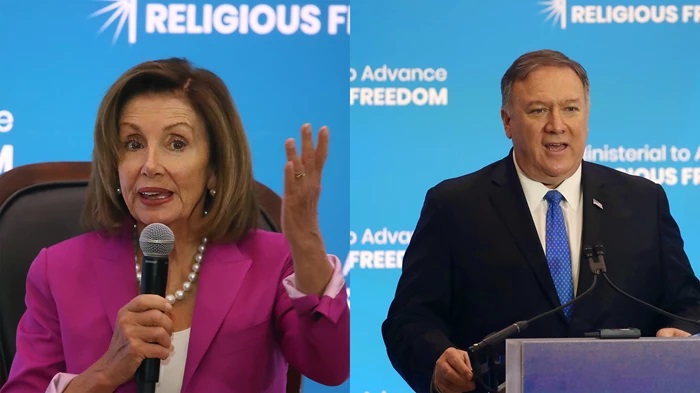
Speaker Nancy Pelosi and Secretary of State Mike Pompeo address the State Department’s second religious freedom ministerial.

Last year, American support for religious freedom survived COVID-19.

The right to free speech held firm amid racial tensions.

And vigorous backing of the First Amendment endured a contentious presidential campaign.

So concludes the 2020 Becket Religious Freedom Index, which will monitor the resilience of the United States’ “first freedom” through the yearly challenges to come.

“Americans understand religion as a fundamental part of an individual’s identity,” said Caleb Lyman, director of research and analytics at The Becket Fund for Religious Liberty.

“It is no surprise that they support strong religious freedom protections in work and public life.”

Designing 16 questions across six categories, the annual index measures perspectives on the First Amendment. Now in its second year, in October it polled a nationwide sample of 1,000 Americans, scoring their support from 0 (complete opposition) to 100 (robust support).

The composite score is 66, a statistically insignificant decline from 67 in 2019.

Becket’s report recognizes that the religious impulse is natural to human beings, and therefore religious expression is natural to human culture.

Through their law firm, they defend religious rights. Through their index, they discover if Americans agree…

This article was originally published at Christianity Today, on January 4, 2021. Please click here to read the full text.

Categories
Christianity Today Europe Published Articles

Azerbaijan Archbishop: Our Holy Mission Is to Keep Peace

Embed from Getty Images

The saying is clear: To the victor go the spoils.

And morally, with it comes the burden of peace.

In November, Christian-heritage Armenia surrendered to Muslim-majority Azerbaijani forces besieging the Caucasus mountain area of Nagorno-Karabakh. The ceasefire agreement ended a six-week war that cost each side roughly 3,000 soldiers, and left unsettled the final status of the Armenian-populated enclave they call Artsakh.

Azerbaijan, however, recovered the rest of its internationally recognized territory, including the historic city of Shushi. The first Karabakh war ended in 1994, and displaced hundreds of thousands from their homes on both sides.

Archbishop Alexander, head of the Russian Orthodox Church in Azerbaijan, reached out to CT to promote a process of reconciliation.

It will not be easy.

What is your vision for reconciliation?

We are both eastern Christian communities, and we have much in common.

At the same time, 1,500 years of separation between the Eastern Orthodox church and the Armenian Apostolic church has complicated relations. We have holy books and traditions in common, but we are not in fellowship.

Both of us have been living among Muslims since Islam was introduced in our region. But the manner of living has been very different. The Orthodox church in Azerbaijan found a way to live together with Muslims, but Armenians did not. Relations were not always…

This article was originally published at Christianity Today, on January 5, 2020. Please click here to read the full article.

Categories
Prayers

Lebanon Prayer: Interviews

God,

Who gets to speak? When a nation is suffering, to whom does it listen?

The powerful have a responsibility to communicate.

But by their words, they will be judged.

The prime minister, now only a caretaker, defended himself in the case of the blast.

Suspicion he spread elsewhere.

Only a portion of nitrate exploded. The rest had disappeared.

And a probe was authorized only hours before.

He painted a picture of official disfunction.

The central bank governor does not answer his calls.

But from talk in the media subsidies can continue—another six months if all ration well.

Meanwhile the head of a powerful militia boasted of weapons precise in their range.

Their number has doubled while enemies dither.

But be ready for conflict in the last days of Trump.

One speaks of troubles within the system.

One speaks of troubles the region around.

One projects weakness while trying to do something.

One projects strength while they wait with the world.

God, are these the words you desire?

Others suffer silently.

Three hundred Syrian families fled; their makeshift tents were set ablaze.

Corona facilities fill to capacity; a lockdown is looming post-holiday cheer.

God, there once was a time your voice filled not the earthquake.

God, send it again still and soft in the wind.

Let the powerful hear it: If only they listen.

Let it comfort the weak, and the lost in despair.

God, few of us will ever be interviewed.

But we all have words—fill them with wisdom, with power and hope.

Remind us the words you already have spoken.

To teach and encourage. To rebuke and correct.

We also have responsibility. We also will be judged.

Wherever we have influence, help us lead.

Through each with his own, God, guide Lebanon.

Promote every voice who looks to the whole.

Amen.


To receive Lebanon Prayer by WhatsApp, please click this link to join the closed comments group.

Lebanon Prayer places before God the major events of the previous week, asking his favor for the nation living through them.

It seeks for values common to all, however differently some might apply them. It honors all who strive on her behalf, however suspect some may find them.

It offers no solutions, but desires peace, justice, and reconciliation. It favors no party, but seeks transparency, consensus, and national sovereignty.

How God sorts these out is his business. Consider joining in prayer that God will bless the people and establish his principles, from which all our approximations derive.

Lebanon Prayer places before God the major events of the previous week, asking his favor for the nation living through them.

It seeks for values common to all, however differently some might apply them. It honors all who strive on her behalf, however suspect some may find them.

It offers no solutions, but desires peace, justice, and reconciliation. It favors no party, but seeks transparency, consensus, and national sovereignty.

How God sorts these out is his business. Consider joining in prayer that God will bless the people and establish his principles, from which all our approximations derive.


Sometimes prayer can generate more prayer. While mine is for general principles, you may have very specific hopes for Lebanon. You are welcome to post these here as comments, that others might pray with you as you place your desires before God.

If you wish to share your own prayer, please adhere to the following guidelines:

1) The sincerest prayers are before God alone. Please consult with God before posting anything.

2) If a prayer of hope, strive to express a collective encouragement.

3) If a prayer of lament, strive to express a collective grief.

4) If a prayer of anger, refrain from criticizing specific people, parties, sects, or nations. While it may be appropriate, save these for your prayers alone before God.

5) In every prayer, do your best to include a blessing.

I will do my best to moderate accordingly. Thank you for praying for Lebanon and her people.

Categories
Personal

The Global Church in 2020

Every year Christianity Today runs year-end lists of its top stories in several categories.

I’m pleased to have reported on 16 of 20 in international news. When including US domestic news coverage, my article on the Armenia-Azerbaijan conflict finished No. 6 overall.

Here is the full list arranged chronologically, for your review:

Soleimani’s Death Doesn’t End Iran’s Influence on Middle East Christians

  • In Iraq, Syria, and Lebanon, can believers offer Shiites better support than the assassinated military leader?
  • Jayson Casper

13 Christian Takes on Trump’s Peace Plan for Israel and Palestine

  • Evangelicals in Middle East and US debate if “Deal of the Century” is “generous” or “extreme.”
  • Jayson Casper

Religious Freedom Comes to Europe’s Second-Newest Nation. But Christians Are Concerned.

  • Montenegro’s Orthodox and evangelicals debate if new religion law is a blessing or a church-stealing curse.
  • Jayson Casper

Nigeria’s Government Agrees: Islamist Terrorists Target Christians

  • The goal of Boko Haram and ISWAP is “to divide Christian brother against Muslim brother,” Buhari administration tells CT.
  • Jayson Casper

Spiritual Abuse Definition Debated by UK Christians

  • Cases of Steve Timmis and Jonathan Fletcher illustrate debate over at what point a pastor’s exhortation crosses the line into coercion.
  • Ken Chitwood

7 Lessons from Singapore’s Churches for When Coronavirus Reaches Yours

  • Advice from Christians in the “Antioch of Asia” on how your congregation can survive, and thrive, amid the COVID-19 outbreak.
  • Edric Sng

Arab Christians Have Lost Easter Before. Here’s What They Learned.

  • Whether COVID-19 or ISIS, believers from Iraq, Syria, and Egypt know “neither plague nor persecution can snuff out the church of Christ.”
  • Jayson Casper

Surviving COVID-19 in Spain Changed My Faith

  • Six lessons for churches from the president of the Spanish Evangelical Alliance.
  • Marcos Zapata

GOD TV Dispute Has Israel Talking About Messianic Jews

  • Christian broadcaster’s expansion into Hebrew cable channel may be short-lived, but raises profile of followers of Yeshua.
  • The Associated Press and Jayson Casper

How ‘Way Maker’ Topped the US Worship Charts from Nigeria

  • Lagos worship leader Sinach penned the pandemic and protest anthem sung by Leeland and Michael W. Smith.
  • Megan Fowler

Refugee Converts Aren’t ‘Fraudsters,’ German Pastors Say

  • Churches push back on immigrant officials’ new skepticism of authentic faith.
  • Ken Chitwood

16 Beirut Ministries Respond to Lebanon Explosion

  • Evangelical leaders describe the damage, how Christians are helping, and the need for a hope beyond politics.
  • Jayson Casper in Beirut

Can ‘Abraham’ Bring Peace to the Middle East?

  • Christians in the Gulf hope historic UAE-Israel normalization might also lead to a deal with Palestinians.
  • Jayson Casper

Researchers Find Christians in Iran Approaching 1 Million

  • Secular survey may succeed where Christian advocates have failed to convince the world of widespread conversions in the Islamic republic.
  • Jayson Casper

Armenians Fight to Hold Ancient Homeland Within Azerbaijan

  • Is the Nagorno-Karabakh conflict a Christian-Muslim clash, or simply politics?
  • Jayson Casper

Biden Said ‘Inshallah.’ Many Arab Christians Do Too.

  • Arabic phrase invoked during presidential debate parallels James 4 and offers a window into how Christians and Muslims view God’s will.
  • Jayson Casper

Chinese Christians Deserve a Better Label Than ‘Persecuted’

  • Xi’s government isn’t friendly to religion. But its actions shouldn’t color how we think of believers there.
  • Brent Fulton

Turks and Armenians Reconcile in Christ. Can Azeris Join Them?

  • Confessing the genocide, Turkish evangelicals seek forgiveness on behalf of their nation. With ongoing war in Nagorno-Karabakh, is there a path forward also with Azerbaijan’s believers?
  • Jayson Casper

Will $335 Million Peace with Israel Secure Sudan’s Religious Freedom?

  • Sudanese religious leaders and American human rights experts examine the latest and symbolically powerful Arab normalization agreement with the Jewish state.
  • Jayson Casper

France’s Free Speech Makes Arab Christians Squirm

  • In conflict over Muhammad cartoons, French evangelicals rally behind their president’s defense of secularism. But brethren in the Middle East are torn.
  • Jayson Casper

Many thanks for a patient editor, and especially to willing sources. Like everyone else, we pray for better news in 2021.

Categories
Prayers

Lebanon Prayer: Bats in the Palace

God,

There are creaks in the floor from Lebanon’s attic.

Wind rustles through broken windows below.

Lights from the Christmas tree maintain their luster.

But few are the presents, suppressed is the cheer.

Is Lebanon haunted?

Is Lebanon cursed?

Taking his children to school, he was murdered.

Unknown the motive, he worked at the port.

Another allegedly photographed weapons.

He disappeared briefly, then showed up unharmed.

Was one assassination?

Was the other a hoax?

God, you know.

God, please guide.

Lebanon continues to lack a government.

‘Bats in the palace’ are blamed for the leaks.

Prime minister and president trade accusations.

And patriarch asks every week that is lost:

Are they irresponsible?

Are they loyal abroad?

But maybe repairs are brought to the structure.

Parliament voted to open the books.

With penalties increased for sexual harassment,

Domestic violence is also deterred.

God, honor these efforts.

God, increase—the bats.

Contrary to lore they are noble creation.

They see in the dark where others are blind.

More agile than birds in mid-flight maneuvers,

They feast on the insects that nip and annoy.

Give Lebanon these virtues, God:

To find its way when all is dark.

To navigate where all are strong.

To eat the pests that plague its people.

To know the honor of its kind.

God, the house is standing.

The Christmas spirit still.

Your presence prevents haunting.

Inhabit it anew.

Amen.


To receive Lebanon Prayer by WhatsApp, please click this link to join the closed comments group.

Lebanon Prayer places before God the major events of the previous week, asking his favor for the nation living through them.

It seeks for values common to all, however differently some might apply them. It honors all who strive on her behalf, however suspect some may find them.

It offers no solutions, but desires peace, justice, and reconciliation. It favors no party, but seeks transparency, consensus, and national sovereignty.

How God sorts these out is his business. Consider joining in prayer that God will bless the people and establish his principles, from which all our approximations derive.

Lebanon Prayer places before God the major events of the previous week, asking his favor for the nation living through them.

It seeks for values common to all, however differently some might apply them. It honors all who strive on her behalf, however suspect some may find them.

It offers no solutions, but desires peace, justice, and reconciliation. It favors no party, but seeks transparency, consensus, and national sovereignty.

How God sorts these out is his business. Consider joining in prayer that God will bless the people and establish his principles, from which all our approximations derive.


Sometimes prayer can generate more prayer. While mine is for general principles, you may have very specific hopes for Lebanon. You are welcome to post these here as comments, that others might pray with you as you place your desires before God.

If you wish to share your own prayer, please adhere to the following guidelines:

1) The sincerest prayers are before God alone. Please consult with God before posting anything.

2) If a prayer of hope, strive to express a collective encouragement.

3) If a prayer of lament, strive to express a collective grief.

4) If a prayer of anger, refrain from criticizing specific people, parties, sects, or nations. While it may be appropriate, save these for your prayers alone before God.

5) In every prayer, do your best to include a blessing.

I will do my best to moderate accordingly. Thank you for praying for Lebanon and her people.
Categories
Christianity Today Middle East Published Articles

Christmas Unites a Divided Iraq

A picture taken on December 30, 2016 shows people walking past Christmas and New Year’s decorations displayed outside a shopping mall street in Arbil, the capital of the autonomous Kurdish region of northern Iraq. / AFP / SAFIN HAMED via Getty Images

Seventeen years since the fall of Saddam Hussein, the fractious Iraqi nation—divided mostly between Sunni, Shiite, and Kurdish Muslims—remains unable to agree on a national day.

But they can agree on Christmas.

Last week, the parliament unanimously passed a law to make Christmas a “national holiday, with annual frequency.”

The latter phrase gave great “joy and satisfaction” to Cardinal Louis Raphael Sako, patriarch of the Chaldean Catholic Church. Last October, he presented an official request to Iraqi President Barham Salih to make Christmas a permanent public holiday.

“Today Christmas is truly a celebration for all Iraqis,” said Basilio Yaldo, bishop of Baghdad and Sako’s close associate. “This is a message of great value and hope.”

In 2008, the government declared Christmas a “one-time holiday.”

In 2018, the parliament amended the law to make Christmas for all citizens.

But after each occasion, it was not renewed.

“The declaration is beautiful, but it is very late,” said Ashur Eskrya, president of the Assyrian Aid Society–Iraq. “But our trouble is not in holidays, it is in…

This article was originally published at Christianity Today, on December 21, 2020. Please click here to read the full text.

Categories
Current Events

117 Witnesses Detail North Korea’s Persecution of Christians

Kim Haeun/Korea Future Initiative

Two North Korean families prayed silently on the prison floor—making certain to keep their eyes open. Another detainee, a veteran of Kim Jong-il’s gulag system, asked them if they were afraid.

“No,” one of the mothers replied. “Jesus looks over us.”

The detainee began to cry, knowing the fate that awaited them. The next day, they were sent to Chongjin Susong political prison camp, and have not been heard from since.

But elsewhere in Onsong County’s pre-trial detention center, however, a different Christian prisoner closed his eyes. After confessing he was at prayer, his fellow detainees collectively assaulted him—afraid he would bring trouble on them all.

These are just some of the harrowing stories told in a 2020 report on religious persecution in North Korea. Groundbreaking in its scope, it is drawn from the testimony of 117 defectors, cross-referenced with known data.

Produced by the Korea Future Initiative (KFI), Persecuting Faith reveals 273 documented victims—76 of whom are still in the North Korean penal system. It names 54 individual perpetrators, including 34 with identifying information.

KFI hopes the information will inform future Global Magnitsky sanctions, applied against individual human rights violators by the United States and other Western nations.

Drawn from experiences stretching from 1990 to 2019, KFI’s report lists scores of violations. These include 36 instances of punishment meted out to family members, 36 instances of torture, and 20 executions. Women and girls represent 60 percent of the victims.

And Christians are disproportionately imprisoned—by far.

Open Doors, which has ranked North Korea No. 1 in its World Watch List for 19 straight years, estimates there are 300,000 Christians in the population of 25 million. Tens of thousands of these occupy the gulag. Of KFI’s 273 victims, Christians total nearly…

This article was originally published at Christianity Today, on December 21, 2020. Please click here to read the full text.

Categories
Prayers

Lebanon Prayer: Tuition

God,

Must students pay for the sins of others?

The American University upped its fees. Rather, it upped their dollar exchange.

When the economy tumbled, their exchange rate held firm.

When their budget tightened, they laid off their staff.

Now they yield to reality to reflect the market—more than doubling tuition cost.

Will they yield yet to students?

Protest rallies pushed their anger. Riot police engaged the crowd.

Can the college do otherwise? Should they spend their reserves?

Would it mortgage the future for the sake of this class?

Meanwhile the parties continue to argue. Even the patriarch steps in the fray.

Sunni and Christian air their frustrations. Each of the other says they mislead.

And all accused leaders submit not to subpoena. What will the judge do, if the law is ignored?

Protesters gathered at his very residence, urging him on until justice is done.

The words are simple: Port. Blast. Lira. Debt.

Hope?

The world is complicated: Cabinet formation. Uniform standards. Dollarization. Sectarian balance.

Abandon, all ye who enter?

The sins of the fathers do plague the children.

Lebanon suffers from generations before.

What can be done if all this is your justice?

What if longstanding prayers result in your wrath?

May your mercy come quickly to Lebanon, God.

Cushion the needy. Spare the innocent. Preserve your remnant.

All those who labor for Lebanon’s good.

There are many—multiply them.

Find and promote within every class.

The students. The teachers.

The public servants who pull the strings.

But like the stringed puppets they have obligations. What can they do with the interests abroad?

God, you know.

Lead each uniquely. Lead each together.

Cleanse the heart and gird the loins.

Do not hold against them the sins of the fathers.

Your love settled the debt that none can repay.

Bless every soul and lead to repentance.

Let Lebanon live what you offer to all.

Your school has no tuition.

Amen.


To receive Lebanon Prayer by WhatsApp, please click this link to join the closed comments group.

Lebanon Prayer places before God the major events of the previous week, asking his favor for the nation living through them.

It seeks for values common to all, however differently some might apply them. It honors all who strive on her behalf, however suspect some may find them.

It offers no solutions, but desires peace, justice, and reconciliation. It favors no party, but seeks transparency, consensus, and national sovereignty.

How God sorts these out is his business. Consider joining in prayer that God will bless the people and establish his principles, from which all our approximations derive.

Lebanon Prayer places before God the major events of the previous week, asking his favor for the nation living through them.

It seeks for values common to all, however differently some might apply them. It honors all who strive on her behalf, however suspect some may find them.

It offers no solutions, but desires peace, justice, and reconciliation. It favors no party, but seeks transparency, consensus, and national sovereignty.

How God sorts these out is his business. Consider joining in prayer that God will bless the people and establish his principles, from which all our approximations derive.


Sometimes prayer can generate more prayer. While mine is for general principles, you may have very specific hopes for Lebanon. You are welcome to post these here as comments, that others might pray with you as you place your desires before God.

If you wish to share your own prayer, please adhere to the following guidelines:

1) The sincerest prayers are before God alone. Please consult with God before posting anything.

2) If a prayer of hope, strive to express a collective encouragement.

3) If a prayer of lament, strive to express a collective grief.

4) If a prayer of anger, refrain from criticizing specific people, parties, sects, or nations. While it may be appropriate, save these for your prayers alone before God.

5) In every prayer, do your best to include a blessing.

I will do my best to moderate accordingly. Thank you for praying for Lebanon and her people.

Categories
Prayers

Lebanon Prayer: Charges Filed

God,

The judge said he is proceeding accurately and deliberately. May it be true.

Some said he is politicized. Spare Lebanon from this sin.

The prime minister said his conscience is clear. May it be true.

Some said he is a scapegoat. Spare Lebanon from this sin.

The victims’ lawyer said the charges were a step toward the truth. May it be true.

God, how do you read it all?

There must be accountability for the explosion in the port.

But when a system is guilty, who gets the blame?

The charges are sullied as unconstitutional. But parliament declined to take up the case.

The charges hit only one political grouping. They say that the standards must be unified.

The charges reach right to the top of the government. But they touch not the president, of similar weight.

Some say the charges design to divide, protecting all. Spare Lebanon from this sin.

Some say the charges may soon crack the whole.

God is this your righteous will?

The system needs cleansing from deep corruption. Let the law’s pursuit of justice mirror your own.

Judge each leader separately. Reward each for his good.

But all are guilty, for all have sinned, somehow.

Their pursuit of justice cannot match your own. All fall short of your standard.

So burden their conscience in these times of trouble. Let them not run from the errors they made.

Help them make things right.

Lebanon still needs a cabinet of reform. But the political parties continue to jostle.

Lebanon still needs exchange rate stability. But the top university just gave up the peg.

Lebanon still needs to preserve its subsidies. But money runs out with rationing soon.

Lebanon still needs to secure its borders. But airspace violations increase and offend.

The needs are great, and growing dire.

God, assist the people in day-to-day living.

Give them a government from the upright and able.

The accurate. The deliberate. With consciences clear.

Amen.


To receive Lebanon Prayer by WhatsApp, please click this link to join the closed comments group.

Lebanon Prayer places before God the major events of the previous week, asking his favor for the nation living through them.

It seeks for values common to all, however differently some might apply them. It honors all who strive on her behalf, however suspect some may find them.

It offers no solutions, but desires peace, justice, and reconciliation. It favors no party, but seeks transparency, consensus, and national sovereignty.

How God sorts these out is his business. Consider joining in prayer that God will bless the people and establish his principles, from which all our approximations derive.

Lebanon Prayer places before God the major events of the previous week, asking his favor for the nation living through them.

It seeks for values common to all, however differently some might apply them. It honors all who strive on her behalf, however suspect some may find them.

It offers no solutions, but desires peace, justice, and reconciliation. It favors no party, but seeks transparency, consensus, and national sovereignty.

How God sorts these out is his business. Consider joining in prayer that God will bless the people and establish his principles, from which all our approximations derive.


Sometimes prayer can generate more prayer. While mine is for general principles, you may have very specific hopes for Lebanon. You are welcome to post these here as comments, that others might pray with you as you place your desires before God.

If you wish to share your own prayer, please adhere to the following guidelines:

1) The sincerest prayers are before God alone. Please consult with God before posting anything.

2) If a prayer of hope, strive to express a collective encouragement.

3) If a prayer of lament, strive to express a collective grief.

4) If a prayer of anger, refrain from criticizing specific people, parties, sects, or nations. While it may be appropriate, save these for your prayers alone before God.

5) In every prayer, do your best to include a blessing.

I will do my best to moderate accordingly. Thank you for praying for Lebanon and her people.
Categories
Africa Christianity Today Published Articles

US Adds Nigeria to Top of Religious Persecution List, Removes Sudan and Uzbekistan

Embed from Getty Images

Only one country was added this year to the US government’s official list of the world’s worst persecutors of religion: Nigeria.

And the Christian Association of Nigeria made a statement, excerpted here from my joint article at Christianity Today:

“[We are] not happy that the US has placed Nigeria on a religious freedom blacķlist, because of the implications which include possible sanctions,” stated CAN president Samson Ayokunle.

“But at the same time, we are encouraged that the global world is aware of what is happening.”

Nigeria has religious freedom, CAN reminded, but it is denied in certain regional states—especially in the Muslim-majority north. Churches face discriminatory zoning procedures, and Christian professors are denied senior leadership positions, the group stated.

And while Muslims denounce terrorism by Boko Haram and its breakway faction, Islamic State West Africa Province (ISWAP), such violence is done in the name of Allah, stated CAN. Fulani herdsmen, meanwhile, kill in predominantly Christian farming communities.

“Pastors and their families are under attack,” stated Ayokunle. “Churches are being burnt and destroyed. They are taking over our farms and communities.”

The rest of the article contains additional Nigerian commentary, as well as the larger context for the State Department decision.

So while the Christian leadership of Nigeria fears the impact of the CPC designation by the United States, the job of securing religious freedom may be too big for Buhari alone.

“CAN has been consistently calling on the government to fix the security challenges before too late,” Ayokunle stated. “We call on the international community to help our government to wipe out these terrorists.”

This article was originally published at Christianity Today, on December 7, 2020. Please click here to read the full text.

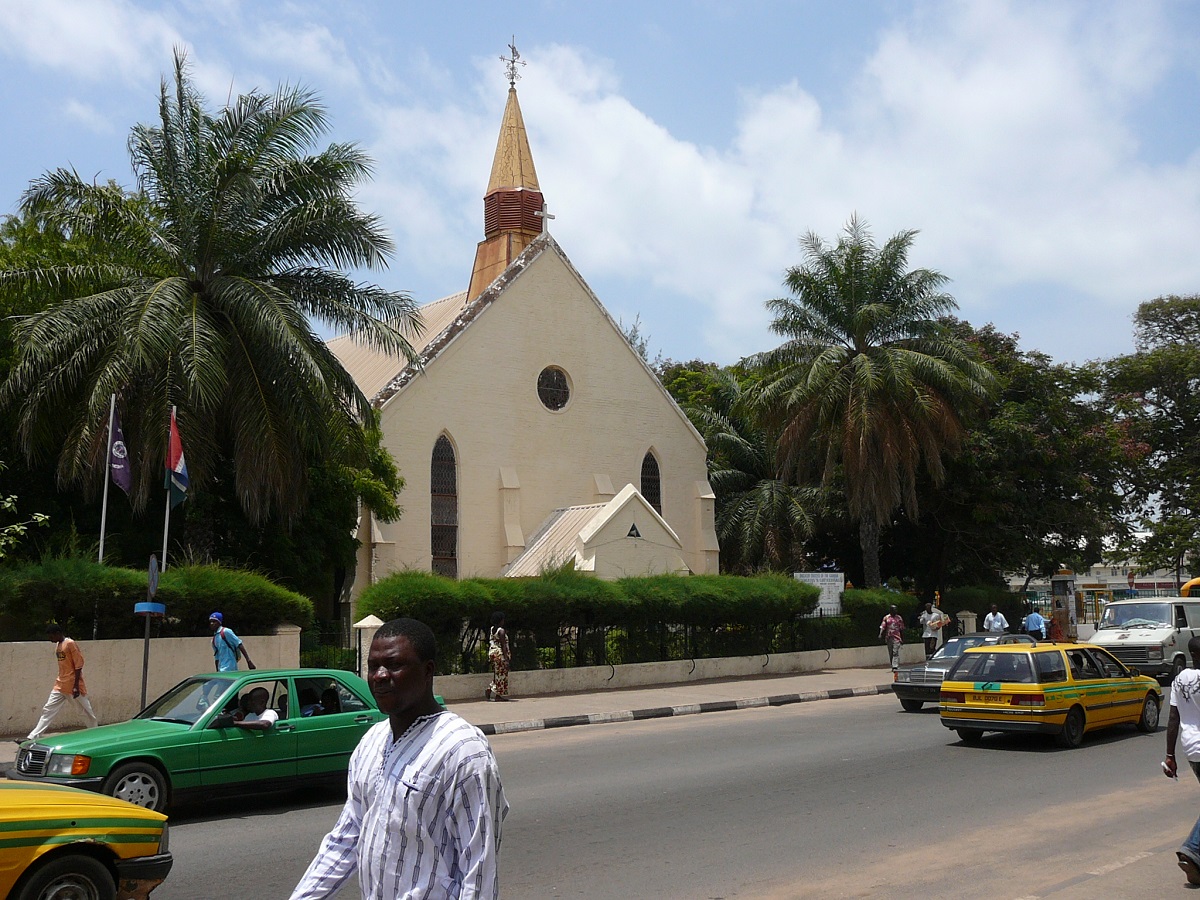
Categories
Christianity Today Europe Published Articles

Will Caucasus Conflict Come Also to France?

Image: Courtesy of Gilbert Léonian
Gilbert Léonian and his wife in front of their Paris church.

Throughout the six-week war in Nagorno-Karabakh, the Armenian diaspora rallied in support of an ancient Caucasus mountain homeland they call Artsakh.

Overall, they donated $150 million in economic and humanitarian aid.

In California, they blocked freeway traffic to protest the lack of news coverage.

In Lebanon, they hung banners against Azerbaijani and Turkish aggression.

And in France, they successfully lobbied the senate for a non-binding resolution recognizing Artsakh’s independence. (International law recognizes Nagorno-Karabakh as Azerbaijani territory.)

The symbolic vote angered Azerbaijan, which called for France’s removal from the Minsk Group, co-chaired with Russia and the United States and tasked with overseeing negotiations with Armenia since 1994. Turkey has petitioned for a leading role.

But the consequences go beyond regional politics. The controversy could threaten the French social peace, already riled amid President Emmanuel Macron’s campaign against Muslim “separatism.”

Azerbaijan, and especially allied Turkey, also have an extensive diaspora throughout Europe. And last month, their supporters led demonstrations in Armenian neighborhoods in Lyon, vandalizing the Armenian genocide memorial.

France then banned one of the more violent groups, the Grey Wolves.

To gauge the situation, CT interviewed Gilbert Léonian, a Paris-based pastor and president of the Federation of Armenian Evangelical Churches in Europe. Of the roughly 500,000 French people of Armenian origin in France, about 3 percent are evangelical, worshiping across nine churches.

(Like many French pastors across all ethnicities, Léonian studied at the well-known evangelical seminary in Vaux sur Seine, near Paris. He recalled reading CT in the 1970s, as he studied under the renowned theologian Henri Blocher.)

Léonian discussed relations between the ethnic communities, his fears for the fate of Nagorno-Karabakh churches, and his personal struggle to love his Azerbaijani and Turkish neighbors:

To what degree are the Armenian, Turkish, and Azerbaijani communities integrated into secular French society? Do they maintain their respective faiths?

The first Armenians arrived in France in the early 1920s, following the genocide of 1915–1918.

Others came to France in different migratory waves due to insecurity in their countries of origin: Lebanon, Syria, Turkey, Iran, and more recently, Armenia, following the 1988 earthquake.

Today in France, the Armenian population is mainly established along a south-to-north line from the Mediterranean port city of Marseilles, where the majority of original immigrants arrived and settled, through France’s second largest city of Lyons, and up to Paris.

The Armenian people are deeply religious, and were the first people to accept Christianity as their state religion, in 301 A.D., 12 years before Emperor Constantine’s Edict of Tolerance in 313 A.D. In France, 90 percent belong to the Apostolic [Orthodox] community, in 24 churches. Catholics represent 7 percent, in five churches. Very few Armenians call themselves atheists.

However, we are seeing a major secularization of religious practice, reflecting the general trend in Europe. For many Armenians, the church is more the place where the diaspora maintains its identity and culture, rather than a place where Christian piety is nurtured. There are about 800,000 Turks and 50,000 Azerbaijanis in France, and overall they try…

(Interview and translation by Jean-Paul Rempp.)

This article was originally published at Christianity Today, on December 8, 2020. Please click here to read the full text.

Categories
Middle East Published Articles Schneller Magazine

When Parents Become Therapists

7-year-old Elias Saadeh sat on the floor with a bar of chocolate. It was all is his mother could do to get him back to his online studies, and prevent another violent fit.

Partly quarantine stubbornness, COVID-19 had shut down the entire Lebanese school system mid-March. But it was also autism. Diagnosed also with ADHD, this was the first time Elias was in the 24/7 care of his parents.

“I have to pray for him every day,” said Rebecca Saadeh. “It is exhausting, but it is a war we need to fight.”

Elias, a kindergarten student at the special needs-inclusive Lebanese Evangelical School (LES), would usually be with specialists. In LES he was in a mainstream class with a personal shadow teacher, pulled out six times per week for Applied Behavior Analysis (ABA) and other therapy sessions as part of the cutting-edge autism support offered by the school. And during summers, he would spend time at the home of his shadow teacher and other speech and occupational therapists.

“Now, it has been three months without anything,” said Saadeh. “Today we tried to have a Zoom lesson, and he pretended to be dead.”

LES, like schools across Lebanon, scrambled to provide online learning options. From day one they recorded lectures for the student body of 1,700. The 125 with special needs received additional individualized lesson plans. But students like Elias—and their parents—needed something more.

“We work hard to include the parents in all decisions,” said Samar Rahme, coordinator of the LES Student Support Department. “And as a Christian, I have witnessed miracles in some families.”

With Lebanon going stir-crazy in quarantine, miracles would be needed now. Zoom calls were arranged for the parents. Special tips and videos were sent home, guiding how to work with their children.

And on April 22, Rahme shared them with the world.

At the 8th annual National Day of Inclusion conference, 1,400 participants from 17 countries joined in a Zoom call dedicated to crisis care for struggling parents. A ten-fold increase over past gatherings held in person, national coordinator Nabil Costa encouraged all to keep the faith.

“Amidst some of our nation’s darkest days … the simultaneous spread of the coronavirus and a downward spiraling economy is driving our families into a severe survival mode,” said Costa, also executive director of the Lebanese Society for Educational and Social Development (LSESD).

“However, a commitment to the rights and protection of individuals is not meant to be of service only when all the circumstances align well.”

LSESD, also known as the Baptist Society, launched the National Day of Inclusion in 2013, in coordination with the British Council and the Ministry of Education. Two years earlier Costa founded SKILD—Smart Kids with Individual Learning Differences—to address a gaping need in Lebanon.

A handful of private schools like LES, and their counterparts in the Sunni and Shiite communities, offered inclusive education. But none in the public school system. It wasn’t until SKILD ran a national survey in 2014 that officials realized up to 13 percent of students had a potential learning disability.

The next year SKILD launched a pilot program with seven public schools. By 2018, there were 30, and their teacher training manual was adopted by the Ministry of Education.

“When I first started, principals would say we don’t have special needs students, and hang up the phone,” said Hiba Al Jamal, director of SKILD. “Now, they are calling us for help.”

There are an additional 50 inclusive private schools in Lebanon, and SKILD works with partner institutions to extend specialized care to as many as possible. While LES manages its own staff, SKILD provides teacher training and eight therapists in support of the 98 special needs students at Khalid ibn al-Walid school, part of the Muslim private education sector, under a reasonable contract.

“SKILD believes we are all in this together, and are very generous,” said Jinan Khaywa, director of the school’s Makassed Learning Abilities Center, who also shared tips at the National Day of Inclusion.

“And now during COVID, we are directing parents how they can be the therapists for their own special needs children.”

Another Muslim-led institution, ECIL, part of the Shiite Imam Sadr Foundation, is also seeking to expand training. The only Lebanese center serving special-needs children up to 3-years-old, the initiative to transfer their skills to other therapists is also driven by the crisis.

COVID-19 has worsened already bad economic conditions, and the Ministry of Health has yet to pay ECIL its budgeted share. Perhaps training workshops can bring in revenue, as they also seek online donations.

“Every little bit helps, and we trust God, of course,” said director Maliha el-Sadr, noting ECIL both employs and serves all religious communities. “The most important thing is that we support these children as if they are our own.”

But ECIL is not the only institution facing a shortfall. SKILD, which runs partially on donations, is operating at 30 percent capacity. LES had to let go all their full-time therapists, and 30 percent of their special education teachers. And some Makassed families must apply for whatever their Islamic philanthropic foundation can provide.

Special education is expensive. Jamal hopes it can continue. “Our mission is to reach out to the marginalized, and reflect God’s love,” she said. “God doesn’t make mistakes, so these children are here for a reason—and we must serve them.”

This article was first published in the October 2020 edition of Schneller Magazine, on page 8. Please click here to read it online, along with their other articles about Christian life in the Middle East.

Categories
Prayers

Lebanon Prayer: Harbingers

God,

Lebanon keeps waiting for direction. But are there indications?

Some may be fading: The French president vowed again to return.

Some may be accounting: The state filed charges against army chiefs.

Some may be a warning: Someone brutally murdered a customs official.

Some may be shifting: Secular students swept the university vote.

God, what do they mean?

France again rallied their aid for reform. Help will come to the people, though bypass the state. Is this welcome commitment, or a desperate last gasp?

The army has long been seen as a bastion. Politicians will profit, but not men of the brass. Is this needed exposure, or selective resolve?

Security warned of assassinations. A Druze leader wondered if tied to the port. Is this mob-style messaging, or no link at all?

The students embarrassed political parties. They call for a future not tied to the sect. Is this youthful idealism, or hope for the flag?

God, you know.

And you will let Lebanon decide.

France has a heritage. France has the means. But let reform-led prosperity come from within.

The army unites. Corruption decays. Root it out everywhere and preserve the whole.

Secrets are many. Some know the truth. Let the nation have justice for the blast in Beirut.

Youth is naïve. Youth has a vision. Walk generations together with honor toward faith.

God, like all, it is your nation.

God, like all, it goes astray.

Nip in the bud any selfish ambition. Nurture the growth of each bloom that is good.

Once you placed your sign in the virgin. A message of hope to all who believe.

Make good the promise of Lebanon’s mountains.

Bring to fruition her bountiful fields.

Provide for the people in these times of trouble.

Hold strong their faith for your new dawn to come.

Amen.


To receive Lebanon Prayer by WhatsApp, please click this link to join the closed comments group.

Lebanon Prayer places before God the major events of the previous week, asking his favor for the nation living through them.

It seeks for values common to all, however differently some might apply them. It honors all who strive on her behalf, however suspect some may find them.

It offers no solutions, but desires peace, justice, and reconciliation. It favors no party, but seeks transparency, consensus, and national sovereignty.

How God sorts these out is his business. Consider joining in prayer that God will bless the people and establish his principles, from which all our approximations derive.

Lebanon Prayer places before God the major events of the previous week, asking his favor for the nation living through them.

It seeks for values common to all, however differently some might apply them. It honors all who strive on her behalf, however suspect some may find them.

It offers no solutions, but desires peace, justice, and reconciliation. It favors no party, but seeks transparency, consensus, and national sovereignty.

How God sorts these out is his business. Consider joining in prayer that God will bless the people and establish his principles, from which all our approximations derive.


Sometimes prayer can generate more prayer. While mine is for general principles, you may have very specific hopes for Lebanon. You are welcome to post these here as comments, that others might pray with you as you place your desires before God.

If you wish to share your own prayer, please adhere to the following guidelines:

1) The sincerest prayers are before God alone. Please consult with God before posting anything.

2) If a prayer of hope, strive to express a collective encouragement.

3) If a prayer of lament, strive to express a collective grief.

4) If a prayer of anger, refrain from criticizing specific people, parties, sects, or nations. While it may be appropriate, save these for your prayers alone before God.

5) In every prayer, do your best to include a blessing.

I will do my best to moderate accordingly. Thank you for praying for Lebanon and her people.

Categories
Audio

Audio Appearances

As 2020 draws to a close, many people are saying ‘Amen.’ Amid all the terrible events, much has been left undone.

That is an overly dramatic introduction to a catch-up post.

Thank you to everyone who keeps up with the articles I write. But over the course of this last year I missed sharing two audio appearances for my work.

I did post about one of them. See here for my interview about the situation in Armenia.

But back in May I was a guest on The Underground Sessions: Intersection of Faith, Culture, and Politics.

The podcast is hosted by Millington Baptist Church in New Jersey, and they asked me to share my thoughts on the situation in Lebanon.

Please click here if you would like to listen in to the 41-minute episode.

Of course, the situation in Lebanon grew much worse since then. In August, explosive materials detonated at the Beirut port, and things have still not gone back to normal.

The radio show The Common Good picked up on my article for Christianity Today, about how I explained the blast to my children.

They did not interview me, but engaged with the material and reflected upon it.

Please click here if you would like to listen. The link directs to minute 56 of the show, where the Lebanon segment begins.

Some people have a face for radio. Who knows, maybe I have a voice for newspapers. But as this year comes to a close, amid all the troubles, I can say ‘Amen’ for the life I have.

Thank you for learning along with me.