Categories
Christianity Today Middle East Published Articles

Christ at the Checkpoint in the Age of Trump


ALcheckpoint3
Checkpoint between Israel and Palestine; credit: Andrew Larson

This article was first published May 25 at Christianity Today.

Fares Abraham grew up in the West Bank village of Beit Sahour, where tradition says the angels sang “Peace on Earth” to the startled shepherds. But his clearest memory is of his mother shot in the back by an Israeli soldier as she shuffled him and the neighborhood kids into her house during the first intifada.

Now in his mid-30s, the Liberty University graduate created Levant Ministries five years ago to mobilize Arab youth to fulfill the Great Commission.

And when he comes back home, he is at peace with his upbringing.

“When I was young, I asked myself if I should join the resistance or be a bystander,” he said to the 500 attendees—including 150 local Palestinian Christians—gathered in Bethlehem from 24 countries at the fourth biennial Christ at the Checkpoint (CATC) conference in 2016.

“But now I can go up to a checkpoint, look a soldier in the eye, and say, ‘I forgive you and love you in the name of Jesus.’”

Working also with global partners, Abraham believes the younger generations are pro-peace, becoming increasingly pro-justice the more their lives are transformed by the gospel.

It is a message communicated at CATC, though its anti-Christian Zionism is often criticized as anti-Israel…

Please click here to read the full article at Christianity Today. 

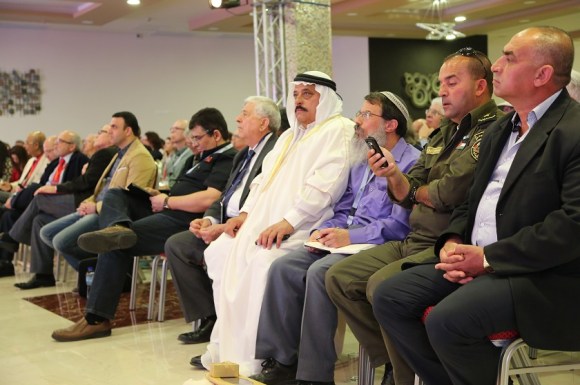
CATC audience
Audience at CATC opening in 2016; credit: Andrew Larson


Categories
Christianity Today Middle East Published Articles

In Shadow of Death, Palestinian Christians and Messianic Jews Relapse on Reconciling


Embassy Gaza
AP, via Japan Times

This article was first published at Christianity Today, on May 21.

Hanna Maher’s wife is nine months pregnant, due any day now, with only four hours of daily electricity. Her two older boys scurry about in the dark, kept ignorant by parents about the dead at the border.

But it is hard to be ignorant in Gaza.

A Norwegian charity estimates 56 percent of children in the Palestinian territory suffer from traumatic nightmares. Suicide, rarely seen culturally, is a growing concern. Maher, an Egyptian-born Baptist pastor, says some at the border see death as the best option.

Two million people are squeezed into a coastal strip roughly the size of Philadelphia. Exit is severely restricted on one side by Israel. The waiting list into Egypt is 40,000 names long.

Unemployment is over 40 percent. Clean drinking water is hard to come by. And on May 14, as tens of thousands massed near a chain link fence demonstrating for their “Right to Return,” Israeli snipers picked off dozens.

“Monday was a hard day. But at least it is quiet now,” Maher said. “It has been bad for years. But conditions now are the worst I have seen.”

Maher went to Gaza in 2011, and married his local Palestinian wife a year later. His congregation is the strip’s only evangelical church, with about 60 regular members. Overall, Gaza’s Christian population is about 1,000, mostly Greek Orthodox; in the last 10 years, it has declined by a third.

Maher provides food aid to about 120 families. His marriage preparation classes are a crash course in how to nurture a family amid poverty.

And he says local Christians are critical of just about everyone…

Please click here to read the full article at Christianity Today.

Categories
Middle East Published Articles World Watch Monitor

Christians to “Maintain Presence” and “Avoid Victimhood,” Says Syria Expert


Syria Middle East Concern
Children playing in Beit Sakhour, a neighbourhood in East Aleppo largely destroyed in Syria’s ongoing conflict (World Watch Monitor)

Following up on my recent article for World Watch Monitor, here is Part II of my interview with Miles Windsor, head of advocacy for Christian charity Middle East Concern.

These questions and answers were cut for length from the original, but I am pleased to share them here for the consideration of readers.


If you have your own viewpoint on who Syrian Christians support, even if in a personal capacity, please share.

It is important to recognize the extent to which situational dynamics influence statements of political allegiance, including by church leaders. Most Syrian Christians are in areas controlled by the Assad regime. The conflict situation also heightens the extent to which communities rely on patronage, a significant factor in Middle Eastern society even in peaceful times.

So we should not be surprised that church leaders readily voice support for President Assad. That is not to suggest that such articulations are empty, but rather that nuanced interpretation is usually necessary.


It can be simplistic to suggest ‘what the Bible says’ Syrian Christians should do. But are there Biblical principles you would counsel for them in the midst of a complicated state of difficulty? Might there be multiple options of God-honoring response?

We must guard against simplistic or overly prescriptive approaches. There is biblical basis and precedent for a range of responses to danger and persecution. The Apostle Paul who explained that ‘everyone who wants to live a godly life in Christ Jesus will be persecuted’ (2 Tim 3:11,12) is the same Apostle who fled from Damascus to escape murderous plots (Acts 9:23-25). Other times he challenged the injustice and brutality of an imminent public flogging based on his citizenship rights (Acts 22:25).

It can be tempting to offer reminders of basic principles such as “trust in God and his promises,” and “do not deny your faith.” Although well-intentioned, true, and important, such advice is usually obvious and can come across as crass over-spiritualization, especially if offered by outsiders.

Better is to defer to our Syrian and other Middle Eastern sisters and brothers who are ministering in the heat of conflict and refugee situations and whose profound theological reflection is now shaping their own ministry approaches.

For example, two themes that are regularly emphasized in relation to the Middle Eastern church are the importance of presence and the danger of victimhood. The importance of Christian presence in Syria is the prophetic role of the Church and the calling of Christ’s people as agents of reconciliation and transformation. The imperative of maintaining a witness to the love, hope, peace, and life of Christ in a context of hatred, hopelessness, conflict and death, helps to understand how vital it is for the salt and light of Christ’s people to permeate and help shape a post-conflict Syria.

To rise above the mentality of victimhood is to reject the vicious cycles of blame, demonization and revenge, to acknowledge the comparable suffering of many others, to build alliances with the majority which also strives for peaceful coexistence, and to reject the label of ‘minority,’ whether imposed by those seeking to control, or to protect.

These are rich seams to mine as Syrian Christians seek to respond in ways which honor God, but they should also be a challenge to the more comfortable and complacent parts of the global church!


Describe a little bit about how MEC can speak authoritatively on the subject.

An association of many Christians and Christian ministries in the Middle East and North Africa, Middle East Concern (MEC) supports those in the region who are marginalised, discriminated against or persecuted for being or becoming Christians. Through a wide network of church and ministry partnerships in the Middle East and North Africa (MENA) region, MEC seeks to provide support which is led by the priorities of MENA Christians. This support includes advocacy – challenging injustice and seeking to ensure that the voice of MENA Christians is heard and understood.


Please click here to read an excerpt of Part I, or here for the full article published at WWM.


Categories
Middle East Published Articles World Watch Monitor

“Avoid Persecution-of-Christians Label,” Says Syria Expert

Syria Middle East Concern
Children playing in Beit Sakhour, a neighbourhood in East Aleppo largely destroyed in Syria’s ongoing conflict (World Watch Monitor)

From my new article for World Watch Monitor:

As the conflict in Syria continues, Jayson Casper sat down with Miles Windsor, head of advocacy at Christian charity Middle East Concern, to discuss where Syrian Christians’ allegiance lies, whether those who fled the country may return, and how Christians in other countries can help.

Jayson Casper: There has been much reporting about how Syrian Christians supposedly support the regime, the opposition, or are neutral. There is also reporting about how their stance may have shifted over time. What is your perspective on how the hard-to-define majority of Syrian Christians should be described?

Miles Windsor: The first point to stress is that within Syria’s sizeable Christian communities, there are both supporters of the Assad regime and supporters of opposition groups, so it’s important to avoid blanket generalisations. And a second basic point is that for most Syrian Christians, and indeed most Syrians generally, political allegiance is usually nuanced or qualified.

“Improved security alone will not be sufficient to facilitate large-scale return of IDPs”

Although there are Syrian Christians who support, and are active within, opposition groups, most Syrian Christians tend to favour the Assad regime. This is certainly the public position articulated by most Syrian church leaders.

Such support has historical roots. The Assad regime has traditionally granted a significant degree of freedom to the diverse religious communities of Syria.


Please click here to read the full article at World Watch Monitor.

Categories
Africa Christianity Today Published Articles

Sectarian Cinema: Oscars Highlight Muslim Defense of Persecuted Christians

Watu Wote
(Image: Hamburg Media School)

This article was first published in the May print edition of Christianity Today.

Two years ago, the heroic actions of some Kenyan Muslims brought their majority-Christian nation together. The Oscar-nominated film depiction of that heroism may do so again—if many people watch.

Watu Wote is a fictional retelling of real-life horror. In December 2015, al-Shabaab terrorists stormed a bus headed toward the border with Somalia and demanded Christian passengers separate for targeted execution.

Muslim passengers responded, “If you want to kill us, then kill us. There are no Christians here.” The Christian women were given hijabs to wear, while the Christian men were hidden behind bags.

They knew the danger. One year earlier in a similar bus attack, Muslim militants killed 28 Christians who failed to correctly say the Islamic creed.

Filmed on location in Swahili and Somali, the 22-minute film was nominated for the Live Action Short Film category at the 90th Academy Awards.

“The film captures an issue close to Kenyan hearts, that apart from religious differences, we are all Kenyan,” said Timothy Ranji, bishop of the Anglican diocese of Mt. Kenya South. “The downside is that it will be watched by very few Kenyans…”

Please click here to read the full article at Christianity Today.


Categories
Middle East Published Articles Religion Unplugged

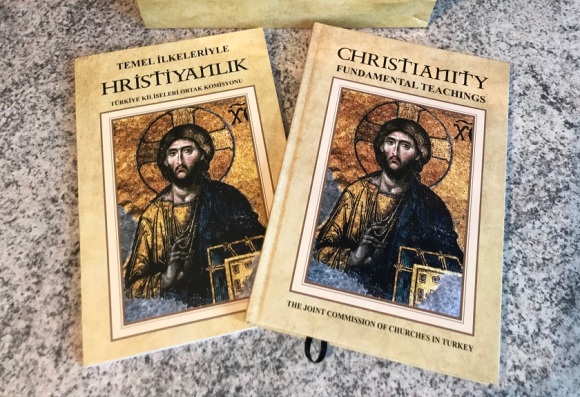
In Time for Orthodox Easter, A Turkish Declaration of Christian Unity

Turkey Christian Unity
The welcome package with the English and Turkish version © BQ/Warnecke

In the waning years of the Ottoman Empire, a delegation of imams approached the sultan in complaint. Western pressure forced the state to allow Christian churches to ring their bells.

“Do they all ring at the same time?” the sultan asked. No, he was told. “Then don’t worry,” he replied, “until they can agree.”

Perhaps apocryphal, the story illustrates the long history of division plaguing Christianity around the world.

The Ottoman empire is gone, and Turkey is now a secular state with official freedom of religion. Bells are hardly heard these days at all, though in smaller numbers the ancient Christian communities remain.

But from Istanbul – once Constantinople – where the “Great Schism” sundered Catholicism and Orthodoxy in 1054, a new book heralds a new beginning.

Christianity: Fundamental Teachings is a simple, 95-page presentation of the common beliefs of all Turkish churches. Its 12 chapters include descriptions of the nature of God, the salvation through Jesus, the work of the Holy Spirit, the inspiration of the Bible, and the role of the church.

But its most explosive page is the preface of endorsements.

The Orthodox Ecumenical Patriarch, The Armenian Patriarchate, the Syrian Orthodox Patriarchate, the Catholic Bishops Conference of Turkey, and the Associate of Protestant Churches all approve it, and recommend that it be widely read.

“You can’t find a page like this in all of church history,” said Armenian Bishop Sahak Mashalian, the principle scribe. “It is akin to a miracle.”

Please click here to read how it developed, at The Media Project.

Categories
Published Articles Religion Unplugged Religious Freedom

Religious Liberty: For the Health of the Whole World

From my recent article published at The Media Project:

Religious Liberty
(from: Set My People Free)

But for Durie, the issue is far greater than the right of one person to believe what they want – even as human rights always concern the individual, each and every one of which is sacred.

It is a lonely battle, he laments, though much depends upon it.

“This can be a disheartening, discouraging, and frustrating burden to carry,” he said. “But it is vitally important, not only for the believers themselves, but also for the health and honor of the whole world.”


Categories
Christianity Today Middle East Published Articles

Is ISIS Really Muslim?

This article was first published in the March print edition of Christianity Today.

Is ISIS Really Muslim

For Egyptian Christians, 2017 was the deadliest modern year on record. At least 87 were killed by terrorists.

But despite being labeled by ISIS as its “favorite prey,” Copts were only 12 percent of such fatalities last year. Far more Muslims died in extremist violence at the hand of fellow believers.

Unless they aren’t believers at all.

If American Christians often don’t know how to understand Islam, they can take some comfort knowing that Egyptian Muslims struggle too.

A tragic case study occurred in December, when more than 300 people were killed at a Sinai mosque belonging to a Sufi order. Sufi Muslims are known for their mystical practices in search of spiritual communion with God. Many also seek intercession at the graves of Muslim saints.

In casual but solemn conversation at an upper-class organization in Cairo, one well-educated Egyptian woman reflected on the tragedy with colleagues. “Yes, but they are Sufis,” she said. “They’re not really Muslims.”

The woman was not making light of the massacre, nor justifying it. But she had internalized a message preached by another type of Muslim—Salafis—who judge Sufi practices to be outside the bounds of orthodox Islam. And when Salafis become jihadists, they may well kill Sufis as apostates.

In angry conversation with a middle-class taxi driver in Cairo, one typical Egyptian denounced ISIS for its crimes against both mosques and churches. “No, we can’t say that they aren’t Muslims,” he said. “Of course they are.”

What causes such confusion? Innocent victims, praying in a mosque, are placed outside of Islam while murderers, salivating at the entrance, remain in the faith?

At issue is a pernicious concept in the Muslim world called takfir in Arabic. It means the process of calling someone a kafir—an infidel…

Please click here to read the full article at Christianity Today.

Categories
Christianity Today Middle East Published Articles

Holy Sepulcher Will Reopen After Jerusalem Suspends Church Tax Grab

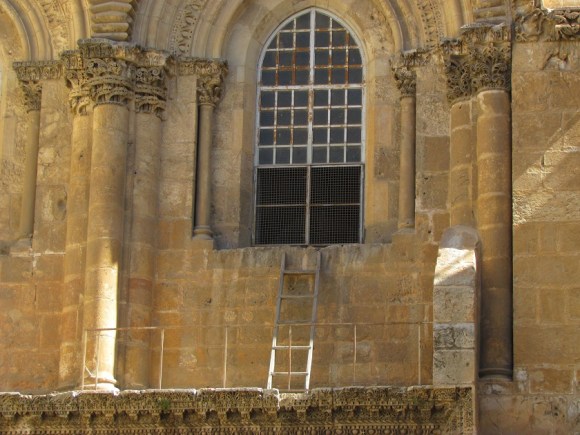
Immovable Ladder Holy Sepulcher

This article was originally published on February 27, at Christianity Today.

Israel suspended a controversial tax plan and property legislation today in response to the unprecedented Christian decision on Sunday to close the Church of the Holy Sepulchre in Jerusalem.

Prime Minister Benjamin Netanyahu and Jerusalem Mayor Nir Barkat agreed to form a government committee to “formulate a solution” and negotiate with church officials.

In response, the leaders of the Roman Catholic, Greek Orthodox, and Armenian clergy will reopen the church on Wednesday, reports the Associated Press.

Barkat had stated that Jerusalem’s churches owed more than $180 million in taxes on church-owned commercial properties, and the municipality had frozen church accounts.

Meanwhile, legislation advancing in the Knesset had threatened to complicate the churches’ ability to sell their properties.

Now suspended, these actions were contrary to the historic agreement between churches and the various civil authorities which ruled Jerusalem, said Bishop Sani Azar.

His Evangelical Lutheran Church in Jordan and the Holy Land closed its Church of the Redeemer for one day in solidarity, pending consultations with sister churches in Jerusalem.

“All the churches are united, so this shows something is very wrong,” said Salim Munayer, head of the Musalaha reconciliation ministry in Jerusalem.

“It is an unbelievable step, though Christians in the West have a hard time understanding.”

Please click here to read the full article at Christianity Today.

Categories
Christianity Today Middle East Published Articles

To Defend Mideast Christians, Can Advocates Critique Islam?

Advocates Critique Islam
Photo by Win McNamee/Getty Images

This article was first published in the January print edition of Christianity Today.

What’s the best way for Middle Eastern Christians in America to help fellow believers back home? A single misspelled email address inadvertently revealed the breadth of this dilemma for activists in the diaspora.

The mishap sparked a spat this summer between two prominent US Arab groups: the Arab American Institute (AAI), a polling and policy organization led by James Zogby, and Coptic Solidarity (CS), which champions the religious freedom of Egyptian Christians and other minorities.

Zogby, who has a Lebanese Maronite background, was a scheduled participant in CS’s annual Washington conference, which leaders often use to advise DC’s foreign policy establishment on Middle East issues.

But two days before the June 15 conference, Zogby unexpectedly withdrew.

Zogby explained in an article weeks later that he withdrew after receiving word that some controversial anti-Muslim “hate groups” would be at the conference and that the title of a panel in which he was participating had been revised to suggest that violence and impunity are endemic in Muslim and Egyptian culture.

“The best way to reinforce the message of the haters of Christians in Egypt is by giving them the ammunition that Copts in the US are working with Islamophobes in Washington,” Zogby told CT. “I felt it important to call out CS for what I strongly believe is a wrong-headed and potentially dangerous path.”

Stunned by Zogby’s withdrawal and his public criticism, CS wrote an angry response, accusing Zogby of a “dhimmi mentality,” a reference to the secondary status of non-Muslims in the historic caliphate.

“He intentionally tried to hijack our event and tarnish our reputation,” Lindsay Griffin, CS’s director of advocacy and development, told CT.

According to organizers, participants had received the revised speaker list and panel names a full month before the conference. But Zogby didn’t. His email address was misspelled, so he never received a May 9 message outlining the changes that later led him to withdraw.

But while the spark that ignited the conflict between the groups was an honest mistake, the issues at the center of the dilemma are real…

Please click here to read the full article at Christianity Today.

Categories
Americas Biola Published Articles

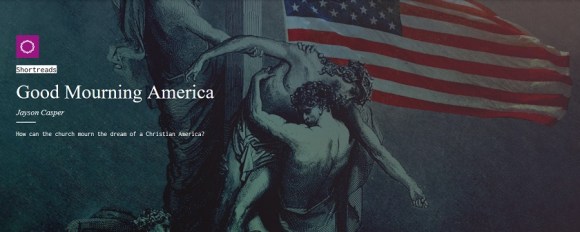
Good Mourning America

Good Mourning America

This article was originally published at The Table, of Biola University’s Center for Christian Thought.

In the days leading up to our presidential election, it seemed quite clear that Christians were not happy. But the ennui went beyond politics toward a greater sense that America was changing.

The unhappiness was rooted in good reason. Our principles were lambasted as backward, our policy stances were labeled as bigoted, personalities were labeled as bigots, and our politics were lowered into bouts of bravado. There seemed little for Christians to celebrate, save the requisite reference to our Lord and Savior Jesus Christ.

And then Trump won. Some rejoiced, while others cringed. But I suggest whether salve or acid, the underlying sentiment remains fundamentally unchanged.

With our eyes on the world and our changing national fortunes, we appear marked by vindication or frustration, tempted to pride or anger, either way ready to lash out ineffectively at our culture at large. Since apparently Jesus cannot keep us happy, perhaps with him we should try being sad?

But being sad is no cure all, either. Some of different temperament instead yield to depression, tempted to flagellation, ready to grumble unhelpfully at our Christian culture at large.

Being sad is an emotional response, much like being angry. Whether red, blue, or annoyed we are reacting to circumstances, and we should not be too harsh with ourselves. God has given us our emotions, and they are wonderful tools to tell us something is wrong, or at least, different.

For America is different, in her religious composition. Perhaps America is also wrong, in her moral choices. But God invites us first to examine ourselves, requiring of all a greater humility. But to get there, a step beyond sadness is needed, evoking a suffering we are conditioned to dread.

As American Christians, we must choose to mourn that which is different, and that which may also be wrong.

Mourning, unfortunately, carries with it the connotation of defeat, of finality. We know what it means to mourn over the death of a loved one, but here we must mourn over the death of an idea.

I posit that for so many Americans, our fundamental unhappiness stems from an inability to let go of our dream of a Christ-centered nation.

Nor should we. But to find peace we must understand what it means to mourn, to grieve. In the loss of a loved one, we recognize the fact that he or she is gone. The suffering comes not from the death primarily, but from every unfulfilled expectation, every lost hope, every dream for the future that will now never be. Mourning is the necessary surrender thereof.

America is changing, we Christians feel. But we have been reluctant to admit she has already changed. Denial is often the first resistance to grief, pushing off the uncomfortable mourning. Poll after poll bears out the fact, however, that Christianity is losing its national prominence.

Christianity Today recently ran a series analyzing the trends, and one of the most poignant is this: In a 1967 Gallop survey, two percent of Americans identified themselves with no religion; in 2015, a Pew survey finds the now-ascendant “nones” at 23 percent.

Nearly one-quarter of Americans have no religious affiliation. That is a fact very near to a flatline.

Proper mourning, however, must identify the body. Though we cannot be happy, Jesus is still Lord and Savior. It is not Christianity that has died, and neither the church. The polls bear out this fact as well.

A Gallop survey in 1940 found 37 percent of Americans saying “yes” when asked if they attend church weekly. In 2015, the number dropped all the way to an astounding, wait for it, 36 percent.

Church going Americans are as numerous now as they have long been. What has changed, then? Where have the nones come from? In 1972 a GSS survey found mainline Christians to be 28 percent of the population. By 2014, they were only 12 percent. And as the former standard bearers of Christian civil religion eroded, evangelical Christians have grown to 23 percent.

Nearly one-quarter of Americans are evangelical Christians. That too is a fact, but it is not a pulse. Christianity in America is not dead, but Christian America? Yes.

At this point, it must become personal. I have my story to tell, but that is not what I mean. Every death is mourned differently by every bereaved. Two sons of a deceased mother will each grieve uniquely, for they had different hopes, dreams, and expectations for the life they no longer share with her. One cannot say to the other, “I know how you feel,” no matter the similarity of experience, nor the true comfort they can exchange.

The author of the Christianity Today series reflects on these religious demographic changes and says it may not be a bad thing. As nominal Christian expression recedes it gives the church more opportunity to correctly present the gospel life of discipleship.

Perhaps he is right. Of the 70 percent (according to a 2014 Pew survey) of Americans who identify as Christian, he divides them into rough statistical thirds: Cultural, due to birth and inherited identity; Congregational, due to communal attachment; and Convictional, due to belief and practice.

I do not disagree with his assessment nor the necessity of distinction. An evangelical reading of the Bible emphasizes the eternal importance of personal faith and practice. But as one in his category of convictional Christians, I mourn over our separation from the whole.

Perhaps I am wrong to mourn. Many evangelicals of my youth warned instead to mourn over those who falsely understood themselves to be Christians just because they were born into a household that attends church that way. One must be “born again,” said Jesus. Perhaps those who emphasize this message find vindication they have fewer mainline Christians to mourn over?

Likely not. Their sentiment is genuine, and their concern is real. Their witness comes from the heart. They love their fellow man, and they love America beside. For many, transforming the former is a means to preserve the latter. Some need patience, to endure their zeal. Others give praise, as their lives have been changed.

I, however, rightly belong to all three of the author’s categories. I was born into a Christian home. I value belonging to a Christian people. I adhere to time-honored Christian convictions.

Evangelical faith cherishes and nurtures all three. But I find the statistics are ripping away two-thirds of those who might otherwise be counted with me. And with them is ripped away the Christian ethos of America.

This is the death that I mourn—the hollowed out corpse of a once Christian nation. With it dies the expectation of my country’s inherent goodness, the hope of nominals still near to the gospel, and the dream of enduring Christ-infused values.

But again, some might rejoice that true faith is made clear. “We should be less American, and more Christian,” is a statement increasingly heard from many in the pews. Once more, I do not disagree.

But another tool to postpone mourning is improper substitution. Less apt if comparing to the death of a loved one, consider the reaction if your dog dies, or your girlfriend breaks up with you. How many people offer false comfort with the well intentioned words, “Just get another one?” And perhaps you will, wanting the replacement to fit the hopes you had for the old. Rarely does it work.

The dream of a Christ-honoring culture cannot be replaced by substituting out America for a more singular Christian priority. Likely a needed corrective, but it does not address the pain.

Nor do the more common reactions of striving harder and fighting back. How many people have you met who numb the loss of a loved one by drowning themselves in activity? Even if done to honor the deceased, it leaves unaddressed the underlying grief.

Many evangelical thinkers have outlined their “what do we do now?” strategies. Some say we should embrace our role as a prophetic minority. Others suggest we must reclaim the institutions of cultural influence. Some recommend a renewal in the church. Others encourage a revived evangelism.

Each is likely a fine way forward. But not yet. Wait. Rest. Mourn. Identify the dream you had, cry, and humbly suffer. Then, let it go.

What Christians attained in America past may or may not have been God’s will. Undoubtedly it fell short of his ideal. In so many ways, it was good. And as long as we live here, we have obligations to seek her best.

But the fact at this moment is that America is moving on from her Christian heritage. Perhaps I am wrong, but it is sorrowful that something so precious is being lost, a glue that holds much together.

Yet a loss fully mourned brings healing. Healing brings wholeness. Christ brings completeness. From here, God can give us new hopes, dreams, and expectations for ourselves and our nation, fitting a new reality.

American Christians—triumphant or frustrated, depressed or angry, denying or striving, of any and all statistical categories—should dream with him. The nones are waiting, as is Jesus, our Lord and Savior.



Categories
Christianity Today Middle East Published Articles

Does One Huge New Church in Egypt Make Up for Troubles with 24 Small Ones?

Sisi New Coptic Cathedral
(via Ahram Online)

This article was first published at Christianity Today on January 10, 2018.

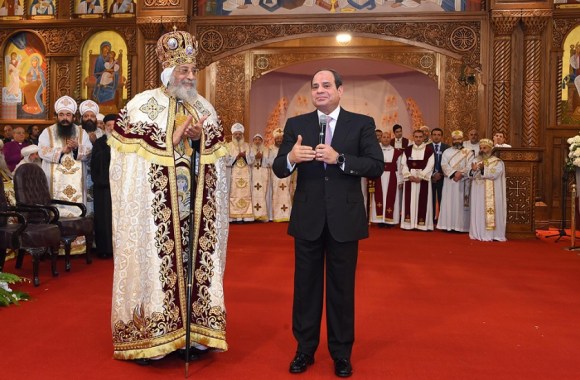
Celebrating Christmas with Egyptian Christians for the fourth consecutive year, President Abdel Fattah al-Sisi presented the largest gift under the tree: A new cathedral.

Sisi was the first president in Egypt’s history to even attend a Christmas mass. During last year’s celebration, he promised to build Egypt’s largest church and largest mosque in a yet-to-be-developed new administrative capital.

Three weeks earlier, 27 people had been killed in a suicide bombing in a chapel adjacent the old cathedral and papal residence, St. Mark’s in Cairo.

“Evil, destruction, and killing will never defeat goodness, peace, and love,” Sisi said at this month’s cathedral inauguration. “We are one, and you are our families. No one can ever divide us.”

Coptic Orthodox Pope Tawadros II called the new church, named The Nativity of Christ, a “divine arrangement.”

But also…


One week prior to the Helwan incident, a church in Atfih, 60 miles south of Cairo, was ransacked—not by terrorists, but by dozens of local Muslims offended by the rumor that a bell would be installed in the unlicensed village church.

In a recent report by EIPR, Egypt witnessed 20 similar sectarian incidents at churches over a 13-month period. Ibrahim said the total is now up to 24.

EIPR’s reporting timeframe began with the issuance of Egypt’s new church building law, meant to eliminate such problems…

Please click here to read the full article at Christianity Today.


Categories
Christianity Today Middle East Published Articles

Calvin of Arabia: Protestant Theology Translated into Arabic

John Calvin Arabic
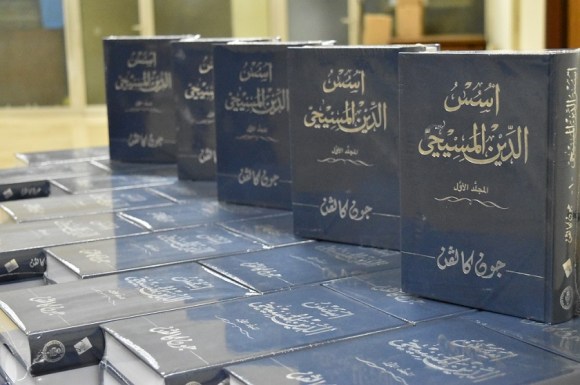
Translation: Foundations of the Christian Religion, vol. 1, John Calvin. (via LSESD)

This article first appeared in the December edition of Christianity Today.

Most of the theological writings that shaped Western society over the last 500 years cannot be found on Middle Eastern bookshelves. Few Arabs have ever read anything from John Calvin, Jonathan Edwards, or Karl Barth.

The reason is simple: Almost none of the Protestant canon has been translated into Arabic.

The dearth of Christian religious texts in the world’s fourth-largest language is especially pronounced within Protestantism, which developed in European languages such as Latin, French, German, and English. The Reformation has barely broken into the Arabic-speaking world, dominated by Islam and where most local Christians—whose numbers are dwindling fast—are inheritors of Orthodox or Catholic theologies.

Nearly a decade ago, George Sabra, president of the Near East School of Theology (NEST) in Beirut, had the notion to translate perhaps the most influential writing of the Reformation, John Calvin’s Institutes of the Christian Religion, into Arabic for the first time.

Written by my colleague Griffin Paul Jackson, I contributed a section on Catholic efforts:

After years of checking thousands of footnotes, Sabra—who settled on a Baptist publisher based in Egypt for his 1,500-page tome—has realized the weight of clear, quality translation. But he’s not the only one counting the cost.

For Middle East Catholics, less than one percent of key texts are available in Arabic, said John Khalil, a priest who works at the Dominican Institute for Oriental Studies in Cairo. “Our bishops can access works in Italian or French,” he said. “But having nothing in Arabic results in fewer theologians. It is a problem.”

Khalil recently secured permission to publish translated and original Christian works, naming his imprint after Aquinas. He has begun revision of the Summa Theologica, translating volume two and hoping to complete the rest in the near future.

But the problem is not just with the classics. Few modern theological works have been translated into Arabic either. Only one book is available from the leading theologians behind the Second Vatican Council.

Khalil’s primary interest is social justice, and in May he published the first Arabic translation of Gustavo Gutiérrez’s benchmark A Theology of Liberation. A handful of books about liberation theology exist in Arabic, but until now, no original texts.

But even these pushed Christians toward participation in Tahrir Square demonstrations that led to the overthrow of Egypt’s government in 2011. One celebrated martyr of the revolution, Mina Daniel, was a leader in Khalil’s study group.

Since then, however, many Christians have soured on such theology. Khalil hopes translation can make a difference.

“I don’t imagine we will become like Latin America,” he said, “but I hope we will at least stop blaming our young people who are struggling for justice. Religion should criticize every political system, and the church must have a prophetic voice.”

Please click here to read the full article at Christianity Today.


Categories
Biola Middle East Published Articles

The Arrogance of Enemy Love: A Poem to ISIS

Arrogance of Enemy Love
An early 15th century Coptic prayer book from Ethiopia. View the full book at bit.ly/1XP8af8

This article was first published at The Table.

Many have been impressed by the forgiveness Coptic Christians have offered to their enemies. Beheaded, ambushed, churches bombed, shot in cold blood – they have not retaliated. Instead, though anger boils, they pray for their persecutors.

In the links above you can explore the opportunities I have had to write about this suffering community, and in one article I partially translated a poem circulated on social media that one Copt directed to ISIS. The Arabic original is here, and the full translation is below:

I will not speak (as some have done)

And curse your religion whatever its name.

I have come that it be known:

My fathers’ religion and what it proclaims.

My fathers’ religion has love at its heart,

The meaning of which will call you to peace.

My fathers’ religion, right from the start

Offers forbearance that conflict will cease.

Your hatred and killing in no way suffices

To stop us from loving and praying for you.

My father’s religion, oh dear Uncle ISIS,

Is not a weapon to pierce you straight through.

I wish that you could come to see

Or just one time the answer seek.

That while you bomb and murder, we

Stay strong as if a mountain peak.

My fathers’ religion of spirit consists.

It is not a body whose end is the dust.

And for the spirit—despite death persists—

Awaiting are loved ones residing in trust.

My fathers’ religion, if you could discern,

Offers each wounded the medic of life.

Tomorrow when you will repent and return,

You will come to know just who is the Christ.


It is a phenomenal sentiment. Which is why I was surprised – and then cut to the core – when my Egyptian friend helping me translate it called it: Haughty.

When I showed him my translation he said: Well done. It is even more arrogant than the original.

My friend is a Muslim, but non-practicing, with a respectful dismissal of religion in general. Perhaps one can say such a person of any background might be offended by strong claims of religious conviction. I have previously written critically when it is labeled bigotry.

I don’t think this is true of my friend. He has a generous heart and speaks tongue-in-cheek. But while I cannot judge the heart of the one who wrote the poem, I can discern the heart of the one who translated it.

And my friend is right.

It is my job to represent what I understand to be the reality of Egypt. This poem, I believe, is an authentic expression of the Coptic community.

But it is more than that. It is an expression of the way I would like the Coptic community to be. Many are not there. Many struggle. Yet many of them hold as an ideal that this is what their Christianity calls for.

So the poem represents also my conviction, but once again more. It represents my triumphalism, my sense of the moral superiority of Christianity. I have written about this before, and it is not necessarily damning. We all judge deficient that which we find to be false.

These days, much of the world says this should not be done with religion. Fair enough. It is hard to weigh between metaphysical matters. Even so, is it not right to let each religion be tested according to its merits, its morals, and its history? Few issues are as important, once one believes in an eternity.

But set all that aside. When I translated the poem I was rejoicing in more than my conviction, I was rejoicing in my identity. When I shared it in the article I was not just encouraging fellow Christian readers with the example of brothers-in-faith. I was encouraging also an us-versus-them mentality.

The ‘them’ is everyone else. There is nothing in it particularly against Islam, but Islam is the context. In Egypt, Christians are surrounded. In America, we are media saturated. I wish to be of generous heart toward Muslims and their faith. This too, with the yearning expressed in the poem, is part of what I understand to be Christianity.

But is that yearning for the glory of God, or the wholeness of my fellow man? Too often, it is the yearning for a pat on the back, the placement on a pedestal. And who better to offer, than a forgiving, grieving woman turned into an icon? Do I truly care for her in the loss of her son or husband? Or do I care for the message we can make out of her?

This is haughtiness. This is arrogance. My friend knows me well, and I’m afraid he exposed me. At the least, he helped God reveal.

Perhaps a bit of Arabic and Egyptian context is helpful. The opening line of the poem, my friend explained, recalls a verse from the popular poet Gamal Bakheet. “Their fathers’ religion, what is its name?” was written at the time of the 2011 revolution, and is a thinly veiled jibe at the Muslim Brotherhood. (See his Arabic recital here.)

The poem speaks of “our fathers’ religion” in the context of sublime values. It praises not only Islam, but also Christianity and Judaism – and even the non-monotheistic religions. And it criticizes those outsiders who want to bring something more defined, more exclusive, and more politically instrumental to Egypt.

My friend has no love for the Muslim Brotherhood, but his father – of whom he speaks respectfully – was a regional leader.

There is another context, even more illustrative. “Your fathers’ religion” is a common insult in Egypt. You can say it to anyone, regardless of their faith, to curse them and their whole ancestry.

In this light, the Coptic poem dips deep into Egyptian waters. It says it will not curse – but even in mentioning the phrase it practically does. It is a redirect, yes, to speak instead of “my fathers’ religion.” But it is soaked in the context from which it emerges. How many Copts have heard this expression hurled by wayward Muslims?

So let us salute them all the more, when they rise above and bless those who go far beyond insult. But remember, and be chastened by, the inherent temptation to pride.

The Bible tells a story of Abraham coming back from a battle, reclaiming his goods taken during a regional war. Upon meeting a friendly king he receives a blessing and yields a tenth of the spoils.

New Testament commentary establishes this king as a prefiguration of Jesus, establishing his covenant of grace as superior to the covenant of law that would be developed through Abraham’s descendants.

For the non-Christian reader, allow the logic to be complicated. But note the verse concerning Abraham and the king. “And without doubt, the lesser person is blessed by the greater.”

How easy it is, when we rightly note and idealistically contemplate the near-impossible calling to bless the enemy, to put ourselves in that superior posture. How easy it is to imagine ourselves in a greater community.

How easy it is to be haughty.

Is the poem a healthy encouragement and impassioned exhortation, or an arrogant celebration and smug self-validation? Only the poet knows.

The translator? The question hits too close to home. It is better to lean toward repentance.

How many of us should consider similarly?

Categories
Christianity Today Middle East Published Articles

Egypt Says Muslims Who Die Defending Churches are Martyrs. One Just Did.

Helwan Church Attack
(via Ahram Online)

This article was first published at Christianity Today, on December 29, 2017.

In the latest terrorism to strike Egypt, nine people died in Friday morning attacks around St. Mina Church in the southern Cairo suburb of Helwan.

Two Coptic Christians were shot and killed in their nearby storefront. Six others died as they exited morning worship.

The remaining victim was a Muslim police officer guarding the church.

Local reports suggest there were two gunmen. One was apprehended by security forces, foiling his efforts to enter the church. State television showed a second attacker killed, wearing a suicide belt. ISIS claimed responsibility.

The church guard, meanwhile, was hailed as a martyr.

One week earlier, Egypt’s Minister of Islamic Endowments declared the guarding of churches to be “a legitimate and national duty.” Those who die defending Christian houses of worship are to be considered martyrs.

“In our war against terrorism,” said Mokhtar Gomaa, “there’s no difference between Muslims and Christians.” Last month, 300 people were killed in a terrorist attack on a mosque in the Sinai, where Christians have fled violence.

President Abdel Fattah al-Sisi praised the police effort against the “vicious” attack, and urged heightened security. Two weeks ago, Egypt assigned more than 230,000 police to guard churches in advance of the Christmas holidays.

Even so, last week hundreds of local villagers ransacked an unlicensed church in Atfih, 60 miles south of Cairo. They were offended at rumors the nondescript building would install a bell.

Meanwhile, the Coptic Orthodox Church will hold its primary Christmas celebration in the largest church in Egypt, on land donated by the state in its still-under-construction new administrative capital city. (Orthodox Christians commemorate Christmas on January 7.)

Muslims should join Christians in solidarity, said Ahmed al-Tayyib, grand imam of al-Azhar…

Please click here to read the full article at Christianity Today.

Categories
Christianity Today Middle East Published Articles

Friends of Zion’s Christians?

Friends of Zion's Christians
Christian pilgrims carry palm branches during the Palm Sunday procession on the Mount of Olives in Jerusalem. UPI/Debbie Hill

This article was first published at Christianity Today, on December 15, 2017.

American evangelicals rediscovered their brethren in the Middle East in recent years. The promise of the Arab Spring, followed by the threat of ISIS. Beheadings and other martyrdoms, followed by forgiveness.

Many decided we must become better friends, and work harder for the persecuted church’s flourishing in the land of its birth.

However, President Donald Trump’s recognition of Jerusalem as the capital of Israel is putting that new friendship to the test, as Middle East Christian leaders have almost unanimously rallied against the decision.

Trump’s decision would “increase hatred, conflict, violence and suffering,” said the patriarchs and heads of churches in Jerusalem in a statement in advance of his anticipated announcement.

The Coptic Orthodox Church warned of “dangerous consequences.” The head of Egypt’s Protestant community said it was “against justice” and “not helpful.”

But the strongest testimony may have come from Jordan, where the national evangelical council pleaded against “uncalculated risks” that “may well expose Christians in this region to uncontrollable dangers.

Despite these dire cries, many conservative US evangelicals rejoiced in Trump’s announcement…

Please click here to read the full article at Christianity Today.


Categories
Christianity Today Middle East Published Articles

The Piece of Jerusalem: Middle East Christians Explain Trump’s Embassy Gambit

This article was first published at Christianity Today, on December 5.

Israel Embassy Jerusalem
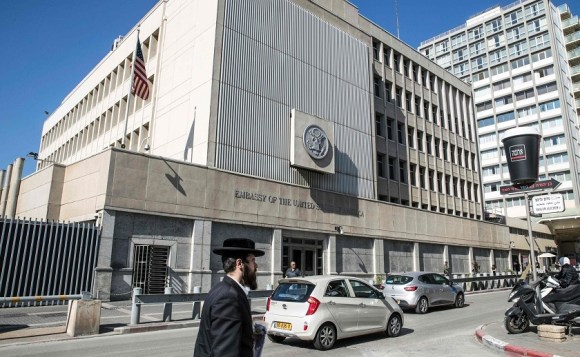
The United States embassy currently located in Tel Aviv may be moved to Jerusalem. (Image: Jack Guez / AFP / Getty Images, via the LA Times.)

President Donald Trump is expected tomorrow to recognize Jerusalem as the capital of Israel.

Doing so would fulfill a campaign promise. It would upend decades of American foreign policy.

And it would simultaneously encourage and unnerve the Christians of the Middle East.

“I am obviously pleased, as an Israeli,” said David Friedman, a professor at the Messianic Jewish Theological Institute and former dean of King of Kings College in Jerusalem.

“Jerusalem is the capital of Israel, de facto, concretely. Our government sits there. So why should President Trump continue ignoring reality?”

But 65 miles north in Arab-majority Nazareth, another Christian educator has a dramatically different response.

“It is a bad idea,” said Botrus Mansour, a Baptist elder and co-chair of the Lausanne Initiative for Reconciliation between Israel and Palestine. “It will increase resentment and possibly spark unnecessary violence, making peace harder to obtain.

“America will lose any remaining legitimacy it had as a fair broker.”

Israel occupied Arab East Jerusalem in 1967, and passed a law in 1980 declaring the city its eternal, united, and undivided capital. The United Nations declared the act null and void, by a unanimous resolution in which the United States abstained.

Palestine also desires Jerusalem as the capital of a future state. So American policy has been…

Please click here to read the full article at Christianity Today.

Categories
Middle East Providence Published Articles

Copts Ring Church Bells for Egyptian Muslims, in Christian Sympathy

My new article for Providence Magazine.

Copts Church Bells Sinai
Photo Credit: Church and mosque in Egypt. By kmf164, via Flickr.

In what is being called the largest terrorist attack in modern Egyptian history, over 235 people were killed at a village mosque. Militants detonated explosives as worshipers exited the Rawda Mosque in Bir al-Abd, 25 miles west of the North Sinai capital of Arish. Several then fired upon the fleeing masses.

There has been no immediate claim of responsibility, but suspicion falls upon the Islamic State. The Rawda mosque is affiliated with the Gaririya Sufi order, and ISIS has previously vowed to attack what it deems to be heterodox Muslims, warning them to stop their distinctive rituals. ISIS represents an extreme Wahhabi interpretation of Islam, and is offended by Sufi practices that seek a mystical connection with God through chants and visits to the shrines of Muslim saints.

In 2013, a Sufi shrine was bombed with no casualties. But in 2016 two prominent Sufi sheikhs were kidnapped and decapitated.

Coptic Christians, who have seen over 100 people killed under an ISIS vow, responded with condemnation and sympathy. The next day, Saturday the 25th, the Coptic Orthodox Church spokesman announced all churches in Egypt would ring their bells in solidarity at noon.

“We pray to God that Egypt is preserved from such unprecedented brutal terrorism,” the church announced in its first statement, released shortly after the bombing. “We offer our sincere condolences to the families of the martyrs, praying for the healing of all who are injured,” stated the second announcement about the bells.

Such a public display of Christianity will only further infuriate ISIS…

Please click here to read the full article at Providence Magazine.


Categories
Americas Christianity Today Published Articles

Christians Could Return to the Middle East, Thanks to Trump (Deportations)

Iraq Trump Deportation

This article was originally published in the October print edition of Christianity Today, co-authored with Griffin Jackson.

When Haitham Jazrawi started working at Kirkuk Presbyterian Church in Iraq in 1991, there were 72 families. Today, there are still 72 families—but only two of the originals remain. During his 26-year tenure as caretaker and then pastor, Jazrawi has seen a turnover of more than 300 families due to emigration.

Such an outward flow has been the norm in churches across the Middle East. In Iraq and Syria, countries ravaged by years of war and the terror of the Islamic State, roughly two-thirds of Christians have fled.

Among Jazrawi’s congregants, 50 percent are internally displaced from elsewhere in Iraq. “They come as refugees from inside our country,” said the Kirkuk pastor, “from the Nineveh Valley, from Nineveh, from other villages and cities.”

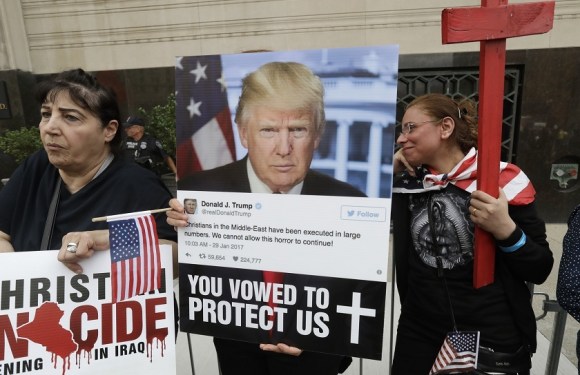
Soon, they may also come from outside of Iraq. With the Trump administration threatening to deport more than 1,400 Iraqis, hundreds of whom are Christians, a rare irony may present itself: the forced movement of Christians into the Middle East.

This summer, hundreds of Iraqis were behind bars in holding centers around the United States, slated for deportation to Iraq. The majority were Christians, and most were rounded up in Detroit in a massive June raid executed by Immigration and Customs Enforcement (ICE).

“Not only would they be breaking up families that have been here for decades,” said Nathan Kalasho, a local advocate for the detainees, “but they would be sending an already targeted minority to a country that no longer welcomes them…”

Please click here to read the full article at Christianity Today.

Categories
Christianity Today Middle East Published Articles

The Game of Thrones Christians Should be Watching

Saudi Crown Prince Mohammed bin Salman shakes hands with Lebanese Maronite Patriarch Bechara Boutros Al-Rahi during their meeting in Riyadh
Saudi Crown Prince Mohammed bin Salman shakes hands with Lebanese Maronite Patriarch Bechara Boutros Al-Rahi during their meeting in Riyadh, November 14, 2017. Bandar Algaloud/Courtesy of Saudi Royal Court/Handout via REUTERS

This article was first published at Christianity Today on November 16, 2017.

Before the crown prince of Saudi Arabia stunned the world with his sudden arrest of dozens of fellow princes and millionaires on corruption charges, he stunned many Christians with his stated desire to moderate its version of Islam, commonly dubbed Wahhabism.

Saudi Arabia was founded in 1932 as an alliance between Bedouin warriors of the al-Saud tribe and strict Salafi Muslim scholars following Mohamed ibn Abd al-Wahhab. Discovering oil six years later, it also became one of the Muslim world’s wealthiest nations. The combination has led many religious freedom advocates to blame Saudi petrodollars for funding a worldwide rise in Islamist extremism.

But last month, Mohammad bin Salman said his conservative Muslim country would return to “what we were before: a country of moderate Islam that is open to all religions and to the world…”

Please click here to read the full article at Christianity Today.