Does Egypt matter to you? Does America? Does Israel? Does Kiribati? You care about people, God, and there is confidence you care about peoples, also. But do you care about nations? Do you care about borders? These are man-made constructs; do they concern you much, or at all?
It has been a quiet week in Egypt, God, and we thank you for this. Ramadan has ended, which may open more protests. Sort the good from the bad, God, and honor all who are striving to improve the lot of those they represent, even if wrong. Guide Egypt through the upcoming election season, which nervously intersected with the end of Ramadan – as usual, but perhaps amplified, for good or for ill. These local human efforts touch individual lives at the corner of Main and Elm, or Istiklal and Shuhada. Bless those who work for the improvement of their communities, and curb those motivated solely by ambition.
But what of those at higher levels, God? What of the bankers, financiers, oil barons/sheikhs, media personalities, military generals, and corporate heads around the world? Rumors of these have encircled Egypt from the days of the revolution, and long before. Much has been achieved through simple human bravery. Much has aimed to restore dignity, to help the poor, and to purge corruption. Bless these efforts, God, and the people who have brought them to bear.
Yet is there anything greater at work, God? As there are those who plaster campaign posters, there are those who cast votes at the United Nations. There are those who set interest rates. There are those who determine the nightly newscast. Their daily routines may not rub elbows with an elderly widow or a local grocer, but their decisions fall on thousands like them.
Keep these accountable, God. Preserve their humanity. Give them deep commitment to improve the lives of ordinary people. For whatever system or era or philosophy they guide this world through, may it result in good.
So does it matter, God, if this good is for Imbaba, or for Egypt, or for North Africa, or the Arab world, or the Western world, or the globe as a whole in ever expanding networks of interconnectedness? As some individuals move the lives of a particular back alley, others move the lives of entire continents. All are your creation, God. All have a conscience. Prick the hearts of the great and mighty, as you do the small and humble. May each bear the responsibility you have given, and fulfill their trust.
God, may Egypt, or if better stated the Egyptians, trust you to provide greater than $2 a day, and greater than $1.3 billion a year. In each case, God, you care deeply about both granter and recipient; lift their dignity and provide justice for all. As they trust, and as they cry out, incline your ear. Yet may their trust be wholehearted; may their cries be righteous.
Bring good to this nation, God. Bring good to this people. Bring good to the world.
I like many things about Egyptian culture, and am happy to be raising our children here, but one aspect of the way many Egyptians interact with children has been grating on me recently. This is something I have noticed in Jordan, Tunisia and Egypt, so it may be safe to say it is a tendency across the Arab world to do this. Before I mention it, let me remind the readers that we have found a tremendous welcome and interest in small children in every country we have been in. I can’t count the number of strangers I’ve passed on the street who have verbally blessed our children, wanted to kiss them or give them lollipops. In general, Arabs love children and aren’t afraid to show it.
And now for the flipside: we have often experienced that if children do not respond in a favorable way, no matter their age, they are told they are bad. And this isn’t the big problem. What I have usually witnessed goes something like this:
A stranger or friend greets baby Layla enthusiastically, and Layla reaches for her or smiles at her. (This makes the stranger/friend very happy).
After this, the stranger/friend greets 3-year old Hannah just as enthusiastically, wanting a kiss or handshake from her, and Hannah promptly frowns at her, turns her head away and definitely does not reach to shake hands. (This does not make the stranger/friend happy at all).
Inevitably, the response of the stranger/friend is, “inti wahash wa Layla kwayyisa.” (Translation: you are bad and Layla is good.)
Keep in mind that three-year old Hannah probably knows enough Arabic now to understand she has just been told by a stranger that she is bad but her baby sister is good. And why? Because she didn’t want to kiss someone she never saw before? So how does that make her want to respond the next time? Well, if it’s the same person, she probably still won’t care to kiss her. If it is a different stranger, same story. She is three years old and has sense of who she knows and who she doesn’t, and how she cares to interact with them by this point. Being compared like this to her baby sister will not motivate her to change!
All that said, we are working with both Emma and Hannah to be polite to the adults that we interact with. It is important in this culture to greet people and shake their hands. Sometimes the problem is that when I convince the girls to be kind and return the handshake, they are then pulled in for a kiss on the cheek. That’s not helpful for their learning process! They don’t always feel like responding to people’s greetings, but again, as they are getting older, they need to politely respond and we are working on this. But they don’t often want to smile and answer people who last time they saw them said they were bad!
The crazy thing is, I have been through this with each of the girls over the last couple years. Emma was a friendly baby and smiled at strangers and they loved it. Then she grew a little older and didn’t want to just go to anyone who held their arms out. I think this is natural. Problem is, by the time she reached that stage, her baby sister was the friendliest baby on the block and won everyone’s affections. Then all of the sudden, Emma was “bad” and Hannah was “good.” Now Hannah has grown some and has a friendly baby sister, Layla who gets all the compliments.
I’ve heard from others that this habit of comparing children to each other is quite common and can be quite damaging. So far for the most part, these have been quick and minor occurrences, but I try to let the stranger/friend know that the older one was just as friendly when they were a baby. And I try to talk to the older kid after the fact to be sure they aren’t getting negative messages from people. Sometimes it is a fine line between being polite to adults, and having them take advantage of the kids. As I said, I finally convince my girls to shake an adult’s hand, and then they pull them in for a kiss too …. again, a common form of greeting here, and one they can get used to. But one I wish the adults would ask for and not just take. Of course, I do have friends who are gentler with the kids, and these are the adults my kids like and feel comfortable with. But it is something I have to watch and work on to correct the negative messages and reinforce the good.
Imam Mohamed Ashafa describing Alternative Dispute Resolution
Disagreements abound in every society. Properly handled, they result in consensus, healthy competition, and increased understanding between diverse groups. Improperly handled, they result in tension, conflict, and civil discord. If religious overtones come to characterize the disagreements, the effect can be even more troublesome. This negative description came to characterize relations in Nigeria, in which Muslims and Christians descended into rioting and violence in response to claimed affronts, both material and religious. Yet within this environment two leaders, Imam Mohamed Ashafa and Pastor James Wuye, were able to overcome their own differences, forgive each other, and work together for peace.
While the Nigerian reality does not resemble the situation in Egypt, Ashafa and Wuye have developed techniques useful in addressing disagreements in any society. Beyond the power of their personal testimony – Wuye had his right hand chopped off in militia fighting, while Ashafa’s spiritual teacher was murdered by such militias – they are able to enter diverse locations, share the tools of their peacemaking efforts, and leave practical application to the nation’s citizens. Disagreements exist in Egypt, as they exist everywhere. It is the hope of Ashafa and Wuye that Early Warning and Early Response (EWER) Training will prevent disagreements in Egypt from deteriorating into outright conflict.
It is in this spirit that the Center for Arab West Understanding, an Egyptian NGO, invited Imam Ashafa and Pastor Wuye to conduct two workshops in Egypt, in collaboration with Initiatives of Change in the UK and its Egyptian sister organization, the Moral Rearmament Association. The first workshop was in Alexandria, June 13-14, hosted by the Alexandria Intercultural Dialogue Committee. The second workshop was in Cairo, June 15-16, hosted by the Center for Arab-West Understanding and the Goethe Institute. Over sixty people received training at these locations.
Introduction
Ashafa and Wuye repeated the same training course in both Alexandria and Cairo. They began with a description of alternative dispute resolution stages, seeking to emphasize the need for Early Warning and Early Response in effort to head off the more damaging stages as conflict escalates. They then proceeded to describe Conflict Mapping Tools, which are useful in breaking down a disagreement into manageable parts which divest it of the emotional fervor so often preventing understanding and agreement. Along these lines, they helped each person gauge his or her readiness to participate in the process through self-evaluation along different Levels of Identity and the Ladder of Tolerance.
Ashafa and Wuye then moved directly into the concept of Early Warning and Early Response, describing it as a systematic collection and categorization of social indicators, in order to anticipate and prevent escalation of problems. They spoke of the Cyclone of Conflict, describing why it is best to intervene early. They also encouraged efforts to engender EWER, to include all segments of society. They led participants in outlining the structures of EWER unique to Egypt, and concluded by getting participants to self-organize into an EWER Committee. Each of their training techniques will be described below.
Following the summary of their presentation will be examples of interaction the participants had with the ideas of EWER as presented by Ashafa and Wuye. In both questions and breakout groups Egyptian applications were sought by those in attendance. Finally, to close the report, testimonials from the participants will be listed, highlighting the chief gains and areas for improvement for any coming workshops.
Alternative Dispute Resolution
The importance of an Early Warning and Early Response system is clear when one considers the natural progression of conflict. Initially, all disagreements are dealt with in the communication stage, in which matters are discussed rationally and on friendly terms. Only slightly more complicating is the collaboration stage, in which parties admit the presence of an issue to solve together, and then seek win-win scenarios all can agree to willingly.
If this effort breaks down, parties enter the negotiation stage. At this level things are still friendly, but now each side must consider what must be given up in order to reach an agreement. Win-win is still a possibility, but in all likelihood it involves some loss.
Should the losses become unbearable, the next stage involves mediation. The disputants call on the assistance of a mutually acceptable third party to help them work through the issue. If necessary, this can develop into a hybrid mediation/arbitration stage, in which the parties agree to be bound by his or her decision. While this may solve the issue, should the ruling fail to satisfy one or both parties, they enter into strict arbitration in a court of law. Should that ruling fail to suffice, litigation/adjudication takes over as both sides hire lawyers to represent their interests. By now they are a long way from friendly communication and collaboration.
Unfortunately, there are stages of devolution still possible. If the court ruling fails to bring agreement, parties may seek their interest through violence or, even worse, war [this last stage does not apply to Egypt as Egypt has never entered that stage] Violence often results in neighboring parties leveling sanction against the disputants, in order to end the conflict, but which also humiliates and possibly impoverishes the two sides.
At this level, with all possible resolution strategies exhausted, the only option is for the two parties to be forced back all the way to the beginning: They must communicate. This fact reveals the near futility of ratcheting up the pressure to secure one’s interest; while solution can be found at any level, at each step more and more control is lost over the proceedings. Furthermore, more and more damage is done to the relationship between the two parties.
With this schema in mind, parties to a disagreement will realize the great importance of solving their issues in the early stages of communication and collaboration. Having now received Early Warning and Early Response training, those walking alongside them can help them to see this likely progression. By itself, it may encourage all parties to peace.
Tools for Mapping Conflict
Once the necessity of alternative dispute resolution is understood, tools are needed to move the disagreement from the level of emotion to the level of analysis. What is the issue, and what is at stake? Ashafa and Wuye led participants through four analysis methods: the Onion, the ABC Triangle, the Carpet, and the Circles.
The Onion
In order to get to the center of an onion, layer after layer must be pulled back, and the operation can be somewhat unpleasant and tear-inducing. Similarly, most problems are not immediately apparent at first glance, and there can be resistance to digging deeper.
The first level of the issue is a person’s position. This seems straightforward, but it masks the real issues. This layer must be peeled back, so that a person’s interest is revealed. Why does the individual or party state their position so? What interest are they pursuing? Even this level is not sufficient for conflict resolution, however; the essential need must be discovered. If an issue can be reduced to one’s interpretation of legitimate need, communication now proceeds on the basis of reality, not propaganda. When the need of each one is similarly identified and discussed, solutions become possible.
The ABC Triangle
The three parts of the triangle are labeled attitude, behavior, and context. The usual first look into a disagreement finds attitudes entrenched and behaviors counterproductive. Efforts to change either of these – though of worthy intention – will not succeed long term. Instead, context is at the head of this interconnected triangle. If change can be brought to the context of the issue, then the behavior of the disputants will change as well. Similarly, once behavior begins to change, hostile attitudes will also begin to give way. The key point for EWER is a matter of perspective. Resist the temptation to judge a situation by the attitudes and behavior of those involved. Analyze the context of the issue, and the others will more readily fall into place.
The Carpet
The picture of a carpet illustrates how various parties of a dispute interact. In the center of the carpet is the issue at hand, and the two disputants sit opposite each other, close to the issue. Conflict, however, is usually not isolated between two parties; others come alongside to support or oppose, with some relation to the issue in the center, though a bit farther removed from it. What drives this interaction?
Along the thread line that connects each party to the issue should be noted the interests, fears, and needs of each participant. Such analysis again serves to de-emotionalize a disagreement, but also is useful to judge the involvement of parties in alignment with the main disputants. As such mapping provides clarity to the reality underneath appearances, finding solutions becomes less difficult.
The Circles
Drawing circles is a method to connect and illustrate the various relationships amidst a disagreement. The manner of drawing signals the nature of relationship. Each circle represents a person or party, and a line between them designates a relationship exists.
The larger the circle size, the more power is held by the party encircled. An arrow between two circles illustrates the direction this power is exercised. Meanwhile, a zig-zag line signals conflict exists between the two parties, whereas a double line represents an alliance. If the line between is dotted, this shows a weak relationship, and for all lines, if an issue exists between the two parties, it is written in a box connecting the two circles.
A circle drawn with dotted lines indicates the presence of a ‘shadow’. A shadow party is not actually there in the field of the dispute, but influences surrounding relationships all the same. These can have great effect on the outcome, but can easily fail to be identified if the analysis is not objective.
Drawing circles, in addition to the other tools mentioned above, allow for all parties to achieve a description of the disagreement in terms as objective as possible. As they communicate their findings with each other, discoveries are sure to occur revealing differences of perspective. Yet within the effort to depict reality, a basis is created for finding the essential solutions that meet the needs of all involved.
Essential Self-Analysis
These tools are useless, however, in the hands of an unprepared craftsman. Yes, they can be utilized in order to help conflicting sides come to terms. But what about the bias of the to-be peacemaker employing EWER? He or she must first self-reckon on two levels. First, what is his or her understanding of self-identity, from which help is offered to others in navigating theirs? Second, what level of tolerance or intolerance does he or she harbor? Many times disagreements escalate due to conflicts in identity; without self-analysis the peacemaker may trip up.
The Levels of Identity
Ashafa and Wuye explained that the human identity is a fluid amalgamation of several relationships. Everyone negotiates these differently, and manages them according to circumstances and context. Yet if one gets stuck or overemphasizes a particular aspect of identity, it can cause conflict with the self or with others. While the order to be described should not be held as hard and fast, generally speaking, as one moves up the levels, he or she becomes better equipped to negotiate all of them.
The most basic and essential level of identity is family. One’s identity then expands to include tribe/language groupings, in which the individual moves about comfortably. Then comes the larger community group of a particular area, taking greater geographical scope in nation. In these labels it is clear to see how one conducts relationships of peace in wider and wider comfort zones, the more one’s overall identity expands.
The next levels of identity are gender, race, and profession. These bonds help one to further traverse barriers in identity, as a woman might easily take refuge in another woman, no matter the national differences. Professional bonds can do similarly. Yet while race as an identity marker can also help one broaden relational ties, it and others below can be found to divide and separate, rather than unite.
For this, the last two levels represent higher planes: Humanity and spirituality. To the degree that individuals see each other as fellow humans, rather than through defining and limiting lower identities, they are able to build bonds of peace. Spiritual identity, grounded in the paths of the great religions, also help to overcome lesser identities, uniting the individual beyond the material human nature into the fabric of the cosmos. It is at these levels the EWER peacemaker does best to ground his or her identity, granting patience for those worked with as they negotiate their essential identity level.
The Ladder of Tolerance
The Ladder of Tolerance asks the individual to consider his relation vis-à-vis the other, however defined. The relationship can issue from the fear of the unknown, driving attitudes and behavior downward toward intolerance. At a basic level this issues forth rejection, but can increase in severity producing oppression, dehumanization, murder, and genocide.
It is not likely the participants at the conference suffer from placement on the intolerant side of the ladder, but depending on the other in question, a review of their positive tolerance level is beneficial. First and foremost, an open posture toward the other results in examination of differences. As one ascends the ladder he or she is able to welcome the place of the other in acceptance. Still higher develops the posture of learning from the other, with the differences in question.
More difficult to achieve, however, is the valuing of the other. At this level one’s self identity can be challenged, threatening the comfort zone of associations lower than that of humanity. The peak step in the ladder culminates in celebration of the other, especially of all commonalities discovered. It is here that solutions to disagreement are all the easier to achieve. Getting there, however, requires work and vigilance, both internal to self and external in society.
Early Warning and Early Response
As mentioned above, Early Warning and Early Response is a systematic collection and categorization of social indicators, in order to anticipate and prevent escalation of problems. Escalation can be visually depicted through a cyclone, as early effects do not appear severe, but widens in scope and severity until all are aware of the problem. The most essential work, therefore, is to be done at the pre-conflict stage when the cyclone has not yet developed. This work can be thankless, as few people at this stage are even aware of a problem. Yet it is vital; once the cyclonic conflict is underway, many people look to help but the damage has already been done.
Ashafa and Wuye also encouraged participants to involve all segments of society into the effort to head off conflict before it explodes. Specifically, this means deliberately enrolling women in the effort. Women often suffer the most in times of conflict, and have great influence on their families, especially the young, to curb emotional, destructive tendencies. But it also means creative thinking to involve other groups as well; Wuye, having lost his hand, emphasized the role of the handicapped in keeping conflict at bay.
The Structures of EWER
Ashafa and Wuye led the participants through sessions in which they discussed their local context, trying to put their fingers on indicators that could potentially lead to conflict. The brainstorming was useful to get people thinking, but it led into a basic question: From where do you obtain your information, and to whom do you pass it on? Ashafa and Wuye emphasized the success of Early Warning and Early Response depends upon contact with sources of information, as well as contact with sources of authority. EWER is an effort to connect the two – to be a social middleman in the management of conflict.
Early Warning
The following is very basic, but unless one thinks deliberately to connect with sources of information, he or she will likely overlook vital indicators. Where does one hear about possible troubles to come? Here is the assembled list of participants: Media, the street, church and mosque, social clubs, NGOs, schools, previous research, taxi drivers, family meetings, cafés, cybercafés, public transportation, work, market, on the beach, restaurants, hospitals, conferences, jokes, the street, foreign media, posters/flyers/pamphlets, family meetings, friends, markets, SMS messages, advertising, cultural centers, and professional syndicates.
While it may be difficult for any one person to monitor all these outlets of information, this demonstrates that EWER must be a group effort. More will be described about this below, but Ashafa and Wuye emphasized that those concerned to be on the watch for early warnings of conflict must have sources in all these areas. Together, it is not difficult, for these are all normal facets of everyday life. The key is simply being connected.
As an important aside, Ashafa and Wuye also took the time to address the difference between EWER and intelligence gathering. They emphasized that intelligence is the realm of spies who work in secret, on the behest of the state and its security. EWER, however, is done openly by volunteers who work in conjunction with the state for the security of society. While there are lines not to be crossed, assurances were given this work is not illegal, especially if reported properly, as described next.
Early Response
Similarly, a list of viable outlets to inform amidst signs of conflict is also basic. While the ordinary citizen has little power or authority to curb negative indicators, he or she is connected to several community organs which do possess influence and strength. Participants listed the following possibilities: Community leaders, government, NGOs, journalists, religious leaders, God, colleagues, courts/lawyers, teachers, lobbying groups, policy makers, political leaders, specialist institutes, media, activists, businessmen, social media groups, syndicate bodies, famous people, tribal/family heads, and parents.
Again, few people can maintain active contact with such a diverse group. What is essential is that those concerned with EWER group together, comparing sources on who knows which authority. In combination, all of these groups can be covered, and must be renewed in contact at least once a month.
Thus, when trouble emerges, rumors are heard, or palpitations are sensed on the street, EWER volunteers will seek intervention through the appropriate channel. Choosing the correct channel is important, so that the one informed actually has influence to rectify a situation. If the problem is urgent then obviously all concerned citizens will contact police to pacify the situation. It is the not-quite-right scenario, however, which activates EWER in its formal sense, described next.
Central and Subcommittees
Those committed to EWER must move beyond the plane of individual awareness. Though the tools provided produce a conscientious citizen, he or she can do little alone. Instead, Ashafa and Wuye sought to give participants a group identity, asking them to divide into subcommittees from which they can monitor developments in their community.
Three subcommittees were suggested: Youth, women, and political/religious. Participants signed up based on their interest and preference, but with an eye toward their area of influence. What circles do you already inhabit, and what contacts do you already have?
Once these subcommittees become active, they should choose among their members to designate a few for participation also in the central committee. The central committee can be of variable makeup – five, seven, eleven members, etc. – but is tasked with the decision making authority for the EWER team. It is the central committee which should convey any early warning to authorities, assisting them in taking the necessary early response.
Each subcommittee is tasked with finding the spark which can ignite a fire in its community, and to put it out before damage is done. These should be people already involved on the ground, who know how to feel the ebb and flow on the street. They should be connected to local community and religious leaders, so as to be able to act quickly in times of budding tension.
Conversely, the central committee should be composed of individuals with credibility, leadership, responsibility, and experience. They should have developed contacts with higher level authority figures, to help bridge the gap that often exists between administration and the street. Information, strategy, and creative solutions should flow frequently between the subcommittees and the central committee, but decisive and official communication must be delivered by the central committee leaders.
By the conclusion of the two workshops participants were excited about their potential roles in the EWER effort. Leadership and continuity, however, were left for later development. CAWU will first submit the report of the workshop to the ruling Supreme Military Council, and will coordinate any future planning under the auspices of the proper authorities. A foundation, however, has been laid among the now-trained participants; it is for them, as concerned Egyptian citizens, to continue and enroll others in the process.
Attendees listening attentively
Egyptian Interactions
Throughout the workshops Ashafa and Wuye encouraged participants to ask questions and respond creatively to the material based on their Egyptian context. Early on they were asked about the concept of Early Warning and Early Response, and what this meant to them. Several aspects were given, both in terms of tremors that could be sensed early on, as well as structural issues requiring efforts at reform.
In terms of early warning signs, participants mentioned the presence of extremists in an area, rumors, and manipulative teaching coming from places of worship. Broader issues included poverty, unemployment, discrimination, draconian laws, lack of security, lack of transparency, and a lack of social justice. Given the latter, the early warning signs become more critical, and necessitate action.
Participants also interacted with Ashafa and Wuye over two well known Egyptian religious issues: mixed marriages and conversion. Concerning mixed marriages, they counseled simply to obey the dictates of religion, which cannot be changed, and which encourage husband and wife to be of the same faith. They did give an example from Nigeria, however, which illustrates how they worked through a tense situation.
A Christian woman married a Muslim man and converted to his religion, and they lived in peace with neighbors all their life. At the woman’s death, however, a dispute arose whether to bury her in the Muslim burial plot, as per her religion, or the Christian burial plot back in her original village, as per her tribal affiliation. The woman’s tribal family demanded the body, and Muslims of the area were also prepared to fight for it.
The issue was heated especially in that Muslim rites call for a burial within twenty-four hours, but negotiation could not resolve the issue that quickly. Ashafa and Wuye invoked the Muslim law of necessity, postponing burial until harmony could be achieved, given that the body will rest until the Day of Resurrection. In the end, after two days, an agreement was crafted to allow the tribal family its burial customs, but to also allow respect to the woman’s chosen faith, and have Muslims perform Islamic burial rites there. This decision was accepted by all, and a potential crisis was averted.
In terms of conversion, participants mentioned that especially sensitive in Egypt is the movement of a Christian into Islam. Applying the principles learned in the workshop, the Alexandria delegation decided they should divide the city into different regions, and seek wise Muslims and Christians in each who are non-political and accepted by the majority. For the neighborhood in question, then, whenever a rumor surfaces about a conversion, they wise leaders must be informed, and investigate together. Regardless of the details, they then must speak publically into the rumor, to disarm it, and promote peaceful solutions acceptable to the community.
Ashafa and Wuye allowed time during the workshop for the participants to divide into groups and discuss issues and possible EWER solutions. They were asked to especially consider Egypt as they knew it in their local environments.
One group considered the presence of a religious extremist in an area, disseminating hateful teachings. The solution was to be able to inform mainstream religious leaders about this quickly, so they could formally denounce and religiously counter such thought. Then, the media should be employed so that these moderate voices receive primacy in contradistinction to the extremist preacher, who gets discredited.
Another group considered a situation in which a threat is issued against a place of worship. Should even a rumor about this be heard, residents should quickly be assembled to create a popular committee to protect it, while security forces are contacted to also be on alert.
A third group referenced the recent trend in which some Christians have placed the sign of a fish – an ancient Christian symbol – on their cars as an expression of religious identity. They then related that some Muslims have responded by placing a shark sticker on their vehicles. While no violence has been committed, it is a worrisome sign of increased division.
This group recommended that NGOs be utilized to advance peace education, hoping to counter the drifting apart of communities. They also promoted the government use of reconciliation committees headed by recognized religious leaders, following incidents of tension. This latter solution, however, was not accepted by all, as some believe this practice only contributes to the sectarian issues of Egypt, by setting aside the rule of law necessary to punish infractions.
Another topic of discussion concerned how to work with extremist elements of society. Ashafa and Wuye spoke of two possibilities. In the first, the extremist leader is motivated by greed and/or power. In this situation there is not much that can be done with the leader himself, but instead they go to his followers, and educate them about how they are being used. They have also made local monitoring groups, so as evidence is gained about his ill motivation, it can be exposed to the people.
In the case of an extremist in sincere ideology, however, they do not move away from him. Instead, they stay in dialogue, admitting that intra-religious peace is often harder to craft than inter-religious peace. Ashafa and Wuye have been criticized as traitors by their respective religious communities, or else as compromisers who benefit from funding from the West. The majority, though silent, believes they are doing the right thing.
Another participant noted Wuye’s artificial right hand, suffered in clashes with Muslims, and wanted to know what Wuye would do if he met that individual. Wuye stated he had no idea who cut off his hand, given that the clashes were mob violence, but that if he were to meet him, he would forgive him. He stated that earlier he had hate, but that God changed him, and now he would seek to love that individual – excessive love is the means to disarm an enemy.
Along similar lines Ashafa sought to answer the best way to deal with your enemy. He stated that he no longer had enemies in this world, only friends he has yet to meet. To adopt this attitude you must break the barriers of fear and insecurity, but the best way to defeat an enemy is to turn him into a friend.
A particularly astute participant, in a different context, gave practical application to these ideas. He recommended that following any sectarian conflict, efforts should be made cross-religiously to visit the victims of violence. Others spoke positively of the Family House initiative, which aims to bring together the heads of Egypt’s various religious communities. Some, however, emphasized while love and dialogue are good, it is the rule of law and better education which must be cornerstone for diffusing interreligious tensions.
Conclusion
Imam Ashafa and Pastor Wuye have been successful in implementing such techniques in communities throughout Nigeria and other countries, and in some areas have curbed violence almost entirely. As they and the participants of the two workshops emphasized, Nigeria is not Egypt. Yet it should be clear from the description of the training that these are location-neutral tools which can be applied regardless of context.
Egypt has witnessed community tension since the revolution; given the breakdown of security provision it is not surprising some disagreements have sparked wider conflict. This situation helps explain the great usefulness behind EWER as a community based strategy. Egyptians have already grouped themselves into popular neighborhood communities during the revolution to protect their homes and properties. If marshaled and trained, this same spirit can provide increasing levels of cushion to keep both ordinary disagreements and targeted bigotry from escalating and dividing the citizenry. It can be a safety valve to keep authorities aware of the situation on the ground, but yet find solutions before they must become actively involved.
EWER is a tool to keep the community peace. If effective, its necessity will never be noticed. If absent, its necessity may become painfully obvious. EWER is only one tool among many, yet it is hoped the principles therein may become successfully translated to address perfectly the needs of Egypt. Nigeria is like Egypt, and like nations everywhere, in that they are filled with ordinary people, with ordinary disagreements. Though circumstances differ, the solution is common: Community cooperation keeps disagreements from becoming divisions. Early Warning and Early Response encourages this reality.
The Imam and the Pastor, Mohamed Ashafa and James Wuye, are a Nigerian Muslim and Christian who have worked tirelessly for the sake of peace and reconciliation between their countrymen. Formerly bitter enemies in armed conflict, in which Wuye lost his hand and Ashafa’s spiritual mentor was murdered, they have now forgiven each other. Furthermore, they use both their personal example and their Early Warning and Early Response monitoring system to limit the escalation of violence, as is sadly common in Nigeria.
Though their focus is at home, the Imam and the Pastor have traveled the world, helping to solve conflict and spread their message abroad. It was in this effort they were invited to Egypt by the Center for Arab West Understanding (CAWU), presenting two workshops in Alexandria and Cairo.
During the Alexandria workshop they were interviewed by Salwa Uthman of Alexandria Magazine, at which CAWU was also present. The following records an important glimpse into Nigerian society, the origins of conflict, and their view on the state of Egypt, post-revolution.
Alexandria Magazine: Please give us an overview of Muslim-Christian conflict in Nigeria.
Wuye: During the 1980s the Israeli-Palestinian conflict greatly affected Nigeria, especially in the schools. This trend was amplified by religious leaders who would misrepresent their holy books, which then encouraged people to descend into conflict.
Recently, politicians have appropriated religion into their campaigns, asking people to elect them on the basis of their religious affiliation. Relations have been damaged, to the extent that over 100,000 people have lost their lives in this misunderstanding of religion. Most of these deaths have been among the poor.
AM: How did you get to know each other? Is it unusual for a Muslim and a Christian to cooperate in this way?
Wuye: It may be we are the only people in the world who used to fight each other but now are friends and work together for peace.
In 1995 we were both invited by the governor of our region to participate in a children’s immunization project sponsored by UNICEF. While there, a journalist who knew of our stories away from violence brought us together, made us to grasp hands, and encouraged us to work together for peace. At this point we began talking to each other.
AM: What is your view of sectarian conflict in Egypt?
Ashafa: To speak of Nigeria first: Our founding fathers were Muslims and Christians who worked together to build the nation, but a hurt developed between the colonialist British and the Muslims in the north. There, an Islamic system had been in place for centuries, but the colonialists replaced this with an English system.
Muslims then split into three groups. Some rejected the British queen altogether and moved to Sudan. Others separated themselves from the system and isolated from government contact. The third group decided to join the government and seek to use it to reestablish the glories of Islam.
Unfortunately, the colonial government employed this third group to exploit the non-Muslim populations in the south, using them as tax collectors. These animist peoples eventually became Christians and developed animosity toward the Muslims.
These pains have remained since Nigerian independence, and all problems can quickly take on religious dimensions. It is not unusual for a small conflict to develop into a big issue.
This colonial heritage is shared between Nigeria and Egypt. In Egypt, Muslims and Christians have lived together for centuries, but recently the relationship has been getting sour, as we saw in Imbaba.
Your problems are minor compared to ours, but we have seen our problems explode, and we don’t want to see your problems degenerate as ours have done. Overall, we are very proud of Egypt. Behind us, you are the 2nd most populous country in Africa.
AM: How do you describe your work, and why did you set it up?
Wuye: Our work is non-governmental, non-political, and focused on civil society. We set it up for three reasons: First, to prevent conflict from happening. Second, to mediate between those in conflict. Third, to build bridges and encourage forgiveness.
We do work with the government at the grassroots level if requested to help solve community problems. But we do not work for the government.
AM: Do you have support from the government?
Wuye: Moral support, yes. Financial support, no.
Ashafa: In terms of the community, people are divided. Some think that we betray each other’s particular religious group. Others believe we are compromisers, and benefit from the support of the West. Most people, though, the silent majority, believe we are doing the right thing.
AM: What is your organizational structure?
Wuye: We are composed only of Nigerians, aiming to be equal in number between Muslims and Christians. In our headquarters we are fourteen people, seven and seven. We have at least one Muslim and one Christian volunteer in 36 of the Nigerian states.
Ashafa: We also have worked in Sudan, Kenya, Sierra Leone, Burundi, South Africa, Bosnia, and Iraq. We have also presented our story in many other nations.
AM: What is the concept of religion in Nigeria?
Ashafa: According to the BBC World study in February 2003, Nigeria is the most religious nation in the world. And according to the Bettleman Foundation study in 2007, it has an 82% rating on religious sensitivity. Among the traditional Muslim and Christian communities in Nigeria are emerging Salafi and evangelical trends.
It is not possible to say that religion in Nigeria is moderate, since our great religious sensitivity can lead easily to explosions of violence, especially in the north. But, it is not proper to call it extremist either, though we do have radical movements that name themselves after Gaza, Kandahar, and the like.
AM: What word do you have for Muslims and Christians in Egypt?
Wuye: We know you are for peace. We watched during your revolution as Muslims and Christians protected each other during times of prayer. Continue this relation. God bless Egypt.
Ashafa: Egypt is the hope of the Arab world. You are going through a democratic process – make sure it is non-violent. We are proud of Egypt, and hope you can consolidate your gains in the September elections.
May there be no such thing as a common enemy. For this to happen, much must change.
Egypt’s neighbor is at fault in many issues. It is right for Egypt to press her, to hold her accountable, and to act from a proper sense of sovereignty. For an enemy to disappear, this neighbor must change, and must change radically.
Yet for an enemy to disappear, much harder change must occur internally. Help Egypt to exercise sober judgment. Help her to avoid assumption, generalization, and demonization. Help her to resist a simple populism that calls on the baser nature of humanity. May Egypt be lifted up so as to be righteous – seeking justice firmly and mercy liberally. May she be both strong and humble.
Yet so much conspires against such transformation, God. Both Egypt and her neighbor have benefited from recent tragic events; both have received distractions from other internal problems. Yet five Egyptian officers remain dead, and security issues in the Sinai threaten Egypt and her neighbor alike. God, thank you that so far, cooler heads have prevailed. Thank you that protests were not overwhelming, and that to some degree they are lessening.
Yet God, we praise you for these protests. We praise you that Egypt may no longer allow affronts to her sovereignty to pass unrecognized. But teach and guide the people, God, to issue their protest honorably. May they seek alternate explanations and the perspective of the other. May they recognize the humanity and position of difficulty faced by those they oppose. May they have wisdom and grace to love their enemy, yet never back down.
God, Egypt is still suffering from its past sins. These do not negate the sins of the neighbor, but they must be atoned for all the same. How hard this must be for Egypt to recognize, yet help her to do so. Provide men who will lead Egypt in the way of peace, and in so doing, rebuke her neighbors in her example.
God, gently rebuke also those who have continued in the old ways, on all sides. Break their chains, free their hearts, and strengthen their resolve. May Egypt’s revolution transform all aspects of her character – overflow her goodness, and mend her flaws.
May Egypt come to love her neighbor, God. May one day that neighbor follow suit. May this love be built on your ultimate justice, but not shirk back in waiting for it. Comfort all those dealing with the pain even of contemplation. God, grant forgiveness. Grant it especially to those who call for it, who know nothing of this pain. Comfort, comfort… but only love can heal. May Egypt come to love her neighbor.
Wearing her favorite pink dress, Emma celebrates her new school uniform
Yesterday we got to do an exciting getting-ready-for-school thing when we went to buy Emma’s uniform. It is pretty standard here to have uniforms in school and hers is no different. A couple of weeks ago the school told me where to go to buy one, and we’ve been waiting for a free afternoon to do just that. I told Emma in the morning that we would go after lunch to get it, but reminded her that we have no choice when it comes to school uniforms. Everyone wears the same thing, and we wear the uniform and colors that the school chooses. I wanted her to be prepared for this because she is sometimes particular about clothes. She has a favorite dress that she has worn everyday possible since February when she first got it as a hand-me-down. It is short-sleeved so she had to wear a shirt and pants under it during America’s winter, but now it is at least weather-appropriate. It has a few holes in it, but still she insists to wear it every time it is clean, which is basically every other day. She even has favorite underwear and socks to go with it—all pink. So you can see why I was concerned about her feelings on a school uniform.
We walked down the street to the uniform place and entered a small clothing store which pictured a school-uniformed girl outside. There were at least 10 young men wearing the store’s vest and ready to help any customer who entered. At the time, I was the only one along with my two little girls. I think they were initially quite puzzled that this babbling half-Arabic speaker was buying a school uniform for an Egyptian school. But I had memorized the things I was supposed to tell them…I need a uniform for Wadi Degla Language School, grade KG2.
I noticed neat stacks of different colored shirts on the shelves behind the counter, and a few of these stacks were pink. I silently prayed that the pink was for the girls of this school. But it didn’t take but a minute for the man helping me to put a mostly navy blue, with a red stripe and light blue stripe, polo shirt on the counter complete with a Wadi Degla emblem on it. I reiterated that this was for a girl, but it seems that all the uniforms are the same for this school. Emma was behind me but could see it, and yet didn’t complain. She tried on a shirt to check the size and then we went into a dressing room to try on the navy blue pants which were much too long and a little baggy, but surprisingly fit around the waist. Next she tried on the soccer warm-up that is the uniform for P.E. days. I wanted to take her picture while we were doing this simply because buying a school uniform was a new thing, but the man told me cameras were forbidden in the store. Not sure if they were afraid I would try to make a copy of the uniform or what, but I saved my picture for once we got out of the store. (pic in stroller) After we tried on the sweatsuit, which is Emma’s favorite part of the whole uniform, the man asked if I wanted to see the “sweater.” I put this is quotes because while we were speaking Arabic the whole time, he used the English word here. I said yes since this would be needed in winter and he brought out a fairly thick winter coat. I was surprised at this but he assured me this would be needed in the winter. I thought a sweater would be much more useful, but as they really weren’t trying to push multiple items on me throughout my time there, I didn’t feel they were just trying to “sell” me something.
At the end, we purchased one of everything we thought we would need for the year. I didn’t want to go overboard, although now that I’ve left the store, I realize that I will really need another shirt and pair of pants since she will be wearing these five days a week. Fortunately it isn’t too far for me to head back there. I was a little surprised at the cost of this all, thinking some of the things more expensive than I expected. I am pretty sure most schools in Egypt have uniforms, including the public schools. I wondered how the cost for them varied since many Egyptians are quite poor, I didn’t think a school uniform should be a strain on their budget. For all my purchases which included one pair of pants, one short-sleeved polo, one long-sleeved polo, one sweatsuit and one jacket, it cost me 600LE, or about $100. I guess as I write this that isn’t too expensive to outfit my child for her whole school year, but I ‘m just not used to spending that much in one shopping trip!
This store also carried other school accessories such as backpacks, lunch boxes and thermoses. Emma was sure to point out which of all of these things she wanted and Hannah chimed in on her desires too. I thanked them for their suggestions but assured them they had good backpacks for this school year already and I would consider the lunch boxes if necessary. We headed back home to show our new things to Daddy.
As we arrived home that day, Emma was talking excitedly about her uniform, and Hannah said, “but Emma, it’s black.” I quickly shot Hannah a glance which meant, “Let’s not remind her of the dark color of the uniform,” and we entered the house.
Thankfully Emma is eager to wear her new uniform, especially the sweatsuit for P.E. She is counting down the days until school starts, although is a bit distracted as her birthday comes first and requires its own countdown. I realized I have a lot to learn about this whole uniform thing, and I’m sure, the Egyptian school system in general. I just hope I send her to school on day one at the right time with the right things wearing the correct uniform. She will already have enough differences to overcome; I don’t want to add to them!
Wisdom is needed now, even more than before. Egypt’s troubles have spilled across the border. Many of them may not even be Egypt’s problems, but it is her border. And now, several Egyptian officers are dead, seemingly at the hand of her much reviled neighbor.
God, give a slow hand to those in authority. Amid the outrage, temper the anger of the people. Silence those who will manipulate events to advance an agenda of rejection, hatred, and violence. Appoint people to discover the truth, and then to act appropriately, with whatever necessary severity. God, prevent escalation. Give people hope that justice will come through civil means. Even as there may be little faith, make this your miracle.
God, the recent events make internal arguments pale in comparison. Yet healing is needed here as well. Political groups came together to endorse principles for the coming constitution, then immediately divided again on their nature as guiding or binding. Activists and political forces came together against military trials for civilians, though the issue has not yet settled. Before the events on the border, much rancor enveloped these divisions. Is it any consolation they may now be lessened, or at least suspended?
Politics is struggle, and unanimity is not imagined. God, may each fight fairly. May each be honest, open, and transparent. Even so, enlarge the spheres of agreement, so these disputes may settle on the details.
But if politics is struggle, war is its dreaded continuation by other means. Most prayer is necessary for disputants beyond the border, God. Grant them the wisdom and forbearance which appears in short supply. Bring peace and justice; bring understanding, trust, and love. Such is an impossible cry, God, but these are your currency. For those unable to pray this in the middle of their conflict, accept it God, from those who can intercede for them. God, you hold the heart of the king in your hand. Turn the hearts of all toward peace.
And for Egypt, God, may these developments not spoil her advancements made. Protect her border; rid her of violent men. Yet protect with more tenacity the goodness of the Egyptian people; may they not turn toward hatred. May they see justice satisfied, and may their hearts cry out to you until it comes. Yet fill them with compassion for the unjust and beg your forgiveness upon them, as upon themselves.
God, protect Egypt. May her next steps set a new tone of diplomacy for the region, and may she be a leader for peace.
Emma and Hannah have been attending a local preschool here in Maadi, for the last two years. Emma started just a few months after we arrived in Cairo, and Hannah joined her sister when she turned 2 ½. One of the main reasons we chose to send the girls to preschool is to help them learn Arabic in a natural way. We searched several preschools and found that many quality ones focused on teaching the kids English. We wanted the quality and the good care associated with these preschools, but didn’t want the English teaching that was included. We eventually found a preschool maintained by one of the local Coptic churches, which had a basic program, but caring teachers. One of the most important factors for us was that the teachers and children were all Egyptian Arabic speakers. We knew our girls would be immersed in the language.
At the beginning, Emma, then age 3+, didn’t really know any Arabic. But since she was so young, we figured she would be able to function without language until she just assimilated into it. I got encouraging reports from the teachers frequently as they told me that she was understanding them, then understanding the children and finally, communicating with the children in Arabic. She didn’t speak with us in Arabic often, but we would try to gauge her understanding by asking her what she learned different days and different vocab words.
By the time Hannah joined Emma, I knew that the big sister would be able to communicate anything necessary for the little one. Hannah was excited to join Emma as she went with me everytime I picked Emma up or dropped her off. She already knew the teachers and some of the kids. And so they both attended three days a week for half a day.
Volunteering in the classroom
Over the months, I got to know the teachers more and eventually did a little volunteer teaching in English/music once a week. It was a fun challenge for me teaching preschoolers who don’t speak English. It stretched my Arabic and gave me a chance to teach some fun things to my own girls too! It was a good situation and we were happy to stick with it for Hannah once Emma enters school in the fall.
This was until a few weeks ago when I took Hannah into school in the morning and only the two aides were present. They asked me if I had been to the parents’ meeting the night before and I told them I hadn’t heard there was one. They then proceeded to tell me what was going on.
Apparently, one of the little girls in the class had gotten out of the classroom one day the previous week without the teachers noticing. Now this classroom is located inside a building which is set back a ways from the main gate of the facility. This building is by no means set up to be a preschool as it belongs to the villa-coffeeshop of the Coptic Church across the street, but it works. I couldn’t quite understand from the conversation, all of it in Arabic, if the girl had just gotten out of the classroom, only to be apprehended by someone sitting in the coffeeshop portion of the facility, or if she made it all the way out the gate before being noticed by a passerby and then returned to the room. There is a difference here, of course, as the second scenario is more serious especially given that a busy traffic circle is close to the gate, and also that a stranger returned her. I am thinking this is what happened. Praise the Lord there was no harm to the little girl, but you can imagine her parents’ fear and anger when they learned what happened. This news quickly reached the school’s supervisor and then ultimately, the bishop in charge of preschools in the area. By the time I talked with the teacher aides that morning, they were planning on all being fired even though some had served there for more than 20 years.
I was really sorry to hear this story and the plight of the teachers. Yes, it is definitely an oversight which could have been catastrophic, but I don’t know where all the blame lies. Ultimately, the teachers are responsible for each one of the children during the day, and so, the fault lies with them. At the same time, they felt they were being taken to task without any chance for answering for themselves, or any consideration for their previous years of service. I felt bad for them and told them I would give a good word for them if asked.
I immediately had the opportunity for this as I left the room that morning, leaving Hannah in the classroom with just a few other children whose parents either hadn’t heard the news or trusted the teachers anyway. I ran into one of the men responsible for the preschool program and he told me the story once again after apologizing for not informing me of the parents’ meeting, but he didn’t have my phone number. He was definitely upset with the teachers and said two things needed to be done: 1) reconfigure the classroom to keep the children contained, moving the bathroom within the facility; and 2) replace the teachers. I did my best to support the teachers saying that if they fixed the first problem, then this shouldn’t happen again. He didn’t seem convinced, but let me know the preschool would remain open the rest of the week before closing for a period of time.
Hannah finished out the week with the two teachers aides as the two teachers themselves refused to return to the place where they were being treated unfairly. I was told that I could check back within about a month to see when they would re-open. Or at least, that is what I understood them to say in Arabic. By this time, Emma had begun a summer course, so she was at that five days a week, and now Hannah was home with me and Layla five days a week! The first few days were rough for her as she couldn’t wait to go pick Emma up from school so she had a playmate! It had been a long time since she wasn’t with Emma during the day, and she wasn’t sure what to do with herself. We did get some quality time in, going shopping and cooking lunch, but I did have to restructure my day from what I was used to.
After a few weeks, I returned to the villa to check on the progress. I ran into one of the teacher aides who was now working the cash register at the coffee shop. The other aide had found work in the baby section of the preschool and the two teachers were hoping to open their own preschool within a couple months. I was glad that there was some reshuffling rather than everyone being totally let go, but this aide told me that the preschool would not re-open at all. That was a surprise to me, but that was the decision that was reached. She then told me about the other preschool opening and gave me the teacher’s number. I was glad to hear of that option as I really had developed a relationship with the other two teachers and the girls and I were all comfortable with them.
So that is where we are today. After talking to the teacher on the phone, she said I can come see her new place in a couple weeks and decide if Hannah will attend or not. In the meantime, I’ve told Emma and Hannah what happened at their old preschool, and they seem to understand to a point. The other day, Hannah related the story to her grandmother this way: “My school is locked. A kid got out and the policeman brought her back.” Hopefully she can have a new school soon.
As people observe their first full week of Ramadan, honor their fasting.
God, sometimes prayers are hard. What can be asked that has not been asked before? God, bring good to Egypt. Bring freedom and justice. Restore hope. May more and more turn their hope to you, even as they rightly strive, in whatever direction. Protect Egypt from harm. May this nation know your grace, your love, and may this be lived out among the people. There is so much good here, God. Preserve and multiply it.
Where there is sin, God, forgive and redeem it. Where there is division, heal it. Teach Egypt your way, God, and help her to walk in it. Make this nation great, and an example to all. You have given so many blessings so far. May people, this month especially, reflect and give thanks.
From the Peace Fountain and Biblical Garden, New York City
I would honestly say that if I could choose a religion, I would choose Christianity and its ideal of universal acceptance, love, and forgiveness. It is all so beautiful. It is just so unfortunate that the history of Christianity has nothing to do with these ideas.
Eyad Sarraj, head of the Gaza Community Mental Health Program and of the Palestinian Independent Commission for Citizens’ Rights
This quote comes from a book I have been reading, entitled ‘The Body and the Blood’, which I referenced once before in this post, concerning Palestinian refugees and the ‘right of return’. The book is a journalistic account of the exodus of Christians from the Middle East, focusing on Palestine. When I finish I hope to write a short book review, but for now, I will only highly recommend it.
One of the author’s themes highlights that the Middle East has witnessed violence upon violence, in the form of Israeli occupation, Muslim resistance, and terrorism. Yet while Christians have also at times joined in the violence, their religion’s focus on nonviolence could potentially equip this minority to assume a role of peace, either in highlighting the injustice of occupation, or in rebuking the assault upon it through stones, suicide bombers, and rocket fire. Yet the Christian exodus from the area not only removes this voice from the equation, it also allows for popular Western definition of the struggle as between Muslims and Jews, in which both get dismissed as the problem then appears both foreign and intractable.
The above quote means to put the issue of nonviolence before the Western Christian audience. Not for Palestine per se, but for world history and current Christian attitudes. Eyad Sarraj is introduced as a secular Muslim from a deeply religious family. Conversion is not an issue as the entrenched religious lines of Palestine do not allow for movement between faiths, certainly not toward Christianity, and in any case as a secular individual he might not see religion as an important personal matter. The issue is his perception. Within his Islamic heritage and Palestinian politics he speaks boldly about the beauty of the Christian message. Unfortunately, he does not see its historic reality.
May the question be asked: What would have to change in order to change his perception?
Without pretending that Western governments represent Christian values, should Christians better pressure their governments according to nonviolent principles? What might this do to world affairs? What might it do for the Christian message? What kind of nonviolence is intended? What are its limits? Does nonviolence as a principle apply to groups as opposed to individuals? Does it apply to nations?
The author highlights that Jesus’ principle of ‘turn the other cheek’ is often misunderstood. Rather than passive acceptance of violence, it is an assertion of equality. To strike the right cheek, as the gospel emphasizes, requires a backhand slap from the aggressor’s right hand. In the culture of the time, this was a great insult. It was punishable by law if administered to an equal, but legally permissible if targeting an inferior. Jesus’ teaching says to turn to him the left cheek, in order to receive a proper blow. The invitation is to be struck as an equal, yet all the while not returning the violence.
If this interpretation is correct, it forces reevaluation of Jesus’ teaching of nonviolence, but also removes the popular notion that is it ethereal and hopelessly pious. It may yet be foolish, but it becomes foolishness with a purpose. It is a foolishness from utter strength, no matter how much it forsakes the worldly use of strength.
Yet what does this interpretation say to the one who possesses strength in the worldly sense? This is the position of most Western nations, and many Western Christians. Perhaps it is only to note that Jesus does not address these, at least in this passage. His interests lie elsewhere. They lie with the suffering and oppressed. Interestingly, his message is not to rebel, but it is to resist the status quo of their position. It is to stand strong.
Certainly Jesus would care for all, the strong and the mighty among them. Yet may the contemplation of these questions, regardless of where the answers lie, help Christians evaluate with whom they stand. Where Christians exist among the strong, may they exercise this strength on behalf of those not yet standing.
Thank you that the bloodshed of other nations has been largely avoided in Egypt. Where this bloodshed exists, God, intercede and bring peace, along with justice.
But the absence of bloodshed does not mean peace, necessarily. God, many hearts are hardened toward one another. In such a climate, who can weigh motivations? God, in even the best of climates, only you can weigh them.
Do demonstrators push the envelope too far? Do the authorities push back too hard? Are politicians pushed by the winds of interest? Are the people tired of all the pushing?
God, may it be that each of these pursues their path for the love of Egypt. So many are accused of other motivations; undoubtedly, some are.
God, you can redeem contradictory visions that move in different directions. You can even redeem plans that stem from selfish hearts. Do so, God, and purify all in the process.
Purify also from the excess of speculation. Help people to think; help them to perceive. Enliven their spirits to discern right from wrong. Yet curb the rush to pronounce judgment on limited evidence. Add trust to the process, to sufficient degree.
God, so many believed in the revolution, and many believe still. For others, their faith is being tested. May hearts remain pure, soft, and vulnerable, despite hurts inflicted, or suspected. May forgiveness and grace proceed from all parties. Soften words of insult; harden resolve and accountability.
God, bring justice, now on its biggest stage. The president is not above his crimes; may he meet with appropriate punishment, and escape any undue charges. May the law rule; may there be sanction, and not retribution. Revenge, God, is only for you.
Justice helps the heart, God, but it does not heal it. Bring healing to Egypt; she has suffered much for decades. May truth be established for all to see. May reconciliation end in the embrace of all Egyptians.
Yet so many are still fighting, and that over issues far removed from the national cause. Bless the good nature of the people, as so little violence has occurred in the void of security and the proliferation of weapons. Still, the violence increases; stability is needed. God, protect the people.
There is so much unknown, God, yet a calm of sorts has settled. It may be a false calm, or forced, or exhausted. It may not last. But we pray for progress in this transition; we pray for freedom and dignity and justice. We pray for peace. We pray for the authorities, that they may have wisdom to govern. We pray for the people that they might have courage to press on. We pray for all, that they might love one another. God, your hand is needed. Honor Egypt, God. Keep her on the right path, amidst all her challenges. Make her pure, and keep her so.
A few weeks ago, Emma drew her first self-portrait. Actually, I think it was her first attempt at drawing a person at all, and she chose herself. I’m not sure where this falls on the list of developmental milestones or if she is on track, but up until now she hasn’t drawn many things. She likes to color and stays in the lines well, and usually likes to use many colors on her pictures. She is working on writing her letters and numbers and can draw shapes and such, but pictures of things have been few.
The other day I went to pick her up from a church nursery and she proudly showed me her picture (on left). She pointed out that she had very long hair and flowers on her dress. I think her friend, Emma, who was in the same class may have drawn a self portrait as well, so maybe that is where the idea came from. Since then, I have seen her draw herself two more times. The last time is pictured on the right. There have been a couple variations, but some things remained the same.
One of my favorite aspects of these pictures is the arms. I love how they come out of her head, and am curious to know why this is, and also when she may notice that coming out of the sides might be more accurate. One of the variations between pictures is her dress. In her first picture, she drew a flowery dress, which is a normal thing for her to wear, especially as she basically wears nothing but dresses these days. Her second picture she colored her very favorite dress on herself, or so she told me. It looks a little red to me, rather than the actual pink color of the dress, but its close enough. I thought the colors on this last drawing were interesting as they reminded me of Egypt’s colors, but I don’t think that went through her mind.
The one constant through all three of her self-portraits was her long hair. You’ll notice that her hair is incredibly long in these pictures, reaching way down below her feet even! It’s not the same color in both pictures, but I don’t know if that is a conscious choice. I do think, however, that her drawings of very long hair are reflective of a struggle she is having. She really really really wants long hair, but at this point, it is only medium-length. She has fine, slow-growing hair. I did cut the back a few times, over a year ago, as I thought it looked better a little on the shorter side, rather than long and thin. But she has said many times that she doesn’t want it cut, and wants it to be long. Sometimes her desire is to be like me, which often takes me by surprise. Some days she wants a ponytail because “mommy has a ponytail.” She doesn’t realize I just do it to keep cool and it’s something I can do quickly in the morning. It’s all about practicality. She just looks at my long hair and wants hers to be the same. I think, though, that this desire for long hair is coming more from the children around her.
We are in Egypt, and most Egyptian girls have lots of long, thick hair. They are born with a full head of hair and it grows quickly after that. Mine are born with just some hair, and then it seems to take forever to grow. Hannah is three and I can barely get a ponytail out of her hair, and I’ve never cut the back. Emma’s is growing, very slowly, but it is something she notices that is different between her and the girls at school. It doesn’t help the situation when one of the girls said to her the other day that her hair was short. She took a real offense at that since short hair is for boys! She didn’t come home crying about it, but she did think to bring it up to me and was quite upset when she recounted the remark. I comforted her as best I could telling her I was sorry that hurt her feelings, and that probably most of the girls she sees here have a lot of hair! I assured her that one day her hair would be longer, but regardless of hair length, she was a beautiful girl.
When I saw her self-portrait that she drew tonight, and noticed the hair reaching beyond the floor once again, I remembered this comment of the schoolmate, and saw this picture as a little white fair-haired American girl trying to fit into the picture of girls she sees around her … dark, long-haired Egyptians. I’m sure there will be many such drawings, conversations, stories, and tears throughout the years of us living cross-culturally as our girls try to fit into a place where they want to belong. God, give us wisdom and the right words to comfort and encourage our little girls.
Friday Prayers in a neighborhood of Cairo (not from this story)
Friday in Egypt is the day for Muslim prayers, which throughout Islamic history have been a communal event. Around midday the faithful flock to the neighborhood mosque, listen to a sermon, and perform their prayers.
Over the last few decades in Egypt this communal event has spilled out into the street, as Muslims unfurl their prayer rugs and close off the area to traffic for about an hour. In one explanation, this is due to the increasing number of Muslim participants. In another, this is due to the desire of many to assert their religious identity on the fabric of society. In a third, it is the preferred practice to pray in the open air, according to Sunni traditions. But it is a well established pattern and causes little social disruption.
That is, unless in you are driving during the hour when the time of prayer is approaching.
Sherry Ramzy lives in the Cairo isle of Manial enveloped within the Nile River. Out and about on Friday she was passing by the local mosque, as the street was beginning to fill with worshippers.
Hesitant to brave the crowd but already committed in her path, Sherry followed the lead of the taxi driver in front of her, who moved through carefully, but successfully.
As she trailed him, however, the taxi driver stopped to get out and pray, and a donkey cart with vegetables for sale crossed the road and set up shop, blocking the remaining small opening through the mass of people. Before too long, Sherry was surrounded. Meanwhile, the lady with the donkey cart began shouting, “She saw the prayers were beginning, she should have stopped!”
A sense of panic began to settle in. Muslim-Christian relations in Egypt are generally calm, but as the religious identity of both communities has increased, tensions have sometimes developed. Sherry is one who believes prevailing Christian and Muslim attitudes toward each other is too negative. Nevertheless, as a Christian out of place, possibly disturbing a holy Muslim moment, she began to fear. At the very least she faced sitting locked in her car for the next hour. At the worst, she could become a spark that aroused Muslim anger. Helplessness has a way of letting the imagination run wild.
Helplessness also increases the joy of rescue. Before too long the taxi driver took notice of her plight, and asked the owner of the donkey cart to move. This opened a path just wide enough for Sherry to drive through, enabling her to continue on her way. She took notice that her salvation came from one with a long beard and white robe, and wondered if he was not only a Muslim, but a Salafi.
Salafi Muslims follow a conservative interpretation of Islam, calling for the imitation of the life and practice of the Prophet Muhammad and his companions, generally rejecting modernity as inimical to Islam. They have become feared as a social force which could sideline democracy through democratic means. They have also aroused the worry of Christians, as a number of pejorative comments and physical attacks have issued from their community.
Sherry, however, wishes to see that such generalizations are not applied to the whole community. She wrote a description of her experience and posted it on her Facebook page. She desires to see good relationships formed between the Christians and Salafis of Egypt. These may have opposite goals for society, but one must not reject the other out of hand.
Sherry had an open mind and heart to Muslims before her incident, but note the power of kindness while in need. The Muslimin question did nothing more than ask a donkey cart be moved a few feet. But to do so, he needed also to inconvenience those preparing for prayer around it. It was a small matter, but required a fair number of people to adjust in favor of a displaced Christian.
The repercussions of this kindness, however, multiply. Sherry has over two hundred friends on her Facebook page; add to this those who read this article. The taxi driver could easily have ignored her; instead, a positive testimony reaches hundreds of people.
This testimony does not invalidate the true accounts of Salafi provocation, heard by thousands. Unfortunately, bad news travels far faster than good. Yet it seeks to show the humanity, goodness, and, as Sherry emphasizes, the Arabness of individuals within the movement. It may well be this testimony represents the majority.
May we be mindful of the unknown consequences – both positive and negative – that our seemingly minor actions set in motion. Furthermore, may we purpose to exhibit such kindness, especially to those considered as against us. Egypt needs repair; it needs relationships built and reestablished. Such actions have the ability to warm hearts and change opinions.
As Sherry received, may we all so give. The world is no less needy.
Is there good from breaking agreements, managing spin, and rejecting the other? Maybe. Hundreds of thousands of people demonstrated freely today. People. People you love, God. People who are valuable. People who strive to make something of themselves for this world. Honor them, God. Protect them from evil.
Protect Egypt, God. Protect her from manipulations. Protect her from agendas. Protect her from her own children. Protect her from those who claim to represent them.
Times are confusing, God. Perhaps they are dangerous. Perhaps the danger is simply manufactured. Yet in confusing times a rock is needed. God, be that rock for many. May the people fear you. May they love you. May they commit themselves to good for your sake.
But God, today it seems the claim to you only serves to divide. It is more than the claim, it is the vision they have of you. When you are involved, too often complexity is replaced by an undue simplicity. Can things be simple? Act justly, love mercy, walk humbly. God, may we weep over anything more complex than this. All the while, help Egypt engage the complexity she now faces.
So if you have become divisive, God, give people the rock of your image in man. It is a lesser rock, but it is firm. May they people rally around their common humanity. May your grace unite them. May each honor the other. May each love the other. May each, beyond comprehension, seek the interest of the other.
God, can Egypt trust this way? Is this your way? Or must they fight, claw, and elbow for each inch of the public arena? Perhaps you are known in that very arena. Reveal yourself, God, to each one fighting for truth as best they know it. Rebuke each one fighting for that which is selfish, however noble the ends, as best they believe them. Be good to Egypt, God. Be merciful.
You have been so good already. Thank you, and help Egypt to be thankful. Help her to see your hand at work amidst the confusion and complexity. Help peace to come. May there be justice for all. May you be praised.
Civil society is one of the hallmarks of a strong nation. Conspicuously, it was rather absent in pre-revolutionary Egypt. President Mubarak did his best to depoliticize the people, with even extension of social services neglected. While religious groups such as the Muslim Brotherhood and the Orthodox Church picked up the slack on both counts, this also contributed to the increasing polarization of the two religious communities, especially Christians, who felt discriminated against in the public square and thereafter largely abandoned it.
These faults have been recognized since the revolution; overcoming them is the current challenge. Yousry Fu’ad Abdel Latif is one man who is trying.
Yousry is a lawyer, aged 44, who lives in Hadayak al-Maadi. Following the revolution he has created and coordinated the Coalition of Dar al-Salaam Youth, submitting paperwork to establish it as a legally recognized community association. Dar al-Salaam is a traditional, working class area to the north of the affluent Cairo suburb of Maadi; Hadayak al-Maadi belongs more properly within its ensign.
I stumbled upon this group quite by accident. Wandering through the Hadayak neighborhood I saw signs posted calling the youth of the area to join in a trash cleanup campaign. Two things were noteworthy: One, the signs were posted on both the mosque and the church, opposite one another across the street. Two, the campaign was taking place the very hour I was passing by. I met three or four of the youth, wearing surgical gloves and mouth coverings, hauling garbage bags behind them. They introduced me to Yousry, and we set up an appointment.
Poster for the Coalition of Dar al-Salaam Youth
The goal of the coalition is to begin transforming Egypt from the local community outward. Individuals must take responsibility for themselves and their area, seeking reform, development, moral consciousness, social justice, and cultural awareness. It is meant to deliberately include Muslims and Christians together, ultimately producing a democratic society in which all are free to participate. Though the coalition organizes seminars and medical testing to accomplish its goals, garbage collection was the starting point. It is the practical work that will forge youth of the area together as a team.
Yousry introduced me to a few members of the coalition. Mahir Fayiz is a 24 year old Copt, of Orthodox heritage but involved with an evangelical social group. He possesses a high school diploma and works in his family’s neighborhood shop, selling rugs and tapestries. One day he heard the calls of a few youth, who he knew but was not necessarily friends with, to come out and clean the streets of Hadayak. Thinking it was a good idea, he joined in.
Mahir asked specifically if he could clean the steps of the mosque, and was so designated. He saw the goals of the coalition as worthy in their own right, and wished to promote community integration by taking this symbolic act of service. He stated that doing so earned him respect among his peers in the coalition, most of whom were Muslim. “The more we focus on our nation,” he says, “the more our country will grow. The more we focus on religion, the more we will divide.” Yousry was particularly impressed by his attitude and actions.
Sharif Muhammad Zakaria is a 21 year old Muslim. He possesses a high school technical degree and works as an interior painter. He knew of Yousry previously as a neighborhood lawyer, and as such has been involved from the beginning. What originally took his attention for the garbage cleanup campaign, however, was the pile of trash accumulated on the side wall of the church. This was unacceptable, he said, and dishonorable for a place of worship. Sharif is a practicing Muslim, but finds groups like the Muslim Brotherhood to focus too much on religion. “Religion is for God,” he says, “but the coalition is united around service to our country, which is for all.”
Yet despite the intentions of the coalition to integrate community Muslims and Christians, so far it has been slow going. Yousry states there are about 70-80 committed members of the group, but only 3-4 of these are Christians.[1] Meanwhile, though the coalition consists of eight separate committees, none are coordinated by Christians.
Fayiz stated that he hoped to bring other Christians into the coalition, but as his friends are primarily among the fewer evangelicals in Hadayak, he is not part of the much larger Orthodox youth group. Sharif stated he has found a good reception to the coalition among his friends in general, but he has not yet invited the one Christian friend he has. He plans to, however.
Yousry noted this was an issue, and stated he desires to increase Christian participation in the coalition. He noted his instructions to the youth to ask permission at the church and mosque before posting their flyers. In separate conversation with Fr. Arsanius of the local Orthodox church in Hadayak, he signaled receptivity to meet Yousry, which was appreciated when I relayed the news. Hopefully, the two will be able to sit down soon.
Yet instead of critiquing the coalition makeup, it should be remembered the effort is only five months old. The forces which have worked to separate Muslims and Christians in Egypt have been operating for decades, largely overcoming the inherent national inclination for tolerance and cooperation. What is necessary now is commitment to fight the status quo.
Sharif noted that about 80% of his friends reacted positively to the ideal of the group, but far fewer have joined. “They are used to initiatives coming to nothing,” he says. Post-revolution Egypt has given new hope, but old mindsets are hard to change. The power of inertia requires great effort to reverse.
Time will tell if Yousry and his team possess the dedication necessary. Time will tell if Christian youth will emerge from the church to join a Muslim majority community effort. Yet Yousry’s focus may appeal to their Christian virtue: “Love is the basis of my organizing. If they feel you love them, they will follow you.”
Love can be a fickle emotion, or it can be the most powerful force in the world. To be the latter, it requires commitment to serve the interest of the other. May the youth of Dar al-Salaam find the means to discover it together.
[1] This equals about 4%, whereas the Christian population in Egypt is about 6-7%. I am unaware of the percentage split in the Dar al-Salaam area.
Last year we made a video of our home here in Maadi, Cairo, Egypt. While it was the perfect spot for us at the time, we knew our time there was limited since the landlord’s son was slotted to take it over once he got married. So in anticipation of that event, we searched on and off for our second place in Maadi.
We desired to find an apartment with a yard within our price range, but Cairo is a major city, and even in the green, upper-middle class neighborhood of Maadi, private yards are not so affordable. But we tried our luck and called a real estate agent with our price limit as well as the requirement of some sort of garden. Within a day or two, he called us back and offered to show us what is now our current home. We decided within a few days to move in, and our first landlord agreed to let us out of the contract early, as well as return our security deposit – two things which rarely happen here – as he was eager to begin getting the apartment ready for his son. And so, with our newborn baby and two toddlers in tow, we moved down the street about five blocks.
We were able to borrow a friend’s car for the gradual move, and this allowed us to move almost all of our things to the new apartment over five trips in five days. I would take two girls in our double stroller, with a few things in the basket underneath, while Jayson took a car-load and one girl to the new place. He usually beat me there, but not always! Sometimes walking in Cairo is faster than driving. And by the end of the week, one truckload of furniture completed our move.
We have now been in this apartment for a whole year, and have renewed our lease for the coming year. It has been a good place for us. We look forward to what the next year brings here in Egypt and in our home on Road 73.
Lines are being drawn in many places. Among the protestors separate groups are emerging, and though they are tangibly united, they toss accusations against one another.
Meanwhile many Islamist groups turn against the protestors, tossing accusations against them, which are returned in kind.
Next week the Islamists call for a major demonstration, and some seem to be calling to overwhelm them in numbers. There is no call for confrontation, but possibilities are there. The sit-in has gone on twelve days already – it took eighteen to remove Mubarak.
The military leadership has acceded to some of the protestors’ demands, but most protestors remain unsatisfied they have done enough. These toss accusations against the military council. Some are calling for escalations in protest to the level of civil disobedience. Some have begun hunger strikes.
God, you know these things, and you know the answers. When lines are drawn many start believing there are good guys to win out against the bad guys. God, may it be that each participant’s intentions are good. God, may it be each is led to repent of their bad conduct in the midst of this struggle, which we trust is still noble.
God, maybe some parties are bad – certainly the conspiracies are advanced in order to label their opposite. If so, prevent them God from violating the greater good of Egypt.
God, within this struggle, help all to commit to peace. Help each to esteem their political opponent. Make the diversity of opinion respectable, so that divergent views might coalesce into the greatest common solution.
Have mercy on Egypt, God. Bring about a nation built upon respect, freedom, justice, and equality. May talents and resources be unleashed for widespread economic gain. May creativity and commitment cause regional blessings to spill out from Egypt. May love become a hallmark of this great people.
But for tonight, God, and this week, keep people safe. As they sleep this evening, help them to evaluate themselves, and seek your wisdom and guidance. Keep commitment steady, God, to the degree it is necessary. But couple this commitment with concern for the other. God, may each pray for his opposite.
Be good to Egypt, God. Bless her and give her peace.
My Grandfather passed away yesterday and it brought to mind the last times we saw him in the early spring when we were visiting the States for a couple months.
My parents are empty-nesters, as all five children have married, moved out, and have kids of their own. Much to my mom’s joy, they are all living within 20 minutes of each other, except for me who lives overseas. A little over a year ago, their nest was refilled a bit, when they moved houses to accommodate my dad’s aging parents. They found a house in a beautiful setting with a large back yard, which, most importantly, could allow for an in-law suite. And so, my 96-year old grandmother who was in excellent health and had full mental capabilities moved in along with my 94-year old grandfather whose health was also decent, but who was suffering from dementia. They were so happy with the arrangement, and proud of their two sons for making this work out for them. My grandmother, though getting weaker, could care for my grandfather on a normal day. But to be living with my parents gave them extra security should something happen to one of them.
Unfortunately, about two months after they moved in, my grandmother suffered a debilitating stroke which left her in the hospital and a nursing home for several months until she passed away on her 97th birthday. She never regained her physical capabilities or her speech and eating functions. This left my grandfather mainly under the care of my father.
About six months after my grandmother’s passing is when we arrived on the scene for a couple months. We were able to observe daily life as my father now cared for his father, much the same way I care for my three-year old toddler.
The similarities were striking. We would all eat dinner together, and much like I decided which food and how much went on my daughter’s plate, my father had to divvy out his father’s portions. Sometimes my grandfather would reach to take more of one thing or another, but knowing his dietary and diabetic restrictions, my father would have to tell him no. This reminded me of my limiting some of the less healthy things for my daughter. I usually avoid talking about desserts or offering too many to my kids. I personally love sweets, but they aren’t that good for me. Why should I encourage my kids to regularly consume them? It was the same with my grandfather. Even though the freezer was filled with three different kinds of ice cream, both “toddlers,” were kept in the dark, for their own good.
Some of the more awkward parts of caring for a parent were also part of a normal day. My grandfather is functional enough to go to the bathroom when he needs to or let my Dad know he needs help. And yet, it is more a matter of routine now. Before bed, my Dad will put my grandfather on the toilet and this is his time to go. At night, he wears Depends, but unfortunately, these do not always do their job. Many days when I was there, the sheets were stripped and washed for the next night. My toddler has been potty trained for some time now, but she still has accidents, and I make it a point to tell her to get on the potty at times throughout the day. She still wears diapers to bed. She is basically able to take care of herself in this area, but needs some assistance. The difference here is about 150 pounds. She’s a lot easier to lift on and off than him.
My grandfather has a pretty simple routine during the day, not nearly involved as my toddler’s. And yet, some of this routine involves playing Rummy. After dinner, my mom, dad and grandfather often play a few hands of Rummy. At times he forgets the rules or forgets what he is doing, but this is a game he played with my grandmother for years at every meal. It is ingrained deep in his memory. My toddler likes to play games, although hers are much simpler and more active. One thing they do share in common here is the television. While my grandfather sat in his living area of the house “watching” cartoons, my toddler would come into his room, climb up on the other recliner and watch right along with him. In fact, my preschooler discovered her new favorite show while watching with him.
It’s hard to see my grandfather in this state. He is a happy guy and his dementia has not made him mean. We’re thankful for that. He’s fairly easygoing. But it is harder to watch all that my dad has to do for him. It is a strange role reversal for my parents as my mom was the primary caregiver for their five children. He takes the main responsibility for his dad. This means he can’t be left alone. Two days a week he goes to an adult daycare center. He seems to enjoy this change of pace, and it allows my dad to play golf or run errands. The other five days, dad is on 24 hours a day. That’s not easy at retirement age. It’s not easy to clean up a messy bed morning after morning. It’s hard work lifting him on and off the toilet. It’s constant responsibility for a 160 pound toddler. It’s arranging for babysitters so they can go out on dates, or simply fulfill other responsibilities they have.
I never heard my dad complain. This wasn’t what he expected when they moved in, as my grandmother was able to do much of this for him. She was more so the one responsible. But it is the reality of the situation, and he has accepted this task to care for his parent. There are good things about Granddaddy not remembering things, as I’m sure it would be difficult to realize your own son was bathing you. But there are hard things too as his life is kind of the same day after day and you wonder about the purpose in it. And mentally, when you care for an aging parent, particularly with dementia, you worry about your own future and don’t wish to be in the same situation yourself.
When it was time for us to return to our home overseas, my grandfather was actually in a rehab center after spending a few days in the hospital for an infection. We hadn’t said good-bye to him previously, so we made sure to stop by the rehab center on our way out of town. He was sitting in a wheelchair as he had recently finished his therapy session. I went in and said hi, reminded him who we were and told him we would be traveling again in a few days so we had come to say goodbye. I thanked him for watching TV with the girls and told him about the favorite show they discovered with him. In the meantime, the girls started getting distracted by the various “toys” in the room. Their favorite was a pink ball. As I got ready to tell them not to touch, the therapist said it was fine. And so, before leaving, my two girls bounced the ball back and forth to my 95-year old “toddler” grandfather sitting in his wheelchair with a big smile on his face. It was fun for all of them, and the best way to say good-bye.
During the US Open golf tournament in June, NBC television station came under fire for producing a montage of patriotic images and the spoken text of the Pledge of Allegiance, only with the words ‘under God’ left unarticulated. In July the company issued a formal apology, denying any anti-religious bias was involved, only ill-advised editing. Incidentally, the word ‘indivisible’ was also left out.
Many conservative commentators and religious Americans were skeptical. Even if accidental, the omission feels to them like one more salvo in an assault on religion. Others note that the phrase ‘under God’ is not a tribute to the foundational religious framework of the republic, but a Cold War assertion of religiosity. The Pledge of Allegiance was originally penned in 1892, and officially adopted by Congress in 1942. ‘Under God’, however, was only inserted into the pledge in 1954.
Meanwhile in Egypt, there is a similar controversy. Following the revolution the current plan is for Egyptians to elect a Parliament, which will then select members to draft a new constitution. Fearing an Islamist victory, many liberals are calling for the constitution to be drafted first.
Islamists, however, rally support by raising fears that the liberals will oversee a constitution which removes the current Article Two. This article states that Islam is the religion of the state and the principles of Islamic sharia serve as the basis for the legal code.
The now defunct Egyptian Constitution was drawn up in 1971 by President Anwar Sadat in an effort to somewhat liberalize society after the rule of Gamal Abdel Nasser. At the same time in effort to resist the socialist tendencies of the state rooted in his predecessor, Sadat sought the aid of Muslim religious groups. As a nod in their direction, it is understood, and to cement his own religious legitimacy, he introduced Article Two into the constitution in 1980.
To what degree does a religious heritage need grounding in the laws or pledges of a state? Can a nation have a religion?
Does the Pledge of Allegiance reference to God ultimately stand at odds with the principle of enshrinement of a religion? Or does the potential removal of a reference to God make an equally controversial enshrinement of secularism?
Secularism, meanwhile, is the current boogeyman of Egyptian Islamist politics. But does Article Two discriminate essentially against the Christian minority? Or does the potential removal of the article sideline the place of Islam in crafting appropriate legislation for a religious population?
As best I read the tea leaves, neither the Pledge of Allegiance nor Article Two are under serious threat. Yet religion can be a remarkable populist rallying cry, if cynically noted, or else touching the sensitive soul of a people, if sympathetically noted.
To delve into critique would require study of the depth of each nation’s legal code and respect for human rights. Yet do you as a reader find yourself in the general opinion of:
Removing both ‘under God’ and Article Two
Keeping both ‘under God’ and Article Two
Removing ‘under God’ but keeping Article Two
Keeping ‘under God’ but removing Article Two
What guides your choice? Particular religious leanings, consistency of principle, or clear differences in the two situations? What does your choice communicate about you?
Please feel free to vote, and to share your rationale in the comments.
As things grow more complicated, prayers become more simple: Give Egypt a good government, a good president. Help the people to live in peace. Help them to be united. Grant each one to help.
It is repetitious, God. We pray you are pleased with steadfastness. Grant our request, God, even as we know this prayer must continue for a long time yet. Help us not to tire, or to grow dull.
Bless those who have not tired, nor grown dull. By all accounts these are sacrificing to keep their nation on the right path. Yet not all account them so, and who knows but there may be merits in their doubts. They are young, perhaps foolish; we pray they may not be selfish, nor manipulators. Keep Egypt first in their hearts; keep them pure, keep them honorable. Not a few recent events suggest some may be otherwise.
Bless those who oppose them, God. Bless those who tire of them. Help each to find that which in the other is good. Trust is dissipating quickly, God. Prevent the coming days from devolving into a struggle for interests. Yet what of trust is revolution? Revolution destroys the institutions of trust, even if for good. Help all parties to build trust, since so little of it existed previously. Trust involves risk, and risk invites loss, hurt, and betrayal.
Men are not angels, God; perhaps trust is too much to ask. Give wisdom, then, to help all parties discern who loves their nation, and who is working for their own interest. Both cooperation and competition are desired, but may the duplicitous on all sides be exposed.
Grant special wisdom and patience, God, to the leaders. Their integrity is called into question by many. Only you know the hearts of men, God, but make these hearts pure and resolute. May they not return insult for insult, but blessing. They have been given a heavy trust; may they bear it with gravity. May it not become a burden. May their love for their nation lighten this load.
God, you know the demands of the people: Justice, freedom, dignity. May these come to pass, and may love, chivalry, and respect be added to them. Make Egypt, great, God. Make her people deserving of her.


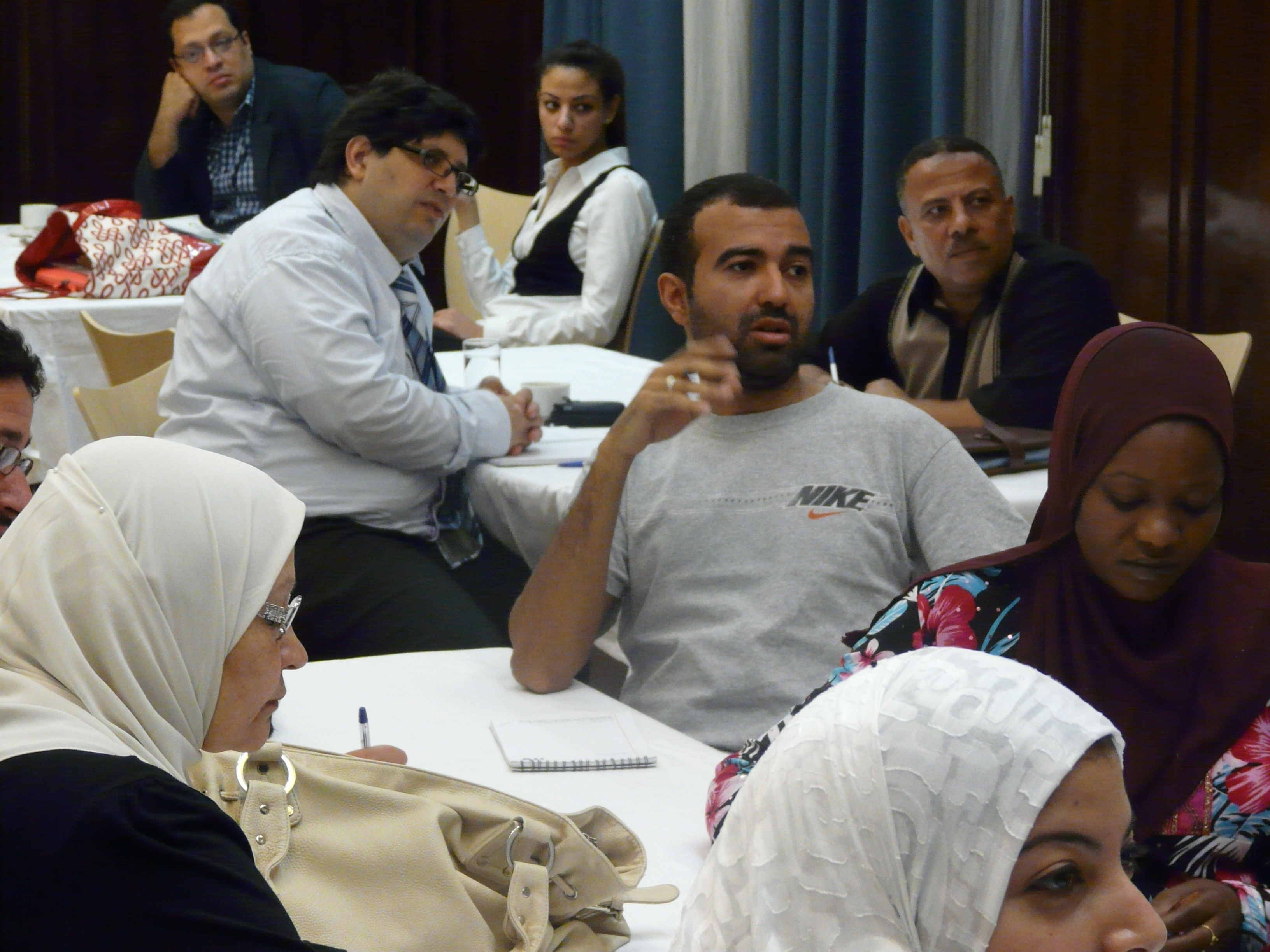

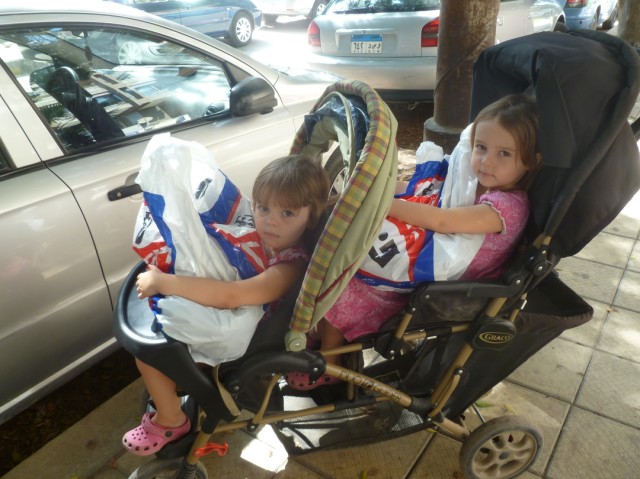


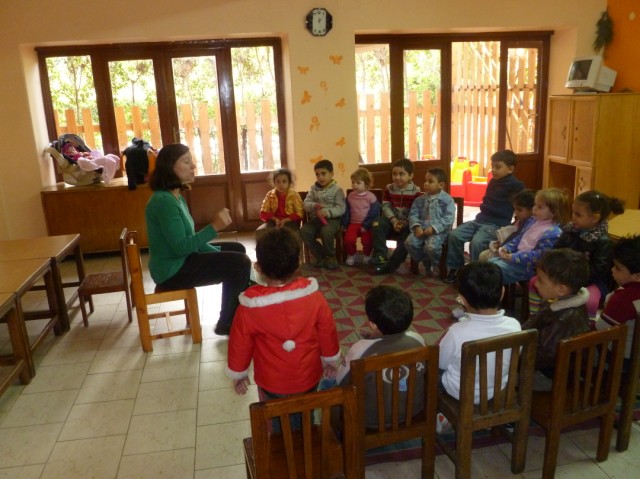
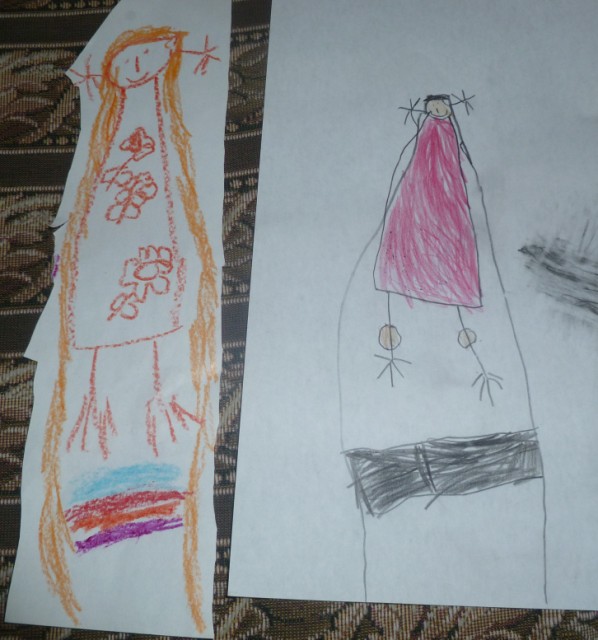

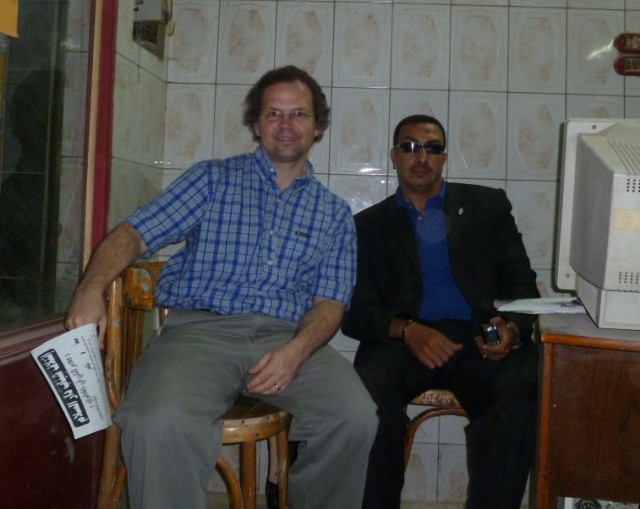


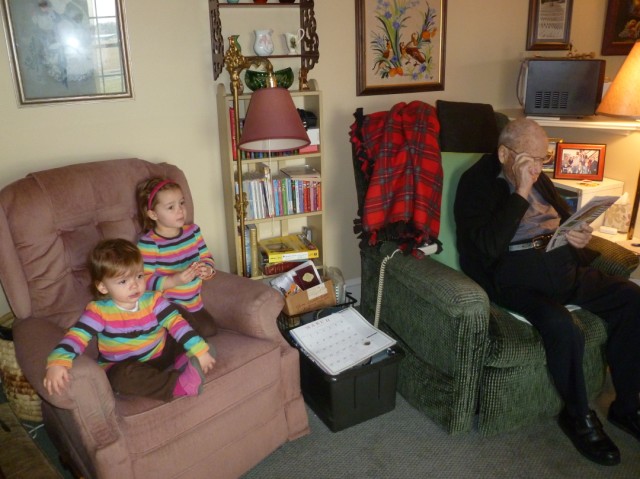
 Jayson Casper