Categories
Christianity Today Europe Published Articles

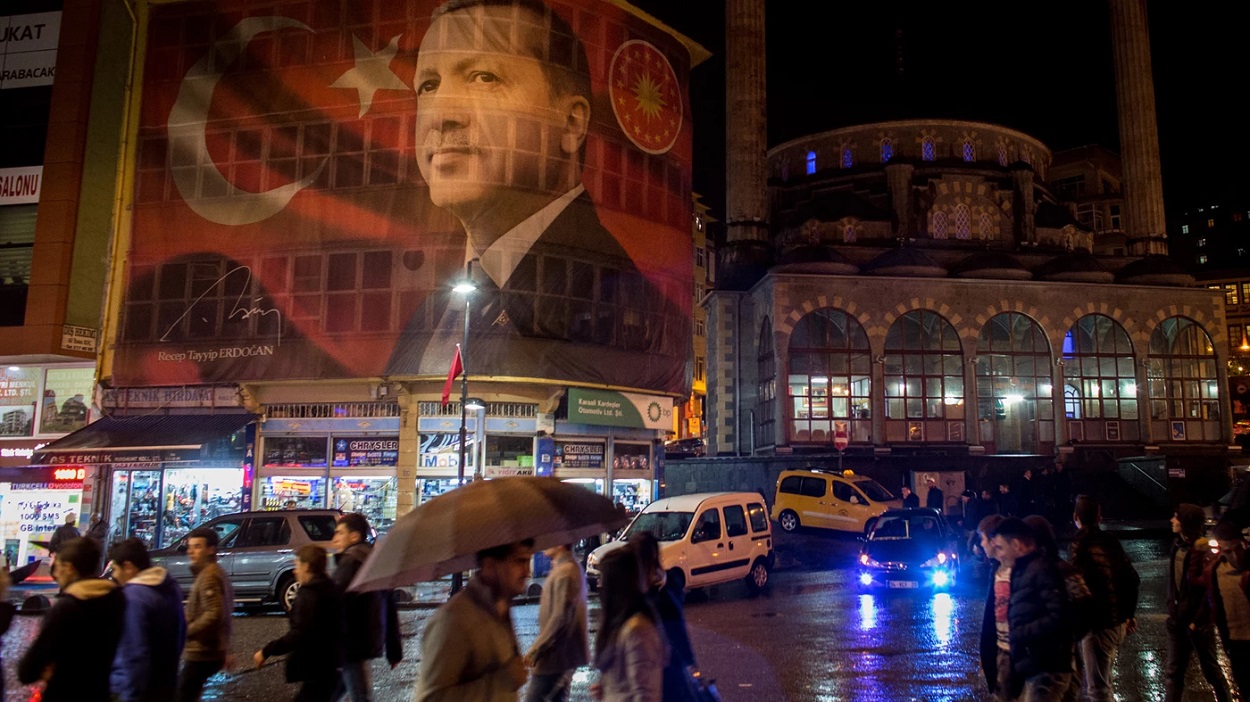
Azerbaijan’s Churches Explain Their Evangelism

Image: Emad Aljumah / Getty Images

Emil Panahov has a vision.

“I want to see 96 percent of Azerbaijanis confess their faith in Christ, and revival often began when the king became a believer,” he said. “But our God is the president of presidents, so the government does not rule over me.”

He has a long way to go.

Panahov, founder of the Vineyard church in Muslim-majority Azerbaijan, arrives at his target by inverting his homeland’s estimated proportion of Christians: 4 percent. Most of these are Russian Orthodox, holdovers from when the Caucasus nation of 10 million was part of the Soviet Union.

But the Azerbaijan Bible Society estimates that 20,000 Azeris have become evangelicals, most within the past two decades. And the government—despite being panned for widespread human rights violations in politics—has earned local plaudits for its level of religious freedom, especially toward Christians and Jews.

Panahov’s own story supports his optimism. But is it wise? Orthodox, Catholic, and Presbyterian leaders offer a word of caution.

From an Azeri Muslim family with a communist father, in 1989 Panahov came to faith at the age of 12 through a local Russian Baptist church. But as he grew interested in the arts and dancing, the conservative Christian community could not accept such worldly activity.

Panahov fell away from the faith as he performed professionally around the world—until in 2007 he tore his meniscus. Doctors in Turkey, where he lived at the time, told him he would never dance again.

It was then he recalled Jesus—whom he said spoke a word of healing to him. But through his Turkish pastor, God also gave him a commission: Return to Azerbaijan, and share what God has done for you.

Panahov was reluctant, knowing his artistic passion was a spiritual offense. But trusting God, he went back and eventually found a new church home. Over the next seven years he worshiped comfortably, started a family, and even found work as a dance instructor. But then he heard again the voice that healed him: Go out and start a house church.

He left his fellowship with tears but knew to obey. In the beginning he met mostly with believing relatives, but four years later their number grew to the 50 required by the authorities for registration. Similar miracles have marked many in the movement, which according to Panahov counts 350 believers in 16 cell groups, spread throughout his Caspian Sea country.

And God has used his artistic talent. His team has drawn hundreds to gospel-themed performances in downtown Baku, the nation’s capital. Media and filmmaking have put the message on the internet. The Vineyard church baptized 64 new Christians during the pandemic, he said, and 36 during Azerbaijan’s victorious war with neighboring Armenia.

“Two years ago, the churches did not believe opportunities for evangelism could reach such a level,” Panahov said. “But I know it is from God, because I don’t have the brains for it.”

It is also from the government, which following many years of suppression now works with church leaders to legalize their fellowships. While noting a positive trend, the US Commission on International Religious Freedom still recommends Azerbaijan for inclusion on the State Department’s Special Watch List for religious freedom violators.

Of concern is the legislation that requires 50 people before legal registration. Many evangelicals celebrate the freedom they do have—and the movement of the Holy Spirit to far surpass this number. But some notice…

This article was originally published by Christianity Today on April 1, 2022. Please click here to read the full text.

Categories
Christianity Today Europe Published Articles

What Ukraine’s Evangelical Women Want Known About Russia’s War

Image: Edits by Christianity Today / Source Images: NurPhoto / Jeff J Mitchell / Getty

Of Ukraine’s more than 4 million refugees, 90 percent are women and children. Of the 6.5 million internally displaced Ukrainians, 54 percent of adults are women. Men ages 18-60 are required to stay and resist the Russian invasion. And thus it is men who usually tell the public tales of war.

Women are often kept to private forums, such as their journals. Including:

32 days of war.

Fall asleep while checking the news on your phone.

See nightmares about concentration camps, bombing, dead people.

Wake up from a nightmare and remember it is not just a bad dream.

Check your phone with the thought: I hope everyone I love is alive.

Kiss a sleeping husband thinking about the fragility of life.

Wash your face. Put your clothes on.

Go to work. Wear a smile as a mask. Distance your emotions from pain. Physically hear pain turn into white noise in your head.

Check on your family during a 15-minute break at work. Cry on your break.

Six seconds: breathe in. Eight seconds: breathe out.

Feel grateful for being away from your phone eight hours a day at work. Feel helpless about being away from your phone eight hours a day at work.

So began the March 27 entry of Tetiana Dyatlik Dalrymple, suffering vicariously from afar in Washington, DC. Her father, Taras, sensed that such female perspectives have been missing from coverage of the war.

As regional director for Eastern Europe and Central Asia for Overseas Council, he recruited six Ukrainian women leaders who could tell their story. In partnership with the Eastern European Institute of Theology, ScholarLeaders International, and four affiliated seminaries, they sought to correct the critical observation of Svitlana Alexievich, a Belarussian novelist who won the Nobel Prize for literature in 2015.

“All that we know of war,” she said, “is told by men’s voices.”

Too few international supporters care to notice. The theological educators’ second webinar, The Russia-Ukraine War: Women Voices, drew only about 200 registrations yesterday, less than half of the first by male seminary leaders.

Marina Ashikhmina, vice rector for educational work at Tavriski Christian Institute, said the distinction is patently unfair. Women in war have a “double responsibility.” Underappreciated in society is…

This article was originally published by Christianity Today, on April 1, 2022. Please click here to read the full text.

Categories
Prayers

Lebanon Prayer: Capital Committee

God,

More than three years later, there is an almost-law.

Cabinet to parliament, likely to approve?

The IMF is visiting, they need to see it real.

But is there full agreement on the bailout to come?

Election cries uniting: Depositors protect.

Confront corrupt officials, root out in every sect.                                     

But which ones? Few will specify.

Vote here: Our resolved list.

A law is surely needed, with money trapped in banks,

Exchange rate fluctuations, and the lira in collapse.

The answer: A committee, with power to decide.

Composed of adept figures chosen later. But by whom?

God, is this a solution? The first step in a plan?

Or simple obfuscation and delay until no end?

Or worse—is that the plan?

And of some, or of all?

Are they united, though separate in list?

Some say.

Three years ago, the people, in thousands, with their feet,

Descended on the central squares with a resounding ‘yes’.

Those days have passed: Corona. Depression. Winter rain.

All of these conspired and deflated common cause.

There are lists independent. A vote to throw away?

Or embers of intensity that could—and must—revive?

God, you know.

Sift wheat from chaff.

Give light to eyes.

Discernment, come.

Give people back their money. But so much more beside.

Free them from enslavement to consumeristic trends.

The lust of eyes, seductive. The pride of life, a snare.

Blessed are the poor trumps all, when poor is all we have.

Blessed are the poor, in spirit: Help this to remain.

Let sect embody service. Politics—ideas.

God, bless all of Lebanon.

Free it for your cause.

Make of her a beacon.

A message. Beauty. Love.

Amen.


To receive Lebanon Prayer by WhatsApp, please click this link to join the closed comments group.

Lebanon Prayer places before God the major events of the previous week, asking his favor for the nation living through them.

It seeks for values common to all, however differently some might apply them. It honors all who strive on her behalf, however suspect some may find them.

It offers no solutions, but desires peace, justice, and reconciliation. It favors no party, but seeks transparency, consensus, and national sovereignty.

How God sorts these out is his business. Consider joining in prayer that God will bless the people and establish his principles, from which all our approximations derive.


Sometimes prayer can generate more prayer. While mine is for general principles, you may have very specific hopes for Lebanon. You are welcome to post these here as comments, that others might pray with you as you place your desires before God.

If you wish to share your own prayer, please adhere to the following guidelines:

1) The sincerest prayers are before God alone. Please consult with God before posting anything.

2) If a prayer of hope, strive to express a collective encouragement.

3) If a prayer of lament, strive to express a collective grief.

4) If a prayer of anger, refrain from criticizing specific people, parties, sects, or nations. While it may be appropriate, save these for your prayers alone before God.

5) In every prayer, do your best to include a blessing.

I will do my best to moderate accordingly. Thank you for praying for Lebanon and her people.

Categories
Christianity Today Europe Published Articles

Azerbaijan Adds Fuel to Armenian Concerns in Karabakh

Image: Alex McBride / Getty Images

Suffering freezing temperatures during the long winter cold in the Caucasus Mountains, this month Armenians in Nagorno-Karabakh had no heating for three weeks. The natural gas “malfunction,” stated Azerbaijan’s state-run energy distribution company, has now been repaired.

It is not often that pipeline maintenance draws international concern.

The European Union and Freedom House both called for quick resumption of the supply in order to avert a humanitarian crisis. Over 100,000 residents in the contested enclave rely on Armenian natural gas that passes through Azerbaijani territory.

Nagorno-Karabakh, which Armenians call Artsakh, lies within the internationally recognized territory of Azerbaijan. Armenians accused Azerbaijan of deliberate disruption, prevention of repair, and installation of a new valve with which they can shut off gas flow at will.

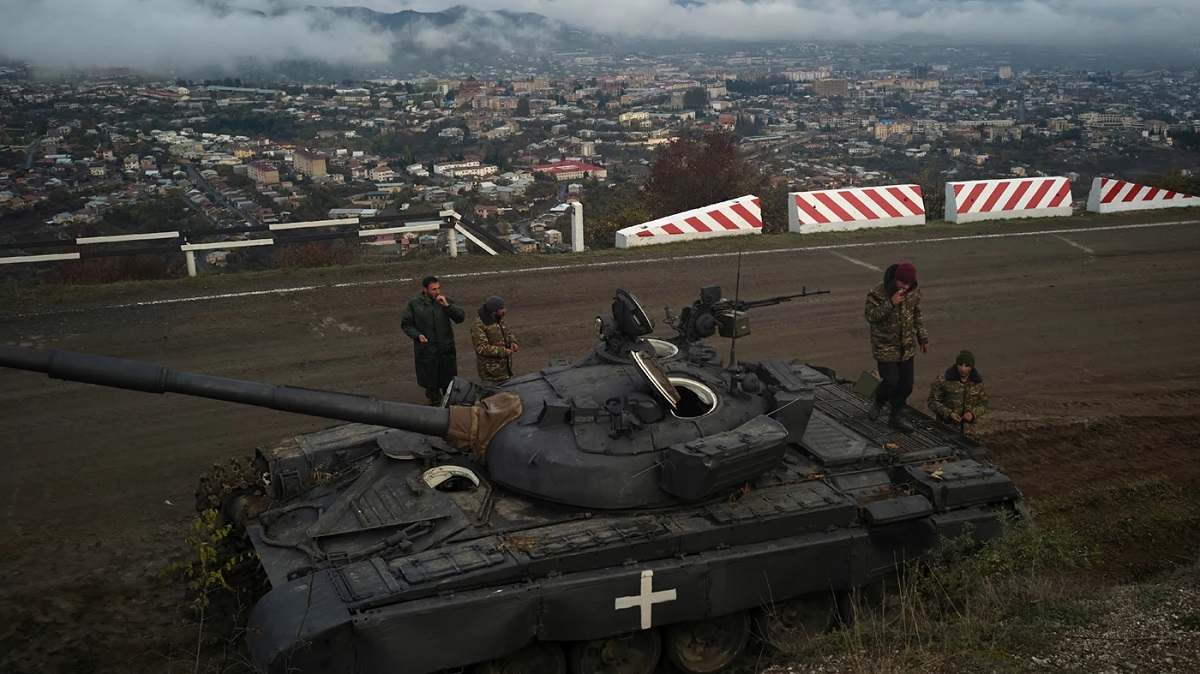
Secured by Armenians backed by Armenia’s military following the fall of the Soviet Union, Artsakh sought independence for three decades while controlling six buffer zones in depopulated Azerbaijani lands. Negotiations failed to resolve the dispute, until Azerbaijan launched a 44-day war in 2020 that recovered significant territory.

A Russian-brokered ceasefire ended active hostilities.

Yet skirmishes continue, and Azerbaijan accuses Armenia of instigation. Last November, Armenia stated an Azerbaijani incursion occupied 15 square miles of sovereign territory. Christianity Today was reporting from one of the liberated buffer territories at the time.

And in the month prior to the pipeline issue—with the world’s attention focused on Ukraine—Russia officially accused Azerbaijan of breaking the terms of the ceasefire. Monitors recorded at least four incidents of firing toward Armenian villages. Three soldiers were reportedly killed by an Azerbaijani drone; another was shot by a soldier across the border.

After years of holding the upper hand in Nagorno-Karabakh, the reversal suffered in the war has Armenians fearful of genocide. Now victorious, Azerbaijan President Ilham Aliyev has pledged to develop the area economically and to treat Armenians as equal citizens.

The recent conduct makes many doubt these promises.

“They openly can’t go for a full-blown war today since Russian peacekeepers are deployed here,” stated an Armenian journalist. “So they do everything to disrupt normal life and make people leave their homeland.”

But it goes beyond “Artsakh.” To emphasize its sovereignty over the region, Azerbaijan has…

This article was originally published at Christianity Today on March 31, 2022. Please click here to read the full text.

Categories
Christianity Today Europe Published Articles

Christian Witness After War: A Firsthand Assessment of Armenia and Azerbaijan

Image: Alex McBride / Getty Images News

Ibrahim Baghirov died as an infant. His mother, Mary, had read in the Gospels about Jesus and Lazarus, so she prayed for God to raise her child from the dead. He did, she says. Doctors in Baku, the capital of Azerbaijan, confirmed the miracle to her, which also confirmed her fledgling faith as a Muslim-background Christian.

Two decades later, Baghirov is an emerging preacher in the church that meets in the family’s home.

But in September 2020, as Azerbaijan launched what would become a 44-day war against neighboring Armenia, Mary’s faith faltered. Having once trusted God where medicine failed, she hastily made her son an appointment for an unnecessary surgery in hopes of keeping him from conscription. He gently rebuked her.

“I will go wherever God takes me,” said Baghirov, now 26 years old. “There are ways to keep me here, but there will be no blessing in that.”

He deployed within weeks to the front lines in the snowcapped peaks of Nagorno-Karabakh, a swath of land about the size of Delaware that is encircled by present-day Azerbaijan and has been contested for centuries.

Along the way, Baghirov said he received a word from God: None of his fellow soldiers would die, and he would be their minister. His country is predominantly Muslim, and several of his comrades shunned him after his pocket New Testament fell from his backpack. Others asked questions, though, and became friends.

Azerbaijan, with a reputation as one of the most secular countries in the Muslim world, is tolerant of its long-established Christian minority community. But its long-standing animosities toward Christian Armenia are a different story.

The two countries’ generations-old dispute over Nagorno-Karabakh—a majority-Armenian territory whose modern borders were established in 1923 when Joseph Stalin made it part of Azerbaijan—has been fierce. The worst atrocities of the early 20th century killed thousands, leveling villages and leaving blood on both Armenian and Azeri hands. Relations were more neighborly for several decades, until the Soviet Union disintegrated and triggered a new round of massacres beginning in the late 1980s. Thousands were displaced from their homes as each nation purged its opposing ethnic minority, while Armenia depopulated a buffer zone around the territory to protect it from attacks.

In 1991, Nagorno-Karabakh voted for independence, and Armenia-backed forces eventually secured control of the region, dubbing it the Republic of Artsakh. (Neither Azerbaijan nor the international community has recognized Artsakh’s sovereignty.) Skirmishes between the countries smoldered for decades during a languishing peace process led by the US, France, and Russia.

But in 2020, Azerbaijan conscripted soldiers and advanced on the territory in yet another conflict. Baghirov was assigned to an artillery unit, a post that spared his tender pastoral heart from one adversity, at least: He would not engage in direct combat against the fellow Christians he and his military were slowly overtaking.

But Baghirov said he heard another word from God, another promise: Not one Armenian would die from his hand.

On the other side of the lines, shivering in the snow, fighters in an Armenian unit were also talking to God. An embedded priest from the Apostolic Church, the national church of Armenians, carried a relic of the holy cross and encouraged them as they knelt. They beseeched God for their fellow soldiers, surrounded by Azerbaijani forces and pounded by missiles and suicide drones.

“Don’t lose hope,” said Menuk Zeynalyan. “Our struggle is for our holy church and holy land.”

A married father of four, Zeynalyan left a comfortable parish among the Armenian minority in the neighboring nation of Georgia and signed up for military chaplaincy in 2019. Before the war, he led soldiers in three weekly Bible lessons. Many came from irreligious homes, raised by parents under the banner of Soviet atheism. But within two months, he said, everyone knew the catechism.

His highlight was the prayer of dedication prior to the soldier’s oath. Before swearing the secular pledge to defend the nation, Zeynalyan tied their patriotism to the Lord. After all, tradition had it that Thaddeus and Bartholomew preached the gospel in Armenia. And their country had become the world’s first officially Christian nation in the year 301, long before the Roman Empire followed suit.

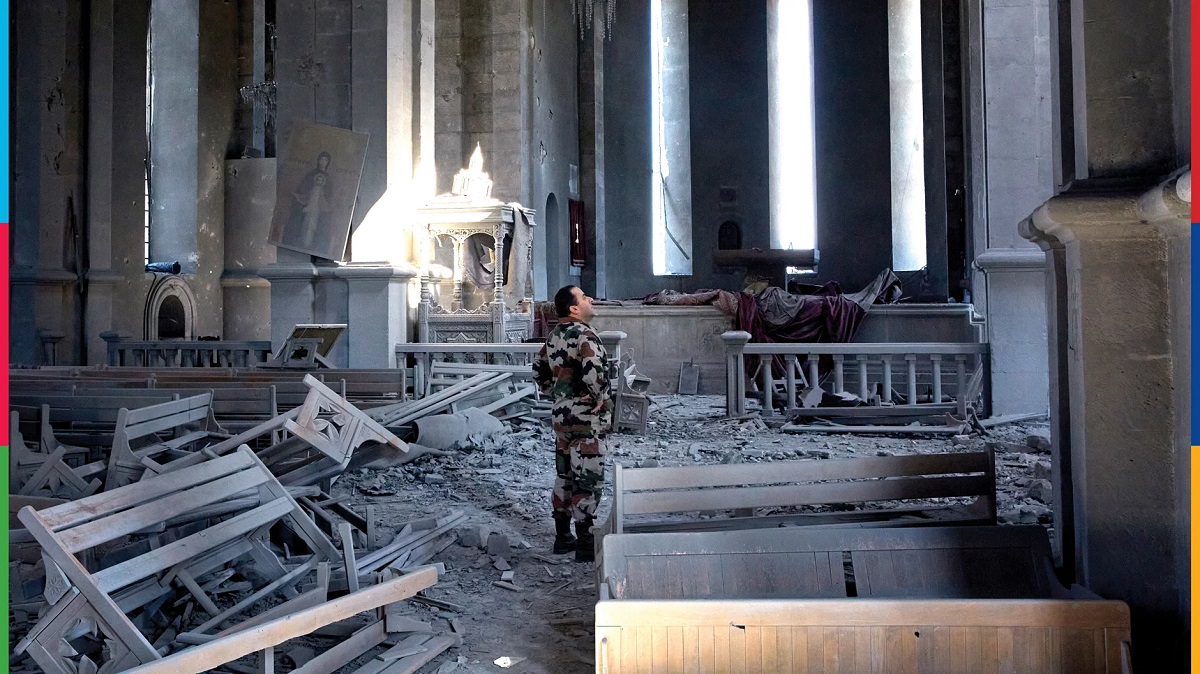
Miraculously, Zeynalyan’s prayers were answered, and his beleaguered colleagues emerged from the battle unscathed. Zeynalyan said he witnessed many examples of divine intervention in 2020. He was at the Ghazanchetsots Cathedral in the city of Shusha—known to Armenians as Shushi—on October 8, when two missiles struck within five hours in an attack Human Rights Watch deemed a possible war crime.

In early December 2020—with the Armenian lines broken and at least 6,000 soldiers confirmed killed—a Russia-brokered ceasefire ended hostilities. Shusha, the crown jewel of Nagorno-Karabakh, was back under Azerbaijani control, and their military was poised to seize the regional capital of Khankendi, known to Armenians as Stepanakert.

“It was pure joy to recapture our land,” Baghirov said. “For three decades, it was a heavy burden in our hearts, and finally our people can return to their homes.”

Officially, however, it is a ceasefire and not a capitulation. Armenia maintains control over Stepanakert and about a third of the disputed territory, protected by Russian peacekeepers. And while the mood is somber in the Armenian capital of Yerevan, about five hours away, Zeynalyan keeps his faith.

“No matter how much land we lose,” the chaplain said, “we are God’s people and will remain here until the second coming of Christ.”

Christianity Today spoke with more than two dozen sources during a visit to both nations one year after the war. It’s an open question how, if at all, they will reconcile their intense differences.

But for a few Christians in Armenia and Azerbaijan, a more personal question nags. Isn’t there a unity in Christ that transcends geopolitical grievances?

And if there is, should Christians wait for their governments to make peace? Or should they start themselves, by making peace with fellow believers behind enemy lines? For hundreds of years, the Caucasus region has been…

This article was originally published in the March print edition of Christianity Today. Please click here to read the full text.

Categories
Prayers

Lebanon Prayer: The Purpose of Law

God,

The law is a warning. It keeps men in line.

The law is a weapon. Used against foes.

The law is a lever. Raising the stakes.

The law is a construct. Made into game.

Whatever it is, it should be for all.

But lawyers interpret, and judges decide.

Sometimes.

Almost two years and the blast in Beirut

Still awaits verdict. Instead: ‘Please recuse.’

But similar effort to fend off a charge

Allegedly failed when judge dodged the case.

So the party that painted red slogans round town

Now has its top figure to answer in court.

People died in Tayyouneh, God.

But both sides had guns.

And for white collar conduct, the net closes in.

The central bank brother—corrupt—like his kin.

So say accusers. Six others as well.

The pressure is building, will all take the fall?

Life savings are gone, God.

But guilt only here?

Your law is perfect. Refreshing the soul.

Sin? Utterly sinful. Our tutor? The law.

The patriarch is livid at how it’s applied.

Others shout: Hypocrite—like all, taking sides.

God, you know.

God, soon judge.

Your law is righteous. Us? Anything but.

Yet your grace is present for those who appeal.

Depravity—confess it.

Humility—present.

Our industry, irrelevant.

Our good works, filthy rags.

God have mercy on me.

On we.

In Lebanon, in public, reveal each darkened deal.

In Lebanese, in private, convict each precious soul.

Amen.  


To receive Lebanon Prayer by WhatsApp, please click this link to join the closed comments group.

Lebanon Prayer places before God the major events of the previous week, asking his favor for the nation living through them.

It seeks for values common to all, however differently some might apply them. It honors all who strive on her behalf, however suspect some may find them.

It offers no solutions, but desires peace, justice, and reconciliation. It favors no party, but seeks transparency, consensus, and national sovereignty.

How God sorts these out is his business. Consider joining in prayer that God will bless the people and establish his principles, from which all our approximations derive.


Sometimes prayer can generate more prayer. While mine is for general principles, you may have very specific hopes for Lebanon. You are welcome to post these here as comments, that others might pray with you as you place your desires before God.

If you wish to share your own prayer, please adhere to the following guidelines:

1) The sincerest prayers are before God alone. Please consult with God before posting anything.

2) If a prayer of hope, strive to express a collective encouragement.

3) If a prayer of lament, strive to express a collective grief.

4) If a prayer of anger, refrain from criticizing specific people, parties, sects, or nations. While it may be appropriate, save these for your prayers alone before God.

5) In every prayer, do your best to include a blessing.

I will do my best to moderate accordingly. Thank you for praying for Lebanon and her people.
Categories
Christianity Today Europe Middle East Published Articles

Is It ‘Christian’ for Europe to Welcome Refugees from Ukraine but Not Syria?

Image: Together for the Family

As Ukraine continues to be battered by Russia, Syrian refugees know what to pray for better than most.

“This is what happened to us,” said refugee students at the Together for the Family center in Zahle, Lebanon. “We don’t want it to happen to others.”

Born in Homs, Syria, to a Baptist pastor, Izdihar Kassis married a Lebanese man and then founded the center in 2006. She shifted her ministry to care for “her people” when the Syrian civil war started in 2011. About 50 traumatized teenagers find counseling there every year, and 300 have graduated from the center’s vocational programs.

As the refugees discussed the “horrible” situation in Europe during the weekly chapel service, Kassis suggested intercession. Bowing their heads, the 40 children and 30 Syrian staff and volunteers knew better than anyone what to ask for.

But one child wanted to be sure the Ukrainians would know of their solidarity. He went outside into the cold and snow of the Bekaa Valley, where most of Lebanon’s 1.5 million Syrian refugees take shelter.

His sign proclaimed, “Praying for peace.”

Since the invasion, about 4 million of Ukraine’s population of 43 million have become refugees. Another 6.5 million are internally displaced.

Yet 11 years since its civil war, most of Syria’s 6.8 million refugees—out of a population of 20 million—still live in limbo. Europe largely shut its doors, certainly in comparison to its warm welcome of those fleeing Russian aggression.

Many have taken offense.

“There is the perennial double standard and selective outrage of global news media, Western governments (and, sadly, even Western Churches) when it comes to reporting on wars, conflicts and the plight of refugees,” stated Vinoth Ramachandra from Sri Lanka, a senior leader with the International Fellowship of Evangelical Students (IFES), affiliated with InterVarsity.

“If Ukrainians were not blonde and blue-eyed, would their plight have occasioned [this] outpouring of compassion?”

It is a fair question. Is European hypocrisy—even racism—on full display?

Arab Christians are not quick to judge.

Born in Syria, Joseph Kassab today heads the Beirut-based Supreme Council of the Evangelical Churches in Syria and Lebanon. He notes the more than one million countrymen taken in by Europe—Western Europe, primarily. Eastern nations, he said, are still recovering from the communist era and have not yet developed the same sense of human rights.

There should be no discrimination, yet even this he understands. The early church struggled to open its mission to non-Jews.

“Racism is in every society,” Kassab said. “But Europeans have been more welcoming to the Syrians than many Lebanese.”

Being Muslim is a factor, said Elie Haddad, president of Arab Baptist Theological Seminary in Beirut. But also important is that most are rural, uneducated farmers. Legitimate or not, people are uncomfortable with difference.

Europe is a bit hypocritical, but so is he.

“If a faculty member needs shelter, I will open my home,” Haddad said. “For a stranger, not so much.” One who did open his home is a Frenchman…

This article was originally published at Christianity Today on March 25, 2022. Please click here to read the full text.

Categories
Prayers

Lebanon Prayer: Woe to Banks

God,

Does money make the world go round?

Or root all kinds of evil?

Mammon steals the heart from you,

Yet worldly wealth wins friends.

To use. To give. To store away?

What think you of our barns?

What think you of our bankers?

What think you of our judges?

What would you to have us think about emerging crisis?

God it all was bad before

Is now a worse still coming?

Corrupt? Perhaps. Some, all, or few?

But they control our access.

And politicians linked between,

They promise us our money.

At least a portion, more or less,

But what done since it started?

Some shield this one, call for calm.

Indeed, the catastrophic

Could come if all comes tumbling down.

A house of cards, unshuffled?

A deck to stack against the poor,

Who now grow ever larger?

Your justice, God, will build, create—

But judgment first, reversal.

So let us do so on our own:

We first, the last becoming.

We who can lead, let us serve.

Lest ‘woe to rich now’ happens.

For bankers, God, is it too late?

They had their chance and failed?

But who among us knows their heart,

Their charity, their efforts

To make the world a better place,

To help the country prosper?

If only so, God.

If politics,

If agenda seeks to ruin them,

Protect each righteous,

Kill not wealth,

A trial, yes—and blessing.

But if it is God as you say:

This harder than the camel,

Then by your grace, God, squeeze us through

The ever-shrinking needle.

Us and them. Unrighteous all.

And also judge crusading.

Honor each who does the right,

By law, with pure intentions.

Blind, impartial. Can we hope

Such status for our nation?

However good, it is not best.

You are our judge—and father.

How terrible to face your wrath,

Without your love and welcome.

The first is coming, maybe here, if not three years preceding.

The latter? Ever present for the humble supplicating.

Bankers.

Judges.

Me and you.

Show Lebanon your mercy.

Amen.


To receive Lebanon Prayer by WhatsApp, please click this link to join the closed comments group.

Lebanon Prayer places before God the major events of the previous week, asking his favor for the nation living through them.

It seeks for values common to all, however differently some might apply them. It honors all who strive on her behalf, however suspect some may find them.

It offers no solutions, but desires peace, justice, and reconciliation. It favors no party, but seeks transparency, consensus, and national sovereignty.

How God sorts these out is his business. Consider joining in prayer that God will bless the people and establish his principles, from which all our approximations derive.


Sometimes prayer can generate more prayer. While mine is for general principles, you may have very specific hopes for Lebanon. You are welcome to post these here as comments, that others might pray with you as you place your desires before God.

If you wish to share your own prayer, please adhere to the following guidelines:

1) The sincerest prayers are before God alone. Please consult with God before posting anything.

2) If a prayer of hope, strive to express a collective encouragement.

3) If a prayer of lament, strive to express a collective grief.

4) If a prayer of anger, refrain from criticizing specific people, parties, sects, or nations. While it may be appropriate, save these for your prayers alone before God.

5) In every prayer, do your best to include a blessing.

I will do my best to moderate accordingly. Thank you for praying for Lebanon and her people.

Categories
Christianity Today Europe Published Articles

Ukraine’s Evangelical Seminaries Plead for Help

Image: Kaoru Ng / SOPA Images/LightRocket / Getty Images

One month ago, Taras Dyatlik gathered in Moldova with friends and partners for another 10-day round of mundane seminary meetings. Serving as regional director for Eastern Europe and Central Asia for Overseas Council, he was a lynchpin for strategy and funding for a network of theological institutions in Ukraine and Russia.

Three days later, he was desperately scrambling back to Kyiv. Dyatlik’s family—like much of Ukraine—was under Russian military fire. And the only thing louder than the air raid sirens that would soon pervade his sleepless nights was the silence of his Russian colleagues.

“This is not a conflict, or tension, or special operation,” he said, using the terms employed by most Russians—and too many otherwise cautious supporters in the West. “It is invasion and war.”

He emphasized the Bible shows the importance of precision in languague.

“It’s not just that Abel died or that Jesus was just betrayed; Judah betrayed Jesus, Cain killed Abel,” he said. “Not just that a man sinned; Adam and Eve sinned. Biblical truth has names, has a cause-and-effect chain.”

Dyatlik’s charged remarks mirrored others voiced at an online roundtable organized Thursday by the Ukraine-based Eastern European Institute of Theology (EEIT). About 500 supporters, partners, and general wellwishers registered for The Russia-Ukraine War: Evangelical Voices, eager to hear from fellow believers on the front lines.

The attendees, from at least 25 nations and 20 US states, received theological reflection—and raw emotion.

“It’s difficult for us Ukrainians to stay calm when we talk about what is happening in Ukraine,” said Roman Soloviy, EEIT director, who served as moderator. “Most of us men have never cried so much as during the last three weeks. We really need your help, your prayer, and your voice in the world.”

Oleksandr Geychenko, rector of Odessa Theological Seminary (OTS), expressed the shock of all.

“We died with the pregnant woman and her child when the maternity hospital was bombed. We fled with those running from Russian shooting,” he said. “All we were used to is wiped out—now just a wilderness.”

OTS is the oldest of the Ukrainian evangelical seminaries, tracing its history to a 1989 local effort to train preachers and Sunday school teachers. The campus was evacuated at the start of the war as the Ukrainian military took up occupancy in defense of the Black Sea port. But what has puzzled and discouraged Geychenko most is…

This article was originally published by Christianity Today on March 18, 2022. Please click here to read the full text.

Categories
Africa Christianity Today Published Articles

Amid Cascade of Coups, African Christians Debate Civic Duty 

Image: John Wessels / AFP / Getty Images

There is an “epidemic” of military coups in Africa, says the head of the United Nations. The past year and a half witnessed the overthrow of governments in Mali (twice), Chad, Guinea, Sudan, and Burkina Faso. At least three additional attempts were thwarted in Madagascar, the Central African Republic, and Niger.

Averaging two per year for the last decade, this is Africa’s largest surge since 1999.

What should Christians in these nations do about it?

Abel Ngarsouledé of Chad, where roughly 45 percent of the Muslim-majority nation is Christian, is walking it through.

“It is not for me to support a military coup in my country,” said the secretary general of the doctoral program at the Evangelical University of Chad. “But if God wants to remove a king from his throne, [God] uses all the means in his power to restore his fear and justice in the land.”

When Chad’s president was killed on the battlefield last April, the army moved quickly to place his son in charge of a 15-member Transitional Military Council that would govern for 18 months, renewable once. Pledging to hold a national dialogue, invitations were sent to rebel groups, politicians, civil society, academics, and religious leaders.

Ngarsouledé accepted.

With the council now delayed until May, he serves on two committee in a process designed to lead to reconciliation, social cohesion, and new elections. There are no guarantees any of these will happen, he says, and asks for prayer.

Also deputy director of the Council of Theological Institutions in Francophone Africa, Ngarsouledé recalled that at times in Old Testament history, God used prophets or priests to depose kings. Though today prayer should be employed, he is not so concerned about the end result.

“The form of the state is not the subject of biblical teaching,” he said, noting God’s priority for peace and justice. “It is men who adopt this or that form of governance, according to the orientation of their hearts.”

If Ngarsouledé’s opinion does not reflect the ironclad American Christian defense of democracy, he is not the only African Christian leader failing to do so. “Between democracy and autocracy, democracy seems to be the best suited at the moment,” said…

This article was originally published at Christianity Today, on March 17, 2022. Please click here to read the full text.

Categories
Christianity Today Europe Published Articles

Russian Evangelical Leader Apologizes to Ukrainian Christians

Image: Alexey Furman / Getty Images

In the highest-profile statement yet of its kind, the leader of the Russian Evangelical Alliance has announced his “bitterness and regret” over decisions taken by his government.

Will it be enough to rebuild bridges with fellow Ukrainian believers across the border?

“I mourn what my country has done in its recent military invasion of another sovereign country, Ukraine,” stated REA general secretary Vitaly Vlasenko in a March 12 open letter. “In the worst-case scenario, I could not imagine what is now being observed.”

His language is precise, but also careful.

On March 4, the Russian parliament amended its criminal code to impose prison terms for up to 15 years for spreading “fake news” that “discredits” the military.

Notably, Vlasenko did not use the Russian government’s designated label of “special military operation” to describe the violence in Ukraine. Utilizing “conflict” and “invasion” instead, he avoided describing it—though he did imply—with terms that have been officially banned, such as “war.” And alongside recognition of Ukraine’s fear of “occupation,” he cited Russia’s goal of “demilitarization.”

Two days earlier, a Russian court fined an Orthodox priest 35,000 rubles [$261] for discrediting the army during his Sunday sermon. His congregation helped pay the fine.

Russian media lawyers are debating whether the law prevents citizens from questioning the “special military operation” or calling for it to end.

Vlasenko’s statement [full text below] toes the line.

“Everything I could do to prevent war, I did,” Vlasenko lamented. “I apologize to all those who have suffered.” Chief among his efforts was…

This article was originally published at Christianity Today, on March 14, 2022. Please click here to read the full text.

Categories
Prayers

Lebanon Prayer: Iron and Word

God,

Hats in the ring; elections or not.

With everyone waiting, maneuver and move.

Yes megacenters, now no. Maybe still?

This one will run, not that one. But yet

Does it matter? Two months ‘til we know.

Or more if postponement—decision made here?

Or waiting the pending in Iran and Rus?

Acquitted, now guilty. So said the judge.

The son of the victim can only lash out

At militia that shields the accused from the court.

While some ready ammo to root out corrupt,

Each legal case levied, this banker or that.

God, what to do with all the above?

Compared to Ukraniya, all petty and trite.

But people are suffering here in our land,

Let alone the same dying and missiles that fail

To elicit the outrage, outpouring of heart

That the region has needed for decades on end.

God, each life is precious. Of course, we care more

For the life that is near us and impacts direct,

For the one who is like me, aligns with my world.

Forgive our dismissal, our hearts are not pure.

But also our impasse—resigned and inert.

True: Lebanon bound by the powers that be.

False: Lebanon stuck; no agency left.

God, help us to work toward your will where we can.

Is that what is happening with all the above?

Or within the mire each seeks for his own?

Reveal to us, God, all the honest and good.

Lift up their cause and cause others to fail.

Silence the weapons of iron and word.

Make plowshares and poems—

And Lebanon thrive.

Amen.


To receive Lebanon Prayer by WhatsApp, please click this link to join the closed comments group.

Lebanon Prayer places before God the major events of the previous week, asking his favor for the nation living through them.

It seeks for values common to all, however differently some might apply them. It honors all who strive on her behalf, however suspect some may find them.

It offers no solutions, but desires peace, justice, and reconciliation. It favors no party, but seeks transparency, consensus, and national sovereignty.

How God sorts these out is his business. Consider joining in prayer that God will bless the people and establish his principles, from which all our approximations derive.


Sometimes prayer can generate more prayer. While mine is for general principles, you may have very specific hopes for Lebanon. You are welcome to post these here as comments, that others might pray with you as you place your desires before God.

If you wish to share your own prayer, please adhere to the following guidelines:

1) The sincerest prayers are before God alone. Please consult with God before posting anything.

2) If a prayer of hope, strive to express a collective encouragement.

3) If a prayer of lament, strive to express a collective grief.

4) If a prayer of anger, refrain from criticizing specific people, parties, sects, or nations. While it may be appropriate, save these for your prayers alone before God.

5) In every prayer, do your best to include a blessing.

I will do my best to moderate accordingly. Thank you for praying for Lebanon and her people.

Categories
Christianity Today Europe Published Articles

The Wartime Prayers of Ukraine’s Evangelicals

Image: Evgeniy Maloletka

The Ukrainian church needs support. But so do the individuals who shepherd the body of Christ. Too often they are lost behind the headlines, stories, and statistics of war. Even their quotes fail to convey the full depth of their struggle.

Christianity Today asked Ukrainian evangelical leaders to help readers enter their war-torn world by sharing a glimpse of it. Each provided a Bible verse that has proven meaningful for perseverance, prayer requests for both concrete personal needs and more profound spiritual longings, and links to how readers can get involved.

Taras Dyatlik, engagement director for Eastern Europe and Central Asia for ScholarLeaders International:

Currently supporting a network of Ukrainian seminaries, Dyatlik has identified three stages of need. The immediate need is to evacuate, relocate, and find safe locations to save the lives of students, staff, and faculty. In another week or so, their situation must become stabilized in longer-term accommodations. And then, pending the developments of war, they will figure out how to continue theological education.

The Bible verse helping him persevere:

Mark 14:27–28 – “‘I will strike the shepherd, and the sheep will be scattered.’ But after I have risen, I will go ahead of you into Galilee.”

Sometimes we find ourselves with Jesus, not because we followed him, but because he comes to us—as now, in our brutal war with Russia. And he asks us as he asked Peter at the Sea of Galilee: “Do you love me?” (John 21:16–17). Still, this comes after breakfast, when he has taken care of us, first. Even when we fail in the challenges of this war, his friendship is available for us to revive in.

What he’s praying for:

I am praying for my wife and many other wives who refused to be evacuated while their husbands stayed behind. But I am also praying that this war will shake the conscience of humanity and the theology of the church. No longer can we elevate a nationalism that so often requires others to be brought low, as we see so many Christians adopting now in Russia.

Oleksandr Geychenko, president of Odessa Theological Seminary:

United World Mission has been a decades-long partner of OTS, located on Ukraine’s western Black Sea shore. As his fellow seminary heads in other cities have turned their campuses into places of refuge, Geychenko has been trying to evacuate the school’s staff and students and provide for them as best he can.

The Bible verse helping him persevere:

1 Corinthians 12:26–27 – If one part suffers, every part suffers with it; if one part is honored, every part rejoices with it. Now you are the body of Christ, and each one of you is a part of it. Last Sunday, we celebrated our monthly Lord’s Supper for the first time since the war began. The high point was…

This article was originally published at Christianity Today on March 11, 2022. Please click here to read the full text.

Categories
Christianity Today Europe Published Articles

Do Russian Christians Need More Bonhoeffers?

Image: Illustration by Mallory Rentsch / Source Images: WikiMedia Commons

The first cleric has fallen to Russia’s new law.

Ioann Burdin of Resurrection Church in Kostroma, 215 miles northwest of Moscow, was arrested for “discrediting the Russian armed forces” in his Sunday sermon.

His parish also allegedly shared an anti-war petition.

“We, Christians, cannot stand idly by when a brother kills brother, a Christian kills a Christian,” the statement said, as reported by the BBC’s Russian service. “Let’s not repeat the crimes of those who hailed Hitler’s deeds on Sept. 1, 1939.”

Does Russia—and the world—need more like him?

Christianity Today previously reported the frustration of Ukrainian Christian leaders that their Russian counterparts should be like Dietrich Bonhoeffer. The famous German theologian was executed in the waning days of the Third Reich for complicity in an assassination plot against the Fuhrer.

Ukrainian evangelicals want Russian evangelicals to at least speak out.

Hundreds have. But is it fair to ask them to do so? Russia’s new law, passed March 4, provides penalties of up to 15 years in prison for simply calling Putin’s “special military operation” a “war.”

Five European evangelical leaders advised CT on which should be paramount: safety or solidarity.

Esther in the Bible, and Bonhoeffer in history, are exceptional examples of faith. But are they normative for Christians—especially Christian leaders—in times of conflict?

Leonardo De Chirico, chair of the theological commission of the Italian Evangelical Alliance:

In a sense, the whole church has been given a prophetic responsibility to denounce evil and injustice. Then there are specific prophetic callings that individuals receive from God, and they are ready to pay the price of exposing themselves to retaliations and persecutions.

Not all of us are called to be Esthers and Bonhoeffers in all circumstances, but some should. And all should support them in the priestly role of prayer and solidarity.

Loyalty to our nations is good, although it can become an idol. But loyalty to God and his global church takes precedence. I hope and pray that believers across the nations involved will show that their unity in Christ is stronger than their national allegiances.

Marc Jost, general secretary of the Swiss Evangelical Alliance: I was very pleased and encouraged to hear…

This article was originally published at Christianity Today on March 11, 2022. Please click here to read the full text.

Categories
Christianity Today Europe Published Articles

Ministries Evacuate as Russians Reach Irpin, the Evangelical Hub of Ukraine

Image: Dimitar Dilkoff / AFP / Getty Images
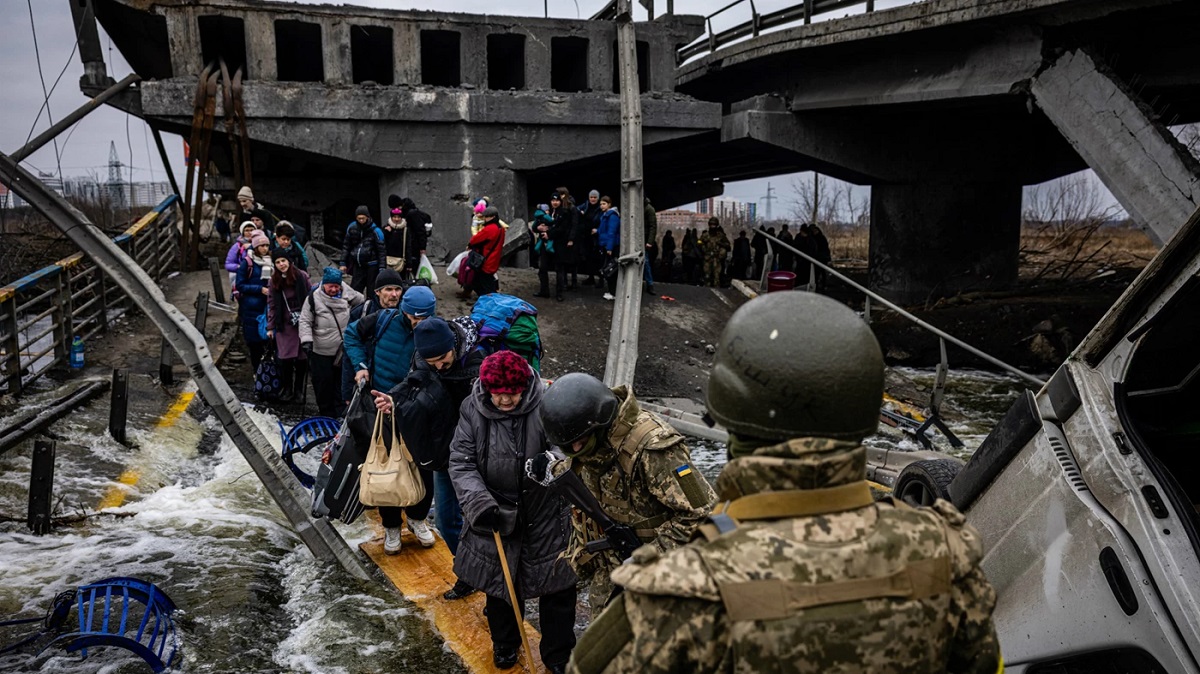
Evacuees cross a destroyed bridge as they flee the city of Irpin, northwest of Kyiv.

Anatoly, a 26-year-old member of Irpin Bible Church (IBC), is with the Lord.

His last act on earth was to carry the suitcase of a young mother and her two children, hurrying them across Irpin’s collapsed bridge to safety from Russian shelling.

All four died, when a bombshell landed in the middle of their would-be humanitarian corridor. Eight total died in the suburb of Kyiv yesterday, as Russian troops pressed hard to encircle the Ukrainian capital.

“Anatoly was deeply spiritual, with a good Christian character,” said his pastor, Mykola Romanuk. “When he saw a need, he tried to help.”

Negotiations over the weekend led to several ceasefires for civilian evacuation, only to be quickly broken. Each side blamed the other, and Russia has denied targeting civilians.

But Ukrainian sources describe cities now littered with bombed schools, hospitals, and residential districts—not least in Irpin, known in evangelical circles as the “Wheaton of Ukraine.”

After the fall of the Soviet Union, Ukraine’s “evangelical patriarch” Gregory Kommendant invited Christian ministries to join him in his hometown, 16 miles northwest of the capital, where he served as president of the All-Ukraine Baptist Union.

As of a few days ago, about 25 ministries operated out of Irpin, including Child Evangelism Fellowship, Youth With a Mission, Youth for Christ, the International Fellowship for Evangelical Students, and Samaritan’s Purse.

Once home to a single evangelical church, Irpin now boasts 13.

“We were here for 20 years, and neighbors never set foot in our church,” said Romanuk. “Now they are living in our basement, praying with us, and have become our friends.”

Describing Irpin as “secular,” Romanuk described his 700-member Baptist congregation as the largest church in the city of 60,000 people. But now, only a team of five remain, called to stay behind and minster to those under siege.

Led by the head of the missions committee, a deacon’s wife—a real estate agent—is the chief cook. She prepares three meals a day for 200 people, as others volunteer to evacuate the shellshocked citizens to western Ukraine.

Since the war began, the church has transported 100-200 evacuees every day, Romanuk said. As the Russians approached, they bused out 3,000. Early on, the government took notice of their efforts and thereafter directed everyone to the church.

Anatoly was one who returned. Originally from Luhansk in the Donbas region, he…

This article was originally published at Christianity Today on March 7, 2022. Please click here to read the full text.

Categories
Prayers

Lebanon Prayer: Region and Resource

God,

Proposal, proposal. Impossible, moot.

Each on the surface is Lebanese gain.

Under the table? God, only you know.

But Lebanon’s history justifies doubt.

No gas and no money, why must votes be cast

In the village of origin far from the home?

‘Megacenters’ the answer. No time, the reply.

Too costly, illegal. Though idea—long before.

Cabinet still will study it through,

But clock keeps on ticking; reserves dwindle down.

One type holds steady—the gas in the sea.

It sits and it waits for agreement to form,

Disputed by foe who already has much.

Another arrangement is carried by hand,

Also, to be studied—this time not by all.

The Shiite component not comfortable with

The idea recognizing the Zionist state

Will leave Sunnis and Christians to handle the file.

Will it smooth the discussions, or sink at the end?

But gas would be helpful with state supply small.

God, it is good to ease the vote.

It is wise to engage foes.

It is right to caution take.

It is fair to bargain hard.

But God, if deception and fraud are at work

Then protect the people from perfidy. Pour

Out your judgement, expose every sin.

Turn over the tables and right every wrong.

At home or abroad, God.

In them,

And in me.

This is harder to pray—but enables the prayer.

The prayer of the righteous accomplishes much.

May it be of proposals that all sides are just.

Bring them to consensus, a plan to respect.

If not, God, then mercy.

Rebuke, but give grace.

I too am guilty.

And the country we love.

Amen.


To receive Lebanon Prayer by WhatsApp, please click this link to join the closed comments group.

Lebanon Prayer places before God the major events of the previous week, asking his favor for the nation living through them.

It seeks for values common to all, however differently some might apply them. It honors all who strive on her behalf, however suspect some may find them.

It offers no solutions, but desires peace, justice, and reconciliation. It favors no party, but seeks transparency, consensus, and national sovereignty.

How God sorts these out is his business. Consider joining in prayer that God will bless the people and establish his principles, from which all our approximations derive.


Sometimes prayer can generate more prayer. While mine is for general principles, you may have very specific hopes for Lebanon. You are welcome to post these here as comments, that others might pray with you as you place your desires before God.

If you wish to share your own prayer, please adhere to the following guidelines:

1) The sincerest prayers are before God alone. Please consult with God before posting anything.

2) If a prayer of hope, strive to express a collective encouragement.

3) If a prayer of lament, strive to express a collective grief.

4) If a prayer of anger, refrain from criticizing specific people, parties, sects, or nations. While it may be appropriate, save these for your prayers alone before God.

5) In every prayer, do your best to include a blessing.

I will do my best to moderate accordingly. Thank you for praying for Lebanon and her people.

Categories
Christianity Today Europe Published Articles

Hundreds of Russian Pastors Oppose War in Ukraine

Image: Contributor / AFP / Getty Images
A woman holds a “Stop the war” placard in central Moscow during a protest against Russia’s invasion of Ukraine, on March 3, 2022.

Ukrainian evangelicals have had enough.

Battered by a week of war, they have heard numerous prayers for peace uttered by their Russian colleagues. But they did not hear condemnation.

“Your unions have congratulated Putin, giving thanks for freedom of belief,” said Taras Dyatlik, the Overseas Council regional director for Eastern Europe and Central Asia. “The time has come to make use of that freedom.”

As Kyiv, Kharkiv, Kherson, and other cities have suffered missile strikes, the United Nations reports the death of more than 200 civilians. Ukraine’s State Emergency Service reports more than 2,000. The military casualties are disputed, with both nations claiming thousands of fatalities among the other’s ranks.

But rather than focusing on the numbers, Dyatlik, who coordinates a regional network of dozens of Protestant seminaries, turned to the Bible.

“Remember Mordechai and Esther,” he wrote March 1 in an open letter. “Do not be like Jehoshaphat, who entered into an alliance with Ahab, and was silent when God spoke through the prophet Micaiah.”

Dyatlik accused his Russian colleagues of buying into national rhetoric—first in 2014, when Russian-backed forces invaded the eastern region of Donbas—and again today. But “begging on my knees,” he leveraged his reputation with the heads of Russia’s evangelical unions—while acknowledging their difficult reality.

“You fear prison,” he said. “[But] do not be faithful to Putin. Be faithful to the body of Christ.”

A new draft law proposes a 15-year prison sentence for “fake” claims about the violence in Ukraine, as authorities crack down on Russians who call the “military operation” a “war.” The Russian parliament, the Duma, is scheduled to discuss such measures on Friday.

Dyatlik was not the only one frustrated. But instead of drawing from Scripture, his colleague Valerii Antoniuk appealed to history.

“Where are your Bonhoeffers, where are your Barths?” asked the head of the All-Ukrainian Union of Churches of Evangelical Christians-Baptists. “Your silence now is the blood and tears of Ukrainian children, mothers, and soldiers—that is on your hands.”

Pavel Kuznetsov, meanwhile, simply wants the correct word used—law or no law.

“Many believers in Russia are praying about the ‘situation’ in Ukraine. The situation is called WAR,” the pastor of Word of Life church in Boyarka, 15 miles southwest of Kyiv, wrote on Facebook. “And when you pray again, tell God it’s war, and we are being killed here.”

As of publication, more than 300 Russian evangelicals had reportedly received the message.

“The time has come when each of us must call things by their real names, while we still have a chance to escape punishment from above, and prevent the collapse of our country,” stated an open letter signed by a group of Russian pastors and other Protestant leaders. “We call on the authorities of our country to stop this senseless bloodshed!”

Their message was also biblical. It quoted…

This article was originally published at Christianity Today on March 3, 2022. Please click here to read the full text.

Categories
Christianity Today Published Articles

Iran’s House Churches Are Not Illegal, Says Supreme Court Justice (Updated)

The nine converts are officially acquitted. Branch 34 of the Tehran Court of Appeals agreed with the reasoning of the Supreme Court judge who ruled last November that the preaching of Christianity does not amount to acting against Iran’s national security.

On Monday, judges Seyed Ali Asghar Kamali and Akbar Johari accepted the converts’ lawyer’s testimony that their house church was “in accordance with the teachings of Christianity,” where they are taught to live in “obedience, submission, and support of the authorities.”

The precedent is strong, said Mansour Borji, advocacy director for Article 18, because the judges extensively outlined nine reasons in the acquittal, in line with the Iranian constitution and Islamic tradition.

But it may take time until the ruling becomes normative. One of the nine, Abdolreza Ali-Haghnejad, is already back in jail on a six-years-old separate charge of propagating Christianity, for which he was previously acquitted. And two others, Behnam Akhlaghi and Babak Hosseinzadeh, who made video appeals for freedom of worship, were charged with a separate crime of propaganda against the state.

Iranian Christians welcome the verdict, said Borji, but remain wary.

“This ruling is unlike any other of its type that I have seen,” he said. “[But] at least a dozen others … are still in prison—or enforced internal exile—following their own convictions on similar charges.”

This article updates a previously published piece at Christianity Today, from December 3, 2021. Please click here to read the full text.

Categories
Christianity Today Europe Published Articles

During Sunday Siege, Ukraine’s Churches Persevere

Image: Courtesy of Calvary Chapel of Svitlovodsk

As Russian troops met stiffer resistance than expected from Ukrainian soldiers and citizens in Kyiv and other cities, pastors in both nations adapted Sunday worship services appropriately.

“The whole church prayed on their knees for our president, our country, and for peace,” said Vadym Kulynchenko of his church in Kamyanka, 145 miles south of the capital. “After the service, we did a first-aid training.”

Rather than a sermon, time was given to share testimonies from harrowing days of air raids. Many psalms were offered, and Kulynchenko’s message centered on Proverbs 29:25. Fear of man will prove to be a snare, but whoever trusts in the Lord is kept safe.

Both disruption and ordinary life were on display at Calvary Chapel of Svitlovodsk.

Andrey and Nadya, displaced from Kyiv by the Russian missile barrage on Thursday, exchanged wedding vows amid great celebration.

Scheduled to be married this weekend in the capital, the couple was instead sent fleeing to Nadya’s home church 185 miles southeast along the Dnieper River—with a request for an impromptu wedding.

“In the middle of a war? That doesn’t make sense!” said Benjamin Morrison, with irony. “But during war is when it makes the most sense. What better reminder that even war cannot stamp out love. And what better way to say that we serve a higher King than to rejoice in the midst of chaos?”

They were married on Saturday, as planned.

On Sunday, the congregation of about 80 people—just beginning to swell with newcomers seeking refuge—regathered to hear a sermon on David and Goliath.

“Yes, David still had to fight. Yes, it was still hard and scary—but God was his confidence,” concluded Morrison, an American missionary veteran of 20 years and married to a Ukrainian.

“May he be ours as well, and may he cut off the head of the enemy.”

Ukraine claimed today that 3,500 Russian soldiers have been killed so far. Russia has not released an official casualty figure.

Regarding its own losses, Ukraine’s Health Ministry counted more than 350 civilians dead and almost 1,700 wounded as of Sunday night. The reported tally combines civilian and military casualties, but broke out 14 child deaths and 116 wounded.

Taras Dyatlik, regional director for Eastern Europe and Central Asia at Overseas Council, did the math. If correct, in three days of fighting 40 Russian soldiers died every hour; one soldier every minute and a half.

“These are mostly 19- to 25-year-old children,” he lamented. “The depth of our human brokenness can only be healed by the Holy Spirit.” Metropolitan Epiphanius, head of the Ukrainian Orthodox Church (UOC), pleaded for…

This article was originally published at Christianity Today on February 27, 2022. Please click here to read the full text, including several testimonies from Russian pastors.

Categories
Prayers

Lebanon Prayer: Rumbling World

God,

Lebanon is working—the budget it attempts.

But Lebanon is waiting—much as it always has.

The world is rumbling, rolling—the tanks into Ukraine.

The world continues waiting—Taiwan, Iran, and then?

The tea kettle whistling, the boil on high.

Is this the beginning, explosion to come?

Or the last gasp of pressure, then all settles calm?

Is ISIS related, the bombs that were foiled?

What would have happened if Dahiyeh burned?

But the ripples are real: Will wheat be supplied?

Troubles sufficient, must others’ pinch too?

Still, not fully waiting, condemning assault,

Beirut called it “invasion,” and then—tightrope walk.

Russia is angry, the militia in turn.

Were all sects consulted? Was it needed? Why so?

But students are stuck there, Ukrainians here.

The latter protesting, the first seek return.

It is a good reminder, God.

Lebanon suffers. But it is still home.

Protect it in these troubled days.

Help it work to help itself.

Expose its every evil.

Let shine its every good.

You preside over the nations.

You caretake every soul.

Bring peace, to both.

Amen.


To receive Lebanon Prayer by WhatsApp, please click this link to join the closed comments group.

Lebanon Prayer places before God the major events of the previous week, asking his favor for the nation living through them.

It seeks for values common to all, however differently some might apply them. It honors all who strive on her behalf, however suspect some may find them.

It offers no solutions, but desires peace, justice, and reconciliation. It favors no party, but seeks transparency, consensus, and national sovereignty.

How God sorts these out is his business. Consider joining in prayer that God will bless the people and establish his principles, from which all our approximations derive.


Sometimes prayer can generate more prayer. While mine is for general principles, you may have very specific hopes for Lebanon. You are welcome to post these here as comments, that others might pray with you as you place your desires before God.

If you wish to share your own prayer, please adhere to the following guidelines:

1) The sincerest prayers are before God alone. Please consult with God before posting anything.

2) If a prayer of hope, strive to express a collective encouragement.

3) If a prayer of lament, strive to express a collective grief.

4) If a prayer of anger, refrain from criticizing specific people, parties, sects, or nations. While it may be appropriate, save these for your prayers alone before God.

5) In every prayer, do your best to include a blessing.

I will do my best to moderate accordingly. Thank you for praying for Lebanon and her people.