Categories
History Middle East

Why an Early American Missionary Family Was Beloved in Lebanon

William King Eddy
Illustration by Christianity Today / Source Images: Courtesy of Nick Eddy

Pastor Michael Sbeit stood pensively in front of the marble gravestone in the evangelical cemetery of Sidon, a Lebanese city 25 miles south of Beirut. Mediterranean Cypress trees offered shade from the sweltering summer heat, while their fallen brown needles covered the ground and obscured the inscription engraved in both English and Arabic:

William King Eddy
Born March 13, 1854
Died Nov. 4, 1906
Served the Lord in Syria 28 years

Next to the grave of William King Eddy (hereafter “King”), is the grave of his wife, Elizabeth Nelson Eddy. Her tombstone honors her 49 years of service. Several feet away lies the body of their son, William “Bill” Alfred Eddy, who died in 1962.

The Eddys were an American family who originally came as Protestant missionaries to late 19th-century Lebanon, then part of the Syrian region of the Ottoman Empire. Several family members, including King’s sister Mary Pierson Eddy, and their father William Woodbridge Eddy (hereafter “Woodbridge”) are buried in Beirut.

“They were pioneers of our church,” said Sbeit, who leads the Presbyterian congregation the Eddys’ missionary colleagues founded in Sidon. “We don’t have many like them anymore.”

Two generations of Eddys shared the gospel, built schools, and offered healthcare. The last of their line in Lebanon left a more colorful legacy. William Alfred Eddy’s gravestone notes nothing about service to the Lord and instead displays his rank of colonel in the US Marine Corps.

“Bill loved this city,” said Sbeit. “But he was different.”

This two-part story chronicles the Eddy family’s multigenerational commitment to Lebanon. The family’s modern biographer is Muslim: Sheikh Muhammad Abu Zaid, president of the Sunni Sharia Law Court in Sidon. In Forgotten Pages from the Ancient History of Sidon, he expresses his deep appreciation for their foreign service.

“It is not how we look at the Eddys,” he said. “But how they looked at us.”

Abu Zaid’s sympathetic portrayal of Protestant missionaries contrasts with the more conflicted views that many Lebanese Muslims and Christians have held. Some view them as “sheep stealers” trying to convert the original Catholic, Orthodox, Sunni, Shiite, or Druze populations. Others see them as Western agents advancing America’s political agenda. Still others defend them, citing their years of devoted social service. The Eddys offer evidence each narrative could note.

The family’s story began when Chauncey Eddy, a Presbyterian pastor from New York joined the American Board of Commissioners for Foreign Missions in 1823. But when poor health impeded a potential missionary career, he prayed that God would call his children in his stead. His son Woodbridge and his daughter-in-law Hannah moved to the Levant in 1851, a year after the Ottoman sultan issued a decree to include the Protestant faith among the empire’s legally recognized sects.

The couple’s ministry started in Aleppo by learning Arabic before moving to the Lebanese mountain village of Kfarshima. In 1857, Woodbridge and Hannah moved south to Sidon, where they served in an evangelical church planted two years earlier. They replaced missionary Cornelius van Dyke, who left to complete a translation of Arabic Bible still cherished by many Middle Eastern Christians today.

Chauncey visited his son a year later, delighted at the fulfillment of his prayers. He even…

This article was originally published at Christianity Today on September 4, 2025. Please click here to read the full text.

Categories
Middle East Published Articles Christianity Today

Does the Quran Support Religious Pluralism?

Eric Lafforgue / Art in All of Us / Contributor / Getty

Last month, an obscure jihadist group claimed responsibility for a suicide bombing at the Mar Elias Greek Orthodox Church in Damascus, Syria, that killed 25 people. The attack came as a response, it stated, to the government requiring prior approval of Islamic preaching in the Christian neighborhood. Three months earlier, at the site of the future bombing, austere Salafi Muslims called on residents to convert to Islam, a practice known in Arabic as da’wa. Later, a car drove up and its occupants loudly repeated the call until local Muslims sent them away.

Salafis are known for growing long beards and wearing traditional robes in imitation of the prophet Muhammad. Salafi practice is not inherently violent, and reporting does not draw a clear connection between the incident at the church and the later suicide bombing. But many jihadists emerge from or are drawn to Salafi communities, as both aim to follow the Quran literally in complete devotion to Allah.

The jihadists even adopted a particular verse from the Quran as their slogan: “Fight the polytheists together as they fight together against you.” To them, belief in the Trinity is an offense against Allah’s oneness. In preventing Muslims from proper da’wa, then, both state and church in Syria became worthy of war.

Some experts say Salafis and jihadists represent a reaction—peaceful or otherwise—to reclaim a lost idealized era when Islam governed much of the world. Yet most Muslims are neither Salafis nor jihadists; many have accepted democracy and the nation-state system that formally adopts principles of minority rights and common citizenship.

Still, according to a 2013 survey of Muslims in 38 nations, the sense of Islamic superiority lingers. Like many evangelicals, the most devout Muslims view their faith as the only way to heaven and consider converting others to be a religious duty.

In the West, belief that someone is going to hell has little civic impact, as religious faith tends to be an individual decision. But in the Muslim world, this belief has subjected Christians to a long heritage of second-class citizenship. And the survey reveals that substantial minorities of the most devout want sharia made the law of the land, applied also to non-Muslims.

The modern principle of pluralism holds two ideas in tension: Believers should be free to spread their faith, while minority religions and their beliefs should be respected. As Syria shows, this can be complicated in the Middle East, where the understanding of Islam is a crucial factor for interfaith peace.

One Tunisian Muslim academic, Adnane Mokrani, makes a bold assertion: Islam, when properly understood, is an ally of religious pluralism. Though he concedes this is a minority viewpoint among Muslims, Mokrani, who serves on the Network of Centers for Christian-Muslim Relations advisory board, said that a new generation of theologians are reevaluating the Quran’s understanding of diversity.

The new network, profiled previously this series, doesn’t comment on political events or policies. It recognizes the witness of one’s faith as an essential part of both Christianity and Islam. But it believes that interfaith peace may require setting aside evangelism and da’wa in certain ways and places, though not as an activity of individual believers.

In this case, Mokrani believes the diversity of religions flows intentionally from the divine will, expressing his argument in a recent webinar. He cited this verse from the Quran as evidence: “If Allah had willed, He would have made you one community.” This idea is similar to that of the academic sage in the first article in this series, who lamented the state of conflict and rancor that ensues from religious difference. Yet the passage continues optimistically: Multiple religious communities exist so that they may “compete with one another in doing good.”

Classical Muslim theology, however, divides the world into the “House of Islam” and the “House of War,” as multiple verses in the Quran encourage Muslims to fight unbelievers. Historically, the House of War was the realm of opposing empires, with the Christian Byzantines the most stubborn in resistance.

This theology recognized that Jews and Christians in conquered lands now resided within the House of Islam. The Quran refers to Jews and Christians, along with Muslims, as “People of the Book,” in recognition of a shared scriptural heritage, Mokrani said. Classical Muslim scholars rejected much of the Bible’s content as distorted. Yet the Quran honors its conception of the Torah, given to Moses, and the Gospel, given to Jesus, as “containing guidance and light”—the same terms it uses of itself.

On the ground, this meant that Muslims would not forcibly convert Jews and Christians. Instead, the two religious groups could continue practicing their faiths in exchange for payment of a tax called jizya. Through this, these communities received status as dhimmis, safe from war and given freedom of worship—though not to evangelize. Treatment varied over time, but their second-class status reinforced the Islamic sense of religious superiority.

The historical development of Muslim society led to a gap between the original conciliatory vision of Muhammad and the later, more rigid attitude of scholars, maintains Mokrani, who is also professor of Islamic studies at the Pontifical Gregorian University in Rome. Faced with a growing empire and Christian opposition in war and faith, Muslim scholars’ commentaries on the Quran polemically defined Islam as a religious community distinct from Jews and Christians rather than in continuity with them.

Their interpretive tool was the location of Muhammad’s prophecies.

In Mecca, the prophet preached…

This article was originally published by Christianity Today on July 24, 2025. Please click here to read the full text.
Categories
Christianity Today Middle East Published Articles

One Muslim Sect Confesses a Trinity. It Includes Simon Peter.

Muhammad Haj Kadour / Contributor / Getty

As an Alawite, Ziad identifies with the main markers of Islam.

“Our book is the Quran, our prophet is Muhammad, and our direction of prayer is the Kaaba in Mecca,” he said.

Ziad, a pseudonym granted because of the still-unstable situation in Syria, believes in God and called out to him during the Sunni militant attack on Alawite cities and villages in the coastal northwest. However, he does not perform the prescribed ritual prayers, fast for Ramadan, or consider a pilgrimage to Mecca necessary. And he drinks alcohol, which is forbidden for other Muslims.

Yet mainstream rejection of his sect goes far beyond these offenses. To understand why most Muslims consider Alawite beliefs heretical, we must first know a little about the religion’s main sects—Sunni and Shiite.

When Muhammad died in AD 632, disputes arose within the community over who would assume leadership. Sunnis, who today represent 85 percent of Muslims, hold that the prophet left this choice open for believers to decide. They chose Abu Bakr, an early convert and respected tribal leader, as the first caliph.

Shiites, on the other hand, hold that Muhammad designated his cousin Ali as his successor and that the tribal confederation bypassed his will. Ali was eventually chosen as the fourth caliph but assassinated within an Islamic civil war. The caliphate thereafter passed into hereditary rule. This political history matters practically little to Alawites, but they share with Shiites the belief that Ali was the first imam.

Most Shiites count a succession of 12 imams from the bloodline of Ali, whom they say God endowed with supernatural insight to interpret the Quran and Muslim religious traditions. The 12th imam is believed to have concealed himself—entering a period of what is called “occultation”—and will reappear at the end of the age.

However, Alawites follow…

This article first published at Christianity Today on June 25, 2025. Please click here to read the full text.
Categories
Christianity Today Middle East Published Articles

Muslim Militants Went on a Syrian Rampage

Omar Haj Kadour / Contributor / Getty

On March 6, Ziad nervously scoured social media, hiding in a windowless room in his apartment. He had heard gunfire, and over the long course of the civil war in Syria, he had learned how to distinguish the various weaponry. These were military-grade machine guns. Bands of balaclava-clad militants in pickup trucks shouted “Allahu Akbar” as they attacked a government office just a mile from his home in the coastal city of Lattakia.

The 46-year-old educator and his wife, Zeinab, knew the militants were looking for Alawites. The couple belonged to the heterodox Islamic sect that many Sunni Muslims in Syria hated for their connection to the deposed Assad regime. Others went further and condemned their beliefs as heretical. Medieval and Ottoman-era fatwas declared Alawites deserving of death, and videos circulated of mosques calling for jihad against their community.

Ziad did not leave his home for the next three days.

When the dust settled, the March massacre claimed the lives of at least 1,700 Alawites. Ziad, currently in Lebanon and granted anonymity to preserve the safety of his relatives in Syria, describes the terror the community experienced.

“O God, save us,” he prayed quietly. “We didn’t do anything wrong.”

Six months earlier, when Bashar al-Assad’s regime fell, Ziad hoped for a transition to democracy and wide-scale reform. Assad’s father, Hafez, seized power in a 1970 coup and disproportionately selected Alawites for key military and government posts. But few from the community truly benefited, Ziad said, while most lived in relative poverty—as in other rural regions. The regime permitted no dissent and cultivated insecurity among its minority religious populations to curb any threat to its power.

While Alawites make up a majority in the coastal plains and mountains of western Syria, the ethnoreligious group represents 10–13 percent of the overall population. Sunni Muslims and Greek Orthodox Christians live among them in peace. But as militants barged into homes, looting cell phones and cash, they killed adult Alawite males and sometimes whole families.

Ziad had barred the iron gate to their building. Perhaps this spared their lives. He and Zeinab sat in the darkness to avoid showing signs of life in their apartment. And as he scrolled Facebook for updates, he learned…

This article was first published at Christianity Today on June 24, 2025. Please click here to read the full text.

Categories
Christianity Today Middle East Published Articles

Fleeing a Massacre, Syrian Muslims Found Comfort Through Church

Ozan Kose / Contributor / Getty

A small congregation in the Tartous countryside of western Syria held an unusual Mother’s Day service this March.

The passages were customary, as the pastor read from Proverbs 31 and 1 Corinthians 13. So were the praise songs, including an Arabic version of “How Great Thou Art.”

The crafts, snacks, and cake were like those served at any youth-focused event. Fifty moms and their kids enjoyed the cool weather at a lakeside pavilion under pleasant gray skies. Enthusiastic girls acted out the parable of the prodigal son, emphasizing that God’s love is for everyone. This, too, was a typical message.

The unusual aspect was who was in the audience. Half the families were Syrian Alawites, a heterodox Muslim sect, three weeks removed from a massacre that killed more than 1,700 men, women, and children from their community.

In Syria, Mother’s Day is celebrated on March 21, and the event offered a small measure of joy amid great tragedy. The service was so successful the church repeated it twice more in the following weeks, according to Bassem Khoury, the church’s pastor. Christianity Today agreed not to use his real name as the country remains unstable.

“Suffering is an opportunity to direct people to God’s love,” Khoury said.

Khoury described how his evangelical church ministered to hundreds of Alawites fleeing the coastal villages of Jableh and Baniyas and as far away as Hama and Homs, cities 50 miles to the east. Local Christians offered food, medicine, and words of comfort. Khoury preached about Jesus—but also about reconciliation between Syria’s diverse religious groups, Sunni Muslims, Alawites, and Greek Orthodox Christians. And the families witnessed a unity the pastor prays his nation may one day reflect.

Khoury served from extensive experience. Throughout the 14-year Syrian civil war…

This article was first published on June 23, 2025. Please click here to read the full text.

Categories
Christianity Today Middle East Published Articles

Syrian Christians Are Anxious About New Regime

Louai Beshara / Getty

For years, “Maria” (we’re using a pseudonym, given the political situation) thought little about her apparel or how to greet her colleagues. A Christian and longtime Syrian government employee, she kept her head uncovered and wore Western business-casual attire. She greeted her coworkers with “sabah al-khayr,” which means “good morning” in Arabic.  

But an alliance of rebel forces, some connected to jihadist groups, has now seized government power. The new leaders in Damascus repeatedly say Christians, some of whom had allied with the Assad regime, face neither persecution nor displacement. Yet small aspects of Maria’s work life have already begun to change.

Recently, a new boss for her department informed the office that coworkers would now greet each other with “salamu alaykum,” Arabic for “peace be upon you.” That’s the standard greeting between religious Muslims. Maria wonders if changes might be gradual, that next week, or next month, or next year, she will be required to wear a hijab.

Maybe the new greeting requirement is a good sign…

This article was originally published at Christianity Today, on January 9, 2025. Please click here to read the full text.

Categories
Christianity Today Middle East Published Articles

Syria Has Six Months to Receive Your Earthquake Aid

Image: Rami Alsayed / NurPhoto via AP

Syria has been suffering for 12 years, plagued by civil war, jihadist violence, foreign occupation, and autocratic governance. Yet widening US economic sanctions have made it increasingly harder to help—until now.

A February waiver offers a 180-day window for earthquake relief.

“If God has put it on your heart to give to Syria, be generous,” said Nabil Costa, executive director of the Lebanese Society for Educational and Social Development (LSESD), also known as the Baptist Society. “Find trusted organizations, because it is not easy to get it to the right place.”

On March 10, the World Evangelical Alliance (WEA) joined the World Council of Churches (WCC) and Catholic charity Caritas to detail the “chilling effect” sanctions have on the ability of faith-based and other NGOs to transfer money and goods to struggling Syrians. Most banks have deemed such transactions too risky to facilitate.

Therefore, unlike in neighboring Turkey, the February 6 earthquake was not followed by an immediate outpouring of international aid. Despite a death toll of 6,000 and an estimated 500,000 more displaced amid the rubble, United States and European Union policy—and distrust of the Bashar al-Assad government—prevented most nations and international humanitarian organizations from rushing to the scene.

A false step could result in a $1 million fine and 20 years in prison.

US sanctions against Syria began in 1979 with a declaration that it was a state sponsor of terrorism, and tightened in 2004 for its undermining of the war in Iraq. In 2011, Syria’s repression of civil protest resulted in additional sanctions, subsequently strengthened throughout its civil war—especially after the use of chemical weapons in 2017.

Two years later, after a whistleblower smuggled out alleged evidence of the torture of civilians, the Caesar Act implemented secondary sanctions against anyone conducting business with the Syrian government.

Legislation permitted humanitarian exemptions for food and medicine, and in 2022 allowance was made for unfettered aid into regions outside of government control. Turkey and various rebel entities occupy territory in northwest Syria, while a US military base supports Kurdish forces administering large swaths of the northeast.

The United Nations designated a number of humanitarian aid corridors from Turkey, but Russia and China vetoed all but one—in protest of their ally’s dwindling sovereignty. Iran and Hezbollah have also backed Assad militarily, while Israel occupies the Golan Heights and regularly bombs the alleged transport of weapons near its frontier and before crossing into Lebanon.

Amid it all, Syria’s Christians help who they can.

Following the earthquake, Aleppo’s churches hosted hundreds of frantic neighbors fleeing their cracked and crumbling homes. But the WEA report, written prior to the tragedy, outlined how many faith-based organizations lacked the resources and legal expertise necessary to navigate the myriad regulations to apply for permitted exemptions. Costa said LSESD did not attempt it, relying instead on “existing channels” to get aid into Syria.

“Everything we do is transparent,” he said, “but not everything is advertised.”

Even large NGOs like Caritas have struggled. “It should be like math, one plus one equals two,” said Karam Abi Yazbeck, Caritas’s regional coordinator for the Middle East and North Africa. “But I can’t make sense of…

This article was originally published at Christianity Today on April 3, 2023. Please click here to read the full text.
Categories
Christianity Today Middle East Published Articles

Turkish and Syrian Christians Rally Earthquake Relief

Image courtesy of SAT-7 Turk

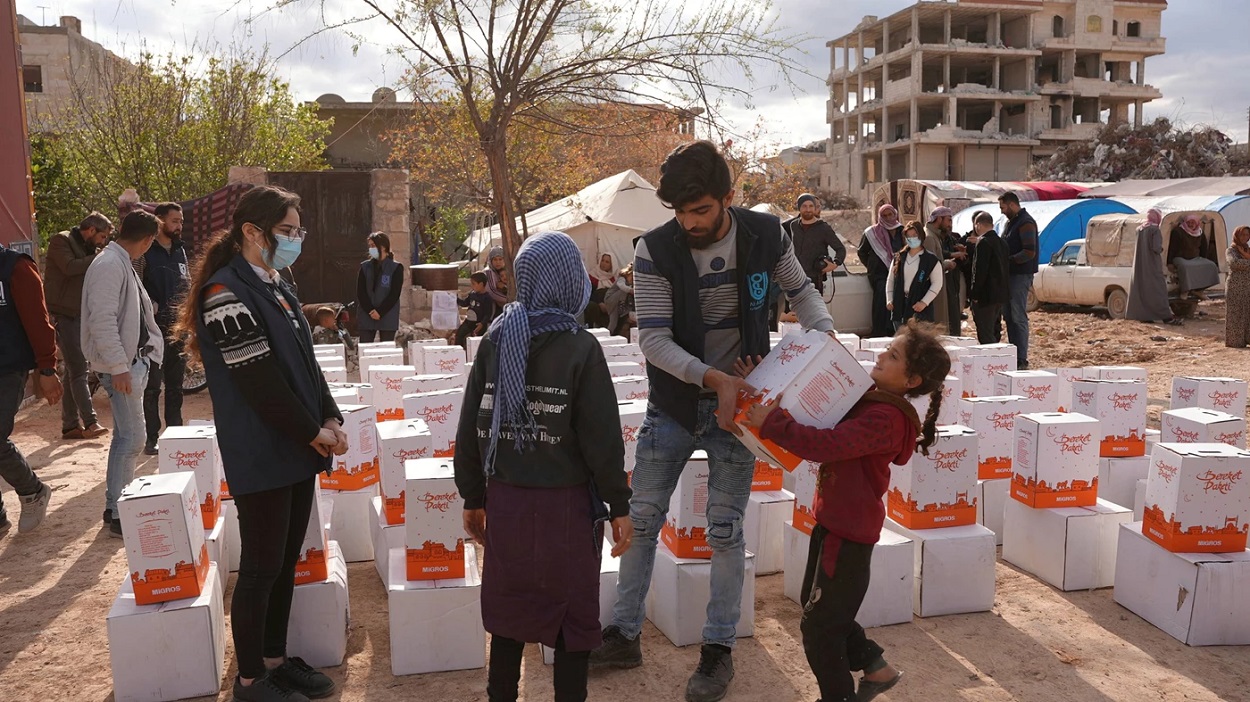
Local Christians were among the first responders to the massive earthquake in Turkey and Syria that left more than 5,000 people dead and more than 20,000 injured. They just don’t know how to make sense of it.

“God have mercy on us, Christ have mercy,” said Gokhan Talas, founder of the evangelical Miras Publishing Ministry in Istanbul. “This is our only spiritual reflection right now.”

His first instinct was to go. But as reports came in of deep snowfall and damaged roads, he shifted gears. His wife stayed up all night making phone calls to believers in Malatya, trying to coordinate aid. And with members of his church and Protestant congregations throughout Turkey, they bought blankets, medicines, baby formula, and diapers to send onward to the afflicted areas.

“From this side of eternity, nothing is clear,” Talas said. “But our sweet Lord is suffering with us.”

He warned of scams preying on the outpouring of generosity from around the world, even among the small Turkish evangelical community of roughly 10,000 believers.

Their own supplies are being donated through İlk Umut Derneği—in English, First Hope Association (FHA), a Turkish Protestant NGO working closely with the local Red Crescent and AFAD, Turkey’s Disaster and Emergency Management Authority.

Officials said more than 5,000 buildings have been destroyed by the 7.8 magnitude quake. More than 13,000 search and rescue personnel have been deployed, supplying 41,000 tents, 100,000 beds, and 300,000 blankets. Almost 8,000 people have been rescued so far.

This includes pastor Mehmet and his wife Deniz in Malatya, longtime friends of Talas, who spent half the day freezing under the rubble until neighbors succeeded in pulling them out.

Founded in 2014 to assist the refugee flood from Syria, FHA works “shoulder-to-shoulder” with the Association of Protestant Churches, said Demokan Kileci, chairman of the FHA board.

Conveying the first batches of aid in a solid 4×4 vehicle, it took him 14 hours—double the standard time—to drive 440 miles southeast from his home in Turkey’s capital Ankara to Gaziantep, a scant 20 miles south of the epicenter.

One of FHA’s five mobile hygiene units—and a mobile bakery—stayed there. Another two were dispatched to Antakya, the ancient biblical Antioch, and a fourth sent to Kahramanmaras, site of a 7.5 magnitude aftershock.

The fifth went to Diyarbakir, another 200 miles east. Overall, 10 Turkish cities suffered devastation. With Syrian cities included, the distance covered is greater than an imagined epicenter in New York City destroying the eastern seaboard from Boston to Washington, DC.

“We are doing whatever we can to help our country,” said Kileci. “And right now, prayer is the most important.”

Multiple houses of prayer have been badly damaged. The list is long. In Turkey, it includes…

This article was originally published at Christianity Today on February 7, 2023. Please click here to read the full text.

Categories
Christianity Today Europe Middle East Published Articles

Is It ‘Christian’ for Europe to Welcome Refugees from Ukraine but Not Syria?

Image: Together for the Family

As Ukraine continues to be battered by Russia, Syrian refugees know what to pray for better than most.

“This is what happened to us,” said refugee students at the Together for the Family center in Zahle, Lebanon. “We don’t want it to happen to others.”

Born in Homs, Syria, to a Baptist pastor, Izdihar Kassis married a Lebanese man and then founded the center in 2006. She shifted her ministry to care for “her people” when the Syrian civil war started in 2011. About 50 traumatized teenagers find counseling there every year, and 300 have graduated from the center’s vocational programs.

As the refugees discussed the “horrible” situation in Europe during the weekly chapel service, Kassis suggested intercession. Bowing their heads, the 40 children and 30 Syrian staff and volunteers knew better than anyone what to ask for.

But one child wanted to be sure the Ukrainians would know of their solidarity. He went outside into the cold and snow of the Bekaa Valley, where most of Lebanon’s 1.5 million Syrian refugees take shelter.

His sign proclaimed, “Praying for peace.”

Since the invasion, about 4 million of Ukraine’s population of 43 million have become refugees. Another 6.5 million are internally displaced.

Yet 11 years since its civil war, most of Syria’s 6.8 million refugees—out of a population of 20 million—still live in limbo. Europe largely shut its doors, certainly in comparison to its warm welcome of those fleeing Russian aggression.

Many have taken offense.

“There is the perennial double standard and selective outrage of global news media, Western governments (and, sadly, even Western Churches) when it comes to reporting on wars, conflicts and the plight of refugees,” stated Vinoth Ramachandra from Sri Lanka, a senior leader with the International Fellowship of Evangelical Students (IFES), affiliated with InterVarsity.

“If Ukrainians were not blonde and blue-eyed, would their plight have occasioned [this] outpouring of compassion?”

It is a fair question. Is European hypocrisy—even racism—on full display?

Arab Christians are not quick to judge.

Born in Syria, Joseph Kassab today heads the Beirut-based Supreme Council of the Evangelical Churches in Syria and Lebanon. He notes the more than one million countrymen taken in by Europe—Western Europe, primarily. Eastern nations, he said, are still recovering from the communist era and have not yet developed the same sense of human rights.

There should be no discrimination, yet even this he understands. The early church struggled to open its mission to non-Jews.

“Racism is in every society,” Kassab said. “But Europeans have been more welcoming to the Syrians than many Lebanese.”

Being Muslim is a factor, said Elie Haddad, president of Arab Baptist Theological Seminary in Beirut. But also important is that most are rural, uneducated farmers. Legitimate or not, people are uncomfortable with difference.

Europe is a bit hypocritical, but so is he.

“If a faculty member needs shelter, I will open my home,” Haddad said. “For a stranger, not so much.” One who did open his home is a Frenchman…

This article was originally published at Christianity Today on March 25, 2022. Please click here to read the full text.

Categories
Prayers

Lebanon Prayer: Syria Intertwined

God,

Prayers are said for gasoline, as people wait in line.

Naught to do but ask your help in hope it will remain.

And prayers are said for Shiite sheikh, as people mourn his death.

Tributes came from every sect, remembering his cause.

But do these prayers all miss the mark? Do they reveal a focus on

The nation as deciding force? On Lebanon, strong and sovereign?

God, we pray that this might be, for agency and power.

Yet Syria—torn by civil war—is still the land of reckoning.

The novel solution proposed by the States would power Beirut via Cairo-Amman.

But to work it needs sign-off, Damascus to say: Yes and you’re welcome, we’re back in the fold.

And even Resistance will flow from the north, as oil imported from Tehran docks there.

Avoiding the sanctions it’s loaded on trucks, to then cross the border—a smuggling in reverse?

God, why must work-around characterize our land?

God, can we not solve our problems ourselves?

Ever so clever, dodge this way and that—as names and portfolios circle and fall.

Ever the posture in cabinet formation: To squeeze a concession while all around burns.

God, forgive us.

God, rebuke.

God, empower us.

God, inspire.

What can we pray we have not asked already? God, we are tired. We are weary, depressed.

We need you to lift up our spirits and heal us. We need a reminder your justice will come.

Until then give us patience in every gas station. May prayers be exchanged, not gunfire or fists.

And honor the efforts of every true cleric, aiming to serve you through country and sect.

God, maybe Syria intertwines with our nation.

Let these prayers—centered here—bless us both, and beyond.

Amen.


To receive Lebanon Prayer by WhatsApp, please click this link to join the closed comments group.

Lebanon Prayer places before God the major events of the previous week, asking his favor for the nation living through them.

It seeks for values common to all, however differently some might apply them. It honors all who strive on her behalf, however suspect some may find them.

It offers no solutions, but desires peace, justice, and reconciliation. It favors no party, but seeks transparency, consensus, and national sovereignty.

How God sorts these out is his business. Consider joining in prayer that God will bless the people and establish his principles, from which all our approximations derive.

Lebanon Prayer places before God the major events of the previous week, asking his favor for the nation living through them.

It seeks for values common to all, however differently some might apply them. It honors all who strive on her behalf, however suspect some may find them.

It offers no solutions, but desires peace, justice, and reconciliation. It favors no party, but seeks transparency, consensus, and national sovereignty.

How God sorts these out is his business. Consider joining in prayer that God will bless the people and establish his principles, from which all our approximations derive.


Sometimes prayer can generate more prayer. While mine is for general principles, you may have very specific hopes for Lebanon. You are welcome to post these here as comments, that others might pray with you as you place your desires before God.

If you wish to share your own prayer, please adhere to the following guidelines:

1) The sincerest prayers are before God alone. Please consult with God before posting anything.

2) If a prayer of hope, strive to express a collective encouragement.

3) If a prayer of lament, strive to express a collective grief.

4) If a prayer of anger, refrain from criticizing specific people, parties, sects, or nations. While it may be appropriate, save these for your prayers alone before God.

5) In every prayer, do your best to include a blessing.

I will do my best to moderate accordingly. Thank you for praying for Lebanon and her people.

Categories
Prayers

The Syrian Vote

God,

The question is valid: Why are they here?

Tooting their horns and waving their flags.

If Assad you want, then go back to Syria.

Stop milking our welcome; your country is safe.

The question is valid, perhaps even fair.

But reactions conflict with your welcome of us.

God we are sinners, and yet received grace.

And still we keep sinning. We spit in your face.

In this world we are strangers, depend on your care.

So we can give freely, of what we receive.

Now it is less.

Am I also so?

But God, they have smuggled the best of our goods.

They eat up resources in our time of want.

Yet they fled their homeland. They left all, to live.

God, it is politics – make right the wrongs.

Give peace to Syria. Help them return home.

And of Lebanon’s policy: What to decide?

May it honor the nation, then, also the guest.

Repatriation: A respectful return.

Refugee care: Needs aid from abroad.

But Lebanese also are living impoverished.

As one member of government insulted the Gulf.

He lost his position. Did he set back the nation

In efforts to regain financial support?

And at home politicians aired blame in the parliament.

Give push to the leaders to come to accord.

Guide them as they vie for the rights of their sect,

To not lose the nation in privilege they dwell.

God, in all politics, protect the heart.

Let us show mercy. We need it ourselves.

Amen.


To receive Lebanon Prayer by WhatsApp, please click this link to join the closed comments group.

Lebanon Prayer places before God the major events of the previous week, asking his favor for the nation living through them.

It seeks for values common to all, however differently some might apply them. It honors all who strive on her behalf, however suspect some may find them.

It offers no solutions, but desires peace, justice, and reconciliation. It favors no party, but seeks transparency, consensus, and national sovereignty.

How God sorts these out is his business. Consider joining in prayer that God will bless the people and establish his principles, from which all our approximations derive.

Lebanon Prayer places before God the major events of the previous week, asking his favor for the nation living through them.

It seeks for values common to all, however differently some might apply them. It honors all who strive on her behalf, however suspect some may find them.

It offers no solutions, but desires peace, justice, and reconciliation. It favors no party, but seeks transparency, consensus, and national sovereignty.

How God sorts these out is his business. Consider joining in prayer that God will bless the people and establish his principles, from which all our approximations derive.


Sometimes prayer can generate more prayer. While mine is for general principles, you may have very specific hopes for Lebanon. You are welcome to post these here as comments, that others might pray with you as you place your desires before God.

If you wish to share your own prayer, please adhere to the following guidelines:

1) The sincerest prayers are before God alone. Please consult with God before posting anything.

2) If a prayer of hope, strive to express a collective encouragement.

3) If a prayer of lament, strive to express a collective grief.

4) If a prayer of anger, refrain from criticizing specific people, parties, sects, or nations. While it may be appropriate, save these for your prayers alone before God.

5) In every prayer, do your best to include a blessing.

I will do my best to moderate accordingly. Thank you for praying for Lebanon and her people.

Categories
Prayers

Lebanon Prayer: Oxygen

God,

Syria sent oxygen – Syria.

Syria in civil war. Syria in disarray.

Syria helped Lebanon.

Bless them for it.

But some say Damascus is behind many ills.

Smuggling in medicine, dollars, and flour.

Sending back refugees while Cesar Act smothers;

The least they can give is a few tanks of air.

Syria also needs prayer, God.

Raise up intercessors.

But so do the COVID sick struggling to breathe.

Their numbers keep rising, striking down Easter.

As restaurants open, the churches are squeezed.

Permission is needed to enter for worship

With gatherings nixed and a lockdown imposed.

It is reasonable, God.

But where are the vaccines?

Amid stuttered rollout, private sector takes over.

Many say Lebanon runs better through them.

But who can afford even 38 dollars?

As politicians distribute in areas of support.

The political class that cannot form a government

Finds it way with the patronage voters demand.

Bless them, God.

They take care of their own.

But give Lebanon better.

Take care of the whole.

For now, far too many are flooding the hospitals.

Preventative care is neglected when poor.

Meanwhile ambassadors shuttle through nations.

Are deals being cooked, and at whose expense?

So what can be done, God?

Where is the hope?

Or is Lebanon destined to just trudge along?

It could be worse.

It could be Syria.

But even they find ways to give.

God, let not generosity be lost in Lebanon.

Even in poverty grant fullness of heart.

Destroy not its character, neither the nation.

Rebuild the foundations upon what is good.

Lebanon is good, God.

Help the people remember.

But may they turn to you—for justice, righteousness, and forgiveness.

This is true oxygen, sustaining the soul.

Amen.


To receive Lebanon Prayer by WhatsApp, please click this link to join the closed comments group.

Lebanon Prayer places before God the major events of the previous week, asking his favor for the nation living through them.

It seeks for values common to all, however differently some might apply them. It honors all who strive on her behalf, however suspect some may find them.

It offers no solutions, but desires peace, justice, and reconciliation. It favors no party, but seeks transparency, consensus, and national sovereignty.

How God sorts these out is his business. Consider joining in prayer that God will bless the people and establish his principles, from which all our approximations derive.

Lebanon Prayer places before God the major events of the previous week, asking his favor for the nation living through them.

It seeks for values common to all, however differently some might apply them. It honors all who strive on her behalf, however suspect some may find them.

It offers no solutions, but desires peace, justice, and reconciliation. It favors no party, but seeks transparency, consensus, and national sovereignty.

How God sorts these out is his business. Consider joining in prayer that God will bless the people and establish his principles, from which all our approximations derive.


Sometimes prayer can generate more prayer. While mine is for general principles, you may have very specific hopes for Lebanon. You are welcome to post these here as comments, that others might pray with you as you place your desires before God.

If you wish to share your own prayer, please adhere to the following guidelines:

1) The sincerest prayers are before God alone. Please consult with God before posting anything.

2) If a prayer of hope, strive to express a collective encouragement.

3) If a prayer of lament, strive to express a collective grief.

4) If a prayer of anger, refrain from criticizing specific people, parties, sects, or nations. While it may be appropriate, save these for your prayers alone before God.

5) In every prayer, do your best to include a blessing.

I will do my best to moderate accordingly. Thank you for praying for Lebanon and her people.

Categories
Americas Christianity Today Published Articles

Trump and Biden Disagree on Sanctions. So Do Evangelicals Outside the US.

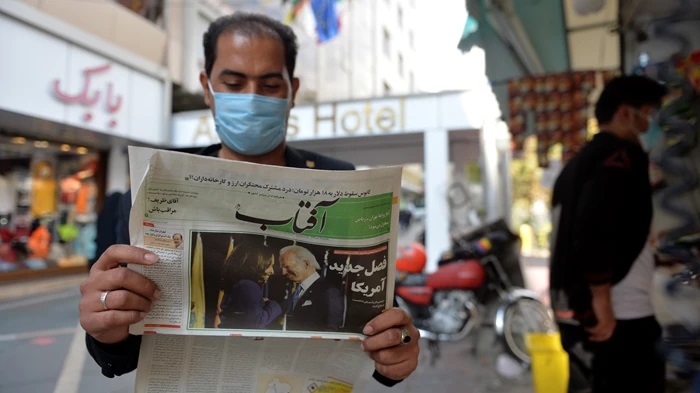
Image: Anadolu Agency / Getty Images The headline reads: A New Era for America

If President-elect Joe Biden makes good on his campaign rhetoric, his sanctions policy will meet the approval of the World Evangelical Alliance (WEA).

Back in April, as even the strongest nations reeled from COVID-19, then-candidate Biden petitioned the Trump administration for sanctions relief on the hardest-hit nations—including Iran and Syria.

“In times of global crisis, America should lead,” he said.

“We should be the first to offer help to people who are hurting or in danger. That’s who we are. That’s who we’ve always been.”

In September, the WEA joined Caritas, the World Council of Churches, and others to similarly petition the United Nations’s Human Rights Council.

“We are deeply concerned about the negative economic, social, and humanitarian consequences of unilateral sanctions,” read their statement, ostensibly singling out the United States and its European allies.

“It is a legal and moral imperative to allow humanitarian aid to reach those in need, without delay or impediment.”

One month later at the UN, China led 26 nations—including sanctions-hit Cuba, North Korea, Iran, Russia, Syria, and Venezuela—to assert that the economic impact impedes pandemic response and undermines the right to health.

This is “disinformation,” said Johnnie Moore, appointed by President Donald Trump to serve on the independent, bipartisan US Commission on International Religious Freedom (USCIRF).

He called the WEA statement “almost indefensible.”

“Sanctions against countries that imperil their citizens and the world is good policy,” Moore said. “It has proven to be an effective alternative to save lives, alongside diplomatic channels to coerce long-term positive behavior.”

Western nations had already issued fact sheets to undermine China’s claim.

Detailing food, medical, and humanitarian exemptions, the US and European Union (EU) demonstrated that sanctions target regimes and their supporters, not the general population. Christian Solidarity International, however…

This article was originally published by Christianity Today on January 15, 2021. Please click here to read the full text.

Categories
Prayers

Lebanon Prayer: All or Nothing

God,

The cry of the uprising lumped all together. ‘All of them means all of them.’

Maybe, this time, there might be proof?

In stunning reversal the parliament answered. Open the books, and count every dime.

For week after week the central bank dithered. Offering files while holding back some.

And now that the auditing firm has surrendered, lawmakers pledge a transparent probe.

Every single one.

Every single ministry.

From central bank to local council, the people will know where their money went.

If they keep their word.

God, hold them to it. God, honor their resolve.

God, clean Lebanon thoroughly.

God, have you answered prayer?

Perhaps a first step, but not yet entire.

Many are cynical. Many have cause.

And France renewed its efforts for humanitarian help.

They continue to say they will bypass the system. No national aid without proof of reform.

But donors will gather to assist the people. Bless every dollar to reach the right home.

May all of them mean all of them. Every poor, and every needy.

And every Syrian also.

A wayward one in the north killed a citizen. The Lebanese town then demanded all leave.

Over 200 families fled in their terror. Some ran from houses a mob set ablaze.

May they find shelter in time of displacement. May they find also return to their land.

Many in Lebanon have welcomed the stranger. But many remind Lebanese are now poor.

God, lift the burden that weighs down this nation. And rebuild the neighbor that lies to the east.

Syrians are not monolithic.

And neither are Lebanon’s judges.

The senior policeman called them corrupt. Only five in a hundred weigh justly the scales.

Is he right? Does all mean all?

God, you know.

Make clear your judgments. Set forth the truth.

And may it lead Lebanon to long for your grace.

All does mean all, for all have sinned.

Every judge. Every Syrian. Every citizen. Every lawmaker.

And yet you regard us as singular souls.

Apply your salvation to all who will seek it.

Give national rescue even if none deserve.

In your mercy, God.

With your justice.

Make things right.

Amen.


To receive Lebanon Prayer by WhatsApp, please click this link to join the closed comments group.

Lebanon Prayer places before God the major events of the previous week, asking his favor for the nation living through them.

It seeks for values common to all, however differently some might apply them. It honors all who strive on her behalf, however suspect some may find them.

It offers no solutions, but desires peace, justice, and reconciliation. It favors no party, but seeks transparency, consensus, and national sovereignty.

How God sorts these out is his business. Consider joining in prayer that God will bless the people and establish his principles, from which all our approximations derive.

Lebanon Prayer places before God the major events of the previous week, asking his favor for the nation living through them.

It seeks for values common to all, however differently some might apply them. It honors all who strive on her behalf, however suspect some may find them.

It offers no solutions, but desires peace, justice, and reconciliation. It favors no party, but seeks transparency, consensus, and national sovereignty.

How God sorts these out is his business. Consider joining in prayer that God will bless the people and establish his principles, from which all our approximations derive.


Sometimes prayer can generate more prayer. While mine is for general principles, you may have very specific hopes for Lebanon. You are welcome to post these here as comments, that others might pray with you as you place your desires before God.

If you wish to share your own prayer, please adhere to the following guidelines:

1) The sincerest prayers are before God alone. Please consult with God before posting anything.

2) If a prayer of hope, strive to express a collective encouragement.

3) If a prayer of lament, strive to express a collective grief.

4) If a prayer of anger, refrain from criticizing specific people, parties, sects, or nations. While it may be appropriate, save these for your prayers alone before God.

5) In every prayer, do your best to include a blessing.

I will do my best to moderate accordingly. Thank you for praying for Lebanon and her people.

Categories
Prayers

Lebanon Prayer: Geography

God,

Lebanon has entered a ‘war of the maps.’

Let not the battles be fought within.

A strained round of talks continued with Israel. Each side drew their lines out into the sea.

The disputed middle is ever increasing. But both need agreement to extract from the deep.

God, give them good will.

Let law be clear and justice blind.

But regional politics also.

Syria hosted a conference on refugees. Lebanon said it is time they return.

The Western alignment gave it no credence. Must the leadership change before they go home?

God, give them welcome.

Let the stranger be honored, but not overstay.

Good fences—and borders—help make good neighbors. Let the two peoples be so once again.

And in Lebanon, let them remain.

An unclear assault struck an imam in Jbeil. Muslims protested in Tripoli north.

Leaders demanded a joint Christian statement. One called out France and religious insult.

God, give them clarity.

Let peace prevail. Let facts be known.

Let the spirit of unity drive out division. Thwart all who manipulate means to their ends.

For they are not two peoples, God. They are citizens.

And of Syria, they are brothers.

Even of Israel, they are made in your image.

You divided the nations to frustrate our arrogance. Instead we direct it to rivals outside.

And sometimes, within.

A map is a tool. A border is good. We are not the other.

It is not identity. It is not enmity. And the other is not independent of us.

But war is of the devil.

Lebanon has known this demon for too long, accommodating its spirit.

Drive it away definitively, God. In your holy name.

Amen.


To receive Lebanon Prayer by WhatsApp, please click this link to join the closed comments group.

Lebanon Prayer places before God the major events of the previous week, asking his favor for the nation living through them.

It seeks for values common to all, however differently some might apply them. It honors all who strive on her behalf, however suspect some may find them.

It offers no solutions, but desires peace, justice, and reconciliation. It favors no party, but seeks transparency, consensus, and national sovereignty.

How God sorts these out is his business. Consider joining in prayer that God will bless the people and establish his principles, from which all our approximations derive.

Lebanon Prayer places before God the major events of the previous week, asking his favor for the nation living through them.

It seeks for values common to all, however differently some might apply them. It honors all who strive on her behalf, however suspect some may find them.

It offers no solutions, but desires peace, justice, and reconciliation. It favors no party, but seeks transparency, consensus, and national sovereignty.

How God sorts these out is his business. Consider joining in prayer that God will bless the people and establish his principles, from which all our approximations derive.


Sometimes prayer can generate more prayer. While mine is for general principles, you may have very specific hopes for Lebanon. You are welcome to post these here as comments, that others might pray with you as you place your desires before God.

If you wish to share your own prayer, please adhere to the following guidelines:

1) The sincerest prayers are before God alone. Please consult with God before posting anything.

2) If a prayer of hope, strive to express a collective encouragement.

3) If a prayer of lament, strive to express a collective grief.

4) If a prayer of anger, refrain from criticizing specific people, parties, sects, or nations. While it may be appropriate, save these for your prayers alone before God.

5) In every prayer, do your best to include a blessing.

I will do my best to moderate accordingly. Thank you for praying for Lebanon and her people.

Categories
Christianity Today Middle East Published Articles

Trapped in Lebanon, Sudanese Students Find Refuge at Seminary

Image courtesy ABTS

While Liberty University came under criticism for allowing students the option to stay on campus during the coronavirus outbreak, many other schools were also faced with a dilemma concerning the 1.1 million students who came from abroad.

According to a Quartz survey of 36 universities who host a third of the United States’ international students, 26 told those students to leave campus.

Penn State gave three days notice. Harvard gave five. Duke, among others, offered emergency financial aid to help international students return home. Princeton allowed their residency to continue—until the end of the semester.

But Sudanese students at Lebanon’s Arab Baptist Theological Seminary (ABTS) did not have a choice—even with tickets in hand.

Lebanon was one of the first nations to implement COVID-19 restrictions. Its first case was recorded on February 21, and by March 9 schools were shut down.

Four days later, at a regularly scheduled seminary picnic, Bassem Melki prepared to break the news.

“It was a joyous atmosphere,” said the ABTS dean of students, “but I had sadness in my heart because I knew what I had to say.”

Founded in 1960 and located in the mountains overlooking Beirut, the seminary…

This article was first published at Christianity Today, on June 10, 2020. Please click here to read the full text.
Categories
Christianity Today Middle East Published Articles

Arab Christians Have Lost Easter Before. Here’s What They Learned.

Losing Easter Churches
House of St Ananias, Damascus

This article was first published at Christianity Today, on April 3, 2020.

Christians around the world are about to lose their usual Easter celebration—the highlight of most congregations’ annual life together.

Yes, there will be a livestream. Their pastor will likely call them. They may even chat on Zoom with friends and family.

But it will be different. The community of believers has been sundered by the new coronavirus. And threatened with it is Christ’s body, his bride, his temple for his presence in the world.

If there is any consolation, it is that this is not the first time.

“There are forces of nature—and forces of man—that challenge our ability to experience the presence of Christ,” said Gregory Mansour, the Maronite bishop of Brooklyn.

“[COVID-19] is different from persecution. But it is the same.”

A born-again Catholic led into personal relationship with Christ by the Navigators, Mansour later reconnected with his ancient Lebanon-based church. His clerical colleagues there received thousands of ISIS-fleeing Christians from Syria and Iraq.

“There was a deliberate desire to obliterate churches, hymnals, prayers, and people,” he said. “The only thing we had left was…

Please click here to read the full article at Christianity Today.

Categories
Christianity Today Middle East Published Articles

Soleimani’s Death Doesn’t End Iran’s Influence on Middle East Christians

Soleimani Funeral
(via Fars News Agency)

This article was first published at Christianity Today, on January 28, 2020.

Middle East Christians might shrug their shoulders. They might even fret and worry. But perhaps Qassem Soleimani got what he deserved.

“We regret what happened. We do not want anyone to die, because Christianity wants the good of all,” said Ashty Bahro, former head of the Kurdistan Evangelical Alliance.

“But a person leads himself to his own destiny.”

Soleimani, head of Iran’s special operations Quds Force, was killed by a US rocket strike on January 3. It was a rapid escalation following the Iran-linked death of an American contractor, a retaliatory attack on the responsible Iraqi militia, and the storming of the US embassy in Baghdad.

According to the US State Department, Soleimani, who reported directly to Iranian Supreme Leader Ayatollah Khamenei, was responsible for 17 percent of American deaths in Iraq from 2003 to 2011.

He also enraged Sunni Muslims by engineering the subsequent Iranian defense of Syria’s regime, led by President Bashar al-Assad. With Russia and the Iran-backed military wing of Lebanon’s Hezbollah, the shelling of rebel-held cities resulted in the displacement of thousands during Syria’s civil war.

But Soleimani was also acclaimed for his role in fighting ISIS, personally directing Iraqi militias from the front lines.

Thus, Middle East Christians have mixed feelings about his death—and the immediate aftermath.

Some Syrian believers see no benefit to anyone.

“Iran was working with the US government in certain agreements. Why did you destroy them?” asked Maan Bitar, pastor of the Presbyterian churches in Mhardeh and Hama, noting both the fight against ISIS and the nuclear deal.

“This will prompt a severe reaction that will hurt…”

Please click here to read the full article at Christianity Today.

Categories
Americas Christianity Today Published Articles

The Road from Damascus: How an Evangelical Syrian Spoke at Harvard’s Commencement

Tony Alkhoury
Image: Courtesy of Tony Alkhoury

This article was first published at Christianity Today on November 7.

Following Turkey’s recent incursion into Syria and establishment of a “safe zone” in coordination with Russia, the beleaguered nation faces another refugee crisis. According to the United Nations, 6.7 million Syrians have registered with their High Commission for Refugees. Turkey hosts the largest share, with 3.4 million, followed by Lebanon with 1 million.

The United States: 21,645, according to official State Department figures, from the start of the Syrian civil war in 2011. Of those, 536 were admitted in the last 12 months.

Of the total, 21,245 are Muslim, compared to only 211 Christians, including five Protestants. Tony Alkhoury is not one of them. But his is a story of potential for those allowed in.

Born in Homs and an evangelical Christian, he is 1 of 450 Syrians in the US on an active student visa.

In Arabic, Alkhoury’s family name means “the priest.” Currently pursuing a PhD in practical theology at Fuller Seminary, in 2016 he began a unique cross-cultural ministry adventure—at Harvard University.

Through it drove the divinity student to the depths of depression, it ended with rapturous applause.

“I want to live, I want to love, and I want to be loved,” he told the student body, which selected him to deliver the commencement address this past May. “I want to fight to keep hope and make meaning of all the things that I do not have control over.”

In the prime of his life, Alkhoury witnessed the destruction of Syria. America might have been a refuge for many, until President Donald Trump’s travel ban.

Syrian visas reached a high point of 15,479 in 2016, the year of Alkhoury’s arrival. In January 2017, Trump issued his executive order banning citizens of initially seven Muslim-majority nations—challenged consistently in the courts and modified to include non-Muslim countries—and the number dipped to 3,024. In 2018, it fell to 41.

The meaning of it all, for which Alkhoury has long been seeking, has been years in the making.

Born in 1984 to Orthodox parents, he attended the local Alliance church in Homs. In 2005, he felt a call to full-time ministry.

Alkhoury became a youth pastor, volunteering also in peacemaking initiatives. Initially excited by the Arab Spring…

Please click here to read the full article at Christianity Today.

Categories
Christianity Today Middle East Published Articles

Syrian Christians Brave Insecurity to Stay Behind and Help

Syria Open Doors
via Open Doors USA

This article was first published at Christianity Today, on October 18.

Though most of the fighting has stopped for now, Turkey’s incursion on Kurdish-controlled northern Syria has left another humanitarian crisis in its wake.

Local churches as well as Christian organizations like Open Doors and Preemptive Love Coalition have prioritized caring for the citizens who took the risk to stay behind and helping the displaced return.

Last Saturday night, after three days of Turkish bombing, the Alliance Church of Qamishli met to make a decision. Would they flee for safety, or remain and help?

To some degree they had no choice.

Fadi Habsouna, a father of two, was injured when missiles hit his home and ruined his shop. His wife is in critical condition. His grandfather’s home was destroyed by a bomb. The pastor housed them in church-owned property, and decided to remain to assist the family, and others suffering similarly.

The church agreed; only eight families would leave.

“These are extremely brave people who want to be salt and light in their communities,” said David Curry, CEO of Open Doors USA, who relayed this story from his field staff. “They want to maintain the presence of Jesus and reach out.”

Open Doors is better known for its advocacy work on behalf of the persecuted; Syria ranks no. 11 on its World Watch List of places hardest to be a Christian. Its local partners keep a low profile in order to provide on the ground assessment. But the crisis in Syria has driven them to humanitarian aid.

It is not the first time. Following the rise of ISIS in 2014, Open Doors helped 150,000 Christians located in camps along the Turkish and Lebanese borders. Now their community hubs are providing food, medical care, hygiene kits, and temporary shelter in the northeast Syrian towns affected by the Turkish incursion.

“Christians have to make hard choices,” Curry said. “Leave the communities they were raised in, move inland, or …”

Please click here to read the full article at Christianity Today.