Categories
Arab West Report Middle East Published Articles

Q&A with an Expert in Customary Reconciliation Sessions

This article was first published at Arab West Report.

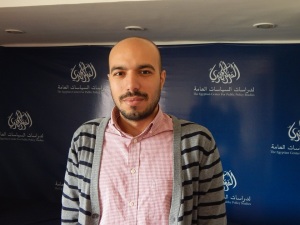
Hamdi Abdel Fattah
Sheikh Hamdi Abd al-Fattah

For many Christians in Egypt, customary reconciliation sessions (CRS) represent one of the most visceral symbols of discrimination against their community. Existing outside the scope of formal law and justice, CRS offer a quick alternative to the lengthy judicial process as village elders and religious leaders decide matters of guilt, innocence, and punishment.

In some cases, however, punishment against Copts has been collective. In others, the only guilt is in breaking local custom, not law. At times, Muslims guilty of crimes have been ‘reconciled’. And often the CRS is conducted in the presence of police, lending the appearance of state legitimacy to proceedings.

But does this description characterize the CRS in its entirety?

In 2010 Arab West Report conducted a major study into the practice, entitled Social Reconciliation: Pre- and Post-Conflict in the Egyptian Setting. Using a case study from Izbat Bushra, it examined the factors behind and efficacy of this common practice.

In July 2015, AWR investigated a CRS with Georgetown University PhD candidate Matthew Anderson which drove a Christian family from their village in Kafr Darwish. Matthew’s report was published on January 14 and can be found here. In November, 2015 AWR translated a document supplied by a CRS practitioner, Sheikh Hamdi Abd al-Fattah of Maghagha, detailing the proscribed penalties for various offenses.

And on January 16, 2016, AWR returned to Maghagha to allow Sheikh Hamdi to field questions from a collection of interested Egyptians and foreign residents. The session was held in a church in the village of Qufada, where Fr. Yu’annis maintains a strong friendship and CRS cooperation with Sheikh Hamdi.

The following is a summary of the questions asked of the sheikh and the answers he provided.

CRS can be compared to the origins of English common law. Do you find it to be widely practiced in Egypt because of social and cultural acceptance?

Yes, this is correct. CRS is completely different from the judiciary system in terms of speed, but it is like it in terms of Muslims and Christians being equal before the law. But in Upper Egypt people respect our traditional customs more than the law, and fear the punishment of the CRS more than the judiciary. Our proceedings help contain problems before they spread, whether they are between Muslims, Christians, or one of each party.

What is your background as a CRS practitioner?

I have studied Shari’a, obtained a diploma in international arbitration from Cairo University, and am a consultant with the International Arbitration Association and a member in the Egyptian Committee for Customary Arbitration.

How did the rulings in the translated document come to be agreed upon?

Most were the judgments given in actual cases, but others were decided by local sheikhs in order to help prevent these cases from occurring in reality.

Why are all the penalties given in terms of specified fines?

The formal law system can prescribe either a fine or a jail sentence, but not the CRS. But in three cases the CRS is sometimes able to authorize a greater punishment and kick the offending party out of the village, with security implementing the terms. These involve murder, sectarian conflict, or sexual assault.

Do both parties have to agree in order to enter a CRS?

Yes, usually the victim comes to us first, and then we try to get the accused to come also. [At this Sheikh Hamdi showed an official CRS document with the signatures of both parties.]

If the accused does not present himself there are two methods to gain his assent for the CRS. First, we can threaten to involve the police. Or second, we bring the issue to the elders of the village, who are generally greatly respected. They then know how to get all parties to comply.

Are witnesses needed in the proceedings?

Yes. If there is conflicting testimony both sides present their witnesses and we decide between them. But if there are no witness both parties are put on oath by swearing on the Qur’an or the Bible, and then we evaluate the case by what they say. Sometimes police are present, but they do not interfere and lend only their legitimacy.

Some of the penalties demand a very high fine. What if they person cannot pay?

Customary law does not judge the person alone, but his family as well. If the person cannot pay on his own the family must assume the responsibility, or someone else on their behalf.

In the case of murder and if the accused admits to the crime, he will take a symbolic burial shroud to the victim’s family. This signifies him saying to them, ‘My life is yours, you can kill me or not as you choose.’ But always the custom is to forgive and accept the shroud in place of his life.

What about domestic disputes between husband and wife? Can they be part of CRS?

Marriage relations have their own set of regulations, as do other inter-family relationships.

How are the people educated in customary laws?

This is the responsibility of parents, who assume it naturally as part of society. But one important aspect of the CRS is that it is public. A lesson is always stronger if it is both seen and heard.

How can your example of cooperation with Fr. Yu’annis spread throughout Egypt?

We are not a backwards people; we have values and a heritage of civilization. The type of relationship I have with Fr. Yu’annis is not unique, it is found nationwide. Western media is not just, for it shows you only what will reinforce the image it wants to present, and misrepresents our reality of cooperation.

In Kafr Darwish, I blame our local media, for when the Christians were kicked out of their village, it failed to report that in another location a Muslim was kicked out of his village for similar circumstances.

A man was insulting women on social media in Ishneen al-Nasara, both Muslims and a few Christians. I presided over the session and banned him from the village for a period of five years. This penalty was proscribed regardless of his religion, and resembles the circumstances found in Kafr Darwish.

What I want now is for you to return to your countries and speak about us correctly. Will you do that?

Categories
Excerpts

Egypt: African Handball Champion

Egypt Handball
(from Egypt2016.com)

Congratulations to the Egyptian national handball team, for winning its sixth continental title on Saturday.

While the national soccer team has slipped in quality since the revolution, the handball team holds steady as one of Africa’s best, defeating Tunisia in a hard-fought 21-19 final on home soil.

Twelve nations took part in the competition, but only three have ever won the title. The sport is dominated by North Africa, with Tunisia and Algeria the other traditional powers.

But this year, Angola shocked defending champion Algeria to claim third place. It was Egypt’s first title since 2008, and now qualifies with Tunisia for the world championships in France.

Many Americans are not familiar with the sport of handball, but I highly recommend it for its fast-paced strategy and athleticism. So also with squash, another sport at which Egypt excels.

But while Egypt takes pride in its success in these sports, it is soccer that moves the national consciousness. A revival on the pitch could significantly contribute to lifting the country’s spirits.

But while waiting, celebrate with Egypt a considerable accomplishment.

Categories
Prayers

Friday Prayers for Egypt: Revolution Blasphemy

Flag Cross Quran

God,

Another revolutionary anniversary has come and gone, this one quieter than in years past. But as the narrative is tested, so also the freedoms that came in its wake.

Give wisdom to society, to know where it stands.

Was the revolution a conspiracy? So say many pundits. Was it a national moment? So say many officials.

Most important God, make the truth known. However nuanced the answer, help Egypt understand rightly the last five years of tumult.

Prod all to remember. Preserve all who record. Protect all who reveal. Publish all in transparency.

Discredit all who manipulate. Honor all who build.

And in the building, come consensus. In particular about right and wrong.

For another figure fell this week to the blasphemy law, God. Criticizing the practice of a holiday, she slighted a tradition of the religious. And for it a judge sent her to jail.

There is a truth about you, God. Yet of it people differ. These differences matter in faith, but they also matter to a people.

May they not be offended, nor give offense. But what when they are? And what when they do?

The answers, God, strike different peoples as near inviolable principles. So make clear to all where your principles lie.

Guide Egypt in truth, in freedom, in respect, in responsibility. In humility, help her balance between them.

This, God, would be a revolution. Interpret the former, inspire the latter.

May there be proper reverence for all things holy.

Amen.


Categories
Atlantic Council Middle East Published Articles

The Blasphemy Law is Here to Stay

This article was first published at Egypt Source.

Naoot Beheiry
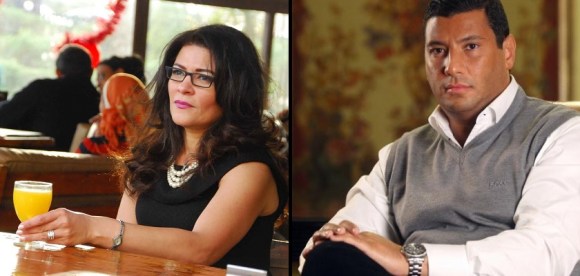
Fatima Naaot (L) and Islam Beheiry

Among the many battlegrounds between liberal and conservative visions for Egypt is the blasphemy law, with Islam al-Beheiry and Fatima Naoot its latest victims.

Naoot was recently sentenced to three years and fined 20,000 Egyptian pounds ($2,500) for statements critical of the Eid al-Adha ritual of slaughtering animals. Beheiry’s very public spat with Al-Azhar, meanwhile, concerns the right of the citizen to question, research, and promulgate revisionist interpretations of Islamic heritage.

That his one year prison sentence for contempt of religion followed an acquittal from another court on similar charges reveals a society and judiciary not yet settled on the proper balance between freedom of belief and expression and the protection of religion, both demanded by the nation’s constitution.

Public figures criticized both the Beheiry and Naoot verdicts. In Beheiry’s case, one prominent politician penned an op-ed in the national daily, Al-Ahram, calling the blasphemy law “disgraceful to Egypt.” Many have expressed alarm over what appears to be a recent increase in formal accusations. The Egyptian Initiative for Personal Rights (EIPR) noted in a 2014 report that blasphemy cases increased from three in 2011 to 13 in 2013, averaging about one per month since the revolution. EIPR lead researcher Ishak Ibrahim told EgyptSource that another 17 cases were filed last year.

While local and international rights groups have called for the law to be amended or repealed, Ibrahim favors the strategy of referring a case to the Supreme Constitutional Court (SCC). He fears that kind of legislative push might backfire and result in an increase in punishments. There is greater hope, he thinks, that the SCC might rule the blasphemy law to be unconstitutional. This would be on the basis of Articles 64 and 65, which to Ibrahim are clear. They state that freedom of belief is “absolute” and freedom of thought and opinion is “guaranteed,” inclusive of the right to express and publish.

But in an interview with EgyptSource one of Egypt’s senior judges described his understanding of the legal context of blasphemy law, more formally known as contempt of religions. He requested anonymity due to the fact that Beheiry’s file is still working its way through the judicial system, and made clear his comments do not refer to any specific case. In principle, he believes the law in current form to be just and in accordance with the constitution.

The SCC, he said, has already settled the issue. Case 44 of 1988 on the organization of political parties confirmed that “freedom of expression is a fundamental right, inherent in the very nature of a democratic regime and essential to the free formation of the public will.” Meanwhile, Case 8 of 1996, which addressed the question of wearing the veil in schools, described the relation of the right of expression to religious belief. “Freedom of belief, in principle, means for the individual not to be forced to adopt a belief he does not believe in,” the judge related from the court brief. But it also prohibited one “to side with one belief in a manner that would be prejudicial to another by denying, belittling, or ridiculing it.”

According to Khaled Hassan, a liberal Muslim researcher with the Center for Arab-West Understanding, this what Beheiry has done. It is not the content of his argument that is inappropriate, but the presentation. Beheiry’s style on television, he says, is provocative, on occasion offensive, and belittles the belief of millions of Muslims.

EIPR’s Ibrahim explains thatin the court verdict that saw Beheiry sentenced, he was found guilty of “insulting Islamic sanctities, the Sunnah, and the four imams [referring to the founders of the four principle Islamic schools of jurisprudence], considered a tearing down of the constants of Islam.” But the judge who acquitted Beheiry, Ibrahim related, ruled that nothing he said was in violation of the law. The case demonstrates that determining the boundaries of ridicule is left in the hands of the individual judge, who issues a verdict according to his own judgement.

Lawyer Hamdy al-Assyouti has defended many accused on a pro bono basis, and is the author of Blasphemy in Egypt which details 23 cases. He told EgyptSource that he tries to keep the judge’s focus on the law, not religion. Too often, he said, either mob pressure or a judge’s personal conservatism will cause him to ignore legitimate reasons to dismiss a case.

Beheiry was prosecuted on the basis of Article 98(f) of the Penal Code, passed in 1981 following sectarian riots in the Cairo neighborhood of al-Zawiya al-Hamra. Originally meant for protection against sectarian violence, it has become a tool exploited for oppression, Assyouti said. But this article, the judge explained, is not in the blasphemy section at all. Rather, it is included under the section dealing with crimes against the state. The text of the law designates a fine or jail term “against any person who exploits religion to propagate … extremist thoughts with intent to enflame civil strife, defame or show contempt for a revealed religion … or harm national unity.” In the judge’s opinion it only applies when one intends to cause disorder in society.

The formal contempt of religion laws are Articles 160 and 161, which prohibit the disturbance of religious rituals, printing and publishing distorted religious texts, and the public mocking of religious ceremonies. These, along with Article 98(f), do allow prosecution against those who attack religion, such as Abu Islam who was sentenced to five years in prison, after appeal, for tearing a copy of the Bible while protesting the anti-Islam film, The Innocence of Muslims. The judge believes a “sarcastic manner” that attacks the “core of religious belief” is necessary to establish guilt. This, he says, is required to protect society from instability, especially societies like Egypt which show great respect toward religion. He quoted former UN secretary-general Kofi Annan, saying, “Freedom of speech is not a license. It does entail exercising responsibility and judgment.”

But he is clear this does not represent a curb on freedom of expression. “The mere propagation of non-belief in the revealed religions or of Islam,” he told EgyptSource, “does not in itself violate the provision of the Penal Code.”

For this reason there is no need to change the legislation, he believes, and in any case such efforts will not be successful. He explained that the legal process is long, involving review by the Ministry of Justice, the State Council, and the High Committee for Legal Reform, and in this case likely also Al-Azhar, which he expects will never accept diminishing the protection of religion. Legislation must also reflect social realities, he added, as necessary public dialogue would reveal non-acceptance by the great majority of a religious society.

So despite the controversies—and perhaps injustices—witnessed in recent cases, the judge’s opinion is firm. “The blasphemy law will never change,” he said. “It secures the faith of Egyptians and is not in conflict with the constitution.” Meanwhile in defense of individuals like Beheiry, Naoot, and many others, activists labor on, fully aware of all the challenges. “I believe in the freedom of belief,” said Assyouti. “But in the climate we are living in, expanding this freedom will be very difficult.”

Please click here for my earlier article that provides an alternate take on the blasphemy law.

Categories
Lapido Media Middle East Published Articles

Five Year Freeze in Vatican-Azhar Relations Could Soon Be Over

This article was first published at Lapido Media.

Amr Saleh
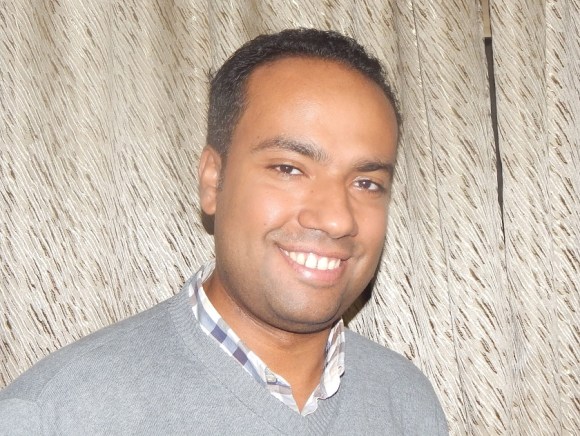
Amr Saleh

Amr Saleh, a 33-year-old lecturer in Islam in English had never met a Christian until he moved to Cairo. He believed monasteries were places of torture and black magic.

Now the respected scholar who is based at al-Azhar, the Sunni Muslim world’s most prestigious seat of learning, enthusiastically studies liberation theology.

He also wants to transform the traditional approach to comparative religion.

Saleh’s change of heart was sparked by an unlikely friendship with a French priest. It prepared him for a groundbreaking decision by al-Azhar to allow its students to learn about Christianity in Rome.

‘We should understand people as they want to be understood,’ he told Lapido. ‘To teach Christianity you should start with Christians and learn from their perspective.’

Saleh was the first al-Azhar lecturer to go to Rome for the inaugural Summer School for Christian Sciences at Urbaniana Pontifical University.

Now, after five long years, full-fledged relations between the Vatican and al-Azhar are set to resume ‘very soon.’

Dr Kamal Boraiqa of al-Azhar’s Centre for Interfaith Dialogue (formed in February 2015) told Lapido new efforts are underway to rebuild ties between the leading institutions of the Christian and Muslim world.

He praised the groundbreaking educational partnership, which graduated the first ever Azhar scholar with a Vatican-certified diploma in Christianity.

Boraiqa described it as a step to ‘pave the way’ to restoring cooperation that had ground to a halt.

In 1998 Pope John Paul II and Grand Imam Mohamed Tantawi created the Joint Committee for Dialogue. In 2000 he became the first ever pontiff to visit al-Azhar.

But relations soured in 2006 when his successor, Pope Benedict, quoted a Byzantine emperor who criticized Islam.

And in January 2011 al-Azhar astounded the world by officially suspending dialogue following the Pope’s call for protection of Middle East Christians after the New Year’s Eve bombing of a church in Alexandria.

Thaw

A thaw came in 2013 as Grand Imam Ahmed al-Tayyeb sent a message of congratulations to newly elected Pope Francis.

Six months later the pope sent a letter expressing his respect for Islam and a desire to build ‘mutual understanding.’

A further boost came in November 2014, when Egyptian President Abdel Fattah al-Sisi visited the Vatican and agreed with the Pope to renew dialogue.

It has been mostly quiet since. Boraiqa met with Cardinal Jean-Louis Tauran of the Joint Committee at high level interfaith meetings in Jordan in 2015, and conveyed to Tayyeb his wish to resume dialogue.

‘It proves we don’t mind our sons studying at the Vatican,’ Boraiqa said. ‘It is a message that we trust you.’

Saleh was the only Egyptian in the group of three Turks and two Chinese in the inaugural class. He said academics were eager to build good relations.

Originally from Fayoum, 100 kilometers south of Cairo, Saleh first came to al-Azhar as a student.

Dominican priest Fr John Jacques Perenes, from France, who was director of the Dominican Institute for Oriental Studies in Cairo (IDEO), stumbled upon him struggling through a book on Christianity, and their eventual friendship ‘completely altered’ his outlook.

Now he is the one altering others. Most of his students at al-Azhar are from Indonesia and Malaysia, and never even heard of the Vatican.

The month-long intensive Urbaniana programme includes courses in theology, Old and New Testament, ethics, and church history.

But it also provides students an opportunity to witness the darker side of interfaith relations.

In the northern city of Padua, the authorities passed a law requiring immigrant kebab shops to close earlier than other restaurants, Saleh said. In Rome, he visited a Bangladeshi mosque marked by stark poverty.

But it was his visit to the Jewish ghetto and the stories of Jewish eviction to death camps in Germany that left the strongest impression.

‘I was deeply moved. Look what we can do to each other,’ he said. ‘And this was only a hundred years ago.’

Network

The programme director is one Fr Roberto Cherubini. He told Lapido the school is meant to create a network of relations in the non-Christian world.

‘Often their perceptions are not correct,’ he said. ‘It is important to help them get information from the source.’

Cherubini blamed the media, and described the school as an effort to help Christian minorities by helping the majority religion better understand the Catholic faith.

To do so he interacts with reputed academic institutions. Saleh’s participation had been secured via direct conversation with al-Azhar’s Grand Imam.

Cherubini has requested five Egyptian scholars for next year, with plans to draw also from India and Indonesia.

Boraiqa also blamed the media for misrepresenting Muslims. He has travelled in the West, describing first-hand experience of Muslim stereotyping as potential terrorists.

But in the UK his experiences were better, owing, he said, to its multiculturalism. Once a visiting scholar at Birmingham University, he now joins al-Azhar’s Centre for Interfaith Dialogue in official discussions with the Anglican Communion.

Al-Azhar hosted the Bishops of Bradford, Southampton, and the Archbishop of Canterbury’s secretary of interreligious affairs, arranged through Archbishop Mouneer Hanna Anis of Egypt. Together they examined how religious texts could be used to justify violence.

‘Extremists take a verse out of context, and use it as a pretext,’ he said. ‘If you clarify issues for religious leaders, they will foster better understanding, promoting respect and cooperation.’

Anglican dialogue will with al-Azhar will resume in the UK in autumn 2016, mirroring a pattern that used to exist with the Vatican.

Meanwhile, all the signs for imminent resumption of relations with the Roman Catholic Church are there, aided by a joint effort to transcend religion with the most basic of human interactions.

‘We are warming the relations that have recently cooled,’ said Saleh. ‘What al-Azhar and the Vatican need is mutual friendship.’

STOP PRESS:  We have just learned today that al-Azhar has approved a scholarship from Urbaniana for Amr Saleh to read for a PhD in Christianity and Comparative Religions.

Categories
Prayers

Friday Prayers for Egypt: Finding Balance

Flag Cross Quran

God,

Take care of Egypt. Every nation needs stability, as every nation needs liberty. Balance her rightly as friends fight for leverage and enemies aim to topple. May an honorable equilibrium come, and soon.

With January 25 on the horizon, make the nation safe, free, and wise. The government moves against protest, while a weakened Brotherhood calls for revolt. Few anticipate great mobilization, but more fear sporadic violence. Already a bomb has killed police and civilian alike in Giza.

God, develop Egypt so that protest does not presage a crisis. Give outlets for grievances and redress for wrongs. But make this part of a dynamic system, with officials and citizens agreed on the rules.

And let similar wisdom come to bureaucracy. Parliament paused its wholescale approval of interim laws to reject the reform of civil service.

God, you know if this particular effort was worthy. It is good for one branch of government to check another. But find a way to protect millions of employees and to make efficient their performance.

One thought is to move them all away. The president has proposed a new administrative capital, and the president of China has agreed to finance. With him twenty other projects have been negotiated, as Egypt makes more diverse its international posture.

The more friends, the more flexibility. But also the more responsibility and intertwine. God, may Egypt play this game well, for the benefit of her people and the region.

Governance, though, is not a game. Politics can make it so, and protest can be zero sum. But in navigating all, lift Egypt to the greater principles.

May she give her people security to live, and freedom to thrive. And an honorable equilibrium, to bear well this trust.

Amen.

Categories
Excerpts

Curing Hepatitis C in Egypt

Sovaldi Hepatitis C
(from prescriptionintelligence.com)

A few decades ago a poorly–but widely–administered effort to immunize against a local disease resulted in ten percent of the Egyptian population becoming afflicted with Hepatitis C.

Over the past year several headlines have celebrated the partnership of the Egyptian government with drug companies offering new treatments at a fraction of the cost.

A recent article from the New York Times describes the campaign as a grand experiment to get medicine to the poor while preserving international profit rates for producers.

As the AIDS crisis took world attention in the 1980s, this sector was slammed for abandoning the African continent. In Egypt, they are trying to apply lessons learned.

Worldwide, four times as many people suffer from Hepatitis C than AIDS.

Last year, Gilead Sciences, based in California, offered an alternative.

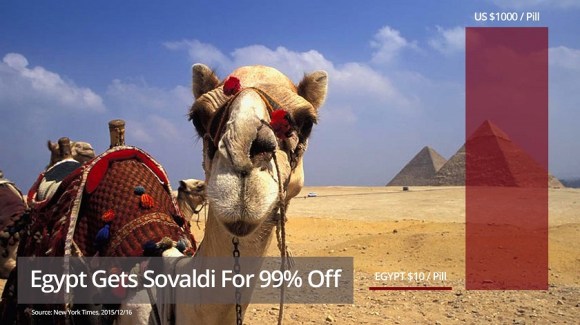
The company makes sofosbuvir, which since 2013 has been sold in the United States as Sovaldi for about $1,000 per one-a-day pill. A course of the drug, taken with ribavirin and often interferon, usually cures hepatitis C infection in 12 weeks.

Sofosbuvir is an enormous blockbuster; in its first year on the market, the drug earned Gilead more than $10 billion.

But for the past year, Gilead has sold the drug to the Egyptian government for about $10 a pill. The government distributes it to pharmacies across the country, where it is dispensed free to patients.

But here is the catch, to fight the black market:

All pills must be dispensed by government pharmacies, for example, and all patients must turn in an old bottle to get a fresh one. Those receiving new bottles must immediately unscrew the cap, break the seal and take the first pill in front of the pharmacist — making it nearly impossible to resell the bottle.

And though many have criticized on human rights grounds, the government-drug maker partnership understands its audience:

“I agree with this completely,” said Mr. Ellabbad, the air-conditioning repairman. “I’m a poor man. If I did not have to hand in the bottle each time, I might have sold them to buy my son a house.”

The article is thorough and fascinating. Click here to read it in full at the New York Times, and wish Egypt all success.

Categories
Prayers

Friday Prayers for Egypt: Review and Oversight

Flag Cross Quran

God,

As the Egyptian parliament begins its constitutional mandate, provide it the wisdom necessary to serve the country well.

Its first task is the review the dozens of laws passed in its absence. Given the restricted timeframe of fifteen days, they are widely expected to pass the great majority. But particular attention will be given to the controversial protest, health care, and civil service laws.

So God, make this process more than a rubber stamp. Divide the parliamentarians well into committees of their expertise, and give each law its due.

Its second task is the oversight of government performance, of which it has authorized an investigation earlier than expected. The central auditor released a report detailing extensive state corruption, but a presidential committee said he misrepresented figures. Parliament will now weigh between them.

The auditor has been accused of working to bring down the regime on behalf of the Brotherhood. He says he has documents to back up his claims.

So God, divest this case of its political overtones. Open the books to allow full transparency, and call each expenditure to account.

Parliament is a diverse body, God. There are many serious members to be sure; but opening days have been a media circus.

In these early days, knit them together in partnership and divide them effectually over the issues. Give the body its weight as a separate power, to help hold the system in check.

May they lead, and help them serve. Bless Egypt, God, and the representatives of her people.

Amen.


Categories
Prayers

Friday Prayers for Egypt: Christmas, Terror

Flag Cross Quran

God,

As Egypt receives echoes of both hope and horror, make true the promise and put down the threat. Help the people live in peace.

The president once again visited the papal cathedral for Christmas mass. He esteemed the unity of the nation and assured all destroyed churches would be repaired this year.

But terrorists once again killed policemen, destroyed pipelines, and targeted tourists—this time at a popular beach resort. It is a reminding blow to the notion that Egypt is secure.

So God, help Egypt remember correctly.

May she recall neighborly relations between religions. May she resolve through pain of innocents lost.

Let churches be rebuilt and Muslims also celebrate. Let grief heal wounds and reach out in forgiveness.

Otherwise echoes risk ringing empty. Hearts will be hardened and divisive lines reinforced.

God, amplify the sounds of hope. Revive the pulse of justice. Erase the marks of hostility.

Egypt has a long way to go. Echoes alone are monotonous. Strike forth a symphony, and bid her rejoice.

Amen.

Categories
Middle East Published Articles World Watch Monitor

Dare Egypt Amend, or Even Abolish, Its Blasphemy Law?

This article was first published by World Watch Monitor on January 8, 2016.

Egypt Parliament

Egypt’s Secular Party has called on President Abdel Fattah al-Sisi to support legislation which cancels the blasphemy law, because, in the words of lawyer Hamdi al-Assyouti, it has “become a tool in the hands of extremists against minorities, thinkers, and the creative impulse”. And, in his experience as a defence lawyer, 90% of charges are filed against Christians. The first session of Egypt’s new parliament is due to open on 10 January.

“There has been a case each month,” he said at the launch of his new book, Blasphemy in Egypt. “If I have gotten any detail wrong, let me be judged accordingly, but everything is taken from judicial rulings.”

The research confirms the Egyptian lawyer’s claim. World Watch Monitor readers might have read the cases of Gamal Abdou, Gad Younan, and Bishoy Garas, each a Christian who has been tried for insulting Islam. But Muslims who question traditional interpretations of Islam are also targeted, as seen in the recent one-year prison sentence given to Islam al-Beheiry.

According to the Egyptian Initiative for Personal Rights (EIPR), alleged blasphemy cases increased from three in 2011 to 12 in 2012. Thirteen cases were recorded in 2013, and of 42 defendants during that time, 27 were convicted. EIPR lead researcher Ishak Ibrahim told World Watch Monitor that 17 new cases were filed in 2015.

Hamdy al-Assyouti
Egyptian lawyer Hamdi al-Assyouti, author of ‘Blasphemy in Egypt’

Assyouti’s book, which he believes is the first Arabic language book of its kind to be published in Egypt, details 23 cases. But in only two cases did he say the defendants expressed actual contempt for Islam. Oftentimes social media postings provided an excuse for extremists to file charges against local Christians. Then either mob pressure in court, or a judge’s own religious conservatism, resulted in a guilty verdict.

“I try to turn the judge’s focus from religion to the law,” Assyouti told World Watch Monitor, “or else he will bypass legitimate reasons to dismiss the case.”

Law 98(f) of the penal code, he said, was originally passed by parliament in 1981 following deadly riots between Muslims and Christians at al-Zawiya al-Hamra in Cairo. The text of the law designates a fine or jail term “against any person who exploits religion to propagate … extremist thoughts with intent to inflame civil strife, defame or show contempt for a revealed religion … or harm national unity”.

But since then, he said, “it has reversed application and become a tool in the hands of extremists against minorities, thinkers, and the creative impulse”.

Articles 64 and 65 of the constitution declare freedom of belief to be “absolute” and freedom of thought and opinion to be “guaranteed”, inclusive of the right to express and publish. In their legal representation, both Assyouti and EIPR’s Ibrahim aim to convince a judge to refer a blasphemy case to the Supreme Constitutional Court.

But because of the difficulty in persuading a judge to do so, some rights advocates argue for a change in the law itself, if not its outright cancellation. In advance of the first session of Egypt’s new parliament, the Secular Party called on President Sisi to support such legislation.

Blasphemy in Egypt
‘Blasphemy in Egypt’, by Hamdi al-Assyouti

Assyouti expressed hope his book might result in the issue being tackled in parliament, but gradually: first the law should be amended to lessen the penalties, and only thereafter should cancellation be discussed. “Otherwise it will shock the population,” he said. “Even those who are not overly religious will cling to their religion during a controversy.”

But Ibrahim was cautious, wishing to focus on freedom of expression in general, with blasphemy included under the umbrella. “If we request this article be cancelled, it will result in an increase of the punishment,” he said, fearing a reversal. “No parliamentarians have the courage to raise this issue in parliament.”

Perhaps Anwar Esmat al-Sadat, nephew of the late president, will prove him wrong. Last year, during an open session in the upscale Cairo suburb of Maadi, he spoke boldly to the gathered assembly of foreigners and upper-class Egyptians.

“We are not in agreement with the blasphemy law,” said the president of the Reform and Development Party, recently elected from his district of Menoufiya in the Nile Delta. “Everyone has the right of expression, but it has to be organised. We will work on these laws in the coming parliament.”

But will he? Mahmoud Farouk, head of one of Egypt’s leading liberal lobby groups, is doubtful the new parliament will take on the challenge. His Egyptian Centre for Public Policy Studies advocates not only to cancel Article 98(f), but also to remove the religion marker from national ID cards.

In 2014, Farouk presented his centre’s paper on freedom of belief to most of Egypt’s leading political parties. At the time he estimated that 30 per cent of party members believe in cancelling the blasphemy law. But in a follow-up conversation with World Watch Monitor, he said he thought only five per cent of the elected parliament would be brave enough to speak on this issue.

Mahmoud Farouk
Mahmoud Farouk, head of the Egyptian Centre for Public Policy Studies

The problem lies in his estimate of only 10 per cent of the population being in favour of such a change. To spread the message, he invited Paul Marshall, author of Silenced: How Apostasy and Blasphemy Codes are Choking Freedom Worldwide, to a public lecture, and promoted the Arabic version of his book online. But similar translation efforts, such as Brian Whitaker’s Arabs without God, can reach only a limited segment of Egypt’s population.

For this reason, Farouk wants to lobby directly, but quietly. Of the major political parties, he sees the Free Egyptians Party (FEP) as one of the few ideologically inclined to support changes to the blasphemy law. Osama al-Ghazali Harb, one of their leading figures, who only recently resigned, penned an article in Egypt’s largest daily calling the law a “disgrace”. But though the FEP is the largest party in parliament, with 65 seats, they are dwarfed by the non-ideological independents that make up just over half of the 596-member body.

But even among these, Farouk sees possibility. Given the current depoliticised playing field, many might not actively stand in the way of greater religious freedom if it does not cost them.

“The majority of people are not politically aware,” he said, “and if the atmosphere is right, legal reforms can be enacted without causing offense.”

Given President Sisi’s many statements about the need to reform religious discourse, rights advocates wonder if the atmosphere has ever been better. Farouk said the issue must be kept before parliamentarians in committee, urging them to take a stand, but like William Wilberforce, who won his fight against slavery in the early 1800s by slowly cobbling together a coalition, Farouk knows the challenges ahead.

“We have to find people who will work with us while keeping good relationships with the parties and their leaders,” he said.

“But to change the climate of ideas in Egypt, we need a politician who will stand and lead the charge, and right now we don’t have him.”

Until one emerges, Farouk, Ibrahim, and Assyouti labour on through each challenge. Even Blasphemy in Egypt has to fight to win a hearing, having been apparently subjected to an informal ban. Nevertheless, its back cover makes clear the stakes: Freedom of religion and belief is the first freedom, from which every other freedom emanates – speech, assembly, press, and the supreme right to life.

Please click here for my later article that provides an alternate take on the blasphemy law.

Categories
Personal

Top 10 Persecution Stories at CT

Many thanks to readers who have followed my articles at Christianity Today. CT just published a year-end summary of the ten most read stories about the persecuted church, and I am pleased to report my articles placed at numbers 1, 3, 6, and 10.

That the articles needed to be written in the first place involves little of pleasure, but I am glad that in most there have been moments of grace amid the suffering.

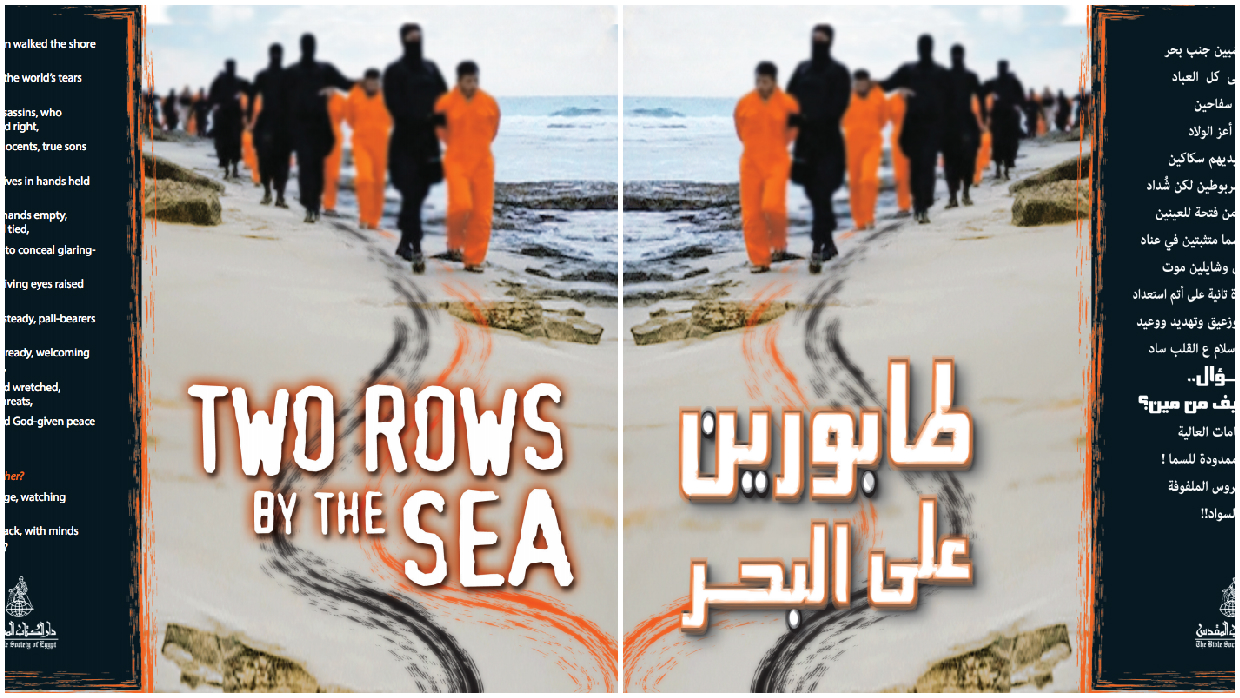
1) How Libya’s Martyrs Are Witnessing to Egypt

Murders spark largest outreach ever amid new freedoms and new threats.

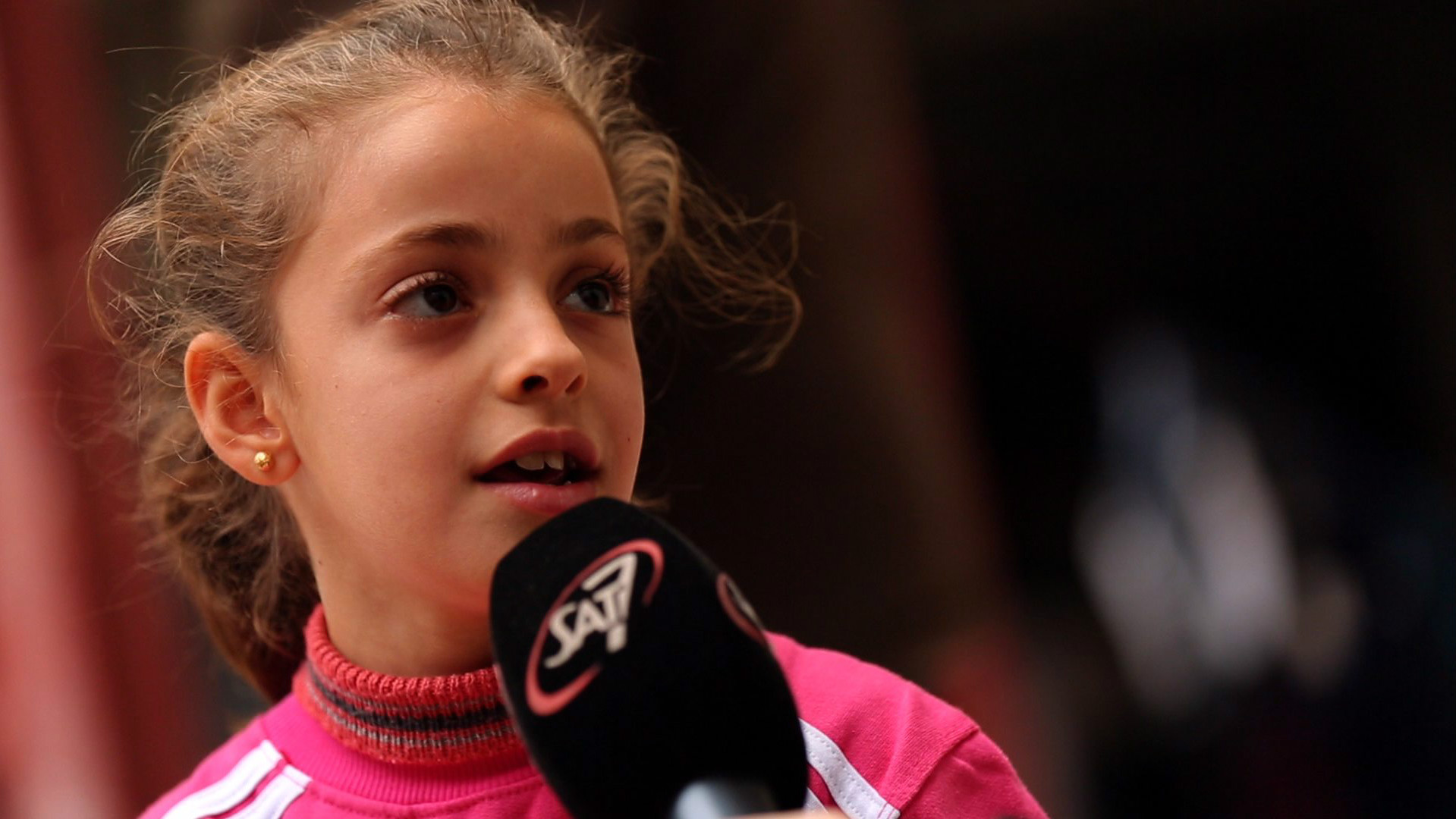
3) Forgiving ISIS: Christian ‘Resistance’ Videos Go Viral in Arab World

Ten-year-old girl from Mosul becomes Christian broadcaster SAT-7’s most-watched interview ever.

6) Libya’s 21 Christian Martyrs: ‘With Their Blood, They Are Unifying Egypt’

As Coptic Christians mourn ISIS beheadings, they praise the response of their government and Muslim neighbors.

10) Why Christians Are Fleeing One of Africa’s Oldest and Largest Christian Homelands

Beyond the search for a better life, evangelicals and Orthodox in Ethiopia increasingly share even more.

And this story came in at #16 of the 20 most read ‘Gleanings‘, subtitled ‘important developments in the church and the world’.

16) More Martyrs: ISIS Executes Dozens of Ethiopian Christians in Libya

Propaganda video released the same day Justin Welby arrives in Cairo to honor the previous 21 victims.

For what it is worth, none of the articles made the overall top 20 most read list, which was dominated by US domestic trends, though some with international aspects.

As for this list, in general I do not like the word ‘persecution’ or a focus thereupon. Though these articles certainly qualify, the word risks setting Christians into an ‘us versus them’ mentality that risks violation of many Gospel principles. The struggle, says the scripture, is not against flesh and blood.

But without doubt the next mentioned ‘principalities and powers’ have employed flesh and spilled blood. I am grateful to be in a position to help tell these stories, and pray they may result in greater love both for the church around the world, and those who stand against her.

Thanks for reading — and within your power — acting accordingly.

Categories
Middle East Published Articles World Watch Monitor

Egypt’s Imams and Priests Confront Sectarianism Together

This article was first published at World Watch Monitor, on Dec. 30, 2015.

Gathered at Cairo’s prestigious Dar al-Mudarra’at military complex in early December, 150 imams and priests heard some of Egypt’s highest religious authorities praise their participation in a three-year programme to deepen religious unity.

“Working together for the sake of Egypt – we are in great need of this slogan,” said Grand Mufti Shawki Allam, in reference to the Imam-Priest Exchange, an initiative of the Egyptian Family House. “But it is also the reality in which we live.”

The Egyptian Family House was created shortly after the 25 January, 2011 revolution against President Mubarak – in partnership between al-Azhar (Sunni Islam’s leading authority), the Coptic Orthodox Church, and Egypt’s Protestant, Catholic, and Anglican denominations. The Imam-Priest Exchange began in February 2013, as popular opposition to the Muslim Brotherhood and then-President Mohamed Morsi was coalescing throughout the country.

According to Abdel Rahman Moussa, an advisor to Grand Imam Ahmed al-Tayyib and speaking on his behalf for al-Azhar, “This scene is what we have dreamed of – a sincere expression of what Egypt is, the Egypt that God has preserved.”

“We were all wondering where Egypt was going,” said Bishop Mouneer Hanna Anis, whose Anglican church sponsored the training. “But now we celebrate the return of love and the brotherly spirit.”

Each year the Exchange brought together around 70 imams and priests from across the country. Four trainings of three days each had them live and eat together as they were encouraged towards a gradual but escalating partnership.

The themes? “Let us know each other. Let us coexist. Let us cooperate. Let us work together for the good of Egypt.”

Participants not only listened to academic lectures, but also actively toured the country. Egyptian citizens looked on astonished, but proud, taking selfies with imams and priests as they walked hand-in-hand down busy streets.

Their distinguished long robes, caps, and beards added to the gravity of ancient mosques, churches, and monasteries. Together they joined fellow citizens in celebrating the opening of the Suez Canal expansion. They rediscovered a shared heritage while exploring the Coptic, Islamic, and National Egyptian museums. And in the final session they visited practical examples of interfaith development work.

“We want to go where people have done things,” said Saleem Wassef, project manager for the Exchange. “The idea is to help them think out of the box, and consider how they can repeat these experiences back in their own communities.”

Moving from remedy to prevention

Religious leaders from the two different faiths visited each others' places of worship.
Religious leaders from the two different faiths visited each others’ places of worship.

This last marker is an important departure from the previous model of imam-priest cooperation, said Nady Labib, representing the Protestant Churches of Egypt. He criticised the “hugs and kisses” displayed in the media after incidents of sectarian tension, to present an image that “all is fine” between Muslims and Christians.

The Family House has been active in quelling sectarian tension, said Fr. Augustinos Elia, assistant head of the branch in Mallawi. But the focus now is on prevention, not remedy.

“We are removing walls and building bridges,” he said. “A certain extremism still persists in society, and we are working to educate and spread awareness.”

One of the best examples is found in Ismailia, where Sheikh Abdel Rahman and Fr. Surial have visited four schools a week for the past two years. Having never before seen such respect and friendship between an imam and a priest, the girls often cry when they see the two together, they said.

Consider also the work of Sheikh Ahmed and Fr. Boula in Menoufiya, where the “My Church, My Mosque” campaign collected money from Muslims to build a church, and from Christians to build a mosque.

Even in Delga, a community whose church was destroyed following the removal of Morsi from power, Sheikh Fayed and Fr. Ayoub have worked to bring Muslims and Christians together. Medical and sport outreaches have tried to unite the people, with youths brought to Cairo to witness the Family House in action.

Wassef said the local branches of the Family House are one of the best successes of the Imam-Priest Exchange. And those trained have gone on to help establish branches in Port Said, Alexandria, and Luxor.

“At first the participants were afraid to be involved,” he said. “But once they knew about the goals, they were convinced about the need to work together for the benefit of their communities.”

Bishop Armia, assistant general secretary for the Family House, related the story of an imam who told him he used to cross to the other side of the street if he saw a priest coming his way. Now, after spending a year together in the Exchange, he has become friends with a priest from his town.

Sheikh Muhi al-Din al-Afifi related a similar experience. Head of the Islamic Research Academy, as well as the Family House committee for religious discourse, he told those gathered of his first visit to a monastery, where he was pleasantly surprised to see such faith and activity mix for the good of Egypt.

“This project works to change the inherited teachings that have sown hatred among us,” he said. “It is the tip of the spear that confronts all manner of civil strife.”

Sincerity and continuity questioned

But not all participants were totally convinced by the project, with one Sheikh saying there was 'not enough connection between words and actions'.
But not all participants were totally convinced by the project, with one Sheikh saying there was ‘not enough connection between words and actions’.

Not all participants, however, were as convinced. Some grumbled that the “religious other” was present only from obligation. Others complained that there was little contact between them once they left the training.

One leader in one branch confirmed this impression. Only 20 per cent of the roughly 100 members acted from full and sincere conviction, he said. Forty per cent came because they were assigned by their religious institution, and another 40 per cent were active for personal or political gain.

Another issue is that the Family House has not yet been able to win wide national media attention. “We are here, but no one sees us,” said Sheikh Said Shoman, a participant from the Sohag branch, who encouraged much more open mixing of imams and priests in the streets. “The problem is there is not enough connection between words and actions.”

The work is slow going, the branch leader admitted, but he is not discouraged. Their branch has held 10 seminars about national unity, and smaller meetings in youth centres and villages throughout the area. As a leader, he is frequently invited to government and civil society events as a Family House representative. But he considers it natural that cooperation between religious leaders takes time.

“Progress develops as someone first sees you, then later will talk to you, and only later might work with you,” he said. “There is a will to make the Family House work but it still needs more interaction.”

Wassef estimated that around 50 per cent of Exchange imams and priests have been active in pursuing the goals of the training. But if engaging men of religion has been hard work, convincing a sceptical public has been harder.

“Some of my colleagues in the ministry used to laugh at me, and some Christians say I am wasting my time,” he said. “But you meet some people who are ready to change. The progress is slow but sure.”

Bishop Mouneer echoed this long-term perspective, telling Exchange graduates that Egypt deserves their effort to rebuild.

“We must look not to what Egypt can give us, but what we can give Egypt and the future generations,” he said. Adding a word to their slogan, he urged them, “Always, together for the sake of Egypt. This is a beginning, not an end.”

Categories
Prayers

Friday Prayers for Egypt: Consensus and Ideal

Flag Cross Quran

God,

Bless Egypt in this new year. Lead her to prosperity, lead her to justice. Lead her into common understanding of your ideals for both.

To a great degree consensus is forming, God. Presidential popularity figures remain high. A non-polarized parliament was elected. The controversies of the revolutionary period are being left behind.

But so also, some say, are its promises. Thousands of Egyptians remain in jail. The economy is faltering. Familiar accusations are leveled against security excesses.

God, your ideals have not yet come. Do not let Egypt rest content in a consensus that falls short of the best you wish for the nation.

But guard also against two dangers: The discontent that rails against any shortcoming, and the conflation of particular political vision with your will.

This year, God, help Egypt to function. Help her to reform.

Help her pay her debts. Help her feed her people. Help her navigate a treacherous regional balance.

Help her supply energy. Help her launch businesses. Help her develop true civil and political society.

Help her fight corruption. Help her end terrorism. Help her cultivate both prosperity and justice.

God, bless Egypt and her people. Give them unity, give them peace.

Amen.


Categories
Prayers

Friday Prayers for Egypt: Coalition

Flag Cross Quran

God,

After campaigning comes positioning. Perhaps after that will come legislating and querying. But help Egypt’s newly elected representatives to get this interim period right.

An effort is underway to draft members into a grand coalition to support the presidency of Abdel Fattah al-Sisi. This would be consistent, as many campaigned on this very point. They want the Egyptian state to succeed, and believe unity between the executive and legislative branches is essential.

Others suspect an agenda to recreate the non-ideological party that surrounded former President Mubarak. Some even accuse the effort of imitating the Muslim Brotherhood tendency to exclude other voices.

But to a degree, coalitions are necessary. The constitution gives the parliament the right to approve the president’s cabinet. If not, the leading party or coalition has the right to form the government. There is currently no party with a majority.

Therefore, God, be present in all negotiations.

Weigh the motivations of leading and lesser players. Give them discernment against personal interests. Guard them against partisan manipulation. May they politic truly, but politic well.

Support the state, God. Empower just institutions, promote humble individuals.

Help Egypt’s coalitions to move, in time, from people to policies. But may the policies always be conscious of the people.

And soon, regardless of how coalitions emerge, inspire parliament to accomplish its constitutional mandate. Give wisdom in the reviewing of law. Give courage in the accounting of government.

God, with greater stability comes greater responsibility. Fulfill Egypt’s promise, and the many promises she has made. Position her – and her representatives – to do good to many.

Amen.

Categories
Prayers

Friday Prayers for Egypt: Exceptions

Flag Cross Quran

God,

No matter the policy or pattern of behavior, life is unique. Each person is responsible for his or her own actions, no matter the repercussions on all.

But all actions have consequences, determine policies, and establish patterns. Help Egypt navigate through the exception and the general…

… as the Coptic pope visits Jerusalem in violation of a decades old decision.

… as the president promises to discipline policemen who have tortured and killed citizens.

… as a local bar fight explodes and kills sixteen.

… as a local woman somewhere gives birth to the 98 millionth Egyptian.

Each incident, God, is of exceptional importance. Yet each one begs meaning larger than itself. Help Egypt assign it correctly.

The pope went to attend a funeral and says the visit carries no change in commitment to Palestine.

The president assures of the importance of good conduct and insists violations are isolated.

For all their bravado, Egyptians rarely fight and this tragedy bears no marks of terrorism.

For all their uniqueness, that is a lot of Egyptians along an overpopulated stretch of river.

Each meaning, God, is fiercely contested. Yet each one begs a further prayer. Help Egypt look to you and not to punditry.

Give Egypt peace with an Israel that conforms to your righteousness. May Copts and Muslims together take pilgrimage hand in hand.

Give Egypt confidence in a police force that acts with complete professionalism. May old patterns be overturned and your justice enforced.

Give Egypt respite from more tales of woe. May all personal conduct be governed by your mercy and all terrorism cease.

Give Egypt sufficient prosperity to receive and accommodate her many millions. May each one experience your particular grace.

God, for all Egypt has experienced in history many believe she is an exceptional recipient of your protection and favor. May this be true, but not particular. Similarly guard each nation of the region, with many now so deeply in need.

Settle the issues of societal reach, but not at the expense of the individual. Honor the uniqueness of every Egyptian, but not at the expense of society. Keep Egypt in balance, reestablish her harmony.

May policy and personhood meet, and may it not be exceptional. Bless Egypt, God, and make her whole.

Amen.

Categories
Excerpts

The American University in Cairo: Ranking and Pictures

AUC LogoCongratulations to the American University in Cairo for their placement in this year’s QS World University Rankings. Measuring only the top 700 universities in the world, AUC came in at number 345. This is tops in Egypt, with the only other measured institution being the acclaimed Cairo University in the 500-550 range.

It is also the fourth highest ranked African university, behind three from South Africa. MIT, Harvard, and the UK’s Cambridge occupy the top spots worldwide.

But according to the AUC press release, the school scored higher than several prestigious US institutions:

In the 2015 – 2016 QS World University Rankings, AUC ranks ahead of several U.S. universities that are also private, mid-size, four-year liberal arts institutions delivering a curriculum comparable to AUC, including Brandeis University, Wake Forest University, Lehigh University, College of William & Mary and Southern Methodist University.

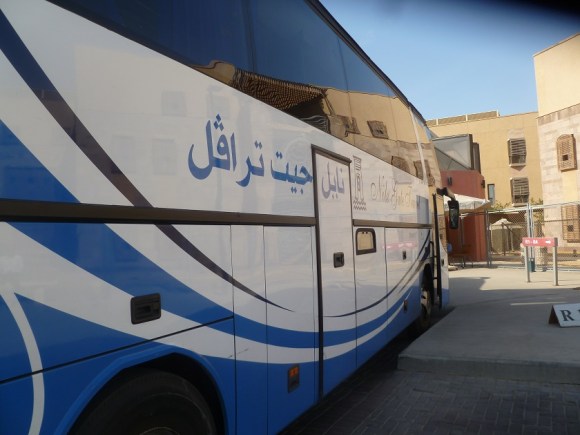
A while ago I visited the new AUC campus, which is quite a distance from its historic Tahrir Square location, where it still maintains administrative offices, operates a bookstore, and hosts educational and cultural events. Tahrir is easily accessible by metro, whereas students must now commute over an hour to get to class. But a high-quality bus runs on set schedule, mirroring the high-quality campus, all funded by high tuition far outpacing any fees charged by Egyptian private universities.

(Click here for a recent post on fees charged by private high schools operating in Egypt.)

Please enjoy the pictures below:

Upon arriving by bus at the university gates
Showing the extent of campus grounds
A view from the grounds
Though some female students wear hijab, a great number did not, far more than the normal percentage in Egypt
The university provides plenty of open space to sit, relax, and mix -- also somewhat unusual between genders in Egypt
The university provides plenty of open space to sit, relax, and mix — also somewhat unusual between genders in Egypt
There is also a sizable foreign population at AUC
Besides modern buildings, AUC has also created a modern oasis
But here the grass is much more patchy -- imagine the water necessary to create green open space on the outskirts of a desert
But here the grass is much more patchy — imagine the water necessary to create green open space on the outskirts of a desert
A typical and well equipped classroom
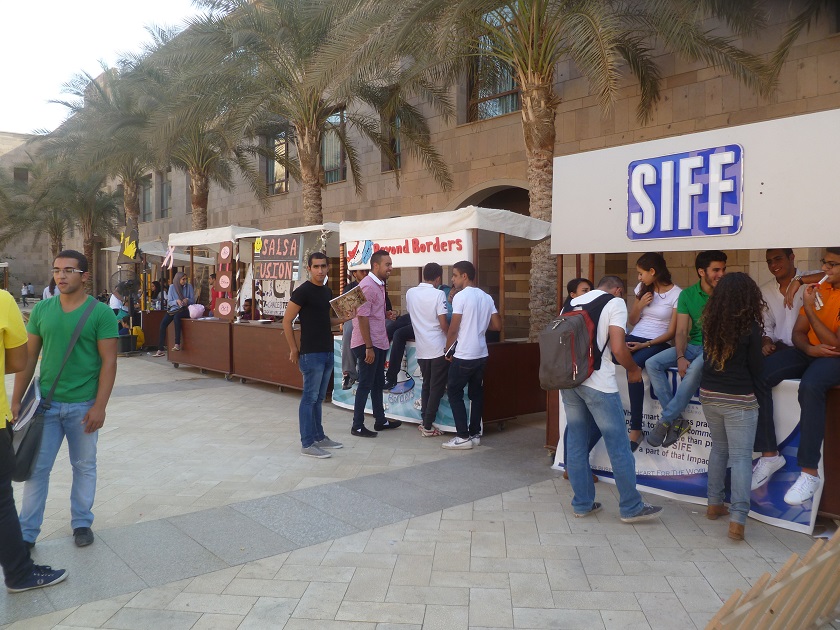
But before classes begin, students linger in the main square signing up for different student groups
Afterwards, they will visit this very familiar university site
Finally, no campus is complete with insignia available to purchase and wear
Finally, no campus is complete without insignia available to purchase and wear

Again, congratulations to AUC on their ranking. Click here for the university website and explore on your own. Perhaps some might even come and enroll. Welcome.

Categories
Prayers

Friday Prayers for Egypt: Roadmap Concluding

Flag Cross Quran

God,

It has been a long road, but it is almost over. But then the real journey begins.

Following the ouster of Morsi, Egypt has ratified a constitution, elected a president, and now stands ready to seat a parliament.

The end has not been easy, nor celebrated. Terrorists have killed candidates and assassinated judges. Turnout has been low.

Many still oppose the process. Many are disinterested. Many are more concerned over food and security. But millions have voted, finding either meaning or benefit.

Turn them all, God, to build their society. If the road has been paved, may they walk upon it.

For parliament in particular, may the final selections be worthy. May the whole represent the people, and hold accountable the government.

And with democratic institutions complete, may Egypt function democratically. May violence cease; may economy grow. May the people be free to run their country well.

God, in the months and years to come, give Egypt precious stability. Give her good governance. Give her a will to address root issues. Give her a hope of compounding success.

This journey, God, does not end. May the map forward be clear, and easier to follow.

Amen.

Categories
Lapido Media Middle East Published Articles

The Russian Airline Disaster and Islamic State in Egypt

Abu Osama al-Masry
Abu Osama al-Masry, blurred in a Wilayat Sinai propaganda video; from SITE Intel Group

Who downed Russian airline flight 9286 as it left tourist resort Sharm el-Sheikh in October, killing all 224 on board?

Russian officials have confirmed a bomb brought down the plane, while Whitehall has labelled shadowy leader of the new ISIS affiliate Wilayat Sinai – Abu Osama al-Masry – ‘a person of interest’ in on-going investigations.  Egypt has yet to release details from their investigation.

‘Foreign tourists, workers, and troops in Egypt are at greater risk than ever’, wrote Zach Gold in Egypt Source.

‘Whether [WS] was responsible or made an opportunistic claim, the group’s willingness to even rhetorically target foreign interests in Egypt is another dangerous marker in a pattern of threats’, he added.

A former Azhar student and clothing importer Abu Osama al-Masry claimed responsibility on behalf of Wilayat Sinai. ‘They were shocked by a people who sought the hereafter, loved death, and had a thirst for blood’, he said.

‘We will inherit your soil, homes, wealth, and capture your women! This is Allah’s promise’.

Jurisprudence

‘Eloquent in quoting the Qur’an’: Abu Osama al-Masry, blurred in propaganda video. Photo: SITE Intel Group

Al-Masry, a nom-de-guerre indicating he is Egyptian, is said to have been born in northern Sinai but grew up in Sharqiya in the eastern Nile Delta.

The 42-year-old former student at the Muslim world’s most prestigious seat of learning, al-Azhar in Cairo, al-Masry is said to be ‘well versed in Islamic jurisprudence’ and ‘eloquent in quoting the Quran’.

Wilayat Sinai, meaning ‘the province of Sinai’, pledged allegiance to the Islamic State on 10 November, 2014.

It was previously known as Ansar Beit al-Maqdis (ABM), translated roughly as ‘Supporters of Jerusalem’ – implying the same apocalyptic zeal as IS.

Lapido Media nailed this affiliation a year ago – and the fact of the reluctance of the West to believe it amid the complexity of Egyptian culture and the prevalence of ‘conspiracy theories’.

On 5 November 2014, we wrote:  ‘Ali expects the “Supporters of Jerusalem” – a home-grown terrorist outfit operating out of Sinai – to soon announce their allegiance to ISIS. Abu Hamza al-Muhajir, he said, was an associate of Abu Musad al-Zarqawi in the Islamic State of Iraq and believed to be killed by US forces in 2010.

‘But some evidence suggests he is still alive and operating out of the Sinai with the Supporters of Jerusalem,’ Ali said.

Shifting

If the Russian airline attack is confirmed, it will not have been the first time Wilayat Sinai has targeted foreigners.

Strategy, however, is shifting from attacking tourism in Egypt as part of an economic war, to attacking tourists in retaliation for their nation’s policies.

In February 2014 the group killed two South Koreans and an Egyptian driver in a bus traveling from St Catherine’s Monastery in the Sinai.

They also claimed responsibility for the hideous executions of American oil worker William Henderson in August 2014, and the Croatian Tomislav Salopek in August 2015.

Wilayat Sinai’s fighting force is estimated between a low of one to two thousand militants, and as high as five to twelve thousand.

The sparse population of North Sinai is approximately 435,000, or forty per square mile.

Unlike the Islamic State, WS’s composition is mostly local, consisting of veteran jihadists, disaffected Bedouin, and disillusioned youth. Some foreign fighters come from Palestine, Saudi Arabia, and Syria, and WS have issued a call for more.

Egypt has accused Turkey of providing support for Wilayat Sinai, posting names and pictures of alleged operatives they have captured.

Wilayat Sinai also benefits from members who previously served in the Egyptian military, before defecting or being expelled.

Walid Badr, a former major in the army, was the suicide bomber in the September 2013 assassination attempt on the interior minister. One month later former officers Emad Abdel Halim and Hisham Ashmawi led an assault on a checkpoint in Sinai killing 31 people.

History

WS, under its original guise of Ansar Beit al-Maqdis was formed sometime in 2011 in response to the Egyptian revolution of 25 January.

Egyptian security says ABM breathed new life into existing bands of militants such as al-Tawhid wa al-Jihad, which had conducted operations against tourism hotels in Sinai in 2004, 2005, and 2006.

After formally merging, ABM originally targeted Israel, launching a few cross-border attacks and several acts of sabotage against the Egypt-Israeli gas pipeline.

President Mohamed Morsi authorised military action against ABM after it killed 16 border guards in August 2012. But he is also understood to have preferred negotiation and tried to limit their influence through dialogue with other Sinai parties.

After Morsi’s removal from office on 3 July, 2013, ABM shifted focus and deliberately targeted Egyptian security forces.

Abu Osama al-Masry deemed Morsi an apostate and equated democracy with atheism – a typical militant Islamist trope.

But ABM sought to take advantage of the military-versus-Muslim Brotherhood conflict to paint itself as the defender of Muslims.

Al-Qa’eda

A leaked Egyptian security document from February 2015 accused the Muslim Brotherhood of working with Al-Qa’eda to send three thousand fighters to the Sinai.

Morsi, like the transitional military council before him, released jihadis from prison.

But an Egyptian researcher says that while he permitted militants a degree of operation, he did not nurture them as a ‘last resort’ to protect his office.

In addition to the acts of terrorism listed above, ABM has been a leading force in a long list of attacks in Sinai and the Egyptian mainland.

The small Christian population of roughly 650 families in the Sinai have also suffered at their hands. Many have relocated, though local Muslims have promised to protect them.

Wilayat Sinai
Logo of Wilayat Sinai

Imitating

Four hundred attacks killing seven hundred soldiers: Wilayat Sinai. Photo: SITE Intel Group

Targeting Christians is only one of the ways Wilayat Sinai is imitating the Islamic State.

Mixing terror and piety, they have beheaded opponents and moved against drug trafficking. They have appealed to the sympathy of Bedouin tribes and distributed money to those whose homes have been destroyed in the conflict.

But Wilayat Sinai has so far failed to reproduce the primary marker of the Islamic State – territorial acquisition. They hide out in the desert, mix with the people, plant roadside bombs, and adopt guerilla tactics, but have failed to claim and hold land.

It has not been for want of trying.

Wilayat Sinai has led over four hundred attacks on security forces between 2012 and 2015, killing an estimated seven hundred soldiers.

On 1 July, 2015 militants led a full-day assault on the city of Sheikh Zuweid, following multiple coordinated attacks on surrounding checkpoints. The effort failed when the military employed F-16s in the city’s defense.

Reporting on Sinai is difficult as the government has criminalised publication of information that contradicts official statements.

One month ago on 22 October, an army spokesman declared ‘full control’ over the Sinai, but terror attacks continue.

An anonymous officer said failings stemmed from unfamiliar terrain and a scorched-earth policy that alienated the population. There are also conflicting reports as to whether local tribes are joining the fight or just watching idly by.

But an anonymous militant admitted the military have severely restricted their operations, and the closing of tunnels on the Gaza border has dried up the weapon supply.

Europe

Human Rights Watch has criticised the government over the creation of a buffer zone meant to destroy the network of tunnels long exploited by traffickers and terrorists alike. Between July 2013 and August 2015 HRW reported the destruction of at least 3,255 homes and properties.

Israel claims that Hamas is aiding Wilayat Sinai, though leaders deny any connection to this ‘black extremism’.

But on Egypt’s Western border the Islamic State has been more successful in setting up a franchise. They call Libya ‘the strategic gateway’, noting its proximity to Egypt, Tunisia, African nations of the Sahel, and Europe.

In spring 2014 Libyans in Syria returned to Derna near Benghazi and pledged allegiance to the Islamic State. Fledgling states have been created for each of Libya’s three traditional regions: Cyrenaica, Tripoli, and the Fezzan.

This has sparked terrorist activity in Egypt’s Western Desert as well. In July 2014 ABM claimed responsibility for an attack in Farafra that killed 22 soldiers. Last month in pursuit of terrorist targets, the military accidentally killed eight Mexican tourists in the Bahariya oasis.

Splits

The terrorism network in Egypt is fluid. Abu Osama al-Masry indicated his support for the Islamic State as early as 30 June, 2014, praying for them to conquer Baghdad. By September reports of co-operation and training emerged.

But by November the eventual pledge of allegiance was disputed, with veterans said to support Al-Qa’eda, yet with the youth vote winning out.

Since then splinter groups have formed, though there is no evidence of direct conflict. Jihadi Ribat was created in December 2014, eschewing support for Islamic State claims to the caliphate. The aforementioned former military officer Ashmawi split with others in July 2015 to formal-Murabitoon.

Ajnad Misr declared its intention to focus on attacks against security personnel in Cairo, in January 2014. It has been implicated in over 25 attacks, but focuses on Egypt rather than a global cause.

There even appears to be diversity within the Islamic State network. Recent attacks on the Italian Consulate in Cairo and on a security directorate in Shubra el-Kheima were claimed by Islamic State in Egypt, not Wilayat Sinai.

The Egyptian government claims progress in the fight against terrorism, and last week killed Ashraf el-Gharably, reportedly a top commander in Wilayat Sinai. The UK has offered the support of special forces to help kill or capture Abu Osama al-Masry.

The British government declared Wilayat Sinai, then ABM, a terrorist entity in April 2014.

‘Egypt deserves support, not punishment,’ Anglican Bishop of Egypt Mouneer Hanna Anis told Lapido Media, critical of Russian and British decisions to restrict air travel to Egypt estimated to cost the nation nearly £185 million per month.

‘My prayer is to see the international community working together to fight terrorism.’

This article was first published at Lapido Media.

Categories
Arab West Report Middle East Published Articles

In Memoriam: Ezzat al-Salamony

Yesterday I received the unexpected news that Ezzat al-Salamony died … back in August. He was a leader in al-Gama’a al-Islamiya (the Islamic Group), designated a terrorist entity by the United States. Over the past few years I was able to interview him a couple of times.

According to al-Shuruk, Salamony died in the Tora Prison hospital, from an intestinal blockage. He had been jailed as part of the ‘Alliance to Support Legitimacy’ case.

Here is a picture of Salamony demonstrating in support of former President Morsi, proudly wearing a Rabaa sign.

Ezzat al-Salamony Rabaa
(from al-Shuruk)

Originally from Sohag in Upper Egypt, Salamony studied at al-Azhar Univerisity, graduating with a BA in Commerce. He joined the Islamic Group in 1979, served on its Shura Council in Cairo, and preached in mosques throughout the city, unaffiliated with the Ministry of Endowments.

He was married with three daughters. I do not know his age, though his youngest daughter was in college at the time.

As Salamony recounted, his first arrest came at the hand of President Sadat in 1981, lasting for a year and a half. Jailed repeatedly thereafter for short periods of time, he spent fifteen years in prison under President Mubarak, finally released in January 2006.

Salamony stated he was never involved in violence, though he admitted members of the Islamic Group committed ‘mistakes’ throughout this period. But on the whole he defended their record, stating they were much maligned by the regime and that most violence was defensive.

Our conversations ranged over many topics, including the history of the Islamic Group, the practice of hisba (commanding right and forbidding wrong), Islamist figures Morsi released from prison, the Innocence of Muslims film, and the Blind Sheikh, Omar Abdel Rahman.

I always found Salamony to be friendly, engaging, and eager to give a correct impression about Islam and the Islamic Group. Given his appearance and reputation, I was surprised he always arranged our meetings in a popular and upscale Nile River meeting area administered by the Egyptian military. He appeared to be a member, and we drank tea together.

I do not know if he was involved in violence following the fall of Morsi, though he certainly opposed what he considered to be a coup. We lost contact after this period.

But I was somewhat surprised also to find him prior to Morsi’s fall at a Salafi-Jihadi demonstration outside the French Embassy. He took the microphone and shouted:

“We tell these grandchildren of the Crusaders, we are the grandchildren of Saladin.”

“It is not right for the fields of battle to be in our lands, we must carry the battle into theirs.”

“We have the duty of jihad.”

Among the many chants that day was this, adapting the January 25 revolutionary cry: Al-Shaab, Ureed, Khilafa min Jadeed

“The people want a new caliphate.”

It was difficult to reconcile the peaceful, friendly character I encountered in the cafe with this one angrily shouting before a crowd. I understood that whatever kind of preacher he was, whether he employed violence or not, both then and now he was certainly a threat to the state.

Even so, his explanations of jihad and hisba were always nuanced, though his commitment to the eventual worldwide application of sharia was clear. I cannot imagine he would be in support of the current claimant to the caliphate, but I cannot be sure.

And now he is dead, so I cannot know.

The three years from January 25 to the last throes of popular pro-Rabaa resistance against President Sisi were a very strange time in Egypt. All constraints were thrown off, and every activist element of society took full advantage of the freedom available.

So it is hard to look back and evaluate Ezzat al-Salamony. Was he a long misunderstood Islamist finally anticipating success? Was he a conman deceiving a naive American into sympathy?

God – and likely the Egyptian intelligence – only knows, and now he will judge. May Ezzat al-Salamony rest in peace.

Ezzat Salamony
Ezzat al-Salamony

This article was originally published at Arab West Report.

Categories
Excerpts

The Transitive Property of Journalism Principle

(from Daily News Egypt)

Double standards are human nature, but seem also to be evident among some of Egypt’s journalists. Consider these two articles from Ahram Online.

Two weeks ago President Sisi made a speech in which he criticized the media:

“I heard a media personality saying that the president was holding talks with representatives of foreign companies while Alexandria was sinking. Speaking like that is totally unacceptable. We can’t deal with our problems this way,” he said, referring to TV host Khaled Abu Bakr who criticised him during the flooding in Alexandria.

But the syndicate held its ground, and responded:

“Constructive criticism is the way to build a state with justice and freedom regardless of how strong it is or its nature or the person who is being criticised,” a statement issued by the syndicate read.

All well and good. But consider the syndicate’s reaction when a member receives apparent ‘constructive criticism’:

Egypt’s Press Syndicate announced on Monday its solidarity with the Chamber of Audiovisual Media Industry’s (CAMI) decision to ban lawyer and Zamalek Club chairman Mortada Mansour from appearing on its TV channels.

“We call on all journalists who are members of the syndicate to boycott any pressers held by Mansour as well as not report on any of his statements,” the syndicate said in a statement.

There is a history here, of course:

The Press Syndicate’s statement also announced its solidarity with CBC “especially since Mansour has returned to attacking journalists and media personalities.”

For his part, Mansour decided late Monday to cancel the membership of several prominent journalists at Zamalek Sport’s Club in response to the CAMI and Press Syndicate decision.

Mansour is certainly a firebrand, not averse to making controversial and often ill-founded statements. But what was his concern in this case?

Mansour had accused El-Hadidy of intentionally not giving a voice to his son Ahmed Mortada Mansour while he was running for parliament last month.

Mansour claimed that his son, now an MP, wanted to make a phone call on El-Hadidy’s show, which she refused while at the same time hosting  his rival in the electoral race, Amr El-Shobaki.

At issue, of course, is whether or not the accusation is true. The article gives no indication either way.

But it appears contradictory for the syndicate to insist to the president on the right of free and open coverage, including criticism, when it calls for a media blackout against one who criticism them.

Consult the Sermon on the Mount for more information.