Ninety million Egyptians have a name. With truth and courage, may they state them freely.
For much can be hidden without it, God. The name of the Italian researcher is known, and have mercy on him. But he was killed by the anonymous, as anonymous others point to a culprit.
Reuters will protect these sources, as good journalism must do. But they ask readers to trust them, as others call false.
Judge between them, God, and hold the guilty accountable. But make Egypt a place where none will ever need to hide their name. Let all be transparent. Let all be true.
For on the 25th, some will rally publicly while others wear a mask. In continuation of protests over the designation of Red Sea islands as Saudi territory, thousands may again descend to the streets.
They are unlikely to have authorization to do so. God, give wisdom to the government, to permit, forbid, or restrict. May no blood be shed. May all act honorably.
And give grace to Egypt, to meet these challenges righteously. Correct. Reprove. Transform. Redeem.
Let all be done before the public eye. Let the name of Egypt merit respect. So too for each of the ninety million.
If sharia law is for Muslims, what is its place in a Muslim-majority nation? If the answer seems obvious, that may be part of the problem.
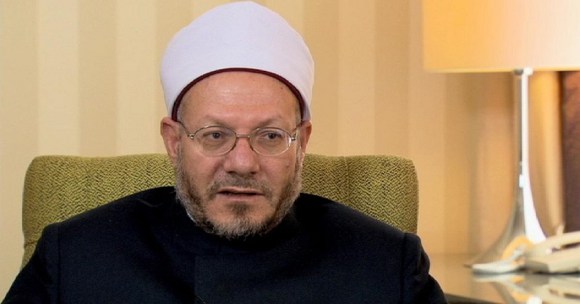
But another part is understanding sharia law in the first place, and in a helpful article on the blog of the Egyptian Ministry of Foreign Affairs, Grand Mufti Dr. Shawki Allam elaborates on what it is, and what it isn’t:
Far from a medieval code of capital punishments, the Shari’ah is a dynamic ethico-legal system designed to safeguard and advance core human values.
In fact, just as the US Constitution references the basic human values of unity, justice, tranquility, welfare, and liberty, so too each of these is also a fundamental value of the Shari’ah.
He continues:
The rules of the Shari’ah are derived from the Qur’an and the model behavior of the Prophet Muhammad, peace and blessings be upon him, which complements and/or supplements the Qur’an on issues where it may be silent or require clarifying teachings.
“Islamic law” is not just the Shari’ah but rather is a methodology and the collection of positions adopted by Muslim jurists over the last 1,400 years. That period is marked by a remarkable intellectual diversity with dozens of schools of legal thought at one point.
Interpretation is the endeavor of scholars in each generation. In other words, some rules can change with time and place. The articulation of the Shari’ah is based on built-in mechanisms which aim for articulations of “Islamic Law” to be purpose-driven and considers the prevailing customary, social and political contexts of the time.
This makes the system fluid and dynamic.
And he concludes:
The flexibility and adaptability of Islamic law is perhaps its greatest asset. To provide people with practical and relevant guidance while at the same time staying true to its foundational principles, Islam allows the wisdom and moral strength of religion to be applied in modern times.
It is through adopting this attitude towards the Shari’ah that an authentic, contemporary, moderate, and tolerant Islam can provide solutions to the problems confronting the Muslim world today.
There are many good questions that could be put to the mufti. How would he explain such-and-such behavior of Muhammad? Is Muslim history in this-or-that phase in conformity with sharia, or against it?
But on the whole, his essay is a good reminder that neither Muslims nor sharia are a monolith. As some pull from the Islamic heritage to destroy the current age, others access it in conformity – and presumably both seek first and foremost a fidelity to religion.
But a key question comes to mind.
The Ministry of Foreign Affairs is an institution of the Egyptian state. This state’s official religion is Islam, but it also promotes a concept of equal citizenship independent of religious creed. Why then does the mufti say the following?
Muslims [my emphasis] are free to choose whichever system of government they deem most appropriate for them. The principles of freedom and human dignity, for which liberal democracy stands, are themselves part of the foundation for the Islamic worldview; it is the achievement of this freedom and dignity within a religious context that Islamic law strives for.
His opening sentence is a true principle. But it is true for Egyptian Muslims, as it is for Egyptian Christians and Jews. I am certain there is nothing sinister in the mufti’s words. He has been a staunch defender of the post-June 30 Egyptian state, which is greatly appreciated by the Copts.
But there is a prevalent understanding that equates a nation and its people with a particular faith. For Egypt, this is not wholly inappropriate, as the constitution enshrines sharia as the primary source of legislation.
The mufti’s point, however, is in choosing a system of governance. In this, Egyptians must be referenced, not those of a particular religious creed.
Consider this blog post of the Egyptian Ministry of Foreign Affairs, criticizing Western nations in the wake of the Russian plane crash disaster. In it Galal Nassar, editor-in-chief of al-Ahram weekly, accuses Western capitals of desiring the Muslim Brotherhood to rule Egypt, and makes the following point:
Centuries ago, the West had its own revolutions, and managed for the most part to separate church and state. Why do they think that we cannot do the same? Why do they hold us to ridicule, rather than show respect?
Indeed, it is a form of ridicule to assume the bigotry of low expectations that a people Muslim in religion must also be ‘Muslim’ in the application of sharia law, interpreted in its most illiberal form. Sharia can be a guide; it does not have to be a code. For millions of Muslims living in Western nations this is certainly true.
His point is understood that sharia is flexible and consistent with the modern world. But the question is important: Should it be legislated?
This, in fact, would be a good question for the mufti, one he does not directly address. The closest he comes is here:
Many people are under the impression that Egypt adopted French law. This is not the case. Islamic law was rewritten in the form of French law, but retained its Islamic essence. This process led Egypt to become a modern state run by a system of democracy.
This suggests his answer is ‘no’. In Egypt, sharia is a ‘source’ of legislation, though it is also ‘primary’. But even within his argument the mufti’s implicit understanding is that Egypt is Muslim.
If asked directly, perhaps he would not say it with such clear generality. But all the same he and Nassar reflect the tension inherent in discussing Islam. Religion … politics … identity … law … they are all mixed up together.
The mufti does a good job reminding us that sharia does not have to be scary. But it is still complicated. It always has been.
This article was first published at the Zwemer Center.
From my new article for Christianity Today’s Behemoth publication:
The Pyramids of Giza used to be in the middle of the desert. Eventually Cairo’s urban sprawl pushed right up to the Sphinx. The Citadel of Saladin towers over the city. The southern approach requires an overpass straddling the City of the Dead. In Tahrir Square, the Egyptian Museum and its famed mummies were overrun with the bedlam of a revolution.
Tourism has dropped dramatically since then, but intrepid travelers can hardly help notice the encroachment of squalor on the glories of antiquity.
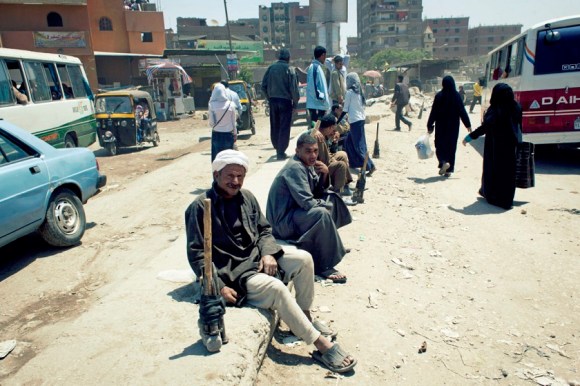
What most miss is the reversal: A glory rising out of the garbage. To create it, 40 years ago one man had to literally trudge through a pigsty. Today it is simpler to reach the massive cave church complex in the Muqattam Mountains on the eastern edge of Cairo. But the journey still requires a pungent assault on the senses.
Women and children pick through 15,000 tons of the city’s collected refuse, sorting out recyclable waste from the biodegradables useful for wandering livestock. Men haul burlap trash bags twice their size into garbage trucks poised to tip from overfill…
The article tells the story of how a Coptic Orthodox priest inhabited this world and gave birth to one of Egypt’s most beautiful sites.
Please click here to read the full article and see the photos at The Behemoth.
Uninhabited but geo-strategic, Egyptian blood was spilled to defend Tiran and Sanafir at the entrance to the Gulf of Aqaba in the Red Sea. Thankfully, no blood was spilled defending them yesterday.
Right or wrong, thousands took to the streets, troubled by a government decision to recognize Saudi Arabian sovereignty over the islands. As the king arrived to sign multi-billion dollar aid and investment agreements, the decision bore the appearances of a sale.
The government released official documents to demonstrate historic Saudi ownership in a belated attempt at damage control. The government also long presided over popular understanding that they belonged to Egypt.
But the anger is hard to measure. Is it nationalism or revolution? Is it single issue outrage or pent up frustration? Is it sincere love of land or long awaited excuse?
Protests were prevented at many locations throughout the country, but permitted downtown. There were arrests, but no deaths. A follow up is scheduled for April 25, Sinai Liberation Day.
Is it state prescience to allow opposition to vent and permit a degree of protesting rights? Or is it state impotence to shut down the street completely?
God, there is much to ask of you. These two islands threaten to shift the equation, for good or ill.
Determine the border. Let public discussion turn on the truth of the matter, encompassing all legal and moral claims.
Establish transparency. Let government and society nurture openness, reforming policies for greater public trust and accountability.
Cultivate civic duty. Let rights and responsibilities seep into public practice, shaping both governance and protest after a long emphasis on stability.
Grant discernment. Let authorities respond rightly to international realities and public mood, coalescing with protesters seeking right outcomes through legitimate means.
God, define the above consistent with overall justice, redeeming Egypt from all errors contemporary and historic. Create a society where righteousness will rejoice and people will prosper.
Let these islands be an opportunity, God. Guide Egypt accordingly.
When Brookings released a new paper from a young Muslim Brotherhood member based in Istanbul within the context of an ongoing series on political Islamism, prominent analyst Eric Trager had a poignant reply on Twitter:
“Brookings’ “Rethinking Islamism” series jumps the shark, features MB who, of course, doesn’t rethink anything.”
I laughed, but upon reading the analysis of Ammar Fayed I also noticed some sections where the group does appear to have reviewed its current situation and its year in power. I will highlight a few sections below.
But Trager also tweeted a comment that rings somewhat true:
“Islamists on Islamism – By casting MBs as research analysts, Brookings is allowing itself to become Ikhwanweb.”
Much of the article is simply a restatement of the Muslim Brotherhood internal narrative. There is no mention of the Turkey-based satellite incitements to violence, and only token mention of the ‘blurry’ line between revolutionary protest and violent means. That the people turned against Morsi is attributed solely to state-controlled media, and current divisions in the group are downplayed against an inherent unity asserted without refuting current outside analysis.
As an insider, Fayed is in a good position to know, and the paper on this count is still very valuable. But perhaps Brooking miscasts it; it is less an analysis than the presentation of one particular trend within the organization.
Unfortunately, it also seems somewhat contradictory. The overall theme is that the Muslim Brotherhood has not turned to wholescale violence because it would contradict the longstanding traditions that favor a social outreach over revolutionary change.
Fayed provides a very useful insider’s view of Brotherhood history, and contrasts the group with more violent actors:
This “model” [of the MB] carries out social services through official institutions subject to the law and operates under the authority of the state. The other carries out social services only to further the direct replacement of an absent or failed state with “Islamic rule.”
I think this is true, but toward his conclusion he says that the group is starting to change in its understanding of its enemy:
The conflict has shifted from a political conflict between the Brotherhood as an opposition group and the ruling regime into a conflict between the Brotherhood and the idea of the Egyptian state itself.
I agree with the author that the Brotherhood has not turned to violence in large swaths. But in contrast to his intended point that this will not likely happen, this point opens up that the MB is warming to a position he cast earlier as the domain of extremists. Within it he also takes a swipe at the Coptic Orthodox Church, stating “in the view of many” they are “abettors to the killings and ongoing repression”.
Earlier, Fayed relates how this state apparatus framed the Brotherhood:
By the end of June 2013, the state succeeded in “factionalizing the Brotherhood,” by portraying them as fifth-columnists separate from the rest of the population with self-serving goals. The message was clear, that the Brotherhood doesn’t have Egypt’s best interests at heart, only its own.
Certainly this was a message mobilizing against the Brotherhood. The author spends much of the paper describing the group’s attitude toward social services, showing how it serves the good of society at large.
But at the start of the paper, describing the Brotherhood founder’s somewhat nebulous and shifting attitudes toward politics, he wrote:
In the opening of the first issue of al-Natheer magazine in May 1938, Hassan al-Banna clearly stated “Until now, brothers, you have not opposed any party or organization, nor have you joined them… but today you will strongly oppose all of them, in power and outside of it, if they do not acquiesce and adopt the teachings of Islam as a model that they will abide by and work for…There shall be either loyalty or animosity.”
Clearly, this us-versus-them mentality is deeply ingrained in the Brotherhood ethos. The ‘loyalty or animosity’ theme is also a hallmark of Islamic extremism.
But this leads to one of the author’s points of reflection. The Brotherhood needs to better cooperate with others:
As long as the Brotherhood’s political imagination is unable to overcome the mindset of “coup versus legitimacy” and develop an alternative political discourse that meets the demands of the disaffected social segments that ignited the January revolution, then the Brotherhood itself may be an obstacle in its efforts to build a new culture of protest.
And in Fayed’s final conclusion, he makes an appeal:
Until now, the group has not formed a clear political vision. Nor does it have the tools to remove the military from its political calculus. Therefore, the group must work with other forces that reject the policies of the current regime.
Such an alliance, he believes, can form a broad national front whose goals and programs are based on the priorities of the revolution at large. This national front could also delineate pragmatic plans to coexist with the political and economic influence of the military for the foreseeable future.
The strategy is sensible, but he fails to state one of the most significant reasons this is not happening. Early on, the national front forces he describes felt betrayed as the Brotherhood collaborated with the military against the revolution. Yet even in this appeal to them now he does the same – imagining pragmatic plans to coexist with the military.
In a sense, this may help prove his point. The Muslim Brotherhood is not a very revolutionary organization. In fact the author’s semi-solution is to consider abandoning the political project and return to its comprehensive social role. If out of politics, he posits, the group could be a powerful force to marshal the populace to push non-Brotherhood politicians toward Islam-inspired positions.
Here is where Fayed’s most powerful rethink takes place:
The Brotherhood’s brief experience of being in power and its subsequent removal by military coup has served to strengthen the idea of separating the Brotherhood’s role as a social institution from its role as a political force …
In hindsight, it appears that the Brotherhood’s direct participation in competitive politics has done substantial damage to decades of social and religious institution building.
But since this social institution building project has been dismantled, as he acknowledges, where can the Brotherhood go now? He doesn’t see the group diving into violence, but acknowledges there is no space for reconciliation with the regime as long as Sisi is in power.
In short, there is a deep impasse in which the Brotherhood can only hope that current conditions deteriorate until the people rise again in revolt. Whatever authority comes next, it seems, might be able to work out an arrangement to restore the group.
In history this has been seen before. After Nasser, Sadat gave an opening. It may be wise to wait. Without stating it so clearly, this may be his real analysis on why the Brotherhood has not resorted to violence.
Of course he also mentions the many Brotherhood members in prison, which makes a difference also. But instead of his focus on internal Brotherhood dynamics, I would propose a different reason:
Army unity did not break, Egypt is demographically homogenous, and the people do not like violence.
For consider, the Muslim Brotherhood in Palestine believes in armed struggle. The Muslim Brotherhood in Syria believes in armed struggle. Every situation is different, of course, but there is nothing intrinsic to the Brotherhood that believes in nonviolence. In Egypt, they made practical decisions on the best way to pursue their objectives within the scope of the possible.
In a vastly more constricted setting, they do the same today.
Had a division of the army broken off, should we imagine the Brotherhood would not have rallied behind it? Had they seized a portion of Upper Egypt, for example, would they not be fighting to defend it?
It is true the Brotherhood has not run off into Sinai, but an insurgency does not control Sinai, it only plagues it. Furthermore, the Brotherhood was never strong there, it would be unfamiliar terrain.
So why are not thousands of Brotherhood members committing individual terrorist acts? I would suggest it takes quite a bit to turn a frustrated political activist into a wanton killer, especially if there is no well-defined endgame. The Egyptian people do not like violence; Brotherhood members are drawn from the people. Besides, there is already a long history of Islamist insurgency from a few decades ago that only served to alienate the masses.
No matter how difficult the situation, they hold to the calculated decision that violence is still not the winning option. Give them at least some credit for this, but not necessarily the honor of principle. They have always been willing to fight, and the Brotherhood has never denied it. Their comprehensive vision of Islam does not sideline the use of force, only regulate it. The Brotherhood are pragmatists.
So what is Ammar Fayed? A very particular viewpoint within the Brotherhood that has won pride of place at an esteemed think tank. It may or may not be their dominant viewpoint, but it is insight into their world, provided the analysis is viewed within the possibility of propaganda.
In this Brookings is providing a very valuable service. It is allowing Islamists to speak into the academic discussion about Islamism. As long as it is properly introduced, I hope there will be more.
Forgotten after the unfortunate farce of a hijacking, the Egyptian cabinet presented parliament with its governing program.
Bless their efforts, God. May wisdom have drafted it, may courage implement it, may discernment amend it to whatever degree necessary.
May transparency accompany it. May accountability characterize it. May prosperity follow it.
God, help Egypt pass through this difficult period. But even when her problems are not self-inflicted, something arises to hijack recovery.
This time, a man on a plane with a fake bomb and a strange story. How much further damage will he cause to tourism?
Did he want his ex-wife and kids? Did he want the release of female prisoners? Did he act out of right mind? Did he act out shrewd agenda?
Whether a cry for help or a whimper of defiance, God, mend him as an individual. Care for his family, do right in their broken relationship.
And do right in Egypt. Restore tourism and make it safe. Renew investment and spread its benefit. Care for the nation; mend her broken relationships domestic and foreign.
Give insight to the authorities, God. Give agency to the people. Together may they govern well.
The facts known or the story straight. Above board or underhanded. In Egypt this week it is one or the other. God, let it be the former.
For there are many who doubt, many who accuse.
Egypt announced the ID of the Italian researcher tortured and murdered two months ago was found in a home connected to a criminal gang killed in a shootout with police.
A joint investigation is being conducted with Italy, but some on both sides of the Mediterranean consider it far too tidy a conclusion. These point figures at Egyptian police, who have made clear they had no role in his disappearance.
At the same time, dozens of civil society organizations have been named in the reopening of a file linking them to illegal foreign funding, sponsored to work against the regime.
Investigations are proceeding, and over the years the state has left a murky legal field for NGO operation. But some on both sides of the Atlantic consider this an assault against independent voices, though Egypt insists it simply wants compliance with the law.
God, provide the truth.
There are criminals somewhere, find them. Civil society needs funds, provide them.
If accusations against Egypt are true, her moral morass grows deeper with each new revelation. If Egypt is innocent, the force of the onslaught against her grows stronger.
Whether guilt is mixed or confined to one side, hold the responsible accountable, God. Sooner rather than later, let there be transparency.
Through it all, preserve Egypt and her people. Bless them, and may their story, with all its facts, one day be celebrated.
The Muslim Brotherhood once had a militant wing. It then spent decades rejecting the use of violence, but continuing to embrace its most strident ideologues.
After the fall of Morsi the Brotherhood must again navigate this heritage, with an old guard that is cautious and concerned about international opinion, and a youth movement that is passionate and concerned about the situation on the ground.
In his recent article for Foreign Affairs, Mokhtar Awad describes the most recent developments with each.
The old guard has made some strides, however, by controlling the Brotherhood’s international financing, which became far more important following Sisi’s severe crackdown on the group’s domestic financial operations.
With the money inside Egypt reportedly dwindling, there were fewer resources available to finance violent operations. Indeed, since the fall of 2015, there has been a noticeable dip in violence perpetrated by these new violent groups in the Egyptian mainland, which is only starting to pick up again.
These new violent groups do need authorization, however, to be sharia-compliant.
Still, the seeds for a radicalized Muslim Brotherhood, a sort of Brotherhood jihadism, have been planted. During the height of the revolutionary wing’s influence in early 2015, some of its leaders, as it is believed, informally commissioned a group of Islamic scholars to write a sharia-based manual on the question of violence.
The result was a 93-page book titled The Jurisprudence of Popular Resistance to the Coup. It was an obvious attempt at ijtihad, or legal reasoning, by non-Salafi jihadist scholars to reconcile Brotherhood creed with a methodology of violence.
These scholars declared that neither Sisi nor his government were apostates but were instead ahl baghy, or seditionists,who had turned against the religiously legitimate leader: Mohamed Morsi.
And since Sisi and his government had used violence against Muslim believers, they were considered enemy combatants who should be slain, according to sharia law.
But even these radicals still feel compunction to stay within the mainstream Brotherhood heritage.
This theoretical dance around the issue of apostasy is an attempt by the authors to reconcile Brotherhood teachings with violence without inviting damaging comparisons to Salafi jihadism.
Egyptians, and most Islamists, in fact, hold very negative views toward those who declare other Muslims apostates, or takfiris. The authors of the book are so careful that the text does not once mention Sayyid Qutb, the infamous Brotherhood ideologue whose takfirist ideas helped inspire modern-day jihadism.
Instead, the authors reference the Brotherhood founder Imam Hassan al-Banna and use his selection of two swords in the group’s logo, as well as his talk of “strength,” as a justification for violence against the state.
Read the full article for greater context, but here is one anecdote that shows how convoluted this heritage can be. It is difficult to esteem both swords and non-violence.
It warns against kidnapping and sexual assault of the women and children of security officers, but says there is no harm in threatening to do such things to scare them.
Today, Sunday the 6th, churches around the world will celebrate the World Day of Prayer, officially designated as the first Friday in March. The movement began in the 19th century, led by lay women in the United States. Today more than 170 nations participate.
But Americans may be surprised at the official program this year.
Two years ago the country of focus was Egypt, and I was able to contribute an article to Presbyterian Today. The choice of nation was made four earlier in 2010, before the onset of the Arab Spring, leading many to remark the selection was prophetic.
One might say the same about this year, with a focus on Cuba. At that time relations with the United States were still frozen; now a new light is dawning.
I am not certain when the program was written, but it contains nothing of the thaw. Instead, worshipers were asked to pray this prayer:
Forgive us when we have not created a genuine space for dialogue among those who differ from us; when we have not lifted our voices sufficiently to denounce an injustice like the economic blockade affecting the Cubans for so many years…
And later:
In Cuba, we pray that you transform the walls erected by the economic blockade into wide open doors that are ready to receive.
Perhaps this prayer has now been answered.
The Cuban World Day of Prayer committee did make reference to oblique ‘detention centers’ for undocumented migrants , and in the opening skit one elderly Cuban woman said, ‘My generation has kept the Faith despite much discrimination.’ But a Cuban child praised her school which also teaches her the Bible.
As Americans, we are used to thinking of the Cuban blockade as an essentially just aspect of our foreign policy. It began to stem the tide of communism, and continued to check a human-rights violating dictator.
Certainly the reality is more complicated, on both sides. But it is worth noting that Cuban brothers and sisters in Christ chose to frame the issue as one of injustice.
Today, therefore, let us praise God with them that doors have been opened. Politics is messy; issues are rarely black and white; there is ample room to disagree with the shift in American policy.
But as the Cubans chose to pray, let us join them:
Forgive us … when we have built up walls that have prevented us from giving reason for our faith and hope… Enable each of us to do our part in providing help for the suffering world around us.
Lord, hear our prayer.
As a postscript, the 2017 World Day of Prayer will focus on the Philippines. Will the choice again prove to be prophetic?
Then again, the 2015 nation was the Bahamas. Perhaps it skips a year. Take care Suriname.
Guide the man. Guide the professionals. Guide the parliament.
Guide them all to guide the government.
Tawfik Okasha is a loose cannon, a conspiracy theorist, and a now former member of parliament. His colleagues revoked his standing after several weeks of theatrics and dinner with the Israeli ambassador.
God, he is a hard man to figure. Is he a player or a pawn? A visionary or a reactionary? Either way, bless him. Refine him. Multiply every good and right principle he latches on to, and hold him firm as storms assail. Forgive him for the excess of every storm he unleashes himself.
Act similarly with the body of his former parliamentarians. Marshall their strength as the representatives of the people, and help them honor Egypt.
Give peace among neighbors, and justice within nations.
Egypt’s doctors and journalists believe they pursue this locally. Both level their protests against the security establishment, for colleagues assaulted and colleagues imprisoned. In their target and their numbers they are exercising pressure long absent from the Egyptian scene.
Give them wisdom, God, and with them the government. In a still sensitive and fragile context, help them establish good patterns for right expressions of grievance.
And may the government preempt them, to act before its hand is forced. But when challenged may it respond in grace, weighing the perfect against the possible, implementing with discernment all that you find right and good.
Act through individuals, God, with all their foibles. Act through collectives, with all their clamor. Guide Egypt forward, and give her peace.
Egypt’s president looked ahead 14 years and saw a place of economic success. Make it so.
But he also looked at the present and admitted shortcomings in human rights. Make it change.
This week a new port opened in the Suez Canal.
This week another writer was jailed for his content. And teenagers for alleged blasphemy. And an anti-torture NGO threatened with closure. And…
But the police have committed to propose new legislation to better govern performance and community relations.
And a doctor convicted of female genital mutilation finally loses his license.
God, there is much to be concerned about. There are signs of progress. And people can differ over which is which.
God, help Egypt to square her laws with her constitution. Help her to enforce them with justice. Help her to create and open and transparent climate for culture and business.
But which clauses, God? The ones guaranteeing rights and freedoms, or the ones regulating in accordance with sharia?
And which laws? The ones facilitating central state control, or the ones privileging the private sector?
So many contradictions in Egyptian society are not yet ironed out. So many conflicting values are at odds.
Perhaps there is no essential struggle. With freedom comes responsibility. With license comes oversight. But help government and society together to find the place of consensus. Help limits be defined, known, and acceptable to all.
And then bless those dissenting, willing to challenge. But may all act with respect, and bear their weight of their role.
God, may it not take 14 years. But whatever time is necessary, make it right.
Early Saturday morning, with a heavy heart Mohamed Abla traced his whimsical silhouettes with only a few looking on. Everywhere along his stretch of the 150 foot wall surrounding the famed Khan Market in New Delhi, folk art inspired images of children, animals, and birds burst into life. Previously drab and barren, the wall previously served as a garbage dump and public urinal. Over the past three years the Delhi Street Art group has been transforming similar locations of urban blight into monuments of community pride. But on this occasion their 62-year-old Egyptian guest felt compelled to add a sullen reminder.
He drew a stick figure of the Eiffel Tower, and enclosed it in a circle.
Paying homage to Paris through Jean Jullien’s image, Abla could have thought of Egypt. Five thousand kilometers from home, his native land has also witnessed terrorist atrocities hammering away at the effort to regain stability. For the past five years revolution has jolted the street and national psyche alike. But instead of lamenting Cairo, Abla ached for India.
“I felt that Indians were worried about terrorism,” he said, “having experienced it themselves in the past. Paris was a stark reminder.”
It can sometimes take the soft heart of an artist to commiserate with a people not one’s own. But Abla’s attachment to India runs deeper than just creative sentimentality. For the past seven years he has visited frequently, dazzled by the assortment of colour and smell, bewildered by the proximity of tradition and technology. His eyes and his canvas soaked in both big city and ancient village. He noted the simplicity of people and the grandeur of temples.
And his memories poured through his paintbrush.
“The eyes through which an artist sees another culture are always fascinating,” said Sanjay Bhattacharyya, India’s Ambassador in Egypt, opening the resulting exhibition at the Maulana Azad Center for Indian Culture, in Cairo. “Abla has shown us things we haven’t seen.”
Please click here to read the full article at The Media Project, including more paintings and the artist’s history.
Two of Egypt’s leading statesmen passed away this week, both in their 90s, one day apart. Have mercy on Boutros Boutros-Ghali, former general-secretary of the UN, and Mohamed Hassanein Heikal, the leading journalist of his era. May they rest in peace.
As Egypt honors their memory, may she raise up replacements. Help this generation of politicians, businessmen, and cultural elite to stand on their shoulders and carry the nation forward.
But God, help them first to define well the proper relationship between state and men, to make it possible. Help Egypt to answer: Who serves whom?
For this week also there are people in detention who have not faced trial for nearly two years. There are public figures arrested over offensive words. There are civil society organizations threatened with closure. There are suspicions of police brutality, and officers acquitted in cases of torture.
God, resolve each question according to its merits. Bear justice both for victim and accused. But allow no soul to be sacrificed for a construct; permit no reputation to be marred for a collective.
Honor all, person and people. Build institutions, society and state. Let them work together in harmony, each drawing strength from the other.
For if not, few will be able to rise to the level of a previous generation. Bless Egypt with a working state; bless her with developed men.
And then, call forth the statesmen. May they lead Egypt toward peace.
Writing in the UAE-based National, Patrick Werr outlines six common motifs that Egypt tends to rely on for the promotion of its economy.
They are dead wrong, he explains, and actually harmful. Here is the list:
A strong currency means a strong Egypt
Egypt has vast desert areas. With only a bit of resolve they can be turned green
Egypt needs to grow its own wheat so it can stop importing
The government needs to build more housing to meet growing demand
The country needs megaprojects to get the economy going
Moving government offices out of the city centre will ease traffic congestion
Werr has worked as a financial writer in Egypt for the past 25 years, so his experience and cultural understanding is extensive. Click on the link above to read his justifications.
But here is one section to highlight. It shows he does not oppose all megaprojects, and proposes a much better investment I heartily agree with:
The good ones, in my opinion, are the Suez Canal corridor project and the rapid expansion of power plants. If only they would add a massive expansion of metro and light rail.
Egypt currently has two operational metro lines, with a third about one-third completed. A fourth line is designed to be fully operational by 2020, with lines five and six envisioned for the future.
As a dedicated urban walker and rider of public transportation, it will be wonderful to access more of the city for the current price of $0.13. Perhaps this must rise in the months or years to come, but to assist a congested Cairo and its lower income residents, I see no better or immediately practical solution.
As for the rest of Werr’s ideas, you be the judge. But to the degree possible, judge in dialogue with Egypt, that she might find her way to a stronger economy for all her citizens.
And as an earlier post speculated, it will also benefit the world.
Umm Peter stood with dignity in the corner of her simple, cinderblock home. With an appearance weathered over the years, in grandmotherly fashion she spoke of the men of the village and the difficulties of life.
Half, she estimated, work in the Red Sea resorts of Sharm el-Sheikh or Hurghada. There is little opportunity in her all-Christian village of 200 families, a three hour drive south of Cairo in the governorate of Minya.
Umm Peter was speaking to a group of six expats, visiting from Maadi Community Church (MCC). Gathered around were her ten-year-old son, Peter, and his only slightly looking older married sister. Peter is a sponsored child of Healing Grace, a ministry of Kasr el-Dobara, the largest Protestant church in the Middle East, situated at Tahrir Square.
MCC is a partner organization, supporting one of the villages within Healing Grace.
Umm Peter’s own husband is away only half the year, and currently. There is not enough work in the Red Sea either, and he is too old for the rigors of construction.
His age, she was asked. ‘Forty-eight,’ she replied, as if he was already elderly. In village years he might be.
But there is hope Peter might not age as quickly, supported widely through the generosity of donors and the community it helps create.
‘I want Westerners who come here, who live in an expat bubble, to see another side of Egypt and how people live,’ said Rev. Steve Flora, pastor of MCC. ‘Though they barely have electricity or water they are happy, and their lives are being changed for good by the Gospel.’
Flora, who has sponsored a child in the village for the past four years, appreciates Healing Grace for the opportunity to develop a relationship with him. The church arranges visits twice a year; on this occasion twenty expats split into three groups to visit only some of the 49 families who benefit from sponsorship.
Bassel, the sponsorship coordinator for Healing Grace, said the program focuses on three components: Jesus, education, and health.
Every sponsored child is visited weekly by village staff members, who disciples him or her in an age appropriate manner. Healing Grace works with local churches to host an AWANA Club, and sends each child to a weekend retreat once a year. Peter’s favorite Bible story is Joseph and his brothers.
The program pays all school fees, including uniform and supplies, and helps provide private tutoring if necessary. Peter’s ambition is to be a doctor.
Perhaps he has been inspired during his medical checkups, provided free of charge with all necessary medicines. Healing Grace also supplies a monthly package of basic foodstuffs and twice a year outfits Peter and his siblings with new clothes.
‘These kids are different now, the sponsorship gives them health, education, and Christian community,’ said Bassel. ‘Every child deserves a chance, and we want to help transform their lives.’
Since 2009, this has been a reality for 1,275 children in 21 villages. In some Healing Grace has also installed water filtration units in a local church, open to all.
Flora remarked that within Christian denominations Healing Grace is an example and catalyst for unity. In Umm Peter’s village the sponsored children are supported equally through the Orthodox, Evangelical, and Pentecostal churches.
‘We thank you for this ministry that provides spiritual and educational needs in this village,’ said Rev. Emil of the Evangelical church, built in 1917. ‘Christianity is not about preaching only, but also serving and helping others.’
Umm Peter served tea to her guests, extending hospitality to those far better off. After praying together the group bid farewell, ready to visit the next family just down the earthen path.
Sponsorship costs $30 a month, all of which goes to support the children. Healing Grace’s overhead costs are raised separately, supporting a staff of 60 with an additional 100 volunteers. For more information about children available for sponsorship, visit healinggraceministry.org or email healinggrace@kdec.net.
‘The ministry of Healing Grace is transformative for the villages, and for us who go and see,’ said Flora. ‘We hope the comparatively wealthy expats in our own church can experience even a portion of the life change that goes on in the village.’
This article was first published in Maadi Messenger.
Humble St George’s Church in Belhasa south of Cairo became a home for dogs and goats after its destruction by pro-Morsi supporters during Egypt’s 2011 revolution.
Now it’s been reopened better than ever – thanks to a surprise announcement by Egypt’s President.
‘This is a beautiful gesture for a new age,’ said Bishop Biemen, Head of Crisis Management for the Coptic Orthodox Church. ‘We have been pampered.’
President Abdel Fattah al-Sisi visited the Coptic Cathedral in Cairo on 6 January – Coptic Christmas Eve – for the second year running. Amid raucous applause he did the most un-presidential thing: he apologized
‘We have taken too long to fix and renovate the churches that were burned,’ the President told Copts, one of the oldest Christian communities in the world. ‘God willing, by next year there won’t be a single house or church that is not restored.’
On 14 August, 2013, six weeks after then Defense Minister Sisi deposed President Morsi, military and police units violently dispersed his supporters as they staged two sit-in protests in Cairo.
Over the next three days angry Islamists ransacked dozens of Christian establishments across the country.
In Belhasa, 240 kilometers south of Cairo, youths climbed the roof of the neighbouring school and hurled firecrackers and Molotov cocktails into the church.
‘We prayed, we cried, we were in a difficult situation,’ Malak Ishak, a 40-year-old middle school teacher, told Lapido. ‘God, why did you let your house burn?’
The tiny community of Christian farmers and labourers abandoned the building which was charred beyond recognition, and lamented its fate.
And for the next three Christmases they trudged country roads to worship in Kom al-Akhdar village four kilometers away.
Top-of-the-line construction in Belhasa
After the initial attacks Sisi immediately promised that the military would cover the costs of all reconstruction.
But progress was slow-going and some Copts began to complain. Local media also questioned if the job would get done.
But on 14 January, one week after the President’s apology, St George’s Church was reopened. Refurbished with top-of-the-line construction material and additional floors, engineers also included a sprinkler system and fire alarm.
Fr Yuannis (R) inside Belhasa’s restored church
Fr Yuannis Anton from nearby village Qufada had helped Belhasa church get its licence in 1999, after it was converted from a simple village home.
Now drawing on his biblical heritage, he praised the generosity of the military, which covered the £270,000 cost of restoration.
‘We were very sad when the church was burned,’ he said. ‘But we held to what Jesus once said, “You do not realize what I am doing now, but later you will understand.”’
Village relations with Muslims were now much better than in the time of Morsi, teacher Malak Ishak said.
Priority
Bishop Biemen echoed this theme about the country as a whole.
Consecrated in 1961 and an engineer by background, the Bishop was chosen to coordinate the nationwide effort with the Army Corps of Engineers.
Priority was given to churches that were the only ones to serve a given area.
Consideration was also given to the security situation, with the army not being placed in situations where confrontation with still-angry pockets of Morsi supporters might occur.
Stage one involved ten locations and was originally scheduled to be completed by the anniversary of Morsi’s ouster, he said. But there were delays until the end of 2014.
Stage two incorporated the remaining 33 locations, ten of which were made a priority. But these few took all of 2015.
Reports circulated in the press about materials being dumped. Other reports cited local priests saying their burned churches had not been registered.
‘As the army procrastinated there was grumbling from Copts that the job was not getting done,’ said Ishak Ibrahim, Religious Liberty Officer for the Egyptian Initiative for Personal Rights.
‘But since Sisi’s announcement there has been a renewed push on the part of the armed forces.’
‘Our country appreciates us’: Bishop Biemen
Bishop Biemen agreed, but took the blame for the delays.
‘We have the responsibility to plan and redesign the churches, not the army,’ he said. ‘Before God and my conscience, we were working the whole time.’
Popular confusion came from two misunderstandings, he explained. The project only involved locations damaged during the three-day melée. And after supplying initial materials, the army then paid upon completion.
But since Christmas the final phase has begun in earnest. It even includes the church in Arish, in troubled northern Sinai where the army remains in conflict with an ISIS affiliate, he said.
In total the army will pay out £16.5 million on 65 locations including 52 churches and 21 additional religious buildings.
But though he said it had not been needed, Bishop Biemen is most encouraged by an apology that runs counter to much of Egyptian culture.
‘Many people view saying sorry as an act of weakness,’ he said. ‘That the President did so is a big deal, and shows us our country appreciates us and is worth defending.
‘As the Egyptian proverb says, “We have been patient, but then received everything we need.”’
Three years ago I met Ahmed Ashoush at a demonstration in Cairo. He and his fellow Salafi-Jihadis gathered outside the French Embassy to protest against French military intervention in Mali, where an Islamic insurgency was pressing toward the capital. It was a calm but angry affair, with many pictures of Osama bin Laden and chants for the worldwide supremacy of Islam.
A little later Ashoush agreed to an interview. We and three of his colleagues met with Cornelis Hulsman at the Arab West Report office in Maadi, Cairo, and discussed the philosophy behind their movement, their dreams for the future, and the activism to help them get there.
I have previously written about this encounter and the Salafi-Jihadis here, here, here, and here, but for the first time a full transcript of the interview is available. AWR is preparing a book on the post-Arab Spring Islamist movements of Egypt, post-Arab Spring but pre-fall of Morsi. In support of the chapter on Salafi-Jihadism, Jeanne Rizkallah has provided a full translation.
Ahmed Ashoush is currently in prison, convicted for attacking a satellite telecom facility in Maadi.
It was a fascinating interview, and very strange. Almost the entire time Ashoush directed his answers toward his colleagues, and avoided eye contact. This was neither evasive nor shy, but it felt as if he wished to address a friendly audience. But in terms of interaction he was most often direct in providing clear answers to challenging issues, however much resemblance they bore to common Salafi or jihadi themes.
Here is an excerpt, and please click here to read the full transcript at Arab West Report.
JC: With regard to the aspect of administration, would you define Al-Salafiyia al-Jihādiyia as an organization?
AA- No, we do not define ourselves in terms of organizational structures. We are concerned with matters of our faith and religious doctrines. We are now a Da`wa, an open call that invites to all what is good, enjoining to face the psychological warfare that the United States of America and the western colonialism is raiding against us, to rectify wrong and erroneous terminologies like the words ‘terrorism’ and ‘moderate Islam’.
In fact, the term ‘moderate’ has been used to distort the religious concepts of Islam, and to distort the concepts of real facts, such as the treason practiced by Arab rulers. These terms have been distorted to serve the interests and gains acquired through the American psychological warfare.
Let me cite an example: the number of car types, of airplanes you produce in your country, America if compared with the production in Arab countries, or in Egypt. Who is responsible for the state of underdevelopment the Arab countries are in? Not the peoples but the governments; the politicians, not the common people, are to be held accountable. This state of backwardness is unbearable.
When we in the Muslim world want to defend our nations, we import arms and ammunition from the West; when we want to cure illnesses, we have to import medication; when we need medical treatment, we seek a medical doctor from Europe. Who is to be held accountable for all these detrimental situations? A serious crime of betrayal of this nation has been committed, and the Arab rulers should be punished now on the ground, and in the process of history.
Our peoples are not aware of these facts. We will place these realities before them.
JC: How do you perceive the change of Egypt from within?
AA – Our major concern now is to achieve a change in thought and mentality. Our struggle as Salafi Jihādis is to first change the Egyptian mentality that has been strongly afflicted by the corrupt media structure, the treacherous liberal politics that had succeeded to systematically distort the people’s thought.
Our goal is to bring back the authenticity of [Islamic] thought to the people, to disclose the truth, to revive in them the power of their belief. The Egyptian common people need to identify and define what is good for them, and around who they want to coalesce; with Islam, or with America, or with Russia? With the rulers or with the non-ruling?
This dynamic battle is crucial for us. We are fighting the mentality of colonization, of abduction that has been imposed by both the American and European occupations. We are combating Muslims, Arabs, and Egyptians that had linked their existence and interests to the European oppressor.
JC: How would you classify your activities?
AA – We have a number of activities. We also publish books and articles; we organize lectures, meetings, and mass appearances. We are active on a number of levels, however, we work under oppression, and we are still forced into a position of weakness, and after so many years spent in prisons, we do not have the financial means.
All our resources, the financial as well as the physical ones, have been destroyed. But we do not succumb. The Salafi Jihādi is a warrior who rather dies on the battlefield rather than on his bed deprived of self-determination. To die in striving to raise the banner of Allah until victory is much better than to live in submissive compliance.
The news this week is gruesome, and hits too close to home.
An Italian researcher was found dead on the side of the road with signs of torture evident. And a six-hour police siege near a Cairo suburb popular with foreigners resulted in the death of two alleged terrorists.
Egypt needs peace, God. Perhaps these are signs of a desperate resistance smoldering on its last ashes. Perhaps it signals deeper issues that threaten stability for the unforeseen future.
Either way, God, make Egypt safe. Safe for the residents from the infiltration of criminals. Safe for the foreigners most usually welcomed.
But these days are not usual, God. Frustrated by loss of political power some are turning to violence. Frustrated by lack of international support some are enflaming xenophobia.
The hope is not a return to normal, but an establishment of good. Make Egypt vibrant. Help Egypt flourish. Free her from the tensions that bind her spirit.
May foreigners listen, learn, and share liberally. May Egyptians prosper, police, and inspire politically.
God, give comfort to the Italian’s family. Give comfort to the nation he studied. May no life be lost to vanity. May no horror undo a home.






 Jayson Casper