Over 150 people are dead in a disaster off Egypt’s Mediterranean coast. An equal number of would-be migrants were rescued, but the majority remain unaccounted for.
Most on board the overloaded fishing boat were Egyptian, with a sizable segment of other nationalities. Turkey and Libya hold international focus as a launching pad of refugees to Europe, but Egypt has tended to stay out of the headlines.
The armed forces have intercepted many efforts, and tragedy has not been a media marker. Until now.
God, have mercy on the souls of those who perished. Put right the world of those who remain alive.
Put right the world.
Egypt is refining its legislative deterrent, upping the punishment for human trafficking. But the president also calls for greater investment in areas with people more likely to flee.
Help Egypt to right its own ship economically, even as she integrates refugees from elsewhere. Give wisdom to Europe in who she takes in. Give prosperity to her neighbors, that none need apply.
And give contentment to those dreaming of a better life elsewhere. May they know your peace, which can settle any soul. May they know your power, which seeks the good of all.
But for now, may those in transit know your comfort. May those who find them extend your grace.
Put right the world, God. Too many are drowning. Put right Egypt, may she rescue many.
Long awaited items seem almost there. But almost to arrival is still a distance. Give wisdom in the final days of discussion.
Egypt’s Christians have long complained of difficulty in securing authorization to build churches. The new constitution mandated a law be passed by parliament in its first term to govern a better process. Behind the scenes negotiations between church and state near completion, and elected representatives appear ready to receive the draft law.
What they do with it is up to them.
God, for some this is a non-issue, for others it equates religious identity. Give courage and tact. Give conviction and empathy. Give consensus in line with your good will.
Perhaps your good will is more flexible in monetary policy, God, but help Egypt to find it in reference to the IMF. Staff level agreements have been finalized on a $12 billion loan and reform package. But political push and social acceptance may be lacking.
And some breathe a sigh of relief, finding neoliberalism and austerity programs to be the problem, not the solution. Others view it as a mark of international confidence and economic recovery, while a third are torn but resigned in the face of fiscal necessity.
Sort between them, God, for the sake of the nation. Set right the ship, that all may prosper. If the loan goes through, disperse it well. If not, revive the economy through better means.
And in all things, bless Egypt. Give peace and due process in religion; give sense and stewardship in economy.
It is not unusual for American politicians and the State Department to call out other nations of the world for their violation of human rights.
But the past few weeks have given other nations an excuse to hit back. Laugh or cry, here is a selection of Egyptian statements about our racial issues and the UK Chilcot report on the Iraq War.
MP Margaret Azer, deputy chairman of Egypt parliament’s human rights committee, said in a statement that she was appalled by the brutality of American police.
“I think that all Egyptian MPs and defenders of human rights should move to condemn the repeated brutal use of force against black Americans and expose the bloody face of the United States and its politicised use of the issue of human rights to extort other nations,” said Azer.
Azer’s statement added that “the United States, which likes to give lectures on human rights to other nations and issue periodical reports on civil liberties in the world, was caught red handed violating human rights and crushing the peaceful protests of black Americans in the city of Dallas and other US cities.”
Ilhami Agina, an independent MP and a member of parliament’s human rights committee, also said in a statement that “the excessive use of force against black Americans in the US has exposed the ugly face of Western regimes and that these regimes are deeply involved in wide scale racial discrimination.”
“[US President Barack] Obama, who came to Cairo in 2009 to give us a long lecture on human rights, might have forgotten that it is America that needs radical reform,” said Agina.
Agina told reporters that he sent a letter to Egypt’s foreign minister Sameh Shoukry asking him to summon the US ambassador in Egypt – Stephen Beecroft – to convey Egypt’s dissatisfaction with the excessive use of force against blacks and urge the American government to reform its record on human rights.
“Egypt is now the head of the Arab summit and so it should give a say on what happens in America, but if Shoukry does not opt to do this, he should at least do as the US State Department, which always grants itself the right to comment on judicial and political issues in Egypt,” said Agina.
Ayman Abu Ela, the parliamentary spokesman of the Free Egyptians Party, told reporters that he also hopes that Egypt’s parliament will hold a session on America’s violations of human rights.
“The US administration and media, which have always accused Egypt of issuing a tough protest law have nothing to say now about their police brutality against black protesters,” said Abul Ela, also agreeing with other MPs that “the recent incidents of excessive force and police brutality in America have uncovered the falseness of American democracy and its flawed reports about human rights in the Arab world.”
Perhaps most US criticism of other nations means as little as these statements above in the practical rebuke and correction of abuses. Perhaps they reveal how indicative of the domestic political context each remark is made, rather than impact on international relations.
But sometimes, human rights abuses do result in international censure. Here is the Egyptian appeal:
The Egyptian parliament’s Committee on Foreign Affairs called on Friday for George W. Bush and Tony Blair to be tried as war criminals, saying the resounding report of a British committee investigating Britain’s participation in the war against Iraq clearly shows that there were no convincing reasons for the conflict.
“This British committee’s report – the Chilcot report – has exposed the false reasons which former US president George W. Bush and former UK prime minister Tony Blair had exploited to wage their illegitimate war against Iraq,” said the strongly-worded statement.
The parliament said that the American-led war in Iraq left more than one million Iraqis killed and millions more wounded, internally displaced or sent from their homes as refugees.
“There’s no question that George W. Bush and Tony Blair should be put on trial as war criminals not only because they are the ones who trumpeted the reasons for this war, but also because they should be held responsible for the deaths of millions of Iraqis since 2003,” the statement read.
Human rights – and their defense – are vitally important. Too important, in fact, to be left to politicians anywhere.
But without them, progress will always be limited. Empty rhetoric may be part of politics, but rhetoric sets a tone. The world is a better place even if politicians give only hypocritical lip service to human rights. Their conscience can always awaken. If so, laws and policies can change, however gradually.
Consider the alternative, if human rights are outright ignored or justified away. Sometimes, in many nations, this alternative is all too near.
Bishop Angaelos of the Coptic Orthodox Church in the UK is a frequent go-to source for Western media seeking perspective on the Christians of Egypt and the Middle East.
As localized, sporadic attacks on this community have been on the rise in recent weeks, he released a statement that is quite wise and balanced. Before quoting it in its entirety, please feel free to click here for context, and here for video of what one of these attacks looks like first-hand. This article describes security facilitating a reconciliation.
You can also click here for a statement for the Egyptian president warning of efforts to drive a wedge between the two religious communities and vowing to hold accountable those responsible for the violence. After meeting with the president, Pope Tawadros of the Coptic Orthodox Church also urged people to not allow Egyptian national unity to be broken.
Here is the statement of Bishop Angaelos:
Egypt is undoubtedly going through a formative stage of its contemporary history. Having emerged from uprisings and changes in Government, dealing with resulting pressures on its economy and infrastructure, and with the loss of foreign investment and tourism, it has become more vulnerable to a disturbing wave of radicalism.
One of the manifestations of this radicalisation is that despite a short period of apparent reprieve, it is regrettable that the time has come yet again to speak of heightened, targeted attacks against Coptic Christians in Egypt. Tensions against Egypt’s indigenous Christian community have again escalated over the past few months, and will spiral even further if not immediately addressed.
The exponential rise in attacks against Christians and Christian property in recent months can largely be attributed to three main catalysts: inflammatory false rumours and accusations regarding alleged extra-marital relationships between Christians and Muslims, incendiary rumours relating to the building of new churches, and a growing trend towards the direct targeting of priests and their families. At their most brutal, these recent attacks have culminated in the burning of churches and places of worship, the stripping and public parading of 70-year-old Souad Thabet, and the senseless murder of Father Raphael Moussa.
What must be considered very clearly and with great concern however is that an attack on any individual member of a society is an attack on that same society and what it stands for, so our prayers are not only with those who have suffered these unspeakable and horrid violations, but for the society that is undermined and made more vulnerable with each and every one of these incidents. The system of law and order in Egypt is not one for Christians, Muslims or any other individual group of people, but it is for all Egyptians, and so when violated this violation is against all.
While there are clear efforts at the national level in Egypt to attempt to curb such acts of religiously-motivated violence and lawlessness, what we have repeatedly seen at the local level is, at best, carelessness and, at worst, criminal negligence in the reaction and lack of reaction of local security service officials. This gives a clear and direct message that certain crimes will go unchallenged and unchecked, especially when perpetrators are not brought to justice. The resulting sense of impunity not only means a lack of justice for crimes already perpetrated, but also gives greater encouragement to those who will seek to do even more, and more aggressively.
While there is a rejection of these attacks on Christians by the vast majority of Egypt’s 85% Muslim population, themselves often targeted by the same radical and intolerant elements, there is a need for a robust system of law and order that appropriately responds to crime, irrespective of who it is perpetrated by or against. If this does not happen, the concern is that hopes for a more cohesive nation will disappear, and that recent events will give way to a re-emerging religious divide.
In light of all this, it is of course difficult to have a sense of hope or promise in the current situation, but mine still remains rooted in the way Christians in Egypt and elsewhere have faced persecution for millennia. They continue to draw strength from their confidence and trust in an omnipotent God, and forgive through grace that only He can provide. In this, those suffering directly from this persecution provide a great example and inspiration for us not to be engulfed by anger or resentment but in calling for justice, remain forgiving, no matter how hard, and work towards a hopeful future, no matter how seemingly impossible.
The brutal and personal nature of many of the attacks against our brothers and sisters in Egypt warrants our prayers and support for them as they continue to endure heightened levels of persecution while refusing to lose their admirable and resilient spirit, and unyielding ability to forgive according to their Christian devotion and commitment. We also pray for Egypt and its leadership, hoping that hearts and minds will be led to greater inclusiveness, justice, equality, and refuge for the oppressed, remembering that our Lord Himself once took refuge from persecution within its gracious and welcoming borders.
We are often asked what Egyptians think about current American politics and the presidential race. Our answer tends to fall into these categories:
Many hate Hillary Clinton due to her support for the Brotherhood.
Many think it doesn’t matter because US foreign policy never changes.
Many see in Donald Trump an American version of Middle Eastern demagogues.
This al-Monitor article provides a nice first preview, focusing on the views of certain political and business elites. As such, our category three is missing. But it is often helpful, and at the least entertaining, to see how they see us.
Here are a few excerpts:
Trump’s position on the Brotherhood has led to some voicing their support for him in Egypt, most notably well-known billionaire businessman Naguib Sawiris. In June, Sawiris confirmed that he backs Trump because, in his view, Clinton supports the Brotherhood.
During an interview with Al-Monitor, former Egyptian Foreign Minister Nabil Fahmy responded to a question about which candidate would be better for achieving cooperation with Egypt by saying, “The rhetoric adopted by US presidential candidate Donald Trump vis-a-vis Islam and Muslims is unacceptable and greatly offensive. On the other hand, Hillary Clinton carefully chooses her words and is a ‘veteran politician,’ with all the positive and negative connotations associated with such a characterization.”
Former deputy Foreign Minister Gamal Bayoumi said, “In superpowers like the United States, the president operates according to general policies set by state institutions and forces that have influence in political life. While the president may play a role in changing the approach, the policies remain fixed.”
In statements to Egyptian daily El-Balad June 9, Cairo’s former Ambassador in Washington Abdel Raouf El Reedy said that, overall, Clinton would be the better president for Egypt, despite her having what he called some unfavorable positions on Egypt and the Arab world. He noted that Clinton’s policies on Egypt and the Arabs would be an extension of Obama’s current policies, while attempting to avoid a repeat of the current president’s mistakes.
More testimony is needed, but will any of these voices sway your vote?
You desire good relations. But politics is often about particular interests, and sometimes relationships go sour. Sometimes they are damaged beyond repair. Perhaps in some cases, an outright break is necessary and best.
So with Israel, Turkey, and the Muslim Brotherhood, God, help Egypt arrange her affairs properly. Feelers have gone out that perhaps a thaw is in the offering.
Egypt has had longstanding peace with Israel, but it has usually been cold. Formal relations were handled by the intelligence and security sectors, but recently the foreign minister visited Tel Aviv.
Diplomatic relations carry more normalcy, which is controversial in Egypt. But use his effort to further peace between Israel and Palestine, God. And shape policies and attitudes among peoples, so that warm relations will be possible also with Cairo.
Turkey, also, has been mending fences with Israel, and Russia beside. Egyptian ties severed after Morsi was removed from power, and both sides continue to criticize each other.
But there are also hints that maybe things can change. Interests, justice, and legitimacies are sometimes hard to reconcile on the international stage, God. But Egypt and Turkey are regional powers; coordination is preferred to conflict.
God, may Egypt, Israel, and Turkey bless the region and the world. Much must change to experience your ideal. Forgive and be merciful when your ways are neglected.
At heart, this is a mark of the Egypt-Brotherhood relationship. Both sides accuse the other of bloody and traitorous conspiring. Though the Brotherhood is less than a nation, it is more than a person. And their members belong to Egypt, no matter the legitimacy or substance of mutual acrimony.
But does their ideology? God, give both sides great wisdom. Rule justly between them; may every crime find proper punishment.
Help member, group, government, and nation to come to terms. The issues are too disputed to pray simply for reconciliation, when some pray for retribution and others eradication. Many on both sides would see normalization as a terrible compromise, even a defeat.
Even so, it seems some are trying cautiously. If from good and righteous intention, God, bless them. Bless also those who from similar moral clarity are strident to apply justice.
Sideline those of selfish ambition, but for all others scrub away their every impurity. May good men lead the nation well.
Give Egypt discernment, God, at home and abroad. May all true ties be strengthened. May peace, in place of struggle, soon become normal.
Egyptian Christians continue to offer overwhelming support to the current president. Following removal of the Muslim Brotherhood from power, Copts are inclined to overlook economic challenges and human rights infringements as they with many Egyptians appreciate Egypt’s relative regional stability. Public rhetoric esteems Christians as equal citizens as the president challenges Muslims to remove sectarianism and extremism from traditional Islamic discourse.
But this does not mean all is well. Inherited patterns continue, especially in rural and less developed areas. Middle East Concern chronicles the recent past:
On 20th May several Christian homes were attacked in al-Karam village in Minya province, as a result of a rumour about a relationship between a Muslim woman and a Christian man. During the attack the man’s mother was attacked and publicly stripped of her clothes. The woman is around 70 years old. Of the 16 people arrested for the assault, 11 were released on bail this week (three on 27th June and eight on 28th June).
On 9th June in Damshir village in Minya province four Muslims armed with knives attacked a Coptic man and his family. They alleged that construction work he was doing was intended to build a church and they threatened him and told him to leave the village. After he filed a complaint the four men were detained, but the authorities told him to stop the construction work.
On 10th June a man attacked a nun at a medical centre run by the Coptic Orthodox Church in the town of Biba in Beni Suef province. When a guard tried to help the nun he was also attacked. Later the same day the attacker returned, armed with a knife. The guard managed to lock the man out of the centre. A complaint was filed with the police, but no action has been taken so far.
On 17th June a mob of a few thousand people gathered at the house of a Copt in al-Bayda village near Alexandria, after prayers had been held at the mosque. They shouted that they would not allow a church in the village and accused him of turning the building which contains his apartment into a church. Several Coptic homes were attacked, two were seriously damaged and at least ten were looted.
On 29th June in Kom al-Loufy village in Minya province four houses belonging to Copts were set on fire after a rumour spread that two brothers were constructing a church. After the rumour started the police asked the brothers to sign a statement saying that the building they were constructing on their land was for residential purposes, however their homes and the homes of others were attacked nevertheless.
On 30th June Father Raphael Moussa was killed in Arish in Northern Sinai. Father Raphael was the parish priest of St George’s church. He was shot by several perpetrators on his way back from a church service. The Egyptian branch of the so-called “Islamic State” movement has claimed responsibility for the murder, and has threatened to carry out more killings.
But Middle East Concern also highlights possible measures that may move positive public rhetoric into written law:
In addition to these events there are currently four debates in the Egyptian parliament that could have an impact on Christian communities. These discussions include:
* possible amendments to legislation on blasphemy
* draft legislation to regulate personal status law for Christian communities
* draft legislation to regulate church construction
* two draft bills on equal citizenship for all and countering discrimination (including discrimination on the grounds of religion)
There is always work to be done. Right or wrong, Copts appreciate the trajectory of their nation but hope for better social and legal standing. This legislative term will be telling, ultimately judged over the current and coming generations.
Small scale protests have erupted again, this time over education. Students are angry over the leaking of answers to the national high school exam, as well as the threatened postponement until tests can be reformulated.
Both alleged leakers and demonstrators have been arrested, as several call for the resignation of the education minister. The president has vowed this oft-repeated scenario will not happen again.
God, to cheat is all too human. But good administration curbs bad morality. Help the government and schools design systems to ensure honest assessment. Hold responsible those who fail their charge along who those who deliberately thwart it.
And bless also the many students who conscientiously study.
All international indicators rank Egyptian education low, God. Reform is necessary in many sectors. Prepare for the nation a new generation of creative thinkers. Equip them through a new generation of creative educators.
Buoy them all in a new generation of upright citizens. There is a greater test awaiting them, God. May Egypt find your favor, and mercy.
At least it has been found. And at least it has been tabled. Now, give wisdom to discern rightly and move forward.
After weeks deep in the Mediterranean, the black box from Egypt Air flight 804 has been recovered. It could take weeks more to extract the data, but at least the mystery nears resolution.
God, thank you that facts may soon be known. Brace Egypt to receive the results, whatever direction they point. Ensure full transparency, and restore confidence in tourism and aviation.
Meanwhile, members of parliament have put forward draft bills touching a different controversy. One seeks to cancel the blasphemy law, another to remove religion from the national ID.
Proponents argue them necessary for the sake of citizenship, that the identification and safeguard of religion risks discrimination and the violation of rights. Opponents fault not the law but the person, while amendment risks disturbance of social peace.
God, thank you that society may soon deliberate. Brace Egypt for the debate, and may all be civil. Help mosque and church and officials and lawmakers and citizens to find right consensus.
Honor the individual conscience. Honor the societal norms. Refine both to honor your will for Egypt, with humility for all who seek to define it.
May truth be found, God, whether underwater or under taboo. May it heal, may it lead to peace.
In Egypt, Ramadan is not only highly anticipated as month of spiritual fasting, but also as a month of television entertainment. It is estimated that 80% of original content is released during the month, broadcast after sunset when family gathers to eat, socialize, and watch the hottest stars in action.
One of my favorite party games is called Balderdash, a development of the very simple ‘dictionary game’. In the original version one player searches for an obscure word and writes the definition on a piece of paper. Every other player then makes up a definition, also writing it down and giving it to the selector. All papers are then read out loud, and points are scored not only for guessing the correct definition, but also for votes given to the most convincing–or outrageous–made up efforts.
The commercial version of Balderdash expands this concept to include obscure acronyms, laws, individuals, and… movie titles.
Which of the following do you think is an invented title and plot?
Free Fall: Malak is a psychopath who is accused of murdering her husband and her sister after the crime weapon, a gun, is found with her. When she is arrested the court decides to put her in a psychiatric clinic. She faces many problems inside the clinic until the truth about the murders is revealed at the end.
Above Reproach: Rahma is a sociopath who seems to be kind and normal, but in reality is consciously harming the people around her.
Marionette: A businessman’s wife is thinking about appearing on a popular television show. The husband intervenes, fearing that his past will be reopened, revealing his involvement in a murder.
Wedding Song: A theatrical group in the 1970s discover in a reading that the play they will perform is about their own lives and secrets. They refuse to take part in the play but the group leader insists, as his way to salvation. The actors find themselves on stage playing their own real life characters.
Father of the Girls: A businessman and a former drug dealer who owns a car shop has a dispute with one of his competitors, so he moves with his family to Cairo. But this does not end his problems.
A Psychiatric Clinic: The series is based on a true story about a female teacher in an international school who suffered sexual harassment from one of her students. Can she overcome the incident? Or will she discover that everyone around her is accusing the victim?
Seven Souls: A police officer arrests a powerful man accused of murdering a woman. The arrested man is sentenced to death. But what would happen to the police officer if the allegedly murdered woman is still alive?
Wanoos: A father of four meets a devil called Wanoos. He becomes attached to him and leaves his family, work and life. But after 20 years of trouble making and misdeeds, he reviews his past. Can he change?
Lineage Crisis: A nurse in a fertility clinic falls in love with one of the clients, a wealthy and married businessman. He secretly marries her, hoping to have a baby. But he dies before she becomes pregnant. The greedy wife invents a trick to inherit her late husband’s wealth. Is she able to deceive everyone?
Superman Daughters: Superman is visiting Egypt and meets with his dream girl in El-Haram Street. When he leaves, she discovers she is pregnant. Will she give birth to superboy or supergirl?
I wish I was creative enough to have invented these; all of the above are real synopses. Many thanks to Ahram Online for giving a preview of what Egyptians will be watching this month. Click here to watch short previews of the seven most highly anticipated dramas.
How do you think they compare to the list of American favorites? What do you think television reveals about the state of any society and its values?
As is fitting, we love our own. All too often, we fail to love others. Not infrequently, we degrade and discriminate where instead we should honor.
And in Egypt this week, examples confirm what is found in all men. Help the nation root it out.
During UN sponsored environmental meetings, a Kenyan official circulated a memo accusing her Egyptian counterpart of referring to sub-Saharan Africans as ‘dogs and slaves’. After an investigation, Egypt’s foreign ministry called the accusation a lie.
Racism is in the room, wherever the truth. But wherever the human, racism is in the heart.
God, may these nations cooperate to determine what happened. May they hold accountable the one at fault.
But may they also address the sentiment that deems the Arab over the African, or vice versa. May many examine themselves, and repent.
Hold true, God, the proper love of nation, tribe, clan, and self. May the people of the region find harmony in their many identities, ever widening their circles of concern.
Widen also the circles of trust. A cultural lack resulted in death for a victim of sexism, a close cousin of race.
Though Egypt and her religious institutions denounce FGM, a young girl died during her female circumcision. Inherited over the centuries, one justification says it is necessary to curb sexual desire.
God, may the tragedy cause her family to reflect. Forgive them the blind repetition of their fathers. Transform them to defend the wholeness of your creation.
May the neighbors learn, may the nation enforce. But may an entire mindset be changed.
Gender and race, God, and other divisions may be added to the list. Help Egypt, help us all, to esteem each other rightly.
It is ugly, but may it make a difference. It is embarrassing, but may it spur to action. Unfortunately it is real, and may it soon disappear.
In Upper Egypt a married Christian man and a Muslim woman had an alleged romantic affair. That was bad enough, but what followed was worse. A mob pilloried seven Christian homes in the village, and dragged the man’s mother naked through the streets. Police, say the reports, did not intervene.
Arrests have been made, but in similar incidents they have been made before. The authorities call for the guilty to be held accountable, but these calls have been made before. Church figures reject the extra-judicial use of ‘reconciliation sessions’, but they have been rejected before, and held anyway.
The state has a poor record in prosecuting sectarian crime. Society has a poor record in erasing sectarian sentiments.
Religious leaders have been dispatched to address the situation. God, give the people ears to hear.
Dispatch also the hands of justice. Empower police – whether scared or sectarian – to play their God-given role in restraint. Enable judges – whether heavy in caseload or light in concern – to establish patterns of proper deterrent.
But God, fundamentally reeducate in the virtue of honor. Bless the codes that preserve worthy morality. Bless the motivation that enforces its standards.
But better integrate the virtue of mercy. Better equip the discipline of discernment. Focus responsibility on the individual; strengthen prevention in the community.
And if at heart there is religious contempt, purify the heart in personal repentance.
God, help the aggrieved to forgive; help the state to judge. In cooperation with both, may you convict and transform.
Purge Egypt of this poison, God. Honor all who honor you, and gently – but effectively – rebuke where Egypt falls short.
Photo Credit: Wing of EgyptAir plane in November 2008. By captain.orange via Flickr.
6am in Cairo, May 19, I woke to the news of another disaster. EgyptAir flight 804 fell out of the sky en route from Paris, France. The world wondered terrorism. Egypt pondered the same, but the cause almost didn’t matter. With many Egyptians I exhaled deeply, sighing in familiar resignation, “Oh no, not again.”
Writing about Egypt these past seven years, I have shed many a tear over local developments. Most have come observing the nation’s self-inflicted wounds, as young men are anointed ‘martyrs’ after near-pointless street clashes. Others have come as once hopeful faces harden into determined grimace against either the regime or its opponents, if not altogether into despondent passivity.
But that morning there was no time for tears, and one reason was personal. The next morning I would fly with my family the same route to Paris, transferring onward back to America.
For us the inconvenience was a delayed flight, a missed connection, and acute exhaustion after a very long day. But back in the United States I could soak in the green grass, breathe the fresh air of freedom, and lament a polarized political discourse that seems offensive given our comparable blessings.
But in Egypt flight 804 is far more than an inconvenience. It is hard to weep when suffering becomes endemic, when a country steels itself against the inevitable next blow. Tears were a natural response for the families who lost loved ones. The rest of the nation simply feels under siege.
“Oh no.”
When Metrojet flight 9286 crashed into Sinai October of last year, Egypt hoped beyond hope that it was not terrorism. As ISIS claimed responsibility and Russia and the UK suspended their flights, many interpreted the hemorrhaging of nearly $250 million per month in lost tourism revenue as a targeted strike at the nation’s economy.
Fortunately the hijacked EgyptAir flight 181 in March ended safely as the result of a lovestruck looney. But for flight 804 a terrorism component would almost perversely be welcome, though no claim of responsibility has yet been issued. If Paris authorities failed at least Cairo has the misery of good company. Should EgyptAir equipment or crew prove to be at fault, another mental log gets marked against a would-be pyramids vacation.
Already it is too late. Who wants to come to a nation beset by five years of upheaval? Who wants to invest when governments are shuffled like a used deck of cards? The Egyptian pound devalues as foreign reserves evaporate. The regime desperately attempts to balance between necessary economic reforms and protection of the poor. But all the while prices are rising and only Gulf largesse buys time in hope that Egypt can get its house in order.
Set aside domestic political reform, for most Egyptians have. A dedicated few strive after the liberal reforms promised early in Tahrir Square, while the Muslim Brotherhood nurses their grudge against the many enemies they feel cheated them from power. The Western press rightfully rails against the human rights failings the government admits are a necessary compromise in search of stability. But the outcome is political stagnation as leaders ask for trust, but without the reserve of transparency on which it can be built.
The resulting gap is filled in with conspiracy, on all sides. The Muslim Brotherhood blamed the regime for the crash and warned more disasters would follow unless Egyptians unite against the alleged coup. Some regime supporters suggested Israeli involvement, and many saw evidence of a Western media campaign against Egypt. No matter what the failing, they say, Egypt is made to be at fault.
Pummeled from the right and left by events not always of their own making, it is hard to determine if conspiracies are spun just to distract the populace or if they are actually believed in full. But for want of a fully developed and accountable democratic political system, someone somewhere is always conspiring behind the scenes. It is just impossible to pin down who.
“Not again.”
In the aftermath another familiar cycle begins. Anonymously sourced quotes from foreign or Egyptian figures reveal information or posit interpretation. Egyptian authorities follow behind to deny, that no official findings have been concluded. Perhaps all is true and legitimate in the moment. But the world waits and eventually loses interest; Egyptians simply add to the list of yet unaccountable deaths, stretching back to the first days of the revolution. Still unknown is who killed the protestors.
The difficulty comes in policy recommendation, especially in an atmosphere filled with punditry. Hardheaded analysis is necessary, and God bless the diplomats who must make decisions. The Christian in us wants to help, but how to advise? In the contested arena sincere critique is taken as interference, for the Arab world has suffered at the hands of our moralizing endeavors. Foreign policy is about national self-interest; they are quite used to our situational application of principle. They are also quite used to seeking someone else to blame.
What does this imply for Egypt and terrorism, Egypt and good governance, Egypt and struggling political economy? Listen to Egypt’s groan, and sigh in return. Each disaster is felt personally, every loss a tragedy. Rather than seek strategic distance, embrace a sympathetic analysis. Mourn with those who mourn. Love mercy, act justly, and walk humbly. Suffer with them, but stay true to principle. Wounds—if from a friend—can be trusted.
Now is the time for comfort and prayer. Unfortunately, it is also the time for transparent investigation. In all her calamities, Egypt alone is ultimately responsible for the latter. The West can encourage, and demand fidelity. But without the former, we are no help at all.
This article first appeared at The Table. For more articles featuring thoughtful Christian perspectives on the the nature and embodiment of love, growing through suffering, and acquiring humility, click here.
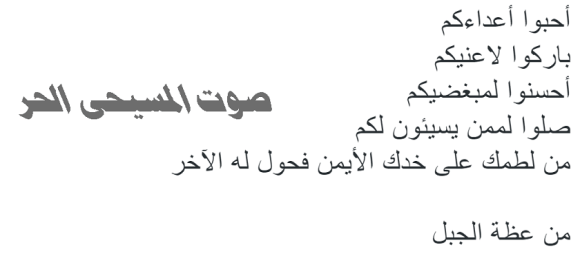
Translation: Love your enemies, bless those who curse you, do good to those who hate you, pray for those who persecute you, and whoever strikes you on the right cheek, turn to him the other also
I have long taken pride in the distinctive teaching of Christianity to love your enemy. It was not until I began learning Arabic I better appreciated what this called for.
Perhaps like many American Christians my pride was an identity marker more than a mark of Christ. I had never suffered for my faith, nor had any enemies to speak of. But in a pluralistic world of competing religious claims, widespread political polarization, and far-flung military adventures, ‘love your enemy’ became a mantra to lift me out of the morass and place my feet firmly on the moral high ground.
Only Jesus commands this, I thought; my Christian religion is different. I had always believed it was true. This was confirmation it was better.
The Sermon on the Mount allows us to cherish our ideals, with full admittance of the still mostly philosophical difficulties. Who has ever forced us to walk a mile? And beggars? They’re all in the big city. Turning the other cheek would be hard, but the envisioned moral strength? Powerful.
One morning years later I awoke surrounded by posters of smiling Arab pop stars. During vacation break from language school in Jordan I arranged for an immersion experience in the ancient city of al-Karak, home to a 12th century Crusader castle. One-quarter of the population remains Christian; one local family took me in and displaced their preteen daughter from her room.
But there at the door by the light switch a prominently placed sticker served as a reminder each morning as she left the room. Ahibbu ‘adakum. Love your enemies.
I went to the Arab world imagining a place where this command might be more practical. Muslims were not essential enemies, of course, and Jordan was well known as a place of coexistence. But perhaps they were theological enemies? In any case the region was characterized with tales of persecuted Christians. How would ordinary believers live the Sermon?
Ihsanu illa mubghideekum, the sticker continued. I was less familiar with this injunction. Baariku la’aneekum. Perhaps like many American Christians, Jesus taught me from the mountain. What I would come to learn is that Arab Christians quoted his Sermon on the Plain. Do good to those who hate you. Bless those that curse you.
The family I stayed with in al-Karak was well respected with no known enemies. But every morning their daughter entered a Muslim culture armed with instructions that have buoyed Arab Christians for 1400 years. Whether jizyah and jihad, or colleagues and citizens, they have been the minority ‘other’. American Christians, white-skinned at least, have little idea what this entails.
Going to Egypt, later still, I saw the results first hand.
I wished eagerly to explore the context. Both Matthew’s and Luke’s account end with the command to pray for those who treat you wrong, and more than other places in the Arab world, Egypt was understood to be a place of Coptic suffering. ‘It takes a presidential decree to fix a church doorknob,’ I was told. ‘Christians get attacked in their villages, and they are the ones put in prison.’ Over time I would learn that the reality is quite nuanced, but the sentiment is telling both for visceral incidents of suffering as well as the ethos they produce. Many have suspected that Christians of the region had bought a modicum of peace in exchange for evangelistic mission, beaten down by the task of communal preservation. I experienced Copts as simultaneously integrated in society and withdrawn into their churches. They would speak of Muslims as friends, but whisper of Islam as an enemy ideology.
But what of the celebrated Sermon on the Plain? How would they not just love, but also bless? Specifically and practically, how would they do good?
In one city south of Cairo I interviewed a man who provided a commendable, if telling example. Due to government difficulties in extending services to underdeveloped areas, Muslims and Christians have learned to take care of their own. Until recently Islamist groups had long provided a safety net for the majority, while the Orthodox Church ensured care for Christian widows and the Coptic poor. Neither group would profess denying help to the religious other, but both mirrored the reality of increasing emphasis on religious identity.
This man worked with a Christian agency that aimed to break the dichotomy and serve all. Unaffiliated with the church, Muslims were the employed majority as well as present on the board of trustees. By no means were they an enemy, but Christ’s love to the other was clearly among his motivations.
A jovial and cheerful man, he turned deadly serious on my next question: ‘To better reach your community, would you consider partnering with a Muslim organization?’ It seemed innocuous enough but touched a deeply sensitive nerve. ‘I swear by the Messiah,’ he answered angrily, ‘there is not one Islamic organization that also takes care of the Christians!’
He may be right; he was certainly the expert. But from the heart, the mouth speaks. Here was one of the best examples of a Christian doing good to people who many in his community would internally generalize as a sort of enemy. But despite his charity, he ultimately demonstrated an uncharitable spirit. Let there be little condemnation, but the question is fair though terribly hard: As I Corinthians 13 warns, did he risk becoming a resounding gong?
Nuance is necessary, for the other is not the enemy unless they press against you. For most Arab Christians the ordinary Muslim is an ordinary person, though the Islamist can be a threat in the desire to set his creed as the organizing principle of society. In a region with much religious conservatism, the line between Muslim and Islamist can be difficult to draw. This man railed against the latter, and perhaps with good reason. But it was clear his love for the other did not extend to love for the enemy. Instead of doing them good, whatever that could have meant practically, he was in existential competition.
In the years that followed Islamists rode a revolutionary wave into the presidential palace. Despite their conciliatory discourse with Western audiences, in Arabic some of their members and supporters uttered vile and vitriolic threats against their opponents, Christians included. One year later as Copts joined the masses that turned against the new political elite, they paid the price as their churches were burned throughout the country. Christians were praised for their patience, and rallied behind the military and millions of Muslims to oppose the Islamist enemy. In this case the term is at least rhetorically appropriate; once chosen as legislators and government ministers, they were now rejected as terrorists and an internationalist cabal.
Western opinion is divided over the veracity of this accusation, but as concerns local Christians it is largely irrelevant. Certainly they suffered; certainly they ascribed to widespread public messaging. But in the vanquishing of their enemy almost no voices of love were offered. These need not be in dissent; they might only be in pleas for due process or care for the relatives of the justly imprisoned. During Islamist rule many Christians worried and some chose to emigrate. Some, probably many, prayed for their new president. But if a few have since sought to bless the fallen Islamists who curse them still, their example has not moved the needle of Coptic opinion, where nary a tear has been shed.
How then is this spirit present in a ten-year-old girl who lost everything?
If Islamists in Egypt were a challenge, even a disaster, in Syria and Iraq they were a catastrophe. When the so-called Islamic State overran Mosul in July 2014, thousands of Christians left their homes and fled to Kurdistan. Among them was Myriam, who with her family lived in a half-built shopping mall. Interviewed a year later by the Christian satellite network SAT-7, her testimony went viral.
‘I will only ask God to forgive them,’ she said when asked how she felt about those who caused this tragedy. ‘Why should they be killed?’ Contrast her with the opinion of some Americans, who wonder why we have not yet bombed ISIS into oblivion.
Perhaps it is the depth of the loss that summons the breadth of compassion. Perhaps children are not chiseled as rigidly as adults. Beautiful testimonies of forgiveness have been offered by Egyptian Christians as well, whose family members were martyred by ISIS in Libya. Unjust suffering recalls a crucified Jesus, whose dying prayer to God was that sin not be accounted to his tormentors. From afar we recoil, and demand justice. Likewise, Egyptian Christians felt vindication when their government bombarded ISIS in Libya the next day.
Let them not be blamed on account of ‘love your enemy’. The children of Israel broke into song when Pharaoh’s army drowned in the Red Sea. David prayed for deliverance from his enemies and a psalm of exile wished their children smashed against the rocks. Romans established the role of government in the preservation of order and punishment of the wrongdoer. And one day, Christ himself will wield the rod of iron as his enemies are fashioned into a footstool. Outcry against suffering is natural and must be voiced for emotional health. Justice is real, necessary, and must never become the antonym of love.
But mercy triumphs over judgment, and love covers over a multitude of sins. The Christian ideal keeps no record of wrongs, and hopes all things. This seems impossible when facing an enemy of any caliber, let alone the Islamic State. It almost seems perverse. The higher calling of love must uphold the lower calling of justice, and demands great discernment in weighing Jesus’ instruction to be wise as serpents yet innocent as doves.
Arab Christians are in an unenviable position. The Egyptian church must navigate this wisdom-innocence paradigm with the utmost care. The Syrian-Iraqi church has been scattered. If they have not yet lived up to the fullness of ‘love your enemy’ it only serves to remind us how far we are from what they endure. That God has kept them from abject loathing is sign enough of the Spirit’s power. That they fill up in their flesh what is lacking in Christ’s afflictions is reason enough to humbly bow and support them in prayer.
Unfortunately, my proximity has not enabled the vision of practical suggestion. Lord willing, the eyes of a foreigner have helped some see afresh the demands of the gospel. Ultimately, application is up to them.
But over the years I have come to see the Sermon on the Plain as a better template than the Sermon on the Mount, especially if read in reverse.
Pray for those who mistreat you. If persecution is rare, mistreatment is not. If love if ethereal, prayer is grounding. With an act of the will I can choose to place my enemy before God. Perhaps I even begin with the imprecatory psalms. But rather than grumble or plot revenge, I turn the matter over to him.
Bless those who curse you. Once in God’s hands the prayer can change, even with rising of the nature of offense. No matter how difficult in our power, the Spirit’s power enables our will to progress further. The step is tangible, but nothing is yet asked of the heart. With gritted teeth I seek God’s grace not only for my hurt, but for the ultimate well-being of my enemy.
Do good to those who hate you. But again, God pushes the envelope as the severity of opposition increases. Anyone might curse me in a moment of frustration. Hatred takes time. But in answer to a decision that hardens a heart, my decision is to loosen my own. In asking God to bless my enemy, he transforms me to do it myself.
Love your enemies. Whatever practical action results, something mystical occurs. At least, I can only trust God that it will. Somehow, and whatever it means and feels like, love happens.
It is this love that is the hallmark of Christianity, not my initial congratulatory pat on the back that I was born into and believed in a superior faith. This is the love that can transform conflict. But it is also the love that can get trampled underfoot.
Why has the latter been the trend for Arab Christians over the past 1400 years, as their numbers have dwindled to near extinction? Have they not loved enough? Have they not stood for justice? Have they compromised too readily? Have they allowed their hearts to harden?
We cannot know, and we dare not judge. Bear well that the sermon passage ends with a plea: Be merciful, just as your Father is merciful. Look upon them with sympathy, and upon the region. They are brothers in sisters in faith, within brothers and sisters in humanity. Surely among them are the ungrateful and wicked, but as sons and daughters of the Most High, in imitation we are commanded to be kind.
And remember, the Sermon on the Plain places the Golden Rule smack within the section on loving your enemies. It is among the most beautiful verses in Arabic: Kama tureedun an yafal al-nas bikum, afalu antum aydan bihum hakatha. Do not let the foreignness of the language exaggerate further the foreignness of the concept. Enemies need love even more than the rest of us. Invite Arab Christians to help us learn.
In 2013 the French-Tunisian eL Seed became the first Arab artist to collaborate with fashion mogul Louis Vuitton. His unique “caligraffiti” style emblazoned their classic Foulards d’Artiste monogram scarf, and embellished their iconic Alzer luggage case.
Blending traditional Arabic calligraphy with street-style urban graffiti, his reputation grew as his murals transformed walls around the world with messages of peace. Condé Nast Traveler feted eL Seed (pictured above) as one of the year’s leading visionaries, even as he mingled with artists, diplomats, celebrities, and billionaires.
Three years later he was picking through trash in a city dump.
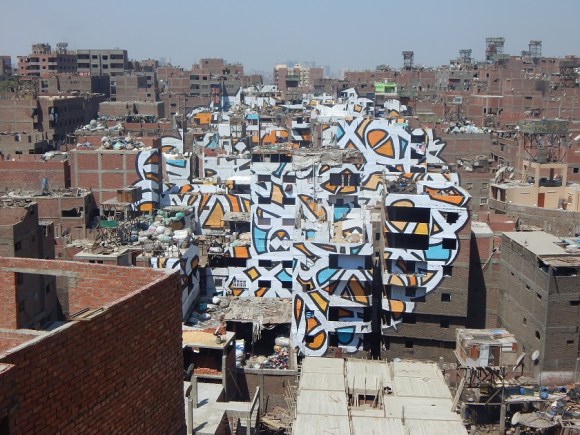
I wrote recently about the community that inhabited this dump, the Zabbaleen of Manshiat Nasser, and the cave church that rose out of its squalor in the Muqattam mountains. eL Seed designed a massive mural that encompasses the walls of 50 apartment buildings, visible only from the monastery above.
The elaborate Biblical rock carvings hewn by a resident Polish artist have made the monastery one of Cairo’s lesser-known gems, but to get there one must still brave the pungent smells below. That is exactly what eL Seed did to obtain the approval of now 75-year-old Fr. Simon.
The article also tells the story of Abanoub, a 23-year-old Manshiat Nasser resident who Fr. Simon relied upon to help eL Seed adapt to the area and win support for his project. But when he was done, neither Abanoub nor the residents could read what was written. Here is how el Seed explains this, and the following concludes the article:
“You don’t need to know the meaning to feel the peace,” he said, “but when you get the meaning, you feel connected to it.”
Though he chooses sayings that have a universal dimension, eL Seed strives also for local relevancy. In Bishop Athanasius he identified a champion of the Egyptian church, who preserved the orthodox teaching of Christ’s divine nature from the heresy of Arianism. This history may be little studied by the Zabbaleen, but the gesture was not lost on Abanoub, a church hymnist.
Though almost exclusively Coptic, Manshiat Nasser has seen its share of Muslim-Christian tensions. In March 2011, not long after Mubarak’s resignation supposedly marked the end of the revolution, clashes with Muslim outsiders resulted in deaths on both sides. But Abanoub remarked that he didn’t sense eL Seed was a Muslim even for one minute, an expression often used by members of either faith to emphasize the humanity of the other.
“Even though he is a Muslim, he wrote the quote of a Christian saint,” Abanoub said. “I don’t know why he chose it or what it means to him. But for me, if we want to see Christ, we must see the world around us.”
And this is the gift of eL Seed to the Zabbaleen of Egypt. Though the focus will always be on the trash, he has added a mark of beauty and dignity.
“The mural makes us feel important,” said Abanoub. “We’re not just a bunch of garbage collectors sorting trash. No, because of him the world’s media is shining light upon our community.”
Please click here to read the full article at The Media Project.
One of the 50 buildings of ‘Perception’, seen from the streets of Manshiat Nasser
Once before, Cairo burned. With fire true and abstract, she is threatened again.
The incidents are curious, God, and in the sequential diversity conspiracy spins. Familiar foes blame each other, while official authorities blame faulty wiring.
Settle the cause of every and all, holding accountable for each liability. Connect the dots or prove them random, but put the mind of the nation at ease.
For there is little shame in assuming the worst, God. A new tragedy springs every week, compounding problems as if under siege.
After a lengthy lull, unknown assailants gunned down officers in Giza. Sinai has been long troubled, but for many months the capital has been calm. The Islamic State has amped up its rhetoric against Egypt. Does this attack portend more ill?
Keep Egypt safe, God, from enemies far and near. That they exist is obvious. Identify them properly.
Concurrently investigated is a youthful online street comedy group. Much popularity has followed their satire of state, interpreted by others as incitement and insult.
God, the semi-strong can punish offense. The truly strong can bear with patience. Guide the youth from youthful indiscretion, judge them for any sinister plotting. Bless their creativity and channel it properly.
But restore to Egypt the confidence of upright conviction. Help society establish freedom, discern deviation, and reinforce responsibility. It is a hard balance, God, in the best of times. Give Egypt the strength to find it.
Which is near impossible when constantly putting out fires. Arson, accident, or negligence, God, install better detectors and sprinklers. Rid her of traditional asbestos, and cleanse her with holy rain.
So much in Egypt is zero sum. Nullify correctly, or change the equation.
During recent protests over the Red Sea islands, several journalists were arrested. Many were quickly released. But when police entered the syndicate to arrest two journalists staging a sit-in, the majority believe a line was crossed.
Police had a warrant, but allegedly broke protocol and press law.
As the syndicate calls for the dismissal of the Interior Minister, police accidentally revealed an internal memo on how to discredit journalists. Newspapers united to boycott the minister’s name and use his photo in negative. Escalation is threatened, while other activists are arrested.
God, it is human to struggle. Negotiation is a vital art. But restore to Egypt the trust and decency necessary to determine what is best for all.
Best, God, is a free society with vigilant police. Best is a discerned transparency with vigilant journalists.
There are many understandable barriers to what is best, with many and diverse interpretations. But save Egypt from the barrier of protecting turf. Save her from the barrier of manipulating exaggeration.
Save her from herself, but from within herself. Promote personnel who can forge consensus while identifying wrong.
Help Egypt reform widely, discipline accountably, and fight honorably.
Make no one a zero, God, but fix every fraction. Bless Egypt, and make her whole.
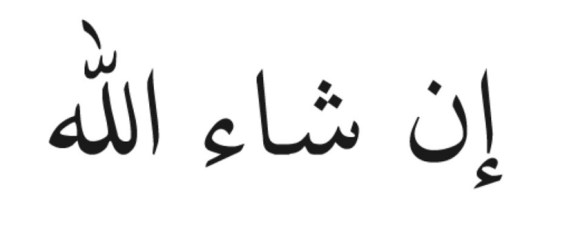
The Arabic literally translates as ‘if God wills’, but it conveys a whole lot more – usually to the foreigner’s frustration. In this article for the New York Times, Wajahat Ali explains:
It’s similar to how the British use the word “brilliant” to both praise and passive-aggressively deride everything and everyone. It transports both the speaker and the listener to a fantastical place where promises, dreams and realistic goals are replaced by delusional hope and earnest yearning.
If you are a parent, you can employ inshallah to either defer or subtly crush the desires of young children.
Boy: “Father, will we go to Toys ‘R’ Us later today?”
Father: “Yes. Inshallah.”
Translation: “There is no way we’re going to Toys ‘R’ Us. I’m exhausted. Play with the neighbor’s toys. Here, play with this staple remover. That’s fun, isn’t it?”
If you are a commitment-phobe or habitually late to events, inshallah immediately provides you with an ambiguous grace period.
Wedding Planner: “We only have the hall from 7 to 10 p.m. We’ll incur extra charges if we go past 10. Please tell me you’ll be on time.”
Wedding Attendee: “But of course! Inshallah, we’ll be there.”
Translation: “Oh, you sad, sad, silly little man. I hope you have saved a lot of money or have access to an inheritance. I’ll leave my house at 9:45 p.m.”
Inshallah is also an extremely useful tool in the modern quest for love.
Man: “So, you think we can go on a date later this week?”
Woman: “Yeah, let me think about it, inshallah.”
Translation: “No. Never. There is no way we are ever going on a date. Even if there was a zombie apocalypse and you were the last man on earth, I would not consider this an option and would rather the human species perish as a result of my decision.”
I drop about 80 inshallahs a day, give or take. I’ll get to the gym, inshallah. Yes, I’ll clean up around the house, inshallah.
Most commonly, inshallah is used in Muslim-majority communities to escape introspection, hard work and strategic planning and instead outsource such responsibilities to an omnipotent being, who somehow, at some time, will intervene and fix our collective problems.
In all the above he pokes fun at his own culture, but Ali started the article lamenting the Southwest Airline crew who removed a Muslim from the plane for uttering the word.
But he ends the above with a paragraph of introspection we must demand of ourselves. Laugh freely, but for the foreigner in the Arab world, couple your inshallah frustrations with the following friendly advice from an article in Daily News Egypt:
Living here for years, foreigners often develop a natural desire to see Egypt become a better place. Thus, they begin to express their opinions on issues that could be improved—which often leads foreigners into an unpleasant area.
Egyptians generally, and their government in particular, always want to be complimented.
Foreigners may make their remarks sincerely and with the best of intentions, but voicing any sort of criticism of the “Mother of the World” affects Egyptians’ ego and is not appreciated.
The author spends most of the article lamenting Egypt’s promotion of xenophobia whereas it should more rightly, like the majority of ordinary Egyptians, respect and welcome foreigners.
In the West we want to get to the point, and being direct–with tact–is a virtue. In Egypt the emphasis must be on tact, with directness following far behind. It is a difficult skill and I don’t claim to be anywhere near mastery.
But at the minimum, knowledge of the cultural reality will make a world of difference for the foreigner, um, God willing.
Allow them to make the inshallah lament on their own. You: Just show up on time and never mind them being late. Let your generosity of spirit mirror their own, and all will learn together.
Discontent with the Red Sea islands has not been dissipated. But it has been kept off the streets.
For good or for ill, God. Egypt can ill afford another protest movement, unless she needs it altogether.
Egypt’s greater good can be debated, but it should include a right to protest.
And as 30% of the country believes the islands are Egyptian, help the nation deal with the aftermath of demonstrations denied.
Courage, God, for those who insist on protesting. Help them weigh well the cost of conviction, and judge the potential of redemptive sacrifice.
Determination, God, for those who defend the detainees. Help them divide between the true and the troublemaker, and may all receive a faithful due process.
Wisdom, God, for the members of parliament. Help them balance responsibility to both claim and constituent, and cast a vote of informed conscience.
For the people, God, grant awareness, ability, and agency. For the process, trust, transparency, and truth.
Bless the government with discernment and professional administration.
The Holy Family came to Egypt, says the Biblical text. But it is silent on what they did once there. Coptic Orthodox tradition has filled in the details… And now they have one detail more.
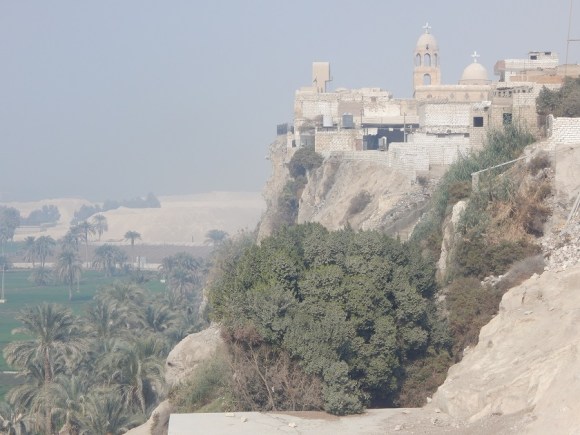
The article describes our visit to Gebl al-Tayr, or Mountain of the Bird, which is a Holy Family site recognized by Coptic tradition. The article explores some of this history, which includes an alleged reference to Empress Helena, mother of Constantine.
If some of these details strike the reader as legendary, it must also be remarked that the existence of many Holy Family sites is mentioned in the writings of antiquity. As Egypt became majority Christian prior to the arrival of Islam, these became locations of renown. This does not provide historical confirmation of the Holy Family itinerary, but it does testify to very early narratives upon which ancient churches were naturally constructed.
But other sites are much less certain. Coptic tradition designates the Patriarch of Alexandria, Theophilus, who presided from 384-412 AD, as source for many locations, which he was believed to have received in a vision from the Virgin Mary. Without impugning the character of clergy or church historians, it is not difficult to imagine the benefit – spiritual or commercial – that a diocese would draw from connection to the ancient tradition. In any case, in Be Thou There, Dr. Stephen Davis chronicles the numerical increase of Holy Family Sites from the fourth century onward.
The article then describes a modern example of this phenomena, in the duelings Asyut monasteries at Deir al-Muharraq and Durunka. But then it returns to Gebal al-Tayr:
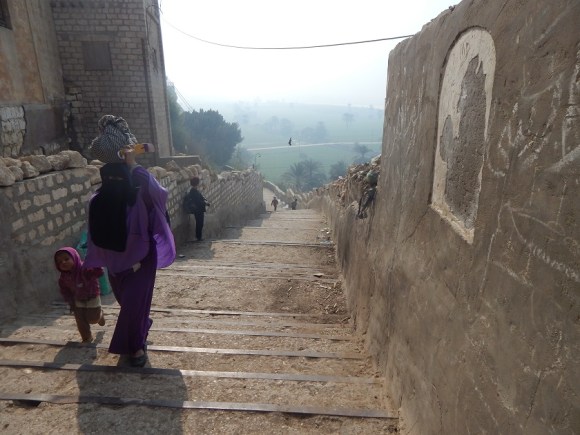
The 166 step ascent from the river below
Though this location is part of the ancient Holy Family tradition, on this visit Hulsman noticed an oddity. Approximately 500 meters down the road from the Church of the Holy Virgin, now semi-accessible from above for modern transportation, is excavation work at another part of the mountain.
A Muslim policeman-turned-impromptu-tour guide proudly described it as a recent discovery, understood to be the lodging of the Holy Family upon their return from Upper Egypt. Work had been underway for the last year, he said. Hulsman, a frequent visitor to the area, had neither heard nor seen of this before.
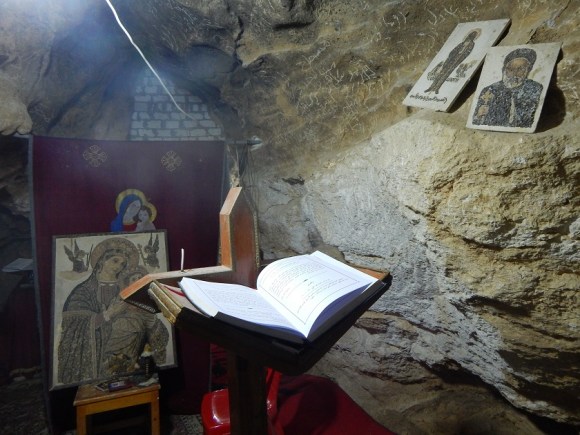
After a simple stairwell decline of around ten meters from the mountain plateau there is a gradual descent into the mouth of what opens into a long, narrow cave. Inside has the beginnings of a rudimentary altar along with icons and candles, and already there is the graffiti of visiting pilgrims. Outside a new church building has been established.
Hulsman remarked that the identification of a cave with the Holy Family fits within longstanding Coptic themes. Being so close to the ancient church, it would be natural for ecclesiastic authorities to imagine Jesus taking refuge there, as tradition indicates he did in caves throughout Egypt.
Walking back to the main site, a local priest standing with villagers stated the discovery was made around five years ago, and that Bishop Paphnotius of Samalut had done the investigations and research to ascertain its antiquity.
The new cave, recently discovered and renovated
Inside there is now an altar, icons, and modern graffiti
The article next moves to describe the modern miracle tradition at the Virgin Mary Church in Maadi, itself a Holy Family site where a Bible is said to have floated down the river and rested at its Nile descent.
It also introduces the character of Dr. Otto Meinardus, a theologian-scholar who once told Hulsman a fascinating anecdote directly related to the topic:
Perhaps in the end it does not matter to local believers. In personal discussions, Hulsman said, Meinardus would use the term ‘pious fraud’ to describe the legendary in Coptic history. In his writings he was more careful to avoid offending church hierarchy, but imagined the process like this.
Somewhere at some time a bishop’s sermon employed an illustration drawn from history, creatively illustrating a Biblical moral. Once popularized, it lodged into local consciousness and became commemorated.
But beyond imagining, Meinardus was also a one-time practitioner. He was the first to narrate the story of St. Bishoy carrying Jesus disguised as an elderly pilgrim up a mountain, only afterwards to enjoy his epiphany.
The story first appeared in his 1961 book, Monks and Monasteries of the Egyptian Desert, published in Egypt with AUC Press. All texts and icons of this event post-date his book, Hulsman said, and can be seen across Egypt including at the Monastery of St. Bishoy. According to Bishop Marcos of Shubra al-Khayma, the story was not known to the monks of Egypt until they read it in Meinardus’ book, wrote Paul Perry in Jesus in Egypt.
Perry also quotes Meinardus, saying, “That’s how tradition is, Once a story leaves someone’s mouth, it spreads like wildfire.” Though not recorded in the book he told Perry and Hulsman, “Many stories are based on dreams. Why should I not also have dreams?”
The article concludes with a story from Hulsman’s own history, how a heroic uncle morphed in memory into a family saint. Tying all the themes together, it ends with a necessary reflection:
Therefore, let the reader consider the real-time development of tradition in Jabl al-Tayr. For half a century later in Asyut, the church recognizes officially the Monastery of Muharraq as a Holy Family site, while Durunka remains disputed. Even so the latter continues to attract the faithful and is an ever-expanding site of pilgrimage. But more is at stake than simple religious commerce. Only a few verses earlier in the same chapter celebrated in Maadi, Isaiah prophesies there will one day be an altar to the Lord in the middle of Egypt. Asyut roughly qualifies, and only 70 kilometers separate the two sites. Where is the epicenter of God’s promised blessing?
Perhaps to God the details are not important. But to man, the interactions of God in human history are worthy of record. And now in Egypt, there is one more.
Please click here to read the full article at Arab West Report.






 Jayson Casper