Categories
Christianity Today Middle East Published Articles

A Beacon of Hope in a Broken Beirut

Image: P. Clarkson

Sitting at his desk in the second-floor office adjacent to the historic National Evangelical Church of Beirut, Habib Badr calmly filled out the wedding registry. It was a ritual the almost 70-year-old had performed countless times over the course of his 35-year ministry.

The next day, there would be a funeral. A stalwart member of his congregation, the former head of reconstructive surgery at the American University of Beirut hospital during the years of civil war, had passed away of natural causes.

It seemed there were more funerals than weddings these days, Badr thought. But the nostalgic church would always draw young people ready to exchange their vows, even from the scattered Lebanese diaspora, in imitation of their parents a generation before.

There was something special about the lighting. On a clear day, parishioners could see the distant snow-covered peak of Mt. Sannine, towering over the capital below. Three years ago, the church replaced its eight ordinary windows. Bracketing the sanctuary pews with translucent glass depicting the three crosses of Calvary above colored stones, they aimed to remind worshipers of the ever-present Rock of Ages, upon whom the church is built.

Lebanese evangelicals don’t prefer stained glass windows with human imagery, Badr said. This serves to distinguish them from original Catholic and Orthodox heritages.

“To the missionaries, we say, ‘Go home,’” a Lebanese Greek Orthodox bishop had publicly proclaimed a generation earlier. “And to the Protestants we say, ‘Come back home.’”

But for Badr and his congregants, they were already home. The National Evangelical Church, the oldest Arabic-speaking Protestant congregation in the Middle East, was formed in 1848. Badr’s grandfather Yusuf was the first native pastor, installed in 1890.

And as if to emphasize, the circular window high above the pulpit—installed in 1998—pictured a cross above Mt. Sannine, with an image of the church in the foothills below. Originally constructed in 1869, the architecture was a blend of Scottish and Lebanese styles.

Every Sunday, the symbolism would resonate: A Reformed church, nestled like any other Lebanese home into the rugged mountainous terrain.

Badr’s wedding thoughts were abruptly shaken by a small tremor. Small earthquakes periodically rattle the small Mediterranean nation two-thirds the size of Connecticut, so the pastor stood and prepared to momentarily take refuge underneath his office doorframe. It was not a moment too soon…

This article was originally published at Christianity Today, on August 20, 2020. Please click here to read the full text.

Categories
Christian Century Published Articles Reconciliation

The Redemption of Interfaith Dialogue

Image: Ozgurdonmaz / Getty / Ben White / Lightstock

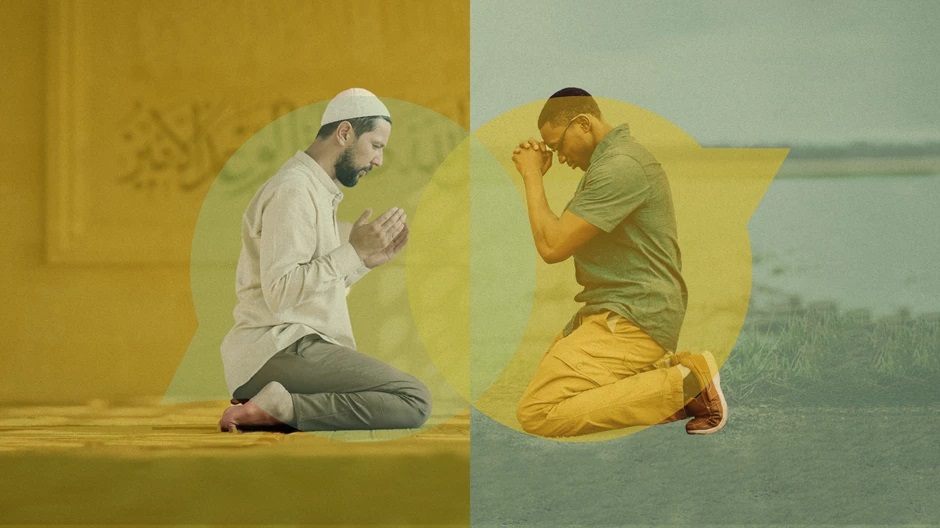
The Egyptian delegation of Muslim sheikhs settled in for the opening session of the interfaith conference. Their mainline Protestant hosts welcomed them to the hallowed halls of a historic New York seminary with pleasantries and platitudes about shared humanity and common values.

Then the moderator startled the senior scholars from Al-Azhar University, the foremost center of learning in the Sunni Muslim world, with what sounded like an ultimatum: “Anyone who believes their religion is the only way is not welcome here.”

Quietly, the Muslim men rose to leave. Their impromptu translator, Joseph Cumming, a delegate from Fuller Theological Seminary, quickly intervened. “No, no, don’t be offended,” he told them. “He is not referring to you—he is speaking about us.”

Cumming is an American evangelical who has been ministering in the Islamic world since 1982. Many evangelicals, he explained to the Muslim guests, have been very critical of interfaith dialogue. They argue it cedes too much ground, reducing religion to the lowest common denominator and undermining any commitment to absolute truth. Peace is made too high a priority with so much focus on agreement, avoiding the crucial differences over salvation.

Yet Cumming was there anyway. Despite what the moderator said, he believed it was possible—even important—for evangelicals to participate in interfaith dialogue without losing any of their passionate commitment to the truth of the Bible.

The Muslim scholars, reassured, sat back down. And the conversation continued. It continues still. That conference was nearly two decades ago, and Cumming has remained engaged in interfaith dialogue. He has dedicated the second half of his Christian ministry to maintaining respectful dialogue with Muslims and overcoming stereotypes between Christians and Muslims while remaining as passionate as ever about bearing witness to his faith in Christ. Cumming didn’t always think this way. He had to be converted to the possibility of interfaith dialogue. At first he thought it was just…

This article was first published in the July/August print edition of Christianity Today. Please click here to read the full article.

Categories
Christianity Today Middle East Published Articles

Can ‘Abraham’ Bring Peace to the Middle East?

In forging the first Arab-Israeli peace deal since 1994, President Donald Trump paid homage to a patriarch.

He named the historic normalization the “Abraham Accord.”

The familiar Bible character “is referred to as ‘Abraham’ in the Christian faith, ‘Ibrahim’ in the Muslim faith, and ‘Avraham’ in the Jewish faith,” explained David Friedman, US ambassador to Israel.

“And no person better symbolizes the potential for unity, among all these three great faiths.”

In signing the accord, the United Arab Emirates (UAE) joined Egypt and Jordan as the only Arab nations to make peace with Israel. Telephone lines are already being connected between the Gulf nation and the Jewish state, with preparations underway to exchange embassies.

It may open a new era. Fellow Gulf nations Bahrain and Oman signaled their support, while Saudi Arabia did not oppose it.

“This is a once-in-a-generation diplomatic achievement, but I predict it will be the first, not the last,” said Johnnie Moore, an evangelical leader engaged in behind-the-scenes advocacy. He and bestselling novelist Joel Rosenberg led an evangelical delegation to the UAE in October 2018 (as well as two delegations to Saudi Arabia), and Moore has personally visited three more times.

“The Abraham Accord,” he said, “will prove to be the moment when the grievances of the past no longer overpowered the promises of the future in the Middle East.” A hero of faith to both Christians and Jews, ‘Ibrahim’ is already a central figure in the UAE. The nation…

This article was originally published at Christianity Today, on August 17, 2020. Please click here to read the full text.

Categories
Christianity Today Middle East Published Articles

Why Many Christians Want to Leave Palestine. And Why Most Won’t.

In Bethlehem—the little town of Jesus’ birth—only 1 in 5 residents today are Christians (22%). A decade earlier, more than 4 in 5 were believers (84%).

The steep decline is reflected in other traditional Christian cities in the Holy Land. In Beit Jala, the Christian majority has fallen from 99 percent to 61 percent. In Beit Sahour, it has fallen from 81 percent to 65 percent.

When the Ottoman era ended in 1922, Christians were 11 percent of the population of Palestine—about 70,000 people. According to the 2017 census by the Palestinian Authority (PA), they now number 47,000—barely 1 percent.

There are competing explanations of what—or who—is to blame. Some identify the Israeli occupation. Others describe Muslim chauvinism.

The overwhelming answer, according to a new survey of local Christians by the Palestinian Center for Policy and Survey Research (PCPSR), is economics.

Nearly 6 in 10 respondents identified this as the main reason they consider emigration (59%).

The poll, commissioned by the Philos Project, a US-based initiative promoting positive Christian engagement in the Middle East, surveyed 995 Christians in 98 Palestinian locations throughout the West Bank and Gaza Strip in January and February.

Compared to the economy, other cited reasons paled in significance.

Security conditions were named by 7 percent. Another 7 percent cited better education. And another 7 percent blamed the political situation.

Only 4 percent blamed corruption, while 3 percent gave a religious explanation.

But this particular question measured the primary driver of desire to leave the Holy Land. What secondary factors might be involved? Philos “affirms the right of all Christians to…

This article was originally published at Christianity Today, on August 4, 2020. Please click here to read the full text, and here for the Arabic translation.

Categories
Christianity Today Middle East Published Articles

How I Explained Beirut’s Explosion to My Kids

Credit: Julie Casper

Our family was sitting down to dinner when the walls rumbled.

Assuming it was just an unusual surge of electricity preceding one of Lebanon’s frequent power outages, we readied to say our prayers.

And then came the boom, and the whole house shook.

“An earthquake?” I wondered, as we rushed our four children, ages 7 to 13, outside to presumed safety. But there we found neighbors, anxiously skimming through Twitter on their balconies, shouting out the news.

Beirut had just suffered one of the largest non-nuclear explosions in human history.

My nerves for my family’s security settled when I learned it was not an earthquake. But then the political nerves took over.

Was it an assassination? An Israeli strike?

Reporting for Christianity Today from Cairo during the Arab Spring, our family had become somewhat accustomed to instability. But that was my realm: attending demonstrations, visiting attacked churches. Yet there was always a sense that life carried on, like the ever-calm waters flowing in the nearby Nile River, where we would often board a felucca boat and float in peace.

Our year in Lebanon has been much different. Within two weeks of our arrival…

This article was originally published at Christianity Today, on August 7, 2020. Please click here to read the full text.

Categories
Christianity Today Middle East Published Articles

Lebanon Was Already in Turmoil. Then Came the Blast.

Joseph Kassab

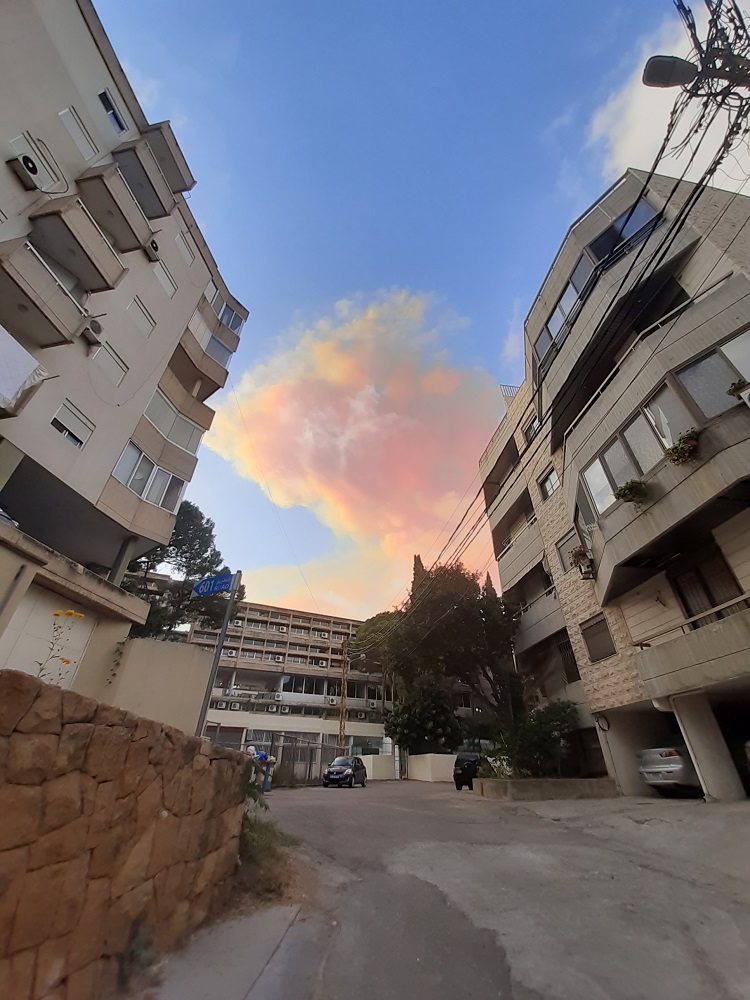
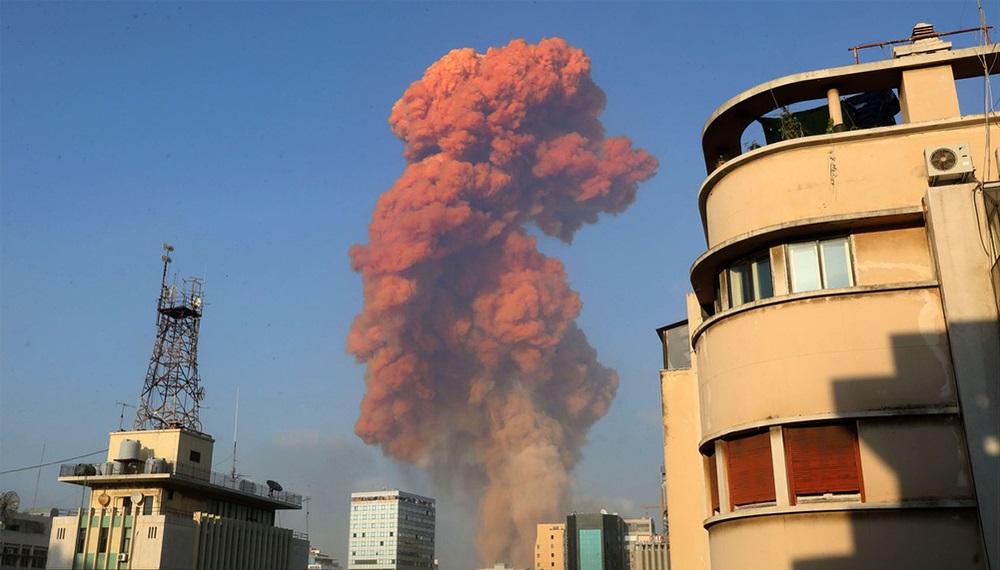
The massive explosion that rocked Beirut on Monday evening has left dozens dead, hundreds injured, and more than 300,000 displaced from their homes.

Millions around the world watched in horror as the detonation of 2,750 tons of confiscated ammonium nitrate laid waste to the Mediterranean port and surrounding neighborhoods. The equivalent of a 3.3-magnitude earthquake was felt deep into the coastal mountains of Lebanon and as far away as Cyprus.

The images of destruction reminded many of the small Middle Eastern nation’s 15-year civil war that lasted from 1975 to 1990.

Christianity Today spoke with Joseph Kassab, president of the Supreme Council of the Evangelical Community in Syria and Lebanon. Based in Beirut but born in Aleppo, Syria, Kassab reflected on the damage suffered in Christian neighborhoods, early efforts to assist the suffering, and hope for what this tragedy might produce in the Lebanese church.

These are very difficult days in Lebanon. What happened, and how bad is it?

It is very bad. I’ve been in Lebanon since 1984, experiencing the civil war. This is the first time that one single explosion caused such damage. People were terrified.

Until now, there is no agreement on the explanation, with many speaking according to their political point of view. Some say it was an electrical problem. Some say it was arson. Others assure that they heard jet fighters. We have to wait, hoping that the coming days will provide an answer.

This explosion destroyed so much of Beirut, across sectarian lines. What is the impact on the Christian community? The areas nearest the port in East Beirut are primarily Christian neighborhoods, and generally…

This article was originally published by Christianity Today, on August 5, 2020. Please click here to read the full text.

Categories
Christian Century Middle East Published Articles

16 Beirut Ministries Respond to Lebanon Explosion

(Photo by ANWAR AMRO/AFP via Getty Images)

One hour later at work, and Sarah Chetti might have been one of thousands in a Beirut hospital.

Director of the INSAAF migrant worker ministry in Lebanon, Chetti’s colleagues described shards of broken glass flying through the air, and the metal frames of doors ripped from their hinges.

It was a similar experience for the one staff member inside the Youth for Christ youth center not far from the blast. To avoid the “colossal damage,” he ducked to the floor. Re-welding was necessary just to lock up the next day.

Peter Ford was fortunate. Working quietly in his faculty office at the Near East School of Theology near downtown Beirut, the first small reverberations stirred his curiosity to investigate the problem.

Moments later, the huge blast blew in his window and spewed the glass across his desk.

Miraculously, the dozen evangelical churches and ministries in Lebanon contacted by CT reported no deaths and few serious injuries caused by the massive explosion. The official national tally is now over 100 dead, with over 5,000 injured.

If they had, there would be nowhere for the bodies to go.

Habib Badr of the historic National Evangelical Church was forced to conduct the burial of two elderly members (whose deaths were unrelated to the explosion) as Beirut’s hospitals and morgues were all full.

Two Filipinos, however, were killed in the blast. And amid the ongoing economic suffering of Lebanon, several migrant domestic workers have been abandoned by families no longer able to pay for their services.

“They are distraught, worried, and scared,” said Chetti. “Problems are piling up one after the other. I’m reaching out to each one individually and praying for them, assuring them things will be okay.”

But migrants are not the only foreigners who are suffering.

“Many of our youth are Syrian refugees, so this is churning up all that stuff for them,” said Scot Keranen, director of operations for Youth for Christ. “We’re just checking in on them, and that is really tough right now.” Lebanese trauma goes further back in history. But this explosion was…

This article was originally published at Christianity Today, on August 5, 2020. Please click here to read the full text.

Categories
Christian Century Middle East Published Articles

Hagia Sophia’s Muslim Prayers Evoke Ottoman Treatment of Armenians

Via Turkish Presidency

Declared a mosque in principle, Hagia Sophia is now a mosque in practice.

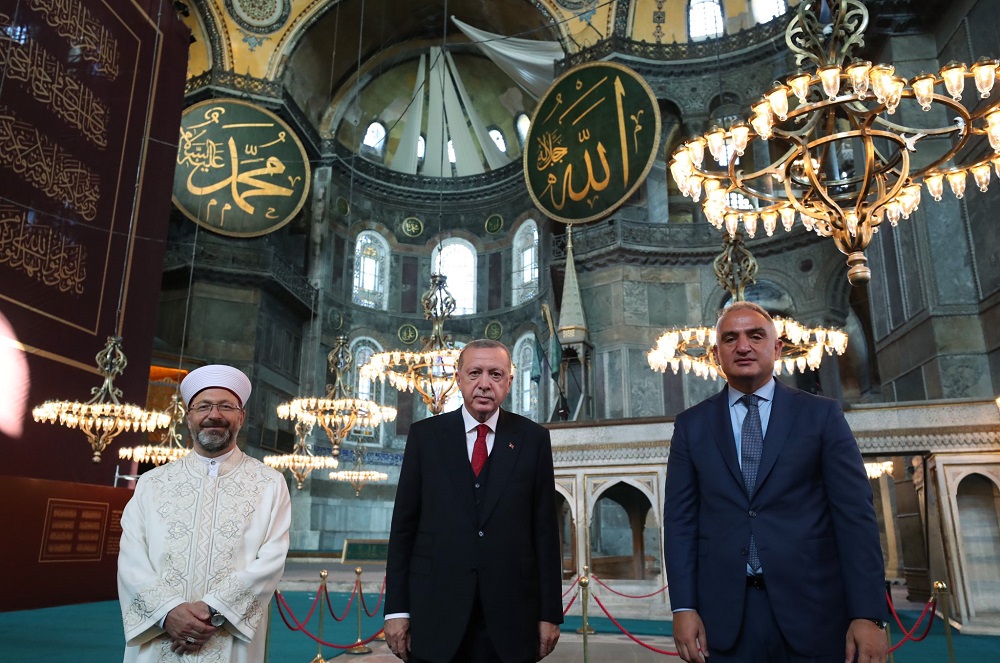
Following his decree earlier this month, Turkish President Recep Erdoğan’s joined a coronavirus-limited 500 worshipers to perform Friday prayers in the sixth-century Byzantine basilica, underneath the covered frescoes of Jesus and the Virgin Mary.

Hundreds more gathered outside.

International condemnation resounded after the Turkish Council of State ruled to revert the UNESCO World Heritage Site back to its Islamic status. Conquered in 1453 by Ottoman sultan Mehmed II, the massive church was turned into a museum by the founder of the modern Turkish republic, Kamal Ataturk, in 1934.

Underreported in much of the criticism was a wider complaint.

“The action of the Turkish government evokes heavy memories on the desecration and destruction of holy sites of the Armenian people and other Christian nations by the Ottoman government for centuries,” said Garegin II, Supreme Patriarch and Catholicos of All Armenians.

There are an estimated 11 million Armenians worldwide, including 3 million in their modern nation-state.

Representing the diaspora from the Holy See of Cilicia, in Lebanon, Catholicos Aram I went into more detail.

“Soon after the Armenian Genocide, Turkey confiscated thousands of Armenian churches and transformed them into bars, coffee shops, and public parks,” he said, “ignoring the reactions and appeals of the international community.”

As Erdoğan is doing again now—and not just to the Hagia Sophia.

Turkey has assured the frescoes will be uncovered for all visitors (3.7 million last year) outside of prayer times—and now without a museum entry fee. More than 400 other churches continue to serve the 1 percent of Turks that are Christians.

But Erdoğan’s remarks in Turkish revealed a wider agenda. “The resurrection of Hagia Sophia is the sound of Muslims’ footsteps…”

This article was first published at Christianity Today, on July 24, 2020. Please click here to read the full text.

Categories
Christianity Today Middle East Published Articles

Middle East Christians Grapple with Apocalyptic Pandemic

Imad Shehadeh sensed an apocalyptic felt need.

As chatter increased in the Arab world over the soaring coronavirus death tallies in China and Iran, the president of Jordan Evangelical Theological Seminary (JETS) in Amman began preaching on eschatology in lockdown.

“The coronavirus could qualify as one of the calamities that point to the end times, but could also just be a passing plague,” he said in a widely shared video series posted in March.

“We cannot be dogmatic, but at the very least [these] distresses have resemblance to much more severe events in the future time of tribulation.”

Diligently studying to incorporate aspects of all theological systems, Shehadeh aimed to keep the Cross central within a literal hermeneutic.

“The more we study prophecy,” he said, “the more we can see things in our world that others cannot, like a physician who knows immediately how to treat a wound.”

COVID-19 has left many bleeding.

Shehadeh previously wrote a four-volume commentary on biblical prophecy…

This article was first published at Christianity Today, on June 15, 2020. Please click here to read the full text.

Categories
Christianity Today Middle East Published Articles

Trapped in Lebanon, Sudanese Students Find Refuge at Seminary

Image courtesy ABTS

While Liberty University came under criticism for allowing students the option to stay on campus during the coronavirus outbreak, many other schools were also faced with a dilemma concerning the 1.1 million students who came from abroad.

According to a Quartz survey of 36 universities who host a third of the United States’ international students, 26 told those students to leave campus.

Penn State gave three days notice. Harvard gave five. Duke, among others, offered emergency financial aid to help international students return home. Princeton allowed their residency to continue—until the end of the semester.

But Sudanese students at Lebanon’s Arab Baptist Theological Seminary (ABTS) did not have a choice—even with tickets in hand.

Lebanon was one of the first nations to implement COVID-19 restrictions. Its first case was recorded on February 21, and by March 9 schools were shut down.

Four days later, at a regularly scheduled seminary picnic, Bassem Melki prepared to break the news.

“It was a joyous atmosphere,” said the ABTS dean of students, “but I had sadness in my heart because I knew what I had to say.”

Founded in 1960 and located in the mountains overlooking Beirut, the seminary…

This article was first published at Christianity Today, on June 10, 2020. Please click here to read the full text.

Categories
Christianity Today Middle East Published Articles

Vulnerable Gulf Migrants Offered ‘God’s Karuna’ in Bible Society Outreach

Corona and God's Karuna

This article was first published at Christianity Today, on May 29, 2020.

There is no social distancing in a labor camp.

Living in cramped conditions, sometimes 10 to a room, migrant workers in the Gulf are widely considered among the international communities most vulnerable to the new coronavirus.

Seeking a share of the region’s petrodollars as remittances for their poor families and communities back home, migrant laborers far outnumber the Middle Eastern region’s citizen population—as high as 80 percent in the United Arab Emirates (UAE).

And hailing primarily from Asian nations such as the Philippines, Indonesia, and India, they make up the great majority of the region’s more than 200,000 confirmed COVID-19 cases.

Yet from one of their languages emerges a homonym that may birth hope for the languishing workers.

“It is not corona, but karuna, which means mercy in Telugu,” said Prasad, a migrant worker from India, to the Bible Society in the Gulf (BSG).

“God is giving us the opportunity to turn to Him.”

There are 20 million Indian migrants worldwide, and 1.5 million are Telugu speakers working in the Gulf states. Many have lost their jobs or had their salaries reduced due to the economic shutdown.

The Bible society seized on Prasad’s observation to publish a new booklet in Telugu and English, appropriately titled God’s Karuna.

Its content reflects the upside-down nature of the COVID-19 world—and of God’s kingdom. There are frequent references to…

Please click here to read the full article at Christianity Today.

Categories
Christianity Today Middle East Published Articles

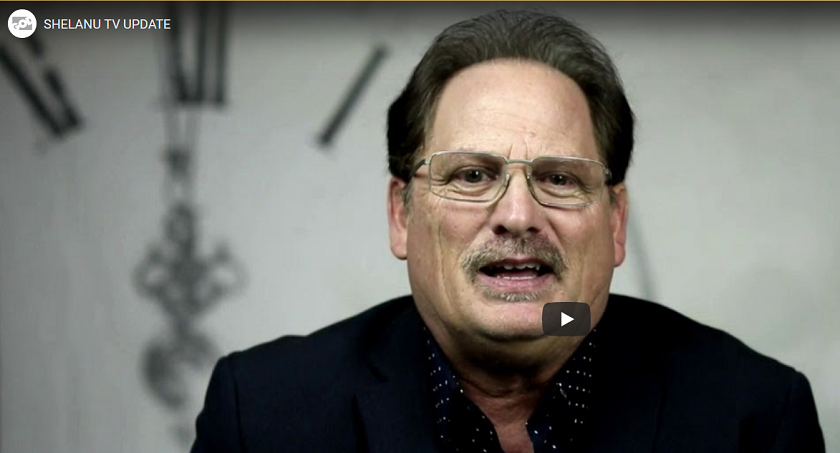
GOD TV Dispute Has Israel Talking About Messianic Jews

God TV

This article was first published at Christianity Today, on May 22, 2020, in cooperation with the Associated Press. I contributed some additional reporting.

The Messianic movement, which emerged in its modern form in the 1970s, incorporates Jewish symbols and practices—including referring to Jesus by his Hebrew name, Yeshua—but is widely seen as a form of Christianity. All major Jewish denominations reject it, and Israel considers Messianic Jews to be converts to another faith.

Messianic Jews in Israel push back against the accusations.

“In Israel and in Jewish circles, conversion is a loaded word. It is understood as leaving something to become something else,” said Lisa Loden, co-chair of the Lausanne Initiative for Reconciliation in Israel-Palestine.

“Messianic Jews avoid the term, and maintain that they remain fully Jewish when accepting Yeshua as Messiah and Lord,” she said. “But the average Jewish Israeli does not distinguish between Jews who believe in Jesus and Christians.”

Both sides in the conflict are sincere, suggests Mitch Glaser, president of New York City-based Chosen People Ministries.

“GOD TV is attempting to honestly state what they are doing,” he said. “The religious Jewish people opposed to its Hebrew programming are trying to protect secular Jewish people from becoming converts, and therefore ‘lost’ to the Jewish community.”

Many Messianic Jews, however, are rejoicing at the opportunity to demonstrate their sincerity (of still belonging to the Jewish community) to their fellow Israeli citizens. Shelanu has stated 70 percent of its content will be locally produced.

And on a popular website for the community, some are even praising the “amazing free publicity.”

“If the show was produced by a US or European Christian organization, the argument is very strong that the aim is conversion,” said Jaime Cowen, an Israeli lawyer and former president of the Union of Messianic Jewish Congregations.

“The reality is that Jews believe all kinds of different things and are subject to all kinds of programming that pushes various views.

“This is a huge open door—as long as the government doesn’t shut it down.”

But this is exactly what one Christian Zionist has petitioned Israeli Prime Minster Benjamin Netanyahu to do, fearing that the GOD TV backlash will threaten Jewish-evangelical cooperation…

Please click here to read the full article at Christianity Today.

Categories
Africa Christianity Today Published Articles

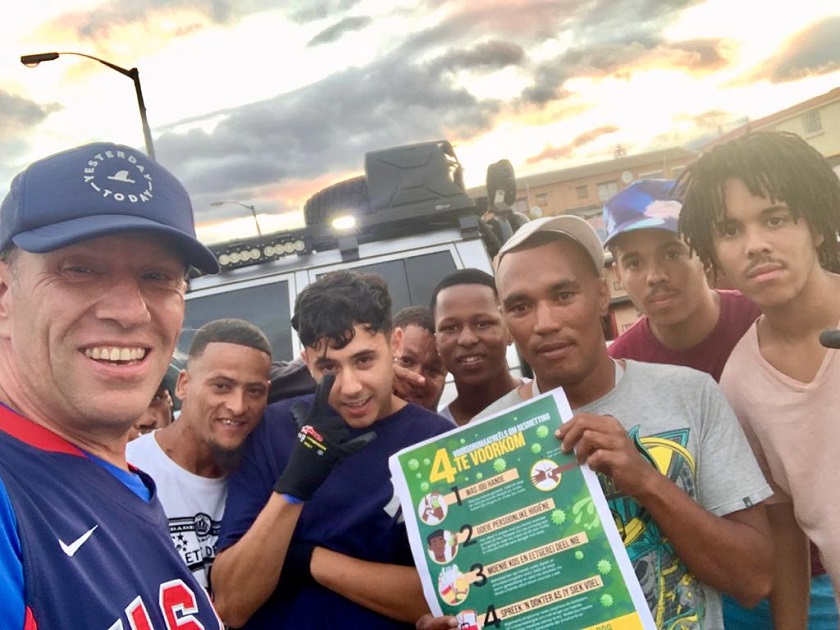
Meet the ‘Gang Pastor’ Behind Cape Town’s Viral Coronavirus Cooperation

South Africa Gang Pastor
Courtesy of Andie Steele-Smith

This article was first published at Christianity Today, on May 21, 2020.

Somehow, an Australian-born investment banker in England went to South Africa and got mixed up with the “Americans.” The gang, that is, in one of Cape Town’s most dangerous shantytowns.

And with them, the Hard Livings and Clever Kidz.

Called by God into a life far from his Christian but comfortable existence, Andie Steele-Smith has recently won international acclaim as the “gang pastor” crossing rival lines. Serving the last five years in 2018’s second-highest homicide city, he has led murderers and drug lords to cooperate amid the coronavirus pandemic as a new distribution network for soap and emergency food delivery.

In addition to endemic crime, Cape Town counts 10 percent of the confirmed COVID-19 cases in all of Africa, and 60 percent of South Africa’s cases.

With both mass media and the masses desperate for good news amid the pandemic, his story has been told by the Associated Press, the BBC, CBS News, and even earned a quip (at the 12:30 mark) on Comedy Central’s The Daily Show with Trevor Noah, himself a South African from Johannesburg.

CT spoke with Steele-Smith, who attends Hillsong’s Cape Town campus, about his calling, the spiritual impact of his ministry, and whether “15 minutes of fame” makes the situation better or worse:

You started out as a successful investment banker. How did you end up in South Africa?

I grew up in a strong Christian home and church, but until I was about 40 years old, my life was all about building my own empire.

Around 12 years ago, I visited San Diego to buy a coffee company. Invited to what I thought was a megachurch, little did I know…

Please click here to read the full article at Christianity Today.

Categories
Christianity Today Middle East Published Articles

Why We Opened a Christian University in Iraq Amid ISIS’ Genocide

Catholic University of Erbil
The Catholic University of Erbil (courtesy CUE)

This article was first published at Christianity Today, on May 7, 2020.

For 25 years, Stephen Rasche was a “bare knuckles” international lawyer. But in 2010, he offered his services to the Chaldean Catholic Church of Erbil in Iraqi Kurdistan and has increasingly dedicated his life to the preservation of this ancient community.

Under the leadership of Archbishop Bashar Matti Warda, in 2015 Rasche helped found the Catholic University of Erbil, where he serves as vice chancellor. Also the director of its Institute for Ancient and Threatened Christianity, Rasche lived this title as ISIS ravaged Iraq’s Christian homelands in the Nineveh Plains and many believers fled to Erbil.

After testifying on their behalf before the United Nations and the US Congress, Rasche allows them to represent themselves in his recent book, The Disappearing People: The Tragic Fate of Christians in the Middle East. The book has won a diverse range of endorsements, from leaders such as Matthew Hassan Kukah, bishop of the Catholic Diocese of Sokoto, Nigeria; Yahya Cholil Staquf, general secretary of Nahdlatul Ulama, the largest Muslim organization in the world; and Thomas Farr, president of the Religious Freedom Institute.

The US State Department’s Office of International Religious Freedom reports that less than 250,000 Christians are living in Iraq, most in Kurdistan or on the Nineveh Plains. Two-thirds belong to the Chaldean Catholic Church.

CT interviewed Rasche about the logic of establishing a university during a genocide, how its Catholic identity functions in a Muslim society, and his enduring optimism for Christianity in Iraq.

What led you personally to invest your life in this endeavor?

In 2010, Bishop Warda had just been made archbishop, and I went to pay him a visit of respect, asking if there was anything I could do to help. “Yes, in fact,” he said. “You Americans have made a big mess here, and you could stay and help me. I have 3,000 displaced families here from the south, they need help, and no one is helping us with them. We don’t have jobs for them, and there’s a whole range of things I would like to do.”

I assisted on and off on a pro-bono basis for the next four years, but by 2014 the situation looked really desperate. ISIS was maybe 30 miles away from Erbil. But in a visit just after Christmas, I sat down with the bishop and the priests who told me, “We are going to stay. Will you be with us here, and help us?”

Honestly, I was skeptical. But after some deep thinking, I tried to determine the right thing to do and if there was a calling in this for me.

Tell us more about that calling.

Being an international transactions lawyer involved a fair amount of bare knuckles litigation. And not a lot of it, quite frankly, was fulfilling…

Please click here to read the full article at Christianity Today.

Categories
Americas Christianity Today Published Articles

Report: ‘Tremendous Progress’ Ahead for Religious Freedom Worldwide

USCIRF 2020

This article was first published at Christianity Today, on April 28, 2020.

A new report aims to “unflinchingly criticize the records of US allies and adversaries alike” on religious freedom.

And there’s a lot to report, with more headlines each month confirming the Pew Research Center’s 10-year analysis that government restrictions and social hostilities involving religion have reached record levels worldwide.

Today’s 21st annual report by the US Commission on International Religious Freedom (USCIRF) identifies significant problems in 29 countries—but sees “an upward trajectory overall.”

“Our awareness is going to grow greater, and the problem will appear more pronounced,” USCIRF chair Tony Perkins told CT. “But as we continue to work on it, I think we will see tremendous progress in the next few years if we stay the present course.”

Created as an independent, bipartisan federal commission by the 1998 International Religious Freedom Act, USCIRF casts a wider net than the US State Department, which annually designates Countries of Particular Concern (CPC) for such nations’ violations of religious freedom, or places them on a Special Watch List (SWL) if less severe.

Last December, Secretary of State Mike Pompeo announced CPC status for Burma, China, Eritrea, Iran, North Korea, Pakistan, Saudi Arabia, Tajikistan, and Turkmenistan.

USCIRF now recommends adding India, Nigeria, Russia, Syria, and Vietnam.

And where the State Department put only Cuba, Nicaragua, Sudan, and Uzbekistan on the watch list, USCIRF recommends also including Afghanistan, Algeria, Azerbaijan, Bahrain, Central African Republic, Egypt, Indonesia, Iraq, Kazakhstan, Malaysia, and Turkey.

USCIRF’s mandate is to provide oversight and advice to the State Department. Aiming to make its recommendations more easily accessible to policymakers, this year’s report limits country chapters to two pages each and adopts the same evaluative criteria as the State Department.

To qualify, a nation must engage in or tolerate “systematic, ongoing, and egregious” violations of religious freedom. CPC status requires all three descriptors, while SWL status requires two.

In previous reports, USCIRF used a “Tier Two” category requiring only one qualifier. As a result, Laos is no longer listed.

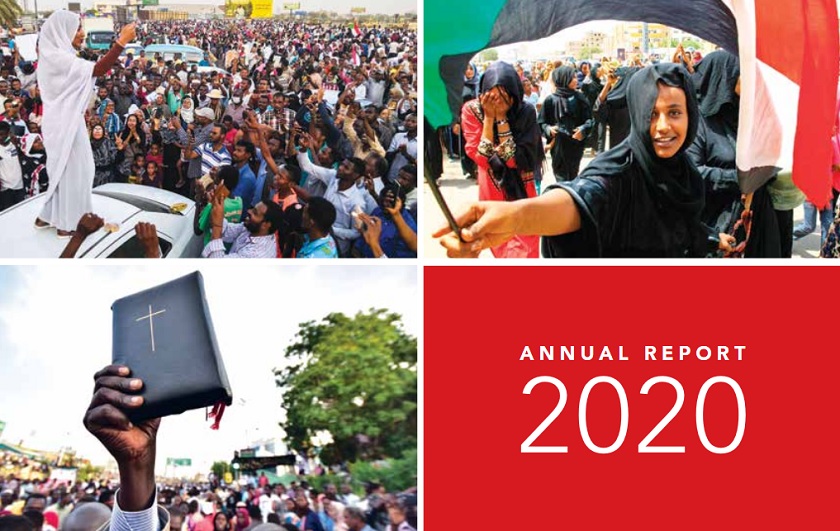
Following 11 commission field visits, 5 hearings, and 19 other published reports, USCIRF’S 2020 annual report calls attention to religious freedom violations against all faiths, including:

  • 1.8 million Muslims in Chinese concentration camps
  • 171 Eritrean Christians arrested while gathering for worship
  • 50,000 Christians held in North Korean prison camps
  • 260 incidents of religious freedom violations in Cuba
  • 489 raids conducted against homes of Jehovah’s Witnesses in Russia
  • 910,000 Rohingya Muslim refugees in Bangladesh
  • 1 million Muslim residents excluded from the National Register of Citizens in India
  • 37 Shi’a Muslim protesters executed in Saudi Arabia
  • 5,000 Baptist calendars burned by authorities in Turkmenistan

Perkins spoke with CT about how nations move up (e.g., India and Nigeria) or down (e.g. Sudan and Uzbekistan) between lists, why the State Department doesn’t accept all of USCIRF’s recommendations (but should), and whether he has hope for the future with violations at “a historical high in modern times.”

Roughly how many countries are on your studied list?

The ones that are listed are the ones that we look at. There has been discussion if we should add Venezuela. There have been a couple of others we have considered.

Examining “Country X,” how do you evaluate if and where it belongs on your lists?

First, we begin with the statutory definition of a Country of Particular Concern (CPC). Our mandate is to identify countries with systematic, ongoing, and egregious violations of religious freedom—whether it engages in or tolerates such behavior.

One thing to be cautious of is that we don’t rank countries. It is not a comparison. Country X and Country Y may both be CPC-listed, but be miles apart on the egregious nature of their violations. We look at each country separately.

It is based upon reporting that we can validate and verify; visits that we make to these countries; and hearings we hold with expert witnesses to come in and testify. It is a combination of factors, and quite frankly it is subjective.

We try to make it as objective as possible, but it is hard to quantify some things—though we do so to the degree we can.

What happens if you disagree about the designations?

The nine commissioners…

Please click here to read the full article at Christianity Today.

Categories
Christianity Today Middle East Published Articles

Cleared of Landmines for Easter, Jesus’ Baptism Site Now Closed by COVID-19

OLYMPUS DIGITAL CAMERA

This article was first published at Christianity Today, on April 17, 2020.

For over 50 years, Jesus’ baptismal site was a casualty of war.

Now, it is a casualty of the new coronavirus.

Last week in time for Easter, the UK-based demining specialist HALO Trust group exploded in chain reaction the final 500 landmines at Israel’s Qasr al-Yahud monastery complex.

“We got the churches together, all eight different denominations, and then we got the Israelis and the Palestinians,” HALO Trust CEO James Cowan told the BBC.

“So all three major faiths, and we looked at how we could do this.”

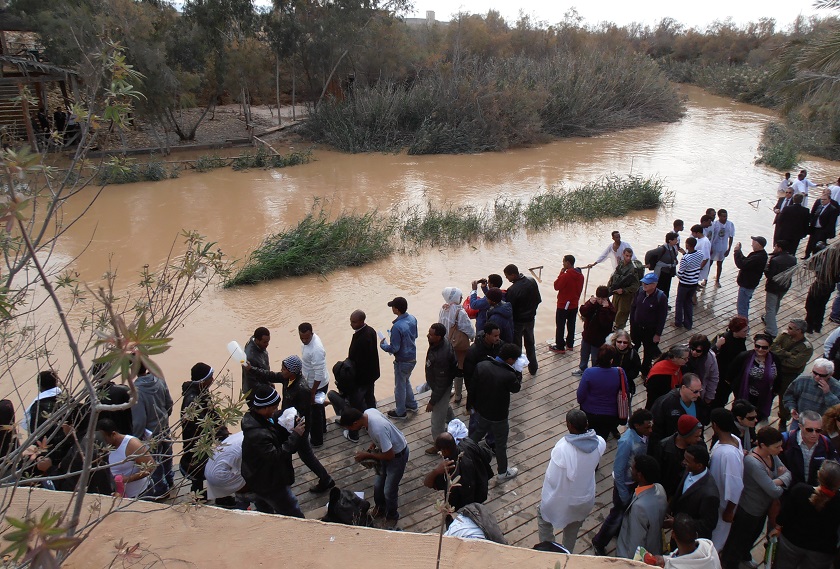
Located six miles east of Jericho on the Jordan River, “Bethany beyond the Jordan” in 1968 was placed by Israel under military jurisdiction following the Six Day War. Fearing terrorist infiltration across the shallow riverbed, the army laid over 6,000 landmines and booby-trapped the churches.

Israel declared peace with Jordan in 1995, but the area remained closed.

In 2011, it was partially reopened, allowing access along one narrow path between the Jordan River and the Greek Orthodox St. John the Baptist Monastery.

And in 2016, HALO Trust, which works in 27 nations around the world, announced…

Please click here to read the full article at Christianity Today.

Categories
Christianity Today Middle East Published Articles

The Holy Fire Must Go On

Holy Fire
Image courtesy of Cistern Films

This article was first published at Christianity Today, on April 10, 2020.

With the new coronavirus canceling Holy Week services around the globe, one of the most severe blows will be felt by Orthodox Christians. On the Saturday before Easter, which the Orthodox will observe on April 19 this year, thousands of pilgrims flock to Jerusalem’s Church of the Holy Sepulchre—the traditional location for Jesus’ crucifixion, burial, and resurrection—to witness the “miracle” of Holy Fire.

The historic church houses six ancient Christian sects—Greek, Franciscan, Armenian, Coptic, Syriac, and Ethiopian—which more or less cooperate in the administration of its affairs. By tradition, the Greek and Armenian bishops enter the tomb alone, but emerge with a divinely lit flame. The fire is shared candle-to-candle throughout the expectant and jubilant crowd.

Eventually it is transported to Greece in a special container, and then on to Serbia, Russia, and other nations in the Orthodox world.

Despite the social distancing restrictions in place due to the COVID-19 outbreak, Israel is nevertheless facilitating a scaled-back religious ceremony. And to avoid quarantine, foreign dignitaries will receive the flame at their airplane after it lands and immediately return home.

Mentioned obliquely in fourth-century sources, the first Western mention of the Holy Fire dates to Bernard the Wise, a monk from modern-day France who went on pilgrimage in 876 A.D. Disputed by many, its popularity with Orthodox communities worldwide makes the Holy Fire one of the world’s foremost Christian celebrations.

Local Christians are known to chant in Arabic: “We are the Christians, we have been Christians for centuries, and we shall be forever and ever. Amen!”

Filmmakers Reuben and Brittany Browning grew up in Israel and Palestine as children of Nazarene missionaries, traipsing around the holy sites. As adults…

Please click here to read the full article at Christianity Today.
Holy Fire is available for rent or purchase at Amazon and Vimeo. A teaser and trailer can be watched on Vimeo.

Categories
Christianity Today Middle East Published Articles

Arab Christians Have Lost Easter Before. Here’s What They Learned.

Losing Easter Churches
House of St Ananias, Damascus

This article was first published at Christianity Today, on April 3, 2020.

Christians around the world are about to lose their usual Easter celebration—the highlight of most congregations’ annual life together.

Yes, there will be a livestream. Their pastor will likely call them. They may even chat on Zoom with friends and family.

But it will be different. The community of believers has been sundered by the new coronavirus. And threatened with it is Christ’s body, his bride, his temple for his presence in the world.

If there is any consolation, it is that this is not the first time.

“There are forces of nature—and forces of man—that challenge our ability to experience the presence of Christ,” said Gregory Mansour, the Maronite bishop of Brooklyn.

“[COVID-19] is different from persecution. But it is the same.”

A born-again Catholic led into personal relationship with Christ by the Navigators, Mansour later reconnected with his ancient Lebanon-based church. His clerical colleagues there received thousands of ISIS-fleeing Christians from Syria and Iraq.

“There was a deliberate desire to obliterate churches, hymnals, prayers, and people,” he said. “The only thing we had left was…

Please click here to read the full article at Christianity Today.

Categories
IDEAS Middle East Published Articles

When You Can’t Return Home

Can't Go Home

We had just prepared our letter to loved ones in America.

Corona is spreading everywhere, I wrote, but we are on lockdown, and perhaps safer here than we would be in the States. We have money, food, and good relations with neighbors. We plan to stick it out here.

And then the announcement was issued by the government: The airport and all borders are closing in 48 hours.

Suddenly, my stomach dropped. All my earlier confidence felt like bravado. Unspoken, there was always the assumption that if things get bad here, we can leave. Now, it would be impossible. And given the unprecedented nature of this virus in our modern world, who knows when the opportunity to travel would come again.

The nation we live in is not known for its stability. What if it gets really bad?

After dropping, my stomach turned. Should we quickly uproot and return to America? I hadn’t yet sent that letter.

The complications to normal life would be terrible. The airports would be crowded Corona-factories. And who would receive us back home save for parents who must be extra careful against the virus?

I didn’t want to leave. But what does wisdom suggest when faced with a last chance? The reasons against leaving are clear, but they were not what I needed.

My earlier bravado disappeared.

I longed for a deeper confidence.

Stepping away from our own story, here are four reminders that helped buttress my spirit. Perhaps they will also be an encouragement to others.

  1. You have a job. Some foreigners are tourists, and others were sent overseas by their employer. But for many, the choice to live in a foreign nation was deliberate. We earn our salary, we enjoy cross-cultural experiences, but we also believe that our work is helpful.

Remember that. Corona will change the nature of your job, but not its essence. Keep at it, for the good of your adopted country.

  1. You have allies. If the section above applies, we are likely not squirreled away in an expat compound in isolation from national neighbors. We have probably learned at least a little bit of language. In all likelihood, we have friends.

Remember that. Corona is devastating them also, but they know how to live here. Rely on them, encourage them, and fit into their cooperative networks.

  1. You have providence. With proper humility, you can likely look back upon your journey to your country as a series of circumstances that somehow all fell into place. We studied, we planned, we decided, but we may have also prayed.

Remember that. Corona is upsetting many circumstances, but nothing eternally known. God “determined the times set for humankind and the exact places where they should live.” Rest in this truth.

  1. You have a mission. Our jobs are not our life. What we do is helpful, but who we are is unique and transformative. As we learn from others, they do from us. If offered humbly, we have much to contribute.

Remember that. Corona changes nothing of your essence. “As the Father sent me [Jesus], so send I you.” Find the good you can do, and do it.

Finally, my stomach settled. But to keep our confidence from becoming a spiritual bravado, two final reminders are necessary.

One, we remain foreigners. We retain privileges. We are guests.

Two, we are all foreigners. We receive grace. We are ambassadors.

Corona reminds us all of the transience of life and the fragility of the world. Our norms have been shaken, our illusions shattered.

But we remain human, and beloved of God. Abroad or at home, we will all return to him. Our deeper confidence can only be this: “Well done, my good and faithful servant.”

Categories
Christianity Today Middle East Published Articles

Iran Releases a Third of Christian Prisoners Due to Coronavirus Concerns

Azadi Tower Iran

This article was first published at Christianity Today, on March 23, 2020.

Forced by the new coronavirus, Iran took the tiniest of steps to placate global advocacy for religious freedom.

A temporary release of about 85,000 prisoners to curb the spread of COVID-19 disease included Ramiel Bet Tamraz, an Assyrian Christian serving a four-month sentence for holding illegal church meetings.

He was one of seven Christians set free, some on bail.

The release—which also pardoned 10,000 prisoners in advance of this past weekend’s celebration of Nowruz, the Persian new year—did not include four Christians recently granted a retrial.

Ramiel’s father Victor was the pastor of the Assyrian Pentecostal Church of Tehran until 2009, when it was shut down by the government for holding services in Farsi, the Iranian national language. Arrested in 2014 for conducting services at home, in 2017 he was given a 10-year jail sentence. Released earlier on bail with his wife Shamiram, they are awaiting the outcome of court appeals.

Ramiel’s sister Dabrina has advocated for her family all the way to the White House.

“Raising awareness always helps,” she told CT, prior to her brother’s release. “When the US and international bodies speak out and address persecuted Christians, they have an enormous amount of influence.”

According to the latest annual report of violations against Christians in Iran, 17 believers ended 2019 in prison on account of their faith. Culled from public statistics describing sentences from 4 months to 10 years, the report—released in January and jointly produced by Open Doors, Article 18, Middle East Concern, and Christian Solidarity Worldwide—warned the true number could be much higher.

Open Doors, which ranks Iran No. 9 among the world’s worst persecutors of Christians, reports at least 169 Christians were arrested from November 2018 to October 2019.

Compared to those who decline advocacy, Dabrina said…

Please click here to read the full article at Christianity Today.