As all competing forces have returned to street politics, what deductions should be drawn? Does it hurt or help the revolutionary cause? Is that cause itself to be celebrated or questioned?
Revolutionary forces have seldom left Tahrir, whereas Islamists abandoned it for politics and parliament a long time ago. Now that they return, should revolutionaries welcome them, reject them, or remain suspicious? Is there forgiveness in politics? Has any sense of repentance been offered?
While the protests united around a palpable rejection of military rule and deep doubt concerning the democratic transition, there was little coordination between forces. There is thankfulness that their developed acrimony did not translate into inter-Tahrir scuffles. But does a moment of common interest suggest deeper reconciliation?
Expressing doubt, there is less certainty concerning the common man. Certainly it took time for the masses to accept the January revolution. There seems to be less than worry or opposition now; it feels more like apathy.
Perhaps the politicians deserve it, God. The people do not. Are the politicians desperate? Does the return to the streets signal they are losing? Dare they escalate?
And if there is apathy, God, this is not a virtue. Convict the people, God, that they might care for their future, regardless of the party they believe will best shape it. Even if they dismiss parties altogether.
The times are confusing, God. What would you have an Egyptian do?
Give wisdom to the military council, God, that they might govern effectively and honestly.
Give wisdom to the parties, God, that they might represent the plurality of national interests.
Give wisdom to the people, God, that they might hold on to the values celebrated during the revolution. May they realize their commitment is necessary to see them through.
Bless Egypt. Make her path straight. May her people be righteous.
One of the distinctive marks of a Coptic Christian is the cross tattoo worn on the wrist. Sometimes applied as early as forty days after birth (and following baptism), the tattoo is a permanent identification marker signaling to all the faith and community belonging of the bearer.
Girgis Ghobrial
Girgis Ghobrial is an electrical engineer by training and a tattooist by passion. For over twenty-three years he had made a ministry of applying the tattoo to the wrists of Copts.
Translation: Apply Crosses with the Most Modern Medical Procedures
This is his shop at the St. Simon Monastery in the Muqattam Mountains east of Cairo. The location deserves its own description, but in short it is the recently developed church complex dedicated to serving the poor of ‘Garbage City’. This community of Coptic Christians has long been the trash collectors of Cairo, recycling over 90% of collected waste.
Loading trash just outside the monastery complex
Ghobrial contributes to the ministry with his skills and time. He is present at the monastery every Friday and Sunday for services, charging around $4 US for a cross tattoo and $25 US for a more elaborate tattoo, such as in the picture below.
Still bearing the smudges of ink and blood
All proceeds are donated to the monastery, and if a customer is unable to pay, he offers his trade at reduced prices or for free. Ghobrial made certain to emphasize the cleanliness of his operation. Every needle is replaced for each new job.
Smiling freely
Mina, with the cross tattooed on his arm in the picture above, said the operation does not hurt very much. As for motivation, he was getting the same image a friend of his bears. Many of the area youth were milling around the booth. Tattoos, they say, are just a part of the local culture, usually among youths in poorer areas. Most of their friends chose to do so, and they imitate. Being Christians, however, their choices tend to be crosses or images of the saints.
Available templates, all Christian-related
Local priests, they report, do not provide any special encouragement for or against tattoos, even the common one on the wrist. The tattoo booth, however, signals an official acceptance of the practice, and its location is right before the entryways to the two main churches – both in caves in the mountains – which seat tens of thousands of worshippers each.
Friday night evening service
In the Bible, in Leviticus 19:28, the following command is issued:
You shall not make any cuttings in your flesh for the dead, nor tattoo any marks on you: I am the Lord.
It should be noted, however, that a few verses earlier is another command, seemingly much less important:
Nor shall a garment of mixed linen and wool come upon you.
In the New Testament, I Corinthians 6:19 declares the body to be a temple of the Holy Spirit, without any reference to tattoos but with the designation the body belongs to God and is meant for his honor.
Does a tattoo of any nature honor God? Do the tattoos of these Coptic Christians?
If part of the Christian life is the imitation of God, perhaps Isaiah 49:17 is useful to note:
See, I have engraved you on the palms of my hands.
Surely this verse is neither command nor outright license for Christians to get tattoos, but it does put the matter somewhat in perspective. If God signals his love for his people through the image of a tattoo, perhaps the Copts’ love for God displayed on their wrists is equally acceptable.
All the same, I don’t like it very much. Why do something you can never get rid of?
Hmmm, but is that not also the demand, result, and promise of faith?
Demand: Suppose one of you wants to build a tower. Won’t you first sit down and estimate the cost to see if you have enough money to complete it? In the same way, those of you who do not give up everything you have cannot be my disciples. (Luke 14:28, 33)
Result: Or don’t you know that all of us who were baptized into Christ Jesus were baptized into his death? We were therefore buried with him through baptism into death in order that, just as Christ was raised from the dead through the glory of the Father, we too may live a new life. (Romans 6:3-4)
Promise: For I am convinced that neither death nor life, neither angels nor demons, neither the present nor the future, nor any powers, neither height nor depth, nor anything else in all creation, will be able to separate us from the love of God that is in Christ Jesus our Lord. (Romans 8:38-39)
Perhaps a tattoo of faith is easier, but its glory is far less. Either way, let its mark be a choice made in freedom.
Related Posts:
Emma’s Saliib (Cross; Emma is our daughter, imitating her friends) – February 26, 2010
In Egypt, Easter is celebrated today according to the Orthodox calendar. It is a rather strange holiday as it sets off a bit of schizophrenia in the country. Unlike Christmas, which is a national holiday, Easter is a regular day.
Except it isn’t. Christians are allowed the day off, and many Muslims take it also. The Monday following Easter is a national holiday, called Shem al-Naseem (Smelling the Breeze), which is a social holiday going back to the Pharaonic age in celebration of Spring.
The government grants many holidays, both national and religious, and as Muslims and Christians together recognize the prophet Jesus, Coptic Christmas is designated officially. There is little protest of this fact, save for some Salafis who also oppose recognition of Muhammad’s birthday. For Muslims of this ilk, the only proper holidays are designated by Islam – the end of Ramadan and the sacrifice of Ishmael – and does not include the honoring of a mere man, no matter his prophetic status.
Yet whereas Christmas enjoys wide acceptance, Easter is trickier. On religious holidays Muslims and Christians exchange phone calls, wishing friends a joyous celebration. Can Muslims do so in honor of the resurrection of Christ?
Islam holds that Jesus was not crucified but rather ascended directly into heaven. Therefore, he cannot have been resurrected from the dead, as he never died.
Such a denial undoes Christianity, but it need not undo social pleasantries. Many Muslims wish Christians well on the occasion of this feast. The aforementioned Salafis do not, nor on Christmas, but maintain this is only due to religious doctrine. They argue instead we should greet our Christian neighbors and treat them well on every occasion.
This does not hold too much weight with Christians, who greet Muslim friends despite non-belief in Islam. Regardless, it is not as if this issue is tearing Egypt at the seams. Photos like the one below demonstrate the general spirit seen among many Egyptians.
Translation: the Pharmacy of the Rightly-Guided Caliphs Wishes Brother Copts Happy Holidays on the Occasion of the Glorious Resurrection Feast (Easter)
This sign was placed on the wall of the church in Kozzika, which serves as diocesan headquarters for the Orthodox of Maadi. The pharmacy in question may simply be seeking good business, but in offering Easter wishes in particular it makes a social statement.
The owner of this pharmacy has always evaded the question of his political allegiance with me, but his location is within the complex of a mosque which has ties to the Muslim Brotherhood. In the days after the revolution he hosted an area wide meeting to esteem national unity, attended by priests of the church, local religious leaders, and representatives of the ruling military establishment.
It would be wrong to say that such public Easter greetings are seen everywhere in Egypt, but they are not uncommon outside of many churches.
One reason why such wisdom is found socially is due to the wisdom of Pope Shenouda. Former President Mubarak established Christmas as an official holiday, and was pleased especially with the Christian response.
Following this decision Mubarak approached Pope Shenouda about designating Easter likewise. Pope Shenouda encouraged him not to, recognizing the majority of the nation did not accept the resurrection of Jesus. Making such a statement on behalf of the state would cause unnecessary social strife and likely a public backlash.
Such an anecdote, whether true or apocryphal, provides a glimpse into the nature of Egyptian society. The state is neither secular nor religious, but maintains an odd balance between the two. Of course, the nature of the state is under deep debate following the revolution, and both fear and hope abound as to the outcome.
Yet the reality of Egyptian society is seen well through the common wisdom displayed by the pharmacist and many others. Despite religious distinctions Egyptians across the nation offer good wishes to their friends and neighbors, even on Easter.
Unfortunately, this reality is also undergoing potential redefinition, as society fractures into different identities and isolated communities. One reason the Salafi refusal to greet Copts on their holidays does not cause much social disruption is that so few Salafis and Copts have a relationship to begin with.
If the Egyptian revolution can be made akin to the Triumphal Entry of Jesus into Jerusalem, when the crowds shouted in triumph and celebration, these current days may well represent the caustic debates while in Jerusalem, if not his outright death and time in the tomb.
Is a resurrection coming for Egypt? On this holiest of holidays, Egyptian Christians must maintain their hope. Yet more alike to Mary Magdalene and her female companions, they must confront their grief and visit the tomb – perhaps akin to visiting their Islamist nemesis which they believe has buried their Messiah of a civil state?
Parallels must not be stretched too far, but the Gospel resurrection was first experienced at the tomb. Might Egypt’s be as well? Jesus’ resurrection was entirely a surprise, and his form completely different from that of their familiar companion.
What form will Egyptian resurrection take? What surprises are in store? Will Egyptian Christians remain cowered in the Upper Room? Will the resurrected Egypt still appear to them there?
Or will the women be the herald of the new reality? They upon whom all social relationships depend may hold the secret to this resurrection. Women will always greet their friends.
Yet it was men and women together who carried the news of resurrection abroad to all the land. Egypt’s resurrection must be similar. Copts, Salafis, Muslim Brothers, secularists – solutions must be found and proclaimed together.
For Egyptian Christians, will they approach them, even after the loss of their hope? Resurrection can only follow desperation and defeat. Will they trust their Savior? Will they trust their fellow citizens?
Egyptian Salafi parliamentarian Mohamed al-Kurdi created a minor stir last week while testifying before the education committee. He declared his opposition to a USAID program to encourage English language teaching in government schools, beginning in grade two as opposed to grade four. Kurdi found this to be an example of ‘cultural imperialism’ and urged the government to cancel the grant.
The Salafi Nour Party, for its part, distanced itself from Kurdi, consenting to their member’s referral to a disciplinary hearing.
Amina Nossair, professor at the Azhar University, criticized:
‘We definitely should not neglect our mother tongue but I would remind Mr. Kurdi that learning foreign languages was advised by Prophet Mohamed.’
Nevertheless, through conversations with many Muslims in the Arab world, I have felt there is a palpable discomfort with the dominance of Western culture. Many of these conversations were conducted in English, so few would argue the language itself should be stricken from education.
Many other conversations, often in their language, have flipped the sentiment arguing Arabic is the language of God. Exasperation at Western culture is often awkwardly articulated as a desire for the reassertion of Islamic cultural dominance. In these cases the issue is seen as one of struggle, rather than respect for the uniqueness of each cultural expression.
But really, why argue in any direction? After all, who can resist the flow of culture? It is above us all.
Such a statement threatens to undo the reality of education as a shaper of values. It is this which Kurdi is addressing in reality, and reflects why the Salafi Nour Party maneuvered to receive the education file in the distribution of parliamentary committee leadership.
An example more akin to Western sensibilities may help win Kurdi sympathy, along with others frustrated over ubiquitous Pepsi commercials starring scantily clad Arab women.
Rev. Emmanuel Bennsion is the pastor for Sudanese ministries at the Anglican Cathedral in Cairo. Sudanese himself, he has lived the past twenty-four years in Egypt. Unlike many of his parishioners, however, he did not arrive as a refugee. In fact, he was a privileged student selected to study in Zagazig University in the Nile Delta.
‘Privileged’, however, is adjoined to the word ‘politicized’. Bennsion is a non-Arab Christian Sudanese from what is now the independent nation of South Sudan. He explains the independence movement is quite old, and the Arab leadership in the north moved to diffuse it as standard policy.
Bennsion stated Sudanese officials targeted bright students from the south to study in Egypt so as to assist in soft, low-key Arabization. During the 1970s up to 300 students a year were selected for the program. They would learn Arabic, gain a picture of Arab civilization from friendly interactions with colleagues, and increase their sense of belonging to Sudan-as-Arab nationality, even though they were ethnically, linguistically, and in some cases, religiously different.
Is this wise policy to unify a diverse population, or cultural imperialism of the sort which Kurdi would decry if applied in reverse?
Consider how many university students from around the world come to the United States. While many come of their own accord, seeking the best preparation for their fields, US policy actively facilitates many programs to give the best and brightest minds a taste of America. If they stay, we profit from brain drain. If they return, they have gained insight into American freedom and values, winning, perhaps, their hearts and minds.
Cultural imperialism, generous welcome, enlightenment sharing, or mere education? It is not a simple question.
Bennsion continues, however, to give what would appear to be a more sinister Sudanese cultural manipulation. All students wishing to enter government elementary schools must first complete two years of preschool in the ‘Kharwa’. Education here, he maintained, consisted entirely of Quran recitation and study of hadith.
This requirement could be avoided if the student entered a private school, but this was cost prohibitive for many. To receive a free education, all students, Christians included, needed to learn the Quran.
In Egypt, all schools teach religion, but separate Muslims and Christians into different classes, taught by approved members of the religious establishments.
Even so, many Christians complain that it is always the Christians who must leave the room, while Muslims remain behind in the normal classroom. Furthermore, the secular curriculum – science, math, and especially Arabic – is laced with Islamic concepts which all are required to learn.
Of course, Islam is the religion of the vast majority and a major shaper of cultural values. In Sudan, this was subjected upon a non-Islamic geographical region. In Egypt, there is no ‘Christian’ area, though Christians are everywhere. Should not Egyptian Copts simply adapt to their cultural setting?
How might your opinion of such issues shape your response to these American questions:
Teaching of Spanish versus English-only educational systems
Mandatory inclusion of ‘intelligent design’ theories in school textbooks
Providing financial vouchers to poor students to attend private/religious schools
Allowing Muslims students to absent themselves during class for prayers
Sponsoring school prayers or moments of silence before football games
Reciting the Pledge of Allegiance, including the phrase ‘under God’
The parallels are not exact, but evaluation of the question shapes the search for consistency. What is the proper relation between culture, religion, and freedom? Must we allow for the other what we desire for ourselves? Or is this itself a sentiment derived from a particular cultural-religious framework?
Even if so, is the sentiment superior to cultural imperialism, whether in its Western or Islamic form? Or does appeal to the sentiment itself reflect a return to the zero sum ‘clash of civilizations’ narrative?
Kurdi, however lamentably, reminds us that while we may flail at unwanted cultural expressions, education plays a real role of determination. Egypt, much like America, is in struggle to set its course.
Sudan, meanwhile, has divided over the issue. Is this lamentable? So much depends on perspective, shaped by education, the common collection of which forms a culture.
note: This article was originally published on Aslan Media.
Egypt grows more interesting by the day. The Muslim Brotherhood enters the presidential fray despite earlier assurances otherwise. A Salafi candidate teeters on the brink of disqualification on the technicality his mother may have obtained US citizenship late in her life. Yet all is trumped by the candidacy of Mubarak’s crisis-appointed vice president and long time head of the intelligence service.
All revolutionary forces loudly decry the latter, seeing in him the rebuilding of the old regime. Islamist forces took to the streets against him and filled Tahrir Square. Non-Islamists, however, stayed away, as transition frictions have sullied the relationships of original allies. They call for a protest next week.
May all end peacefully, God. Large scale protests have been infrequent recently, largely because so many have ended in violence.
There are fears for this one, as Salafi supporters of their candidate have remained in the square demanding an answer on his eligibility. Rumors abound a decision is pending.
Fill their hearts with righteousness, God, and protect them if disappointed. Protect them from the danger of their own anger; from the ill application of searching for justice. Protect them from any who would wish to pin such violence upon them and tarnish their image.
So much is confusing, God. May truth prevail.
Even the candidacies of the Brotherhood and Mubarak’s VP are questioned. Of the former, a criminal sentence of questionable validity could disqualify him, though a pardon was recently issued. Of the latter, Parliament passed a law of questionable validity to bar him and others from running.
Yet whereas the revolutionary camps’ divisions are hardening, may this not poison the people. May this rally bring blessing to Egypt, and may the following one do likewise. Subject all soon to the crucible of elections, that popular will be properly gauged.
May this be true even if the candidacy of the VP becomes a referendum on the election itself. Give Egyptians wisdom to make the choice best for their nation, resisting all competing manipulations. Honor their common sense and good nature.
For these and other candidates, God, test their hearts and establish the truest eligibility. May this be in terms of your values, not of rules and regulations. Honor the law, and help Egyptians to craft it accordingly. But give them a man after your own heart, one who will govern wisely, justly, and humbly.
Bless Egypt, God. Hold her steady as the tremors of transition unbalance many. Bring her through this period and establish her as a rock upon which your grace and mercy take hold. They have already enabled so much, including these controversies.
At head of table: Rev. Bayadi (L) and Dr. Badie (R)
This text is transcribed from documents received from the Coptic Evangelical Organization for Social Services, headed by Dr. Andrea Zaki, a chief participant in this meeting.
The text reads:
Based on a welcoming letter from Dr. Rev. Safwat al-Bayadi, President of the Protestant Community of Egypt and Dr. Rev. Andrea Zaki, Vice-President, sent to the General Guide of the Muslim Brotherhood, which addressed some public opinion issues at this critical stage in Egyptian history after the January 25th Revolution and gained the attention of the Guidance Office of the Muslim Brotherhood, and based on the two parties’ communication, the General Guide called for a meeting to gather the leaders of the evangelical church and the leaders of the Muslim Brotherhood. The meeting took place on February 28, 2012, at the headquarters of the Muslim Brotherhood. The General Guide has agreed to visit the headquarters of the evangelical church upon invitation.
The participants consented on the importance of the current historical moment Egypt is going through after the revolution, which requires everyone to take social and historical responsibility to advance the country. The participants emphasized that Egypt’s future depends on community cohesion and unity, and stressed on the basic values of the Egyptian society that represent its social and cultural identity and brings its citizens together.
The participants agreed on the following:
The sons of the country are all partners in one destiny and one future.
The joint struggle of all Egyptians of all segments of society, that was manifest in the January Revolution, represents the cornerstone of societal unity; the struggle reflects that full citizenship, based on equality, is the foundation of this society.
All sons of the country have the same rights and responsibilities as the constitution states. Equality among all citizens constructs societal unity; efficiency is the only criterion to hold a public position; and equality of economic opportunities is the basis of justice.
The Egyptian society is based on solidarity, interdependence and compassion among all people, which represents the bond that includes all citizens without discrimination. Therefore, education should promote the values of tolerance, solidarity and pluralism.
Respect for beliefs and sanctities is obligatory. Prevention of any contempt of others’ beliefs and the incitement of hatred is a compulsory social responsibility of loyal citizens.
Freedom of belief and religious practices as well as freedom to build or renovate religious houses – in light of the law and the right for citizens to resort to their own religious laws concerning their personal affairs along with other rights mentioned in the Islamic Sharia’ – are all considered part of the values of the Egyptian society and a base for its cultural authenticity.
The participation of all citizens in defending the country is the responsibility of all, and it is the crucible where all segments of society are melted and form national unity. This national unity is crucial to fighting all internal and external enemies of Egypt who want to drive a wedge between its societal segments.
The religious values are the motives of the renaissance. Therefore, everyone must mobilize these values to achieve a better future for Egypt.
Societal responsibility obliges all leaders, institutions and religious movements to fight against all types of strife, intolerance and discrimination, and consolidate the unity of society.
The Egyptian society’s identity represents the frame for all its people. All people have made contributions to this identity and deserve its legacy. Protection of societal values is considered the basis of cultural uniqueness and the responsibility of all citizens who contributed to building Egypt’s civilization together over time.
All participants of this meeting made emphasis on the importance of communication between the two parties to promote joint activities, especially among the youth, such as encouraging active participation, advocating for values and religious morals, and carrying the social responsibility of fighting the illness that affected the Egyptian society under the previous regime. This will guarantee everyone the right to participate in building a new Egypt that achieves the demands and dreams of the revolution.
Attendees from the Muslim Brotherhood:
Dr. Mohamed Badie (General Guide, Head of the Executive Office)
Mr. Mohamed Mahdy Akef (former General Guide)
Dr. Rashad Mohamed Bayoumy (Vice-General Guide)
Dr. Hosam Abo Bakr al-Seddik (Member of the Guidance Office)
Mr. Walid Shalaby (Media Counselor to the General Guide)
Attendees from The Evangelical Church in Egypt:
Dr. Rev. Safwat al-Bayadi (President of the Protestant Churches in Egypt)
Dr. Rev. Andrea Zaki (Vice-President of the Protestant Churches in Egypt)
Rev. George Shaker (Secretariat of the Protestant Churches in Egypt)
Rev. Soliman Sadek (Pastor of the Evangelical Church in Fagala)
Dr. Rev. Makram Naguib (Pastor of the Evangelical Church in Heliopolis)
Dr. Rev. Atef Mehanny (President of the Evangelical Seminary)
Dr. Helmy Samuel (Member of the Parliament)
Dr. Rafik Habib (Coptic Evangelical Organization for Social Services)
Rev. Refaat Fathy (Secretariat of the Evangelical Synod)
Dr. Rev. Sarwat Kades (Chairman of the Board of Dialogue of the Evangelical Synod)
Dr. Emad Ramzy (Secretariat of the Board of Directors of CEOSS)
Rev. Daoud Ebrahim (Member of the Council of the Presbyterian Church in Egypt)
Rev. Eid Salah (Member of the Council of the Presbyterian Church in Egypt)
Mr. Farouk al-Zabet (Head of the Congregation of the Evangelical Brethren Church)
Dr. Fready al-Bayadi (Member of the Council of the Presbyterian Church in Egypt)
Rev. Nady Labib (Head of Cairo Presbyterian Council)
Rev. Refaat Fekry (Pastor of the Evangelical Church in Ard Sherif)
A little while ago the expat facilitation site InterNations featured our blog to help their readers adjust in advance to life in Cairo. Please click on the link to see their article for yourself, but here is the content. It describes a little of our philosophy in living overseas.
1. Please tell us a little bit about yourself. Who you are, where you come from, when you moved to Egypt, etc.
I am an American writer living in Egypt with my family, having arrived in the summer of 2009. I write primarily with Arab West Report, but also with other outlets on a freelance basis.
2. When and why did you decide to start blogging about your experiences?
My editor at Arab West Report encouraged me to keep a blog for several reasons. One, it would be a permanent record of our experiences, to draw back upon for all future writings. Two, it would expand awareness for our publication. Third, and most important, it would share our experiences from Egypt in service of increased understanding between cultures.
3. Do you have any favorite blog entries of yours?
4. Tell us about the ways your new life in Cairo differs from that back home. Did you have trouble getting used to the new circumstances? Did you experience culture shock?
Life in Cairo is not our first overseas experience, but it did come with significant differences from other Arab nations we have lived in. Due to the great population, it is challenging to deal with pollution, trash, and the pinch on traditional Arab hospitality caused by people already having a wealth of relationships. These are often family, but with other expats as well. Egyptians are extraordinarily friendly, but it has been harder to make friends here than in other nations.
5. Do you think you were fully prepared for what awaited you in Egypt? If you could, would you change some decisions/preparations you made?
Well, we weren’t prepared for a revolution! Fortunately, we feel our attitude toward belonging equipped us to adapt, sympathize, and celebrate with the people both then and in their continuing difficult situation, amidst so much hope.
6. Every expat knows that expat life comes with some hilarious anecdotes and funny experiences. Care to share one with us?
The Cairo metro provides women-only cars in the middle of the train. In my early days I was rushing to catch the metro before it left the station and inadvertently boarded the wrong car. Immediately I was hit by a gamut of angry glares. I nodded, touched my head in apology, and switched cars at the next stop.
7. Which three tips would you like to give future expats before they embark on their new life in Egypt?
First, realize there are many amenities for the expat community, so not everything of the old lifestyle must be left behind. Second, open your mind and heart to the new lifestyle, because there will be so many differences it can drive you crazy if you don’t aim to embrace it. Third, especially in the beginning, consciously limit making friends among expats, or else the natural bonds of community will squeeze you from making Egyptian friends and entering Egyptian life. If you aim to speak Arabic, do the same and avoid English speaking relationships as much as possible.
8. How is the expat community in Cairo? Did you have a hard time finding like-minded people or fellow expats?
The expat community is wonderful. There are several social groups, service organizations, churches, and clubs to meet every relational need. Our daughter has especially enjoyed the local (mostly) expat soccer league, as it is difficult for girls to otherwise play sports publicly.
9. How would you summarize your expat life in Egypt in a single, catchy sentence?
We don’t belong, but we aim to – and in the end we somewhat do.
Give Egypt a good government; give Egypt a good president.
For now there are many choices: At the least, four figures from the former regime, four Islamists, two leftists, and two old school opposition figures. Candidacy has opened, but not yet closed. How many will remain until election day?
Unfortunately, that is part of the drama. Speculation is rife that some candidates only run to drop out later to aid another or secure a deal of some form or another. Then, accusation is rife that certain candidates are ineligible for one reason or another.
The major development is that the Muslim Brotherhood entered the race, despite giving assurances early they would refrain from seeking the presidency. On their heels Mubarak’s spy chief then committed, widely understood as their chief adversary in the former regime.
But God, so much is ‘widely understood’ in different directions. So few seem pleased with their choices save for the dedicated partisans. So many seem afraid these are less elections than national theater. Yet a recent poll suggests 95% of the electorate plans to vote.
Bless the Egyptian people, God. May this exercise represent true democracy. Judge back to the revolution itself – were you pleased? Preserve all that was good; sideline all that was suspect. Build institutions and processes; allow candidates only a secondary importance.
Weigh the motivations of all, God, and humble or elevate accordingly.
In the end, God, give Egypt the one most fitting to your good and righteous aims. You install kings, and take them down. Merge your will with the people’s empowerment. Honor Egypt with her leader.
Yesterday I had the unique opportunity to visit the headquarters of the Muslim Brotherhood in the Muqattam area of Cairo. I interviewed their official spokesman, Mahmoud Ghozlan about a recent document of principles agreed upon by the Brotherhood and the leadership of the Evangelical Churches of Egypt.
It is a very interesting document, and I hope to share a full article about it shortly. For now, I simply wanted to share some pictures of the building as well as brief reflections from the visit.
The MB HQ, labeled in both Arabic and EnglishFrom afar; translation: Headquarters of the Muslim BrotherhoodThe entryway; translation: The Muslim Brotherhood Welcomes its Guests; We Bring Good to All People (slogan of the MB's Freedom and Justice Party)
This final picture is from the reception area, displaying the nine ‘General Guides’ in Muslim Brotherhood history. Though each of these figures deserves further research, here simply I present their names, from left to right in the picture:
Hassan al-Banna (1928-1949)
Hassan al-Hudaybi (1949-1972)
Omar al-Tilmisani (1972-1986)
Muhammad Hamed Abu al-Nasr (1986-1996)
Mustafa al-Mashour (1996-2002)
Muhammad al-Ma’moun al-Hudaybi (2002-2004)
Muhammad Hilal (uncertain)
Muhammad Mehdi Akef (2004-2010)
Muhammad Badie (2010-present)
Our discussion centered on the document of principles establishing citizenship and religious freedom as common values. Still, I also gained some insight into the current political crisis between the Brotherhood, the military council, and liberal parties. Most interesting was the change in demeanor as we navigated certain topics.
It is not useful to read too much into the following, but when Ghozlan justified the Brotherhood for going back on an earlier pledge not to field a presidential candidate, his manner was humble and seeking an audience. He expressed that the media was engaged in deliberate mischaracterization of the group and its intentions, and appeared hopeful his story would be carried faithfully.
In another setting, I hope to, but while I find his explanations reasonable, I stated that for this article in particular I was not seeking political justification, but religious. If Egyptian Christians wish to have hope in the words of this document, how should they respond now that the Brotherhood has gone back on its word not to field a presidential candidate?
I was keen to not be accusatory, but to seek their mindset.
Strangely, his attitude changed. He immediately straightened and delivered justification from the life of Muhammad. It was no longer an invitation to see their political condition sympathetically, but a pronouncement of their non-culpability in terms of religion. I felt, hopefully wrongly, that he instinctively needed to assert/defend the moral high ground of Islam, or at least of their political Islam.
I had the distinct impression the group feels vulnerable and defensive. Indeed, it appears all are against them these days. Could it also be their conscience is pricked, underneath a Machiavellian exterior?
In the media, at least, it seems this is true of many in the organization, despite the official choice of the majority to go against their pledge.
It may be politically expedient and even necessary for the good of all Egypt. But as Muslims, is it right?
Ghozlan gave justification, even if the Christian or merely moral person might cringe – to be written about shortly. I think the pulse of general Egyptian morality will not permit it, though, no matter what presidential choice they make in the end.
Update: The article is still in process, but here is the full text and list of signatories to the agreement. Please click here.
Five people were killed yesterday at St. Bishoy Monastery, crushed to death visiting the shrine of Pope Shenouda. I was nearly there, along with my three year old daughter.
It was meant to be part two of my visits to the shrines of the most recent popes. The second leg was not planned with the first; a day before Pope Shenouda’s death I was with Coptic Orthodox friends on a trip to St. Mina Monastery near Alexandria, to visit the shrine of Pope Kyrillos (Cyril VI).
These same friends then organized a trip the first weekend after Pope Shenouda’s burial, but postponed it out of fear of the expected massive crowds. Instead we set off on the second weekend, but ran into similar trouble.
Feeling semi-guilty for disappearing for the second time over three weekends, I volunteered to take my daughter with me. I had done so earlier with the oldest child, and we had an enjoyable outing. Of course, the country wasn’t exploding at the time.
To avoid the early morning rush my organizing friend decided to first stop at the nearby Baramous Monastery for breakfast. This monastery celebrates two Roman Christian brothers born into a wealthy family who left all and went to live in the desert. As per her custom, my daughter enjoyed playing in the dirt after mass, and then we enjoyed our shared meal of fried bean sandwiches, French fry sandwiches, and lentil dip.
Making a monastery of her ownWith friends from our group
It was then we sat and waited, and waited. Monastery trips with Copts are usually festive times of visiting ancient sites, buying lots of religious trinkets, and taking blessing from the monks while seeking their intercession. On this occasion, understandably more somber due to the pope’s death, there was simply a discontented confusion.
Our organizer was incessantly on the phone with someone from St. Bishoy Monastery where we were headed. As the minutes ticked by he received more and more encouragement to stay away. At first it was simply too crowded. Eventually we learned they had closed off the area. Finally he was informed that several pilgrims had been killed.
Even so, it was difficult to convince our group not to continue on. The whole point of this trip was to visit the pope’s final resting place, and for many this meant securing a great blessing. The organizer sought to convince them God would reward them according to their intention, and that even Pope Shenouda himself would be displeased if we continued. Should we contribute to the chaos and disruption of his sanctuary, simply for our personal blessing?
Eventually we left to seek blessing from another nearby monastery, St. Makarios. This 4th Century saint lived celibate with his wife (who was forced upon him by his family) until her death, when he was finally free to devote himself to God. He was the first monk to settle in the Wadi Natrun desert, where four historical monasteries now continue.
The line of buses, after half an hour of waiting to get in
It turns out, however, nearly every other would-be St. Bishoy Monastery visitor had the same idea. We sat in our bus for an hour simply waiting to be processed at the gate. After eventually getting inside, we joined the dispirited crowds milling about the premises for about half an hour, until the monks reclaimed their silence and had everyone leave. From here we had our final meal together, and began the trek back home.
Though disappointed to not see the pope’s burial grounds – the whole reason for the trip – I was pleased to go to St. Makarious where I had resided three days in a monk’s cell and had a few friends. But even this hope failed, as one elderly monk told me there was no way he was leaving his quarters to wade through the masses who would surround him looking for blessing. Then I learned a younger monk I knew also could not greet me, as he was recovering from open heart surgery.
The day was not supposed to be like this, and I am glad I had my daughter with me to pass the time and enjoy her company. She was blissfully unaware of everything but the dirt, happily making her own mini-monasteries wherever she could.
It was supposed to me more like part one of the papal shrine tour, only amplified in both numbers and grief. Two weeks earlier I was among a similar crowd of pilgrims, brought to St. Mina’s Monastery the weekend after the celebration of Pope Kyrillos’ death. St. Mina was a Roman Christian soldier who left the army to practice monasticism, and was later martyred. Pope Kyrillos adopted him as his patron saint.
The grounds were packed, the crowds were in revelry.
Here are some photos of his shrine:
And here is the scene around his tomb:
A Coptic priest seeking the pope's intercessionOrdinary Copts, taking blessing from his tomb
Finally, here is a crowd gathered around his ‘hymn of praise’, chanting his virtues and extolling his life. Click here to watch a video of this scene.
It is difficult to know what to make of such devotion. To provide snide evidence of the backwardness of Coptic spirituality, consider this picture:
At the Baramous Monastery this garden scene has water flowing continually from the ceramic pitcher. Without exploring further, I assumed it was a simple hydraulic function common in many suburban fountains. The assumption of several passers-by, overhearing their conversation, was that this was a miracle of the monastery.
Yet to provide sympathetic evidence of the suffering depths of Coptic spirituality, consider these pictures:
Translation: The martyr Mina Wagdy FakhryOur group leader, in contemplationTranslation: The martyr Peter SamiTranslation: Verse from Ps. 65:4; the martyr Sabri Fawzi WissaTranslation: The righteous shine like the sun in the kingdom of their father (Mt. 13:43)
St. Mina’s Monastery hosts also the remains of Christians killed on New Year’s Eve 2010, when a bomb exploded outside the Two Saints Church in Alexandria. I have written earlier about the shrine dedicated to these martyrs inside the church, but I had never seen such a memorial previously.
In the United States one can often see a small cross erected on the side of the road where a loved one was killed in a traffic accident. There are memorials for those killed in war, during 9-11, or in other national tragedies. Yet America, best I know, has no religious martyrs.
Egypt, on the other hand, is full of them. The Coptic calendar dates from 284 AD, when Diocletian became Roman emperor and ushered in the bloodiest period of Christian persecution.
Popes Kryillos and Shenouda died natural deaths, but they provided historical leadership for the church of martyrs. Celebrated saints have interceded through miracles for countless Copts through the centuries. Pope Kyrillos has done the same, and now Pope Shenouda is poised as well.
Perhaps the cynic points out: Could he not then have prevented the deaths of three Copts in Cairo, and five at the monastery – all who were there out of love for him?
As I mentioned, it is difficult to know what to make of such devotion.
For those who share in Christian faith, these are your brothers and sisters. As much as they stand to benefit from Western experience in hydraulics, we stand to benefit from Coptic experience in spiritual immanence.
As Pope Shenouda has placed on the lips of every Egyptian Christian: God is present.
Over the past several months the military council has erected massive stone barriers during street confrontations around the Interior Ministry near Tahrir Square. They have meant either to separate revolutionaries and police forces engaged in pitched battles, or, as a preventative measure to block the path to the ministry itself.
As a consequence, not only has Cairo’s traffic snarled even further, the city has grown ugly.
Here is an example:
On Qasr al-Aini Street
On March 9 revolutionaries decided to take a different tack, launching a campaign called ‘Drawing through the Walls’. Artists chose the day to set upon the erected barriers with brush, paint, and stencil. Beginning on Qasr al-Aini Street, across Sheikh Rihan, and down the now-(in)famous Mohamed Mahmoud, here is a collection of their work:
Qasr al-Aini Street, redoneSheikh Rihan StreetYousef el-Gindi Street, off Mohamed Mahmoud Street, as with all remaining picturesel-Falaki StreetMansour StreetAbdel Magid al-Ramali StreetNoubar Street; translation: Beware of the Families of Abideen; No to the Walls; Abideen - Revolutionaries and not Thugs
I’m not sure why this last wall off Mohamed Mahmoud Street didn’t receive the full artistic treatment. Perhaps the thugs, er, revolutionaries of Abideen preferred their warning? 🙂
Click here for a map of the area, and here, for full coverage of the project in the Egyptian English press.
Some of these pictures are rather simple, others reflect quite talented artistry. The striking resonance is of a world now lost. Paintings which extend the street and sidewalk as if all were normal best reflect this theme.
The world is not normal. Many revolutionaries are accused of sowing anarchy; of some this is surely true. Others, however, long for a world of freedom and beauty. They have registered their protest as best they know how, with creativity.
Beauty and creativity are the hallmarks of God. May these artists be honored in their imitation.
Note: This post was delayed about three weeks by Pope Shenouda’s death and other events, but has come back into the news as activists have partially torn down one wall as of yesterday. Click here for the article.
Perhaps it can be no other way. But it does not seem right.
Parliament has chosen the 100 members necessary to draft Egypt’s constitution, but before any progress is made, near 20% have resigned. These are liberals and leftists together, complaining the assembly is dominated by Islamists.
Others have put in their protest as well, including the Azhar, the Coptic Church, and Nubians. Certain professional associations have done so also.
Is this right of them, God? Should they quit before discussions even begin? Must they play such politics – seeking de-legitimization of the body – to curb an Islamist hijacking of the chief fruit of the revolution? Or are they seeking simply to enshrine their goals over and against the majority will of the people? Are they fighting for principles, or for interests? The same question is due of the Islamists.
Consensus, God. Bring honest men together to find the necessary balance. May they create a constitution that causes the nation to rejoice.
Of course, many argue the foundation is all wrong to begin with. But if so, must the process start over? What are the alternatives?
Lost in details, accusations, and propaganda, God, grant the basics. Give Egypt a good government, and a good president. Give her good laws to rule by, and good men to enforce them. Give her freedom, security, and prosperity.
Perhaps, God, very little of this is politics. After a revolution in a depoliticized nation, all is a struggle for the right of control. The old scrambles, the new grasps, and among the new there is infighting.
God, settle accounts. Is military guardianship, even if in the background, best for Egypt? If so then give them their due. Is Islamist rule fitting for a religious people? If so then may their long struggle end in success. Will the honored principles of Western experience bless Egypt? If so, then move liberals to the forefront.
But God, end soon the bickering, the backbiting, the threats, bluffs, and demonization. Men are devils, God, yet they maintain your goodness. Give discernment to the Egyptian people to choose between them, honoring those closest to your nature.
May they remember also to thank you, God, that this struggle has largely avoided violence. Yes, many have died – redeem them. But it could be so much worse. With low security and many weapons abounding, God, keep it from becoming so. Stay the plague of the Nile turning into blood.
Give hope. Give peace. Give love for country and love for political enemy. Perhaps what is happening now is natural. God, bring forth the impossible. Make Egypt whole, make its disputants embrace.
From Left: Makram Ebeid, Hulsman, Windfuhr, Casper, Labib
Near thirty journalists gathered at the Cairo Foreign Press Association headquarters to gain insight on the process involved in selecting a successor to the recently deceased Pope Shenouda. Arab West Report presented its research on the subject, accepting also further inquiries.
The March 27 meeting was opened by FPA board member Sayid Ghuriyat, and presided over by FPA chairman Volkhard Windfuhr.
AWR Editor-in-Chief Cornelis Hulsman began by mentioning the 1957 regulations which govern issues concerning papal selection. AWR published a translation of these regulations into English on the internet for the first time in history, which can be accessed here.
The 1957 regulations make it clear that all papal candidates must be a minimum of 40 years old and have at least 15 years of experience living as a monk in a monastery. Yet other questions of eligibility can be perplexing.
For example, until the 20th Century only monks were eligible for selection as pope, not bishops. This changed for the first time in the 1920s when a diocesan bishop was selected, breaking with church tradition going back to the Nicene Council. The influential but controversial Makarius Monastery in Wadi Natrun supports the idea of returning to this ideal.
Hulsman noted another eligibility interpretation allows for the election of general bishops who do not serve in a diocese but rather in specific fields like education. Then Bishop Shenouda was the first general bishop in Coptic history, and was elected as pope from this position. Given the legitimizing popularity of Pope Shenouda, current Coptic consensus would allow for the election of another general bishop.
Finally, a minority position in the Coptic Church believes it is acceptable for a diocesan bishop to be elected pope. Though done in the past, it is widely believed such an action would contradict the 1957 regulations. The number two man in the church, Bishop Bishoy, is general secretary of the papal council, but also the bishop of Damietta, thus disqualifying him in the process.
Hulsman concluded his presentation by summarizing the research of AWR Managing Editor Hany Labib, introducing the leading candidates for the papacy from the community of bishops. Details of this research can be accessed here.
AWR Researcher Jayson Casper then presented the influence of expatriate Copts on the selection process. Though the population of Copts both within Egypt and abroad is disputed, both high and low estimates establish that between 10-25% of Coptic Orthodox Christians live outside of Egypt.
Many expatriate Copts logically complain they have no voice in the process of selecting the next pope, given the 1957 regulations reflected a situation before widespread Coptic emigration. Two factors limit this complaint however. First, ordinary Copts in Egypt also have little to no voice in the selection process, as it is a largely internal process conducted by the church, and explained further below.
Second, the most influential voice in the electoral process belongs to the bishops of the church, of whom roughly 20% preside over foreign dioceses. This is in approximate accordance with the population of Copts living abroad, so through their bishops they maintain an influence.
Casper provided statistics for these bishops, mentioning them by continent:
Africa: 4 bishops in 14 countries with 90+ churches and three monasteries, most of which are indigenous
Asia/Australia: 3 bishops in 11 countries with 70+ churches and two monasteries
Europe: 10 bishops in 10 countries, including the indigenous dioceses of England and France
North America: 5 bishops serving 240+ churches and two monasteries
South America: 2 bishops in 2 countries, including an indigenous movement in Bolivia
Nevertheless, foreign Copts have put forward a proposal to have each overseas bishop present ten or so lay members of his diocese to serve on the committee selecting the pope. Approximately half of these bishops are conservative and traditional say these Copts, and ignore the issue. The others have at least sympathetically listened, but it is not anticipated this proposal will be adopted.
Finally, Casper noted that among the often overlooked achievements of Pope Shenouda’s reign was his ability to institutionalize the Coptic Orthodox Church around the world. Not only may this extension of the hierarchy prevent Copts from dissolving into their adopted culture, but positively may result in a revival of Orthodox Christianity around the world, fitting with the church’s original missionary posture.
AWR board member Amin Makram Ebeid, from a prominent and historical Coptic family, then briefly provided his personal reflection on the process. He hopes the next pope will be transitional, so as to eventually return the church to its traditional spiritual role. He nevertheless noted that the sacred and the secular have been mixed in Egypt since the days of the Pharaohs, noting the difficulty of the task.
Finally, Labib provided the details of the selection process through the forum of questions and answers. Specifically, those who will select the pope are constituted from the Holy Synod (the presiding bishops), the Community Council (20+ lay members who tend to administrative affairs), and the managing group for Coptic properties. In addition to these are a select number of public figures, journalists, and politicians.
This group of over 100 members first selects a nomination committee of 18, to be composed of nine clergy and nine laity (their names have been made public here). These will tend to all proposed candidates, of whom either five or seven will be accepted. These names return to the larger group for the official vote, and the top three names will then be put forward by ecclesiastical lot, with the final choice made by God.
Unless there are extenuating circumstances, the process should take between two to three months.
Labib noted that interim chairman of the Holy Synod Bishop Pachomius insisted the 1957 regulations will remain unchanged. New interpretations, however, will be considered. Some journalists present believed this would open the process up to undue controversy, but Labib and others disagreed. They found it to be an appropriate adjustment to changed circumstances as well as favoring greater transparency.
For example, Labib returned to the question of whether or not a diocesan bishop could become pope. Though often reported as ‘no’ in the media, the 1957 regulations stipulate that any bishop may become pope. Regulations stipulate also the candidate must be celibate, but herein lies the rub. In traditional Coptic understanding, a bishop is ‘married’ to his diocese. Should this then preclude eligibility for the papacy? Traditionally, yes, but the question is open for reconsideration. Labib echoed church voices, however, in insisting the church is not Tahrir Square. It is an ancient institution not subject to the whims of the street.
Labib was asked about the different trends present in the church. He described two, suggesting the choice of pope might be determined as a choice between these two trends.
One trend he labeled the rigid, almost confrontational. Labib believed this trend was growing due to tensions over the emergence of Islamist groups. Bishop Bishoy is at the head of this trend, as is Bishop Armiya.
The second trend he described as moderate, seeking consensus and conciliation. Bishops such as Musa, Yu’annis, and Marcos represent this trend.
In answering a separate question Labib noted Pope Shenouda was between the two trends, especially over time. While very confrontational before his banishment to the monastery in 1981, he became much more conciliatory after his return. Thereafter his conduct varied issue by issue as he deemed best.
Another question concerned whether or not these trends pertained to intra-church issues such as divorce and relations with other denominations. Another pertained to whether or not ordinary Copts are putting pressure on the selectors for their papal preference.
Labib stated that social issues are not a resonating factor and do not serve to be discussed by the church at this time. These intra-church matters must wait until the election of a new pope and then probably about six months or so afterwards, before they re-emerge for discussion or decision. In any case, if there is a semblance of popular pressure, it consists in the fact that the ordinary Copt is fearful the community no longer has a representative or protector in front of the state and/or Islamists.
One question wondered if the current constitutional crisis and threatened Islamist dominance affects Coptic concerns over the selection of the pope. No, Labib replied, as the selection is a wholly internal matter unaffected by parliament or the constitution. If the church purposed to amend the 1957 regulations this would have needed ratification in parliament, which could have complicated the issue.
To close the press conference after this note Windfuhr remarked that which binds Egyptians together is much stronger than that which divides them, believing Egypt would ultimately succeed in its transitional phase, however difficult it may be. Along these lines he noted that the great majority of all Egyptians received news of Pope Shenouda’s death with emotion and sympathy. Even those who made a show of their rejection in parliament by failing to stand for a moment of silence probably went home and regretted it, he remarked. If not, they were surely rebuked by their families upon arrival.
In appreciation, the Foreign Press Association ended the press conference with everyone standing for a minute of silence.
Egypt is currently undergoing a major political stir concerning the formation of the constitution. The referendum in March 2011 assigned parliament the right to elect a 100 member constituent assembly to draft the constitution, which would be put to a popular referendum after fifteen days. Very little instructions were provided on how this should be done, resulting in the current crisis.
Consistent with their powerful parliament majority, Islamist forces have approved an Islamist-dominated assembly. First they apportioned one-half of the membership to be drawn from parliament, which was distributed roughly according to party percentage. As Islamists represent 70% of this body, they immediately commanded a dominating percentage of the assembly as well.
The remaining half of the assembly was to be drawn from civil society, but the Islamist parliamentary majority submitted the final candidate list only one hour prior to voting, and then pushed through their desired candidates. This list includes several prominent non-Islamist figures, but most of these have since resigned in protest over Islamist dominance of the assembly.
The crisis is ongoing, with reformist Islamists seeking to reach out to the disgruntled liberals, while the Muslim Brotherhood engages in an ongoing war of words with the government and military council over the cabinet – which they want dismissed so as to form one themselves (in coalition, they insist, with all political currents) – as well as the presidency. The next few days in Egypt may be very politically telling.
In the meanwhile, this article purposes also to provide brief background on some of them selected members of the constituent assembly I have interacted with or written about in the past.
Only six Coptic members were elected to the body, but one of them is Rafik Habib. He is noteworthy as being a vice-president in the Freedom and Justice Party, the political arm of the Muslim Brotherhood. A Protestant, he cares deeply for the issues of Copts, but wraps their best future in an Islamic vision.
A more traditional Islamist is Nadia Mostafa, who is one of only six women in the 100 member assembly. She is a professor at Cairo University and discussed with me the relationship between Islam and civil society, especially how the promotion of civil society is often to the exclusion of the Muslim religion.
The final figure I have profiled was former Grand Mufti of Egypt, Nasr Farid Wassel. In a short interview I highlighted his statement honoring Osama bin Laden, but then spoke with an official member of the Azhar to dispute his interpretation.
It is certainly a unique body of Egyptians. Will they be able to draft a constitution acceptable to the Egyptian consensus? While already in question, the outcome is still to be decided.
The evening was supposed to be about Fatima Naout and Pope Shenouda. It turned out to be so much more.
That it included Fatima Naout is semi-exceptional in itself. St. Mark’s Coptic Orthodox Church in Maadi invited her to be the keynote presenter for a memorial service for Pope Shenouda. Naout is a Muslim.
Yet she is well known in Egypt – and celebrated by Copts – as a staunch defender of citizenship, liberal principles, and Coptic rights. There are many Muslims like her, of course, but she goes further. She has memorized many verses of the Bible and lauds Christians over the sublime teachings of their religion.
She stated she loves to go to church because she is jealous of Christians. She finds much in Islam to be their antithesis.
During her presentation Naout made many beautiful remarks about Pope Shenouda, and was received warmly. It was not until the end, however, that the evening got really interesting.
Mahmoud arrived, complete with the full length beard marking a Muslim of Salafi persuasion.
He was noticed quickly, and must have explained himself sufficiently, for before too long he was brought to the front to speak. He apologized for being late, and offered his condolences over the death of Pope Shenouda, offering kind words about their spiritual leader.
The church was electrified. In the days after Pope Shenouda’s death a popular Salafi preacher forbade Muslims from saying the common cultural expression over a death, ‘God have mercy on him.’ Shenouda was an infidel, and the head of the infidels, and God would not have mercy on an infidel, especially one who brought such sectarian tension to Egypt and wished to create an independent Coptic state.
In parliament the Muslim Brotherhood speaker Saad al-Katatni paused proceedings and asked everyone to stand for a moment of silence out of respect for Pope Shenouda. The Salafi members stayed in their seats, except for those who chose to walk out.
The entrance of a Salafi into a memorial for Pope Shenouda, then, caused quite a stir. Later on Naout’s Christian secretary apologized to Mahmoud publically. When she saw him come in she immediately feared he was going to blow himself up in the church.
Mahmoud stated he was afraid himself. Before coming in he thought he would be searched rudely, if not barred at the gate. Instead, he was astounded at his welcome.
These confessions came later. After his two minute offer of condolences the service ended with a final hymn, and all exited. Mahmoud, however, had a crowd around him outside.
Naout and Mahmoud
Some wanted to get a point across, though were friendly in doing so. It was certainly an opportunity to address a Salafi on their own turf, with numbers in their favor. Mahmoud was gracious and didn’t seem to be bothered by his instant celebrity.
Most of those present, however, simply offered their welcome, and thanked him for coming. He was invited back, so that he might see how Christians pray and get a fuller picture of the faith and the community. He appeared willing to do so.
The whole while Naout was still inside speaking with the organizers of the service, but made a point to speak to Mahmoud. When she exited and found him, the crowd around them doubled in size.
Eventually it led to a spontaneous second seminar. Naout and Mahmoud sat at a quickly arranged table and simply talked about their understandings of religion. Several in the crowd asked questions.
By this time Mahmoud’s story was known, though he repeated it for those who did not hear. He came only to hear Naout speak.
After the revolution the Muslim Brotherhood launched a campaign entitled, ‘Listen to us, don’t listen about us.’ Aware of their poor reputation in the press and their late entry into the revolution, the Brotherhood enjoined people to learn directly from the organization about its principles and values.
Mahmoud wanted to do the same, in reverse.
Given that Naout has such a poor reputation among Salafis, he heard about her presentation and came to the church to listen. Unfortunately, he was late and missed most of it. Yet the swell of attention and the interest of Naout to engage with such an open attitude led to his invitation to speak directly to the whole assembly.
I identified with him, had respect and sympathy for him, but advised him to think twice about doing it. I probably shouldn’t have, but it was my reaction after having been in his shoes. I will never regret wearing them, but I feared he was unprepared, and I feared the Coptic audience.
Several weeks ago I was in Tahrir Square, and I stumbled upon a tent representing the Coalition to Support New Muslims. This was a group that provoked/responded to – depending on perspective – great sectarian tension over the summer concerning a woman named Camilia Shehata. She was the wife of a priest who disappeared, fueling rumors she had been either, one, kidnapped and forced to convert to Islam, or two, converted willingly and was kidnapped by the church to prevent the announcement.
The Coalition to Support New Muslims rallied behind her according to their interpretation, and led multiple marches of thousands of conservative Muslims. On one occasion they marched threateningly past the Coptic Cathedral, the seat of Pope Shenouda.
I had long been curious about this group, but had no idea how to get in contact with them. By this occasion in Tahrir Square the Camilia Shehata issue had long since passed, but here I was at their doorstep.
I was received warmly and learned extensively of their perspectives. Despite the fact that Shehata appeared publically with her husband and child on satellite television and confessed her belief in Christianity, the Coalition held to the fact that she had indeed converted, and the church pressured her to return. Of note, the television station she appeared on was foreign based, and she spoke from abroad.
After a little while, though, the conversation changed. There were ten to fifteen people in the tent, and they began asking accusatory questions about Christianity. The Coalition, incidentally, had begun as individual members identified themselves on Paltalk, a popular chat service that hosts multiple rooms for interfaith, um, dialogue.
In reality it is a place of proselytizing, on all sides. The Muslims of the Coalition were long practiced at combating Christian witness on the site, and doing their best to convince in the other direction.
Unlike Mahmoud, they did not have the attitude of ‘listening to us, not about us’ to learn, but to pick Christianity apart. After finishing the basics about the Coalition and Camilia Shehata, they turned their sights on me.
It was not pleasant. A question would be posed, an answer attempted, and then someone else would jump in from a different direction. They were not rude, just purposed, and in the end, annoying (not all, of course, mostly one in particular). It was as if they had never interacted with a real live Christian before, and certainly not a foreigner.
And now, Mahmoud was in the same place.
He handled himself well, as did the audience. The only challenge came from Naout. She asked him about the difference between Quranic verses composed early in Mecca, which are largely irenic, with those from when he later resided, and ruled, in Medina. This is from where ‘verses of the sword’ issue, and most Muslim exegetes consider later revelation to abrogate the earlier. How could he, a kind and open-minded Muslim, accept such commands to kill and discriminate?
It was the sort of question I feared for him, as Naout is well versed in these matters and a strong personality, while Mahmoud, presumably, just wanted to learn. He ducked deftly enough, and no one was out for blood. The overwhelming sentiment in the audience was gratefulness that a Salafi had joined them. The evening ended with the idea Mahmoud could return with other Salafi colleagues, ones able to answer the question well, and the church could host them in seminars to get to know each other better. Fr. Butrous of St. Mark’s Church even offered to visit a Salafi mosque to do the same on their turf. Mahmoud indicated these were good ideas.
They are, in fact, beautiful ideas. The beauty stems from both sides, though in different manners. Mahmoud made the effort to get to know the other. He risked his own community’s condemnation by offering condolences for the pope. He even risked the chance the police guard outside the church might have misunderstood his intentions and gotten into trouble.
The beauty of the church stems from their reception. Copts feel under tremendous pressure from Islamists in general, and Salafis in particular. By and large, they did not take their unprecedented opportunity to lay into a Salafi who was actually kind hearted enough to listen to what could have been their many legitimate complaints. Instead, they welcomed him, and made certain his visit was appreciated.
It is beautiful, but it is also revealing. The Coptic Church is widely panned as being an insular institution whose people have grown more and more isolated within its walls. Salafis can be understood somewhat similarly. There is very little connection between the two groups, and as such, acrimony is frequent on both sides.
I cannot say what the real Salafi attitude is toward Christians, if it differs from that of many of their high profile leaders. Yet the church attitude demonstrated that even if Christians are isolated, they desire to be known. Most may not desire it enough to be as brave as Mahmoud, but when offered a chance to interact with a Salafi, they jumped at the chance. They are desperate to give a good, and corrective, impression.
Naout closed the impromptu session by referring back to Pope Shenouda. She claimed this evening was ‘one of his miracles’. Indeed, had the pope not died, this memorial service would not have been held, Naout would not have been present, and Mahmoud would never have set foot in a church. Is it a miracle?
The answer is probably dependant on theology. Is it safe to say it is a miracle of the revolution? Is God arranging to bring the diverse strands of Egyptian belief closer and closer together? Is it just a token sociological accident? Or has good already begun to emerge from Pope Shenouda’s death?
Regardless, greater interaction between Copts and Salafis, Islamists and liberals, urbanites and villagers, and all manner of Egyptians is desperately necessary. Tonight, Pope Shenouda, Fatima Naout, and Mahmoud all circumstantially intertwined to begin a small chapter.
It is not an Arab Spring, says Ben Wedeman, CNN’s Senior Correspondent in Cairo, as it has lasted through several seasons, and is likely to continue several more. He prefers the term Arab Revolt, and believes there is no going back.
Wedeman spoke at the Abraham Forum hosted by St. John the Baptist Episcopal Church in Maadi, Egypt on March 22. The forum is directed by church rector Rev. Paul-Gordon Chandler, and aims to promote dialogue between religions and cultures for the sake of peace and better understanding. The title of Wedeman’s lecture was ‘Reflections on the Current Middle East’.
Wedeman began with a question he is often asked: Did you see it coming? While he said the conventional wisdom on Egypt was that with Mubarak’s looming death a power struggle would soon emerge, no one anticipated Tunisia. Yet with the level of education and demographics of youth, the gains of the Arab Revolt are here to stay, even as the struggle will likely continue for a while to come.
Wedeman’s lecture walked the audience through the harbingers of the revolt in Egypt, stating why there was some evidence discontent was in the air. In 2000 several thousand Cairo University students protested Israeli policy in Palestine and Egyptian complicity. In 2003 there were clashes between police and protestors in Tahrir Square over the US invasion of Iraq.
Shortly thereafter the nation went temporarily silent as Mubarak collapsed while addressing parliament on State TV. Finally, in 2008 the protests at Mahalla al-Kubra in the Nile Delta witnessed significant anger against Mubarak himself, with demonstrators smashing his picture and stomping upon it.
Still, the January 25 protests caught everyone by surprise. Whereas during even the sizeable protests of the past there were at least five policemen per demonstrator, on this occasion the security forces were overwhelmed. Being on the street, Wedeman noticed as well they were largely new, young conscripts, whose fear was palpable in their visage.
Among the noteworthy anecdotes Wedeman shared was his comment to a fellow journalist following an ‘alternate reality’ speech given by then-speaker of Egypt’s upper house, Safwat el-Sharif at the headquarters of Mubarak’s National Democratic Party, given on January 28.
Wedeman told his colleague to take a picture of this building, as he wasn’t sure it would last much longer. That evening, on the Day of Rage, it burned.
The evening grew even more interesting as Rev. Chandler opened the floor for questions and answers. The following is a capsule of the different topics:
SCAF?
I think the military council will hand over power as they have promised, as they do not want the responsibility of running the country. What they want is to keep their significant perks, as they control between 30-40% of the economy. SCAF will go back to their barracks while they maintain an influence, but their fate will be decided by their coming interactions with the elected parties.
Syria?
I can’t predict anything, but unlike Egypt there is a significant percentage of the population which is truly afraid of what will happen if the regime falls. The consequences could get very nasty. I recently spoke with activists in Jordan and asked if they were planning to push forward. No, they replied, we have been watching Syria and we think it is best to give reform a chance first.
Iran in Syria?
Certainly Iran has a lot at stake in Syria, as it is their main connection to the Arab World. Yet the news that their Quds forces have been operating is not sure, as it is mainly reported by Washington and Tel Aviv, where news should always be taken with a grain of salt. Iran’s interest is comparable to that of the Sunni Gulf states, which are heavily calling for the fall of Assad. It underscores a Sunni-Shia split in which the Gulf States are now retaliating against the interference of the Iranian regime in their region following the Khomeini revolution.
Egypt becoming Pakistan?
This is not a realistic scenario, because the Egyptian character will push back against the extremism which is seen in Pakistan. Yes, Egyptians are very religious, but they have a long history of welcoming foreigners and do not have a deep hatred of the ‘other’. Having a significant percentage of the population as Christians also works against a Pakistan outcome, as seen in the example of the historic Wafd Party.
Saudi Arabia?
Ah, they are the elephant in the room. Even President George Bush’s democracy promotion agenda left Saudi Arabia off the table. Their influence through oil is simply too large to ignore. There have been demonstrations there, which have been met with violence. Yet here we see how the interests of the West trump their principles – and then some. But yes, they definitely need change, especially in the area of women’s rights.
Muslim Brotherhood?
I see the Brotherhood as pragmatic businessmen who know they must compromise to get and stay in power. I’m not worried about them in the short term, as opposed to the Salafis, who are more hardline and seem to have come out of nowhere. But it is always a concern when a political group puts religion as a central focus. Religion is a least common denominator which serves to divide. Take Hizbollah, for example. It means ‘Party of God’. If you are against the party of God, you are against God, and if against God, you are an infidel. Still, many in the Brotherhood refer to the example of Turkey, which is not that bad a model, actually.
Democracy with Islamists?
It seems clear that the Salafis are not converts to democracy as an end but as a means to power. The Brotherhood is different, as they have struggled for decades to get into politics, even being persecuted. They talk the talk of democracy, but now they will be put to the test. The reality of governance will probably not allow them to descend into extremism.
Salafis?
Salafi success in the elections was surprising, but they out-Brotherhood-ed the Brotherhood. They engaged in social service work both traditionally and with the elections, and pulled on the power of religious allegiance. Yet it should be noted the Salafis have a long relationship with Egyptian intelligence, which sees them as a counter-weight to their ‘archenemy’ the Muslim Brotherhood. For instance the head of the Salafi Asala Party used to be the head of the Mugamma, the central administrative building in Cairo – just without a beard. Many parts of the regime fell with the revolution, but others remained, chief among them the intelligence services.
Ben Wedeman has won numerous awards in his journalism career and speaks many languages, even dabbling in classical Mongolian. He is married with three children.
Give comfort to the Copts in the loss of their pope. Pope Shenouda was a father figure and the only spiritual patriarch many Copts have ever known. May his death remind them that all die, but their confidence rests in the one of whom their faith claims resurrected the Messiah.
As they find this confidence, God, nurture it through provision of the next suitable pope. Many in the church are divided: Some desire another champion, others wish for a church of spiritual leadership leaving politics to the people. You know what is best, God. Provide the man who will strengthen the church and further your kingdom principles. May he have the Copts be a blessing to all, no matter the manner he interprets your will.
God, may the process of his selection be transparent. In the vagaries of post-revolutionary Egypt, help the church to honor its ancient traditions, while honoring also the public eye. In the end, may the choice be yours, but may the people find consensus with their leaders. Heal division, curb ambition. Preserve the unity of all.
Thank you, God, for the outpouring of condolence offered by Egypt. May it unite also Egypt’s Muslims and Christians, and give them common cause in rebuilding their nation.
Yet there is fear, and the coincidence of history is concerning. During the interim between Pope Kyrollos and Pope Shenouda the state placed Article Two into the Constitution. Young Pope Shenouda railed against it, for it established the principles of sharia law to be the basis of all legislation.
Old Pope Shenouda, however, relied on sharia law to secure what he believed to be Biblical interpretation in divorce and family matters. It is likely the new constitution will be formed in the interim between two popes. Meanwhile, as Egypt prepares, almost no Copts ask for the removal of Article Two.
Yet almost all Christians – and many Muslims – have at least slight concern Article Two will be amplified Islamically. According to the rules of the game as received so far, very little can be done to prevent the Muslim Brotherhood and Salafis from crafting a fully Islamic constitution, if they so wish.
God, give wisdom to the Copts in these major issues. Should they labor and protest for a liberal constitution seemingly against the wishes of the majority? Should they embrace an Islamic vision and within it trust the protection offered? Or should they fully partner with Islamists to grant a religious charter that guarantees citizenship and full political and religious freedom?
The choice is no longer in the hands of Pope Shenouda, God. Raise up leaders who can guide the Copts in the way of wisdom.
Yet bless the process, God. May the constitution be a document to unite Egyptians, not divide them. May Copts share liberally in the process, while humbly recognizing their minority voice. May Muslims be generous and inclusive. May they hold to the truth nobly as their wisdom suggests. Honor all as they honor the other. May each hold the interests of Egypt above their own. From this, God, grant the interests of all.
Give Copts a good pope, God; give Egypt a good constitution.
Our American readers may wonder why I am writing about this topic two months before the US celebrates their matriarchs, but here in Egypt, our big day is on March 21st.
Mother’s Day has been celebrated in the last three countries we have lived in: Jordan, Tunisia, and now, Egypt. I don’t remember the dates in each country, but I do remember asking a friend in Jordan if they celebrate Father’s Day. She laughed and said, “Here, everyday is Father’s day!”
It could be interesting to research what countries have official mother’s and/or father’s day, but I don’t think I will get around to that anytime soon. If any readers have any insight, please share in our comment section!
I have noticed this year that Mother’s Day is quite a big deal around here. I guess as our girls are getting older, and involved in more things, I will collect more and more handmade crafts of love from various venues. As such, I thought it worth writing about what I’ve noticed so far before first, I forget, or second, get too busy to write (being a mother and all).
This is the first year Emma is in school, and she has been singing a few songs about mothers in both Arabic and English over the last couple weeks. Still, the day passed without any word of an assembly, so maybe it is still in the works? Sometimes it is hard to figure out the culture, especially when mixed with an Arabic administration!
Emma also made a mother’s day surprise for me last Wednesday, but had to hide it in her backpack until yesterday when she presented it to me along with the flowers that she purchased with her sisters and Daddy – from her own allowance.
The weekend before I scored four different mother’s day crafts! Fridays are both weekend and “church day” for us. In the morning, the girls attended the Coptic Sunday School and each made a flower in their individual classes: Emma made a flower balloon, and Hannah made a paper flower to put on the refrigerator. At this same church, we will celebrate mother’s day in my adult Sunday school class tomorrow, and a friend mentioned that next Saturday night is a special service for moms, complete with gifts! That’s a lot of celebrating!
Meanwhile, the second church where the girls attend Sunday School actually changed the time of their normal meeting today and invited the moms to attend a special party. And so the three girls and I headed over to the local Arabic Evangelical church where we first listened to the kids sing some of their normal songs.
Then one of the teachers took some comments from the audience. First she asked the kids what are some things their parents do that really bother them. The answers included: Limiting internet, making me do homework and go to school, and yelling at me.
And then it was the moms’ turn to share about the kids, which included: Not taking care of their stuff and not listening to their parents. During this time, Emma got out of her seat and came back to me to translate the question (in case I didn’t understand) and ask me to share an answer! Kind of funny that she wanted me to answer such a question.
After it was all over, I asked what she would have shared if she said something. She liked the “Mom makes me do homework and go to school” comment. I was glad she identified with that first over some of the others!
After the mutual sharing, the kids all went to their respective classrooms while the moms were invited to move forward in the sanctuary for a talk geared for them. The speaker shared that when she deals with kids, she emphasizes four things about them: They are important, loved, different and good. She then expanded each of these points, but since I had our two-year old with me, I wasn’t able to sit and concentrate on her talk. I caught some things here and there but missed the bulk of the message.
When I came back inside after letting Layla run around a bit, there was a question/answer time. I would have enjoyed really listening to the exchange here, but it was a bit challenging. I was able to listen to one or two questions regarding teaching children not to interrupt, or at what age can you start punishing a child. As I listened, I soon realized that I was very pridefully and smugly listening to these questions and answers with an air of: “These poor people don’t know anything about child-raising.”
Like I do! I was ashamed when I realized my superiority complex! It’s not that I think I parent perfectly, and I am willing to admit my faults, which are more on some days than others. However, I do think that I have studied how to parent well, even if I can’t always apply it properly. And this isn’t all pride. I have the privilege of great role models and friends who share struggles and ideas, as well as numerous books on the topic from so many perspectives. I almost don’t have an excuse for not having all the answers!
On the other hand, I have lived in this part of the world long enough to at least know some of the stereotypical child-rearing strategies. And I am guilty of thinking all parents use these strategies. But we all tend to apply what we have learned growing up. Unless you really don’t like some things your parents did, and you have resources to find better ways, then you will probably repeat those things. I come from a place where resources are abundant and we are taught to search for ideas. That isn’t as true in this culture.
Some of the things I observe here as adults relate to children have their roots in what people have been taught, and this stemming from good things. As I have mentioned in other posts (see below), Arabs, as a whole, love children. My kids have gotten so much attention from perfect strangers over the last 5 ½ years living in two different Arab countries, that I cannot doubt this culture’s love and care for children.
One natural response here is that adults don’t like to see or hear children cry. If a child falls and scrapes his knee, the nearby adult will scoop him up, tell him, “It’s okay, don’t cry,” as he wipes the tears away, and then offer a lollipop or bag of chips to help him forget his pain.
Remember as well that Arabs are generous. This continues along as a child gets into a fight with a friend or sibling and their feelings get hurt. A candybar helps to mend things. And then it gets carried further when a child gets upset because they can’t have what they want. If a two-year old is told not to touch the computer, and cries about it, they may be soothed by a bag of cookies. And so a young child may not be taught to deal with disappointment or learn to accept no for an answer. Instead, they may be placated with sweets.
Sometimes my friends ask me how I discipline my children and they have often been surprised at how much I talk to my toddlers. I believe little ones can understand a lot at a young age, and we have explained our expectations to them from the start.
I have noticed that younger children here are not expected to be able to listen and obey. At times my friends make fun of their own child-rearing practices as they explain that after telling a child no yet again and having that child disobey, then the parent will lose their temper and yell and maybe even hit their child. The parent’s anger has built up as the child disobeys time and time again, yet without real consequence, and then once the parent gets fed up, the child gets a punishment perhaps too harsh for the offense. Again, this is a stereotype, and certainly it is not only Egyptian parents who fit this scenario, but it is one that plays out time and again. There aren’t always resources to try something different.
Well, I have strayed a bit from the title of the piece. After the question/answer time, we enjoyed a few snacks outside and the girls each brought me the pictures they colored of a mom and child. The church gave out small cutting boards to each mom and we walked back home to head to bed.
It is nice, all this attention for Mother’s Day. Another friend invited some moms to her place for tea on Mother’s Day morning, and that was nice too. Perhaps there will still be an unknown school assembly to come!
I know I have a most privileged job here as a mom to our three girls. Today I was reminded that I don’t have all the answers, and as parents we do the best with what we know. I am always praying that God would make up the slack and give me more wisdom than I possess on my own!
Update: Now that it is Mother’s Day night, I can finish this post with a learning experience. When I dropped Emma off at school this morning, I kind of noticed half-heartedly that other moms and kids were coming to school with gifts. I barely thought about it until later that morning when another foreigner was asking if Emma had taken a gift to school for her teacher. Then it occurred to me that the other parents were doing just that!
I wondered why, since many of the teachers weren’t actually moms, but I tried to find a quick suitable gift for Emma’s teachers before picking her up for the day. I stopped at the local sweet shop and bought some chocolate after asking the workers there if this was an appropriate gift.
I then asked why teachers get gifts on this day and they mentioned that the teachers are like moms to the kids. That made a lot of sense. I quickly paid and walked down the street to the school and as Emma came out of her classroom excitedly ready to tell me something important, she saw the two bags in my hands and exclaimed, “Yes! Are these for my teachers?!”
I was so glad I decided to stop and get something even though it was a last-minute thought. Emma was so happy to give a gift to her teachers and glad to be doing what the other kids did. A nice tradition, to give teachers gifts on mother’s day. Let’s hope I remember by this time next year.
The atmosphere at Pope Shenouda’s funeral today was not what I expected. At first it was dull, and then sympathetically chaotic.
Entrance to the church itself could only be secured with a personal invitation, so I made my way early to the courtyard of the Coptic Orthodox Cathedral to witness the swelling throngs. Over the past few days since his death thousands upon thousands of Copts gathered to collectively mourn both outside and inside the church, where Shenouda’s body was sitting-in-rest, perched upon his papal throne.
The only issue: The crowds did not come.
The inside of the church was packed with dignitaries, as was visible from the giant movie screen set up both in the courtyard and in the garden below. I maneuvered to a platform by the side of the stairs, to try to capture a picture of when the whole area would lurch with mourners.
As the sun beat down and I tired from standing as the funeral service proceeded, it became apparent the crowds were not coming. The upper level of the courtyard at the entrance to the church was packed, but with hundreds, not thousands. This entryway was shut to seal off the proceedings, while dignitaries entered from a smaller door to the side.
I walked around wondering. The entrance I came through amid tight security had now been shut, as had the other gates to the cathedral. Temporary cloth walls cordoned off other areas.
Apparently, authorities wanted to keep the official funeral as peaceful and ordered as possible. The day before three Copts died and dozens were injured as a semi-stampede erupted among those trying to pay their last respects.
At this point I wondered what would happen if all the doors remained closed. Despite the fewer numbers there were still over a thousand people outside the church, not including the several thousand inside. Might there be another stampede when the service ended?
Yes, but in the other direction.
Near the close of service the funeral leader read off the list of names present. These included top military brass, major presidential candidates, senior figures from the Muslim Brotherhood and other parties, and ambassadors from around the world. Nearly all major religious denominations were also present. It was an impressive list.
But not to the crowd waiting outside. They listlessly attended to the names, and awaited the final farewell video of Pope Shenouda.
When it came, they raised their hands and tearfully waved him goodbye.
Then when they were bid farewell in peace, the crowd rushed across the entranceway courtyard to the balcony for one last glimpse of his physical body. He was taken from his throne and escorted outside to the street, where he would be flown for burial at St. Bishoy Monastery in Wadi Natroun.
When this scene ended, as most were unable to see, a small contingent started to physically break down the cathedral door to enter inside. Only the rapid reaction of the church’s scouts prevented this from happening.
I did not quite notice how it happened next, only that a few minutes later another door was forced open. It may have been aided by those inside seeking a more rapid exit, but before long the crowd was jamming itself through the narrow entrance, past the cries of those inside forbidding the action.
The object was Pope Shenouda’s throne. Before too long scores of Copts had surrounded it, trying to get close enough to touch. These were seeking blessing, as the pope had only minutes early been occupying the seat. Most would never get that close to either a pope or his chair again.
Many Copts believe in the physicality of blessing, and they have scriptural warrant to do so. It says in Acts 19:11-12,
God did extraordinary miracles through Paul, so that even handkerchiefs and aprons that had touched him were taken to the sick, and their illnesses were cured and the evil spirits left them.
The Coptic Orthodox Church believes itself to be an extension of the original apostolic authority. As Peter became pope in Rome, so did Mark the gospel writer in Alexandria. Their power given to work miracles continues today.
I cannot say whether the following is official doctrine or not, but one mourner told me that no injections had been given the corpse of Pope Shenouda. He died three days ago but his body has not yet begun the process of decay. He has sat-in-state since then, for public display and affection, as a mark of God’s approval.
I found the example of the priest in the video to be inspiring. His spiritual leader had just died, all order was breaking down inside the cathedral, and he sat patiently in the papal chair serving the crowd. Instead of rebuking them, he assisted the gathering of tissues from those who were too far away, touched the chair, and gave them back. May God bless him.
Today was a sad day, and I wish I was not so occupied with gathering pictures so as to more fully join in. The Bible commends us to mourn with those who mourn. At times I did, especially when witnessing others shed tears. But for the most part I was too distracted with the surroundings.
May God bless the Copts, give them space to mourn and sympathy from their neighbors, and an eventual next good pope to come.
Just a short post today to direct to the article I contributed to Christianity Today on why the death of Pope Shenouda is also mourned by Egypt’s Protestants. If you click on the link above today you will see it highlighted as the lead story. Afterwards, please click here for the permanent link.
I hope the article will help the largely evangelical American audience better understand Coptic Christians, and the great affinity between the two communities. May they pray for the church here during this period of mourning, and for wisdom, in selecting a successor.
Here is the article opening:
Pope Shenouda, the controversial yet beloved head of the Coptic Orthodox Church in Egypt, passed away on Saturday after 40 years of leading and reforming the ancient Christian sect. His death complicates the uncertain position of Orthodox believers—who represent 90 percent of Egyptian Christians—now that Islamists have surged to leadership following Egypt’s revolution last January.
Coptic Protestants respected and appreciated the pope.
“Shenouda was a pope of the Bible,” said Ramez Atallah, head of the Bible Society of Egypt. “We are the fifth-largest Bible society in the world because [he] created a hunger for the Scriptures among Copts.”
Safwat el-Baiady, president of the Protestant Churches of Egypt, described Shenouda’s commitment to interdenominational understanding. “I have known him since before he was pope, and we served together on the Middle East Council of Churches. He would meet with us for hours and listen to our views.”
Please click here to continue reading at Christianity Today.


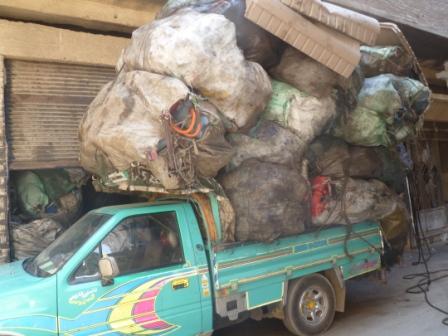


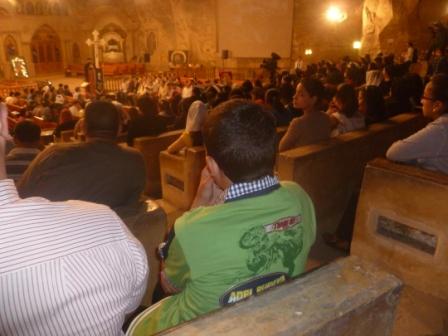


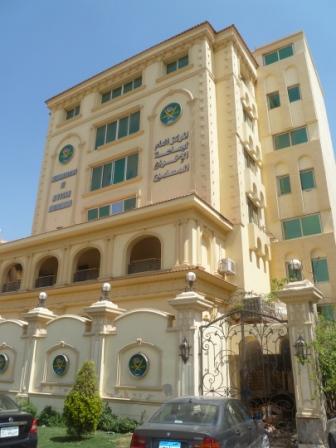

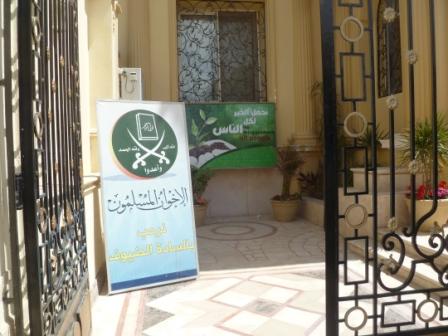

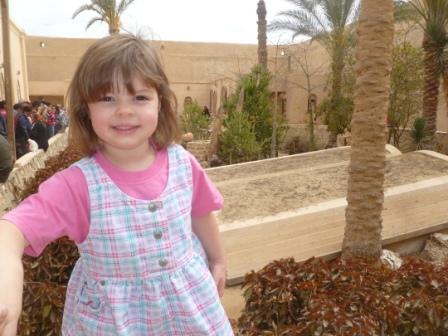


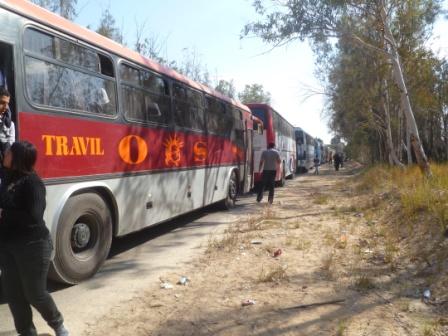


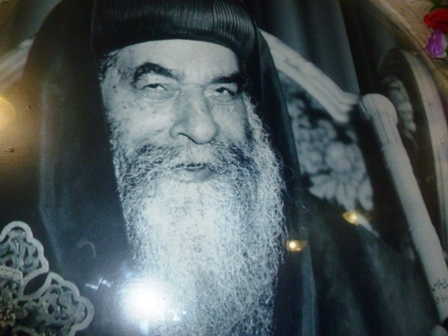


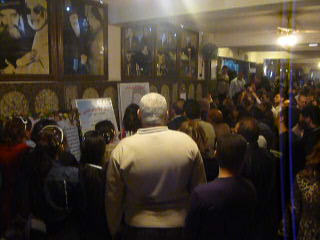
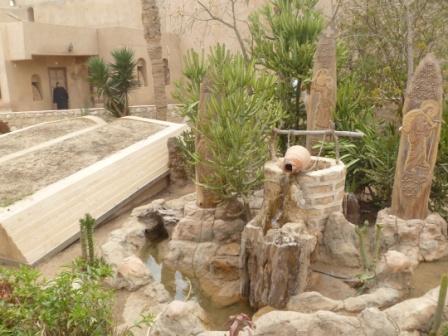


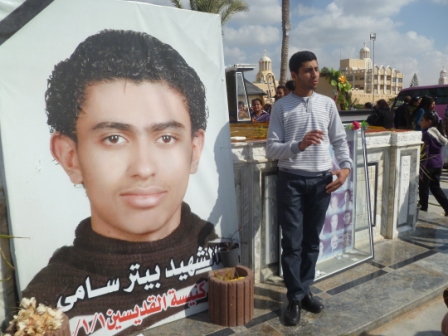
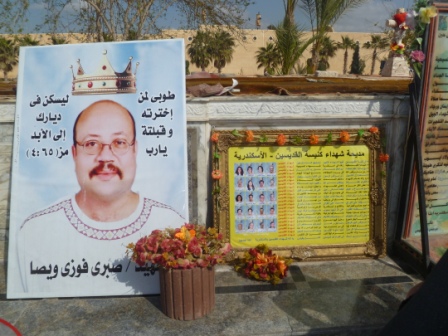
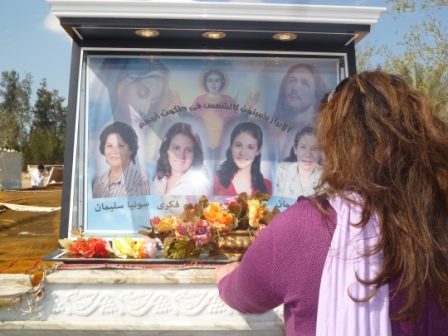
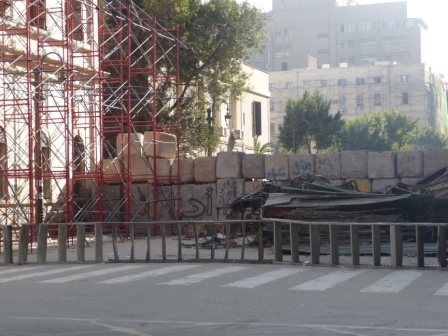


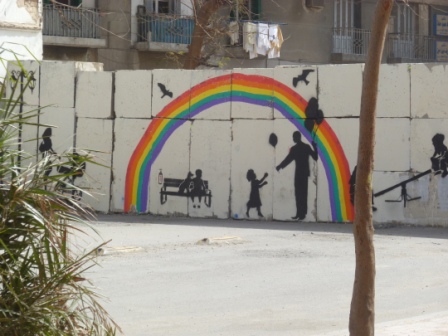
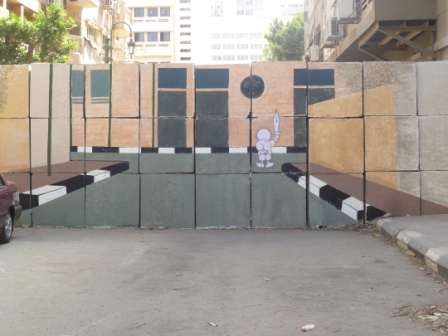
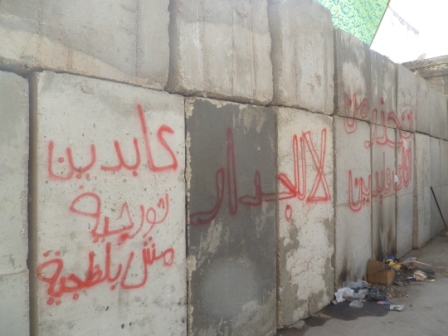
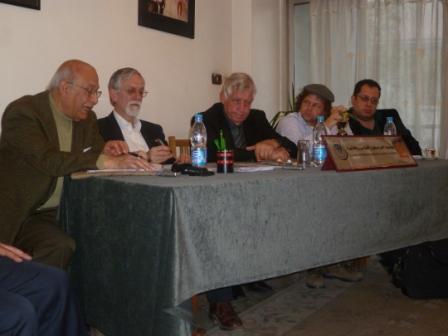

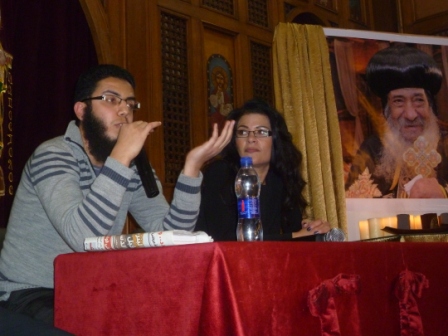


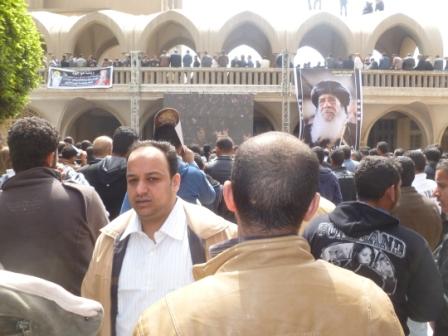
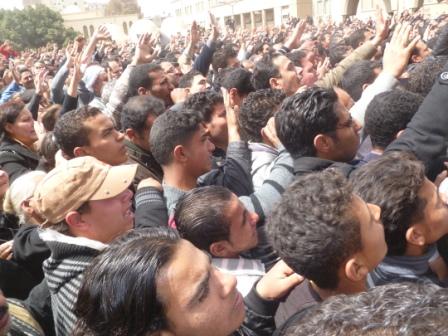
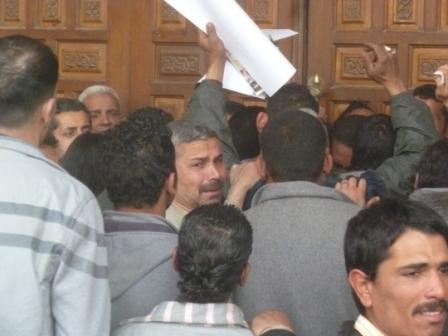
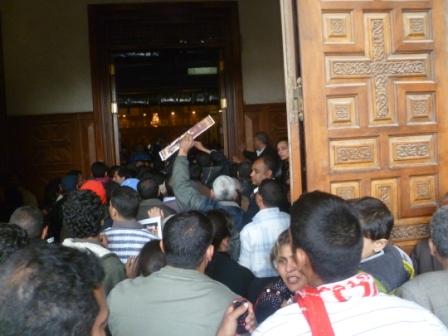
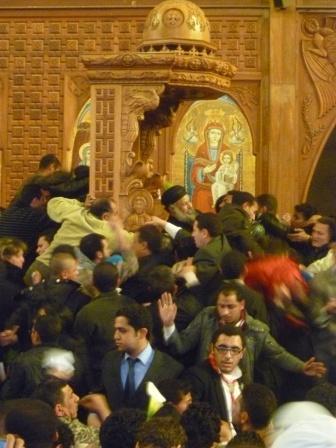


 Jayson Casper