Categories
Christianity Today Middle East Published Articles

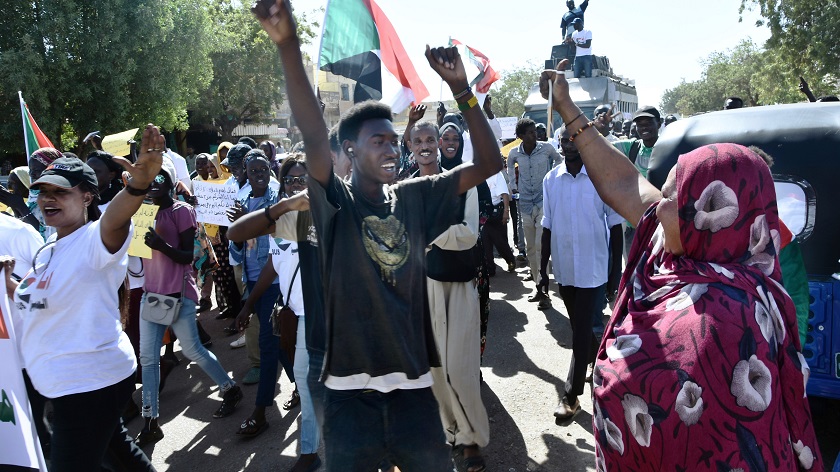
I Was the Enemy Jesus Told You to Love

Photography by Sandra Singh for Christianity Today

When I was 16, a new student named Zakariya showed up at school. His forehead bore fan-shaped scars that identified him as a member of the Dinka people group—south Sudanese minority rebels, many of whom were Christian. My enemies. Zakariya was nice to everyone and scored the top grades in class, which made me hate him more.

As devout Muslims, my family and I were committed to Islam’s central place in the government. But our application of our religion was radical, since we prayed for Allah to destroy those who opposed us.

For two years, I added a request for Zakariya’s destruction to my daily noontime prayers. One night, that prayer was answered. My friends and I climbed a tree with our bayonet-fixed rifles and watched as a flashlight approached in the distance. It was Zakariya, who we knew walked this way each evening.

When he was beneath our tree, we ambushed him, beating him mercilessly with our fists and rifle butts. In a frenzy, I stabbed him repeatedly with my bayonet.

“Allahu Akbar,” I muttered in pride as we walked away from his mangled body. We left him for dead, and he never returned to school.

I was born into one of independent Sudan’s three leading families. My great-grandfather had joined the 1881 Islamic revolt against the British. Members of my family helped enshrine sharia law in our country. My father led the military in Darfur, where he later served as governor.

As the only son, I was to inherit this legacy. Our family believed our highest allegiance transcended the nation to include all Muslims in a global Islamic community called an umma. This inspired a tradition—unknown to me at the time—of early commitment to religious learning. So when I was 8 years old, my father drove me 500 miles north of Khartoum and dropped me at a desert madrasa to learn the Quran. He gave me no explanation and barely said goodbye.

At the madrasa, I was shaved bald and given a white robe and prayer cap for my daily uniform. Our group of ten boys sat in a straw hut and memorized Arabic verses with a long-bearded shaykh. The Quran was in his right hand; in his left he held a leather whip to punish our frequent mistakes. Allah must be like this too, I thought. I cried at night for 17 days straight.

When my father came to pick me up two years later, there was no embrace, but I saw he was proud of me. At home, I recited the entire Quran to my family and received a camel as my reward.

In my family’s eyes, I was now a man. Instead of playing soccer, I practiced disassembling and reassembling a Kalashnikov rifle and playacted ambushes against our enemies. Maybe it was preparation for Zakariya. By the time I graduated from high school in 1989, I was ready for jihad and to die as a martyr. I was the perfect son my father had dreamed of.

But my role model wasn’t my father. It was…

This article was originally published in the September/October print edition of Christianity Today. Please click here to read the full text.

Categories
Christianity Today Middle East Published Articles

Forgotten War: Sudan’s Displaced Christians Brace for ‘World’s Worst’ Hunger Crisis

Image: Luis Tato / Contributor / Getty

Overlooked by crises in Gaza and Ukraine, Sudan has now endured one year of civil war. Nearly 16,000 people have been killed, with 8.2 million fleeing from their homes—including 4 million children. Both figures are global highs for internal displacement.

The United Nations stated that the “world’s worst hunger crisis” is looming, warning that one-third of Sudan’s 49 million people suffer acute food insecurity and 222,000 children could die of starvation within weeks. Yet an international emergency response plan, endorsed by UN agencies including the Cindy McCain-led World Food Program, is only six percent funded.

Sudanese Christians feel like “no one cares.”

Five years earlier, they had great hope. In 2019 a popular revolution overthrew longtime dictator Omar al-Bashir, wanted for war crimes against his people. The new civilian government repealed the law of apostasy, removed Islamist elements from the bureaucracy, and implemented other democratic reforms. But in 2021 the general of the army, in cooperation with the leader of the Rapid Support Forces (RSF)—a government-aligned paramilitary group accused of the atrocities in Darfur—deposed the prime minister.

Continuing negotiations with civilian leaders demanded a merger of the two armed forces, but neither general could agree on terms. And while it is not clear who fired the first shot, last year on April 15 the conflict exploded in the capital of Khartoum. Much of the North African nation is now a war zone.

Yet somehow, an evangelical alliance has formed and joined two regional bodies.

Rafat Samir, secretary general of the Sudan Evangelical Alliance, witnessed the outbreak of violence firsthand. Now resident in Egypt, he oversaw the dialogue between his own Evangelical Presbyterian synod and the Sudanese Church of Christ, shuttling between safe havens in his home country and in neighboring Ethiopia.

Earlier this month, these denominational partners, which Samir says represent at least 75 percent of Sudanese evangelicals, successively affiliated with the World Evangelical Alliance (WEA) regional associations for both the Arab world and sub-Saharan Africa. Catholics, Anglicans, Coptic Orthodox, and various Protestant denominations account for about 4 percent of the population of Sudan, which ranks No. 8 on the Open Doors World Watch List of countries where it is hardest to be a Christian.

CT asked Samir about the impact of civil war on the church, why its WEA identity exists in two directions, and why his only remaining hope is in God:

Where were you on April 15 last year?

My home is in the Bahri neighborhood, where both the army and the RSF have bases, and antiaircraft guns were firing right outside my bedroom window, with bombing campaigns morning and night. Electricity and water services were cut. As it was Ramadan, one day I went out at sunset to find food, thinking there would be a lull in the fighting. A bullet missed me by mere centimeters.

I wanted to flee immediately, but my brother preferred to wait it out, as we have witnessed clashes before, and he anticipated it would end after a few days, as previously. Bodies lie dead in the streets, and we covered them with sand to suppress the smell. But after enduring these harsh conditions with his wife and two daughters for 15 days, he agreed to leave when a bomb hit his neighboring house.

How did you escape?

We searched three days just to find a vehicle to get us out of the city, and eventually had to pay $500 USD to travel only two kilometers (1.2 miles). We then negotiated getting a small bus with 40 other people to take us to the Egyptian border, but then the driver upped the price upon our arrival to $10,000 total. We had room only for our personal documents, leaving everything else behind.

But leaving Khartoum was entirely dependent on God’s timing.

The battle was still raging, with barrel bombs damaging the road out of town. An earlier bus was stopped by the RSF, who killed the people and stole their money. We heard that, at an army checkpoint, a later bus experienced the same thing. We were lucky—soldiers only searched our vehicles for weapons and simply wanted a bribe to let us move onward.

A friendly family in the city before Egypt gave us a place to sleep and running water. But the next day, the border was so crowded it took us three days to pass through. Some slept in the mosque, others under the scattered trees. When I finally made it to Aswan, an Egyptian friend met me and gave me a place in the German mission hospital guesthouse. He cried when he saw me.

I didn’t know why until I finally settled in and looked at myself in the mirror.

Where are others in your church?

We have over…

This article was originally published at Christianity Today, on April 16, 2024. Please click here to read the full text.

Categories
Christianity Today Middle East Published Articles

As Churches Offer Refuge, Sudanese Christians Refine Theology of War

Image: Ahmed Satti / Anadolu Agency / Getty Images

Hajj Atiya, an elderly Sudanese woman living in Khartoum, was already ill.

And then the war started.

“The planes bombed from above, the bullets were flying below,” she said. “We stayed in our house, afraid, while all outside was boom, boom, boom.”

All she had in the house was flour, to bake bread. At least she had that.

Mariam, who came to Khartoum from the Nuba Mountains to get medicine, went several days without water. And then a bomb hit the neighboring building, which collapsed upon her own.

“Whenever the airplanes disappeared overhead, we ran outside in search of food,” she said. “But we had to hide behind buildings to avoid the gunfire, with corpses strewn on our right and left.”

An unnamed doorman had it still worse.

“For ten days we couldn’t leave our home,” he said. “The shops are closed, and soldiers are in the streets.”

Every Sudanese of means in his Kafouri neighborhood of Khartoum had left town at the first sign of violence, which began April 15. He and the other guards were left behind to protect the properties. But the building owner, when the doorman called to ask for money or help, hung up on him.

Mariam found someone willing to provide transport out of the capital. But she couldn’t afford the 50-cent fare. All she had was oil and soap.

Atiya had only one option left.

“I prayed to God: Save us,” she said. “God answered, and someone came to take us away.”

Somehow, each escaped with their families 85 miles southeast to Wad Madani. Atiya found a place to rest under a tree. Mariam spent the night on the street. But each now numbers among the 122 families staying in two local evangelical schools, with dozens more sleeping in the city’s churches.

“The war is ongoing, and the people keep coming,” said Edward Hussein, an evangelical pastor. “The situation is difficult, and it is only getting worse.”

Only scant support has come from abroad. But local believers donated funds, food, and beds from their own homes. Until now, every arriving family has been given an aid package that includes lentils, flour, sugar, oil, tea, and soap.

But for how long?

“If the situation continues, what can we do?” asked Habil Thomas, country director for Nigeria-based Calvary Ministries. “God is the only one who can intervene, as we pray for peace in Khartoum and all Sudan.”

So far, Wad Madani has been spared.

Located three hours from Khartoum along the banks of the Blue Nile, the capital of Gezira state governs an agricultural center once anticipated to become a new breadbasket of Africa. While development has stalled, the abundance of crops and relatively lower cost of living—coupled with employment opportunities on the farms—has drawn many here to safety.

Because Khartoum is destroyed.

“If the fighting doesn’t stop, it will be a humanitarian crisis,” said Ezekiel Kondo, Anglican archbishop of Sudan. “Nobody can help anyone else here, because all are helpless.” His residence in All Saints Cathedral was situated one block from…

This article was originally published at Christianity Today, on May 12, 2023. Please click here to read the full text.
Categories
Christianity Today Middle East Published Articles

Khartoum Churches Damaged as Sudan Descends Closer to Civil War

Image: Ahmed Satti / Anadolu Agency / Getty Images

Sudan’s most Christian neighborhood is under attack.

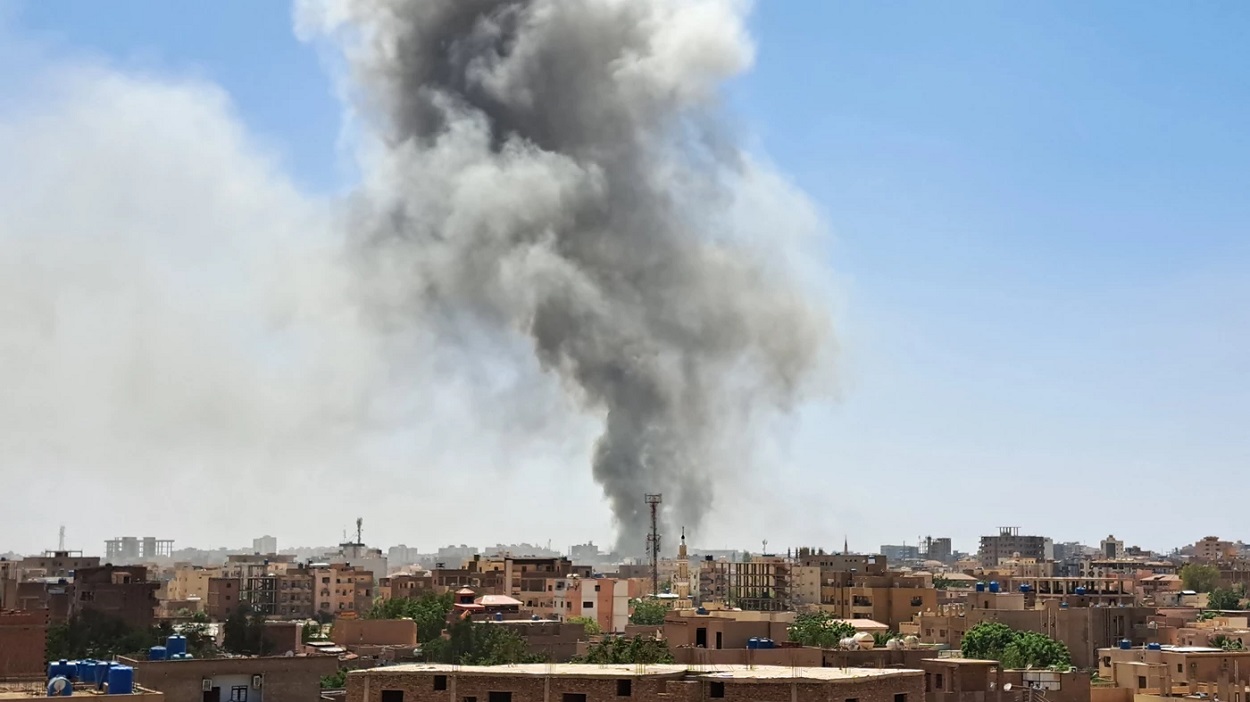
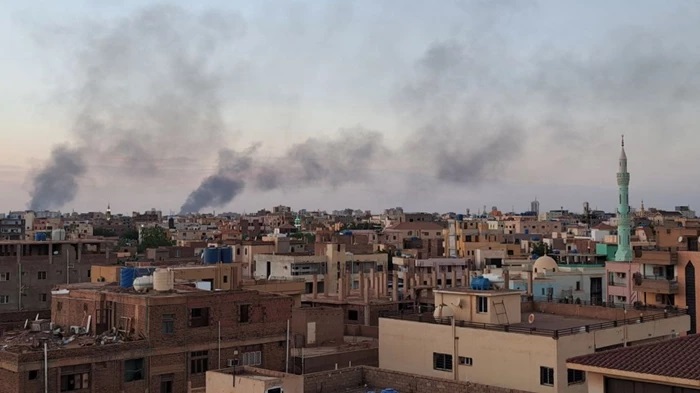
Collateral damage amid severe clashes between the army and its previously partnered militia, churches in the Bahri district of the capital Khartoum and surrounding areas have witnessed the worst of the past three weeks of fighting.

The Evangelical Presbyterian church suffered a fire as munitions exploded in a nearby market. The Coptic Orthodox church was struck by a rocket. And All Saints Anglican Cathedral was occupied by militant forces.

Over 500 people have been killed, with more than 4,000 injured.

“The situation is very serious,” said Ismail Kanani, general secretary of the Sudanese Bible Society. “I am trapped in my house, without power and water.”

Prices for food and fuel are skyrocketing, electricity supply has been cut off in much of the capital, and hospitals have been looted and are barely operating. A three-day truce has been agreed—and violated—to allow civilian escape and embassy evacuations.

Almost all Christians have left the area, said Abdalrahim Musa, director of the Evangelical Cultural Center of the Khartoum Presbyterian church. An eyewitness to the carnage, like many other Christians he fled three hours south to Wad Madani, an area relatively distant from the conflict.

But in their absence, he hears reports of widespread looting of their properties.

They are not the only ones displaced. More than 100,000 people have fled Sudan, according to the United Nations, with an additional 334,000 displaced within the country.

Foreign governments have frantically sought to evacuate their citizens. Under cover of armed drones, the US organized a land convoy for 300 Americans and other nationalities to the Red Sea city of Port Sudan. From there, many board a boat to Saudi Arabia for relocation elsewhere.

It is more difficult for Sudanese—and sometimes exploitative. One family stated it was stuck at the Egyptian border, unable to pay the $40,000 fare demanded for crossing. While there is no collected list of Christian casualties, three family members of the guard at Musa’s center were shot in the head, presumably caught in the crossfire. Two children from his church were also killed, as was his…

This article was originally published at Christianity Today, on May 2, 2023. Please click here to read the full text.
Categories
Christianity Today Middle East Published Articles

Coup Reversal Divides Sudan’s Christians

Courtesy: Susanna al-Nour

As a young mother in Sudan, Susanna al-Nour struggled like many others with rising prices and shortages of goods. International support pledged after the 2019 revolution was slow to materialize. The government struggled to disburse promised aid. And tribal groups protesting in the east were blocking access to essential imports coming through the Red Sea city of Port Sudan.

And then this October things got worse.

Citing divisions among politicians, Abdel Fattah al-Burhan, the general heading Sudan’s mixed military-civilian Sovereign Council, launched a coup against the popularly selected prime minister, Abdalla Hamdok.

Phone and internet connections were cut, Hamdok was detained, and security forces raided neighborhoods to arrest supporters of his government, roughing up others. Thousands poured into the streets, including Nour’s husband, an evangelist and pastor’s assistant at Faith Baptist Church in the Soba area of the capital, Khartoum.

“With a small child, I couldn’t go because of the tear gas,” she said. “But it was necessary to demonstrate against the regime.”

Sudan’s Christians were then solidly in support of Hamdok, sources told CT. Two months later, sources no longer speak in consensus.

At the time, enraged and without communication, the nation went into a standstill. Nour’s online studies through a seminary in Lebanon became impossible. So did her husband’s student ministry—as most young people were marching to reverse the coup.

Back in 2019, Hamdok quickly became the symbol of the revolution. Chosen by consensus among the political and revolutionary groups that deposed the 30-year Islamist dictatorship of Omar al-Bashir, his leadership was one of the few unifying factors in a rapidly fraying partnership between civilians and the military.

And then he wasn’t…

This article was originally published at Christianity Today, on December 10, 2021. Please click here to read the full text.

Categories
Christianity Today Middle East Published Articles

Reaching Youth for Christ During Sudan’s Coup

Image: John Sagherian
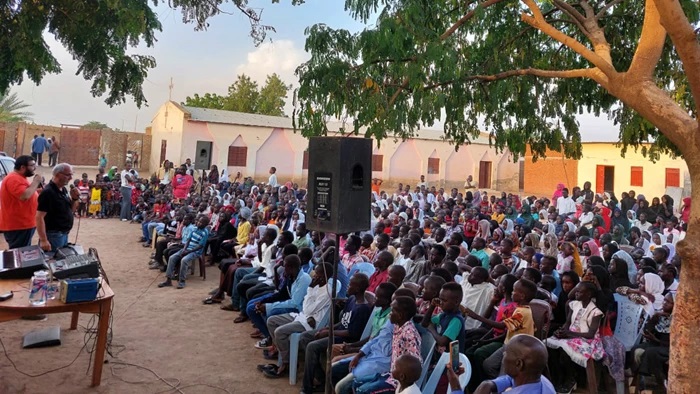
An outdoor YFC youth meeting in al-Thawra near Wad Madani, Sudan

At 6:30 a.m. last Monday, John Sagherian and Elie Heneine went down to the lobby of their three-star hotel in eastern Sudan and found a crowd gathered around a TV. Filtering in, they heard the news.

The military had staged a coup in the capital, Khartoum, 90 miles to the northwest.

“Instantly, everything we planned for that day was up in the air,” said Heneine, a 27-year-old staff worker with Youth for Christ (YFC) Lebanon. “Oh well, youth work is very organic.”

Sagherian, the 74-year-old YFC regional director, had long been “dying to visit” Sudan. Two years earlier, he had identified a promising country director named Sabet, who since then had recruited seven other volunteer staff members. Sabet even ignored the capital, concentrating instead on the poorer hinterland.

The Lebanese team of two were finally scheduled to meet their new Sudanese colleagues later that day. As malaria had been among their concerns, they had taken 100 mg of medication every day for two weeks prior. The visa had also been a complication, requiring multiple layers of bureaucracy. But it was the BBC app that now troubled Joy, Heneine’s American wife of five months, as Sudan increasingly filled her news feed.

Heneine himself was at peace. Not only was he used to instability as a Lebanese Christian, but Sabet and others assured them everything was fine—despite the political tumult between the once-cooperating military and civilian leaders.

In 2019, the Sudanese army backed massive protests to overthrow 30-year dictator Omar al-Bashir. A spate of religious freedom reforms replaced his Islamist governance, normalization agreements were signed with the nation’s former enemy Israel, and the US removed Sudan from its list of state sponsors of terrorism.

The economy was struggling, but the World Bank was poised to help. Sudan was almost ready to rejoin the community of nations. But politicians were bickering, and a military coup had been suppressed only one month earlier.

In the background was disagreement over sending Bashir to the International Criminal Court to be tried for war crimes in Darfur. Deeper still were issues of army control of large sectors of the economy. And at an unspecified but fast-approaching date, the transitional Sovereign Council was supposed to switch to civilian leadership. Two days before the coup, the YFC team had traveled three hours over bumpy roads with multiple checkpoints to reach…

This article was originally published at Christianity Today, on November 3, 2021. Please click here to read the full text.
Categories
Christianity Today Middle East Published Articles

Worried Christians ‘Wait and See’ After Sudan Coup

Image: AFP / Getty Images

Amid a near complete phone and internet blackout, Sudan’s Christians are on high alert following a military coup.

Yesterday the head of the North African nation’s transitional Sovereign Council, Gen. Abdel Fattah Burhan, arrested its civilian prime minister, Abdalla Hamdok, his wife, and other officials.

Hamdok, who called the arrests a “complete coup,” called for protests. The Forces of Freedom and Change alliance, which organized the original 2018 revolution that ousted 30-year dictator Omar al-Bashir, called for civil disobedience.

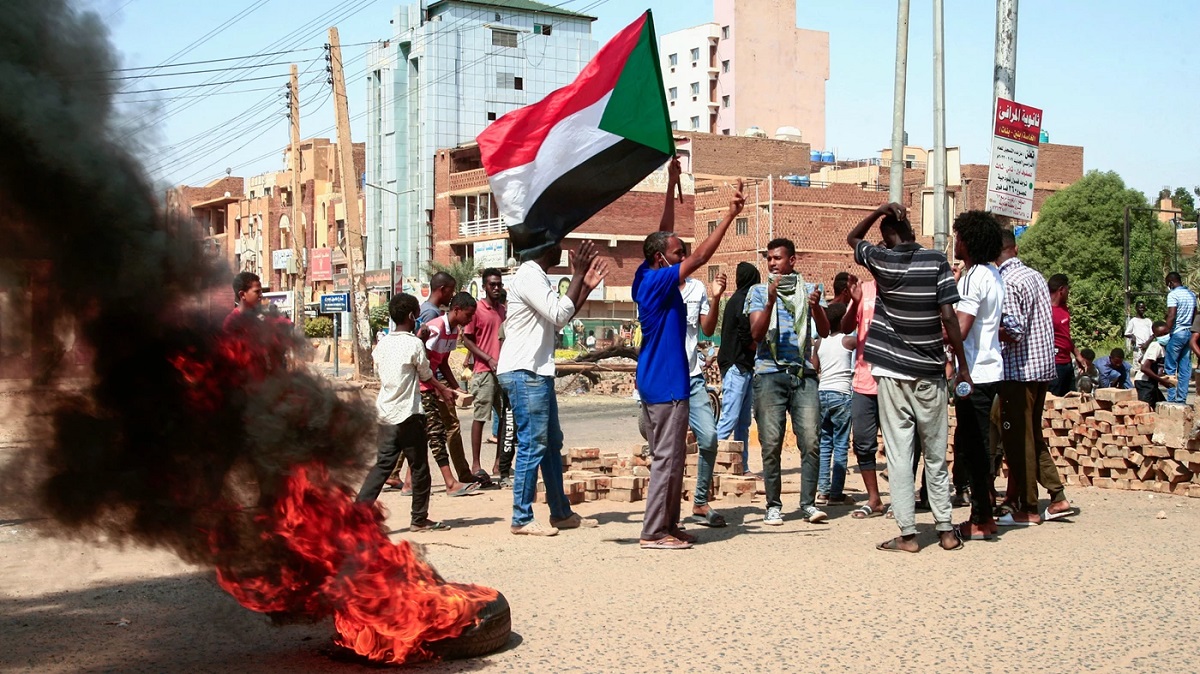
Thousands have filled the streets and were met with repression. Reports say 10 people have been killed and 80 injured.

CT spoke with an American ministry leader who was able to contact a Christian source in Sudan. The leader requested anonymity to preserve their ability to travel. The source was very careful in communication.

“All I can really say is that it is very important to pray for peace and security for all in Sudan,” said the leader, “and that the voice of the people would be heard.”

Meanwhile, a Sudanese Catholic leader felt secure enough to be specific. “The international community should…

This article was originally published at Christianity Today on October 26, 2021. Please click here to read the full text.
Categories
Christianity Today Middle East Published Articles Religious Freedom

Sudan Confirms Religious Freedom with Nuba Mountains Rebels

Abdulmonam Eassa / Getty Images

Sudan has taken another step toward religious freedom.

This time, it is a confirmation.

On Sunday, the joint military-civilian Sovereign Council signed a peace agreement with the rebel Sudan People’s Liberation Movement-North (SPLM-N), based in the Nuba Mountains, where there is a significant Christian population.

“Freedom of belief and religious practices and worship shall be guaranteed to all Sudanese people,” stated the Declaration of Principles, “by separating the identities of culture, religion, ethnicity, and religion from the state.”

Prior to the revolution which overthrew 30-year dictator Omar al-Bashir in April 2019, Sudan was governed by sharia law. It also imposed an Arab identity on its multiethnic population, contributing to longstanding conflict in Darfur.

The region’s Sudan Liberation Army (SLA), led by Abdel Wahed el-Nur, is now the last remaining rebel holdout.

Three other armed groups signed a peace deal last September. In February, these were integrated into an expanded Sovereign Council and afforded places in the still to be formed parliament. Abdelaziz al-Hilu, leader of the SPLM-N, refused to join without…

This article was originally published at Christianity Today, on March 30, 2021. Please click here to read the full text.
Categories
Africa Christianity Today Published Articles

US Adds Nigeria to Top of Religious Persecution List, Removes Sudan and Uzbekistan

Embed from Getty Images

Only one country was added this year to the US government’s official list of the world’s worst persecutors of religion: Nigeria.

And the Christian Association of Nigeria made a statement, excerpted here from my joint article at Christianity Today:

“[We are] not happy that the US has placed Nigeria on a religious freedom blacķlist, because of the implications which include possible sanctions,” stated CAN president Samson Ayokunle.

“But at the same time, we are encouraged that the global world is aware of what is happening.”

Nigeria has religious freedom, CAN reminded, but it is denied in certain regional states—especially in the Muslim-majority north. Churches face discriminatory zoning procedures, and Christian professors are denied senior leadership positions, the group stated.

And while Muslims denounce terrorism by Boko Haram and its breakway faction, Islamic State West Africa Province (ISWAP), such violence is done in the name of Allah, stated CAN. Fulani herdsmen, meanwhile, kill in predominantly Christian farming communities.

“Pastors and their families are under attack,” stated Ayokunle. “Churches are being burnt and destroyed. They are taking over our farms and communities.”

The rest of the article contains additional Nigerian commentary, as well as the larger context for the State Department decision.

So while the Christian leadership of Nigeria fears the impact of the CPC designation by the United States, the job of securing religious freedom may be too big for Buhari alone.

“CAN has been consistently calling on the government to fix the security challenges before too late,” Ayokunle stated. “We call on the international community to help our government to wipe out these terrorists.”

This article was originally published at Christianity Today, on December 7, 2020. Please click here to read the full text.

Categories
Christianity Today Middle East Published Articles

Sudan’s Partially Answered Prayers

Archbishop Ezekiel Kondo

Sudan is rejoining the community of nations.

After 30 years of pariah status under former dictator Omar al-Bashir, the nation has established relations with Israel, taken steps to improve religious freedom, and ensured removal of its US designation as a state sponsor of terrorism.

Archbishop Ezekiel Kondo of Sudan has witnessed the entire history.

Born in 1957 in the Nuba Mountains region, he was ordained an Anglican priest at the age of 31. In 2003, he became bishop of the diocese of Khartoum, Sudan’s capital city.

In 2014, Kondo became archbishop of Sudan within overall administrative unity with South Sudan. And in 2017, he was enthroned as primate of the newly created Anglican Province of Sudan.

A critic of religious persecution under Bashir, Kondo has associated his church with the conservative Global South Movement in the Anglican Communion, as well as GAFCON, which seeks “to guard the unchanging, transforming gospel of Jesus Christ and to proclaim Him to the world.”

CT spoke with Kondo about justice for the Palestinians, the need for a blasphemy law, and his ranking of Sudan’s religious freedom progress on a 10-point scale:

Your country has begun a process of normalizing with Israel. Are you in favor of this process?

I do support it, for the good of Sudan. Normalizing will be a good thing for development in economy, agriculture, technology, and other areas. It will open doors for relations with other countries.

And spiritually, it will enable [Sudanese] Christians to visit the Holy Land.

Are there Sudanese Christians against normalization?

I don’t think…

This article was originally published at Christianity Today, on November 16, 2020. Please click here to read the full text.

Categories
Christianity Today Middle East Published Articles

Will $335 Million Peace with Israel Secure Sudan’s Religious Freedom?

CT spoke with eight leaders—three Sudanese, four American, and one Palestinian—concerned with the course of religious freedom and regional stability.

Their reactions vary.

“Christians are very happy,” said Aida Weran, academic officer at Nile Theological College in Khartoum. “We see Sudan’s changes becoming reality.”

Weran is optimistic the deal with Israel will open the economy, foster technological growth, develop the agricultural sector, and alleviate poverty.

Originally from the Nuba Mountains in Sudan’s marginalized south, she is encouraged by the movement toward peace with militant rebel groups in her region, and in Darfur.

One reason the formation of parliament has been delayed, she believes, is that it must incorporate all holdout forces.

Normalization with Israel will cement Sudan’s transition to democracy, she believes. But many Muslims might vote against it.

About 4 in 5 oppose normalization (79%), according to the 2019–20 Arab Opinion Index released earlier this month. A similar share (81%) support Sudan’s revolution.

And 1 in 4 Sudanese (24%) named Israel as the greatest threat to their nation, topped only by the United States, named by 37 percent.

“Palestine is a sentimental issue, and the [Bashir] government promoted it aggressively,” said Tawfig Saleh, the Muslim founder of Unity International, a Sudanese NGO promoting religious freedom and coexistence.

“But we cannot move forward without good relations with our neighbors.”

Even so, Saleh doubts the poll’s finding of 79 percent opposition is accurate, especially now after Sudan’s removal from the US terrorism list. Also out of date, in his view, is…

This article was originally published at Christianity Today, on October 26, 2020. Please click here to read the full text.

Categories
Christianity Today Middle East Published Articles

Sudan Agrees with Rebels to Remove Islam as State Religion

In signing successive peace deals with entrenched rebel movements last week, Sudan drew upon the legacy of Thomas Jefferson.

“The constitution should be based on the principle of ‘separation of religion and state,’” read the text of an agreement between the North African nation’s joint military-civilian transitional council and the Sudan People’s Liberation Movement–North (SPLM–N).

“The state shall not establish an official religion.”

The declaration of principles further cements Sudan’s efforts to undo the 30-year system of strict sharia law under President Omar al-Bashir, during which Islam was the religion of the state.

The agreement was signed in Addis Ababa, Ethiopia, four days after a more inclusive peace deal was signed with a coalition of rebel groups in the Sudan Revolutionary Front in Juba, South Sudan.

The Juba agreement established a national commission for religious freedom, which guarantees the rights of Christian communities in Sudan’s southern regions.

Sudan’s population of 45 million is roughly 91 percent Muslim and 6 percent Christian. Open Doors’s World Watch List ranks Sudan No. 7 among nations where it is hardest to be a Christian. The US Commission on International Religious Freedom (USCIRF) interpreted the agreement even more widely: to protect…

This article was originally published at Christianity Today, on September 5, 2020. Please click here to read the full text.
Categories
Current Events

Sudan Drops Death Penalty for Apostasy, Alcohol Ban for Christians

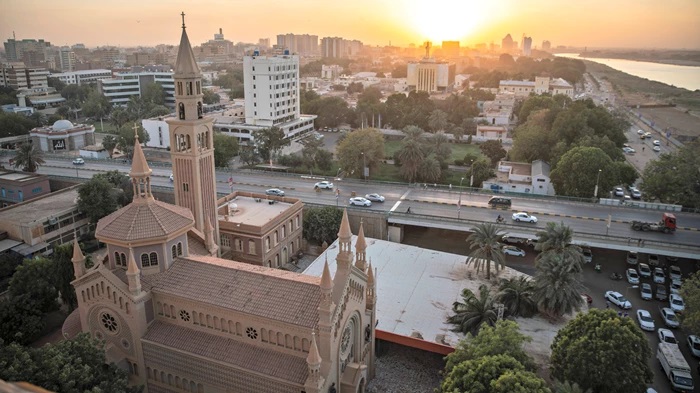
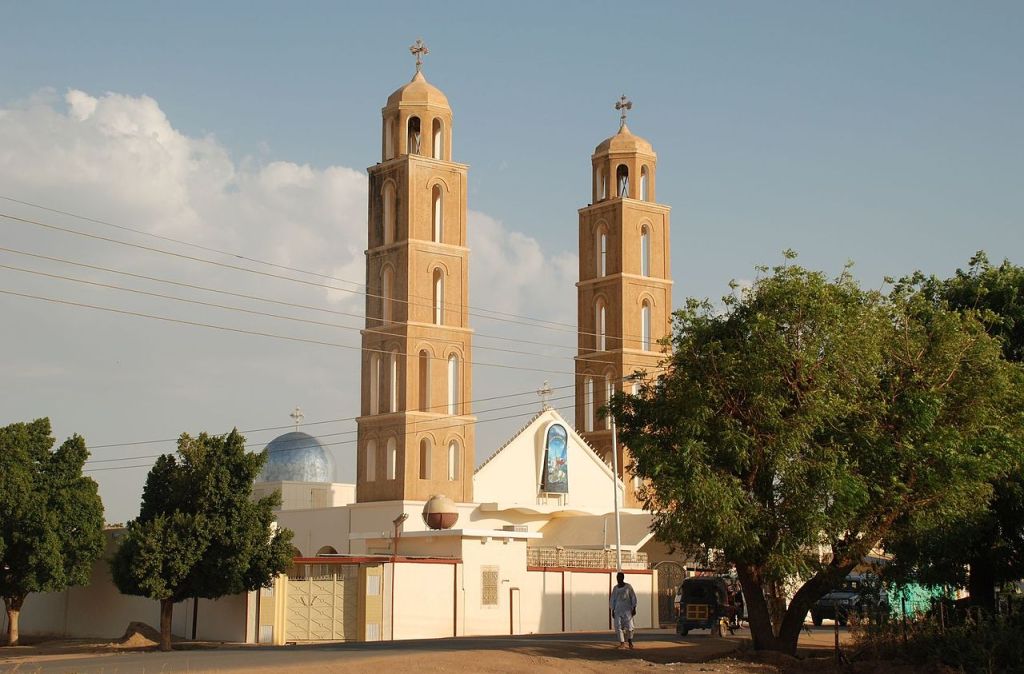
Coptic church and bell towers in Kosti, Sudan.

In one of a wide-ranging series of legislative reforms, apostates from Islam no longer face the death penalty in Sudan.

“We [will] drop all the laws violating the human rights in Sudan,” Justice Minister Nasredeen Abdulbari said Sunday during an interview on state television.

“We are keen to demolish any kind of discrimination that was enacted by the old regime, and to move toward equality of citizenship and a democratic transformation.”

In April 2019, following weeks of massive revolutionary demonstrations, Christians joined in cheering the military overthrow of longtime President Omar al-Bashir.

In his place was installed a joint military-civilian Sovereign Council slated to govern until 2022, with rotating leadership.

Importantly, current head General Abdel Fattah Al-Burhan endorsed the new revision. The move followed renewed protests demanding the government accelerate the pace of reforms.

A few days prior, Prime Minister Abdullah Hamdok, a civilian, replaced several cabinet ministers, fired the police chief, and criminalized female genital mutilation (FGM).

A UN-backed survey in 2014 estimated 87 percent of Sudanese women between the ages of 15 and 49 have been subjected to the procedure. The Miscellaneous Amendments Act—approved in April but only now publicized—also freed Sudanese women from…

This article was first published at Christianity Today, on July 13, 2020. Please click here to read the full text.
Categories
Christianity Today Middle East Published Articles

Trapped in Lebanon, Sudanese Students Find Refuge at Seminary

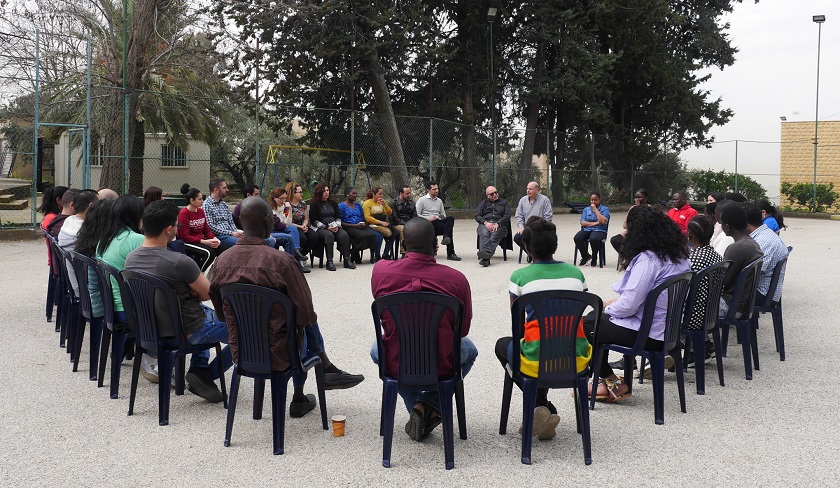
Image courtesy ABTS

While Liberty University came under criticism for allowing students the option to stay on campus during the coronavirus outbreak, many other schools were also faced with a dilemma concerning the 1.1 million students who came from abroad.

According to a Quartz survey of 36 universities who host a third of the United States’ international students, 26 told those students to leave campus.

Penn State gave three days notice. Harvard gave five. Duke, among others, offered emergency financial aid to help international students return home. Princeton allowed their residency to continue—until the end of the semester.

But Sudanese students at Lebanon’s Arab Baptist Theological Seminary (ABTS) did not have a choice—even with tickets in hand.

Lebanon was one of the first nations to implement COVID-19 restrictions. Its first case was recorded on February 21, and by March 9 schools were shut down.

Four days later, at a regularly scheduled seminary picnic, Bassem Melki prepared to break the news.

“It was a joyous atmosphere,” said the ABTS dean of students, “but I had sadness in my heart because I knew what I had to say.”

Founded in 1960 and located in the mountains overlooking Beirut, the seminary…

This article was first published at Christianity Today, on June 10, 2020. Please click here to read the full text.
Categories
Americas Christianity Today Published Articles

Report: ‘Tremendous Progress’ Ahead for Religious Freedom Worldwide

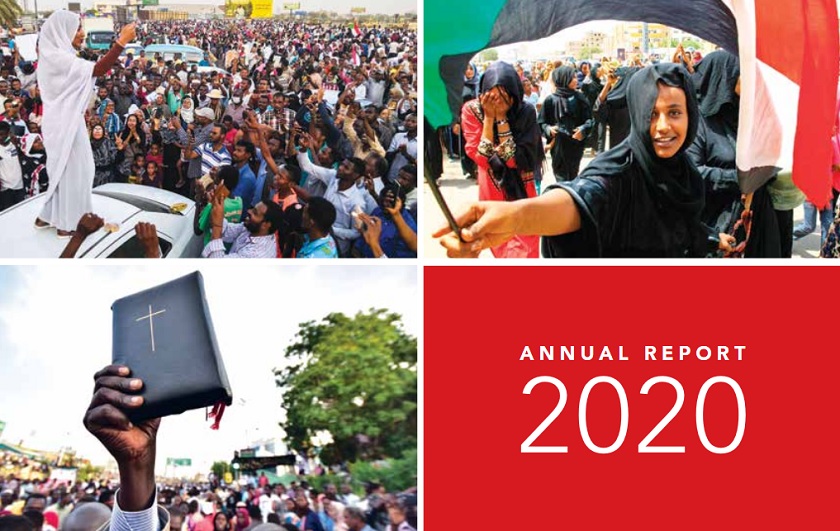
USCIRF 2020

This article was first published at Christianity Today, on April 28, 2020.

A new report aims to “unflinchingly criticize the records of US allies and adversaries alike” on religious freedom.

And there’s a lot to report, with more headlines each month confirming the Pew Research Center’s 10-year analysis that government restrictions and social hostilities involving religion have reached record levels worldwide.

Today’s 21st annual report by the US Commission on International Religious Freedom (USCIRF) identifies significant problems in 29 countries—but sees “an upward trajectory overall.”

“Our awareness is going to grow greater, and the problem will appear more pronounced,” USCIRF chair Tony Perkins told CT. “But as we continue to work on it, I think we will see tremendous progress in the next few years if we stay the present course.”

Created as an independent, bipartisan federal commission by the 1998 International Religious Freedom Act, USCIRF casts a wider net than the US State Department, which annually designates Countries of Particular Concern (CPC) for such nations’ violations of religious freedom, or places them on a Special Watch List (SWL) if less severe.

Last December, Secretary of State Mike Pompeo announced CPC status for Burma, China, Eritrea, Iran, North Korea, Pakistan, Saudi Arabia, Tajikistan, and Turkmenistan.

USCIRF now recommends adding India, Nigeria, Russia, Syria, and Vietnam.

And where the State Department put only Cuba, Nicaragua, Sudan, and Uzbekistan on the watch list, USCIRF recommends also including Afghanistan, Algeria, Azerbaijan, Bahrain, Central African Republic, Egypt, Indonesia, Iraq, Kazakhstan, Malaysia, and Turkey.

USCIRF’s mandate is to provide oversight and advice to the State Department. Aiming to make its recommendations more easily accessible to policymakers, this year’s report limits country chapters to two pages each and adopts the same evaluative criteria as the State Department.

To qualify, a nation must engage in or tolerate “systematic, ongoing, and egregious” violations of religious freedom. CPC status requires all three descriptors, while SWL status requires two.

In previous reports, USCIRF used a “Tier Two” category requiring only one qualifier. As a result, Laos is no longer listed.

Following 11 commission field visits, 5 hearings, and 19 other published reports, USCIRF’S 2020 annual report calls attention to religious freedom violations against all faiths, including:

  • 1.8 million Muslims in Chinese concentration camps
  • 171 Eritrean Christians arrested while gathering for worship
  • 50,000 Christians held in North Korean prison camps
  • 260 incidents of religious freedom violations in Cuba
  • 489 raids conducted against homes of Jehovah’s Witnesses in Russia
  • 910,000 Rohingya Muslim refugees in Bangladesh
  • 1 million Muslim residents excluded from the National Register of Citizens in India
  • 37 Shi’a Muslim protesters executed in Saudi Arabia
  • 5,000 Baptist calendars burned by authorities in Turkmenistan

Perkins spoke with CT about how nations move up (e.g., India and Nigeria) or down (e.g. Sudan and Uzbekistan) between lists, why the State Department doesn’t accept all of USCIRF’s recommendations (but should), and whether he has hope for the future with violations at “a historical high in modern times.”

Roughly how many countries are on your studied list?

The ones that are listed are the ones that we look at. There has been discussion if we should add Venezuela. There have been a couple of others we have considered.

Examining “Country X,” how do you evaluate if and where it belongs on your lists?

First, we begin with the statutory definition of a Country of Particular Concern (CPC). Our mandate is to identify countries with systematic, ongoing, and egregious violations of religious freedom—whether it engages in or tolerates such behavior.

One thing to be cautious of is that we don’t rank countries. It is not a comparison. Country X and Country Y may both be CPC-listed, but be miles apart on the egregious nature of their violations. We look at each country separately.

It is based upon reporting that we can validate and verify; visits that we make to these countries; and hearings we hold with expert witnesses to come in and testify. It is a combination of factors, and quite frankly it is subjective.

We try to make it as objective as possible, but it is hard to quantify some things—though we do so to the degree we can.

What happens if you disagree about the designations?

The nine commissioners…

Please click here to read the full article at Christianity Today.

Categories
Christianity Today Middle East Published Articles

Sudan Lets Christians March for Jesus Again

Religion Sudanese Christians
In this Monday, Dec. 23, 2019 photo, Christians march through the streets to celebrate the birth of Jesus in Khartoum Bahri, Sudan, north of the capital Khartoum. More than eight months after the army forced out long-ruling autocrat Omar al-Bashir, who upheld harsh interpretations of Islamic laws, Sudanese Christians are hoping for more religious freedom. (AP Photo/Mohamed Okasha)

This article was first published at Christianity Today, on December 28, 2019.

“Hallelujah! Today, we are happy that the Sudanese government has opened up the streets for us so we can express our faith,” said Izdhar Ibrahim, one of the marchers. Some Christians had been frightened before “because we used to encounter difficulties.”

The changes started in 2011, after South Sudan gained independence from Sudan following a long war and a referendum. South Sudan is mostly Christian and animist, a belief that all objects have a spirit. Al-Bashir’s government then escalated its pressure on the remaining Christians, human-rights campaigners and Christians say.

Al-Bashir, who came to power in an Islamist-backed military coup in 1989, failed to keep the peace in the religiously and ethnically diverse country.

Noah Manzul, one of the church elders, said the march was treated almost as if it were a “crime.”

Its return is “an expression of religious freedom,” Manzul said. “We can live our lives with ease.”

Manzul’s social work with homeless children and orphans got him into trouble under al-Bashir, when he was accused of trying to convert the children to Christianity, an allegation he denies. Activities like singing hymns in the teeming market outside the church were stopped, he said.

To be sure, some Christians said they were not impacted negatively by al-Bashir’s government, and officials at the time disputed that the government targeted Christians.

But Suliman Baldo, senior adviser at the Enough Project, which supports peace and an end to atrocities in Africa’s conflict zones, said the ultimate goal under al-Bashir was “to limit the influence of the church.” Under his rule, Christian church properties could be seized, Baldo said, adding some churches were demolished, and some preachers were arrested.

During past holiday seasons, many recalled, posters would appear on the streets warning against celebrating with the kofar, or infidels, a reference to Christians.

Now, the constitutional declaration that guides this transitional period no longer refers to Islam as the primary source of legislation in Sudan. A Christian woman was appointed to the nation’s interim ruling Sovereign Council.

And December 25 was declared…

Please click here to read the full article at Christianity Today, to which I contributed additional reporting.

Categories
Christianity Today Middle East Published Articles

Arab Spring Again? Christians in Sudan and Algeria Cheer Regime Change

Bashir Bouteflika

This article was originally published at Christianity Today, on April 18.

…early signs are promising. On April 10, one day before Bashir’s arrest, the Sudanese Professionals Association (SPA) leading protests put out a call for Christian participation, acknowledging “you have suffered sectarian and psychological restrictions for years … [which have left you] without the right to worship freely.”

Shortly thereafter the SPA declared “Christ is the heart of the revolution,” and cited “blessed are the peacemakers.”

On April 14, Sudanese Christians responded.

Leaders from the Evangelical Presbyterian, Baptist, and Church of Christ denominations in Sudan appeared at a sit-in at military headquarters, offering hymns sung by both Christians and Muslims.

“This is a time to move away from the trenches of religious and ethnic discrimination and head towards an inclusive and unifying Sudanese national identity for all of us,” said Rafaat Masaad, head of the Evangelical Synods in Sudan.

“We must make a covenant that we will not withdraw or accept anything less than a new Sudan ruled by humanity and citizenship.”

Sudan, however, is not the only version of Arab Spring, Part Two. The military in Algeria removed their aged president on April 2 following widespread protests that began in February. The wheel-chair bound 82-year-old President Abdelaziz Bouteflika was attempting to secure his fifth term in office.

Unlike Bashir, Bouteflika was a beloved figure. A popular politician in his youth, he fell out of favor but returned in 1999 to put an end to the decade-long civil war that began when the military nixed an Islamist election victory that eventually killed up to 200,000 people.

A secularist of sorts, Bouteflika was an autocrat who allowed limited Islamist space of action. An Algerian Muslim Brotherhood figure was among the tentative opposition candidates against Bouteflika’s fifth-term ambitions. But al-Qaeda called from the outside for protests to impose an Islamic state, declaring Bouteflika was a friend of Christians and Jews.

The World Christian Database counts Christians as only 0.3 percent of the population, while Open Doors ranks Algeria No. 22 in its watch list, though one year earlier it ranked No. 42.

The Algerian Protestant Church, consisting mainly of former Muslims, and known by its French acronym EPA, was registered officially in 2011. But in practice it faces many restrictions, with houses of worship liable to be shut down.

“Since the beginning of the year, all the churches have begun to pray and fast for the elections,” said an unidentified Algerian Open Doors source, knowing the results are “unpredictable” but aiming for better legal standing.

“We hope that the Lord intervenes in our country.”

But on March 22, with the protests fully engaged, the EPA put out an official statement.

“We Algerian Christians, as equal Algerian citizens, fully share the aspirations and the legitimate demands of the Algerian people in their peaceful fight for a modern and democratic Republic,” it declared, “where the fundamental rights of the citizen will be respected and protected, no matter what their political and religious convictions may be.”

Will they receive their wish? Will Sudan? …

Please click here to read the full article at Christianity Today, with links to the supporting publications.

Categories
Prayers

Friday Prayers for Egypt: Slow Boil

Flag Cross Quran

God,

The waters of Egypt are simmering. Lower the temperature.

The Nile is her lifeblood, and a dam in Ethiopia may impact historic share. But also threatened Sudan leans instead to Turkey, a Brotherhood-aligned adversary.

The Israelis are her neighbor, and a president in America complicates the status quo. But the New York Times published leaks that suggest a betrayal of Palestine.

The presidency is her backbone, and elections in March invite political review. But back-and-forth developments lend intrigue to potential candidacies.

God, give Egypt wisdom to navigate these challenges.

Provide water to all, and harness the river in widespread development. Keep the Red Sea from further militarization.

Provide transparency to all, and establish justice in fair negotiation. Keep the media from biased disinformation.

Provide agency to all, and validate a leader in contested consensus. Keep the politics from crass characterization.

God, give Egypt peace to impart in these challenges.

Christmas came, with a new cathedral named after the birth of such a prince.

May this spirit hover over the waters. Calm them, God. Peace, be still.

Amen.

Categories
Middle East Published Articles Religion Unplugged

Religious Freedom for the Muslim World: The Unlikely Activism of Kamal Fahmi

Kamal Fahmi

A few excerpts from my article for The Media Project.

Kamal Fahmi sat with Mazen, a Yemeni teenager at a community center in Taiz, Yemen’s third-largest city and cultural capital. Mazen’s father was there, who arranged the meeting.

Impressed with the boy’s intelligence and demeanor, Fahmi learned of their troubling problem.

Mazen didn’t want to study Islam in school.

Fahmi had heard this story before. Visiting Yemen as he had in nations across the region, converts were considered Muslim by birth and in all official paperwork. And for those underage, Islamic education came as part of the package, even if they didn’t believe in it.

Fahmi was sympathetic, but tried to downplay the problem. After all, born into a Christian family in Sudan, he had studied Islam in school also. Hold to your faith, he counseled, but pass the tests.

Yet something in the boy stirred him, as well as the nature of his family. Mazen was not a convert, and neither was his father. His grandfather was, decades earlier. Three generations of Christians, yet still considered Muslims. The injustice gnawed at him.

“They love their country, they are not criminals, they are not spies,” Fahmi said. “If anything, they have become better citizens.

“They should be free to follow what they believe.”

It is not only an issue in the Muslim world, of course:

Worldwide, 26 percent of nations criminalize blasphemy, including Russia, Italy, Myanmar, and the Bahamas. But apostasy law is more characteristically Islamic, with only India and Nigeria as non-Muslim-majority countries.

Please click here to read the full article at The Media Project.

Categories
Africa Published Articles World Watch Monitor

Sudanese Pastors Pressured to ‘Inform’ or Stand Trial

This article was first published by World Watch Monitor on December 16, 2016.

sudan-map

Forty-eight year old father of three Revd Yamane Abraha received an ultimatum in Khartoum following a trip to Ethiopia in the fall of 2015.

“(Sudanese government) security threatened me, saying I would have to appear in court either as a witness, or an accused,” the Evangelical Baptist Church of Khartoum pastor told WWM. “But my father was sick, so unlike others I couldn’t escape.”

Abraha was one of several Sudanese Christians gathered abroad to pray for their nation. Among them were Revd Hassan Abduraheem Kodi Taour and Revd Kuwa Shamal, Sudan Church of Christ pastors from the Nuba Mountains region.

Also attending was Czech Christian aid worker Petr Jašek. According to Middle East Concern, these three had helped facilitate financial assistance to pay for the medical treatment of a Darfurian university student who had suffered burn wounds when government security attacked a campus demonstration in Omdurman, north of the capital Khartoum.

Sudanese at the meeting suspected there were spies around their Addis Ababa hotel. Then shortly after their return to Khartoum, the police arrested Taour, Shamal and Jašek, in December 2015. They have now been in detention for a year. Detained along with them is Abdulmonem Abdumawla, also from Darfur, who helped facilitate the medical treatment for the student.

The four are charged with waging war against the Sudanese state, espionage, conspiracy to carry out criminal acts, and undermining the authority of the state through violence. Trial proceedings finally begun in August have been postponed repeatedly in recent months. They could face the death penalty.

Delayed escape

Abraha was not arrested until three months after his colleagues, on 13 March, and then held for only one day. Security ordered him to report back daily, and on 24 March told him he would have to appear in court in the role of his choice: testify against the others, or be charged along with them.

On 26 March his father died.

Abraha gathered his family and traveled eight hours east by bus to bury him in their hometown of Kassala, on the border with Eritrea. And there he dropped off the radar, ditched his cell phone, and waited.

Two weeks later he returned to Khartoum and set his plan in motion. Nervously he checked his surroundings before going to buy a ticket to Egypt.

With his wife he exchanged notes on paper serviettes, which they wet and discarded when read. Discreetly they packed their children’s belongings, lest they tip off authorities at school.

Abraha then checked with a friendly security officer that his name was not on a watch list. And on 20 April, he told his children they would have a family picnic near the airport. Relatives—and kids—were surprised to learn they were saying ‘goodbye’.

In Egypt, Abraha is now involved in training for discipleship and church planting, and supervises 15 house churches among Sudanese refugees.

Over 31,000 Sudanese in Egypt are registered with the UN High Commission for Refugees, according to its August 2016 report. Unofficial estimates can exceed well over one million.

Most have fled the ongoing violence in Darfur and the southern regions of Blue Nile and Nuba Mountains bordering South Sudan.

Recurring pattern

But Abraha’s story is not unique.

Barnaba Timothous, who fled to Egypt three years earlier, had also been pressed to testify against Christian colleagues. Doing student campus ministry, he was accused of taking foreign money.

“I was told that if I would cooperate nothing would happen to me,” he told WWM. “But if not, nothing would protect me from them.”

Some people criticized him for his decision to leave. He did so quickly, taking one bag and telling no one in his family. And though he stated he was not personally involved in ministry among Muslims, he refused to betray those he knew.

“I will not be involved in issues that hurt the body of Christ and bring suffering to innocent people, just because they follow Christ as savior,” he said.

“The Islamic government of Sudan is persecuting the leaders of churches and ministries. And now our students no longer trust each other, fearful someone might report them.”

Timothous, who has since been joined by his mother and sister, is now working amongst students at several university campuses in Egypt.

WWM has spoken with other Christian leaders who tell similar stories.

Excuse for crackdown

”The [Sudan] government wants sharia and is cracking down on the church,” said Kamal Fahmy, head of the religious freedom advocacy group Set My People Free.

He recalled President Omar al-Bashir’s threat, on the eve of South Sudan independence in 2011, to make Sudan a fully Islamic state, the removal of foreign NGOs thereafter, and the expulsion of South Sudanese in 2013.

“Authorities felt Pastors Hassan and Kuwa were shaming them, bringing a bad report,” Fahmy told WWM.

“In the rebel areas the church is doing humanitarian work and is not involved in the conflict, but it does expose the atrocities the Sudanese government is committing.

“It will find any excuse to accuse them.”

Pastors have been arrested, churches have been destroyed, and land has been confiscated, according to the US State Department’s 2015 Report on International Religious Freedom.

And on 6 Oct the European Parliament passed a resolution against Sudan, specifically naming the four detainees.

Noting the EU partnership with Sudan toward ‘better migration management’, the resolution ‘reaffirms that freedom of religion, conscience or belief is a universal human right that needs to be protected everywhere and for everyone … especially in the case of apostasy.’

But in January 2015, Sudan actually expanded its apostasy laws to include criticism of the Prophet Mohammad’s wives or early companions.

Fahmy, who recently penned an open letter to the UN with the Forum for Religious Freedom-Europe, links an oppressive religious climate to development issues, which he says “assaults the core of human nature”.

“Apostasy laws … have negative social and political consequences everywhere they are in force,” he wrote. “They create instability and inspire violence.”

“Without freedom to change beliefs there is no religious freedom,’” he told WWM. “Going to paradise is not compulsory.”