Categories
Americas Christianity Today Published Articles

Should Christians Quote Muhammad?

This article was first published in the January print edition of Christianity Today.

Christians Quote Muhammad

Christians breathed a sigh of relief last October when Pakistan’s Supreme Court acquitted Asia Bibi, a Christian mother of five on death row, of blasphemy charges against Islam. What many might not have noticed was the Islamic rationale.

Whether or not she spoke against Muhammad, Bibi was insulted first as a Christian, wrote the judge. And on this, the Qur‘an is clear: Do not insult those that invoke other than Allah, lest they insult Allah in enmity without knowledge.

The verdict also quoted Islam’s prophet himself: “Whoever is cruel and hard on a non-Muslim minority, or curtails their rights … I will complain against the person on the Day of Judgment.”

And finally, it referenced an ancient treaty that Muhammad signed with the monks of Mount Sinai: “Christians are my citizens, and by God, I hold out against anything that displeases them.… No one of the Muslims is to disobey this covenant till the Last Day.”

Today it can seem like Muslims violate this covenant the world over. But does the Bibi decision validate those who insist that Islam rightly practiced is a religion of peace? And should Christians join Muslims to share verses that comprise the Islamic case for religious freedom?

CT surveyed more than a dozen evangelical experts engaged with Muslims or scholarship on Islam who reflected on three key questions when considering interpretations of Islam that favor religious freedom.

[These questions are: Is it true? Is it helpful? Is it enough?]

Please click here to read the full article at Christianity Today.

Also: click here to read my related Christianity Today article about The Covenants of the Prophet Muhammad with the Christians of the World, the book which describes the Sinai treaty mentioned above, and others.

Finally, here is a sidebar from the Should Christians Quote Muhammad article, identifying sources in the Islamic tradition on which the evangelical scholars reflected.

Quranic verses regarding Christians:

• Q5:82 – You will find the nearest of them in affection to the believers those who say, “We are Christians.” That is because among them are priests and monks and because they are not arrogant.

• Q2:62 – Indeed, those who believed and those who were Jews or Christians or Sabeans those who believed in Allah and the Last Day and did righteousness—will have their reward with their Lord, and no fear will there be concerning them, nor will they grieve.

• Q22:40 – And were it not that Allah checks the people, some by means of others, there would have been demolished monasteries, churches, synagogues, and mosques in which the name of Allah is much mentioned.

• Q29:46 – And do not argue with the People of the Scripture except in a way that is best.

• Q2:256 – There shall be no compulsion in religion. The right course has become clear from the wrong.

Texts used in Supreme Court of Pakistan acquittal of Asia Bibi:

• Christians are my citizens, and by God, I hold out against anything that displeases them. No compulsion is to be on them … The Muslims are to fight for them … Their churches are to be respected. No one of the Muslims is to disobey this covenant till the Last Day (Covenant with the Monks of Mount Sinai)

• “Beware! Whoever is cruel and hard on a non-Muslim minority, or curtails their rights, or burdens them with more than they can bear, or takes anything from them against their free will; I [Prophet Muhammad] will complain against the person on the Day of Judgment.” (Abu Dawud)

• Q6:108 – “And do not insult those they invoke other than Allah, lest they insult Allah in enmity without knowledge. Thus We have made pleasing to every community their deeds. Then to their Lord is their return, and He will inform them about what they used to do.”
 

Categories
Christianity Today Europe Published Articles

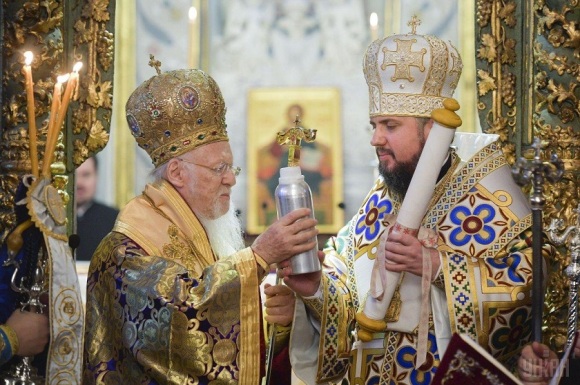
From Russia, Without Love: Ukraine Marks Orthodox Christmas with Biggest Schism Since 1054

ukraine russia tomos autocephaly
(Via UNIAN)

This article was first published at Christianity Today, on January 6, 2019.

The Orthodox Church of Ukraine has been born again.

On January 6, it received the tomos of autocephaly—the documentation of its independence among Eastern church bodies—from one Orthodox heavyweight, the Patriarch of Constantinople, despite the vociferous opposition of another heavyweight, the Patriarch of Moscow.

To understand the significance of the biggest Christian schism since the Protestant Reformation, unfolding since last fall and formalized this weekend as Eastern churches celebrated Christmas Eve, a brief history is in order.

Founded in Kiev in 988 A.D., Vladimir the Great accepted Christianity on behalf of the Rus peoples, who would eventually constitute the nations of Russia, Belorussia, and Ukraine.

Tradition holds that the formerly pagan Vladimir wished to give a religion to his realm, and queried representatives of Judaism, Islam, and the different rites of Christianity.

Astounded by the majesty of the Byzantine mass, Vladimir chose Constantinople. In 1054, the Great Schism split Christianity—and the Rus remained in the Eastern Orthodox world.

Geopolitical winds shifted, however, and in 1686 the Patriarch of Constantinople—considered within Orthodox leadership to be the first among equals—placed the patriarchate of Kiev under the ascendant patriarchal church of Moscow.

In the modern era, geopolitical and religious winds continued to blow…

Please click here to read the full article at Christianity Today.

Categories
Asia Christianity Today Published Articles

Covenantal Theology: Can Muhammad’s Ancient Promise Inspire Muslim-Christian Peace Today?

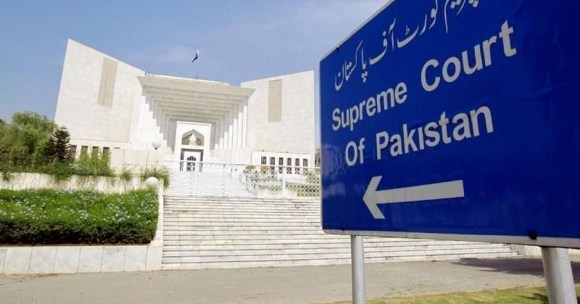
Supreme Court of Pakistan
(Reuters)

This article was first published at Christianity Today, on December 21.

Christians esteem the biblical progression of covenants—Abrahamic, Mosaic, Davidic—finalized by Jesus as he ushered in the New.

But for the sake of religious freedom in the Muslim world, should they embrace a further covenant: Muhammadian?

Recent scholarship suggests the potential promise, newly fulfilled in Pakistan.

After eight long years on death row, Asia Bibi was acquitted of blasphemy by the Muslim nation’s Supreme Court in late October. The Christian mother of five had been sentenced for uttering contempt for Muhammad, the prophet of Islam, while attempting to drink water from a well.

The three-judge panel ruled that contradictions in accuser testimony and Bibi’s forced confession by a local cleric rendered the charges invalid. But in the official court document, one justice went as far as to partially base his judgement on how Bibi’s accusers violated an ancient covenant of Muhammad to the Christian monks of Mount Sinai—“eternal and universal … not limited to [them] alone.”

“Blasphemy is a serious offense,” wrote judge Asif Khosa, “but the insult of the appellant’s religion … was also not short of being blasphemous.”

He referenced a 2013 book by John Morrow, a Canadian convert to Islam. The Covenants of the Prophet Muhammad with the Christians of the World is an academic study of six treaties commanding the kind treatment of Christians, reportedly dated to the seventh century.

Each similar in scope, they command Muslims not to attack peaceful Christian communities, to aid in the construction and repair of churches, and even to allow self-regulation of tax payments.

It is “nothing short of providential,” Morrow wrote, that they have been “rediscovered” at a time of widespread Islamist violence against the Christians of the Middle East.

“For Muslims, it means a wake-up call, an awareness that they have deviated from the Islamic tradition,” Morrow told Patheos, a popular religion and spirituality website.

“[It] requires that Muslims not only tolerate Christians, but love them as their brothers and sisters.”

This resonates with…

Please click here to read the full article at Christianity Today.

Categories
Christianity Today Middle East Published Articles

O Come, Ye Gazan Christians, to Bethlehem

Gaza Christians Bethlehem
Palestinian Christian couple from the Gaza Strip leaves through the Israeli Erez crossing, Thursday, Dec. 24, 2009 (photo credit: Tsafrir Abayov/Flash90)

This article was first published at Christianity Today, on December 20.

Bethlehem’s Church of the Nativity has restored its sparkling mosaics and marble columns to their original glory for the first time in 600 years.

“It has become such a beautiful church,” Ziad al-Bandak, head of the local project committee of Christian leaders, told the AP. “Every Christian in the world would love to see it now.”

Palestinian Mayor Anton Salman expects 1.2 million tourists will make their way to Christ’s birthplace this year. Among them, following an Israeli reversal, will be those who most long to visit for Christmas—the Christians of the Gaza Strip.

“In Gaza, they talk about the West Bank as if it is heaven,” said Hanna Maher, Egyptian pastor of the Gaza Baptist Church. “People love to go for Christmas; there are so many churches.”

In Gaza, there are three. According to the 2017 census, 47,000 Christians live in the Palestinian territories (1% of the population), but only about 1,000 live in Gaza.

Last week the Christian advocacy group Middle East Concern (MEC) reported that nearly all who applied to enter Israel to visit the West Bank for Christmas failed to receive permits, except for those older than 55.

Applicants younger than 16 were also approved, consistent with restrictions instituted last Christmas and maintained through Easter. A previous policy limited travel to those between ages 16 and 35.

The MEC report was confirmed by Maher, who stated that initially just 200 travel permits had been granted, and Christians, sharing stories of the delayed permit applications, began to assume those outside the age limit would not be allowed to travel.

But their prayers were answered this week…

Please click here to read the full story at Christianity Today.

Categories
Christianity Today Middle East Published Articles

Jesus’ Baptism Site is a Minefield to Navigate. Literally.

Israel Baptism Landmines
(Heidi Levine for The National)

This article was originally published at Christianity Today on December 19.

For fifty years, John baptized Jesus in private.

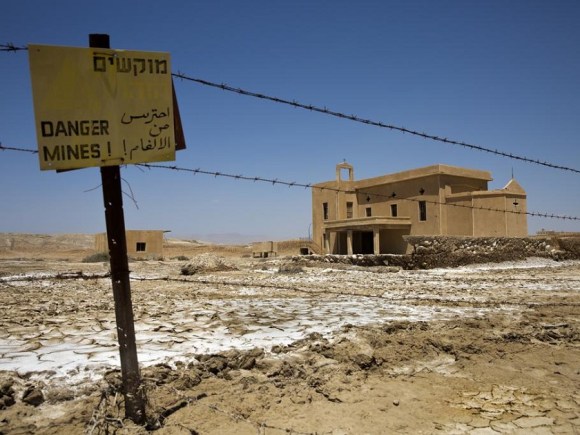
But last week on the western bank of the Jordan River, landmines were cleared to allow visitors a first look at a faded fresco of the baptism in a crumbling Ethiopian monastery.

Trudging through mud while avoiding well-marked areas warning of live charges remaining from the Six-Day War, intrepid pilgrims once again received iconic witness of the beloved Son.

“Israel placed the mines between 1967 and 1971 because there was a war,” Marcel Aviv, head of the Israel National Mine Action of Authority, a branch of the Defense Ministry, told the Times of Israel, standing a few hundred yards from Jordan.

“But now it’s empty because it’s a border of peace.”

Israel partially reopened the Qasr al-Yahud baptismal site in 2011. But visitors…

Please click here to read the full story at Christianity Today.

Categories
Christianity Today Middle East Published Articles

Egypt Approves 168 More Churches

Egypt New Churches
(via Religio Mag)

This article was published at Christianity Today on December 17.

Egyptian Christians now have an additional 168 legal church buildings.

On November 30, a cabinet committee approved the requests of Egypt’s Coptic Orthodox, Protestant, and Catholic churches to formally register facilities long functioning as centers of worship.

Prior to a new law passed in August 2016, churches faced an arduous task to secure recognition by the government. Local authorities could delay or deny paperwork, often on security grounds placating neighborhood Muslim refusal.

CT previously reported how this new law was not without controversy, but that it designed to streamline the process, allow judicial review, and transfer final approval from Egypt’s president to the local governor.

The law also established a committee to review church requests to license existing church facilities. Consisting of the prime minister, ministers of justice, housing, antiquities, and others, it officially convened in January 2017.

A total of 3,730 requests were submitted for approval, pending review of structural soundness and compliance with local regulations. The first batch of 53 church buildings was approved in February of this year.

According to the government statement, the current decree brings the total number of approvals to 508.

“I am pleased,” said Andrea Zaki, president of the Protestant Churches of Egypt. “The process has been slow in the beginning, but I think going forward it will be better.”

Zaki is optimistic…

Please click here to read the full article at Christianity Today.


Categories
Christianity Today Middle East Published Articles

The Cost of Religious Freedom

This article was originally published on September 20, 2018, and in the October issue of Christianity Today.

Turkey Iran Sanctions Advocacy
Image: Jonathan Bartlett, via CT.

This article expands my previous coverage of Andrew Brunson and the US-Turkish crisis to include also issues related to advocacy for Christians in Iran.

Why did advocacy succeed for the drug dealers but not the pastor? And what should be made of Youcef Nadarkhani, the Iranian house church leader released in 2013 after much international advocacy—only to be arrested and beaten this past July?

“Christians engaged in this part of the world always walk a knife edge regarding how to respond to unjust imprisonment,” said Mark Bradley, an author of three books on Iran and Christianity.

“Some prefer to remain under the radar. Others prefer to get as much support from politicians and journalists as possible. It is impossible to know which is more effective.”

Todd Nettleton, chief of media relations for Voice of the Martyrs, said some persecuted Christians hope for sanctions that will either push politicians to reform or the people to revolt.

But with the experience of working in 68 countries, he described others who believe a society unfettered by sanctions leads to openness to the gospel and a demand for rights and freedoms.

“In our work, we encounter Christians living in hostile and restricted nations who fall on both sides of this debate,” he said. “We stand with them regardless of the action or inaction of earthly governments.”

Please click here to read the full article at Christianity Today.


Categories
Americas Christianity Today Published Articles

Bearing False Witness

Eid and Taqiyya
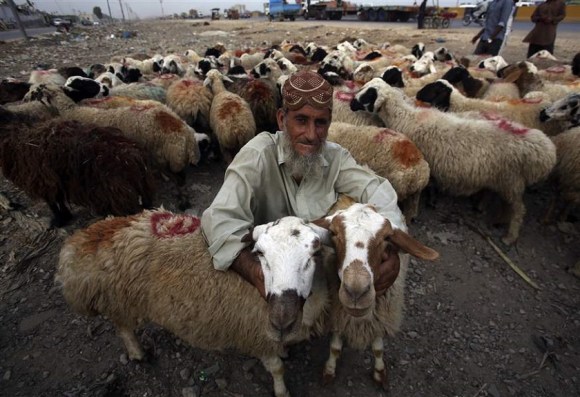
An Afghan refugee vendor waits for customers to sell his sheep at cattle market set up for the upcoming Muslim festival Eid al-Adha in Karachi, Pakistan, Thursday, Aug. 16, 2018. / AP

This excerpt was first published at Christianity Today on August 24.

So what if a Muslim invites you to a celebration? The lamb might be tasty, but should Christians be wary?

Statistics show they already are.

The 2018 American Muslim Poll from the Institute for Social Policy and Understanding (ISPU) found only 36 percent of white evangelicals believe Muslims are committed to the well-being of America.

And according to the Pew Research Center, 50 percent of self-identified white evangelicals believe there is a “great deal” or “fair amount” of support for extremism among Muslims living in America. This is often connected to a fear of Shari’ah law.

Yet according to the 2017l ISPU poll, only 10 percent said Shari’ah should play a legal role in their community.

Are the rest lying? Or are evangelicals predisposed to assume they are?

Taqiyya is an Arabic word that has come to mean “dissimulation,” said Martin Accad, chief academic officer of Arab Baptist Theological Seminary in Lebanon and associate professor of Islamic Studies at Fuller Theological Seminary. It is a contested allowance in Islam to conceal your true faith if under personal duress.

But in much anti-Muslim discourse, taqiyya has been redefined into a religious obligation for Muslims to lie to non-Muslims not simply for survival, Accad said, but to serve the expansionist agenda of their religious community.

Without knowing the term, the concept is creeping into Christian consciousness.

And Accad wants to nip it in the bud…

Please click here to read the full article at Christianity Today.

Categories
Christianity Today Middle East Published Articles

Will Trump’s Turkey Sanctions Help Andrew Brunson More Than They Hurt Turkish Christians?

This article excerpt was originally published at Christianity Today, on August 16.

Trump Erdogan Brunson
Photo Illustration by Sarah Rogers/The Daily Beast

… But some analysts say high-level pressure may do more harm than good, for both Brunson and Turkey (and Europe). And Americans who serve the gospel overseas often have dual sympathies, pained by the resultant suffering of the local citizens they serve.

“I would love to have US advocacy for my release,” said one American who previously worked in Turkey, “even though as a Christian I could stay [in jail] as long as I needed to.”

But wishing to stay anonymous so that he can return to Turkey, his reasoning is almost the reverse of expectations.

“Politically, being detained creates a negative image of Turkey in the US,” he said. “I would want to get out as quickly as possible to continue to advocate for that part of the world, helping them see the Turkey I love.”

And this Turkey is suffering, said a Turkish evangelical involved in ministry for over a decade, who also requested anonymity to discuss politics.

“Economic disaster!” he said of the currency devaluation. “Our people are already poor, but now the crisis deepens.”

Erdoğan has engaged President Trump’s rhetoric tit-for-tat, accusing him of an “evangelical, Zionist” mentality. But worries over Erdoğan’s economic policies and his control over Turkey’s central bank have resulted in a near 50-percent decline in the lira this year, as inflation has soared.

As Trump celebrated, Erdogan cried conspiracy.

And Turkey’s minorities unexpectedly asserted they were just fine.

“Statements alleging and/or alluding to oppression are completely untrue,” stated 18 Christian and Jewish leaders, headlined by Greek Orthodox Ecumenical Patriarch Bartholomew I of Constantinople. “Many grievances experienced in the past have been resolved.”

Many religious freedom analysts view the statement as evidence of the opposite: that minorities in Turkey are manipulated by the government in order to counter American claims of persecution. Many grievances continue.

And the above-mentioned Turkish ministry leader fears the worst.

“The response of the US is putting Turkish Christians in danger. People take it as a reason to attack us, and Christophobia is growing,” he said.

“Probably Brother Andrew will be released. But we’ll stay here and face all the effects after him…”

Please click here to read the full article at Christianity Today.

Categories
Africa Christianity Today Published Articles

Evangelical Ethiopian Helps End Orthodox Schism

Ethiopian Cross

This article was first published at Christianity Today, on August 14.

Ending 27 years of schism, Ethiopian Orthodox Christians in their homeland and in America reunited the two feuding branches of one of the world’s oldest churches.

Ironically, the push came from the Horn of Africa nation’s new evangelical prime minister.

“It is impossible to think of Ethiopia without taking note of the Ethiopian Orthodox Tewahedo Church, which is both great and sacred,” said Abiy Ahmed at the July 27 ceremony in Washington, reported the Fana state-run news agency.

A member of the World Council of Churches, the Tewahedo church split in 1991 due to political manipulations.

After the Ethiopian People’s Revolutionary Democratic Front (EPRDF) removed the Derg military junta from power, Patriarch Abune Merkorios was forced to abdicate.

He later fled to the United States, where dissidents and diaspora Ethiopians formed a rival patriarchate. According to church tradition, the position is held for life…

Please click here to read the full article at Christianity Today.

Categories
Christianity Today Middle East Published Articles

Under the Law: Israeli Christians Worry About Secondary Status in Jewish Nation-State

Israel Nation State
Judaism and Christianity symbols on the Jerusalem old city gate – MyHolyShop

This article was first published at Christianity Today, on July 31, 2018.

In a legislative act both obvious and inflammatory, this month Israel cemented its nature as a Jewish state.

By a narrow vote in the Knesset, Israel’s legislature, the law entitled “Basic Law: Israel as the Nation-State of the Jewish People” was adopted to serve alongside over a dozen other “basic laws” that serve as Israel’s de facto constitution.

A key clause states that national self-determination is “unique” to Jews. Other provisions formally establish the nation’s flag, emblem, and anthem. Jerusalem is confirmed as the complete and united capital. The Sabbath and Jewish festivals are declared official days of rest.

But two other clauses have raised considerable concern. Jewish settlement is a “national value” to be promoted. And Arabic is downgraded from an official language to one with “special status.”

“This law outlines that Israel’s democratic values are secondary for non-Jews,” said Shadia Qubti, a Palestinian evangelical living in Nazareth. “It sends a clear message that my language is not welcome and consequently, neither is my cultural and ethnic identity.”

Her fears are echoed by an Israeli lawyer.

“While the idea of the law is straightforward—it’s hard to argue that Israel isn’t a Jewish state—the actual provisions are controversial, discriminatory, and possibly racist,” said Jaime Cowen, former president of the Union of Messianic Jewish Congregations…

Please click here to read the full article at Christianity Today.

Categories
Christianity Today Middle East Published Articles

Mideast Christians See Russia–not the US–as Defender of their Faith


Russia Middle East Christians
Image: John Holcroft

This article was first published in the July print edition of Christianity Today.

War was swirling in Syria. Rebels were pressing. And Maan Bitar was the only hope for American help.

“Because I am evangelical, everyone thinks I have channels of communication,” said the pastor of the Presbyterian Church in Mhardeh. “Syrians believe the United States has the power to stop the conflict—if it wants to.”

In the early years of the civil war, Bitar’s Orthodox neighbors were desperate to convince the US and its allies to end support of rebel forces. Mhardeh, a Christian city 165 miles north of Damascus, was being shelled regularly from across the Orontes River.

But salvation came from a different source. Russian airpower turned the tide, and Syrian government-aligned troops drove the rebels from the area.

Russian intervention on behalf of Mideast Christians has pricked the conscience of many American evangelicals. Long conditioned to Cold War enmity, the question is entertained: Are they the good guys in the cradle of Christianity? Or are persecuted Christians just a handy excuse for political interests?

“The news tells us Russian troops are bringing peace to the region, said Vitaly Vlasenko, ambassador-at-large for the Russian Evangelical Alliance. “Maybe this is propaganda, but we don’t hear anything else.”

Please click here to read the full article at Christianity Today.

But here also is testimony from Egypt, unfortunately cut due to word count:

“If Russia helps anyone to save them from death and danger [in Syria], we welcome this,” said Boules Halim, spokesman for the Coptic Orthodox Church. “Not just for Christians, but for humanity.”

Halim had no comment on Russian political developments with Egypt. But despite technically not being in communion over disagreements with the fifth-century Chalcedonian Creed, relations with the Russian Orthodox Church are growing increasingly strong.

Pope Tawadros has met Putin. Theological students are being exchanged. Russian monks are touring Egyptian monasteries.

“We are coming together in dialogue,” Halim said. “Better communication leads to better understanding.”

Categories
Christianity Today Middle East Published Articles

What Jordan’s Evangelicals Think of Templeton Winner King Abdullah’s Interfaith Acclaim

This article was first published at Christianity Today on July 2, 2018.

King Abdullah
Photo by Pietro Naj-Oleari/© European Union 2015 – European Parliament/Creative Commons


For his lifelong commitment to religious peace, King Abdullah II of Jordan recently became the second Muslim ever to win the prestigious, $1.4 million Templeton Prize. And Jordan’s Christian minority is celebrating with him.

“I believe in our king,” said Imad Shehadeh, president of the Jordan Evangelical Theological Seminary, following Wednesday’s announcement. “He is a kind, wise, loving, humble, and effective leader.”

Established in 1973, the Templeton Prize is awarded for exceptional contribution to “affirming life’s spiritual dimension.” First given to Mother Teresa, previous winners range from Billy Graham to the Dalai Lama. More recently, Christian philosopher Alvin Plantinga and Jean Vanier of L’Arche have won the prize.

But this year, Abdullah was honored as a ruler who has done more promote inter-Islamic and interfaith harmony than any other living political leader, Templeton said.

Islam is the official religion of Jordan, and the constitution guarantees freedom of religion for minorities such as the roughly 2 percent of the population that’s Christian (mostly Greek Orthodox). The Protestant community joins them in commending their king’s efforts for religious unity, though some wish his commitment went even further…

Please click here to read the full article at Christianity Today.

Categories
Christianity Today Middle East Published Articles

Spanning the Great Schism between Evangelical and Orthodox Christians


Spanning the Great Schism
Image: Benedetto Cristofani / Salzmanart

This article was first published in the June print edition of Christianity Today.

Three brief excerpts in the efforts to unite evangelicals and Orthodox believers.

Four years ago in Istanbul, a humble Turkish book partially reversed the 11th century’s Great Schism. Catholics joined Eastern and Oriental Orthodox—alongside Protestants—to publish a slim, 12-chapter treatise on their common theological beliefs.

“You can’t find a page like this in all of church history,” said Sahak Mashalian, an Armenian Orthodox bishop and the principal scribe of Christianity: Basic Teachings. “It is akin to a miracle.”

If this is contemporary, here is history…

“The Copts largely resisted conversion,” Suriel wrote, “[but it] awakened in them a spirit of inquiry and an impulse to reform.”

Missionaries supplied Girgis [Orthodox founder of the Sunday School Movement] materials, and the Bible Society of Egypt gave him free or low-cost Bibles for his students, said Sinout Shenouda, the Orthodox vice-chair of its board. “The Americans initiated the idea, and the Orthodox came to imitate,” he said. “It was competition, but useful in that it profited from the missionaries rather than just attacking them.”

So what about the future?

Evangelical principles seep into traditional churches. Evangelicals do too—and the cross-pollination continues.

“I don’t think it is possible to overstate the influence of evangelical converts to Orthodoxy in terms of missions,” said Alex Goodwin, annual giving director for the Orthodox Christian Mission Center (OCMC). “It has been transformative for many of us who are ‘cradle Orthodox.’ ”

Please click here to read the full article at Christianity Today.


Categories
Christianity Today History Published Articles

How Sunday School Sparked Revival in Egypt’s Oldest Church


Habib Girgis
Habib Girgis, memorialized on the curtain separating the altar from the sanctuary of a Coptic Orthodox Church

This article was first published at Christianity Today on June 19, 2018.

My wife had just dropped off our kids at the local Coptic Orthodox Church we attend in Cairo and sat down with her Egyptian friend at the adjacent church-owned cafe. After initial pleasantries, she spoke of this current article I was then researching.

“Oh, do Americans have Sunday School also?” inquired the mother. “I never knew.”

My wife and I have lived in Egypt for nearly nine years and consider ourselves of evangelical faith. But we wish also to learn about ancient Christianity and, to the degree possible, worship within the Coptic Orthodox Church, which many Protestants here respectfully call “the mother church.”

We have been impressed by their biblical fluency. We have marveled at their forgiveness after martyrdom. But to entrust our own children to them?

We have been blown away by their care for the next generation. It takes two years of training to even teach a kindergartener.

It was not always so, and they have the Americans to thank—sort of.

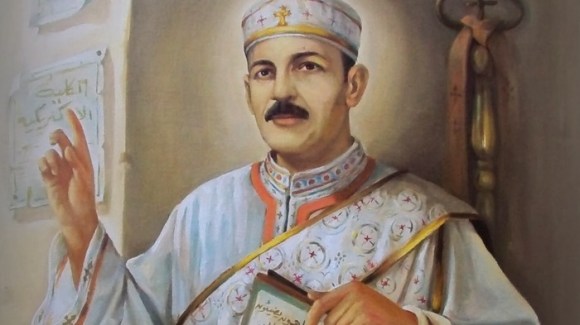
This article is about Habib Girgis, the recently canonized Coptic saint who doubled as a humble educator. This past month the Coptic Orthodox Church celebrated the 100th anniversary of what he set in motion: the Sunday School Movement.

Girgis lamented the situation of his time, when Western missionaries were making inroads among the Copts.

But then again, they left fallow their own fields:

“Is there among us anyone who is capable of responding to those who ask him about his religion and why he is a Christian?” Girgis asked in a student lecture four years later.

“I am sure that most of us do not have an answer, except to say that we were born from Christian parents and hence we are Christians.”

Please read the article to see how Girgis sparked the solution, but spark it he did. Today the Coptic Church is among the most devout in the world. Here is testimony from one of Girgis’ disciples, who carried forward his teacher’s reforms once he reached the highest levels of the church:

Looking backward eight decades, the beloved Pope Shenouda III, known as “the teacher of generations,” described the solution with primordial imagery.

“Our teacher … started his life in an age that was almost void of religious education and knowledge,” said the patriarch, who died in 2012.

“Then, God said, ‘Let there be light,’ and there was light. And the light was Habib Girgis.”

Please click here to read the full article at Christianity Today.

And if you are interested in an earlier post, excerpting a book review on Habib Girgis, please click here.

Habib Girgis Sunday School

Categories
Christianity Today Middle East Published Articles

Christ at the Checkpoint in the Age of Trump


ALcheckpoint3
Checkpoint between Israel and Palestine; credit: Andrew Larson

This article was first published May 25 at Christianity Today.

Fares Abraham grew up in the West Bank village of Beit Sahour, where tradition says the angels sang “Peace on Earth” to the startled shepherds. But his clearest memory is of his mother shot in the back by an Israeli soldier as she shuffled him and the neighborhood kids into her house during the first intifada.

Now in his mid-30s, the Liberty University graduate created Levant Ministries five years ago to mobilize Arab youth to fulfill the Great Commission.

And when he comes back home, he is at peace with his upbringing.

“When I was young, I asked myself if I should join the resistance or be a bystander,” he said to the 500 attendees—including 150 local Palestinian Christians—gathered in Bethlehem from 24 countries at the fourth biennial Christ at the Checkpoint (CATC) conference in 2016.

“But now I can go up to a checkpoint, look a soldier in the eye, and say, ‘I forgive you and love you in the name of Jesus.’”

Working also with global partners, Abraham believes the younger generations are pro-peace, becoming increasingly pro-justice the more their lives are transformed by the gospel.

It is a message communicated at CATC, though its anti-Christian Zionism is often criticized as anti-Israel…

Please click here to read the full article at Christianity Today. 

CATC audience
Audience at CATC opening in 2016; credit: Andrew Larson


Categories
Christianity Today Middle East Published Articles

In Shadow of Death, Palestinian Christians and Messianic Jews Relapse on Reconciling


Embassy Gaza
AP, via Japan Times

This article was first published at Christianity Today, on May 21.

Hanna Maher’s wife is nine months pregnant, due any day now, with only four hours of daily electricity. Her two older boys scurry about in the dark, kept ignorant by parents about the dead at the border.

But it is hard to be ignorant in Gaza.

A Norwegian charity estimates 56 percent of children in the Palestinian territory suffer from traumatic nightmares. Suicide, rarely seen culturally, is a growing concern. Maher, an Egyptian-born Baptist pastor, says some at the border see death as the best option.

Two million people are squeezed into a coastal strip roughly the size of Philadelphia. Exit is severely restricted on one side by Israel. The waiting list into Egypt is 40,000 names long.

Unemployment is over 40 percent. Clean drinking water is hard to come by. And on May 14, as tens of thousands massed near a chain link fence demonstrating for their “Right to Return,” Israeli snipers picked off dozens.

“Monday was a hard day. But at least it is quiet now,” Maher said. “It has been bad for years. But conditions now are the worst I have seen.”

Maher went to Gaza in 2011, and married his local Palestinian wife a year later. His congregation is the strip’s only evangelical church, with about 60 regular members. Overall, Gaza’s Christian population is about 1,000, mostly Greek Orthodox; in the last 10 years, it has declined by a third.

Maher provides food aid to about 120 families. His marriage preparation classes are a crash course in how to nurture a family amid poverty.

And he says local Christians are critical of just about everyone…

Please click here to read the full article at Christianity Today.

Categories
Africa Christianity Today Published Articles

Sectarian Cinema: Oscars Highlight Muslim Defense of Persecuted Christians

Watu Wote
(Image: Hamburg Media School)

This article was first published in the May print edition of Christianity Today.

Two years ago, the heroic actions of some Kenyan Muslims brought their majority-Christian nation together. The Oscar-nominated film depiction of that heroism may do so again—if many people watch.

Watu Wote is a fictional retelling of real-life horror. In December 2015, al-Shabaab terrorists stormed a bus headed toward the border with Somalia and demanded Christian passengers separate for targeted execution.

Muslim passengers responded, “If you want to kill us, then kill us. There are no Christians here.” The Christian women were given hijabs to wear, while the Christian men were hidden behind bags.

They knew the danger. One year earlier in a similar bus attack, Muslim militants killed 28 Christians who failed to correctly say the Islamic creed.

Filmed on location in Swahili and Somali, the 22-minute film was nominated for the Live Action Short Film category at the 90th Academy Awards.

“The film captures an issue close to Kenyan hearts, that apart from religious differences, we are all Kenyan,” said Timothy Ranji, bishop of the Anglican diocese of Mt. Kenya South. “The downside is that it will be watched by very few Kenyans…”

Please click here to read the full article at Christianity Today.


Categories
Christianity Today Middle East Published Articles

Is ISIS Really Muslim?

This article was first published in the March print edition of Christianity Today.

Is ISIS Really Muslim

For Egyptian Christians, 2017 was the deadliest modern year on record. At least 87 were killed by terrorists.

But despite being labeled by ISIS as its “favorite prey,” Copts were only 12 percent of such fatalities last year. Far more Muslims died in extremist violence at the hand of fellow believers.

Unless they aren’t believers at all.

If American Christians often don’t know how to understand Islam, they can take some comfort knowing that Egyptian Muslims struggle too.

A tragic case study occurred in December, when more than 300 people were killed at a Sinai mosque belonging to a Sufi order. Sufi Muslims are known for their mystical practices in search of spiritual communion with God. Many also seek intercession at the graves of Muslim saints.

In casual but solemn conversation at an upper-class organization in Cairo, one well-educated Egyptian woman reflected on the tragedy with colleagues. “Yes, but they are Sufis,” she said. “They’re not really Muslims.”

The woman was not making light of the massacre, nor justifying it. But she had internalized a message preached by another type of Muslim—Salafis—who judge Sufi practices to be outside the bounds of orthodox Islam. And when Salafis become jihadists, they may well kill Sufis as apostates.

In angry conversation with a middle-class taxi driver in Cairo, one typical Egyptian denounced ISIS for its crimes against both mosques and churches. “No, we can’t say that they aren’t Muslims,” he said. “Of course they are.”

What causes such confusion? Innocent victims, praying in a mosque, are placed outside of Islam while murderers, salivating at the entrance, remain in the faith?

At issue is a pernicious concept in the Muslim world called takfir in Arabic. It means the process of calling someone a kafir—an infidel…

Please click here to read the full article at Christianity Today.

Categories
Christianity Today Middle East Published Articles

Holy Sepulcher Will Reopen After Jerusalem Suspends Church Tax Grab

Immovable Ladder Holy Sepulcher

This article was originally published on February 27, at Christianity Today.

Israel suspended a controversial tax plan and property legislation today in response to the unprecedented Christian decision on Sunday to close the Church of the Holy Sepulchre in Jerusalem.

Prime Minister Benjamin Netanyahu and Jerusalem Mayor Nir Barkat agreed to form a government committee to “formulate a solution” and negotiate with church officials.

In response, the leaders of the Roman Catholic, Greek Orthodox, and Armenian clergy will reopen the church on Wednesday, reports the Associated Press.

Barkat had stated that Jerusalem’s churches owed more than $180 million in taxes on church-owned commercial properties, and the municipality had frozen church accounts.

Meanwhile, legislation advancing in the Knesset had threatened to complicate the churches’ ability to sell their properties.

Now suspended, these actions were contrary to the historic agreement between churches and the various civil authorities which ruled Jerusalem, said Bishop Sani Azar.

His Evangelical Lutheran Church in Jordan and the Holy Land closed its Church of the Redeemer for one day in solidarity, pending consultations with sister churches in Jerusalem.

“All the churches are united, so this shows something is very wrong,” said Salim Munayer, head of the Musalaha reconciliation ministry in Jerusalem.

“It is an unbelievable step, though Christians in the West have a hard time understanding.”

Please click here to read the full article at Christianity Today.