Categories
Americas Christianity Today Published Articles

When Islam is Not a Religion in America

Asma Uddin

This article was first published at Christianity Today on September 9.

Is Islam a religion?

This question is regularly posed by populists seeking to restrict Muslims in America. If Islam is not a religion—if it is a militant ideological system, for example—then some argue it is not subject to First Amendment protection.

At stake is the protection of religious liberty, writes lawyer Asma T. Uddin in When Islam Is Not a Religion: Inside America’s Fight for Religious Freedom. Her new book details recent legal cases involving Muslims, arguing that restrictions on one faith community affect the freedom of all.

Formerly a legal counsel with Becket, a leading religious liberty law firm, Uddin has worked with the US State Department to advocate against the former United Nations resolution on the defamation of religion, which was seen by many as an attempt at international cover for blasphemy laws. And through the Legal Training Institute, she has worked to extend the American understanding of religious liberty to several Middle Eastern, North African, and Southeast Asian countries.

Uddin, a Muslim of Pakistani descent, has worked on religious liberty cases at the federal and Supreme Court levels—including the Hobby Lobby and Hosanna-Tabor victories praised by conservative Christians—defending evangelicals, Catholics, Jews, Native Americans, and Muslims. Christianity Today, which recently editorialized on why religious freedom isn’t just for Christians, spoke with her on the sidelines of the recent US State Department Ministerial to Advance Religious Freedom.

CT: American evangelicals are often concerned that Christians have their religious liberty threatened around the world, often in Muslim-majority nations. The focus of your book is Muslim religious liberty, threatened in the United States. What sorts of challenges do Muslims face in America?

Uddin: I think it’s important to point out that the book doesn’t just look at attacks on Muslims. The book looks broadly at the attack on religious freedom, seen through the prism of attacks on Muslims. I discuss violence against churches, synagogues, and Sikh temples.

But in terms of threats to Muslim religious freedom specifically, I look at the nationwide anti-mosque controversy, which started in earnest after the so-called “Ground Zero mosque” fiasco. From there, it spread to Murfreesboro, Tennessee, which was the first community to be affected while attempting to build a mosque. That’s where the claim was made that Islam is not a religion.

To this day, there are ongoing struggles to build mosques. It’s not just litigation, but also arson and fire bombing. There is even a question about Muslim cemeteries, to the point where American Muslims are unable to bury their dead. That’s the challenge we’re facing to our human dignity…

Please click here to read the full interview at Christianity Today.

Categories
Christianity Today Middle East Published Articles

Why Muslims Love Mary

Muslim Mary
Annunciation, from Chronology of Ancient Nations by Al-Biruni, 1307.

This article was published in the July/August print edition of Christianity Today.

Mohammed, a pious PhD student from Egypt, sat guardedly in the “Community of Reconciliation.” Invited by David Vidmar, director of coaching for Peace Catalysts International, the middle-aged Muslim seemed soured on the idea of interfaith exchange at his northern California university.

Vidmar suspected Mohammed came to the jointly led Muslim-Christian dinners because he felt obligated to do da’wah, the Arabic word for spreading Islam. But over a shared meal and discussion about Mary, the Egyptian’s attitude shifted. “The deeper we got into the life of Mary and how Christians understand the virgin birth of Jesus, he became very enthused,” Vidmar said. “There are so many misunderstandings . . . it was wonderful to observe him see the similarities and be able to relax.”

Peace Catalysts is a Jesus-centered peacemaking effort, focused primarily on Christians and Muslims. Vidmar and his family worked for eight years with Uighurs in Kazakhstan and still wish Muslims would experience the love and forgiveness God reveals through Jesus. But now he works to help both sides experience heart transformation through deep and genuine friendship—and Mary proved a fruitful bridge.

“Since so many Muslims use the term ‘Jesus, Son of Mary,’ it would be helpful for evangelicals to think more deeply about this,” Vidmar said. “Muslims often excitedly tell me their favorite chapter in the Qur’an is Maryam, and women especially express appreciation for it.”

Mary is mentioned 34 times in the Qur’an—more than in the New Testament—and its only named woman. Islam upholds the virgin birth, the annunciation by Gabriel, and—mirroring the Ave Maria in Luke’s gospel—declares Mary to be “exalted above all women.”

Yet even Catholics have been slow to recognize the similarities…

Please click here to read the full article at Christianity Today.

Categories
Americas Christianity Today Published Articles

From DC to Mecca, Should ‘Human Dignity’ Be the New ‘Religious Freedom’?

Ministerial
Speakers address participants at a general session on Different Faiths Advancing Religious Freedom Together at the Ministerial to Advance Religious Freedom at the U.S. Department of State in Washington D.C. on July 17, 2019. [State Department photo / Public Domain]
This article was first published at Christianity Today, on July 22, 2019.

In his opening remarks at the second US Ministerial to Advance Religious Freedom, Secretary of State Mike Pompeo welcomed almost 1,000 participants from civil society and more than 100 invited foreign delegations. He challenged every major world religion and secular society—and also invited them in.

“We all agree that fighting so that each person is free to believe, free to assemble, and to teach the tenets of his or her own faith is not optional,” said Pompeo. “Indeed, it is a moral imperative that this be permitted.”

But do all actually agree? A change in human rights language might make the difference.

And could Saudi Arabia improbably become the next champion…?

Please click here to read the full article at Christianity Today.

Categories
Americas Christianity Today Published Articles

Should Christians Praise Partial Religious Freedom?

Partial Religious Freedom
Image: Illustration by Cornelia Li

This article was first published in the June print edition of Christianity Today.

…The tension over praising limited gains is also a factor in Uzbekistan, a Muslim-majority secular nation whose citizens have the right to convert but which the United States has designated a Country of Particular Concern (CPC) since 2006 over religious freedom violations.

At the US State Department’s inaugural Ministerial for Advancing Religious Freedom in July 2018, Uzbek leaders outlined how they were streamlining registration for religious groups and reviewing a law that restricted religion. Last December, the Central Asian nation was removed from the CPC list—only the second nation to ever come off—and put on a watch list instead. But it ranks No. 17 on Open Doors’ list of countries where it’s hardest to be Christian.

Chris Seiple, president emeritus of the Institute for Global Engagement, has worked behind the scenes for 20 years to promote religious freedom in the nation he did his dissertation on. He says activists should publish a list of nations showing the most progress, not just the greatest offenders.

Relational diplomacy involves public praise for small, tangible steps to build trust while communicating practical ways to improve in private, he said. There is a secret to engaging authoritarian contexts: create a rumor so that reality follows…

Please click here to read the full article at Christianity Today.

Categories
Christianity Today Middle East Published Articles

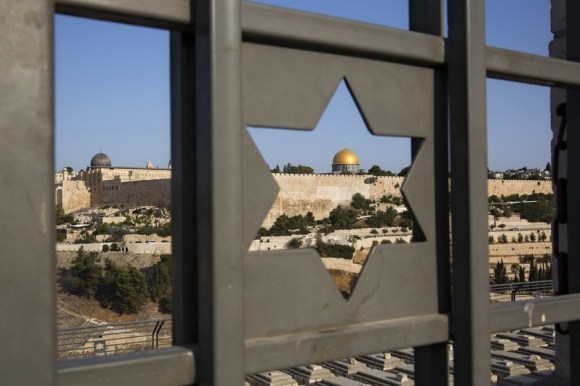
How Palestine Divides Messianic Jews

Messianic Jews
(Oded Balilty, AP)

This article was first published in the May print edition of Christianity Today.

Among Christians in America, Israel can be viewed as a fulfillment of prophecy, a democratic ally in a region of chaos, or an occupier oppressing stateless Palestinians. How to choose?

Given that 2 out of 3 US evangelicals have a positive perception of Israel, according to LifeWay Research, perhaps a better question is: How should evangelicals identify with the issues Israel faces?

Fortunately, there is a useful interpreter. “If the Christian community wants to understand Israel from a believing perspective,” said Jamie Cowen, an Israeli lawyer and a believer in Jesus, “going through Messianic Jews is best.”

However, the complexity of Israel divides even Messianic Jews in attitude toward Palestine, as illustrated by debate this year over an interview provocatively summarized as supporting ethnic cleansing.

“The only rights the Palestinians have are squatter’s rights,” Paul Liberman, executive director of the Alliance for Israel Advocacy (AIA), told The Intercept.

He described how the lobbying arm of the Messianic Jewish Alliance of America (MJAA) was pushing for a shift of US funding from UN–administered Palestinian aid ($364 million in 2017) to an Israeli-led effort offering money to relocate from the West Bank. The goal: eventual annexation of the territory in a one-state solution with fewer Palestinian citizens, maintaining Israel as a Jewish state.

First adopted by the MJAA in 2015, the idea reverberated within Messianic Jewish circles once TheIntercept highlighted efforts to harness evangelical influence in Congress and the White House.

“It is not a removal. It is an opportunity for a much better life,” said Joel Chernoff, CEO of the MJAA. “But the demographic issue is real.”

About 700,000 Jews and 1.5 million Arabs live in Judea and Samaria—the favored name in Israel for the West Bank. Chernoff desires more Jewish settlements there. And he believes many Palestinians already want to escape the territory’s corrupt Palestinian Authority. (A 2017 MJAA poll found half of residents were discussing a move abroad and were open to resettlement in exchange for about $5,000.)

The “ethnic cleansing” headline was a smear tactic by liberal and anti-Israel media, Chernoff said. The issue is not controversial among the MJAA’s 3,000 dues-paying members, 12,000 supporters, or 155 affiliated synagogues. But it is controversial to other Messianic Jews.

“There is not a consensus this is a good proposal,” said Monique Brumbach, executive director of the 75-member Union of Messianic Jewish Congregations (UMJC). “The Scriptures promised the land to the Jewish people. But there will always be other people within it.”

Nearly all Messianic Jews believe modern-day Israel is the fulfillment of biblical promises…

Please click here to read the full article at Christianity Today.

Categories
Christianity Today Middle East Published Articles

Cinema of God: Muslims Memorialize Augustine

Augustine
(from Augustine: Son of Her Tears)

This article was first published in the April print edition of Christianity Today.

The students at Wheaton College were surprised: Wait, Saint Augustine was African?

Shown the international award-winning Augustine: Son of Her Tears for a freshman seminar that reads his Confessions, they witnessed history brought to life beyond the text, said Sarah Miglio, dean of curriculum.

So did the Muslim actors who depicted the story of the Christian theologian. The cast and creators now want to remind the world—and especially their own people in North Africa—that the church father properly belongs to their heritage.

“The West is more acquainted with Augustine than we are in North Africa,” said Aicha Ben Ahmed, the Tunisian actress who played Monica, Augustine’s long-suffering mother. “We have a wine named after him here, and it is better known than the saint.”

The leading actor, Ahmed Amin Ben Saad, was similarly affected. “Saint Augustine is…

Please click here to read the full article at Christianity Today.
Categories
Asia Christianity Today Published Articles

Sri Lankan Sunday School Was ‘Willing to Die for Christ’ on Easter. Half Did.

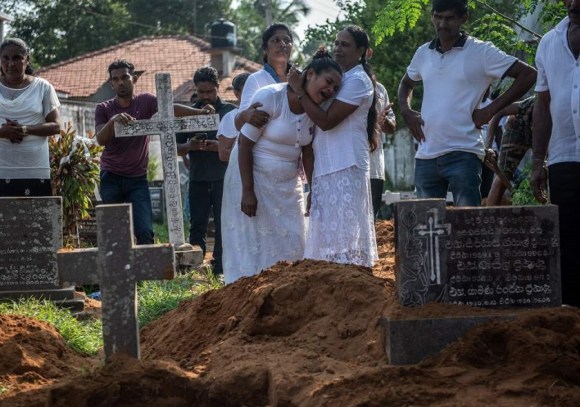
Sri Lanka Sunday School
(Getty, via the Independent)

This article was originally published at Christianity Today, on April 25, 2019.

In most Sunday schools, the question is an academic exercise.

“How many of you are willing to die for Christ?” asked the teacher on Easter morning. Every one of the children dutifully raised their hands.

A few minutes later, the Sri Lankan class descended to Zion Church’s main service, passing through an outside courtyard where a stranger was speaking with church leaders. He had discovered there was no Easter morning Mass at the nearby Catholic church in Batticaloa, and was wondering when the service would begin here. He asked about the healing service.

Observers report he was sweating profusely. A pastor invited him to take off his backpack. Then, an explosion—many inside thought it was the generator.

Half the children died on the spot.

“All the children had responded [to their teacher’s question] by putting their hands up, and signaled their fresh dedication to Jesus by lighting a symbolic candle,” recounts a seminary leader [full testimony in sidebar below]. “For so many of those children, it would be their final act of worship.”

In total, at least 26 worshipers—including 16 children—were killed and 100 injured at Zion, a charismatic congregation in the Fellowship of Free Churches in Sri Lanka. Two Catholic churches in and near Colombo on the island nation’s opposite coast were also attacked by suicide bombers that morning, along with three hotels. The death toll currently stands at 253, revised down from 359.

But this is not the only Christian tragedy.

Sri Lankan authorities have now arrested 76 local Muslim extremists and one Syrian, placing the blame on the National Thowheeth Jama’ath (NTJ) movement. ISIS has claimed responsibility, calling it revenge for the massacre at a New Zealand mosque last month.

In response, gangs of young Christian men are now marauding Muslim neighborhoods. People have been assaulted. Shops have been destroyed. Hundreds of Pakistani refugees—mostly Ahmadis, a persecuted minority themselves—have fled the area around St. Sebastian’s, the Catholic church in Negombo where more than 100 worshipers perished.

“How we process this new reality and respond will determine the character and the witness of the Church of Jesus Christ in Sri Lanka,” Ivor Poobalan, principal of evangelical Colombo Theological Seminary, told CT…

Please click here to read the full article at Christianity Today.
Categories
Americas Christianity Today Published Articles

Pew: US Christians Like the Israeli and Palestinian People More Than Their Governments

Pew Israel Palestine
(via Vox)

This article was originally published at Christianity Today, on April 24, 2019.

When it comes to the longstanding Israeli-Palestinian conflict, do American evangelicals favor one side or the other?

Research Center finds one-third actually feel favorable toward both—when it comes to their peoples. And one-third feel unfavorable toward both governments.

Politico Magazine recently profiled Telos, an evangelical group dedicated to changing the narrative on Israel. “Christian faith communities persistently advocate for one-sided postures towards the conflict,” states the group, whose name means purpose in Greek, on its website. “Our telos is the freedom, security, and dignity of every human being in the Holy Land.”

But the profile prompted a strong critique from Mark Tooley of the Institute on Religion and Democracy (IRD), who describes such “ambivalence” as actually harming both Israelis and Palestinians. Without solid evangelical support buttressing the US alliance with Israel, all sides will only entrench and deepen the conflict, he argues—making negotiation less likely.

“Impartiality and avoiding polemical stances are now de rigeur in much of nouveau Evangelicalism, so the Telos appeal has resonance,” he wrote on IRD’s blog. “Aren’t Christians supposed to be on everybody’s side?”

Pew’s new survey aimed to measure exactly that.

For decades, Pew has asked which side Americans sympathized with more: Israel or the Palestinians? But this year, researchers recognized a problem: this approach compared a country (Israel) with a people (Palestinians).

It was not apples-to-apples, nor did it allow for respondents to signal sympathy for both. So this year, they instead used separate questions asking about a favorable or unfavorable opinion toward the Israelis and the Palestinians as peoples, as well as toward their respective governments.

About 1 in 3 evangelical church attendees (34%) reported favorable opinions of both peoples.

However, the weight is still on the Israeli side…

Please click here to read the full article at Christianity Today.
Categories
Christianity Today Middle East Published Articles

Arab Spring Again? Christians in Sudan and Algeria Cheer Regime Change

Bashir Bouteflika

This article was originally published at Christianity Today, on April 18.

…early signs are promising. On April 10, one day before Bashir’s arrest, the Sudanese Professionals Association (SPA) leading protests put out a call for Christian participation, acknowledging “you have suffered sectarian and psychological restrictions for years … [which have left you] without the right to worship freely.”

Shortly thereafter the SPA declared “Christ is the heart of the revolution,” and cited “blessed are the peacemakers.”

On April 14, Sudanese Christians responded.

Leaders from the Evangelical Presbyterian, Baptist, and Church of Christ denominations in Sudan appeared at a sit-in at military headquarters, offering hymns sung by both Christians and Muslims.

“This is a time to move away from the trenches of religious and ethnic discrimination and head towards an inclusive and unifying Sudanese national identity for all of us,” said Rafaat Masaad, head of the Evangelical Synods in Sudan.

“We must make a covenant that we will not withdraw or accept anything less than a new Sudan ruled by humanity and citizenship.”

Sudan, however, is not the only version of Arab Spring, Part Two. The military in Algeria removed their aged president on April 2 following widespread protests that began in February. The wheel-chair bound 82-year-old President Abdelaziz Bouteflika was attempting to secure his fifth term in office.

Unlike Bashir, Bouteflika was a beloved figure. A popular politician in his youth, he fell out of favor but returned in 1999 to put an end to the decade-long civil war that began when the military nixed an Islamist election victory that eventually killed up to 200,000 people.

A secularist of sorts, Bouteflika was an autocrat who allowed limited Islamist space of action. An Algerian Muslim Brotherhood figure was among the tentative opposition candidates against Bouteflika’s fifth-term ambitions. But al-Qaeda called from the outside for protests to impose an Islamic state, declaring Bouteflika was a friend of Christians and Jews.

The World Christian Database counts Christians as only 0.3 percent of the population, while Open Doors ranks Algeria No. 22 in its watch list, though one year earlier it ranked No. 42.

The Algerian Protestant Church, consisting mainly of former Muslims, and known by its French acronym EPA, was registered officially in 2011. But in practice it faces many restrictions, with houses of worship liable to be shut down.

“Since the beginning of the year, all the churches have begun to pray and fast for the elections,” said an unidentified Algerian Open Doors source, knowing the results are “unpredictable” but aiming for better legal standing.

“We hope that the Lord intervenes in our country.”

But on March 22, with the protests fully engaged, the EPA put out an official statement.

“We Algerian Christians, as equal Algerian citizens, fully share the aspirations and the legitimate demands of the Algerian people in their peaceful fight for a modern and democratic Republic,” it declared, “where the fundamental rights of the citizen will be respected and protected, no matter what their political and religious convictions may be.”

Will they receive their wish? Will Sudan? …

Please click here to read the full article at Christianity Today, with links to the supporting publications.

Categories
Americas Christianity Today Published Articles

Will Trump’s ‘Deal of the Century’ on Israel-Palestine Please Evangelicals?

Trump Deal Century Israel Palestine Evangelical
Image: Illustration by Rick Szuecs / Source image: Senior Airman Delano Scott / JBA via CT

This article was first published at Christianity Today, on April 12, 2019.

When it comes to Israel, nearly all evangelicals hold dear the biblical maxim: Pray for the peace of Jerusalem.

But what does it mean after a fiercely contested election?

President Donald Trump will soon propose his vision of practical exegesis.

Two years in the making, Trump’s “Deal of the Century” is slated to be released soon, now that Israel has reelected Prime Minister Benjamin Netanyahu. His Likud party secured a virtual tie with challenger Benny Gantz’s Blue and White party, but Bibi’s right-wing coalition will push him over the top.

Neither leading candidate made the peace process with Palestinians a major plank of their campaign as the entire Israeli electorate has shifted to the right, emphasizing security over negotiation.

Other American presidents have tried and failed to advance official US policy of a two-state solution. But while Trump has brought a new energy—and unpredictability—to forge an elusive peace between Israelis and Palestinians, he may face two very skeptical partners.

Even so, Trump has shaken the system.

Last year in May, he moved the US embassy to Jerusalem.

In February, he stopped US funding to Palestinian aid programs.

Last month, he recognized Israeli sovereignty over the Golan Heights.

And more than any president prior, he has courted evangelical opinion. LifeWay Research shows that 67 percent of American adults with evangelical beliefs have positive perceptions toward Israel, with 80 percent believing Abraham’s covenant is for all time.

But while analysts have panned Trump’s decisions as decidedly one-sided against the Palestinians, he has dangled his own deal-making reputation as—at times—a warning to the Israelis.

“Israel will have to pay a higher price,” he said after ordering the embassy’s relocation, for the Palestinians “will get something very good, because it’s their turn next.”

What does Trump expect? And will it cost him his carefully cultivated evangelical support?

Details of his plan have not been publicly released, but in February US officials Jared Kushner and Jason Greenblatt toured Arab capitals seeking support.

A month later Greenblatt, Trump’s chief legal officer and special representative for international negotiations, checked in with US evangelicals in a special meeting at the White House.

Axios reported that several “raised concerns.”

CT surveyed 11 evangelical leaders—7 from the US and 4 from the Middle East—to take their pulse on expectations and gauge their red lines.

“Don’t divide Jerusalem, It would disappoint me if that was President Trump’s decision,” said…

Please click here to read the full article at Christianity Today.

Related: The attempt to bring Judeo-Christian politics to Israel

Categories
Christianity Today Middle East Published Articles

Judeo-Christian Politics… in Israel?

Judeo Christian Politics Israel
Image: Amir Levy / Stringer / Getty via CT

This article was first published at Christianity Today on April 11, 2019.

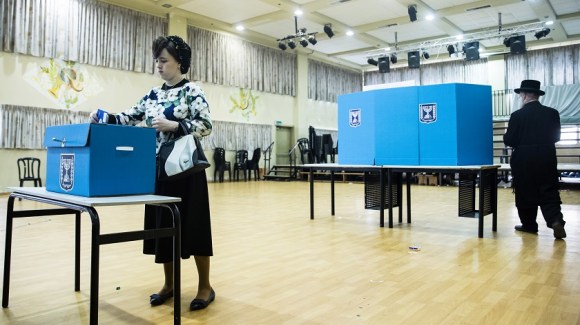
In one of the most tightly contested Israeli elections in years, Benjamin Netanyahu appears poised to remain prime minister.

His Likud party is projected to win 35 seats in the 120-member parliament, the Knesset, tied with challenger Benny Gantz’s Blue and White party; but coalition partners will likely boost the incumbent Bibi to a governing majority of 65.

But for Christians in Israel, could the most significant electoral development have come from a new party that won a total of zero seats?

“We are the only party to give Christian and Messianic candidates parity in the candidates’ list,” said Avi Lipkin, the Orthodox Jewish head of the Bible Bloc Party, known as Gush Hatankhi in Hebrew.

“For the first time in 2,000 years, Jews and Christians are … brethren and allies.”

In Israel’s proportional system, a party must claim at least 3.25 percent of the nearly 6.4 million eligible voters—so roughly 200,000 votes total—in order to enter parliament.

The Bible Bloc only won 367.

The significance lies in their getting started. As a new party, Lipkin explains they had limited time to build a base. To legalize a party, 100 members are needed. The Bible Bloc recruited 150: roughly half Jewish and half Christian, as reflected in their candidate list.

Heading the list was…

Please click here to read the full article at Christianity Today.

Categories
Americas Christianity Today Published Articles

US Catholics Now as Concerned About Persecution as Climate Change

Aid to the Church in Need Iraq
Decapitated statue of Our Lady in the destroyed St Addai’s Church, Karemles, northern Iraq, via ACN-UK.

This article was first published at Christianity Today, on March 22.

American Catholics are growing more concerned about the fate of the world—and with it, Christian persecution.

More than 9 in 10 now identify persecution as either “very” or “somewhat” severe. This is roughly the same percentage as an identical poll last year, both sponsored by the US branch of Catholic charity Aid to the Church in Need (ACN). But over the last 12 months, the share choosing the “very severe” category rose from 40 percent to 46 percent.

And their level of concern went with it, rising 9 percentage points. Last year, 49 percent of Catholics described themselves as “very concerned.” This year, 58 percent.

The poll surveys 1,000 American Catholics across the spectrums of age, politics, and piety, conducted by McLaughlin & Associates.

It showed that intense Catholic concern is growing on several global issues. Those “very concerned” about human trafficking rose from 72 percent to 82 percent. Poverty climbed from 68 percent to 74 percent. The refugee issue jumped from 50 percent to 60 percent. And climate change nudged forward from 55 percent to 57 percent.

So while those unconcerned about Christian persecution fell by half (from 18% to 9%), overall the “church in need” only ranked No. 4 among the list of issues.

But last year, it was…

Please click here to read the full article at Christianity Today.

Categories
Asia Christianity Today Published Articles

How Should Christians Respond to Christchurch Mosque Massacre?

Christchurch Mosque
Jorge Silva, REUTERS | A police officer is pictured outside Masjid Al Noor mosque in Christchurch, New Zealand, March 17, 2019

This article was first published at Christianity Today on March 18, 2019.

Last Friday, Muslim worshipers at two mosques in Christchurch, New Zealand, suffered a terrorist attack at the hands of an avowed white supremacist. 50 people were killed, with another 50 injured.

Prior to the attack, the citizen of Australia posted a lengthy manifesto to social media, filled with anti-immigrant and anti-Muslim themes. He then proceeded to livestream the shooting. Some victims originally hailed from Pakistan, Turkey, Saudi Arabia, Jordan, Bangladesh, Indonesia, and Malaysia.

Given recent attacks on Christians in their places of worship, including many in Muslim nations, CT invited evangelical leaders to weigh in: How should Christians respond to Christchurch?

Richard Shumack, director of the Arthur Jeffery Centre for the Study of Islam at Melbourne School of Theology, Australia:

The thing that came to mind immediately is Jesus’ beatitudes. How should Christians react to Christchurch? With mourning, a hunger for justice, and peacemaking. Christians must mourn with their Muslim brothers and sisters, thirst for the perpetrators of this heinous crime to be brought to justice, and put every possible effort into brokering peace in an age of furious tribalism.

I also embrace wholeheartedly the poignant wisdom of Dostoevsky quoted by the Anglican bishop of Wellington, New Zealand: At some ideas you stand perplexed, especially at the sight of human sins, uncertain whether to combat it by force or by humble love. Always decide, “I will combat it with humble love.” If you make up your mind about that once and for all, you can conquer the whole world. Loving humility is a terrible force; it is the strongest of all things and there is nothing like it.

Mark Durie, Anglican pastor from Melbourne, Australia, and author of books on Islam:

Alexander Solzhenitsyn observed…

Please click here to read the full article at Christianity Today.
Categories
Christianity Today Middle East Published Articles

Forty Years Later, House Churches Threaten Iran’s Islamic Revolution

Iran Report Christians House Churches
Azadi Tower in Tehran (image courtesy of Article18)

This article was originally published at Christianity Today, on February 14.

Hundreds of thousands of Iranians flooded streets nationwide on Monday, in celebration of the 40th anniversary of the Islamic Revolution.

Not present were dozens of Christians with no freedom of movement.

“For 40 years, the Iranian government has harbored an intolerant view towards Christianity,” said Mansour Borji, advocacy director at Article18, a Christian human rights organization focused on Iran.

“Administrations have changed and the methods have varied, but the objective remains the same: to restrict Christians’ influence on all spheres of Iranian life.”

An in-depth report on violations against Iranian Christians in 2018 was jointly released last month by Open Doors, Middle East Concern, Christian Solidarity Worldwide, and Article18. It was a first-time collaboration for the groups—in order to amplify their voice, Borji said.

The report stated that according to public records, 29 Christians were held in detention in 2018 for terms of 6 months to 10 years (if formally sentenced at all). Eight were released.

The report emphasized that many more detentions of Christians remained undocumented.

Article 18 of the International Covenant on Civil and Political Rights (ICCPR) guarantees the freedom of religion, including the right to adopt a faith of one’s choice and to publicly practice and teach it.

Iran ratified the ICCPR in 1975, prior to the 1979 revolution which ended 2,500 years of monarchy.

But Christians are not the only victims…

Please click here to read the full article at Christianity Today.

Categories
Christianity Today Middle East Published Articles

Francis of Arabia: Will UAE’s Warm Welcome Help Christians Feel More at Home?

Pope Francis UAE
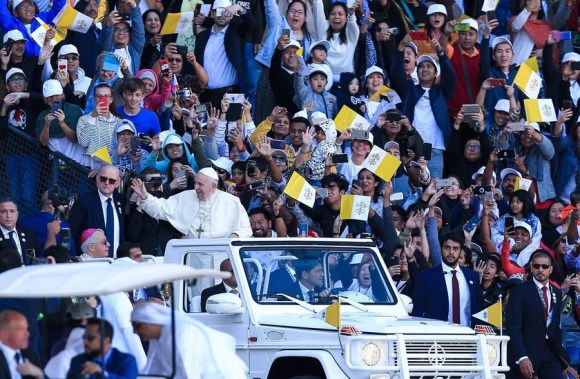
(Pope Francis arrives at the Zayed Sports City in Abu Dhabi for Mass. Victor Besa / The National)

This article was first published at Christianity Today, on Feb. 6, 2019.

Pope Francis must love creating cognitive dissonance.

This week, he became the first Catholic pontiff to ever visit the Arabian Peninsula, the heart of Islam, where conversion to Christianity is illegal. Francis lauded his hosts in the United Arab Emirates (UAE), saying they “strive to be a model for coexistence.”

The Gulf nation’s crown prince received him with a 21-gun salute. Francis then railed against the “miserable crudeness” of war.

Human rights groups pressed him to address migrant worker issues. Francis rejoiced in “a diversity that the Holy Spirit loves and wants to harmonize ever more, in order to make a symphony.”

The mere existence of a Christian community to visit in the Gulf states may surprise many. In 2015, CT visited the Emirates and reported on its “thriving” church, populated by more than a million Christians—primarily economic migrants from Asian nations such as Indonesia and the Philippines.

The Pew Research Center counts them as 13 percent of the population. They worship in over 40 churches, served by over 700 Christian ministries.

And in a region where the Vatican cited a decline of Christians from 20 percent to 4 percent of the Middle East population in the last 100 years, the Emirati government provided a day off and 1,000 buses to bring Catholics to mass.

Attendance reached 135,000, billed as the largest Christian gathering ever held in the Arabian Peninsula.

If the pope does enjoy sparking controversy, he succeeded also among local evangelical leaders…

Please click here to read the full article at Christianity Today.

Categories
Americas Christianity Today Published Articles

Should Christians Quote Muhammad?

This article was first published in the January print edition of Christianity Today.

Christians Quote Muhammad

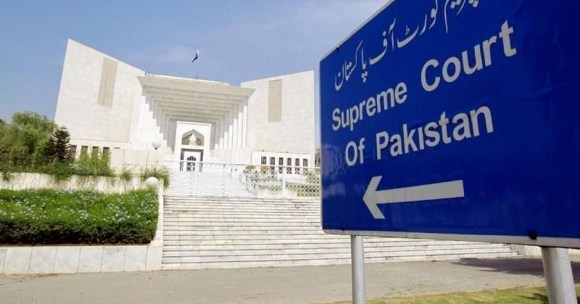
Christians breathed a sigh of relief last October when Pakistan’s Supreme Court acquitted Asia Bibi, a Christian mother of five on death row, of blasphemy charges against Islam. What many might not have noticed was the Islamic rationale.

Whether or not she spoke against Muhammad, Bibi was insulted first as a Christian, wrote the judge. And on this, the Qur‘an is clear: Do not insult those that invoke other than Allah, lest they insult Allah in enmity without knowledge.

The verdict also quoted Islam’s prophet himself: “Whoever is cruel and hard on a non-Muslim minority, or curtails their rights … I will complain against the person on the Day of Judgment.”

And finally, it referenced an ancient treaty that Muhammad signed with the monks of Mount Sinai: “Christians are my citizens, and by God, I hold out against anything that displeases them.… No one of the Muslims is to disobey this covenant till the Last Day.”

Today it can seem like Muslims violate this covenant the world over. But does the Bibi decision validate those who insist that Islam rightly practiced is a religion of peace? And should Christians join Muslims to share verses that comprise the Islamic case for religious freedom?

CT surveyed more than a dozen evangelical experts engaged with Muslims or scholarship on Islam who reflected on three key questions when considering interpretations of Islam that favor religious freedom.

[These questions are: Is it true? Is it helpful? Is it enough?]

Please click here to read the full article at Christianity Today.

Also: click here to read my related Christianity Today article about The Covenants of the Prophet Muhammad with the Christians of the World, the book which describes the Sinai treaty mentioned above, and others.

Finally, here is a sidebar from the Should Christians Quote Muhammad article, identifying sources in the Islamic tradition on which the evangelical scholars reflected.

Quranic verses regarding Christians:

• Q5:82 – You will find the nearest of them in affection to the believers those who say, “We are Christians.” That is because among them are priests and monks and because they are not arrogant.

• Q2:62 – Indeed, those who believed and those who were Jews or Christians or Sabeans those who believed in Allah and the Last Day and did righteousness—will have their reward with their Lord, and no fear will there be concerning them, nor will they grieve.

• Q22:40 – And were it not that Allah checks the people, some by means of others, there would have been demolished monasteries, churches, synagogues, and mosques in which the name of Allah is much mentioned.

• Q29:46 – And do not argue with the People of the Scripture except in a way that is best.

• Q2:256 – There shall be no compulsion in religion. The right course has become clear from the wrong.

Texts used in Supreme Court of Pakistan acquittal of Asia Bibi:

• Christians are my citizens, and by God, I hold out against anything that displeases them. No compulsion is to be on them … The Muslims are to fight for them … Their churches are to be respected. No one of the Muslims is to disobey this covenant till the Last Day (Covenant with the Monks of Mount Sinai)

• “Beware! Whoever is cruel and hard on a non-Muslim minority, or curtails their rights, or burdens them with more than they can bear, or takes anything from them against their free will; I [Prophet Muhammad] will complain against the person on the Day of Judgment.” (Abu Dawud)

• Q6:108 – “And do not insult those they invoke other than Allah, lest they insult Allah in enmity without knowledge. Thus We have made pleasing to every community their deeds. Then to their Lord is their return, and He will inform them about what they used to do.”


Categories
Christianity Today Europe Published Articles

From Russia, Without Love: Ukraine Marks Orthodox Christmas with Biggest Schism Since 1054

ukraine russia tomos autocephaly
(Via UNIAN)

This article was first published at Christianity Today, on January 6, 2019.

The Orthodox Church of Ukraine has been born again.

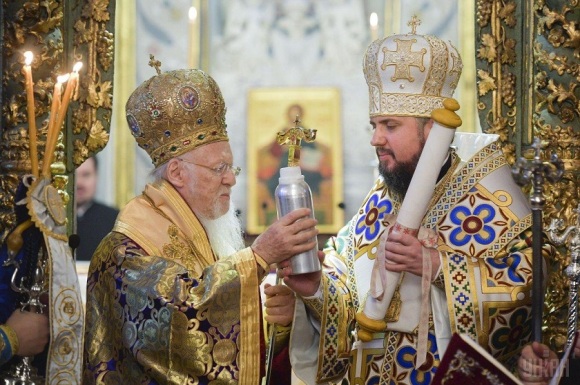
On January 6, it received the tomos of autocephaly—the documentation of its independence among Eastern church bodies—from one Orthodox heavyweight, the Patriarch of Constantinople, despite the vociferous opposition of another heavyweight, the Patriarch of Moscow.

To understand the significance of the biggest Christian schism since the Protestant Reformation, unfolding since last fall and formalized this weekend as Eastern churches celebrated Christmas Eve, a brief history is in order.

Founded in Kiev in 988 A.D., Vladimir the Great accepted Christianity on behalf of the Rus peoples, who would eventually constitute the nations of Russia, Belorussia, and Ukraine.

Tradition holds that the formerly pagan Vladimir wished to give a religion to his realm, and queried representatives of Judaism, Islam, and the different rites of Christianity.

Astounded by the majesty of the Byzantine mass, Vladimir chose Constantinople. In 1054, the Great Schism split Christianity—and the Rus remained in the Eastern Orthodox world.

Geopolitical winds shifted, however, and in 1686 the Patriarch of Constantinople—considered within Orthodox leadership to be the first among equals—placed the patriarchate of Kiev under the ascendant patriarchal church of Moscow.

In the modern era, geopolitical and religious winds continued to blow…

Please click here to read the full article at Christianity Today.
Categories
Asia Christianity Today Published Articles

Covenantal Theology: Can Muhammad’s Ancient Promise Inspire Muslim-Christian Peace Today?

Supreme Court of Pakistan
(Reuters)

This article was first published at Christianity Today, on December 21.

Christians esteem the biblical progression of covenants—Abrahamic, Mosaic, Davidic—finalized by Jesus as he ushered in the New.

But for the sake of religious freedom in the Muslim world, should they embrace a further covenant: Muhammadian?

Recent scholarship suggests the potential promise, newly fulfilled in Pakistan.

After eight long years on death row, Asia Bibi was acquitted of blasphemy by the Muslim nation’s Supreme Court in late October. The Christian mother of five had been sentenced for uttering contempt for Muhammad, the prophet of Islam, while attempting to drink water from a well.

The three-judge panel ruled that contradictions in accuser testimony and Bibi’s forced confession by a local cleric rendered the charges invalid. But in the official court document, one justice went as far as to partially base his judgement on how Bibi’s accusers violated an ancient covenant of Muhammad to the Christian monks of Mount Sinai—“eternal and universal … not limited to [them] alone.”

“Blasphemy is a serious offense,” wrote judge Asif Khosa, “but the insult of the appellant’s religion … was also not short of being blasphemous.”

He referenced a 2013 book by John Morrow, a Canadian convert to Islam. The Covenants of the Prophet Muhammad with the Christians of the World is an academic study of six treaties commanding the kind treatment of Christians, reportedly dated to the seventh century.

Each similar in scope, they command Muslims not to attack peaceful Christian communities, to aid in the construction and repair of churches, and even to allow self-regulation of tax payments.

It is “nothing short of providential,” Morrow wrote, that they have been “rediscovered” at a time of widespread Islamist violence against the Christians of the Middle East.

“For Muslims, it means a wake-up call, an awareness that they have deviated from the Islamic tradition,” Morrow told Patheos, a popular religion and spirituality website.

“[It] requires that Muslims not only tolerate Christians, but love them as their brothers and sisters.”

This resonates with…

Please click here to read the full article at Christianity Today.

Categories
Christianity Today Middle East Published Articles

O Come, Ye Gazan Christians, to Bethlehem

Gaza Christians Bethlehem
Palestinian Christian couple from the Gaza Strip leaves through the Israeli Erez crossing, Thursday, Dec. 24, 2009 (photo credit: Tsafrir Abayov/Flash90)

This article was first published at Christianity Today, on December 20.

Bethlehem’s Church of the Nativity has restored its sparkling mosaics and marble columns to their original glory for the first time in 600 years.

“It has become such a beautiful church,” Ziad al-Bandak, head of the local project committee of Christian leaders, told the AP. “Every Christian in the world would love to see it now.”

Palestinian Mayor Anton Salman expects 1.2 million tourists will make their way to Christ’s birthplace this year. Among them, following an Israeli reversal, will be those who most long to visit for Christmas—the Christians of the Gaza Strip.

“In Gaza, they talk about the West Bank as if it is heaven,” said Hanna Maher, Egyptian pastor of the Gaza Baptist Church. “People love to go for Christmas; there are so many churches.”

In Gaza, there are three. According to the 2017 census, 47,000 Christians live in the Palestinian territories (1% of the population), but only about 1,000 live in Gaza.

Last week the Christian advocacy group Middle East Concern (MEC) reported that nearly all who applied to enter Israel to visit the West Bank for Christmas failed to receive permits, except for those older than 55.

Applicants younger than 16 were also approved, consistent with restrictions instituted last Christmas and maintained through Easter. A previous policy limited travel to those between ages 16 and 35.

The MEC report was confirmed by Maher, who stated that initially just 200 travel permits had been granted, and Christians, sharing stories of the delayed permit applications, began to assume those outside the age limit would not be allowed to travel.

But their prayers were answered this week…

Please click here to read the full story at Christianity Today.
Categories
Christianity Today Middle East Published Articles

Jesus’ Baptism Site is a Minefield to Navigate. Literally.

Israel Baptism Landmines
(Heidi Levine for The National)

This article was originally published at Christianity Today on December 19.

For fifty years, John baptized Jesus in private.

But last week on the western bank of the Jordan River, landmines were cleared to allow visitors a first look at a faded fresco of the baptism in a crumbling Ethiopian monastery.

Trudging through mud while avoiding well-marked areas warning of live charges remaining from the Six-Day War, intrepid pilgrims once again received iconic witness of the beloved Son.

“Israel placed the mines between 1967 and 1971 because there was a war,” Marcel Aviv, head of the Israel National Mine Action of Authority, a branch of the Defense Ministry, told the Times of Israel, standing a few hundred yards from Jordan.

“But now it’s empty because it’s a border of peace.”

Israel partially reopened the Qasr al-Yahud baptismal site in 2011. But visitors…

Please click here to read the full story at Christianity Today.