Categories
Personal

The Importance of ‘Nizam’

US Constitution

This quote is taken from an Iranian, but I think the sentiment — and language — would be the same for many Arabs:

On July 4, Mahmoud Esmaeili, a 33-year-old software engineer, became an American citizen. Here’s why: “I like the system here. I like the rule of law. You know what to expect and what to not expect, so you can plan. That was the major part of why I wanted to be part of America.” — from the Washington Post.

In Arabic the word for ‘system’ is ‘nizam’. On one level it refers to the governing apparatus, as heard during the Arab revolts, “al-shaab yurid isqat al-nizam,” or “the people want the downfall of the regime.” Mubarak had his nizam, so did Morsi, and now Sisi bears the weight of the term.

But the term implies more. It is the way society operates. On this level Mubarak, Morsi, and Sisi are much the same. Regardless of their political orientation, most people I meet complain equally about the Egyptian nizam.

And they are equally jealous of the American nizam.

The Post article relates a fascinating survey that shows 93% of Americans believe that respecting American institutions and laws are very important to being American.

Read the article to discover other criteria that polled high or low, but take a minute to be thankful for the American nizam — regardless of who hold office.

And take a moment of reflection also about the foolishness of certain political trends that seek to undermine it.

We must jealously guard our constitution, laws, separation of powers, electoral system, and essential rights. The human tendency to power must be tamed by a social contract that agrees to play by the rules.

This contract, says the survey, suggests Americans are far more united than commonly thought. Both parties would do well to better esteem this consensus.

One Iranian, I trust, would heartily agree.

Can any Farsi speakers verify if ‘nizam’ would have been his word of choice?

Categories
Personal

Ramadan Diversity

Ramadan Diversity
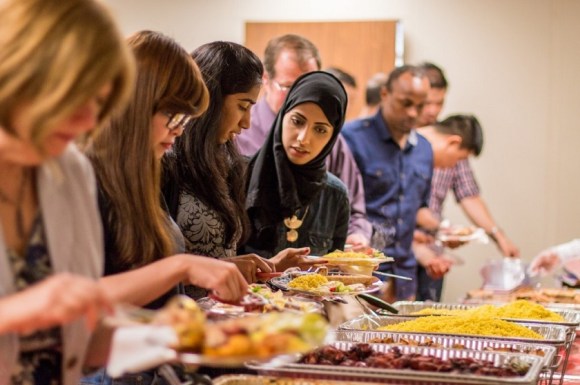
(via http://blogs.viu.edu/2015/08/viu-launches-new-diversity-luncheon-series-with-ramadan-festival/)

Today is the end of Ramadan, the month of fasting.

In order to help our Western friends understand this month, here are a few stories that reveal a wide scope of Ramadan diversity.

It may be surprising to some that in Egypt, many churches host iftar, the fast-breaking meal at sunset. I attended two, which I reported on for Christianity Today. It can be a great way to honor Muslims for their commitment, and to build bridges between the two communities.

Inspired by the practice, we looked to imitate.

Our daughter invited her school friends and mothers, which included a Christian family. She even encouraged us not to eat or drink – from noon until 7pm – to share the experience.

But this experience did not include any men, so I was banished to the back room. One of the mothers is more traditional and the company of women put all at ease.

Fortunately, they sent back some food.

On another occasion we went to a friend’s home to break fast with them. Our younger daughter asked if one of the ladies of the house was a Christian, as she didn’t cover her hair.

Needless to say, this group was comfortably mixed in gender.

We were not fasting with them on this occasion, and decided first to stop by the new mall opened in their neighborhood – which even has an indoor ski park!

The mall was pretty empty, as most people were at work or looking to get home on time to eat again. But Baskin Robbins was open and even offered their free samples. We all indulged.

As parents we were careful not to eat or drink in public throughout the day, but made an exception for the ice cream. When we got back to the car, our thermoses emptied.

Similar was an interview I did with a Muslim friend downtown. The temperature was 109 degrees, and to make my way there I walked to the metro, rode in the crowded un-air-conditioned car, then after a short walk outside stuffed myself into a microbus.

All the while there was a water bottle in my bag, unable to surface.

Yet when I arrived, my friend kindly offered me a cup of water.

What to do? Muslims know Christians are not fasting, and are generally not offended if a friend eats quietly in front of them. His was a kind gesture on a hot day.

But in Egypt Christians generally choose not to eat or drink in front of them from respect.

I can’t say if this was the right decision or not. But I took the cup, thanked him for his consideration, and placed it down on the table.

I assured him I would be willing to drink it later, but never did.

It was a long trek back home as well, but hopeful a genuine sentiment was communicated.

Later in the month, however, we invited another Muslim friend to break fast at our home. He was without his family for a while, so he could share with us.

But he is a non-practicing Muslim, and preferred to eat at our normal dinnertime of 6pm, an hour before sunset.

There is a good bit of diversity in Ramadan, but it doesn’t end there.

Unrelated to the month we invited a Christian family to join us for a meal. But surprised we were when they left half their plate untouched.

We failed to realize the Christian ‘Fast of the Apostles’ overlapped with Ramadan this year. Coptic Christians abstain from meat during their fasts, which last several days – like Lent – not just from sunrise to sunset.

If they are faithful, Coptic Christians can be fasting over half the year.

Unlike us, the local sweet shop is quite accustomed to Coptic fasts and always has a ready stash of Christian-fast-appropriate treats available.

Perhaps from habit in filling our order when we visit Christian families, the shopkeeper naturally doled out from that supply.

We didn’t realize it until he was done, but said no matter. We were off to visit Muslim friends but judged they taste similar enough.

Given the spirit of the season, we don’t think our friends minded – if they even noticed.

You may have an image in your mind of Muslims. There may be an associated thought about Ramadan. Most likely it is true, at least partially.

But realize there is much diversity in the Muslim world, and each deserves our understanding and honor.

Among some this is difficult (think of terrorists). Among others it is easy (think of our friends).

I suppose like humanity in general, most are in-between.

But however difficult to imagine, it becomes easier when you actually know them.

And like humanity in general, it can become more difficult when you actually know them well.

We all have warts. But we are all also made in the image of God.

Do your best to discover both among Muslims, as you can.

And congratulations to all our Muslim friends; enjoy your feast.


Categories
Personal

Where Credit is Due

fath-bridge

Two years ago I wrote about Egypt and her struggle to return to normal. Protests were still being waged on the streets, as terrorism assaulted the post-Morsi regime.

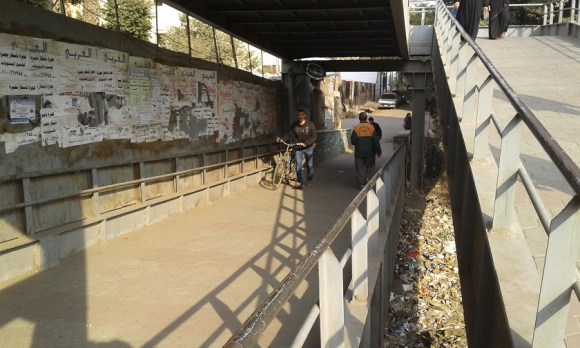
But that article featured also the mundane. A foot bridge was repaired by local authorities in the Maadi neighborhood of Cairo, but for a long time left uncompleted.

Pedestrians could cross, and it was quite fun to slide down-slope on the dust that gathered on the ironwork base.

But it didn’t feel fully safe, and crass revolutionary graffiti covered the walls.

I’m not sure when exactly it was made right, but crossing the other day reminded me of my earlier criticism. It is now in quite good shape, tiled, relatively clean, secure.

It is covered in crass advertising, but still.

I do miss the sliding, especially if my children are with me. But the bridge is a great improvement over what was.

In the two years that passed Egypt has basically put an end to the demonstrations. But terrorism is still present, and now the economy has taken a downturn. Life is not yet back to normal.

But the bridge is. So are many other minor but essential aspects of life. Stoplights have been installed, and they are generally working.

So as you survey the news from around the world and wonder how everything falls apart, please remember that it also gets put back together. So often this is left unreported, but it is the reality for ordinary millions.

Not that life is necessarily great, nor up to our comparatively wealthy standards in America. But life goes on, life is good, and people make it work.

Credit, where credit is due.

Categories
Personal

Coptic Martyrs of Cairo, Remembered in New Jersey

coptic-martyrs-in-new-jersey

Forty days later, the pain of terrorism in Egypt resonates as far as New Jersey.

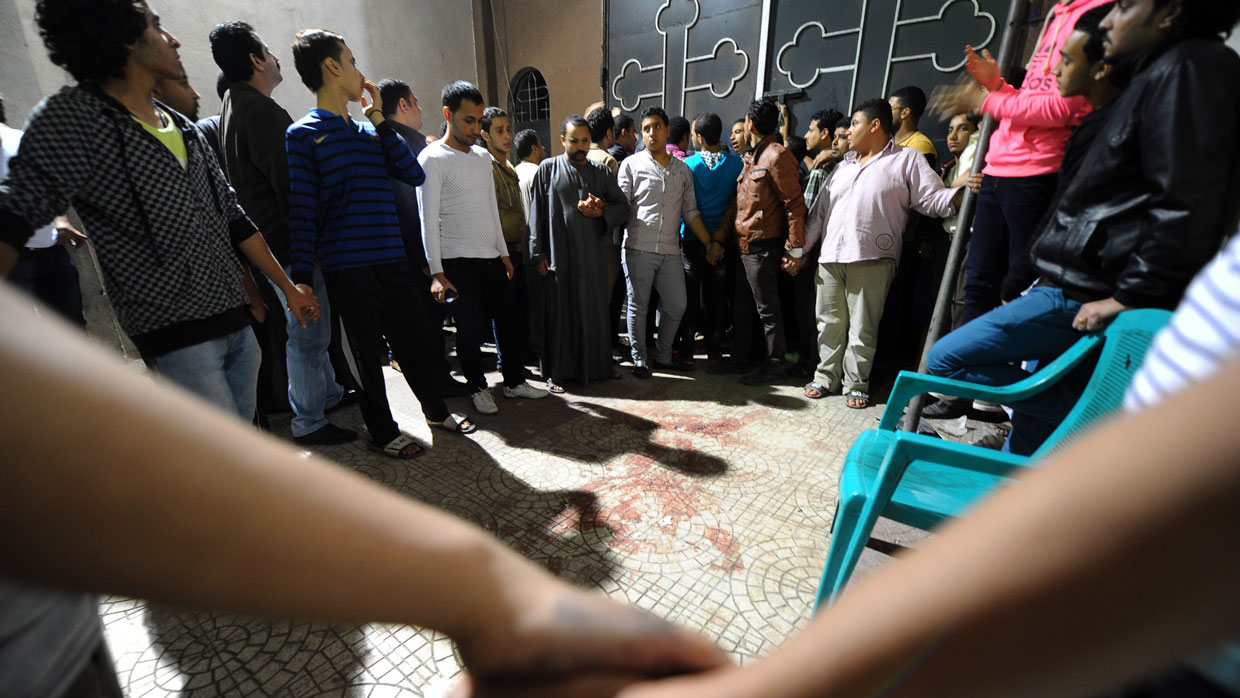
On December 11, 2016 the Coptic community of Egypt was shaken by a suicide bomber, killing 28 worshippers in the St. Peter and St. Paul Church adjacent the Coptic Cathedral.

“Deliverance from our enemies comes only from God,” said Archbishop Karas, patriarchal exarch for North America in the Coptic Orthodox Church.

“But this is not new, martyrdom is part of living our lives in Christ.”

Archbishop Karas was one of many religious and political dignitaries present during a commemoration service at the St. Mina Coptic Orthodox Church in Holmdel, NJ. Copts sometimes jest that their diaspora in New Jersey is the ‘Shubra’ of the United States, referring to the mixed but heavily populated Coptic neighborhood in Cairo.

Approximately 1000 visitors gathered on January 13 to honor the martyrs who lost their lives, fitting with the traditional Egyptian custom of mourning the deceased on the fortieth day after their passing.

This corresponds to January 20, but host Fr. Michael Sorial explained the service was moved forward to avoid scheduling on the presidential inauguration.

Fr. Sorial offered thanks to Egyptian president Abdel Fattah al-Sisi for his response to the tragedy. Immediately he promised to restore the Cairo church to its original condition in time for Coptic Christmas on January 7, and honored the victims with a state funeral.

The work completed, Sisi visited Coptic Orthodox Pope Tawadros II for Christmas mass in the Coptic Cathedral for the third year running. He is the first Egyptian president ever to do so.

Fr. Sorial also hosted a number of New Jersey political figures, among them longtime friend of the Coptic community Sen. Robert Menendez (D-NJ).

“We look up to God, for only faith can truly comfort us at a time like this,” said Menendez. “And in each other we find the strength to move forward.

“As long as I have a vote and a voice in the US Senate, I will be a bold advocate for tolerance and acceptance, for freedom of religion, peace, and security – both here at home and around the world.”

Menendez was joined by fellow senator Cory Booker (D-NJ), who offered his condolences in a recorded video.

“I am grateful the Coptic community lives those values of joy, of peace, of mercy, of compassion,” said Booker. “You evidence the values that are needed now more than ever to combat that kind of violence.”

Rep. Chris Smith (R-NJ-4) dispatched an official letter.

“My prayer is that following this darkness and evil, the light of the Christian community in Egypt will burn brighter than ever before,” he wrote.

“I commit to you to work toward a more secure future for Christians in Egypt and in the region.”

Also joining the commemoration was Ambassador Ahmed Farouk of the Egyptian General Consulate in New York.

“In Egypt, that fact is that we are all Copts—whether we are Muslims or Christians,” said Farouk. “The 28 martyrs are in a better place than all of us, for sure.

“The only big loser is terrorism, and it will keep losing as long as we stand united.”

In his keynote address, Archbishop Karas reminded the audience that these martyrs cannot be remembered without also remembering other Christian and non-Christian victims of terrorism around the world.

But he impressed upon those in attendance that such witness is not only for those who are killed. It is meant also for the living.

“For most of us, martyrdom means we die to ourselves, and give our lives completely to God,” he said. “We honor Jesus Christ and the sacrifice of the 28 martyrs by taking up our cross, to follow our Lord.”

For complete video of the memorial service, please click here or watch below.

https://www.youtube.com/watch?v=0UHsLO9lNqE&feature=youtu.be

Categories
Personal

Mothers and Daughters, Mothers and Sons

victims-cairo-cathedral
(via Egyptians Streets)

A reflection from Julie:

Today marks a strange day.  Just one week ago, a suicide bomber killed over 25 people, mostly women and children, as they worshipped in church here in Cairo.  And one week from today, people all around the world will celebrate the joyous birth of a Savior during Western Christmas.  On one end of the bookend is a most tragic event; on the other, a most joyful one.  And yet for both events, that is only part of the story.

The bombing last week hit close to home. Although we are not from the Orthodox tradition of faith, we have worshiped at the local Coptic Orthodox church since we arrived in Cairo seven years ago.  We are familiar with the layout of the sanctuary, including the segregation of men and women.  The right side of the pews, facing the altar, is for the women and consequently most of the children.  The men sit on the left side of the church.  In our church there can be some mixing toward the back, and that is often where our family sits.  But for the suicide bomber, whether this was his target or just the nearest group he could reach, his bomb exploded in the women’s section.

Mothers and daughters lost their lives.  Sisters, friends, aunts, and grandmothers.  Mothers lost daughters and daughters lost mothers.  In at least one family, both the mother and daughter died, and another daughter was injured.  In another family, two sisters died, just graduated from school.  As I looked at the pictures of some of the victims, I couldn’t help thinking about the Sunday school teachers with my kids every week.  Young, vibrant, with their whole lives ahead of them.

One report mentioned the timing of the explosion.  During mass there is always a “giving of the peace.”  This has been a favorite time for our children as they slide their hands between the hands of other congregants, their siblings, and us, and then kiss their own fingertips, while saying “peace of the Messiah.”  This was the time, purposefully for not, that the suicide bomber entered the church.  Instead of peace, how tragic this man would give only violence.

Yet the Coptic Orthodox Church, thought mourning, still rejoices.  It is a church built on a history of pain, persecution, and suffering.  Children hear the stories of martyrs from centuries past and marvel at their strong faith and unwavering resolve to follow Jesus despite the threat of death.  Adults aspire to stand firm in the face of fear.  One friend told us he wished he was counted worthy to be there and die.  We are glad he wasn’t one of 25-plus now added to the church roster.

Such hope can sound trite.  A band-aid for the pain or an elixir to numb feelings after tragedy.  But it is not.  Mothers are grieving.  Fathers are burying their children.  Children try to understand where their mom has gone.  All of the pain is real and felt.  Yet they have a deeper faith that can help support those who are mourning.

Though the Coptic Orthodox calendar has Christmas on January 7, most of the world will celebrate just one week from today.  There is so much joy and happiness that surrounds this event.  For me it means baking, spending time with my family, fellowshipping with friends, making Christmas ornaments, and attending special church services.  And of course, we know the Christmas story where angels appeared to shepherds and announced the good news with great joy!  Amazing things happened more than 2000 years ago.

But tragic things happened too.  As I reflected this week on the bombing—with Christmas so near—I thought of the mothers in Bethlehem who lost their sons.  As Herod’s jealousy grew over the rumors of a new king, he ordered his soldiers to kill all the baby boys in Bethlehem two years and younger.  Can you imagine?  Murdered as they slept in their beds.  Seized while nursing. Moments earlier they were crawling down the corridor or toddling toward their moms.  What pain, what tragedy.

Christmas is a joyous celebration because it signals the birth of the Prince of Peace who will—one day—bring peace to this world. But this year not all are festive with blinking lights and wrapping paper. Besides the families of the Egyptian martyrs, some are dealing with debt, divorce, death, and disease. The world is dealing with refugees, war, terrorism, and racism.  Not exactly the happiest Christmas message.

How do we, how do I, handle all the tragedy in the world and still somehow celebrate the birth of my Savior?  This reflection is how I will start; I will remember the bigger picture.  Some are suffering; some are rejoicing.  I will pray for both.  I will help others.  I will be kind.  I will teach my children what I must continually learn: To not just focus on my own joy this Christmas, but to look outward and consider others.

We are mothers and daughters, mothers and sons.  Let us pray for peace on earth and goodwill toward men.

Categories
Personal

Pleasant Recognition

evangelical-press-association

Many thanks to you who have read my thoughts over the years, either here at A Sense of Belonging or at the various sites that have published my articles.

I’m pleased to relate that others have found the work valuable, too.

This year my article for Christianity Today on the Coptic martyrs of Libya won third place in the category of ‘Higher Goals: International Religious Persecution’, from the Evangelical Press Association.

Altogether Christianity Today took home 45 awards from the EPA.

My reporting for CT was also honored as a finalist in the ‘Newspaper, Magazine, and Multimedia’ category of the Religion News Association.

I didn’t win, but it was still nice to be recognized.

Many thanks to editors for their patience and development. And thanks to God, certainly, for the privilege of this life.

It’s starting to feel a bit like the Oscars, so best to stop now. But thanks again to you, and I pray the information has helped you know a little more about the world, and help you do a little more good in service to it.


Categories
Personal

No Shave November

no-shave-november

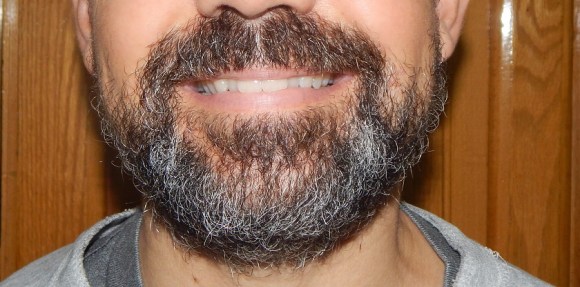
It started simply because I forgot to take my razor on a trip to a desert oasis. But with November around the corner, I thought, there is a good excuse to continue.

And a good cause. No Shave November raises money and awareness about cancer. Particularly directed to men, it provides an answer to the obvious question:

Why are you doing that to your face?

The American Cancer Society recommends all men at age 50 speak with a doctor about colon and prostrate cancer screening. Early detection can stop a killer.

I’m not at age 50 yet, no matter what the gray may suggest.

But cancer does not discriminate. In December we plan to visit and offer a donation to Hospital 57357, the foundation number of the Children’s Cancer Hospital of Egypt.

At 320 beds it is considered the largest in the world. Modeled after St. Jude’s in Tennessee, it treats patients completely free of charge.

We have visited once before, and it can be a difficult thing to introduce yourself and offer words of encouragement to the innocents suffering. But it is a good thing to do, and we trust our children will learn even from our discomfort.

Mine, perhaps. My wife was much more natural. Our kids were a mixed bag. Perhaps next time will be easier.

But whether I go with my semblance of a beard will be up to our children. Today as November ends I’ll put it to a vote if they want me to shave or continue growing for another month.

My wife will break a tie. Of course, she can veto the whole process if she likes.

I must say, though, it has been fun. Please let us know if you would like to donate also.


Categories
Personal

Ramadan Balderdash

Ramadan Balderdash

In Egypt, Ramadan is not only highly anticipated as month of spiritual fasting, but also as a month of television entertainment. It is estimated that 80% of original content is released during the month, broadcast after sunset when family gathers to eat, socialize, and watch the hottest stars in action.

One of my favorite party games is called Balderdash, a development of the very simple ‘dictionary game’. In the original version one player searches for an obscure word and writes the definition on a piece of paper. Every other player then makes up a definition, also writing it down and giving it to the selector. All papers are then read out loud, and points are scored not only for guessing the correct definition, but also for votes given to the most convincing–or outrageous–made up efforts.

The commercial version of Balderdash expands this concept to include obscure acronyms, laws, individuals, and… movie titles.

Which of the following do you think is an invented title and plot?

Free Fall: Malak is a psychopath who is accused of murdering her husband and her sister after the crime weapon, a gun, is found with her. When she is arrested the court decides to put her in a psychiatric clinic. She faces many problems inside the clinic until the truth about the murders is revealed at the end.

Above Reproach: Rahma is a sociopath who seems to be kind and normal, but in reality is consciously harming the people around her.

Marionette: A businessman’s wife is thinking about appearing on a popular television show. The husband intervenes, fearing that his past will be reopened, revealing his involvement in a murder.

Wedding Song: A theatrical group in the 1970s discover in a reading that the play they will perform is about their own lives and secrets. They refuse to take part in the play but the group leader insists, as his way to salvation. The actors find themselves on stage playing their own real life characters.

Father of the Girls: A businessman and a former drug dealer who owns a car shop has a dispute with one of his competitors, so he moves with his family to Cairo. But this does not end his problems.

A Psychiatric Clinic: The series is based on a true story about a female teacher in an international school who suffered sexual harassment from one of her students. Can she overcome the incident? Or will she discover that everyone around her is accusing the victim?

Seven Souls: A police officer arrests a powerful man accused of murdering a woman. The arrested man is sentenced to death. But what would happen to the police officer if the allegedly murdered woman is still alive?

Wanoos: A father of four meets a devil called Wanoos. He becomes attached to him and leaves his family, work and life. But after 20 years of trouble making and misdeeds, he reviews his past. Can he change?

Lineage Crisis: A nurse in a fertility clinic falls in love with one of the clients, a wealthy and married businessman. He secretly marries her, hoping to have a baby. But he dies before she becomes pregnant. The greedy wife invents a trick to inherit her late husband’s wealth. Is she able to deceive everyone?

Superman Daughters: Superman is visiting Egypt and meets with his dream girl in El-Haram Street. When he leaves, she discovers she is pregnant. Will she give birth to superboy or supergirl?

I wish I was creative enough to have invented these; all of the above are real synopses. Many thanks to Ahram Online for giving a preview of what Egyptians will be watching this month. Click here to watch short previews of the seven most highly anticipated dramas.

How do you think they compare to the list of American favorites? What do you think television reveals about the state of any society and its values?


Categories
Personal

Antonin Scalia and Sharia Law

Antonin Scalia

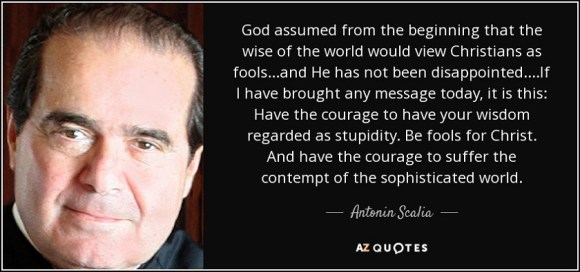
As President Obama puts forward Judge Merrick Garland as a nominee for the Supreme Court and Republicans balk at a shift to the left, it is interesting to speculate if the recently deceased conservative Antonin Scalia might have been embraced by the Muslim Brotherhood.

I am not a legal scholar, so I am not able to fully consider the weight of Antonin Scalia’s argument cross-culturally. But in an obituary written by Christianity Today I found a particular statement very interesting, especially in consideration of religious rights in the Muslim world.

To begin contrarily, Scalia was clear that his legal interpretation was based solely on the Constitution, not his personal Catholic moral code. Though firmly opposed to abortion, for example, he did not base his vote on scripture.

“I’m a worldly judge,” he said in a 1996 speech at a Catholic university in Rome. “I just do what the Constitution tells me to do.” The only one of the Ten Commandments relevant to the judge’s role, he said, was the command to tell the truth.

This stance bothered some pro-life advocates. For them the opposition to abortion centers in the inalienable right to life, given by the Creator. Yet the logic is consistent with the American heritage of caution concerning religion and state, and Scalia was nonetheless heralded by both religious and judicial conservatives for his powerful judgment.

But here is the statement over which I am still puzzling. It is sensible, but it does not seem right.

“The whole theory of democracy,” he said, “is that the majority rules. You protect minorities only because the majority determines that there are certain minorities or certain minority positions that deserve protection” through a constitution or a statute.

My mind immediately went to Islam and sharia law. As interpreted by some, Christians and Jews (and perhaps others) are given very clear protections within a Muslim state. But as interpreted by others, these protections fall short of the modern conception of human rights as articulated by United Nations declarations and even, perhaps, the US Constitution.

I have heard Scalia’s argument over and over again from Muslims in the Middle East, and the Muslim Brotherhood in particular argued in terms of a majoritarian conception of democracy. Putting aside the question of the proper understanding of religious freedom in Islam, many expressed their shock that Arab Christians did not appreciate the status they had in the sharia. To them, protection grounded in God’s word was far stronger than that determined by man’s consensus.

But Islamist Muslims — and perhaps others beside — stated that as we have demonstrated ourselves to be the majority through elections, we have the right to legislate according to our orientation. For them this meant the implementation of sharia law, within the Egyptian Constitution and legal code, variously defined. Liberal Muslims and their efforts to afford citizenship rights on the basis of positive law simply lost out.

How would Scalia respond?

A key difference, of course, is that the US Constitution does not base legislation on any particular moral code. As much as many of the Founding Fathers were infused by Christian values, Scalia was right to adjudicate based on the text itself, without reference to any higher text. In America, there is none.

But in many constitutions of the Muslim world, there is. To various degrees Islam is written in as a source of legislation and the religion of the state. This affords their jurists the chance to appeal to their understanding of sharia law, if they so choose. This understanding can be either liberal or conservative, but it is not controversial in itself.

Would Scalia approve if a national referendum passed an amendment to mandate, say, a Christian religious test for public office? Any state or national law would be in clear violation of the constitution, but in this scenario the democratic majority would succeed in altering our nation’s charter, complicating also the Bill of Rights.

Under the United States system of government, and under his own logic, perhaps he would be powerless to resist. But even within current First Amendment protections, it appears that minority religious rights can be restricted by popular opinion. Scalia would be clear that our constitution guards them to a great degree, and he would be among the first in defense. But within the system, perhaps, they can be degraded.

What does this speak to the situation of Christian minorities in the Middle East? Are they hostage to popular demagoguery that might threaten to subject them to second class status?

Perhaps. Civil constitutions in sovereign nation-states govern most of the Muslim world. Many of these grant citizenship rights broadly consistent with UN understandings, but also give leeway to avoid contradiction with a left-undefined sharia. The details are left to interpretation.

But in taking an issue like blasphemy law, clear majorities favor the prosecution of statements deemed offensive to religious sensibility. Freedom of religion and freedom of expression take a backseat, even when guaranteed protection in the constitution.

I do not know how to properly understand Scalia’s remark, but his advice might be clear: Campaign, lobby, and get yourself a majority. Otherwise, be thankful for the God-inspired civil and sharia protections the constitution does grant.

Legal scholars are invited to correct these impressions, but would Scalia fit well in the Muslim Brotherhood? It would be a strange cross-cultural legacy indeed.


Categories
Personal

Top 10 Persecution Stories at CT

Many thanks to readers who have followed my articles at Christianity Today. CT just published a year-end summary of the ten most read stories about the persecuted church, and I am pleased to report my articles placed at numbers 1, 3, 6, and 10.

That the articles needed to be written in the first place involves little of pleasure, but I am glad that in most there have been moments of grace amid the suffering.

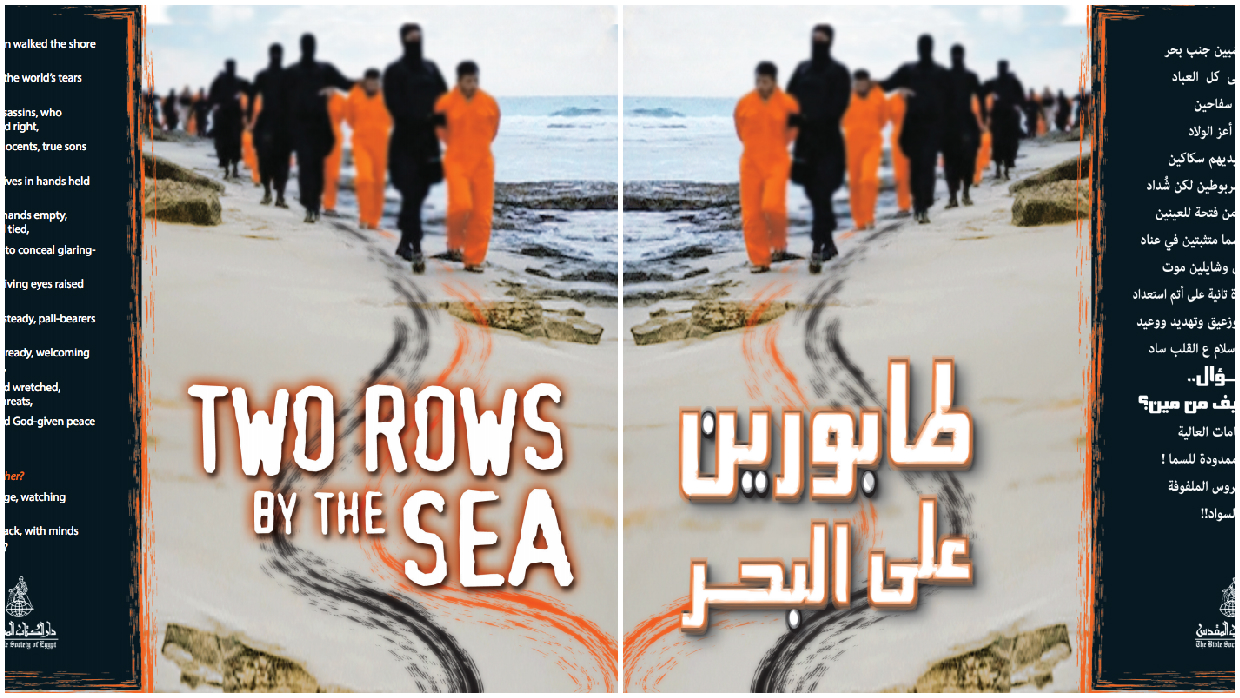
1) How Libya’s Martyrs Are Witnessing to Egypt

Murders spark largest outreach ever amid new freedoms and new threats.

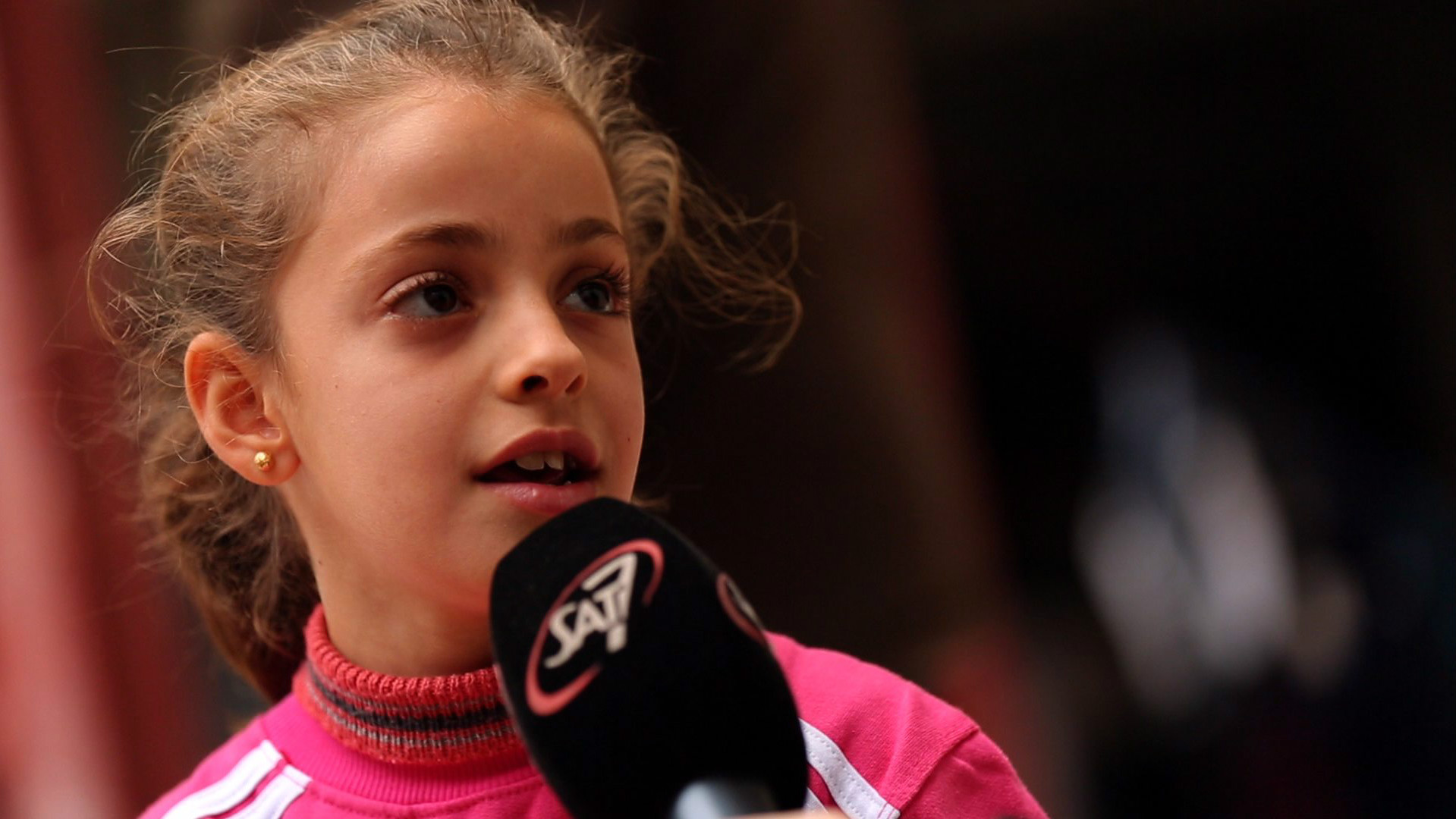
3) Forgiving ISIS: Christian ‘Resistance’ Videos Go Viral in Arab World

Ten-year-old girl from Mosul becomes Christian broadcaster SAT-7’s most-watched interview ever.

6) Libya’s 21 Christian Martyrs: ‘With Their Blood, They Are Unifying Egypt’

As Coptic Christians mourn ISIS beheadings, they praise the response of their government and Muslim neighbors.

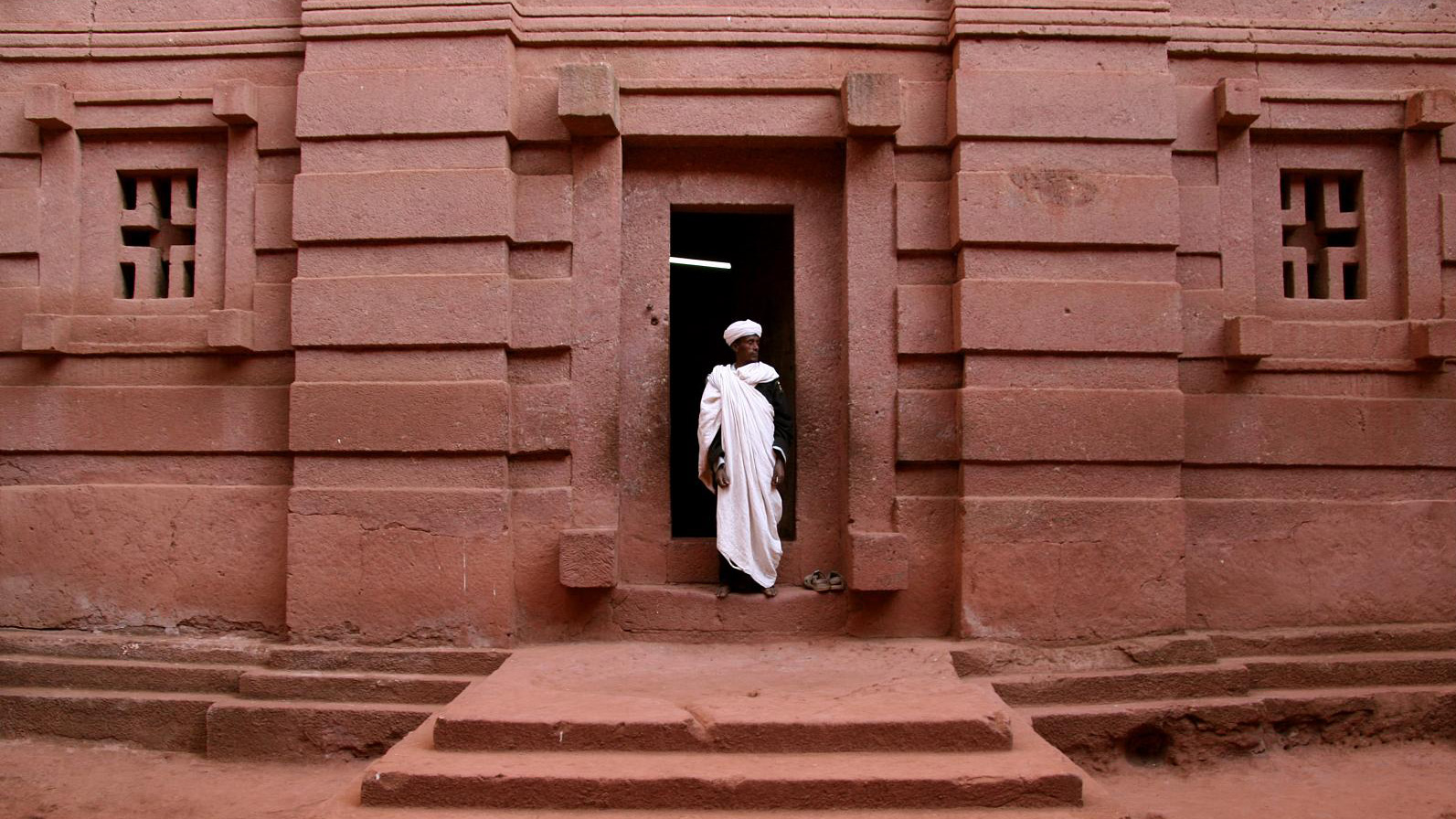
10) Why Christians Are Fleeing One of Africa’s Oldest and Largest Christian Homelands

Beyond the search for a better life, evangelicals and Orthodox in Ethiopia increasingly share even more.

And this story came in at #16 of the 20 most read ‘Gleanings‘, subtitled ‘important developments in the church and the world’.

16) More Martyrs: ISIS Executes Dozens of Ethiopian Christians in Libya

Propaganda video released the same day Justin Welby arrives in Cairo to honor the previous 21 victims.

For what it is worth, none of the articles made the overall top 20 most read list, which was dominated by US domestic trends, though some with international aspects.

As for this list, in general I do not like the word ‘persecution’ or a focus thereupon. Though these articles certainly qualify, the word risks setting Christians into an ‘us versus them’ mentality that risks violation of many Gospel principles. The struggle, says the scripture, is not against flesh and blood.

But without doubt the next mentioned ‘principalities and powers’ have employed flesh and spilled blood. I am grateful to be in a position to help tell these stories, and pray they may result in greater love both for the church around the world, and those who stand against her.

Thanks for reading — and within your power — acting accordingly.

Categories
Personal

The Pope, in Maadi

Pope Tawadros at St. Mark's Church in Maadi, Cairo
Pope Tawadros at St. Mark’s Church in Maadi, Cairo

Friends in Philadelphia will soon have the privilege of a papal visit. But will Pope Francis preach in your particular church?

His equal in the faith visited us in Maadi.

A Catholic might not consider it so. A Protestant might insist we are all equal. But for Orthodox Christians, Pope Tawadros is patriarch of one of the five ancient sees of the church, in which Rome and Alexandria are equals.

“To advance in the church,” he said, “is not done in the ways of the world. It is to lower yourself beneath the feet of others.”

By holding to equality with Rome, or in serving as a patriarch at all, does the head of the Coptic Orthodox violate his own teaching? His sermon on Wednesday was on the topic of humility. His visit on Wednesday—perhaps—is evidence of it.

Pope Tawadros’ predecessor Pope Shenouda was beloved of the people. Charismatic and witty, his Wednesday sermon at the papal cathedral characterized this bond. To a full house that treated him like a superstar, he took questions from the audience and left them laughing, rebuked, and inspired.

Pope Tawadros is respected as an organized administrator and heady thinker. He is young in his position, but does not seem to have the same level of charisma nor to have won the same level of enthusiasm. Few could.

He initially tried to follow in Shenouda’s footsteps, but when I attended a few weeks ago the hall was only half-full. Furthermore, he replaced the question-and-answer period with the traditional evening prayer. He does have a call-in show on Coptic satellite television, but I have heard Copts complain that this medium is out of reach to many simple believers. Rich and poor alike, all loved Pope Shenouda.

The Coptic Cathedral is now under repair, and Pope Tawadros suspended the Wednesday service. Before this, however, it was interrupted by petitioners seeking resolution for their divorce cases. Speculation wonders if the two are connected, or if the pope feels weighed down by the burden of comparison.

There is no answer that can weigh the motivations of his heart. But the visit to Maadi reflects a new evolution of the Wednesday tradition. Rather than sitting centrally in the cathedral, he will visit his flock.

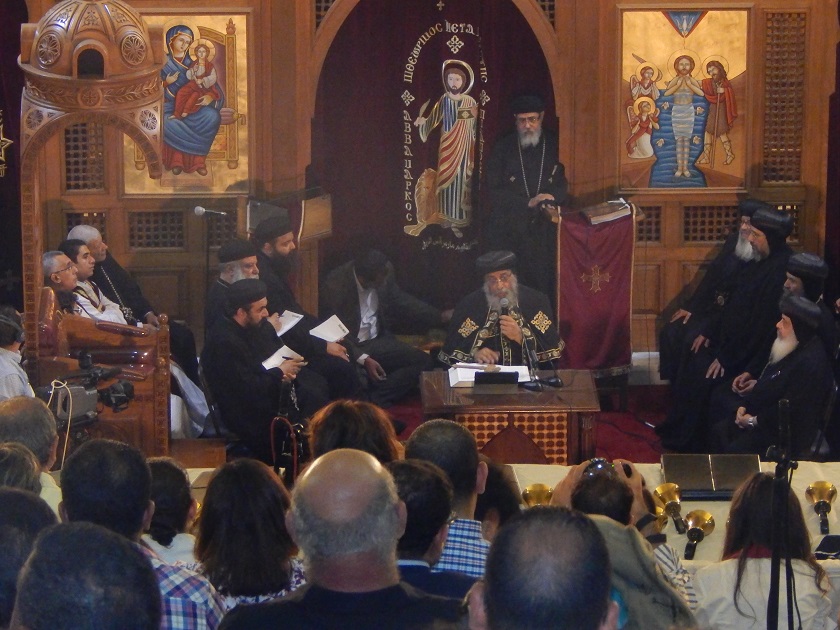
A full church for the papal visit“To be humble does not mean you are less than others or to deny your gifts, talents, or abilities,” Tawadros said. “It is liberation from the power of the self.”

In order to stay humble Tawadros recommended a checklist of characteristics the Christian should continually review. Never elevate your opinion of yourself, but lower it. Be thankful, and search for the good in all things. Remember the final judgment, and constantly repeat, “Have mercy on me, a sinner.”

Tawadros’ advice centered on the creation of a humble spirit, but two other attributes are necessary, he said. The Christian should also cultivate an open mind and a wide heart. Together these three make it possible to live well and navigate the challenges of life.

After the sermon St. Mark’s Church demonstrated fidelity to Tawadros’ predilection for organized administration, in the form of crowd control. Young people from the scouts program lined the aisles and hallways, channeling all in attendance into a single line to meet the pope. There, he further demonstrated humility as near an hour transpired for each one to receive from his hand a commemorative picture of the occasion.

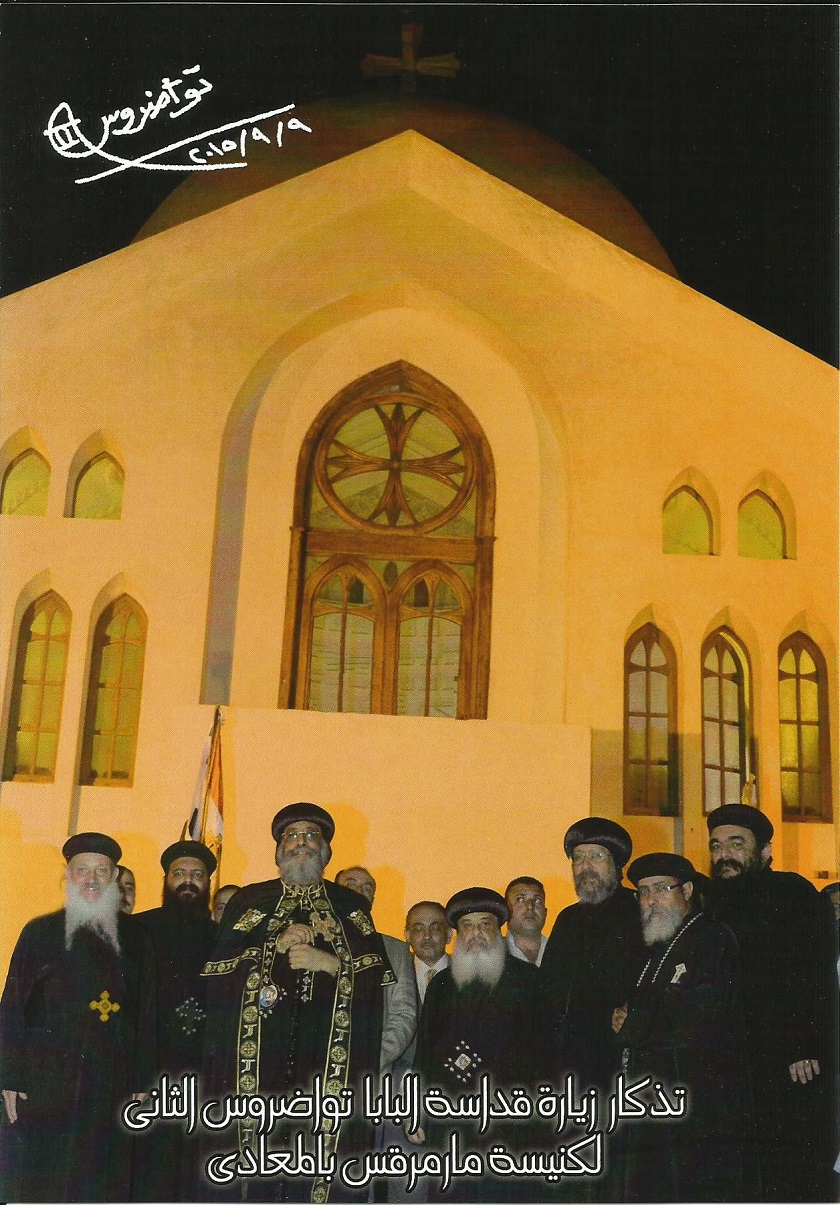
Commemorative photo taken in front of St. Mark's Church
Commemorative photo taken in front of St. Mark’s Church

Meanwhile, I chafed. My seat was in the very back row of the balcony. The best seats were already taken, so I judged the next best viewpoint would be to scan the whole assembly. Had I considered it, I might have believed myself humble for choosing so lowly a place.

I have had the opportunity to meet Pope Tawadros, briefly. But at the end of a long evening I just wanted to get home. I was quite happy to skip the line and again, had I considered it, I might have believed myself humble for my patience in waiting to leave and allowing others to go ahead.

But patience wears thin. I could see below that the pope was receiving the crowd. What I could not see was the organization. The scouts in the balcony were not letting us go anywhere, and I didn’t know why. Just let us exit, I thought, and as others get in line below, I’ll slip out a side door.

A few fought their way past the scouts, and the balcony crowd started getting restless. We were told many times to sit and wait, but no one was explaining anything.

That might be a mark of deficient organization, as communication is a must. But my entire perspective changed once allowed down the balcony steps. Very efficiently, at each turn in the path stood the scouts. Smoothly and quickly we were ushered to Pope Tawadros.

As it turns out there was no opportunity to leave by another path. I took the picture from the pope, then a mug from the bishop. Just like that, and I was outside. Five minutes later I was home.

It could be said the entire evening was public relations. Rather than continuing in the pattern set by his popular predecessor, Tawadros sets his own terms. He will visit the churches in carefully controlled settings. He will deliver a sermon and distribute memorabilia. Copts love their religious leaders. He will create a desire in each church to receive a future visit.

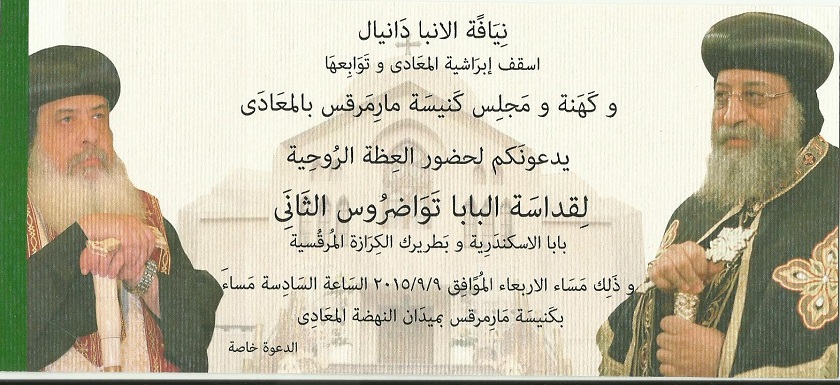
Invitation distributed to selected parishioners of St. Mark's Church, following an open sign-up
Invitation distributed to selected parishioners of St. Mark’s Church, following an open sign-up

If it is public relations, is it only PR? And is it wrong? Tawadros blessed the Copts of St. Mark. He both encouraged and demonstrated a humble spirit. He has the open mind to create a new pattern for Wednesday sermons, and the wide heart to check directly in on local congregations.

He has a hard job. If he lacks the charisma that is comfortable with the spotlight, he knows he cannot remove himself from it. Instead he will subject himself even to the scouts of the church.

Only God knows his heart, but God has so far chosen to elevate him to leadership of an ancient see. Many scoundrels have held similar posts in the past, so there is no guarantee. Let both Catholic and Protestant nod heads in sad memory of flawed saints and rank sinners.

Let them both also hold out hope and prayer for Pope Tawadros, to live and lead worthy of his calling.

“I must decrease, he must increase,” Tawadros quoted John the Baptist, speaking of Jesus. Standing long in the apostolic line of Alexandria, may the 118th successor of St. Mark do the same.

Categories
Personal

Convergence

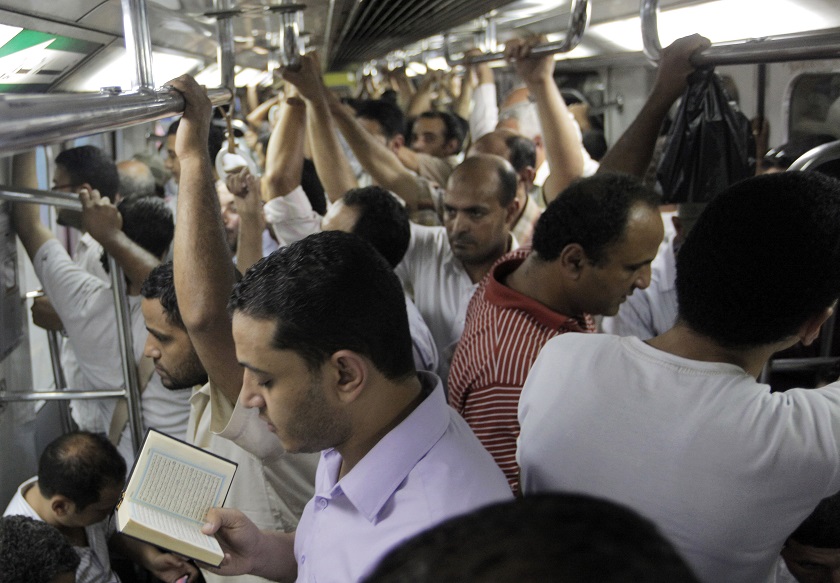
An Egyptian man reads the Quran while riding the metro (AP Photo/Amr Nabil)

A few days ago I stood in the center of a crowded metro car. It was around 95 degrees, hotter inside. Strangely enough with the open windows and rotating ceiling fans, the temperature was tolerable.

Sometimes it can be preferable in the aisle, rather than squeezed five across a four person bench. But generally it is better to sit, relax, and open a book. Otherwise I stand, keep balance, and open a book.

Save for the few with a Quran, I am often the only one reading.

Sometimes I am sheepish about the content, worried it might offend any one of the strongly held political opinions of the day. On this occasion, sadly somewhat paranoid, I pull it carefully from my bag, turn the cover inward against my body, and then open to read.

There are many Egyptians proficient in English, but generally speaking everyone on the metro minds their own business. Still, who knows if a troublemaker with wandering eyes wants to take issue with a foreigner? Especially when not reading, my eyes often wander as well, curious how others pass the time.

The best way to get a seat in a crowded metro is to move to the center and hope those in front of you get out at a nearby stop. It makes for a fun guessing game. Should I choose the family with small kids, or the young university students? Will it be the old man, or the fully covered lady?

This time I had no choice, and just filed into my spot. In front of me was a Quran reader intoning quietly, sitting next to a similarly aged young man playing Candy Crush on his smartphone.

At that moment a familiar sound emerged from the far left end of the car. “By God, please help me,” called out a medium-sized woman dressed completely in black. “God reward you for your kindness, I need food for my children.”

As she worked her way through the crowded car a few people slipped her a coin. But upon completion of her plea another familiar sound came from the far right. “Four pens for five pounds, and get the fifth one free,” the middle aged, somewhat shabbily dressed salesman belted. “Check them out, the best pens in Cairo.”

One or two people handed him the requested bill, but as they did with the covered lady, most ignored him. The two alternated cries as they moved down the aisle.

In the middle, all converged. The Quran and Candy Crush. Begging and enterprise. Middle class youth, lower class poverty, and foreign wealth.

Each was seeking something: a small profit, a trip downtown. For me the metro is the fastest way from here to there. At thirteen cents, it is also the cheapest.

But it is also a chance to learn in transit. Not just the book. The metro is a microcosm of society, a dose of reality piercing the bubble of a more insular Maadi.

Most travel in silence. But whether in hope or complaint, the face of the nation is witnessed clearly. Within it is a valuable lesson to Egyptian and foreigner alike.

The Cairo metro is home to all.

Categories
Personal

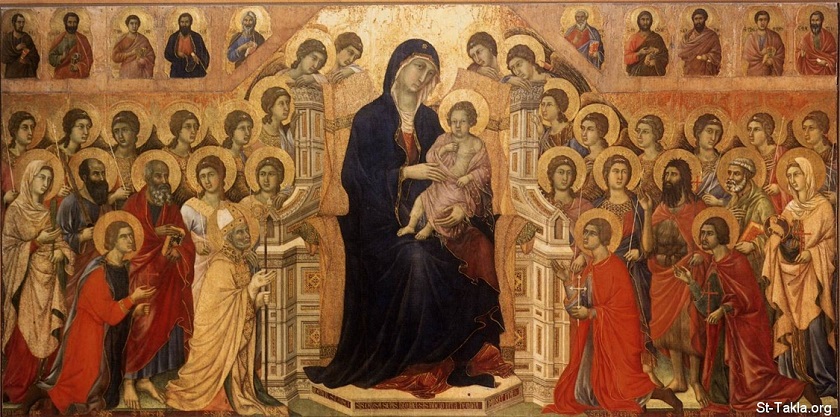
The Virgin’s Fast and Intercession

Virgin Mary 2

In the Coptic Orthodox tradition, today begins two weeks of fasting from animal products in honor of the Virgin Mary.

During our six years in Egypt we have attended the Orthodox Church regularly, appreciating without fully accepting many of their traditions. But today a small part of the mass, seemingly special for this fasting period, unnerved me.

It was not this part, repeated each week:

With the intercession of the Mother of God, Saint Mary:

Oh Lord, grant us the forgiveness of our sins.

We prostrate before you, oh Christ,

With your good Father and the Holy Spirit,

Because you have come and saved us.

A mercy of peace, a sacrifice of praise.

I was raised a good Protestant, and imagine I still am. Our attendance at the Orthodox Church is to learn, and to the degree possible, serve – seeking to honor the body of Christ in the widest possible ecumenical spirit. Our priests share this spirit and welcome us, but are bound by the teachings of their church that bars communion to all who are not baptized Orthodox.

They would be happy to re-baptize us, but to us this does not seem right. ‘There is one faith, one hope, one baptism,’ it is written, and we do not share their understanding of history lending them status as the one church which has carried Jesus’ teachings correctly.

But we do share, we believe, membership in the universal church of those who trust in Christ for their salvation. Though our fellowship with the Orthodox is not complete, we trust it is real.

This puts us in the position of engaging their traditions. One of the more Protestant-offending is the intercession of the saints; chief among them, the Virgin Mary.

The hymn above, so beautifully chanted each week, is perfectly Protestant in every line but the first.

But there is a logic behind the concept of intercession that I find able to accept, if not practice. It is a logic most practicing Protestants frequently assume.

That is: In times of need, I am very eager to ask my friends to pray for me. If I believe that the prayers of a living Christian can make a difference with God, why should I not also seek the prayers of still-living Christians in heaven?

Fair enough, but the Orthodox extend the logic further along family lines. Would not Jesus be even more inclined to answer the request of his mother? After all, they say, at the wedding feast in Cana of Galilee, Jesus was approached, by Mary among others, to tend to the embarrassment of running out of wine.

‘My time has not yet come,’ said Jesus, seemingly rebuffing the request. But it made no difference to her. ‘Do whatever he tells you,’ his mother told the servants. And thus, Jesus’ first miracle – perhaps against his inclinations – turned water into wine.

Why should the Christian not continue to seek such obvious intercessory power?

But the Protestant has a trump card to play, while highlighting the example in Cana as before Jesus’ death and resurrection. But now it is written, ‘Let us then approach the throne of grace with confidence, so that we may receive mercy and find grace to help us in our time of need.’

My conclusion has been: Intercession is not necessary, though it may be benign. Perhaps it even helps, if only in strengthening bonds with the church both here and hereafter.

But if I seek intercession doubting that God cares enough to hear me on my own, it may become dangerous. This is not the Orthodox understanding, but I have seen this spirit in many otherwise faithful, believing friends.

It is dangerous also as a manipulative technique, very akin to the Middle Eastern mindset – not far from any human – that seeks to get around the system through ‘wasta’, a powerfully placed ally who can bend rules or gain a hearing on my behalf.

But if intercession seeks to engage the ‘great cloud of witnesses’, and still ‘fix our eyes on Jesus’, why not?

After around six years of fellowship, this is where I have more or less comfortably settled with the Orthodox.

Until today.

Perhaps this was the first time we were in church on the actual first day of the Virgin’s Fast. But this part of the liturgy took my attention:

We have no [dalla] with our Lord Jesus Christ

Except in your requests and intercession,

Oh Lady of us all,

Our Lady, the Mother of God.

I wasn’t sure what dalla meant, but it didn’t sound good. The dictionary gives these options, among others: audacity, boldness.

In the teachings above, Christians are told to approach the throne in this manner.

But the dictionary also offered these options: familiarity, chumminess.

This is the sense my friends offered after mass. They described dalla as something like ‘warm, friendly feelings’, and who could have more of this with God than the Virgin Mary?

They used justification similar to that offered above, which seems perfectly logical. But that is not what the hymn is saying. It is that our dalla with God comes only through her intercession. This is making it a necessity.

And it runs up against another teaching of Jesus, where God welcomes our requests through our relationship with him. ‘I tell you the truth, my Father will give you whatever you ask in my name,’ he said, but even here it is not intercession exactly. ‘I am not saying that I will ask the Father on your behalf. No, the Father himself loves you because you have loved me.’

Perhaps we do not perfectly love him, an Orthodox might argue, whereas his mother does. But elsewhere it is written, ‘We love him because he first loved us,’ and this, ‘while we were yet sinners.’

My friends assured me this also is Orthodox teaching. The church, they said, wants to impress upon the faithful the need for humility, while lifting up those whose previous testimonies – the saints – have stood the test of time. But yes, they assured, it is only Christ that gives us access to God. We can go to him on our own.

But of Mary they may have a leg up on Protestants. ‘All generations will call me blessed,’ she said. Invoking her intercession is not necessarily fulfillment, but remembering and praising her certainly is.

The Catholic Church, they said, can sometimes go too far on Mary. But the Orthodox try to keep a middle way, a balance.

Today for dinner we ate rice, peas, and zucchini. Visiting Orthodox friends later on, we had cake specially made without eggs and butter. We are not fasting, but our fare was suitable for the day.

I am glad it was so. Hail Mary, full of grace … with reticence still for the ending.
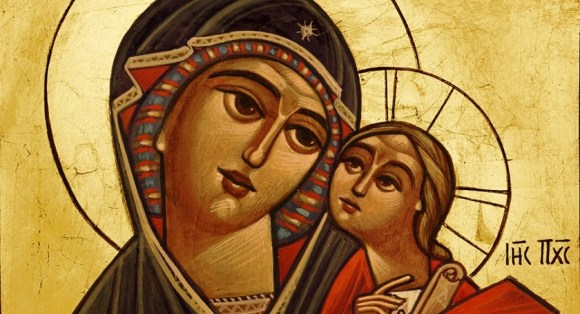
Virgin Mary 1Orthodox readers are invited to answer more fully than my laymen friends. Protestants, too.

Categories
Personal

The Family House at the Ministry of Youth

Pope Tawadros presenting Minister of Youth Khalid Abdel Aziz with a commemorative gift, quoting Isaiah 19:25 in Coptic, Arabic, and English.

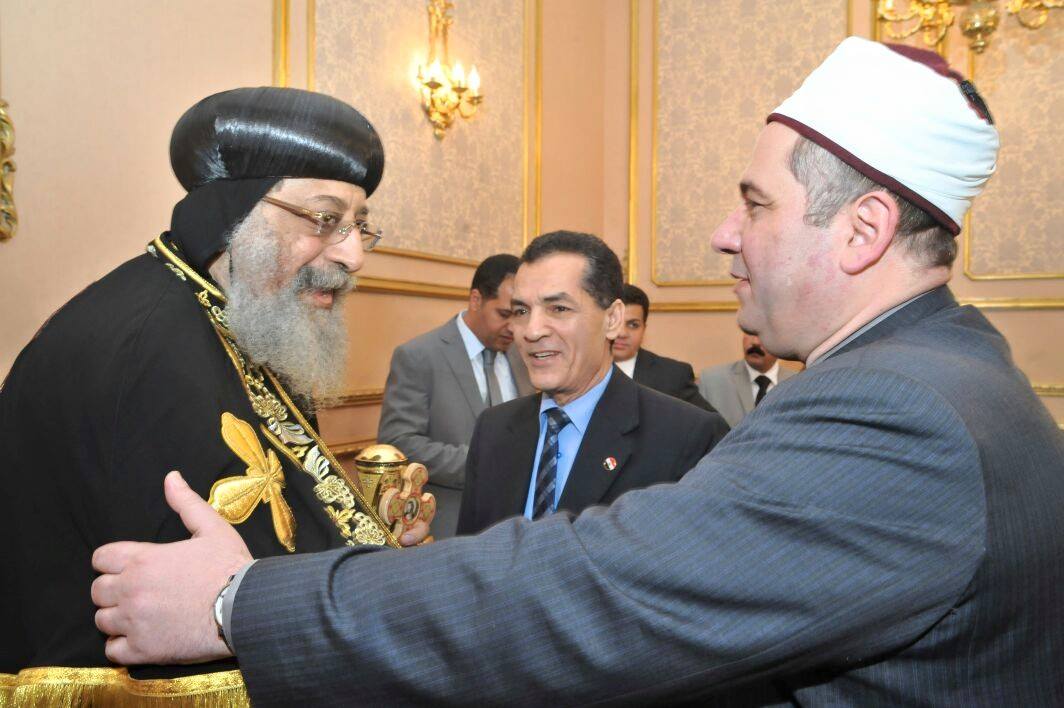
In a sign of cooperation between the government and Egypt’s religious institutions, the Ministry of Youth and Sports hosted Pope Tawadros of the Coptic Orthodox Church, representing the Egyptian Family House.

The Family House is a partnership institution between the Azhar and Egypt’s Christian denominations. It is tasked to promote and preserve national unity, at both the governmental and grassroots levels.

On July 27 Minister of Youth Khalid Abdel Aziz welcomed Tawadros in an event organized by the youth committee of the Family House. The title of the conference was The Role of Youth in Building Egypt’s Future.

Central to Tawadros’ message was that education is the key to change in society.

Participating also in panel discussion were Gamal al-Shaer, head of the Radio and Television Institute, Gamal Shaqara, professor of modern history and the head of the Middle East Research Center, Musad Aweis, head of the youth committee of the Egyptian Family House, and Aida Nassif, professor of philosophy at Cairo University and Aweis’ assistant leader in the youth committee.

They discussed the economy, confronting terrorism with culture and thought, as well as social and spiritual development.

Minister Abdel Aziz referred to Tawadros’ statement from August 2013 that a nation without churches is better than churches without a nation. This put an end, he said, to the sectarian problem Egypt was suffering at the time.

Dozens of churches throughout Egypt were burned following the removal of President Morsi and the dispersal of pro-Morsi protest sites. Some were trying to sow the seeds of division, the minister said, but to their surprise the opposite was proven.

Tawadros was asked how the church overcame the divisions of 2013. He said the one who knows love, understands life. So the one who knows the love of Egypt understands Egypt, and the church has been a national institution since the first century, which always puts the interests of the nation as first priority.

He praised the 14 centuries of relationship between Muslims and Christians in Egypt, saying it could not be described on paper but is tasted in everyday life.

Muslims and Christians together are responsible for the protection of the nation, Tawadros emphasized. The fingers of a hand differ in shape and size, but they work together for the good of the person. This is a lesson, he said, in accepting differences and pluralism.

The event at the ministry was part of stage two of a Family House program to prepare youth leaders from the different governorates who can spread the ideas of national unity, building bridges of communication and dialogue between the sons of the nation.

Five regional meetings to be held in Alexandria, North Sinai, Luxor, Fayoum, and Cairo will contribute to this effort.

Tawadros Youth Lecture Hall

Information and pictures courtesy of the Facebook page of the Coptic Orthodox Church Spokesman.

Categories
Personal

The Pope, Preaching Esther

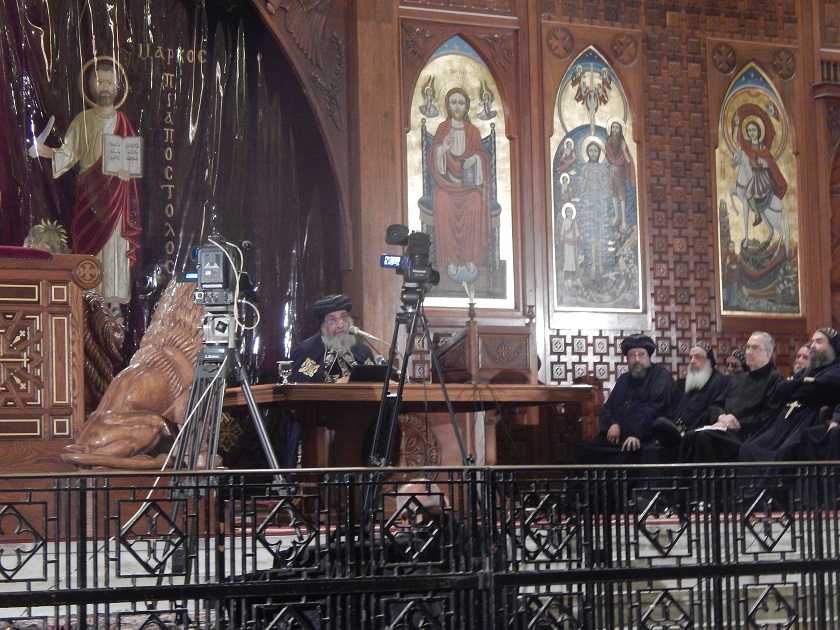
Pope Tawadros EstherFive-and-a-half years ago, I had the opportunity to hear Pope Shenouda preach. The now-deceased 87-year-old had presided over the Coptic Orthodox Church for 39 years, along the way establishing a new tradition of holding a weekly meeting with the people every Wednesday.

Last week in my first visit since, I witnessed his successor Pope Tawadros continue the tradition.

It was a fine sermon. Pope Tawadros preached on the character of Mordecai in the Old Testament book of Esther.

To briefly summarize, the book describes a period when the Jews were captive in Persia and a wicked minister planned their extermination. But prior to the scheme, following the announcement of an empire-wide beauty contest Mordecai helped the Jewish orphan Esther win the favor of the king, who then married her and made her queen.

In the end, Mordecai challenges Esther to violate palace protocol and inform the king of the minister’s intrigue. God, who interestingly is not named in the entire book, rules sovereign over events as the plot twists and the minister instead is put to death, hanged on the gallows he built for Mordecai.

Pope Tawadros had been preaching a series entitled ‘Names in the Shadows,’ featuring minor characters from the Bible who are celebrated less often.

Mordecai was a hero, he said, in three areas.

First, in owning responsibility to raise the orphan girl Esther. In an age when many who are fathers do not live up to their title, Mordecai assumed fatherhood outside the requirements of blood. In both church and society we must honor the responsibility God gives us, said the pope.

Second, Mordecai was a hero in contentment. Despite promoting his adopted daughter to the position of queen, he never sought personal advantage or advancement. Furthermore, after exposing an earlier plot against the king’s life he did not run after reward. He was satisfied in his position, and used his connections only when required to save the life of his people – not serve his own interests.

Third, Mordecai was a hero in faith, the pope said. Despite living in a foreign land he did not give up his prayers or rituals. Even when others bowed down to the wicked minister, he risked censure by refusing a posture due only to God. Trusting fully in God’s sovereignty, he held to his principles confident nothing happens apart from God’s will.

To close, Pope Tawadros encouraged the congregation with a picture from the book of Revelation, where the martyrs were honored as those who were faithful unto death. Whether God gives you high position or ordinary standing, he said, great works can emerge from acting with responsibility and faithfulness to God’s principles.

The book is named after Esther, but Pope Tawadros called Mordecai the hero of the story. The saying goes that behind every great man is a great woman, but here, he said, we see this truth in reverse.

As mentioned, it was a fine sermon. But the evening was different than what I experienced five-and-a-half years earlier.

First, there was a mini-protest. One man had to be removed from the audience over something I didn’t understand. Another woman, across the aisle, stood up and shouted something I couldn’t make out. All was calmed without incident, but a week earlier the pope canceled his sermon altogether when activists agitating for wider divorce and remarriage rights disturbed proceedings.

Second, there were vesper prayers. Pope Shenouda opened his weekly meeting taking questions from the audience, on all manner of topics, both mundane and theological. Pope Tawadros has a similar practice, but on television where people can call in or share questions electronically. Replacing the audience participation was one of the ritual daily prayers of the church, with the audience, perhaps, passively involved.
Third, the cathedral was half-empty. With Pope Shenouda the hall was packed, replete with the faithful even scaling the scaffolding. Here, all was subdued. When Pope Shenouda entered, the crowd rocked with the chant of ‘Blessed is he who comes in the name of the Lord.’ With Pope Tawadros everyone stood, but I had to ask about this missing custom. It was there, I was told, but intoned in quiet Coptic.

In both personal relations and public address, Pope Shenouda was revered for his wit. In Pope Tawadros’ sermon no one laughed. At the close everyone filed out, in orderly fashion.

To leave the comparison at this sentiment is not just. My attendance with Pope Shenouda came after his long service; Pope Tawadros is still young in office. He is also a different person. Pope Shenouda was acclaimed for his charisma; Pope Tawadros is respected for his administration.

One Copt sitting next to me agreed, and helped lead me in the descriptions above. But perhaps unconsciously influenced by the sermon on Mordecai and Esther, this person said that Pope Tawadros was the man for this time, chosen by God for these unique circumstances.

Pope Shenouda coincided with the regime of Mubarak, with its stable but contested relations with Copts. Pope Tawadros coincides with revolutionary instability and whatever is emerging in the nature of the state.

Each is responsible to God for his conduct in office. But each, Copts believe, was put there by God in his sovereignty and wisdom, to guide the church through challenging times.

Will Pope Tawadros, one day, be as deeply loved?

Mordecai counseled Esther, ‘Who knows but that you have come to your royal position for such a time as this?’

And Esther responded, ‘I will go to the king, even though it is against the law. And if I perish, I perish.’

As indicated in his own sermon, nothing less is demanded of the pope. Whether he is loved or not, what is required is faithfulness. God may yet have great things for him; perhaps he is walking in them already.

May he honor his responsibilities, content in his position, according to God’s principles. May his good word preached be true in practice.

Categories
Personal

Emma, Alone in a Class of Muslims

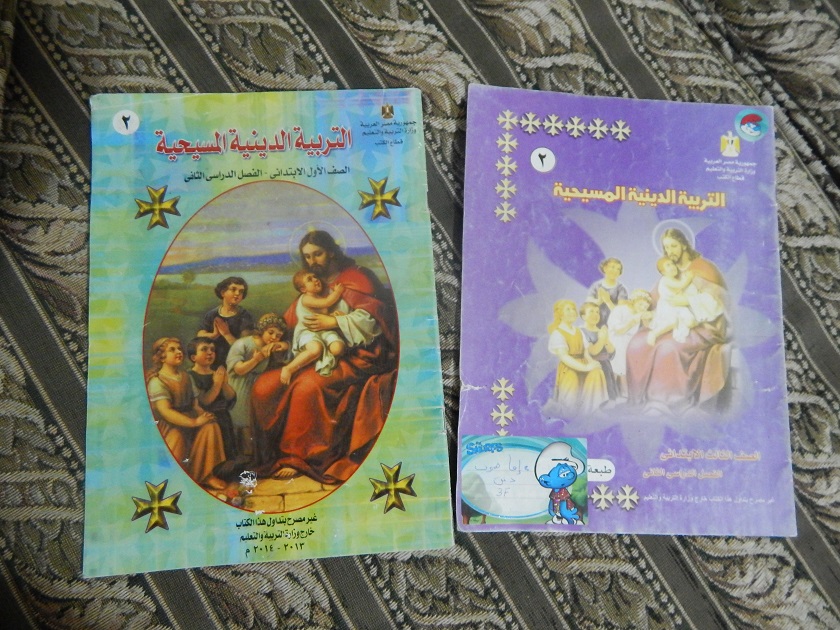
Two of Emma's religion textbooks. The main text of both reads: Christian religious education
Two of Emma’s religion textbooks. The main text of both reads: Christian religious education

Egyptian schools are known for large class sizes and a not-so-great student-teacher ratio. But our third-grade daughter, in one class at least, has a private lesson.

Despite being in a class of 31 students, Emma studies religion one-on-one with the teacher. The Egyptian system separates Muslims and Christians for religious education, and Emma is the only one of the latter.

Christians make up about 10 percent of the population, so it is not unusual to be outnumbered. Still, Emma’s case is a bit odd.

When she started in the Egyptian school system in kindergarten, Emma was one of the seven Christian students in her class of 30. If this percentage seems large, consider that the school placed all Christians in the same class. The entire kindergarten consisted of around 150 students.

Placing all Christians together makes scheduling classes much easier. Traditionally, the less numerous Christian students leave the classroom for the religion subject, and a specialized Muslim teacher comes to instruct in Islam. The specialized Christian teacher often has to jostle for a classroom, but at least all students come to her at once.

As Emma moved on to first grade a few kids transferred to other schools, leaving only five Christians in her class. By second grade, there were three Christians, and now in third grade, she is alone.

Her singleness resulted from an administrative error, of sorts. This year the school introduced ‘smart boards’ in all class subjects for those parents willing to pay slightly higher tuition. The technology was not so important to us, but since kindergarten Emma’s class had been kept together, and most parents were opting for the smart boards.

But for some reason, in the two smart board classes that emerged, Emma was separated from the two other Christian students. We did not discover this until a bit into the new school year, and rearranging would have been difficult. But as a result she has religion by herself.

Fortunately, Emma’s best Muslim friends are in her class, and she was happy to stay.

Fortunately also, she has had the same Christian teacher since kindergarten. The standard curriculum consists of Bible stories familiar to Sunday school students the world over, in addition to Coptic prayers and the lives of the saints.

Egyptian education has been criticized for focusing too much on memorization, but in this case Emma puts us to shame. Last year she memorized the I Corinthians 13 passage about love. This semester she is working on Psalm 23. In Arabic, of course.

The government curriculum for Christianity is based on the Orthodox tradition, since that represents the vast majority of Christians in Egypt. Emma’s teacher, however, is Catholic. And thus, the lone Christian in class is our Protestant American daughter, being taught Coptic Orthodoxy, by an Egyptian Catholic.

Egypt is a place of many oddities, but we hope through it all that Emma will love God, love others, and hide God’s Word in her heart. So far we are encouraged.

Emma Alone Class of Muslims

Categories
Personal

The Burden of an Azhar Sheikh

Sheikh Saeed and ParentsSheikh Saeed Ibrahim was very keen to see my parents. He canceled an appointment to meet them, making sure the opportunity was not missed before they returned to America.

He wanted this picture taken, and he wants you to see it. He would be very pleased if you share.

“I want the world to see that normal Americans can meet a Muslim leader, and be friends,” he said. “Too many are equating Islam with what they see in ISIS and other extremist groups.

“We have to change this picture.”

I met Ibrahim during training sessions for the Egyptian Family House. He was one of 70 religious leaders – half Muslim, half Christian – learning to be friends with one another and then partner together in their local area to preserve and promote national religious unity.

Ibrahim mentioned it is slow going, and that due to various reasons his overtures to area priests have not yet succeeded.

So he was especially interested to go international.

Not that he has not been active at home. The Azhar is Egypt’s central Muslim institution, perhaps the most influential in the wider Sunni world. Its graduates lead the great majority of the nation’s mosques, and generally control the national religious discourse.

Ibrahim is a supervisor of Azhar preachers in Giza. In addition to this task he delivers a sermon each Friday, offers daily religious lessons, and gives a weekly lecture to police, youth, and women.

In recent months he has been especially active. Following the election of President Sisi the Azhar launched a campaign called Love of Country. Following an international Azhar conference last December to condemn ISIS, it launched Eliminating Violence and Terrorism.

Since then he has spoken in at least an additional 100 area schools, with a three-fold message:

First, Islam does not know terrorism nor call for it because it is a religion of peace and security.

Second, Islam in its doctrine accepts the religious other no matter the religion.

Third, Islam treats all people well and with proper morality.

So while Ibrahim and his colleagues work to spread this message to Egyptians young and old, he holds a special burden to communicate with foreigners.

He wants tourism to return to the country, and he wants the image of Islam to improve. He hopes that as they take pictures together, the world will become more aware.

If any in Egypt read this and take note, I would be happy to introduce you. It would be good to draw in also a Coptic priest, and encourage the Family House in working together.

“We are doing this because of the circumstances our country is going through,” Ibrahim said, “but the reward we receive is from God.”

Categories
Personal

Borio: Milk’s Favorite Cookie

Borio

Life can sometimes be much less expensive in Cairo than in other cities of the world, and what better test can demonstrate this than the Oreo cookie?

Or rather, the Borio.

I am not sure about any of the legalities in this locally produced knockoff of the popular Nabisco product, but it is ubiquitous in Egypt. Many restaurants, especially those that cater to foreigners, will also offer a Borio Madness ice cream treat, or a Borio smoothie, or varieties of this sort.

But as my wife was shopping the other day she saw the Borio and the Oreo side-by-side.

The foreign Oreo costs 1.5 LE for a pack of three – the equivalent of 22 US cents.

The local Boreo costs 1 LE for a pack of six – the equivalent of 14 US cents.

By contrast, a quick internet search revealed that Walmart in the US is offering a variety 12 pack of Oreos, each containing four cookies, for $18.72, or, $1.56 each.

Anyone with a sweet tooth care to join us?

Sure, the wrapper will probably be thrown on the garbage littered streets, and there is the pesky problem of riots and occasional explosions and all, but think of it differently…

Who can turn down a Borio, especially at these prices?

Ahlan wa sahlan.

Categories
Personal

Photos: Easter Greetings at the Coptic Cathedral

The following pictures show a lot of handshakes, but the message should not be lost in the repetition. Government officials, most of them Muslim, congratulate Copts for their holiday celebrating the resurrection of Jesus.

Similar pictures could be seen on Christmas, but Easter is a far bigger deal. In Egypt, Christmas is an official holiday, and there is no Muslim religious objection to the birth of the Messiah. Muslims agree with Christians that Jesus was born of the Virgin Mary, and though they object to the interpretation of incarnation, there are few reasons not to celebrate a common prophet.

Easter is different. In Islam, Jesus die not die on the cross so therefore he cannot have been raised again. There are real theological barriers, and less if any common ground. Some conservative Muslims are vocal about the inadmissibility of congratulating Christians on their holidays, but especially Easter.

The Muslim governmental and religious officials of the current Egyptian regime do not agree. Certainly they would not share the spiritual meaning of Easter, but they are keen to demonstrate congratulations to Copts in recognition of the importance of their holiday.

In these contested times in the Middle East, a handshake communicates much.

(More reflection to follow after the pictures)

Prime Minister Ibrahim Mehlab
Shiekh Mohamed Abu Hashim, representing the Azhar
Sheikh Mohamed Gamia, representing the Egyptian Family House
Amr Moussa, head of the constitutional committee and longstanding diplomat
Amr Moussa, head of the constitutional committee and former head of the Arab League
Nabil al-Arabi, head of the Arab League
Labor Minister Nahed al-Ashari
Planning Minister Ashraf al-Arabi
Culture Minister Abd al-Wahid al-Nabawi

Easter greetings were also extended in the governorates.

Bishop Thomas of Qusia received Asyut governor Yassir al-Desouki
Bishop Kyrillos of Nag Hamadi received Sohag governor Gen. Abd al-Hamid al-Hegan
Bishop Bisada of Akhmim received Sohag governor Ayman Abd al-Munam
Bishop Maqar of Sharqia received Sharqia governor Rida Abd al-Salam
A military designation visited the St. Mina Monastery outside Alexandria

Just as at Christmas great importance was given to the visit of President Sisi to the papal mass, the first ever honor bestowed by an Egyptian president, perhaps meaning should also be taken from his absence at Easter services.

Religious relations remain tricky in Egypt, and the president may not have wanted to alienate conservative Muslims with such a symbolic endorsement. But his government was not shy to risk it.

America is a secular state; Egypt is less so. When President Obama frequents a Muslim Iftar, it is an honorable recognition of the place of Islam within a nation that constitutionally guarantees the non-establishment of a religion and the freedom of all.

In Egypt it is a bit different, for Islam is the state religion and its law is the source of legislation. While the constitution guarantees freedom of religion, Islam retains a priority of place in interpretation.

The gesture in Cairo, then, is weightier than that offered in Washington. It is greater still in the more conservative governorates. It is not just that Copts have freedom, it is that as a government we honor even their Islam-challenging Easter holiday.

Of course the reality is not yet complete, and a cynic is excused if he accuses the government of insincerity. It is the practical demonstration of executive enforcement of law that speaks far louder than a handshake, and in this many parts of Egypt are still lacking.

But a handshake still speaks, and it speaks in relationship. Far more handshakes are needed, but let the message resonate.

Egypt honors the Copts at Easter.

(All photos courtesy of the Coptic Orthodox Church)

Categories
Personal

Crucifixion and Liberation in Cairo

Hisham Rizk
Hisham Rizk

Last summer the body of Hisham Rizk turned up in a Cairo morgue. The 19 year old graffiti activist had been missing for a week, and the official autopsy labeled him as having drowned in the Nile River.

No further information was given on the English language Ahram Online. But withholding comment only fuels speculation – rampant among many revolutionary activists – that the security apparatus is coming after them. Orchestrated to begin on Police Day, the January 25 revolution humiliated them but now is the time for payback. So goes the theory.

Rizk was a member of the Mohamed Mahmoud Street Graffiti Union, whose images are among the few to remain prominently displayed in Cairo. They are at the site of terrible clashes in November 2011, between protestors and police on a side-street off Tahrir. They contributed also to the rift between revolutionaries and the Muslim Brotherhood, who did not participate in defense of the square.

The Brotherhood has since suffered its own terrible losses at the hand of police. Though these groups share a common enemy, there is little sympathy offered. During their year in power the Brotherhood marred revolutionary icons and dismissed the ongoing struggle with the military and security apparatus, with whom these activists say they readily accommodated.

News of Rizk’s death reminded me of my last visit to Mohamed Mahmoud Street, several weeks earlier. President Sisi was not yet elected, though his victory seemed inevitable. An interview subject postponed our meeting two hours, so I had lunch in McDonalds facing the ubiquitous graffiti.

To pass the time I alternated between reflecting on the images and reading ‘A Theology of Liberation,’ tucked away in by bag to read on the metro. It was written by Gustavo Gutiérrez, the Latin American priest who demanded that Christianity pursue justice for the poor, as reflected in the character of God. For Gutiérrez, the cross of Christ represented the total involvement of God in the suffering of mankind. As such, Jesus identified with all victims, and his resurrection presages their own, toward which his followers must strive.

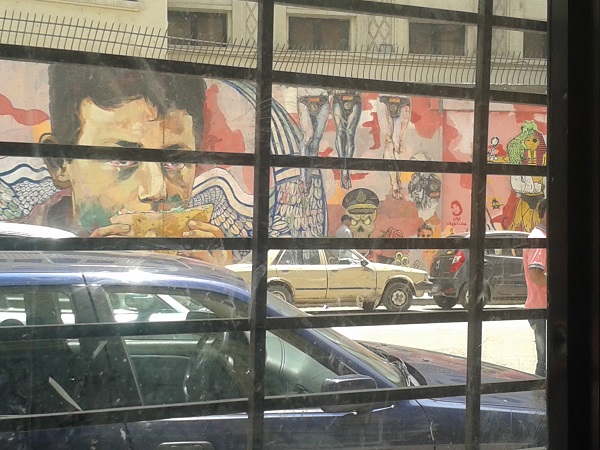
Consider then the following picture, as seen behind the bars of McDonalds, while eating French fries and a cheeseburger from the Egyptian equivalent of the dollar menu:

Here is the image in question:

McDonalds GraffitiThe three crucified pairs of legs are covered by a belt bearing the name ‘Central Security,’ the revolutionary activists’ archenemy. What is not clear to me is what the symbolism means. Are these the victims of police, mocked and tagged with state insignia? Or have the police themselves been stripped, hung, and crucified? Does the image commemorate, or anticipate?

If the former, it is a remarkable statement of the power of Christian imagery within a revolutionary struggle of Muslim majority. Islam rejects the cross of Christ, believing instead God saved Jesus from the humiliation of crucifixion at the hands of his enemies. But the clashes and aftermath of Mohamed Mahmoud represent a losing moment for these activists. To depict their suffering they drew a cross.

To my knowledge there is no revolutionary graffiti of an empty tomb. They can hardly be blamed; they have had no victory. Initially pleased with the military removal of the Muslim Brotherhood, many now see in President Sisi the restoration of the security state. But some Christian revolutionaries have spoken of how they comforted their Muslim colleagues with tales of Jesus. Struggle involves suffering, they said, and perhaps even death. But victory comes as God resurrects.

This is how most non-revolutionary Egyptian Christians view the emergence of President Sisi. They, with millions of Muslims beside, project upon him the image of savior. He is the answer to their prayers, the remover of the Muslim Brotherhood.

And now it is the Brotherhood which is now being crucified, though this particular image is not found on Mohamed Mahmoud Street. Their opponents might cite a different Biblical parallel in the story of Esther. Following the failure of his plot to exterminate the Jews, Haman was hanged on the gallows he prepared for Mordecai.

Crucifixion GraffitiInstead, the graffiti interpretation is possible that it is security which receives its comeuppance. A triumphant revolutionary movement finally secures the reins of power and holds the police accountable for its crimes. Their execution is in order. Perhaps the picture draws on Islamic imagery: Crucifixion is among the punishments commanded for those who sow discord in the land.

Liberation theology anticipates such a grand reversal. Salvation is not simply from personal sin, but from the corruption of society which binds the poor in their place. Certain strands of this theology call for participation in the necessarily violent struggle to overthrow the powers-that-be.

Certainly those who fear God should be involved in the pursuit of justice. The question is how best to interpret justice, and where on the spectrum of participation a red line should be drawn.

But the alternate interpretations of the graffiti – whether identifying the Brotherhood or the security on the cross – should not be tolerated. Neither is consistent with the Jesus who cried out, ‘Father forgive them,’ according to the Biblical account. Jesus intended his crucifiers also to be beneficiaries of the liberation he offered.

For according to Christian theology, his crucifixion was the wisdom of God to put right the universe. This is not the case for Hisham Rizk, even if he drowned a martyr. It is not the case for any of the revolutionaries who have died for their cause. They represent a tragedy, a reminder of a world not yet put right. Whether one fights nobly, foolishly, or not at all, death is still the reality for everyone amid extensive injustice.

But to put it right, God expects his followers to work for justice in the face of death, unafraid. Such is the glory of a martyr, who will receive God’s compensation in reward of uncompromising faith. Many revolutionaries have been motivated by this promise.

The hope of liberation theology is that the promise is greater still. It is that through crucifixion resurrection comes. This is certainly true of personal Christian theology. It is only through death to self and identification with Christ on the cross that God’s life can inhabit an individual, in this world and the next. But is it true for society as well?

Here, liberation theology appears to be of two minds. For one, the answer is yes: We struggle on behalf of the poor and oppressed and whether or not we die, we await God who will put right all things through our sacrifices.

For another, the answer is no: It is obvious our idealistic struggles fail, so we must in a sense crucify the other and wrest power from him. Then we can put right all things in view of what God has commanded.

The first is of faith, perhaps naïve. The second is of pragmatism, perhaps ungodly. Where in this analysis is Egypt?

Perhaps Sisi has put all things right. Perhaps he is struggling to do so. Perhaps he only pretends, putting all things wrong.

Let each Egyptian judge, mindful of the following: Faith must be lived in the world, but the ways of the world must not sideline the convictions of faith. Countenance no manipulation, and avoid no crucifixion.

Securing the first assures God’s blessing; enduring the second enables God’s liberation. Such is the hope of faith.

Even as I type I am filled with dread should such hope prove empty. If Hisham Rizk died an inopportune death, where is the liberation to follow? Is it found in his enduring images on Mohamed Mahmoud Street? Is there some collective cosmic tally to which he contributes?

Perhaps. Paul wrote that his sufferings filled up what was lacking in the suffering of Christ. Jesus said his followers would do even greater works than himself. An earlier prophet summed up all requirements: Do justly, love mercy, walk humbly.

The world will not be put right until God puts it right. But God desires us to put it right in the meanwhile, flawed and incomplete our efforts will inevitably be.

Wherever Egypt is along the path of progress, she has not yet arrived. Blessings to all Egyptians who seek to move her forward.