Now they have data to back up their claims—from secular research.
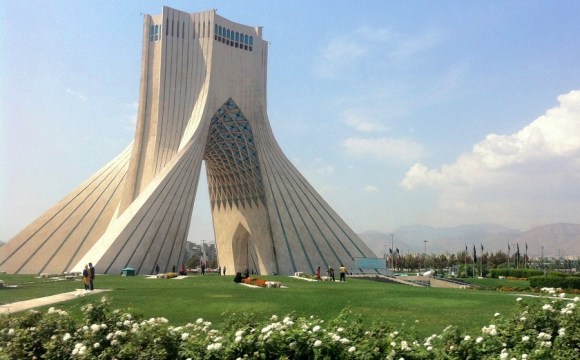
According to a newsurvey of 50,000 Iranians—90 percent residing in Iran—by GAMAAN, a Netherlands-based research group, 1.5 percent identified as Christian.
Extrapolating over Iran’s population of approximately 50 million literate adults (the sample surveyed) yields at least 750,000 believers. According to GAMAAN, the number of Christians in Iran is “without doubt in the order of magnitude of several hundreds of thousands and growing beyond a million.”
The traditional Armenian and Assyrian Christians in Iran number 117,700, according to the latest government statistics.
Christian experts surveyed by CT expressed little surprise. But it may make a significant difference for the Iranian church.
“With the lack of proper data, most international advocacy groups expressed a degree of doubt on how widespread the conversion phenomenon is in Iran,” said Mansour Borji, research and advocacy director for Article 18, a UK-based organization dedicated to the protection and promotion of religious freedom in Iran.
“It is pleasing to see—for the first time—a secular organization adding its weight to these claims.” The research, which asked 22 questions about…
This article was originally published at Christianity Today, on September 3, 2020. Please click here to read the full text.
When there are crises, it is good to confer. In the abundance of counselors is victory.
But Lebanon has so many—crises and counselors—and Job was not helped by his friends.
Promote the friends of good advice, God. Establish the leaders of decisive discernment.
Men who understand the times, and know what Lebanon should do.
There are consultations on the border. The UN peacekeeping force will stay, with mandate to inquire of tunnels. But can they monitor infiltrations? Can they curb airspace surveillance?
Can they stop the conflict?
There are consultations on the outskirts. An Arab tribe versus Shiite elements. Can they quiet the friction of religious identity? Can they satisfy families for the blood that was spilt?
Can they forge a peace?
There are consultations on the cabinet. The French president comes with a possible roadmap. Can they distribute positions to honor their sects? Can they agree on reforms to unlock the aid?
Can they form a government?
God, when the world is swirling there is need for conviction. Not certainty. Not even consensus.
Lebanon needs men of courage. Of decency. Of character. Of insight.
Find a solution to the threats in the south.
Make humble relations between every faith.
Empower a cabinet to serve Lebanon’s interest.
Lighten the burden on the national soul.
God, in your mercy, hear the cries of the Lebanese people. In your sovereignty, call forth more.
Wisdom is proved right by all of her children.
In consultation, be fruitful and multiply.
Amen.
Lebanon Prayer places before God the major events of the previous week, asking his favor for the nation living through them.
It seeks for values common to all, however differently some might apply them. It honors all who strive on her behalf, however suspect some may find them.
It offers no solutions, but desires peace, justice, and reconciliation. It favors no party, but seeks transparency, consensus, and national sovereignty.
How God sorts these out is his business. Consider joining in prayer that God will bless the people and establish his principles, from which all our approximations derive.
Zimbabwe, in its 40 years of independent history, has “never enjoyed life.”
And as the Evangelical Fellowship of Zimbabwe (EFZ) stands in solidarity this week with maligned Catholic bishops accused of fomenting genocide, its president, Never Muparutsa, told CT the Southern African government is failing to honor its biblical responsibility.
There are too many poor, amid official repression.
An excerpt from the interview:
On June 1, we called for 90 days of prayer. On the 15th day, the president called for a national day of prayer, and we supported him. We don’t necessarily blame the president for all the problems, but there is a lack of leadership to bring everyone to the table.
And this is why you stood with the Catholics?
The Catholic letter was trying to provoke discussion, not give an insult. It pointed out problems like all of us were doing. But it received such a strong backlash.
We felt that given the situation in the country, if we just stand by and watch, we don’t know what will happen. We have journalists and activists in prison. There have been abductions with perpetrators unidentified, making us all vulnerable.
So this prompted us to stand with the Catholics, because an insult to one is an insult to all.
The 90 days of prayer will end on August 29. What are your hopes for Zimbabwe, in how God might move on behalf of the church and country?
We need a better future. We have suffered enough over 40 years, having never really enjoyed life. Zimbabwe has been given many natural resources and riches, and if our leaders are gifted enough, they can exploit these for the benefit of the people.
We are praying that the church will raise up disciples, who in the future will be good politicians. We blame ourselves. We have what we deserve, because we have not done a good job.
We want God to help us achieve the Zimbabwe we want, with freedom of speech, access to the wealth of the nation, and an uprooting of corruption.
This article was originally published at Christianity Today, on August 24, 2020. Please click here for the full text.
A verdict: One guilty, three acquitted. No conclusion on the powers behind them.
Who assassinated the former prime minister? He did. But who else? Investigations proved a wide conspiracy.
And he is not talking. He is not even here. A Shiite party shields him from trial.
A Shiite party called it politicized, and would ignore the outcome.
A Shiite party—with Syria—were the powers of ‘no conclusion’.
So is it concluded? A Sunni party of the murdered prime minister vowed not to rest until the guilty are punished. Finally, there is a guilty.
They called on the Shiite party to make unspecified ‘sacrifices’.
Many in Lebanon have moved on, God. There have been numerous tragedies since then.
But what hope does the verdict in the last big explosion, give to this one?
Many are resigned. Many are leaving. Many say, ‘This is Lebanon’.
But is this time different? America says no aid until reform. Is it right to starve into solution?
Or is this time the same? Certain parties scuffled in political disputes. Is it right to scare into submission?
Fifteen years is a long time.
Thirty years since the civil war.
One hundred since existence.
What do you wish to summon from the Lebanese? Hope is hard to conjure.
Resolve? Fight? Wrath?
Is lament too passive? Is contrition too hard?
God, can you invite blessing? So many cannot even contemplate.
But so many are not needed. Let two or three agree.
Then loosen.
Shake free their chains, for three or four.
Let four or five plead on behalf of the nation.
Then five or six can pour out grace on them all.
Maybe six or seven can be healed.
Perhaps seven or eight can heal someone else.
Eight or nine could confront injustice.
Nine or ten could sweep the streets.
Ten or eleven might make a difference.
Eleven—or twelve—can change the world.
Even if one betrays. Even if one denies.
There are those who betray Lebanon, God. They choose their selfish interests. Restore them in repentance.
There are those who deny Lebanon, God. They trust only their own sect. Remove their fear, and reconcile.
Their numbers are many.
Let the few, bless.
And then multiply blessing, to draw many more.
God, twelve can be a tribunal. Lebanon is in the dock.
It is guilty, of course. All are, every nation. Evidence is overwhelming.
But your trial is not political. It is merciful.
Let these twelve proclaim your forgiveness.
Then God, loose in heaven.
Lebanon is a paradise of your creation. Let the people live it so.
Amen.
Lebanon Prayer places before God the major events of the previous week, asking his favor for the nation living through them.
It seeks for values common to all, however differently some might apply them. It honors all who strive on her behalf, however suspect some may find them.
It offers no solutions, but desires peace, justice, and reconciliation. It favors no party, but seeks transparency, consensus, and national sovereignty.
How God sorts these out is his business. Consider joining in prayer that God will bless the people and establish his principles, from which all our approximations derive.
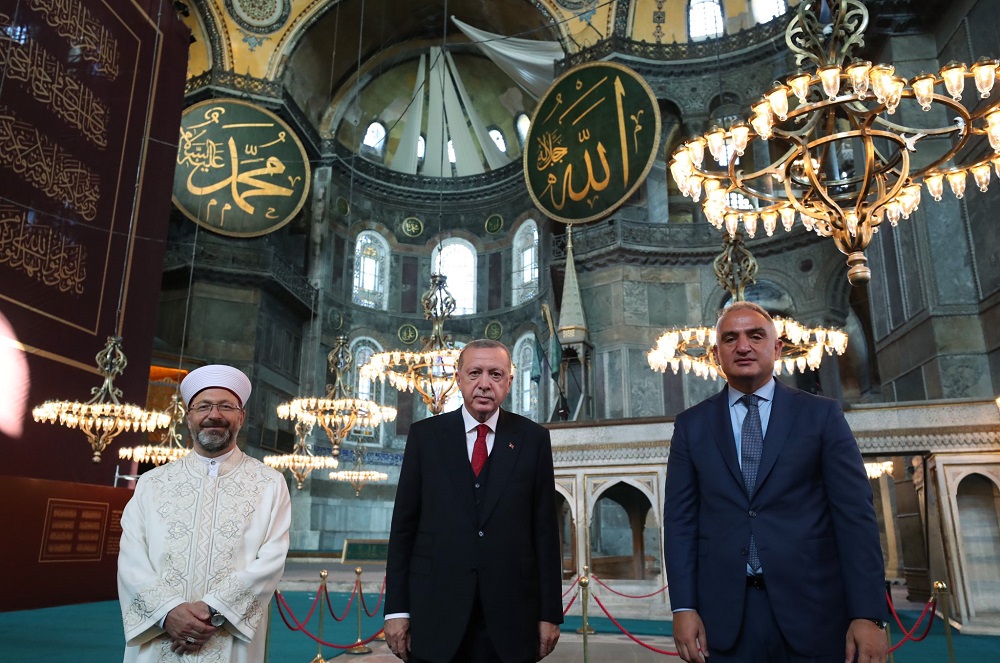
The Turkish government formally converted a former Byzantine church into a mosque Friday, a move that came a month after it drew praise from the faithful and international opposition for similarly turning Istanbul’s landmark Hagia Sophia into a Muslim house of prayer.
A decision by President Recep Tayyip Erdogan, published in the country’s Official Gazette, said Istanbul’s Church of St. Saviour in Chora, known as Kariye in Turkish, was handed to Turkey’s religious authority, which would open up the structure for Muslim prayers.
Like the Hagia Sophia, which was a church for centuries and then a mosque for centuries more, the historic Chora church had operated as a museum for decades before Erdogan ordered it restored as a mosque.
The church, situated near the ancient city walls, is famed for its elaborate mosaics and frescoes. It dates to the fourth century, although the edifice took on its current form in the 11th–12th centuries.
The structure served as a mosque during the Ottoman rule before being transformed into a museum in 1945. A court decision last year canceled the building’s status as a museum, paving the way for Friday’s decision.
And as with the Hagia Sophia, the decision to transform the Chora church museum back into a mosque is seen as geared to consolidate the conservative and religious support base of Erdogan’s ruling party at a time when his popularity is sagging amid an economic downturn.
Greece’s Foreign Ministry strongly condemned the move, saying that Turkish authorities “are once again brutally insulting the character” of another UN-listed world heritage site.
“This is a provocation against all believers,” the Greek ministry said in a statement. “We urge Turkey to return to the 21st century, and the mutual respect, dialogue and understanding between civilizations.”
Protestant believers agree. “The Hagia Sophia is…
This article was originally published at Christianity Today on August 21, 2020, in cooperation with the AP. I contributed additional reporting. Please click here to read the full text.
Sitting at his desk in the second-floor office adjacent to the historic National Evangelical Church of Beirut, Habib Badr calmly filled out the wedding registry. It was a ritual the almost 70-year-old had performed countless times over the course of his 35-year ministry.
The next day, there would be a funeral. A stalwart member of his congregation, the former head of reconstructive surgery at the American University of Beirut hospital during the years of civil war, had passed away of natural causes.
It seemed there were more funerals than weddings these days, Badr thought. But the nostalgic church would always draw young people ready to exchange their vows, even from the scattered Lebanese diaspora, in imitation of their parents a generation before.
There was something special about the lighting. On a clear day, parishioners could see the distant snow-covered peak of Mt. Sannine, towering over the capital below. Three years ago, the church replaced its eight ordinary windows. Bracketing the sanctuary pews with translucent glass depicting the three crosses of Calvary above colored stones, they aimed to remind worshipers of the ever-present Rock of Ages, upon whom the church is built.
Lebanese evangelicals don’t prefer stained glass windows with human imagery, Badr said. This serves to distinguish them from original Catholic and Orthodox heritages.
“To the missionaries, we say, ‘Go home,’” a Lebanese Greek Orthodox bishop had publicly proclaimed a generation earlier. “And to the Protestants we say, ‘Come back home.’”
But for Badr and his congregants, they were already home. The National Evangelical Church, the oldest Arabic-speaking Protestant congregation in the Middle East, was formed in 1848. Badr’s grandfather Yusuf was the first native pastor, installed in 1890.
And as if to emphasize, the circular window high above the pulpit—installed in 1998—pictured a cross above Mt. Sannine, with an image of the church in the foothills below. Originally constructed in 1869, the architecture was a blend of Scottish and Lebanese styles.
Every Sunday, the symbolism would resonate: A Reformed church, nestled like any other Lebanese home into the rugged mountainous terrain.
Badr’s wedding thoughts were abruptly shaken by a small tremor. Small earthquakes periodically rattle the small Mediterranean nation two-thirds the size of Connecticut, so the pastor stood and prepared to momentarily take refuge underneath his office doorframe. It was not a moment too soon…
This article was originally published at Christianity Today, on August 20, 2020. Please click here to read the full text.
Image: Ozgurdonmaz / Getty / Ben White / Lightstock
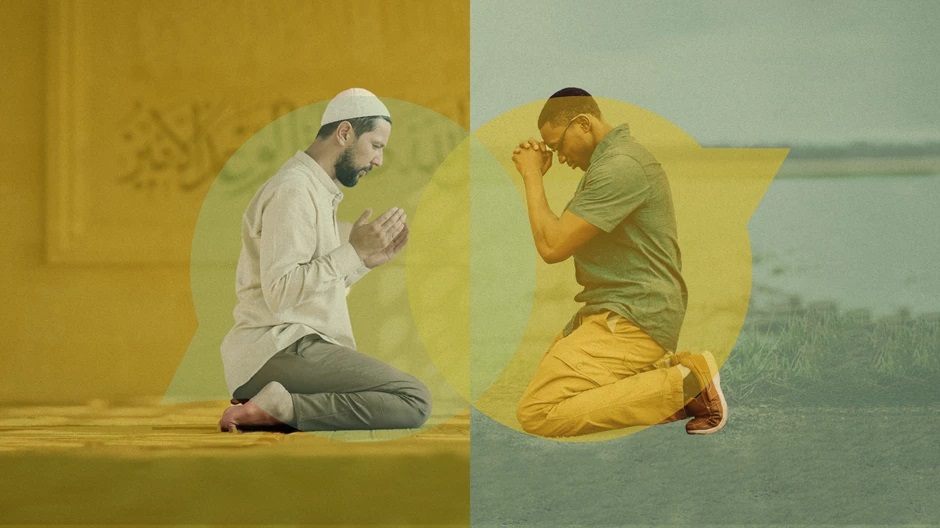
The Egyptian delegation of Muslim sheikhs settled in for the opening session of the interfaith conference. Their mainline Protestant hosts welcomed them to the hallowed halls of a historic New York seminary with pleasantries and platitudes about shared humanity and common values.
Then the moderator startled the senior scholars from Al-Azhar University, the foremost center of learning in the Sunni Muslim world, with what sounded like an ultimatum: “Anyone who believes their religion is the only way is not welcome here.”
Quietly, the Muslim men rose to leave. Their impromptu translator, Joseph Cumming, a delegate from Fuller Theological Seminary, quickly intervened. “No, no, don’t be offended,” he told them. “He is not referring to you—he is speaking about us.”
Cumming is an American evangelical who has been ministering in the Islamic world since 1982. Many evangelicals, he explained to the Muslim guests, have been very critical of interfaith dialogue. They argue it cedes too much ground, reducing religion to the lowest common denominator and undermining any commitment to absolute truth. Peace is made too high a priority with so much focus on agreement, avoiding the crucial differences over salvation.
Yet Cumming was there anyway. Despite what the moderator said, he believed it was possible—even important—for evangelicals to participate in interfaith dialogue without losing any of their passionate commitment to the truth of the Bible.
The Muslim scholars, reassured, sat back down. And the conversation continued. It continues still. That conference was nearly two decades ago, and Cumming has remained engaged in interfaith dialogue. He has dedicated the second half of his Christian ministry to maintaining respectful dialogue with Muslims and overcoming stereotypes between Christians and Muslims while remaining as passionate as ever about bearing witness to his faith in Christ. Cumming didn’t always think this way. He had to be converted to the possibility of interfaith dialogue. At first he thought it was just…
This article was first published in the July/August print edition of Christianity Today. Please click here to read the full article.
In forging the first Arab-Israeli peace deal since 1994, President Donald Trump paid homage to a patriarch.
He named the historic normalization the “Abraham Accord.”
The familiar Bible character “is referred to as ‘Abraham’ in the Christian faith, ‘Ibrahim’ in the Muslim faith, and ‘Avraham’ in the Jewish faith,” explained David Friedman, US ambassador to Israel.
“And no person better symbolizes the potential for unity, among all these three great faiths.”
In signing the accord, the United Arab Emirates (UAE) joined Egypt and Jordan as the only Arab nations to make peace with Israel. Telephone lines are already being connected between the Gulf nation and the Jewish state, with preparations underway to exchange embassies.
It may open a new era. Fellow Gulf nations Bahrain and Oman signaled their support, while Saudi Arabia did not oppose it.
“This is a once-in-a-generation diplomatic achievement, but I predict it will be the first, not the last,” said Johnnie Moore, an evangelical leader engaged in behind-the-scenes advocacy. He and bestselling novelist Joel Rosenberg led an evangelical delegation to the UAE in October 2018 (as well as two delegations to Saudi Arabia), and Moore has personally visited three more times.
“The Abraham Accord,” he said, “will prove to be the moment when the grievances of the past no longer overpowered the promises of the future in the Middle East.” A hero of faith to both Christians and Jews, ‘Ibrahim’ is already a central figure in the UAE. The nation…
This article was originally published at Christianity Today, on August 17, 2020. Please click here to read the full text.
The nations encircle. The government falls. The army entrenches. The investigation begins.
Beirut still smolders.
There is great need for leaders, and Lebanon has many. Bless and guide them all.
The Christian president will not cede sovereignty, to allow outsiders assigning blame for the blast.
The Shiite speaker of parliament increases military jurisdiction, to quiet the streets.
The Sunni prime minister resigns his post, to protest corruption preventing reform.
But each sect has alternatives.
A Christian in opposition calls for early elections.
A Shiite in support accuses some of stoking civil war.
A Sunni in waiting backs an international probe.
There is another probe pending. A UN tribunal will soon give verdict on who killed his father.
While fallout continues over international peace. Two regional powers normalize ties.
God, the lines are sharpening. Too many crisscross the cedars.
Let truth be made known, whoever pronounces it.
Let order prevail, in each disciplined heart.
Let protest find outlet, till transparency comes.
God, shield the nation from foreign agendas. Welcome the aid, with all expertise.
But let every decision come from consensus. Let every decision conform with your will.
Hold accountable the guilty. Marginalize the manipulative. Redeem all repentant long given to cheat.
Lift up the nation through prayer and humility. Bring forth her leaders to do what is right.
At every level of leadership, God, give clarity. Give courage. Give conviction.
Give compassion.
Lebanon is truly a state of emergency.
Be its healer. Be its rescue.
Be its God.
Amen.
Lebanon Prayer places before God the major events of the previous week, asking his favor for the nation living through them.
It seeks for values common to all, however differently some might apply them. It honors all who strive on her behalf, however suspect some may find them.
It offers no solutions, but desires peace, justice, and reconciliation. It favors no party, but seeks transparency, consensus, and national sovereignty.
How God sorts these out is his business. Consider joining in prayer that God will bless the people and establish his principles, from which all our approximations derive.
In Bethlehem—the little town of Jesus’ birth—only 1 in 5 residents today are Christians (22%). A decade earlier, more than 4 in 5 were believers (84%).
The steep decline is reflected in other traditional Christian cities in the Holy Land. In Beit Jala, the Christian majority has fallen from 99 percent to 61 percent. In Beit Sahour, it has fallen from 81 percent to 65 percent.
When the Ottoman era ended in 1922, Christians were 11 percent of the population of Palestine—about 70,000 people. According to the 2017 census by the Palestinian Authority (PA), they now number 47,000—barely 1 percent.
There are competing explanations of what—or who—is to blame. Some identify the Israeli occupation. Others describe Muslim chauvinism.
The overwhelming answer, according to a new survey of local Christians by the Palestinian Center for Policy and Survey Research (PCPSR), is economics.
Nearly 6 in 10 respondents identified this as the main reason they consider emigration (59%).
The poll, commissioned by the Philos Project, a US-based initiative promoting positive Christian engagement in the Middle East, surveyed 995 Christians in 98 Palestinian locations throughout the West Bank and Gaza Strip in January and February.
Compared to the economy, other cited reasons paled in significance.
Security conditions were named by 7 percent. Another 7 percent cited better education. And another 7 percent blamed the political situation.
Only 4 percent blamed corruption, while 3 percent gave a religious explanation.
But this particular question measured the primary driver of desire to leave the Holy Land. What secondary factors might be involved? Philos “affirms the right of all Christians to…
This article was originally published at Christianity Today, on August 4, 2020. Please click here to read the full text, and here for the Arabic translation.
Whether from negligence or sabotage, hundreds of thousands are hurting.
You are a God of truth. If the reasons behind the massive explosion are not yet known, reveal them.
You are a God of justice. If the people behind the terrible suffering are not yet identified, expose them.
But you have not been idle.
You are a God of compassion. Beirut is healing through an explosion of kindness.
You are a God of righteousness. Beirut is heaving in an explosion of anger.
To what end?
For neither has evil been idle.
Dozens are dead. Thousands are injured.
A spirit of paralysis grips too many. A spirit of division seeds mistrust. A spirit of destruction animates several. A spirit of accusation seeks protection from fault.
Manipulation. Self-interest. Revenge. Hatred. Greed. Fear. Sin.
Me.
Everyone is guilty, God. All can be redeemed.
Some are more guilty than others. Bring forth the men who will lead with repentance. Promote women of principle who honor their charge.
But beyond individuals, there is something that binds them.
Is it the system? Must Lebanon sideline its sects, or are they its strength?
You are a God of order. Keep the nation from chaos and guide to consensus.
You are a God of freedom. Inspire authority to let loose inspiration; create an environment that honors its gifts.
Let there be a fourth explosion, God.
An explosion of blessing—of hope and of life.
And then, let it settle in quiet humility.
Bandage Lebanon’s wounds.
Build up its strength.
Sweep up its glass.
Imagine the message if all come together.
Amen.
Lebanon Prayer places before God the major events of the previous week, asking his favor for the nation living through them.
It seeks for values common to all, however differently some might apply them. It honors all who strive on her behalf, however suspect some may find them.
It offers no solutions, but desires peace, justice, and reconciliation. It favors no party, but seeks transparency, consensus, and national sovereignty.
How God sorts these out is his business. Consider joining in prayer that God will bless the people and establish his principles, from which all our approximations derive.
Our family was sitting down to dinner when the walls rumbled.
Assuming it was just an unusual surge of electricity preceding one of Lebanon’s frequent power outages, we readied to say our prayers.
And then came the boom, and the whole house shook.
“An earthquake?” I wondered, as we rushed our four children, ages 7 to 13, outside to presumed safety. But there we found neighbors, anxiously skimming through Twitter on their balconies, shouting out the news.
Beirut had just suffered one of the largest non-nuclear explosions in human history.
My nerves for my family’s security settled when I learned it was not an earthquake. But then the political nerves took over.
Was it an assassination? An Israeli strike?
Reporting for Christianity Today from Cairo during the Arab Spring, our family had become somewhat accustomed to instability. But that was my realm: attending demonstrations, visiting attacked churches. Yet there was always a sense that life carried on, like the ever-calm waters flowing in the nearby Nile River, where we would often board a felucca boat and float in peace.
Our year in Lebanon has been much different. Within two weeks of our arrival…
This article was originally published at Christianity Today, on August 7, 2020. Please click here to read the full text.
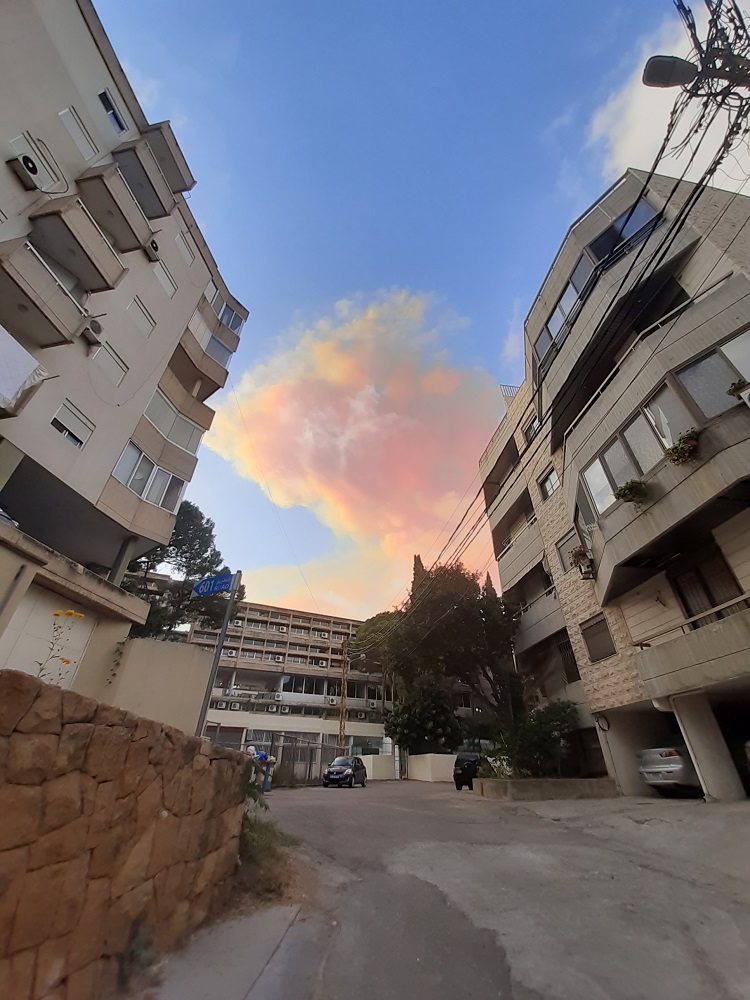
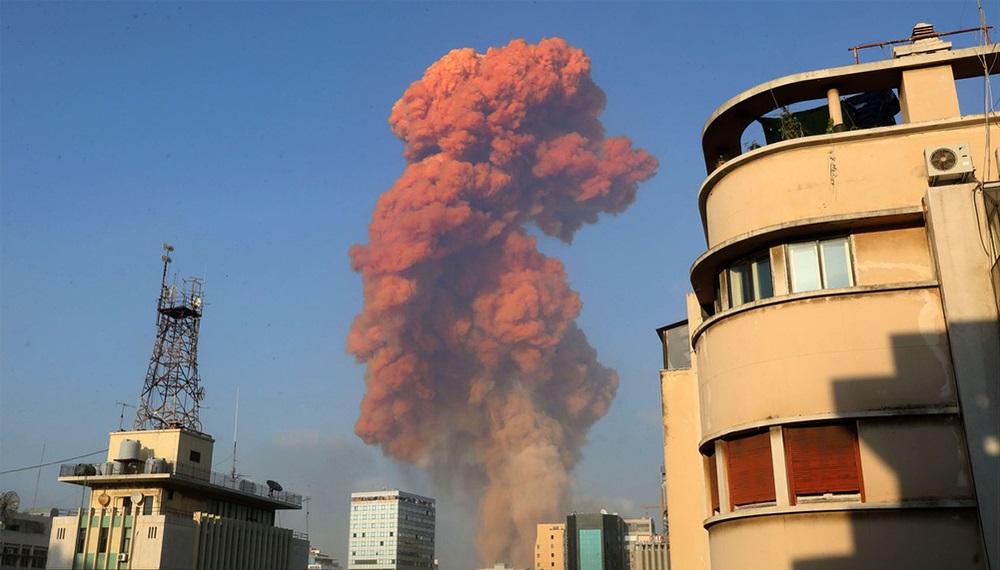
The massive explosion that rocked Beirut on Monday evening has left dozens dead, hundreds injured, and more than 300,000 displaced from their homes.
Millions around the world watched in horror as the detonation of 2,750 tons of confiscated ammonium nitrate laid waste to the Mediterranean port and surrounding neighborhoods. The equivalent of a 3.3-magnitude earthquake was felt deep into the coastal mountains of Lebanon and as far away as Cyprus.
The images of destruction reminded many of the small Middle Eastern nation’s 15-year civil war that lasted from 1975 to 1990.
Christianity Today spoke with Joseph Kassab, president of the Supreme Council of the Evangelical Community in Syria and Lebanon. Based in Beirut but born in Aleppo, Syria, Kassab reflected on the damage suffered in Christian neighborhoods, early efforts to assist the suffering, and hope for what this tragedy might produce in the Lebanese church.
These are very difficult days in Lebanon. What happened, and how bad is it?
It is very bad. I’ve been in Lebanon since 1984, experiencing the civil war. This is the first time that one single explosion caused such damage. People were terrified.
Until now, there is no agreement on the explanation, with many speaking according to their political point of view. Some say it was an electrical problem. Some say it was arson. Others assure that they heard jet fighters. We have to wait, hoping that the coming days will provide an answer.
This explosion destroyed so much of Beirut, across sectarian lines. What is the impact on the Christian community? The areas nearest the port in East Beirut are primarily Christian neighborhoods, and generally…
This article was originally published by Christianity Today, on August 5, 2020. Please click here to read the full text.
One hour later at work, and Sarah Chetti might have been one of thousands in a Beirut hospital.
Director of the INSAAF migrant worker ministry in Lebanon, Chetti’s colleagues described shards of broken glass flying through the air, and the metal frames of doors ripped from their hinges.
It was a similar experience for the one staff member inside the Youth for Christ youth center not far from the blast. To avoid the “colossal damage,” he ducked to the floor. Re-welding was necessary just to lock up the next day.
Peter Ford was fortunate. Working quietly in his faculty office at the Near East School of Theology near downtown Beirut, the first small reverberations stirred his curiosity to investigate the problem.
Moments later, the huge blast blew in his window and spewed the glass across his desk.
Miraculously, the dozen evangelical churches and ministries in Lebanon contacted by CT reported no deaths and few serious injuries caused by the massive explosion. The official national tally is now over 100 dead, with over 5,000 injured.
If they had, there would be nowhere for the bodies to go.
Habib Badr of the historic National Evangelical Church was forced to conduct the burial of two elderly members (whose deaths were unrelated to the explosion) as Beirut’s hospitals and morgues were all full.
Two Filipinos, however, were killed in the blast. And amid the ongoing economic suffering of Lebanon, several migrant domestic workers have been abandoned by families no longer able to pay for their services.
“They are distraught, worried, and scared,” said Chetti. “Problems are piling up one after the other. I’m reaching out to each one individually and praying for them, assuring them things will be okay.”
But migrants are not the only foreigners who are suffering.
“Many of our youth are Syrian refugees, so this is churning up all that stuff for them,” said Scot Keranen, director of operations for Youth for Christ. “We’re just checking in on them, and that is really tough right now.” Lebanese trauma goes further back in history. But this explosion was…
This article was originally published at Christianity Today, on August 5, 2020. Please click here to read the full text.
Compelled by civil war, the young woman took up arms to defend her people.
She later laid them down, as religion moved from identity to faith.
God, does Lebanon need the same?
Can faith demand arms? Is identity for sect or nation?
Which do you desire first?
The Maronite patriarch continued his call for neutrality. The Shiite mufti called it impossible.
Their evidence is the same: Lebanon is surrounded by regional trouble.
Trouble that again spilled over the border.
Claiming infiltration by a Shiite militia, Israel exchanged fire and launched cross-border shells.
The militia denied anything happened at all.
But it will. Their dead fighter in Syria demands retribution.
And if it comes, Israel pledges destruction of infrastructure. The price will be high.
Who benefits? Who wins? Does faith demand arms? Does fidelity to nation?
Does neutrality?
God, guide Lebanon in the necessary discussion.
Calm the region, with justice and peace.
Restore the economy, for fuel and food.
Reform the government, in all transparency.
Convict the heart, to make amends.
The courage of Khoueiry transformed to conviction. Her earlier certainty shifted to service.
Even as killing continued.
Honor her, God, both former and latter. Honor her enemies, who risked life for their cause.
And today honor all, as they repeat the cycle.
Until one day all swords become plowshares. And all men in fullness give honor to you.
May she rest in peace. May she inspire the same.
Amen.
Lebanon Prayer places before God the major events of the previous week, asking his favor for the nation living through them.
It seeks for values common to all, however differently some might apply them. It honors all who strive on her behalf, however suspect some may find them.
It offers no solutions, but desires peace, justice, and reconciliation. It favors no party, but seeks transparency, consensus, and national sovereignty.
How God sorts these out is his business. Consider joining in prayer that God will bless the people and establish his principles, from which all our approximations derive.
Lebanon feels on the precipice. Perhaps it has already fallen.
Is there a cushion? What impact awaits?
And who will be there to pick up the pieces?
The Maronite patriarch continued his call for neutrality. The president shelved it for other priorities, while a Shiite sheikh said resistance is necessary.
The French welcomed his efforts, urging reform. They then promised aid to the French language schools.
An Israeli strike in Syria killed a Lebanese member of a Shiite militia. They then beefed up the border, following vows to retaliate.
An American fighter in Syria buzzed a civilian flight in route from Iran. Frightened passengers reported injuries from the sudden turbulence.
The government agreed on a central bank audit. An IMF source said officials are stalling, while a judge put a freeze on the governor’s wealth—in advance.
Coronavirus cases continued their steady tick upward. So did unemployment, and the rate of inflation.
God, what happens next? What should?
If a call to neutrality serves to divide, is it of you? Many meddle in Lebanon; do you also have favorites?
And inside of Lebanon, is there solution? If money dries up, what about medicine?
Some citizens weep. Others go dance.
You ask your people to be with them both.
God, bless this nation.
Give it wisdom to distance from regional tensions. Give it strength to support every cause that is just.
Give it discernment, to judge well its friends.
God, bless these people.
Give them commitment to weed out corruption. Give them repentance for personal share.
Give them your healing, in body and soul.
If tensions are rising, God, perhaps you are moving. Perhaps you’ll divide the wheat and the tares.
Be merciful. Be just. Be gentle.
Lift the nation. Unite it together.
Guide it to righteousness. Guide it to peace.
Amen.
Lebanon Prayer places before God the major events of the previous week, asking his favor for the nation living through them.
It seeks for values common to all, however differently some might apply them. It honors all who strive on her behalf, however suspect some may find them.
It offers no solutions, but desires peace, justice, and reconciliation. It favors no party, but seeks transparency, consensus, and national sovereignty.
How God sorts these out is his business. Consider joining in prayer that God will bless the people and establish his principles, from which all our approximations derive.
Declared a mosque in principle, Hagia Sophia is now a mosque in practice.
Following his decree earlier this month, Turkish President Recep Erdoğan’s joined a coronavirus-limited 500 worshipers to perform Friday prayers in the sixth-century Byzantine basilica, underneath the covered frescoes of Jesus and the Virgin Mary.
Hundreds more gathered outside.
International condemnation resounded after the Turkish Council of State ruled to revert the UNESCO World Heritage Site back to its Islamic status. Conquered in 1453 by Ottoman sultan Mehmed II, the massive church was turned into a museum by the founder of the modern Turkish republic, Kamal Ataturk, in 1934.
Underreported in much of the criticism was a wider complaint.
“The action of the Turkish government evokes heavy memories on the desecration and destruction of holy sites of the Armenian people and other Christian nations by the Ottoman government for centuries,” said Garegin II, Supreme Patriarch and Catholicos of All Armenians.
There are an estimated 11 million Armenians worldwide, including 3 million in their modern nation-state.
Representing the diaspora from the Holy See of Cilicia, in Lebanon, Catholicos Aram I went into more detail.
“Soon after the Armenian Genocide, Turkey confiscated thousands of Armenian churches and transformed them into bars, coffee shops, and public parks,” he said, “ignoring the reactions and appeals of the international community.”
As Erdoğan is doing again now—and not just to the Hagia Sophia.
Turkey has assured the frescoes will be uncovered for all visitors (3.7 million last year) outside of prayer times—and now without a museum entry fee. More than 400 other churches continue to serve the 1 percent of Turks that are Christians.
But Erdoğan’s remarks in Turkish revealed a wider agenda. “The resurrection of Hagia Sophia is the sound of Muslims’ footsteps…”
This article was first published at Christianity Today, on July 24, 2020. Please click here to read the full text.
Lebanon is a small state. Yet it is full of many peoples.
Sects—to be fair. They are one people. Or are they?
Since its inception Lebanon has struggled to craft an identity.
Is it European? Is it Arab? Is it Syrian? Is it Phoenician?
Is it free?
So to be free they struck a pact. West and East, a bridge between.
And many then trampled upon it.
God in these times of trouble, strengthen Lebanon’s foundations.
The leader of one sect put forward his vision. The Maronite patriarch called for neutrality.
And again. And again. Forcefully.
And then he labeled a culprit. A Shiite party holds hegemony, pulling the nation East.
Is he right?
Should he speak?
The Shiite cleric says they defend the nation from the South. They have no objection to help from the West.
Others in Lebanon say sects are the problem. Let men of religion stick to their faith.
Two politicians of a Christian sect formed a national salvation front, calling for more protests.
And from the original protest movement, several formed a national civil front, urging the same.
Many answered. Far fewer than before.
God, bless the patriarch. He calls to what he believes is Lebanon’s founding.
Its original pact.
As a cleric, honor him in defense of his sect. And direct him as he seeks to transcend it.
Bless the Shiite party. They call to what they believe is Lebanon’s interest.
Its essential resistance.
As a cleric, honor him in defense of his sect. And direct him as he seeks to transcend it.
And for those who find ill in the sects to begin with, or those who condemn the political class, or any in public who work for their nation—bless them also.
Where their cause is just—rally them in peace and unity.
Where they find a better way—commit them to paths of inclusive reform.
God, many in Lebanon have a plea. Most call out for the common good. Some—with daily increase—are in dire need of individual rescue.
Give Lebanon consensus. Give Lebanon sovereignty.
Span the gulf between the peoples with the bridge of your favor. Make them one, as you are one.
Amen.
Lebanon Prayer places before God the major events of the previous week, asking his favor for the nation living through them.
It seeks for values common to all, however differently some might apply them. It honors all who strive on her behalf, however suspect some may find them.
It offers no solutions, but desires peace, justice, and reconciliation. It favors no party, but seeks transparency, consensus, and national sovereignty.
How God sorts these out is his business. Consider joining in prayer that God will bless the people and establish his principles, from which all our approximations derive.
In one of a wide-ranging series of legislative reforms, apostates from Islam no longer face the death penalty in Sudan.
“We [will] drop all the laws violating the human rights in Sudan,” Justice Minister Nasredeen Abdulbari said Sunday during an interview on state television.
“We are keen to demolish any kind of discrimination that was enacted by the old regime, and to move toward equality of citizenship and a democratic transformation.”
In April 2019, following weeks of massive revolutionary demonstrations, Christians joined in cheering the military overthrow of longtime President Omar al-Bashir.
In his place was installed a joint military-civilian Sovereign Council slated to govern until 2022, with rotating leadership.
Importantly, current head General Abdel Fattah Al-Burhan endorsed the new revision. The move followed renewed protests demanding the government accelerate the pace of reforms.
A few days prior, Prime Minister Abdullah Hamdok, a civilian, replaced several cabinet ministers, fired the police chief, and criminalized female genital mutilation (FGM).
A UN-backed survey in 2014 estimated 87 percent of Sudanese women between the ages of 15 and 49 have been subjected to the procedure. The Miscellaneous Amendments Act—approved in April but only now publicized—also freed Sudanese women from…
This article was first published at Christianity Today, on July 13, 2020. Please click here to read the full text.
In times of crisis, luxury gives way to need. Give the Lebanese their daily bread.
But how?
The nation has long eaten its imports – up to 85 percent of all consumption. Even considered staples come from abroad.
May Lebanon thank you for years of plenty.
And now?
May Lebanon seek you in times of want.
Amid the political wrangling, a Shiite party proposed an agricultural jihad. In bitter rebuke of former financial policy, they urged an economic shift.
To the East, but also to the Earth.
But others refuse a turn in geography, asking instead for return of deposits. The life savings of many is frozen in banks.
And others remind that in mountainous Lebanon, only 12 percent of land is arable. Can rooftops and balconies be a true option?
Meanwhile, those who toil in the plains warn of a farming revolt. In this time of harvest, will they sell precious wheat to the state? God, there is so much distrust.
Replace it with equity.
It is good to grow food. You formed man in a garden.
Yet from our sin there is sweat. With our labor there are thorns.
In our gluttony dwells injustice.
God, there is honor in finance—wisdom in the creation of wealth. You have made us stewards of creation, necessitating many roles. Let each Lebanese serve you and his nation, with the gifts you have given.
But in this time of crisis, give grace to the grower. May he who scatters seed find good ground.
And for those in other sectors, give consensus. Guide Lebanon’s leaders to best policy.
If you feed the birds of the air, feed also the people.
And with daily bread, prompt daily gratitude. Call forth daily repentance. Inspire daily forgiveness.
Deliver Lebanon from evil.
Amen.
Lebanon Prayer places before God the major events of the previous week, asking his favor for the nation living through them.
It seeks for values common to all, however differently some might apply them. It honors all who strive on her behalf, however suspect some may find them.
It offers no solutions, but desires peace, justice, and reconciliation. It favors no party, but seeks transparency, consensus, and national sovereignty.
How God sorts these out is his business. Consider joining in prayer that God will bless the people and establish his principles, from which all our approximations derive.