Bahri Beytel never thought he would find Turkish food in Armenia.
An ethnic Turk and former Muslim, the pastor of Bethel Church in Istanbul skipped McDonalds and KFC in Yerevan, the capital city, in order to complete a spiritual mission.
Six years ago, prompted to take a journey of reconciliation, he went in search of an authentic Armenian restaurant—and found lahmajun, a flatbread topped with minced meat, vegetables, and spices.
One letter was off from the Turkish spelling. Smiling, he ordered it anyway, in English.
“Are you a Turk?” snapped the owner—in Turkish—after Beytel pronounced it incorrectly. “God spare me from becoming a Turk.”
The owner’s family hailed from Gaziantep, near Turkey’s border with Syria, which before the genocide was a mixed religious city with a thriving Armenian community. Ignoring the insult, the pastor explained he was a Christian, not a Muslim, and had come to ask for forgiveness on behalf of his ancestors.
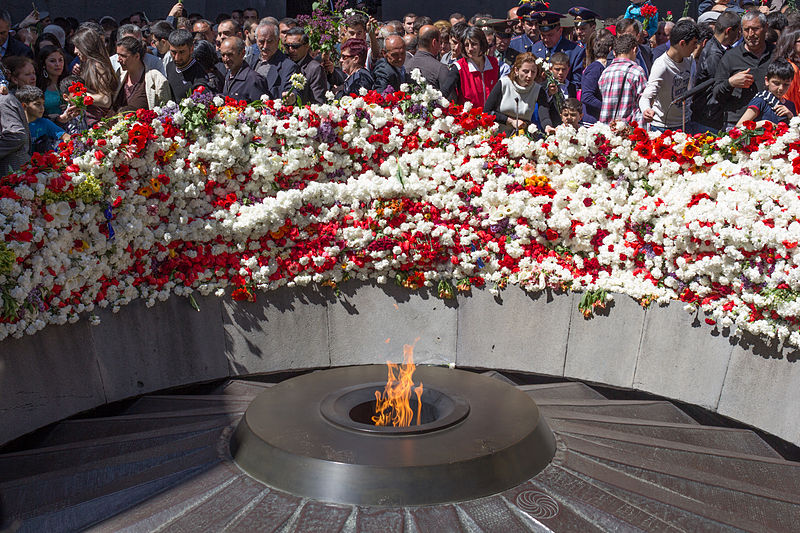
Up to 1.5 million Armenians were killed between 1914–1923, as the Ottoman Empire crumbled. Once home to many diverse Christian communities, the modern state was built on a secular but ethnic Turkish foundation.
No Turk can be a Christian, the restaurant owner scoffed. He demanded the secret sign made centuries ago by believers in the catacombs.
Beytel drew the fish.
By the end of the conversation, the man gave him a hug, with a tear in his eye.
“If Turkey takes one step, the Armenians are ready to forgive,” said Beytel, of his time at a conference in the Armenian capital. “It was amazing to hear them call me brother.” There was more to come. One year later…
This article was originally published at Christianity Today, on October 21, 2020. Please click here to read the full text.
As demonstrators gathered to mark the one-year anniversary of their uprising, they brought candles.
There were chants. There were flags.
But this time, no dancing. No celebration.
Instead they marched to the port. To commemorate not a movement, but a tragedy.
Honor this, God.
Much has been lost in this year of protest. The value of currency. The savings of families. The lives of dozens; the homes of tens of thousands.
And for many, the legitimacy of the political class.
Society cannot function without politics, God. Governance is of your good purpose.
Aid their renewal, their reform, or their replacement – as your good will determines.
A top Sunni leader offered his efforts. Rejected one year ago, he will try again.
But the top Christian parties refused him. They side with the French who demand specialist government.
Some say they side for a particular ministry. Same as the Shiites a candidate before.
Addressing the anniversary, the president says change must be constitutional. Within institutions reform must take place.
But can it? What is the message of this year?
Submit and stay silent? Let us represent you.
All are corrupted? Let us tear it all down.
The nation is powerless? Let us wait for America.
The nation is hopeless? Let us travel abroad.
God, governance is of your good purpose. Bless all those inspired to take up the cause.
Their numbers exploded back last October. Their stamina dwindled the year that has passed.
Hope flickers.
Let these remain with it: Faith. Love.
Like the companions of Moses, they hold up the arms of hope. In prayer. In lament. In expectation.
Faith, that the nation can still come together. Love, for the effort that might make it so.
These three are needed, God.
Your light is needed.
Lebanon is needed.
Amen.
To receive Lebanon Prayer by WhatsApp, please click this link to join the closed comments group.
Lebanon Prayer places before God the major events of the previous week, asking his favor for the nation living through them.
It seeks for values common to all, however differently some might apply them. It honors all who strive on her behalf, however suspect some may find them.
It offers no solutions, but desires peace, justice, and reconciliation. It favors no party, but seeks transparency, consensus, and national sovereignty.
How God sorts these out is his business. Consider joining in prayer that God will bless the people and establish his principles, from which all our approximations derive.
Lebanon Prayer places before God the major events of the previous week, asking his favor for the nation living through them.
It seeks for values common to all, however differently some might apply them. It honors all who strive on her behalf, however suspect some may find them.
It offers no solutions, but desires peace, justice, and reconciliation. It favors no party, but seeks transparency, consensus, and national sovereignty.
How God sorts these out is his business. Consider joining in prayer that God will bless the people and establish his principles, from which all our approximations derive.
Sometimes prayer can generate more prayer. While mine is for general principles, you may have very specific hopes for Lebanon. You are welcome to post these here as comments, that others might pray with you as you place your desires before God.
If you wish to share your own prayer, please adhere to the following guidelines:
1) The sincerest prayers are before God alone. Please consult with God before posting anything.
2) If a prayer of hope, strive to express a collective encouragement.
3) If a prayer of lament, strive to express a collective grief.
4) If a prayer of anger, refrain from criticizing specific people, parties, sects, or nations. While it may be appropriate, save these for your prayers alone before God.
5) In every prayer, do your best to include a blessing.
I will do my best to moderate accordingly. Thank you for praying for Lebanon and her people.
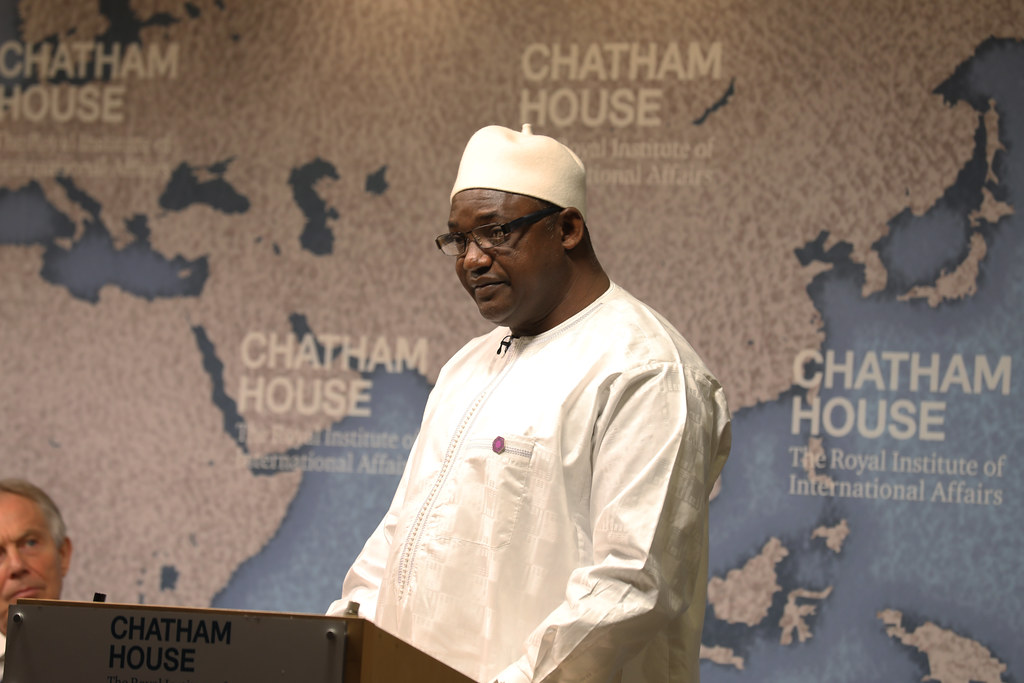
Chatham House: Shaping The Gambia’s Future: How to Build a Path to Sustainable Progress, President Adama Barrow, 18 April 2018, cht.hm/2JZwqH0
The Gambia almost had a new constitution.
Instead, the English-speaking, sliver-shaped West African river nation—known for Muslim-Christian coexistence—will return to the 1997 constitution instituted by former dictator Yahya Jammeh and amended by him more than 50 times to entrench his power.
One year before being deposed in 2016 by popular protests, Jammeh declared Gambia to be an Islamic state.
The new draft constitution would have imposed term limits on the president, guaranteed religious freedom, and forbidden any future declaration of a state religion.
Muslims comprise more than 9 in 10 Gambians, totaling 2 million. Lamin Sanneh, the Muslim-born Gambian theologian who died last year, praised his nation’s participation in a tradition of “pacifist Islam.”
Yet many of the nation’s Christians, who comprise only about 5 percent of the population, still feel like they dodged a bullet.
“Truly important positive changes were made in this [draft] constitution,” said Begay Jabang, a member of the Gambia Christian Council (GCC) campaign team, naming the separation of powers and the strengthening of the legislature. “This would have been a significant step forward given the history of our nation.
“But at the same time,” she said, “provisions were introduced in the judiciary that would have changed the face of our nation, moving it down the path of an Islamic state as Jammeh did before.”
The official GCC statement outlined the changes in detail, and was blunt in its assessment. “The deafening silence…
This article was originally published at Christianity Today, on October 12, 2020. Please click here to read the full text.
There is nothing new under the sun. But must the shadows reappear so quickly?
Two months after the port destruction, gas bottle explosions cost lives in Beirut. One here, two there.
Five months after the clampdown on smuggling, complaints renew about fuel lost to Syria. Lines here, limits there.
Twelve months after wildfires ravaged the mountains, new blazes rage from north to south. Consuming here, containing there.
And almost a year since protests drove him from office, a Sunni leader signals his readiness to return. Support here, scorn there.
God, is life in Lebanon on a loop?
But there is also withdrawal.
The Central Bank said certain subsidies will be lifted. To extend on essentials means other prices must rise.
As has happened already.
And thousands of youth seek refuge abroad. To find work at all they must leave all they hold dear.
As did many before them.
God, hold back the tide.
Fire is part of your good creation. Spare the enjoyment of all nature’s beauty, and the homes that delight in the work of your hands.
But as man adds to your nature, accidents happen. Spare the genius of cities from poor regulation, and the lives that depend on provision of fuel.
For greed ever threatens a godly contentment. Spare the nation the evil of ill-gotten gain.
Some say the prime ministry embodies corruption. Others that he is the hope for relief.
He promises working within French initiative. Millions in aid will follow reforms.
Funds that might permit maintaining the subsidies. Investments that augur creation of jobs.
God, you know his heart.
Imbue him—or whoever next takes on this role of leadership—with a commitment to your principles.
Strengthen all in the struggle of political life.
Bless all who have suffered from failures so far.
You make all things new, God.
That which was old, reused, and discarded. That set aside for a lust of the eyes.
Every idea that was mocked and disparaged. Every soul in despair things will ever improve.
The only condition: To return to you.
Revive Lebanon, God.
Lift her spirits.
Amen.
To receive Lebanon Prayer by WhatsApp, please click this link to join the closed comments group.
Lebanon Prayer places before God the major events of the previous week, asking his favor for the nation living through them.
It seeks for values common to all, however differently some might apply them. It honors all who strive on her behalf, however suspect some may find them.
It offers no solutions, but desires peace, justice, and reconciliation. It favors no party, but seeks transparency, consensus, and national sovereignty.
How God sorts these out is his business. Consider joining in prayer that God will bless the people and establish his principles, from which all our approximations derive.
Lebanon Prayer places before God the major events of the previous week, asking his favor for the nation living through them.
It seeks for values common to all, however differently some might apply them. It honors all who strive on her behalf, however suspect some may find them.
It offers no solutions, but desires peace, justice, and reconciliation. It favors no party, but seeks transparency, consensus, and national sovereignty.
How God sorts these out is his business. Consider joining in prayer that God will bless the people and establish his principles, from which all our approximations derive.
Sometimes prayer can generate more prayer. While mine is for general principles, you may have very specific hopes for Lebanon. You are welcome to post these here as comments, that others might pray with you as you place your desires before God.
If you wish to share your own prayer, please adhere to the following guidelines:
1) The sincerest prayers are before God alone. Please consult with God before posting anything.
2) If a prayer of hope, strive to express a collective encouragement.
3) If a prayer of lament, strive to express a collective grief.
4) If a prayer of anger, refrain from criticizing specific people, parties, sects, or nations. While it may be appropriate, save these for your prayers alone before God.
5) In every prayer, do your best to include a blessing.
I will do my best to moderate accordingly. Thank you for praying for Lebanon and her people.
Ghazanchetsots (Holy Saviour) Cathedral in the city of Shusha
… The Armenian Foreign Ministry denounced the shelling as a “monstrous crime and a challenge to the civilized humankind,” warning Azerbaijan that targeting religious sites amounts to a war crime.
Azerbaijan’s Defense Ministry denied attacking the cathedral, saying its army “doesn’t target historical, cultural and, especially, religious buildings and monuments.”
A priest at the cathedral, who identified himself only as Father Andreas, expressed anguish over the attack.
“I feel the pain that the walls of our beautiful cathedral are destroyed,” he said. “I feel the pain that today the world does not react to what’s happening here and that our boys are dying defending our Motherland.”
Built in 1888, the cathedral suffered significant damage during ethnic violence in 1920. It was restored after fighting between Armenian and Azerbaijani forces in the 1990s and is the Armenian Apostolic Church’s diocesan headquarters in Nagorno-Karabakh, which it calls the Republic of Artsakh.
Standing 115 feet tall, it is understood to be one of the largest Armenian churches in the world.
“They are bombarding our spiritual values,” Artsakh Archbishop Pargev Martirosyan told ArmenPress, equating the incident with ISIS terrorism, “when we are restoring and preserving mosques.”
Located in Shusha, the cathedral is located far from the “line of contact” [about 25 miles] separating the two militaries.
It is also the site of Armenian-rebuilt mosques, with a special place in Azerbaijani history.
“Religion is an important element, but not the only element,” said Mark Movsesian, co-director of the Center for Law and Religion at St. John’s University Law School, during a Philos Project webinar briefing today. “But [this shelling] is hard to interpret except as…
This article was originally published at Christianity Today on October 9, 2020. I contributed additional reporting to the AP. Please click here to read the full text.
Image: Illustration by Mallory Rentsch / Source Images: Win McNamee / Scott Olson / Getty Images
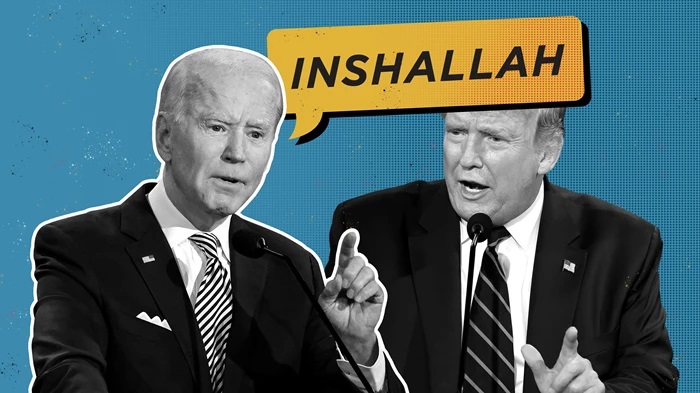
Unnoticed by many during the contentious first presidential debate, Joe Biden introduced a new Arabic word into the American lexicon.
Inshallah.
Technically, it is three words, in both Arabic and English: “in sha’ Allah,” or “if God wills.”
“If you take it literally, you won’t get the intent,” said Ramez Atallah, general director of the Bible Society of Egypt.
“It can also mean, ‘It will never happen,’ and this is probably what Biden meant.”
Asked by the moderator about his tax returns, President Donald Trump answered, “You’ll get to see it.”
To which the former vice president interjected, “When? Inshallah?”
Trump continued, and the moment was lost to almost all but Arabic-speaking viewers. Muslim Twitter users lit up in astonishment, wondering if they heard correctly.
“Enchilada” was about as close as other ears heard.
But while one Muslim writer has humorously called inshallah the Arabic equivalent of “fuggedaboudit,” what should Christians make of the phrase?
“Everything is uncertain,” Atallah said. “We live in an unpredictable world, and no one is ever sure that what they plan will be accomplished.” He highlighted the biblical equivalent in…
This article was originally published at Christianity Today, on October 7, 2020. Please click here to read the full text.
Fierce fighting has broken out in the Caucasus mountains between the Caspian and Black seas, pitting Christian Armenians versus Muslim Azeris.
But is it right to employ their religious labels?
“Early Sunday morning [Sept. 27], I received a phone call from our representative in the capital city,” said Harout Nercessian, the Armenia representative for the Armenian Missionary Association of America (AMAA).
“He said they are bombing Stepanakert. It is a war.”
One week later, the fighting continues. At stake is control over the Armenian-majority enclave of Nagorno-Karabakh, home to 170,000 people in a Delaware-sized mountainous region within Azerbaijan.
More than 200 people have reportedly died, though Azerbaijan has not released its number of casualties.
Administered by ethnic Armenians ever since a ceasefire was declared in 1994, locals call the region the Republic of Artsakh. Military skirmishes have not been unusual. There have been more than 300 incidents since 2015, according to the International Crisis Group.
This escalation is the most serious since 2016, with Azerbaijani forces attacking multiple positions along the 120-mile “line of contact.”
But the shelling of civilian cities represents a worrisome development.
As does the role of Turkey—and the Syrian militants it allegedly recruited—which has pledged full support for Azerbaijan.
Russia, France, and the United States—partners in the “Minsk Group” which has overseen negotiations between the two nations since 1992—have called for an immediate ceasefire. But Turkey has encouraged Azerbaijan President Ilham Aliyev’s refusal, conditioning a ceasefire on…
This article was originally published at Christianity Today, on October 6, 2020. Please click here to read the full text.
Image: Illustration by Sarah Gordon / Photo Courtesy of Anne Zaki
Anne Zaki is assistant professor of preaching and practical theology at the Evangelical Theological Seminary in Cairo. Raised in a Presbyterian home in Cairo, at age 16 she left the Middle East to travel alone to a progressive boarding school on Vancouver Island, Canada.
In 2000, she married a Syrian-Canadian pastor, and as a mother of four, she completed her master of divinity degree from Calvin Theological Seminary in 2009. Zaki was always confident she would return to Cairo, and the family relocated there nine months into the chaos of Egypt’s 2011 revolution.
CT spoke with Zaki about the transformative power of Scripture in her own life and in the Egyptian church.
How did Scripture shape your early faith?
I grew up in an environment that was saturated with Scripture. My father was a pastor. My grandfather was a pastor. After retirement, my grandfather came to live with us. I would wake up every morning to hymns and Scripture being read out loud. His prayers were incredible, almost as if he was echoing God’s words back to him.
Eight months before going to Canada, I had an experience of personal encounter with Jesus. I knew I was different. Even my family noticed the change.
But in my new school, for the first time I was being exposed to religions other than Christianity and Islam. And it wasn’t just exposure. It was a school that was set up to appreciate and promote diversity. I had my first big spiritual crisis. I had to ask myself: Why do I believe what I believe? Is it just because I grew up in it?
I sort of made a deal with God. I told him, If you really are who I have known you to be, who they told me that you are, then prove it to me through your Word without the influence of anyone else. So for me that meant no church, no youth group—not even Christian music. And during that period of six months, God’s Word was sufficient to reveal himself, to prove himself, to be his witness.
How did you sense God revealing himself to you through his Word? Can you explain further?
Every day, I would read a certain portion of Scripture, meditate on it, and pray it back to God. The things that didn’t make sense I would throw back at him, and we’d have a debate about them. Usually…
This article was originally published in the special September print edition on women’s voices in scripture engagement. Please click here to read the full text, where you can download the entire issue for free.
Help Lebanon in the waiting. May it be a time of rest.
For many it is forced. The government put over 100 towns and villages in lockdown. One week entire, with nowhere to go.
And likely much more, without a government. Politicians spread blame when the French effort failed. It might get revived, but no signs are pending.
Some say Lebanon is on pause until American elections. Some say the country has no time to lose.
The Central Bank said that the worst is behind it. But the dollar exchange has renewed its fall.
Life continues, God. So does the suffering of many.
But could hope be pending? Might there be a line, finally drawn in the sand?
The maritime border is up for discussion. Lebanon and Israel will meet to divide.
A framework agreement is already decided. Each one their right to the natural gas.
Is there enough to revive the economy? Will it take too much time to prevent the collapse?
And will it be fair?
God, in this time of waiting, lead Lebanon to pray.
For transparent arrangements. For equitable share.
For warming relations. For a peace that is just.
And let this peace come also between the parties. Let them fight for their cause in support of the whole.
For national consensus. For strong institutions.
For a soon government. For thorough reform.
And to the degree necessary, American clarity. Set Lebanon’s path upon sovereign decision. Yet so much of the world awaits what will be.
It is not all America’s power of decision. Heal the earth of Corona, paralysis, fear.
For slowing its spread. For needed supplies.
For developed vaccines. For this plague to pass.
In all of these, God, there is little most can do but wait.
And trust.
And rest.
God, Lebanon needs it. Thank you for this pause.
If only on hold, then the pressure is building. Until resolution, the tension stays tight.
But there is life beyond lockdown. Play beyond politics. Love beyond lucre.
There is family. There is nature. There is you.
Things far more essential. Things far more secure.
Strengthen the nation to resume its struggle. Let no one grow weary in doing the right.
But now, give a sabbath.
Hold Lebanon close.
Amen.
To receive Lebanon Prayer by WhatsApp, please click this link to join the closed comments group.
Lebanon Prayer places before God the major events of the previous week, asking his favor for the nation living through them.
It seeks for values common to all, however differently some might apply them. It honors all who strive on her behalf, however suspect some may find them.
It offers no solutions, but desires peace, justice, and reconciliation. It favors no party, but seeks transparency, consensus, and national sovereignty.
How God sorts these out is his business. Consider joining in prayer that God will bless the people and establish his principles, from which all our approximations derive.
Lebanon Prayer places before God the major events of the previous week, asking his favor for the nation living through them.
It seeks for values common to all, however differently some might apply them. It honors all who strive on her behalf, however suspect some may find them.
It offers no solutions, but desires peace, justice, and reconciliation. It favors no party, but seeks transparency, consensus, and national sovereignty.
How God sorts these out is his business. Consider joining in prayer that God will bless the people and establish his principles, from which all our approximations derive.
Sometimes prayer can generate more prayer. While mine is for general principles, you may have very specific hopes for Lebanon. You are welcome to post these here as comments, that others might pray with you as you place your desires before God.
If you wish to share your own prayer, please adhere to the following guidelines:
1) The sincerest prayers are before God alone. Please consult with God before posting anything.
2) If a prayer of hope, strive to express a collective encouragement.
3) If a prayer of lament, strive to express a collective grief.
4) If a prayer of anger, refrain from criticizing specific people, parties, sects, or nations. While it may be appropriate, save these for your prayers alone before God.
5) In every prayer, do your best to include a blessing.
I will do my best to moderate accordingly. Thank you for praying for Lebanon and her people.
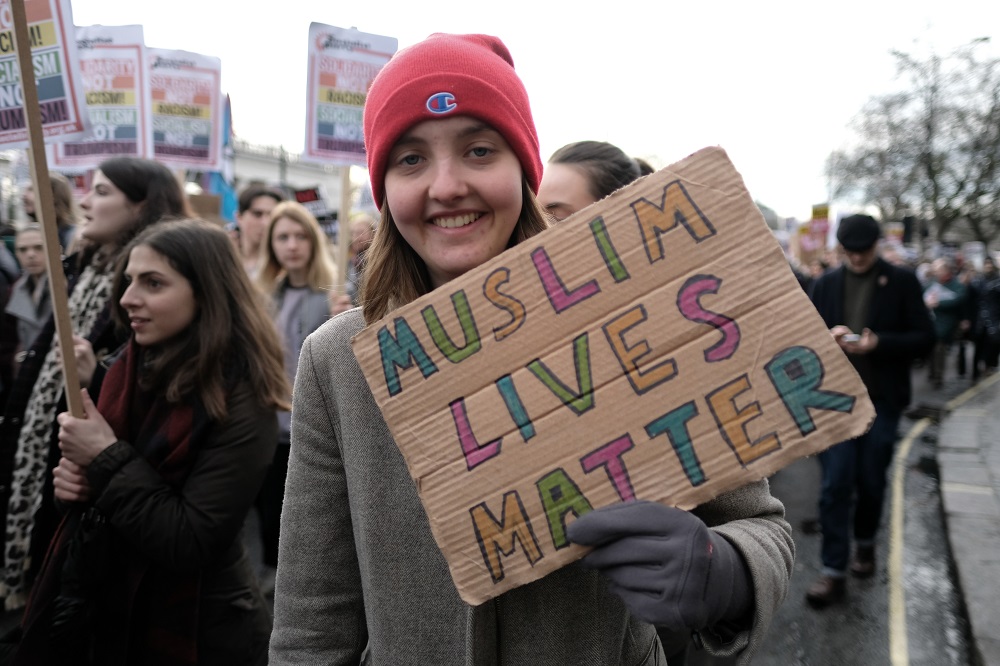
In a tightly contested presidential race, might Muslims swing the US election?
Referencing the release of President Donald Trump’s tax returns in Tuesday’s debate, former vice president’s Joe Biden’s “inshallah” [Arabic for “if God wills”] may have been a nod to the strong support he receives from this community.
But according to data from the fifth annual American Muslim Poll, Muslims make up only 1 percent of the American population, only 74 percent are eligible to vote, and only 57 percent are registered.
Why then do they occupy such an outsized space in the mind of many American evangelicals? And what should evangelicals better understand about the American Muslim community and their political preferences? CT spoke with Dalia Mogahed, director of research at the Institute for Social Policy and Understanding (ISPU), which commissioned the poll.
…
The level of support for President Trump has doubled among Muslims, from 13 percent in 2018 and 16 percent in 2019 to 30 percent in 2020. How to you interpret this finding? We are still trying to understand it ourselves. One thing is…
This article was originally published at Christianity Today, on October 1, 2020. Please click here to read the full text.
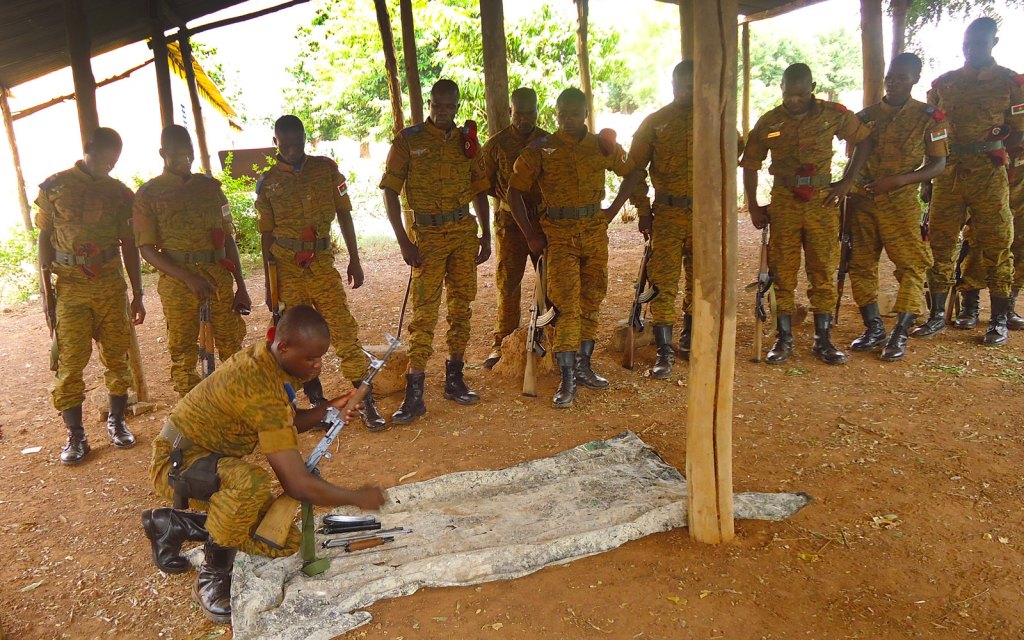
What should Christians do when their government cannot protect them from terrorism? As the world’s first post-coronavirus coup shakes Mali, nearby Burkina Faso is experimenting with a controversial lesson in self-defense.
…
To gain perspective on Burkina Faso, CT interviewed Joanna Ilboudo, secretary-general for ACTS Burkina, a nonprofit Christian association dedicated to helping the nation’s widows and orphans without religious distinction. She in turn took the pulse of local Christian leaders and laity on behalf of CT.
Located in West Africa’s volatile Sahel region south of the Sahara Desert, the Colorado-sized Francophone country of 20 million had been home to one of the continent’s model nations for peaceful coexistence. Around 60 ethnic groups divide the population religiously into 61-percent Muslim, 19-percent Catholic, 4-percent Protestant, and 15-percent indigenous beliefs.
Muslims are located primarily in the north, east, and west border areas, with Christians located in the south and central areas. But schools are mixed and intermarriage is common, while 80 percent of the population works in farming.
Jihadist groups began attacking Burkina Faso in 2015, following the popular removal of a president in power for 27 years. The transitional government ended his policy of allowing terrorists to harass neighboring Mali from across the border.
Three jihadist groups proliferate, one affiliated with al-Qaeda, and have targeted grain fields and the educational system. But according to reports, only the Islamic State West Africa Province (ISWAP)—which has wreaked havoc in Nigeria—has specifically targeted Christian communities.
Ilboudo’s ministry, whose French acronym translates to “Christian Action, All for Solidarity,” is another means to help the ever-increasing victims.
To gather Christian perspective on the government’s militia initiative, she interviewed a well-known theologian teaching in the largest theological college in Burkina Faso; a member of the national Assemblies of God executive board; a lawyer working with international diplomats; and a social worker in the field of education. She also conducted five focus group conversations, one specifically of women and another of youth this past spring.
The Burkina Faso government has approved a plan to arm civilians to fight terrorist groups. Please explain the basics.
Following the approval of the National Assembly of Burkina Faso, the groups to be formed are called Volunteers for the Defense of the Fatherland. Their mission is to contribute, when necessary and requested by the army, to the defense and protection of populations in the villages.
The law specifies that individual volunteers must obtain the approval of the local population in general assembly. It requires their patriotism, loyalty, discipline, neutrality, integrity, and sacrifice, even unto death.
What are the hopes for results, and are they achievable?
Without volunteers, the people in the villages have been taken by surprise by terrorists and unable to defend themselves. Now they are training…
This article was originally published at Christianity Today, on September 30, 2020. Please click here to read the full text.
Lebanon is not yet in the place of damnation. But the president fears it is not that far off.
Asked where the country is headed if no government forms: To Hell, he replied, as if it was clear.
And as if to prefigure—munitions exploded, of a Shiite militia which stored in the south.
For too many, hell is already here.
Food prices are rising 300 percent. Life savings evaporate. Fuel oil is rationed. Even an egg needs black market supply.
And then the prime minister-designate quit.
He insisted on experts to lead a small cabinet, with ministries rotating among all the sects.
But Shiites insisted on the file for finance. As long as some posts stay sect-based they must name their choice.
Government formation is back to square one.
Abandon all hope, as in Dante’s Inferno?
The gnashing of teeth, as the gospels describe?
God, there is no hell where you are present.
Abandon not Lebanon, nor the people therein.
But will France?
Its initiative lies in tatters, though a Shiite leader still supports its content.
Will it sanction as threatened? Will it keep on hold contingent aid?
France warned that the nation risks disappearing. Will Lebanese citizens hasten this end?
Emigration. Obstinance. Rivalry. Greed.
Responsibility?
The world has its share, both East and West. Some see only a pawn in their regional game.
But God, strengthen your leaders to shoulder this burden.
Give vision to see the small glimmer of light.
And humility, to call for dependence on you.
Designate a prime minister to roll once more the boulder. A Sisyphus able to surmount the peak.
But with Lebanon snared in this form of perdition, hold fast the rock upon which they can build.
A city on a hill. A message to the nations.
A free land of liberty, welcome to all.
Let no one pretend, God. So few are hopeful. Hell is other people, so many despair.
You are a God of rescue, of ransom. What payment is needed?
Repentance. Confession. For each one, his own.
Grant your mercy. None deserve it.
Spare Lebanon, humbled, from righteous fire.
Bless all who serve it, wishing its peace.
Amen.
Lebanon Prayer places before God the major events of the previous week, asking his favor for the nation living through them.
It seeks for values common to all, however differently some might apply them. It honors all who strive on her behalf, however suspect some may find them.
It offers no solutions, but desires peace, justice, and reconciliation. It favors no party, but seeks transparency, consensus, and national sovereignty.
How God sorts these out is his business. Consider joining in prayer that God will bless the people and establish his principles, from which all our approximations derive.
Sometimes prayer can generate more prayer. While mine is for general principles, you may have very specific hopes for Lebanon. You are welcome to post these here as comments, that others might pray with you as you place your desires before God.
If you wish to share your own prayer, please adhere to the following guidelines:
1) The sincerest prayers are before God alone. Please consult with God before posting anything.
2) If a prayer of hope, strive to express a collective encouragement.
3) If a prayer of lament, strive to express a collective grief.
4) If a prayer of anger, refrain from criticizing specific people, parties, sects, or nations. While it may be appropriate, save these for your prayers alone before God.
5) In every prayer, do your best to include a blessing.
I will do my best to moderate accordingly. Thank you for praying for Lebanon and her people.
Is Lebanon simply spinning its wheels? Could success come instead by rotating portfolios?
A deadline to form a new government has passed. Agreed by political parties with France, France then said there is no deadline.
Will then the pattern of negotiation return? Will it be months until government forms?
Months in extension of Lebanese suffering.
Following US announcement to sanction their allies, Shiite parties insist on keeping the Finance Ministry.
Sunni parties say all ministries should rotate. No sect should have exclusive claim.
But finance is money, and money is power. Power to place or withhold a signature.
No government policy proceeds without it.
In possession do they dominate, God? In absence are they squeezed?
What is fair? What is right? What is good?
Not the paralysis that stymies formation. Not the insistence that prevents reform.
God, weigh the intentions of all foreign nations. Bless them accordingly, to the degree that they help.
But weigh also each sect in its various politics.
Do they seek domination? Do they need to be squeezed?
From abroad, from the people, from their consciences, God, help them find consensus.
For profit, for power, for patriotism, God, lead them to what is right.
Your principles of service, of sacrifice, of sharing.
Of salvation.
God does Lebanon run, only in circles? Is it only a gear, turned by agenda?
Plant her cedars, make them strong. May the birds of the air come and nest in their branches.
And may the people rest in their shade.
Amen.
Lebanon Prayer places before God the major events of the previous week, asking his favor for the nation living through them.
It seeks for values common to all, however differently some might apply them. It honors all who strive on her behalf, however suspect some may find them.
It offers no solutions, but desires peace, justice, and reconciliation. It favors no party, but seeks transparency, consensus, and national sovereignty.
How God sorts these out is his business. Consider joining in prayer that God will bless the people and establish his principles, from which all our approximations derive.
On July 31, Jocelyne Khoueiry passed away mercifully five days before seeing Beirut destroyed, again. A key player in the civil war that once tore the city apart, she spent the rest of her life trying to stitch it back together, and all of Lebanon with it.
The Beirut explosion on August 4 reminded many of the worst days of the 1975-1990 conflict. The Lebanese capital divided into a Christian east and a Muslim west, alternately shelled by militias and foreign armies vying for control.
But though far smaller in scale than the blast at the port, the deaths caused by Jocelyne’s 1976 hand grenade also shook the nation.
Born as one of two daughters in a Maronite Christian family of ten, Jocelyne grew up across the street from the Beirut headquarters of the Phalange.
Originally a Christian youth movement dedicated to an independent Lebanon, the Phalange took great offense at the state-within-a-state formed by the 300,000 Palestinians who were fleeing war with Israel. The 1969 Cairo agreement gave the refugees sovereignty to organize their own communities and continue the armed struggle, with the blessing—though not involvement—of their host nation.
The Khoueiry family provided some of the earliest fighters to the Phalange Christian militia formed in response, and a not yet 20-year-old Jocelyne enlisted with her brothers. In 1975, the civil war broke out in earnest, and several Lebanese Muslim militias sided with the Palestinians.
Jocelyne was not a practicing Christian; she preferred the Beirut nightlife. But on May 7, 1976, on a routine patrol on the roof of the Regent Hotel, she had a vision. She said the Virgin Mary appeared to her, and she saw herself kneeling in veneration. But she was also overcome with a sense of dread, and prayed that God would protect the six other female fighters stationed there with her.
On the way down from the roof, she saw advancing Palestinian militants.
The Regent sat on a dividing line between mixed and wholly Christian neighborhoods of Beirut, and Jocelyne’s squad was completely alone. While the Phalange militia’s men had anticipated defending a different hotel encampment, a 300-strong regiment of Palestinians attacked the female outpost instead.
The battle lasted six hours. Eventually, Jocelyne risked exposure by climbing back to the roof, and threw down a hand grenade that miraculously killed the Palestinian commander. The militia scattered, and the line was held.
Jocelyne became a legend. But in the years that followed, she contemplated…
This article was originally published at Christianity Today on September 14, 2020. Please click here to read the full text.
Lebanon needs a government. Lebanon needs accountability.
In their absence, fires burn.
An alleged welding accident sparked the most recent blaze, retraumatizing many. They opened their windows, fearing a blast.
And in poured the smoke.
Every solution yields a problem.
Those who can, flee to the mountains. Those more able, take refuge abroad.
And some board a dinghy, desperate for Cyprus. Asylum seems their only hope.
But the West complicates also.
The French demand a capable cabinet. Their deadline is looming.
The Americans sanction accused politicians. Their reach is growing.
Every proposal undoes another.
Politicians jockey over portfolios. Donated tea is given to guards. Protesters rally against all complicit.
An audit of central bank finance begins.
God, the nation needs your cooling water. The nation needs your fiery rebuke.
Help Lebanon listen. Help Lebanon heal.
So many issues require consensus. Bring leaders together to do what is right.
They differ substantially over the vision. Keep sectarian interest from making them blind.
And of personal interest, God, hold them accountable.
Every sin compounds, corrupting the whole.
Be righteous. Be just. May the intersection spare the people.
But no one is innocent before you, God. Let each repent of their fair share.
Be merciful.
Let it not be too late, God. A fire consumes without discrimination.
You are a consuming fire.
Refine, but do not devour.
Remember the beauty here you have created. Remember your image stitched into each soul. Remember the freedom enjoyed by so many.
Let every heart burn, but only for you.
Amen.
Lebanon Prayer places before God the major events of the previous week, asking his favor for the nation living through them.
It seeks for values common to all, however differently some might apply them. It honors all who strive on her behalf, however suspect some may find them.
It offers no solutions, but desires peace, justice, and reconciliation. It favors no party, but seeks transparency, consensus, and national sovereignty.
How God sorts these out is his business. Consider joining in prayer that God will bless the people and establish his principles, from which all our approximations derive.
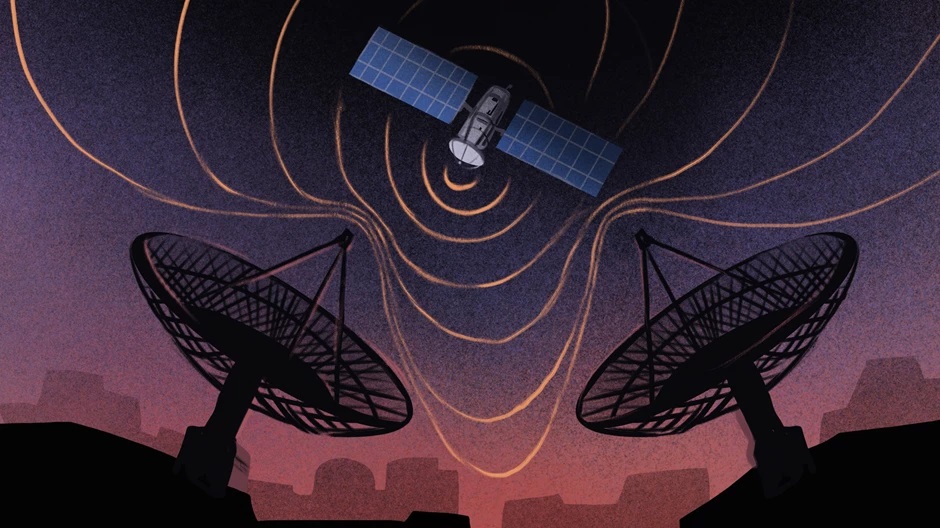
The 25-year-old Christian broadcasting corporation was granted a license for a new Hebrew-language channel in Israel, and the CEO wanted to praise the Lord.
“God has supernaturally opened the door for us to take the gospel of Jesus into the homes and lives and hearts of his Jewish people,” said CEO Ward Simpson, former director of the Brownsville Revival School of Ministry, in a video posted online. “They’ll watch secretly. They’ll watch quietly. . . . God is restoring his people. God is removing the blindness from their eyes.”
It was a public relations disaster. An outcry from Orthodox Jews and anti-missionary groups led Israel’s Cable and Satellite Broadcasting Council to reconsider GOD TV’s seven-year license. Council chairman Asher Biton claimed the company had misrepresented the channel as something that offered content for Christians when it was really programming designed to convert Jews.
GOD TV scrambled to take down Simpson’s video and clarify its purpose. GOD TV would not try to convert Jews to Christianity. But it would preach Jesus as the Jewish Messiah, consistent with the beliefs of Israel’s approximately 20,000 Messianic Jews. It wasn’t enough. Eight weeks after GOD TV was awarded the license…
Additional reporting by Jeremy Weber.
This article was originally published in the September 2020 print edition of Christianity Today. Please click here to read the full text.
To a traumatized child, a teddy bear can make a big difference.
But as the handful of Lebanese evangelicals trained in counseling are emphasizing in the aftermath of the Beirut explosion, so can an ordinary individual.
“I don’t think the sit-with-a-psychologist model works with a communal culture,” said Kate Mayhew, country representative for the Mennonite Central Committee (MCC) in Lebanon.
“A lay person might be fearful of doing harm. But there is a lot they can do.”
There is a lot that needs to be done.
An impact assessment conducted by Strategy& in the worst affected neighborhoods of Beirut found that 3 in 4 respondents were suffering anxiety two weeks after the blast.
Nearly 7 in 10 were experiencing disturbing dreams, and 6 in 10 reported difficulty doing household chores.
And according to UNICEF, 50 percent of its respondents said their children were showing signs of trauma and extreme stress. In the poverty-stricken Karantina district directly in front of the port, one child clutched a bag of distributed bread to his chest, rocking back and forth. Though by then…
This article was originally published at Christianity Today, on September 9, 2020. Please click here to read the full text.
In signing successive peace deals with entrenched rebel movements last week, Sudan drew upon the legacy of Thomas Jefferson.
“The constitution should be based on the principle of ‘separation of religion and state,’” read the text of an agreement between the North African nation’s joint military-civilian transitional council and the Sudan People’s Liberation Movement–North (SPLM–N).
“The state shall not establish an official religion.”
The declaration of principles further cements Sudan’s efforts to undo the 30-year system of strict sharia law under President Omar al-Bashir, during which Islam was the religion of the state.
The agreement was signed in Addis Ababa, Ethiopia, four days after a more inclusive peace deal was signed with a coalition of rebel groups in the Sudan Revolutionary Front in Juba, South Sudan.
The Juba agreement established a national commission for religious freedom, which guarantees the rights of Christian communities in Sudan’s southern regions.
Sudan’s population of 45 million is roughly 91 percent Muslim and 6 percent Christian. Open Doors’s World Watch List ranks Sudan No. 7 among nations where it is hardest to be a Christian. The US Commission on International Religious Freedom (USCIRF) interpreted the agreement even more widely: to protect…
This article was originally published at Christianity Today, on September 5, 2020. Please click here to read the full text.
One month since the explosion, a search and rescue team from Chile believes it found a pulse.
Buried deep under the rubble of a collapsed building in Beirut, the dig requires utmost speed and all precaution.
Just like the rescue of Lebanon.
One month since the cabinet resigned, a reform or sanction president from France believes he has a plan.
With a schedule full of specific details, his roadmap requires difficult consensus and political sacrifice.
And to welcome his efforts, political leadership rallied to appoint a new prime minister.
Like the one before him, he is a political novice without popular backing. He pledges swift formation of a small cabinet.
Can he rescue Lebanon?
The protest movement rejected him as the next desperate patchwork solution of a discredited political class. But as their street mobilization wanes, they celebrated a civil society victory.
The World Bank pulled back funding for a controversial dam. Dismissing their fears over environmental impact, a politician lamented that Lebanon would one day need the water.
God, is Lebanon’s pulse at the level of thirst?
As inflation and poverty continue to plague, give each man his daily bread.
Give wisdom to the new prime minister. Increase his authority, as he follows your roadmap. Help him judge how it fits with the French.
And may Chile discover someone alive. But it now appears the pulse has faded. No survivors.
Thank you for hope, God, however fleeting. You rallied so many Lebanese behind them.
They long for a miracle. Give them living water. Give them new life.
Utmost speed with all precaution, God. Difficult consensus and personal sacrifice.
Keep Lebanon alive.
Amen.
Lebanon Prayer places before God the major events of the previous week, asking his favor for the nation living through them.
It seeks for values common to all, however differently some might apply them. It honors all who strive on her behalf, however suspect some may find them.
It offers no solutions, but desires peace, justice, and reconciliation. It favors no party, but seeks transparency, consensus, and national sovereignty.
How God sorts these out is his business. Consider joining in prayer that God will bless the people and establish his principles, from which all our approximations derive.
For the first time in his life, 82-year-old Bishop Amfilohije voted in an election.
His example led record numbers of citizens in Montenegro to do the same this past Sunday.
Spurred by what he perceived as government attacks on his beloved Serbian Orthodox Church, he launched an “anybody but them” campaign against the ruling Democratic Party of Socialists (DPS), which held power in the Eastern European country for the last 30 years.
“[Vote] for the saints, and against the lawless,” said Amfilohije one week before the August 30 election, according to Balkan Insight. Montenegrin President Milo Djukanovic is accused of running a corrupt government.
Preliminary results indicate a razor-thin victory for the bishop.
The opposition coalition won 41 out of 81 seats in parliament.
The DPS claimed the largest solo share with 30, but will find itself out of power for the first time in Montenegro’s 14-year history if all coalitions hold.
“This is the freedom that so many have long been longing for,” pastor Sinisa Nadazdin told CT. His Gospel of Jesus Christ Church is located in the capital city of Podgorica, and is one of the nation’s five registered evangelical churches.
“The myth of Djukanovic’s invincibility is finally broken.”
Montenegro is the 6th-least evangelical country in Europe, according to the Joshua Project. Believers were not united behind any particular party, but many welcomed the democratic message. “This is an opportunity to get some new blood into the system…
This article was originally published at Christianity Today, on September 3, 2020. Please click here to read the full text.