One of my articles was included in a roundup for No. 8 in this list: Top 10 CT News Stories of the Year (and another at No. 1, Afghanistan, listed above):
And finally, editors gathered some of the less-clicked articles they re-commend for readership. CT’s Stories of 2021 That You May Have Missed (honoring Lebanon, I’m glad they picked this one):
Update: The 9 converts to Christianity made eligible for release by November’s Supreme Court ruling remain in prison for their faith, according to Mansour Borji, advocacy director for Article 18. The judge had ruled that promotion of Christianity through house churches is not illegal.
But another case is contributing to the establishment of precedent.
A revolutionary court prosecutor in the city of Dezful, 450 miles southwest of Tehran, declined to bring charges against eight converts to Christianity. Four were arrested in April, with four others later added to the case.
Hojjat Khalaf, Esmaeil Narimanpour, Alireza Varak-Shah, Mohammad Ali Torabi, Alireza Zadeh, Masoud Nabi, Mohammad Kayidgap, and Mohsen Zadeh were facing criminal accusations for “propaganda against the Islamic Republic of Iran.”
The judge provided a written explanation on November 30. According to Middle East Concern, he stated that although apostasy is a crime according to Islamic sharia, it is not an offense according to the laws of Iran. Borji said the decision was unrelated to the recent Supreme Court ruling (below), as this case had not yet even made it to court.
“The prosecutor was simply not convinced with made up charges by intelligence officers with no shred of evidence,” he said. “But his reasoning is very important.”
This update was added by Christianity Today on December 21, 2021, for an article originally published on December 3. Please click here to read the full text.
Some say they are a den of thieves. Some say that they are rivals.
Side by side for years on end. At odds, cooperating.
They carry burdens of their sect. Principles, and interests.
They hold together Lebanon. They keep it from uniting.
For now is snubbed the president. Last year the prime minister.
Soon the speaker gets his turn. Once, anon, militia.
But God, within them, is there truth? Are some striving rightly?
Are they foiled, time again? Or take turns as the victim?
Your image rests within them all. But sin, alongside, struggles.
Bless their fellowship. Enrich. And bind them to the nation.
Or break it, God. Where lies deceit, replace the ill with honest.
Will youth exceed the gains of age? Or double-down corruption?
But yes or no, continues on the world and downward spiral.
The government will still not meet. Paralysis, inertia.
From schemes abroad, or schemes at home, the ordinary suffer.
Do they protect themselves or sect? Honor, virtue, homeland?
God, our prayers are for their good. But hope is misdirected.
Our trust can only be in you. All others simply steward.
So make them faithful, God. Proficient. Governance is service.
But make us servants of your will. Your kingdom—here—yet spiritual.
Amen.
To receive Lebanon Prayer by WhatsApp, please click this link to join the closed comments group.
Lebanon Prayer places before God the major events of the previous week, asking his favor for the nation living through them.
It seeks for values common to all, however differently some might apply them. It honors all who strive on her behalf, however suspect some may find them.
It offers no solutions, but desires peace, justice, and reconciliation. It favors no party, but seeks transparency, consensus, and national sovereignty.
How God sorts these out is his business. Consider joining in prayer that God will bless the people and establish his principles, from which all our approximations derive.
Lebanon Prayer places before God the major events of the previous week, asking his favor for the nation living through them.
It seeks for values common to all, however differently some might apply them. It honors all who strive on her behalf, however suspect some may find them.
It offers no solutions, but desires peace, justice, and reconciliation. It favors no party, but seeks transparency, consensus, and national sovereignty.
How God sorts these out is his business. Consider joining in prayer that God will bless the people and establish his principles, from which all our approximations derive.
Sometimes prayer can generate more prayer. While mine is for general principles, you may have very specific hopes for Lebanon. You are welcome to post these here as comments, that others might pray with you as you place your desires before God.
If you wish to share your own prayer, please adhere to the following guidelines:
1) The sincerest prayers are before God alone. Please consult with God before posting anything.
2) If a prayer of hope, strive to express a collective encouragement.
3) If a prayer of lament, strive to express a collective grief.
4) If a prayer of anger, refrain from criticizing specific people, parties, sects, or nations. While it may be appropriate, save these for your prayers alone before God.
5) In every prayer, do your best to include a blessing.
I will do my best to moderate accordingly. Thank you for praying for Lebanon and her people.
In the public spat between Donald Trump and Benjamin Netanyahu, who would American evangelicals support? A new survey suggests it might be the Israeli.
Polled shortly after the Gaza war last May, it also reveals a substantial generational gap in level of support for Israel and a lack of impact by pastors from their pulpits.
And it happens to release this week, following Trump’s explosive comments.
In excerpts from a recently released interview, the former president blasted the former prime minister for his statement of congratulations to Joe Biden after the 2020 election.
“Nobody did more for Bibi. And I liked Bibi. I still like Bibi,” stated Trump in an expletive-laced diatribe, using Netanyahu’s nickname. “But I also like loyalty … Bibi could have stayed quiet. He has made a terrible mistake.”
Netanyahu responded with praise for Trump. But in noting a friendship with Joe Biden, he also honored the longstanding partnership between the US and Israel.
During his presidency, Trump moved the American embassy to Jerusalem, acknowledged Israeli sovereignty over the Golan Heights, and negotiated with five Muslim-majority nations to normalize relations with the Jewish state.
American evangelicals joined Netanyahu in appreciation. According to a new online poll surveying a multiethnic panel of approximately 1,000 self-identified evangelical and born-again Christians, 35 percent say they became more supportive of Israel because of Trump’s policies. Only 11 percent became more supportive of Palestinians, while 53 percent had no change.
And overall, 68 percent of American evangelicals believe the Jewish people today have the right to the land of Israel, by virtue of the covenant God made with Abraham which “remains intact today.” (About 23% say they don’t know.)
The survey, conducted by professors from the University of North Carolina–Pembroke in conjunction with Barna Group, was released today but conducted in July, well before public knowledge of Trump’s falling out with Netanyahu.
The 15-year Israeli prime minister scored a 74 percent favorable rating, based on the share of evangelicals who gave him a score of 6 or greater on a 10-point scale. One in five (22%) gave him the top rating possible. The survey did not include a direct comparison. But given the fact that it included…
This article was originally published at Christianity Today on December 15, 2021. Please click here to read the full text.
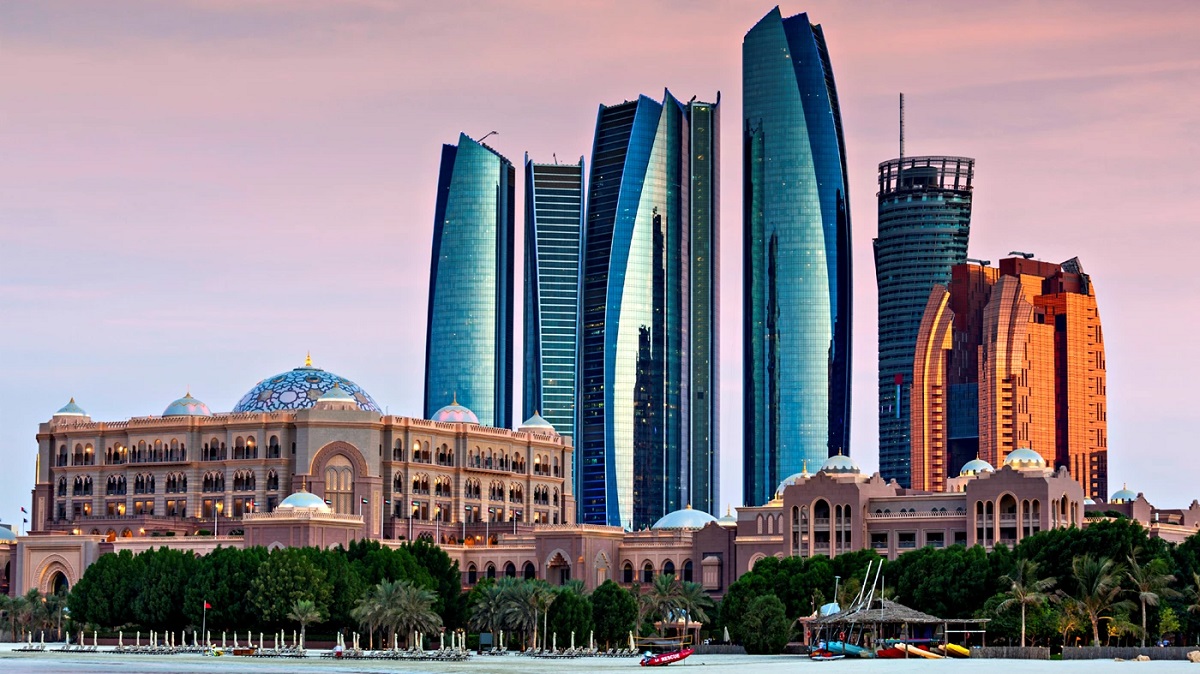
Image: Walter Bibikow / Getty Images Etihad Towers and Emirates Palace Hotel in Abu Dhabi, UAE.
The United Arab Emirates (UAE) wants to create a more friendly financial climate. Christians, say local evangelical leaders, are among the unintended beneficiaries.
“The business of Dubai is business, even though they are committed Muslims,” said Jim Burgess, evangelical representative to the Gulf Churches Fellowship, referencing the UAE’s economic hub. “But worshiping on Sunday—our traditional day to celebrate the resurrection of Jesus—will be a great blessing.”
Seeking better alignment with international markets, the Emirates is adopting a Monday to Friday workweek. The weekend had previously begun with Friday, in deference to Muslim communal prayers. Christians aligned their corporate worship accordingly.
“It is a bit strange to worship on a Friday, but you get used to it,” said Hrayr Jebejian, general secretary of the Bible Society of the Gulf, who lives in Kuwait. “The [UAE’s] reasons are purely financial, but for Christians it will be like going back to normal.”
Of the UAE’s 10 million people, 88 percent are migrant workers. The Pew Research Center estimates 13 percent are Christians, coming largely from India, Indonesia, and the Philippines, in addition to Western expats.
It is necessary to keep and attract good talent. Alongside officially secular Lebanon and Turkey, the UAE is now the third Middle Eastern nation to keep the Western calendar. But it comes with a tweak. All public sector employees will be dismissed at…
This article was originally published by Christianity Today on December 14, 2021. Please click here to read the full text.
The worth of lollars doubled. The dollar rose in kind.
It helped the locked deposits. Inflation robs them all.
But can any policy balance the needs of the impoverished citizen and financial health?
Macro or micro?
Failure, apart.
God give Palestinians their every right. Marshal the people upon their behalf.
But Lebanese also are squeezed in their struggle. Suffering, scarcity—solidarity still.
Protect the freedom to tell the hard stories. Expose selfish interest and violence for cause.
Provide all provisions for the newly made poor. Set right the nation for all who reside.
Do not let wrong be naturalized. It has for far too long.
East of Eden there is sin. Let your grace overpower.
Amen.
To receive Lebanon Prayer by WhatsApp, please click this link to join the closed comments group.
Lebanon Prayer places before God the major events of the previous week, asking his favor for the nation living through them.
It seeks for values common to all, however differently some might apply them. It honors all who strive on her behalf, however suspect some may find them.
It offers no solutions, but desires peace, justice, and reconciliation. It favors no party, but seeks transparency, consensus, and national sovereignty.
How God sorts these out is his business. Consider joining in prayer that God will bless the people and establish his principles, from which all our approximations derive.
Lebanon Prayer places before God the major events of the previous week, asking his favor for the nation living through them.
It seeks for values common to all, however differently some might apply them. It honors all who strive on her behalf, however suspect some may find them.
It offers no solutions, but desires peace, justice, and reconciliation. It favors no party, but seeks transparency, consensus, and national sovereignty.
How God sorts these out is his business. Consider joining in prayer that God will bless the people and establish his principles, from which all our approximations derive.
Sometimes prayer can generate more prayer. While mine is for general principles, you may have very specific hopes for Lebanon. You are welcome to post these here as comments, that others might pray with you as you place your desires before God.
If you wish to share your own prayer, please adhere to the following guidelines:
1) The sincerest prayers are before God alone. Please consult with God before posting anything.
2) If a prayer of hope, strive to express a collective encouragement.
3) If a prayer of lament, strive to express a collective grief.
4) If a prayer of anger, refrain from criticizing specific people, parties, sects, or nations. While it may be appropriate, save these for your prayers alone before God.
5) In every prayer, do your best to include a blessing.
I will do my best to moderate accordingly. Thank you for praying for Lebanon and her people.
As a young mother in Sudan, Susanna al-Nour struggled like many others with rising prices and shortages of goods. International support pledged after the 2019 revolution was slow to materialize. The government struggled to disburse promised aid. And tribal groups protesting in the east were blocking access to essential imports coming through the Red Sea city of Port Sudan.
And then this October things got worse.
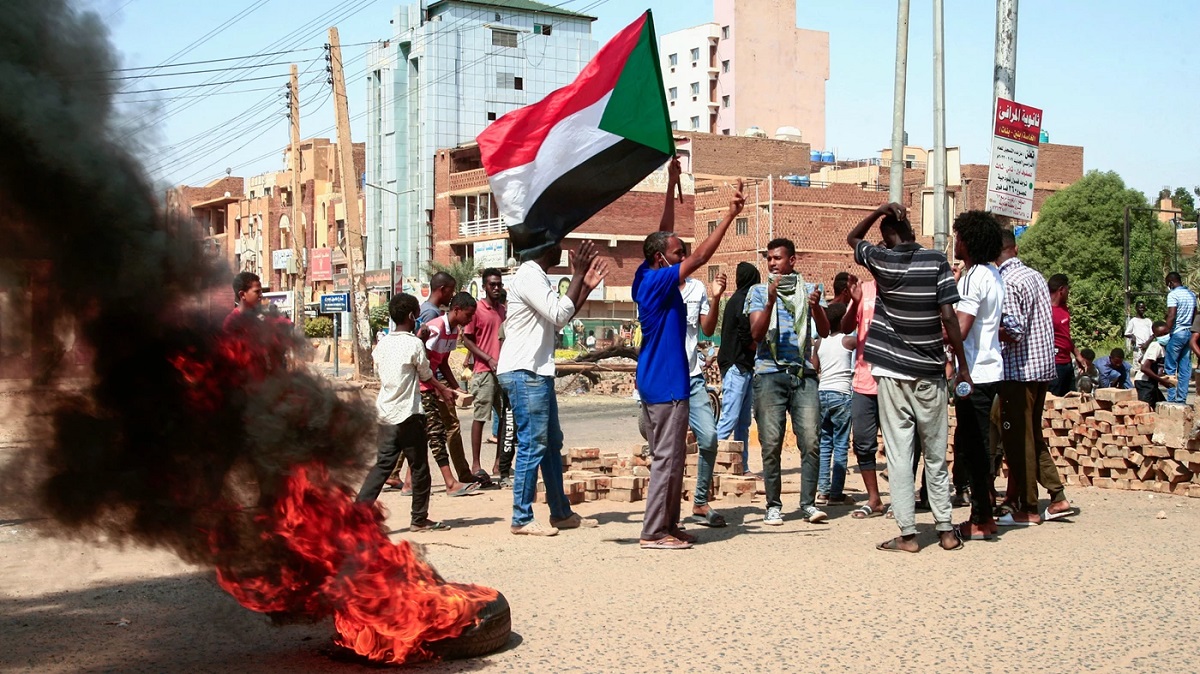
Citing divisions among politicians, Abdel Fattah al-Burhan, the general heading Sudan’s mixed military-civilian Sovereign Council, launched a coup against the popularly selected prime minister, Abdalla Hamdok.
Phone and internet connections were cut, Hamdok was detained, and security forces raided neighborhoods to arrest supporters of his government, roughing up others. Thousands poured into the streets, including Nour’s husband, an evangelist and pastor’s assistant at Faith Baptist Church in the Soba area of the capital, Khartoum.
“With a small child, I couldn’t go because of the tear gas,” she said. “But it was necessary to demonstrate against the regime.”
Sudan’s Christians were then solidly in support of Hamdok, sources told CT. Two months later, sources no longer speak in consensus.
At the time, enraged and without communication, the nation went into a standstill. Nour’s online studies through a seminary in Lebanon became impossible. So did her husband’s student ministry—as most young people were marching to reverse the coup.
Back in 2019, Hamdok quickly became the symbol of the revolution. Chosen by consensus among the political and revolutionary groups that deposed the 30-year Islamist dictatorship of Omar al-Bashir, his leadership was one of the few unifying factors in a rapidly fraying partnership between civilians and the military.
And then he wasn’t…
This article was originally published at Christianity Today, on December 10, 2021. Please click here to read the full text.
Currently at least 20 Christians are jailed in Iran because their faith was deemed a threat to the Islamic republic’s national security. Of the more than 100 Iranian believers imprisoned since 2012, all have faced similar charges.
But a recent decision by a Supreme Court justice gives hope to them all.
“Merely preaching Christianity … through family gatherings [house churches] is not a manifestation of gathering and collusion to disrupt the security of the country, whether internally or externally,” stated the judge, Seyed-Ali Eizadpanah.
“The promotion of Christianity and the formation of a house church is not criminalized in law.”
Two years ago, nine converts from the non-Trinitarian Church of Iran in Rasht, 200 miles northeast of Tehran near the Caspian Sea, were arrested in raids on their homes and church.
Sentenced to a five-year prison term in October 2019, Abdolreza Ali Haghnejad, Shahrooz Eslamdoust, Behnam Akhlaghi, Babak Hosseinzadeh, Mehdi Khatibi, Khalil Dehghanpour, Hossein Kadivar, Kamal Naamanian, and Mohammad Vafadar are now eligible for release.
The ruling, announced November 24, is “unprecedented,” according to multiple Iranian Christians and international advocates.
“The judge’s main argument is what we have been saying for years,” said Mansour Borji, advocacy director for Article 18, a UK-based organization promoting freedom of religion in Iran that tallied the cases noted above from available public records.
“But it astonished us to hear it at such a high level.” It also cuts against the grain of international understanding. The US State Department’s latest religious freedom report on Iran…
This article was originally published at Christianity Today on December 3, 2021. Please click here for the full text.
My apologies for failing to write prayers for Lebanon these past two weeks. I was traveling and steeped in the issues of another land of which I will soon report.
Returning a few days ago, I am not yet sufficiently reengaged to offer a prayer this week either. So instead I will post a prayer I recently encountered, with the permission of the author who calls into question the whole enterprise of praying for a nation:
I believe that calling the church to pray for Lebanon is a beautiful act of faith that contains potential for dangerous theological assumptions. I graciously ask you to take a theological walk with me as I seek to unpack some dangers of the zeal to pray for Lebanon.
Please click here if you would like to read his thoughts further. But in the meanwhile, consider his prayer of conclusion, and pray along if you agree.
Let us pray for forgiveness. We have been terrible stewards of this beautiful piece of God’s creation.
Let us pray for justice and mercy. May God intervene to punish the wicked and lift the oppressed.
Let us pray for strength to live faithfully in these turbulent times. Life is tough. The future is frightening. May God remind us that whether we live or die, we do so for Him and His glory.
Let us pray for strength to carry the cross. May we be ready to lose all things in acts of love and mercy for all those around us.
Let us pray to know God’s will. Even as I write these words the Lord is bringing goodness out of this evil. May He help us to see with His eyes and be His hands to the tired people of this land.
The Lord is good. Come and taste that He is good. Blessed are the people who rely on Him.
Amen.
To receive Lebanon Prayer by WhatsApp, please click this link to join the closed comments group.
Lebanon Prayer places before God the major events of the previous week, asking his favor for the nation living through them.
It seeks for values common to all, however differently some might apply them. It honors all who strive on her behalf, however suspect some may find them.
It offers no solutions, but desires peace, justice, and reconciliation. It favors no party, but seeks transparency, consensus, and national sovereignty.
How God sorts these out is his business. Consider joining in prayer that God will bless the people and establish his principles, from which all our approximations derive.
Lebanon Prayer places before God the major events of the previous week, asking his favor for the nation living through them.
It seeks for values common to all, however differently some might apply them. It honors all who strive on her behalf, however suspect some may find them.
It offers no solutions, but desires peace, justice, and reconciliation. It favors no party, but seeks transparency, consensus, and national sovereignty.
How God sorts these out is his business. Consider joining in prayer that God will bless the people and establish his principles, from which all our approximations derive.
Sometimes prayer can generate more prayer. While mine is for general principles, you may have very specific hopes for Lebanon. You are welcome to post these here as comments, that others might pray with you as you place your desires before God.
If you wish to share your own prayer, please adhere to the following guidelines:
1) The sincerest prayers are before God alone. Please consult with God before posting anything.
2) If a prayer of hope, strive to express a collective encouragement.
3) If a prayer of lament, strive to express a collective grief.
4) If a prayer of anger, refrain from criticizing specific people, parties, sects, or nations. While it may be appropriate, save these for your prayers alone before God.
5) In every prayer, do your best to include a blessing.
I will do my best to moderate accordingly. Thank you for praying for Lebanon and her people.
To receive Lebanon Prayer by WhatsApp, please click this link to join the closed comments group.
Lebanon Prayer places before God the major events of the previous week, asking his favor for the nation living through them.
It seeks for values common to all, however differently some might apply them. It honors all who strive on her behalf, however suspect some may find them.
It offers no solutions, but desires peace, justice, and reconciliation. It favors no party, but seeks transparency, consensus, and national sovereignty.
How God sorts these out is his business. Consider joining in prayer that God will bless the people and establish his principles, from which all our approximations derive.
Lebanon Prayer places before God the major events of the previous week, asking his favor for the nation living through them.
It seeks for values common to all, however differently some might apply them. It honors all who strive on her behalf, however suspect some may find them.
It offers no solutions, but desires peace, justice, and reconciliation. It favors no party, but seeks transparency, consensus, and national sovereignty.
How God sorts these out is his business. Consider joining in prayer that God will bless the people and establish his principles, from which all our approximations derive.
Sometimes prayer can generate more prayer. While mine is for general principles, you may have very specific hopes for Lebanon. You are welcome to post these here as comments, that others might pray with you as you place your desires before God.
If you wish to share your own prayer, please adhere to the following guidelines:
1) The sincerest prayers are before God alone. Please consult with God before posting anything.
2) If a prayer of hope, strive to express a collective encouragement.
3) If a prayer of lament, strive to express a collective grief.
4) If a prayer of anger, refrain from criticizing specific people, parties, sects, or nations. While it may be appropriate, save these for your prayers alone before God.
5) In every prayer, do your best to include a blessing.
I will do my best to moderate accordingly. Thank you for praying for Lebanon and her people.
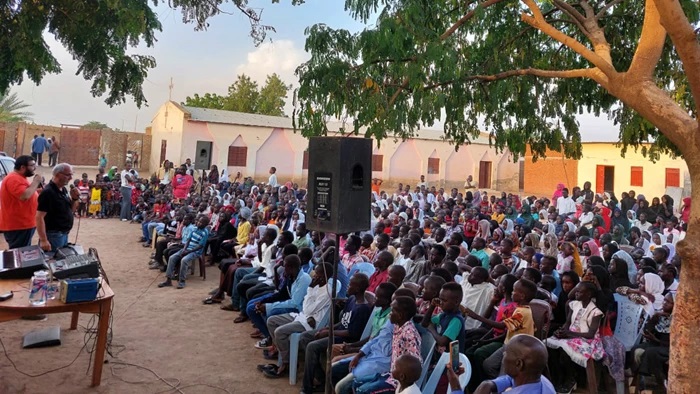
Image: John Sagherian An outdoor YFC youth meeting in al-Thawra near Wad Madani, Sudan
At 6:30 a.m. last Monday, John Sagherian and Elie Heneine went down to the lobby of their three-star hotel in eastern Sudan and found a crowd gathered around a TV. Filtering in, they heard the news.
The military had staged a coup in the capital, Khartoum, 90 miles to the northwest.
“Instantly, everything we planned for that day was up in the air,” said Heneine, a 27-year-old staff worker with Youth for Christ (YFC) Lebanon. “Oh well, youth work is very organic.”
Sagherian, the 74-year-old YFC regional director, had long been “dying to visit” Sudan. Two years earlier, he had identified a promising country director named Sabet, who since then had recruited seven other volunteer staff members. Sabet even ignored the capital, concentrating instead on the poorer hinterland.
The Lebanese team of two were finally scheduled to meet their new Sudanese colleagues later that day. As malaria had been among their concerns, they had taken 100 mg of medication every day for two weeks prior. The visa had also been a complication, requiring multiple layers of bureaucracy. But it was the BBC app that now troubled Joy, Heneine’s American wife of five months, as Sudan increasingly filled her news feed.
Heneine himself was at peace. Not only was he used to instability as a Lebanese Christian, but Sabet and others assured them everything was fine—despite the political tumult between the once-cooperating military and civilian leaders.
In 2019, the Sudanese army backed massive protests to overthrow 30-year dictator Omar al-Bashir. A spate of religious freedom reformsreplaced his Islamist governance, normalization agreements were signed with the nation’s former enemy Israel, and the US removed Sudan from its list of state sponsors of terrorism.
The economy was struggling, but the World Bank was poised to help. Sudan was almost ready to rejoin the community of nations. But politicians were bickering, and a military coup had been suppressed only one month earlier.
In the background was disagreement over sending Bashir to the International Criminal Court to be tried for war crimes in Darfur. Deeper still were issues of army control of large sectors of the economy. And at an unspecified but fast-approaching date, the transitional Sovereign Council was supposed to switch to civilian leadership. Two days before the coup, the YFC team had traveled three hours over bumpy roads with multiple checkpoints to reach…
This article was originally published at Christianity Today, on November 3, 2021. Please click here to read the full text.
It isn’t fair. It may be just. But why must people suffer?
Just words against a foreign war. Now farmers lose their exports.
The game show host turned minister turned on his former patron.
Now his employer up and leaves. Investment ends, employment.
God, you put him in his place. Will resignation please you?
Or does he matter not at all? A piece to play and discard.
Sure, Saudi has interests to guard. Iran, and its militia
Grow stronger outside bounds of state. And now within, official?
Prime minister and president plead: We want our good relations.
But do they mean another loan? The nation is in crisis.
What do you make of all these games? Are they worth the praying?
Are the rules of man or God? They are presiding system.
So can we cheat if meaning good? Can one file press another?
Can justice at the port be tied to justice in Tayyouneh?
Do prayers have influence in how you guide and shape our leaders?
Can widows’ mites or widows’ tears—through you—determine policy?
God, bless the ones who wash their hands, who focus efforts elsewhere.
They help the poor, they preach the word, they love and serve their neighbor.
But some you put in government. Perhaps from greed, ascending.
Every word we speak, you judge. Each word they speak seems double.
Bless the man who sparked this row. Bless the men around him.
Somehow your will in outsized share comes from their flawed decisions.
So God, we turn our prayers toward them: Turn their hearts toward goodness.
For the sake of Lebanon: Give courage, peace, and justice.
Amen.
To receive Lebanon Prayer by WhatsApp, please click this link to join the closed comments group.
Lebanon Prayer places before God the major events of the previous week, asking his favor for the nation living through them.
It seeks for values common to all, however differently some might apply them. It honors all who strive on her behalf, however suspect some may find them.
It offers no solutions, but desires peace, justice, and reconciliation. It favors no party, but seeks transparency, consensus, and national sovereignty.
How God sorts these out is his business. Consider joining in prayer that God will bless the people and establish his principles, from which all our approximations derive.
Lebanon Prayer places before God the major events of the previous week, asking his favor for the nation living through them.
It seeks for values common to all, however differently some might apply them. It honors all who strive on her behalf, however suspect some may find them.
It offers no solutions, but desires peace, justice, and reconciliation. It favors no party, but seeks transparency, consensus, and national sovereignty.
How God sorts these out is his business. Consider joining in prayer that God will bless the people and establish his principles, from which all our approximations derive.
Sometimes prayer can generate more prayer. While mine is for general principles, you may have very specific hopes for Lebanon. You are welcome to post these here as comments, that others might pray with you as you place your desires before God.
If you wish to share your own prayer, please adhere to the following guidelines:
1) The sincerest prayers are before God alone. Please consult with God before posting anything.
2) If a prayer of hope, strive to express a collective encouragement.
3) If a prayer of lament, strive to express a collective grief.
4) If a prayer of anger, refrain from criticizing specific people, parties, sects, or nations. While it may be appropriate, save these for your prayers alone before God.
5) In every prayer, do your best to include a blessing.
I will do my best to moderate accordingly. Thank you for praying for Lebanon and her people.
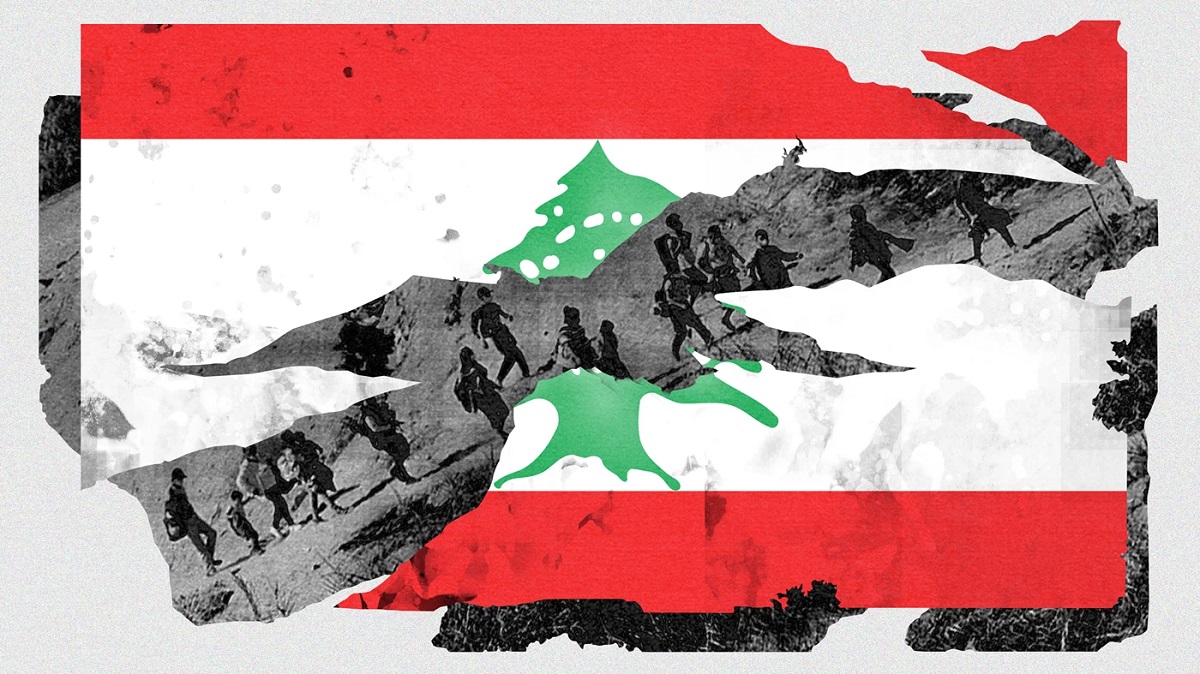
Image: Illustration by Mallory Rentsch / Source Images: WikiMedia Commons / Nick Ut / Getty Images
In 2019, as Lebanon witnessed an unprecedented uprising against its entire political class, evangelical sermons grappled with applied theology:
Whether to join in for justice or honor the king.
Two years later, amid an economic collapse the World Bank says is the worst in 150 years, Lebanese Christians face an even greater pastoral challenge:
Whether to stay and help or escape abroad.
The nation has largely made up its mind.
Estimates indicate as many as 380,000 people have left Lebanon. Every day witnesses another 8,000 passport applications. Food prices have increased 557 percent since the uprising, as the inflation rate has now surged past perennial basket cases Venezuela and Zimbabwe.
Once featuring an economically vibrant middle-class, Lebanon now has a poverty rate of 78 percent. The minimum wage of $450 per month has devalued to a mere $33.
“Ask first: Where can I love the Lord, obey the Lord, and serve the Lord—me and my family?” Hikmat Kashouh, pastor of Resurrection Church Beirut, preached in his recent sermon.
“Praying faithfully, we may come up with different decisions.”
Kashouh urged people not to emigrate easily, to seek counsel with church leaders, and to help the suffering whether they stay or leave.
Fellow evangelical pastor Walid Zailaa, however, was blunt in his assessment.
“Your presence is important. How can we enact God’s will if you are not here?” preached the pastor of Faith Baptist Church in Mansourieh. “If you want to search for a better life for yourself and your children, it is your right.
“But it says to God: You are not able to provide for me in Lebanon.”
“Lebanon is not fit for man or animal,” said Bassam Haddad, who runs discovery Bible studies alongside relief efforts. “But I am optimistic—not for the country, but for God’s work.” Since 2012, his lay-led church services…
This article was originally published at Christianity Today on October 29, 2021. Please click here to read the full text.
Amid a near complete phone and internet blackout, Sudan’s Christians are on high alert following a military coup.
Yesterday the head of the North African nation’s transitional Sovereign Council, Gen. Abdel Fattah Burhan, arrested its civilian prime minister, Abdalla Hamdok, his wife, and other officials.
Hamdok, who called the arrests a “complete coup,” called for protests. The Forces of Freedom and Change alliance, which organized the original 2018 revolution that ousted 30-year dictator Omar al-Bashir, called for civil disobedience.
Thousands have filled the streets and were met with repression. Reports say 10 people have been killed and 80 injured.
CT spoke with an American ministry leader who was able to contact a Christian source in Sudan. The leader requested anonymity to preserve their ability to travel. The source was very careful in communication.
“All I can really say is that it is very important to pray for peace and security for all in Sudan,” said the leader, “and that the voice of the people would be heard.”
Meanwhile, a Sudanese Catholic leader felt secure enough to be specific. “The international community should…
This article was originally published at Christianity Today on October 26, 2021. Please click here to read the full text.
But what if the critique is true? Investigation biased.
How best combat a witch hunt?
Securing justice comes from strength. The state, all say, is feeble.
God, secure the peacemakers. God, the law make righteous—
With government enforcement.
God, remove the all-corrupt. God, reform the semi-.
God, our trust must be in you. We all, depressed, surrender.
To you, and not the darkness.
We raise our hands but no white flag. Unable—help us worship.
Amen.
To receive Lebanon Prayer by WhatsApp, please click this link to join the closed comments group.
Lebanon Prayer places before God the major events of the previous week, asking his favor for the nation living through them.
It seeks for values common to all, however differently some might apply them. It honors all who strive on her behalf, however suspect some may find them.
It offers no solutions, but desires peace, justice, and reconciliation. It favors no party, but seeks transparency, consensus, and national sovereignty.
How God sorts these out is his business. Consider joining in prayer that God will bless the people and establish his principles, from which all our approximations derive.
Lebanon Prayer places before God the major events of the previous week, asking his favor for the nation living through them.
It seeks for values common to all, however differently some might apply them. It honors all who strive on her behalf, however suspect some may find them.
It offers no solutions, but desires peace, justice, and reconciliation. It favors no party, but seeks transparency, consensus, and national sovereignty.
How God sorts these out is his business. Consider joining in prayer that God will bless the people and establish his principles, from which all our approximations derive.
Sometimes prayer can generate more prayer. While mine is for general principles, you may have very specific hopes for Lebanon. You are welcome to post these here as comments, that others might pray with you as you place your desires before God.
If you wish to share your own prayer, please adhere to the following guidelines:
1) The sincerest prayers are before God alone. Please consult with God before posting anything.
2) If a prayer of hope, strive to express a collective encouragement.
3) If a prayer of lament, strive to express a collective grief.
4) If a prayer of anger, refrain from criticizing specific people, parties, sects, or nations. While it may be appropriate, save these for your prayers alone before God.
5) In every prayer, do your best to include a blessing.
I will do my best to moderate accordingly. Thank you for praying for Lebanon and her people.
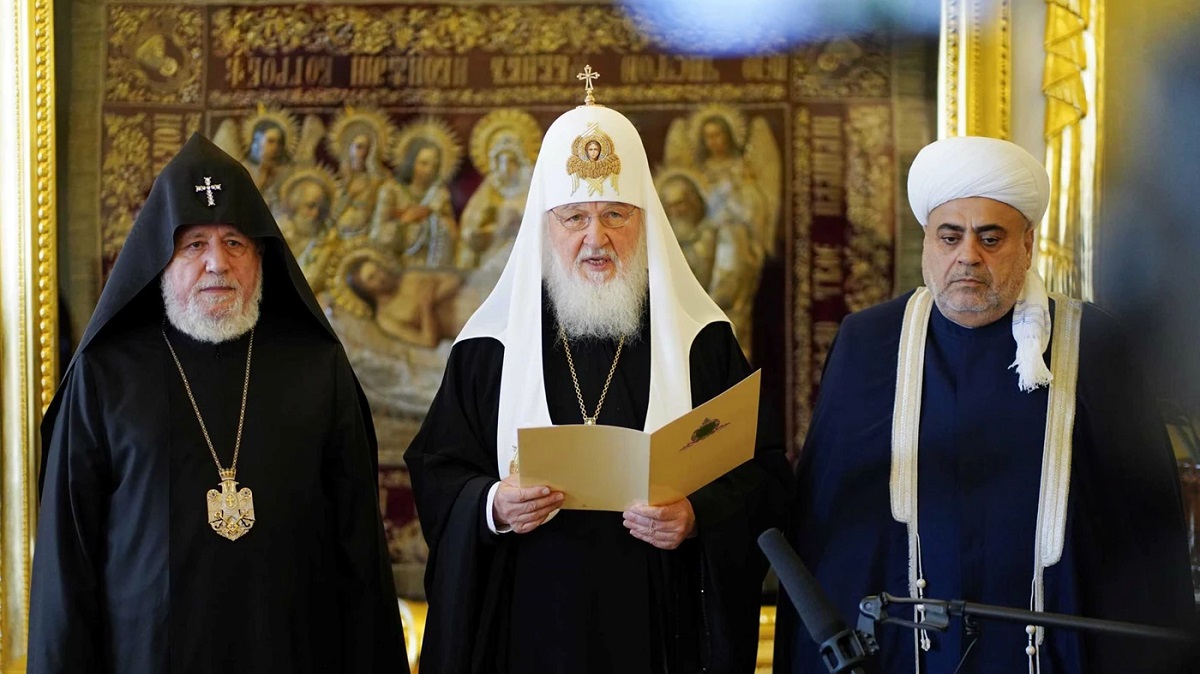
Image: Courtesy of Mother See of Holy Etchmiadzin, Information Services Russian Orthodox Patriarch Kirill I reads a joint statement flanked by Armenian Catholicos Karekin II (left) and Azerbaijan Grand Mufti of the Caucasus Allahshukur Pashazade (right) in Moscow on October 13.
After 17 tries, there is still no peace in Nagorno-Karabakh.
Almost a year ago, Russia brokered a November 2020 ceasefire to end the 44-day war between Azerbaijan and Armenia over the Caucasus mountain enclave. Azerbaijan reclaimed most of its internationally recognized territory occupied since 1994 by ethnic Armenians, who demand independence.
Armenia has been a Christian nation since A.D. 301. Azerbaijan is majority Muslim. But spiritual leaders have been no more successful than politicians or generals at securing reconciliation.
Yet that has not stopped Russian Orthodox Patriarch Kirill I from trying.
“Our religions have a unique peace-making potential,” he stated at last week’s tripartite summit of top clerical leaders. “No matter how difficult Armenian-Azerbaijani relations are at this stage, we believe that it is faith in God, and love, that can help heal the wounds.”
And they are many.
The post–Soviet Union conflict over Nagorno-Karabakh—called Artsakh by Armenians—killed 30,000 people and displaced 1 million. As Azerbaijan recaptured the territory—slightly larger than Rhode Island—last year, another 7,000 were killed. Mutual acrimony has characterized relations, with both sides accusing the other of destroying their religious heritage.
The first meeting of spiritual leaders was held in 1993. The 16th in 2017. Simply by bringing these leaders together…
This article was originally published at Christianity Today on October 19, 2021. Please click here to read the full text.
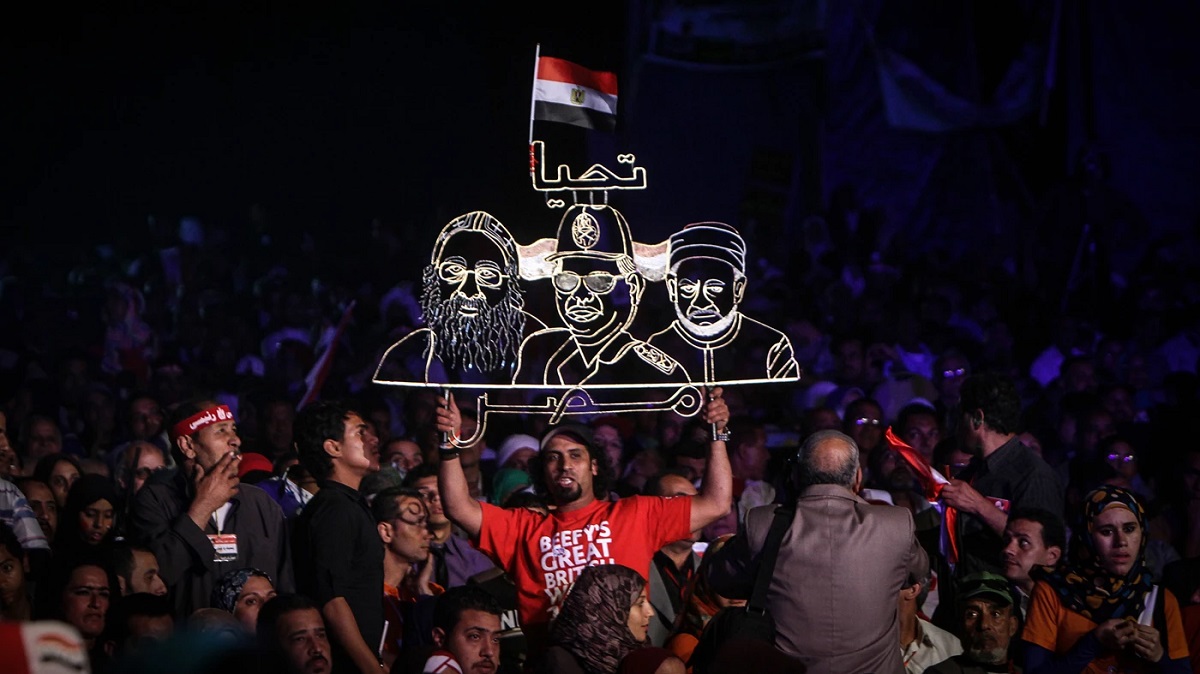
Image: Mohamed el-Shahed / AFP / Getty Images A neon sign portraying now President Abdel Fattah al-Sisi (center) between Coptic Pope Tawadros II (left) and Grand Imam of al-Azhar Shiekh Ahmed el-Tayeb (right) during a rally in Cairo in May 2014.
Committing Egypt to a five-year program of human rights reform, President Abdel Fattah al-Sisi did not mince words about religion.
“If someone tells me they are neither Muslim nor Christian nor a Jew, or that he or she does not believe in religion, I will tell them, ‘You are free to choose,’” he said. “But will a society that has been conditioned to think in a certain way for the last 90 years accept this?”
The comment sent shockwaves through Egyptian society.
“Listening to him, I thought he was so brave,” said Samira Luka, senior director for dialogue at the Coptic Evangelical Organization for Social Services. “Sisi is fighting not only a culture, but a dogma.”
Last month, the government released its first-ever National Human Rights Strategy after studying the path of improvement in 30 other nations, including New Zealand, South Korea, and Finland. The head of the UN Human Rights Council praised the 70-page document as a “key tool” with “concrete steps.”
Egypt’s constitution guarantees freedom of belief and worship and gives international treaties such as the Universal Declaration of Human Rights the force of law. But Article 98 of the Middle Eastern nation’s penal code stipulates up to five years in prison for blasphemy and has been used against atheists and Christians alike.
Will Sisi’s words signal a change?
Since his election in 2014, Egypt’s head of state has consistently spoken about the need to “renew religious discourse,” issuing a challenge to Muslim clerics. And prior to the launch of the new strategy, his comments even hinted at a broader application than atheism.
“We are all born Muslims and non-Muslims by ID card and inheritance,” Sisi stated. “Have you ever thought of … searching for the path until you reach the truth?”
Egypt’s ID card indicates the religion of each citizen. It can be changed to state Muslim in the case of conversion, but cannot be changed to Christian. Prominent public figures have called to remove the label, and debate ensued at the new strategy’s launch. Some argue the ID’s religion field is used by prejudiced civil servants and private businesses to discriminate against the minority religion.
Sisi’s timeframe of “90 years” roughly corresponds to the 1928 founding of the Muslim Brotherhood. And Luka’s “dogma” indicates a widespread social acceptance of interpretations of Islam that privilege the religion’s place in law and culture.
According to a 2013 survey by the Pew Research Center, 88 percent of Egyptian Muslims believe converting away from Islam should be punishable by death.
Calling for the application of sharia law, the Brotherhood won Egypt’s presidency in 2012, only to be overthrown by then-defense minister Sisi the following year after massive popular demonstrations.
Since then, Egypt declared the group to be a terrorist organization, and has moved to eradicate their influence from public life. Thousands—including unaffiliated liberal activists—are in prison or self-imposed exile. Bahey Eldin Hassan, director of the Cairo Institute for Human Rights Studies (CIHRS), called Egypt’s human rights situation “catastrophic.”
Concerned, President Joe Biden withheld $130 million of $1.3 billion in yearly aid to Egypt last month, conditioning it on the release of human rights and civil society activists.
Three days earlier—on September 11—Sisi launched the new human rights strategy to a national television audience. In addition to his comments about religion, he declared 2022 to be the “year of civil society.”
But a new law passed this summer to regulate NGOs was largely panned by human rights advocates. And Hassan stated that the 9/11 timing indicated the document’s primary audience. So too did the fact that the drafting committee was headed by the foreign minister.
“Before it was circulated in Egypt,” he said, “the strategy was published on the webpage of the Egyptian embassy in DC.”
A week later, charges were dropped against four NGOs.
Egyptian Christians, however, are far less critical…
This article was originally published at Christianity Today on October 18, 2021. Please click here to read the full text.
The dead have faced their lot in life and now must face their judgment.
What awaits them? Your books say. In faith we trust your goodness.
But here in life we stand confused. We long, instead, for justice.
A cloud is hovering o’er our land; some add misinformation.
Accusations left and right. In faith, we trust our leaders.
And who can blame us? Who can bring the evidence untainted?
So much is left to fester, spoil. Questions asked, unanswered.
Why bring weapons to the street, intending only protest?
Why the summoned from one side, when years the nitrate idled?
Why reversal from the head of victims’ families’ spokesman?
Why the snipers—if there were—to escalate the tension?
But God the questions do not end. They go back years and decades.
Assassinations left and right. No faith, no trust, no closure.
Why must Lebanon suffer so? A land of brains and beauty.
Iran. Or Syria. America. France. Or entity of Zion.
Or maybe faults are all within. Corruption. Lies. Sect-centric.
Have we failed Beatitudes? Mercy. Meek. Peacemaking.
Let us be the pure in heart. They, you say, will see you.
And if we see you right and true, will we see Lebanon also?
Dispel this cloud and right the wrongs. Remove the scourge that plagues us.
It may be him. Or him. Or him. It is the sin within us.
But prune this cedar, cut the branch that rots and is not fruitful.
Your fire awaits—but not the root. Burn not the tree entire.
God, your mercy for the dead. Most act in faith, for principle.
But God, your mercy on us all. In sackcloth, and in ashes.
Amen.
To receive Lebanon Prayer by WhatsApp, please click this link to join the closed comments group.
Lebanon Prayer places before God the major events of the previous week, asking his favor for the nation living through them.
It seeks for values common to all, however differently some might apply them. It honors all who strive on her behalf, however suspect some may find them.
It offers no solutions, but desires peace, justice, and reconciliation. It favors no party, but seeks transparency, consensus, and national sovereignty.
How God sorts these out is his business. Consider joining in prayer that God will bless the people and establish his principles, from which all our approximations derive.
Lebanon Prayer places before God the major events of the previous week, asking his favor for the nation living through them.
It seeks for values common to all, however differently some might apply them. It honors all who strive on her behalf, however suspect some may find them.
It offers no solutions, but desires peace, justice, and reconciliation. It favors no party, but seeks transparency, consensus, and national sovereignty.
How God sorts these out is his business. Consider joining in prayer that God will bless the people and establish his principles, from which all our approximations derive.
Sometimes prayer can generate more prayer. While mine is for general principles, you may have very specific hopes for Lebanon. You are welcome to post these here as comments, that others might pray with you as you place your desires before God.
If you wish to share your own prayer, please adhere to the following guidelines:
1) The sincerest prayers are before God alone. Please consult with God before posting anything.
2) If a prayer of hope, strive to express a collective encouragement.
3) If a prayer of lament, strive to express a collective grief.
4) If a prayer of anger, refrain from criticizing specific people, parties, sects, or nations. While it may be appropriate, save these for your prayers alone before God.
5) In every prayer, do your best to include a blessing.
I will do my best to moderate accordingly. Thank you for praying for Lebanon and her people.
Yvonne Binda stands in front of the congregation, all dressed in pristine white robes, and tells them not to believe what they’ve heard about COVID-19 vaccines.
“The vaccine is not linked to Satanism,” she says. The worshipers, members of a Christian Apostolic church in Zimbabwe, are unmoved. But when Binda, a vaccine campaigner and member of an Apostolic church herself, promises them soap, buckets, and masks, there are enthusiastic shouts of “Amen!”
Apostolic groups that infuse traditional beliefs into Pentecostal doctrine are among the most skeptical in the southern African nation when it comes to COVID-19 vaccines, with an already strong mistrust of modern medicine. Many followers put faith in prayer, holy water, and anointed stones to ward off disease or cure illnesses…
…
Integrated into the Zimbabwe Heads of Christian Denominations (ZHCD) in 1993, the Apostolic churches cooperate alongside the Evangelical Fellowship of Zimbabwe (EFZ), the mainline Zimbabwe Council of Churches, and the Zimbabwe Catholic Bishops’ Conference.
“God has given us science and intelligence, in addition to divine intervention in healing,” EFZ president Never Muparutsa told CT. “People must not shun vaccines based on 666-style conspiracy theories.”
…
Binda is one of nearly 1,000 members of various religious groups recruited by the Zimbabwean government and UNICEF to try gently changing attitudes toward vaccines from within their own churches.
Muparutsa, however, is hesitant about this approach.
As vice president of the ZHCD, he estimates 30–40 percent of evangelical and mainline Christians are “skeptical” about the vaccine, and told CT it is not his place to take sides. He “encourages” Zimbabweans to do as he and his family have done—but will not “promote.”
“That sounds like marketing,” he said. “I do not preach about vaccines; I preach about Jesus.”
…
This article was originally published at Christianity Today on October 15, 2021. I contributed additional reporting. Please click here to read the full text.
“Conflict” is a troublesome word to describe a society. But increasingly across advanced global economies—and particularly the United States—their societies believe it is the correct label.
If there is any good news, religious conflict lags behind.
The Pew Research Center surveyed almost 19,000 people in 17 North American, European, and Asia-Pacific nations this past spring about their perception of conflict across four categories: between political parties, between different races and ethnicities, between different religions, and between urban and rural communities.
The US ranked top or high in each.
A global median of 50 percent see political conflict, 48 percent see racial conflict, 36 percent see religious conflict, and 23 percent see urban-rural conflict.
But in the US, 9 in 10 viewed political conflict as “serious” or “very serious.”
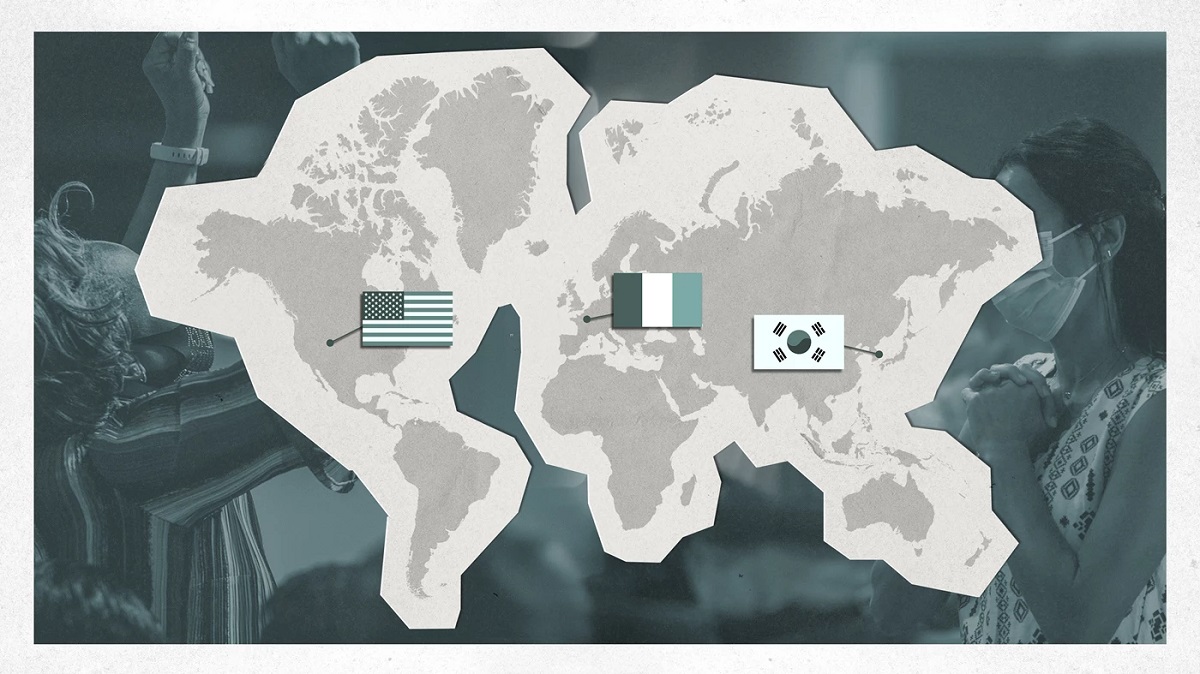
Asian nations varied considerably. South Korea matched the US at 90 percent seeing serious political polarization, with Taiwan third at 69 percent. Singapore was lowest overall at 33 percent, while Japan was 39 percent.
France (65%), Italy (64%), Spain (58%), and Germany (56%) followed Taiwan.
In terms of race, the US ranked first again, with 71 percent seeing serious conflict. France was second at 64 percent, and South Korea and Italy third at 57 percent. Singapore again ranked lowest, at 25 percent.
South Korea had the highest perception of religious conflict, at 61 percent. France followed at 56 percent, and the US at 49 percent. Germany and Belgium registered 46 percent each. Taiwan was lowest, at 12 percent.
Nearly 1 in 4 French (23%) saw religious conflict as “very serious.”
Age plays a role in perception. Pew noted that adults under 30 are significantly more likely than those ages 65 and older to see strong religious divisions in Greece (60% vs. 24%), Belgium (62% vs. 38%), Japan (42% vs. 22%), Italy (49% vs. 30%), the US (58% vs. 42%), Spain (24% vs. 10%), and Taiwan (17% vs. 7%).
Conversely, Canadians under 30 are significantly more likely than Canadians ages 65 and older to say there is no strong religious conflict (78% vs. 65%). Religious diversity, however…
This article was originally published at Christianity Today, on October 13, 2021. Please click here to read the full text.