Categories
Christianity Today Middle East Published Articles

Church Attack Leaves Turkish Christians Troubled and Confused

Image: Emrah Gurel / AP Images

Turkish Christians are shaken by last weekend’s terrorist attack on a Catholic church in Istanbul.

Claimed by ISIS, it comes amid threats that have already caused some believers to shy away from Sunday services. And like the rest of their nation, Christians are confused by details that eschew easy explanations.

“Everyone is a little nervous, questioning the future,” said Ali Kalkandelen, president of the Association of Protestant Churches (TeK). “And for the next few weeks—even months—everyone will watch their backs.”

Two masked gunmen casually walked into Mass at Santa Maria Catholic Church on Sunday morning, shot into the air, and killed one person. Security footage then shows them leaving the building, only slightly less casually than when they entered.

A statement issued by Martin Kmetec, archbishop of Izmir and president of the Episcopal Conference of Turkey, expressed his community’s “shock” that an innocent person was killed in a “sacred space of faith in God.” It demanded better security for churches, a curb on the culture of hatred and religious discrimination, and that the truth be revealed.

Shortly thereafter, security services arrested two foreign nationals, from Russia and Tajikistan. ISIS later published a statement saying the attack was in response to its call to “target Jews and Christians everywhere.” The statement was followed by another from a group calling itself ISIS’s “Turkey Province,” which said that it fired its pistols during the unbelievers’ “polytheistic rituals.”

While ISIS has conducted multiple terrorist attacks in Turkey, this is the first claimed by a local branch. The so-called province first emerged in 2019 but had only produced one propagandistic video.

But on January 4, ISIS’s spokesman called for worldwide targeting, which it later tallied to 110 attacks in 12 countries, killing or wounding at least 610 people. Turkey had already detained 2,086 suspected terrorists and arrested 529 since June 2023. Dozens more were detained following the Santa Maria attack, and 23 will be deported.

Kalkandelen said that amid the ongoing arrests, church attendance has declined. Families have kept their children at home, while new believers and seekers keep their distance. The TeK statement expressed condolences to the Catholic community, confidence in the authorities, and a plea to stop provocative discourse.

“This terrorist attack is obviously not an isolated or freak act,” stated the Protestant association. “From now on, the dark power behind it must be fully exposed so that it can no longer … terrorize Christians, minorities, and anyone with common sense.”

Condemning the attack, Istanbul’s mayor said the second referent was imprecise. “There are no…

This article was originally published at Christianity Today on January 31, 2024. Please click here to read the full text.

Categories
Christianity Today Middle East Published Articles

As Erdoğan Goads on Gaza, Turkish Christians Prefer Peace

Image: Burak Kara / Stringer / Getty / Edits by CT

Defending Hamas, Turkish president Recep Erdoğan upstaged his own nation.

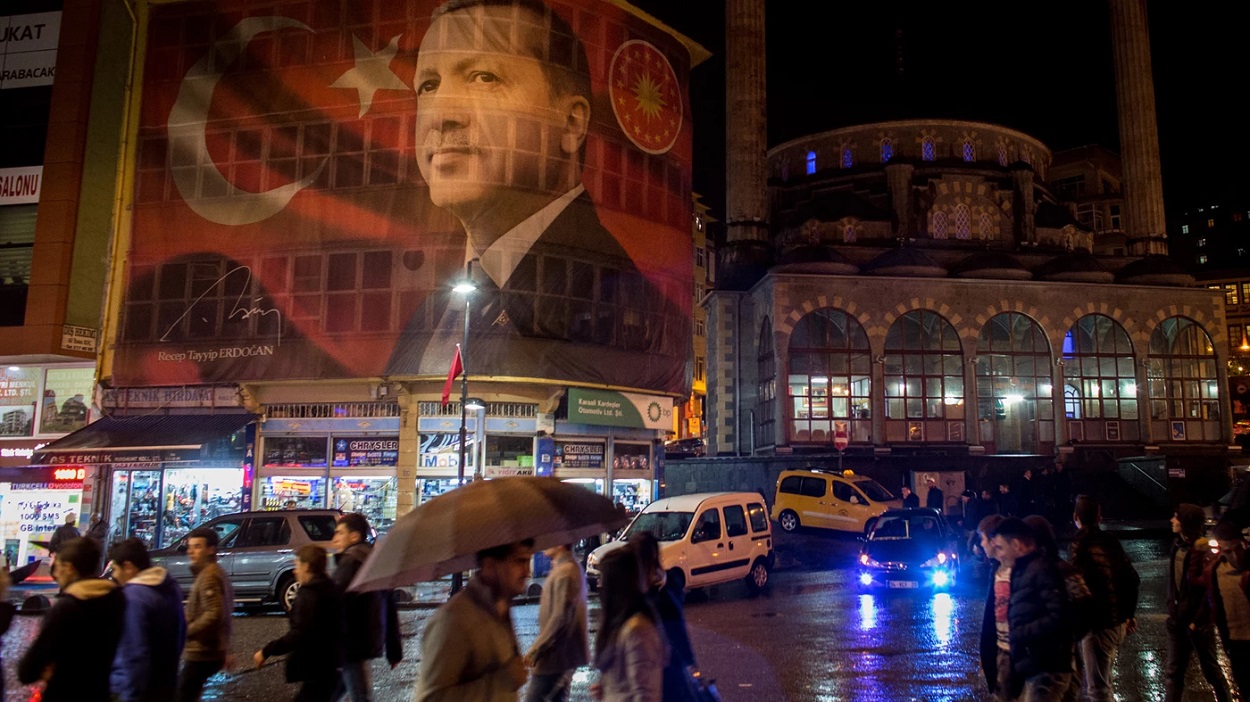
One day prior to last month’s 100th anniversary of the modern state of Turkey (now formally called Türkiye), an estimated 1.5 million people gathered for a pro-Palestinian rally October 28 and heard their Islamist-leaning leader denounce Israel as a “war criminal.”

“Hamas is not a terror organization,” Erdoğan had previously stated October 25. “It is an organization of liberation, of mujahedeen, who fight to protect their land and citizens.”

Observers noted that immediately after the October 7 terrorist attacks by Hamas that killed 1,200 mostly civilian Israelis and took 240 hostage, Erdoğan had struck a cautious tone. Reports circulateddenied by Ankara—that Turkish officials quietly asked Hamas leaders to depart the EU candidate country. And in advance of the rally, the president reiterated that he could never excuse acts that target civilians.

Then something changed.

Despite efforts over the past year to heal a diplomatic rift with Israel, Erdoğan now questioned its existence.

“What was Gaza and Palestine in 1947, what is it today?” he asked rhetorically, in reference to the establishment of Israeli statehood in 1948. “Israel, how did you get here? How did you get in? You are an invader.”

And widening his scope, the head of the NATO-member nation impinged his allies in religious terms, calling the Gaza attack “revenge” for the 15th century fall of Constantinople.

“Oh, West, I cry out to you, do you want to start your crusade against the Crescent again?” Erdoğan asked. “If you are making such efforts, know that this nation is not dead.”

The next day, in a muted celebration, he laid a customary wreath at the grave of Mustafa Kemal Atatürk, who abolished the Ottoman caliphate and established a secular republic in 1923. In attendance was the ecumenical patriarch of the Eastern Orthodox Church, Bartholomew I.

Two weeks prior, Erdoğan attended the inauguration of Mor Ephrem Syriac Orthodox Church, honoring the estimated 25,000 Assyrian Christian citizens of Turkey. It was the first church to be built with state funding since Atatürk’s founding.

And since Erdoğan’s party took power in 2002, 20 churches have been restored.

“The church we have built is a symbol of freedom of religion and belief in our country,” Erdoğan stated. “At a time when divisions, conflicts, and hate crimes based on religious and ethnic origin are increasing in our region and the world, this embracing attitude of Turkey is very important.”

His October 15 remarks were poignant, with the Israel-Hamas war raging. In between the church ceremony and the Palestinian rally, Erdoğan sent Sweden’s NATO application to the Turkish parliament for ratification. And this month, the Incirlik air base in southeast Turkey received the deployment of a pair of United States B-1 Lancer long-range bombers.

Last week, Turkish protestors tried to storm it.

Turkish Christians have had a complicated relationship with Erdoğan, and generally do not speak out on political matters. But one believer voiced his strong displeasure with the president’s comments.

“It is not acceptable. Hamas is a terrorist organization,” said Gokhan Talas, founder of Miras Publishing Ministry. “Calling its attack anything else could cause another painful trauma for victims and their families.”

The small evangelical community in Turkey, he said, has diverse views about Israel—stemming from both political and eschatological differences. Some speak in terms of unconditional support for the prophetically reconstituted Jewish state. Others, rejecting such theology, find justification for the Palestinian militant response.

But Ali Kalkandelen, president of Turkey’s Association of Protestant Churches, made clear their unified position.

“As Christians, we believe that God is the judge over everything,” he said. “We are against any war, killing, and the death of innocent people.”

They are praying for both sides, he added. And also Erdoğan.

Talas believes that Israel’s first reactions were…

This article was originally published at Christianity Today, on November 14, 2023. Please click here to read the full text.

Categories
Christianity Today Europe Middle East Published Articles

Shaken Yet Stirred: Turkish Christians Advise Moroccan Church on Earthquake Aid

Image: Courtesy of First Hope Association (FHA)

Help for Morocco is coming from Turkey. While humble in scope, the biggest impact may be on the church.

First Hope Association (FHA), a Turkish Christian disaster relief agency that provided aid after the massive earthquake that struck southeast Turkey in February, was granted permission to assist in Morocco after its own devastating quake. A four-person team arrived in Marrakesh last week.

Consistent with its Turkish policy, FHA serves all victims without discrimination, in cooperation with the local church. Connecting with a house church network in southern Morocco, the Turkish believers have distributed $30,000 worth of clothes, blankets, and hygiene kits in four mountain villages not yet reached by other aid.

“Our country has gone through the same hardships and difficulties, so we came to help and support,” said Demokan Kileci, FHA board chairman. “This is an amazing opportunity for God’s church here to show his compassion and love.”

In many ways, the parallels are striking.

Morocco and Turkey are both Muslim-majority nations, and they both have small Protestant communities that largely emerged from an Islamic background. The churches in both nations suffered in their respective earthquakes but also rallied support to aid in overall relief. And while enduring varying degrees of ostracism, the believers’ solidarity with fellow citizens has begun to win each a slowly increasing level of social respect.

“Their expression of love was immediate, without any thought of self,” said Tim Ligon, pastor of Marrakesh International Protestant Church, of the local believers he has partnered with in relief. “They counted no cost but responded with everything they had.”

But there is one major difference between the nations: Morocco does not recognize an indigenous Christian faith, while Turkey affords its people freedom of religion—including religious conversion.

Turkish Christians shared their story of faith to CT in hope that the small believing community in Morocco might profit from their experience. For there is another parallel between the nations that Turkish Protestants have taken significant steps to overcome: a history of internal division.

“The Bible tells us that spiritual power comes in unity,” said Ali Kalkandelen, president of Turkey’s Association of Protestant Churches (TeK). “It won’t be easy, but if Moroccan believers support one another and see the church as one body, the Lord will bless them, and fruit will come.”

Moroccan sources uniformly told CT about their love for Jesus and respect for King Mohammed VI, the Moroccan monarch and head of state. They also would like to see their faith recognized equally alongside Islam and Judaism.

But beyond these shared views, the sources had many different perspectives.

Some spoke of a government that discriminated against them and would not help displaced Christians. Others said the government was helping everyone and generally left the believers alone.

Some said their witness employs the Arabic word for “Lord” to hint at their distinction from Islam. Others said they say “Allah” to connect with normal Muslim use. Some distribute literature; others foreswear it as illegal. Some speak of their Christian faith to the media; others are suspicious of those who make it public.

Some said there was good cooperation between Moroccan churches and that donations should go to local believers working in the field. Others said there was distrust between the churches and that donations should be given through the national bank.

In some sense, each of these perspectives could be true. Experiences differ, as do theology and outlooks on mission. But there are Christians who exaggerate their earthquake and overall ministry for the sake of financial support, said some, while others said there were self-professed “Christians” who were not true believers at all. To any who would criticize, Jack Wald counseled…

This article was originally published at Christianity Today, on September 27, 2023. Please click here to read the full text.
Categories
Christianity Today Middle East Published Articles

Turkish Christians Turn to Tabitha for Earthquake Relief—and Resurrection

Image: Illustration by Christianity Today / Source Images: AP Images / WikiMedia Commons

Exhausted and emotionally spent at the end of a full week surveying the damage from Turkey’s massive earthquake last February, Ali Kalkandelen needed hope. As chairman of his nation’s Association of Protestant Churches (TeK), he felt the weight of responsibility to help his colleagues in 27 affected congregations.

Eventually, he found a template for moving forward in the biblical figure of Tabitha.

Scattered over 11 cities in a geographic area the size of England, local Turkish Christian leaders had already launched into service, supported by the larger body of 186 affiliated churches with aid, funds, and volunteers.

Kalkandelen set out from Istanbul, encouraging colleagues in Antakya, Adiyaman, and three other cities. He traversed ruined highways, lamented collapsed buildings, and tried to take stock of the task of relief.

Last on his list was Kahramanmaraş, for a personal visit. His father’s home had been destroyed, and he went to check in on his many relatives there.

And there in the rubble flitted a small piece of paper.

Upon inspection it was a page from a Turkish Bible, from 2 Corinthians 1. He read verse 3–4: Praise be to … the God of all comfort, who comforts us in all our troubles, so that we can comfort those in any trouble.

The slip of paper was all the more moving because, among the population of half a million people, the city had no church and no known Christians.

“I read it with my wife, and we started weeping,” said Kalkandelen. “God was talking to his church in Turkey.”

Six months later, alongside trauma counseling and spiritual care, TeK provided 7,500 tents, 27,000 outfits of clothing, and over one million meals to those displaced by the earthquake. And to compensate for the destroyed infrastructure, TeK made available three tons of drinking water, 7,000 diapers, and 146 tons of coal for winter heating.

To do so required organization.

With previous natural disasters in Turkey, the church had always played a role in relief. But with experts warning that another earthquake was likely to hit Istanbul within a few years, Kalkandelen wanted a standing response. By April he had gathered leaders from the affected areas, linking them with TeK elders from across the country.

Searching for an appropriate name, the six-person committee took note of Tabitha in Acts 9. Also known as Dorcas, she hailed from Joppa—modern-day Jaffa outside Tel Aviv—and was known for her good works and charity, especially in sewing clothes for area widows. When she died, the believers called for Peter, and he raised her from the dead.

Kalkandelen recalled his scrap of paper and the shell-shocked faces of the earthquake survivors. He has delivered us from such a deadly peril, and he will deliver us again, says verse 10. On him we have set our hope. The Tabitha committee has…

This article was originally published at Christianity Today, on August 4, 2023. Please click here to read the full text.
Categories
Christianity Today Europe Published Articles

Vengeance Was Theirs: Armenia Honors Christian Assassins, Complicates Path to Peace

Image: Courtesy of Visit Yerevan

Surveying the scene on a rainy day in Berlin, the Protestant gunman recognized his target. Living hidden under an assumed name in the Weimar Republic, the once-famous official exited his apartment, was shot in the neck, and fell in a pool of blood.

For many, the 1921 killing vindicated the blood of thousands.

Neither were Germans. Both would eventually be immortalized.

But the cloak-and-dagger story took another twist when a Berlin court ruled the assassin “not guilty.” The trial captivated the local press, brought a nation’s tragedy to the public eye, and set off a philosophical chain of events that eventually coined a new term and established an international convention meant to render unnecessary any similar future acts.

It was already too late.

Two decades after the trial, the Nazis murdered six million Jews. Hitler, preparing the Holocaust, is said to have justified it in reference to the already forgotten history of 1.5 million people killed by Germany’s then-ally in the fallout from World War I.

The gunman, Soghomon Tehlirian, was an Armenian. The official, Mehmed Talaat, was an Ottoman Turk. And the term created by Polish lawyer Raphael Lemkin—genocide—continues to haunt the world today.

But the chain of events has not concluded.

Nazi Germany, seeking Axis partners in World War II, repatriated Talaat’s remains to Turkey in 1943, where dozens of memorials and streets are named in his honor. Once the grand vizier of the Ottoman sultan, he is celebrated today as one of the leading “Young Turks” who forged the creation of the modern-day secular nationalist republic.

The descendants of his victims, scattered around the world, consider Talaat—known commonly as Talaat Pasha with his honorific title—the architect of the Armenian Genocide.

Tehlirian, who in prison pending trial was given a Bible by a local Protestant pastor, eventually settled in the United States. He is buried in Fresno, California, where his obelisk-shaped grave marker is adorned with a gold-plated eagle, slaying a snake.

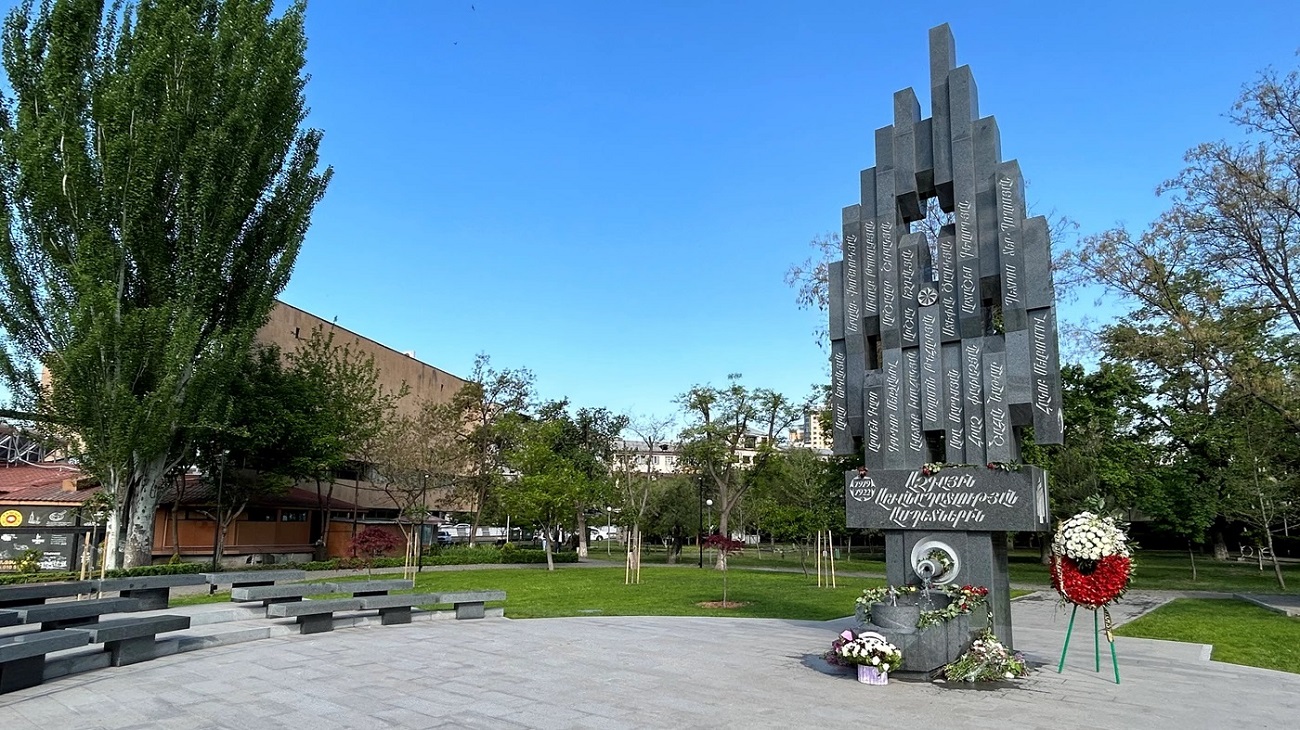
And last month, more than a century after the trial, the city council of Yerevan, the capital of Armenia, erected a memorial to honor 16 heroes of Operation Nemesis. Conducted between 1920–22, the campaign secretly authorized by the ruling party of the newly independent nation assassinated eight Turkish and Azerbaijani officials.

It was named after the Greek goddess of divine retribution.

Incorporating a fountain of flowing water, the memorial’s towering structure was built based on a petition from the Descendants of the Avengers of the Armenian Genocide. Tehlirian is at the center, beneath an empty space in the shape of a cross, directing one’s gaze upward to heaven.

Does heaven approve—now or then? “If I was at the planning meeting, I…

This article was originally published at Christianity Today, on May 30, 2023. Please click here to read the full text.

Categories
Christianity Today Middle East Published Articles

Christians Assess Criticism of Turkey’s Earthquake Efforts

Image: Burak Kara / Getty Images

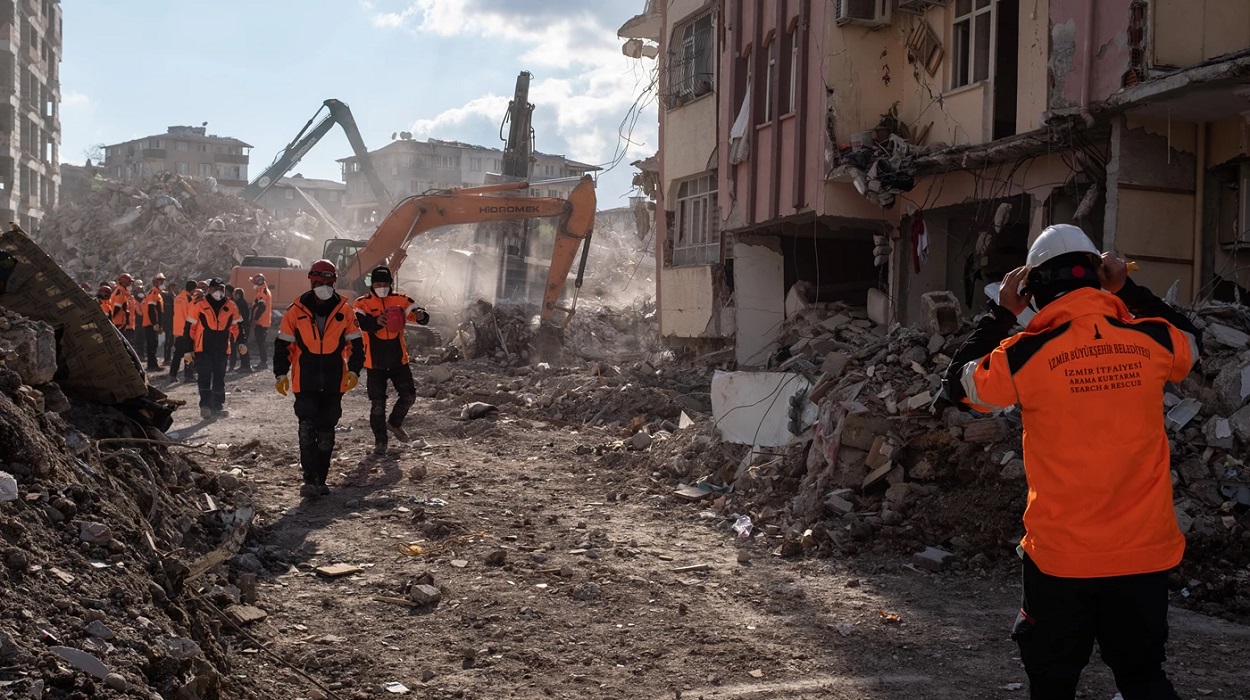
As the dust settled on the rubble of Turkish cities, citizens began asking hard questions. Why was the government response so slow, and why did so many buildings fall in the first place?

Some Christians have joined the chorus.

“During the earthquake, some serious mistakes were made,” said Melih Ekener, executive director of SAT-7 TURK, an inter-denominational satellite television ministry with offices in Istanbul. “But with the destruction of cities with large Christian populations, we are feeling more alone than ever.”

The mistakes came both before and after, he said. But the church paid a disproportionate price, as the ancient cities of Antakya, Iskenderun, and Diyarbakir collectively held the majority of Turkey’s Christians—about 1 percent of the overall population of 85 million.

President Recep Tayyip Erdogan has pledged to rebuild affected areas. And with a local death toll of over 40,000 and one million people displaced across a 10-province region roughly the size of Switzerland, any government would struggle, Ekener said.

But nodding his head at a long list of reported failures both before and after the 7.8-magnitude earthquake and 7.5-magnitude aftershock, Ekener said trust in official institutions has been shaken.

The results are tragic.

Not all can be blamed on the government. The earthquake damaged the local airport and road systems, bottlenecking equipment necessary for rescue. Freezing temperatures, lack of electricity, and the sheer scale of devastation handicapped relief efforts.

But three or more days were lost due to poor coordination in the centralizing of effort.

“The system makes sense,” said Ekener. “But it does slow things down.”

One Turkish Christian, requesting anonymity due to the sensitivity of the situation, was blunt, warning there will be consequences for mistakes.

“Earthquakes don’t kill people; the shoddy works of men do,” said the senior ministry leader. “The government failed this test, and many who could have been saved died.”

Elections are scheduled for June but may be postponed.

Analysts remarked that after a 7.6 magnitude earthquake in 1999 killed 18,000 people in northwest Turkey, the army acted quickly to lead the emergency response. But given the nation’s long history of military coups, when the Islamist-tinged Justice and Development Party (AKP) of now-president Erdogan came to power in 2002 it established civilian control over the largely independent brass.

As an unintended consequence, the military, like everyone else, had to wait on the official Disaster and Emergency Management Authority (AFAD). And AFAD, critics remarked, is headed by a graduate of an Islamic seminary with no experience in the field.

“For years, the AKP has packed almost every institution in the country with their staunch loyalists, often purging people with real know-how and expertise,” said Mustafa Akyol, a Turkish senior fellow at the Cato Institute’s Center for Global Liberty and Prosperity and an expert in Islam and public policy. “The result has been a huge loss of quality and competence.”

Following a 2016 coup attempt, the government removed tens of thousands of civil servants, many connected to a rival Islamic movement accused of conspiracy. Other civil society organizations have also been suppressed, and Akyol said an effective, national effort against disasters is impossible in a climate of suspicion against domestic enemies.

Drawing no connection, an AFAD internal report described deficiencies in personnel and earthquake preparedness. It still consisted of more than 10,000 employees.

Erdogan acknowledged “shortcomings” in the earthquake response, pledging to care for every affected citizen. But he also blamed “dishonorable people” for spreading lies and rumors against the government.

Ekener said that after delays, overall coordination has been smooth.

But while the “after” errors have been tragic, critics point to a criminal “before.”

“They failed…

This article was originally published at Christianity Today on February 23, 2023. Please click here to read the full text.

Categories
Christianity Today Middle East Published Articles

Turkish Christians Plead: Don’t Distribute Bibles After Earthquake

Image: Chris McGrath / Getty Images

An unnamed Turkish man dug through the rubble. The stench from rotting corpses filled his nostrils; the cries from trapped survivors pierced his ears. Finally, he located a little girl he could help, removed the surrounding debris, and gently pulled her from the clutches of death.

And social media cursed him.

The man filmed the whole episode on Facebook Live. And contrary to his expectations, comments of derision poured in from across the country. While his religion is unstated, Turkish Christians warned of similar earthquake exploitation from their brothers and sisters in faith.

When Bibles were distributed in Kahramanmaras, between the epicenters of the 7.8- and 7.5-magnitude quakes that killed 47,000 people along the Turkey-Syria border, local authorities responded by saying they did not want help from the church.

“This is not the way of Jesus; it is opportunistic, and doesn’t work,” said Ilyas Uyar, an elder in the Protestant Church Foundation of Diyarbakir. “We say we are Christians all the time, but it is disgusting to connect this to aid.”

The Protestant Association of Turkey (TeK) has been hard at work to establish guidelines. Last week, after expressing a “debt of gratitude” to all who have prayed and given to support relief efforts, it issued six directives.

Alongside the prohibition of Bibles and evangelistic materials was a basic request to work with the local church to navigate Turkish sensitivities. These included basic requests to coordinate aid, as well as the avoidance of political commentary and unauthorized photos.

But permission is not the only issue. A Christian group from Italy came to Diyarbakir to offer help, Uyar said. They filmed and took pictures and then asked for church assistance to move onward to Kahramanmaras.

Perhaps they will return home and help raise funds. But to spare overburdened local volunteers from playing tour guide, TeK suggested three hubs for communication and collection of donations.

The first is an organization.

First Hope Association (FHA), a disaster relief agency founded by Turkish Protestants, has long cooperated closely with the official authorities. Over 10 tractor trailers have been dispatched to deliver 55 generators, 150 beds, 200 heaters, 3,000 blankets, and 12,000 cans of food.

Over 4,000 people benefit daily from FHA hygiene trucks.

But echoing TeK concerns about Bibles, FHA board chairman Demokan Kileci described his anger at how many Christian organizations are fundraising off the disaster.

Others, he lamented, are well-intentioned humanitarian tourists.

“They fly over a group of 20 people, stay in hotels, and rent cars and to come to the area,” he said. “Meanwhile, our people can’t even find places to sleep.”

Turkey is not backwards, he continued, as it works according to European standards with professionally trained experts. And the church has started to supply psychological support for its many volunteers.

Trauma care workers and programs for children can wait for a month.

Even so, the job is too large for Turkey alone. FHA was designated by the government to facilitate the assistance of Samaritan’s Purse, which has set up a virtual mini-city with 22 tents, a 52-bed field hospital, and a rotating crew of about 100 international disaster relief specialists.

“We offered our help, and they immediately took it,” said Franklin Graham, president and CEO of the evangelical aid association. “We are open about our Christian faith, but did not come to distribute shoe boxes.”

Operation Christmas Child, the popular holiday outreach which has sent 209 million gift boxes around the world, has direct evangelistic and discipleship purposes. But in Turkey, Samaritan’s Purse is focused on the immediate need to save life, Graham said. Working through the US embassy, he praised the Turkish military for helicopter delivery to the parking lot of a collapsed hospital facility outside Antakya.

The local medical profession is devastated, he added.

A week after the quake, Samaritan’s Purse chartered a 747-sized airplane to deliver 600 oversized tents that can shelter up to 1,000 families. More than 900 have received medical care, including 25 surgeries. Graham expects Samaritan’s Purse to be present for up to four months, replenishing supplies every 10 days, and will leave everything behind when Turkey is able to assume local care.

Until then, its staff lament the fires lit in the streets to help people stay warm.

“You look at great suffering, but don’t get paralyzed,” stated Aaron Ashoff, deputy director of international projects, who takes strength from the psalms. “You need to walk into that pain, and then walk out, and say, ‘We’re Samaritan’s Purse, we are going to act.’”

So have the other two TeK hubs. Many churches and organizations are helping in relief, TeK board member Soner Turfan said. But the sister churches in Diyarbakir and Antakya were identified due to…

This article was originally published at Christianity Today on February 22, 2023. Please click here to read the full text.
Categories
Christianity Today Middle East Published Articles

Turkish and Syrian Christians Rally Earthquake Relief

Image courtesy of SAT-7 Turk

Local Christians were among the first responders to the massive earthquake in Turkey and Syria that left more than 5,000 people dead and more than 20,000 injured. They just don’t know how to make sense of it.

“God have mercy on us, Christ have mercy,” said Gokhan Talas, founder of the evangelical Miras Publishing Ministry in Istanbul. “This is our only spiritual reflection right now.”

His first instinct was to go. But as reports came in of deep snowfall and damaged roads, he shifted gears. His wife stayed up all night making phone calls to believers in Malatya, trying to coordinate aid. And with members of his church and Protestant congregations throughout Turkey, they bought blankets, medicines, baby formula, and diapers to send onward to the afflicted areas.

“From this side of eternity, nothing is clear,” Talas said. “But our sweet Lord is suffering with us.”

He warned of scams preying on the outpouring of generosity from around the world, even among the small Turkish evangelical community of roughly 10,000 believers.

Their own supplies are being donated through İlk Umut Derneği—in English, First Hope Association (FHA), a Turkish Protestant NGO working closely with the local Red Crescent and AFAD, Turkey’s Disaster and Emergency Management Authority.

Officials said more than 5,000 buildings have been destroyed by the 7.8 magnitude quake. More than 13,000 search and rescue personnel have been deployed, supplying 41,000 tents, 100,000 beds, and 300,000 blankets. Almost 8,000 people have been rescued so far.

This includes pastor Mehmet and his wife Deniz in Malatya, longtime friends of Talas, who spent half the day freezing under the rubble until neighbors succeeded in pulling them out.

Founded in 2014 to assist the refugee flood from Syria, FHA works “shoulder-to-shoulder” with the Association of Protestant Churches, said Demokan Kileci, chairman of the FHA board.

Conveying the first batches of aid in a solid 4×4 vehicle, it took him 14 hours—double the standard time—to drive 440 miles southeast from his home in Turkey’s capital Ankara to Gaziantep, a scant 20 miles south of the epicenter.

One of FHA’s five mobile hygiene units—and a mobile bakery—stayed there. Another two were dispatched to Antakya, the ancient biblical Antioch, and a fourth sent to Kahramanmaras, site of a 7.5 magnitude aftershock.

The fifth went to Diyarbakir, another 200 miles east. Overall, 10 Turkish cities suffered devastation. With Syrian cities included, the distance covered is greater than an imagined epicenter in New York City destroying the eastern seaboard from Boston to Washington, DC.

“We are doing whatever we can to help our country,” said Kileci. “And right now, prayer is the most important.”

Multiple houses of prayer have been badly damaged. The list is long. In Turkey, it includes…

This article was originally published at Christianity Today on February 7, 2023. Please click here to read the full text.
Categories
Middle East

Despite Drop in Deportations, Turkey Still Troubles Christians

Image: Chris McGrath / Staff / Getty

Last year, Protestant Christians in Turkey suffered no physical attacks.

There were no reported violations of their freedom to share their faith.

And there was a sharp reduction in foreign missionaries denied residency.

But not all is well, according to the 2021 Human Rights Violation Report, issued March 18 by the nationally registered Association of Protestant Churches (APC).

Hate speech against Christians is increasing, fueled by social media.

Legal recognition as a church is limited to historic places of worship.

And missionaries are still needed, because it remains exceedingly difficult to formalize the training of Turkish pastors.

“Generally there is freedom of religion in our country,” stated the report. “But despite legal protections, there were still some basic problems.”

Efforts to unite Turkey’s evangelicals started in the mid-1990s, and the APC began publishing its yearly human rights reports in 2007. Today the association, officially registered in 2009, represents about 85 percent of Christians within Turkey’s 186 Protestant churches, according to general secretary Soner Tufan.

Only 119 are legal entities.

And of these, only 11 meet in historic church buildings. The great majority rent facilities following their establishment as a religious foundation or a church association. While generally left alone, they are not recognized by the state as formal places of worship and thus are denied free utilities and tax exemption.

And if they present themselves to the government in pursuit of such benefits, officials often warn they are not a church and threaten closure. Sometimes the authorities even try to recruit informants. And some Christians who have refused have lost their jobs.

Other Turkish Protestants are simply harassed. “Dead priest walking,” said residents of Arhavi to a local pastor as…

This article was originally published at Christianity Today on April 6, 2022. Please click here to read the full text.
Categories
Christianity Today Europe Published Articles

Bibles Get American Pastor Tangled Up in Turkish Politics

Image: Ryan Keating
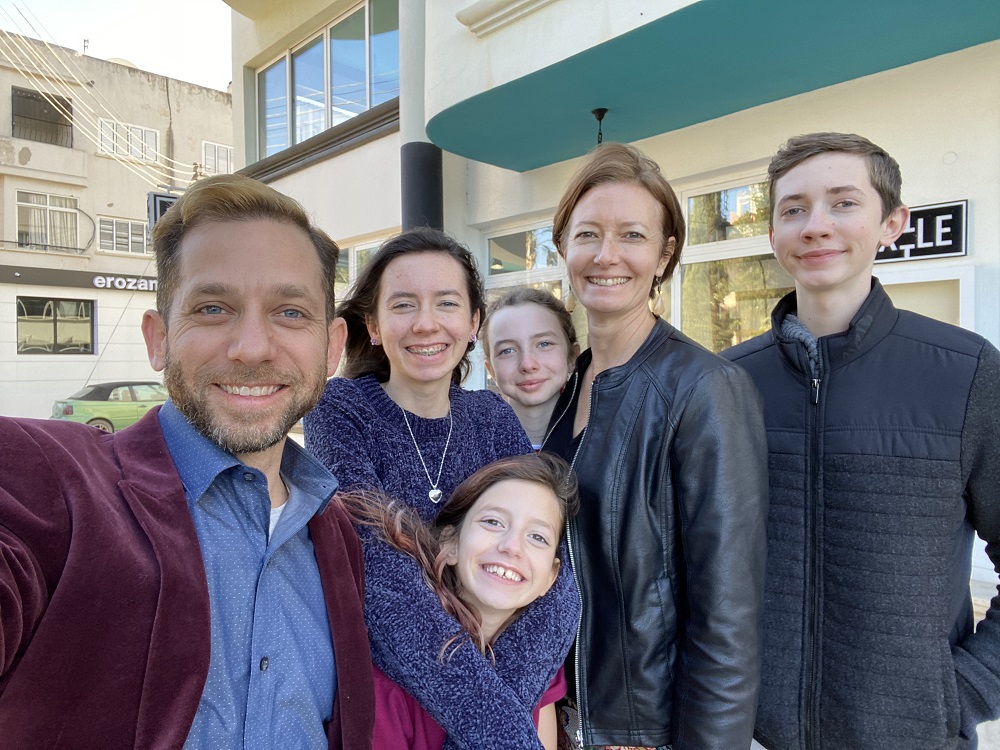
Pastor Ryan Keating and his family, in front of his cafe

Will the Turks create another Andrew Brunson?

On the Mediterranean island of Cyprus, they claim to have found his disciple.

Three months ago, American pastor Ryan Keating was detained for 11 hours by the self-proclaimed Turkish Republic of Northern Cyprus, a state unrecognized by every nation except Turkey. Its police raided the café and wine shop that housed his church, and then proceeded to his home.

They confiscated dozens of Arabic and Farsi language Bibles.

Keating, 44, was released on nearly $20,000 bail, after local friends bonded deeds to their property, vehicles, and even a tractor.

Last month, Keating was charged with illegally importing Christian materials. His passport has been confiscated while he awaits trial. A fine has been assessed of at least $60,000—ten times the value of the Bibles, which he said is “wildly inflated” to begin with.

The raid, however, was based on the accusation that he did not have a permit to make wine. Yet Keating showed CT his 2018 license to operate the café, his 2019 license for winemaking from the municipality, and the additional requested paperwork from 2020, when his permit renewal was delayed by the customs department.

The interrogation focused only on his ministry.

“This country, its government, and our neighbors have been friendly to us,” he said. “But there are not insignificant pockets of hostile nationalism.”

Keating linked his arrest to the changing political environment. Last October, the pro-Turkey prime minister defeated the incumbent president to assume the territory’s top office.

“My case is an example of localized opposition,” Keating said. “But now, Turkish-style politics is being enforced in Cyprus.”

He was the victim of such politics once before. Resident on the island since 2017, Keating previously lived…

This article was originally published at Christianity Today, on April 23, 2021. Please click here to read the full text.
Categories
Christianity Today Middle East Published Articles

Convictions in Case of Christian Journalist Murdered in Turkey Fail to Satisfy

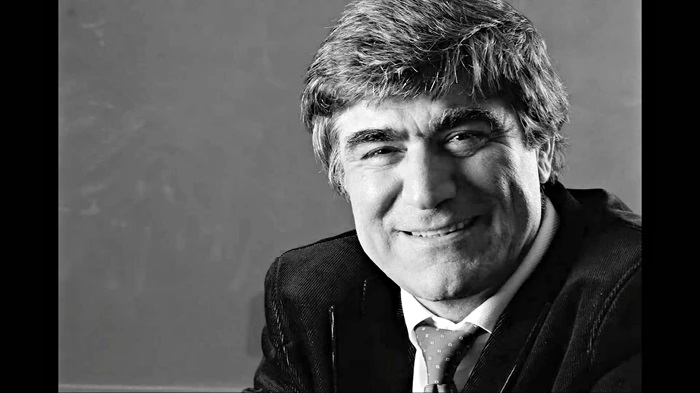
Hrant Dink, image courtesy of AMAA

Fourteen years later, there is some resolution for the family of the assassinated Turkish-Armenian journalist, Hrant Dink.

But not enough.

“The judgment given today is quite far from the truth,” said the family in its official statement on March 26.

“Not the evil itself but its leakage was punished.”

In 2007, Dink was shot four times in front of the Istanbul office of his bilingual newspaper, Agos. A proponent of reconciliation between Turks and Armenians, he aroused official opposition through his passionate focus on the 1915 genocide. Two years earlier he had been arrested and convicted of “insulting Turkishness.”

The killer, a 17-year-old unemployed youth, was given a 23-year sentence in 2011.

But one week before his death, Dink had written an article stating he felt “like a pigeon,” targeted by the deep state “to make me know my place.“

Around 100,000 people attended his funeral, chanting, “We are all Armenians.”

Last week, the Turkish judiciary put 76 people on trial, convicting 26 and handing out 4 sentences of life imprisonment. Two were given to the former director of police intelligence and his deputy, for murder and the subsequent cover-up. The family is not convinced this includes…

This article was originally published at Christianity Today, on March 31, 2021. Please click here to read the full text.

Categories
Christianity Today Europe Published Articles

Will Caucasus Conflict Come Also to France?

Image: Courtesy of Gilbert Léonian
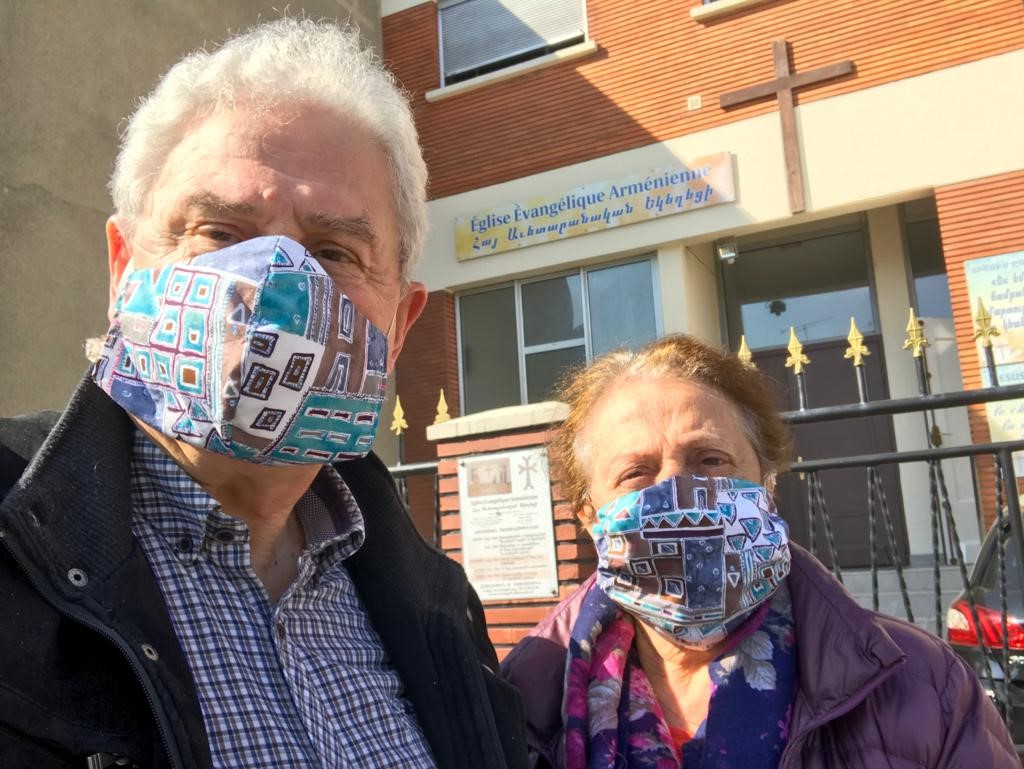
Gilbert Léonian and his wife in front of their Paris church.

Throughout the six-week war in Nagorno-Karabakh, the Armenian diaspora rallied in support of an ancient Caucasus mountain homeland they call Artsakh.

Overall, they donated $150 million in economic and humanitarian aid.

In California, they blocked freeway traffic to protest the lack of news coverage.

In Lebanon, they hung banners against Azerbaijani and Turkish aggression.

And in France, they successfully lobbied the senate for a non-binding resolution recognizing Artsakh’s independence. (International law recognizes Nagorno-Karabakh as Azerbaijani territory.)

The symbolic vote angered Azerbaijan, which called for France’s removal from the Minsk Group, co-chaired with Russia and the United States and tasked with overseeing negotiations with Armenia since 1994. Turkey has petitioned for a leading role.

But the consequences go beyond regional politics. The controversy could threaten the French social peace, already riled amid President Emmanuel Macron’s campaign against Muslim “separatism.”

Azerbaijan, and especially allied Turkey, also have an extensive diaspora throughout Europe. And last month, their supporters led demonstrations in Armenian neighborhoods in Lyon, vandalizing the Armenian genocide memorial.

France then banned one of the more violent groups, the Grey Wolves.

To gauge the situation, CT interviewed Gilbert Léonian, a Paris-based pastor and president of the Federation of Armenian Evangelical Churches in Europe. Of the roughly 500,000 French people of Armenian origin in France, about 3 percent are evangelical, worshiping across nine churches.

(Like many French pastors across all ethnicities, Léonian studied at the well-known evangelical seminary in Vaux sur Seine, near Paris. He recalled reading CT in the 1970s, as he studied under the renowned theologian Henri Blocher.)

Léonian discussed relations between the ethnic communities, his fears for the fate of Nagorno-Karabakh churches, and his personal struggle to love his Azerbaijani and Turkish neighbors:

To what degree are the Armenian, Turkish, and Azerbaijani communities integrated into secular French society? Do they maintain their respective faiths?

The first Armenians arrived in France in the early 1920s, following the genocide of 1915–1918.

Others came to France in different migratory waves due to insecurity in their countries of origin: Lebanon, Syria, Turkey, Iran, and more recently, Armenia, following the 1988 earthquake.

Today in France, the Armenian population is mainly established along a south-to-north line from the Mediterranean port city of Marseilles, where the majority of original immigrants arrived and settled, through France’s second largest city of Lyons, and up to Paris.

The Armenian people are deeply religious, and were the first people to accept Christianity as their state religion, in 301 A.D., 12 years before Emperor Constantine’s Edict of Tolerance in 313 A.D. In France, 90 percent belong to the Apostolic [Orthodox] community, in 24 churches. Catholics represent 7 percent, in five churches. Very few Armenians call themselves atheists.

However, we are seeing a major secularization of religious practice, reflecting the general trend in Europe. For many Armenians, the church is more the place where the diaspora maintains its identity and culture, rather than a place where Christian piety is nurtured. There are about 800,000 Turks and 50,000 Azerbaijanis in France, and overall they try…

(Interview and translation by Jean-Paul Rempp.)

This article was originally published at Christianity Today, on December 8, 2020. Please click here to read the full text.

Categories
Audio

Interview: Pilgrim Radio and the Armenian Crisis

Two weeks ago, I was interviewed by Pilgrim Radio about the conflict in Nagorno-Karabakh, between Azerbaijan and Armenia.

But the primary angle was Turkish repentance. Recently for Christianity Today, I wrote about a movement among Turkish Christians to apologize for the Armenian genocide.

To do so it was necessary to provide context, and also reflect on current events.

Since recording, the conflict ended with a decisive victory for Azerbaijan.

But the story is not yet over. Armenians are leaving their ancient land, as Russia and Turkey work out a new geopolitical arrangement.

Please click here to listen to the recording on Pilgrim Radio, a Christian network operating in the American northwest.

Otherwise, here is the direct link on Soundcloud:

This is the third time I have presented on their program. The first was on the growth of Christianity in the Arabian Peninsula. The second was on Coptic forgiveness of ISIS for the martyrs in Libya.

Thank you for your interest, and I hope you profit from the listening.

Categories
Prayers

Lebanon Prayer: Expression

God,

You created this world through the power of your voice.

You revealed your will through the light of your word.

You made us, God, to do no less.

Teach us to articulate well.

With our tongue we bless and curse.

From our heart, our mouth speaks.

We will give account for every word.

Some used these words against the French. Muslims rebuke the insult given their prophet.

Some used these words against the Turks. Armenians condemn the war waged on their people.

Some used these words against the Israelis. Lebanese question the lines drawn into the sea.

And perhaps they are right to do so.

Perhaps they please you in their stance.

Their voice is strong. Their will revealed.

But is there power? Is there light?

A word alone is only vapor.

And so some kill. And so some weep. And so some shrug.

What can be done against the mighty?

God, make us mightier still?

Maybe.

Your power is perfected in weakness.

But it is power still.

Power to hold the tongue. Let freedom rule, but honor reign.

Power to bless the enemy. Establish justice. Prevail with peace.

Power to negotiate well. An equitable share, of your free bounty.

God, let our words create.

An apple of gold in a setting of silver.

And let them speak of you. The very words of God.

Let Lebanon be known through them, an expression of your love.

Amen.


To receive Lebanon Prayer by WhatsApp, please click this link to join the closed comments group.

Lebanon Prayer places before God the major events of the previous week, asking his favor for the nation living through them.

It seeks for values common to all, however differently some might apply them. It honors all who strive on her behalf, however suspect some may find them.

It offers no solutions, but desires peace, justice, and reconciliation. It favors no party, but seeks transparency, consensus, and national sovereignty.

How God sorts these out is his business. Consider joining in prayer that God will bless the people and establish his principles, from which all our approximations derive.

Lebanon Prayer places before God the major events of the previous week, asking his favor for the nation living through them.

It seeks for values common to all, however differently some might apply them. It honors all who strive on her behalf, however suspect some may find them.

It offers no solutions, but desires peace, justice, and reconciliation. It favors no party, but seeks transparency, consensus, and national sovereignty.

How God sorts these out is his business. Consider joining in prayer that God will bless the people and establish his principles, from which all our approximations derive.


Sometimes prayer can generate more prayer. While mine is for general principles, you may have very specific hopes for Lebanon. You are welcome to post these here as comments, that others might pray with you as you place your desires before God.

If you wish to share your own prayer, please adhere to the following guidelines:

1) The sincerest prayers are before God alone. Please consult with God before posting anything.

2) If a prayer of hope, strive to express a collective encouragement.

3) If a prayer of lament, strive to express a collective grief.

4) If a prayer of anger, refrain from criticizing specific people, parties, sects, or nations. While it may be appropriate, save these for your prayers alone before God.

5) In every prayer, do your best to include a blessing.

I will do my best to moderate accordingly. Thank you for praying for Lebanon and her people.

Categories
Asia Christianity Today Published Articles

Azerbaijan Evangelicals: Conflict with Armenians Is Not a Religious War

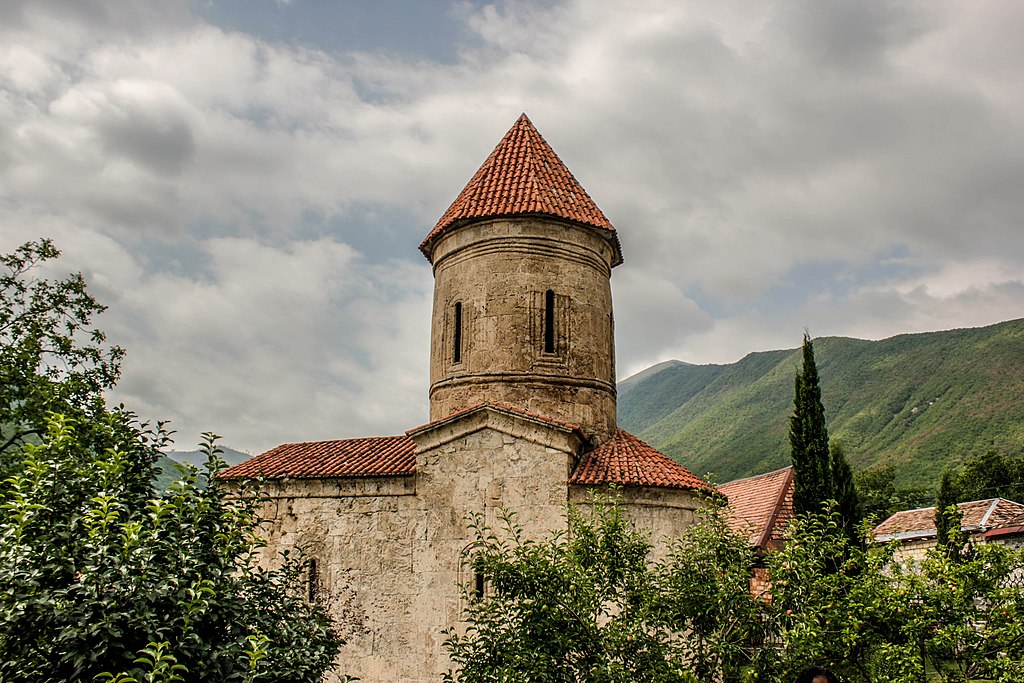
Church of Kish in Azerbaijan, by Asif Masimov

Vadim Melnikov once fought for the land of Noah.

Donning his Azerbaijani uniform 17 years ago, the ethnic Russian took his post to defend Nakhchivan, an Azeri enclave bordering Turkey and separated from their countrymen by the nation of Armenia.

Known in both the Armenian and Azeri languages as “the place of descent,” referring to Noah’s landing on nearby Mt. Ararat, Nakhchivan is a geographical reminder of the mixed ethnic composition of the Caucasus Mountains.

As is Nagorno-Karabakh, an Armenian enclave within Azerbaijan.

Its etymology is also a reminder of the region’s diversity. Nagorno is Russian for mountains, while Karabakh combines the Turkic for black and the Persian for garden.

Armenians call it Artsakh, the name of a province in their ancient kingdom. For the last three weeks, they have been defending their de facto control of the region as Azerbaijan fights to reassert its sovereignty.

As Melnikov did decades ago in Nakhchivan. Armenian soldiers crossed into Azeri mountain villages, before his unit drove them out.

This was one of the many border conflicts that followed a war of demography. But in the years before and after the 1991 independence of both nations, about 30,000 people were killed as hundreds of thousands on both sides fled or were driven to their lands of ethnic majority.

A 1994 ceasefire established the status quo, and the Minsk Group—headed by Russia, France, and the United States—preside over negotiations.

Despite the previous ethnic violence, Azerbaijan boasts that it remains a nation of multicultural tolerance. Of its 10 million population, 96 percent are Muslim—roughly two-thirds Shiite and one-third Sunni. Russian Orthodox represent two-thirds of the Christian population, while over 15,000 Jews date back to the Old Testament era.

Melnikov is part of the 0.26 percent evangelical community. And on behalf of their nation, eight churches and the Azerbaijan Bible Society wrote an open letter to decry the popular conception that this conflict pits Muslims against Christians. (Nearly 700 Armenian soldiers have been killed so far. Azerbaijan does not disclose military casualties.)

“The war which has been between Azerbaijan and Armenia during the last 30 years is purely political confrontation, it has no religious context,” they wrote.

“In fact, this history and [the] continuous attempts of Armenia to present this war as a religious one, can become a stumbling block for many Azerbaijani people, who hear [the] gospel nowadays.” An earlier letter by leaders of Azerbaijan’s Muslim, Jewish, and Russian Orthodox communities…

This article was originally published at Christianity Today, on October 21, 2020. Please click here to read the full text.
Categories
Asia Christianity Today Published Articles

Turks and Armenians Reconcile in Christ. Can Azeris Join Them?

By Սէրուժ Ուրիշեան (Serouj Ourishian)

Bahri Beytel never thought he would find Turkish food in Armenia.

An ethnic Turk and former Muslim, the pastor of Bethel Church in Istanbul skipped McDonalds and KFC in Yerevan, the capital city, in order to complete a spiritual mission.

Six years ago, prompted to take a journey of reconciliation, he went in search of an authentic Armenian restaurant—and found lahmajun, a flatbread topped with minced meat, vegetables, and spices.

One letter was off from the Turkish spelling. Smiling, he ordered it anyway, in English.

“Are you a Turk?” snapped the owner—in Turkish—after Beytel pronounced it incorrectly. “God spare me from becoming a Turk.”

The owner’s family hailed from Gaziantep, near Turkey’s border with Syria, which before the genocide was a mixed religious city with a thriving Armenian community. Ignoring the insult, the pastor explained he was a Christian, not a Muslim, and had come to ask for forgiveness on behalf of his ancestors.

Up to 1.5 million Armenians were killed between 1914–1923, as the Ottoman Empire crumbled. Once home to many diverse Christian communities, the modern state was built on a secular but ethnic Turkish foundation.

No Turk can be a Christian, the restaurant owner scoffed. He demanded the secret sign made centuries ago by believers in the catacombs.

Beytel drew the fish.

By the end of the conversation, the man gave him a hug, with a tear in his eye.

“If Turkey takes one step, the Armenians are ready to forgive,” said Beytel, of his time at a conference in the Armenian capital. “It was amazing to hear them call me brother.” There was more to come. One year later…

This article was originally published at Christianity Today, on October 21, 2020. Please click here to read the full text.
Categories
Asia Christianity Today Published Articles

Armenians Fight to Hold Ancient Homeland Within Azerbaijan

Fierce fighting has broken out in the Caucasus mountains between the Caspian and Black seas, pitting Christian Armenians versus Muslim Azeris.

But is it right to employ their religious labels?

“Early Sunday morning [Sept. 27], I received a phone call from our representative in the capital city,” said Harout Nercessian, the Armenia representative for the Armenian Missionary Association of America (AMAA).

“He said they are bombing Stepanakert. It is a war.”

One week later, the fighting continues. At stake is control over the Armenian-majority enclave of Nagorno-Karabakh, home to 170,000 people in a Delaware-sized mountainous region within Azerbaijan.

More than 200 people have reportedly died, though Azerbaijan has not released its number of casualties.

Administered by ethnic Armenians ever since a ceasefire was declared in 1994, locals call the region the Republic of Artsakh. Military skirmishes have not been unusual. There have been more than 300 incidents since 2015, according to the International Crisis Group.

This escalation is the most serious since 2016, with Azerbaijani forces attacking multiple positions along the 120-mile “line of contact.”

But the shelling of civilian cities represents a worrisome development.

As does the role of Turkey—and the Syrian militants it allegedly recruited—which has pledged full support for Azerbaijan.

Russia, France, and the United States—partners in the “Minsk Group” which has overseen negotiations between the two nations since 1992—have called for an immediate ceasefire. But Turkey has encouraged Azerbaijan President Ilham Aliyev’s refusal, conditioning a ceasefire on…

This article was originally published at Christianity Today, on October 6, 2020. Please click here to read the full text.

Categories
Christianity Today Middle East Published Articles

Turkey Turns Another Historic Church into a Mosque

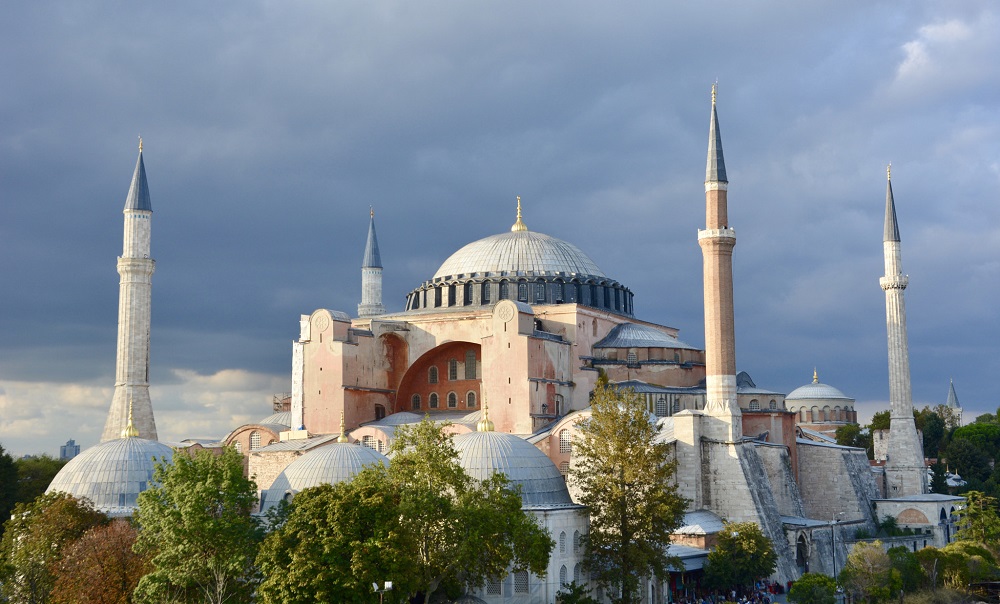
The Turkish government formally converted a former Byzantine church into a mosque Friday, a move that came a month after it drew praise from the faithful and international opposition for similarly turning Istanbul’s landmark Hagia Sophia into a Muslim house of prayer.

A decision by President Recep Tayyip Erdogan, published in the country’s Official Gazette, said Istanbul’s Church of St. Saviour in Chora, known as Kariye in Turkish, was handed to Turkey’s religious authority, which would open up the structure for Muslim prayers.

Like the Hagia Sophia, which was a church for centuries and then a mosque for centuries more, the historic Chora church had operated as a museum for decades before Erdogan ordered it restored as a mosque.

The church, situated near the ancient city walls, is famed for its elaborate mosaics and frescoes. It dates to the fourth century, although the edifice took on its current form in the 11th–12th centuries.

The structure served as a mosque during the Ottoman rule before being transformed into a museum in 1945. A court decision last year canceled the building’s status as a museum, paving the way for Friday’s decision.

And as with the Hagia Sophia, the decision to transform the Chora church museum back into a mosque is seen as geared to consolidate the conservative and religious support base of Erdogan’s ruling party at a time when his popularity is sagging amid an economic downturn.

Greece’s Foreign Ministry strongly condemned the move, saying that Turkish authorities “are once again brutally insulting the character” of another UN-listed world heritage site.

“This is a provocation against all believers,” the Greek ministry said in a statement. “We urge Turkey to return to the 21st century, and the mutual respect, dialogue and understanding between civilizations.”

Protestant believers agree. “The Hagia Sophia is…

This article was originally published at Christianity Today on August 21, 2020, in cooperation with the AP. I contributed additional reporting. Please click here to read the full text.

Categories
Christian Century Middle East Published Articles

Hagia Sophia’s Muslim Prayers Evoke Ottoman Treatment of Armenians

Via Turkish Presidency

Declared a mosque in principle, Hagia Sophia is now a mosque in practice.

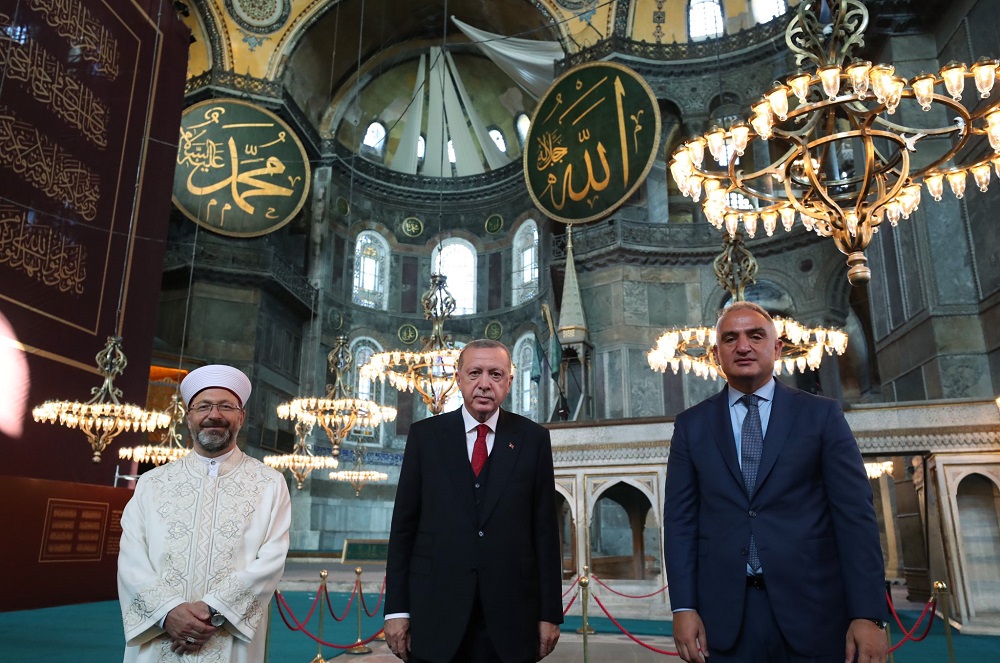
Following his decree earlier this month, Turkish President Recep Erdoğan’s joined a coronavirus-limited 500 worshipers to perform Friday prayers in the sixth-century Byzantine basilica, underneath the covered frescoes of Jesus and the Virgin Mary.

Hundreds more gathered outside.

International condemnation resounded after the Turkish Council of State ruled to revert the UNESCO World Heritage Site back to its Islamic status. Conquered in 1453 by Ottoman sultan Mehmed II, the massive church was turned into a museum by the founder of the modern Turkish republic, Kamal Ataturk, in 1934.

Underreported in much of the criticism was a wider complaint.

“The action of the Turkish government evokes heavy memories on the desecration and destruction of holy sites of the Armenian people and other Christian nations by the Ottoman government for centuries,” said Garegin II, Supreme Patriarch and Catholicos of All Armenians.

There are an estimated 11 million Armenians worldwide, including 3 million in their modern nation-state.

Representing the diaspora from the Holy See of Cilicia, in Lebanon, Catholicos Aram I went into more detail.

“Soon after the Armenian Genocide, Turkey confiscated thousands of Armenian churches and transformed them into bars, coffee shops, and public parks,” he said, “ignoring the reactions and appeals of the international community.”

As Erdoğan is doing again now—and not just to the Hagia Sophia.

Turkey has assured the frescoes will be uncovered for all visitors (3.7 million last year) outside of prayer times—and now without a museum entry fee. More than 400 other churches continue to serve the 1 percent of Turks that are Christians.

But Erdoğan’s remarks in Turkish revealed a wider agenda. “The resurrection of Hagia Sophia is the sound of Muslims’ footsteps…”

This article was first published at Christianity Today, on July 24, 2020. Please click here to read the full text.
Categories
Current Events

Hagia Sophia Converted Back to Mosque by Turkey’s President

As Christians feared and many expected, the Hagia Sophia is now—again—a mosque.

The Turkish Council of State ruled today that the original 1934 decision to convert the sixth-century Byzantine basilica into a museum was illegal.

When Ottoman sultan Mehmet II conquered then-Constantinople, he placed the iconic church in a waqf—an Islamic endowment administering personal property, usually designated for religious purpose. The original stipulations opened the building for Islamic prayers, and sharia law keeps waqf designations in perpetuity.

Shortly after the decision, President Recep Erdogan signed—and tweeted—a decree handing the building to Turkey’s Religious Affairs Directorate.

In a televised address to the nation, Erdogan said the first prayers inside the Hagia Sophia would be held on July 24, and he urged respect for the decision.

“I underline that we will open Hagia Sophia to worship as a mosque by preserving its character of humanity’s common cultural heritage,” he said, adding: “It is Turkey’s sovereign right to decide for which purpose Hagia Sophia will be used.”

Istanbul-based Ecumenical Patriarch Bartholomew I, considered the spiritual leader of the world’s Orthodox Christians, warned in late June that the building’s conversion into a mosque “will turn millions of Christians across the world against Islam.”

Greek Orthodox Archbishop Ieronymos II earlier stated that Erdogan “would not dare.”

And UNESCO reminded Turkey of its international obligations, as the Hagia Sophia is registered as a World Heritage site.

“A state must make sure that no modification undermines the outstanding universal value of a site listed on its territory,” the UN body stated.

In response to the Turkish decision, the Russian Orthodox Church expressed regret, stating it could lead to “greater divisions.”

The foreign minister of Cyprus called it a “flagrant violation” against “a universal symbol of the Orthodox faith.”

And in Greece’s second-largest city, Thessaloniki, protesters gathered outside a church that is modeled on the Hagia Sophia and bears the same name. They chanted, “We’ll light candles in Hagia Sophia!” and held Greek flags and Byzantine banners.

During his address, Erdogan rejected the idea that the decision ends the Hagia Sophia’s status as a structure that brings faiths together. “Like all of our other mosques, the doors of Hagia Sophia will be…

This article was first published at Christianity Today, on July 10, 2020. Please click here to read the full text.