If you think American news is polarized, check out al-Jazeera. If you think American news pushes boundaries and aims to shape a narrative, check out al-Jazeera.
If you think news in general reflects the attitudes of its audience, then God have mercy, check out al-Jazeera.
I remember many years ago, when the channel was first becoming known to American audiences, I defended its professionalism and boldness to give voice to opposition figures often excluded by government and traditional media.
Since then the accusations have piled on that al-Jazeera is little more than a tool for Qatari foreign policy. Even journalists jailed in Egypt rail against the unprofessionalism and bias of the station.
But this video reaches a new low. The transcription is not complete, but it is fair. It is a heated debate on whether or not a minority religious segment in Syria should be wiped out entirely.
To be noted: al-Jazeera selects a Christian to defend the Alawites, further aiding the sectarian nature of discussion. Also to be noted, Syrian president Bashar al-Assad comes from the Alawite community, which stands strongly behind his continued rule.
Thank God the debates in America are about gun control or marriage equality. But there is also a worrying fringe debate, creeping into the mainstream, against Muslims in general. God spare America this development. Look at al-Jazeera, and Syria, for the alternative.
Video via the Clarion Project. Click here if there is any difficulty in accessing the clip.
If you read this headline you might hope they intend it to lead in one of two directions. First, as a call to the government to stop persecuting peaceful movements. Second, as a call to their own violent wing, to keep Egypt from such a scenario.
Unfortunately, you would be wrong, according to this voice – unnamed – in a recent analysis by Sada on the post-pacifist Brotherhood.
The way many Brotherhood leaders are framing this is that if there is a war between society and the state, and if the society has taken a stance, the Muslim Brotherhood should not hinder society’s fight for freedom.
“We should not stand silent in this battle,” said an Istanbul-based consultant for the newly-elected executive bureau. “The vacuum should be filled by a powerful organization, and we will not repeat the mistakes of the Syrian Muslim Brotherhood (SMB),” he added.
The consultant was referring to the fact that the SMB lost their support in Syria because they distanced themselves from the chaos during the early stages of the revolution.
Whoever this voice is, he appears well-placed and influential. And potentially, a menace.
In 2012 the Syrian Muslim Brotherhood issued a covenant and charter in which they laid out their post-Assad vision. Early on they were politically influential.
But they also joined in the violence. Apparently, they weren’t good enough at it. After suffering considerable losses they now appear to be a negligible force on the ground.
The Egyptian Brotherhood, according to this consultant, might be seeking to get ahead in the game. That is, it seems, to become influential in insurrection.
The Muslim Brotherhood appears to be an organization in flux and much internal dissent. The unnamed consultant’s open-ended phrasing should not be taken as definitive. But it is terribly disconcerting. For the record, Yehia Hamed, former investment minister under Morsi, denies there is a trend within the Brotherhood that wishes to arm the revolution.
But according to this article in Carnegie, there is indeed a trend though in substantial minority status:
In addition, the proportion of members within the Brotherhood who want to bear arms appears to be relatively small. In a survey held at a meeting of the Brotherhood’s youth cadres in one of the Egyptian governorates, less than 30 out of 300 members who attended the meeting were in favor of armed action. The others preferred to continue their work on the ground using nonviolent means.
Egypt’s current difficulties are the fault of many. But until now Egypt has avoided the fate of its neighbors in Syria, Libya, and Iraq. The Brotherhood, even here, does not seem to be wishing to turn Egypt into a quagmire. Their argued justification might be that if it can be in the forefront of a militant rebellion, it can keep it from transforming into an Islamic State nightmare.
But that they would even take a step in this direction betrays all the rhetoric of ‘peacefulness’ issued from the start of the revolution. It shows it as a tactic, not a conviction. It wants to lead, and at least as this consultant is concerned, it is willing to lead in violence if necessary.
Many Egyptian anti-Islamists have long argued this is the nature of the Muslim Brotherhood. But their pacifistic political participation has been the norm for decades. I don’t think the West and the academic community was wrong to discount it out of hand.
But perhaps their behavior in Syria spoke otherwise, and no one was listening.
You desire peace not just for Egypt. Honor also her neighbors, that all might live in peace together.
For two doors down, a nation is in mourning. A terrorist attack on Tunisia’s tourists threatens to undermine stability there. Comfort them, God, and give them resolve.
Resolve to defeat a terrorist menace. Resolve to hold firm to a democratic path. Resolve to see the region cooperate.
For Tunisia’s struggle is not hers alone. While she has sent more fighters to Syria than any other nation, the ones who attacked her trained in Libya. Civil war in both nurtures chaos and extremism, threatening Tunis and Cairo and others beside.
For the sake of both countries, and above all for her own people, lighten Libya’s burden, God. Establish legitimate government, to extend legitimate security. Tighten borders, but open societies. Give wisdom to outsiders who want things put straight. Give wisdom to Libyans, to straighten themselves.
To Egypt’s east, another nation needs peace. Israel does not suffer the volatility of the region, but her recent elections showcase disharmony between peoples. Guide them, God, and give them resolve.
Resolve to defeat a terrorist menace. Resolve to hold firm to a democratic path. Resolve to reconcile her differing peoples.
Reconcile, God, her Arab and Jew. Set these citizens in equality to serve jointly their nation.
Reconcile, God, the Palestinian and Israeli. Give just solutions to their disjointed hopes; inspire just leadership to enact them together.
Honor Israel and Syria, Tunisia and Libya. And with them Egypt, for a region both stable and strong. Give each one sovereignty, to bless her neighbor. Together may they live in peace.
A prime example of Ghalab’s wish for loving children: 10-year-old Myriam from Mosul, Iraq.
Her family fled their home last July with hundreds of thousands of other Christians, finding safety in Kurdistan’s Irbil. Essam Nagy of SAT-7 Kids visited the refugee camps and connected with Myriam, a faithful viewer who praised God for not allowing ISIS to kill them.
Asked about her feelings toward those who drove her from her home, Myriam wondered why they did this. Then she said: “I will only ask God to forgive them. Why should they be killed?”
To date, more than 1 million people have seen her witness online. [Full video at the bottom]
SAT-7’s five channels reach an audience of 15 million in North Africa and the Middle East, though it’s impossible to measure how many people watched Myriam. However, numbers can be tracked through the social media campaign, which has reached 25 times its normal audience, with subtitles of the video provided in English, Spanish, Turkish, and Chinese. Word spread not only through SAT-7 affiliates, but also in the local secular press.
Pan-Arabic al-Arabia praised Myriam for confronting ISIS with love. “Everyone who listens to her is astounded,” echoed the Egyptian Youm 7. Leading Lebanese daily al-Nahar called for the clip to be shown in the nation’s schools as a lesson in humanity.
Please click here to read the full article at Christianity Today.
This week I had the opportunity to appear on ‘The Way Home‘ podcast, hosted by Dan Darling. Darling is the Vice President for Communications at the Ethics and Religious Liberty Commission of the Southern Baptist Convention, and he invited me to share about current events in the Middle East and in particular how they are impacting Christians. Here is his introduction:
All of us have reacted with horror at the atrocities committed by the terrorist group ISIS upon Christians in the Middle East. How can Christians pray? How should we think about ISIS?
Today on The Way Home I talk with Jayson Casper, a Christianity Today journalist who has been covering this story. He called me from Cairo to discuss how Christians in places like Egypt, Jordan, and other countries are reacting to the atrocities of their brothers and sisters in Syria and Iraq and Libya. He also gives a thorough analysis of ISIS and Islamic extremism.
Our conversation lasted about half an hour, touching on various questions. Is ISIS Islamic? How are Christians responding? How should Western Christians pray?
Please click here to open a new window and listen to the podcast.
In my recent article for Christianity Today, I described one of the strategies Middle Eastern Christians are employing to face the threat from ISIS: Fight.
Sometimes, though, talking isn’t enough. This reality has driven Syrian pastor Maan Bitar to urge his congregation to take up arms and fight. His Presbyterian congregation is among the 22,000 all-Christian residents of Mhardeh in Syria. Their city is besieged by Islamist militants.
Mhardeh is shelled every day, Bitar said, killing at least 50 civilians and injuring hundreds more. The city’s Christians, alongside government forces, have so far been successful in preventing the militants from entering the city.
“I know I have the right as a human being to defend myself,” he said, “but I try to give my people a Christian justification.… Still, if I kill someone I need to say to Jesus, ‘I know I have sinned. I have not met your perfection.’”
This above article is recently updated based on an email received from Rev. Bitar. Here is his message in its entirety:
The city is besieged by FSA and Al Nusra, who drove away the civilian population of the neighboring villages to take over Mhardeh and make it their stronghold to fight the regular army from Mhardeh.
Now Mhardeh is shelled everyday by the Syrian rebels and Al Nusra fighters who have given dozens [of] ultimatums [and] threats: Leave your homes. Mhardeh is ours. It’s Halal (permissible under Islamic Sharia to conquer).
Mehardeh has been hit so far by 1500 mortar shells and rockets. The death toll of civilians has exceeded 50, and there are hundreds of injured, among the deaths and injured [are] women and children. Sometimes rockets are deliberately launched when school children are leaving school.
The Syrian regular army, with Mhardeh civil defense and volunteers, has prevented them from invading Mhardeh and has driven them away, and now it is targeting their strategic positions in other farther towns. However, they number [in the] thousands and are intent on causing much harm and damage to [the] Mhardeh population and town.
“God is allowing ISIS to expose Islam,” said Khalil’s fellow pastor, Atef Samy. “They are its true face, showing what Islam is like whenever it comes to power.”
But the savagery of ISIS, which has overwhelmed Kurdistan with more than 850,000 refugees, has prompted other Middle Eastern Christians to embrace their Muslim neighbors. This theme was heard often from members of the Fellowship of Middle Eastern Evangelical Churches (FMEEC), who met in Cairo last month for a conference on the dwindling Christian presence in the region.
“We must be a voice for Islam,” said Munib Younan, bishop of the Evangelical Lutheran Church in Jordan and the Holy Land. “We must not allow the West to see ISIS, the Muslim Brotherhood, or others like them as the face of Islam.”
Others were more reflective of the diversity among both Muslims and non-Muslims.
The article opens with a brief description of an evangelical relief trip to help refugees in Kurdistan, which I also wrote about here. It also describes cooperation attempts in the Egyptian Family House, uniting Muslims and Christians, which I hope to profile in a few days. There are other strategies described by those who attended a recent conference in Cairo, whose opinions on US-led military action I wrote about here.
But please click here to read the full article at Christianity Today.
Many Christian religious leaders in the Middle East expressed great reserve against the US plan to strike at ISIS in Syria. But one particular Egyptian politician, a Christian, argues forcefully for it—including Egyptian participation. Now that the bombs have begun to fall, his words are also worthy of consideration.
“We should go, if only symbolically with a few planes,” said Ehab el-Kharrat, a founding member of the Egyptian Social Democratic Party. “We must not give a message to our local terrorists that we are backing off.”
Egyptian President Sisi has promised coordination with the US-led coalition, but has not contributed any forces. He recently stated Egypt is neither for Assad nor the opposition, though it does maintain membership in the Friends of Syria group organized early against the regime. Sisi has, however, compared the Islamist forces fighting in Syria to the Muslim Brotherhood, accused of coordinating ongoing attacks in Egypt.
Kharrat believes Egypt, and the international community in particular, should have been much more forceful, from an earlier date, but narrowly focused. He says many in his party agree, though it has taken no official stand.
“The decision not to arm the Free Syrian Army was a serious mistake and we must do so now as soon as possible,” he said. “Assad is not the answer, he is a cruel dictator, worse than Mubarak, similar to Saddam.”
Kharrat criticized the Muslim Brotherhood and Salafis for understanding the procedures of democracy, but not its philosophy – unless they reject it to begin with. But leaning on Assad, like some Christians are at least reluctantly willing to do, does not work either. It has produced the ills Christians are currently suffering.
“Autocratic regimes give ground to breed Muslim extremists like bacteria,” he said.
Bishop Muhib Younan of the Evangelical Lutheran Church in Jordan and the Holy Land agrees. “We have relied on secular autocrats who oppress others,” he said, “but must recognize also that democracy is a damaged concept.”
The trouble is that many Middle Eastern Christians, and certainly Egyptian Copts, feel trapped. Their experience with Islamists leads them to mistrust open democratic procedures that may bring them to power. But the secular states they have relied upon do not necessarily protect them beyond rhetoric.
Some in Egypt, such as Mina Fayek, a Cairo based blogger and activist, complain the Egyptian state has not yet rebuilt the churches attacked by Islamist mobs following the dispersal of the pro-Morsi Rabaa sit-in. The army promised it would be done; over a year later little work has progressed.
Others, such as Rami Kamel, a veteran Coptic activist, see both state and church inaction over the recent Gabl al-Tayr incident, where 22 Copts and three policemen were injured dispersing a sit-in protest over a missing woman believed to be kidnapped. “Sisi and the state will never go to the church,” he said, “because the church’s role has ended.”
But to imagine these sentiments as indicative of Coptic opinion would be greatly misconstrued. Christians are among Sisi’s greatest supporters.
If he follows through with his rhetoric, perhaps they should be. Commenting on the airstrikes in Iraq and Syria to the AP, Sisi said much more was necessary.
“The comprehensive strategy we’re talking about — part of it would be the security and military confrontation, correct, but it would also include fighting poverty,” he said. “We are also talking about improving education, which is important, as well as changes in the Islamic religious discourse.”
This coincides exactly with Kharrat’s opinion, though the second part awaits a demonstration of Sisi’s commitment.
“In Tunisia, Libya, Egypt, Syria, and all our states, the question of religion and politics must be resolved,” he said. “The only solution is a democratic and liberal system.”
As for Syria, Kharrat believes the practical only solution is to strike a deal with Assad to remove him from power, but assure him of non-prosecution, and the Allawites of non-persecution. Both Allawites and Christians must be incorporated into the new government, but only from outside the Baathist regime.
But the immediate task is to fight the Islamist rebels: ISIS, Nusra, and whoever else. Whether or not anyone else is left standing to take on Assad is a fair question, but not a few Christians, at least for now and however much they distrust America, are glad that ISIS is being hit.
In his efforts to build a coalition to strike militarily Islamic State in Iraq and al-Sham (ISIS) targets in Iraq and Syria, President Barack Obama has been careful to avoid an overly religious discourse. Part of his appeal, however, is for the protection of Christians and other religious minorities. In his speech on September 10, Obama promised “humanitarian assistance to innocent civilians who have been displaced,” mentioning specifically tens of thousands of Christians. But his concern pushed far beyond relief: “We cannot allow these communities to be driven from their ancient homelands.” It is a noble sentiment. Obama would do well to consider, however, the many Middle Eastern Christian voices who see beyond these words something ignoble.
“In the American culture you need an evil, to fight an evil,” said Fr. Michel Jalakh, the newly appointed Lebanese Catholic general secretary of the Middle East Council of Churches. “ISIS did not come from nothing, they have lots of money and a large army, who is giving this to them? How did they emerge in one year?” If there must be a military response, Jalakh desires it come from within the Muslim world itself. Still, he sees a much simpler solution. “It is enough to shut off the water faucet,” he said. “Many of America’s allies are helping ISIS.”
Jalakh was a participant in the September 8-10 conference of the Fellowship of Middle East Evangelical Churches (FMEEC), held in Cairo. FMEEC president Reverend Andrea Zaki, also general director of the Coptic Evangelical Organization for Social Services, did not express conspiratorial origins to ISIS, but feared a similar practical outcome. “Who will define the moderate groups?” he stated in response to arming Syria’s rebels. “I’m afraid that any militarization will go again to the radicals.”
Please click here to read the full article at MENA Source, including more quotes, both con- and somewhat pro-, sprinkled with a brief analysis.
More than 175 Christian leaders crossed denominational and political divides this week to urge the United States government to do more to help the rapidly diminishing, historic Christian populations of Syria, Iraq, and Egypt.
The solidarity pledge—signed by National Association of Evangelicals (NAE) president Leith Anderson, Focus on the Family founder James Dobson, Southern Baptist Theological Seminary president Al Mohler, and Samaritan’s Purse president Franklin Graham, among other prominent names—presented on Capitol Hill asks for the appointment of a special envoy on Middle East Religious Minorities, a review of foreign aid, and refugee and reconstruction assistance.
“These defenseless religious communities are facing an existential crisis, which threatens their very survival in the lands they have inhabited for centuries,” said Rep. Frank Wolf (R-VA), a longtime religious freedom advocate who helped create the U.S. Commission on International Religious Freedom (USCIRF) in 1998. “The faith leaders … recognize that unless the American church begins to champion this cause, the foreign policy establishment will hardly lead the way. They are committing to be their ‘brother’s keeper,’ whether in Nineveh, Cairo or Homs.”
But Egyptian Christians have a longstanding reticence about outside help:
“We value so much the prayers and concerns of our Christian brethren around the world, and in the U.S. especially,” said Fawzi Khalil, pastor at Kasr el-Dobara Church in Cairo, the largest evangelical congregation in the Middle East. “But we don’t believe outside pressure would be best for our daily life with our Muslim friends. The government of Egypt with local Christian leaders are best suited to fix our problems.”
Please click here to read the full article at Christianity Today, including testimony from other Egyptian Christians and one US Copt who is a signatory.
Here is a link to a well organized and concise description of the different actors present in the ongoing Syrian conflict, from War on the Rocks. If you would like a good primer, it is worth your time to read. Keeping up with the news reports and ever-changing developments is difficult.
Here is the general outline, with a brief excerpt from each section:
International Players:
Russia:
Russia happily incurs international opprobrium for backing Assad so that it can preserve access to its last remote naval base in Tartus, which remains a symbol of Russia’s global reach; discourage external interference in a country’s internal affairs; and, most importantly, remain a counterweight to U.S. hegemony in the Middle East.
United States:
With chemical weapons off the table, Assad’s external opposition in disarray, Islamists dominating the insurgency, and an American public unhappy with foreign wars, the Obama administration feels it has few options other than taking steps to prevent the civil war from destabilizing Syria’s neighbors and harming U.S. security.
Regional Players:
Turkey, Qatar, and Saudi Arabia:
Assad’s three greatest regional foes—Turkey, Qatar, and Saudi Arabia—are divided according to their taste in proxies. Saudi Arabia favors more nationalist-minded groups, perhaps because members of the Muslim Brotherhood in the 1990s and the jihadis in the 2000s challenged the royal family’s rule.
…
Qatar and Turkey have worked together to bolster the Syrian Muslim Brotherhood’s sway over the external opposition, which has waned despite the two countries’ best efforts. On the battlefield, Turkey appears to have turned a blind eye to Sunni jihadis gaining access to northern Syria while Qatar is widely alleged to have supported conservative Salafi Islamist militias united under the Islamic Front.
Iran:
Iran has demonstrated the seriousness of its commitment to sustaining the Assad regime by helping provide cut-price fuel and weapons and deploying members of its armed forces, including the special Quds Force, to train Syrian paramilitaries and coordinate military operations against the rebels.
Syrian Players
Assad Government:
The Syrian government is militarily and politically stronger than its opponents. The U.S. reversal in September 2013 of its threat of punitive strikes in favor of the signing of an agreement to remove and destroy Syria’s chemical weapons stockpiles awarded President Assad diplomatic leverage to play for time and stymie a peace accord. Unless the balance of power changes, Assad will continue to be defended on the international stage by Russia and draw military and financial sustenance from Iran. With such an advantageous position, the regime’s delegation at Geneva played it slow to ensure the opposition got little of any benefit from attending.
Pro-government Militias:
An assessment of the Syrian military’s performance in 2012 revealed that the Syrian Arab Army lacked the numerical and command capacity to sustain effective operations in multiple domestic theaters. Beginning in mid-to-late 2012, the SAA—with apparent training and coordinating assistance from the Iran’s Revolutionary Guard Corps—began merging existing “popular committee” local protection militias into an organized, trained, and salaried paramilitary force, the National Defense Force (NDF). Since then, the NDF has become a critical part of the Syrian military structure, usually used to hold seized ground and to bolster coordinated offensives.
External opposition:
The Syrian National Coalition (SNC) is the main body representing various factions of the Syrian opposition outside Syria. Internal infighting between rival groups has structurally weakened the organization. The infighting came to a head on 18 January 2014 when a third of its members boycotted a vote to attend the Geneva II talks. One of the SNC’s main components, the Brotherhood-dominated Syrian National Council, withdrew from the coalition as a consequence. The infighting is a result of conflicts among the factions’ regional backers or irreconcilable differences over the future of Syria.
Free Syrian Army / Supreme Military Council
The FSA has not represented a distinct military organization for a long time now. Today, the FSA name represents more of a brand or umbrella with which primarily nationalist and often secular groups associate themselves. The SMC, meanwhile, presents itself as a coherent structure with organized local, provincial, and national components led externally by Selim Idriss. The command structure, however, has not proven itself nationally and Idriss has been more of a distributor of military aid than a commander.
Islamic Front:
The Islamic Front represents the singly most powerful opposition military organization in Syria, with an estimated 50,000-60,000 fighters operating in 13 of Syria’s 14 governorates. The IF’s political charter calls for an Islamic state in Syria governed by sharia law, but is vague regarding the specifics of what this would actually entail. While all seven constituent groups within the IF are certainly Islamist, they in fact represent a relatively broad spectrum.
Jabhat al-Nusra:
Despite its admitted links to Al-Qaeda, JN has since mid-to-late 2012 demonstrated a remarkable level of pragmatism in religious, political, and military matters. Its military forces consistently demonstrate levels of professionalism and effective command and control superior to that of comparatively moderate groups. While JN represents a numerically smaller organization than most members of the IF, its fighters often represent something more akin to special forces, taking a key frontline role in offensive operations. Because the group fights effectively and does not seek to dominate the opposition, it has healthy relations with all Syrian rebel groups from moderate to Salafist. JN’s widespread provision of social services to the civilian population through its Qism al-Aghatha (or Department of Relief) and avoidance of incurring civilian casualties in areas hostile to Assad has meant the group enjoys a surprising level of popular support.
Islamic State in Iraq and al-Sham (ISIS):
Since its emergence as an active armed entity in Syria in late April/early May 2013, the Islamic State in Iraq and al-Sham focused on acquiring and consolidating territorial control in eastern and northern Syria, particularly in regions bordering Iraq and Turkey. As this proceeded, ISIS began establishing outposts further into Syria’s interior in Hama, Homs, and areas of the Damascus countryside, most notably in the Qalamoun and in Eastern Ghouta. As its influence expanded and confidence rose, ISIS began imposing its harsh behavioral codes and kidnapped, imprisoned, and sometimes executed its opponents. Public beheadings became common, as most importantly, did incidents of ISIS violence against other rebel groups.
The only two major players the article does not describe are Israel, as a state, and Christians, as an element of the population. This is likely because the article focuses on those actively participating in the struggle. Israel, apparently, is taking a wait and see approach. Christians, meanwhile, are understood to be pro-Assad historically, are sometimes besieged by Islamist elements, but are generally keeping quiet, careful not to be seen taking sides.
Of course, those following the conflict closely will likely take offense at some of the descriptions above. For those generally bewildered, however, I trust this summary is helpful.
I will excerpt the conclusions for each, but the whole article is worth reading. If you would like to skip over the quotations for my brief commentary, please scroll down to the end.
First, on the possibility of Inclusion and Integration:
Assuming there are prudent, democratic interlocutors who are truly interested in mediating a settlement with the regime, such as Beshr and Darrag, can they really command the organization’s support? The answer, most likely, is no, given that most of the key positions in the group’s decisionmaking bodies, including the Guidance Bureau, the Shura Council, and administrative units, are occupied by individuals completely loyal to the Brotherhood’s incumbent leadership and tied to it through a multilayered network of business, familial, occupational, personal, and ideological connections.
Furthermore, the Brotherhood’s leadership has masterfully employed existential fears of regime repression among the group’s members to deter any serious call for self-critique or internal revision. Brotherhood leaders have so far adamantly refused to admit their grave mistakes and betrayal of the causes of revolution and democratization. The best they can concede, based on the dovish Darrag’s statement to the media, is to support the viewpoint that the only mistake the Brotherhood made while in power was underestimating the power of the Egyptian “deep state” and its capacity to spoil the political process. Darrag believes that the Brotherhood should have adopted a “more revolutionary strategy” in order to cleanse the state. But he expresses no regrets about the authoritarian constitution, the exclusionary political process, or the divisive policies put in place by the Brotherhood while in power. Moreover, even if Brotherhood leaders admit to grave mistakes during their rule, as long as the regime continues its repressive policies against the organization, the time will not be right to critique these leaders or hold them accountable for their shortcomings and wrong deeds. Therefore, internal Brotherhood fragmentation and secession will remain highly unlikely.
Nevertheless, even if some interlocutors can hypothetically solicit a degree of support—and hence start creating a real moderate faction within the Brotherhood—this scenario presents an invitation for the breakdown of the Brotherhood’s organizational unity. As long as there are no comprehensive transformations of the group’s ideology and mission, the recalcitrant Brotherhood mass will not accept these moderates’ offers of settlement on the regime’s terms, which will be depicted as an unpalatable act of treachery. The Brotherhood might come to a historical end, and more radical groups might emerge to the right of the Brotherhood, attracting its disgruntled former supporters. So, the first scenario, which is the resolution preferred by the United States and the European Union, is highly problematic and unlikely, at least in the short run.
Second, the Violence Scenario:
Nevertheless, Islamist violence may have reached its logistical and social limitations. First of all, violence on a large scale requires a large number of people willing to execute it and a social base willing to support it. Small pockets of disaffected, radical Islamists are not enough. Furthermore, unlike in Algeria in the 1990s, topographical conditions favorable to armed insurgency do not exist in Egypt. The country also lacks a clearly proviolence social constituency large enough to provide shelter and support for fighters.
Increasing social hostility to Islamism in general and to Islamist-driven violence in particular can isolate the politics of violence and further erode public support. While radical Islamic groups in Egypt waged an armed confrontation with the state in the 1980s and 1990s, it is important to recall that during that period the public remained either sympathetic to the Islamists or opposed to them but not motivated enough to throw its weight behind the government. This time the violent Islamists will face opposition from both the state and society (or at least wide segments of society), as demonstrated by the continuous street battles between Islamists and the Egyptian public in residential areas, popular neighborhoods, public squares, and marketplaces across different cities and towns in the months since November 2012.
The Syrian scenario is also unlikely. It is hard to believe that the Egyptian army can split along sectarian, political, or ideological lines like its counterpart in Syria.
The violence scenario, if it materialized, could arguably involve more low-intensity violence, limited to specific activities and locales. It might take the form of street conflicts between Islamists and anti-Islamist individuals in different urban neighborhoods. Street violence between common people and politicized actors has been a recurrent pattern since the early days of the transitional period. Many residents consider any politicized marches through their neighborhoods to be a transgression into their territory. Friction and clashes have occurred as a result, increasing in recent weeks, and are now focused on Brotherhood marches. Yet such low-intensity violence would likely fall short of anything like the Algerian or Syrian cases.
So both the accommodation scenario and the violence scenario are improbable. This leaves only one other possible outcome—a continuation of the status quo.
Third, the Continued Protest Scenario of De-legitimization:
The Brotherhood’s odds under the continued protest scenario are not terrible. In fact, the group can already claim that it has made headway through the troubled waters of the last month. The organization is arguably (at least in the minds of some Brotherhood activists) in a much better tactical position than when protests against Morsi began or even than when he was ousted, when public sympathy for Morsi’s cause was at its lowest and the faith in the interim regime’s transitional road map was at its zenith. The biggest problem with this scenario is its extremely risky nature. The pursuit of this option would risk losing the political gains the Brotherhood has made since Mubarak’s fall: official recognition, political participation, and power sharing. Such gains could be partially sustained if the accommodation scenario were to be embraced.
The bet the Brotherhood would be making with the continued protest scenario is that it can achieve longer-term gains, such as exhausting the transitional regime until it surrenders to the Brotherhood’s conditions, if it accepts certain near-term tactical forfeits. However, a complete defeat on the part of the military and the state is likely impossible as well. Ironically, the continued protest scenario in the long run may morph into a modified version of the accommodation option as the maximum that the Brotherhood can gain given the current balance of power.
The author does not dare to predict which path the Brotherhood will take. The best, that of internal self-reform and reflection, he believes is institutionally unlikely as well as near impossible under current circumstances.
But the difficulty lies in the nature of the Brotherhood itself, which he describes even before presenting the three options:
The Brotherhood is not a “moderate” Islamist movement that can be further moderated and democratized via inclusion. Instead, it has shown itself to be an assertive, even reckless movement, invested in Islamist ideology and dominated by an entrenched leadership structure. It has demonstrated a tendency to maintain multiple public discourses in an attempt to reconcile irreconcilable sets of political vocabulary. The soft-spoken English-speaking Brotherhood cadres who communicate with Western diplomats and analysts and propagate lofty statements about the compatibility of Brotherhood objectives with liberal democracy are not exactly representative of the real Muslim Brotherhood.
To truly understand the Brotherhood, one should examine the movement at the grassroots level, in the small towns and rural areas across the Delta and Upper Egypt—the organization’s real power base and the constituency that its leaders represent. At this level, the Brotherhood does not support pro-democracy rhetoric. Instead, it is more aligned with Salafist religious interpretations and understandings of the organization’s mission and goals as expressed by Sayyid Qutb, the renowned Muslim Brotherhood intellectual of the 1950s and early 1960s. Qutb was instrumental in advancing the notion of “organization first,” which suggests that the Islamist cause is inherently connected with the creation and sustenance of the Muslim Brotherhood society as an exclusive representation of Islam.
Intellectually and culturally, the Brotherhood encompasses different schools of Islamic thought, some of which are more open-minded and reformist than others. But based on the Brotherhood’s doctrinal literature and actual behavior, it is clear that the core of the organization centers on an ideology of an “Islamist state,” “Islamic transnationalism,” or “Paxa Islamica” and on notions of a government based on God’s sovereignty instead of the people’s sovereignty.
I have only one small quibble. The constitution produced under Brotherhood leadership specifically stated ‘sovereignty belongs to the people’, over the objections of Salafi members.
Of course, the constitution included several clauses which elevated the role of sharia, and thus of God’s practical sovereignty. The author might argue the constitution was necessarily a compromise document and was certainly a step in an Islamist direction, consistent with Brotherhood pragmatism.
As far as my read on their options, the current period is characterized by choice number three – of continued street protests. The Brotherhood can maintain this for a while, but only up until a coming critical event.
Once the amended (or new) constitution is put to popular referendum, assuming its approval, the Brotherhood claim of legitimacy takes a thorough blow. The people will have democratically sanctified the mass rallies which led to the military deposing of President Morsi.
At this moment, protests will not be enough. The Brotherhood will have to choose between active campaigning for a no vote or a boycott, or else sabotage the process. They must not allow a popular vote to go against them.
How will they do this? At that moment these three choices will come to a head. They can bide their time now with protests, but in another month or so, the die will be cast.
On September 7, I posted an article questioning the legitimacy of US intelligence in Syria. Here is the response of Dale Gavlak to the article she allegedly authored:
Mint Press News incorrectly used my byline for an article it published on August 29, 2013 alleging chemical weapons usage by Syrian rebels. Despite my repeated requests, made directly and through legal counsel, they have not been willing to issue a retraction stating that I was not the author. Yahya Ababneh is the sole reporter and author of the Mint Press News piece. To date, Mint Press News has refused to act professionally or honestly in regards to disclosing the actual authorship and sources for this story.
I did not travel to Syria, have any discussions with Syrian rebels, or do any other reporting on which the article is based. The article is not based on my personal observations and should not be given credence based on my journalistic reputation. Also, it is false and misleading to attribute comments made in the story as if they were my own statements.
I, like many others, made reference to this article in the debate over who used the chemical weapons that killed scores and almost resulted in a US strike on the country. A useful comment posted there was a voice of reason that went against the conspiratorial fervor at the time.
It also jarred me. I am no fan of conspiracy, but am also wary of my nation’s militancy abroad. When I read the article I wondered why such a bombshell was reported only in Mint Press, which is not among the world’s leading journals. But the association of Dale Gavlak allowed me brush my hesitancy aside, and freely share the article along with my own reflections.
All on false pretenses, as it now turns out.
But it is still curious. Why did it take so long for Gavlak to issue this denial? And why did she do so only in personal correspondence to the Brown Moses blog? Another blog, al-Bab, includes other strange elements to this story, all centered around her identity:
There are two other oddities relating to Gavlak’s role or non-role in this affair. One is that a “Dale Gavlak” Twitter account (see screenshot) was deleted around September 3 – just a few days after the Mint Press article appeared. The other is that someone created a “Dale Gavlak” Facebook page on August 30, one day after the Mint Press article, and there are claims that the page may be a fake.
Journalism is about verification in a manner to which blogs are not held accountable. Still, reflecting on this incident – before the Gavlak revelation – made me question another story I shared.
On September 11, I posted an article describing Bishop Thomas’ defense of his church in Upper Egypt. It was shared very widely, striking a cord about Christian non-retaliation and Muslim defense of their Coptic neighbors. I didn’t feel great about how part of the story I did not copy seemed a little sensationalized, but I had heard of the attack from the bishop himself (with little detail) and I have always found him to be a sensible man.
Which is why I was surprised – and fearful – when I received this seemingly very knowledgeable comment:
This bishop is a liar, his residence is within the church perimeter that is walled and has a great gate. They did use soap and water, but no one ever attacked. They were targeting another house in the same street, and they have never approached the church where he resided in. Moreover, the fathers under his command gave some young men weapons (pistols and shot guns), they also gave them Molotov bottles to use in case if anybody attacks the church where he resides; however, no body attacked. This coward tried to protect his life by his parish!
I’ve received similar comments before, oddly enough, on Syria. I have no issue with allowing the alternate version of events, but I thought first to contact the commenter. He is obviously an eyewitness!
But no, there was no response, perhaps not unexpected with an email address of noone@nodomain.com. So I left the comment out, and let the story stand. I’m glad to have been prompted to investigate, but it also made me remember my uncertainty about the account.
Is it a true story? If the attackers had machine guns, they would not have needed to approach, and then slip and fall on the soapy pavement. I don’t yet distrust, but the comment, which I am glad to have investigated further, gave me pause.
Who would forge a story based on Gavlak’s repuation? And who would use such a weird email address to contradict a story on a blog? There is a mountain of misinformation in this region, and to some degree I have aided and abetted.
Only a small number of readers will see this reflection, compared to the many more drawn to the eye-popping stories I shared earlier. Neither one was my story; if I was writing an article I would be obliged to more fully investigate. Is this a fair enough mea culpa? This is only a blog; it is a place for reflection and questions. It is journalism which requires the verification and answers.
But in passing on both stories, I did not stop to listen to the small voice inside of me which questioned.
It is a good lesson to trust that small voice. I will aim to do so more faithfully in the future.
[For more details on this story, please read this article.]
I confess to not following every detail that emerges about the crisis in Syria, and ask patience from those who have who can bring more to bear in this brief post. Please comment freely.
But in searching briefly for a presentation of the evidence tying the recent chemical weapons attack to the Syrian government, I was disappointed by this article on CNN:
A declassified report by the White House does not divulge all details of the evidence the United States is looking at. And it remains unclear what the “streams of intelligence” cited in the report may be and how they were collected.
It goes on to summarize the result of the evidence, presented by Secretary of State Kerry:
“We have declassified unprecedented amounts of information, and we ask the American people and the rest of the world to judge that information,” Kerry told lawmakers Tuesday.
It “proves the Assad regime prepared for this attack, issued instruction to prepare for this attack, warned its own forces to use gas masks.”
Physical, “concrete” evidence shows where the rockets came from, when they were fired, and that not one landed in regime-controlled territory, Kerry said.
“Multiple streams of intelligence indicate that the regime executed a rocket and artillery attack against the Damascus suburbs in the early hours of August 21,” the White House says in the declassified report.
“Satellite detections corroborate that attacks from a regime-controlled area struck neighborhoods where the chemical attacks reportedly occurred. … The lack of flight activity or missile launches also leads us to conclude that the regime used rockets in the attack.”
Here is an analysis of the evidence from Reuters, carried by Ahram Online:
No direct link to President Bashar al-Assad or his inner circle has been publicly demonstrated, and some US sources say intelligence experts are not sure whether the Syrian leader knew of the attack before it was launched or was only informed about it afterward.
While US officials say Assad is responsible for the chemical weapons strike even if he did not directly order it, they have not been able to fully describe a chain of command for the 21 August attack in the Ghouta area east of the Syrian capital.
It is one of the biggest gaps in US understanding of the incident, even as Congress debates whether to launch limited strikes on Assad’s forces in retaliation.
The strongest evidence, they say, comes from a link between Assad’s presidential circle and the scientific center responsible for chemical weapons:
Personnel associated with the Syrian Scientific Studies and Research Council (SSRC), which has direct ties to Assad’s entourage, were likely involved in preparing munitions in the days before the attack, they say.
A declassified French intelligence report describes a unit of the SSRC, known by the code name “Branch 450”, which it says is in charge of filling rockets or shells with chemical munitions in general.
US and European security sources say this unit was likely involved in mixing chemicals for the 21 August attack and also may have played a more extensive role in preparing for it and carrying it out.
But…
Much of the US claim that Assad is responsible was initially based on reports from witnesses, non-governmental groups and hours of YouTube videos.
Perhaps my disappointment is conditioned by the long wars in Afghanistan and especially Iraq, the case for which was built on faulty or misrepresented ‘streams of intelligence’. I understand that this work cannot be made public fully. I have a basic trust in the US government, but I also fear the behind-the-scenes maneuvering among world and regional powers, masquerading as concern over chemical weapons.
Here is an alternate explanation along with direct testimony, from Mint Press:
However, from numerous interviews with doctors, Ghouta residents, rebel fighters and their families, a different picture emerges. Many believe that certain rebels received chemical weapons via the Saudi intelligence chief, Prince Bandar bin Sultan, and were responsible for carrying out the dealing gas attack.
“My son came to me two weeks ago asking what I thought the weapons were that he had been asked to carry,” said Abu Abdel-Moneim, the father of a rebel fighting to unseat Assad, who lives in Ghouta.
Abdel-Moneim said his son and 12 other rebels were killed inside of a tunnel used to store weapons provided by a Saudi militant, known as Abu Ayesha, who was leading a fighting battalion. The father described the weapons as having a “tube-like structure” while others were like a “huge gas bottle.”
…
“They didn’t tell us what these arms were or how to use them,” complained a female fighter named ‘K.’ “We didn’t know they were chemical weapons. We never imagined they were chemical weapons.”
As stated above, this article places primary blame on Saudi Arabia, while reporting how different nations seek to influence events:
More than a dozen rebels interviewed reported that their salaries came from the Saudi government.
…
Ingersoll referred to an article in the U.K.’s Daily Telegraph about secret Russian-Saudi talks alleging that Bandar offered Russian President Vladimir Putin cheap oil in exchange for dumping Assad.
“Prince Bandar pledged to safeguard Russia’s naval base in Syria if the Assad regime is toppled, but he also hinted at Chechen terrorist attacks on Russia’s Winter Olympics in Sochi if there is no accord,” Ingersoll wrote.
“I can give you a guarantee to protect the Winter Olympics next year. The Chechen groups that threaten the security of the games are controlled by us,” Bandar allegedly told the Russians.
But it is not just Russia:
“They believed that Prince Bandar, a veteran of the diplomatic intrigues of Washington and the Arab world, could deliver what the CIA couldn’t: planeloads of money and arms, and, as one U.S. diplomat put it, wasta, Arabic for under-the-table clout,” it said.
Bandar has been advancing Saudi Arabia’s top foreign policy goal, WSJ reported, of defeating Assad and his Iranian and Hezbollah allies.
…
Although Saudi Arabia has officially maintained that it supported more moderate rebels, the newspaper reported that “funds and arms were being funneled to radicals on the side, simply to counter the influence of rival Islamists backed by Qatar.”
But rebels interviewed said Prince Bandar is referred to as “al-Habib” or ‘the lover’ by al-Qaida militants fighting in Syria.
Certainly there can be misinformation and invented testimony on all sides, but the reporter for Mint Press, Dale Gavlak, writes consistently for the AP and has contributed often to Christianity Today. I have met her once and appreciate her journalism. She states, however, she did not investigate personally in Syria, but relied on a local journalist.
In the end, is this much different than ‘streams of intelligence’? Yes, at least in part, for the journalist is named. Unfortunately, as seen above, not all of his sources are. But the two accounts are almost comically different. The first builds its case on the complexity of the attack, the second on the incompetence of the delivery.
So what should America do? Here I will pause, for I realize that geopolitical realities are messy and our ideals, perhaps, can rarely be realized. In fact, perhaps, they must often be compromised. Among the regional powers listed above, are there any with which our ideals can rest comfortably?
So shall we choose between the least bad options, using language with which President Obama has described the recommended missile strike? Or should we just stay out of someone else’s fight? If so, it is not as simple as saying we will stay out of a civil war, since so many other regional agendas are in play. Should we let them decide matters, and keep our ideals from having any influence at all?
Goodness. I hope we have moral men and women in our administration making these decisions. But I fear that as long as our intervention is portrayed in ‘humanitarian’ terms, we compromise these ideals by not being fully honest.
I fear a situation as in Libya, where a mandate was given to protect the people of Benghazi from Gaddafi’s anticipated assault. Not long afterwards US-supported NATO forces went far beyond their mandate to aid the rebels and facilitate the overthrow of the government, even though, reportedly, there were no ‘boots on the ground’.
But tough decisions must fall to someone, and I am glad the president has involved Congress. Our intervention must now be the choice of the American people, for good or for ill.
Syrian church leaders have welcomed and endorsed the call of Pope Francis for a day of prayer and fasting for Syria on Saturday, 7th September. The Pope condemned the use of chemical weapons, along with all other forms of violence, and renewed his appeal for urgent effort towards a negotiated settlement rather than military escalation. The Pope’s call has also been welcomed by other religious leaders, including the Grand Mufti of Syria.
The Syrian crisis is increasingly complex, with the chemical weapons attack of 21st August a particularly heinous example of the numerous atrocities perpetrated by a range of parties. Widespread violence between Government and various opposition groups continues, including in the major cities of Damascus, Aleppo and Homs. There are also conflicts between Kurdish groups and opposition groups as well as intra-opposition clashes.
The death toll continues to rise and the number of displaced people grows ever larger. The most reliable estimates suggest that at least four million are displaced within the country and that more than two million are officially registered as refugees in neighbouring countries (many more have not officially registered).
Syrian Christian leaders are appalled by the continuing violence and violations of human rights. Their consistent message is that a solution can only come through political dialogue and that all parties must prioritise the needs of the Syrian people.
Syrian Christians urge that we join in prayer for Syria at this time. They request our prayers that:
a. Peace, justice, and reconciliation will be established in Syria
b. Calls for renewed effort to find a political solution will be heeded by all those in authority and with influence
c. There will be effective provision for those internally displaced and for refugees
d. The international community will cease using Syria as a place to pursue their own agendas and act only in the best interests of the Syrian people.
But simply praying is not enough for everyone. Robert Miner is a friend of ours who lived for 26 years in Jordan, working extensively with the Program for Theological Education by Extension. With a small number of like-minded friends, he protested the possible strike at the American Embassy in Amman.
Robert Miner, in the middle
His petition declares:
Please take note that we strongly disapprove of the proposed US attack on Syria, which is soon to be discussed in the US Congress.
The cause of peace in Syria, as well as in the entire region, will in no way be furthered by an attack by the US and its allies on Syria, but will lead to further death, destruction, and the prolonged suffering of the Syrian people.
We demand the US withdraw its military and denounce these threats against Syria.
He also provides links to the White House, Congress, and in particular for Christians, a message of faith programed for delivery to your appropriate representatives.
May God give wisdom to all in determining the right course of action, and bring peace, justice, stability, and consensus to the Syrian people.
Trouble is brewing in the region. While Syria grabs the headlines due to the threat of an American strike, the impasse in Egypt has ratcheted up as well. She has experienced her first clear attempt at assassination since the revolution, directed at the minister of the interior, who heads the police.
Islamist groups have denied any involvement, condemning the act while redirecting blame to the security apparatus itself. Miraculously, only one bystander was killed, while several were injured along with others in the minister’s motorcade.
Nonsense, God. No matter the culprit this event turns a page in Egypt’s transition. The nation has been surprisingly free of targeted killings, given all that was at stake. Draw her back, God. May the perpetrators be found quickly and transparently.
But what can be said compared to the violence in Syria? Amid countless victims in a civil war doubling as a regional proxy battleground, scores more are added to the ledger via chemical attack. Meanwhile, the world cannot even agree on who did it.
But some are certain and ready to punish. Among them, God, some have deliberated and stayed their hand. Give wisdom to the elected representatives of the citizens of the United States of America, to decide the necessity of bombing Syria.
There is a world order, God, but few means of righteous enforcement. Plus, the order is rife with examples of manipulation that put the question to foreign interventions for justice or human rights.
God, will an American strike prevent or provoke more violence? Syria has suffered enough, and if America moves, by definition she will suffer more. Yet whatever the decision, be merciful to the Syrian people. However little faith they still hold in humanity, do not betray their faith in you. Save and rescue them from their oppressors, foreign and domestic.
It has been too long, God. Do you want an outsider to jolt this struggle to conclusion? God, if America intervenes, may it only be for good intention, even if she only paves the road to further hell. Hold her accountable otherwise; hold her accountable still.
But bring peace and justice from somewhere, God. First and last, may it be from the Syrians. Bless them, but ugh, how hollow these words. Bless them, and lift this curse.
And bless Egypt. Keep her from descending into a deeper pit. Save both nations from assassination.
Egypt is taking a critical turn. The army has requested protests in its support, to combat ‘terrorism’. The Brotherhood and pro-Morsi demonstrators remain defiant, populating sit-ins and resisting calls to dialog with plotters of a ‘coup’. And the judiciary has opened investigations against Morsi and other Islamists for ‘crimes’ stretching back to the original revolution.
Some say, God, that these are all measures to pressure behind the scenes negotiations and secure maximum gains. If so, ordinary people are paying the price, though disputes exist as to how many have been killed.
This is how Syria got started, God. Keep Egypt from the same fate.
It is far too early for such a comparison, or even to know if it is fair in the first place. But while the Brotherhood accuses police of a ‘massacre’, the police respond they are ‘inventing crises’.
Credible reporting from trustworthy sources is needed from the ground, God. This was absent in Syria, but surely it is present in Egypt. Give courage to those doing this hard work. Give them integrity and space to publish their findings, in Egypt and abroad.
But God, find a better path to resolution, and cool heads who will pay the political price necessary to achieve it. Do not allow blood to be a bargaining chip, but for those offering it – honor their dedication, even if greater wisdom is needed. If this is a massacre, God, help them to stand strong and stay alive.
But if they are simply cannon fodder, pawns in pursuit of an objective, hold accountable those on both sides who are manipulating to place them there. For the people, God, help them to have discernment and stay alive.
In the crucial days to follow, God, give absolute impartiality to the judiciary. May transparent evidence decide the fate of those involved.
Place power in the hands of the good. Find them, God, and show them to the people. May they pursue the dual path of justice and reconciliation. Egypt needs consensus, and soon. Honor her, God, and bring her peace.
If you’d like a look at me in action, a friend found this video from a few months ago. I simply stand, and mouth the words to the Nicene Creed along with the rest of the Syrian Orthodox congregation.
The occasion was the installment of Pope Tawadros; representatives of this sister Oriental Orthodox Church were in attendance. Before traveling back to their own countries in Syria, Lebanon, and Iraq, they had a joint service together in downtown Cairo.
My appearance is at about the 7:00 minute mark. It is worth a few minutes of your time, just to enjoy the different and vibrant color schemes of each church. In attendance with me was the former head of the Middle East Council of Churches, who I’m sure could explain the differences.
I remember at the time thinking I would write about the experience, but other projects placed it on the back burner until it was forgotten. But now I recall the fun, the boredom, the familiarity, and the small differences between these ancient adherents of the faith and their Coptic brothers I have come to know.
On the one hand, they seem utterly irrelevant. They are small, declining churches surrounded by violence and conflict. They have funny hats and peculiar beards. They did have a good time together, as did the small congregation of a hundred or so worshipers.
But of what value are these churches, these dresses, these colors, to the people of Syria, Lebanon, and Iraq? What difference does this faith make to those suffering, to societies in collapse, the remaining faithful?
Perhaps the question can be what good is this faith anywhere? Does it transform, does it serve, does it save? There is no peculiarity to the Arab world.
But this faith is ancient, and those privileged to existentially wonder about it from the comforts of Western experience would do well to learn. I only wish I knew what the lesson is.
Is that the point? There are Christians in this world in the lap of luxury, and others in the deepest poverty. There are some who preside over the greatest military power in history, and others who are stomped upon by the weapons of war.
The world has made it possible for these worlds to connect, only adding to the complication. But for centuries it was such, and each slice of the Christian world had only slight knowledge of the extended family.
So what good does it do Syria to have a Christian costume party in Cairo? What good does it do America to have a Christian rock concert in a movie theater? What good does it do you to see a transplanted American in their mix, who assaults you with these questions?? What good does it do them that I was there at all?
Of course, each of these questions presupposes the ‘good’ of Christianity is for this world. It is, right? I would so like it to be.
But the Oriental Orthodox churches remind amid their colors and pomp and circumstance that worship probably has very little relevance to what good this world needs. More poignantly for me and probably most readers here, what I as an individual need.
But with God you cannot say it is what he needs, either. So what is the point?
Still, I have no lesson. Can faith and humility be ok with this? They must, lest you throw it all away.
Here, there is no certainty, there is no peculiarity, there is no victory. God can grant them each at other times if he wishes.
Instead, we wonder, we reflect, we appreciate. If all is well, we share, we worship.
If we like, we wear funny colors, or do interpretive dance.
And if he leads, we welcome marauding militias, or sign petitions against hovering drones.
And if he leads, we fight against oppressive regimes, or lobby against oppressive taxes.
But in the end, together, we mouth the Nicene Creed.
A few days ago I posted an update about Syria, adding a few reflections. A few days after that, I met a Syrian.
Amin Kazkaz is a lawyer from the city of Hama, one of the flashpoints of the uprising. He had been working in the United Arab Emirates but returned to participate in Syria’s revolution.
Participation for Kazkaz meant armed revolt. On the eve of Ramadan 2011, one year ago, he was arrested in his city – with weapons. This information was volunteered and there was no hesitation in his voice.
Hama, reminded Kazkaz, was not the lead city in the revolution. Residents remembered the crackdown by Syrian authorities in 1982 during an insurrection led by the Muslim Brotherhood. Yet when other cities such as Deraa began meeting resistance for their peaceful protest the people of Hama felt compelled to join in as well.
Kazkaz spent twenty-five days in jail before his wealthy grandfather was able to intercede. A landowner, he bribed prison officials with 1.5 million Syrian pounds ($23,000 US) to free his grandson and erase his name from the national database. The warden opened Kazkaz’s cell and told him he had six hours to leave the country or risk re-arrest.
Immediately, with only the clothes on his back and items confiscated by the prison, he hired a taxi to take him to Damascus. From there he hired another taxi to cross the border into Amman, Jordan. Once settled, he arranged for his family to send him his private belongings.
In Jordan Kazkaz sought medical treatment for injuries suffered during combat and imprisonment, but then returned to the United Arab Emirates where he maintained residency. By this time, however, the UAE was rejecting Syrians within its borders and his residency was denied.
On a formal level the UAE and several nations of the Gulf condemned the Syrian regime for its crackdown and broke off all relations. This included agreements allowing freedom of movement between its citizens. On an informal level, however, Kazkaz stated that a major pro-regime Syrian businessman was active in the UAE and worked behind the scenes to keep Syrian dissidents out as well.
Kazkaz was forced to return to Jordan, but finding it too expensive he transferred to Egypt. This was five months ago; Egypt continues its policy of easy entry for Arab nationals. No visa is required but his passport is stamped with three month validity.
Egyptian policemen, he notes, are very sympathetic to the Syrian cause. At times he, like other Syrians, is questioned now that his residency has expired. Police look at the passport, note the nationality, hear the story, wish him well, and send him on his way.
For the last two months in Egypt Kazkaz has assumed responsibility to oversee the ‘Syrian tent’. The tent was erected at the Qasr al-Nile entrance to Tahrir Square during the ongoing revolutionary activity following the resignation of Mubarak. It serves as a point of awareness and support for cross-pollination in the Arab Spring. Syrians in Egypt visit regularly.
So do Egyptians; though I wondered for what purpose. A day or two earlier Syrian television announced the death of two Egyptians in a suburb of Damascus, where fighting had been intense. What were they doing there?
That evening the family of the Blind Sheikh was hosting a press conference at their open sit-in outside the US Embassy. My article on this event is here. In previous visits to his family I witnessed their fierce prayers against the Assad regime of Syria. Al-Gama’a al-Islamiyya – the Blind Sheikh’s organization – has forsworn violence as a tool of Egyptian political change. Yet I wondered if they would encourage, or at least be aware of, Egyptians to go to Syria to join the jihad.
‘Of course there are’, said Mohamed Omar Abdel Rahman, the Blind Sheikh’s son. ‘But al-Gama’a has nothing to do with them, though it supports the Syrian cause morally. They are individual Muslims – Islamists – only.’
As the sit-in location is only five minutes from the Syrian tent I paid them a short visit first, meeting Kazkaz and hearing his story above. Upon mentioning the names of the two Egyptians, which he didn’t know, his response was quick.
‘I have met 200-300 Egyptians at this tent who have inquired how to join our fight in Syria,’ he said. ‘But we do not allow any foreign fighters in our revolution.’
Kazkaz explained the Syrian revolution was a Syrian cause, but furthermore, involving foreigners would be counterproductive. Not only would it damage their legitimacy but also foreigners do not know the lay of the land. They would be killed in their ignorance and perhaps take Syrians with them.
The only foreigners he has seen are five Iranian snipers he helped capture in Hama.
Yet Kazkaz’s final words, though not at all contradictory, suggest there may be ways for foreign fighters to infiltrate. There are for foreign media.
He offered me personal escort across the border to take a first-hand look at the fighting and to meet the leaders of the Free Syrian Army. All I would have to do is get a visa to Turkey, and he would coordinate everything. He plans to return to Syria within a few weeks.
The time with Kazkaz was insufficient to ask him the following questions:
How did you obtain your weapon? How long was peaceful protest underway before you started to use it?
To what degree is sectarianism a part of the Syrian revolution? What do you think should become of the Alawite community?
To what degree are Christians participating actively on either side?
What role do you wish for Islam in a free Syria if you are successful?
Are foreign powers equipping you with weapons and support?
Do you desire intervention from NATO or an Arab transnational force?
What did you do with the Iranians you captured?
As I have mentioned before, it is too difficult to understand Syria through the media alone. Kazkaz’s experience is partisan and that of only one man, but it is first-hand. As such, it is the first I have received.
Thousands of Syrians, including large numbers of Christians, have fled from their homes, especially in the Homs and Hama governorates and more recently Damascus and Aleppo. There have been reports of the targeting of Christians by both government and opposition sides.
Several prominent Syrian Christians have been killed recently, including Defense Minister General Dawoud Rajha (assassinated in an attack on the National Security Offices in Damascus on July 18) and Brigadier-General Nabil Zougheib (assassinated along with his wife and son at their home in a Christian neighborhood of Damascus on 21st July).
Most Church leaders point out that any such targeting is not religiously motivated but is either politically motivated or is criminal activity for economic gain. Many Christians fear that radical Islamist groups are becoming more influential, and that this may lead to increased hostility towards Christians and other minorities. They fear that they may become more vulnerable to criminal activity, including kidnapping-for-ransom incidents.
Throughout the ongoing unrest, Syrian Christians have faced a dilemma of allegiance. They regard the current regime as having been a protector for many years and fear that any replacement regime is likely to prove more hostile. Yet along with others in Syria, they know that open allegiance to either the government or to the opposition could bring retaliation from the other side.
I try to keep my eye on Syria, without pretending to know what is going on, or summoning the effort required to really gain an understanding. In general, I am wary of foreign interference, suspect there is already much going on, and have unfortunately become anesthetized to the constant reports of killing. But as ruthless as the Assad regime appears, once protests evolve into armed insurrection, it is hard to take sides.
That said, I found this account interesting. Middle East Concern focuses on the state of Christians in the region, and I haven’t followed them enough to know how objective is their reporting. This one, however, reads well.
I found it interesting especially to note that one of the inner circle assassinated recently was a Christian. It is generally understood that Assad’s Shia-offshoot Alawite regime pulled other minority groups into its ruling ‘coalition’. The last paragraph presents well the state Christians now find themselves in.
I don’t envy them. Surely Christians are complicit in many of Assad’s crimes. The assassinated general’s participation in the regime was likely as a member of the Christian religious sect, rather than as a member of the Christian faith community. The line should not be drawn too finely, but it is fair to ask the question:
Strictly from the perspective of their faith, what should Christians do now?
The sect behaved politically, finding stability and security – as well as likely economic advantage – in remaining close to the Assad regime. The community may have simply accepted this as the status quo, honoring the king as the Bible commands, even when unjust. They may have paid ill attention to these issues of justice, but this is the case with Christians everywhere who are part and parcel of a nation’s fabric, as appears the case in Syria.
But now? The sect must be weighing the political advantages of remaining in Assad’s corner versus abandoning ship before it is too late. This report suggests they have adopted a stance of neutrality, which may be the wisest political course of action. There are landmines on every side, though.
The faith community, however, must be troubled further. Theirs is not a political calculation but a determination of God’s will. They must honor the king: Does Assad still qualify or is the conflict sufficiently ‘civil war’ to deny them a proper object of honor? Furthermore, does Assad’s behavior deny this categorically?
The sect must pay attention to repercussions. If the rebels win will they harbor an anti-Christian agenda? Will they exact sectarian revenge? Will they enact an Islamist agenda that limits their citizenship?
But the community should be less concerned with these issues. They must be wise, of course, but the primary importance is to do what is right. Then, if they must suffer for their choices, they do so in firm conviction God has allowed it to establish their testimony.
Ah, but what is right? This is an estimation we must leave in their hands. We can only pray they have wisdom to decide from the position of their community, and less from the position of their sect.
Egypt’s revolution, however noble and good, has been fraught with propaganda, manipulation, and conspiracy. Deciphering truth from falsehood is a near impossible task; distinguishing the ‘good guys’ from the ‘bad guys’ is a landscape of shifting sand.
At least Egypt is not Syria. There as well these complications exist, but with new reports of killing every day. If I were there I’d be pulling my hair out. On the other hand, if I were there it might be easier to identify ‘bad guys’, at the least.
I will not attempt to sort through Syria’s issues here, but I discovered an interesting document issued by the Syrian Muslim Brotherhood. As they compose a substantial part of the opposition to the Assad regime, it is useful to see their vision for a free Syria, here translated into English by the group on Facebook.
Whether it is true or simply further propaganda is anyone’s guess, however worthy of analysis. If I ever have clarity I’ll be sure to share.
—————
In the name of God the Merciful
Covenant and charter
For a free country, free life for every citizen. In this crucial stage of the history of Syria, where the dawn is born from the womb of suffering and pain, on the hands of the Syrian heroes, men and women, children, youth and old men, in a national overwhelming revolution, with the participation of all components of the Syrian people, for all the Syrians.
We, the Muslim Brotherhood in Syria – from Islam’s religion true principles, based on freedom, justice, tolerance and openness – we present this covenant and charter, to all of our people, committed to it in the letter and spirit, a covenant which safeguards rights, and a charter which dispels fears as a source of reassurance and satisfaction.
This covenant and charter represents a national vision, common denominators, adopted by the Muslim Brotherhood in Syria, and introduced as a new social contract, establishing a modern and safe national relationship, among the Syrian society components, with its all religious and ethnic factions, and all current intellectual and political currents.
The Muslim Brotherhood in Syria is committed to Syria in the future to be:
1- A civil modern state with a civil constitution, coming from the will of the Syrian people, based on national harmony, written by a freely and impartially elected constituent assembly, protecting the fundamental rights of individuals and groups from any abuse or override, ensuring an equitable representation to all components of society.
2- A democratic pluralistic deliberative country according to the finest modern thoughts of humanity; a representative republic, in which people choose those who govern and represent through the ballot box, in an impartial free transparent election.
3- A state of citizenship and equality, in which all people are equal, regardless of their ethnicity, religion, ideology, or orientation, going by citizenship principles which are the basis of rights and duties, in which all citizens are allowed to reach the highest positions, based on the rule of elections and efficiency.
4- A country that respects human rights – as approved by God’s laws and international charters – of dignity and equality, freedom of thought and expression, of belief and worship, of media, political participation, equality of opportunities, social justice and providing the basis needed for a decent living. In which no citizen is oppressed in his belief or worship, or restricted in a private or general matter. A country that refuses discrimination, prevents torture, and criminalizes it.
5- A country based on dialogue and participation, not on exclusivity, exclusion, or transcendence, all its people participate equally, in building and protecting it, enjoying its wealth and goods, committing to respecting all its ethnic, religious, and sectarian component, and the privacy of those components, with all their civilizational, cultural, and social dimensions, and the expression of these components, considering this diversity an enriching factor, an extension to a long history of co-existence, in a generous frame of human tolerance.
6- A state in which people govern themselves, choose their way, determine their future, with no guardianship of any autocratic ruler or one party system, and be their own decision makers.
7- A country with respect for institutions, based on the separation of the executive, legislative, and judicial powers, where the officials are in the service of people, and their permissions and following mechanisms are specified in the constitution, and the military and security departments responsibility is protecting homeland and people not protecting authority and regime, and do not interfere in the political competition between parties and national groups.
8- A country that renounces terrorism and fights it, and respects international covenants, charters, treaties and conventions, as a factor of security and stability in its regional and international perimeter. Establishes the best equal relations with its friends, in the forefront its neighbor Lebanon, for its people suffered – as the Syrian people – from the scourge of the system of corruption and tyranny, and works on achieving its people’s strategic interest and restoring its occupied land in all legal means, and supporting the legal demands of the Palestinian brotherly people.
9- A state of justice and law, where there is no room for hatred, revenge, or retaliation. Even those whose hands are contaminated with people’s blood, of any part, it is their right to have a fair trial, before an impartial and independent tribunal.
10- A country of intimacy and love, between the sons of the big Syrian family, in the light of a massive reconciliation, [forsaking] all false pretexts adopted by the system of corruption and tyranny, to intimidate the citizens of one nation of each, to prolong his rule and to sustain its control on everyone.
This is our vision and aspiration for our desired future, our covenant in front of God, and our people, and in front of all people. A vision that we assure today, after a history full of national working for decades, since the founding of the brotherhood, by the hands of Dr. Mustafa Assiba’ey, God’s mercy be upon him, in 1945.
We presented its features clearly and ambiguously, in the National Honor Charter in 2001, and in our political project in 2004, and in the official papers approved by the Brotherhood, on various social and national issues. And these are our hearts opened, our hands outstretched to all our brothers and partners in our beloved homeland, for it to take its decent position between the civilized human societies.
“Help one another in virtue, righteousness and piety, and do not sin or commit aggression.”
Muslim Brotherhood Movement in Syria
25-03-2012
(I edited here and there for clarity, but left the structure of the document as is.)
 If you think American news is polarized, check out al-Jazeera. If you think American news pushes boundaries and aims to shape a narrative, check out al-Jazeera.
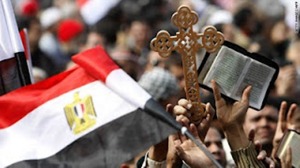
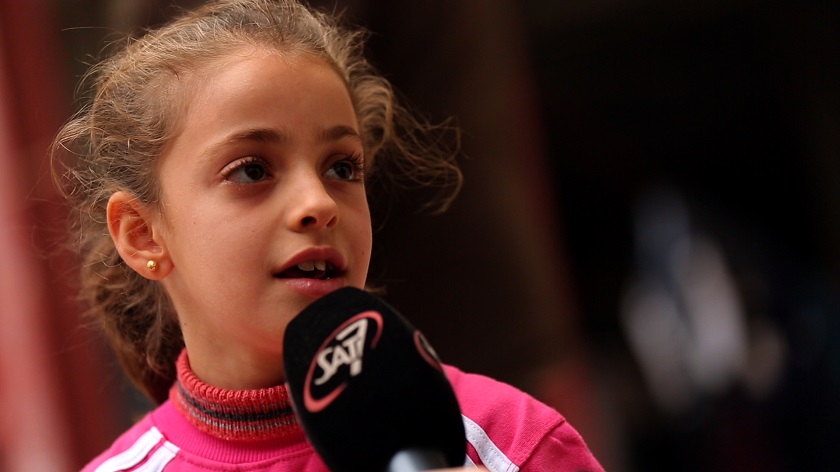

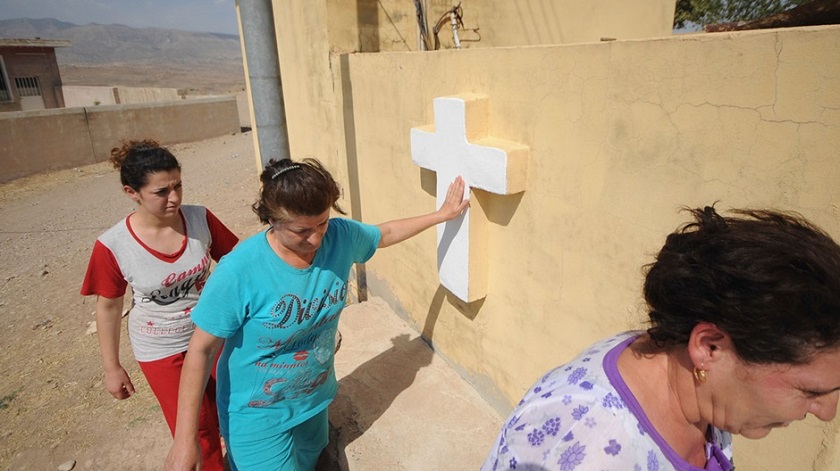


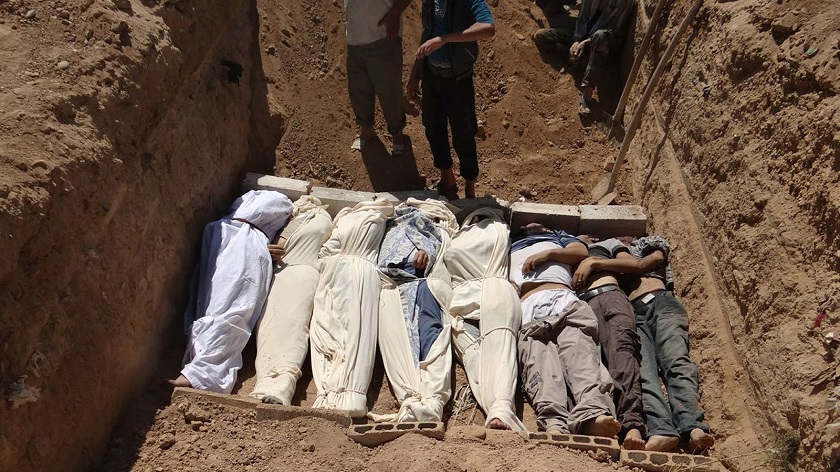


 Jayson Casper