Categories
Lapido Media Middle East Published Articles

Jewish Settler: I am a Passionate Defender of Palestinian Rights

This article first published at Lapido Media.
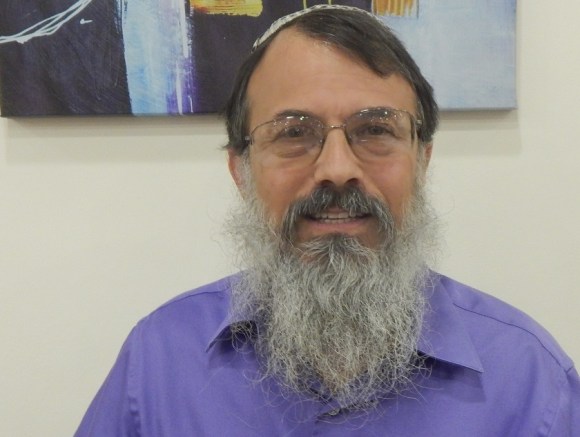
Rabbi Hanan Schlesinger
‘Zionism is a big tent’: Settler Rabbi Hanan Schlesinger

Palestinian Christian jaws dropped in shock.

Gathered to promote their narrative to international evangelicals largely supportive of Israel, a bespectacled, long-bearded, Yarmulke-wearing Jewish settler appeared on screen.

He spoke, and their surprise deepened.

‘I am a passionate defender of Palestinian rights,’ Rabbi Hanan Schlesinger told the audience. ‘Zionism is a big tent, and there are many I disagree with.’

A New York City native, Schlesinger immigrated to Israel in 1977. He lives in the settlement of Gush Etzion, between Bethlehem and Hebron.

Many Palestinians consider Jewish settlers to be the source of all evil, he admitted. Not until two years ago had he spoken to a Palestinian as an equal.

Serving in the army, he had arrested them. For general housework, he had employed them. But after a US-based pastor encouraged him to listen to them, he had worked to be reconciled ever since.

CATC Logo
Many attended the Bethlehem conference last week from UK. Photo: CATC

In this capacity Schlesinger was invited to the fourth biennial Christ at the Checkpoint (CATC) conference, held 7-10 March in Bethlehem. Operating at the heart of the Arab-Israeli conflict, these conferences provoke much controversy.

Provoke

This year, they chose to provoke themselves.

Fifty UK citizens joined roughly five hundred people from 24 countries to attend the conference, including 150 Palestinian Christians from Israel and the West Bank.

Interviewed on screen, Schlesinger also expressed great appreciation for those the conference aimed to challenge: Christian Zionists who prioritize Jewish Israel.

‘The Christian nation is turning over a new leaf, it is a miracle,’ he said. ‘Christian Zionism defends Israel against its many enemies, so we need all the friends we can get.’

Afterwards he mingled in the crowd. Some even approached to shake his hand.

‘It was hard for many here to see Rabbi Hanan in our audience, let alone on the screen,’ said Sami Awad, executive director of the Holy Land Trust, and a conference organiser.

‘But some came to me and said, you are challenging us in our faith.’

Like many Palestinians, Awad, who has conducted nonviolent trainings for Hamas, had found it difficult to befriend those with whom he had deep political disagreements.

Additional screened interviews with his friends in Hamas also challenged the conference towards a similar transformation.

Awad told Lapido that Jews have a basic need to live and worship in the land of their ancestors.

The fear that kept Jews, Muslim, and Christians apart, he said, came less from ‘the other’ than from those one considers on one’s own side.

Sami Awad
‘Make uncomfortable’: Awad. Photo: University of Bristol

‘People are not afraid of Rabbi Hanan, they know he will not come here and hurt us,’ he said. ‘But we are afraid of being labeled a traitor by our own community.’

Awad and Schlesinger jointly host a study to discuss their holy texts. Muslims, Christians, and Jews all suffer generational trauma, Awad says. So the Holy Land Trust sponsors ‘healing hatred’ groups to help them overcome it together.

Transform

Likewise, Schlesinger has co-founded ‘Roots’, a Palestinian-Israeli initiative for understanding, non-violence, and transformation.

Of three thousand local Israelis and Palestinians attending his training, around two-thirds have been Jews. Of these up to forty percent have been settlers, and up to 15 percent have been soldiers sent by the army.

Ninety-nine percent of all participants, he said, are meeting ‘the other’ for the first time.

‘Something is wrong,’ Rabbi Schlesinger told Lapido Media. ‘We are living out our truth in a way that causes injustice to other people.

‘I don’t know if the land is occupied, but the people are occupied.’

This theme was echoed by another prominent Jewish critic of Israeli policy invited to CATC, Arik Ascherman, president and senior rabbi of Rabbis for Human Rights. His remarks were introduced by a video from October 2015 showing him resisting a knife-wielding Jewish settler.

‘The creation of the state of Israel—and we know it is a catastrophe for Palestinians—was the beginning of our redemption, and we want it to be a blessing shared by all,’ he said.

‘But it may be that in God’s eyes, the very things we do to hold on to the entire land make us unworthy to keep all of it.’

Criticism

CATC has been subject to much criticism, some of it theological, some of it political.

‘Israel is the only country in the Middle East where Christians enjoy religious liberty,’ Rabbi Yechiel Eckstein, founder and president of the International Fellowship of Christians and Jews, told Lapido. Last year they raised over £872 million to support Israel.

‘Even as I decry the anti-Israel rhetoric that has taken place [at CATC], I give thanks for the many, many Christians who truly know Israel and continue to support the land and her people in prayer.’

But for Awad, though resistance to the occupation is crucial, so is the befriending of an enemy.

‘I cannot be a voice to the other side in nearly the same way one of their own can,’ he said.

‘We are communal beings who only trust our own kind, so we need to make our own communities uncomfortable.’

Categories
Lapido Media Middle East Published Articles

First Peace Studies Programme in the Arab World Gets Off to Tentative Start

A man whose young brother has just been slain by an Israeli soldier is restrained by friends. Photo: ‘William’, Peace Parcels

The Israeli government appears to be shunning a Palestinian peace studies course – even as a third intifada escalates.

The Arab world’s first Master’s degree in Peace Studies – developed by a Bethlehem college – is getting the brush-off from a government whose commitment to peace is already being questioned from within the Jewish world.*

Bethlehem Bible College (BBC) aims to train Muslim, Christian, and Jewish peacemakers to build bridges instead of walls.

But 24-year-old ‘William’, a Canadian, and one of five international students in the inaugural class, cannot obtain a student visa.

Instead he must come and go every three months as a tourist. Afraid of deportation, he shields his identity online and makes no mention of his studies to the authorities.

‘My fear is maybe they would become aware of what I’m doing and reject any subsequent tourist visas,’ William, using a pseudonym, told Lapido.

‘It has been a step of faith, but I figured I would just take the risk and do it.’

BBC was established in 1979 to offer theological education to Palestinian Christian leaders. William is motivated to help Christians in the West shift away from theological positions that are biased towards Israel.

Accredited by the Palestinian Ministry of Higher Education, BBC has a long history of opposition to the Israeli occupation. It was founded by Bishara Awad, brother of Mubarak Awad, who in 1983 created the Jerusalem-based Palestinian Centre for the Study of Nonviolence.

Often called the Gandhi of Palestine, Awad was deported by Israel in 1988. He returned to teach the first MA module, but like William and the team of international professors, he also had to come as a tourist.

According to the 2012 European Commission report, Higher Education in the Occupied Palestinian Territory, international students are able to enrol in Palestinian universities.

In practice, however, it is ‘very rare’ due to the difficulty of obtaining Israeli permission to enter the country.

Education

William was advised by the BBC not even to try. But this has not stopped him from full immersion in Palestinian society, gaining a first-hand education that peace studies students in other universities can only read about.

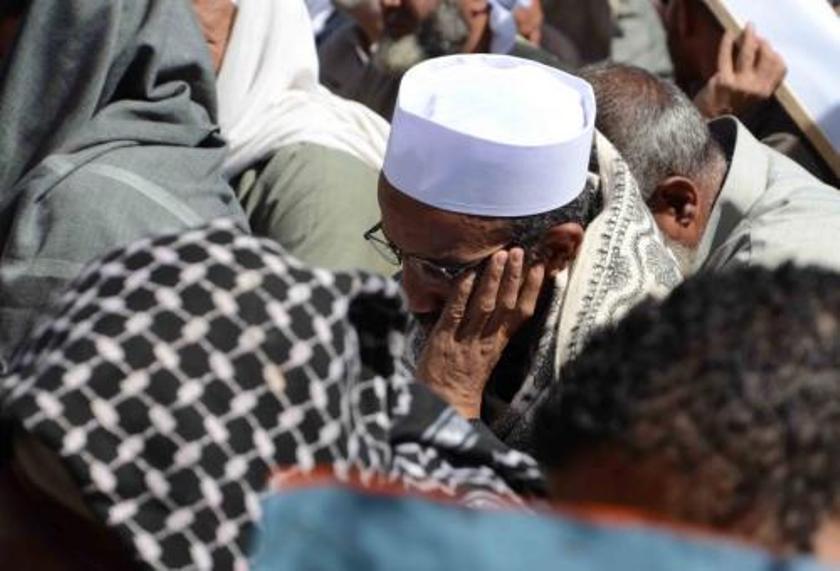
On 5 October he witnessed an angry crowd of hundreds passing by campus. They chanted ‘Allahu Akbar’ and threw stones at security after 13-year-old Abdel Rahman Abdullah was shot in the chest by Israeli security.

He describes witnessing the agony of Abdullah’s brother [pictured above in blue hat]. ‘It was heart wrenching,’ he says.

‘He was weeping and flailing, his anguish was so horrible to see. I’m tearing up just thinking about it right now.’

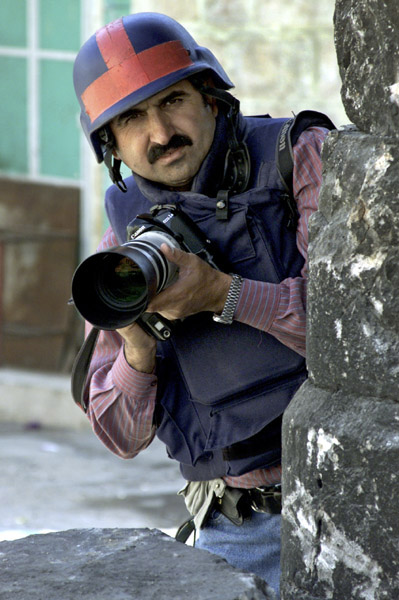
Hashlamoun: ‘I choose nonviolence’. Photo: Watan Centre

For Nayef Hashlamoun, a veteran Muslim activist from Hebron and one of two Muslim students in the programme, witnessing such anguish has become commonplace.

‘My life is for my homeland, but I cannot kill,’ he said. ‘I choose the way of nonviolence, I choose instead to carry a camera.’

Hashlamoun worked for twenty years with Reuters as a photojournalist, and founded the Watan conflict resolution centre in 1985.

He has pursued peace studies at American University and the School for International Training in Vermont, but events in Palestine always brought him back.

Over time he became friends with the Awads, who invited him to BBC. Mubarak Awad went on to found Nonviolence International, which has translated much of the literature on peace studies into Arabic.

‘They are Christians and I am Muslim, but I will be proud to have a degree from BBC as our relations are as brothers,’ he said. ‘And now I can pursue my education at home.’

Nonviolence

The three-semester MA is taught in English and requires 39 credit hours, including a practicum or thesis.

It features distinguished professors from around the world including Nancy Erbe, Fulbright Specialist in Peace and Conflict Resolution, Mohamed Abu Nimer, Director of the Peacebuilding and Development Institute at American University, and Edward Kaufman, formerly of the Harry S. Truman Research Institute for the Advancement of Peace at the Hebrew University.

Jews are welcome at the centre, but none has so far enrolled. Two of the twelve students identify as nonreligious, and four local Palestinians are auditing.

Kuttab: ‘Violence has not promoted our rights’. Photo: World Can’t Wait

Jonathan Kuttab, chairman of the BBC board and a human rights lawyer in Israel and Palestine, hopes officials from Fatah and Hamas will also join.

‘Nonviolence is far more effective than violence, which certainly has not helped us in working for our rights,’ he told Lapido. ‘For me, this is an easy sell.’

In the current context Kuttab is critical of Benjamin Netanyahu for provoking violence from Palestinians. But he also criticises Mahmoud Abbas for policing his own people on Israel’s behalf at the expense of nonviolent resistance.

‘There is a lot of acceptance of nonviolence in the Palestinian community,’ he said, ‘but the Palestinian Authority has been so weak in pursuing our rights that it has given peace a bad name.’

Education is limited in its direct impact, said Kuttab. But he is hopeful that beyond increased international attention in peace studies circles, the programme will deepen local commitment to nonviolence through strong engagement with the academic literature.

‘We have to revive what real peace and real nonviolence mean,’ he said.

‘Bethlehem is the birthplace of the Prince of Peace, where else should we have this programme?’

No spokesman was available from the Israeli government as this story went to press.

*War Against the People: Israel, The Palestinians and Global Pacification by Jeff Halper, published by Pluto Press. 2015.

This article was first published at Lapido Media.

Categories
Prayers

Friday Prayers for Egypt: Borders, Bombs

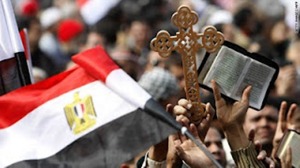
Flag Cross Quran

God,

The bombs continue, this time striking a security directorate in the early morning hours with a blast that rattled all Cairo. Several injuries, none killed – it is a marker of taunting more than a message of death.

But from where?

There are problems at the borders, God. To the west, Libyan officials have abandoned a desert crossing. To the east, militants seized Palestinians returning to Gaza, taking four from a bus. And long a guarantor of peace, the United States is considering pulling out peacekeeping forces on the Sinai border with Israel.

How much of Egypt’s trouble is imported, God? Most of the Gaza tunnels have been destroyed. But instability still reigns in Libya, as the Arab League debates arming the internationally recognized government. Will more war bring peace, or more weapons to smuggle?

Secure the borders, God, though with Egypt’s deserts the task is formidable. Ideas have wings, but keep out the men and means of violence.

Of those already here, may they be found, disarmed, and prosecuted.

But most belong here. Egypt has long been an exporter of violent ideology. Give winning flight to better ideas.

Help men of religion to lead the charge. Help them also to stay out of the way. Religion can inspire, it can also impose.

Help Egypt find the balance. Help her craft a society of welcome and tolerance, humanity and peace.

For those tempted to radicalize where these are absent, God, give them a stronger inner core of righteousness. May they fight for justice, but transgress not.

May humility rattle the region, and decency taunt the darkness. May the borders be secure because the center is whole. A marker of encouragement, a message of life.

Amen.

Categories
Lapido Media Middle East Published Articles

The Peacemaking Palestinian Evangelicals of Israel

Salim Munayer
Salim Munayer

As Prime Minister Benjamin Netanyahu concludes cantankerous negotiations to finalise his right-wing cabinet, Palestinian-Israeli evangelicals are hoping for something better.

Alienated by campaign rhetoric stigmatising Arab citizens as an electoral threat, they turned in response to the source they know best: the Gospel.

In doing so, they seek to reverse a disturbing trend of isolation from society as a whole, and in particular their Jewish neighbors.

‘Are we not asked to be the salt and light of the earth?’ asked Revd Azar Ajaj, president of Nazareth Evangelical College, in an open letter shortly after the Israeli elections.‘How important, then, to show love to those who have been styled as our “enemies”. In fact we are asked to be peacemakers.’

And from April 16-18, he gathered 60 local and international leaders to discuss how.

The ‘Evangelicals and Peacemaking’ conference was sponsored in part by the Baptist Mission Society UK. It urged participants as Palestinian Christians in Israel to seek justice and reconciliation to create a state for all its citizens.

Present at the conference was Salim Munayer, head of Musalaha, which since 1990 has bucked the trends of intifadas and settlement building to call for peace between Israeli Jews and Palestinians.

The election rhetoric was quite discouraging, Munayer told Lapido Media.

Netanyahu rallied his supporters saying the Arabs were coming out to vote ‘in droves’. His foreign minister Avigdor Lieberman told Ayman Odeh, head of the Arab Joint List which placed third in total Knesset seats, ‘you’re not wanted here.’

Meanwhile the Joint List – a merger of secular, communist, and Islamist parties – included the symbolic presence of a politician calling for a caliphate in Jerusalem. It received the strong endorsement of Hamas.

Pressed between a regional rise in Islamism, mirrored by the gains of religious Zionism, Christians are being squeezed.

And as a result, they are withdrawing from both.

Separation

Evangelical leaders estimate their numbers in Israel are only around 5,000, among 157,000 Christians and 1.4 million Muslims. Israel’s population is 7.91 million, according to the 2012 census.

‘Most interaction between Palestinian Christians and Israeli Jews comes by necessity, not as a result of a relationship,’ Munayer told conference attendees. ‘We see them at school, at the bank, but much more must be done.’

And it has never been worse, according to his research co-authored with Jewish professor Gabriel Horenczyk from the Hebrew University of Jerusalem. The October 2014 issue of International Journal of Psychology details how Christians have soured toward Jews.

In 1998, the predominant attitude of over 200 Arab Christian adolescents surveyed was of integration with Israeli Jewish culture. By contrast, the attitude toward Arab Muslim culture was one of separation.

But 10 years later, adolescents exhibited a primary posture of increasing separation from both.

‘Many of us have given up on trying to improve our relationship with both the Jews and the Muslims of Israel,’ Munayer said. ‘We say it is a waste of time, they are not going to change, they are becoming more religious, and they don’t want us.’

Munayer’s Musalaha is doing all it can to fight the reality of this withdrawal. It has created a three-hundred-page curriculum on reconciliation between distinct peoples, applying its principles during inter-ethnic summer camps and encounter groups.

But he increasingly aims to influence society as a whole, not only at the grassroots but also in academic engagement. Munayer received his PhD from the Oxford Centre for Mission Studies at Cardiff University, and is collaborating with a number of young Israeli Christian and Jewish scholars to further his research.

For example, in a survey of 700 Muslims, Christians and Druze, Sammy Smooha of Haifa University found only fifty per cent of Christians have Jewish friends they have visited at home. But 57 per cent have experienced discrimination, and thirty per cent reported receiving threats or humiliation.

These and other findings were presented at a January conference on Palestinian Christian Identity in Israel, co-hosted by Musalaha and the Hebrew University. It was unprecedented, Munayer said, for an Israeli university to sponsor such an event.

Bridges

And it is an Israeli Jew who is helping Ajaj take his baby steps toward peacemaking, moving beyond his simple convictions.

‘Very little is being done to build bridges with the Jews,’ he told Lapido Media. ‘I’m still in the beginning of the journey and I pray that good things come out of it.’

In October last year Ajaj participated in an interfaith dialogue at a Jewish conference centre. A rabbi from the village of Kiryet Tiv’on, ten miles from Nazareth, invited him to speak at his synagogue during Hanukah and explain the Ten Commandments on his radio program.

In May they begin a six-month experiment to bring eight from each community to discuss matters of faith and society.

‘We are classified as enemies, but we don’t accept this,’ Ajaj said of the national political discourse. ‘So we must encourage those who are silent to take action and express respect for the other.’

Ajaj hopes the April conference can empower Nazareth Evangelical College as a centre for theological education in peacemaking. But as a minority within a minority within a minority, there is only so much they can do.

To help, Ajaj recently invited leaders from seven different denominations to a conference on Christianity in the Holy Land. Several said it was their first meeting with an evangelical.

But with Christians withdrawing into a self-imposed ghetto mentality as Israeli Arab citizens are labelled a demographic threat, these evangelicals are calling for a halt.

‘If we want a better future built on respecting and loving the “other”, then let us take part in building it,’ Ajaj wrote. ‘Otherwise, those with other values will determine what this future will be.’

This article was first published at Lapido Media.

Categories
Personal

The Church in the Shadow of Israeli Elections

Azar Ajaj 1

Rev. Azar Ajaj is the president of the Nazareth Evangelical Theological Seminary. An Arab Israeli, he helped shape my recent article for Christianity Today about the identity struggles of Arab Christians during the recent elections.

Asked by many friends about these elections, Ajaj decided to pen a letter in response. The summary and quotes below are shared with his permission.

Nearly 80 percent of Arab Israelis voted for the ‘Joint List’, he remarked, motivated by its focus on a two-state solution and equal rights for their community. The list captured the third most seats in parliament, an achievement made possible primarily through the unlikely unity of its disparate collection of secularists, communists, and Islamists.

Lest this be seen as a testimony to the political system in Israel, Ajaj also remarks upon the other salient feature of the election – the triumph of the right wing. An excerpt here is useful to judge the impact of their campaigning on the Arab, and in this case Christian psyche, striking a “distinctively negative chord.”

“What was different this time was the competition between the right wing parties to bolster one’s credentials as ‘least tolerant’ to the Palestinian Israeli community,” he wrote. “This sadly included, a few times, the use of racist expressions, and certainly involved using words that do not promote respect to Arab citizens, words which present them as strangers and enemies of the country.”

Ajaj’s concern in the letter, however, is not political but pastoral. What should the church do in light of this reality?

They must identify with the sufferings of their people, he said, which does not exclude criticism of certain responses. They must seek a prophetic voice to advocate for justice on behalf of the poor and the oppressed, while praying diligently for those in authority.

But given that Arab Israelis have been designated an enemy, this necessarily activates a peculiar Christian response.

“Are we not asked to be the “light and salt of the earth?” he wrote. “How important, then, in such circumstances to promote and show love to those who have been styled as our ‘enemies’. In fact we are asked to be peacemakers.

“Therefore, it would be important that the church at this dark time seek to build relationships and establish a dialogue with the Jewish community in Israel, as well as the Muslim one.”

Christians must participate in creating the future they desire, Ajaj warns, “Otherwise, those with other values will determine what this future will be.”

The church, he believes, is living in the shadow of these elections, but it still has a mission within it. If successful, future elections might be different.

“God willing,” he hopes, “one day we will speak of an election in the shadow of justice, mercy, love, and respect.”

Categories
Prayers

Friday Prayers for Egypt: Neighbors

Flag Cross Quran

God,

You desire peace not just for Egypt. Honor also her neighbors, that all might live in peace together.

For two doors down, a nation is in mourning. A terrorist attack on Tunisia’s tourists threatens to undermine stability there. Comfort them, God, and give them resolve.

Resolve to defeat a terrorist menace. Resolve to hold firm to a democratic path. Resolve to see the region cooperate.

For Tunisia’s struggle is not hers alone. While she has sent more fighters to Syria than any other nation, the ones who attacked her trained in Libya. Civil war in both nurtures chaos and extremism, threatening Tunis and Cairo and others beside.

For the sake of both countries, and above all for her own people, lighten Libya’s burden, God. Establish legitimate government, to extend legitimate security. Tighten borders, but open societies. Give wisdom to outsiders who want things put straight. Give wisdom to Libyans, to straighten themselves.

To Egypt’s east, another nation needs peace. Israel does not suffer the volatility of the region, but her recent elections showcase disharmony between peoples. Guide them, God, and give them resolve.

Resolve to defeat a terrorist menace. Resolve to hold firm to a democratic path. Resolve to reconcile her differing peoples.

Reconcile, God, her Arab and Jew. Set these citizens in equality to serve jointly their nation.

Reconcile, God, the Palestinian and Israeli. Give just solutions to their disjointed hopes; inspire just leadership to enact them together.

Honor Israel and Syria, Tunisia and Libya. And with them Egypt, for a region both stable and strong. Give each one sovereignty, to bless her neighbor. Together may they live in peace.

Amen.

Categories
Christianity Today Middle East Published Articles

Identity Politics: Israeli Election Squeezes Arab Christians

Ariel Schalit / AP, via CT

From my article at Christianity Today, published March 18, 2015:

Israel’s election wasn’t easy on its Arab Christian citizens.

From one direction, Prime Minister Benjamin Netanyahu rallied his base by warning, “The Arabs are flocking to the polls in droves.” From the other, Ayman Odeh, a Palestinian-Israeli politician from Haifa, led an unprecedented but disjointed coalition of Arab secularists, communists, and Islamists, and received the endorsement of Hamas.

The tension illustrates the struggle of Arab Israeli Christians to craft a national identity between the increasing clamor of Zionism and Islamism. The result, according to evangelical leaders: a “ghetto mentality” among Christians and fewer opportunities for public witness and ministry.

Netanyahu’s Likud emerged victorious over its left-of-center rivals, the Zionist Union, buoyed by promises to abandon prospects for a Palestinian state. Foreign Minister Avigdor Lieberman, a Likud ally, told Odeh during campaigning, “You’re not wanted here.”

As voter turnout surged, however, so did Arab participation. Odeh’s “Joint List” placed No. 3 among the 10 parties that captured seats in the Knesset, Israel’s parliament. “I’m very wanted in my homeland,” Odeh replied.

But where is this homeland for Arab Christians? The answer is quite contested.

Please click here to read the full article at Christianity Today.

Categories
Excerpts

An Israeli Solution to the US Racial Crisis?

Lieberman Race Protests

With America gripped by conflicting rhetoric over the nature of race relations and police performance, has anyone yet suggested this solution: Just get the African-Americans to go back to Africa?

If so, surely it would be from the political fringe. If anyone knows of a more mainstream source among right-of-center bulwarks like Fox News or Rush Limbaugh-type radio programs, please comment below.

But essentially, this is a talking point on racial issues in Israel. And it is not a marginal viewpoint, but from the center of current government.

A little over a week ago, according to Reuters:

Israeli Foreign Minister Avigdor Lieberman proposed on Friday that Arab citizens of Israel be offered financial incentives to leave the country and relocate to a future Palestinian state.

“Those (Israeli Arabs) who decide that their identity is Palestinian will be able to forfeit their Israeli citizenship and move and become citizens of the future Palestinian state,” he wrote in the manifesto, entitled Swimming Against the Stream, published on his Facebook page and his party’s website.

“Israel should even encourage them to do so with a system of economic incentives,” he said.

Lieberman’s party, Yisrael Beiteinu (Israel, Our Home), captured 11 of 120 parliament seats in the most recent elections, as part of the winning coalition with Benjamin Netanyahu’s Likud.

Encouraging Arabs to leave is not official government policy, but apparently leading Israeli politicians believe it is good rhetoric to rally their base, at the least.

America did have a moment in history when such views were put forward. Certainly the context in Israel today is different than America, both then and now.

But America, despite its faults and residual, often unconscious biases, has forged a society establishing full racial equality in law and in the mindset of most its citizens. The protests today are demanding improvement of an already present good.

The sometime (perhaps often?) poor administration of this good speaks to the widespread triumph of the ideal. Comparing it to other contexts reminds about how fleeting an ideal can be, and how easily it can be threatened.

Israel seeks to navigate two principles not easily combined given its demographic makeup. It wishes to be both a Jewish and a democratic state. As I wrote in an earlier post summarizing the critique of Stephen Sizer, especially as concerns the Occupied Territories, one of these principles seemingly must slide.

Perhaps not. But fortunately America can sidestep the question. It is not a nation for whites, blacks, Jews, Arabs, or anyone in particular. It is a nation for citizens.

Cultural questions still seek definition by many, or perhaps, there should be no definition, for many others. This debate is warranted, within the scope of the Bill of Rights.

But Lieberman’s debate is not. Certainly not in America; morally not, I and many Jews would argue, in Israel.

Or should those who disagree be sent to exile instead?


Categories
Arab West Report Middle East Published Articles

A Sufi Sheikh and the Fine Line of anti-Semitism

Alaa al-Din Abul Azayim

From my article at Arab West Report, from before Egyptian presidential elections but pertinent now with the escalation in Gaza:

Arab West Report, Editor-in-Chief Cornelis Hulsman recently highlighted the mutual recourse to anti-Semitic accusations on the part of both opponents and supporters of the current government. He referenced research complied by MEMRI, in which General Sīsī and the Muslim Brotherhood are simultaneously declared to be Jewish in origin and committed to a Zionist agenda.

The prominent Sufi sheikh, ‘Alaa al-Dīn Abū al-‘Azā’im, recently offered an example of such rhetoric. In an interview designed to explore both the Sufi contribution to the June 30 revolution deposing President Mursī, and the motivation thereof, ‘Azā’im consistently inserted accusations of the Muslim Brotherhood and Salafis being allied to Israel. Despite efforts to focus on the local issues involving Sufi citizens, ‘Azā’im could not help himself from resorting to international conspiracies.

Examples include the following:

The article lists his charges, but here is an excerpt from his response at the end of the interview about whether or not the Western world is right in considering such comments anti-Semitic:

First, he said the Qur’an commands us to be merciful to everyone – Jews, Christians, the whole world, even unbelievers. Mohamed’s constitution in Medina was civil, giving everyone the right to choose his own religion and pray as he wishes, again, emphasizing this right was given even to unbelievers. Jews are welcome to live in Egypt, and before 1967 when they were plentiful, he had good relations with them. While a student in Asyut University, ‘Azā’im’s Jewish colleague tried to persuade him to marry his sister. He referenced Pope Shenouda, stating he said we all worship one God – Muslims, Christians, and Jews – so he should gather us together rather than us fighting each other.

But second, this fighting is what earns Israel his animosity. Jihad in the Muslim sense may only be waged if a country attacks you, or has attacked you. Look at what Israel does, he said, killing Muslims every day. They occupied our land, so it should be jihad, until they leave.

There is a necessary difference between Israel and the Jews. Arabs often conflate the two; do Westerners as well? Where is the line properly drawn?

Please click here to read the full article at Arab West Report.

Categories
Prayers

Friday Prayers for Egypt: Gaza Again

Flag Cross Quran

God,

It is not as if this is the first time. Mutual acrimony between Israel and Hamas leads to the exchange of rockets, with deeply disproportional suffering. Now a land invasion is poised to begin.

Egypt has been the historic mediator, but this time – so far – unsuccessfully. Two years ago President Morsi, whose Muslim Brotherhood has ties with Hamas, brokered a ceasefire and relative lull in hostilities. This time the violence continues despite Egypt’s efforts, and peace is as far away as ever.

Meanwhile Egyptian society is torn. The people of Gaza lack their standard sympathy due to widespread sentiment Hamas has been destabilizing Egypt through the Sinai. But an anti-Zionism is always present, and as the Palestinian casualties mount the Egyptian frustration mounts with it.

God, is there an answer? Must Hamas be destroyed? Must so many people of Gaza die? Must rockets rain down on Israel? Must the Zionists be driven back to where they came from?

God, there must be a better answer. Help Egypt have a share in finding it. Help world sympathy for all not falter. But help Palestinians and Israelis to reconcile. Help justice to be done.

For justice is a sticking point. The terms are not equal. Palestine is under occupation. Stand with all who suffer, give them relief, and help them to honor moral convictions and call out to you.

Feeling triumphant, too many rejoice in the suffering of others. Feeling aggrieved, too many strike out at innocents. Feeling in need of world opinion, too many manufacture propaganda. Feeling in need of domestic support, too many dehumanize their enemy.

But if they call out, God, answer them and give repentance and forgiveness. Answer them and give initiative and creativity. Answer them and give a just political solution. Answer them and give social peace and mutuality.

Help them find the way, God, first through their own hearts, and then through the hearts of their enemy.

This is not the first time these prayers have been necessary; in man’s estimation it is unlikely to be the last. Remove acrimony and exchange love, God, however impossible it may seem. The sins of all are infinitely disproportionate to your grace, so have mercy.

Bring peace, God. Please.

Amen.

Categories
Excerpts

Gaza and the Right to Self-Defense

There is much wrong on both sides. The situation is complex and begs for thorough analysis. All this is granted but within this debate, here is a well-researched article from Jadaliyya exposing a false rhetoric that seems eminently logical:

On the fourth day of Israel’s most recent onslaught against Gaza’s Palestinian population, President Barack Obama declared, “No country on Earth would tolerate missiles raining down on its citizens from outside its borders.” In an echo of Israeli officials, he sought to frame Israel’s aerial missile strikes against the 360-square kilometer Strip as the just use of armed force against a foreign country. Israel’s ability to frame its assault against territory it occupies as a right of self-defense turns international law on its head.

A state cannot simultaneously exercise control over territory it occupies and militarily attack that territory on the claim that it is “foreign” and poses an exogenous national security threat. In doing precisely that, Israel is asserting rights that may be consistent with colonial domination but simply do not exist under international law.

The article was first published two years ago, under near exact circumstances. It continues by detailing the legal arguments that invoke the right to national self-defense, and finds they come up short – even as judged by the Israeli High Court:

Since the beginning of its occupation in 1967, Israel has rebuffed the applicability of international humanitarian law to the  Occupied Palestinian Territory (OPT). Despite imposing military rule over the West Bank and Gaza, Israel denied the applicability of the Fourth Geneva Convention relative to the Protection of Civilian Persons in Time of War (the cornerstone of Occupation Law). Israel argued because the territories neither constituted a sovereign state nor were sovereign territories of the displaced states at the time of conquest, that it simply administered the territories and did not occupy them within the meaning of international law. The UN Security Council, the International Court of Justice, the UN General Assembly, as well as the Israeli High Court of Justice have roundly rejected the Israeli government’s position.

Again, there is much wrong on both sides. But do recall the essential foundational fact: Gaza and the West Bank are occupied territories. A just solution has escaped the international community since 1967. Proportion of fault can be debated, but Israel bears responsibility for the land it holds.

There is no winner, there is only more destruction. Unfortunately both sides seem more than willing to engage.

Categories
Prayers

Friday Prayers for Egypt: Easter Visits

Flag Cross QuranGod,

Easter, and the national celebration of Shem al-Naseem the following day, were both quiet in an otherwise quiet week. But even quiet palpitations within can be heard and affect the national scene. For good, God, only for good.

Because all events are subject to your evaluation, even if natural to those involved. For some used Easter to celebrate politics, while others used politics to denigrate Easter. Judge between them, God, but only in mercy.

For political candidates visited the papal cathedral to join in on Easter; one in particular received a rousing ovation. All candidates were Muslims, who believe neither in Jesus’ death nor resurrection. Their presence can be seen as a great gesture of solidarity, or, a great exploitation of an electorate.

What is the proper place of Easter in Egypt, God? Should it be made equal with other religious feasts and become a national holiday? Or should it be left an oddity for minority Christians, neither prevented nor acknowledged? Is anything in-between viable, or a capitulation?

For a political movement opposed to these candidates put the holiday’s name in quotation marks. Criticizing a supposed normalization between the Orthodox Church and Israel, it described pilgrims going to Jerusalem to celebrate “what is called ‘the feast of the resurrection’.” The pilgrims did go but the church did not sanction; the rumor reported served only to discredit – church and Easter alike.

Show Egypt the level of value to give Easter, God, independent of belief. It cannot be easily shared, but can it be communally honored? Jesus unites Egyptians even as he divides. Help society to emphasis the former, with all appropriate allowance for the latter. Guard this balance, God, even as you guard the disputed truth.

But show also the believers in Easter the proper relation of their faith to society. At times they are honored; at others, marginalized. Give them wisdom in both situations.

Is the cathedral a place of political judgment, God? Or does your sovereignty demand the voice of faith in politics as in all else? As Muslims debate this issue, let Christians do the same. Lead each individual to the candidate of choice, and if a community coalesces, discern between them. For good, God, and with mercy.

Allow all holidays in Egypt to pass quietly, and their palpitations to be joyous. May all celebrations, national or otherwise, enrich the national scene.

Amen.

Categories
Prayers

Friday Prayers for Egypt: US Aid

Flag Cross Quran

God,

Perhaps the United States felt she needed to take a stand. Perhaps this is a new wrinkle in an old story of feigned antagonism. Perhaps she backs the Muslim Brotherhood. Perhaps she backs democracy.

Perhaps she is against the killing of protestors. Perhaps she is muddled and has little idea of how to engage Egypt.

Whatever the reality, God, she has suspended aid.

Not all, of course, and not permanently. But it is a significant step of disengagement from a nation with which she has an entrenched political and military partnership. What will come of it?

Make Egypt, God, a country that needs no aid. Help her to stand on her feet, supply her own needs, and craft her own policies. May these be wise and righteous; may she be generous and able to aid others instead.

Make Egypt, God, a country free from external leverage. Help her to defend her nation as necessary, stand tall in balance of power, and speak into issues of regional justice. May she be strong and welcoming; may she love peace and pursue it.

But these are ideals, God. And even if achieved, Egypt will remain part of the global community in which none are independent. Within this web, she is more often a fly than a spider; give her reprieve.

US aid is the reality in which she lives. Help Egypt’s leaders to respond correctly. May good relations with America persist, even as they evolve. But may all stipulations be negotiated fairly, from strength to strength, on what is right and proper rather than from interest and pressure.

For Egypt can certainly pressure back. Perhaps you deem America immoral, God, as many Egyptians do. But there are certainly other immoralities to flirt with; may Egypt not run from one lover to the next.

There is a certain stability in the world, filled with injustices but facilitating peace as the absence of war. Egypt, if she wishes, can undo some of this. Suez, Sinai, Israel – her contribution to the web is substantial. Make right the injustices, God, but preserve and enhance any peace that exists.

And God, if American aid and leverage has positive ideals behind it, may a principled stand produce principled results. Domestically, hold leadership accountable to the demands of the people. Grant Egypt consensus and a governmental system that represents it.

The United States may be acting from any number of motivations, so give Egypt discernment. But whether aid is restored, lessened, made conditional, or eliminated, help Egypt also to take a stand.

For Egypt, may there be no wrinkles. May there be no antagonism. May there be no backed political entity. May there be no engineered democracy. May there be no killing. May there be no need for protests.

May there be no muddle. God, engage Egypt, and do not suspend your aid.

Amen.

Categories
Prayers

Friday Prayers for Egypt: Preaching, Sinai

Flag Cross Quran

God,

Rarely do men try to speak in your name, but there are many burdened to represent what they believe you have spoken. Now, in Egypt, some of these will be denied.

Give them wisdom in responding to this development.

The government has taken new steps to ensure only licensed imams may preach on Friday. They are also preparing to close the small neighborhood mosques which populate most city streets. They feel this combination is ripe for extremist messaging. Others complain it is only extremist in rejection of a current military order.

Likely, both arguments have merit. The Azhar, the centuries old mosque and institute of learning, is a state-backed organization with a history of moderation. Often, the vitriol issued against Copts, Israel, the West, or the Egyptian establishment come from self-studied scholars specializing in Wahhabi thought. That is, if they specialize at all.

But, at times Azhar scholars have either veered off course or played sycophant to the state. And many a self-studied scholar deserves full respect for dedication and erudition.

The new proclamation ensures that all stay within bounds and on message. Part of that message, admitted openly, is to keep politics out of the mosque.

Oh how dangerous, God, are both sides of this coin. Government restricting religion displays empty hypocrisy. Religion seeking government invites empty hypocrisy.

But the argument is fair that the government should protect against incitement to hate and violence. And the role of religion in holding government accountable is worthy of every argument.

Of course, will the government enforce its ruling at all? Is it able to?

God, give discernment to Egypt’s preachers in all religions. Help them to lead the people toward peace, mercy, and righteousness.

Help them to see the injustices in the land, and to speak powerfully against them.

Help them to pray for those who lead the nation, that they might encourage all the above.

Many, God, are sincere but misguided in their ministries. Lead them to the right path. And some, God, manipulate freely and willfully. Rebuke them; silence them if necessary.

But it is not just the now-non-Islamist government that seeks to corral preachers. Pro-Brotherhood Hamas is doing the same, asking imams to tone down their criticism of Egypt. Poor relations with Cairo choke the economic life of Gaza.

As Egypt battles terrorism in the Sinai, it has also moved to close the expansive network of tunnels into Gaza. The transfer point for drugs, weapons, and jihadists, the tunnels also are Palestinians’ black market for everything from basic supplies to luxury goods. Many get rich off the trade.

Here, God, there is much to pray for. Eliminate the threat of those who will use wanton violence to achieve their ends. Hold back those tempted to inflate or exploit this threat. Bring real equity and prosperity to Sinai to curb the attraction of smuggling. And establish peace between Israel and Palestine so that borders may be opened and tunnels obviated.

God, in the desert or elsewhere, may preachers handle your will correctly. Lead them, for the sake of all.

Amen.


Categories
Prayers

Friday Prayers for Egypt: Foreign Complications

Flag Cross Quran 

God,

Egypt’s problems are so big, other nations are getting involved. May their help be helpful.

Early indications, however, are mostly complicating. A number of foreign envoys met with government and Islamist leaders, supposedly to work out a compromise solution to the political crisis. None was reached and the sit-ins in support of Morsi continue, but each had differing perceptions of blame. The US, in particular, had mixed messages. The administration accepted Morsi’s removal as a protection of democracy and prevention of civil war, while a prominent senator visited and labeled it an out-and-out coup.

Good arguments can support either conclusion, but who makes the call? Encouraged by foreign intervention, the Brotherhood hardens its positions and continues the impasse. Understandably distrustful of government assurances of a safe exit if they disband and go home, local media and security sources reinforce the message of a zero sum game. Did foreign envoys buy time for credible negotiations, or stall a necessary resolution? Bless them, though, for trying.

Blessing is trickier to offer on the other front of foreign complications. An explosion occurred in the Sinai killing several militants, and all speculation immediately posited an Israeli drone. The Egyptian military denied foreign involvement, but a Sinai based terrorist group says they were hit in a joint Egypt-Israel action while planning a rocket launch across borders.

God, Egypt has enough problems. Give wisdom to her friends to know if they are helping or hurting.

But in the end, God, find Egyptian solutions to Egyptian problems. Even if others can come alongside, may this political crisis conclude in greater consensus for all.

Give Egypt peace on her borders, God. Israel is so complicating to Egyptian politics the propaganda will ramp up a hundredfold. Propaganda never helps consensus. Protect Israeli security, help the police and military clamp down on lawlessness, but save Egypt from both the horror and manipulation of terror.

God, give wisdom to the Brotherhood. Help them to hold on to what is right while discovering their wrongs. Grant them the ability to extricate themselves from this crisis, and mold them into that which is good for all of Egypt.

God, give wisdom to the government. Help them to pursue justice transparently and use this historical moment to find a grand solution for Egyptian ideological diversity. Grant them the ability to deftly respond to pressure with necessary political acumen.

God, make both humble. Purge all groups of their power-hungry manipulators, so that those who remain will serve Egypt with a pure heart. Reveal this to the people, and place sovereignty in their hands.

And for all outsiders who wish to help, God, make them honest as well. Allow Egypt to be a domestic mess for as long as necessary while as short as possible. But prevent foreigners from adding complications, God. Stability is greatly needed.

Amen.


Categories
Atlantic Council Middle East Published Articles

‘No’ to Political Violence, Because…

Islamist Rally

From my recent article on EgyptSource:

Cynics throughout Egypt could only smirk. Thousands of Islamists protested against the recent wave of political violence, answering the call of one of its most notorious perpetrators, the Jama’a Islamiya. Throughout the 1990s they led an armed campaign against the Mubarak regime, as well as targeting tourists in a bid to discredit the state.

In the early 2000s, beaten and discredited themselves, the Jama’a Islamiya issued its famous ‘Revisions’. Jailed leaders reconsidered their violent philosophy, publishing tomes on the errors of their way. They also reconciled with the government, securing release from prison for many. Since then the group has largely laid low, at least until the revolution.

Like others in the formerly forbidden Islamist trend, the Jama’a Islamiya took advantage of new political freedom to form a party, Building and Development. They allied with the Salafi Nour Party but played second fiddle, offering their popular support especially in Upper Egypt in exchange for a handful of parliamentary seats. But as Egypt descended into a morass of political chaos and violence, it was the Jama’a Islamiya which took the lead in condemnation. The question is, why?

Cynical reasons abound.

The article then seeks to expose some of these cynical reasons through the testimony of protestors:

“When the Jama’a Islamiya says ‘no’ to violence, we have more credibility than anyone else,” said Sharaf al-Din al-Gibali, a party leader in Fayoum. “Why? We engaged in an armed struggle with the regime for over ten years. We finally realized violence is not a suitable path to power, under any circumstances.”

In fact, it is concern for the opposition that is a large part of their motivation. “We have tried this path already,” he continued, “so for those who are trying it now we are worried for them.”

But then other testimony reinforces the cynical:

“What is happening now is the empowerment of Islamists and if God wills he will help us soon to rise against Israel,” said Mohamed Ahmed, an unaffiliated clothes merchant who leans in support of the Jama’a Islamiya. “We are against violence among ourselves; God has forbidden a Muslim to shed the blood of another.”

By ‘among ourselves’ Ahmed meant all Egyptians, even though he labeled the opposition as troublemakers. He believed Mahmoud Shaaban’s recent fatwa authorizing their death was near-appropriate.

“ElBaradei and the others spread corruption in the land and call for rebellion against the authorized leader,” using a traditional phrase from Sunni Muslim jurisprudence. “Sheikh Shaaban simply mentioned the hadith that says such as these deserve death, but those with him on the program convinced him this issue must go to the Azhar.”

Ahmed has a distaste for politics in general, but the times are changing. “There is a jurisprudence of reality; if the people now want ballot boxes, we will use them,” he said.

“We entered into political parties to be able to reach the ability to govern, and not just preach. If you only preach they can shut you down.”

Please click here to read the whole article at EgyptSource.

Categories
Arab West Report Middle East Published Articles

Reconciled in Lebanon: A Muslim-Christian Appeal to Egypt

Muhi al-Din Shihab (L) and Assaad Chaftari (R)

From my new article in Arab West Report:

Egypt is not Lebanon. Though the political transition leads increasingly to polarization and bouts of violence, almost no one seriously warns of a fate resembling Lebanon in the 1970-80s. Lebanon is a conglomeration of religious sects concentrated in distinct geographical areas and topographical terrain. Egypt is one people, with Muslims and Christians interspersed everywhere along the flatbed of the Nile.

Even so, former combatants from Lebanon’s civil war – now reconciled – are very concerned.

Muhi al-Din Shihab was a leader in one of the Sunni militias, while Assaad Chaftari was the number two man in the Falange, a Christian militia.

“We wanted to kill the Lebanese ‘other’, which was primarily the Christian,” he [Shihab] said. “But as the war went on we discovered more and more ‘others’ we had to fight – Israel, multinational forces, and various Islamic sects.”

“I went to see the Christian quarters and saw the results of the violence,” he said. “I had seen them as the enemy, as conspirers with Israel and sons of the Crusaders.

“But I was surprised to see how ignorant I was. Most of them were opposed to Israel. They were not wealthier than we were; they were not semi-French. They were Arabs just like we were.

“I thought I was engaged in jihad,” he said, “but who else was responsible for this bloodshed?”

Chaftari also tells his story:

“Our civil war was built on the prejudicial thoughts each one had toward the other,” Shaftarī said. “We thought Lebanon was ours because the French gave it to us, while they thought of Lebanon only as a transitory country until the Muslim ummah is established.

“We viewed Muslims as our guests. We called them our brothers, but accepted them as lesser brothers.”

“Eventually I looked in the mirror and stopped seeing myself as good and perfect.

“Instead, I saw the ‘other’ in the mirror. He had a name, a life, and a family. Like me, he loved Lebanon.”

But the most insightful comment concerning Egypt was a confession by Chaftari:

“I deliberately created spins and lies, especially filtering the data about our enemies,” he said. “I disregarded what did not help my cause and accepted, amplified, and spread data that confirmed my political vision of the others. I did this because I believed it was necessary to create fear of the other.

“Then I would turn fear into hate, and use hate to turn people in fighting machines.”

The article then briefly considers the contradictory narratives when Muslim Brotherhood members and opposition protestors clashed at the presidential palace in December:

Obviously, someone is lying. It is not the point here to determine the guiltiest party – there is testimony and video evidence aplenty on the internet. But like in Lebanon, locked in desperate political struggle, parties play fast and loose with the truth to support their objectives. It is an all too common human characteristic.

May God bring all guilty parties to account, but then, as in Lebanon with Shihab and Chaftari, to reconciliation. Lebanon has yet to fully recover, and Egypt is yet nowhere near its example.

The parallel, however, is worrisome.

Please click here to read the full article on Arab West Report.

Related Posts:

Categories
Excerpts

Textbook Study Debunks Myth of Palestinian Incitement

From the Monitor, exposing a oft-unquestioned assumption that Palestinian students are educated with hatred toward Jews:

Three years in the making at a cost of $500,000, the U.S. State Department–funded report explores textbooks issued by the Israeli government, the Palestinian Authority (PA), and religious bodies. The research, overseen by Sami Adwan from Bethlehem University and Daniel Bar-Tal from Tel Aviv University and designed by Yale psychiatry professor Bruce Wexler, examined 94 Palestinian and 74 Israeli schoolbooks published between 2009 and 2011.

The study was carried out under the auspices of the Council of Religious Institutions of the Holy Land, a Jerusalem-based body representing Christian, Jewish and Islamic leaders. A team of Palestinians and Israelis trained by Adwan and Bar-Tal conducted the research, which involved going through books used in West Bank and Gaza Strip schools run by the PA, UNRWA (United Nations Relief and Works Agency) and religious bodies. On the Israeli side, the research examined books used in secular and religious schools run by the state and others catering to the needs of ultra-Orthodox students.

 
First, the objection:

Despite the report’s evenhandedness, it was boycotted by Israel’s Ministry of Education, which slammed it as “biased, unprofessional, and significantly lacking in objectivity.” The ministry issued a statement that said, in part, “The clear impression formed is that it is a ‘study’ with findings that were predetermined even before it was carried out professionally, and it certainly does not reliably reflect reality.” 

Speaking at the Jerusalem press conference where the study was released, Professor Wexler described the ministry’s statement as “false at every level,” adding, “The Israeli government would rather hold on to a propaganda claim [it] know[s] to be false than to get change in Palestinian books.”

 
Negative portrayals of the other do exist, but exist on both sides:

The report rebutted claims that Palestinian schoolbooks used highly negative depictions, noting that these were extremely rare. For example, the researchers flatly denied allegations that Palestinian books contained “calls to go murder Jews” or “praise of those who murder Jews.” In fact, the study only found six examples in the textbooks “that were rated as portraying the other in extreme negative ways other than as the enemy, and none of these six were general dehumanizing characterizations of personal traits of Jews or Israelis.” Twenty extremely negative depictions were found in the Israeli state books and 7 in the ultra-Orthodox books.

 
Here is their conclusion about the problem:

The research concluded that both sides’ books were “guilty” of using a selective narrative that undermined the story of the other, which the researchers said is not unusual in conflict areas.

 
There lies the rub. Neither side will acknowledge the legitimacy of the other frame of reference, which is generally proper, as they are contradictory. Achieving peace will ask both sides to lessen their grip on the ‘rightness’ of their cause, but will certainly ask them both to give up demonizing the other.
 
If this report is to be trusted, Palestinian schools have largely done so; Israeli propaganda has not.
 
Related Posts:
 
 
Categories
Personal

Diplomacy is Dead

From the New York Times:

DIPLOMACY is dead.

Effective diplomacy — the kind that produced Nixon’s breakthrough with China, an end to the Cold War on American terms, or the Dayton peace accord in Bosnia — requires patience, persistence, empathy, discretion, boldness and a willingness to talk to the enemy.

This last point is crucial. One must always talk, and listen. Yes, even the fact of talking grants a measure of legitimacy, and it can be said this should not be freely offered. One reason why Hamas refuses to acknowledge the Jewish State of Israel is that they feel this is must be an end result of negotiation, not its starting point. But even so, Israel and Hamas have been communicating for years, through back channels.

Speaking of Hamas:

Breakthrough diplomacy is not conducted with friends. It is conducted with the likes of the Taliban, the ayatollahs and Hamas. It involves accepting that in order to get what you want you have to give something. The central question is: What do I want to get out of my rival and what do I have to give to get it? Or, put the way Nixon put it in seeking common ground with Communist China: What do we want, what do they want, and what do we both want?

Earlier in the article the author mentioned Egypt as a mini-success of Obama’s diplomacy, and he may have a point. Many here in Egypt’s opposition see the current situation as a negotiated settlement between the US, the military, and the Muslim Brotherhood. Each one has gotten something that they want. The opposition, meanwhile, feels left out in the cold.

But here is where diplomacy’s rubber meets the road. For the idealist, it is painful. But did the opposition get what it wants? There is the beginnings of a democratic system which can be continually contested. They just didn’t win.

Maybe. But to voice their complaint, what did the Brotherhood get? Access to the reigns of power has limits – the army is off limits, as is any real tension with Israel – but comes with great privilege. Some see this privilege extending to be able to manipulate the situation (democratic as it may remain) for their own benefit. What does this give America? As goes the theory, stability in the region.

So, diplomacy, if this picture is true, is it good enough?

For America, perhaps. The task of international diplomacy is to secure the interests, and not the ideals, of the home nation. If Egyptians only get a manipulated democracy that allows the US to check off the accomplishments of its own internal ideals, of what major concern is this to America?

But that is no reason for the Egyptian opposition to accept the situation. They have their own diplomacy to worry about. And part of diplomacy is overstating your case in negotiation. It is conceivable they have quite exaggerated the manipulations of the Brotherhood.

But do the events of yesterday, the second anniversary of the revolution, suggest that the opposition is abandoning diplomacy?

Diplomacy achieves an imperfect solution, but tends to avert war and violence, which usually are far less perfect for all parties involved. But goodness, is it maddening.

Categories
Current Events

Egyptian Jeans under the Patronage of the Muslim Brotherhood

From Ahram Online, discussing Qualified Industrial Zones (QIZ) with Israel:

On 9 December, 2004, a report that was published on the Muslim Brotherhood’s website Ikhwan Online titled: “Muslim Brotherhood MPs: QIZ threatens Egypt’s security”, said the Brotherhood parliament bloc warned against the risks of the QIZ agreement that was then due to be signed within days.

The site reported that according to MP questionings and interpellations, “the agreement is a serious threat to national security because it is the first economic and industrial agreement with the Zionist enemy.”

At the time, Brotherhood parliamentarian Hamdi Hassan, said in an interpellation, that the agreement “achieved all that the enemy has sought for decades: controlling the region economically through interfering in the Egyptian economy after it controlled it politically in the wake of the Camp David agreement.”Hassan concluded by saying “you cannot make peace, promises or QIZ with Zionists”.

Earlier the article gives the detail:

On 9 September 2012, in an interview with economic news agency Bloomberg, Qandil [Egyptian prime minister, appointed by Morsi] said that Egypt will meet its commitment to the agreement which opens up the US market for Egyptian products if they have a 10.5 per cent Israeli component of added value (which Morsi’s Egypt wants to reduce to eight per cent).

Qandil also said that “a lot of people  are making good business out of that:  we want to make sure we do the right thing for them to flourish.”

Earlier Ahram Online reported the program was not only continuing, but expanding to new governorates. The current articles provides many figures to describe the economic impact is limited.

I have no idea if these Qualified Industrial Zones are a good idea or not. If one desires normalization with Israel, which it seems most Egyptians do not, the idea of integrating business opportunities seems like a good way to begin.

But with this current expansion, was previous MB opposition principled or rabble-rousing? Is their current support principled or kowtowing to US demands? Politics, politics, with religion added to stir the pot.

Related Posts: