Categories
Christianity Today Europe Published Articles

Why Armenian Christians Recall Noah’s Ark in December

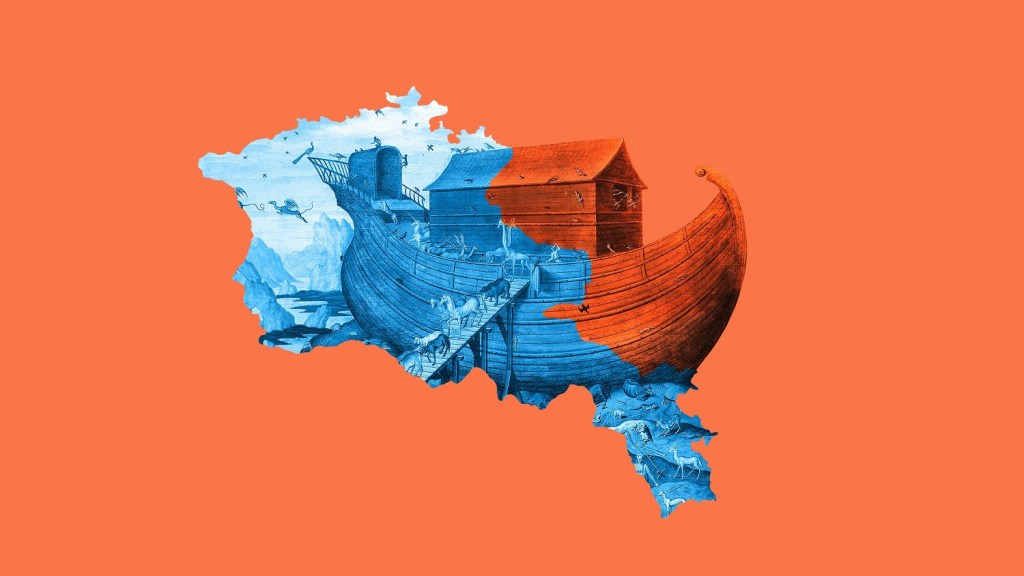
Illustration by Elizabeth Kaye / Source Images: Wikimedia Commons

If you want a break from Santa this December, try Hagop instead, an Armenian tradition that dates back as far as Old Saint Nick.

Santa Claus, the modern icon of Christmas, is derived from traditions associated with Saint Nicholas, a fourth-century bishop of Greek descent who was known for giving gifts. He is also mentioned among the church fathers at the Council of Nicaea in AD 325, for which the Nicene Creed is named.

If Nicholas was indeed at the council, he may have met Saint Hagop, who was also reputedly there. English speakers refer to him as Jacob of Nisibis, though in the Armenian language both Jacob the biblical patriarch and the Nicene saint are called Hagop. He is believed to have been a relative of Saint Gregory the Illuminator, who converted the Armenian king to Christ in circa AD 301. As a result, Armenia became the world’s first Christian nation.

Whereas Nicholas eventually became a secular stand-in for Jesus, Hagop is intimately associated with Noah. The Armenian Apostolic Church commemorates Saint Hagop in the second week of December—not because of any connection to Christmas (which its churches celebrate on January 6), but for his reputed role in demonstrating the historicity of Noah’s ark.

Many children delighted by tales of the animals that boarded the ark later turn skeptical, questioning the reliability of this miraculous story. But doubt about the Flood is nothing new. Back in the fourth century, Hagop heard reports that the local population did not believe the biblical account of Noah. A wandering ascetic, he undertook his own search for evidence and journeyed to Mount Ararat.

According to tradition, an angel appeared to Hagop in his sleep as he rested near the mountain peak and left a wooden fragment of Noah’s vessel by his side. Today, it is preserved within a reliquary dating to 1698, lying below an ornate gold cross and housed in Armenia’s St. Etchmiadzin Cathedral.

For many Western audiences, the story of Noah recalls little more than flannelgraph cutouts from Sunday school. But for Armenians, he is a national ancestor and figure of transcendent meaning. In fact, one of Armenia’s top soccer clubs is named FC Noah, and recently played a match against the English powerhouse Chelsea FC.

CT spoke with four Armenians to understand more fully Noah’s importance to their people, whether living beneath the shadows of Mount Ararat in the Caucasus Mountains or in the extensive Armenian diaspora. Each one shared memories of childhood, perspectives on tradition, and lessons from Noah for Christian faith today.

Hrayr Jebejian

Armenian general secretary of the Bible Society of the Gulf, headquartered in Cyprus and resident in Kuwait

The story of Noah and the ark fascinated me when I was a child growing up in the Armenian Evangelical Church. The fact that the ark landed on Mount Ararat gave us a special sense of pride as Armenians, that our land is mentioned in the Bible. We are an ancient people. As we grew older, for some the sense of wonder turned into skepticism: How did the animals march two by two, and was the Flood truly worldwide?

But as Armenians…

This article was originally published at Christianity Today on December 13, 2024. Please click here to read the full text.

Categories
Christianity Today Europe Published Articles

Satellite Imagery Documents Erasure of Armenian Christian Heritage

NurPhoto / Getty / Edits by CT

Discovered ruins of a fourth-century church in Armenia are “sensational evidence” of the nation’s early Christian history, stated Achim Lichtenberger, the lead German archaeologist of a binational excavation effort with the local National Academy of Sciences. Carbon dating of wooden platforms may establish an octagonal structure as the oldest documented church in Armenia.

Tradition indicates that Armenia became the world’s first Christian nation in AD 301. The church design reflects features resembling similar building styles in ancient eastern Mediterranean civilizations, previously unknown in the Caucasus region. The ruins were found in Artaxata, once the capital of the Kingdom of Armenia, which means “the joy of truth” in the original Indo-Iranian language.

But Christina Maranci, an Armenian professor of art and architecture at Harvard University, said the joy of these discoveries is outweighed by alarm at the destruction of Armenian heritage sites in the neighboring country of Azerbaijan. The Muslim-majority nation initiated fighting that displaced its Armenian residents from a disputed region and is now accused of systematically removing the remaining evidence of their ethnic historical presence.

“This is their long-term plan,” she said. “The intent is to erase evidence of our existence, which they do not admit anyway.”

In a 44-day war with Armenia in 2020, Muslim-majority Azerbaijan reclaimed most of its internationally recognized territory in Nagorno-Karabakh, a mountainous enclave then populated by ethnic Armenians who had proclaimed themselves a breakaway republic they called Artsakh.

And last month marked the one-year anniversary of a lightning Azerbaijani offensive to capture the remaining pockets of land, which resulted in their near depopulation as 100,000 refugees fled to Armenia. Furthermore, beyond the geopolitical dispute and humanitarian crisis, critics see new evidence that Azerbaijan continues to demolish signs of the region’s historical Armenian presence.

Maranci is one of several academics employing scientific and technological advances to demonstrate claims of antiquity. Her expertise includes the study of spolia, remnants of ancient structures repurposed in modern construction.

As an example, Manci cited two monasteries from the 14th and 15th century that were destroyed—twice. In the 1950s, Soviet authorities leveled the structures and haphazardly incorporated the medieval stones into the building materials for two public schools. Children could daydream, Maranci said, while looking at randomly placed images of crosses, saints, and angels.

Until Azerbaijan…

This article was originally published at Christianity Today on October 28, 2024. Please click here to read the full text.
Categories
Christianity Today Europe Published Articles

Azerbaijan Added to US List of Religious Freedom Offenders

Image: Mozar / Getty / Edits by CT

For the first time, the United States has recognized Azerbaijan as a violator of religious freedom.

Inclusion on the State Department’s second-tier Special Watch List (SWL) subjects the oil-rich Shiite Muslim–majority nation to the possibility of economic sanctions.

The US Commission on International Religious Freedom (USCIRF) has called for the Caucasus nation’s censure each year since 2013. Created by the 1998 International Religious Freedom Act (IRFA), USCIRF’s bipartisan yearly report evaluates “systematic, ongoing, and egregious” violations independent of US foreign policy concerns and tracks government implementation of its recommendations.

Complicating any consequences, Azerbaijan aligns with US foreign policy in certain areas: It cooperates closely with Israel, is aligned against Iran, and agreed to increase oil exports to Europe in the wake of Russia’s invasion of Ukraine.

In a brief statement, US secretary of state Antony Blinken kept unchanged all other 2022 designations mandated by the IRFA. Azerbaijan joins Algeria, the Central African Republic, Comoros, and Vietnam on the SWL, cited for “engaging in or tolerating severe violations of religious freedom.”

Twelve nations—China, Cuba, Eritrea, Iran, Myanmar, Nicaragua, North Korea, Pakistan, Russia, Saudi Arabia, Tajikistan, and Turkmenistan—again received designations as first-tier Countries of Particular Concern (CPC).

USCIRF “welcomed” the designation of Azerbaijan. But it stated there was “no justification” for failing to follow its advice to also label India and Nigeria as CPCs.

India was first recommended from 2002–2004 as a CPC, from 2010–2019 for the SWL, and then again from 2020 onward as a CPC. Nigeria was recommended for the SWL from 2003–2008, and as a CPC since 2009.

While the State Department has never included India, former president Donald Trump listed Nigeria on the SWL in 2019 and as a CPC in 2020. President Joe Biden removed it entirely the following year.

USCIRF called for a congressional hearing over these omissions and further criticized the State Department for issuing sanction waivers for CPC violators Pakistan, Saudi Arabia, Tajikistan, and Turkmenistan.

In a statement to CT, Lilieth Whyte, public outreach chief of the State Department’s Office of International Religious Freedom, cited three main factors.

Azerbaijan’s laws place “onerous registration requirements” on religious groups to register nationally, restricting them further in their right to worship freely and select their own clergy. The government physically abuses, arrests, and imprisons religious activists, she added, while conscientious objectors are not permitted to serve their country in accordance with their beliefs.

Not mentioned was Azerbaijan’s months-long blockade of its Armenian-populated enclave of Nagorno-Karabakh—which Armenians call “Artsakh”—which culminated in an invasion last September that displaced more than 100,000 people.

At the time, Blinken “urged” Azerbaijani president Ilham Aliyev to “immediately cease military actions.” In November, assistant secretary of state James O’Brien told a congressional committee that “there cannot be ‘business as usual’” in US relations.

But last December, the State Department press service clarified that cessation of interaction with Azerbaijan would be…

This article was originally published at Christianity Today, on January 8, 2024. Please click here to read the full text.

Categories
Christianity Today Europe Published Articles

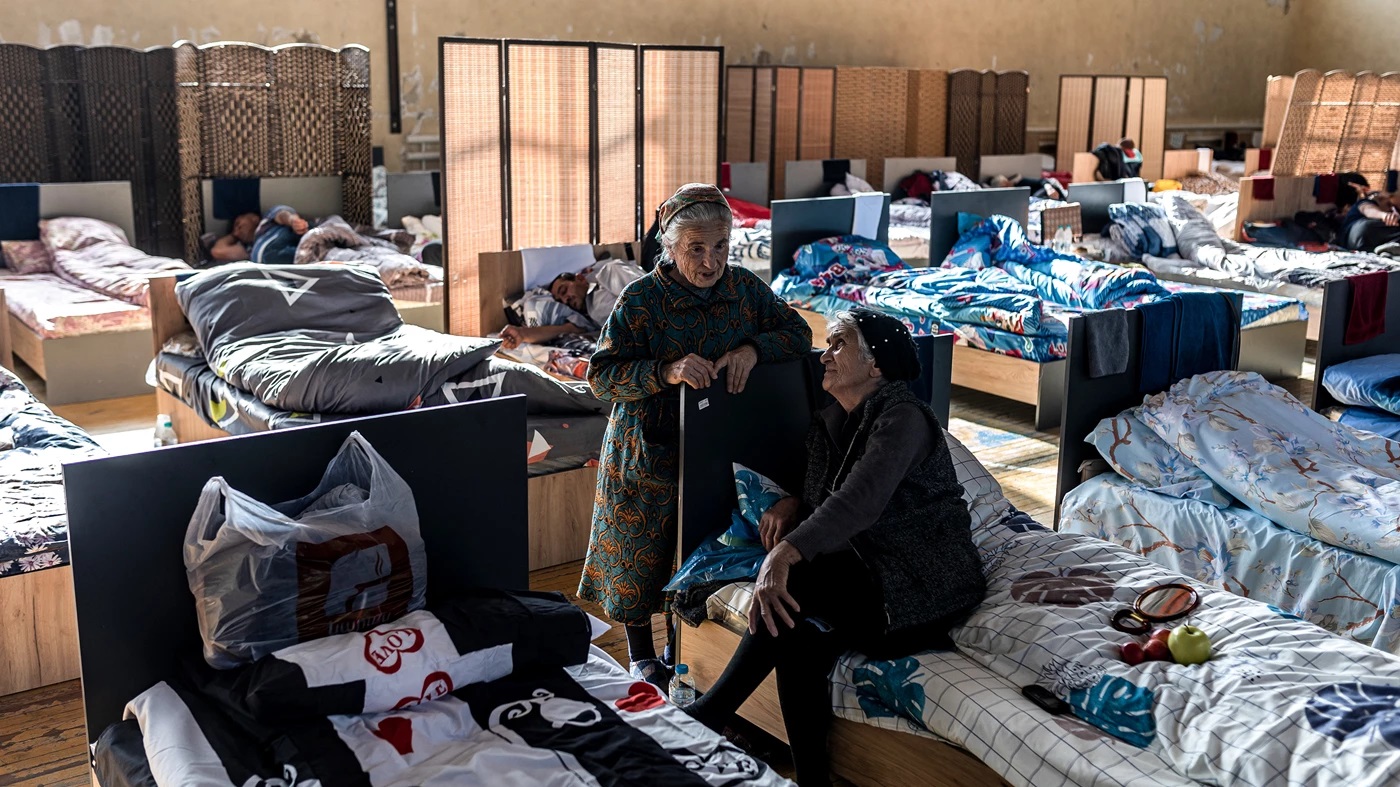
Armenia Struggles to Aid 100,000 Artsakh Refugees After War

Image: Diego Herrera Carcedo / Stringer / Getty

Karolin is one of 30,000 Armenian children without a home—again.

Fleeing the mountainous enclave of Nagorno-Karabakh in the face of Azerbaijan’s assault last month, the 12-year-old girl had an unexpected encounter. After crossing the Lachin corridor westward to Goris in Armenia proper, she found her beloved social worker waiting.

Arpe Asaturyan, founder of Frontline Therapists (FLT), was astounded as well. Amid the 100,000 refugees from what Armenians call their homeland of Artsakh, she had found the very same child displaced three years earlier. A special bond formed with then-9-year-old Karolin, who had gripped her tightly before returning home.

Located within internationally recognized Azerbaijani territory, the Armenian enclave suffered a bloody 44-day war in 2020. Over 6,000 soldiers died before a Russian-backed ceasefire left local Armenian authorities in control of only a portion of formerly held Artsakh land.

Karolin and her family went back anyway, vowing to continue their multigenerational presence. But after suffering malnutrition during an Azerbaijani-imposed nine-month blockade, they trudged three days in the slow-moving convoy of cars and buses across Lachin—the only road connecting the enclave with Armenia.

Over the week-and-a-half exodus, Artsakh residents crossed at a rate of 15,000 per day.

But the bittersweet reunion with Karolin is far from the worst of Asaturyan’s ordeal. Suffering in the chaos of relocation and the fog of war, several mothers told their children they would find their daddy in Armenia.

As counselor, Asaturyan was asked to tell them that their fathers had died.

“It is heartbreaking, and you know this will be the worst day of the rest of their lives,” Asaturyan said. “With all that has happened, it is hard to find faith.”

When the 2020 war broke out, the California native left behind a successful practice in trauma counseling to join her ethnic kin in ministering to returning soldiers and new widows. Funded by the Armenian diaspora, she oversees a small staff of paid and volunteer therapists providing free mental health services.

But in the weeks following last month’s conflict, her office turned into a humanitarian hub. Already, 20 truckloads of aid have been sent to Goris and the summer camp refuge in central Armenia where she first met Karolin.

“They know their life there was tenuous—they even laminate their documents,” Asaturyan said. “This is still the shock phase, but grief is set aside as bereft mothers must struggle now to find a job.”

The Armenian government initially prepared to receive 40,000 displaced from Artsakh; that was the single-day inflow on September 27 alone. The total number represents 3.4 percent of Armenia’s population, added to an existing refugee population of about 35,000. This does not include at least 65,000 Russians who fled to Armenia due to the Ukraine war, driving up real estate prices by 20 percent with skyrocketing rents.

The Armenian government is providing a relocation payment of $260 per person, with a promised monthly support of $100 to assist with rent and utilities. The UN High Commission for Refugees has called for $97 million in international assistance, and the United States has led the way with a pledge of more than $11.5 million.

“Peanuts,” said Marina Mkhitaryan, executive director of the Armenian General Benevolent Union (AGBU), a 180-year-old organization with institutional links to the Armenian Apostolic Church. “The level of support only adds insult to injury.”

Partnering with World Central Kitchen, AGBU has helped provide 80,000 nutritious hot-food boxes to those in greatest need. Soon AGBU will shift to dry-food packages so families can cook their own meals for up to four days. But a strong focus is on integration, equipping the displaced to live on their own.

A logistics center assists with mundane matters like official documentation, establishing bank accounts, and understanding taxes. And AGBU has partnered with a local employment agency to help the displaced find jobs and to provide training in entrepreneurship and the skills necessary for entry-level positions in Armenia’s strong IT sector.

But, being careful with terminology, Mkhitaryan wants more for Artsakh’s former residents than current stability.

“These are displaced persons who will eventually return to our historic homeland,” she said. “Refugee implies a state of no return, and that is not our stance.” Pastor Vazgen Zohrabyan believes this will only be possible…

This article was originally published at Christianity Today, on October 16, 2023. Please click here to read the full text.
Categories
Christianity Today Europe Published Articles

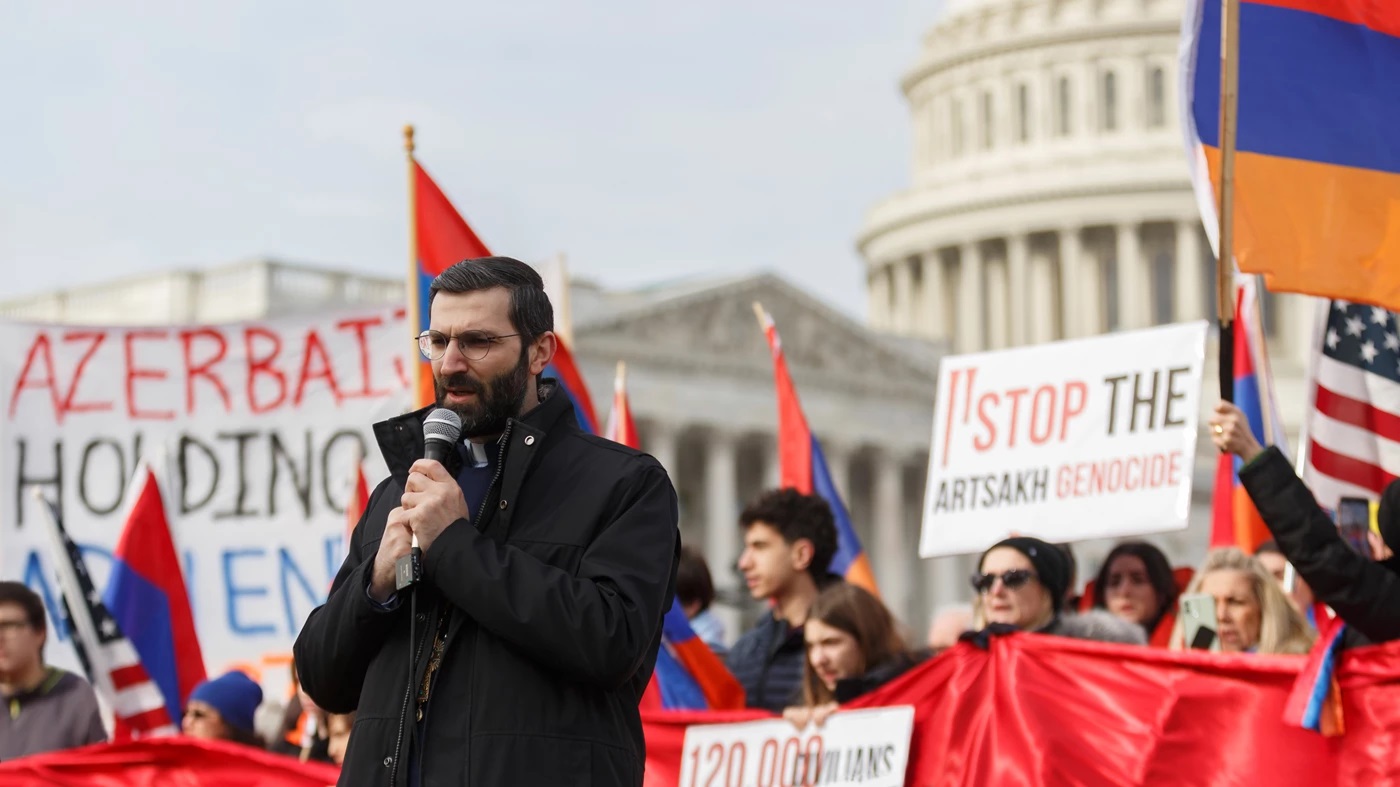
Artsakh Exodus: Armenians Mourn as 98,000 Flee Christian Homeland

Image: Astrig Agopian / Stringer / Getty / Edits by CT

Suddenly, more than 80 percent of people in Nagorno-Karabakh have fled.

Last week the unrecognized Armenian republic, called “Artsakh” by its 120,000 residents, suffered an invasion by Azerbaijan, which is recognized internationally as sovereign over the enclave nestled in the Caucasus Mountains.

At least 32 people were killed in the assault that violated a Russian-backed ceasefire, with at least 68 more killed six days later in a suspicious fuel depot explosion.

But more than the death count, fear of genocide is driving people to flee—more than 97,700 as of 6 p.m. Friday evening, according to Armenian officials [updated]. Though the enclave is home to around 400 holy sites now at risk of erasure, one official stated that 99.9 percent of Artsakh’s Armenians will cross the border to Armenia, the world’s first Christian nation.

The same crossing had been blocked by Azerbaijan since December 2022.

Near-starvation conditions ensued, with humanitarian aid allowed entry one day prior to the Azerbaijani offensive. The Artsakh government issued a decree to dissolve itself as of January 1, ceding control of a territory it declared independent after the fall of the Soviet Union in 1991.

Armenians controlled Nagorno-Karabakh since 1994, after a three-year war resulted in the deaths of 30,000 people, displacing an additional 100,000 in mutual exchange between Armenia and Azerbaijan. Peace talks faltered since then, as they continued to fail after 2020, when a 44-day war resulted in Azerbaijan reclaiming much of the enclave. A further 7,000 were killed before the Russian ceasefire.

Azerbaijan has promised that Armenians in the territory will be integrated as full citizens with equal rights, joining other non-Azeri ethnicities which comprise 8 percent of the population. In the Shiite-majority nation with a substantial Sunni minority, the small Christian community generally reports overall freedom of religion.

The European Parliament and Minority Rights Group, however, have stated that Azerbaijan’s ethnicities suffer discrimination. Artsakh Armenians fear much worse.

Imagine if 80 percent of Hartford, Connecticut, suddenly fled to New York.

The Armenian diaspora is stunned. The Armenian Apostolic Church has declared a worldwide day of prayer for October 1. And on October 5, Europeans for Artsakh has called for a rally in Brussels, to coincide with planned peace talks between the Armenian prime minister and the Azerbaijani president.

Like many, Hrayr Jebejian is at a loss. The general secretary of the Bible Society in the Gulf, also a Lebanese-born Armenian, resides in Kuwait and spoke to CT about his overall state of depression—but also his enduring trust in God.

How has the loss of Artsakh impacted you personally?

I am an Armenian. No matter how objective or balanced I seek to be, there is a lot of emotion. It is depressing. Even as a believer I am trying to pull myself together, so that I can continue to live my everyday life. It is affecting me that much.

I want to work, but I have no motivation. I have friends in Artsakh, I’ve been checking in on them, and they are traumatized. A teacher there told me: How can we stay, when there is a sword over our head?

Did you have hope when humanitarian aid was first allowed in?

I was closely following developments, and all the suffering from the blockade. Thirty thousand kids live there! And international experts said that ethnic cleansing was taking place. I can’t say this outcome wasn’t expected. It was expected.

But it all happened so fast.

From a political perspective, Artsakh had an elected president and parliament. Azerbaijan is a dictatorship, passed from father to son. If you put the Armenians into the middle of that, when they were used to democratic opposition and criticizing the government, it will be very difficult for them.

We don’t know how many people will stay. But there is no trust.

But the ancestral land and ancient monasteries are so important to Armenians. Are there voices calling for them to stay anyway and insist on the promises of equal citizenship?

There is a…

This article was originally published at Christianity Today, on September 29, 2023. Please click here to read the full text.
Categories
Christianity Today Europe Published Articles

Do Artsakh’s Armenians Need More or Less ‘Christian’ Advocacy?

Image: Bryan Olin Dozier / AP Images

It was almost a good news story.

After nine months of blockade, humanitarian aid finally reached the Armenian Christians of Nagorno-Karabakh on Monday. But almost immediately, ending three years of tense ceasefire after a 2020 war, Azerbaijan renewed on Tuesday its military assault on the mountainous Caucasus enclave.

And following today’s surrender and promised disarmament of local separatist forces, the region will almost certainly revert to the sovereignty of a neighboring nation that Armenians fear—and a former chief prosecutor of the International Criminal Court warns—is preparing a genocide.

Thousands massed at the airport in the capital of Stepanakert, preparing to leave.

Advocates for Armenia are at a loss. But of the three aforementioned adjectives—humanitarian, Armenian, or Christian—which ones were most effective in pressing for humanitarian aid? And now in a new phase of the conflict, which will be the most crucial in mobilizing further support?

CT spoke with six religious freedom experts about best practices in Christian advocacy.

What compelled this week’s minor breakthrough?

One week before the initial agreement, US Secretary of State Antony Blinken called Aliyev to express “concern over the deteriorating humanitarian situation.” According to the official State Department readout, however, neither the word Christian nor Armenian was spoken by the senior diplomat. Religion and ethnicity were completely ignored.

But one CT source stated that Blinken’s outreach to Azerbaijan “ticked up” following the June visit to Armenia by Sam Brownback, former US ambassador-at-large for international religious freedom. And at a congressional human rights hearing on Nagorno-Karabakh after his return, in calling for legislative action his language was completely different.

“120,000 Christians are being suffocated,” Brownback stated, “blockaded by Azerbaijan.”

His trip was arranged through Philos Project, which works to ensure the citizenship rights of minority Christians and their ability to “flourish” in the region. President and founder Robert Nicholson said some believing advocates in the West are oddly reluctant to embrace their ancient brothers and sisters.

“Christians often make the mistake in thinking that the Christian thing to do is not specifically advocate for Christians,” he said. “But love for the brethren is the preeminent marker of New Testament faith, so I double down in my support.”

Like all sources interviewed, Nicholson resisted characterizing the Nagorno-Karabakh issue as Muslims persecuting Christians. Yet sectarianism is a factor, as both Armenia and Azerbaijan have effectively merged their religious and ethnic identities. And with the latter’s attempts to erase the former’s historic Apostolic faith from the enclave, Nicholson said it would be improper to neglect their status as Christians.

Both humanitarian concerns and religious solidarity were mentioned in Philos’s open letter to President Joe Biden in January. But in its bipartisan effort to influence US foreign policy, sometimes the word Christian is strategic to highlight.

“The best people on this issue have been Democrats,” Nicholson said. “Conservative Republicans who identify as Christians seem not to have gotten the memo, and we are trying to bring them in.”

So is Joseph Daniel, Middle East and North Africa manager for International Christian Concern (ICC), who handles its Armenia file. ICC’s public policy work, however, is a secondary priority to raising awareness in the church, with its persecution.org website aptly titled to get more believers to care. While such an approach helps with fundraising, he said it also puts them in a bit of a “Christian bubble.” But for Armenia, the religious label is…

This article was originally published at Christianity Today, on September 20, 2023. Please click here to read the full text.

Categories
Christianity Today Europe Published Articles

Vengeance Was Theirs: Armenia Honors Christian Assassins, Complicates Path to Peace

Image: Courtesy of Visit Yerevan

Surveying the scene on a rainy day in Berlin, the Protestant gunman recognized his target. Living hidden under an assumed name in the Weimar Republic, the once-famous official exited his apartment, was shot in the neck, and fell in a pool of blood.

For many, the 1921 killing vindicated the blood of thousands.

Neither were Germans. Both would eventually be immortalized.

But the cloak-and-dagger story took another twist when a Berlin court ruled the assassin “not guilty.” The trial captivated the local press, brought a nation’s tragedy to the public eye, and set off a philosophical chain of events that eventually coined a new term and established an international convention meant to render unnecessary any similar future acts.

It was already too late.

Two decades after the trial, the Nazis murdered six million Jews. Hitler, preparing the Holocaust, is said to have justified it in reference to the already forgotten history of 1.5 million people killed by Germany’s then-ally in the fallout from World War I.

The gunman, Soghomon Tehlirian, was an Armenian. The official, Mehmed Talaat, was an Ottoman Turk. And the term created by Polish lawyer Raphael Lemkin—genocide—continues to haunt the world today.

But the chain of events has not concluded.

Nazi Germany, seeking Axis partners in World War II, repatriated Talaat’s remains to Turkey in 1943, where dozens of memorials and streets are named in his honor. Once the grand vizier of the Ottoman sultan, he is celebrated today as one of the leading “Young Turks” who forged the creation of the modern-day secular nationalist republic.

The descendants of his victims, scattered around the world, consider Talaat—known commonly as Talaat Pasha with his honorific title—the architect of the Armenian Genocide.

Tehlirian, who in prison pending trial was given a Bible by a local Protestant pastor, eventually settled in the United States. He is buried in Fresno, California, where his obelisk-shaped grave marker is adorned with a gold-plated eagle, slaying a snake.

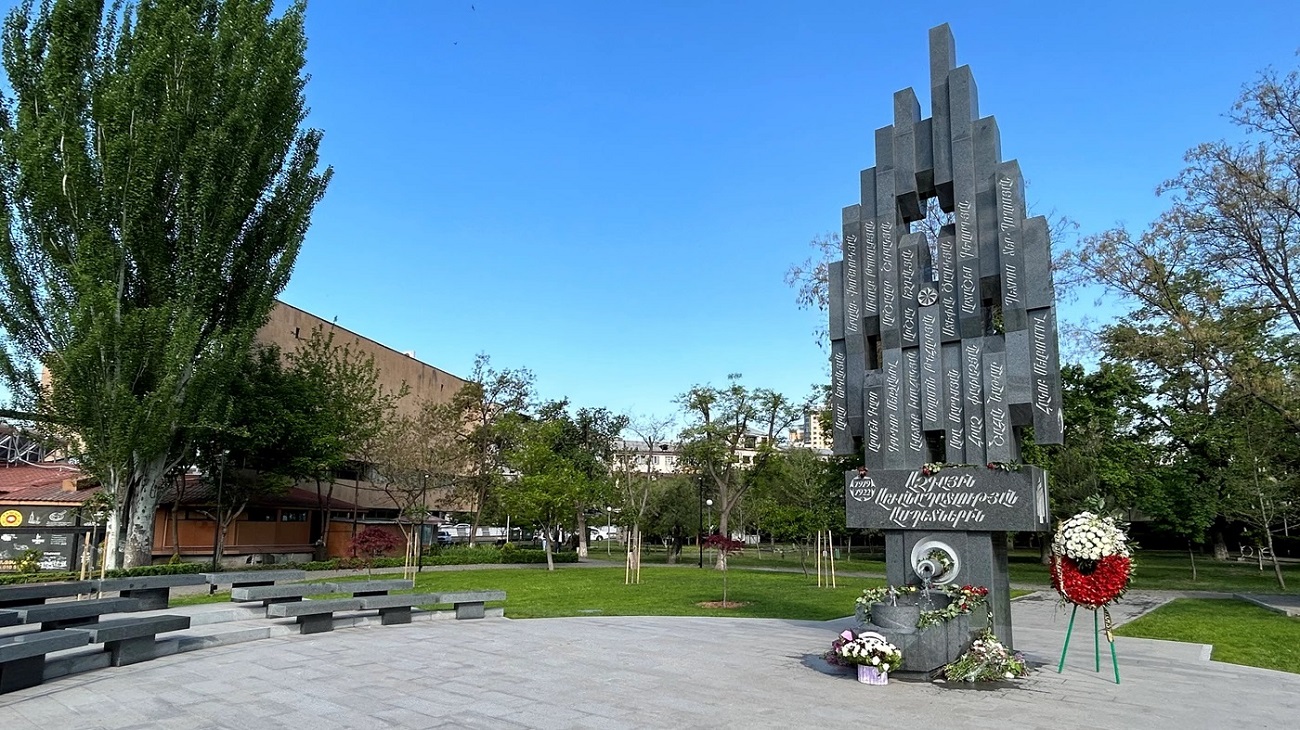
And last month, more than a century after the trial, the city council of Yerevan, the capital of Armenia, erected a memorial to honor 16 heroes of Operation Nemesis. Conducted between 1920–22, the campaign secretly authorized by the ruling party of the newly independent nation assassinated eight Turkish and Azerbaijani officials.

It was named after the Greek goddess of divine retribution.

Incorporating a fountain of flowing water, the memorial’s towering structure was built based on a petition from the Descendants of the Avengers of the Armenian Genocide. Tehlirian is at the center, beneath an empty space in the shape of a cross, directing one’s gaze upward to heaven.

Does heaven approve—now or then? “If I was at the planning meeting, I…

This article was originally published at Christianity Today, on May 30, 2023. Please click here to read the full text.
Categories
Christianity Today Europe Published Articles

Let My People Come and Go, Karabakh Christians Tell Azerbaijan

Image: Tofik Babayeb / Getty

Armenian Christians have been calling for help. As their ethnic kin in the Caucasus enclave of Nagorno-Karabakh approach two full months under a near-complete blockade imposed by alleged eco-activists from Azerbaijan, the voices have amplified.

“Everyone knows this is the Aliyev regime,” stated Biayna Sukhudyan, a pediatric neurologist trapped inside the Delaware-sized mountainous region, which Armenians call Artsakh. “There is no time to wait and allow the next genocide, because this is genocide.”

The doctor referred to Azerbaijani president Ilham Aliyev, and several investigations have linked the protesters to his government. When the blockade began on December 12, official statements attributed the long-haul demonstration to illegal gold and copper mining on their still-occupied but internationally recognized sovereign territory.

In 2020, Azerbaijan launched a 44-day war to retake a region under three decades of de facto control by ethnic Armenians. Following the dissolution of the Soviet Union, Artsakh declared itself an independent state, and with Armenian military assistance was able to hold Nagorno-Karabakh and additional Azeri territories—pending peace negotiations.

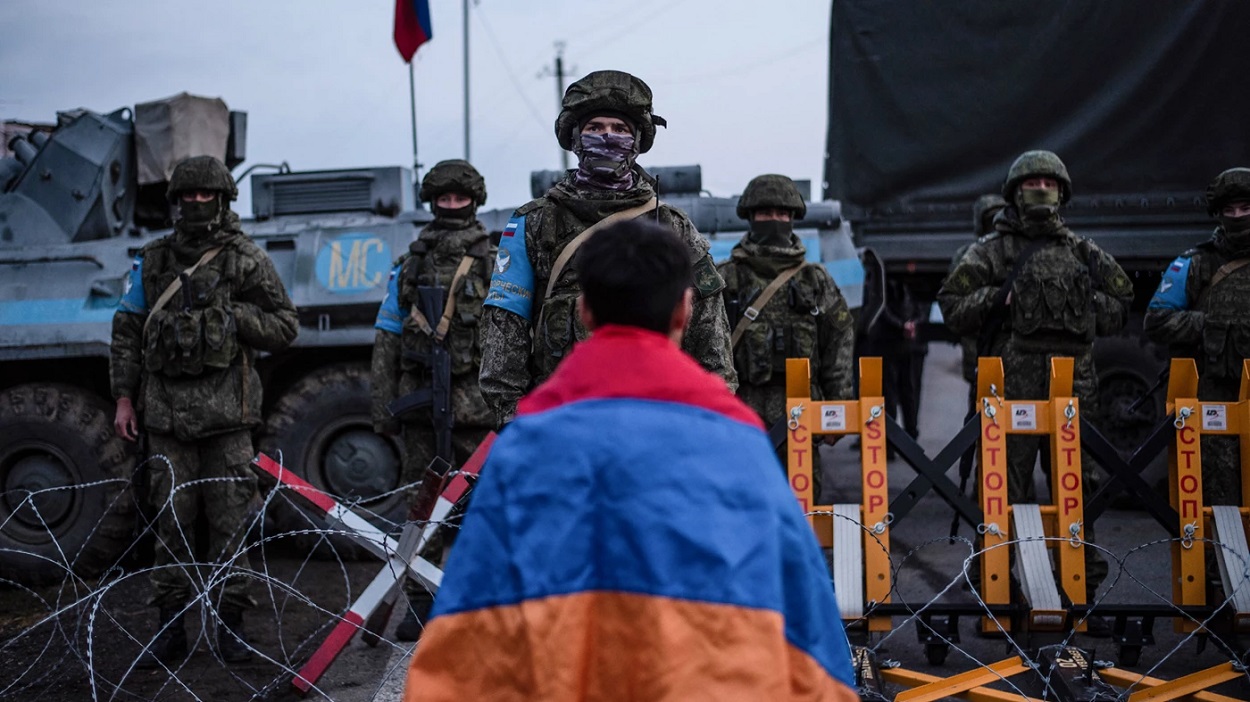
A vastly improved Azerbaijani force, aided by drone technology from Turkey, recaptured three-quarters of the land through bloody combat. Russia mediated a ceasefire, and its peacekeepers guard the Lachin corridor—the one road connecting over 100,000 beleaguered Artsakh residents with Armenia and delivering the 400 tons of daily food and medicine that supply their needs.

Since the end of the war, Sukhudyan has traveled every two months to Nagorno-Karabakh, which lacked specialist doctors. This time, amid acute shortages in the market, she was compelled to stay.

Others, including children, are prevented from returning.

“I came to Yerevan for eye surgery,” stated 13-year-old Maral Apelian, who lives in Artsakh, last month. “All I want is to go back to my family at home.

“Let my people go,” she shouted, recalling Moses. “Let my people go!”

The cry was taken up immediately by Armenian hierarchs.

“Artsakh Armenians [are] in front of a humanitarian disaster,” stated Catholicos Karekin II, supreme patriarch of the Armenian Apostolic church, on day three of the blockade. “Such provocative actions are aimed at ethnic cleansing.”

One day later, his ecclesial colleague in Lebanon invoked the crucial label.

“We are witnessing deliberate and concrete steps toward the ethnic cleansing and genocide of the Armenian population of Artsakh,” stated Catholicos Aram I, whose Holy See of Cilicia represents survivors in the Levant who fled the original Armenian Genocide in Turkey. “The need for immediate humanitarian action is critical.”

Karekin also stated he was reaching out to ecumenical colleagues.

Pope Francis led a prayer for Nagorno-Karabakh on December 18. A consortium of advocacy organizations issued a genocide warning the next day, arguing that all 14 of the United Nations risk factors were present.

Mainline leaders responded next. Without repeating the severe term of warning, a joint statement by the World Council of Churches and the Conference of European Churches demonstrated their active sympathy.

“This follows a clear pattern of behavior by Azerbaijan that contradicts any claims of goodwill,” they wrote on December 20. “In these circumstances, Armenian fears of renewed genocide against them cannot be discounted.”

A day later, the National Council of Churches framed it in religious terms.

“In a season where we celebrate the birth of Jesus in a cold stable,” it stated,” it is particularly horrific that civilians are being cut off in the middle of winter.”

One month later, many are increasingly sounding the alarm. On January 13…

This article was originally published by Christianity Today, on February 3, 2023. Please click here to read the full text.

Categories
Christianity Today Europe Published Articles

Armenian Christians Endure Christmas Blockade in Artsakh

Image: Photo by Davit Ghahramanyan / AFP / Getty Images

There are no oranges in Artsakh for Christmas.

Celebrated on January 6 according to the local Orthodox calendar, holiday festivities will be curtailed this year in the disputed Caucasus enclave of Nagorno-Karabakh. Demonstrations by reported environmental activists from Azerbaijan have closed the one road connecting the mountainous territory to Armenia, and Russian peacekeeping forces have failed to intervene.

Over 100,000 Armenians depend on daily imports of 400 tons of food and medicine to the enclave they call Artsakh. With the blockade of the Lachin corridor now in its third week, local officials are warning of a humanitarian disaster as they implement price controls and ration remaining goods.

But the Christmas tree is lit in the central square of the capital, Stepanakert.

“People will carry on with the traditions as best they can,” said Aren Deyirmenjian, country representative for the Armenian Missionary Association of America (AMAA). “But we will reflect the love of a God who stays by your side, even when all goes wrong.”

During a 44-day war with 6,500 casualties in 2020, Azerbaijan recaptured three-quarters of its internationally recognized sovereign territory, before Russia engineered a ceasefire. The indigenous Armenian inhabitants controlled the enclave for the previous 30 years, claiming the right of self-determination in an unrecognized 1991 independence referendum.

Following its defeat two years ago, Armenia pursued peace treaties with neighboring Azerbaijan and Turkey, which had backed their Turkic kin with decisive drone technology. But these were interrupted by further clashes, in which Azerbaijan seized further territory in Nagorno-Karabakh and even along Armenia’s border.

And beginning December 12, Azerbaijani activists set up camp to protest alleged illegal gold and copper mining, exported through Lachin back to Armenia. Terms of the armistice left Russian peacekeepers in charge of the road, with no Azerbaijani oversight.

“We can stay here for months,” stated one demonstrator.

Local residents have reported shortages, with no fruit in Artsakh’s markets—part of the traditional Christmas Eve feast alongside fish, rice pilaf, and raisins. More critically, hospital patients lack essential medicines, with only a handful allowed transfer to facilities in Armenia proper. Gas supplies were cut for three days in the winter cold. And about 1,000 residents were stranded in the border town of Goris—including 18 members of a children’s choir which had performed in Armenia’s capital, Yerevan.

Azerbaijan has denied it is imposing a blockade. Officials have said that anyone will be allowed travel through the Lachin corridor, upon prior permission and submission to local inspection. If none pass through, they blame the Russians and Armenians.

So far, only the International Committee of the Red Cross (ICRC) has gained access to Nagorno-Karabakh. Deyirmenjian said the Armenian social affairs ministry contacted the AMAA to participate in the ICRC 10-ton aid delivery, adding 220 pounds of infant formula to the first effort, and 1,100 pounds of rice alongside two tons of sugar in the second.

Upon arrival, the AMAA center in Stepanakert, located near the only Armenian Evangelical church in the enclave, coordinated distribution in the neighborhood, including its 125 members.

So far, local morale is high.

“Our office manger told me: ‘We are happy we are on this side of the blockade,’” Deyirmenjian said. “It gave me chills.” Garegin Hambardzumyan concurs. A priest in the Armenian Apostolic church, he heads the Oriental Orthodox denomination’s Department for the Preservation of Cultural and Spiritual Values of Artsakh. Generations of Armenians have lived in the rugged, mountainous land for a thousand years, he said. They will not be…

This article was originally published at Christianity Today on January 4, 2023. Please click here to read the full text.
Categories
Christianity Today Europe Published Articles

After War, Can Armenia’s Evangelicals and Orthodox Save Their Nation Together?

Image: Maja Hitij / Getty

Craig Simonian had a vision. It landed him in a war zone.

Raised in an Armenian-American Orthodox family, he came to know Jesus personally at university. He served as a Vineyard church pastor in New Jersey for nearly two decades but continued to embrace his Apostolic church heritage.

It laid the foundation of his faith—but also of his nation of origin.

“The reason Armenia still exists is because of the church,” he said. “It kept our shattered people together, especially in the diaspora.”

As a child, Simonian’s grandmother witnessed her father and mother murdered in the Armenian Genocide, killed by Turks in the waning days of the Ottoman Empire.

When she eventually arrived in America, it was the Apostolic church that embraced their family. Simonian recalled kindly visits by priests of their Oriental Orthodox tradition who—in the face of tragedy and devastation—gave him a deep appreciation of the sovereignty of God.

It was his evangelical awakening, however, that drew him back to Armenia—and in particular to its church. He relocated in 2018 to a nation locked in a cold war with neighboring Azerbaijan. A self-professed “oddball,” he longed for the Apostolic church to embrace fully the gospel he had discovered.

“If we are going to reach this generation, we can’t do it without them,” Simonian said. “I will call people to Jesus but never to leave their church.”

But two years later, the war turned hot.

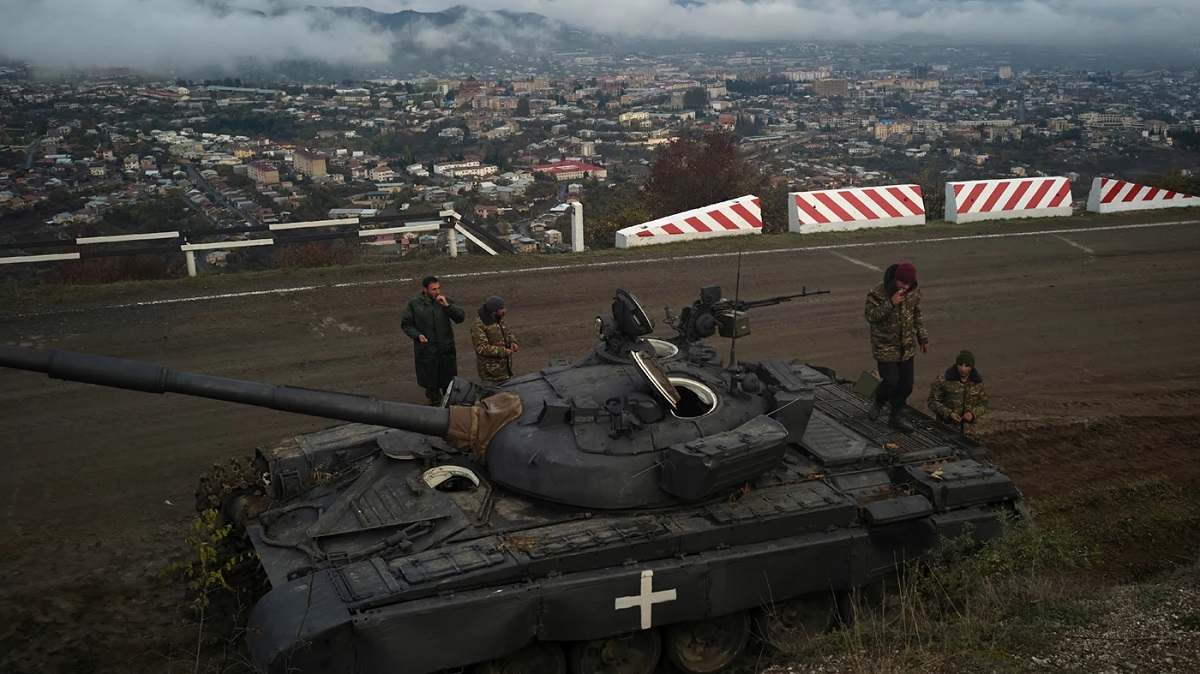
Azerbaijan invaded the Armenian-controlled enclave of Nagorno-Karabakh in October 2020. The territory is recognized internationally as belonging to Azerbaijan, yet the residents of what Armenians call Artsakh voted for independence in 1991. For three decades Armenia held the upper hand but was routed in a 44-day war through superior drone technology that Turkey and Israel supplied to Azerbaijan.

Russian intervention enforced a ceasefire, with Nagorno-Karabakh demolished and Armenians holding a fraction of their previous territory. The nation felt numb after its defeat, and many found refuge in the Apostolic church.

Today, Simonian provides ad hoc spiritual care as he builds relationships with evangelicals and Orthodox alike.

His primary worship is through Yerevan International Church. But few in his personal circles have saluted his efforts to attend the Divine Liturgy and cultivate relationships with Orthodox clergy. Many evangelicals are soured by years of the older tradition labeling the newcomers a sect, or worse, a cult. But neither has Simonian yet found in the Apostolic church the fellowship that characterized his diaspora youth.

“The warm fuzzies I had growing up are completely void here,” he said. “The church is not so much a community.”

Simonian understands. Soviet communism purged the church, replacing clergy with compliant leadership. Following Armenia’s independence in 1991, this generation still exists but is giving way to a spiritual cadre that he says recognizes the church needs more than ancient traditions.

“We do not need to re-evangelize Armenia,” said Shahe Ananyan, dean of Gevorkian Theological Seminary in the Apostolic holy see of Etchmiadzin, 13 miles west of Yerevan. “Our main task is to wisely consider how to bring both Eastern and Western traditions together in synthesis.”

The church is still discussing application, he said. But he recognized that modern life for many has crowded out liturgical attendance and Bible reading. Forging forward anyway is…

This article was originally published by Christianity Today on April 1, 2022. Please click here to read the full text.
Categories
Christianity Today Europe Published Articles

Azerbaijan Adds Fuel to Armenian Concerns in Karabakh

Image: Alex McBride / Getty Images

Suffering freezing temperatures during the long winter cold in the Caucasus Mountains, this month Armenians in Nagorno-Karabakh had no heating for three weeks. The natural gas “malfunction,” stated Azerbaijan’s state-run energy distribution company, has now been repaired.

It is not often that pipeline maintenance draws international concern.

The European Union and Freedom House both called for quick resumption of the supply in order to avert a humanitarian crisis. Over 100,000 residents in the contested enclave rely on Armenian natural gas that passes through Azerbaijani territory.

Nagorno-Karabakh, which Armenians call Artsakh, lies within the internationally recognized territory of Azerbaijan. Armenians accused Azerbaijan of deliberate disruption, prevention of repair, and installation of a new valve with which they can shut off gas flow at will.

Secured by Armenians backed by Armenia’s military following the fall of the Soviet Union, Artsakh sought independence for three decades while controlling six buffer zones in depopulated Azerbaijani lands. Negotiations failed to resolve the dispute, until Azerbaijan launched a 44-day war in 2020 that recovered significant territory.

A Russian-brokered ceasefire ended active hostilities.

Yet skirmishes continue, and Azerbaijan accuses Armenia of instigation. Last November, Armenia stated an Azerbaijani incursion occupied 15 square miles of sovereign territory. Christianity Today was reporting from one of the liberated buffer territories at the time.

And in the month prior to the pipeline issue—with the world’s attention focused on Ukraine—Russia officially accused Azerbaijan of breaking the terms of the ceasefire. Monitors recorded at least four incidents of firing toward Armenian villages. Three soldiers were reportedly killed by an Azerbaijani drone; another was shot by a soldier across the border.

After years of holding the upper hand in Nagorno-Karabakh, the reversal suffered in the war has Armenians fearful of genocide. Now victorious, Azerbaijan President Ilham Aliyev has pledged to develop the area economically and to treat Armenians as equal citizens.

The recent conduct makes many doubt these promises.

“They openly can’t go for a full-blown war today since Russian peacekeepers are deployed here,” stated an Armenian journalist. “So they do everything to disrupt normal life and make people leave their homeland.”

But it goes beyond “Artsakh.” To emphasize its sovereignty over the region, Azerbaijan has…

This article was originally published at Christianity Today on March 31, 2022. Please click here to read the full text.
Categories
Christianity Today Europe Published Articles

Christian Witness After War: A Firsthand Assessment of Armenia and Azerbaijan

Image: Alex McBride / Getty Images News

Ibrahim Baghirov died as an infant. His mother, Mary, had read in the Gospels about Jesus and Lazarus, so she prayed for God to raise her child from the dead. He did, she says. Doctors in Baku, the capital of Azerbaijan, confirmed the miracle to her, which also confirmed her fledgling faith as a Muslim-background Christian.

Two decades later, Baghirov is an emerging preacher in the church that meets in the family’s home.

But in September 2020, as Azerbaijan launched what would become a 44-day war against neighboring Armenia, Mary’s faith faltered. Having once trusted God where medicine failed, she hastily made her son an appointment for an unnecessary surgery in hopes of keeping him from conscription. He gently rebuked her.

“I will go wherever God takes me,” said Baghirov, now 26 years old. “There are ways to keep me here, but there will be no blessing in that.”

He deployed within weeks to the front lines in the snowcapped peaks of Nagorno-Karabakh, a swath of land about the size of Delaware that is encircled by present-day Azerbaijan and has been contested for centuries.

Along the way, Baghirov said he received a word from God: None of his fellow soldiers would die, and he would be their minister. His country is predominantly Muslim, and several of his comrades shunned him after his pocket New Testament fell from his backpack. Others asked questions, though, and became friends.

Azerbaijan, with a reputation as one of the most secular countries in the Muslim world, is tolerant of its long-established Christian minority community. But its long-standing animosities toward Christian Armenia are a different story.

The two countries’ generations-old dispute over Nagorno-Karabakh—a majority-Armenian territory whose modern borders were established in 1923 when Joseph Stalin made it part of Azerbaijan—has been fierce. The worst atrocities of the early 20th century killed thousands, leveling villages and leaving blood on both Armenian and Azeri hands. Relations were more neighborly for several decades, until the Soviet Union disintegrated and triggered a new round of massacres beginning in the late 1980s. Thousands were displaced from their homes as each nation purged its opposing ethnic minority, while Armenia depopulated a buffer zone around the territory to protect it from attacks.

In 1991, Nagorno-Karabakh voted for independence, and Armenia-backed forces eventually secured control of the region, dubbing it the Republic of Artsakh. (Neither Azerbaijan nor the international community has recognized Artsakh’s sovereignty.) Skirmishes between the countries smoldered for decades during a languishing peace process led by the US, France, and Russia.

But in 2020, Azerbaijan conscripted soldiers and advanced on the territory in yet another conflict. Baghirov was assigned to an artillery unit, a post that spared his tender pastoral heart from one adversity, at least: He would not engage in direct combat against the fellow Christians he and his military were slowly overtaking.

But Baghirov said he heard another word from God, another promise: Not one Armenian would die from his hand.

On the other side of the lines, shivering in the snow, fighters in an Armenian unit were also talking to God. An embedded priest from the Apostolic Church, the national church of Armenians, carried a relic of the holy cross and encouraged them as they knelt. They beseeched God for their fellow soldiers, surrounded by Azerbaijani forces and pounded by missiles and suicide drones.

“Don’t lose hope,” said Menuk Zeynalyan. “Our struggle is for our holy church and holy land.”

A married father of four, Zeynalyan left a comfortable parish among the Armenian minority in the neighboring nation of Georgia and signed up for military chaplaincy in 2019. Before the war, he led soldiers in three weekly Bible lessons. Many came from irreligious homes, raised by parents under the banner of Soviet atheism. But within two months, he said, everyone knew the catechism.

His highlight was the prayer of dedication prior to the soldier’s oath. Before swearing the secular pledge to defend the nation, Zeynalyan tied their patriotism to the Lord. After all, tradition had it that Thaddeus and Bartholomew preached the gospel in Armenia. And their country had become the world’s first officially Christian nation in the year 301, long before the Roman Empire followed suit.

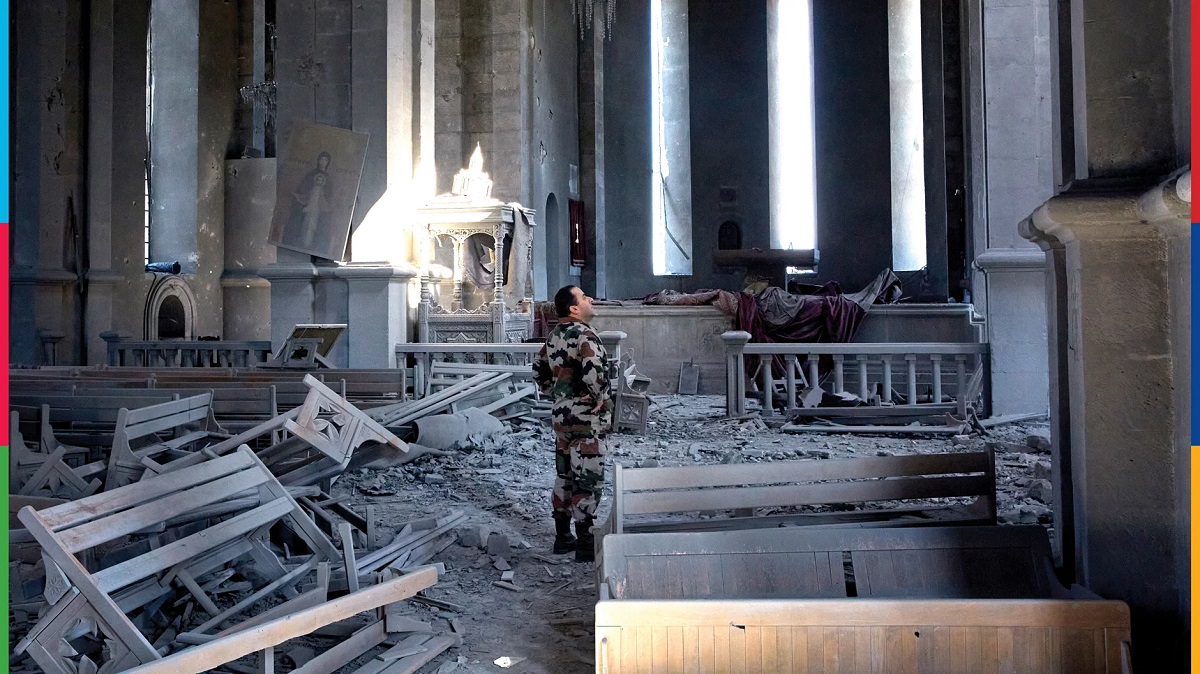
Miraculously, Zeynalyan’s prayers were answered, and his beleaguered colleagues emerged from the battle unscathed. Zeynalyan said he witnessed many examples of divine intervention in 2020. He was at the Ghazanchetsots Cathedral in the city of Shusha—known to Armenians as Shushi—on October 8, when two missiles struck within five hours in an attack Human Rights Watch deemed a possible war crime.

In early December 2020—with the Armenian lines broken and at least 6,000 soldiers confirmed killed—a Russia-brokered ceasefire ended hostilities. Shusha, the crown jewel of Nagorno-Karabakh, was back under Azerbaijani control, and their military was poised to seize the regional capital of Khankendi, known to Armenians as Stepanakert.

“It was pure joy to recapture our land,” Baghirov said. “For three decades, it was a heavy burden in our hearts, and finally our people can return to their homes.”

Officially, however, it is a ceasefire and not a capitulation. Armenia maintains control over Stepanakert and about a third of the disputed territory, protected by Russian peacekeepers. And while the mood is somber in the Armenian capital of Yerevan, about five hours away, Zeynalyan keeps his faith.

“No matter how much land we lose,” the chaplain said, “we are God’s people and will remain here until the second coming of Christ.”

Christianity Today spoke with more than two dozen sources during a visit to both nations one year after the war. It’s an open question how, if at all, they will reconcile their intense differences.

But for a few Christians in Armenia and Azerbaijan, a more personal question nags. Isn’t there a unity in Christ that transcends geopolitical grievances?

And if there is, should Christians wait for their governments to make peace? Or should they start themselves, by making peace with fellow believers behind enemy lines? For hundreds of years, the Caucasus region has been…

This article was originally published in the March print edition of Christianity Today. Please click here to read the full text.

Categories
Christianity Today Europe Published Articles

Suing for Peace: Can Clerics Reconcile Armenia and Azerbaijan Better Than Courts?

Image: Courtesy of Mother See of Holy Etchmiadzin, Information Services
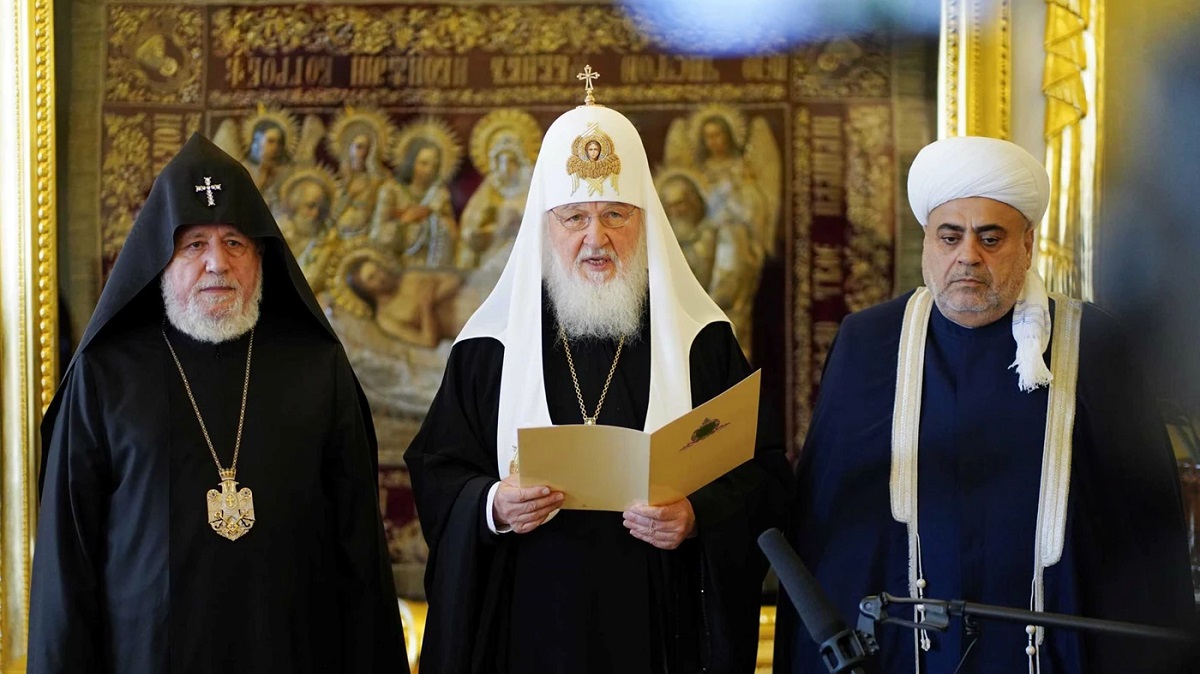
Russian Orthodox Patriarch Kirill I reads a joint statement flanked by Armenian Catholicos Karekin II (left) and Azerbaijan Grand Mufti of the Caucasus Allahshukur Pashazade (right) in Moscow on October 13.

After 17 tries, there is still no peace in Nagorno-Karabakh.

Almost a year ago, Russia brokered a November 2020 ceasefire to end the 44-day war between Azerbaijan and Armenia over the Caucasus mountain enclave. Azerbaijan reclaimed most of its internationally recognized territory occupied since 1994 by ethnic Armenians, who demand independence.

Armenia has been a Christian nation since A.D. 301. Azerbaijan is majority Muslim. But spiritual leaders have been no more successful than politicians or generals at securing reconciliation.

Yet that has not stopped Russian Orthodox Patriarch Kirill I from trying.

“Our religions have a unique peace-making potential,” he stated at last week’s tripartite summit of top clerical leaders. “No matter how difficult Armenian-Azerbaijani relations are at this stage, we believe that it is faith in God, and love, that can help heal the wounds.”

And they are many.

The post–Soviet Union conflict over Nagorno-Karabakh—called Artsakh by Armenians—killed 30,000 people and displaced 1 million. As Azerbaijan recaptured the territory—slightly larger than Rhode Island—last year, another 7,000 were killed. Mutual acrimony has characterized relations, with both sides accusing the other of destroying their religious heritage.

The first meeting of spiritual leaders was held in 1993. The 16th in 2017. Simply by bringing these leaders together…

This article was originally published at Christianity Today on October 19, 2021. Please click here to read the full text.

Categories
Christianity Today Europe Published Articles

Anticipating Biden’s Genocide Decision, Armenians Fear a Cultural One in Azerbaijan

Image: Press Service of the Republic of Azerbaijan
Azerbaijan President Ilhan Aliyev visits St. Astvatsatsin Church in newly controlled Nagorno-Karabakh with his wife and daughter in March 2021.

Armenian fears of a new genocide were put on hold following the fall of Shusha, the crown jewel of Nagorno-Karabakh, high in the Caucasus Mountains. Last November, Azerbaijani forces captured the city—known to Armenians as Shushi—after which a ceasefire ended the military hostilities.

But not the cultural.

Last month, satellite imagery allegedly revealed the destruction of Shusha’s Armenian Genocide Memorial. Constructed in 2009, it leaves a bitter taste during this year’s April 24 remembrance of the 1.5 million lives lost when Turks expelled Armenians from their homes a century ago.

President Joe Biden may recognize the atrocity by stating the word genocide in his commemorative speech.

But the horrors witnessed in Turkey reached also to Shusha, where Azerbaijanis massacred the local Armenian population.

“As in 1915, the Turco-Azeris are committing not only a human genocide against the Armenians, but also a cultural genocide,” said Rene Leonian, president of the Union of Armenian Evangelical Churches in Eurasia.

“Unfortunately, nations and international organizations are too passive to firmly condemn these abuses.”

They can now add the case of the disappearing church.

Following the war, video footage emerged of an Azerbaijani soldier shouting “Allahu Akbar” from the rooftop of the Holy Mother of God church in the town of Jabrayil.

In search of the simple stone-built chapel, the BBC discovered no trace whatsoever.

The escorting policeman first said it was destroyed in the war. He then changed his story saying the Armenians dismantled it before they left.

Presidential advisor Hikmat Hajiyev told the BBC the matter would be investigated, but then shifted the discussion to the nearly 30-year Armenian occupation.

It was not wholly inappropriate. The church in question was built on a military base, after Armenia seized the disputed Caucasus enclave during the first Nagorno-Karabakh war in 1993. Jabrayil became…

This article was originally published at Christianity Today, on April 23, 2021. Please click here to read the full text.

Categories
Christianity Today Europe Published Articles

Azerbaijan Archbishop: Our Holy Mission Is to Keep Peace

Embed from Getty Images

The saying is clear: To the victor go the spoils.

And morally, with it comes the burden of peace.

In November, Christian-heritage Armenia surrendered to Muslim-majority Azerbaijani forces besieging the Caucasus mountain area of Nagorno-Karabakh. The ceasefire agreement ended a six-week war that cost each side roughly 3,000 soldiers, and left unsettled the final status of the Armenian-populated enclave they call Artsakh.

Azerbaijan, however, recovered the rest of its internationally recognized territory, including the historic city of Shushi. The first Karabakh war ended in 1994, and displaced hundreds of thousands from their homes on both sides.

Archbishop Alexander, head of the Russian Orthodox Church in Azerbaijan, reached out to CT to promote a process of reconciliation.

It will not be easy.

What is your vision for reconciliation?

We are both eastern Christian communities, and we have much in common.

At the same time, 1,500 years of separation between the Eastern Orthodox church and the Armenian Apostolic church has complicated relations. We have holy books and traditions in common, but we are not in fellowship.

Both of us have been living among Muslims since Islam was introduced in our region. But the manner of living has been very different. The Orthodox church in Azerbaijan found a way to live together with Muslims, but Armenians did not. Relations were not always…

This article was originally published at Christianity Today, on January 5, 2020. Please click here to read the full article.

Categories
Audio

Audio Appearances

As 2020 draws to a close, many people are saying ‘Amen.’ Amid all the terrible events, much has been left undone.

That is an overly dramatic introduction to a catch-up post.

Thank you to everyone who keeps up with the articles I write. But over the course of this last year I missed sharing two audio appearances for my work.

I did post about one of them. See here for my interview about the situation in Armenia.

But back in May I was a guest on The Underground Sessions: Intersection of Faith, Culture, and Politics.

The podcast is hosted by Millington Baptist Church in New Jersey, and they asked me to share my thoughts on the situation in Lebanon.

Please click here if you would like to listen in to the 41-minute episode.

Of course, the situation in Lebanon grew much worse since then. In August, explosive materials detonated at the Beirut port, and things have still not gone back to normal.

The radio show The Common Good picked up on my article for Christianity Today, about how I explained the blast to my children.

They did not interview me, but engaged with the material and reflected upon it.

Please click here if you would like to listen. The link directs to minute 56 of the show, where the Lebanon segment begins.

Some people have a face for radio. Who knows, maybe I have a voice for newspapers. But as this year comes to a close, amid all the troubles, I can say ‘Amen’ for the life I have.

Thank you for learning along with me.

Categories
Audio

Interview: Pilgrim Radio and the Armenian Crisis

Two weeks ago, I was interviewed by Pilgrim Radio about the conflict in Nagorno-Karabakh, between Azerbaijan and Armenia.

But the primary angle was Turkish repentance. Recently for Christianity Today, I wrote about a movement among Turkish Christians to apologize for the Armenian genocide.

To do so it was necessary to provide context, and also reflect on current events.

Since recording, the conflict ended with a decisive victory for Azerbaijan.

But the story is not yet over. Armenians are leaving their ancient land, as Russia and Turkey work out a new geopolitical arrangement.

Please click here to listen to the recording on Pilgrim Radio, a Christian network operating in the American northwest.

Otherwise, here is the direct link on Soundcloud:

This is the third time I have presented on their program. The first was on the growth of Christianity in the Arabian Peninsula. The second was on Coptic forgiveness of ISIS for the martyrs in Libya.

Thank you for your interest, and I hope you profit from the listening.

Categories
Asia Christianity Today Published Articles

Foxhole Faith in Nagorno-Karabakh

Note: This article was written prior to the cessation of hostilities concluded between Azerbaijan, Armenia, and Russia.

The Armenian mountain stronghold of Shushi is under attack.

The second city of Nagorno-Karabakh, one of its oldest artifacts is a 15th-century Bible. Earlier in the conflict this year, its 19th-century cathedral was struck twice and damaged by missiles.

But Azerbaijanis—who call it Shusha—celebrate it also as a cultural heritage. Many of their famous poets and musicians hail from the once-mixed city.

As the six-week war progressed, Azerbaijan steadily retook the plains below. But facing the coming winter, its military faced a stark choice: impose a siege, or scale the mountain.

Without Shusha, President Ilham Aliyev said, the job is only half done.

Despite its Armenian-majority population, Nagorno-Karabakh was assigned to Azerbaijan in the 1920s by Joseph Stalin. Both nations became independent in 1991, and the mountainous enclave conducted a referendum to declare itself the Republic of Artsakh. Ethnic warfare gripped the region, with 30,000 killed and around 1 million displaced.

Population transfers largely emptied each nation of its opposite ethnicity.

At the time of the ceasefire in 1994, Armenians controlled roughly 20 percent of Azerbaijan. No nation recognized Artsakh, and internationally sponsored negotiations began—and eventually stalled.

But buoyed by a financial windfall from oil and gas exports to Europe, as well as advanced weapons from Israel and Turkey, in late September Azerbaijan pressed its military advantage. If successful, it will perch above Stepanakert, the capital city of Nagorno-Karabakh, only six miles away.

“After 28 years, the adhan [call to prayer] will be heard in Shusha,” celebrated Aliyev. “Our victory march continues.”

Armenian forces say the fighting continues.

“So far, Armenians have successfully pushed back all attempts to take over this homeland,” said Harout Nercessian, the Armenia representative for the Armenian Missionary Association of America (AMAA).

“We will never surrender Shushi.” But within the debate over whether the conflict with Muslim-majority Azerbaijan is a religious war with Christian Armenians, signs of faith, piety, and pleas for divine favor mark many of the partisans, including…

This article was originally published at Christianity Today, on November 9, 2020. Please click here to read the full text.
Categories
Prayers

Lebanon Prayer: Expression

God,

You created this world through the power of your voice.

You revealed your will through the light of your word.

You made us, God, to do no less.

Teach us to articulate well.

With our tongue we bless and curse.

From our heart, our mouth speaks.

We will give account for every word.

Some used these words against the French. Muslims rebuke the insult given their prophet.

Some used these words against the Turks. Armenians condemn the war waged on their people.

Some used these words against the Israelis. Lebanese question the lines drawn into the sea.

And perhaps they are right to do so.

Perhaps they please you in their stance.

Their voice is strong. Their will revealed.

But is there power? Is there light?

A word alone is only vapor.

And so some kill. And so some weep. And so some shrug.

What can be done against the mighty?

God, make us mightier still?

Maybe.

Your power is perfected in weakness.

But it is power still.

Power to hold the tongue. Let freedom rule, but honor reign.

Power to bless the enemy. Establish justice. Prevail with peace.

Power to negotiate well. An equitable share, of your free bounty.

God, let our words create.

An apple of gold in a setting of silver.

And let them speak of you. The very words of God.

Let Lebanon be known through them, an expression of your love.

Amen.


To receive Lebanon Prayer by WhatsApp, please click this link to join the closed comments group.

Lebanon Prayer places before God the major events of the previous week, asking his favor for the nation living through them.

It seeks for values common to all, however differently some might apply them. It honors all who strive on her behalf, however suspect some may find them.

It offers no solutions, but desires peace, justice, and reconciliation. It favors no party, but seeks transparency, consensus, and national sovereignty.

How God sorts these out is his business. Consider joining in prayer that God will bless the people and establish his principles, from which all our approximations derive.

Lebanon Prayer places before God the major events of the previous week, asking his favor for the nation living through them.

It seeks for values common to all, however differently some might apply them. It honors all who strive on her behalf, however suspect some may find them.

It offers no solutions, but desires peace, justice, and reconciliation. It favors no party, but seeks transparency, consensus, and national sovereignty.

How God sorts these out is his business. Consider joining in prayer that God will bless the people and establish his principles, from which all our approximations derive.


Sometimes prayer can generate more prayer. While mine is for general principles, you may have very specific hopes for Lebanon. You are welcome to post these here as comments, that others might pray with you as you place your desires before God.

If you wish to share your own prayer, please adhere to the following guidelines:

1) The sincerest prayers are before God alone. Please consult with God before posting anything.

2) If a prayer of hope, strive to express a collective encouragement.

3) If a prayer of lament, strive to express a collective grief.

4) If a prayer of anger, refrain from criticizing specific people, parties, sects, or nations. While it may be appropriate, save these for your prayers alone before God.

5) In every prayer, do your best to include a blessing.

I will do my best to moderate accordingly. Thank you for praying for Lebanon and her people.

Categories
Asia Christianity Today Published Articles

Azerbaijan Evangelicals: Conflict with Armenians Is Not a Religious War

Church of Kish in Azerbaijan, by Asif Masimov

Vadim Melnikov once fought for the land of Noah.

Donning his Azerbaijani uniform 17 years ago, the ethnic Russian took his post to defend Nakhchivan, an Azeri enclave bordering Turkey and separated from their countrymen by the nation of Armenia.

Known in both the Armenian and Azeri languages as “the place of descent,” referring to Noah’s landing on nearby Mt. Ararat, Nakhchivan is a geographical reminder of the mixed ethnic composition of the Caucasus Mountains.

As is Nagorno-Karabakh, an Armenian enclave within Azerbaijan.

Its etymology is also a reminder of the region’s diversity. Nagorno is Russian for mountains, while Karabakh combines the Turkic for black and the Persian for garden.

Armenians call it Artsakh, the name of a province in their ancient kingdom. For the last three weeks, they have been defending their de facto control of the region as Azerbaijan fights to reassert its sovereignty.

As Melnikov did decades ago in Nakhchivan. Armenian soldiers crossed into Azeri mountain villages, before his unit drove them out.

This was one of the many border conflicts that followed a war of demography. But in the years before and after the 1991 independence of both nations, about 30,000 people were killed as hundreds of thousands on both sides fled or were driven to their lands of ethnic majority.

A 1994 ceasefire established the status quo, and the Minsk Group—headed by Russia, France, and the United States—preside over negotiations.

Despite the previous ethnic violence, Azerbaijan boasts that it remains a nation of multicultural tolerance. Of its 10 million population, 96 percent are Muslim—roughly two-thirds Shiite and one-third Sunni. Russian Orthodox represent two-thirds of the Christian population, while over 15,000 Jews date back to the Old Testament era.

Melnikov is part of the 0.26 percent evangelical community. And on behalf of their nation, eight churches and the Azerbaijan Bible Society wrote an open letter to decry the popular conception that this conflict pits Muslims against Christians. (Nearly 700 Armenian soldiers have been killed so far. Azerbaijan does not disclose military casualties.)

“The war which has been between Azerbaijan and Armenia during the last 30 years is purely political confrontation, it has no religious context,” they wrote.

“In fact, this history and [the] continuous attempts of Armenia to present this war as a religious one, can become a stumbling block for many Azerbaijani people, who hear [the] gospel nowadays.” An earlier letter by leaders of Azerbaijan’s Muslim, Jewish, and Russian Orthodox communities…

This article was originally published at Christianity Today, on October 21, 2020. Please click here to read the full text.