Categories
Christianity Today Middle East Published Articles

Good News for Iraq’s Christians: More Autonomy, Less Dhimmitude

Image: Courtesy of Archbishop Bashar Warda
Chaldean Catholic Archbishop Bashar Warda stands in front of the Catholic University of Erbil, located in the Iraqi Kurdistan capital city’s Ankawa district.

This week, the Christian enclave of Ankawa in Erbil, the capital city of Iraqi Kurdistan, was designated by the autonomous region’s prime minister as an official district, giving believers there administrative autonomy starting next week.

They will directly elect their own mayor, and have charge of security.

Prime Minister Masrour Barzani called Ankawa a home for “religious and social coexistence, and a place for peace.”

Archbishop Bashar Warda, the Chaldean Catholic archbishop of Erbil, called it an “important” and “strategic” decision.

“Our confidence in the future of Kurdistan makes us encourage Christians not only to stay,” he said, “but also to invest in this region.”

Ordained a priest in 1993, Warda was consecrated in his current position in 2010. With Iraq’s hemorrhaging of Christians since the 2003 US invasion, Warda’s bishopric in the autonomous Kurdish region soon became a providential band-aid.

Beginning in 2014, ISIS drove Christians from Mosul and their traditional homeland in the Nineveh Plains, and thousands took refuge in Erbil and other cities in the secure northeast. From 1.5 million Christians in 2003, the Chaldean Catholic church now estimates a population of fewer than 275,000 Christians.

Warda has long been investing to turn the tide.

In 2015, he established the Catholic University of Erbil, and has coordinated relief aid from governments and charities alike. The situation stabilized following ISIS’s defeat in 2017.

But freedom does not come from politics alone. Two years ago, Christians endorsed widespread popular uprisings against the political class. Violently suppressed, the movement’s main celebrated achievement was early elections under a new law designed to promote better local and small-party representation.

Polls open on October 10, and a quota gives Christians five of 329 seats in parliament. However, Warda’s Baghdad-based patriarch has called for a Christian boycott, fearing fraud.

Warda wants a Christian revival. Buoyed by the March visit of Pope Francis, he believes that ISIS broke the fundamental religious and cultural underpinnings of Islamic superiority. Christians no longer are seen as second-class citizens.

In an interview on the sidelines of the IRF Summit convened in Washington in July, Warda told CT about his welcome of missionaries, the Catholic way of witnessing to Muslims, and whether a revived Christian influence in Iraq will lead to future church growth.

Since the defeat of ISIS in Iraq, what challenge has been hardest for the church?

With all the displaced people, images of scattered tents immediately come to mind. But the hard part is not to provide them with food, sanitation, or medical supplies. This is not easy, but it is obvious.

The hard part is to restore their dignity. They understand that ISIS is a criminal gang. And they can bear the wounds of the innocent, knowing they had nothing to do with this dispute.

But their question is “Why?” yet also “What now?”

Men are the providers for the family. Sitting around doing nothing, they tell me, “Bishop, we don’t want money; we want a job. I want to deserve my food.”

Suppose there is aid sufficient to rebuild homes, churches, and schools and even to provide jobs. You have said that this is not enough. It does not establish the basis of citizenship and pluralism.

That is true. But without homes, churches, schools, and jobs, the people will leave the country. And then there are no citizens left.

With a rebuilt community, you can go to the government to speak about the constitution, defending the people’s full rights under the law. There is a link. First have the community; then talk about implementing ideals.

Before ISIS, when the community was stable, were you able to seek your rights?

For 1,400 years there was a sort of social contract: Islam is the religion of the nation, and you are the People of the Book. But know that Islam is the honorable religion of God, which means you are second. In the Quran it says…

This article was originally published at Christianity Today, on August 8, 2021. Please click here to read the full text.

Categories
Christianity Today Middle East Published Articles

How a Jewish Evangelical Won Trust with Arab Muslim Leaders

Image: Courtesy of Joel Rosenberg
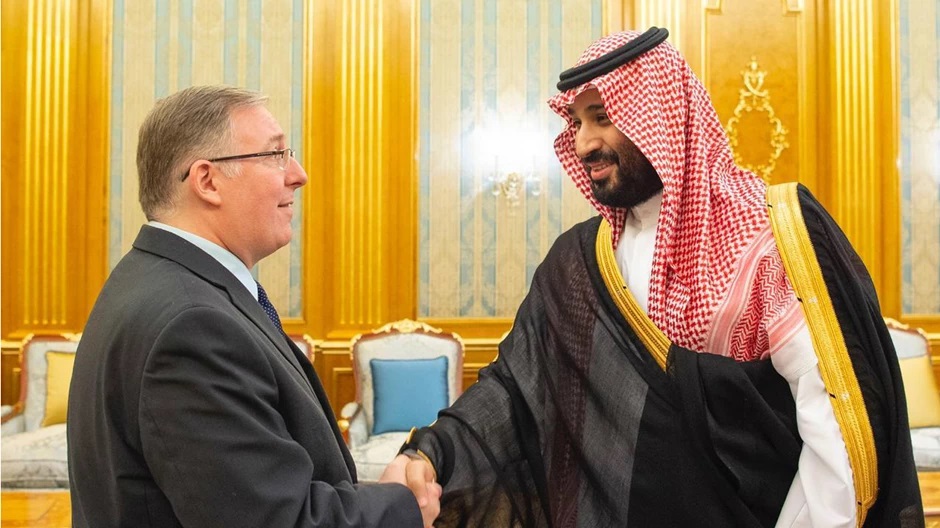
Crown Prince Mohamed bin Salman (right) greets Joel C. Rosenberg at the Royal Court in Jeddah on September 10, 2019.

Fans of Joel Rosenberg’s Middle East apocalyptic fiction can now read his real-time account of real-world peace.

Through behind-the-scenes meetings with kings, princes, and presidents, the Jewish evangelical and New York Times bestselling author had an inside scoop on the Abraham Accords.

For two years, he sat on it.

His new nonfiction book, Enemies and Allies: An Unforgettable Journey inside the Fast-Moving & Immensely Turbulent Modern Middle East, released one year after the signing of the normalization agreement between Israel and the United Arab Emirates (UAE), finally tells the story.

During an evangelical delegation of dialogue to the Gulf nation in 2018, the Crown Prince of Abu Dhabi, Mohammed bin Zayed (MBZ), told Rosenberg of his groundbreaking and controversial plans—and trusted the author to keep the secret.

Named after the biblical patriarch, the accords were Israel’s first peace deal in 20 years. In the five months that followed, similar agreements were signed with Bahrain, Sudan, Kosovo, and Morocco.

Might Saudi Arabia be next? Mohammed bin Salman’s (MBS) comments to Rosenberg remain off the record. But asked if his reforms might include building the kingdom’s first church, the crown prince described where religious freedom falls in his order of priorities.

Enemies and Allies provides never-before-published accounts of Rosenberg’s interactions with these leaders, in addition to Egypt’s President Abdel Fattah al-Sisi and Jordan’s King Abdullah. Included also are exchanges with former president Donald Trump and vice president Mike Pence.

CT interviewed Rosenberg about navigating politics and praying in palaces and about whether he would be willing to lead similar evangelical delegations to Turkey or Iran:

You describe your relationships, especially with the UAE’s MBZ, as ones of “trust.” How did you nurture that? Did you sense it was different than their official diplomatic connections?

I’m not sure I have a good answer for that. Why would Arab Muslim leaders trust a Jewish evangelical US-Israeli citizen?

In the case of King Abdullah, he had read my novel and decided to invite me to his palace rather than ban me from his kingdom forever. The book was about ISIS trying to kill him and blow up his palace. In our first meeting, we spent five days together, and it was not on the record. We were building trust.

I didn’t have that with any of the others. In every case, we were invited rather than us going and knocking on the door. With the case of [MBZ], his ambassador Yousef Al Oteiba had seen the coverage of our Egypt and Jordan trips. He has very good relations with these countries and was able to get the backstory, asking, “Who is this guy Rosenberg? How did it go? Should we do the same?”

I think it has much more to do with being a follower of Jesus Christ. They didn’t know me, but they seemed to trust that followers of Christ who call themselves evangelicals would be trustworthy. That we are genuinely interested in peace, in security in the region, and in a US alliance with the Arab world. And in terms of the expansion of religious freedom, all of them wanted to talk about these things.

They were making a bet that the evangelical community in the United States, while being deeply—though not uniformly—pro-Israel, still has a deep interest in peace and assessing their countries and their reforms fairly. It was the sincerity of our faith that led to trust.

But you still had to nurture trust. How?

I’m sure they vetted me, and in reading my work, they saw I have a deep respect for Muslims. I’m not infected with Islamophobia. I’ve traveled from Morocco to Afghanistan. And I’ve done what I can to strengthen Christian communities in the Arab and Muslim worlds. I’m not your classic…

This article was originally published at Christianity Today, on October 1, 2021. Please click here to read the full text.

Categories
Christianity Today Persecution Published Articles Religious Freedom

Pew: Religious Terrorism at Record Low, Government Persecution at Record High

Image: Carl Court / Getty Images
A man cries as he prays in the street near St. Anthony’s Shrine one week on from Easter terrorism attacks that killed more than 250 people, on April 28, 2019 in Colombo, Sri Lanka

Government restrictions on religion are at a global high.

Social hostility toward religion, however, is at its lowest level worldwide since ISIS.

So says data analyzed by the Pew Research Center in its 12th annual measurement of the extent to which 198 nations and territories—and their citizens—impinge on religious belief and practice.

The 2021 report, released today, draws primarily from more than a dozen UN, US, European, and civil society sources, and reflects pre-pandemic conditions from 2019, the latest year with available data.

Matching a peak from 2012, 57 nations (29%) record “very high” or “high” levels of government restrictions—an uptick of one nation from 2018. The global median on Pew’s 10-point scale held steady at 2.9, after a steady rise since the baseline of 1.8 in 2007, the report’s first year measured.

Regional differences are apparent: The Middle East and North Africa scored 6.0; Asia-Pacific scored 4.1; Europe scored 2.9; Sub-Saharan Africa scored 2.6; and the Americas scored 2.0.

But across the globe, restrictions are present.

Most common, according to Pew, is “government harassment of religious groups.” More than 9 in 10 nations (180 total) tallied at least one incident. Also common is “government interference in worship.” More than 8 in 10 nations (163 total) recorded incidents.

And nearly half (48%) of all nations used force against religious groups. China, Myanmar (formerly known as Burma), Sudan, and Syria tallied over 10,000 incidents each. For example, Pew noted…

This article was originally published at Christianity Today, on September 30, 2021. Please click here to read the full text.

Categories
Christianity Today Middle East Published Articles

Moroccan Christians Welcome End of a Decade of Islamist Government

Man walking past voting wall, Marrakesh, Morocco

For the first time in his life, Rachid Imounan cast a vote—and overturned Morocco’s Islamist-oriented government.

He is not alone.

Turnout surged to 50 percent as liberals routed the Justice and Development Party (PJD), which led the North African nation’s parliament the past 10 years. Its share of the 395-seat legislature dropped from 125 to 13.

The PJD finished eighth overall.

“We thank Jesus, the Islamists are gone,” said Imounan, a church planter who lives in the southern city of Agadir. “God answered our prayers, and now we have the government we wanted.”

Aziz Akhannouch of the National Rally of Independents (RNI) was sworn in as prime minister by King Mohamed VI on September 11, after his party captured 102 seats. He is tasked with forming a coalition government to guide Morocco through its current economic downturn.

A constitutional monarchy, Morocco has held multi-party elections since its independence in 1956. But to stave off protests during the Arab Spring, in 2011 the king instituted reforms and transferred significant power to the prime minister.

Mohamed VI retains final say over several government positions, however, and is revered as “Commander of the Faithful” as a direct descendant of Islam’s founding prophet Mohammed.

Christians described “liberal” parties as those that favor freedom—excepting challenges toward the person and position of the king, whose authority is respected by all political entities. Islamists, meanwhile, wished to impose sharia law, cover women, and remove pork and alcohol from neighborhood supermarkets.

“Akhannouch is a businessman. Whether you worship the sun or the moon, he doesn’t care,” said Youssef Ahmed, one of Morocco’s few second-generation Christians.

“He won’t persecute anyone.” Open Doors ranks Morocco…

This article was originally published at Christianity Today on September 21, 2021. Please click here to read the full text.

Categories
Christianity Today Europe Published Articles

Evangelicals Endorse Unprecedented Ecumenical Plea for the Environment

(TIZIANA FABI/AFP via Getty Images)

In their first joint statement ever, the spiritual leaders of Christianity’s three largest denominations addressed the United Nations.

“Listen to the cry of the earth, pledging meaningful sacrifices,” stated their appeal. “We must decide what kind of world we want to leave to future generations.”

Pope Francis of the Roman Catholic Church; Bartholomew I, ecumenical patriarch of the Eastern Orthodox Church; and Justin Welby, the evangelical Anglican archbishop of Canterbury, issued their plea this month to delegates attending next month’s UN climate summit in Scotland.

Noting that life on “the earth which God has given” has become an “urgent matter of survival,” the three leaders framed inaction as a severe injustice.

“The people bearing the most catastrophic consequences of these abuses are the poorest on the planet,” they stated, “and have been the least responsible for causing them.”

The Lausanne/World Evangelical Alliance Creation Care Network (LWCCN) “wholeheartedly endorsed” the statement.

“The environmental crisis represents the greatest challenge humanity has ever faced,” said Ed Brown, LWCCN co-catalyst for creation care, “and is a monumental failure to obey the clear command of Scripture to care for God’s creation.”

Francis, Bartholomew, and Welby urged corporations to seek “people-centered profits.” They called on nations to “stop competing for resources, and start collaborating.” But they also called on Christians to pray, celebrating…

This article was originally published at Christianity Today, on September 16, 2021. Please click here to read the full text.

Categories
Americas Christianity Today Middle East Published Articles

Crusaders No More: What Arab Christians and Muslims Think of Mascot Changes

Image: Illustration by Mallory Rentsch / Source Images: Courtesy of Valparaiso University / Subjug / Getty Images

Nestled in the Ozark Mountains of Missouri, Evangel University will no longer evoke the Middle East—or the Middle Ages.

Since 1955, the flagship Assemblies of God institution has cheered on its Crusaders, replete with helmeted knight and steed.

This semester, the university will soon announce its new mascot after considering almost 300 submitted suggestions—including 77 animal names, 69 military names, and 38 biblical names. The change was made in light of the school’s 55,000 alumni serving internationally.

“The world has changed significantly since the 1950s, when the Evangel community, intending to depict strength, honor, and commitment to the faith, first identified a Crusader as the school’s mascot,” stated interim president George O. Wood in March, when the decision was made to drop the name.

“Today, we recognize that the Crusader often inhibits the ability of students and alumni to proudly represent the university in their areas of global work and ministry.”

For some alumni, the change is a long time coming. The review process first began in 2007.

“When you want to share the love of Christ, you don’t want to identify with something that shuts down conversation,” said Emily Greene, class of 2008. “It is the equivalent of saying ‘jihadist’ to a US Christian, evoking a cruel persona.” Greene grew up as a history-loving missionary kid in Muslim-majority Kazakhstan. But her father…

This article was originally published at Christianity Today on September 9, 2021. Please click here to read the full text.

Categories
Asia Christianity Today Published Articles

Dari TV Host: Afghanistan Will Now See ‘Pure Christianity’

Shoaib Ebadi

Afghanistan and its neighbor Iran share the Persian language. Now that the Taliban will rule from Kabul again, might the countries begin to also share a spiritual trajectory?

In 1979, the shah of Iran was overthrown in an Islamic revolution. The crackdown that followed ended the Western Christian presence in the nation. Yet today the Iranian church is one of the fastest-growing in the world, as the ruthlessness of the mullahs led many to sour on Islam and some to find new faith in Jesus.

Satellite TV ministry played a great role in spreading the gospel in Iran, and continues today across the border in Afghanistan. Christian ministry SAT-7 began broadcasting in 2002 in Farsi, the Persian dialect spoken in Iran, and in 2010 Shoaib Ebadi began its first prerecorded programming in Dari, the Persian dialect spoken in Afghanistan. His show Secrets of Life went live in 2014, and today is accessible across the whole nation.

The 55-year-old Ebadi was born in Afghanistan but became a Christian in 1999 as a refugee in Pakistan. The following year he emigrated to Canada, and today heads Square One World Media, producing Christian media in various languages around the world.

He told CT about the history of the Afghan church, the impact of the US military upon it, and his hope that “pure Christianity” might now gain a hearing in his homeland.

Some statistics put the number of Christians in Afghanistan at 8,000. Can you give us a brief history of the church?

There was a Protestant church building constructed in 1970 in Kabul during the time of the shah, but it was destroyed when the monarchy was overthrown in 1973. The Catholics had a church in the Italian embassy since 1933. But these churches were only for foreign nationals, not Afghans.

There were a handful of believers in the 1950s, as American professionals came to Afghanistan and opened an eye hospital and a technical college. Later on, in the 1990s, tentmaker missionaries came as English teachers and NGO workers. And I was in a fellowship of about 30–40 Afghan believers in Pakistan. Most eventually went to the West.

These are probably the first Afghans to know Christ in the modern era, but God only knows.

So how did the Afghan church develop after the Americans came in 2001?

Some of the believers from Pakistan, as well as other refugees who fled to Iran, went back to Afghanistan after…

This article was originally published at Christianity Today on August 30, 2021. Please click here to read the full text.

Categories
Americas Christianity Today Published Articles Religious Freedom

Christian and Muslim Leaders Agree on Legitimacy of Evangelism

Image: Courtesy of World Evangelical Alliance
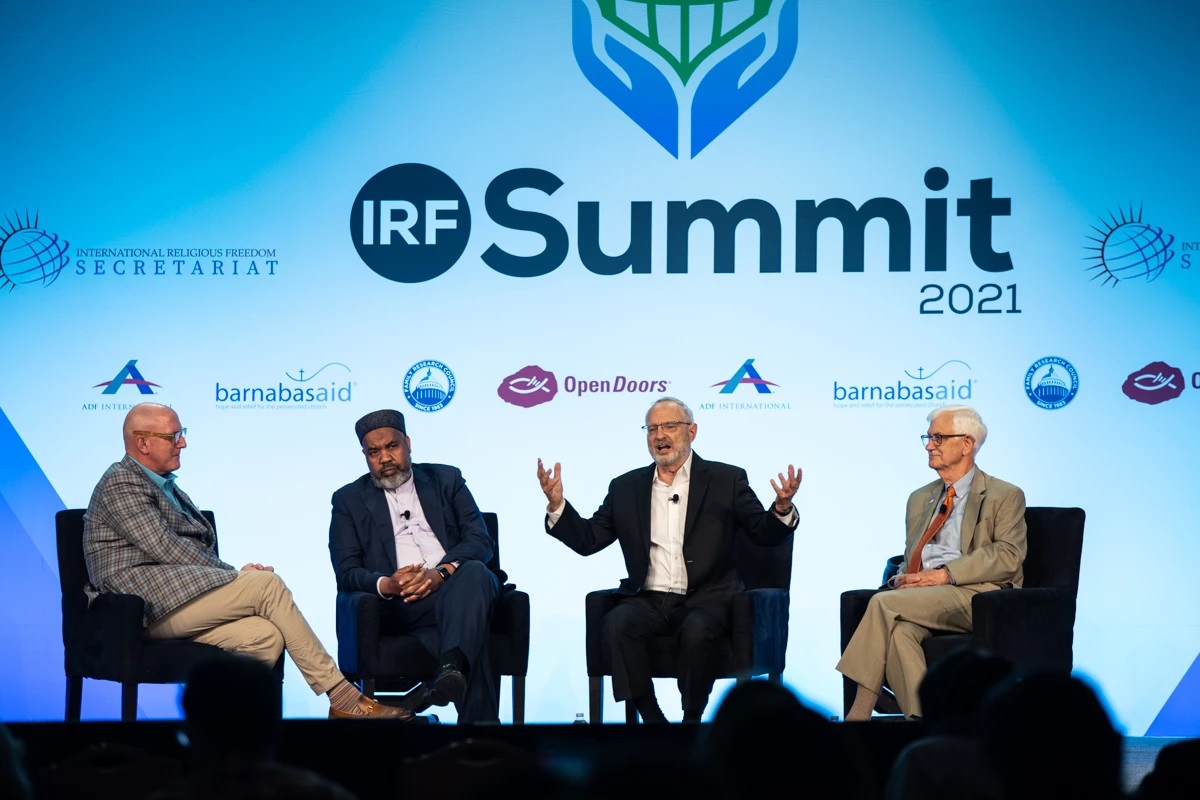
Nahdlatul Ulama leader Yahya Cholil Staquf presents World Evangelical Alliance leader Thomas Schirrmacher with a festschrift at The Nation’s Mosque in Washington, DC, during the 2021 International Religious Freedom Summit.

The world’s largest Muslim organization accepts that Christians will try to convert its members. A new partnership with evangelicals seeks to ensure this does not lead to conflict.

Last week, the World Evangelical Alliance (WEA) signed a statement of cooperation with Nahdlatul Ulama (NU), an Indonesian association with an estimated 30 million to 50 million members. Established in 1926 to counter Wahhabi trends issuing from the Arabian Peninsula, its name means “Revival of the Religious Scholars.”

“Evangelicals very much aspire to proselytism, and so does Islam. So naturally there will be competition,” said NU secretary general Yahya Cholil Staquf. “But we need to have this competition conducted in a peaceful and harmonious environment.”

Staquf spoke from the stage of the 2021 International Religious Freedom (IRF) Summit in Washington. On its opening day, he and WEA secretary general Thomas Schirrmacher signed “The Nation’s Mosque Statement,” along with Taleb Shareef, imam of Masjid Muhammad, the first American mosque built by the descendants of slaves.

Calling for “the emergence of a truly just and harmonious world order,” the statement seeks a global alliance to prevent the political weaponization of identity and the spread of communal hatred.

Schirrmacher called the WEA’s cooperation with NU the product of deep theological dialogue, counter to the academic tendency to downplay truth claims. And as evangelicals, evangelism is at the heart of their effort.

“We are working together for the right to convert each other,” the German theologian said. “Religious freedom does not mean that we agree, but that…

This article was originally published at Christianity Today on July 22, 2021. Please click here to read the full text.

Categories
Christianity Today Published Articles Religious Freedom

Summit Produces a ‘Pentecost’ Moment for International Religious Freedom

Image: Hailey Sadler / IRF Summit
Previous IRF ambassador David Saperstein speaks at the 2021 International Religious Freedom Summit in Washington.

One word floated forebodingly between parentheses throughout promotional material for the 2021 International Religious Freedom (IRF) Summit:

Invited.

Following the names of Nancy Pelosi, Antony Blinken, and Samantha Power, it indicated uncertainty if the key Democratic stalwarts would participate.

As the approximately 1,200 registered attendees arrived, the distributed official program still did not include the current House speaker, secretary of state, or USAID administrator.

However, Mike Pompeo, Blinken’s predecessor at the US State Department, had a keynote address from the stage.

“There were a lot of questions heading into this summit, with a lot of hesitancy from the Biden people,” summit co-chair Sam Brownback told CT. “But we worked hard to make it bipartisan.”

Unlike the previous two ministerial meetings held in Washington, DC (and a third held virtually in Poland), this year’s IRF gathering was organized by civil society, not governments.

Brownback, the US ambassador-at-large for international religious freedom during the Trump administration, was now a private citizen. He partnered with Katrina Lantos Swett, former chair of the US Commission on International Religious Freedom, who was appointed by former Democratic senator Harry Reid.

Brownback chased the Republicans, and Lantos Swett the Democrats. Their friendship, Pam Pryor, senior advisor to the summit, told CT, is the “gold standard” in bipartisan cooperation. In the end, Lantos Swett was relatively…

This article was originally published at Christianity Today, on July 19, 2021. Please click here to read the full text.

Categories
Asia Christianity Today Published Articles

Will Central Asia Become ‘Stans’ for Religious Freedom?

The Palace of Peace and Reconciliation in Nur-Sultan, Kazakhstan.

Now two of “the five ’Stans” are becoming bigger fans of—or, as Gen Z would say, “stanning” for—religious freedom.

“In Kazakhstan, all denominations can freely follow their religion,” said Yerzhan Nukezhanov, chairman of the committee for religious affairs, “and we will continue to create all necessary conditions for religious freedom.”

Speaking at the 2021 International Religious Freedom Summit in Washington, DC, Nukezhanov signed a memorandum of understanding with Wade Kusack, head of the Love Your Neighbor Community. It sets a three-year roadmap that will train local imams, priests, and pastors in religious dialogue, to culminate in the establishment of religious freedom roundtables in nine Kazakh cities.

“It is a front door approach in openness and transparency with the government,” said Kusack. “Mutual trust is built one relationship at a time.”

An ethnic Belarusian, Kusack is also the senior fellow for Central Asia at the Institute for Global Engagement (IGE), the American NGO which helped shepherd Uzbekistan’s efforts to improve its international religious freedom standing. In 2018, top Uzbek officials pledged reforms at the first Ministerial to Advance Religious Freedom, convened by the US State Department.

Later that year, Uzbekistan was removed from designation as a Country of Particular Concern for the first time since 2005. Downgraded to Special Watch List status, by 2020 enough progress was made for the State Department to delist the nation altogether.

Developments in Kazakhstan were hailed as “proof of concept” for the engagement model of international religious freedom advocacy. Not listed by the State Department, the nation has been recommended for SWL status by the US Commission on International Religious Freedom since 2013.

Nukezhanov noted 2018 as the year his committee established a religious freedom working group, specifically to demonstrate openness to American concerns. That same year, Nikolay Popov was fined $600 for sharing his Christian faith—without a license. Popov, part of the Council of Baptist Churches in Kazakhstan’s Karaganda region, also…

This article was originally published by Christianity Today on July 16, 2021. Please click here to read the full text.

Categories
Americas Christianity Today Published Articles

New Museum Stakes Claim for the Bible in US History—Right Next to the Liberty Bell

Image: Douglas Nottage / American Bible Society

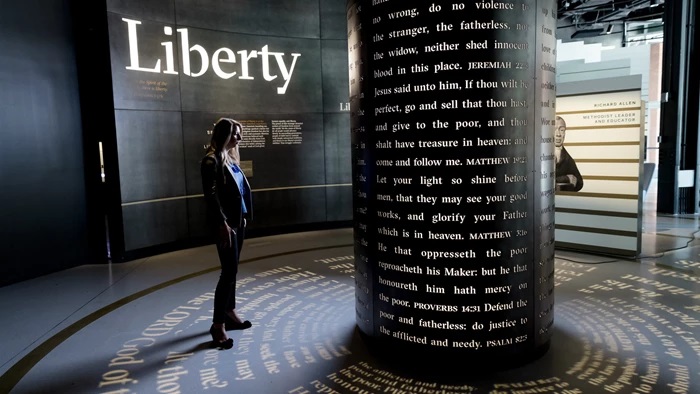
America’s “most historic square mile” got a new resident on the Fourth of July weekend. Joining the Liberty Bell and Independence Hall in Philadelphia, the American Bible Society has opened a $60 million museum to highlight the role of Scripture in the founding of the United States.

“We are leveraging history to advocate for the Bible,” said Alan Crippen, chief of exhibits at the Faith and Liberty Discovery Center (FLDC). “The American story of liberty is unintelligible without knowledge of the Bible, and how it impacted our leaders.”

The new museum gives special space to William Penn and his “holy experiment” of Pennsylvania.

Alongside his Bible, the museum displays an original copy of Penn’s 1683 pamphlet, The Great Case of Liberty of Conscience Once More Briefly Debated and Defended. Informing Penn’s vision for governance, the charter of Pennsylvania guaranteed religious freedom and sought peace with the local Lenni-Lenape Native American tribe.

The FLDC’s six exhibits are more than a storehouse of artifacts, though. Interactive exhibits present six foundational American values: faith, liberty, justice, hope, unity, and love. An electronic “lamp” allows visitors to activate additional material, and store memories for retrieval at home.

The exhibits pose additional questions for contemplation or group discussion. The First Amendment section prompts: Do you agree that a just society requires freedom of religion and dissent? Another follows George Whitfield and asks: Do you agree that people can have a direct and personal relationship with God? “Exhibits are meant to be immersive, but not to proselytize,” said Crippen. “This question is meant…

This article was originally published at Christianity Today, on September 9, 2021. Please click here to read the full text.

Categories
Christianity Today Middle East Published Articles

Evangelicals Ask Pope Francis to Help Save Lebanon

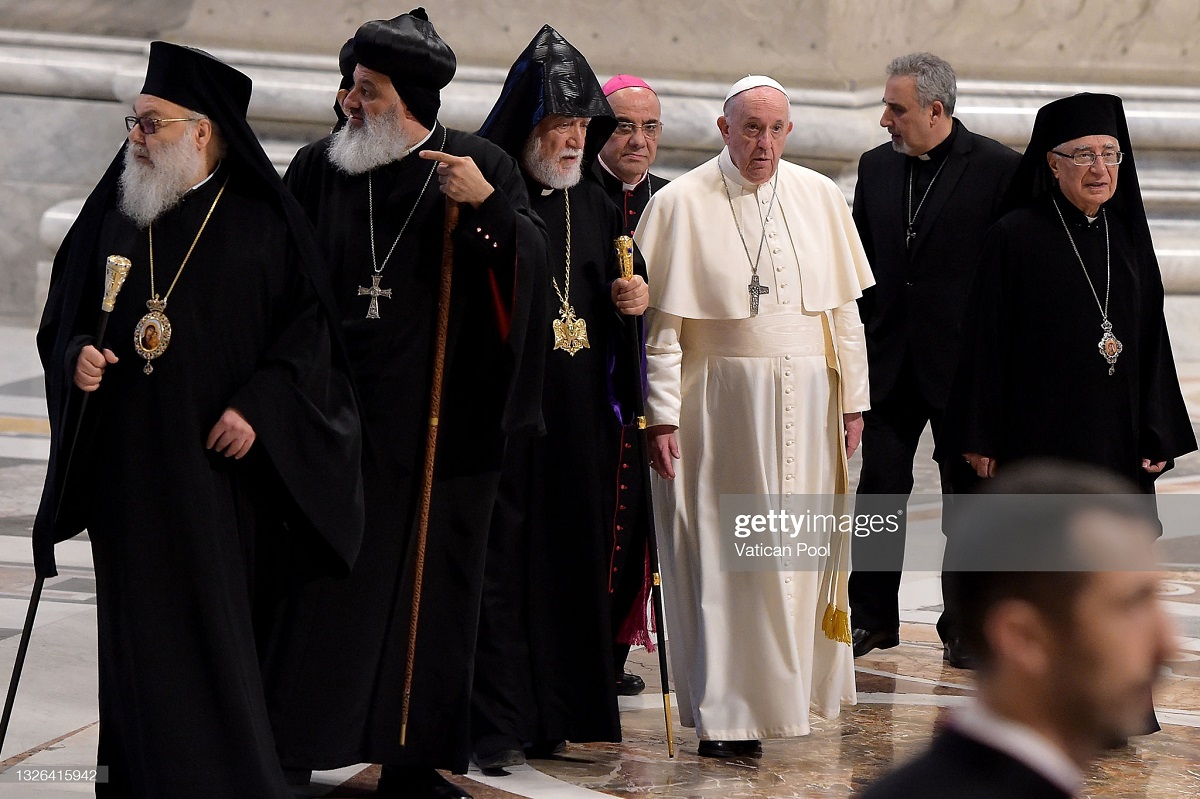
Pope Francis, flanked by senior leaders of the various Christian Churches and communities of Lebanon. Kassab is 2nd from right.

Pope Francis has a message to consider from Lebanon’s evangelicals.

“We are not comfortable in our sectarian system, and thank God that we are not a part of the politics that led the country to collapse,” said Joseph Kassab, president of the Supreme Council of the Evangelical Community in Syria and Lebanon.

“We are not benefiting, and it hurts us like the vast majority of the Lebanese people.”

Last week the Catholic pontiff invited Lebanon’s Christian denominations to the Vatican for a time of prayer and reflection. Ten patriarchs, bishops, and church leaders gathered, as Francis encouraged them to speak with one voice to the politicians of their nation.

Lebanon has been unable to form a new government since its prior one resigned 11 months ago, following the massive explosion at Beirut’s port. As its Christian, Sunni, Shiite, and Druze political parties wrangle over representation, more than half the population now falls below the poverty line.

Following a default on national debt, personal bank accounts have been largely frozen as the Lebanese lira has lost over 90 percent of its value. The World Bank estimates the economic collapse to be among the world’s three worst in the last 150 years.

“We blame and condemn our Christian and Muslim political leaders equally,” said Kassab.

“We have to say this loudly.”

The nation’s longstanding sectarian system, however, works to recycle these leaders. Lebanon’s president must be a Maronite Christian, its prime minister a Sunni Muslim, and its speaker of parliament a Shiite Muslim.

The 128 parliament seats are divided evenly between Muslims and Christians, with one reserved for Protestants. But confessional distribution extends into ministerial and civil service positions, including the army, police, and intelligence services.

Each community seeks to maximize its interests, while being careful not to upset the sectarian balance.

“Positions are distributed by religious identity, not qualification,” said Kassab. “Francis called us to push our politicians toward the common good, but we are imprisoned in this system.” Closed door discussions were…

This article was originally published at Christianity Today, on July 8, 2021. Please click here to read the full text.

Categories
Christianity Today Middle East Published Articles

Do Flags Belong in Churches? Pastors Around the World Weigh In.

Image: Illustration by Mallory Rentsch / Source Images: Anthony Choren / Karl Fredrickson / Joseph Pearson / Unsplash

This year, July 4 falls on a Sunday. As American churches consider how to recognize the holiday during the service, we decided to revisit a question CT posed to American church leaders back in 2013. Here’s what their counterparts from 11 different countries have to say in 2021. Answers are arranged from yes to no.

Egypt: Sameh Maurice, senior pastor, Kasr El Dobara Evangelical Church, Cairo

Yes, I agree in displaying the flag of my country in the church, the flag of my country only and not other countries, as it is a spiritual and not a political orientation.
The purpose of raising the flag is to keep my heart united with my people in prayer for the salvation of their souls. It’s to remember that I must stand in the gap for my people that they may know the Lord and see the light of the gospel, and to tell my country and my people how much I love them and pray for them.

Jordan: Hani Nuqul, pastor, Evangelical Free Church in Jabal Al Hussein, Amman

I strongly believe that each church building should post the flag on the building and in the sanctuary. As an elder and pastor, we made this decision a few years ago to do so in order to show our loyalty as citizens to the country of Jordan. We believe that by doing so, we are a good example and testimony to others and also following the teachings of the Bible.

As the Evangelical Free Church council, we have taken the decision to put the Jordanian flag in all local churches that belong to the council along with the church logo and flag.

This article was originally published by Christianity Today on July 2, 2021. I contributed additional reporting. Please click here to read the full text.

Categories
Christianity Today Middle East Published Articles

Messianic Jews Say ‘Fake Rabbi’ Was Wrong Way to Reach the Ultra-Orthodox

Image: Illustration by Rick Szuecs / Source Images: Blake Campbell / Tanner Mardis / Unsplash / Ktoytor / Getty / Envato

How far can one go to “reach the Jews”?

The apostle Paul put himself “under the law” to give the gospel to his Hebrew brethren (1 Cor. 9:20).

Allegedly a Gentile, Michael Elkohen did the same to reach the modern Jews most fastidiously under the law—the Haredim, often known in English as “ultra-Orthodox.”

Approximately 1.2 million Haredim live in Israel, jealously guarding their traditions.

Dressed in black-and-white garb with a hat, long beard, and side curls, in 2011 Elkohen appeared next to an Iranian Christian on MorningStar TV and prayed for a Muslim world revival.

“When Jesus walked the earth, he was Jewish,” Elkohen told the host, Rick Joyner. “The church, the non-Jewish part of the body, is supposed to stir us to jealousy.”

For more than a decade, his would-be jealous Haredi neighbors were completely unaware. To the insular community in the French Hill section of Jerusalem, Elkohen was a beloved rabbi, scribe, and mohel—performing circumcisions.

In April, the Israeli anti-missionary organization Beyneynu sent shockwaves through the Haredi world with a report claiming that Elkohen was in fact a missionary from New Jersey, whose father is buried in a Mennonite cemetery.

“Other anti-Semites attack the Jews as individuals or as a people,” said Tovia Singer, a rabbi and founder of Outreach Judaism. “But the missionaries are attacking the Jewish faith and working to erase it from the planet.”

The spiritual damage is considerable.

Though there is no evidence anyone was converted in Elkohen’s community, Singer claims that the alleged missionary’s manuscripts and religious services are all invalid. And his presence at prayer may have falsely achieved minyan, the necessary quorum of 10 adults, prompting Torah readings that to Haredi Jews now constitute speaking God’s name in vain.

The 42-year-old Elkohen first moved to Israel with his family in 2006, obtaining citizenship after presenting papers as a Jew related to a famous mystical rabbi in Morocco. Having obtained rabbinical ordination through an online Orthodox US institution, in 2014 he went on to study at a yeshiva in the West Bank.

It was then he gained the attention of the anti-missionary organization Yad L’Achim, who confronted him. Confessing his evangelistic purpose, Elkohen replied that he had since “repented” and “chose Judaism.”

A few years later, Elkohen was living quietly among the Haredim when they rallied around him as his wife—who said she was descended from Holocaust survivors—died from cancer. The community raised money to support the husband and five children in need.

But in April, Elkohen’s 13-year-old daughter told classmates about Jesus.

Beyneynu investigated and felt it had to act. There are 30,000 missionaries in Israel, the organization estimates, and 300 organizations dedicated to evangelizing Jews.

Messianic Jews were quick to distance themselves.

Michael Brown, a popular radio host, author, and apologist, circulated statements from Jews for Jesus, Chosen People Ministries, and One for Israel that deplore deception.

“I know of no Messianic Jews who support what he did,” Brown told CT. “We are open and forthright about our faith.” Tsvi Sadan, an author, stated that Elkohen was “probably…

This article was originally published at Christianity Today on June 23, 2021. Please click here to read the full text.

Categories
Christianity Today Middle East Published Articles

Lebanon’s Christian Schools Are Full of Muslims—and They Need Help

Image courtesy of NESN

The 2021 graduating class of the National Evangelical School in Nabatieh (NESN) is entirely Shiite Muslim.

While certainly not the image of a typical Christian school in the United States, it is hardly an outlier in Lebanon, where 35 evangelical schools average student bodies that are two-thirds Muslim.

Located 35 miles south of Beirut, Nabatieh originally had a 10 percent Christian population when American Presbyterian missionary Lewis Loe founded the school in 1925. Based in the city’s Christian quarter, NESN drew students from all sects until the civil war drove the once integrated communities apart. From 1978 to 1982, Israeli occupation forced the school to close altogether.

When the city was attacked again during the 2006 war, the school’s bomb shelter gave refuge to frightened children. Relative peace since then has allowed the shelter to become a storage room, but less than 40 Christian families remain in the city. Even so, NESN draws from surrounding villages to maintain a Christian share of 10 percent among its 100-some faculty.

But the new crisis facing Lebanon is financial. Year-end inflation for 2020 was 145 percent, as food prices surged over 400 percent. The World Bank judged the economic collapse to be one of the world’s three worst in the last 150 years.

Teacher salaries have lost nearly 90 percent of their value.

Three years ago, NESN’s 100-foot Christmas tree was Lebanon’s largest. This year—as debt equaled the entire operational budget minus teacher salary—the school could not afford even the Charlie Brown version.

A highlight of the school calendar, Christian elements are welcomed by the local Shiite population—including its substantial number of Hezbollah-affiliated families, said principal Shadi El-Hajjar.

Since he assumed leadership in 2013, the student body of 1,400 has more than doubled.

“We teach compassion, forgiveness, and love of enemies,” Hajjar said, “but as culture and practice, not religion.

“This makes us unique, and draws people to the school.”

It was not always this way.

Decades of appreciative tolerance…

This article was originally published on June 16, 2021, at Christianity Today. Please click here to read the full text.

Categories
Americas Christianity Today Published Articles

The American Mosque: More Suburban, Less Conversion

Image: ISPU, US Mosque 2020 Survey

The American mosque increasingly resembles the American church.

New data released in the US Mosque Survey 2020 reveals a plateau of conversions, a shift to the suburbs, and a challenge with “unmosqued” youth.

“Muslims and their mosques are becoming more integrated into American society,” said Ihsan Bagby, the lead investigator, “and more adjusted to the American environment.”

Released every 10 years, the survey aims to comprehensively dispel misconceptions about the locus of Muslim community in the United States.

How might the findings guide American evangelicals?

Begin with the contrast: the increase in the Muslim equivalent of church planting.

The survey counts 2,769 mosques in the US, an increase of 31 percent since the 2010 report. The prior decade had a growth rate of 74 percent, with 1,209 mosques counted in the 2000 report.

They increasingly appreciate a nice backyard.

The share of mosques in large cities has dropped from 17 percent in 2010 to 6 percent in 2020, while the share in small towns has dropped from 20 percent to 6 percent. The survey found that 8 in 10 Muslims now live in a residential or suburban area.

“As we begin to share the same neighborhood, engaging the Muslim community is no longer just the domain of missionary specialists,” said Mike Urton, the associate director of Immigrant Mission, a ministry of the Evangelical Free Church of America.

“It is now the domain of the local church.”

The now mostly suburban Muslims also “tithe” similarly to their Christian neighbors. Including contributions toward operating expenses and the obligatory zakat charitable giving to the poor, the survey calculated…

This article was originally published at Christianity Today, on June 14, 2021. Please click here to read the full text.

Categories
Christianity Today Middle East Published Articles

Algeria Returns a Historic Church, But Stops Christian Worship at 20 Others

Image: Zineb Tadj / EyeEm / Getty Images
Oran, Algeria

Algerian Christians finally have something to celebrate.

Amid a rash of church closures the past two years, the North African nation’s Council of State returned a historic worship site in Mostaganem, a port city on the Mediterranean coast, to the Algerian Protestant Church (EPA).

The EPA loaned the building, which dates to the French colonial era, to the Ministry of Health in 1976. But in 2012, when the site’s medical clinic changed locations, the local governor gave the facility to an Islamic charitable association.

The EPA sued, and the case was decided in its favor in 2019.

That year, however, marked an escalation against Protestant churches. Three of Algeria’s largest congregations were shut down, and the Mostaganem authorities failed to implement the court decision.

Now they have.

But with 20 other churches ordered to cease activities—and 13 sealed completely—Algerian Christians remain cautious.

“Just because we have the keys,” said Nourredine Benzid, general secretary of the EPA, “doesn’t mean the case is over.”

Benzid’s Source of Life Church in Makouda was among those closed in 2019. Located in the mountainous Tizi Ouzou district, the area is home to many of the nation’s estimated 100,000 Christians. By contrast, the Mostaganem church was…

This article was originally published at Christianity Today on June 10, 2021. Please click here to read the full text.

Categories
Christianity Today Europe Published Articles

Fortress Europe: As Islam Expands, Should the US Imitate the ‘Christian’ Continent?

Image: loeskieboom / iStock / Getty Images

Within three decades, Muslims may comprise 14 percent of Europe.

The face of the historically Christian continent, tallied at 5 percent Muslim in 2016, may dramatically change by 2050 if high migration patterns hold.

And as Muslim families have a birth rate one child higher than the rest of the continent, the Pew Research Center projects nearly 1 in 5 people will be Muslim in the United Kingdom (17%), France (18%), and Germany (20%). Sweden is projected to become 30 percent Muslim.

And Austria, with its 20 percent projection, is on guard. The majority-Catholic nation recently published an online Islam Map, to identify mosques and other centers of politicized religion.

According to European religion experts, however, one-third of European Muslims do not practice their faith.

Conversely, this suggests that two-thirds of Muslims believe in and practice Islam. Contrast this with the median figure of 18 percent of Western Europeans (across 15 nations) who attend church at least monthly and the median figure of 27 percent who believe in God according to the Bible.

Could the fear of some European Christians be plausible: an eventual Eurabia?

Or is it Islamophobia to say so?

Or, to the contrary, should Americans look across the ocean and consider French separatism laws and Swiss burqa bans in pursuit of a shared secularism?

For concerned evangelicals, Bert de Ruiter has his own questions—about their own faith.

“If Islam is taking over Europe, is that a problem?” asked the European Evangelical Alliance’s consultant on Muslim-Christian relations. “Will God suddenly be in a panic?” Muslims will…

This article was originally published on June 3, 2021, at Christianity Today. Please click here to read the full text.

Categories
Christianity Today Middle East Published Articles

Rockets, Riots, Sermons, and Soccer: Christian Views on the Conflict in Gaza and Israel

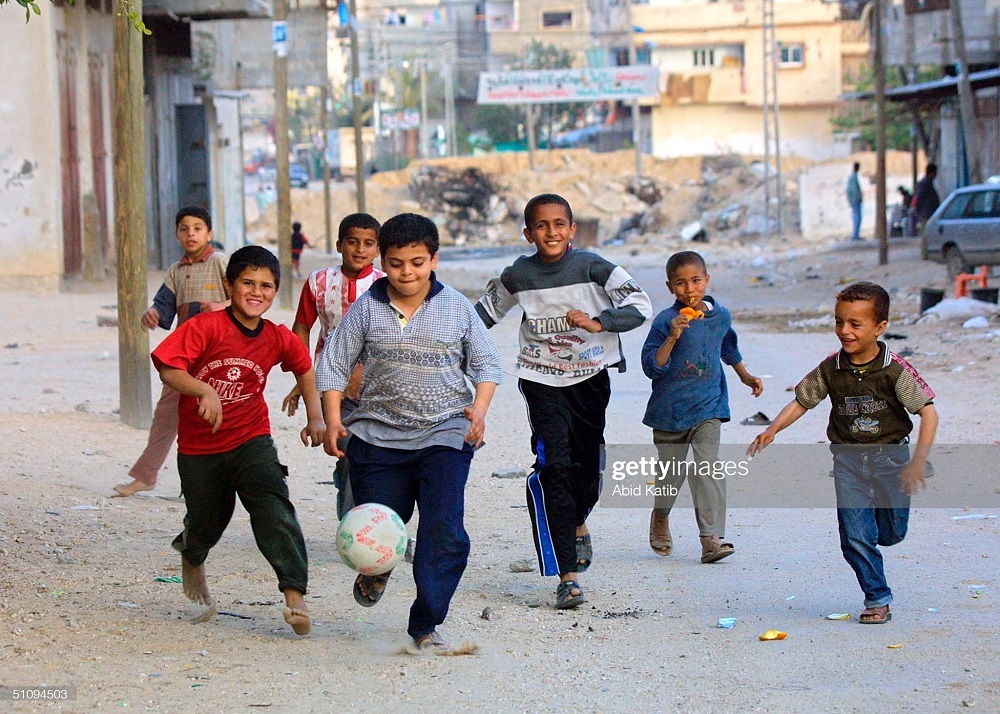
Palestinian Boys Play Game Of Soccer. (Photo By Abid Katib/Getty Images)

Bombs fall in Gaza as rockets target Israel.

Frustrated Arab rioters are met by extremist Jewish settlers.

And in the middle of it all, Danny Kopp sent his boys out to play soccer.

Numbers were down at the Jerusalem neighborhood park frequented by Jew and Arab alike, but his 13-, 10-, and 8-year-old sons still translated between the sides.

“These encounters, as small as they are, remind belligerents that coexistence is still viable,” said the chairman of the Evangelical Alliance in Israel.

“Wholesale vilifying is simply inaccurate.”

But it is easy to do, if attached to a favored narrative.

Since the outbreak of fighting on May 10, Israeli bombs have leveled almost 450 buildings in Gaza, including six hospitals, nine health centers, and the headquarters of the Associated Press. Hamas authorities count 232 dead, including 39 women and 65 children. More than 1,900 people have been injured, and 52,000 displaced from their homes.

But 160 of these have been militant fighters, said Israeli authorities. Hamas’s indiscriminate barrage has launched more than 4,000 rockets and killed 12 people—including two children—while injuring hundreds. Israel’s Iron Dome defense system has intercepted most rockets, but Iranian sponsorship of Hamas has led to a dramatic increase in missiles able to target Jerusalem.

Such long-range weapons represent 17 percent of the thousands of missiles fired this month. Nine years ago, they represented only 1 percent.

A ceasefire is now in place. President Joe Biden pledged to work through the United Nations and the Palestinian Authority to rebuild Gaza. The US would prevent such aid from restocking Hamas’s arsenal, while allowing the replenishing of the Iron Dome’s defenses.

The weapons evolve, though the animosity is familiar.

But what has shocked and saddened a dozen sources interviewed by CT—half Jewish and half Palestinian—is the ethnic violence that has torn through previously peaceful towns of coexistence. In Lod, Haifa, Nazareth, and elsewhere, Arab rioters have set 10 synagogues and more than 100 Jewish homes on fire, while looting or damaging hundreds more.

Israel called up 7,000 reservists to quell the violence. But reports say police have been far more lenient with Jewish settlers who have responded in kind, though with less damage. Video recordings, however, depict settler attempts to seize Arab Israeli properties.

The outbreak of violence is tied to Israeli legal proceedings to evict Palestinians from their homes in the East Jerusalem neighborhood of Sheikh Jarrah. The families have resided there for generations, and the land dispute has alternate explanations. Protests were met with violence, which then spread to the al-Aqsa Mosque. Hamas fired rockets in solidarity.

And amid the backdrop of this quagmire, Kopp sent out his children.

On Saturday, he preached the same message to his mixed Jewish-Arab Narkis Street Congregation in Jerusalem, asking his flock to purposefully hear both sides.

“Jesus constantly broke out of his information bubble,” he said, “engaging every kind of person imaginable and on a consistent basis.”

Across the separation wall, however, Munther Isaac’s Sunday sermon had a different tone. “What is required is not…”

This article was originally published at Christianity Today on May 20, 2021. Please click here to read the full text. Additional reporting by Jeremy Weber.

Categories
Americas Christianity Today Published Articles Religious Freedom

Just a Bill: Religious Freedom Consensus Rarely Voted into Law

Antony Blinken

Secretary of State Antony Blinken called out Saudi Arabia.

The Gulf kingdom “remains the only country in the world without a Christian church, though there are more than a million Christians living [there],” he stated yesterday.

Such high-level criticism of the key US ally is a departure from the foreign policy of the Trump administration, though the State Department has listed the oil-rich nation as a Country of Particular Concern on international religious freedom (IRF) since 2004.

Blinken also highlighted recent violations in Iran, Burma, Russia, Nigeria, and China. Positive developments were noted in Sudan, Uzbekistan, and Turkmenistan.

“Our promise to the world is that the Biden-Harris administration will protect and defend religious freedom around the world,” stated Blinken, releasing the 23rd annual International Religious Freedom Report, assessing the records of nearly 200 countries and territories.

“We will maintain America’s longstanding leadership on this issue, [and] we’re grateful for our partners.”

He named several entities, but one is glaring in its absence:

The US Congress.

Six years ago, 21Wilberforce, a Christian human rights organization, launched the International Religious Freedom Scorecard to hold America’s lawmakers to account.

“There is much room for improvement,” Lou Ann Sabatier, director of communication, told CT. “It is a long and arduous process for an IRF bill to become a law, and many do not make it out of committee.”

The latest scorecard, released this week and grading the two-year term of the 116th Congress, lists 91 legislative efforts in both the Senate and the House of Representatives.

Only two became law. The daughter of one of Congress’s chief IRF champions is not happy…

This article was originally published at Christianity Today on May 14, 2021. Please click here to read the full text.