Categories
Christianity Today Middle East Published Articles

Vulnerable Gulf Migrants Offered ‘God’s Karuna’ in Bible Society Outreach

Corona and God's Karuna

This article was first published at Christianity Today, on May 29, 2020.

There is no social distancing in a labor camp.

Living in cramped conditions, sometimes 10 to a room, migrant workers in the Gulf are widely considered among the international communities most vulnerable to the new coronavirus.

Seeking a share of the region’s petrodollars as remittances for their poor families and communities back home, migrant laborers far outnumber the Middle Eastern region’s citizen population—as high as 80 percent in the United Arab Emirates (UAE).

And hailing primarily from Asian nations such as the Philippines, Indonesia, and India, they make up the great majority of the region’s more than 200,000 confirmed COVID-19 cases.

Yet from one of their languages emerges a homonym that may birth hope for the languishing workers.

“It is not corona, but karuna, which means mercy in Telugu,” said Prasad, a migrant worker from India, to the Bible Society in the Gulf (BSG).

“God is giving us the opportunity to turn to Him.”

There are 20 million Indian migrants worldwide, and 1.5 million are Telugu speakers working in the Gulf states. Many have lost their jobs or had their salaries reduced due to the economic shutdown.

The Bible society seized on Prasad’s observation to publish a new booklet in Telugu and English, appropriately titled God’s Karuna.

Its content reflects the upside-down nature of the COVID-19 world—and of God’s kingdom. There are frequent references to…

Please click here to read the full article at Christianity Today.

Categories
Christianity Today Middle East Published Articles

GOD TV Dispute Has Israel Talking About Messianic Jews

God TV

This article was first published at Christianity Today, on May 22, 2020, in cooperation with the Associated Press. I contributed some additional reporting.

The Messianic movement, which emerged in its modern form in the 1970s, incorporates Jewish symbols and practices—including referring to Jesus by his Hebrew name, Yeshua—but is widely seen as a form of Christianity. All major Jewish denominations reject it, and Israel considers Messianic Jews to be converts to another faith.

Messianic Jews in Israel push back against the accusations.

“In Israel and in Jewish circles, conversion is a loaded word. It is understood as leaving something to become something else,” said Lisa Loden, co-chair of the Lausanne Initiative for Reconciliation in Israel-Palestine.

“Messianic Jews avoid the term, and maintain that they remain fully Jewish when accepting Yeshua as Messiah and Lord,” she said. “But the average Jewish Israeli does not distinguish between Jews who believe in Jesus and Christians.”

Both sides in the conflict are sincere, suggests Mitch Glaser, president of New York City-based Chosen People Ministries.

“GOD TV is attempting to honestly state what they are doing,” he said. “The religious Jewish people opposed to its Hebrew programming are trying to protect secular Jewish people from becoming converts, and therefore ‘lost’ to the Jewish community.”

Many Messianic Jews, however, are rejoicing at the opportunity to demonstrate their sincerity (of still belonging to the Jewish community) to their fellow Israeli citizens. Shelanu has stated 70 percent of its content will be locally produced.

And on a popular website for the community, some are even praising the “amazing free publicity.”

“If the show was produced by a US or European Christian organization, the argument is very strong that the aim is conversion,” said Jaime Cowen, an Israeli lawyer and former president of the Union of Messianic Jewish Congregations.

“The reality is that Jews believe all kinds of different things and are subject to all kinds of programming that pushes various views.

“This is a huge open door—as long as the government doesn’t shut it down.”

But this is exactly what one Christian Zionist has petitioned Israeli Prime Minster Benjamin Netanyahu to do, fearing that the GOD TV backlash will threaten Jewish-evangelical cooperation…

Please click here to read the full article at Christianity Today.

Categories
Africa Christianity Today Published Articles

Meet the ‘Gang Pastor’ Behind Cape Town’s Viral Coronavirus Cooperation

South Africa Gang Pastor
Courtesy of Andie Steele-Smith

This article was first published at Christianity Today, on May 21, 2020.

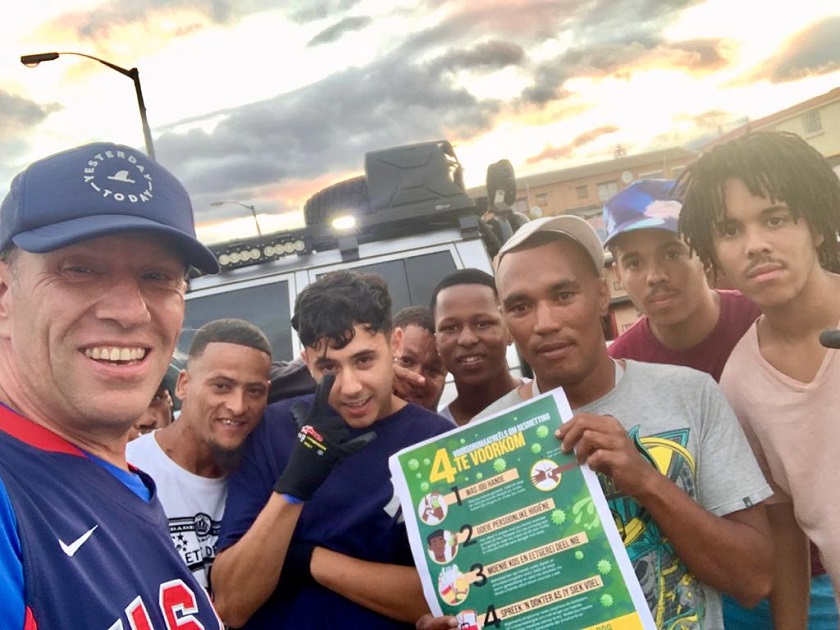
Somehow, an Australian-born investment banker in England went to South Africa and got mixed up with the “Americans.” The gang, that is, in one of Cape Town’s most dangerous shantytowns.

And with them, the Hard Livings and Clever Kidz.

Called by God into a life far from his Christian but comfortable existence, Andie Steele-Smith has recently won international acclaim as the “gang pastor” crossing rival lines. Serving the last five years in 2018’s second-highest homicide city, he has led murderers and drug lords to cooperate amid the coronavirus pandemic as a new distribution network for soap and emergency food delivery.

In addition to endemic crime, Cape Town counts 10 percent of the confirmed COVID-19 cases in all of Africa, and 60 percent of South Africa’s cases.

With both mass media and the masses desperate for good news amid the pandemic, his story has been told by the Associated Press, the BBC, CBS News, and even earned a quip (at the 12:30 mark) on Comedy Central’s The Daily Show with Trevor Noah, himself a South African from Johannesburg.

CT spoke with Steele-Smith, who attends Hillsong’s Cape Town campus, about his calling, the spiritual impact of his ministry, and whether “15 minutes of fame” makes the situation better or worse:

You started out as a successful investment banker. How did you end up in South Africa?

I grew up in a strong Christian home and church, but until I was about 40 years old, my life was all about building my own empire.

Around 12 years ago, I visited San Diego to buy a coffee company. Invited to what I thought was a megachurch, little did I know…

Please click here to read the full article at Christianity Today.

Categories
Christianity Today Middle East Published Articles

Why We Opened a Christian University in Iraq Amid ISIS’ Genocide

Catholic University of Erbil
The Catholic University of Erbil (courtesy CUE)

This article was first published at Christianity Today, on May 7, 2020.

For 25 years, Stephen Rasche was a “bare knuckles” international lawyer. But in 2010, he offered his services to the Chaldean Catholic Church of Erbil in Iraqi Kurdistan and has increasingly dedicated his life to the preservation of this ancient community.

Under the leadership of Archbishop Bashar Matti Warda, in 2015 Rasche helped found the Catholic University of Erbil, where he serves as vice chancellor. Also the director of its Institute for Ancient and Threatened Christianity, Rasche lived this title as ISIS ravaged Iraq’s Christian homelands in the Nineveh Plains and many believers fled to Erbil.

After testifying on their behalf before the United Nations and the US Congress, Rasche allows them to represent themselves in his recent book, The Disappearing People: The Tragic Fate of Christians in the Middle East. The book has won a diverse range of endorsements, from leaders such as Matthew Hassan Kukah, bishop of the Catholic Diocese of Sokoto, Nigeria; Yahya Cholil Staquf, general secretary of Nahdlatul Ulama, the largest Muslim organization in the world; and Thomas Farr, president of the Religious Freedom Institute.

The US State Department’s Office of International Religious Freedom reports that less than 250,000 Christians are living in Iraq, most in Kurdistan or on the Nineveh Plains. Two-thirds belong to the Chaldean Catholic Church.

CT interviewed Rasche about the logic of establishing a university during a genocide, how its Catholic identity functions in a Muslim society, and his enduring optimism for Christianity in Iraq.

What led you personally to invest your life in this endeavor?

In 2010, Bishop Warda had just been made archbishop, and I went to pay him a visit of respect, asking if there was anything I could do to help. “Yes, in fact,” he said. “You Americans have made a big mess here, and you could stay and help me. I have 3,000 displaced families here from the south, they need help, and no one is helping us with them. We don’t have jobs for them, and there’s a whole range of things I would like to do.”

I assisted on and off on a pro-bono basis for the next four years, but by 2014 the situation looked really desperate. ISIS was maybe 30 miles away from Erbil. But in a visit just after Christmas, I sat down with the bishop and the priests who told me, “We are going to stay. Will you be with us here, and help us?”

Honestly, I was skeptical. But after some deep thinking, I tried to determine the right thing to do and if there was a calling in this for me.

Tell us more about that calling.

Being an international transactions lawyer involved a fair amount of bare knuckles litigation. And not a lot of it, quite frankly, was fulfilling…

Please click here to read the full article at Christianity Today.

Categories
Americas Christianity Today Published Articles

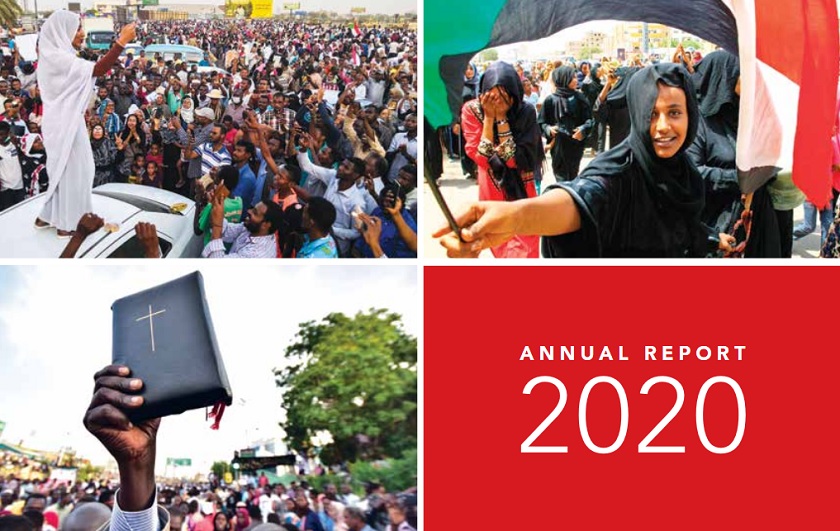
Report: ‘Tremendous Progress’ Ahead for Religious Freedom Worldwide

USCIRF 2020

This article was first published at Christianity Today, on April 28, 2020.

A new report aims to “unflinchingly criticize the records of US allies and adversaries alike” on religious freedom.

And there’s a lot to report, with more headlines each month confirming the Pew Research Center’s 10-year analysis that government restrictions and social hostilities involving religion have reached record levels worldwide.

Today’s 21st annual report by the US Commission on International Religious Freedom (USCIRF) identifies significant problems in 29 countries—but sees “an upward trajectory overall.”

“Our awareness is going to grow greater, and the problem will appear more pronounced,” USCIRF chair Tony Perkins told CT. “But as we continue to work on it, I think we will see tremendous progress in the next few years if we stay the present course.”

Created as an independent, bipartisan federal commission by the 1998 International Religious Freedom Act, USCIRF casts a wider net than the US State Department, which annually designates Countries of Particular Concern (CPC) for such nations’ violations of religious freedom, or places them on a Special Watch List (SWL) if less severe.

Last December, Secretary of State Mike Pompeo announced CPC status for Burma, China, Eritrea, Iran, North Korea, Pakistan, Saudi Arabia, Tajikistan, and Turkmenistan.

USCIRF now recommends adding India, Nigeria, Russia, Syria, and Vietnam.

And where the State Department put only Cuba, Nicaragua, Sudan, and Uzbekistan on the watch list, USCIRF recommends also including Afghanistan, Algeria, Azerbaijan, Bahrain, Central African Republic, Egypt, Indonesia, Iraq, Kazakhstan, Malaysia, and Turkey.

USCIRF’s mandate is to provide oversight and advice to the State Department. Aiming to make its recommendations more easily accessible to policymakers, this year’s report limits country chapters to two pages each and adopts the same evaluative criteria as the State Department.

To qualify, a nation must engage in or tolerate “systematic, ongoing, and egregious” violations of religious freedom. CPC status requires all three descriptors, while SWL status requires two.

In previous reports, USCIRF used a “Tier Two” category requiring only one qualifier. As a result, Laos is no longer listed.

Following 11 commission field visits, 5 hearings, and 19 other published reports, USCIRF’S 2020 annual report calls attention to religious freedom violations against all faiths, including:

  • 1.8 million Muslims in Chinese concentration camps
  • 171 Eritrean Christians arrested while gathering for worship
  • 50,000 Christians held in North Korean prison camps
  • 260 incidents of religious freedom violations in Cuba
  • 489 raids conducted against homes of Jehovah’s Witnesses in Russia
  • 910,000 Rohingya Muslim refugees in Bangladesh
  • 1 million Muslim residents excluded from the National Register of Citizens in India
  • 37 Shi’a Muslim protesters executed in Saudi Arabia
  • 5,000 Baptist calendars burned by authorities in Turkmenistan

Perkins spoke with CT about how nations move up (e.g., India and Nigeria) or down (e.g. Sudan and Uzbekistan) between lists, why the State Department doesn’t accept all of USCIRF’s recommendations (but should), and whether he has hope for the future with violations at “a historical high in modern times.”

Roughly how many countries are on your studied list?

The ones that are listed are the ones that we look at. There has been discussion if we should add Venezuela. There have been a couple of others we have considered.

Examining “Country X,” how do you evaluate if and where it belongs on your lists?

First, we begin with the statutory definition of a Country of Particular Concern (CPC). Our mandate is to identify countries with systematic, ongoing, and egregious violations of religious freedom—whether it engages in or tolerates such behavior.

One thing to be cautious of is that we don’t rank countries. It is not a comparison. Country X and Country Y may both be CPC-listed, but be miles apart on the egregious nature of their violations. We look at each country separately.

It is based upon reporting that we can validate and verify; visits that we make to these countries; and hearings we hold with expert witnesses to come in and testify. It is a combination of factors, and quite frankly it is subjective.

We try to make it as objective as possible, but it is hard to quantify some things—though we do so to the degree we can.

What happens if you disagree about the designations?

The nine commissioners…

Please click here to read the full article at Christianity Today.
Categories
Christianity Today Middle East Published Articles

Cleared of Landmines for Easter, Jesus’ Baptism Site Now Closed by COVID-19

OLYMPUS DIGITAL CAMERA

This article was first published at Christianity Today, on April 17, 2020.

For over 50 years, Jesus’ baptismal site was a casualty of war.

Now, it is a casualty of the new coronavirus.

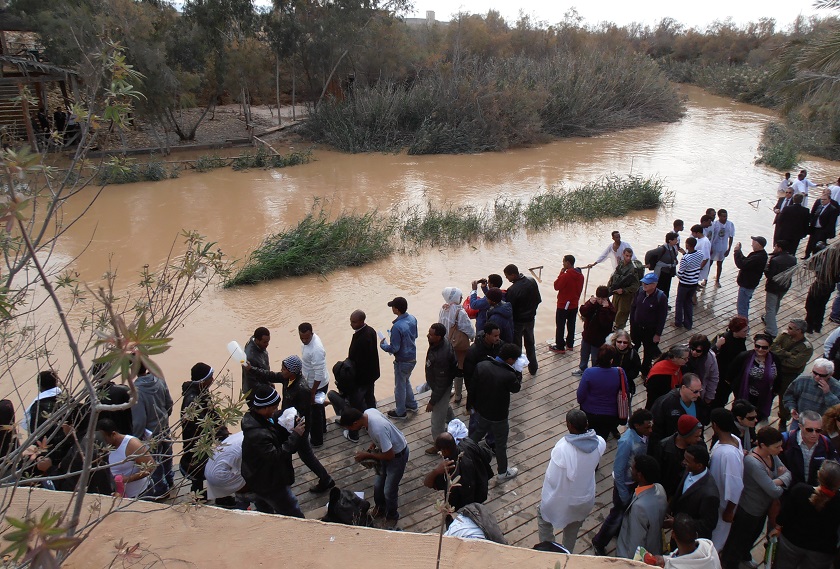
Last week in time for Easter, the UK-based demining specialist HALO Trust group exploded in chain reaction the final 500 landmines at Israel’s Qasr al-Yahud monastery complex.

“We got the churches together, all eight different denominations, and then we got the Israelis and the Palestinians,” HALO Trust CEO James Cowan told the BBC.

“So all three major faiths, and we looked at how we could do this.”

Located six miles east of Jericho on the Jordan River, “Bethany beyond the Jordan” in 1968 was placed by Israel under military jurisdiction following the Six Day War. Fearing terrorist infiltration across the shallow riverbed, the army laid over 6,000 landmines and booby-trapped the churches.

Israel declared peace with Jordan in 1995, but the area remained closed.

In 2011, it was partially reopened, allowing access along one narrow path between the Jordan River and the Greek Orthodox St. John the Baptist Monastery.

And in 2016, HALO Trust, which works in 27 nations around the world, announced…

Please click here to read the full article at Christianity Today.

Categories
Christianity Today Middle East Published Articles

The Holy Fire Must Go On

Holy Fire
Image courtesy of Cistern Films

This article was first published at Christianity Today, on April 10, 2020.

With the new coronavirus canceling Holy Week services around the globe, one of the most severe blows will be felt by Orthodox Christians. On the Saturday before Easter, which the Orthodox will observe on April 19 this year, thousands of pilgrims flock to Jerusalem’s Church of the Holy Sepulchre—the traditional location for Jesus’ crucifixion, burial, and resurrection—to witness the “miracle” of Holy Fire.

The historic church houses six ancient Christian sects—Greek, Franciscan, Armenian, Coptic, Syriac, and Ethiopian—which more or less cooperate in the administration of its affairs. By tradition, the Greek and Armenian bishops enter the tomb alone, but emerge with a divinely lit flame. The fire is shared candle-to-candle throughout the expectant and jubilant crowd.

Eventually it is transported to Greece in a special container, and then on to Serbia, Russia, and other nations in the Orthodox world.

Despite the social distancing restrictions in place due to the COVID-19 outbreak, Israel is nevertheless facilitating a scaled-back religious ceremony. And to avoid quarantine, foreign dignitaries will receive the flame at their airplane after it lands and immediately return home.

Mentioned obliquely in fourth-century sources, the first Western mention of the Holy Fire dates to Bernard the Wise, a monk from modern-day France who went on pilgrimage in 876 A.D. Disputed by many, its popularity with Orthodox communities worldwide makes the Holy Fire one of the world’s foremost Christian celebrations.

Local Christians are known to chant in Arabic: “We are the Christians, we have been Christians for centuries, and we shall be forever and ever. Amen!”

Filmmakers Reuben and Brittany Browning grew up in Israel and Palestine as children of Nazarene missionaries, traipsing around the holy sites. As adults…

Please click here to read the full article at Christianity Today.
Holy Fire is available for rent or purchase at Amazon and Vimeo. A teaser and trailer can be watched on Vimeo.

Categories
Christianity Today Middle East Published Articles

Arab Christians Have Lost Easter Before. Here’s What They Learned.

Losing Easter Churches
House of St Ananias, Damascus

This article was first published at Christianity Today, on April 3, 2020.

Christians around the world are about to lose their usual Easter celebration—the highlight of most congregations’ annual life together.

Yes, there will be a livestream. Their pastor will likely call them. They may even chat on Zoom with friends and family.

But it will be different. The community of believers has been sundered by the new coronavirus. And threatened with it is Christ’s body, his bride, his temple for his presence in the world.

If there is any consolation, it is that this is not the first time.

“There are forces of nature—and forces of man—that challenge our ability to experience the presence of Christ,” said Gregory Mansour, the Maronite bishop of Brooklyn.

“[COVID-19] is different from persecution. But it is the same.”

A born-again Catholic led into personal relationship with Christ by the Navigators, Mansour later reconnected with his ancient Lebanon-based church. His clerical colleagues there received thousands of ISIS-fleeing Christians from Syria and Iraq.

“There was a deliberate desire to obliterate churches, hymnals, prayers, and people,” he said. “The only thing we had left was…

Please click here to read the full article at Christianity Today.
Categories
Christianity Today Middle East Published Articles

Iran Releases a Third of Christian Prisoners Due to Coronavirus Concerns

Azadi Tower Iran

This article was first published at Christianity Today, on March 23, 2020.

Forced by the new coronavirus, Iran took the tiniest of steps to placate global advocacy for religious freedom.

A temporary release of about 85,000 prisoners to curb the spread of COVID-19 disease included Ramiel Bet Tamraz, an Assyrian Christian serving a four-month sentence for holding illegal church meetings.

He was one of seven Christians set free, some on bail.

The release—which also pardoned 10,000 prisoners in advance of this past weekend’s celebration of Nowruz, the Persian new year—did not include four Christians recently granted a retrial.

Ramiel’s father Victor was the pastor of the Assyrian Pentecostal Church of Tehran until 2009, when it was shut down by the government for holding services in Farsi, the Iranian national language. Arrested in 2014 for conducting services at home, in 2017 he was given a 10-year jail sentence. Released earlier on bail with his wife Shamiram, they are awaiting the outcome of court appeals.

Ramiel’s sister Dabrina has advocated for her family all the way to the White House.

“Raising awareness always helps,” she told CT, prior to her brother’s release. “When the US and international bodies speak out and address persecuted Christians, they have an enormous amount of influence.”

According to the latest annual report of violations against Christians in Iran, 17 believers ended 2019 in prison on account of their faith. Culled from public statistics describing sentences from 4 months to 10 years, the report—released in January and jointly produced by Open Doors, Article 18, Middle East Concern, and Christian Solidarity Worldwide—warned the true number could be much higher.

Open Doors, which ranks Iran No. 9 among the world’s worst persecutors of Christians, reports at least 169 Christians were arrested from November 2018 to October 2019.

Compared to those who decline advocacy, Dabrina said…

Please click here to read the full article at Christianity Today.

Categories
Christianity Today Middle East Published Articles

Despite a Murder and Visa Denials, Christians Persevere in Turkey

Turkey Korean Murder
Image: Source Images: Congin Kim / Annie Spratt / Unsplash

This article was first published in the March print edition of Christianity Today.

Five days after her husband’s murder, Jung Kyung-In named her newborn daughter “God’s Goodness”—in Turkish, not Korean.

Jung moved to Turkey with her husband, Kim Jin-Wook, in 2015. The Korean Christian couple found a place to live in an impoverished district of Diyarbakir in southeastern Turkey, 60 miles from the Syrian border.

Kim worked selling spices, but his real calling, as he understood it, was witnessing to the gospel. He took the Turkish name “Peace,” and his Christian friends in Turkey say he was a great evangelist.

“He shared the gospel in every corner of Diyarbakir without hesitation,” said Ahmet Güvener, pastor of the Diyarbakir Protestant Church, which has about 70 members. “He was not aggressive, but clear, and I think local people were uncomfortable with this.”

One day in November, Kim told Jung he was going out to evangelize. He was attacked on the street, stabbed twice in the chest and once in the back. Kim, 41, died of his wounds in a city hospital.

Authorities arrested a 16-year-old boy for the crime. He has allegedly confessed to the murder, saying he was trying to steal Kim’s phone.

Despite her grief, Jung saw this as an opportunity to testify. She wrote a letter to the boy accused of killing her husband.

“I do not understand why you did this, but I cannot be angry at you,” she wrote on her phone.

“Many people want the court to give you a heavy punishment. But I and my husband don’t want this. We pray that you become worthy of heaven, because we believe in the worth of people. God sent his Son Jesus, who forgave those who persecuted him. We also believe in that and we pray that you would also repent of your sin.”

Jung read the letter aloud to the local media. Her testimony was viewed online more than…

Please click here to read the full article at Christianity Today.
Categories
Africa Christianity Today Published Articles

Nigeria’s Government Agrees: Islamist Terrorists Target Christians

Nigeria Catholic March
Christians faithfuls march on the street of Abuja during a prayer and penance for peace and security in Nigeria in Abuja on March 1, 2020. – The Catholic Bishops of Nigeria gathered faithfuls as well as other Christians and other people to pray for security and to denounce the barbaric killings of Christians by the Boko Haram insurgents and the incessant cases of kidnapping for ransom in Nigeria. (Photo by Kola SULAIMON / AFP)

This article was first published at Christianity Today on March 2, 2020.

The Nigerian government now agrees with what church leaders have been complaining for years: Christians are the target of jihadist terrorism.

“In the wake of a renewed onslaught by our tireless military against Boko Haram and their ISWAP (Islamic State West Africa Province) allies in recent times, the insurgents have apparently changed their strategy,” said Lai Mohammed, the minister of information and culture, at a press conference last week.

“They have started targeting Christians and Christian villages for a specific reason, which is to trigger a religious war and throw the nation into chaos.”

In comments given exclusively to CT, the administration of President Muhammad Buhari clarified that this targeting is not new.

“Yes, Boko Haram is targeting individual Christians. In doing so, their target is all Nigerians, and their goal is to divide Christian brother against Muslim brother,” Mohammed, the information minister, told CT.

“What Boko Haram seeks—and always has sought—is to drive a wedge between Christians and Muslims in Nigeria.

“By targeting Christians, they seek to promulgate the falsehood that…

Please click here to read the full article at Christianity Today.

Categories
Christianity Today Europe Published Articles

Christians Defend Cultural Heritage in Muslim-Majority Countries

khachkars

This article was first published in the November 2019 print edition of Christianity Today.

Dozens of men with sledgehammers pound slabs of stone in an otherwise empty mountainous field. Filmed in 2005 by the prelate of northern Iran’s Armenian church, Bishop Nshan Topouzian, the clip purports to show the destruction of khachkars, ornately carved headstones from a Christian graveyard, some dating back to the 6th century.

The site is in Nakhchivan, an enclave of primarily Muslim Azerbaijan geographically separated from the country by primarily Christian Armenia. Iran shares its southern border in the ethnically tangled web of states that make up the Central Asian Caucasus. Russia is to the north, Turkey to the west.

The destruction of more than 2,000 khachkars—in addition to 89 churches, 5,480 cross stones, and 22,000 tombstones—has been labeled “the greatest cultural genocide of the 21st century” by Simon Maghakyan, an Armenian American activist and scholar whose research was profiled in the Guardian. He believes the move represents a campaign by the Azerbaijani government to wipe out its Christian heritage.

“The destruction of these khachkars seems to match in scale and tragedy ISIS’ destruction of Palmyra in Syria and the Taliban destruction of the Bamayan statues in Afghanistan,” said Wissam al-Saliby, advocacy officer at the United Nations for the World Evangelical Alliance.

“This issue goes beyond religious freedom. It is the heritage of mankind.”

But Azerbaijan denies Armenians ever lived in Nakhchivan, and cites similar cultural cleansing…

Please click here to read the full article at Christianity Today.

Categories
Christianity Today Middle East Published Articles

Closing the Bible Gap in the Gulf

Bible Engagement Gulf
Image: Illustration by Rick Szuecs / Source Images: Pexels

This article first published at Christianity Today, on February 5, 2020.

Joining 80 leaders from 24 countries in Washington, DC, last September, the World Evangelical Alliance (WEA) announced 2020 to be the Global Year of the Bible.

“Ignorance of Scripture is ignorance of Christ,” said WEA general secretary Ephraim Tendero. “In contrast to the sacred writings of many other traditions, the Bible is meant to be read and understood by all people.”

But what if they cannot read? This is the case for up to 40 percent of the 1.5 million Telugu-speaking workers in the Gulf states. Having dropped out of school in their native India, these migrants find that the crowded labor camps of the United Arab Emirates (UAE) and Bahrain offer the best opportunity to support their families back home.

But having come to the glitzy Gulf to gain a meager share of petrodollars, many find also the spoken—and storied—words of Jesus.

In 2019, the Bible Society of the Gulf (BSG) was awarded “Best Mission Project” by the United Bible Societies (UBS). Honored in the category of “Focusing on Audiences,” BSG’s pioneering audio and storytelling work among illiterates distinguished it among the 159 UBS branches worldwide.

“We help migrant workers rediscover themselves as children of God,” said Hrayr Jebejian, BSG general secretary. “Through the faith and hope of scripture, they gain the strength to navigate their many challenges.”

Jebejian’s book, Bible Engagement, noted during the UBS ceremony, described the long working hours, high rates of suicide, and…

Please click here to read the full article at Christianity Today.

Categories
Christianity Today Europe Published Articles

Religious Freedom Comes to Europe’s Second-Newest Nation. But Christians Are Concerned.

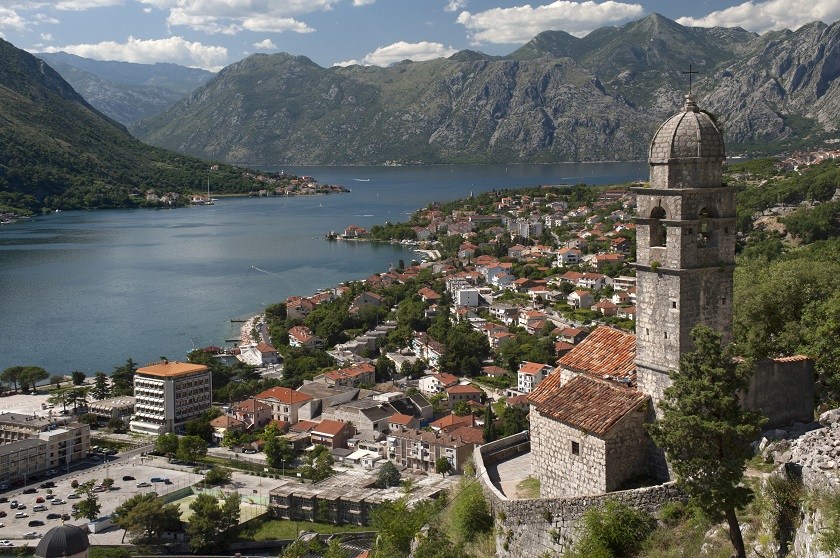
"Crkva Gospa od Zdravlja" church, Kotor bay, Montenegro.
Orthodox Church in Kotor Bay, Montenegro

This article was first published at Christianity Today, on February 4, 2020.

Deep within the Orthodox heartlands of the Balkans, one might expect local evangelicals to celebrate the passage of Montenegro’s first religious freedom law.

Instead, as tens of thousands fill the streets to protest against it, the relative handful of believers find themselves on the sideline of a struggle between giants.

And the stakes could further shake the greater Orthodox world.

Europe’s 6th-least evangelical country is also one of its newer nations. Having achieved independence from Serbia in 2006 through a tightly contested referendum, Montenegro is now seeking autocephaly—spiritual independence—for its local Orthodox church, viewed as a schism by the Serbian Orthodox.

Protests have erupted in Belgrade also, with thousands rallying last month against Serbian “suffering” in Montenegro and other neighboring nations. Crosses, icons, and church banners peppered the demonstrations.

But in Montenegro, rather than waiting for a liberating tomos (decree) similar to the one issued to Ukraine by Archbishop Bartholomew of Constantinople, who is the ecumenical patriarch for Eastern Orthodox communities, the government is acting to register all of its religious communities.

The protesting ethnic Serbian citizens of Montenegro fear the religious freedom law is nothing but a trojan horse for an elaborate ecclesiastic land grab targeting Serbian Orthodox Church properties.

“The law is a step forward, as it helps us ‘small religious communities’ have a legal basis to operate,” said Sinisa Nadazdin, pastor of Gospel of Jesus Christ Church located in the capital city of Podgorica and one of the nation’s five registered evangelical churches.

“But none of us want to enjoy this benefit if it will create in Montenegro…”

Please click here to read the full article at Christianity Today.

Categories
Africa Christianity Today Published Articles

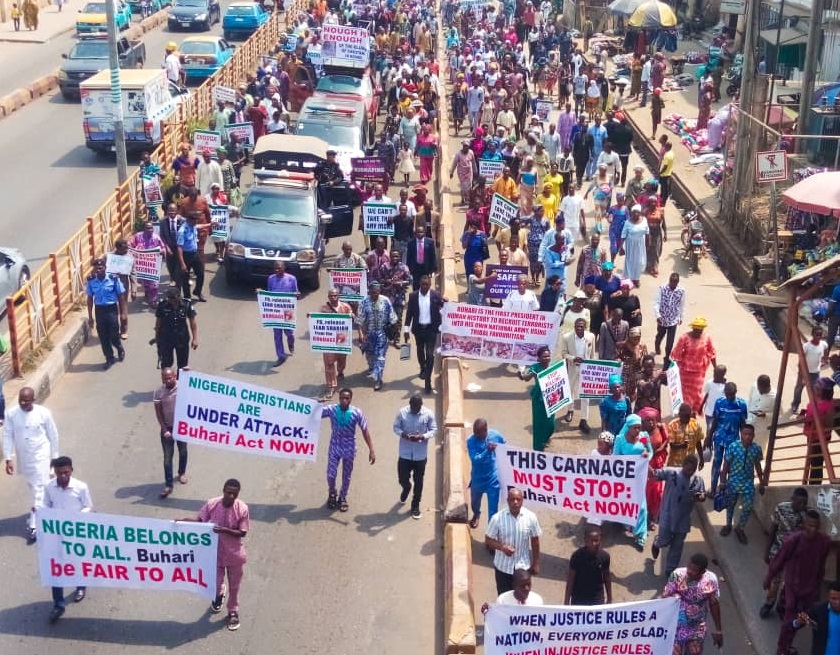
Nigerian Christians Marched Sunday to Protest Persecution

WhatsApp Image 2020-02-03 at 8.53.31 PM
Courtesy of CAN

This article was first published at Christianity Today on February 3, 2020.

Having finished his Sunday sermon from Psalm 18 on God as a stronghold who delivers his people from their enemies, Enoch Adeboye then led them to a cemetery.

It was an ironic yet appropriate choice.

Wearing a bright green tuxedo, the General Overseer of the Redeemed Christian Church of God (RCCG) in Lagos, Nigeria, marched three miles yesterday holding a placard that declared: “All Souls are Precious to God.”

Adeboye and his congregation, one of the largest in the world, answered the call issued by the Christian Association of Nigeria (CAN) for a three-day fast this past weekend, concluding in a prayer walk. Based on reports from its state chapters and local media, CAN estimates 5 million people marched in 28 of Nigeria’s 36 states on Sunday.

“Though we have protested before, this event took a new dimension,” CAN president Samson Ayokunle told CT.

“With one voice, we said ‘no’ to killings, ‘no’ to security negligence, and ‘no’ to the persecution of Christians in Nigeria. It is a wake-up call to the government.”

Launched on January 29 to protest the beheading of Brethren pastor Lawan Andimi, the chairman of a regional CAN chapter in Adamawa state, by Boko Haram two weeks earlier, the prayer was also a protest at the Nigerian government’s failure to stop the abductions and killings.

Terrorist attacks, as well as clashes between mostly Muslim herdsmen and mostly Christian farmers, resulted in more than 100 deaths in January alone.

“Lord, have mercy on Nigeria, let there be peace and security,” said Adeboye. “God sees all things and knows where the terrorists are hiding.

“We pray that God send his light to Nigeria and expose the evildoers in the country.”

In the perspective of CAN, these reach into the upper levels of government.

“O Lord, in Jesus Name, expose all the…”

Please click here to read the full article at Christianity Today, and here to read the op-ed submitted by Muhammadu Buhari, president of Nigeria.

Categories
Christianity Today Middle East Published Articles

13 Christian Takes on Trump’s Peace Plan for Israel and Palestine

Trump Peace Plan

This article was first published at Christianity Today, on January 28, 2020.

After three years of anticipation—and dread—President Trump announced the launch of his “Deal of the Century” to achieve peace between Israel and Palestine.

With Israeli Prime Minister Benjamin Netanyahu at his side, he outlined details for a proposal that would recognize a Palestinian state following extensive land swaps and security arrangements.

Palestinian Authority President Mahmoud Abbas was not present, having broken off communication with the White House following several US decisions deemed biased toward Israel.

Abbas immediately rejected the plan, which Palestinians had long declared “dead on arrival.”

But Netanyahu’s acceptance was enthusiastic, declaring himself willing to begin negotiations with the Palestinians on such terms. A day earlier, Netanyahu’s challenger Benny Gantz also signaled his party’s agreement with Trump’s proposal.

With three Arab states lacking a peace treaty with Israel in attendance—Oman, Bahrain, and the United Arab Emirates—Trump hopes there will be a regional push to implement his plan.

And with $50 billion promised as investment for the nascent Palestinian state, the president believes all the necessary pieces are in place.

“All previous generations from Lyndon Johnson tried and bitterly failed,” Trump said. “But I was not elected to do small things, or shy away from big problems.”

It only required he approach peace in a “fundamentally different” manner…


Following a summary the article includes the perspective of

  • Joel Rosenberg, co-founder of the Alliance for the Peace of Jerusalem
  • Salim Munayer, head of the Jerusalem-based Musalaha reconciliation ministry
  • Daoud Kuttab, a Palestinian journalist and secretary of the Jordan Evangelical Council in Amman
  • Hanna Massad, a Palestinian pastor who led Gaza Baptist Church for 12 years and returns regularly
  • Gerald McDermott, Anglican Chair of Divinity at Beeson Divinity School who recently wrote The New Christian Zionism: Fresh Perspectives on Israel and the Land
  • Yohanna Katanacho, a Palestinian pastor and academic dean at Nazareth Evangelical College
  • Lisa Loden, the Messianic Jewish co-chair of the Lausanne Initiative for Reconciliation in Israel–Palestine
  • Joel Chernoff, general secretary of the Messianic Jewish Alliance of America
  • Martin Accad, chief academic officer at Arab Baptist Theological Seminary in Beirut
  • John Hagee, the founder and chairman of Christians United for Israel
  • Todd Deatherage, cofounder and executive director of Telos Group, which seeks to build a “pro-Israeli, pro-Palestinian, pro-peace movement”
  • Wissam al-Saliby, the Geneva-based advocacy officer for the World Evangelical Alliance
  • Ibrahim Nseir, Syrian pastor of the Presbyterian Church of Aleppo

Please click here to read the full article at Christianity Today.

Categories
Christianity Today Middle East Published Articles

Soleimani’s Death Doesn’t End Iran’s Influence on Middle East Christians

Soleimani Funeral
(via Fars News Agency)

This article was first published at Christianity Today, on January 28, 2020.

Middle East Christians might shrug their shoulders. They might even fret and worry. But perhaps Qassem Soleimani got what he deserved.

“We regret what happened. We do not want anyone to die, because Christianity wants the good of all,” said Ashty Bahro, former head of the Kurdistan Evangelical Alliance.

“But a person leads himself to his own destiny.”

Soleimani, head of Iran’s special operations Quds Force, was killed by a US rocket strike on January 3. It was a rapid escalation following the Iran-linked death of an American contractor, a retaliatory attack on the responsible Iraqi militia, and the storming of the US embassy in Baghdad.

According to the US State Department, Soleimani, who reported directly to Iranian Supreme Leader Ayatollah Khamenei, was responsible for 17 percent of American deaths in Iraq from 2003 to 2011.

He also enraged Sunni Muslims by engineering the subsequent Iranian defense of Syria’s regime, led by President Bashar al-Assad. With Russia and the Iran-backed military wing of Lebanon’s Hezbollah, the shelling of rebel-held cities resulted in the displacement of thousands during Syria’s civil war.

But Soleimani was also acclaimed for his role in fighting ISIS, personally directing Iraqi militias from the front lines.

Thus, Middle East Christians have mixed feelings about his death—and the immediate aftermath.

Some Syrian believers see no benefit to anyone.

“Iran was working with the US government in certain agreements. Why did you destroy them?” asked Maan Bitar, pastor of the Presbyterian churches in Mhardeh and Hama, noting both the fight against ISIS and the nuclear deal.

“This will prompt a severe reaction that will hurt…”

Please click here to read the full article at Christianity Today.

Categories
Americas Christianity Today Published Articles

This Minnesota Monk Saves Middle East Manuscripts and Testifies to God’s Providence

Minnesota Monk
Image: Rui Ricardo / Folio Art

This article was first published in the December print edition of Christianity Today.

The shooting started right away. Columba Stewart had just touched down in Timbuktu when Islamist militants launched another attack.

The fighters were trying to retake control of Mali, after United Nations forces had pushed them back. As Stewart made his way through the ancient city in 2017, the rebels fired on security guards and the guards shot back.

Stewart was whisked to a safe room at the hotel. Waiting in the windowless interior room, he prayed. He sipped a little scotch. And he waited for hours. He knew what he had to do. Stewart is a monk—a Benedictine brother at St. John’s College, in Minnesota, part of the order that built libraries in the Middle Ages, preserving and reproducing Bibles by hand, along with psalters, books of martyrs, and Greek and Arabic philosophy.

So Stewart knew his responsibility in Timbuktu. He had to save the ancient manuscripts.

When the shooting stopped, Stewart spent the next two days training Malians to run a mobile digitization studio to preserve the more than 300,000 Islamic manuscripts that al-Qaeda might have destroyed.

“We don’t always know trouble is coming, but we have a history of being there just in time,” Stewart said. “People can say it’s serendipity, but I believe in providence.”

Stewart joined the Benedictines in 1981 and now serves at executive director of the Hill Museum and Manuscript Library (HMML) at Saint John’s. He has rescued documents in Lebanon, Syria, and Iraq, as well as Egypt, Ethiopia, and India—saving biblical texts and some of the most significant documents for the church in the Middle East, as well as Muslim texts.

Unlike manuscript hunters of the past, he leaves the treasure behind. He trains local leaders to…

Please click here to read the full article at Christianity Today.

Categories
Christianity Today Middle East Published Articles

The Top 50 Countries Where its Hardest to be a Christian

WWL-2020

This article was first published at Christianity Today on January 15, 2020.

Every day, 8 Christians worldwide are killed because of their faith.

Every week, 182 churches or Christian buildings are attacked.

And every month, 309 Christians are imprisoned unjustly.

So reports the 2020 World Watch List (WWL), the latest annual accounting from Open Doors of the top 50 countries where Christians are the most persecuted for their faith.

“We cannot let this stand,” said David Curry, president and CEO of Open Doors USA, during the 2020 list’s unveiling in Washington, DC, this morning. “People are speaking out and we have an obligation to hear their cry.”

The listed nations comprise 260 million Christians suffering high to severe levels of persecution, up from 245 million in last year’s list.

Another 50 million could be added from the 23 nations that fall just outside the top 50—such as Mexico, Chad, and the Democratic Republic of the Congo—for a ratio of 1 in 8 Christians worldwide facing persecution.

Last year, 40 nations scored high enough to register “very high” persecution levels. This year, it reached…

Please click here to read the full article at Christianity Today.
Categories
Africa Christianity Today Published Articles

Pastor Turns Terrorist Hostage Video into a Testimony

Nigeria Hostage Video

This article was first published at Christianity Today, on January 13, 2020.

A hostage video released last week by Boko Haram did far more than issue another Nigerian plea for rescue.

It revealed a modern-day Shadrach.

“By the grace of God, I will be together with my wife, my children, and my colleagues,” said Lawan Andimi, a Church of the Brethren in Nigeria (EYN) pastor in the troubled northeastern state of Adamawa. “[But] if the opportunity has not been granted, maybe it is the will of God.

“Be patient, don’t cry, don’t worry. But thank God for everything.”

It is testimony even to his captors, said Gideon Para-Mallam, the Jos-based Africa ambassador for the International Fellowship of Evangelical Students (IFES).

“This is completely different from most hostage videos,” he said. “[Andimi] appeared as one who has already conquered death, saying to his abductors…”

Please click here to read the full article at Christianity Today.