Categories
Christianity Today Middle East Published Articles

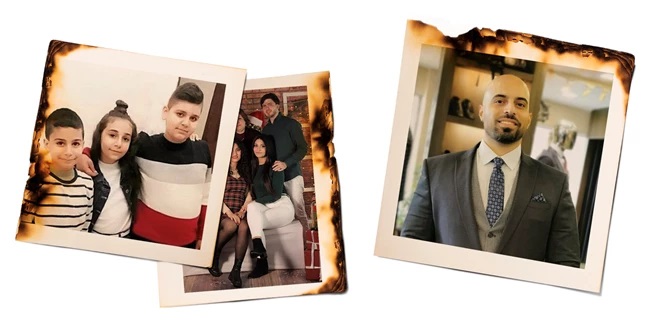
Pastor’s Family Trapped in Gaza Grieves Relatives Killed at Church

Image: Illustration by CT / Source Images: Courtesy of Hanna Maher

Trapped in Gaza, Janet Maher has not had a shower for two weeks. She feeds her three children one meal a day, often no more than bread and cheese.

Her cousin perished from damage caused by an Israeli missile, shielding his seven- and five-year-old boys from the collapsing wall at St. Porphyrius Orthodox Church. The two families had been sheltering together, and the younger boy was friends with her son in kindergarten.

But amid the horrors of life under siege, perhaps the worst is this: Janet’s husband is trapped in Egypt.

“I feel like Moses’ mother and sister after they put him in the bulrushes,” said Hanna Maher, former pastor of Gaza Baptist Church. “All I can do is watch from afar.”

Born in Sohag in Upper Egypt, Maher pastored the evangelical congregation from 2012–2020. Single upon arrival, he married Janet, daughter of an Orthodox father and Baptist mother, during his first year of service in Gaza. Though he was called to “the hard places,” ministry was taxing—as was navigating the permissions for complicated entry and exit procedures under Israeli occupation.

Since 2007, Israel and Egypt have imposed a blockade on the 140-square-mile coastal strip.

Every family vacation to Egypt began with the feeling that he should never return to Gaza. But until 2020, each trip ended with Maher’s renewed sense of commitment to mission. That year, he accepted the pastorate at the Presbyterian church in Beni Suef, 90 miles south of Cairo, and Janet—who had always desired to stay close to her extended family—felt at peace.

Maher did not. Three years later, with Janet’s blessing to renew his calling, he resigned from his position, and last May the family returned to Gaza. Since he is no longer a funded missionary, he used the extended vision trip to explore service opportunities apart from the pulpit. Contemplating an educational or small business development center, on September 28 he returned alone to Egypt to seek denominational partnerships.

Less than two weeks later the war began, with no one allowed in or out.

“I can’t concentrate, I have no energy, and I couldn’t sleep after the attack on the church,” said Maher. “I just watch the news and pray for my family.”

Much of his day is devoted to trying to call them. From morning until night he rings Janet’s cell phone, but with communication networks damaged in the bombing, it takes hours to get a connection. At best, they have a five-minute conversation—but are usually cut off after about 60 seconds.

Once, his son forced a reluctant chuckle: It’s fantastic, daddy, there is no school.

Maher’s smile passed quickly amid the morbid statistics. Over 8,000 people have been reportedly killed in Gaza, including at least 3,324 children, with another 6,000 children injured. The ministry of public works reported that 43 percent of all housing units have been destroyed or damaged, with more than 1.4 million out of a population of 2.2 million displaced from their homes.

And prior to Israel restoring flow to the second of three main water pipelines, water for drinking, cooking, and washing was estimated at 3 liters per day per person, far below the World Heath Organization recommendation of 100 liters.

Maher’s Tel al-Hawa neighborhood in Gaza City came under extensive Israeli bombing. Living near the al-Quds Hospital—accused of being a Hamas hideout—where about 10,000 displaced Gazans have taken refuge, Janet was unable to find food on the local grocery shelves.

Israel has accused Hamas of hoarding essential water, food, and fuel. Janet left to take refuge at the Greek Orthodox church five days after the war began, when…

This article was originally published at Christianity Today, on November 3, 2023. Please click here to read the full text.

Categories
Christianity Today Middle East Published Articles

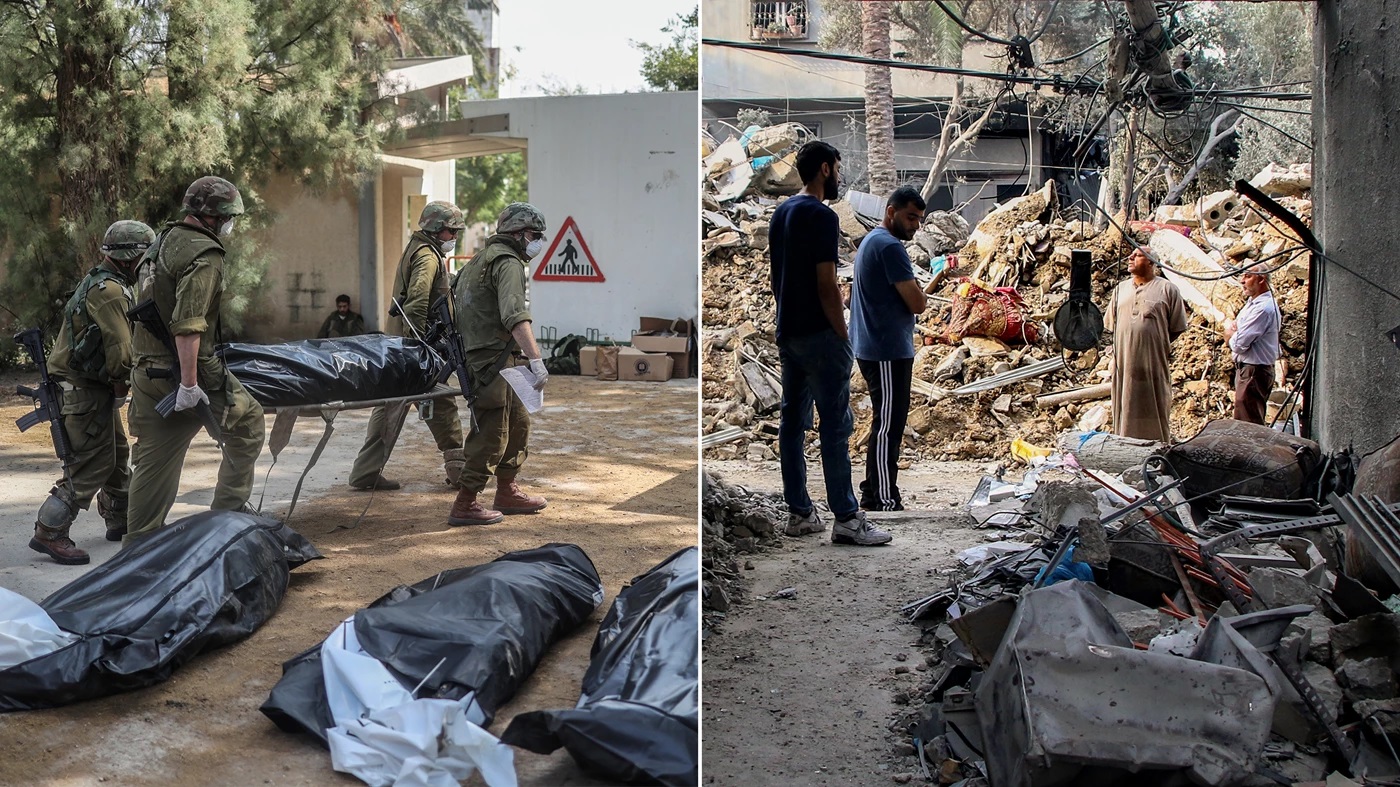
Palestinian Evangelicals Call Western Church to Repentance, Criticized in Return

Image: Ali Jadallah / Anadolu / Getty Images

Since the outbreak of war after unprecedented terror attacks on Israel by Hamas, Middle Eastern churches, councils, and leaders have expressed their outrage over the killing of thousands of innocent civilians.

Many Arab Christian groups have issued public statements. Most emphasized the Christian call to be peacemakers. Several have been criticized for what some see as calls not specifically addressing the suffering of civilian Jews targeted for death by terrorists.

Originating from Palestine, Egypt, Jordan, and Lebanon—with most prompted by the tragic bombing of the Anglican hospital in Gaza—the public statements range in focus and intensity. Some assert the international community overlooks the context of occupation by the Israeli state; others remind the global church of the continued Christian presence in the land.

CT studied texts from nine Arab and four Western organizations, most of evangelical conviction, and queried the perspective of an Israeli Messianic Jew and a Lebanese Armenian evangelical. The review found that few Middle Eastern statements have named Hamas as the perpetrator of terrorism, while many specifically criticize Israel itself.

One of the most recent statements is from Musalaha, which names both.

The Jerusalem-based reconciliation ministry works with Israelis and Palestinians from diverse religious backgrounds using biblical principles to engage the issues that divide them in pursuit of peace. After two weeks painfully watching the widespread carnage, its public statement centered on “lament” and called for a reconciling response.

“We lament people who, in the name of justice, have allowed rage to perpetuate the cycle of dehumanization and excuse bloodshed; as seen with Hamas’ attacks and the Israeli army’s response,” stated Musalaha. “We invite both Palestinians and Israelis to see the dignity and humanity of the other by non-violently co-resisting together for a better future.”

The region’s most representative Christian body, however, was bluntly specific about the suffering it asserts the Jewish nation-state is imposing on Gaza.

“What the Palestinian people are exposed to in Gaza is not a military reaction to a military action,” stated the Middle East Council of Churches (MECC), “but rather a genocide and ethnic cleansing, targeting the detainees of the largest prison in human history—and with premeditation.”

Its statement, the starkest of the nine Arab ones surveyed, called the war a “war of extermination,” and called for “all honorable people” to intervene.

Michel Abs, secretary general of the MECC, told CT he recognized that what he calls “the Zionist entity” was attacked and responded—and that it should have stopped there.

The MECC focused on denouncing Israel for cutting off water in the densely populated coastal strip, the destruction of medical infrastructure, and the collateral deaths of defenseless citizens. It called to stop the aggression, to lift the siege of Gaza, and to hold what Abs called “the occupying forces” accountable.

Member churches in the MECC include Catholic, Orthodox, and many Protestant denominations—most of which are called “Evangelical,” per local usage. Yet while “mainline” differences known in the American Christian landscape are not as distinct in the Arab world, the World Evangelical Alliance (WEA) incorporates bodies not represented in the MECC.

“We are generally in agreement [with the MECC statement], without necessarily adhering to each word,” said Paul Haidostian, acting president of the Union of Armenian Evangelical Churches in the Near East, a reformed church of pietistic expression and not a WEA affiliate. “But are there elements of extermination in the current war? I would think yes.”

Jack Sara, general secretary of the regional Middle East and North Africa evangelical alliance, helped craft the official WEA response to the “Holy Land conflict.” But he agreed with the MECC statement as well.

“With thousands of Palestinians dying nonstop, it clearly describes the facts on the ground,” he said. “If anything, it falls short in beseeching the world to intervene.”

Analysts have noted that Hamas embeds itself in civilian areas, and that the Israel Defense Forces (IDF) often issues warnings before striking residential structures. In preparation of an anticipated ground invasion, the IDF called on noncombatants to evacuate northern Gaza; Hamas told them to remain in place.

The United Nations, however, has stated that Gaza already represents a humanitarian catastrophe with more than 6,500 killed and a million displaced as of October 26, according to the Palestinian Health Ministry. Responding to Hamas terrorism and the deaths of 1,400 citizens, mostly civilians, Israel’s dilemma is stark, as the urban warfare necessary to pursue terrorist leaders in Gaza will further deteriorate local conditions and increasingly inflame much global opinion.

But watching many in the United States and wider evangelical world rally behind Israel, Sara’s Bethlehem Bible College (BBC) cosigned a Palestinian Christian statement of significant rebuke, calling “Western church leaders and theologians” to repent.

It opened by quoting the prophet Isaiah: Learn to do right; seek justice; defend the oppressed (1:17). “Western attitudes towards Palestine–Israel suffer from…

This article was originally published at Christianity Today, on October 27, 2023. Please click here to read the full text.

Categories
Christianity Today Middle East Published Articles

Amid Israel-Hamas War, Local Christians Seek Righteous Anger and Gospel Hope

Image: picture alliance / Ahmad Hasaballah / Stringer / Getty / Edits by CT

With at least 1,200 Israelis and 1,100 Palestinians slain, it is not simply the Israel-Hamas war’s stunning casualty total that has outraged the world, but also the brutality of Hamas.

More than 200 youth were killed at a concert festival, villages and farms were raided and terrorized, and an estimated 150 hostages have been threatened with death if Israeli air strikes on the coastal strip do not cease.

With such cessation unlikely, casualty numbers will most assuredly increase.

Israel has called up 360,000 reservists, poised to begin a ground campaign into Gaza. Consistent with military strategy to meet terrorism with overwhelming force, past conflicts in the beleaguered 25-mile strip have previously produced striking totals, including 2014 clashes that resulted in 73 Israeli and 2,100 Palestinian deaths.

All the while, many Israelis have lived in fear. Since the September 2005 unilateral Israeli withdrawal from Gaza, the Jewish Virtual Library has counted 334 terrorism deaths and at least 20,648 rockets and mortars launched into Israeli territory.

Amid the stark tallies, there are signs of balance between local believers across the ethnic divide. Christianity Today interviewed three Messianic Jews, three Palestinian evangelicals, and two Gazan Christians currently outside their native strip.

Shared astonishment

“The level of hatred and evil displayed in these acts is truly shocking,” said Eli Birnbaum, a branch director for Jews for Jesus in Tel Aviv and Jerusalem. “It is unlike anything we have seen in decades and has deeply shaken the population.”

Attacks in his neighborhood have been so intense, he said, that people are remaining indoors. In constant communication with family, friends, and 50 full-time staff members, he said his community is doing its best to stay connected and offer encouragement.

On the Saturday of the attack, Birnbaum’s congregation came together to pray. Unsure of what to do, they distributed prayer sheets for the safe return of hostages. Some members simply lit candles.

Jews for Jesus collected supplies for displaced families and soldiers at the border.

At least one Messianic Jew has died for his nation. David Ratner was called a war hero by his commander, saving the lives of five fellow soldiers as their post was stormed by 400 Hamas fighters. Shot in the neck, he continued in combat for the next eight hours.

Birnbaum counseled his children to stand strong against the desire for hatred. He challenged Israelis to seek justice without vengeance. And he asked everyone to remain genuinely concerned for Jew and Palestinian alike—while praying for Gaza and its liberation from Hamas.

“What can we do to represent the Lord as our nation is in crisis?” he asked. “Please pray for us, that we choose wisely how to shine his light in a very dark place right now.”

Grace Al-Zoughbi, a Palestinian theological educator, is also searching for his light.

“The church is trying to cling to any glimmers of hope it can find,” she said. “The situation is deeply disturbing, the atrocities appalling.”

She also was shocked by rocket fire, landing from the opposite direction near her home in Bethlehem. Families rushed to the grocery store to stock up on goods, fearful of escalation. Representative of an already struggling population under lockdown, she said the loss of tourism will further devastate the economy as the church seeks to help as much as possible.

Its immediate reaction was fervent prayer to end the conflict.

“Lord, take all the evil, smash it as glass, and grind it to nothing,” Al-Zoughbi pleaded. “In this we hold our hope, that one day soon your ways will prevail.”

She asked believers on both sides to be peacemakers. She asked international Christians to avoid “evil misrepresentations.” And for herself, she focused on Psalm 122: Pray for the peace of Jerusalem. May all who love you be secure.

Shared distance

Hanna Massad, the former pastor of Gaza Baptist Church, turned himself to the terse psalm that follows: Have mercy on us, Lord, have mercy on us, for we have endured no end of contempt (123:3). Following 30 years of service as the first locally born pastor…

This article was first published at Christianity Today on October 11, 2023. Please click here to read the full text.

Categories
Christianity Today Middle East Published Articles

Fruitful and Multiplying: 9 Visions for Evangelical Ministry in the Middle East

Image: Courtesy of Thimar-LSESD / Edits by CT

Middle East evangelicals must emulate China.

So stated Nabil Costa, chief executive officer of the Lebanese Society for Education and Social Development (LSESD), at his organization’s 25th anniversary celebration, held last week [Oct. 27] at LSESD’s Beirut Baptist School (BBS).

He was not calling for a change in geopolitical orientation. On the contrary, in attendance were dozens of financial partners primarily from Western nations he would not wish to offend.

But Costa continued, praising India and Saudi Arabia.

“Our vision is to equip churches to bear the thimar of faith,” he said, using the Arabic word for biblical fruit, “in the midst of a changing Arab world.”

BBS was founded by Baptist missionaries in 1955, who yielded their various ministries to local believers in 1998. Honoring their heritage at the gathering entitled “Celebrating Together,” Costa also announced LSESD’s name change to Thimar–LSESD, reflecting the spiritual impact of ministries in education, relief, special needs, community development, and publishing.

But speaking on behalf of the oft-called “Baptist Society,” he invited a wider evangelical collaboration.

“Christians are meant to be catalysts and have a responsibility in building bridges, reconciling communities, and spreading the perfume of Christ,” Costa said of the many regional like-minded evangelical ministries. “We see Lebanon as a hub and a gateway to the Middle East.”

China’s Belt and Road Initiative is a model, he said, as is India with its planned regional “economic corridor” and Saudi Arabia with its developing megacity of NEOM. If these nations recognize the importance of networks and cooperative partnerships—with “different hidden agendas”—Costa said evangelicals can do no less. And Lebanon, despite all its problems, is still a haven of religious freedom.

Some attendees thought the Middle East was headed toward greater regional integration and peace. Others doubted, anticipating renewed emergence of Christian persecution. But many took seriously Costa’s call to turn the conference into a think tank, casting vision for the next 25 years of evangelical service.

“The world around us is changing. We cannot sit still and watch,” he said. “But we are blessed with a ‘spiritual belt’ that forges corridors between continents and countries. Our Lord Jesus Christ has brought us from all over the world, to be one people.”

And to produce “fruit.” CT spoke with seven Arab and three Western attendees, for their vision of Middle East ministry to come.

Rosangela Jarjour, general secretary for the Fellowship of Middle East Evangelical Churches:

Our Lord Jesus commissioned his church with two golden words: preach and teach. While many congregations have communicated the gospel to the world, a neglected aspect of evangelical ministry has been the spiritual formation of disciples. Establishing the kingdom of God demands more than simple conversion.

In fact, when Paul addresses Timothy in his second epistle (2:2), he envisions four generations of impact. And his strategy is clear: hear, witness, entrust, teach. This is the “good fight” necessary, he adds two chapters later (4:7–8), to achieve the crown of righteousness.

In this advice, I address all Protestants in our region—Presbyterian, Baptist, charismatic, and others—for all call themselves “evangelical.” In the next 25 years, in unity together, our ministries must rededicate themselves to the task of discipleship, so that believers old and new will pass on their faith to the next generation of the Middle East church.

Stephanie Haykal, volunteer at Kafr Habou Baptist Church in Lebanon:

While evangelical ministry in the Middle East has been growing and strengthening, sometimes it appears to take on the appearance of a business. And as one from the north of Lebanon, it seems that many of our efforts are concentrated in Beirut and other big cities, while our local needs are neglected.

This is…

This article was originally published at Christianity Today, on October 6, 2023. Please click here to read the full text.

Categories
Christianity Today Europe Middle East Published Articles

Shaken Yet Stirred: Turkish Christians Advise Moroccan Church on Earthquake Aid

Image: Courtesy of First Hope Association (FHA)

Help for Morocco is coming from Turkey. While humble in scope, the biggest impact may be on the church.

First Hope Association (FHA), a Turkish Christian disaster relief agency that provided aid after the massive earthquake that struck southeast Turkey in February, was granted permission to assist in Morocco after its own devastating quake. A four-person team arrived in Marrakesh last week.

Consistent with its Turkish policy, FHA serves all victims without discrimination, in cooperation with the local church. Connecting with a house church network in southern Morocco, the Turkish believers have distributed $30,000 worth of clothes, blankets, and hygiene kits in four mountain villages not yet reached by other aid.

“Our country has gone through the same hardships and difficulties, so we came to help and support,” said Demokan Kileci, FHA board chairman. “This is an amazing opportunity for God’s church here to show his compassion and love.”

In many ways, the parallels are striking.

Morocco and Turkey are both Muslim-majority nations, and they both have small Protestant communities that largely emerged from an Islamic background. The churches in both nations suffered in their respective earthquakes but also rallied support to aid in overall relief. And while enduring varying degrees of ostracism, the believers’ solidarity with fellow citizens has begun to win each a slowly increasing level of social respect.

“Their expression of love was immediate, without any thought of self,” said Tim Ligon, pastor of Marrakesh International Protestant Church, of the local believers he has partnered with in relief. “They counted no cost but responded with everything they had.”

But there is one major difference between the nations: Morocco does not recognize an indigenous Christian faith, while Turkey affords its people freedom of religion—including religious conversion.

Turkish Christians shared their story of faith to CT in hope that the small believing community in Morocco might profit from their experience. For there is another parallel between the nations that Turkish Protestants have taken significant steps to overcome: a history of internal division.

“The Bible tells us that spiritual power comes in unity,” said Ali Kalkandelen, president of Turkey’s Association of Protestant Churches (TeK). “It won’t be easy, but if Moroccan believers support one another and see the church as one body, the Lord will bless them, and fruit will come.”

Moroccan sources uniformly told CT about their love for Jesus and respect for King Mohammed VI, the Moroccan monarch and head of state. They also would like to see their faith recognized equally alongside Islam and Judaism.

But beyond these shared views, the sources had many different perspectives.

Some spoke of a government that discriminated against them and would not help displaced Christians. Others said the government was helping everyone and generally left the believers alone.

Some said their witness employs the Arabic word for “Lord” to hint at their distinction from Islam. Others said they say “Allah” to connect with normal Muslim use. Some distribute literature; others foreswear it as illegal. Some speak of their Christian faith to the media; others are suspicious of those who make it public.

Some said there was good cooperation between Moroccan churches and that donations should go to local believers working in the field. Others said there was distrust between the churches and that donations should be given through the national bank.

In some sense, each of these perspectives could be true. Experiences differ, as do theology and outlooks on mission. But there are Christians who exaggerate their earthquake and overall ministry for the sake of financial support, said some, while others said there were self-professed “Christians” who were not true believers at all. To any who would criticize, Jack Wald counseled…

This article was originally published at Christianity Today, on September 27, 2023. Please click here to read the full text.

Categories
Christianity Today Middle East Published Articles

Morocco Earthquake Moves Marginalized Churches to Christian Charity

Image: Carl Court / Getty

Local and foreign Christians have joined in relief efforts following last week’s massive earthquake in Morocco.

Nearly 3,000 people have died, with more than 5,000 injured. Registering 6.8 on the Richter scale, it is the North African nation’s most powerful quake since 1969 and its deadliest since 1960.

But far from the epicenter near the historic city of Marrakesh, gathered believers all had the same question.

“No one ever asks of disasters, ‘Why did it happen to them?’” said Youssef Ahmed, a senior member of Tangier Northern Church, 350 miles away. “But when it hits you, everyone wants to know God’s will.”

The house church service went much longer than usual.

Although Morocco only recognizes Islam and Judaism as domestic faiths, local believers generally say the government permits them to worship quietly in their homes—under a protective but thorough surveillance. Alcohol and pork, forbidden by sharia, are also freely available in the country. About 15 percent of citizens declare themselves nonreligious, while only 25 percent express trust in clerical leadership.

“We are not restricted in Morocco,” said Ahmed. “Just don’t be a nuisance.”

The latest US State Department report on Morocco indicates that, while “undermining the Islamic religion” is punishable with up to five years in prison, there are no known cases of Christians running afoul of the law.

But that Sunday, the former Muslims had other concerns on their mind.

“Why did it happen? We cannot know. Was it because of sin? We cannot know. Was it a test, like with Job? We cannot know,” said Ahmed, who led the lengthy discussion. “All we know is that God allowed it to happen, and his ways are righteous. We keep our faith in him.”

Encouraged in their walk, they went out to serve.

The congregation is a part of the 36-member Union of Christian Churches, which Ahmed founded in 2010. Congregants traveled south with supplies to see what they could do.

Attempting to reach isolated villages in the Atlas Mountains, where many mud-brick homes were destroyed, they were turned back by roadblocks which permitted only relatives to enter. Continuing on to Jemaa al-Fnaa Square in Marrakesh, they encountered a mass of humanity camped out in fear of continuing aftershocks. They quickly joined in with the multitude of Moroccans—and tourists—distributing water and blankets.

Much of the 9th-century UNESCO World Heritage site was undamaged, including the medieval Kotoubia Mosque which overlooks the square. But a less famous minaret had collapsed, as had portions of the 12th-century city wall. Badly damaged also was the earth-and-stone Tinmel Mosque, built by the Almohad dynasty in an Atlas Mountain valley 60 miles away before the Berber caliphate conquered Marrakesh and moved onward to Spain.

One Moroccan pastor estimates the church today is…

This article was originally published at Christianity Today, on September 15, 2023. Please click here to read the full text.

Categories
Christianity Today Middle East Published Articles

From Dust to Lunch: Jordanian Christians Decry Cost of Funeral Feast

Image: Mohammad Abu Ghosh / AP Images

To honor the dead in Jordan, one must feed the living. But in solidarity with the poor, leading Christians are calling for a change in funeral customs.

Shared with wider Muslim society, certain Christian practices are similar to Western norms.

Upon the announcement of death, the bereaved family makes arrangements through the church to conduct a memorial service. The casket is then conveyed to the cemetery, where hymns are sung and the traditional “dust to dust” is prayed over the loved one. And in somber conclusion, a line of condolences forms as the pastor or priest extends the family invitation to take part in a luncheon of remembrance.

But in Jordan, this may involve up to a thousand people.

“Culture requires that if you attend my funeral, I will come to yours,” said Nabeeh Abbassi, president of the Jordanian Baptist Convention. “But that is a lot of food, and increasingly, many cannot afford it.”

An average gathering is between 300 and 600 people, he said. It includes immediate family, extended relatives, and almost all residents of the village or city quarter. In a culture of honor and shame, it would be a great insult not to share in a neighbor’s grief.

The meal is the Jordanian national dish of mansaf, lamb meat served with rice and topped with nuts and a sauce of fermented dried yogurt. The dish is presented on large circular trays, and mourners gather by gender to eat with their right hands while standing.

When Abbassi’s mother died nine years ago, 500 people came to honor her life. Expenses nearly reached $10,000, with only $1,500 due to the funeral. Like many Jordanians, he contributed to a monthly family allotment to cover such costs. But at the time of the funeral, the savings totaled only $700, which the five siblings decided to give to their father.

Generations ago, Abbassi explained, tribal culture involved relatives and clan members coming from great distances for a three-day period of mourning. Before the age of automobiles and restaurants, the hosting family provided hospitality for their guests—but each came with a contribution of coffee, rice, or sugar, with many bringing a live lamb to slaughter. Often, they left behind an excess.

“We keep some of the culture, but neglect the best of it,” Abbassi said. “Living in the 21st century, we are burdened by the 20th—it doesn’t make any sense.” He advises…

This article was originally published at Christianity Today, on September 7, 2023. Please click here to read the full text.

Categories
Christianity Today Middle East Published Articles

Christians Could Change Adoption Laws in the Middle East. Will They?

Image: Associated Press

The orphanage was a great mercy for Amir.

The 14-year-old Jordanian boy, whose last name is being withheld because he is a minor, was bullied in school after his father died. Then his mother, who was mentally ill and violent, was deemed unfit to parent. If not for a Christian orphanage, he wouldn’t have had any place to go.

But Nisreen Hawatmeh, director of Sanadak (“Your Support”), the evangelical ministry that provides psychological support to Amir in the orphanage, isn’t happy with how the story ended.

“Orphanages are very good in Jordan,” she said, “but not compared to a loving family.”

For Amir, however, a loving family was not available. Adoption is prohibited in Jordan.

The same is true in much of the Middle East. Islamic law forbids adoption. Children without parents or extended family are cared for by kafala, a system of child sponsorship that can include orphanages and foster care. But grafting a child into a new family is not allowed, because of how that would impact family lineage and the inheritance of biological children.

For Muslims, at least. Sharia law grants non-Muslims wide latitude to live according to their religion’s understandings of marriage, divorce, and inheritance, but it is often unevenly applied. In Jordan, constitutional amendments in 2014 permitted Christians—who make up only 2 percent of the population—to draft distinct legal statutes to govern Christian family life, giving them the opportunity to change the adoption rules that apply to them.

And they chose not to.

“Our problem is not the government,” said Haytham Ereifej, a Christian lawyer. “It is within our own community.” Within the past year and a half of intense interchurch negotiations…

This article was originally published in the September print edition of Christianity Today. Please click here to read the full text.

Categories
Christianity Today Middle East Published Articles

Evangelical Alliance Accepts Iran Invite. Critics Claim Broken Engagement.

Image: Fabrice Coffrini / AFP / Getty

Last June, the World Evangelical Alliance (WEA) received a peculiar invitation. On the sidelines of the 53rd meeting of the United Nation’s Human Rights Council (HRC) in Geneva, the government of Iran organized a forum entitled “The Role of Religions in Promoting Human Rights.”

The WEA was the only Christian group invited.

Upon its acceptance, the alliance—representing 600 million evangelicals—under UN protocol became an official forum co-sponsor with the Islamic Republic, designated by the United States as a state sponsor of terrorism since 1984.

Ranked No. 8 on Open Doors’ World Watch List (WWL) of the 50 nations where Christians experience the most persecution, Iran also partnered on the event with Pakistan, ranked No. 7 (both are considered “severe” offenders). Another co-sponsor was the Organization of Islamic Cooperation; 35 of its 57 members rank on the 2023 watchlist.

The intersection of topics, however, secured the participation of the HRC itself, the Office of the UN High Commissioner for Human Rights, and the Geneva School of Diplomacy. The official title of the WEA presentation was diplomatically bland: “Harnessing the immense potential of religions in cultivating pluralistic societal cohesion and global peace.”

But behind the scenes, Iran wanted something different.

“They asked us to explain: What can evangelicals contribute to the good of society?” said Thomas Schirrmacher, WEA secretary general. “I would have a bad conscience if we did not use such opportunities to testify in the court of the world.”

American critics of the UN, however, believe “kangaroo” is this court’s most suitable adjective. One month after President Donald Trump’s 2018 withdrawal from the Iran Deal, the US similarly withdrew from the HRC—protesting the hypocrisy of electing China, Cuba, Saudi Arabia, and other dictatorships among its 47 member nations. (Three years later, President Joe Biden reversed Trump’s decision.)

The WEA presentation was delivered by Gaetan Roy, the WEA’s permanent representative to the UN in Geneva. Citing the propriety of his role as a behind-the-scenes actor, Roy declined to be interviewed about his interactions with Iranian diplomats. But Schirrmacher summarized Roy’s remarks as giving specific examples of what evangelicals believe and how they defend the freedom of religion or belief for all.

“It was amazing, a result of our diligent work over many years,” he said. “In many of these countries we are seen as troublemakers, if not terrorists.”

But did the message translate? Iranian press summarized Roy’s remarks as emphasizing “the importance of the role of dialogue.” And some critics lambasted the WEA for “legitimizing” Iran in the public arena, seeming to support its propaganda as a purported defender of human rights.

“The UN is where human rights concerns should be most addressed, and the WEA should be a prophetic voice there,” said Johnnie Moore, who formerly served on the US Commission on International Religious Freedom (USCIRF). “But they are hobnobbing with diplomats and drinking tea, becoming part of the problem.”

Moore co-authored a book about Islamic terrorism in Nigeria, called The Next Jihad, together with current USCIRF chair Abraham Cooper, a Jewish rabbi. Cooper’s associated Simon Wiesenthal Center stated it was “difficult to put into words the damage done” by the WEA.

Coming in the waning days of anti-hijab, women-led protests, the WEA’s public co-sponsorship has emboldened a “murderous” Iranian regime, the center stated. And contrary to the title of the forum, it stated evangelical leaders demonstrated instead how religion can “degrade” human rights.

“For Iran, it means business as usual,” Cooper told CT. “And for the beleaguered innocents, it means their martyrdom, suffering, and muffled pleas are forsaken—by a group they were counting on for public support.”

One such Iranian woman called the WEA’s participation a “comedic drama.”

She requested anonymity as a formerly imprisoned convert from Islam. Though she is now in asylum in Europe, Iranian agents have continued to harass her.

“Every day Christians are arrested, in every corner of Iran,” she said. “WEA participation was not wise, and does not help Christianity at all.”

Also in opposition is Hormoz Shariat, president of the US-based Iran Alive ministry. If the WEA were to engage Iran in such a forum, he said, it should only be if Christian persecution is at the top of the agenda, with a pre-negotiated agreement on the principles of religious freedom.

But even then, it likely would not make a difference.

“Iranians are the masters of deception and manipulation,” Shariat said, himself a convert to Christianity. “And evangelicals are naïve when dealing with Muslims, thinking everyone behaves according to a similar moral code.”

He cited the practice of taqiyya, which he said permits a Shiite Muslim to lie.

Yes, the theological concept exists in Shiite Islam, said Sasan Tavassoli, senior lecturer at the London-based Pars Theological Institute. But its application is disputed and Christians should not be overly concerned. He is a “huge advocate” for dialogue with Iran, and lauds the WEA for seeking to build a positive relationship.

“We can hold Iranian Muslims accountable for their statements, just like everyone else,” he said. “Jesus commands us to love our enemies, and by showing respect in these gatherings, we are following him.”

Having been involved in evangelical interfaith dialogue with Iran since 2004, Tavassoli said the WEA can help “tone down” the common accusations that converts from Islam are part of a deviant cult, an imperialist tool of “Zionist Christianity.” And for former Muslims imprisoned for this reason, such connections can help quietly advocate on their behalf.

Schirrmacher said the WEA has performed this role already, securing the release of several pastors and other believers in Iran. “Such success only follows when…

This article originally published at Christianity Today, on August 10, 2023. Please click here to read the full text.

Categories
Christianity Today Middle East Published Articles

Turkish Christians Turn to Tabitha for Earthquake Relief—and Resurrection

Image: Illustration by Christianity Today / Source Images: AP Images / WikiMedia Commons

Exhausted and emotionally spent at the end of a full week surveying the damage from Turkey’s massive earthquake last February, Ali Kalkandelen needed hope. As chairman of his nation’s Association of Protestant Churches (TeK), he felt the weight of responsibility to help his colleagues in 27 affected congregations.

Eventually, he found a template for moving forward in the biblical figure of Tabitha.

Scattered over 11 cities in a geographic area the size of England, local Turkish Christian leaders had already launched into service, supported by the larger body of 186 affiliated churches with aid, funds, and volunteers.

Kalkandelen set out from Istanbul, encouraging colleagues in Antakya, Adiyaman, and three other cities. He traversed ruined highways, lamented collapsed buildings, and tried to take stock of the task of relief.

Last on his list was Kahramanmaraş, for a personal visit. His father’s home had been destroyed, and he went to check in on his many relatives there.

And there in the rubble flitted a small piece of paper.

Upon inspection it was a page from a Turkish Bible, from 2 Corinthians 1. He read verse 3–4: Praise be to … the God of all comfort, who comforts us in all our troubles, so that we can comfort those in any trouble.

The slip of paper was all the more moving because, among the population of half a million people, the city had no church and no known Christians.

“I read it with my wife, and we started weeping,” said Kalkandelen. “God was talking to his church in Turkey.”

Six months later, alongside trauma counseling and spiritual care, TeK provided 7,500 tents, 27,000 outfits of clothing, and over one million meals to those displaced by the earthquake. And to compensate for the destroyed infrastructure, TeK made available three tons of drinking water, 7,000 diapers, and 146 tons of coal for winter heating.

To do so required organization.

With previous natural disasters in Turkey, the church had always played a role in relief. But with experts warning that another earthquake was likely to hit Istanbul within a few years, Kalkandelen wanted a standing response. By April he had gathered leaders from the affected areas, linking them with TeK elders from across the country.

Searching for an appropriate name, the six-person committee took note of Tabitha in Acts 9. Also known as Dorcas, she hailed from Joppa—modern-day Jaffa outside Tel Aviv—and was known for her good works and charity, especially in sewing clothes for area widows. When she died, the believers called for Peter, and he raised her from the dead.

Kalkandelen recalled his scrap of paper and the shell-shocked faces of the earthquake survivors. He has delivered us from such a deadly peril, and he will deliver us again, says verse 10. On him we have set our hope. The Tabitha committee has…

This article was originally published at Christianity Today, on August 4, 2023. Please click here to read the full text.

Categories
Christianity Today Middle East Published Articles

Like the Cedars of Lebanon: Baptists Honored for Lifelong Service

Image: Edits by Christianity Today / Source Image: Courtesy of Nabil Costa / Créel / Baptist World Alliance

Lebanese Baptists have reason to be proud. This month, two senior members of their community, Mona Khauli and Nabil Costa, were recognized for their faith-based work on behalf of their nation.

Mona Khauli, the 85-year-old executive director of the national Young Women’s Christian Association (YWCA), was honored by the Baptist World Alliance (BWA) for her human rights work.

“Honor comes from God,” she said. “Having been in his service all these years, I do not need any from people.” She did, however, note her acceptance may be useful to inspire others.

Costa, general secretary of the Association of Evangelical Schools in Lebanon (AESL), was locally recognized with the inaugural Créel award as one of the top luminaries hailing from his nation’s southern region for pioneering leadership in special needs education.

“As a son of Maghdoucheh, I am pleased to be honored here,” he said of his Greek Catholic agricultural village, located five miles southeast of Sidon, which hosted the ceremony. “But our victory comes only from the Lord.”

Khauli experienced such triumph firsthand amid constant loss due to the civil war.

Assuming her role in 1977 following many years of volunteering, Khauli was immediately plunged into the reality of ongoing bombardment in Muslim-dominated West Beirut. So she turned the YWCA headquarters into a women’s hostel, receiving displaced Lebanese of all religious confessions.

The Syrian general occupying their neighborhood assigned his men to mount a missile launcher on YWCA’s strategically-placed rooftop. Khauli rushed to confront him. We have women here, she told him. Would you accept men running through the quarters of your mother and sister?

Anxious the whole time, she had to think on her feet when the general mentioned the Muslims among them. Change the name of your organization, he said. How can Christians oversee Muslims?

Khauli refused, setting a pattern of fidelity to the YWCA’s faith foundations, later repeated in peacetime.

“You are under the authority of your president, who trusts you because you serve Syria,” she told the general. “We are under the authority of Christ, and therefore we serve everyone in his name.” Before the war, Khauli’s predecessor had helped establish Lebanon’s Young Women’s Muslim Association, under Islamic leadership. The Christian version developed a reputation for…


And an excerpt from the second half:

The BWA also welcomed new partners from Niger and the Palestinian territories, and established new membership categories in aid work, missions, and education. And the first organization recognized in the aid category is the Lebanese Society for Educational and Social Development (LSESD), with AESL’s Costa as CEO.

“Inclusive education is restoring the value of evangelicals in Lebanon,” said Costa, “just as the missionaries did a century ago.”

In the 19th century, Western Protestants came to Beirut in the then-Ottoman Empire province of Syria, and focused on education—including the groundbreaking formal instruction of girls. The American University of Beirut was founded in 1866, and the first Baptist church was planted in 1895. Today, though evangelicals represent only one percent of the population, the AESL serves 20,000 multifaith students in 35 affiliated school.

In 1998, American Baptist missionaries handed over Arab Baptist Theological Seminary, Beirut Baptist School, and Baptist Publications to local leadership, who formed LSESD as its umbrella entity. Under Costa’s leadership, LSESD later added a youth ministry wing that now focuses on outreach, as well as Middle East Revive and Thrive (MERATH) for disaster relief and community development.

In September, LSESD will celebrate its 25th anniversary.

But it was the SKILD Center (Smart Kids with Individual Learning Differences), founded in 2011, that won him the Créel award—created to inspire hope by highlighting the regional and often small-town origins of nationally influential leaders. Costa believes that special needs education—as a voice for the voiceless—is helping evangelicals move out from the fringes of society.

“Individuals who actively work towards the betterment of marginalized groups are truly rare,” said Joelle Bou Younes, founder of Créel, a media and event planning company. “They should be appreciated for their selflessness and dedication.”

Under the sponsorship of the Ministry of Tourism, the Maghdoucheh presentation followed a similar event in Tripoli that honored Lebanese from the north. Regional celebrations are also planned for Mount Lebanon and the Bekaa Valley. Other southern recipients included the former director of general security, business and media leaders, an internationally celebrated violinist, and the mayor of Sidon, who was educated in an AESL-affiliated evangelical school.

Costa received his award from the minister of social affairs, and honored in testimony by the president of Notre Dame University–Louaize (NDU). In partnership with SKILD, in 2019 it became the first Lebanese collage to offer a study program for those with special needs. Prior to this in 2013, Costa coordinated with the Ministry of Education and the British Council to launch Lebanon’s National Day for Students with Learning Difficulties. The same year, SKILD partnered with the Sunni Makassid school system to establish its special needs department. Today the country has…

This article was originally published at Christianity Today, on July 28, 2023. Please click here to read the full text.

Categories
Asia Christianity Today Europe Middle East Published Articles

Quran Burning in Sweden Singes Muslim-World Christians

Image: Hadi Mizban / AP Images

Following the burning of the Quran in Sweden last month, Christians in the Muslim world have been vocal in their condemnation.

But some expressions of disapproval may have been forced upon them.

“Christian religious figures … [must] state their positions regarding this explicit crime,” stated the Association of Muslim Scholars in Iraq. “Their silence puts them in a position of refraining from criminalizing and condemning it.”

The Sunni-based group had plenty of reasons to be offended. The stunt occurred in front of the Grand Mosque of Stockholm on the first day of Eid al-Adha, one of two primary Muslim holidays. And prior to being lit on fire, the Quran was kicked about and stuffed with bacon—provocation against Islam’s prohibition of pork.

But the greatest Iraqi ire may have been that the culprit was one of their own—and a Christian. Salwan Momika, a 37-year-old father of two, sought refuge in Sweden sometime after 2017. But his checkered history had many Middle East Christians criticizing him as well.

In fact, he is an atheist.

His Instagram post announcing his act declared his lack of faith in anything save secular liberalism. Citing the protest as an act of democracy in defense of freedom of speech, he also asked for financial support. And it is reported that upon arrival in Sweden, he volunteered for a far-right party known for its opposition to Muslim migrants.

But earlier, he worked for Shiites.

Momika professed admiration for Abu Mahdi al-Muhandis, the deputy commander of Iraq’s Popular Mobilization Forces (PMF), who was killed with Iran’s Qasem Soleimani in a US drone strike in 2020. Under the PMF’s command he enrolled with Christian compatriots in “The Spirit of Jesus Brigades” in the common fight against ISIS.

He also tried founding his own political party in Iraq, the Syriac Democratic Union. The established, similarly named Christian party in Syria denied any connection to him.

“He is a showoff who wants the spotlight,” said Habib Ephrem, president of the Lebanon-based Syriac League. “He has no specific ideology and stirred up controversy in the Muslim world—for nothing.”

Some observers speculated that Momika’s aim was to create conditions in which it would be impossible to deny his citizenship request and send him back to Iraq.

At least it has given Christians an opportunity for witness.

“What happened in Sweden was an unwholesome use of the concept of personal freedom,” said Ara Badalian, senior pastor of Baptist Church in Baghdad. “True Christianity is characterized by love, tolerance, and rejection of violence and hatred.”

The patriarch of the Assyrian Church of the East spoke similarly. “We call upon the governments of all countries, particularly the Swedish government, not to allow these actions perpetrated in the name of ‘personal freedom,’” stated Mar Awa Royel, who quoted Ephesians 4:32. “This is what the Bible teaches us…

This article was originally published at Christianity Today, on July 11, 2023. Please click here to read the full text.

Categories
Christianity Today Middle East Published Articles

Tim Keller Changed Church Planting, from City to City

Image: Illustration by Christianity Today / Source Images: Unsplash / Photo of Keller by Nathan Troester / Courtesy of Redeemer City to City

CT interviewed church planters in Barcelona, Beirut, Chennai, Hanoi, Melbourne, Quezon City, Recife, and Vienna about their respective city’s distinctive charms and challenges and how they are contextualizing the gospel there, all with this question in mind: To what extent has Keller’s approach to church planting influenced their ministry?

Marwan Aboul-Zelof in Beirut, Lebanon

  • Pastor of City Bible Church
  • The Reformed-Baptist church has a 70-strong congregation and holds services in English.
  • Sixty percent are locals and the rest of the congregation includes people from every continent.

Beirut is a beautiful and cosmopolitan city with an incredibly rich history. It’s much smaller than New York City, but has twice the population density. Tim Keller never visited the Middle East, although we had hoped that he would come. But he had a great impact on us through his writings, sermons, and social media posts.

Beirut, and our church, has gone through significant challenges in the past few years: revolution; the pandemic; economic and government collapse; and the 2020 explosion. Yet, the Lord remains faithful and gracious to us.

I remember being on a call with Tim, who talked about historical moves of God and how there was often a major crisis that served as a catalyst for those moments. He told me that Lebanon’s multiple major crises may develop greater openness to the gospel, acknowledged the difficulties I face as a church planter here, and encouraged me to remain faithful.

This article was originally published by Christianity Today on May 24, 2023. I contributed additional reporting. Please click here to read the full text.
Categories
Christianity Today Middle East Published Articles

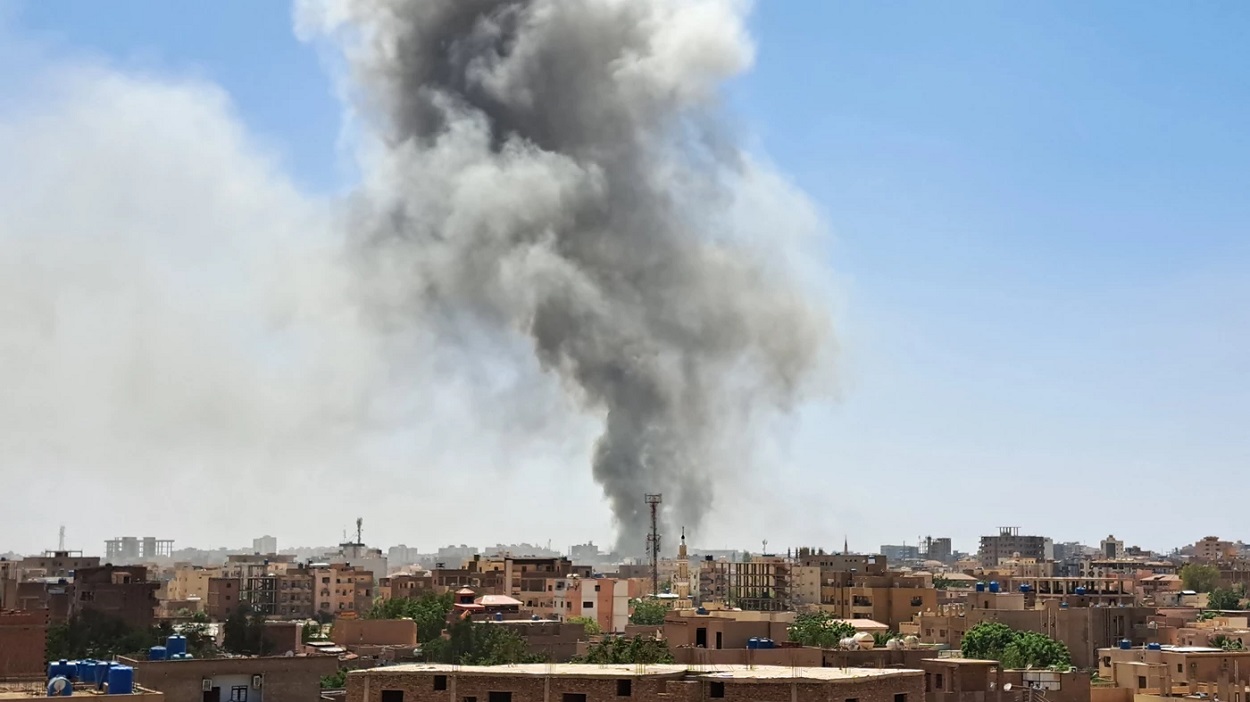
How Should We Then Live Among Muslims? Four Arab Christian Views

Image: JossK / Getty

Two Middle East nations share a city named Tripoli.

They share little else, apart from a Phoenician heritage and mutually near-unintelligible dialects of Arabic. One of their starkest contrasts concerns freedom of religion.

Libya sentenced six Christians to death earlier this month for converting from Islam. Lebanon, despite its sectarianism enshrined in politics, allows free movement between religions.

Libya’s Tripoli was commemorated in the official hymn of the US Marines in homage to American intervention on the shores of North Africa. Lebanon’s was an outpost of an eastern Mediterranean–focused American missionary movement that transformed society through gender-inclusive education.

The Italians colonized Libya; the French, Lebanon. Elsewhere, the Middle East is marked by British influence, Ottoman traditions, petrodollar economies, democratic structures, multicultural kingdoms, autocratic republics, and everything in between.

What unites them all is the preponderance of Islam.

But among the followers of Muhammad there is also difference. Some nations are secular; others enforce sharia. Some protect Christian minorities; others discriminate against them. It is difficult to offer a sweeping synopsis—or uniform lessons learned by local Christians.

Yet CT asked four Arab Christian leaders with deep roots in the region to make an attempt. Two currently live abroad; two live in their nation of origin. Yet each represents a space on the spectrum of strategies on how to best live as a Christian in a Muslim society.

One articulation of the spectrum, crafted by theologian Martin Accad, arranges common Christian responses into five categories: syncretistic (the blurring of faiths), existential (the dialogue of diversity), kerygmatic (the preaching of the apostles), apologetic (the defense of the gospel), and polemical (the interrogation of Islam).

The leaders engaged below were not asked to sort themselves accordingly, nor does this landscape article seek to label them. But each was asked the following question:

Whether in a context of oppression or embrace, how should believers in Jesus witness to their faith, keep social peace, and maintain unity with fellow Christians?

Martin Accad / Najib Awad / Harun Ibrahim / Barshar Warda

This article was originally published at Christianity Today, on May 17, 2023. Please click here to read the full text.
Categories
Christianity Today Middle East Published Articles

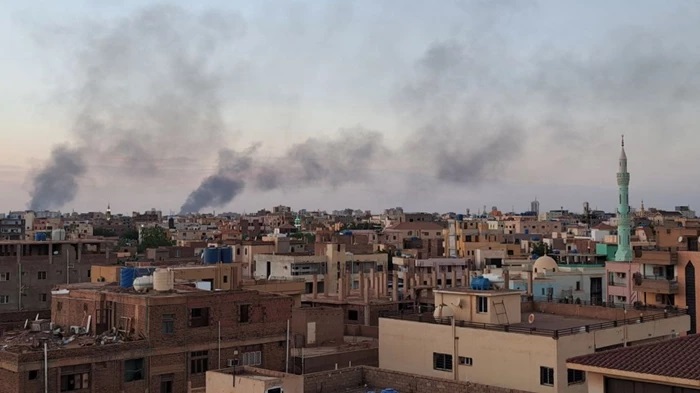
As Churches Offer Refuge, Sudanese Christians Refine Theology of War

Image: Ahmed Satti / Anadolu Agency / Getty Images

Hajj Atiya, an elderly Sudanese woman living in Khartoum, was already ill.

And then the war started.

“The planes bombed from above, the bullets were flying below,” she said. “We stayed in our house, afraid, while all outside was boom, boom, boom.”

All she had in the house was flour, to bake bread. At least she had that.

Mariam, who came to Khartoum from the Nuba Mountains to get medicine, went several days without water. And then a bomb hit the neighboring building, which collapsed upon her own.

“Whenever the airplanes disappeared overhead, we ran outside in search of food,” she said. “But we had to hide behind buildings to avoid the gunfire, with corpses strewn on our right and left.”

An unnamed doorman had it still worse.

“For ten days we couldn’t leave our home,” he said. “The shops are closed, and soldiers are in the streets.”

Every Sudanese of means in his Kafouri neighborhood of Khartoum had left town at the first sign of violence, which began April 15. He and the other guards were left behind to protect the properties. But the building owner, when the doorman called to ask for money or help, hung up on him.

Mariam found someone willing to provide transport out of the capital. But she couldn’t afford the 50-cent fare. All she had was oil and soap.

Atiya had only one option left.

“I prayed to God: Save us,” she said. “God answered, and someone came to take us away.”

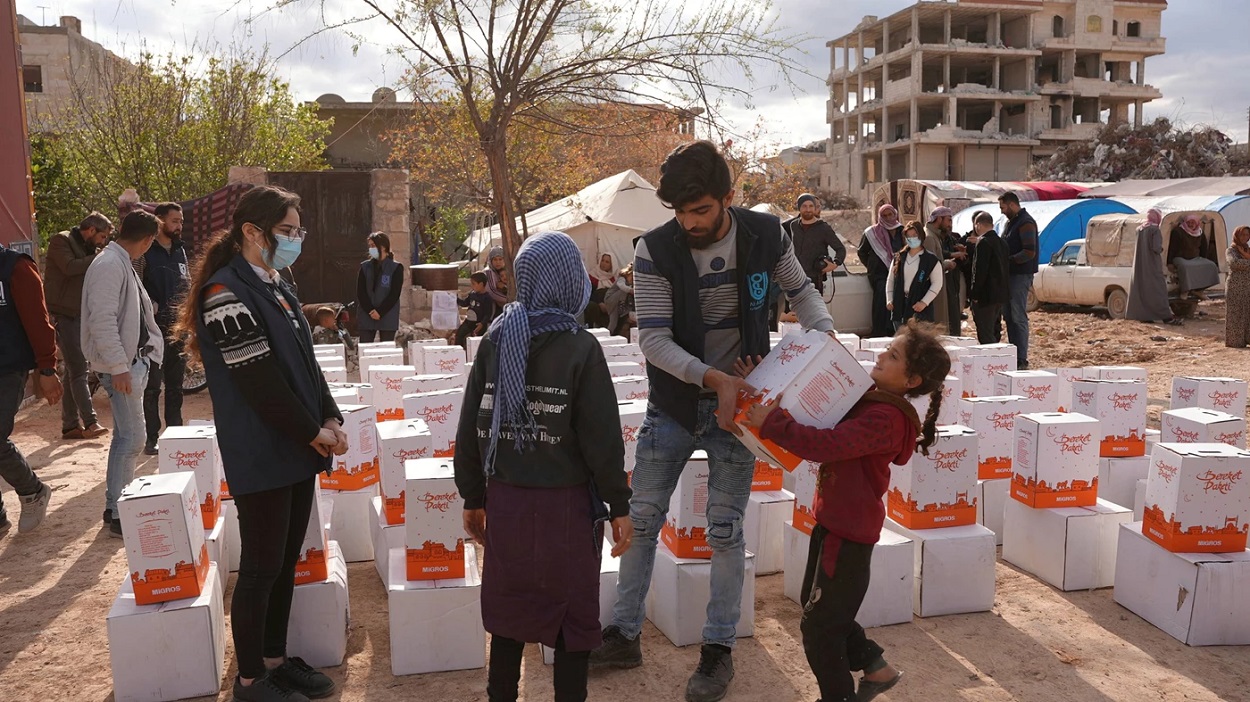
Somehow, each escaped with their families 85 miles southeast to Wad Madani. Atiya found a place to rest under a tree. Mariam spent the night on the street. But each now numbers among the 122 families staying in two local evangelical schools, with dozens more sleeping in the city’s churches.

“The war is ongoing, and the people keep coming,” said Edward Hussein, an evangelical pastor. “The situation is difficult, and it is only getting worse.”

Only scant support has come from abroad. But local believers donated funds, food, and beds from their own homes. Until now, every arriving family has been given an aid package that includes lentils, flour, sugar, oil, tea, and soap.

But for how long?

“If the situation continues, what can we do?” asked Habil Thomas, country director for Nigeria-based Calvary Ministries. “God is the only one who can intervene, as we pray for peace in Khartoum and all Sudan.”

So far, Wad Madani has been spared.

Located three hours from Khartoum along the banks of the Blue Nile, the capital of Gezira state governs an agricultural center once anticipated to become a new breadbasket of Africa. While development has stalled, the abundance of crops and relatively lower cost of living—coupled with employment opportunities on the farms—has drawn many here to safety.

Because Khartoum is destroyed.

“If the fighting doesn’t stop, it will be a humanitarian crisis,” said Ezekiel Kondo, Anglican archbishop of Sudan. “Nobody can help anyone else here, because all are helpless.” His residence in All Saints Cathedral was situated one block from…

This article was originally published at Christianity Today, on May 12, 2023. Please click here to read the full text.
Categories
Christianity Today Middle East Published Articles

Khartoum Churches Damaged as Sudan Descends Closer to Civil War

Image: Ahmed Satti / Anadolu Agency / Getty Images

Sudan’s most Christian neighborhood is under attack.

Collateral damage amid severe clashes between the army and its previously partnered militia, churches in the Bahri district of the capital Khartoum and surrounding areas have witnessed the worst of the past three weeks of fighting.

The Evangelical Presbyterian church suffered a fire as munitions exploded in a nearby market. The Coptic Orthodox church was struck by a rocket. And All Saints Anglican Cathedral was occupied by militant forces.

Over 500 people have been killed, with more than 4,000 injured.

“The situation is very serious,” said Ismail Kanani, general secretary of the Sudanese Bible Society. “I am trapped in my house, without power and water.”

Prices for food and fuel are skyrocketing, electricity supply has been cut off in much of the capital, and hospitals have been looted and are barely operating. A three-day truce has been agreed—and violated—to allow civilian escape and embassy evacuations.

Almost all Christians have left the area, said Abdalrahim Musa, director of the Evangelical Cultural Center of the Khartoum Presbyterian church. An eyewitness to the carnage, like many other Christians he fled three hours south to Wad Madani, an area relatively distant from the conflict.

But in their absence, he hears reports of widespread looting of their properties.

They are not the only ones displaced. More than 100,000 people have fled Sudan, according to the United Nations, with an additional 334,000 displaced within the country.

Foreign governments have frantically sought to evacuate their citizens. Under cover of armed drones, the US organized a land convoy for 300 Americans and other nationalities to the Red Sea city of Port Sudan. From there, many board a boat to Saudi Arabia for relocation elsewhere.

It is more difficult for Sudanese—and sometimes exploitative. One family stated it was stuck at the Egyptian border, unable to pay the $40,000 fare demanded for crossing. While there is no collected list of Christian casualties, three family members of the guard at Musa’s center were shot in the head, presumably caught in the crossfire. Two children from his church were also killed, as was his…

This article was originally published at Christianity Today, on May 2, 2023. Please click here to read the full text.

Categories
Christianity Today Middle East Published Articles

Syria Has Six Months to Receive Your Earthquake Aid

Image: Rami Alsayed / NurPhoto via AP

Syria has been suffering for 12 years, plagued by civil war, jihadist violence, foreign occupation, and autocratic governance. Yet widening US economic sanctions have made it increasingly harder to help—until now.

A February waiver offers a 180-day window for earthquake relief.

“If God has put it on your heart to give to Syria, be generous,” said Nabil Costa, executive director of the Lebanese Society for Educational and Social Development (LSESD), also known as the Baptist Society. “Find trusted organizations, because it is not easy to get it to the right place.”

On March 10, the World Evangelical Alliance (WEA) joined the World Council of Churches (WCC) and Catholic charity Caritas to detail the “chilling effect” sanctions have on the ability of faith-based and other NGOs to transfer money and goods to struggling Syrians. Most banks have deemed such transactions too risky to facilitate.

Therefore, unlike in neighboring Turkey, the February 6 earthquake was not followed by an immediate outpouring of international aid. Despite a death toll of 6,000 and an estimated 500,000 more displaced amid the rubble, United States and European Union policy—and distrust of the Bashar al-Assad government—prevented most nations and international humanitarian organizations from rushing to the scene.

A false step could result in a $1 million fine and 20 years in prison.

US sanctions against Syria began in 1979 with a declaration that it was a state sponsor of terrorism, and tightened in 2004 for its undermining of the war in Iraq. In 2011, Syria’s repression of civil protest resulted in additional sanctions, subsequently strengthened throughout its civil war—especially after the use of chemical weapons in 2017.

Two years later, after a whistleblower smuggled out alleged evidence of the torture of civilians, the Caesar Act implemented secondary sanctions against anyone conducting business with the Syrian government.

Legislation permitted humanitarian exemptions for food and medicine, and in 2022 allowance was made for unfettered aid into regions outside of government control. Turkey and various rebel entities occupy territory in northwest Syria, while a US military base supports Kurdish forces administering large swaths of the northeast.

The United Nations designated a number of humanitarian aid corridors from Turkey, but Russia and China vetoed all but one—in protest of their ally’s dwindling sovereignty. Iran and Hezbollah have also backed Assad militarily, while Israel occupies the Golan Heights and regularly bombs the alleged transport of weapons near its frontier and before crossing into Lebanon.

Amid it all, Syria’s Christians help who they can.

Following the earthquake, Aleppo’s churches hosted hundreds of frantic neighbors fleeing their cracked and crumbling homes. But the WEA report, written prior to the tragedy, outlined how many faith-based organizations lacked the resources and legal expertise necessary to navigate the myriad regulations to apply for permitted exemptions. Costa said LSESD did not attempt it, relying instead on “existing channels” to get aid into Syria.

“Everything we do is transparent,” he said, “but not everything is advertised.”

Even large NGOs like Caritas have struggled. “It should be like math, one plus one equals two,” said Karam Abi Yazbeck, Caritas’s regional coordinator for the Middle East and North Africa. “But I can’t make sense of…

This article was originally published at Christianity Today on April 3, 2023. Please click here to read the full text.
Categories
Christianity Today Middle East Published Articles

Amid the Languish of Lebanon, Christians Lead with Resilience and Prayer

Image: Lucas Neves / AP

For four days, Lebanon had two time zones.

Scheduled to switch for daylight savings on March 26, the nation’s Sunni and Shiite political heads postponed it until the end of Ramadan to ease Muslim fasting.

Christian politicians ignored it and carried on with the international standard. Airlines stuck to the government decision, throwing schedules into confusion. Some schools adjusted, others refused, and parents juggled clocks to show up at work on time.

Not that there is much work these days. The government eventually relented.

But these decisions were taken while Lebanon has no president, no prime minister, and a fractured parliament. The economy is in free fall, emigration is soaring, and justice still escapes the victims of the 2020 Beirut port explosion.

It is the last place one would look for lessons on leadership.

While laughing at the absurdity of the four days, Mike Bassous believes differently. Author of Leadership … in Crisis, published last July, he says Lebanon is uniquely situated to assist an entire region regularly subject to chaos. Surrounded by dictatorships, there are not many traditional examples to choose from.

“For books on leadership, the Arabic library of the Middle East is empty,” Bassous said. “But Lebanon can absorb the best of Western principles and contextualize them for the East.”

Such is the goal of his book, combining personal experience, the professional corpus, and Christian reflection. And as general secretary of the Lebanon Bible Society, he is offering his insight to Protestant, Catholic, and Orthodox friends around the region—starting in his home country.

Last year, 44 Lebanese leaders gathered in Cyprus for a retreat from the crisis in their country.

“We need this in our churches—from A to Z, we need it all,” said Linda Macktaby, principal of Blessed, a school in Beirut for special-needs children. “We teach the youth the Bible, but not how to lead.”

One of Bassous’ key principles is confrontation.

Serving at Blessed since 2010, Macktaby resolved to address the Arab assumptions about leadership head on. Contrary to the “typical manipulators” who avoid conflict, promising solutions while buying time amid acolytes reluctant to make any decisions, she instead empowers her staff. Each is given a “kingdom,” she called it, with authority to carry out assigned responsibilities.

And if she interferes, her staff is instructed to…

This article was originally published at Christianity Today on April 3, 2023. Please click here to read the full text.
Categories
Christianity Today Middle East Published Articles

Saudi Arabia Embraced Coptic Christmas. Could Its First Church Be Next?

Image: Markas Ishak / The Coptic Orthodox Church Press Office / Getty Image

Saudi Arabia stunned foreign policy observers this month by publicly agreeing to normalize relations with Iran, under Chinese sponsorship. The deal between the neighboring Sunni and Shia arch rivals, known for sectarian proxy fights, is expected to ease tensions within Islam.

Meanwhile, the kingdom has recently taken less publicized steps toward another religious normalization: public Christian faith.

In this case, Egypt is the supporting nation.

“Nine years ago, I was told, ‘Pray, but don’t publicize it,’” said Bishop Marcos of Egypt’s Coptic Orthodox Church. “This time, Saudi Arabia is publicizing it themselves.”

On January 7, Marcos headlined a month-long pastoral visit by celebrating the eastern Christmas liturgy amid 3,000 Coptic Christians residing in the kingdom. Facilitated by the Egyptian embassy, additional services in Riyadh, Jeddah, Dammam, Khobar, and Dhahran were “held under the full sponsorship of the Saudi authorities.”

It was the first public Christmas celebration admitted by the Islamic nation, home to the pilgrimage sites of Mecca and Medina. Muslim traditions cite Muhammad as forbidding the existence of two religions in Arabia, though scholars differ as to the geographic scope.

But Marcos’ trip was not the first Christian worship permitted.

He began praying about visits to Saudi Arabia after being sent in 2012 to help solve a dispute between authorities and an Egyptian Christian migrant worker. Marcos estimates there are about 50,000 Copts in the kingdom, among 2.1 million Christians—mostly Filipino Catholics.

None have a church to worship in. Open Doors’ World Watch List ranks Saudi Arabia No. 13 among the 50 countries where it is most difficult to be a Christian today. Visiting Coptic clergy used to meet the faithful in neighboring Bahrain.

But when Marcos returned in 2014, he said he conducted liturgies for about 4,000 believers. Leaks covered by the Qatari news network Al Jazeera resulted in some attention, but the Saudis told him they were not troubled by it. Weeks-long pastoral trips continued annually, and in 2016 Saudi King Salman bin Abdel Aziz visited Coptic Pope Tawadros II in Egypt.

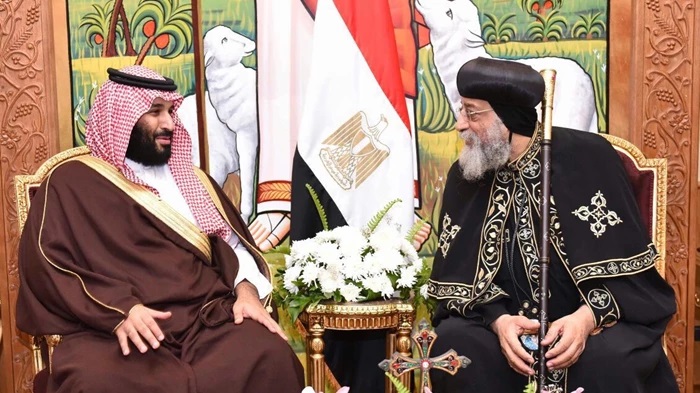
It was 2018 that led to further openness. Crown Prince Muhammad bin Salman (known as MBS) visited the Coptic Orthodox cathedral in Cairo in March, taking a famous photo with Tawadros in front of an icon of Jesus, the Good Shepherd. He invited the Coptic pope to visit Saudi Arabia, while encouraging continuation of Marcos’ visits.

That December, the first liturgies were officially reported. Not everyone was pleased. Medhat Klada, spokesman for the European Union of Coptic Organizations…

This article was originally published at Christianity Today, on March 29, 2023. Please click here to read the full text.

Categories
Christianity Today Europe Middle East Published Articles

Should Messianic Jews Return to Israel from Russia and Ukraine?

Image: Illustration by Christianity Today / Source Image: Pexels / Unsplash

Jews should leave Russia if they can.

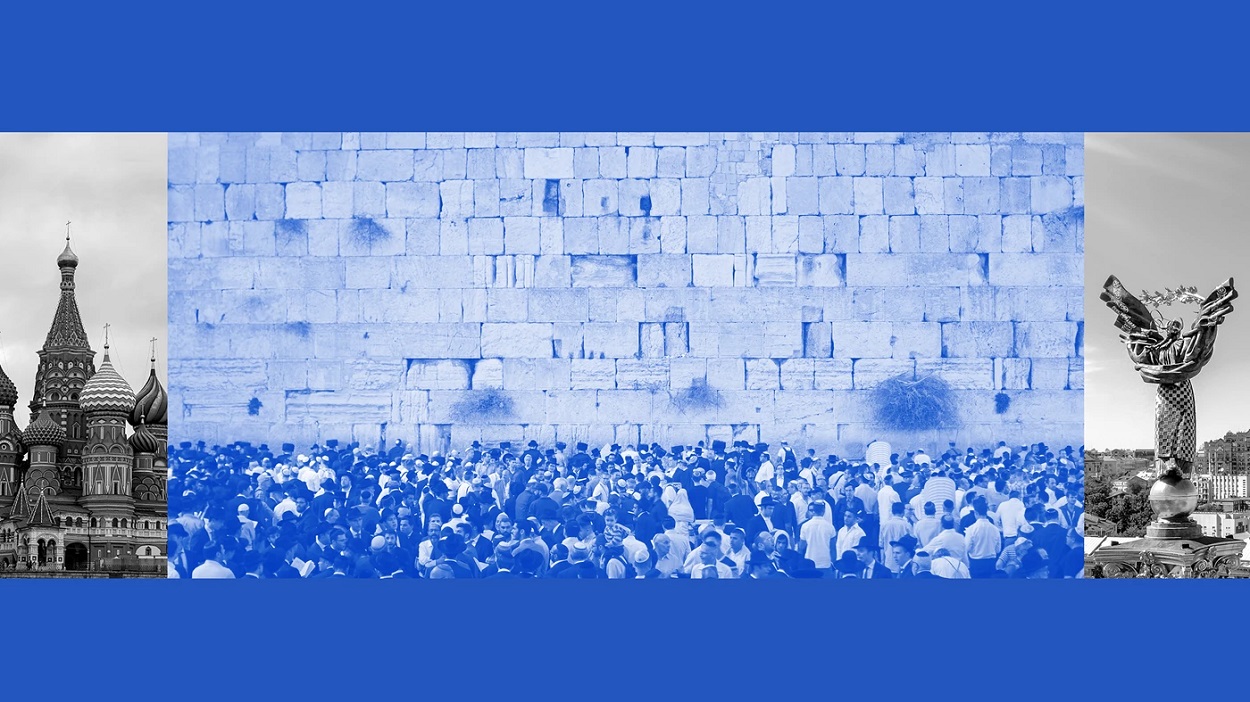
The stark warning was issued by Pinchas Goldschmidt, the former chief rabbi of Moscow, as 2022 came to a close. After 30 years in office, he left two weeks after the invasion of Ukraine and later revealed the Kremlin pressured him to support the war—“or else.”

A student of history, he fears Jews will again become scapegoats as the government tries to “redirect the anger and discontent of the masses.”

The resulting question: Where does God want them to go?

Goldschmidt, currently in Israel, has been joined by 41,813 Russian Jewish immigrants since the war began a year ago, according to recent data released by the Knesset. Another 90,000 arrived without immigrant status. Israel’s immigration minister stated 600,000 Russians are currently eligible.

But according to its 2010 census, Russia has only 156,000 Jews.

The discrepancy comes from the concept of aliyah—the Hebrew word for “ascent”—in which Israel grants automatic citizenship to anyone who has at least one Jewish grandparent and has not converted to another religion. A controversial coalition deal in the new government includes revising the Law of Return to ensure these olim (immigrants) qualify under religious law—and thus reduce intermarriage. Over 70 percent of last year’s war-induced immigrants are not considered Jewish per Orthodox law, stated the Aliyah and Integration minister.

In many cases, Messianic Jews have been disqualified, and their status is disputed. But last September, the seventh World Conference of Russian-Speaking Messianic Leaders overwhelmingly declared the return to Zion to be a “blessing.”

The only dispute was whether it is also a commandment.

Russian Jews are not the only aspirants. The Knesset stated 13,490 Ukrainian Jews have also immigrated to Israel, as “Operation Homecoming” opened 18 aid centers in Ukraine and neighboring countries. An additional 1,990 Jews immigrated from Belarus.

A 2020 study identified 43,000 Jews in Ukraine—making it one of Europe’s largest Jewish communities—though those eligible to make aliyah could be as high as 200,000.

An estimated 5,000 worship Jesus as Messiah.

Of these, about 1,000 have gone to Germany, where they doubled the local community.

“Aliyah is a certain type of coming home—to the land that belongs to us,” said Vladimir Pikman, executive director of Beit Sar Shalom. “But I don’t see a direct commandment to go to Israel.”

Centered in Berlin, his is the largest Messianic Jewish organization in Europe. Its Hebrew name translates to “House of the Prince of Peace,” and has been a refuge to Ukrainian Jew and Gentile alike, providing translation, logistical help, and trauma care counseling. Of the Jews, believers in Jesus included, they took…

This article was originally published at Christianity Today, on March 7, 2023. Please click here to read the full text.