As an Alawite, Ziad identifies with the main markers of Islam.
“Our book is the Quran, our prophet is Muhammad, and our direction of prayer is the Kaaba in Mecca,” he said.
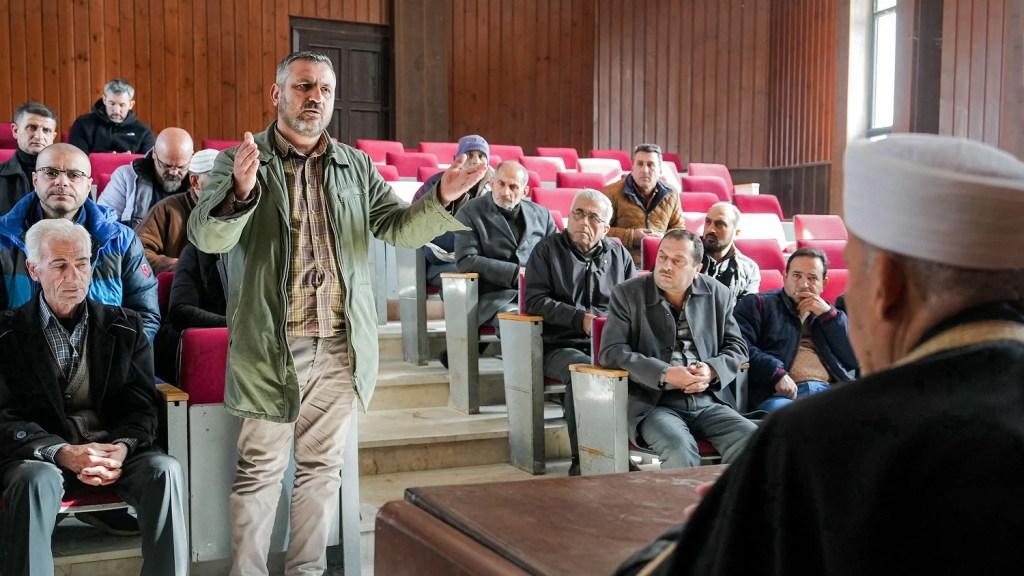
Ziad, a pseudonym granted because of the still-unstable situation in Syria, believes in God and called out to him during the Sunni militant attack on Alawite cities and villages in the coastal northwest. However, he does not perform the prescribed ritual prayers, fast for Ramadan, or consider a pilgrimage to Mecca necessary. And he drinks alcohol, which is forbidden for other Muslims.
Yet mainstream rejection of his sect goes far beyond these offenses. To understand why most Muslims consider Alawite beliefs heretical, we must first know a little about the religion’s main sects—Sunni and Shiite.
When Muhammad died in AD 632, disputes arose within the community over who would assume leadership. Sunnis, who today represent 85 percent of Muslims, hold that the prophet left this choice open for believers to decide. They chose Abu Bakr, an early convert and respected tribal leader, as the first caliph.
Shiites, on the other hand, hold that Muhammad designated his cousin Ali as his successor and that the tribal confederation bypassed his will. Ali was eventually chosen as the fourth caliph but assassinated within an Islamic civil war. The caliphate thereafter passed into hereditary rule. This political history matters practically little to Alawites, but they share with Shiites the belief that Ali was the first imam.
Most Shiites count a succession of 12 imams from the bloodline of Ali, whom they say God endowed with supernatural insight to interpret the Quran and Muslim religious traditions. The 12th imam is believed to have concealed himself—entering a period of what is called “occultation”—and will reappear at the end of the age.
However, Alawites follow…
This article first published at Christianity Today on June 25, 2025. Please click here to read the full text.
On March 6, Ziad nervously scoured social media, hiding in a windowless room in his apartment. He had heard gunfire, and over the long course of the civil war in Syria, he had learned how to distinguish the various weaponry. These were military-grade machine guns. Bands of balaclava-clad militants in pickup trucks shouted “Allahu Akbar” as they attacked a government office just a mile from his home in the coastal city of Lattakia.
The 46-year-old educator and his wife, Zeinab, knew the militants were looking for Alawites. The couple belonged to the heterodox Islamic sect that many Sunni Muslims in Syria hated for their connection to the deposed Assad regime. Others went further and condemned their beliefs as heretical. Medieval and Ottoman-era fatwas declared Alawites deserving of death, and videos circulated of mosques calling for jihad against their community.
Ziad did not leave his home for the next three days.
When the dust settled, the March massacre claimed the lives of at least 1,700 Alawites. Ziad, currently in Lebanon and granted anonymity to preserve the safety of his relatives in Syria, describes the terror the community experienced.
“O God, save us,” he prayed quietly. “We didn’t do anything wrong.”
Six months earlier, when Bashar al-Assad’s regime fell, Ziad hoped for a transition to democracy and wide-scale reform. Assad’s father, Hafez, seized power in a 1970 coup and disproportionately selected Alawites for key military and government posts. But few from the community truly benefited, Ziad said, while most lived in relative poverty—as in other rural regions. The regime permitted no dissent and cultivated insecurity among its minority religious populations to curb any threat to its power.
While Alawites make up a majority in the coastal plains and mountains of western Syria, the ethnoreligious group represents 10–13 percent of the overall population. Sunni Muslims and Greek Orthodox Christians live among them in peace. But as militants barged into homes, looting cell phones and cash, they killed adult Alawite males and sometimes whole families.
Ziad had barred the iron gate to their building. Perhaps this spared their lives. He and Zeinab sat in the darkness to avoid showing signs of life in their apartment. And as he scrolled Facebook for updates, he learned…
This article was first published at Christianity Today on June 24, 2025. Please click here to read the full text.
A small congregation in the Tartous countryside of western Syria held an unusual Mother’s Day service this March.
The passages were customary, as the pastor read from Proverbs 31 and 1 Corinthians 13. So were the praise songs, including an Arabic version of “How Great Thou Art.”
The crafts, snacks, and cake were like those served at any youth-focused event. Fifty moms and their kids enjoyed the cool weather at a lakeside pavilion under pleasant gray skies. Enthusiastic girls acted out the parable of the prodigal son, emphasizing that God’s love is for everyone. This, too, was a typical message.
The unusual aspect was who was in the audience. Half the families were Syrian Alawites, a heterodox Muslim sect, three weeks removed from a massacre that killed more than 1,700 men, women, and children from their community.
In Syria, Mother’s Day is celebrated on March 21, and the event offered a small measure of joy amid great tragedy. The service was so successful the church repeated it twice more in the following weeks, according to Bassem Khoury, the church’s pastor. Christianity Today agreed not to use his real name as the country remains unstable.
“Suffering is an opportunity to direct people to God’s love,” Khoury said.
Khoury described how his evangelical church ministered to hundreds of Alawites fleeing the coastal villages of Jableh and Baniyas and as far away as Hama and Homs, cities 50 miles to the east. Local Christians offered food, medicine, and words of comfort. Khoury preached about Jesus—but also about reconciliation between Syria’s diverse religious groups, Sunni Muslims, Alawites, and Greek Orthodox Christians. And the families witnessed a unity the pastor prays his nation may one day reflect.
Khoury served from extensive experience. Throughout the 14-year Syrian civil war…
This article was first published on June 23, 2025. Please click here to read the full text.
Prayers in Deir El-Garnouse Coptic church in Egypt for victims of a terrorist attack: NurPhoto / Contributor / Getty
The Coptic Orthodox church marks time by its martyrs. Its ecclesial calendar begins in AD 284, year 1 Anno Martyrii (Year of the Martyrs), when Emperor Diocletian ascended to the throne and put 800,000 Egyptian Christians to death, according to tradition. The most famous martyr of this era, military leader Saint Maurice, famously defied commands to kill fellow Christians, only for the emperor to murder his legion of over 6,000 soldiers.
Persecution waned after Constantine declared Christianity the Roman Empire’s official religion. But during the Byzantine era, some emperors imposed the largely European understanding of Christology upon what eventually became an Oriental Orthodox church. Subsequent Islamic rule restored the Coptic patriarch and provided some religious toleration. But it also legally established Christians as second-class citizens, known as dhimmis. The number of martyrs declined, but the Middle Age Mamluk era was particularly violent.
Coptic fortunes fluctuated during the Ottoman and colonial eras, giving way to a modern state that has struggled to define the balance between equal citizenship and a Muslim majority. Among other incidents, in 2000 in the village of Kosheh, rioters killed 20 Copts following a disagreement between a Muslim and a Christian shopkeeper. After the New Year’s Eve service in 2010 in the Mediterranean city of Alexandria, a car bomb outside a church killed 21. And in 2015 in Libya, ISIS beheaded 20 Copts and one Ghanaian Christian.
Fearing the Muslim Brotherhood’s rise following the 2011 Arab Spring, 100,000 Copts fled Egypt to the US, quadrupling the size of the local diaspora. Large communities exist also in Canada, France, and Australia. Egypt ranks No. 40 on Open Doors’ World Watch List of countries where it is hardest to be a Christian. Similar reports and subsequent immigration have contributed to a common assumption that Copts experience constant persecution.
The story is far more nuanced than the flight from religious intolerance, however, says anthropologist Candace Lukasik. Her book, Martyrs and Migrants, represents 24 months of fieldwork among Upper Egyptian Copts, transnational Orthodox clergy, and recent immigrants to the United States. Not only do most Copts emigrate for reasons other than persecution, she told CT; upon arrival they often trade one set of difficulties for another.
Born a Polish Catholic in Buffalo, New York, Lukasik, assistant professor of religion at Mississippi State University, reencountered God in the Coptic Orthodox church and was baptized into its faith in 2012. Through her encounters with the church in Egypt, she believes the Coptic tradition offers tools for all believers to understand and confront the suffering and hardship of everyday life. This interview has been edited and condensed.
Why does the Coptic Orthodox Church emphasize martyrdom?
For Coptic Christians, the blood of martyrs symbolizes both Christ’s triumph over death and an eternal spiritual belonging in the body of Christ. The Coptic calendar notably doesn’t begin with Christ’s birth or the start of Christian Egypt. Instead, it starts with the Era of the Martyrs, commemorating the widespread persecution of Christians under the Roman emperor Diocletian.
During the early Islamic expansion in Egypt, stories of martyrs and persecution became crucial for the Coptic church to maintain its institutional strength as the community’s social structure evolved. And new martyrs are incorporated into the Coptic Orthodox Church’s Synaxarium, or Life of the Saints, and linked to the sacrifice of Christ on the cross. These stories of saints serve as powerful reminders of Coptic identity and reinforce their resilience and distinctiveness, whether under Arab and Islamic rule or other governments.
Coptic Christianity is a perpetually minority tradition, and Copts practice their faith through this orientation. Yet martyrdom not only is more than a symbol to give meaning to suffering and death; it represents a way of life that entails everyday sacrifice and deep connection to God.
What does this sacrifice mean for ordinary Copts?
It takes on different forms depending on social status. A middle-class Copt in Cairo experiences everyday martyrdom quite differently than an agricultural worker in rural Upper Egypt. For the former, Copts may be discriminated against at university, such as in biased grading, or face difficulties at work, such as exclusion from positions of leadership.
For the latter, arguments with a Muslim neighbor…
This article was originally published at Christianity Today, on May 29, 2025. Please click here to read the full text.
Lebanon has 12 officially registered Christian sects. Jesus prayed the church would be one. Once Mark Merhej did the math, the solution was worship. And in January 2024, the 29-year-old Maronite Catholic layman brought together representative patriarchs, bishops, and pastors from nearly every ecclesial family to pray collectively for the peace of Beirut.
Merhej began planning the event three years before the Israel-Hezbollah war, contemplating how to bring unity to the fractured Lebanese body of Christ. As the two belligerents exchanged missiles over the nation’s southern border, over 10,000 Lebanese Christians joined in worship with Merhej’s 300-person ecumenical choir and orchestra to pour out their hearts in pursuit of God’s presence.
“Worship is the communal experience of God’s lordship and grace,” Merhej said. “The world outside—the war—is irrelevant.”
Merhej aimed to bring a higher vision to the troubled Christian community. That January, during the official week of prayer for Christian unity—usually a perfunctory affair—he filled the Beirut Forum with soaring hymnodies of Byzantine chants and intoned hallelujahs. Members of the choir, inspired by their interdenominational harmony, wanted to keep performing. And the bishops, he sensed, resonated with his ecclesial vision.
But after the event, Merhej stepped back.
As Beirut wrestled with the war, Merhej wrestled with God. He came to believe God wanted him to withdraw not only from a vibrant music ministry but also from his budding relationships with senior clergy members. At first, he didn’t understand this directive, and for months he let others take the initiative. But as he grew in his personal faith, planning a scaled-back but similar event one year later helped him discern God’s purpose for his rest.
The heavenly realms
Growing up, Merhej was mostly unaware that local Christians divided themselves between six Catholic, five Orthodox, and one Protestant council that includes several denominations. Theological schisms had split the Levant church over the centuries, which further splintered as Vatican, British, and American missionaries competed for new church members from historic Christian traditions.
In 1974, the newly formed Middle East Council of Churches (MECC) brought together Eastern Orthodox, Oriental Orthodox, and Protestant clergy to strengthen relations among minority Christians. (Catholics joined in 1990.) Today, though the MECC community has organized numerous service projects and theological dialogues, spiritual unity has not extended to religious practice. Some churches will not take Communion together, nor participate in joint liturgical services.
Merhej grew up in the mountains of Lebanon in a Maronite Catholic community. Surrounded by Muslim…
This article was originally published at Christianity Today on February 17, 2025. Please click here to read the full text.
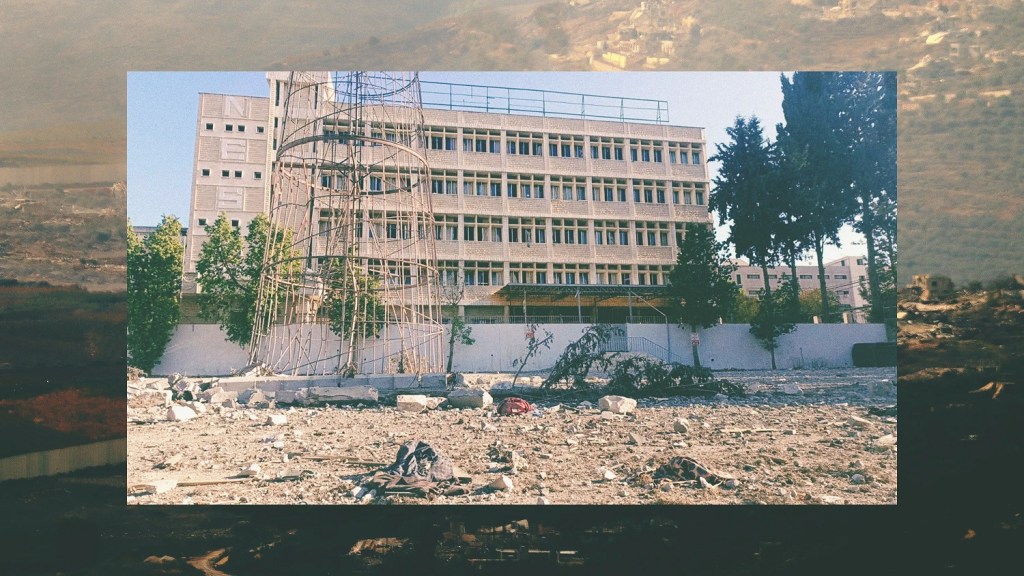
The predominantly Shiite city of Nabatieh in southern Lebanon once boasted the nation’s largest Christmas tree, erected to symbolize good relations between local Muslims and the tiny Christian minority of only 20 families.
The local evangelical school—with a 99 percent Shiite student body—had celebrated the holiday for years, and in 2018 it built a 100-foot wrought-iron conic structure topped with a radiant star. (The use of natural firs or pines is uncommon in Lebanon). Several of the hundreds of students, parents, neighbors, and dignitaries in attendance wore Santa hats. Many had trees in their homes and gifts to open on Christmas day.
Earlier that December, Ahmed Kahil, the Hezbollah-affiliated president of the municipality, continued the annual tradition of erecting a smaller tree in the souk, the traditional marketplace and heart of the city. And at both events—alongside Shadi El-Hajjar, the principal of the National Evangelical School of Nabatieh (NESN), heads of other private schools in the city, and various government and religious officials—Kahil wished Christians a Merry Christmas.
Top of Form
Lebanon’s economic crisis made 2018 the last year NESN could afford to erect its massive Yuletide construction. But over the following years, elementary school classrooms still featured Christmas trees, students exchanged secret Santa gifts, and teachers enjoyed the annual holiday dinner. “If Christmas isn’t found in your hearts,” the school reminded, “you won’t find it under a tree.”
But there was no Christmas celebration in Nabatieh last month, after over a year of war between Israel and Hezbollah. On October 8, 2023, the Shiite militia launched rockets into Israel in support of Hamas following its attack that killed 1,200 Israelis and took around 250 hostages. The subsequent daily missile exchange drove tens of thousands from the border regions of both nations.
A year later, most of Nabatieh’s 80,000 residents fled their homes as Israel intensified its military campaign against Hezbollah. On October 16, an Israeli missile killed Kahil and 10 others at the Nabatieh town hall as they coordinated the daily distribution of food and medicine to the 200 families who remained in the largely evacuated city.
Initially, NESN stayed open for its 1,400 students. Located 35 miles south of Beirut and only 7 miles from Israel, the historic evangelical institution won local respect over the years by offering a nonreligious but values-based educational environment that consistently ranked among the top high schools in Lebanon. The September 2024 pager attack delayed the start of the academic year, and the exodus from the city eventually shifted education online. But within a week NESN opened its doors as a shelter for the locally displaced.
Over the course of the war, its staff stood by the Shiite community, including one who rescued Kahil’s colleague after the October 16 strike.
“When you see your hometown destroyed and the damage at the school,” Hajjar said, “you have to ask: Why is this happening to those who are not involved?”
A safe haven
In the early stages of the war, Nabatieh mostly…
This article was originally published at Christianity Today on January 31, 2025. Please click here to read the full text.
For years, “Maria” (we’re using a pseudonym, given the political situation) thought little about her apparel or how to greet her colleagues. A Christian and longtime Syrian government employee, she kept her head uncovered and wore Western business-casual attire. She greeted her coworkers with “sabah al-khayr,” which means “good morning” in Arabic.
But an alliance of rebel forces, some connected to jihadist groups, has now seized government power. The new leaders in Damascus repeatedly say Christians, some of whom had allied with the Assad regime, face neither persecution nor displacement. Yet small aspects of Maria’s work life have already begun to change.
Recently, a new boss for her department informed the office that coworkers would now greet each other with “salamu alaykum,” Arabic for “peace be upon you.” That’s the standard greeting between religious Muslims. Maria wonders if changes might be gradual, that next week, or next month, or next year, she will be required to wear a hijab.
Maybe the new greeting requirement is a good sign…
This article was originally published at Christianity Today, on January 9, 2025. Please click here to read the full text.
In early October, in a Christian village in southern Lebanon, “Samira” (we’re using pseudonyms due to the political situation) decided to water her lemon trees. The autumn winds were dry this season. Rain was less frequent. The frail, hunched-over grandmother filled her bucket and went outside.
Samira’s husband had died two years earlier. Her children had long ago moved away, seeking better opportunities in Beirut, but her daughter owned the house next door and made frequent trips back, recently refurnishing the interior with modern decor. Samira loved the home’s colorful bedspreads in the rooms where her great-grandchildren often stayed.
But such visits were infrequent these days. A year earlier, Hezbollah had entered the Israel-Hamas war in Gaza by shooting missiles into Israel. Israel had pushed back, and the exchange of fire between the Shiite militia and Israel drove thousands from their homes on both sides of the border. And in late September, Israel increased its bombing campaign against suspected Hezbollah sites throughout the country. Nevertheless, Samira had remained, adamant that her Christian village was not a target.
Samira had just begun watering her lemon trees when everything went black…
This article was originally published at Christianity Today, on January 8, 2025. Please click here to read the full text.
Every year, Christianity Today recaps the previous 12 months through selected articles in a number of categories. Most often they are not necessary a collection of ‘most read.’ Rather, editors try to find the stories that were most reflective of the past year, most impactful in terms of reporting, or most representative of diverse sections of the world.
Four of my articles were included in this global church overview. Eliminating overlap with the above, it featured how evangelicals are leading special-needs education in Jordan, alongside how porridge unites Muslims and Christians in Senegal.
Europe is not my primary continent. But two articles here highlighted how satellite imagery reveals destruction of Armenian Christian heritage in the Caucasus, while Orthodox believers are divided in their critique about how Russia and Ukraine restrict their churches.
Finally, my greater Middle East beat was included with Africa this year. Click on the image to recall several of my contributions, including Bible translation in Iran, starvation in Sudan, and how the region’s favorite Arabic Christmas carol is paradoxically about war and hate.
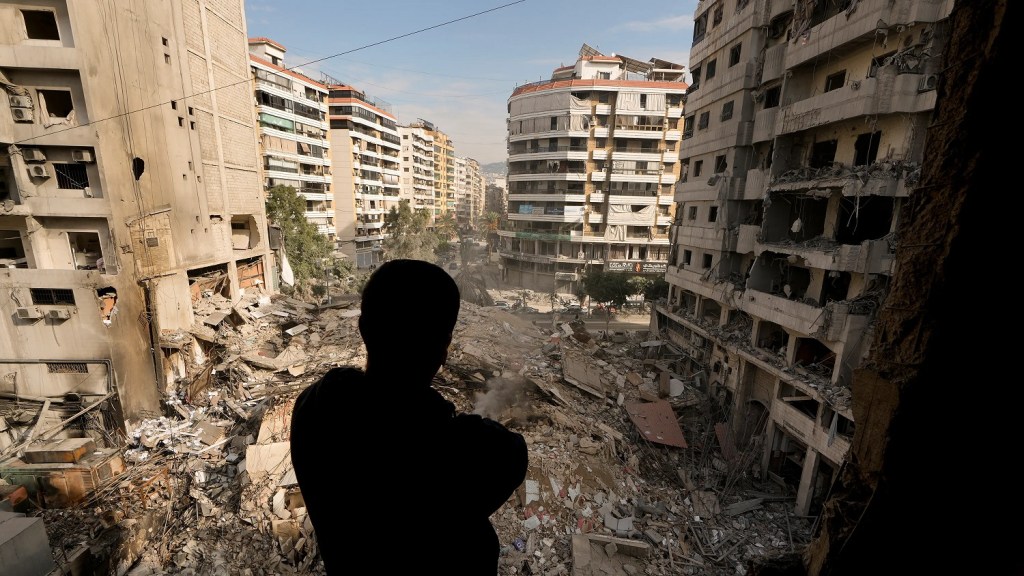
While an explosion reverberated across the valley from Beirut to the foothill village of Mansourieh, two men puffed on their cigarettes in resignation. Israeli jets were striking another apartment building in the Dahiyeh region of Beirut, Lebanon’s capital city, likely killing a Hezbollah militant or targeting an underground weapons depot within the tightly packed urban area.
Neither man cared about politics or the war, brought to their doorstep by last year’s decision of the Shiite Muslim militia to launch rockets into Israel to support Hamas. Tit-for-tat attacks had crossed the southern border for the 11 months that followed, as neither side wanted to engage in a larger conflict. That fighting displaced tens of thousands on both sides while leaving the rest of Lebanon largely unscathed—yet ever worried about an escalation.
It came in September. On the 17th, Israel declared the return of northern citizens to their homes to be an official war goal. Hours later, an Israeli sabotage operation exploded Hezbollah pagers, killing 13 and wounding around 4,000 militia-linked individuals. Then, on September 23, Israeli missiles struck throughout Lebanon, and hundreds of thousands fled their homes. Lubnan Assaf, a 42-year-old Shiite Muslim, and Awad Saab, a 72-year-old Greek Catholic, somehow found their way to the Arab Baptist Theological Seminary (ABTS) guesthouse—and became friends. At its peak, the evangelical institution housed almost 250 displaced individuals, about one-third of whom were fellow Christians.
ABTS offered daily chapels and provided three meals a day—but no televisions. Isolated from the news and away from static entertainment, couples walked in the seminary gardens while children rode scooters down the access road from the library. Assaf and Saab played a Rummy-like card game until 10 p.m., exchanging details about their abandoned neighborhoods.
Assaf gave Saab the daily update that his auto-accessory shop on the edge of Dahiyeh had not been looted. Saab replied that his eight-month pregnant daughter, one of 15 people who remained in their southern village on the frontline of the Israeli ground invasion, was still doing all right. Both whittled away the hours in relative boredom, as each over time expanded his spiritual horizons.
Assaf’s Story
Assaf’s apartment in the working-class Shiite neighborhood of Ouzai, located in Dahiyeh near the Beirut airport, overlooks a local café and the Mediterranean Sea. His shop serviced mostly middle-class Christians who frequented the area, well-known for its inexpensive furniture and manufactured goods.
Over the years, Assaf saved up enough money to build a home in his family village of Younine, 11 miles northeast of Baalbek, an ancient Roman city preserved in the Bekaa Valley, Lebanon’s agricultural heartland. Driving from Beirut means passing by marijuana fields that fuel an unofficial economy run by local Shiite tribes that reportedly collaborate loosely with Hezbollah.
Artful calligraphy from the Quran adorns the walls of Assaf’s home. His wife, Mira, and their 15-year-old daughter wear the hijab. When war came to Dahiyeh, they relocated for safety, while Assaf returned to Beirut to oversee his shop. The next day, an Israeli missile…
This article was originally published at Christianity Today on December 20, 2024. Please click here to read the full text.
Illustration by Christianity Today / Source Images: Getty / Courtesy of Brent Hamoud, Emad Botros, and Daniel Suter
The warning issued by the American embassy on October 14 could not have been clearer: US citizens in Lebanon are strongly encouraged to depart now. But this message, coming as Israel increased its attacks on Hezbollah, was only the latest in several weeks of diplomatic efforts to reduce the American presence.
Back on July 31, already fearing an escalation of violence, the embassy was discouraging would-be tourists with its highest of four alert levels: Do Not Travel. For those inside Lebanon, it urged: The best time to leave a country is before a crisis, if at all possible. Major airlines had already canceled flights to and from Beirut, leaving only the national carrier to facilitate evacuation—and its outbound flights were booked weeks in advance.
Ever since Hezbollah—a Shiite Muslim militia designated by the US as a terrorist entity—launched missiles across the border in support of Hamas’s attack last October, foreigners have lived under a cloud of uncertainty that Israel might eventually bomb the airport, as it did in the month-long war in 2006 that left many expats stranded. Americans would have little hope of leaving through Syria, and Lebanon has no official relationship with Israel to permit crossing the southern border.
And then Hezbollah pagers exploded throughout the country.
With dozens dead and thousands injured, the next day, September 18, the embassy warned of a reduction in routine care at hospitals. On September 21, it told citizens the Lebanese government could not ensure their safety, mentioning the possibility of increased crime, sectarian violence, or targeted kidnapping.
And on September 28, one day after a massive Israeli airstrike killed Hezbollah leader Hassan Nasrallah, the embassy sent its nonessential personnel home and opened registration for US citizens to request assistance in leaving.
Several US citizens paid thousands of dollars to place their families on private yachts to nearby Cyprus. Others frantically called Middle East Airlines (MEA) to secure embassy-reserved seats to anywhere else. And among the missionary community, the chatter was incessant: Are you leaving? What are your contingency plans? Will your organization make you go?
Some decided to stay.
CT interviewed four Christian foreigners to learn how they made the decision to remain in times of war.
Each had already endured the constant hum of Israeli drones hovering over their neighborhoods. They learned to distinguish between the noise of warplanes deliberately breaking the sound barrier and the similarly ear-popping sound of a missile strike bringing down a Beirut apartment complex. And some have wondered if they might become a target of random Shiite anger or if the Islamist kidnappings of foreigners during Lebanon’s civil war decades earlier could be repeated.
The sources represent different categories of Christian workers.
A Swiss family living in the foothills outside Beirut believes that angels closed their ears of their children at night, allowing for consistent sleep even when explosions—slightly muffled by the distance—woke the parents consistently at 3 a.m. An Egyptian with Canadian citizenship said the blasts were so loud he sometimes thought they had happened just across the street—only to look out the window and see smoke plumes rising across the valley two miles away, not far from his church outside Beirut.
An American married to a Lebanese woman said that while the bombings did not threaten him directly, he was deeply troubled as each missile resulted in more deaths and displaced families. And a single American woman raised in urban poverty amid gang warfare stated casually, “I grew up rough, but gunshots and bombs are not the same thing.”
A Shared Resilience
This woman, a Black millennial from Ohio, has…
This article was originally published at Christianity Today on November 1, 2024. Please click here to read the full text.
On September 23, Mustafa put his family of five on a small motorbike and drove seven hours north from Tyre to a village in the Lebanese mountains, weaving slowly through lines of gridlocked vehicles. Some in those cars—like his brother Hussein’s family of six—would not arrive for another two days.
The path normally takes two hours.
Mustafa, and thousands like him, were frantically fleeing Israeli bombs aimed at Hezbollah, the Shiite militia designated by the US government as a terrorist organization. Until that moment, he and his brother had been agricultural workers in a farm outside the city, living in a spartan two-bedroom apartment provided by his employers.
Top of Form
CT agreed to withhold his family name for security reasons. Mustafa is a Christian originally from Afrin, a Kurdish area in northwest Syria. Asked if he shared his brother’s faith, Hussein said, “Not yet.”
Their home nation does not recognize converts from Islam. And while Lebanon is the only Arab nation to grant freedom of conversion, Tyre is a socially conservative Shiite city under the political sway of Hezbollah.
This was Mustafa’s second displacement. In 2013, he and his brother fled the Syrian civil war. But over the past five years, as poverty rates tripled in Lebanon, the nominal Sunni Muslims found support from a local Christian ministry offering aid.
Eighteen months ago, Mustafa professed faith in Christ.
“I follow Jesus,” he said. “He saved me.”
When Israel began its ground invasion of Lebanon, it issued evacuation orders to both Muslim and Christian villages in the south. But the large majority of the displaced come from Shiite areas suspected of housing weapons depots and underground tunnels—where resident Shiites may or may not align with Hezbollah’s Islamist ideology.
According to a survey conducted in early 2024, while 78 percent of Shiites viewed positively the militia’s role in regional affairs, only 39 percent said they felt closest to Hezbollah among Lebanon’s political parties, compared to 37 percent of Shiites who felt closest to none.
Only 6 percent of Christians had “a lot of trust” in the Shiite militia.
Within these realities, Christians are eager—and cautious—to help. Gospel commitments and national solidarity require hospitality. Sectarian guardedness encourages suspicion. And Israel’s bombing campaign creates fear that welcoming the displaced might make them a target.
Many are helping anyway.
Mustafa and Hussein found shelter in living quarters offered by an evangelical church in the mixed Muslim-Christian village where they sought refuge. A plastic rug covered half of the cement floor in their private allotment, with thin mattresses pressed up against the walls. Blankets and pillows strewn about were evidence of their children’s fitful night of sleep.
“This is our message: to show love in action as we lead people to Christ,” the church’s pastor said. (CT is granting him anonymity due to the uncertain political situation in Lebanon.) “As they receive, we teach them to give.”
His congregation currently hosts about 100 people, displaced from their homes in the south and in Lebanon’s Bekaa Valley. More than half are from neighboring Syria; the rest are primarily Lebanese Shiites. The pastor said 60 percent of the total are believers in Jesus. Others, like Hussein, are their relatives or Muslims already closely connected to churches in their original area.
They all pitched in to prepare 500 tuna sandwiches for local distribution.
Not Just Talk
Hezbollah’s current conflict with Israel began last year on October 8, one day after Hamas invaded from Gaza and killed approximately 1,200 Israelis, taking 250 hostages. The Lebanese militia initiated what it called a “support front” for Hamas, launching missiles that caused 80,000 Israelis to flee from villages near the border.
A similar number of Lebanese also fled from Israel’s retaliation, and for 11 months the two sides had kept their missile exchange relatively contained, aiming to avoid a larger and perhaps regional conflict with Iran, which backs both Hamas and Hezbollah as proxy forces.
That status quo held despite…
This article was originally published at Christianity Today on October 17, 2024. Please click here to read the full text.
The oldest Protestant seminary in the Middle East has a new vision.
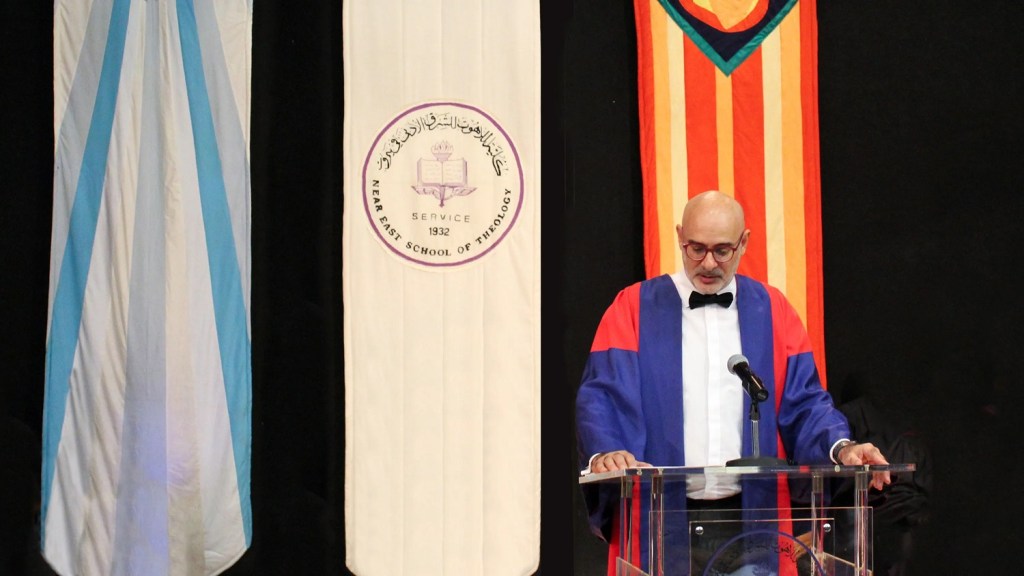
Officially founded in 1932 but with origins dating back to the 19th-century missionary movement, the Near East School of Theology (NEST) is operated by the Presbyterian, Anglican, Lutheran, and Armenian Evangelical denominations.
Installed this week, its 11th president is a nondenominational Lebanese evangelical.
Martin Accad, formerly academic dean at Arab Baptist Theological Seminary (ABTS), was installed on Sunday at the historic institution’s Beirut campus. He graduated from NEST in 1996 with a bachelor of theology degree, eventually earning his PhD from the University of Oxford. Awarded scholarships by the World Council of Churches and the evangelical Langham Partnership, Accad is a locally controversial theologian who, like NEST, straddles the liberal-conservative dichotomy.
Author of Sacred Misinterpretation: Reaching Across the Christian-Muslim Divide, Accad has urged believers to approach Islam in a manner that avoids the twin pitfalls of syncretism and polemics. But before joining NEST he resigned his prior academic position at ABTS to apply his biblical convictions within Lebanon’s contested political scene. Creating a research center, his last four years have been spent in pursuit of reconciliation between Lebanon’s often-divided sectarian communities.
Accad will now bring his vision to a new generation of Middle East seminarians.
Although doing public theology is novel for the institution, NEST has long sought, with some struggle, to balance the two streams of its early predecessors’ commitments to evangelistic outreach and service-oriented witness. Its founding in 1932 resulted from a merger of two programs, each with its own distinctives.
One stream of NEST’s roots dates to 1856, when American missionaries began what Accad describes as a discipleship training program in the mountains of Lebanon. Along with providing pastoral development, it functioned as a mission station for sharing the gospel in local villages with non-Protestant Christians and diverse Muslim communities. Its remote location was also designed to isolate these early “seminarians” from the corruption of city life in Beirut.
American outreach to Armenians and Arabs in the Ottoman Empire (modern-day Turkey) led to the creation of similar schools beginning in 1839. After the Armenian genocide in World War I, these efforts relocated to Athens where they coalesced into a seminary that adopted an ecumenical, Enlightenment-informed model, emphasizing the importance of social service. This was especially true in its approach to Islam—sympathetic and comparative with an eye toward reconciliation.
The merger of these two programs created NEST, which eventually settled in the cosmopolitan Hamra neighborhood of Lebanon’s capital. Although it is situated near three historic Protestant liberal arts colleges—now known as the American University of Beirut (AUB), the Lebanese American University (LAU), and the Armenian-led Haigazian University—early cooperation was shattered by the Lebanese civil war in 1975 and has not been re-established.
Accad wants to restore this collaboration and embody an integration of scholarship and discipleship. CT spoke with him about Protestant distinctives, “electric shock” pedagogy, and how to understand the mainline-evangelical divide in the Middle East.
Why does serving as president of NEST appeal to you?
We need to rethink what it means to be a seminary student today. This question is a key issue globally, but especially in the Middle East. Ideally, the seminary leads the church to be relevant in society. This requires beginning with society and determining its needs. And then the seminary addresses the church—what does the pastor need? Finally, it works backward and designs a program to fit this profile.
Historically, NEST has been an ordination track. This is the traditional model, and it is still necessary if the church believes that it is. But I want to explore with the churches their vision for seminary training, for congregational service, and for regional witness—and how NEST can help prepare leaders to implement this vision.
How do you plan to prepare leaders to serve the church?
Nontraditional, focused tracks are becoming the way people want to learn. Accrediting bodies speak of micro-credentials that may contribute toward academic goals but have value in and of themselves and fit into the bigger puzzle of what students want to do with their lives.
But this system of training should not be only for evangelicals. I want NEST to attract…
This article was originally published at Christianity Today on September 27, 2024. Please click here to read the full text.
In the Arab world today, the war in Gaza dominates the news, with its small Palestinian Christian community caught in the crossfire. But over the last decade, ancient churches have faced persecution in Syria and Iraq, while political instability and terrorism have threatened believers in Egypt, Lebanon, and Jordan.
Nevertheless, the church’s activity in this region is about much more than war and persecution, as the Middle East and North Africa (MENA) chapter of the Lausanne Movement’s State of the Great Commission report shows. For example, congregations have cared for refugees, and online ministries have expanded.
One notable development is the numerical growth of Muslim-background believers (MBBs).
The report provides an ominous description of Christianity in the MENA region: “The outlook for all Christian communities is negative.” Yet the section on MBBs concludes with hope amid the devastation, predicting that “a new church, from among the majority people, will rise up from the ashes of the traditional structures.”
CT spoke with Rafik Barsoum—coauthor of the MENA chapter, president of Message to All Nations, and pastor of a digital church initiative launched in 2022—to elaborate on key ideas in the report. He described the difficulties faced by MBBs and Christian-background believers (CBBs) alike, the witness offered by both, and why he dislikes the distinction between them.
Why did the report begin with a negative assessment?
Iraq, for example, is nearly bereft of Christians. The region is experiencing war, famine, terrorism, poverty, instability, and turmoil in every way. And with any turmoil anywhere, minorities are the first to be affected. In nearly every nation, if they are not facing outright persecution, struggles such as these pressure believers to leave the region.
Ancient churches are losing their people. The Middle East was once the beacon of Christian history; now it is at risk of losing its Christian presence.
But these struggles do not suggest a gloomy picture as concerns the work of Christ. We have seen signs of revival in the last decade like never before. But a price has been paid for it that is not often covered by the news or political analysis. We do not want this persecution to continue, but new signs of hope are emerging.
One of these signs of hope is the MBB community, which the report calls a “movement.”
The word movement is a missiological term describing an intangible awareness that God is drawing people to himself in ways we cannot explain, beyond the work of any one church or organization. It is as Jesus told Nicodemus: The wind blows where it will, and we see its effects in the wave that is forming. People are coming to know the truth through dreams and visions, the work of missionaries, the testimony of the church, and online media ministry.
Amid political turmoil, people are challenging taboos and delusions of the past—independently of this movement, but also as they witness Christian love in action. God is doing something unique.
Yet the report calls this movement “small.” How should it be measured?
The MBB movement is…
This article was originally published at Christianity Today on September 26, 2024. Please click here to read the full text.
When Jesus told the 12 disciples to shake the dust off their feet in protest of any town that did not receive them, it is easy to forget their mission was among fellow believers in Yahweh. Jews were speaking to Jews, and the message was simple: The kingdom of God is near.
But Jesus foresaw even greater opposition than rejection, according to Matthew 10. His disciples would be dragged before councils, flogged in the synagogues, and betrayed to death by their own brothers, he warned. “I am sending you out like sheep among wolves.”
Christian discourse on the Holy Land conflict is often similarly contentious.
“A conversation is needed,” said Darrell Bock, senior research professor of New Testament at Dallas Theological Seminary (DTS). “People talk at each other, not to each other. But with the emotion and distance between the two positions, is it even possible to try?”
Not from what another Bible scholar witnessed when each camp gathers alone.
“Their conferences only preach to the choir,” said Rob Dalrymple, course instructor of New Testament and biblical interpretation at the Flourish Institute, the seminary for evangelical Presbyterians in the ECO denomination. “Nothing changes; it only reinforces how bad the other side is.”
Each academic belongs to a community traditionally associated with one or the other side of the Israel-Palestine conflict. DTS teaches dispensationalism, which anticipates the restoration of Jews to the Promised Land before the return of Christ. Presbyterians adhere to covenant theology, which interprets the promises given to Israel—including the land—as fulfilled in Christ.
The Jews of Jesus’ day also had factions. But while “shake the dust off” was the instruction given to disciples in the face of opposition to the gospel, to all who believed in him he gave a very different message in the Sermon on the Mount:
Take the log out of your own eye first.
One group of Bible scholars…
This article was originally published at Christianity Today on October 7, 2024. Please click here to read the full text.
Almost six months have passed since Issa Saliba boarded a bus in Gaza with 15 other Christians to seek safety in Egypt. But he still relishes how they sang, clapped, and danced as they escaped devastation.
The air conditioning cooled his nerves, frayed from the harrowing journey to the border. Later that day, the wayside stop provided his first full meal.
Top of Form
As 1.9 million Palestinians—90 percent of Gaza’s population—remain internally displaced, less known is that 100,000 have managed to take refuge in Egypt. Saliba, allowed to depart because he is enrolled at the American University of Madaba in Jordan, left behind his father, two younger brothers, and the hundreds of other Christians remaining in the war-torn Mediterranean strip.
Saliba’s trip in April took him south along the damaged, dusty coastal road through Israeli checkpoints to the Rafah crossing. Then came a six-hour ride to Cairo. Saliba got out just in time: In May, Israel took control of Rafah’s Philadelphi Corridor and closed the border. The 8-mile-long strip of land remains a key sticking point in current negotiations over a ceasefire.
But from the first days of the Israel-Hamas war, the Egyptian government has resisted overtures to resettle displaced Palestinians in the adjacent Sinai Peninsula. Wary of terrorist infiltration but also fearful Israel will permanently refuse refugee reentry to Gaza, Egypt limited entry to people with medical emergencies, the financial means to pay up to thousands of dollars in fees, and international educational connections, like Saliba.
Evangelicals, though, are becoming known for giving food and supplies to refugees, whether Christian or Muslim. The Egyptian church, partnering with like-minded Palestinians, has even sent aid into Gaza for the believers huddled for safety in churches, as well as thousands of others displaced from their homes in makeshift camp communities.
“We show the love of God to everyone,” said Samuel Adel, chairman of the pastoral, outreach, and missions council of the Evangelical Presbyterian Church of Egypt, also called Synod of the Nile. “When people ask why, we tell them it comes from our love of Jesus.”
Soon after the Israel-Hamas war began on October 7, aid to refugees began…
The article was originally published at Christianity Today on September 16, 2024. Please click here to read the full text.
The surprise election in Iran of the sole reformist candidate for president was met with an unsurprising reaction from the United States.
Heart surgeon Masoud Pezeshkian tallied 53 percent of the vote for a clear but narrow victory over hard-line former nuclear negotiator Saeed Jalili in an electoral process the State Department labeled “not free or fair.”
It followed the May 19 death of the previous president in a helicopter crash.
With “no expectation [of] fundamental change,” the perspective from Washington echoed that of Javaid Rehman, the United Nations Special Rapporteur on the Situation of Human Rights in Iran. The Pakistani-British lawyer stated that a new president is unlikely to improve the Islamic Republic’s record.
Iranian Christian sources in the diaspora agree.
“The result highlights a superficial change in leadership,” said Robert Karami, an Iranian Church of England pastor outside London and a board member of Release International, a UK-based advocate for the persecuted church. “It does not matter who holds the presidential office as long as the Supreme Leader remains in power.”
Pezeshkian, age 69, was one of six candidates permitted to run by Iran’s 12-member Guardian Council, appointed by head of state Grand Ayatollah Ali Khamenei. Dozens of candidates were disqualified, including former president Mahmoud Ahmadinejad. Analysts speculated the inclusion of Pezeshkian was intended to increase voter turnout—but if so, the strategy initially failed and may have backfired.
Only 40 percent of the electorate participated in the first round held on June 28, the lowest tally since the 1979 Iranian revolution. It resulted in the first runoff since 2005, leading to a hostile campaign in which leading figures claimed Jalili would rule Iran like the Taliban in Afghanistan. Voters partially responded, as election day on July 5 witnessed an increased turnout of 50 percent.
But not Mansour Borji, who boycotted the diaspora ballot stations in the UK.
“I participated in the election by…
This article was originally published by Christianity Today on July 9, 2024. Please click here to read the full text.
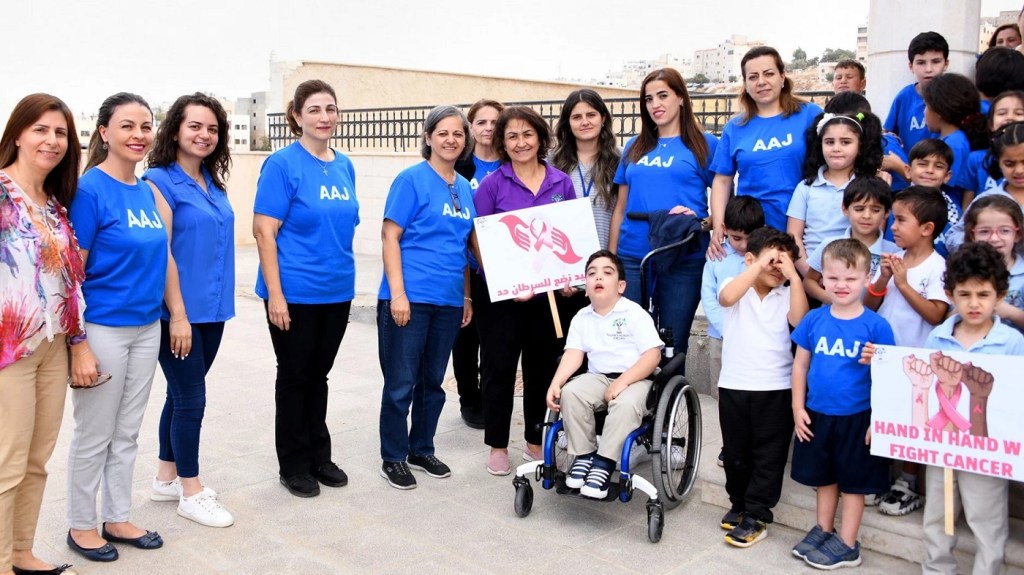
Ten years ago, evangelicals in Jordan helped pioneer inclusive education for students with disabilities. A decade later the minister of education patronized their commencement event.
Founded in 2014, Alliance Academy Jordan (AAJ), owned by the local Christian and Missionary Alliance (CMA) church, began with 54 students in kindergarten through second grade. Adding a grade level each year, its first graduating class of two students completes a now 350-student body—17 of which have disabilities ranging from cerebral palsy to autism and ADHD.
Another 31 have different levels of learning disabilities that require special class support and attention. Over the years, AAJ has enrolled 71 such students altogether.
It is a drop in the bucket.
In 2017, the Jordanian government launched a 10-year plan for nationwide inclusive education. AAJ was on the initial advisory committee of the Higher Council for the Rights of Persons with Disabilities that prepared it.
American funding is helping Jordan meet its goal of 30 public inclusive schools in its major cities by 2025, mandating professional development for all. Another 30 schools are planned for less-developed areas after that.
A 2020 study found that only 19 percent of teachers in Jordan were trained appropriately for special needs education. And while 11 percent of youth above the age of 5 have some sort of disability, 79 percent receive no form of schooling at all.
Last year the Higher Council selected AAJ as one of six members to form a public-private school association to share expertise and help in implementation. With an average class size of 17, AAJ is uniquely positioned to serve special needs students as it aids the national endeavor toward their social integration.
And beginning in 2025, the school plans to offer an American diploma.
CT spoke with AAJ general director Salam Madanat about challenges faced by the school, its diversity beyond disability, and how it maintains a Christian vision.
How did you come to your position?
I was happy in retirement at the time, volunteering in ministry through my church. But in 2019, the CMA asked me to join the AAJ board of trustees, due to my background with the Alliance church and in management and human resources with the Arab Bank. Three years later I was tasked to lead the search for a new school director. The position had been held by an American from the CMA mission since inception, but we were looking to transition to Jordanian leadership.
But as the search tarried, my husband whispered: I think you should do it. I didn’t want to wake at 6 a.m. every day and carry such a heavy weight. But as others shared similar encouragement at the school and in the church, I prayed and God assured me: This is my work, I’m responsible for it.
I am a devout Christian, so I knew he just wanted me to obey. All I could do is place my two copper coins into his hands, trusting him for what I could not see (Luke 21:1–4). But I am confident AAJ was founded by the will of God for a purpose, and it will remain so.
What is this purpose? The goal was to provide affordable education for all children—not just the rich, smart, or able—and show the love of God through this ministry. Many good schools in Jordan…
This article was originally published at Christianity Today on July 2, 2024. Please click here to read the full text.
Amid the war in Gaza, Israel’s most religious Jews threatened to emigrate.
The statement issued by the chief rabbi of the Sephardic community in March had nothing to do with fear of Hamas rockets or the continuing fight against them. Neither was it related to protests over the remaining hostages or calls for ceasefire.
The concern instead was the forced conscription of Haredi Jews, popularly known as the ultra-Orthodox, into the military.
On Tuesday, the Supreme Court of Israel ruled unanimously against them. Though a plan must still be formulated, about 66,000 ultra-Orthodox of draft age are now eligible for enlistment.
Israel requires three years of service for most men and two years for most women. But in 1947, then-prime minister David Ben Gurion exempted 400 yeshiva students who wished to dedicate themselves to prayer and Torah study.
Marked by traditional black-and-white garb with a hat, long beard, and side curls, they call themselves Haredim—derived from Isaiah 66:2, which says God favors those who “tremble” at his Word. The success of Israel, they believe, is tied to Leviticus 26:3, where national flourishing is dependent on their “careful” observance of the law, interpreted as strenuous engagement with the Scriptures.
Today, however, the Haredi community is the fastest-growing in Israeli society and constitutes 13 percent of the population, estimated to increase to one quarter by 2050. Yet while 540 military-eligible Haredi men voluntarily enrolled to fight since October 7, tens of thousands have continued to avoid the draft under Ben Gurion’s exemption.
In 1998, the Israeli Supreme Court ruled a law was necessary to codify this policy, and it was passed in 2002. Israel also established a yeshiva that included military service as well as a special battalion for Haredim males. While thousands have joined, the vast majority rejects the secularizing influence of the Israeli Defense Forces (IDF) as a threat to the uniqueness of their separate religious community.
Most Haredi do not celebrate Independence Day, observed from sundown to sundown May 13–14 this year. While they are not anti-Zionist, they believe that only the coming messiah can reconstitute the nation of Israel in the land. In the meantime, they support the current human endeavor through their prayers.
But in 2017, the Supreme Court ruled the 2002 law was discriminatory and ordered the government to address it. Given strong Haredi influence on politics, the issue was left unresolved until March 28, when judges barred the state from continuing payment of stipends to yeshiva students eligible for the draft. Authorities have stated they will not engage in a mass conscription, but an estimated 55,000 Haredi in over 1,200 yeshivas will lose their funding.
The controversy has sparked protests and counterprotests pitting religious and secular Jews against each other. CT asked Samuel Smadja, the leader of a Messianic Jewish synagogue in Jerusalem, to provide a biblical perspective.
His father, who came to faith among the small Jewish minority in Tunisia, was one of the first messianic believers in Israel, immigrating in 1956. Today Smadja is the regional director for Trinity Broadcasting Network. He founded Sar-El Tours to connect Christians with their Holy Land heritage. He also has Haredi relatives within his family.
Smadja discussed how yeshivas fit within current Israeli politics, whether Haredi prayers are effective, and the best methods to speak about Jesus with an isolated community that equates proselytizing with the agenda of Adolf Hitler.
How do Messianic Jews view the IDF?
The children of Messianic Jews are fully enlisted and striving to be the best soldiers they can be. This is not only to demonstrate our social legitimacy, but to be a light for the gospel and to put forth our testimony.
We want our children to be promoted to the highest posts, as an example.
How do Messianic Jews view the Haredim?
It is better to discuss Orthodox Judaism, as the Haredim are a subset and there is diversity within both. Some join the army, some don’t, and it is hard to generalize since so much depends on which rabbi they follow.
But in general, like Paul said, they fear God but not from knowledge. The Orthodox Jews try to keep the commandments and do their best to climb the ladder of righteousness to get closer to God. And they are willing to pay the price for their convictions, especially during these times of war.
I believe we should respect them.
Yet we disagree with them, even though we have much in common on moral issues such as abortion and the traditional understanding of Judeo-Christian ethics. With many secular Jews, you have to prove God’s existence. But the Orthodox accept the truth of the Bible, and if they are willing to talk, it demands of us a deep knowledge of Scripture.
They know the Old Testament very well, especially the first five books of Moses.
Are they willing to talk?
Much more than they used to be. I grew up in Israel, and 25 years ago the name Yeshua (Jesus) was a terrible word. Messianic Jews were not recognizable because we were so few. Now people know we exist, and that we believe Yeshua is the Messiah.
It makes for an interesting discussion. The debate centers on how to prove the concept of a suffering messiah, and not just from Isaiah 53, for which they have a different interpretation. And then we address God’s complex unity—the Trinity—and the language of John that “in the beginning was the Word, and the Word was with God” (1:1). This concept is mentioned frequently in rabbinic literature, and we discuss if John aligns with it.
Was God’s messiah meant to be divine, or an elevated rabbi? What the average Christian takes for granted we must prove to the Orthodox—just as Jesus did on the road to Emmaus when he opened the Law and the Prophets.
Why is Isaiah 53 insufficient?
Jews say this chapter speaks…
This article was originally published at Christianity Today on June 26, 2024. Please click here to read the full text.
One Friday evening, a young woman sat her toddler on her lap at Christ the King Evangelical Episcopal Church in Ma’alot-Tarshiha, a mixed Arab-Jewish town in northern Israel five miles from the border with Lebanon. Like mothers everywhere, she clapped her hands and beckoned a response.
What does the cow say? “Moo,” the child replied.
What does the dog say? “Woof” came the answer.
What does the bomb say? “Boom,” and they both laughed.
Only a few hours earlier, with Hezbollah rockets flying overhead, intercepted sometimes by Israel’s Iron Dome defense system, church elders had debated meeting at all. When the siren sounded during the service, members wondered if they should enter the concrete basement shelter.
The playful mimicry belies the seriousness of the less-reported conflict in the Galilee region, but it also reveals its everyday normalcy.
“By now the bombs have faded into the background,” said Talita Jiryis, the 28-year-old volunteer youth leader at Christ the King. “Dark humor is our mechanism to cope with fear and the uncertainty of tomorrow.”
That is, for the northern citizens who remain near the border. But a different uncertainty pains the tens of thousands evacuated from their homes. Arab Israeli Christians offered different assessments to CT, but all pray for peace in the land of their citizenship. The war in Gaza affects them too.
On October 8, one day after Hamas crossed the border into southern Israel and killed 1,200 Israelis, Hezbollah—the Shiite Muslim militia similarly aligned with Iran—launched its “support front” from Lebanon.
Daily exchange of rocket strikes and retaliatory fire has continued since.
But compared to Gaza, the casualties have been far fewer. In Lebanon, more than 450 people have been killed, mostly Hezbollah and other militant fighters but including over 80 civilians. In Israel, at least 16 soldiers and 11 civilians have been killed.
Within weeks, Israel ordered 42 northern communities neighboring Lebanon to evacuate, displacing between 60,000 and 80,000 residents with financial compensation provided. An additional 90,000 Lebanese have also fled the fighting, generally restricted to a stretch of land a few miles on either side of the border.
The violence has steadily escalated and expanded, though both Israel and Hezbollah have appeared reticent to engage in an all-out war. Ma’alot-Tarshiha was not ordered to evacuate; neither was nearby Rameh, where Jiryis was born and raised.
Mentioned in Joshua 19:29 as a border town of the tribe of Asher, Rameh lies a mere eight miles from the border. Yet the historically Christian village, populated also by Muslims and Islam’s heterodox Druze community, sits on a hill facing away from Lebanon. During the last outright conflict between Israel and Hezbollah in 2006, rockets struck only the peak or the valley below.
But it is not the relative safety that keeps Arab residents from evacuating. Jiryis said that many in Rameh are originally from nearby Iqrit, where in the 1948 Israeli war of independence, villagers were forced by Jewish soldiers to vacate. A promise they could return within two weeks was not honored; neither was the 1951 Israeli Supreme Court ruling on their behalf. The following Christmas, the Israeli Defense Forces (IDF) demolished each home.
Seventy-three years and one day later, a Hezbollah rocket struck Iqrit’s Greek Catholic church compound, the only building left standing. The rocket injured the 80-year-old caretaker, and nine IDF soldiers were wounded in subsequent fire as they sought to evacuate him.
Aware of the widespread grievance, Israeli authorities have issued only recommendations—not orders—for Arab communities to evacuate, Jiryis said. In the Christian village of Fassuta, women and children left while the men stayed behind, fearful that history might repeat itself.
Christ the King church, however, represents modern cooperation: Its land was donated three years ago by the Israeli government, and its bomb shelter is open to the public. Services are on the Israeli weekend in advance of the Sabbath, as many from the village work in the Jewish sector. Samaritan’s Purse, she added, helped the poor with a $130 food coupon, a first-aid kit, and battery-charged lamps.
“Jesus is the light of the world,” leaders stated during the distribution.
The church’s average attendance is about 80 people, including a dozen youth, mostly teens. Jiryis’s father is the pastor, and she extended his regional Maranatha family conference ministry with an interdenominational youth gathering planned for April. About 70 signed up from northern Brethren and Nazarene congregations, only for all to be thrown into disarray by Iran’s unprecedented missile barrage against Israel a few days prior to the event.
They held the conference anyway.
“We had to fully activate our faith,” she said. “Christians quote, ‘I will fear no evil.’ But this time, we couldn’t afford to pretend.”
Yet many are mentally exhausted, Jiryis said, and bury their fears rather than turn to God. During the week, she lives in the port city of Haifa, 25 miles southwest of her village, where she works as a psychologist in a government hospital. She has applied her skills through arts and crafts for the village children and insisted the adults continue to meet for mutual fellowship. Breathing exercises and emotional awareness are essential, Jiryis tells them.
Yet as she looks at the war, she is angry at injustice from both sides.
Jiryis knows the history at the heart of Jewish fear. Her mother is German; her great-grandfather was forced to fight in World War II. There are no winners in war, only losers was the mantra instilled in his son. This grandfather passed away when she was seven years old, but the sentiment has filtered into her identity today.
Her paternal grandfather was Palestinian, but like many young people of her generation, Jiryis said she struggles with how to define herself. Although she calls herself a Christian Arab citizen, she doesn’t feel fully Israeli because she is not Jewish, nor does she serve in the IDF. With many Arab and Jewish friends, as a rule she avoids politics and says instead, “Call me Switzerland”—a neutral nation where her father did biblical studies. Yet as an evangelical, she is a minority of a minority of a minority.
Her internal conflict is tangible, but she finds a solution.
“I focus on my heavenly identity,” Jiryis said. “But it is difficult here because you have to belong to something.”
She sees the surrender to community narratives even in the body of Christ. Some Messianic Jews admit they will not pray for the “future terrorists”—Palestinian children—who are dying in Gaza. Some Palestinian evangelicals say they cannot pray for a government committing “genocide.” While tension was always under the surface, relationships everywhere are getting worse.
But some, even apart from Jesus, are still praying together.
A Land of Life
Jiryis’s church is an example of believers praying together, having held joint meetings with Messianic Jews. But the identity issues she described are not uncommon in her community.
A 2015 survey of local evangelical leaders conducted by Nazareth Evangelical College (NEC) found that…
This article was originally published at Christianity Today on June 25, 2024. Please click here to read the full text.








 Jayson Casper