Sitting with a student distraught by religious war, a God-fearing academic lamented the chaos in Syria, the destruction of Iraq, and the existential tensions seemingly ever-present in the Holy Land.
“What a great fortune it would be if … every man on earth could be under one religion,” he said. “[Then] there would be no more rancor or ill will among men, who hate each other because of the contrariness of beliefs.”
The academic’s answer, unfortunately, underestimates the human capacity for conflict. Beyond the bloody geopolitics, Islam, Christianity, and Judaism have split into sects and factions, to the point of killing fellow believers who share the same text yet hold different beliefs.
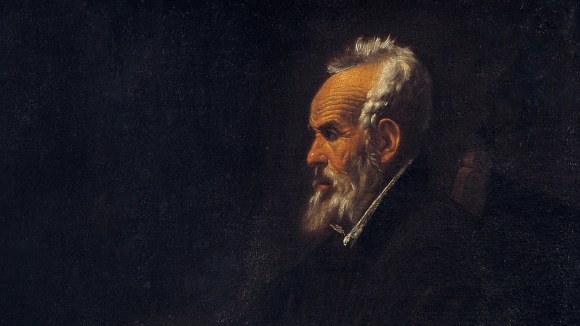
But for some, the “rancor and ill will” have prompted a corrective impulse to unite the faiths through interfaith dialogue. And the impulse is not new. The God-fearing academic? He’s a character from a book written in the 13th century by Ramon Llull, a Franciscan hermit and early proponent of an initiative still controversial among many believers today. Countercultural even then, The Book of the Gentile and the Three Wise Men addressed a world severely lacking in peaceful religious pluralism.
When Llull published his book in the 1270s, Crusaders were strengthening castles in Syria. The Mongol horde had sacked Muslim Baghdad—but then suffered defeat in Palestine, in the fields of Galilee. Llull wrote from what is now Spain, during the Reconquista, a military campaign to restore the Iberian Peninsula to Christendom. The Muslim realm, which they named Al-Andalus and became known as Andalucia, had been comparatively tolerant of Christians and Jews.
Llull lived on the island of Majorca, where his father settled after James I of Aragon declared victory in 1229. In the decades that followed, Christian kings in the liberated lands increased restrictions on non-Christian monotheists resident since the 8th century Islamic conquest. Some they forcibly converted, and within a few centuries, they expelled nearly all Muslims and Jews.
Llull, writing in Latin, Arabic, and his native Catalan, advocated for converting the non-Christians by rational argument, not the sword. While he did defend the Christian conquest of Muslim lands, he also founded missionary schools and traveled to North Africa, where he disputed with Islamic scholars.
Few of his contemporaries…
This article was originally published by Christianity Today on July 22, 2025. Please click here to read the full text.
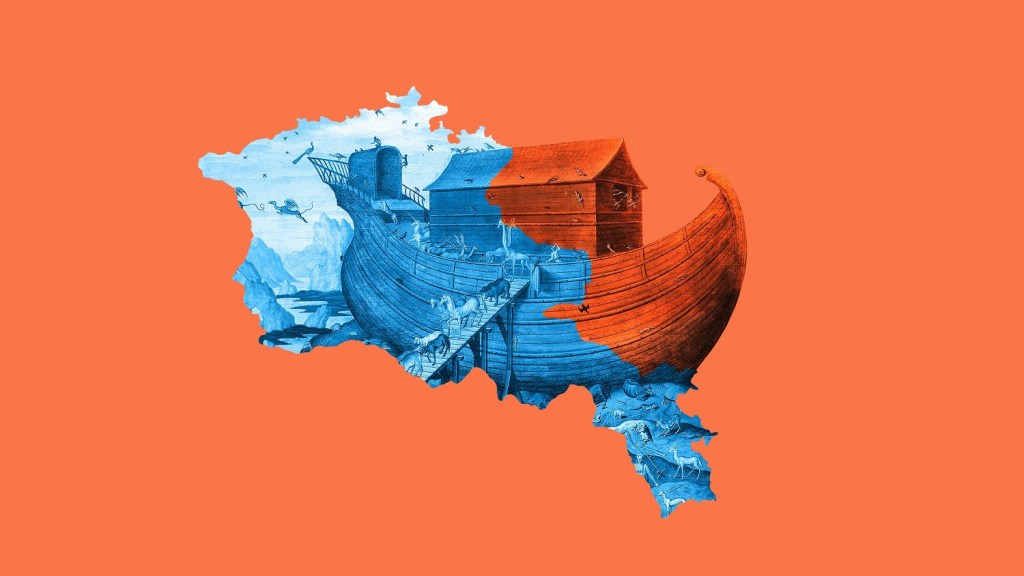
Illustration by Elizabeth Kaye / Source Images: Wikimedia Commons
If you want a break from Santa this December, try Hagop instead, an Armenian tradition that dates back as far as Old Saint Nick.
Santa Claus, the modern icon of Christmas, is derived from traditions associated with Saint Nicholas, a fourth-century bishop of Greek descent who was known for giving gifts. He is also mentioned among the church fathers at the Council of Nicaea in AD 325, for which the Nicene Creed is named.
If Nicholas was indeed at the council, he may have met Saint Hagop, who was also reputedly there. English speakers refer to him as Jacob of Nisibis, though in the Armenian language both Jacob the biblical patriarch and the Nicene saint are called Hagop. He is believed to have been a relative of Saint Gregory the Illuminator, who converted the Armenian king to Christ in circa AD 301. As a result, Armenia became the world’s first Christian nation.
Whereas Nicholas eventually became a secular stand-in for Jesus, Hagop is intimately associated with Noah. The Armenian Apostolic Church commemorates Saint Hagop in the second week of December—not because of any connection to Christmas (which its churches celebrate on January 6), but for his reputed role in demonstrating the historicity of Noah’s ark.
Many children delighted by tales of the animals that boarded the ark later turn skeptical, questioning the reliability of this miraculous story. But doubt about the Flood is nothing new. Back in the fourth century, Hagop heard reports that the local population did not believe the biblical account of Noah. A wandering ascetic, he undertook his own search for evidence and journeyed to Mount Ararat.
According to tradition, an angel appeared to Hagop in his sleep as he rested near the mountain peak and left a wooden fragment of Noah’s vessel by his side. Today, it is preserved within a reliquary dating to 1698, lying below an ornate gold cross and housed in Armenia’s St. Etchmiadzin Cathedral.
For many Western audiences, the story of Noah recalls little more than flannelgraph cutouts from Sunday school. But for Armenians, he is a national ancestor and figure of transcendent meaning. In fact, one of Armenia’s top soccer clubs is named FC Noah, and recently played a match against the English powerhouse Chelsea FC.
CT spoke with four Armenians to understand more fully Noah’s importance to their people, whether living beneath the shadows of Mount Ararat in the Caucasus Mountains or in the extensive Armenian diaspora. Each one shared memories of childhood, perspectives on tradition, and lessons from Noah for Christian faith today.
Hrayr Jebejian
Armenian general secretary of the Bible Society of the Gulf, headquartered in Cyprus and resident in Kuwait
The story of Noah and the ark fascinated me when I was a child growing up in the Armenian Evangelical Church. The fact that the ark landed on Mount Ararat gave us a special sense of pride as Armenians, that our land is mentioned in the Bible. We are an ancient people. As we grew older, for some the sense of wonder turned into skepticism: How did the animals march two by two, and was the Flood truly worldwide?
But as Armenians…
This article was originally published at Christianity Today on December 13, 2024. Please click here to read the full text.
Discovered ruins of a fourth-century church in Armenia are “sensational evidence” of the nation’s early Christian history, stated Achim Lichtenberger, the lead German archaeologist of a binational excavation effort with the local National Academy of Sciences. Carbon dating of wooden platforms may establish an octagonal structure as the oldest documented church in Armenia.
Tradition indicates that Armenia became the world’s first Christian nation in AD 301. The church design reflects features resembling similar building styles in ancient eastern Mediterranean civilizations, previously unknown in the Caucasus region. The ruins were found in Artaxata, once the capital of the Kingdom of Armenia, which means “the joy of truth” in the original Indo-Iranian language.
But Christina Maranci, an Armenian professor of art and architecture at Harvard University, said the joy of these discoveries is outweighed by alarm at the destruction of Armenian heritage sites in the neighboring country of Azerbaijan. The Muslim-majority nation initiated fighting that displaced its Armenian residents from a disputed region and is now accused of systematically removing the remaining evidence of their ethnic historical presence.
“This is their long-term plan,” she said. “The intent is to erase evidence of our existence, which they do not admit anyway.”
In a 44-day war with Armenia in 2020, Muslim-majority Azerbaijan reclaimed most of its internationally recognized territory in Nagorno-Karabakh, a mountainous enclave then populated by ethnic Armenians who had proclaimed themselves a breakaway republic they called Artsakh.
And last month marked the one-year anniversary of a lightning Azerbaijani offensive to capture the remaining pockets of land, which resulted in their near depopulation as 100,000 refugees fled to Armenia. Furthermore, beyond the geopolitical dispute and humanitarian crisis, critics see new evidence that Azerbaijan continues to demolish signs of the region’s historical Armenian presence.
Maranci is one of several academics employing scientific and technological advances to demonstrate claims of antiquity. Her expertise includes the study of spolia, remnants of ancient structures repurposed in modern construction.
As an example, Manci cited two monasteries from the 14th and 15th century that were destroyed—twice. In the 1950s, Soviet authorities leveled the structures and haphazardly incorporated the medieval stones into the building materials for two public schools. Children could daydream, Maranci said, while looking at randomly placed images of crosses, saints, and angels.
Until Azerbaijan…
This article was originally published at Christianity Today on October 28, 2024. Please click here to read the full text.
During Tuesday night’s presidential debate, Kamala Harris accused Donald Trump of a fondness for dictators, alleging that he supported a negotiated settlement with Vladimir Putin following Russia’s invasion of Ukraine. Trump, declining to affirm that a Ukrainian victory would serve US interests, replied that if he were still in the Oval Office, the war would never have happened, and he claimed that he could bring it to an end even as president-elect.
Both candidates failed to address the most salient current issue on Ukraine for evangelicals: religious freedom.
Last month, the Ukrainian parliament overwhelmingly approved a proposal to ban the activities of the Russian Orthodox Church (ROC) and compel the Ukrainian Orthodox Church (UOC) to break all ties with the patriarchate in Moscow. President Volodymyr Zelensky signed the bill into law, hailing his nation’s “spiritual independence.”
Some Republicans, including vice-presidential candidate J.D. Vance, have accused Ukraine of “assault[ing] traditional Christian communities.” Vance linked these alleged violations to the continuation of US military support, stating that military aid should be used as leverage to ensure religious freedom.
The charge is nonsense, said a leading Ukrainian expert in an interview with CT.
The law, said Maksym Vasin, director for international advocacy and research at the Institute for Religious Freedom in Kyiv, is meant to protect Orthodox believers in Ukraine from Russian propaganda. The State Service for Ethnic Policy and Freedom of Conscience (DESS) studied ROC and UOC documents to demonstrate the continuing link between the two churches, despite the UOC’s postwar assertion of independence. Each of the UOC’s 10,000 parishes has now been given nine months to demonstrate that it is not connected to the ROC, subject to court judgment.
However, the GOP is not alone in its concern.
Pope Francis stated last month that no church should be abolished “directly or indirectly” based on how its people pray. The World Council of Churches urged “caution.” And according to variousreports, Ecumenical Patriarch Bartholomew I, considered first among equals in the Orthodox world, sent a delegation to Ukraine to inquire about canonical structure and whether individual UOC parishes are being forcibly transferred to the rival Orthodox Church of Ukraine (OCU).
The state said 1,500 parishes have voluntarily aligned with the OCU since 2018.
In 2019, Bartholomew granted autocephaly (canonical independence) to the OCU, a then-schismatic body that had earlier broken off ties with Moscow. The move, supported by the United States, shifted OCU allegiance to the ecumenical patriarch’s church in historic Constantinople.
Orthodoxy first spread among the Slavic people from Kyiv, which was joined to the ROC in 1686. Following passage of last month’s law, the OCU reached out to the UOC for dialogue, emphasizing the need for unity and reconciliation.
CT spoke with Vasin, who contributed a chapter analyzing an earlier draft of the law in last year’s Security, Religion, and the Rule of Law, about the response of Ukrainian evangelicals, the limits of individual criminal prosecution, and whether the law should be considered a “ban.”
Please explain the aim of the new law.
The law aims to terminate Russian influence on Ukrainian society through Russian religious centers and to limit the propaganda of the chauvinistic ideology of Russkiy Mir (Russian World) in Ukraine. Ever since Soviet times, Russia has systematically used religion and religious centers of various denominations, primarily the ROC, as a tool of propaganda to achieve its military and geopolitical goals.
Churches are then manipulated to exert totalitarian control over their citizens or are closed down if they refuse to cooperate. This repressive policy is clearly visible in the eastern and southern regions of Ukraine, annexed following the Russian invasion. There, the Russian authorities are carrying out brutal repression against Ukrainian Christian churches and religious communities of various denominations, including Muslims and Jews who do not support Russian aggression.
Putin and the Kremlin want to maintain a key instrument of influence in Ukraine, namely the ROC and its affiliated local Orthodox eparchies and parishes. For this reason, Russia is most vocal critic of the Ukrainian government’s initiatives aimed at protecting religious freedom from abuse.
Is the new law a “ban” of the UOC?
It is a ban of the ROC in Ukraine, because of its open support for Russia’s war.
It is not an immediate ban on the activities of the UOC, which is not even directly mentioned. The government will issue directives to break administrative and canonical subordination to the ROC or other Russian religious centers. If a religious community refuses to sever these ties, the government will have the right to apply to the court to terminate the activities of this legal entity, given the danger to national and public security. But if the defendant parish complies during these hearings, the court case will be dismissed.
Thus, it is wrong to say that this law bans the UOC. Instead, the law allows this church and any other religious associations in Ukraine to liberate themselves from the influence of Russian intelligence services and stop being mouthpieces for Russian propaganda.
It is up to the UOC priests and parishioners to decide whether they will continue to agree to be used by the Kremlin or whether they will end their dependence on the ROC and Russian authorities.
Your analysis of an earlier version of the law advised the government to concentrate on individual criminal proceedings against clerics who collaborated with Russia. Why is this not a sufficient safeguard against Russian interference?
Religious communities should not be responsible for the activities of their clerics, and a ban must be the last resort if other measures have been ineffective. But in recent years, it has become increasingly clear that…
This article was originally published at Christianity Today, on September 13, 2014. Please click here to read the full text.
Russian evangelicals used Sunday sermons to condemn a terrorist attack that killed more than 130 people at a Moscow concert hall.
As Russia’s Baptist union prayed for “God’s mercy and protection,” its Pentecostal union conveyed its “bitterness and sorrow.” Vitaly Vlasenko, general secretary of the Russian Evangelical Alliance, called it a “painful shock” that could unleash “unbridled revenge” against terrorism.
But many in Russia are wondering: Who are the terrorists?
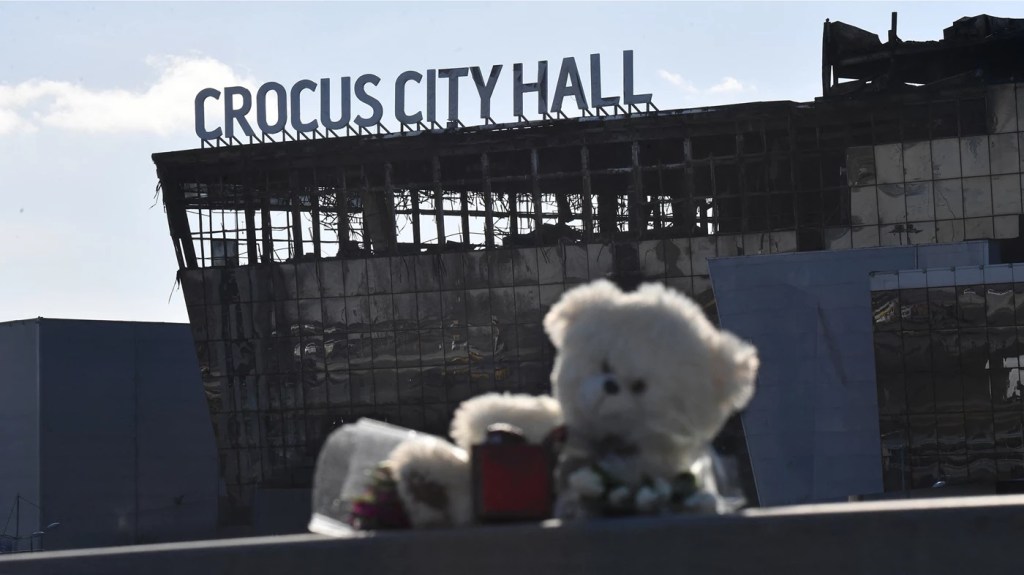
The attack on Friday that killed at least 137 people at the 6,200-seat Crocus City Hall was claimed by the ISIS affiliate in Afghanistan’s Khorasan Province (ISIS-K), which seeks an Islamic caliphate in Central Asia. Its statement emphasized it was targeting Christians and came in the “natural framework” of its war against the enemies of Islam.
Earlier this month, the US embassy in Moscow had issued a warning to avoid large gatherings. American officials stated they shared their intelligence with Russia. On March 7, Russia said it thwarted an attack on a synagogue, and a few days prior, security services killed six ISIS-K terrorists during a shootout in the nation’s Muslim Caucasus region.
The group was also linked to the 2017 St. Petersburg metro bombing that killed 15.
ISIS-K was formed by extremists seeking a more violent path than the Pakistani Taliban in 2015, the same year Russia formally intervened in Syria to support President Bashar al-Assad. A Sunni group, ISIS and its affiliates oppose Assad’s Alawite faith as heretical and considers Shiite Muslims as apostate.
In January, ISIS-K killed 95 Iranians in Kerman at a memorial service for Qasem Soleimani, leader of the Islamic Revolutionary Guard Corps who was assassinated by the US in 2020. And as American forces withdrew from Afghanistan in 2021, an ISIS-K attack on the Kabul airport killed 13 US soldiers and 170 civilians.
Analysts stated, however, that ISIS-K was increasingly targeting Russia.
Russia has arrested 11 suspects, with four alleged gunmen from Tajikistan now on trial.
But President Vladimir Putin, reelected March 17 with 88 percent of a vote Western observers declared was neither free nor fair, did not mention Islamic terrorism when he declared a national day of mourning. Official statements of blame have been vague, while the deputy head of Russia’s security council openly speculated that if Ukraine was involved, its leaders “must be tracked down and killed without mercy.”
“Are you sure it’s ISIS?” asked Russia’s foreign ministry spokesperson, suggesting the group was being used as a “bogeyman.” The Russian ambassador to the US denied receiving any advance information from the US. And a nationalist media outlet urged the Kremlin to give Ukrainians 48 hours to evacuate major cities.
Just a few hours prior to the concert hall massacre, in a wide barrage against Ukraine’s civilian infrastructure, Russia had targeted its largest hydroelectric dam, leaving more than one million people without electricity.
Ukraine has denied any involvement in the terrorist attack.
Its military intelligence spokesperson, however, suggested instead that it was a “deliberate act of provocation” by Putin, while President Volodymyr Zelensky stated it was typical of such “thugs” to divert blame. He also alluded to unproven accusations that terrorist attacks in 1999 were a false flag operation, and that Putin considered his own citizens to be “expendables.”
The US stated that ISIS-K alone carried out the attack, with Ukraine uninvolved.
Russian evangelical sources did not comment on the mutual accusations. They emphasized the outpouring of prayer, sympathy for victims, and the need to trust God and resist any urge for revenge.
“Evil is spreading across the earth,” said Alexey Markevich, vice rector for academic affairs for Moscow Theological Seminary, who has criticized the war in Ukraine. “Lord, give us peace, and prevent any of us from being consumed by evil.”
Christians4Peace, an anonymous…
This article was originally published at Christianity Today, on March 25, 2024. Please click here to read the full text.
Image: Gavriil Grigorov / Pool / AFP / Getty Images
Tucker Carlson is reviving American interest in Ukraine.
Approaching two years since the Russian invasion on February 24, 2022, the Slavic conflict has been eclipsed by the Israel-Hamas war in Gaza in the forefront of US media attention.
Many Americans, however sympathetic they remain, have tired of foreign wars in lieu of pressing domestic issues at home. Others, however, see continued US support for Ukraine as a low-cost check on Russian imperial ambitions.
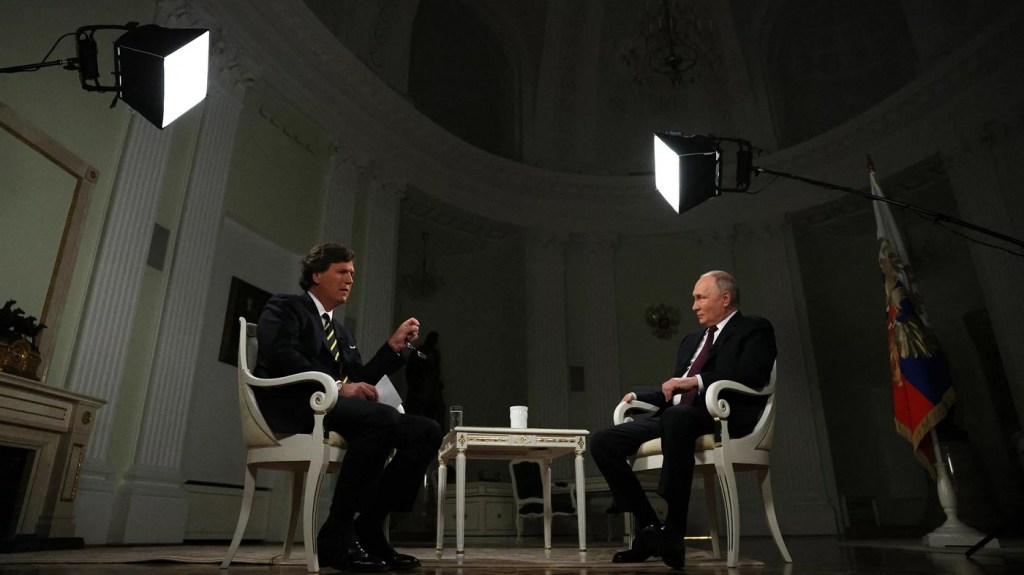
Carlson, the controversial pundit, is presenting the views of Vladimir Putin.
While many American outlets have requested an interview with the Russian president, Carlson was granted the interview as his perspective “is in no way pro-Russian, it is not pro-Ukrainian,” stated the Kremlin spokesman. “It is pro-American, but at least it contrasts with the position of the traditional Anglo-Saxon media.”
Carlson said it would allow viewers to see the “truth” obscured by Western reporting.
Christianity Today invited Ukrainian evangelical sources to comment on any religious remarks conveyed. Seven stated they had no intention to watch what one called a “propagandist” in conversation with “the killer of my people.”
Putin gave them little to work with during the two-hour interview.
He described of the coming of Christianity to Eastern Europe within a nearly uninterrupted half hour answer detailing Russian history, during which he called Ukraine an “artificial state.” Pressed how as a professing Christian he could order violence, Putin spoke only of Russia’s “moral values.” And probing Putin’s personal faith, Carlson asked him if he saw God at work in the world.
“No, to be honest,” the Russian president replied, after a pause. “I don’t think so.”
To understand any conflict requires knowledge of its background. CT has published articles about how Christianity came to Ukraine and Russia, the 160-year spiritual history behind today’s divide, and why Ukraine calls upon Michael the archangel. Concerning more contemporary pre-war history, CT covered Ukrainian politics and the efforts of evangelicals to win influence, in addition to the tomos of autocephaly that gave ecclesial independence to one-half of Ukraine’s Orthodox church.
But while Ukrainian sources declined to engage Carlson’s effort to understand the war through the rhetoric of Putin, they have informed most of CT’s ongoing coverage.
Religious freedom is under threat in Ukraine. Some question by whom?
A Ukrainian delegation to last week’s International Religious Freedom Summit in Washington, DC, had a clear answer: Russia. Led by Sergey Rakhuba, president of Mission Eurasia, it presented “Faith Under Fire,” a December report detailing the crimes of war in eastern Ukraine and elsewhere.
“Faith communities are under incredible pressure in occupied territories,” he told CT. “The ideology of the Russian world is to completely monopolize religion.”
International lawyer Robert Amsterdam, however, warned that Ukraine was attempting the same control over one half of its divided Orthodox church.
Initial legislation passed by the Ukrainian parliament in October, he said, threatened to “ban” the historic Ukrainian Orthodox Church (UOC), the branch canonically linked to the Russian Orthodox Church (ROC) patriarchate in Moscow. In response, Amsterdam sent a 25-page dossier to the US, UK, and European Union heads of state on the UOC’s behalf.
“There is now a very serious question mark over whether Ukraine can meet its commitments to human rights and the rule of law,” the dossier stated. “This will have dire ramifications for Ukraine’s entry into the European Union and its place in the Western world.”
The authors of both reports share a common enemy.
Mykhailo Brytsyn, the lead author of the Mission Eurasia report, is a Ukrainian pastor who was previously arrested by the Russians during a worship service in Melitopol, occupied by Russia since March 2022. He was later exiled, and the army seized his church and turned it into a military base. Amsterdam, a Canadian lawyer with offices in DC and London, was also previously arrested in Moscow for defending Russian dissidents and subsequently banned from the country.
The United Nations is monitoring both Russia and Ukraine.
At a November meeting of the body’s security council, the UN assistant secretary general for human rights noted the yet-to-be finalized law in Ukraine and chided the country for failing to properly investigate 10 documented cases of violence at houses of worship, instigated by the Orthodox Church of Ukraine (OCU) against the Moscow-linked UOC.
The OCU was granted autocephaly—national independence—by Ecumenical Patriarch Bartholomew I of Constantinople in 2019, supported by the United States under the principle of religious freedom. But the move was rejected by the ROC, which continued in ecclesial jurisdiction over the UOC.
The UN official, Ilze Brands Kehris, continued her testimony to state that Russia is violating international norms by applying its own law in occupied territory, detailing restrictions on minority believers.
Rakhuba noted that there are many such restrictions.
“This war is not just territorial, it is ideological,” he said. “Religious freedom is missing from Russian terminology.”
Citing a concept called Russki Miir—“Russian World”—Rakhuba, a Ukrainian who previously worked with the Union of Evangelical Christian Baptists in the Soviet Union, contended that the ROC works hand-in-hand with the Kremlin to marginalize other Christian denominations. Since the invasion, the Russian military authority in the occupied Donbas region has steadily replicated that formula.
Rakhuba described three phases. In the first, from the January 2022 invasion until April of that year, the Russian army…
This article was originally published at Christianity Today on February 6, 2024. Please click here to read the full text.
For the first time, the United States has recognized Azerbaijan as a violator of religious freedom.
Inclusion on the State Department’s second-tier Special Watch List (SWL) subjects the oil-rich Shiite Muslim–majority nation to the possibility of economic sanctions.
The US Commission on International Religious Freedom (USCIRF) has called for the Caucasus nation’s censure each year since 2013. Created by the 1998 International Religious Freedom Act (IRFA), USCIRF’s bipartisan yearly report evaluates “systematic, ongoing, and egregious” violations independent of US foreign policy concerns and tracks government implementation of its recommendations.
Complicating any consequences, Azerbaijan aligns with US foreign policy in certain areas: It cooperates closely with Israel, is aligned against Iran, and agreed to increase oil exports to Europe in the wake of Russia’s invasion of Ukraine.
In a brief statement, US secretary of state Antony Blinken kept unchanged all other 2022 designations mandated by the IRFA. Azerbaijan joins Algeria, the Central African Republic, Comoros, and Vietnam on the SWL, cited for “engaging in or tolerating severe violations of religious freedom.”
Twelve nations—China, Cuba, Eritrea, Iran, Myanmar, Nicaragua, North Korea, Pakistan, Russia, Saudi Arabia, Tajikistan, and Turkmenistan—again received designations as first-tier Countries of Particular Concern (CPC).
USCIRF “welcomed” the designation of Azerbaijan. But it stated there was “no justification” for failing to follow its advice to also label India and Nigeria as CPCs.
India was first recommended from 2002–2004 as a CPC, from 2010–2019 for the SWL, and then again from 2020 onward as a CPC. Nigeria was recommended for the SWL from 2003–2008, and as a CPC since 2009.
While the State Department has never included India, former president Donald Trump listed Nigeria on the SWL in 2019 and as a CPC in 2020. President Joe Biden removed it entirely the following year.
USCIRF called for a congressional hearing over these omissions and further criticized the State Department for issuing sanction waivers for CPC violators Pakistan, Saudi Arabia, Tajikistan, and Turkmenistan.
In a statement to CT, Lilieth Whyte, public outreach chief of the State Department’s Office of International Religious Freedom, cited three main factors.
Azerbaijan’s laws place “onerous registration requirements” on religious groups to register nationally, restricting them further in their right to worship freely and select their own clergy. The government physically abuses, arrests, and imprisons religious activists, she added, while conscientious objectors are not permitted to serve their country in accordance with their beliefs.
Not mentioned was Azerbaijan’s months-long blockade of its Armenian-populated enclave of Nagorno-Karabakh—which Armenians call “Artsakh”—which culminated in an invasion last September that displaced more than 100,000 people.
At the time, Blinken “urged” Azerbaijani president Ilham Aliyev to “immediately cease military actions.” In November, assistant secretary of state James O’Brien told a congressional committee that “there cannot be ‘business as usual’” in US relations.
But last December, the State Department press service clarified that cessation of interaction with Azerbaijan would be…
This article was originally published at Christianity Today, on January 8, 2024. Please click here to read the full text.
Image: Dmytro Larin / Global Images Ukraine / Getty Images
Perennial favorite John 3:16 may have nothing to do with the war against Russia.
Isaiah 41:10 speaks more clearly to times of conflict—though it boasts a leading position in many other nations as well.
But missing from the top 10 list in Ukraine—and no other nation highlighted by YouVersion—is Jeremiah 29:11: “‘For I know the plans I have for you,’ declares the Lord, ‘plans to prosper you and not to harm you, plans to give you hope and a future.’”
Evangelical leaders shared their reflections on why millions of citizens in the Orthodox majority country may have found inspiration in the top 10 verses, not others, and suggest personal favorites that shed light on life in a war-torn nation:
Igor Bandura, vice president of the Baptist Union of Ukraine:
The results released by YouVersion are informative, inspiring, and challenging. My heart cries out in unison with all of them, as they reflect God’s love as the source of life within our deep search for meaning under the pressure of war. It is no wonder that John 3:16 ranks first, giving comfort against the power of darkness in the midst of loss, suffering, and simple exhaustion.
The Bible remains our most powerful source of encouragement, wisdom, and strength.
Perhaps Jeremiah 29:11 is left out because while God plans not to harm us, Russia does—and the imaginable near-term consequences keep Ukrainians from contemplating an unimaginable future. Certainly, this is a challenge for faith. But mine has been strengthened through a different unlisted inspiring verse in Zechariah 9:12: “Return to your fortress, you prisoners of hope; even now I announce that I will restore twice as much to you.”
There are two possible interpretations. First, that despite being prisoners of our overwhelming circumstances, there is still hope available to us. And second, that God’s hope has made us prisoners, and that we cannot live any other way. Both are true—and we await the “double” that God has promised.
Maxym Oliferovski, a Mennonite Brethren pastor and project leader for Multiply Ukraine, Zaporizhzhia:
That these 10 Bible verses have been shared the most in Ukraine does not surprise me at all. The first five focus on love, protection, and strength, communicating God’s care for us during the many hardships caused by the invasion. Most meaningful to me has been 1 Peter 5:7, “Cast all your anxiety on him because he cares for you,” because I tend to live in the future. But in the uncertainty of war, even short-term plans become impossible. God then reminds me I must rest in him, greatly decreasing my worry and stress.
The second five verses, taken together, strike me as a prayer for faith, holiness, and bravery. It is so easy to lose focus and get depressed. Certainly, we need healing, which comes through his Word.
But we also realize that…
This article was originally published at Christianity Today, on December 22, 2023. Please click here to read the full text.
Ukraine’s parliament overwhelmingly passed a preliminary vote last Thursday for a bill that could ban the Ukrainian Orthodox Church, which has close ties to the Russian Orthodox Church, from operating within Ukraine’s borders.
Law 8371 would give Ukrainian authorities power to examine the connection of religious groups in Ukraine to the Russian Federation and to ban those whose leadership is outside of Ukraine. The draft law, approved by a tally of 267–15, with two abstentions, still needs to undergo a second vote, where it may be amended. It would then move to President Volodymyr Zelensky for his approval before it becomes law.
Since the outbreak of full-scale war between Russia and Ukraine, Russian Orthodox priests in Ukraine and around the world have faced accusations of spying and otherwise working to advance Russia’s political interests. Moscow’s Patriarch Kirill, a close ally of the Putin regime, has provided religious justification for the conflict in sermons and public appearances.
“The Russian Orthodox Church’s connection to the Russian Special Services has a very long history,” Oleksandr Kyrylenko, a scholar of religion and Orthodox Christianity in Ukraine, told Religion News Service.
Last month, Bulgaria expelled three of the highest-ranking Russian Orthodox priests in the country. At the same time, the FBI warned Orthodox communities in the US that Russian intelligence services may be using their churches to recruit assets.
Since the 10th century, Russian and Ukrainian Orthodox Christians had been part of one church. The Moscow Patriarchate itself began as the Metropolis of Kiev and all Rus, the people who formed the first Russian nation.
The relationship between the Russian church and Ukrainian Orthodox Christians began to sour almost a decade ago after Russia’s support for separatist insurgents in Ukraine’s eastern Donbas region and Russia’s occupation of Crimea in 2014. In 2019, the Ecumenical Patriarch of Constantinople, considered “first among equals” in the Orthodox Christian world and a customary mediator among its many patriarchates, granted…
This article was originally published by Christianity Today, on October 23, 2023, with original reporting by RNS. Please click here to read the full text.
Karolin is one of 30,000 Armenian children without a home—again.
Fleeing the mountainous enclave of Nagorno-Karabakh in the face of Azerbaijan’s assault last month, the 12-year-old girl had an unexpected encounter. After crossing the Lachin corridor westward to Goris in Armenia proper, she found her beloved social worker waiting.
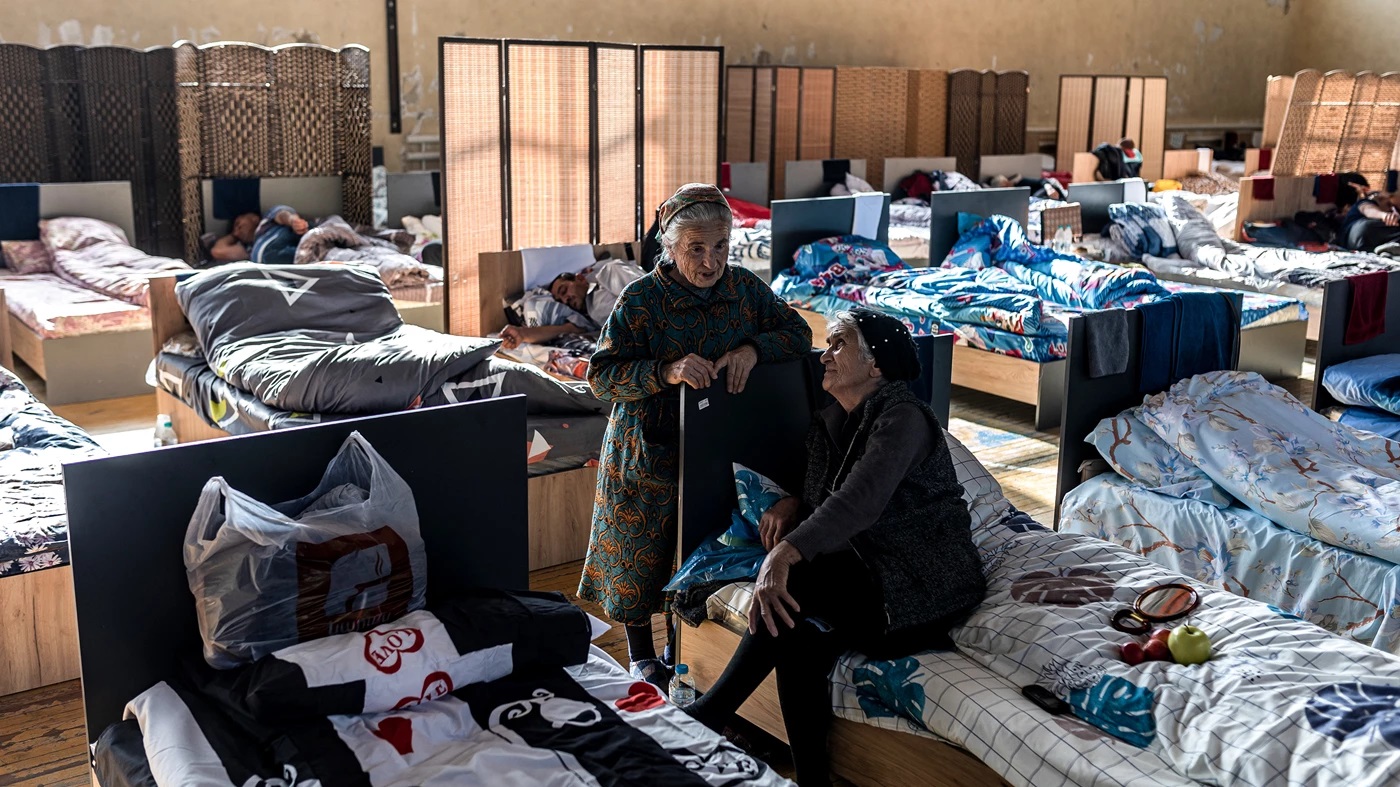
Arpe Asaturyan, founder of Frontline Therapists (FLT), was astounded as well. Amid the 100,000 refugees from what Armenians call their homeland of Artsakh, she had found the very same child displaced three years earlier. A special bond formed with then-9-year-old Karolin, who had gripped her tightly before returning home.
Located within internationally recognized Azerbaijani territory, the Armenian enclave suffered a bloody 44-day war in 2020. Over 6,000 soldiers died before a Russian-backed ceasefire left local Armenian authorities in control of only a portion of formerly held Artsakh land.
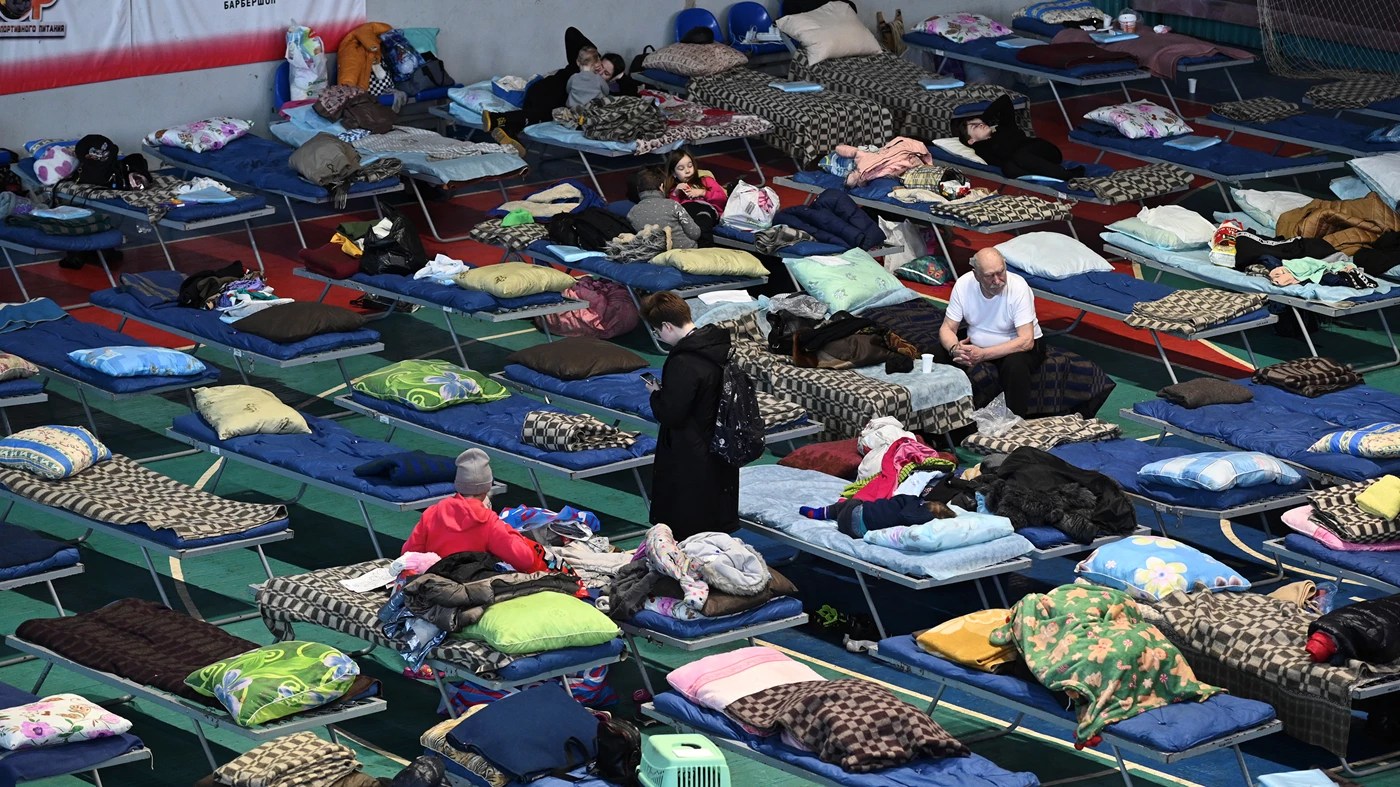
Karolin and her family went back anyway, vowing to continue their multigenerational presence. But after suffering malnutrition during an Azerbaijani-imposed nine-month blockade, they trudged three days in the slow-moving convoy of cars and buses across Lachin—the only road connecting the enclave with Armenia.
Over the week-and-a-half exodus, Artsakh residents crossed at a rate of 15,000 per day.
But the bittersweet reunion with Karolin is far from the worst of Asaturyan’s ordeal. Suffering in the chaos of relocation and the fog of war, several mothers told their children they would find their daddy in Armenia.
As counselor, Asaturyan was asked to tell them that their fathers had died.
“It is heartbreaking, and you know this will be the worst day of the rest of their lives,” Asaturyan said. “With all that has happened, it is hard to find faith.”
When the 2020 war broke out, the California native left behind a successful practice in trauma counseling to join her ethnic kin in ministering to returning soldiers and new widows. Funded by the Armenian diaspora, she oversees a small staff of paid and volunteer therapists providing free mental health services.
But in the weeks following last month’s conflict, her office turned into a humanitarian hub. Already, 20 truckloads of aid have been sent to Goris and the summer camp refuge in central Armenia where she first met Karolin.
“They know their life there was tenuous—they even laminate their documents,” Asaturyan said. “This is still the shock phase, but grief is set aside as bereft mothers must struggle now to find a job.”
The Armenian government initially prepared to receive 40,000 displaced from Artsakh; that was the single-day inflow on September 27 alone. The total number represents 3.4 percent of Armenia’s population, added to an existing refugee population of about 35,000. This does not include at least 65,000 Russians who fled to Armenia due to the Ukraine war, driving up real estate prices by 20 percent with skyrocketing rents.
The Armenian government is providing a relocation payment of $260 per person, with a promised monthly support of $100 to assist with rent and utilities. The UN High Commission for Refugees has called for $97 million in international assistance, and the United States has led the way with a pledge of more than $11.5 million.
“Peanuts,” said Marina Mkhitaryan, executive director of the Armenian General Benevolent Union (AGBU), a 180-year-old organization with institutional links to the Armenian Apostolic Church. “The level of support only adds insult to injury.”
Partnering with World Central Kitchen, AGBU has helped provide 80,000 nutritious hot-food boxes to those in greatest need. Soon AGBU will shift to dry-food packages so families can cook their own meals for up to four days. But a strong focus is on integration, equipping the displaced to live on their own.
A logistics center assists with mundane matters like official documentation, establishing bank accounts, and understanding taxes. And AGBU has partnered with a local employment agency to help the displaced find jobs and to provide training in entrepreneurship and the skills necessary for entry-level positions in Armenia’s strong IT sector.
But, being careful with terminology, Mkhitaryan wants more for Artsakh’s former residents than current stability.
“These are displaced persons who will eventually return to our historic homeland,” she said. “Refugee implies a state of no return, and that is not our stance.” Pastor Vazgen Zohrabyan believes this will only be possible…
This article was originally published at Christianity Today, on October 16, 2023. Please click here to read the full text.
Suddenly, more than 80 percent of people in Nagorno-Karabakh have fled.
Last week the unrecognized Armenian republic, called “Artsakh” by its 120,000 residents, suffered an invasion by Azerbaijan, which is recognized internationally as sovereign over the enclave nestled in the Caucasus Mountains.
At least 32 people were killed in the assault that violated a Russian-backed ceasefire, with at least 68 more killed six days later in a suspicious fuel depot explosion.
But more than the death count, fear of genocide is driving people to flee—more than 97,700 as of 6 p.m. Friday evening, according to Armenian officials [updated]. Though the enclave is home to around 400 holy sites now at risk of erasure, one official stated that 99.9 percent of Artsakh’s Armenians will cross the border to Armenia, the world’s first Christian nation.
The same crossing had been blocked by Azerbaijan since December 2022.
Near-starvation conditions ensued, with humanitarian aid allowed entry one day prior to the Azerbaijani offensive. The Artsakh government issued a decree to dissolve itself as of January 1, ceding control of a territory it declared independent after the fall of the Soviet Union in 1991.
Armenians controlled Nagorno-Karabakh since 1994, after a three-year war resulted in the deaths of 30,000 people, displacing an additional 100,000 in mutual exchange between Armenia and Azerbaijan. Peace talks faltered since then, as they continued to fail after 2020, when a 44-day war resulted in Azerbaijan reclaiming much of the enclave. A further 7,000 were killed before the Russian ceasefire.
Azerbaijan has promised that Armenians in the territory will be integrated as full citizens with equal rights, joining other non-Azeri ethnicities which comprise 8 percent of the population. In the Shiite-majority nation with a substantial Sunni minority, the small Christian community generally reports overall freedom of religion.
The European Parliament and Minority Rights Group, however, havestated that Azerbaijan’s ethnicities suffer discrimination. Artsakh Armenians fear much worse.
Imagine if 80 percent of Hartford, Connecticut, suddenly fled to New York.
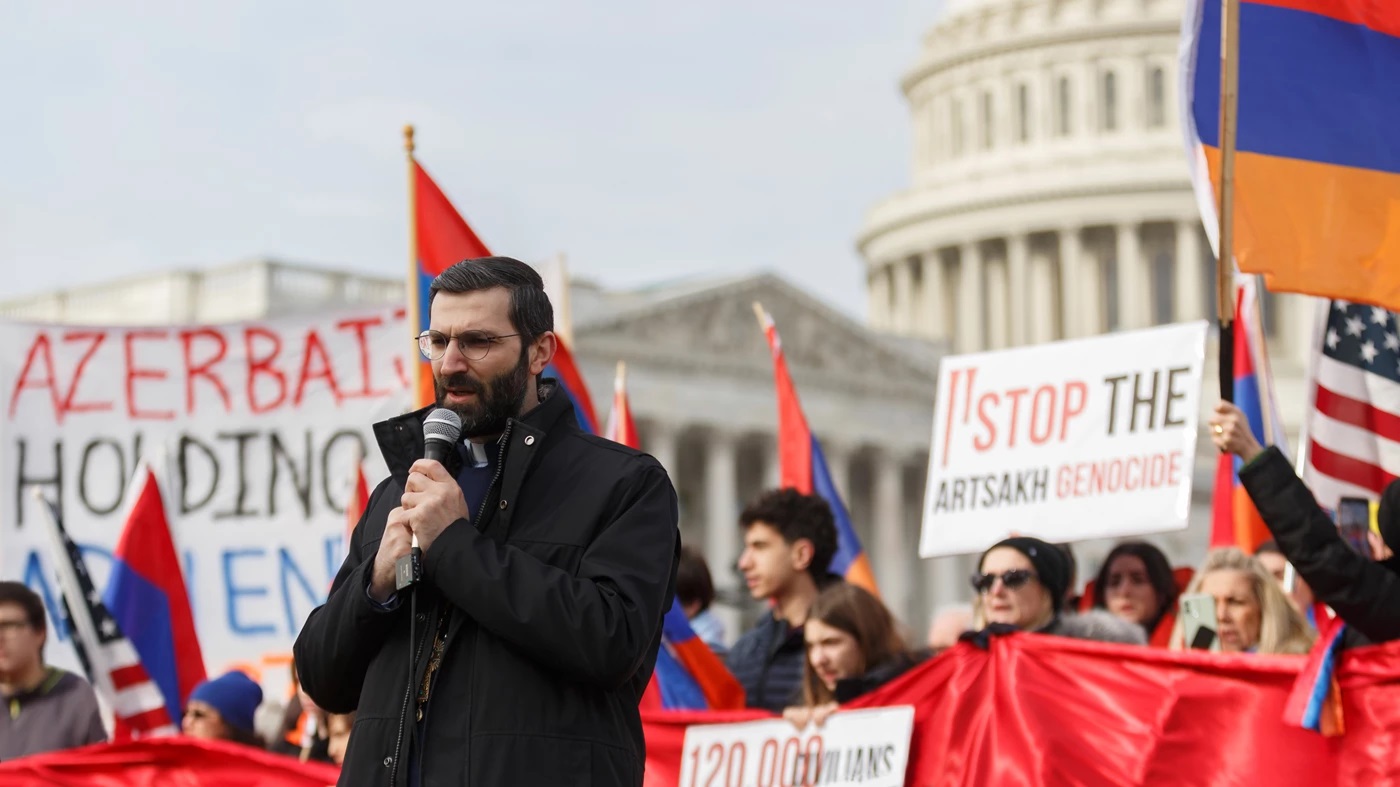
The Armenian diaspora is stunned. The Armenian Apostolic Church has declared a worldwide day of prayer for October 1. And on October 5, Europeans for Artsakh has called for a rally in Brussels, to coincide with planned peace talks between the Armenian prime minister and the Azerbaijani president.
Like many, Hrayr Jebejian is at a loss. The general secretary of the Bible Society in the Gulf, also a Lebanese-born Armenian, resides in Kuwait and spoke to CT about his overall state of depression—but also his enduring trust in God.
How has the loss of Artsakh impacted you personally?
I am an Armenian. No matter how objective or balanced I seek to be, there is a lot of emotion. It is depressing. Even as a believer I am trying to pull myself together, so that I can continue to live my everyday life. It is affecting me that much.
I want to work, but I have no motivation. I have friends in Artsakh, I’ve been checking in on them, and they are traumatized. A teacher there told me: How can we stay, when there is a sword over our head?
Did you have hope when humanitarian aid was first allowed in?
I was closely following developments, and all the suffering from the blockade. Thirty thousand kids live there! And international experts said that ethnic cleansing was taking place. I can’t say this outcome wasn’t expected. It was expected.
But it all happened so fast.
From a political perspective, Artsakh had an elected president and parliament. Azerbaijan is a dictatorship, passed from father to son. If you put the Armenians into the middle of that, when they were used to democratic opposition and criticizing the government, it will be very difficult for them.
We don’t know how many people will stay. But there is no trust.
But the ancestral land and ancient monasteries are so important to Armenians. Are there voices calling for them to stay anyway and insist on the promises of equal citizenship?
There is a…
This article was originally published at Christianity Today, on September 29, 2023. Please click here to read the full text.
Help for Morocco is coming from Turkey. While humble in scope, the biggest impact may be on the church.
First Hope Association (FHA), a Turkish Christian disaster relief agency that provided aid after the massive earthquake that struck southeast Turkey in February, was granted permission to assist in Morocco after its own devastating quake. A four-person team arrived in Marrakesh last week.
Consistent with its Turkish policy, FHA serves all victims without discrimination, in cooperation with the local church. Connecting with a house church network in southern Morocco, the Turkish believers have distributed $30,000 worth of clothes, blankets, and hygiene kits in four mountain villages not yet reached by other aid.
“Our country has gone through the same hardships and difficulties, so we came to help and support,” said Demokan Kileci, FHA board chairman. “This is an amazing opportunity for God’s church here to show his compassion and love.”
In many ways, the parallels are striking.
Morocco and Turkey are both Muslim-majority nations, and they both have small Protestant communities that largely emerged from an Islamic background. The churches in both nations suffered in their respective earthquakes but also rallied support to aid in overall relief. And while enduring varying degrees of ostracism, the believers’ solidarity with fellow citizens has begun to win each a slowly increasing level of social respect.
“Their expression of love was immediate, without any thought of self,” said Tim Ligon, pastor of Marrakesh International Protestant Church, of the local believers he has partnered with in relief. “They counted no cost but responded with everything they had.”
But there is one major difference between the nations: Morocco does not recognize an indigenous Christian faith, while Turkey affords its people freedom of religion—including religious conversion.
Turkish Christians shared their story of faith to CT in hope that the small believing community in Morocco might profit from their experience. For there is another parallel between the nations that Turkish Protestants have taken significant steps to overcome: a history of internal division.
“The Bible tells us that spiritual power comes in unity,” said Ali Kalkandelen, president of Turkey’s Association of Protestant Churches (TeK). “It won’t be easy, but if Moroccan believers support one another and see the church as one body, the Lord will bless them, and fruit will come.”
Moroccan sources uniformly told CT about their love for Jesus and respect for King Mohammed VI, the Moroccan monarch and head of state. They also would like to see their faith recognized equally alongside Islam and Judaism.
But beyond these shared views, the sources had many different perspectives.
Some spoke of a government that discriminated against them and would not help displaced Christians. Others said the government was helping everyone and generally left the believers alone.
Some said their witness employs the Arabic word for “Lord” to hint at their distinction from Islam. Others said they say “Allah” to connect with normal Muslim use. Some distribute literature; others foreswear it as illegal. Some speak of their Christian faith to the media; others are suspicious of those who make it public.
Some said there was good cooperation between Moroccan churches and that donations should go to local believers working in the field. Others said there was distrust between the churches and that donations should be given through the national bank.
In some sense, each of these perspectives could be true. Experiences differ, as do theology and outlooks on mission. But there are Christians who exaggerate their earthquake and overall ministry for the sake of financial support, said some, while others said there were self-professed “Christians” who were not true believers at all. To any who would criticize, Jack Wald counseled…
This article was originally published at Christianity Today, on September 27, 2023. Please click here to read the full text.
After nine months of blockade, humanitarian aid finally reached the Armenian Christians of Nagorno-Karabakh on Monday. But almost immediately, ending three years of tense ceasefire after a 2020 war, Azerbaijan renewed on Tuesday its military assault on the mountainous Caucasus enclave.
And following today’s surrender and promised disarmament of local separatist forces, the region will almost certainly revert to the sovereignty of a neighboring nation that Armenians fear—and a former chief prosecutor of the International Criminal Court warns—is preparing a genocide.
Thousands massed at the airport in the capital of Stepanakert, preparing to leave.
Advocates for Armenia are at a loss. But of the three aforementioned adjectives—humanitarian, Armenian, or Christian—which ones were most effective in pressing for humanitarian aid? And now in a new phase of the conflict, which will be the most crucial in mobilizing further support?
CT spoke with six religious freedom experts about best practices in Christian advocacy.
What compelled this week’s minor breakthrough?
One week before the initial agreement, US Secretary of State Antony Blinken called Aliyev to express “concern over the deteriorating humanitarian situation.” According to the official State Department readout, however, neither the word Christian nor Armenian was spoken by the senior diplomat. Religion and ethnicity were completely ignored.
But one CT source stated that Blinken’s outreach to Azerbaijan “ticked up” following the June visit to Armenia by Sam Brownback, former US ambassador-at-large for international religious freedom. And at a congressional human rights hearing on Nagorno-Karabakh after his return, in calling for legislative action his language was completely different.
“120,000 Christians are being suffocated,” Brownback stated, “blockaded by Azerbaijan.”
His trip was arranged through Philos Project, which works to ensure the citizenship rights of minority Christians and their ability to “flourish” in the region. President and founder Robert Nicholson said some believing advocates in the West are oddly reluctant to embrace their ancient brothers and sisters.
“Christians often make the mistake in thinking that the Christian thing to do is not specifically advocate for Christians,” he said. “But love for the brethren is the preeminent marker of New Testament faith, so I double down in my support.”
Like all sources interviewed, Nicholson resisted characterizing the Nagorno-Karabakh issue as Muslims persecuting Christians. Yet sectarianism is a factor, as both Armenia and Azerbaijan have effectively merged their religious and ethnic identities. And with the latter’s attempts to erase the former’s historic Apostolic faith from the enclave, Nicholson said it would be improper to neglect their status as Christians.
Both humanitarian concerns and religious solidarity were mentioned in Philos’s open letter to President Joe Biden in January. But in its bipartisan effort to influence US foreign policy, sometimes the word Christian is strategic to highlight.
“The best people on this issue have been Democrats,” Nicholson said. “Conservative Republicans who identify as Christians seem not to have gotten the memo, and we are trying to bring them in.”
So is Joseph Daniel, Middle East and North Africa manager for International Christian Concern (ICC), who handles its Armenia file. ICC’s public policy work, however, is a secondary priority to raising awareness in the church, with its persecution.org website aptly titled to get more believers to care. While such an approach helps with fundraising, he said it also puts them in a bit of a “Christian bubble.” But for Armenia, the religious label is…
This article was originally published at Christianity Today, on September 20, 2023. Please click here to read the full text.
The 71-year-old former president of the Russian Union of Evangelical Christians-Baptists has been one of the few Russian religious leaders to publicly denounce the war in Ukraine. Although secular activists and a few Orthodox priests have been imprisoned for similar opposition, until last month no evangelicals had been targeted.
But on August 8, authorities filed charges against Sipko for publicly disseminating “knowingly false information” against the Russian military. They raided his home and temporarily detained his son. One week later, he was placed on the wanted list.
Tipped off by independent legal monitors, he fled the country on August 5.
“The sun is shining, and I have been provided for,” Sipko told CT in an interview from his refuge in Germany. “Praise the Lord there have been no problems, and policemen are far away from me.”
Waxing poetic, he hoped that the aspiration of Aleksandr Pushkin, the 19th-century Russian bard, might one day be fulfilled:
The heavy-hanging chains will fall, The walls will crumble at a word; And Freedom greet you in the light, And brothers give you back the sword.
Sipko attributes his courage to God. His anti-war activism is inspired by Matthew 10:28, which says to not fear those who can only kill the body. As both a minister of the Word and a citizen of Russia, he feels it was his duty to reveal criminality.
But having long anticipated his arrest, he insists he is not guilty.
“This is a lawless law imposed by a lawless regime, against lawful people,” said Sipko. “The crime is the destruction of Ukraine. Silence, also, is a crime.”
With these words, he impugns nearly all of his evangelical colleagues. In Sipko’s view, they have not only betrayed their Ukrainian brothers and sisters, but in submitting to the Russian authorities, they have betrayed the kingdom of God. Their silence, he said, is shameful. Upon news of the charges against Sipko, Russian Baptist leadership…
This article was originally published at Christianity Today, on September 13, 2023. Please click here to read the full text.
Image: Loredana Sangiuliano / SOPA Images / AP Images / Edits by CT
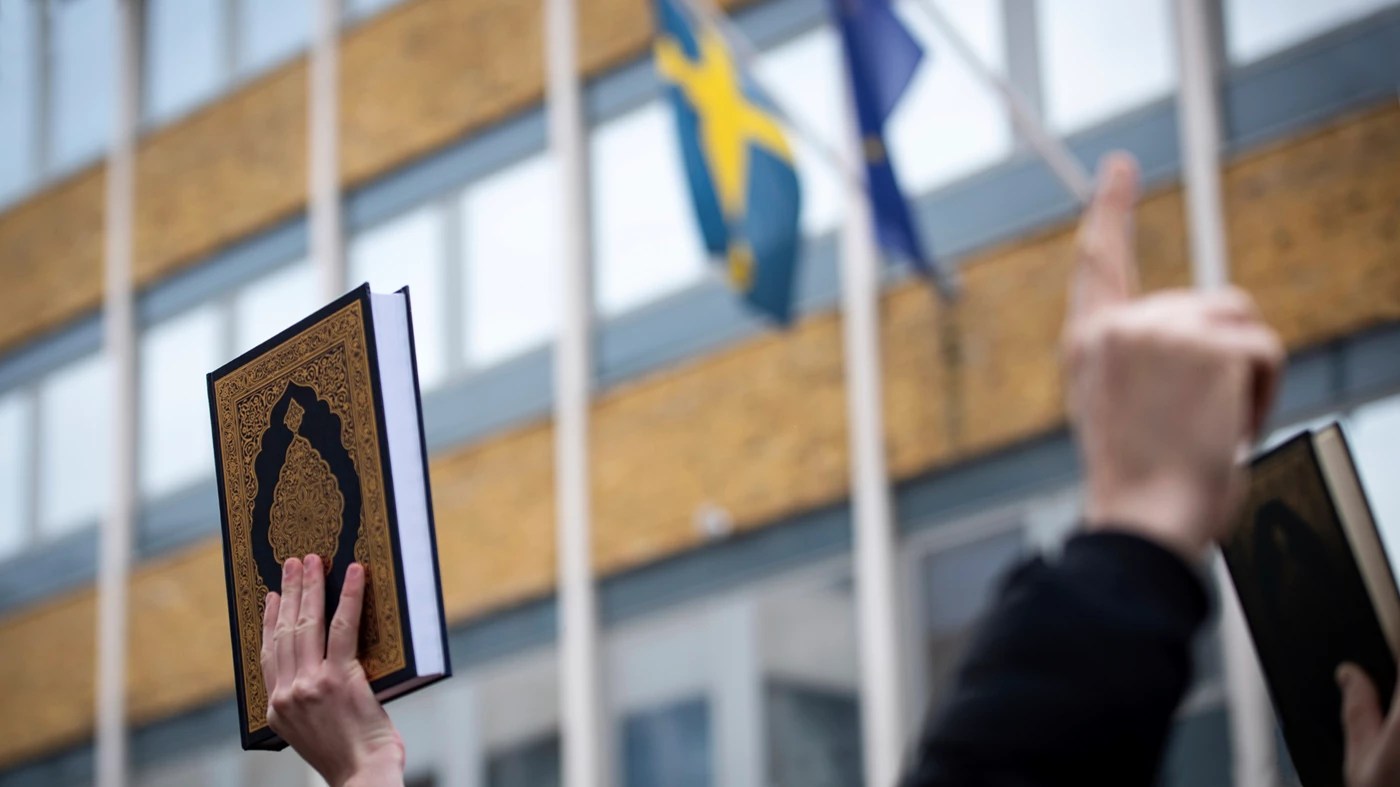
Swedish evangelicals fear a human rights retreat, as the fallout continues from last month’s Quran burning.
Earlier this month, Iraq expelled the Swedish ambassador after Swedish police authorized the burning of the Torah and the Bible in front of the Israeli embassy in Stockholm—though the Muslim applicant did not go through with it.
“If I burn the Torah, another the Bible, another the Quran, there will be war here,” stated Ahmad A. “What I wanted to show is that it’s not right to do it.”
Though unintentional, he succeeded in showing the neutrality of Swedish law. There was scant outcry from Christians to protect their Scripture, but overall many Swedes are sympathetic to his plea. More than half favor prohibition of the burning of any religious books, up from 42 percent in February.
To do so may require reviving blasphemy laws that were scrapped in the 1970s. Following a similar incident last year, the former prime minister of Sweden stated such acts should be prosecuted as hate speech, lamenting the waste of budget to protect rogue actors. And after this round of international outcry, the government announced that it is currently exploring if such a law can be passed.
But across the European continent, Christian leaders are expressing alarm.
“If you can’t burn the Quran, can you put it in the toilet?” asked Olof Edsinger, general secretary of the Swedish Evangelical Alliance. “There are many ways of desecration, and you can’t stop them all.”
Fully condemning the offense itself, he clarifies that any law—however broadly worded—would be tailored only for the religious community that is offended. The issue is with Muslim reaction, he says, and every limitation shrinks the space for freedom of expression.
It is a hard-won right for Sweden’s evangelicals. Prior to the 1952 Religious Freedom Act, many free church believers joined atheists and other religious nonconformists to seek refuge in the United States. Conversion to Catholicism, for example, was subject to exile until 1858.
“If our culture—and the West in general—bows to outside pressure,” Edsinger said, “it will be a clear step backwards.” So far, the West is resisting, though the world…
This article was originally published at Christianity Today on September 27, 2023. Please click here to read the full text.
Following the burning of the Quran in Sweden last month, Christians in the Muslim world have been vocal in their condemnation.
But some expressions of disapproval may have been forced upon them.
“Christian religious figures … [must] state their positions regarding this explicit crime,” stated the Association of Muslim Scholars in Iraq. “Their silence puts them in a position of refraining from criminalizing and condemning it.”
The Sunni-based group had plenty of reasons to be offended. The stunt occurred in front of the Grand Mosque of Stockholm on the first day of Eid al-Adha, one of two primary Muslim holidays. And prior to being lit on fire, the Quran was kicked about and stuffed with bacon—provocation against Islam’s prohibition of pork.
But the greatest Iraqi ire may have been that the culprit was one of their own—and a Christian. Salwan Momika, a 37-year-old father of two, sought refuge in Sweden sometime after 2017. But his checkered history had many Middle East Christians criticizing him as well.
In fact, he is an atheist.
His Instagram post announcing his act declared his lack of faith in anything save secular liberalism. Citing the protest as an act of democracy in defense of freedom of speech, he also asked for financial support. And it is reported that upon arrival in Sweden, he volunteered for a far-right party known for its opposition to Muslim migrants.
But earlier, he worked for Shiites.
Momika professed admiration for Abu Mahdi al-Muhandis, the deputy commander of Iraq’s Popular Mobilization Forces (PMF), who was killed with Iran’s Qasem Soleimani in a US drone strike in 2020. Under the PMF’s command he enrolled with Christian compatriots in “The Spirit of Jesus Brigades” in the common fight against ISIS.
He also tried founding his own political party in Iraq, the Syriac Democratic Union. The established, similarly named Christian party in Syria denied any connection to him.
“He is a showoff who wants the spotlight,” said Habib Ephrem, president of the Lebanon-based Syriac League. “He has no specific ideology and stirred up controversy in the Muslim world—for nothing.”
Some observers speculated that Momika’s aim was to create conditions in which it would be impossible to deny his citizenship request and send him back to Iraq.
At least it has given Christians an opportunity for witness.
“What happened in Sweden was an unwholesome use of the concept of personal freedom,” said Ara Badalian, senior pastor of Baptist Church in Baghdad. “True Christianity is characterized by love, tolerance, and rejection of violence and hatred.”
The patriarch of the Assyrian Church of the East spoke similarly. “We call upon the governments of all countries, particularly the Swedish government, not to allow these actions perpetrated in the name of ‘personal freedom,’” stated Mar Awa Royel, who quoted Ephesians 4:32. “This is what the Bible teaches us…
This article was originally published at Christianity Today, on July 11, 2023. Please click here to read the full text.
As air raid sirens blared down the hallways, Tetiana Garkun hurried her middle school students outside the My Horizons Christian School campus into the designated bomb shelter.
Located in Khmelnytsky, 200 miles southwest of Kyiv, Ukraine’s capital, the school’s children moved in orderly fashion—a sign of how accustomed they’ve become to Russian missiles targeting military installations in nearby Lviv.
They prayed, waited for the all-clear signal, and returned to their Bible class.
Garkun’s own children, daughters aged 16 and 17, were similarly composed. Confident high schoolers who only a few years earlier were sharing their faith in Ukraine’s secular education system, they follow after their great-grandfather, a Pentecostal pastor sentenced to death by magistrates in the Soviet Union.
Times have changed, as have education authorities.
“The government encourages us to teach our students how to be Christians and live godly lives,” said Garkun. “They see that we are needed in these horrible days.”
She had earlier led the students in a discussion prompted by the official state health education curriculum: What helps us live a long life?
Model answers included a good diet, avoiding smoking, and participation in sports. But amid war, these answers no longer apply, she said, and even her prepared integration of Christian material hardly satisfied her own soul. In years past, she recited Ecclesiastes 7:17: “Do not be overwicked, and do not be a fool—why die before your time?”
However, she pondered, what about when the righteous are killed by Russian evil?
“When we follow God’s rules and truth, we lead happier and healthier lives,” Garkun said. “But I am honest. I have doubts. And I let the children know it is okay—we can be sincere with God.”
Daily devotions, regular chapel, and close-knit relations have helped sustain a teaching staff struggling to manage massive disruptions to work and family life. Garkun said her best friend, an Orthodox Ukrainian, has grown deeper in her faith since she joined the Christian school. But across the nation, 54 percent of teachers…
This article was originally published at Christianity Today, on June 22, 2023. Please click here to read the full text.
Disoriented and disheveled, the elderly Ukrainian woman stayed put in her seat. After several hours in a Temporary Accommodation Center (TAC) in Taganrog, Russia, 70 miles east of her month-long basement shelter in Mariupol, Ukraine, officials encouraged her to get on the bus—to somewhere else.
Earlier that day, she had been discovered by Russian soldiers and ushered through a humanitarian corridor to the first processing location east of Mariupol. From there she was dispatched to one of 800 such sites established throughout Russia, which are located anywhere from nearby Rostov to Moscow to Vladivostok on the Pacific coast.
Official papers registered her for temporary residency in Russia and access to its medical system. She was given a warm meal, new clothes, $142 in rubles, and a SIM card—though not a mobile phone. She could apply for citizenship if she desired.
All she wanted was to die.
Grandma, where are you going? Is someone coming to meet you?
No one is coming. Nobody wants me.
You have to go to a shelter. You can’t stay here.
I don’t want to live any longer. I wish I had died in the shelling.
Where are your children, or grandchildren?
I don’t know. They left. I can’t find them.
Government employees had done their duty. But after this exchange, a Russian evangelical volunteer sprang into action. After a few phone calls, she placed the woman with a local church family. The next day, she located the granddaughter.
“When we are genuinely involved in their lives, they see the love of Christ,” said Tanya Ivanenko. “They hug us, kiss us, and remember our names. Against the backdrop of war, we give them a little hope.”
Ivanenko did not provide the care, but she shared the grandmother’s story last year on a Russian evangelical church’s refugee coordination channel on Telegram, the region’s popular messaging app. The communication was verified by Pavel Kolesnikov, former co-chair of the advisory council for the heads of Protestant churches in Russia.
The council oversees relief, including over $3 million donated by affiliated unions, he said, impacting 200,000 Ukrainian refugees.
“The church in the West needs to know we are helping also,” he said. “The effort in Eastern Europe is more visible, but we are doing what we can.”
Since the war began, over 14 million Ukrainians have been displaced from their homes, with 8.2 million escaping abroad. The great majority of them have fled west, with Poland recording 1.6 million refugees and Germany 1 million. Through February, the United States has accepted more than 270,000.
But nearly 2.8 million have gone to Russia. Why would they flee into the arms of their enemy? It may not have been…
This article was originally published at Christianity Today, on June 21, 2023. Please click here to read the full text.
For eight months, the Ukrainian city of Kherson endured Russian occupation.
Now—along with at least seven churches—it is underwater.
Experts estimate that the collapse of the Nova Kakhovka dam, 44 miles upstream, released an amount of water equal to the Great Salt Lake. A new wave of evacuations is underway in southern Ukraine, with 25,000 people in Russian-controlled areas and 17,000 in Ukrainian-held territory advised to leave.
An estimated 2,000 houses have been flooded, with 16,000 people made homeless. A lack of drinking water, electricity shortages, and floating land mines have contributed to the humanitarian and ecological disaster.
The dam’s reservoir contributed 2,600 tons of fish to the local economy. Wheat prices have spiked, as 94 percent of Kherson’s irrigation system has lost its supply. And 150 tons of machine oil have been carried toward the Black Sea.
But that is just the physical damage.
Tavriski Christian Institute (TCI) in Kherson is a spiritual casualty. Liberated from Russian occupation last November, the seminary’s riverside properties suffered a new blow with the deluge. Early in the war, TCI president Valentin Siniy evacuated west with his wife, two children, and much of the student body. Today he continues education from Ivano-Frankivsk as he oversees relief efforts over 500 miles away.
CT spoke with Siniy about the state of the seminary campus, the emotional impact of the flood, and the rising challenges to faith that have led to newfound spiritual insights:
What is the situation with your seminary?
When the Russian military descended upon our cherished seminary, it was an emblem of knowledge and spiritual growth. They stripped it of its essence. Equipment from our printing shop vanished, books were burned, and I would say their very presence desecrated our sacred space.
A friend later retrieved one of my favorite pictures: an image of Jesus’ crucified feet.
But even after liberation, Russian missiles destroyed our buildings and sniper fire kept people away. I visited several times, but it was too dangerous to remain. Our once-vibrant campus, composed of five buildings, lay in ruins, mirroring the devastation that ravaged our nation.
And just when we thought we had faced the worst, the catastrophic flooding submerged our greenhouse farm. It had been a source of sustenance and support for our students and area residents—even as it remained in occupied territory on the east bank of the Dnipro River.
Now that the waters are slowly receding, our manager—also a local pastor—tells us that much can be repaired. But he has been threatened by the Russians, who also killed a pregnant volunteer woman while they confiscated the boats of those assisting others.
The Russian government is godless and immoral; it simply destroys people.
How have evangelicals been able to help?
There is a lot of dirt and debris floating about. Cemeteries and cesspools have been flooded; viruses and diseases are spreading. Our volunteers are helping on the liberated west bank, and we have delivered ten pumps with another ten on their way. Unfortunately, most of the damage has been in Russian-controlled areas.
Through the…
This article was originally published at Christianity Today, on June 12, 2023. Please click here to read the full text.









 Jayson Casper