Fully deserving of his many titles, the glorious scholar and professor, Dr. Ahmad Abd al-Rahim al-Sayih passed away on July 7, 2011, fully engaged in life at the age of 74. Dr. al-Sayih died while filming an interview for the revolutionary-born al-Tahrir Television channel, speaking about his lifelong efforts in international popular diplomacy, to display a peaceful image of Islam and Egypt wherever he went. The world will miss him, his sharp mind, and his openness to people of all faiths.
Dr. al-Sayih was born in 1937 in Ezbet al-Sayih, a community roughly thirty kilometers from Nag Hamadi in the governorate of Qena, in Upper Egypt. Late in his life Nag Hamadi witnessed the horrific killing of six Christians and a Muslim police guard on Coptic Christmas Eve in 2010, an infamous incident which raised questions about Muslim-Christian relations. Dr. al-Sayih’s interaction with Christians, however, was completely different. He was a member of the noble Qulaiyat branch of the Arab tribe, and grew up with warm, friendly relations with the five or six Christian families of Ezbet al-Sayih. As he matured in his studies these Christians proudly recognized him as ‘our’ sheikh. Following the murders he helped organize an interfaith delegation from the Moral Rearmament Association to visit the families of those killed, explore the cultural environment of the crime, and discuss ways to overcome the national tragedy.
The journey Dr. al-Sayih pursued, however, did not begin as it ended, with real exposure to and open embrace of the Copts of Egypt. Though never an extremist, he pursued his studies with Muslim particularity, coming to master Islamic doctrine and philosophy after leaving his village and enrolling in the Azhar University. After several years he engaged in a professor exchange program, teaching five years in the Faculty of Sharia Law at the University of Qatar. Here his scholarly insight took the attention of the prestigious Umm al-Qurra University in Mecca, Saudi Arabia, but contractual regulations with the Azhar required him to first complete his doctorate while teaching at the Cairo-based institution. After obtaining his PhD in Islamic doctrine and philosophy in 1986 from the Azhar, serving as dean in the Faculty of Da’wa (the Islamic Missionary Call), he accepted the post in Mecca, where he taught for nine years.
After many years of exposure to religious thought in the Gulf, however, Dr. al-Sayih began to grow increasingly uncomfortable with its extremist Islamic trends, especially Wahhabism. Wahhabism is an austere interpretation of Islam, seeking imitation of the manner of life as lived by the Prophet Muhammad and his companions. Unfortunately, it often results in a reactionary attitude to modern life, as well as rejection of other viewpoints and commonality with other religions. With growing awareness of the danger Wahhabism proved to authentic Islam, Dr. al-Sayih dedicated his life to exposing its errors.
This zeal resulted in a scholarly output of over 150 books and hundreds of articles written for Arabic journals around the world. Some of these books were co-authored by such luminaries as Dr. Ahmed Shawqy al-Fangary, Dr. Abdel Fatah Asaker, Dr. Rifaat Sidi Ahmed, Dr. Mohammed al-Halafawy and Sheikh Nasr Ramadan Abdel Hamid. His boldness in critiquing Wahhabism led also to the finding that much of what is attributed to Islam today is actually based on pious misunderstandings from poorly transmitted hadith, the stories recorded of Muhammad’s words and deeds. Never one to shy from controversy, Dr. al-Sayih was committed to discovering and teaching the truth as it revealed itself, finding in this the path to God.
Though he never committed himself to an actual spiritual guide or designated path, Dr. al-Sayih found sympathy with the Sufi interpretation of Islam. Over the course of his life, he attended over fifty international Sufi conferences, promoting an open and tolerant picture of Islam. This was more than a simple intellectual position. Dr. al-Sayih visited Makarious Monastery in Wadi Natroun, Egypt, and prayed over the grave of John the Baptist and the Prophet Elisha. He esteemed the monks there to be the truest of Sufis, who represent the best of Islam.
Furthermore, Dr. al-Sayih’s openness towards Copts facilitated his frequent collaboration with Arab West Report. Together they found commonality in the belief that Islam is not to blame for the often true difficulties Copts face in Egypt, but rather the ill interpretation of Islam which exasperates social tensions, giving ordinary community problems a religious face. This phenomena is often made worse when these tensions are manipulated by politics or religion. Dr. al-Sayih’s contribution toward promoting Coptic understanding in Egypt resulted in his commendation by no less an organization than Copts United, an American based group highlighting Christian difficulties in Egypt. Following the death of the Grand Sheikh of the Azhar, Mohammed Sayyid Tantawi, Copts United nominated him for succession.
Dr. Ahmad al-Sayih leaves behind a wife, three sons, and five daughters. He was buried in his village of Ezbet al-Sayih, and on July 12 received a commemorative farewell in Al Rashdan Mosque in Nasr City, near his home in Cairo. He was a man of both great mind and great heart, and will be missed by all who knew him. May Egypt produce similar scholars, who are able to follow in his footsteps.
Much of the world has been aghast at news coming out of Syria, as the demonstrations now common in much of the Arab world have been brutally suppressed. Government sources, however, claim they are fighting an armed insurgency. Media, notably, has been blocked from the country, lending credibility to the idea that the government has something to hide.
We have been in Jordan for a short visit, and while here I was able to meet with a Syrian Christian resident in Amman. She is originally from Allepo, and was able to provide some of her perspective on the matter. It is only one opinion, of course, but provides a local perspective that goes beyond claims and counter-claims. For a good journalistic account of Syria, here is a link from The Economist. Here is another account from Christianity Today, focusing on the Syrian Christian perspective. It will resemble much of what follows.
The source, who preferred not to be named, will be called Samiya. She did not believe she was under any suspicion, but was planning a trip to Syria to take care of some administrative matters, and thought best to keep her name out of the news.
In short, Samiya believed both accounts to be true. The Syrian people have been steadfast in their peaceful protest for national reform. The government has been countering this group with violent repression, but as in protests elsewhere, they carry on.
At the same time, certain groups within Syria have undertaken violent militia action against the regime, and have mixed in with the protestors. These have been putting certain villages under pressure, and the Syrian army has had several bloody encounters with them. Samiya believed Jisr al-Sughur, on the Turkey border not far from Aleppo, fell into this category.
Within this struggle, she believed, lies were being told on both sides. Certainly the government is not being honest concerning its suppression of peaceful protest, using the militias as an excuse for further crackdown. Yet the tales of horror have also been exaggerated by the reform party. Several weeks ago a terrible tale spread on the internet about a boy who had died in the hands of security, revealing severe torture and mutilation of his body. Samiya, however, heard statements from relatives in the boy’s family, stating that while the boy did die at the hands of security, the torture marks were administered after he was handed over to his family. They (or those within the violent opposition) desecrated him in an effort to rally more of the population against the regime.
Samiya believed these militia groups, and the families associated with them, were hardline Sunni/Salafi parties funded and encouraged by Saudi Arabia. Knowing Syria to be a key ally of Iran, Saudi Arabia would greatly wish to see the fall of the regime. In the aftermath, the minority Shia Alawite autocratic rule would give way to some sort of Sunni governance. This would also likely lead to an end of funding of the Hizbollah party in Lebanon; interestingly, the head of Hizbollah is among the only personalities to rally to the defense of the regime.
Though they have not rallied to the defense, Samiya understands Israel, oddly enough, to quietly resist the fall of the regime. Though Syrian political rhetoric is strongly anti-Israeli, there has been almost no conflict on Israel’s northern border during the Bashar al-Assad presidency. While Syria does support Hizbollah, Samiya claimed this was to create a resistance force on the border against possible Israeli expansion. Lebanon is a weak government, and Hizbollah makes difficult any future advance into Beirut – which Israel has attacked before. From there, it is only a few dozen kilometers to Damascus. In any case, while Israel considers Hizbollah a thorn in its side, it fears more greatly the chaos which might prevail should the regime fall. As with worries in Egypt, better the enemy you know, than the one you don’t.
Samiya believed that one of the reasons for Western hesitation in Syria reflects the above difference in perspective. Many believe that politics in the Middle East is orchestrated around the US-Saudi Arabia-Israel alliance. Within this set-up, Egypt is largely a pawn (though possibly now seeking more independent foreign policy), Turkey is an emerging player, and Iran is the enemy. During the Egyptian revolution the US was quick to call for the fall of Mubarak, trusting that Egypt would remain within this overall structure.
Yet with Syria, the United States finds itself between two allies. Saudi Arabia would like the Iranian ally to fall, while Israel is reticent. American equivocation can be explained by its middle position between the two. It may well be the future of Syria lies mainly in the hands of the Assad family and the protestors against it. But it also may be the future will be shaped by the direction the United States eventually leans.
As for the actual interaction between the Assad family and the protestors, Samiya believed that Bashar was not naturally a butcher, and was not the prime mover behind the repression. Rather, she believed that however he may desire to reform (though he has had several years to do so previously), family military and business forces cannot contemplate losing the primary role the Alawites maintain in society. In this repression, then, Bashar is complicit, but also too weak to do anything otherwise.
Finally, Samiya spoke of the Christian participation in the demonstrations. They have been present, but many Christians have been reluctant to speak against the regime. The Alawite minority has ruled Syria by co-opting other minority groups, including Christians, and backing the dominant Sunni upper-to-middle class. Some fear there could be sectarian war against Alawites, Christians, and Druze, should chaos grip the state while a power vacuum sorts itself out.
Samiya played down this possibility, but did state her personal preference for the regime to stay while carrying out significant reforms that would change the system over time, though democratic participation. The regime is brutal, and Samiya could not understand why more Christians, on humanitarian grounds, did not enroll in greater numbers within the peaceful demonstrations. Reform is absolutely necessary, but many Christians are standing on the sidelines.
To repeat the earlier warning, it should be understood that Samiya is only a source – outside of the country at that – and does not fully understand what is happening within Syria. Her perspective, however, helps put together information that come through piecemeal in the headlines. In truth, a jigsaw puzzle has only one correct solution, but until all pieces are collected, multiple constructed realities are possible.
May God grant peace to the Syrian people and bring about a just resolution with as little bloodshed as possible. As it is already too late, may forgiveness and grace characterize all parties in the days to come.
Tension, excitement, controversy, conspiracy, violence, zeal, folly, persistence, desperation, frustration, confusion. It is difficult to describe all the adjectives experienced in Egypt right now. What will today bring? Thousands will gather across the nation, as they did during the revolution. The police are withdrawing; threats are present. Maybe nothing will happen; maybe today could be monumental – for either good or bad.
God, you know the hearts of all; you determine the course of nations. Give peace to Egypt – to Tahrir, to Alexandria, to Suez. Protect them who have gathered; give them wisdom and mercy.
So much is confusing, God, protect the hearts of all, first and foremost. May they have your zeal for righteousness. May they have your mercy for sinners. May they have your grace towards those who stand in opposition. May they have your wisdom to navigate the challenges ahead of them.
God, many demonstrators suspect their leaders, while much of the population still thanks them for preserving Egypt from a fate like Syria. They are the only order left, and their promises are to return power to civilians. God, they need wisdom more than most. A protestor can afford to press forward recklessly, and to some degree needs to. But a leader must survey the whole situation.
God, you know their hearts. Bless them and guide them to bring about your best society. May they be faithful to their charge, faithful to the people, seeking the good of Egypt, but of none in particular.
Much fury, God, falls on the police. Manipulated for decades to serve the regime, they stand in the middle of so many factions, which does not mean necessarily that they stand aloof. But neither are they monolithic. Help those angry with them to differentiate between the system – still in need of reform – with the individuals – many in need of forgiveness. May those police of pure heart distinguish themselves; may they ensure the good conduct of their colleagues.
God, almost all political forces have come to demonstrate today. It is good they keep the unity of the moment, but much divides them. Keep these forces safe, even from one another. The scene is charged, God; misunderstandings may be common, and provocation possible. May they not implode from the pressures.
God, nearly all praise the revolution, but a revolutionary spirit is dangerous. You are pleased when men seek justice, but it so easily transforms into a lack of love. Love, meanwhile, can so easily be exploited. There is much love for the nation, but this can be pressed by contrary visions for her good. Let their love be for righteousness, for goodness, for mercy, for forgiveness – and may wisdom show them how to apply these for the sake of Egypt. Revolutions may fail, God, but love will not.
But love may suffer. Today, God, may they not. Keep them safe. Build Egypt once again. Preserve this nation in dignity, with all her people.
The middle of July is an odd time to be writing about too much homework, but our oldest, Emma, has just begun summer school and is having her first experience with homework.
This all started because we missed getting Emma into the school we had chosen for her last year. In Egypt, the schools follow a British system where the children attend two years of kindergarten, KG1 and then KG2. At many schools, children can begin as early as 3½, although the average age is probably 4. At the school we preferred, however, they would not accept Emma last year even though she was 4 in September. Due to the high demand for that school, they accept only older children, only going as low as 4½ for KG1. We didn’t mind this since our American system starts kids at age 5, we preferred waiting. The problem came this spring when I went to register her at our chosen school.
We had left Egypt for a few months due to the revolution and shortly after we came back, I went to the school to confirm which papers I would need when I came to register her in the month of June. It is well-known that the kindergarten registration in schools here is in June, so I figured going in May was getting a good jump on things. However, when I went to the school, the secretary told me that the registration was done and closed; there were no more places. I was so surprised and told them I thought registration was in June! They seemed to confirm that that was the norm, but this year they did it in March. They told me I could try calling them sometime in June, and if someone has withdrawn their registration, maybe Emma would have a chance. I left the school wondering what we would do now!
I talked with many Egyptians in the next few weeks, all of whom confirmed that registration should be in the month of June. Many questioned whether I understood the secretary correctly and encouraged me to return to the school. Others asked if I knew anyone important who might help us get in even though they said classes are full. The only people we knew were other parents at the school, but this was not good enough. I went there three times and each time was told the same story. The last time I went, the secretary told me to bring our next daughter in March if I wanted to register her for the following year. It looked like we had to give up on that possibility, at least for this year.
In the meantime, we continued to look for other possibilities, but quickly learned that we had a problem. Since we had “held Emma back” from starting due to the requirements of the one preferred school, she was now a whole year older than her potential classmates at most other schools we would choose. I was told it would be best if she could skip KG1 and enter the second year of kindergarten in the fall.
Being a foreigner and having no experience with what KG1 entails, I had no idea if Emma could really skip a grade. Our main concern was the Arabic that she would already be behind in. The schools we were looking at were called “languages” schools and basically taught most of the subjects in English, while reserving the Arabic language for the subjects of Arabic, religion and social studies. At the same time, we were trying to choose schools where the language of the kids would be Arabic. This way Emma would be immersed in Arabic during recess and in the lunchroom with the goal of her being comfortably fluent in Arabic, as well as making Egyptian friends. So she had a great advantage over most children as she would excel in the English-language subjects due to that being her native tongue; but we didn’t want her to immediately fall behind in Arabic.
One of the schools we found, and the one we are planning on her attending this fall, is called Degla Valley Language School. One of the great benefits of this school is that it is one block from our house. Not only does this make it easy to drop her off and pick her up, but it will hopefully make it easier for me to be involved in her school in some way. I am not looking to teach anything, although being a native English speaker I could easily get a job. I want to be able to interact with her teachers and really be on top of what is going on in her school. Of course location is only one factor to consider. We visited the school and felt the facilities were not as good as the preferred school, but were decent. We liked that the kindergarten section of the school is separate from the older grades which will help with kid-traffic as well as be less intimidating for the little ones. The program and curriculum looked modern and thorough, and the staff was friendly.
Another benefit of this school was the built-in possibility for Emma to skip KG1 by doing one or two months of a summer course. For some reason, this school offers the option to parents to enroll their children in the summer course in lieu of KG1. I haven’t had a chance to ask the other parents why they would choose this route; we are only doing it because of extenuating circumstances. But Emma has about 10-15 kids in class with her, all seemingly looking to skip their first year. And this is where the homework comes in.
It seems that the children learn the Arabic and English alphabets as well as their numbers, colors and shapes, during KG1. Learning the letters means writing the letters, and that is most of the homework that Emma has brought home. She is not so overwhelmed by writing the English letters, but every day that she has Arabic class, she has to write a new letter along with the three vowels of Arabic, and it turns out to be a bit much. I am trying to learn what motivates her to help her push through and finish her homework each day. It has been an adjustment going from the carefree life of preschool to five days a week “real” school with homework. And it may not help that the weather is usually in the 80s or 90s by the time we are finished lunch and ready to begin the homework.
All in all it’s been a positive experience, but I’m sure we have just as much to learn as Emma does. She will be learning her ABCs and 123s while we learn how exactly this Egyptian school system works. For example, I was impressed when I saw the school assignment book that Emma brought home the first day, but a bit amused by the way they wrote her name on the front.
Should read: Emma Jayson, but foreign names are difficult.
In Egypt, everyone, girls included, uses their father’s name as their second name. Therefore, Emma is known as Emma Jayson in her school. Both names are foreign to them, but now they have seen them written by me, and at least spell Emma right on her crafts.
Emma’s daily schedule was posted in her book and it let me know which subjects and which “specials” she would have each day. She has English, math and Arabic three times a week as her subjects, and then other things like swimming, cooking, music and art. However, I’ve learned that cooking and art don’t mean the kids do anything in those areas. Rather, on Art day, Emma brought home a really cute Elephant bag which the teacher gave her at the end of the day. She didn’t even watch them make it. And when Emma complained that they didn’t do any cooking on the designated day, I asked the teacher the morning of the next cooking day what was in store. She said they would be making pizza that day. I asked if the kids help make it or if they just eat it, and she confirmed my guess that they just eat it. So really it should be called “special snack” day, rather than “cooking.”
Teacher-made elephant bag.
So we are only beginning our journey here, and I am sure there will be more blog posts on the subject of school as we go down this road. For now, we are working on the alphabets and trying to keep cool as Emma completes her first year of school in two months. Guess that justifies all the homework!
My sour, heavy feelings returned this week. They were last suffered during the days of revolution, but resurfaced after over a thousand people were injured in clashes with the police. There appears to be good evidence of manipulation, but the protests were largely spontaneous, as they touched those most pure in the whole process: the families of the martyred revolutionary youth.
God, these cry out for justice, but when should it come? Does the delay in prosecuting officers who killed their children stem from a commitment to due process, or a lack of will? Give them patience, and increase their courage. Help their demands to be issued from a heart of forgiveness. Cleanse them from any hatred, however justified. Protect them from becoming pawns; enable them to become beacons. May these be the models upon which you build a new society.
God, many revolutionaries rushed to their defense – did they do so wisely? These are still largely leaderless, capable of being swayed by rumors. Honor their zeal, God, but give them wisdom. So many conspiracies abound, and so much is at stake. These desire the good of Egypt, but cannot represent the whole of the people. Yet in the chaos that ensues, some, perhaps many, turn against them.
Keep them pure in heart, God. Those others may manipulate and compromise, their only strength is moral. Help them not to lose this, nor their faith in the goodness of others, even if they find it wanting. May they love their fellow citizens, even those they believe are against them. May their heart not be hardened, even as their will stays sharp.
God, bless the police who inflicted these injuries. They must be very confused; given a free hand in the past, how must they behave now? What can be done when under attack? Their conduct is the result of training, however faulty. They carry out the orders of those believed by revolutionaries to be corrupt. Who can blame them for choosing the side they do, when all is not clear?
Give them clarity, God. Give them respect for law, citizenry, and authority. Give them patience in the face of hatred from the people. Have them confess their sins, but carry out the sanctity of their position. They represent order, God, and you are a God of order. May this be reestablished in Egypt, for the safety of all, police included.
God, bless the leadership of this nation. Having earlier been heralded, some are now criticizing, even impugning their intensions. It is the way of the army to lack transparency; but it is the way of leadership to disclose your heart. This tension cannot be easy for them. The task at hand is too great for any to bear.
May it be borne by all, God. Grant the leaders wisdom. There are conspiracies; there are manipulations. There are pressures and inducements and all manner of interests to balance. Help them to shape Egypt for her best future. Help them to rebuild what was broken in the revolution, and what decayed over the decades. Keep them, God, on the right path, no matter the temptations they must face. We lack knowledge of this path, God, while many assume they know it well. Give them of your perspective, God, and help them to lead well.
In the midst of all this, God, instances of religious tension reemerged also. Give the people love one to the other, God. May each find that which is best in his religion, and treat others as they would wish to be treated. Let not the people be divided needlessly.
God, when times are trying, help each to look inside himself, and be committed to the best of his nature. Help each to look to you, and be committed to the principles which lead to peace. God, protect Egypt; honor her people. Do not repay her according to her sins, but be merciful and gracious. To such a great extent, God, you have. Do not withdraw your favor, we ask you humbly. Bless Egypt, God, and may you be praised.
Issues of sectarian tension in Upper Egypt create a double problem in establishing fact. First, many news agencies do not commit resources to the area, so journalism often relies on hearsay rather than first-hand reporting. Second, religious biases often serve to either cover over or amplify aspects of the story that play into an established narrative. This is true both among those involved and in the reporters themselves, as rumors are easily conflated into facts.
In the last week the governorate of Minya in Upper Egypt witnessed two examples of Muslim-Christian tension. Unfortunately, these incidents often go unreported in major media outlets, and within Egypt often receive scant coverage as well. This is seen in the brevity of tworeports in al-Masry al Youm, English edition, which also serve to establish the basic facts.
In the first report, clashes are reported between Copts and the police, when the former attempted to block a road in protest of two local girls who were rumored to have been kidnapped and forced to convert to Islam.
In the second report, the police this time disperse hundreds of Muslims surrounding a church in Beni Ahmad village in the governorate of Minya. They were protesting the reinstatement of a priest who had been previously removed by agreement of the church and authorities, allegedly for inciting sectarian tension.
With the dearth of first-hand, in-depth reporting, however, comes coverage that often relies on one-sided sources, promoting a cause with lack of objectivity. Whereas the lack of coverage can be interpreted as complicit silence against Coptic grievances, this latter reporting is wholesale adoption of their perspective. Indicative are these twoarticles from the Assyrian International News Agency (AINA), which tells these stories, and others as well.
These articles rely on statements taken from the area, and do a good job of increasing the level of detail.
In the first report, the two Coptic girls are identified as Christine Azat (age 16) and Nancy Magdi (age 14). These were reportedly abducted on June 12 while on their way to church. The article quotes Christine’s father, and describes how the Christians of the area have scrambled to assemble the 200,000 LE ($33,333 US) ransom demanded for their release. Once done, however, they were rebuffed saying the girls were already sold to another group, which was now demanding twelve million LE (two million USD) to hand them over. The article mentions the rumor that they ran away and willingly embraced Islam, but dismisses this as the Azhar rejects underage conversions.
In the second report, the village of Beni Ahmad West is located seven kilometers south of Minya. The conflict relates to an incident from March 23rd, 2011, in which Muslims surrounded St. George Church and threatened to destroy it when licensed renovation appeared to be expanding the building. Eyewitnesses are quoted saying the Muslims chanted they would kill the priest, Fr. George Thabit, for his role in events if he and his family did not leave the village. In a previous article AINA states there are 23,000 Muslims and 8,000 Christians resident in the village.
The report states that Fr. George did leave the village. Muslims, however, heard rumors he would be returning, and began to camp out at the church in small numbers. When he did come back, on June 24 there was another major demonstration against him. Five hours later he was escorted away in a police vehicle. The Muslims remained until security later dispersed them. The archbishopric is quoted as condemning this interference in ecclesiastic affairs, asking for the rule of law and maintenance of security.
The information above is fair enough, but it is couched in language that betrays bias. For example, the report about the two girls ends with the speculation that, “as females, their lot is to be raped, enslaved, and sold off to some rich, sexually-depraved man who believes it his divine right to own infidel sex-slaves.” The second report does not have such blatant speculation, but ends with communication of a non-identified threat from the Muslim ‘mob’, that unless they hear that, “the priest is banned from returning to the village, they will hold their Friday prayers tomorrow, June 24, inside St. George’s church.”
If indeed this is the story, it is important to relate it as such. Given the sensitive reality of sectarian tension, however, it is vital to either consult contrary sources or else convey the story with appropriate doubt. The English language Ahram Online web newspaper provides alternate coverage of the kidnapped girls.
This article places both girls’ ages at 14, and states they ran away from home months ago, with their families searching for them frantically. A policeman discovered them walking on the streets, conspicuous with their face veil but with the tattoo of a cross on their wrists. The article states the girls have produced a YouTube video stating their voluntary conversion to Islam, and that they were not kidnapped. It states they are being held in a safe house until an Azhar scholar can determine if the story of their conversion is true. Meanwhile, the families of the girls have asked that they be returned home.
It should be noted that Ahram Online is a government owned newspaper. Though it has appeared to have more freedom to criticize the government than its printed counterpart, al-Ahram, the story must still be understood in light of its ownership reality.
Arab West Report was able to contact Nermine Rida, a Coptic Orthodox journalist for Akhbar al-Minya. She stated the girls were involved in a teenage crush with two Muslims, Ali Gomaa Rashid and his relative Ezzat Gomaa Rashid. These along with another relative, Saudi Gomaa Rashid, were currently being held in custody, along with five Copts still detained for their role in the demonstrations. Rida stated that Copts transgressed the acceptable levels of peaceful demonstration by blocking the road, and that the police were justified in breaking up their protest.
Rida also stated that the Azhar rejected the girls’ conversion to Islam since the law does not allow for the conversion of anyone under eighteen years of age. She did watch the YouTube video, however, and was convinced the girls were not kidnapped and made the video without compulsion. She understood that they were being held currently by authorities, but were soon due to return to their homes.
Rida was unable to confirm the ransom demand, except to say a call to raise 200,000 LE was issued by a Christian satellite channel, al-Tariq.
Concerning the incident in Beni Ahmad village, Rida confirmed the outlines of the story centering around Muslim demonstrations and Fr. George Thabit. There was a disagreement about the dimensions of the church and the role played by Fr. George, resulting in an agreement with Bishop Arsanius of Minya to send him away. During his absence from the village the church was repaired satisfactorily along the lines agreed upon by all village members.
After completion, the bishop returned Fr. George to the village, and Muslims were angered and resumed their demonstration. Yet Rida makes clear Muslims were not the only party in disagreement with his decision. Around thirty Copts joined the Muslims in demonstrating against the return of Fr. George, headed by one named Rifaat al-Qummus.
Arab West Report is unable to independently verify the account of Nermine Rida.
What should be made of these situations, then? Without traveling to the area and investigating directly, one should be cautious about claiming certainty about events. Even then, one would be likely to discover contradictory testimony.
Kidnappings regardless of religion have taken place in Egypt within the security vacuum since the revolution. Many Copts, however, believe their community is especially targeted by extremist Muslims. Yet it is also clear that at times Copts respond with accusations of kidnapping when facing the shame of a female relative running away from home, either due to a bad family situation or in a love affair with a Muslim.
One of the issues lies in the definition of kidnapping. Generally understood, kidnapping involves the use of physical force in an abduction. Some Copts, however, expand the meaning to include the luring away of adolescent women from their family, helping (or deceiving) her to escape from difficult domestic situations. Cornelis Hulsman of Arab West Report has written extensively on this issue.[1]
Camilia Shehata represents the most recent example of an imagined kidnapping, which captured the attention of the nation. Frustrated by her marital situation, she ran away and disappeared for four days. Local Copts immediately began demonstrating demanding her return from her assumed Muslim captors.
Muslims, meanwhile, circulated pictures in which she was wearing a hijab, and claimed Copts had kidnapped her – a willing convert to Islam – holding her in a church or monastery. Salafi Muslims held rallies in her defense, and some threatened to storm the monasteries in search of their ‘sister’. Immediately on the heels of this story followed the case of Abeer Talaat, which culminated in the horrors of Imbaba when Muslims tried to enter the church upon a rumor she was captive there, held apart from her Muslim husband. The ensuing clash resulted in multiple deaths and the burning of a nearby church with no connection to the rumor.
One day before the Imbaba incident, Camilia Shehata appeared on al-Hayat Christian satellite channel and told the truth of her story. She sat with her husband and child, and confessed to running away from home, due to marital issues. She never converted to Islam, however, and she was sorry for the trouble caused.
In terms of church building issues, it is well known that Christians have had difficulty securing permits. During the Mubarak era, decision-making power was held by the security apparatus, which often decided upon granting or withholding permits due to the perceived reception of Muslims in the area. There is currently a new, draft, unified law for building houses of worship, to govern both churches and mosques on an administrative basis. The first draft has been rejected by the churches of Egypt, in part due to the perception the locus of decision will not move from security.
This issue is similar to a church building conflict in Ezbet Bushra from June 2009, in the governorate of Beni Suef. In this location Fr. Ishaq Kastour was involved in a controversy in which Copts built a factory which was actually purposed to become a church, which included a place for his personal residence. The process was done without approval, and Muslims vandalized the building at various stages. Fr. Ishaq was also removed from the village by the bishop (presumably at the urging of the security apparatus), returned, but was eventually permanently assigned elsewhere. A government sponsored Muslim-Christian reconciliation meeting led to the decision to grant Copts a church building, but on the outskirts of the village, as a hastily constructed mosque was given preference at the original location. As of the completion of an AWR report on the subject, authorization of the church had not yet been granted.
It also is not uncommon for parishioners to disagree about their church leadership. The Coptic Orthodox Church is a hierarchical organization which appoints priests to their diocese. While local sentiment can be and often is taken into consideration, it is not unheard of for a small but active contingent of a congregation to reject their given priest. According to Rida’s report, only thirty Copts participated in the protest against Fr. George. Was this a contingent of malcontents, or indicative of widespread frustration with his leadership? In any event, it would be improper to label the demonstration strictly as Muslim transgression in church affairs.
None of this explanation should be used to justify the parameters of the two stories, but will hopefully make actions more understandable. The girls may have been kidnapped or not, but if not, surely most demonstrators did not know the truth of the situation. It is the case in Egypt, and certainly since the revolution, that the best way to achieve results is to gather masses of people and pressure authorities to grant your demands. In the face of perceived official neglect of Coptic issues, including other cases of alleged kidnapped girls, the demonstration on the part of most was in imitation of other groups’ success.
Should this be necessary? No. Should underage girls have been immediately returned to their family? Yes. Should Copts have blocked roads and resisted dismissal? No. Have there been real cases of kidnapping Coptic adolescents? Perhaps. Is there blame, when in occurrence, on those who quickly circulate false or unsubstantiated claims of kidnapping? Absolutely.
What is the reality of this case? It is not altogether clear.
Similarly, Muslims have used the power of demonstration to great success in pressuring government to yield to their will. This was seen most recently in the case of the appointed Coptic governor of Qena. Initial demonstrations against him were joined by Copts, in protest of the previous Coptic governor’s poor record and the newly appointed governor’s alleged role in killing protestors during the revolution. Yet the demonstrations against him quickly took on a religious dimension, as area Salafis, and some Muslim Brothers, rejected the idea of having a non-Muslim governor altogether. They blocked roads and threatened to cut off supply lines to popular tourist areas to the east on the Red Sea coast. The government was unable to dislodge them, and a solution was crafted in which the governor was ‘suspended’ for three months. When he left the area, the demonstrations subsided.
Were the Muslims of Beni Ahmad looking to similarly assert their will against a rejected priest? Perhaps. Was the conduct of this priest deserving of their rejection? It is not known. Is it the reality of Upper Egypt that decisions are taken communally rather than through the rule of law? Yes. Is this an acceptable way to govern a nation? No. Is it right for the priest to be removed in this way? No.
What is the reality of this case? It is not altogether clear.
What is clear is the poor, partisan, and inflammatory reporting of these incidents by the Assyrian International News Agency. Whereas AINA did an admirable job of presenting a perspective of these events, when much mainstream reporting is either in ignorance or dismissive of its importance, they failed to present other sides of the issue. Furthermore, amidst this negligence, they assumed the total credibility of the reported Coptic position, in doing so warping the perspective of their readership.
Sectarian issues do not plague Egypt, but they are a significant social problem. Underlying them is an unspoken frustration with the ‘other’, as competing storylines place explanation of these incidents into a greater narrative. Depending on perspective, they are either aberrations in a centuries-long culture of tolerance, or else a disturbing confirmation of pervasive discrimination.
Greater narratives, however, smooth over details. Each individual sectarian incident has its own details, many of which are disputed or unknown. Reporting of these events must take utmost care to prevent their automatic assumption into a narrative. At the same time, reporting must call a spade a spade, when this is clear.
Such clarity is difficult to achieve. With sectarian conflict, both metaphorically and literally, the devil is in the details.
[1] Cornelis Hulsman, “Forced Conversions or not?”, report presented to the New York Council of Churches, June 28, 1999 [RNSAW, 1999, week 26A, art. 37], http://www.arabwestreport.info/node/2126
Today, the Deputy Prime Minister, Yahia al-Gamal, publically accused the United States and Israel of fermenting sectarian tension in Egypt. This was on the heels of a similar statement made by the Supreme Council of the Armed Forces. Though it was not their only commenton the matter, which included introspection and self-critique, it continues a path of blaming outside forces, particularly the discredited Israelis.
That the United States was named was particularly surprising to me. On the one hand, the US is still a primary benefactor of Egypt. On the other, as an American, it is difficult to imagine my nation involved in such evil. I can imagine our international pressure, our use of spies, even our meddling in governments and coup d’etats. Such examples are well documented in history.
As a nation we like to believe in our goodness, and I believe that at base this is not a lie. Yet we should not be deceived that our primary motivation, like that of all nations, is for our interest. While pursuit of self-interest is not necessarily evil, it is sub-good. Morality demands the pursuit of the interest of others, along with self.
I discovered a very interesting article today about US history in Syria. Today there is near universal condemnation of the regime, although, in an indirect way, the US had a hand in creating what now exists. The story goes back to 1947, and has stunning old interview footage with Americans who had a hand in ‘democracy promotion’. Here is an excerpt for the article to introduce the subject:
What is happening in Syria feels like one of the last gasps of the age of the military dictators. An old way of running the world is still desperately trying to cling to power, but the underlying feeling in the west is that somehow Assad’s archaic and cruel military rule will inevitably collapse and Syrians will move forward into a democratic age.
That may, or may not, happen, but what is extraordinary is that we have been here before. Between 1947 and 1949 an odd group of idealists and hard realists in the American government set out to intervene in Syria. Their aim was to liberate the Syrian people from a corrupt autocratic elite – and allow true democracy to flourish. They did this because they were convinced that “the Syrian people are naturally democratic” and that all that was necessary was to get rid of the elites – and a new world of “peace and progress” would inevitably emerge.
What resulted was a disaster, and the consequences of that disaster then led, through a weird series of bloody twists and turns, to the rise to power of the Assad family and the widescale repression in Syria today.
What strikes me at the start of the story is the innocence of the American effort. From appearances, we really were trying to help. As our attempts stalled, however, our interference became more and more direct, until we alienated the population altogether. Development of the Syrian autocracy lies in their own hands, but the United States gave a good, inadvertent jump start to the process.
Conspiracies abound in this part of the world, and while I usually do my best to consider the purported reality behind each one, I cannot bring myself to make sense of how the US profits if Muslims and Christians are killing each other in Egypt. Perhaps I am unwilling to. Less biased readers are invited to fill in the story in the comments.
What we should never do, however, is doubt our own potential for evil. Small moral compromises – even for the sake of good – can easily lead to greater and greater sins. I also believe the maxim to be true: Power tends to corrupt, and absolute power corrupts absolutely. The power of the United States is not absolute, certainly not in Egypt. Yet if we do not consider our own corruption, we are helpless to prevent its occurrence.
Today, one friend explained the comment from the Armed Forces as indicative of their frustration that the United States is now speaking directly to groups like the Muslim Brotherhood. During the days of Mubarak, the government kept a monopoly on international communication. ‘Manipulation of Islamist groups’, as stated, can simply mean this.
Or it could mean more. I would hope the comments of the deputy prime minister are only a rhetorical play to his audience. Politicians the world over can make exaggerated statements for effect, serving whatever interests they believe fitting. It was not too long ago that Islamist groups called for the dismissal of al-Gamal, due to his supposed anti-Islamist viewpoints. Maybe he is mending fences.
The point is, we do not know. We have many historic national sins; we may have unknown present ones. I doubt the accusation is true. I hope the accusation is not true. Please, may the accusation not be true.
It used to seem that sectarian conflict occurred in distant regions of Egypt, mostly centered in the traditional towns of the south. In recent years these have been creeping closer and closer to Cairo, though still isolated mainly in poorer, fragmented neighborhoods which maintain a traditional Upper Egyptian mentality. Yet the question is fair: Is the trend indicative, and may such incidents affect even the cosmopolitan areas?
My family and I live in the neighborhood of Maadi, a southern suburb of Cairo which has always been and remains an upper class enclave, populated by many foreign residents. Muslims and Christians living here are well-off, well-educated, and lament any hint that the two religions cannot get along. Furthermore, safeguarding the economic interests of the community, police presence is strong, crime is minimal, and life is a level above the struggles faced in other areas of the city.
Yet our home lies somewhat on the border of a lower to middle class neighborhood called Hadayak al-Maadi. Literally translated ‘the gardens of Maadi’, there is little greenery to be seen at all, in contradistinction to the grassy circles and plentiful trees slightly south in Maadi proper. We do much of our shopping here, finding prices to be lower than in the import-focused markets of Maadi elites. We also enjoy the descent into what feels like ‘real Egypt’, though our populist notions might be dismissed by the suggestion of living there. People, however, have always been friendly, and we do not feel out of place.
Yet if a sectarian conflict were to envelop Maadi, Hadayak might seem like more fertile ground for it to begin. Despite our ventures into the area, we don’t know it well. Do Muslims and Christians get along? Are they neighbors and friends, or does each community tend to itself? I approached Fr. Arsanius, one of two priests serving at the Coptic Orthodox Church of Abu Sayfain. This church is about a fifteen minute walk from our home, located in the heart of the Hadayak area.
Relations are good here, he assures. He would not expect a sectarian conflict to arise in the neighborhood. His answer in elaboration, however, is not only nuanced, it is near contradictory.
Approximately 2,200 Christian families live in the area, and these enjoy good relations with their neighbors. In this part of town everyone knows everyone else, which confidently leads Fr. Arsanius to state there are no ‘thugs’ in Hadayak. In recent sectarian conflict in other parts of Egypt, thugs have borne the brunt of condemnation, along with Salafi Muslims of extremist ideology. Accusations continue in that the thugs in question have been brought from elsewhere to attack an area. There is nothing to be done about this, Fr. Arsanius states, but local relations would not yield to it. Furthermore, in terms of Salafis, he has seen a few resident in Hadayak, but they have no centers of activity here, and illustrate no evidence of violence.
Directly across the street from the church is the Maghfara (Forgiveness) Mosque. After the Alexandria church bombing on New Year’s Eve, one week later on Coptic Christmas local Muslims encircled the church, and several went inside during the service to express solidarity with their Christian brothers. Then, during the days of revolution the imam called publically for Muslims to protect the church, calling it ‘our church’. A few days after Mubarak stepped down, the mosque organized public speeches in celebration, to which he invited Fr. Mercurious of the church to also address the crowd. For its part, the church organized a local garbage clean-up effort; young Christians went to the mosque and asked for assistance, and many Muslim youth joined in.
Yet despite the sincere and appreciative words of Fr. Arsanius, he also expresses concern about the mosque, beginning from its very inception. Abu Sayfain Church was built in 2001, along the pattern of many church construction projects in Egypt. A local Christian owned land and in coordination with church authorities began constructing a house of worship. He did not bother seeking prior permission, as many Christians believe this is an endless process leading nowhere. The effort did not meet resistance, however, and since then the church has been fully functioning. It is currently seeking funds to construct a service building on the plot of land next to the church, hopefully to house a small medical clinic among other activities.
While the construction did not meet opposition, it did engender competition. The land across the street from the church was owned by a Muslim with Muslim Brotherhood sympathies. During this time the Muslim Brotherhood was an outlawed, but tolerated, group. Similarly, it was unable to build houses of worship through official channels. Building a mosque in general, however, is easy. It was constructed under the supervision of the officially registered NGO al-Gama’iyya al-Shara’iyya (the Religiously Legitimate Association), which some accuse of promoting Islamist ideology. This NGO is nationwide, controlling hundreds if not thousands of mosques, and operating charitable service centers. While a good number of the mosque imams would be under the supervision also of the government, ensuring moderate interpretations of Islam, Fr. Arsanius did not know if the imam here was so linked.
He did know, however, the centrality of the mosque in Hadayak Muslim Brotherhood activity. While some understand the post-revolution Muslim Brotherhood to be a centrist political organization working for a civil state, albeit with an Islamic reference, Fr. Arsanius disagreed. Yes, some of their members present a moderate, even liberal vision. Others, including important leadership, call for full implementation of sharia law, an Islamic state, and even resurrection of the caliphate. Besides, what does ‘an Islamic reference’ in a civil state even mean? To him their discourse seems disingenuously vague.
Fr. Arsanius’ son was a revolutionary in Tahrir Square. There he rubbed shoulders with youthful members of the Muslim Brotherhood, many of which seem to be in opposition to their leadership. Fr. Arsanius recognized this, and was hopeful the bonds created in Tahrir between Christians, Muslims, and even Islamists might hold true. Yet whatever the future portends, Fr. Arsanius notes the concerns of the present, tying them specifically to the Maghfara Mosque.
Over the years, it has not been uncommon for the imam to refer to Christians as kuffar, or infidels. During Muslim holidays they choose to pray outside, publically asserting their religious identity, filling the street in front of the church. When this falls on a Christian day of worship, usually one of the service times has to be cancelled since people cannot enter through the crowds. When I asked if he could introduce me to the imam, he politely declined. Though they are known to each other, Fr. Arsanius could not remember his name, but said the people of the mosque do not like America. How might they then interpret my effort, within their superficial relationship, to bring them an American?
At the heart of the Islamic religion, Fr. Arsanius declares, is the teaching to kill the non-Muslim. Oddly, this was the first comment he made as we opened our discussion. Thereafter, he proceeded to tell me about all the good relations notwithstanding.
When I asked him to explain this psychological tension in Coptic views toward their Muslim neighbors, he related the following anecdote. Last year, isolated criminal activity took place on the street in front of the church, and in the altercation the police officer assigned to guard the church shot and killed the perpetrator. Word spreads quickly in a traditional neighborhood such as Hadayak; the word which was spread, however, was that the ‘church guard’ shot and killed a Muslim. In no time at all, hundreds of neighborhood Muslims surrounded the church, perhaps seeking to burn it. Quickly the doorman closed the front gate, and other policemen came to investigate, eventually dismissing the crowd.
Were these hundreds representative of the thousands of Muslims in Hadayak, Fr. Arsanius asked rhetorically? No, we enjoy good relations with the Muslims of our area. Yet in an incident, when tensions are high along religious lines, there is an Islamic saying obliging Muslims to ‘support your brother, whether he is oppressed or oppressing’. Even if among a few, this spirit can overpower good relations.
There is tension permeating society, and the situation is fragile. Fr. Arsanius stated clearly that it is not appropriate for Copts to confront agitators head on, such as Salafi Muslims or the Muslim Brotherhood; this is not a Christian response, even if Copts appear to be increasingly adopting a confrontational stance, however non-violent. Yet he is not sure what the proper response is. How might love be extended to such as these? How might it be lived in relation to the Maghfara Mosque?
In any case, the church is committed to good relations, and Fr. Arsanius is confident these do exist. A sectarian incident is not likely to occur in Maadi. May his confidence be properly placed, both in God, and in the goodness of surrounding neighbors.
Note: It is my hope to visit also the imam of the Maghfara Mosque, and seek his perspective on community relations. I will write about this further following our discussion.
There was much in the way of politics this week, and it is difficult to pray for politics. Like everywhere, politics is about wrangling, rhetoric, and the promotion of good through the lens of interest. If party to a position one can ask your favor; if not, wisdom can be sought for all.
Yet unique to Egypt is the newness of the experience. Politics here is not over this or that law, or this or that policy; it is more foundational. What type of government is best? Can the political ‘opponent’ be trusted? Who represents the popular will, and who betrays it? Who represents the revolutionary will, and who betrays it?
God, who can know? So much of this politics is projected populism, built on assumptions with no case history. The issues, God, are so important; but are they also trivial? Is it good that such divisions emerge among politicians, or is the fractured unity too much to bear?
God, some wish a return to basics. They call for an end to corruption, trials for former regime members, reform in the security services, and social justice to reach the poor. These believe that politics is distracting from the real issues.
God, who can know? There was clarity during the revolution, even if vision was short-term. Now, in seeking long-term structures, clarity has dissipated.
God, you know humanity, and you know what is best. Perhaps you have designed us so that wrangling, rhetoric, and the promotion of good through the lens of interest are exactly what moves society forward.
If so, make this process transparent. Make it clean and honest. May the best man win.
But in prayer, God, we return also to basics. Bless the leaders of Egypt; give them wisdom to conduct affairs of the nation well. Give the people of this land love for one another. Establish peace; protect security. Lift up the poor from their troubles, and lead those well-off to share.
God, bless Egypt. Have mercy on her, grant her grace, so that she may be strong according to your will. May this strength inhabit all citizens, and from humility, help them serve the common good.
Last night Emma and Hannah were in their first Egyptian wedding as “ashbiinaat.” This is basically the equivalent of the western “flower girl” or “ring bearer.” I still can’t tell you the name of the bride or the groom, but I can tell you how it came about and how it played out.
About three weeks ago, one of the Sunday School teachers at the Arabic Evangelical Church of Maadi approached me to ask if Emma could be in the wedding of a fellow teacher. She mentioned the name of the teacher, but said she wasn’t present that day so she couldn’t introduce me. I told the teacher that I would ask Emma, but didn’t think she would want to be in the wedding as she had recently been saying she didn’t want to be in any weddings. Both girls had preformed beautifully as flower girls in their Uncle Aaron’s wedding last fall, but Emma had decided she didn’t like the attention and chose not to be in any more weddings. I promised the teacher I would talk about it with Emma, and as long as the white dress still fit from the previous wedding, I had no objection to her taking part.
Emma surprised me by quickly agreeing to be in this wedding and once we tried on the dress and learned that both hers and Hannah’s still fit, I took that information to the teacher the following week at Sunday School. I cautioned that while Emma agreed, she may change her mind under pressure as everyone is staring at her, taking pictures and getting in her face. I suggested that if there was trouble, maybe Hannah could join her at that moment and it might make Emma feel more comfortable. I really wasn’t trying to push for Hannah to be in the wedding, but who knows how they understood it. In any case, she came back to me a few minutes later, after talking with the bride, and they wanted both girls to now be in the wedding. At this point I got to meet the bride, who I kind of recognized as one of the teachers, but I can’t remember her name now. I still don’t really know why she asked Emma to be in the wedding, as she has no relationship with her; I can only assume she wanted a cute foreign kid in her wedding. And now she had two!
The wedding took place on Sunday night, the day after our enjoyable, yet long, rihla to Anafora. The girls had both gone to preschool that day, then had lunch, then Emma did her homework, and then they played outside a bit before it was time for dinner and getting in their white dresses. Both girls were excited about their role and telling our neighbors all about it. The wedding was supposed to start at 6:00, and we were told to arrive between 5:30 and 5:45. Being the punctual foreigners, we ate dinner, dressed the girls, combed their hair, and hopped in a taxi, arriving at the church around 5:35. The florists were there decorating the church and the videographer and photographer looked to be present, but there wasn’t any sign of anyone else, let alone the organizers. I had the girls sit down on the white aisle runner and snapped a few pictures before anyone arrived.
And then we waited, and waited, and waited. People very slowly started arriving, and Emma and Hannah danced around outside as Layla toddled around inside the church. As it got closer to 6:00, and it became obvious that this was not going to start on time, Jayson and I wondered about allowing our girls to be in weddings of people we don’t know. It’s one thing to do this for friends or acquaintances, but strangers?
As we waited for more people to come, we watched the road for signs of the bride’s car. Emma and Hannah practiced their Egyptian wedding call, which is called the “zigruut.” It involves moving your tongue back and forth inside your mouth very rapidly while making noise. I’m sure they will be experts at this by the time they are 8, if not earlier.
You may notice that Emma and Hannah have their hair in pigtails. Perhaps this isn’t the dressiest thing to do with hair, but I am not the best when it comes to styling hair. Also, the girls’ hair is fine and light so I don’t feel like there is much I can do with it. So, for something different, I put it in pigtails. This is their last picture in pigtails, because when the bridesmaid, Miss Mary, arrived, she asked me to let their hair down. Emma’s worked okay, despite the fact that I had no comb with me. But poor Hannah has very little hair in the back, and once it is in pigtails, it keeps that shape for a long time!
It was about 5:50 when Miss Mary arrived and explained to the girls exactly how to walk with her. It turns out there were other children in the wedding as well, and they would all walk in formation with the one bridesmaid who would be accompanying the bride from the car, up the stairs, and into the church. Once they got into the church, the role of the children was over.
As we waited for the bride to arrive, the many children who were attending the event, posed for pictures with some of the Sunday school teachers who were also present.
And then, finally, we heard the familiar “honk—honk—honk-honk-honk” of the bride’s car as it approached the front of the church.
The kids lined up with Miss Mary to welcome the bride.
Emma had told me she would smile nicely for the wedding, and I especially notice it in this picture as that is not her natural look. I also notice that this is when Hannah really started to fade. Due to the long trip the previous day, she was wiped out and ready for bed already. She did make it all the way to the inside of the church, but just barely.
As the bride exited the car, led by her father, I barely recognized her as the woman I spoke with two weeks prior. For one, her hair had been brown, and she wore glasses. The amount of make-up was quite different from her normal look as well. This is all to be expected on the wedding day, but the change of hair color really threw me. The kids lined up in front of the bride, ready to lead her up the stairs. All the guests surrounded the procession and the big mob moved into the back of the sanctuary.
At this point, Miss Mary and the kids stopped as the bride and groom continued to the front stage. Emma and Hannah came back to me and they were free to do as they pleased. Hannah, who was very tired, chose to sit with us, which quickly turned to lying down on a pew. Emma, who was still excited about the whole wedding thing, wanted to sit in the front where she could see better. I let her go, figuring she would behave well. I also realized that these weddings are different from our traditional western weddings where the wedding party and pastor may be on stage, but everyone else is sitting in the pews. Perhaps the photographer or videographer move about inconspicuously, but as much as possible, no one blocks the view of the bride. You may be able to see from this picture that these events are much more informal as some gather as close to the stage as they can. Also, the pictures and video of the wedding is of utmost importance, and the professionals do not need to stay out of sight.
Among the crowd, the groom is standing on the right edge of the photo, and the bride is next to him, outside the frame.
Emma spent most of the ceremony as close as she could to the bride. At one point, Jayson went to the front to take pictures and told me she was standing next to the iconostasis. I couldn’t believe she felt comfortable up front and center where all the attention was focused. Perhaps because it was her choice to be there, she felt okay. I also wondered if it was okay with the bride that Emma was right next to her. I was told later that it was no problem.
Around 6:30, Jayson took Hannah home to put her to bed, and I pushed Layla around the church in the stroller to keep her content. Emma came to the back of the church about 5 minutes before the ceremony ended and told me that she now wanted to play outside, as many of the other kids were doing. She also wanted chips like the other kids. So, we took one last picture with three of her teachers (at top of post) and bought a bag of chips for the taxi ride home. She had done a great job in performing her duty, and even enjoyed a close-up view of the ceremony. Now it was time to have a snack and get home to bed as she returned to being a normal schoolgirl the next morning. Maybe one day we will learn the names of the bride and groom, but until then, we’ll be thankful it was a good experience for our girls.
While Egypt is currently soul searching about its coming political identity, with Islamist governance among the many possible democratic choices, it is good to remember the suffering endured by these groups over the past several decades. The following excerpts are not meant to offer support for the Islamist cause, nor to deny that numbers of Islamists engaged in terrorist or violent revolutionary activity. Rather, it is an attempt to highlight the humanity of these individuals, especially in reference to the operations of state which dehumanized them.
The first selection concerns Kamal Habib, an active Egyptian jihadist from the 1970s. The excerpt comes from ‘Journey of the Jihadist’, by Fawaz Gerges. When asked, “Isn’t jihad by its very nature revolutionary rather than peaceful?” he replied:
We did not fire the first round in this battle. The rulers had closed all avenues for a peaceful transfer of power. We had no choice but to take up arms to raise Islam’s banner. The fight was imposed on us.
… Some of us arrived at different conclusions as to what could and should be done to resist aggression against our Islamic identity. The prison years also radicalized [the youth] and set them on another violent journey. The torture left deep physical and psychological scars on jihadists and fueled their thirst for vengeance.
Look at my hands – still spotted with the scars from cigarette burns nineteen years later. For days on end we were brutalized – our faces bloodied, our bodies broken with electrical shocks and other devices. The torturers aimed at breaking our souls and brainwashing us. They wanted to humiliate us and force us to betray the closest members of our cells. I spent sleepless nights listening to the screams of young men echoing from the torture chambers.
A degrading, dehumanizing experience. I cannot convey to you the rage felt by [the youth] who were tortured after Sadat’s assassination. Some left the prisons and the country determined to exact revenge on their tormentors and torturers. The authorities’ brutal methods nourished fanaticism and sowed the seeds for more violence and bloodshed.
Since the revolution, Kamal Habib is still prominent among his group, Islamic Jihad, which has abandoned violence and is seeking to form a political party. Among his recent statements has been a call to eliminate all foreign universities in Egypt, since they work against the development of Islamic thought.
The second selection is more recent, concerning the case of Adel Futuh Ali al-Gazzar, who was arrested following his return to Egypt after having been interred at Guantanamo Bay. The excerpt comes from al-Masry al-Youm, an Egyptian daily newspaper with an online English component.
Gazzar was picked up by US forces while working for the Red Crescent [the equivalent of the Red Cross in Islamic countries] in Afghanistan. He was transferred to a US prison facility in Kandahar, Afghanistan, where he was subjected to beatings, sleep deprivation, and other forms of torture, according to Reprieve, a UK advocacy group for prisoners’ rights. During this time, Gazzar lost his leg, which had been injured in a US bombing raid, due to lack of medical treatment.
He was then sent to the United States’ Guantanamo prison for terrorism suspects where he was held incommunicado for nine years. The Guantanamo bay prison camp has been widely condemned by US and international human rights organizations.
In 2010 the US government cleared Gazzar of the charges against him and released him to Slovakia. He was not repatriated to Egypt out of fear that he would be tortured.
According to the article, Gazzar had been convicted by an Egyptian court in absentia in 2001, concerning involvement in a plot to overthrow Mubarak. He was arrested at the airport so that the government would be able to assess his current legal status.
There is a current sentiment which imagines groups like the Muslim Brotherhood enjoy favor in post-revolutionary Egypt because they are best placed to both appeal to the masses on the basis of religion and secure the stability of middle and upper class economic interests. It is true that many leaders of the Muslim Brotherhood are businessmen of means. It is also true that many in Egypt accuse them of playing with religion in order to make money.
Yet like the Islamists described above, they have also suffered. Even though their political opposition was not violent, many, if not most, have spent time in prison. As such, an understandable premise is that Islamists have not accepted the fact of their oppression simply to make money. This would suggest that the above sentiment is wrong. It would suggest they have their eyes on full transformation of society, which would include a reshaping of the political system, with themselves, and those of like mind, the principle shapers.
If this interpretation would turn pragmatic and callous, it might suggest that such severe repression was necessary to keep their vision from being implemented, and might be necessary still. If it would turn cynical it might suggest that the Muslim Brotherhood should not be trusted when they make promises of sharing power; this could be a temporary measure in preparation for their ultimate designs. If it were to turn hopeful, it might suggest that having suffered, they would be loathe to inflict others with the same fate, and may indeed craft a system of governance resonant with Egyptian religious realities.
I do not mean to state I have a feel for which of these suggestions is closest to reality. Rather, I hope these portions serve only to lend a level of appreciation for the Islamists of Egypt. By all appearances, though appearances can be deceiving, they have suffered for what they believe in. While the power of conviction may make them dangerous, it also makes them worthy of respect.
Other articles and analysis may suggest ways in which they have manipulated, compromised, and disassembled throughout the years. For these, respect may possibly be withdrawn. Yet no man undergoes torture for only his self-interest. Suffering under conviction makes possible a wide and idealistic following. While this following should not be overestimated, neither should it be dismissed. If they are opposed out of fear, fear will bend before their courage. If they are engaged from appreciation, love is able to trump courage. It will do so in humility, weighing the worth of their convictions. Some may wither, others may remain.
Little else, and certainly not brute power, can challenge such powerful example.
Give Egypt a good president, a good parliament, and a good constitution. Give her the wisdom to know in which order to start. So many are divided on this matter, and it is of utmost importance for the future of the country. Personal interests, party politics, and popular sovereignty all confuse the issue concerning what is best for Egypt. Yet this is exactly what we ask: Good men in all these roles, serving a good document built on national consensus.
Guide Egypt, God, to such consensus; raise up the men and women who can lead her there.
God, give Egypt security. Thank you for progress made. Hundreds of criminals have been arrested. Alleged terrorists have been apprehended returning from abroad. Prosecution has begun for those accused of sectarian attacks. Citizen groups are partnering with police. Yet thousands of criminals are still at large, and accusations of police brutality linger. Egypt has much to change from its previous policy; much to rebuild following the revolution.
God, help her to do so. May the people live in peace, secure in the rule of law, consciously applied.
God, thank you for all that has taken place, both the good and the bad. May people trust your sovereignty, and confidently work on behalf of greater principles. Honor the many good people here, God, who wish the best for their nation. Rebuke, forgive, and guide those who mix their efforts with private gains or narrow interests.
God, give wisdom to Egyptians, to the coming electorate, to be able to tell the difference between them.
Today we witnessed the lunar eclipse, standing on a bridge over the Cairo metro, just a two minute walk from our home. Here are two pictures:
Scientists say lunar eclipses occur two to four times per year, but they are not visible everywhere. On this occasion, the Middle East was a beneficiary, while North America missed out. The red color is due to the red portion of the color spectrum bending around the Earth at the correct angle to highlight the moon. Look elsewhere for a better scientific explanation, though, we just enjoyed the view.
Our pictures are from about 45 minutes before the peak of the total eclipse, making the moon appear as if a bit has been taken out of it. At the peak time the moon was fully red, but from our angle it was too dark to capture in a photograph. Alas.
The speakers' platform. Dr. al-Erian is seated in the middle.
Dr. Essam al-Erian, vice-president for the Muslim Brotherhood established Freedom and Justice Party (FJP), officially commenced party activity in a conference in Shubra, Cairo. The location was specifically chosen, he stated, due to the fact it was an area long neglected and marginalized by the former regime. The FJP wishes to see Egypt become completely independent of all foreign powers, especially economically, so that all, especially the poor, may benefit.
Also in attendance were Dr. Mohamed al-Beltagi and Mr. Gamal Shehata of the Muslim Brotherhood, each of whom also gave speeches. They were joined by the Egyptian poet Mohamed Goudah and artist Wagih al-Arabi, as well as Dr. Duaa’ Maghazi, a Muslim sister. Dr. Rafik Habib, the Egyptian Christian researcher and vice-president of the FJP was listed among the presenters, but was not in attendance.
Dr. Mohamed al-Beltagi
Al-Erian railed against the long scope of foreign interference in the Egyptian economy, stretching back to the British occupation, the monastic period of King Farouk, the Free Officers led by President Jamal Abdel Nasser, and culminating in President Mubarak. Each allowed foreign powers to profit off the Egyptian people. Al-Erian insisted that any current loans accepted by the Egyptian state must be completely absent of conditions.
Al-Erian was also critical of the current security situation in Egypt. He made a parallel to the failures of officers in 1973, during which their ranks were purged to remove incapable or corrupt figures. He wondered why this has not yet been done among police following the revolution, when many have been involved in torture and used live ammunition against protestors.
Yet while he was critical of the police, al-Erian offered praise and thanks to the military. First and foremost this was for their role in protecting the people during the revolution, contrary to their orders to fire upon them. He also praised the army for its promise to surrender authority to a civilian, elected government, and awaited its fulfillment in time, with full confidence.
At the same time, al-Erian denied there was an agreement between the Supreme Council of the Armed Forces and the Muslim Brotherhood, stating the FJP would not hesitate to criticize the military if it diverged from its revolutionary mandate. So far, however, their mistakes have been minor.
Speaking to the fears of an Islamist dominated government, al-Erian stated the FJP was not looking for a parliamentary majority. In fact, the party aim is to capture between 30-35% of the seats. Recalling cooperation during the revolution, he stated that the Muslim Brotherhood, nor any other group, would have been able to overthrow Mubarak on its own. The common interests of all political parties are substantial, and they should work together to craft a national unity government. The political system needs strong and diverse parties, reiterating the FJP desires a civil state based on the law.
Dr. al-Erian
Al-Erian spoke briefly about foreign policy, urging the United States to withdraw from Afghanistan, and NATO to cease operations in Libya. The Libyan people are capable to rid themselves of Gaddafi on their own, and NATO strikes only serve to demolish the country and its infrastructure.
Al-Erian closed by assuring the audience the FJP, due to the skills gained by the Muslim Brotherhood, was capable to undertake its political responsibilities and participate in rebuilding Egypt. The party welcomed all in this task, Muslims and Christians, men and women, workers and farmers, the young and the old. Furthermore, it was dedicated to serving the interests of this entire constituency.
There were approximately 800-1000 people in attendance, seated in a tent erected in a central square of Shubra under the evening sky. Most people appeared to be of lower middle class economic status.
While no space was given for questions and answers, in subsequent research we would like to probe further the relationships between the Freedom and Justice Party, the Muslim Brotherhood, and the Salafi movement. Specifically:
What is the relationship between the FJP and the Brotherhood? According to reports it is to be independent in administration and finance, yet its leaders are all Brotherhood veterans, appointed by the group. How will the political party function in practice?
What is the role of the FJP headquarters in Manial, Cairo? By appearance this is a small office on the 3rd floor of a nondescript building. Yet inside was a caretaker, with his bed set up near the conference table, with a direct line to al-Erian. The Muslim Brotherhood headquarters, meanwhile, are an impressive stand alone multi-story building recently constructed on a major road in Muqattam, Cairo. Does this suggest a practical subjection of party to greater Brotherhood leadership?
To what degree does the FJP include Muslim Brotherhood youth? These are depicted in the media of having disagreements with the traditional Brotherhood leadership. Is this a reality?
What is the relationship between the Muslim Brotherhood and Hamas? Several years ago al-Erian was heavily involved in supplying Gaza with medical supplies through the doctors’ syndicate, utilizing Hamas connections.[1] Do official links between the movements exist? Is their coordination or funding involved? However sympathetic with the plight of Gaza, does the Muslim Brotherhood approve of Hamas’ tactics?
What relationships exist between the Muslim Brotherhood and the military council? Through personal conversations between Cornelis Hulsman and Osama Farid, a Muslim Brotherhood senior figure, the group maintains a direct line with senior military officers. What is the extent of their communication? Does it differ from that between the military council and other political or social groups?
What links exist between the Muslim Brotherhood and Salafi groups? Will there be political cooperation between the FJP and Salafi parties? Some Brotherhood members have criticized the Salafis, while others have hosted conferences between the two groups. Is there an official stance?
What are the different trends among Salafis, who generally are not an organized presence in society? What are their methods of propagation? From where does their funding originate? Do they serve foreign or transnational agendas? Does the Muslim Brotherhood?
Many people, both in Egypt and the west, are asking these questions right now. While both the FJP and the Muslim Brotherhood are working hard to demonstrate they are a moderate, centrist political and social force, their answers to questions like these will go a long way in demonstrating their credibility.
One final note concerning the historical reality of the Muslim Brotherhood, highlighted by Badran, a resident of Shubra and a Brotherhood supporter: in 1948 the Muslim Brotherhood first began conversations with the Egyptian armed forces, which were repeated in 1952. This opened the political space for them, but by 1954 they suffered repression. In 1970 President Sadat, a military official, once again engaged the Muslim Brotherhood, giving wide space for operation, but by 1980 began repression once again.
This pattern is undoubtedly known and feared by the Muslim Brotherhood. Regardless of conspiracy theories which posit military favor for the group, it is certain that once again the Brotherhood has approval to operate openly. This may be one reason behind the constant reassertions of their civil, democratic, moderate intentions. If true, there is no need for repression. Yet it may be asked if they also wonder if their window of opportunity is now open, and that they intend to consolidate power before they are repressed once again.
The political future of Egypt is wide open. May all participants operate from integrity and concern for the nation. The short term horizon will be very interesting, and perhaps foundational. May peace, stability, freedom, and justice mark what is to come, Islamist or otherwise.
[1] From a personal conversation several years ago between al-Erian and Cornelis Hulsman, editor-in-chief of Arab West Report.
In the early days of the Egyptian revolution, one of the significant fears, especially in the West, was that a transition to democratic rule would usher in an Islamic government headed by the Muslim Brotherhood. This has since been established as the conventional wisdom, even in Egypt. Liberal groups urge postponing anticipated September parliamentary elections, in order to gain more time to form viable political parties able to compete with the newly created and Brotherhood-backed Freedom and Justice Party.
Conventional wisdom was established following the results of the March 19 popular referendum on amendments to the Egyptian constitution. A yes vote was the adopted position by Islamist groups, many of which portrayed the effort as a defense of religion. They won overwhelmingly, with 77% of the vote, in unprecedented 40% voter turnout.
Yet in recent days there have been a few contrarian indicators concerning widespread popular support for the Brotherhood. Gallop conducted a poll in which only 15% said they support the group. The poll does match the uncertain and contradictory state of Egyptian politics, however, for although only 1% support a theocracy, 69% believe religious leaders should have an advisory role in legislation. Depending on how campaign rhetoric is spun, the population may vote Islamist out of fear from godless liberals, or else run screaming out of fear of becoming a new Iran. Yet in terms of tangible support, if the poll is accurate, the Muslim Brotherhood is not inherently perched to assume political power.
Part of the assumption of Brotherhood popularity is built upon their reputation of providing support to the poor in social services. This is true from their inception, and in the 1940s they built a wide network of service provision throughout rural and urban Egypt. Yet in the more recent decades under Mubarak in which the Brotherhood was an outlawed, though tolerated, social presence and the only semi-legitimate opposition political force, measuring and verifying their welfare reach became more difficult. Nevertheless, the assumption remained.
This assumption has been challenged in research conducted by Daniella Pioppi. She argues:
The Muslim Brotherhood’s social activities after the Nasser parenthesis have never reached the levels of diffusion and organization of the 1930s and 1940s. Furthermore, they are generally aimed at the middle to upper classes rather than the most disadvantaged social strata. Since the repression cycle that started in the 1990s, the Muslim Brotherhood’s social activities have been drastically reduced and do not seem to play a significant role in popular mobilization, not least for lack of a clear political and social project.
Excepting the previously stated referendum, Egypt has not had open, democratic elections for over fifty years. In the absence of criteria by which to judge, it is nearly impossible to forecast the electoral choices of over 80 million Egyptians, most of whom have been depoliticized their entire life. Will the ‘uneducated, religious masses’ be swayed to vote Islamist, believing this to be a vote for God? Will the ‘taste of freedom and liberty’ make them forswear the Muslim Brotherhood, widely known as an authoritarian organization in its own right? No one knows. Neither the Gallop poll, nor the referendum should be taken as an accurate gauge of political currents.
Politics is always full of surprises. In all likelihood, an unfettered election process will produce nothing less, no matter what the end result may be.
To some degree, it is difficult to know what to pray for. Perhaps this issues from a privileged vantage point. Many of the troubles of the country are difficult to see from where we sit.
But God, we hear of them. We hear of a troubled economy which hits hardest upon the poor. We hear of fights with police with some reluctant to – or unable to – impose order. We hear of thugs who impose their will on certain areas.
It is a sad prayer, God, but thank you for shielding us, and many, perhaps even most – from these troubles. May our thanks become tangible in prayers for them, and in creativity to know what we can do to help.
Perhaps part of helping is in celebrating what is good. It is in remaining positive and vigilant. It is in keeping faith with you and with humanity. No true opportunity comes without struggle. People are struggling; struggling to keep hope. Strengthen them, God. Encourage and uplift them. Most have been good. This merits no reward; yet increase to them your grace.
Flood your grace upon Egypt’s leaders, God. Give them all wisdom to guide the people through to a new constitution, new elections, and new government. Give them knowledge to weigh the different proposals before them, politically and economically. Give them discernment to judge between those who wish to curry their favor, as well as those who offer help with undisclosed motives. Give them integrity to resist the corruption that comes so easily with power.
God, where there is confusion, give vision. Where there is worry, give peace. Make the people one, God, and make the country whole. May it be a place in which you take pleasure.
The aftermath of the January 25 Revolution has brought unprecedented hope to all Egyptians, including Christians, but has also resulted in significant challenges. One of the chief challenges has been navigating the increasing incidences of sectarian tension. From one angle, the spirit of Tahrir Square is still evident, as people extol that Muslims and Christians are ‘one hand’; from another, violence has targeted Christian locations. Egyptian Christians have been caught between these two realities, and many are losing heart.
Losing heart, however, is the absolute wrong response, according to Fr. Eliya, a Coptic Orthodox priest of Sts. Mina and Augustus Church, in Dar al-Salaam, Cairo. He outlined a checklist of activity that Egyptian Christians must undertake, in order to live properly after the revolution. Like most Egyptians, Christians were confined to a passive role under the Mubarak regime. This posture must change, and these are the actions that will help change it:
1) Pray.
The first and foremost responsibility for a Christian, prayer has power to change realities. The priest spoke that Christians must pray boldly, as did the New Testament church, whose prayers freed Peter from prison, and as did the medieval Copts, whose prayers split Muqattam Mountain in Cairo, demonstrating the power of the Gospel to the oppressive caliph.
2) Allow anger.
But in your anger, do not sin. Many acts of aggression have been suffered by Copts since the revolution; anger is an appropriate response. Yet instead of anger leading to frustration, violence, and loss of hope, it must be channeled. From anger Christians must demand their rights, but if done in anger they risk transgressing both Christian and social bounds.
3) Dialogue.
This must be at all levels, but especially with reasonable and moderate Muslims in order to establish common bonds. Furthermore, it must be with the rulers, so these have contact with the Christian community and know its concerns. Too often it is assumed dialogue falls on deaf ears, or does not result in significant change. Perhaps, but this attitude is self-defeating if the effort is not made.
4) Participate.
Under Mubarak, Christians had largely taken cover – socially and politically – under the protection of the church, allowing it to represent them. It is now required that individual Christians emerge from that seclusion and participate in society. They must join political parties and vote in elections. They must be viable citizens. After all, other Egyptians are doing so; their negative inertia risks them being left behind.
5) Be optimistic.
Many Christians look around them at the political situation, and fear the worst. These fears are legitimate legal concerns, but Christians spot the wrong mark. It is not the progress of democracy in which hope is placed, but the sovereignty of God. God is preparing the best future for the church, which may well be greater democracy and freedom, but may also be greater suffering. The personal attitude of each Christian must be positive, reflecting faith in God’s goodness, no matter which way his will leads them.
6) Expel fear.
While fear is natural, it can also be binding. Unsure of the new path to tread, many Christians seem troubled. Yet the Bible says perfect love drives out fear, and this is necessary for Christians to move wholeheartedly in society. Those wreaking havoc in society toward Christians desire to drive them back into the walls of the church, to find safety there. Christians overcame fear to join the revolution and come out from the walls; they must still overcome fear in order to stay there.
7) Be aware.
Fear should not be combated in naïve belief there are no threats. Rather, some do wish to harm national unity. This is not the vast majority, but even those who do are not the enemy; Satan is. Yet the devil’s schemes move against the church and Christians must be vigilant to stand against them.
8) Meditate.
The above actions reflect spiritual truths, as well as socio-political ones. The spiritual health required for implementation, however, must be nurtured. Within their difficult circumstances, Christians must reflect on God’s character and their own faith needs. The deliberate practice of meditation will strengthen Christians for the challenges ahead.
9) Change.
Some Christians have bad habits, including a negative attitude toward Muslims in general. One specific change is simply to exercise caution in how they feed their mind. While Egyptian Christian satellite channels highlight Coptic concerns in a moderate way, many foreign channels broadcast in Egypt enflame tensions and reinforce stereotypes. Avoid these; do not let the mind be poisoned.
10) Be prepared.
Ultimately, this is for the possibility of martyrdom. The Egyptian church celebrates its history of accepting death for the sake of faith, and modern Christians must not shrink back from the possibility. Yet while this attitude must be present, it should not be foremost. Rather, Christians must consider, if they are to die, they should die having lived correctly.
This checklist does not represent simple spiritual theorizing; it is the message the priest has been preaching to his flock. Whether or not it takes hold is up to his congregation, and beyond them, the Christian community of Egypt. Many points apply equally to Muslims. In times of trouble, there can be a tendency to find hope and comfort in one’s religion. While this may increase religious identity and fervor, it can also divide and isolate. The hope of this list is that the opposite occurs. In this specific case, Christian faith must drive the individual closer, not only to God, but also to society. In post-revolution Egypt, this seems the solution necessary for all.
Last Saturday, our family of five joined a busload of Egyptians for an all-day trip to two monasteries. This was the first trip we took like this since Layla joined our family a year ago, but Jayson has traveled with many from this group on several. While these outings are great opportunities to see different parts of Egypt and also to interact with Egyptians on a deeper level, being out all day long with three young children can also be exhausting. We often have to weigh these two thoughts to determine if a “rihla” is worth taking. Obviously, we decided to be adventurous and give it a go this time.
Here is a little glimpse into our family’s experience on this latest rihla.
The bus was to leave from the bishopric church in Kozzika, just south of Maadi, by 6:45am. We assumed that the bus would not leave on time as punctuality is not the most important trait of the Egyptian culture. However, being the foreigners in the group, and not totally sure how late we could be, we opted to follow our Western ways and be there on time. Sure enough, we were among the few who arrived on time. The bus didn’t leave until around 7:30am, although I did hear others complain about not leaving on time. These “others” however, were not at the meeting place at 6:45, so I’m not sure why they complained. The fact that we left late didn’t really bother us since we expected it. And actually, our two older girls enjoyed running around the church grounds as we waited, and being one of the first to arrive allowed us to choose the front seats of the bus to try to prevent the frequent car-sickness our girls’ exhibit. Further, leaving later actually lined up better for our one-year old’s morning nap which she easily took in her car seat.
Our first stop of the day was to a monastery/retreat center called Anafora, which we learned means “sacrifice.” We had heard of this spot from foreigner friends who sometimes frequent the place for two to three day retreats with their families. We even heard there was a pool which is sometimes suitable for swimming. I wasn’t sure what to expect with this so I packed the bathing suits, but didn’t mention the possibility to the girls ahead of time. This turned out to be a good idea since we never did see the pool to know if it was filled and clean for swimming.
Our first event of the day was mass in the church at Anafora. At first I wasn’t sure if I would sit through the mass with an active one-year old in my lap, but it turned out to be the best place for our not-yet-walker to crawl around. The whole place was carpeted with small, colorful carpets.
Inside the Sanctuary
It was a simple, yet beautiful building to take in. Our two older girls enjoyed playing with their Egyptian peers in various ways throughout the mass, as I continuously looked toward their Egyptian parents to see if our girls were overstepping the expected norms. Hannah was enjoying conversation with a group of kids, and at times laughed out loud during mass.
Surrounded by friends
At other times, Emma and Hannah were running and skipping around the back of the sanctuary with two Egyptian 3½ year olds from our group. It didn’t seem to faze anyone too much, but I guess I am just used to Western expectations of children in church services. I was so glad they were playing happily with the other kids; this is just what I hoped for. However, I really wanted them to wait until AFTER mass was over.
Urging the kids to 'shhhh'
Meanwhile, Layla kept busy crawling and climbing and being picked up by total strangers. And a few times, she even visited her Daddy on the men’s side of the church.
Keeping one still
When the mass ended, I told the girls they could finally run around. But once again they had to sit as a woman briefly shared about the church building.
Taking in a lecture
Following mass, I assumed we would eat breakfast. It is the Orthodox practice to fast until after communion. This meant that most of those in our group had not eaten breakfast yet and it was now 10:30 in the morning. I learned, however, that we would first visit the gift shop before eating. This was followed by another surprise when Jayson told me we were getting back on the bus to drive somewhere else for breakfast. This was unexpected as I thought the plan was to spend a few hours in this first monastery. We soon learned that we were just going down the road slightly to another part of this monastery where we would eat breakfast and hang out for a few hours.
The other part of the compound was nice in many ways, but not great for the not-yet-walker. There was no inside clean floor for her to crawl around on, and so she was a bit limited in her movement. This part of the complex had a large courtyard surrounded by a shaded area where the tables and chairs were.
Entering the courtyard
This is where we ate breakfast, some listened to a lecture, and kids played.
Fun in open space
By about 2:30, we were ready to head to the second monastery of the day, about a 45-minute drive by bus. This lined up perfectly with Layla’s afternoon nap, although wasn’t quite as long as I would have preferred. Still, I was thankful for any sleep she had that day. We had visited this second monastery before and remembered that the church here was also carpeted. We figured this is where I could hang out with the kids even as Jayson attended a second lecture of the day. We arrived at the St. Toma monastery shortly after 3pm.
St. Toma Monastery
I carried Layla in her car seat into the church with hopes that she would sleep longer, but to no avail. Still, it was a carpeted place where she could crawl around for awhile. Unfortunately, the two older girls saw a lot of open space and just assumed they could run back and forth.
The monastery sanctuary
Again, being the foreigner, I wasn’t sure what was appropriate, but it didn’t seem quite right to be so playful in the church building. Many others, after all, were walking around and looking at the icons contemplatively. I didn’t want our foreigner kids disturbing them. We soon learned that they shouldn’t be running and playing, and they were sent with the adults to an outside open space where they could play while the second lecture took place. I stayed in the church for another half hour or so with Layla since she was much less obtrusive in her playing around.
Following the lecture, it was time for lunch. For us, it was basically dinner time since it was almost 5pm. The girls had been having a great time all day running and playing with the other kids from the group. One of the great things about the monasteries is that they provide lots of open space where you can feel safe letting the kids run around without them being able to get lost. The girls got lots of exercise and made some new friends, and this was great to watch. Had Layla been able to move around on her feet more, the trip would have been even more enjoyable. As it was, we found creative ways to let Layla move in relatively clean environments.
But back to lunch/dinner. The man who organizes these trips often likes to bring the meals with him rather than get them from the monasteries. We aren’t sure why this is, but he sometimes arranges delicious food, and other times, we aren’t so sure. This was one of those “not so sure” times. Our meals were packaged on a Styrofoam plate wrapped in plastic wrap.
Chicken, hamburger, mincemeat-between-baked bread, cucumbers - all likely a day old
The food was not too bad, but the main question was, how safe was it? We had no idea when it was cooked or how it could possibly be stored safely as we had been out and about since 7am that morning. But we had eaten this food before and not had any trouble, so we dug in again. We didn’t force the girls to eat too much of it, but they ate their fair share.
We finished our lunch/dinner and washed up and expected to be heading out shortly. However, when I asked what time we would leave, he told me 6:15. This was a little disappointing as I thought we were aiming to arrive back in Maadi around 7, but once again, we try not to expect anything too hard and fast. Jayson disappeared for awhile with Layla and when I called him on his cell to locate him, he told me he was talking with a resident of the monastery. I enjoyed the respite from holding and occupying Layla and enjoyed watching Emma and Hannah play with their new friends. (video clip)
When the bus did finally pull out of the monastery around 6:30, I settled in for a comfortable ride. Layla did not need much coaxing to fall asleep in her car seat once again, and Hannah was out pretty quickly too. Unforunately, the ride home took much longer than the morning ride as Cairo traffic added at least an hour to our trip and our family of five stumbled wearily into our home around 9:30pm. I quickly got Layla ready for bed while Jayson tucked Emma and Hannah in, and all three were sound asleep within minutes. It was a full and exhausting day on our Egyptian rihla.
Becoming a monk in Egypt is a long process, one I have not studied completely, but encounter often on visits to various monasteries. This weekend my family and I visited St. Toma Monastery to the northwest of Cairo, about two hours away. It is among the newer monasteries in Egypt, but is a sister monastery to the original St. Toma Monastery in Sohag, deep to the south in Upper Egypt, where the saint lived centuries ago.
St. Toma was a wandering ascetic, but a community grew around him in the desert that begins only a few kilometers away from the banks of the Nile. Today, as Egypt’s population continues to explode, the city of Sohag has encroached upon the ancient monastery, stealing the seclusion so valued by monks.
In order to rectify the situation, as well as create more outlets for the burgeoning monastic movement, St. Toma in Sohag spawned this new monastery. John, who I met and told me this story, is originally from Sohag. He states that while twelve monks or so reside in the newer location, significantly in the desert off the Cairo-Alexandria road, only about three monks remain in the original.
For himself, he felt the spiritual longing to devote his life to God, but found the monastery nearby too connected to the world. His family, friends, and neighbors could still have claim on him, or at least access, no matter how confined he kept to his cell. In the early days of testing his calling, he was encouraged to spend a few days at a time, several times a month, in silence and meditation at the monastery. When his aptitude was confirmed, both internally and by his spiritual leadership, he decided to head north.
John was a teacher, in his mid-twenties, when he sought his monastic vows. At the northern St. Toma monastery he was given charge over hospitality, offered to those like himself early on, who wished to spend a day or two in prayer and isolation. These he would receive, provide lodging, and instruct on the ways of the monastery. He would also help assign each a task in which to contribute at the monastery. For Girgis, who I met earlier, this involved washing the dishes for the many day visitors – like ourselves – that the monastery receives.
Chamber rooms for visitors who wish to spend a day or more in meditation.
John was soft-spoken and humble in our conversation, and only reluctantly spoke of his love for God and prayer. It was prayer, in fact, he asked of me. He has now been in his training period, joining the monks in their activities, for over a year. He is with the monks, but not one of them. He did not know when his consecration might come, but he was not overly bothered. The life of a monk is one of long and patient waiting, in obedience to spiritual superiors. To wait on God, as he waits on a man, is part of his calling.
All the same, he asked for prayer. Please feel free to join along with me. If nothing more, it is the desire of his heart.
It is good to have such desire. Much in life must be done for the sake of responsibility, and there is honor and reward for fulfilling one’s duty well. It is desire, however, that helps provide meaning to life. It offers a task that may not be necessary in the formal sense, yet is absolutely necessary as internal compunction. It is a fire in the belly that not only endures, but forges through adversity, sacrifice, and the obstacles which stand in the way.
This was a spirit witnessed among many Egyptian revolutionaries. It is a spirit evident in John. Is it found in you, or me?
Maybe it is not a spirit present in all. Maybe it does not need to be. Maybe it only inhabits some. Maybe both God and the self can be fully satisfied with a life well lived, simply.
But if it is there, nurture it. It is the spirit that changes both self and the world. This change cannot be defined – it may be as wide as Tahrir Square, or as narrow as the entryway to a monk’s chamber. It may be broadcast around the world, or never noticed by a single soul. The fire is internal; though it gives light to all around, it is not meant for an audience. It burns because that is its nature.
The burning will consume its host, but only that which is not essential. What remains will be pure, the truest self. May God be honored; may the cause be just. May each locate their discontent, and channel it into the fire.
Things seemed calmer this week, so thank you. Yet it was probably a surface calm, in which tensions and frustrations linger, either unexpressed or else un-received. This can be even more damaging to trust; when communication stalls, assumptions can take over.
There were some efforts to connect between distanced parties, but it is hard to know what to make of them. God, help each to know their role, which is so difficult when all is subject to redefinition. Help the wise to listen; help the young to respect their elders. Help each to value the other, while keeping each accountable in their proper roles. Perhaps you alone, God, know what these are. Communicate your thoughts to all, for the blessing of Egypt.
Meanwhile, amidst internal questions, foreign diplomacy continues. So many wish to place Egypt within their defined interests; enticements abound. God you know what Egypt needs; you know what is right in this world. Help Egypt to know herself, and what she should be. Help her to play a role of peace in the region; help her to work for justice.
God, we don’t know what is coming. Some are hopeful, others fear. Yet in the present, Egypt needs safety; she needs security. We don’t know why it is sometimes lacking. We thank you that so often life proceeds as normal. Bless the people for their goodness of character; many others would have yielded to their baser natures already.
God, for those who have, deny them. Confuse them. Convict them. Change them. Forgive them. Do not allow them to spoil Egypt.
Stay with this country, God. Walk with her as she moves through troubling, but promising, times. Give patience, give wisdom, give hope. Give courage and conviction. Give humility. May Egypt reflect your desires for this world. May she be a beacon and encouragement to all.
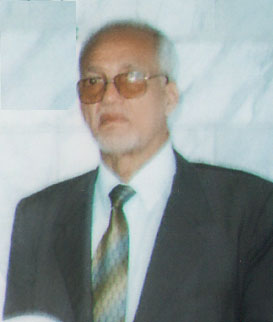

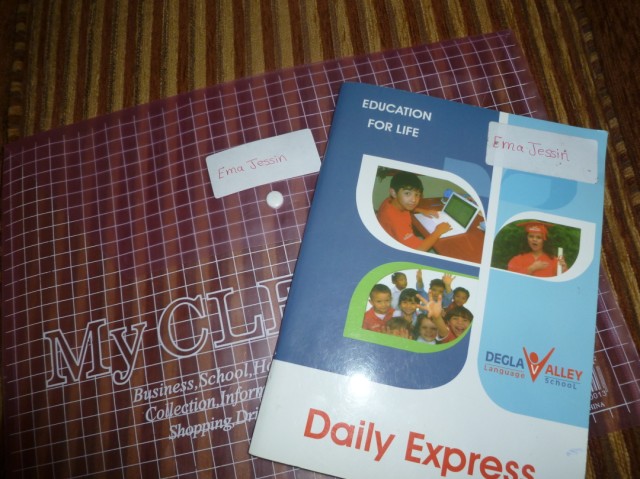


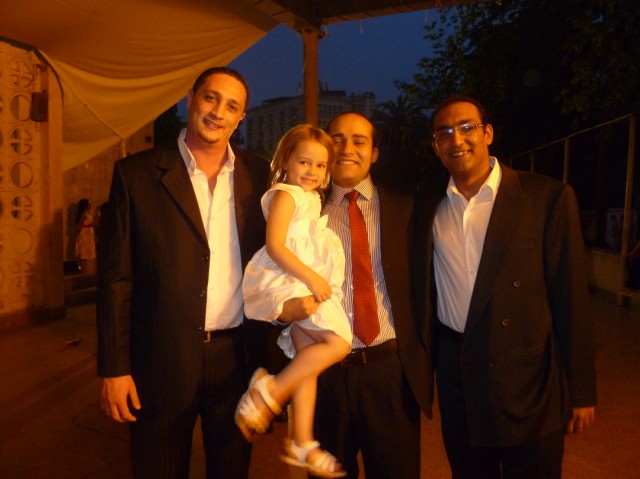

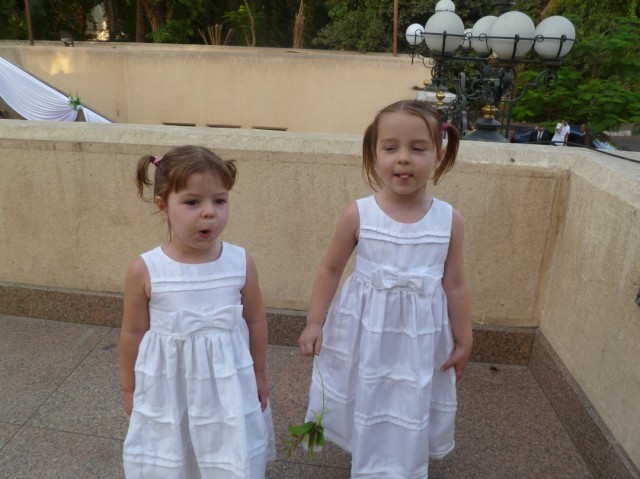
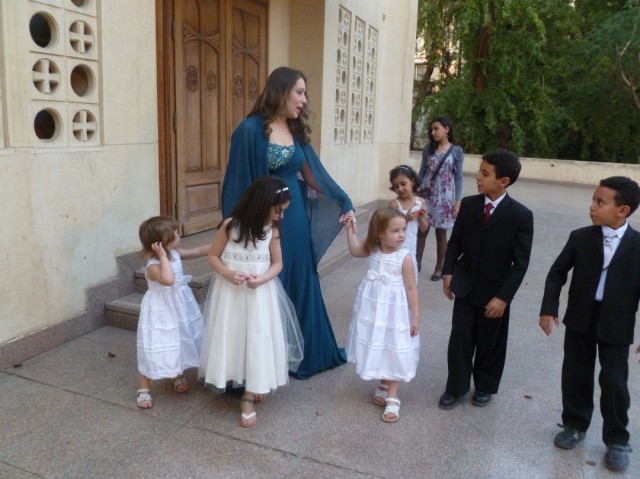


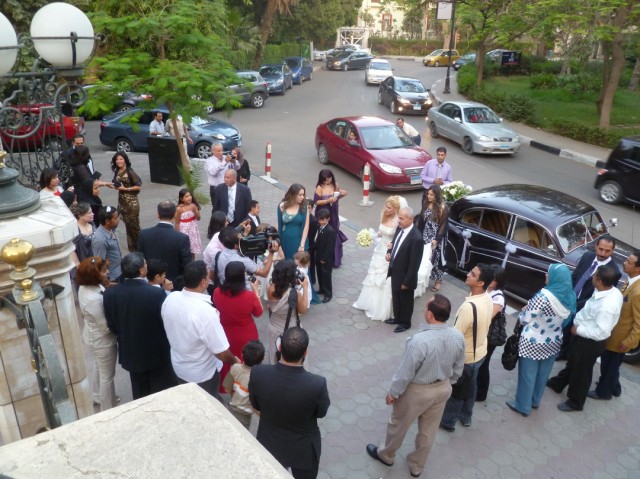

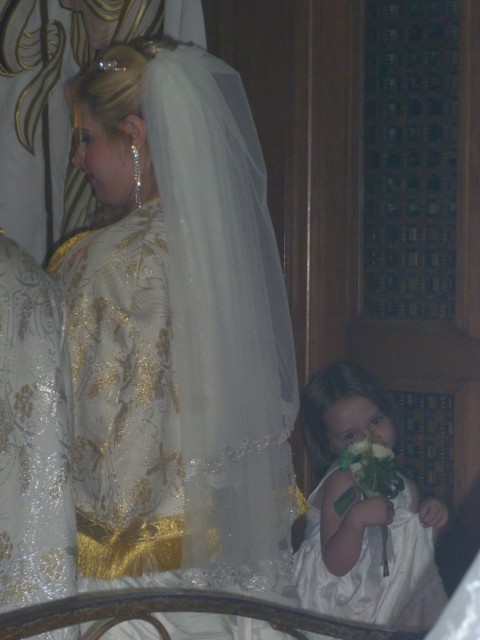


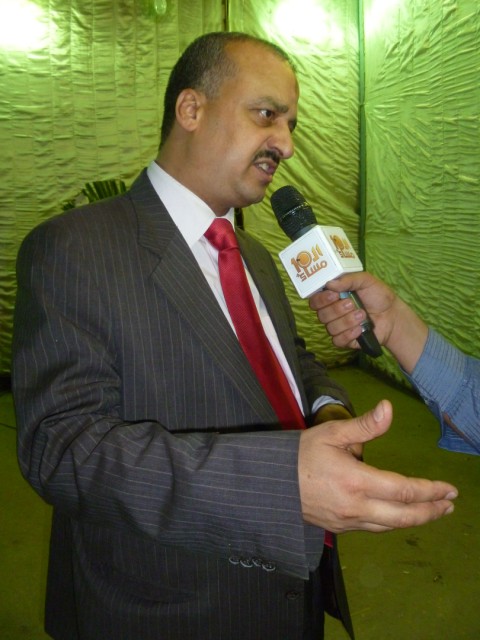

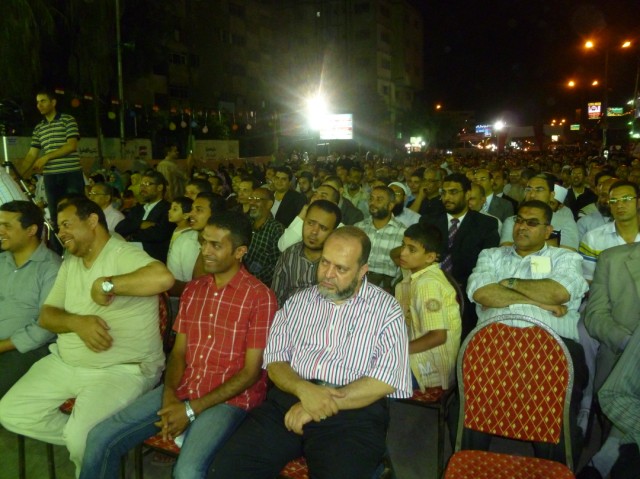

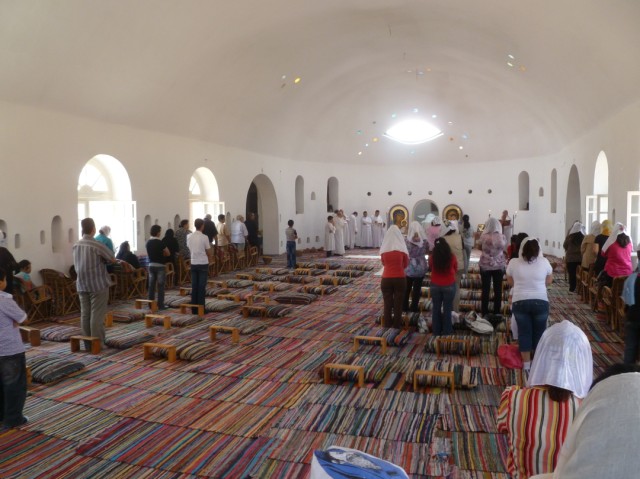
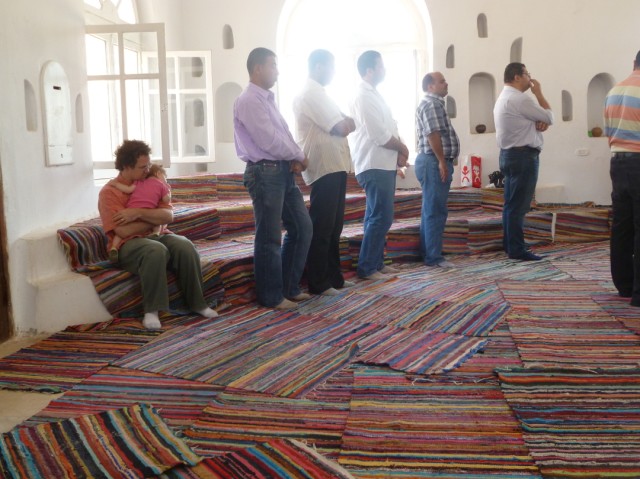
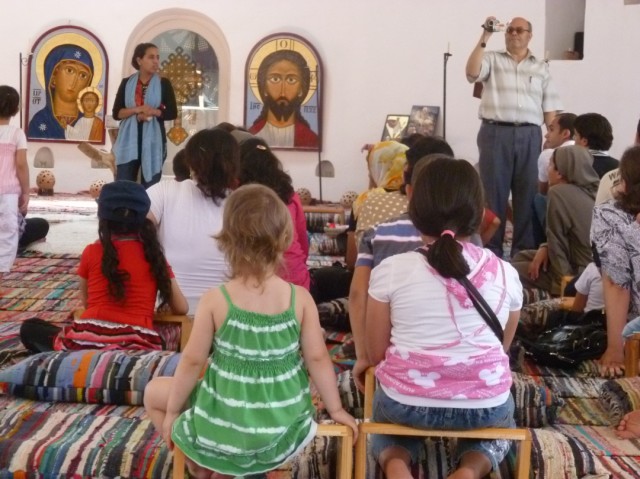


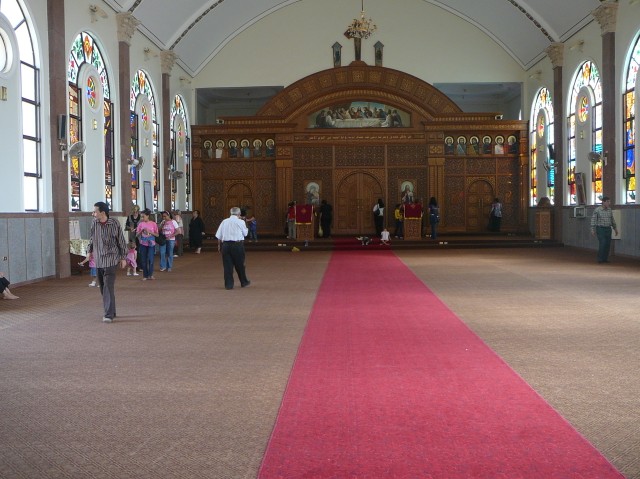

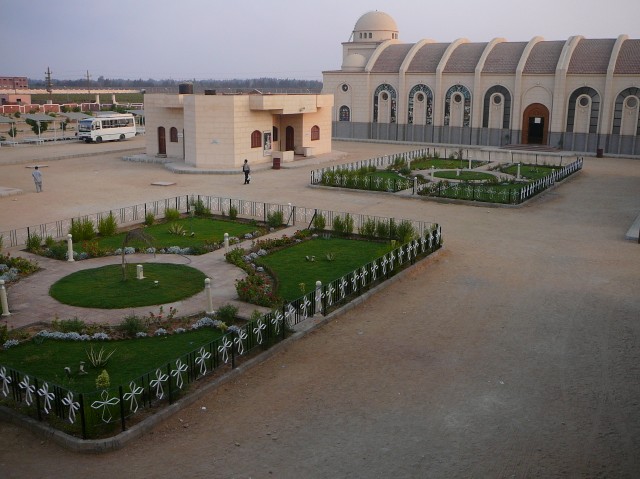
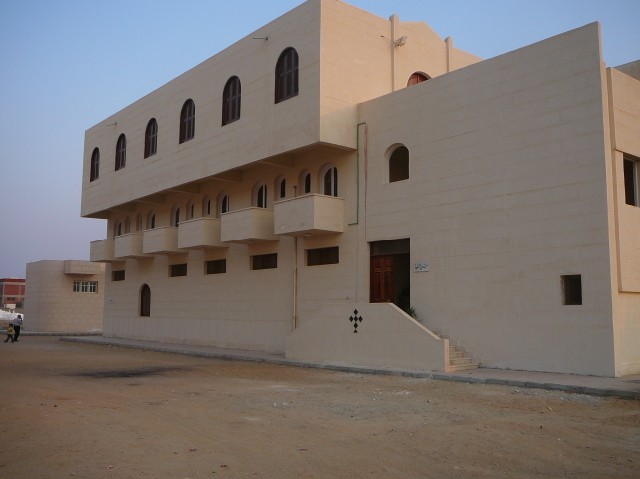
 Jayson Casper