Categories
Christianity Today Europe Published Articles

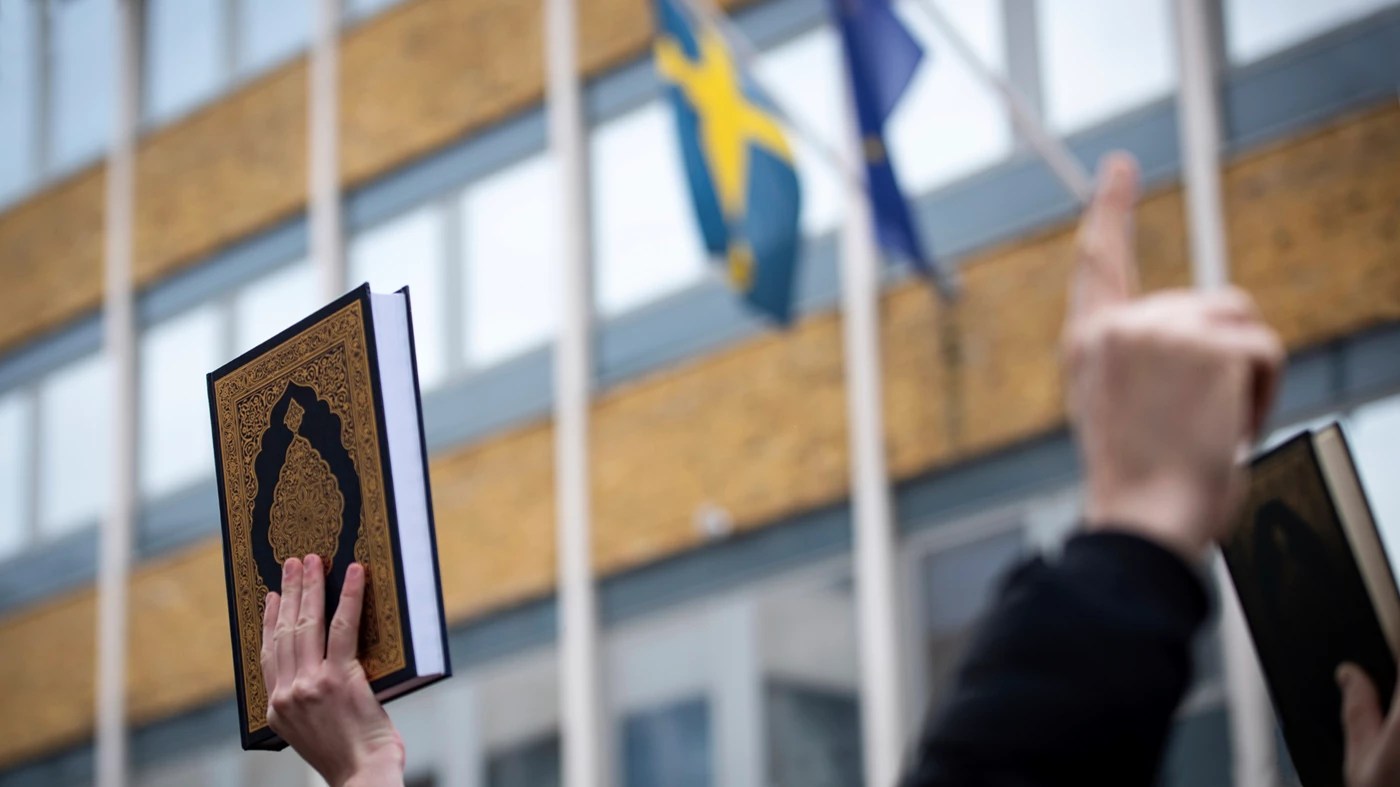
Amid Quran Burning Outcry, Should All Blasphemy Be Banned?

Image: Loredana Sangiuliano / SOPA Images / AP Images / Edits by CT

Swedish evangelicals fear a human rights retreat, as the fallout continues from last month’s Quran burning.

Earlier this month, Iraq expelled the Swedish ambassador after Swedish police authorized the burning of the Torah and the Bible in front of the Israeli embassy in Stockholm—though the Muslim applicant did not go through with it.

“If I burn the Torah, another the Bible, another the Quran, there will be war here,” stated Ahmad A. “What I wanted to show is that it’s not right to do it.”

Though unintentional, he succeeded in showing the neutrality of Swedish law. There was scant outcry from Christians to protect their Scripture, but overall many Swedes are sympathetic to his plea. More than half favor prohibition of the burning of any religious books, up from 42 percent in February.

To do so may require reviving blasphemy laws that were scrapped in the 1970s. Following a similar incident last year, the former prime minister of Sweden stated such acts should be prosecuted as hate speech, lamenting the waste of budget to protect rogue actors. And after this round of international outcry, the government announced that it is currently exploring if such a law can be passed.

But across the European continent, Christian leaders are expressing alarm.

“If you can’t burn the Quran, can you put it in the toilet?” asked Olof Edsinger, general secretary of the Swedish Evangelical Alliance. “There are many ways of desecration, and you can’t stop them all.”

Fully condemning the offense itself, he clarifies that any law—however broadly worded—would be tailored only for the religious community that is offended. The issue is with Muslim reaction, he says, and every limitation shrinks the space for freedom of expression.

It is a hard-won right for Sweden’s evangelicals. Prior to the 1952 Religious Freedom Act, many free church believers joined atheists and other religious nonconformists to seek refuge in the United States. Conversion to Catholicism, for example, was subject to exile until 1858.

“If our culture—and the West in general—bows to outside pressure,” Edsinger said, “it will be a clear step backwards.” So far, the West is resisting, though the world…

This article was originally published at Christianity Today on September 27, 2023. Please click here to read the full text.

Categories
Asia Christianity Today Europe Middle East Published Articles

Quran Burning in Sweden Singes Muslim-World Christians

Image: Hadi Mizban / AP Images

Following the burning of the Quran in Sweden last month, Christians in the Muslim world have been vocal in their condemnation.

But some expressions of disapproval may have been forced upon them.

“Christian religious figures … [must] state their positions regarding this explicit crime,” stated the Association of Muslim Scholars in Iraq. “Their silence puts them in a position of refraining from criminalizing and condemning it.”

The Sunni-based group had plenty of reasons to be offended. The stunt occurred in front of the Grand Mosque of Stockholm on the first day of Eid al-Adha, one of two primary Muslim holidays. And prior to being lit on fire, the Quran was kicked about and stuffed with bacon—provocation against Islam’s prohibition of pork.

But the greatest Iraqi ire may have been that the culprit was one of their own—and a Christian. Salwan Momika, a 37-year-old father of two, sought refuge in Sweden sometime after 2017. But his checkered history had many Middle East Christians criticizing him as well.

In fact, he is an atheist.

His Instagram post announcing his act declared his lack of faith in anything save secular liberalism. Citing the protest as an act of democracy in defense of freedom of speech, he also asked for financial support. And it is reported that upon arrival in Sweden, he volunteered for a far-right party known for its opposition to Muslim migrants.

But earlier, he worked for Shiites.

Momika professed admiration for Abu Mahdi al-Muhandis, the deputy commander of Iraq’s Popular Mobilization Forces (PMF), who was killed with Iran’s Qasem Soleimani in a US drone strike in 2020. Under the PMF’s command he enrolled with Christian compatriots in “The Spirit of Jesus Brigades” in the common fight against ISIS.

He also tried founding his own political party in Iraq, the Syriac Democratic Union. The established, similarly named Christian party in Syria denied any connection to him.

“He is a showoff who wants the spotlight,” said Habib Ephrem, president of the Lebanon-based Syriac League. “He has no specific ideology and stirred up controversy in the Muslim world—for nothing.”

Some observers speculated that Momika’s aim was to create conditions in which it would be impossible to deny his citizenship request and send him back to Iraq.

At least it has given Christians an opportunity for witness.

“What happened in Sweden was an unwholesome use of the concept of personal freedom,” said Ara Badalian, senior pastor of Baptist Church in Baghdad. “True Christianity is characterized by love, tolerance, and rejection of violence and hatred.”

The patriarch of the Assyrian Church of the East spoke similarly. “We call upon the governments of all countries, particularly the Swedish government, not to allow these actions perpetrated in the name of ‘personal freedom,’” stated Mar Awa Royel, who quoted Ephesians 4:32. “This is what the Bible teaches us…

This article was originally published at Christianity Today, on July 11, 2023. Please click here to read the full text.
Categories
Christianity Today Europe Published Articles

Train Up a Child: Ukraine’s Christian Schools Model Wartime Education

Image: Christopher Furlong / Staff / Getty

As air raid sirens blared down the hallways, Tetiana Garkun hurried her middle school students outside the My Horizons Christian School campus into the designated bomb shelter.

Located in Khmelnytsky, 200 miles southwest of Kyiv, Ukraine’s capital, the school’s children moved in orderly fashion—a sign of how accustomed they’ve become to Russian missiles targeting military installations in nearby Lviv.

They prayed, waited for the all-clear signal, and returned to their Bible class.

Garkun’s own children, daughters aged 16 and 17, were similarly composed. Confident high schoolers who only a few years earlier were sharing their faith in Ukraine’s secular education system, they follow after their great-grandfather, a Pentecostal pastor sentenced to death by magistrates in the Soviet Union.

Times have changed, as have education authorities.

“The government encourages us to teach our students how to be Christians and live godly lives,” said Garkun. “They see that we are needed in these horrible days.”

She had earlier led the students in a discussion prompted by the official state health education curriculum: What helps us live a long life?

Model answers included a good diet, avoiding smoking, and participation in sports. But amid war, these answers no longer apply, she said, and even her prepared integration of Christian material hardly satisfied her own soul. In years past, she recited Ecclesiastes 7:17: “Do not be overwicked, and do not be a fool—why die before your time?”

However, she pondered, what about when the righteous are killed by Russian evil?

“When we follow God’s rules and truth, we lead happier and healthier lives,” Garkun said. “But I am honest. I have doubts. And I let the children know it is okay—we can be sincere with God.”

Daily devotions, regular chapel, and close-knit relations have helped sustain a teaching staff struggling to manage massive disruptions to work and family life. Garkun said her best friend, an Orthodox Ukrainian, has grown deeper in her faith since she joined the Christian school. But across the nation, 54 percent of teachers…

This article was originally published at Christianity Today, on June 22, 2023. Please click here to read the full text.

Categories
Christianity Today Europe Published Articles

Ukrainian Refugees Find Christian Welcome—in Russia

Image: Anadolu Agency / Contributor / Getty

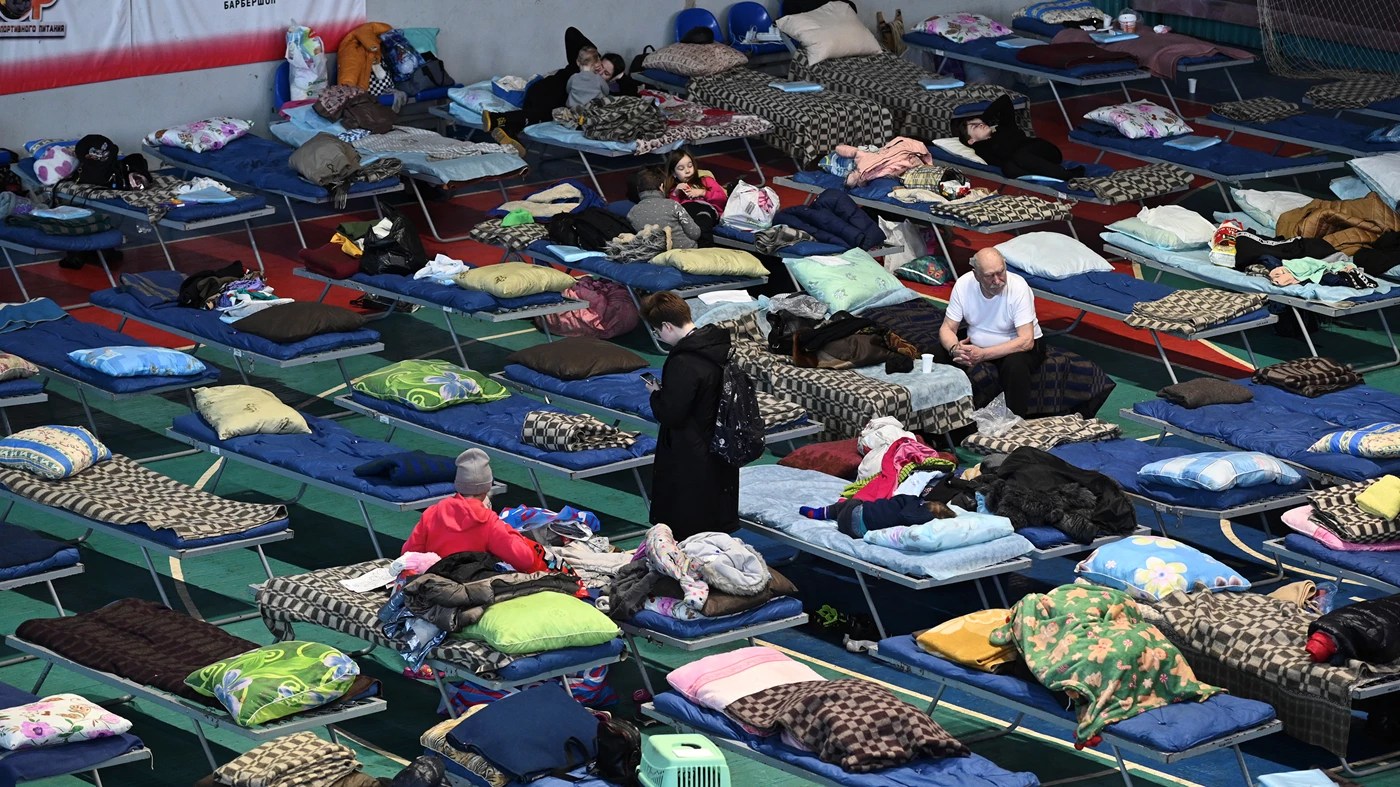
Disoriented and disheveled, the elderly Ukrainian woman stayed put in her seat. After several hours in a Temporary Accommodation Center (TAC) in Taganrog, Russia, 70 miles east of her month-long basement shelter in Mariupol, Ukraine, officials encouraged her to get on the bus—to somewhere else.

Earlier that day, she had been discovered by Russian soldiers and ushered through a humanitarian corridor to the first processing location east of Mariupol. From there she was dispatched to one of 800 such sites established throughout Russia, which are located anywhere from nearby Rostov to Moscow to Vladivostok on the Pacific coast.

Official papers registered her for temporary residency in Russia and access to its medical system. She was given a warm meal, new clothes, $142 in rubles, and a SIM card—though not a mobile phone. She could apply for citizenship if she desired.

All she wanted was to die.

Grandma, where are you going? Is someone coming to meet you?

No one is coming. Nobody wants me.

You have to go to a shelter. You can’t stay here.

I don’t want to live any longer. I wish I had died in the shelling.

Where are your children, or grandchildren?

I don’t know. They left. I can’t find them.

Government employees had done their duty. But after this exchange, a Russian evangelical volunteer sprang into action. After a few phone calls, she placed the woman with a local church family. The next day, she located the granddaughter.

“When we are genuinely involved in their lives, they see the love of Christ,” said Tanya Ivanenko. “They hug us, kiss us, and remember our names. Against the backdrop of war, we give them a little hope.”

Ivanenko did not provide the care, but she shared the grandmother’s story last year on a Russian evangelical church’s refugee coordination channel on Telegram, the region’s popular messaging app. The communication was verified by Pavel Kolesnikov, former co-chair of the advisory council for the heads of Protestant churches in Russia.

The council oversees relief, including over $3 million donated by affiliated unions, he said, impacting 200,000 Ukrainian refugees.

“The church in the West needs to know we are helping also,” he said. “The effort in Eastern Europe is more visible, but we are doing what we can.”

Since the war began, over 14 million Ukrainians have been displaced from their homes, with 8.2 million escaping abroad. The great majority of them have fled west, with Poland recording 1.6 million refugees and Germany 1 million. Through February, the United States has accepted more than 270,000.

But nearly 2.8 million have gone to Russia. Why would they flee into the arms of their enemy? It may not have been…

This article was originally published at Christianity Today, on June 21, 2023. Please click here to read the full text.

Categories
Christianity Today Europe Published Articles

Baptism by Flood: Kherson Christians Persevere After Ukraine Dam’s Destruction

Image: Felipe Dana / AP Images / Edits by CT

For eight months, the Ukrainian city of Kherson endured Russian occupation.

Now—along with at least seven churches—it is underwater.

Experts estimate that the collapse of the Nova Kakhovka dam, 44 miles upstream, released an amount of water equal to the Great Salt Lake. A new wave of evacuations is underway in southern Ukraine, with 25,000 people in Russian-controlled areas and 17,000 in Ukrainian-held territory advised to leave.

An estimated 2,000 houses have been flooded, with 16,000 people made homeless. A lack of drinking water, electricity shortages, and floating land mines have contributed to the humanitarian and ecological disaster.

The dam’s reservoir contributed 2,600 tons of fish to the local economy. Wheat prices have spiked, as 94 percent of Kherson’s irrigation system has lost its supply. And 150 tons of machine oil have been carried toward the Black Sea.

But that is just the physical damage.

Tavriski Christian Institute (TCI) in Kherson is a spiritual casualty. Liberated from Russian occupation last November, the seminary’s riverside properties suffered a new blow with the deluge. Early in the war, TCI president Valentin Siniy evacuated west with his wife, two children, and much of the student body. Today he continues education from Ivano-Frankivsk as he oversees relief efforts over 500 miles away.

CT spoke with Siniy about the state of the seminary campus, the emotional impact of the flood, and the rising challenges to faith that have led to newfound spiritual insights:

What is the situation with your seminary?

When the Russian military descended upon our cherished seminary, it was an emblem of knowledge and spiritual growth. They stripped it of its essence. Equipment from our printing shop vanished, books were burned, and I would say their very presence desecrated our sacred space.

A friend later retrieved one of my favorite pictures: an image of Jesus’ crucified feet.

But even after liberation, Russian missiles destroyed our buildings and sniper fire kept people away. I visited several times, but it was too dangerous to remain. Our once-vibrant campus, composed of five buildings, lay in ruins, mirroring the devastation that ravaged our nation.

And just when we thought we had faced the worst, the catastrophic flooding submerged our greenhouse farm. It had been a source of sustenance and support for our students and area residents—even as it remained in occupied territory on the east bank of the Dnipro River.

Now that the waters are slowly receding, our manager—also a local pastor—tells us that much can be repaired. But he has been threatened by the Russians, who also killed a pregnant volunteer woman while they confiscated the boats of those assisting others.

The Russian government is godless and immoral; it simply destroys people.

How have evangelicals been able to help?

There is a lot of dirt and debris floating about. Cemeteries and cesspools have been flooded; viruses and diseases are spreading. Our volunteers are helping on the liberated west bank, and we have delivered ten pumps with another ten on their way. Unfortunately, most of the damage has been in Russian-controlled areas.

Through the…

This article was originally published at Christianity Today, on June 12, 2023. Please click here to read the full text.
Categories
Africa Christianity Today Published Articles

Cyrus, Pharaoh, or Xerxes: Nigerian Christians Seek Parallels for New President They Opposed

Image: Sodiq / Xinhua / Getty Images

Bola Tinubu, the 16th president of Nigeria, has “absolute” faith in God.

“I know that his hand shall provide the needed moral strength and clarity of purpose,” he stated during his inaugural speech on Monday, “when we seem to have reached the limits of our human capacity.”

But what if the limits are self-imposed?

Tinubu, who infuriated many Christians by nominating a fellow Muslim as his running mate, became the West African nation’s first president to enter office with less than 50 percent of the vote. Despite record voter registration, only 29 percent of the electorate cast ballots. Tinubu, affiliated with the incumbent APC party, won 37 percent.

Atiku Abubakar of the opposition PDP party captured 29 percent, while the third-party surge of Peter Obi, a Christian, fell short with 25 percent. Neither candidate attended the inauguration, as they contest in court the validity of the electoral results.

The Christian Association of Nigeria (CAN), an umbrella grouping of the five main denominations, vociferously protested the Muslim-Muslim ticket, urging a vote for any other candidates. But with the nation roughly divided 50-50 along religious lines, results show that no candidate was able to marshal a conclusive sectarian advantage.

In breaking political protocol, Tinubu, two-term governor of the southwestern megacity of Lagos, stated the choice of Kashim Shettima as vice president simply reflected his personal competency. But most analysts linked it instead with the candidate’s northern origin.

Everyone jostled over this mostly Muslim bloc of votes.

Competition led the PDP to break regional political protocol in nominating a Fulani from the north, when outgoing APC president Muhammadu Buhari, also Fulani, per tradition should have been succeeded by a southerner. Obi also picked a northern Muslim as his presidential partner.

Tinubu, who helped secure Buhari’s victory eight years earlier, had long been acclaimed as a powerful political boss and kingmaker for others. Running for office himself, he declared at the start of his campaign: It’s my turn.

Yet despite alleged fraud and campaigns of voter intimidation, Tinubu lost APC electoral strongholds in the north to Abubakar, and his home city of Lagos to Obi. He enters office amid deep political division, worrying economic conditions, and a host of Christian leaders deeply wounded by his campaign.

“What he did shows no regard for Christians,” said Esther Ayandokun, rector of the Baptist College of Theology in the southern state of Oyo. “We are not happy, but there is nothing we can do.” She urged prayer, and…

This article was originally published at Christianity Today, on June 1, 2023. Please click here to read the full text.
Categories
Christianity Today Europe Published Articles

Vengeance Was Theirs: Armenia Honors Christian Assassins, Complicates Path to Peace

Image: Courtesy of Visit Yerevan

Surveying the scene on a rainy day in Berlin, the Protestant gunman recognized his target. Living hidden under an assumed name in the Weimar Republic, the once-famous official exited his apartment, was shot in the neck, and fell in a pool of blood.

For many, the 1921 killing vindicated the blood of thousands.

Neither were Germans. Both would eventually be immortalized.

But the cloak-and-dagger story took another twist when a Berlin court ruled the assassin “not guilty.” The trial captivated the local press, brought a nation’s tragedy to the public eye, and set off a philosophical chain of events that eventually coined a new term and established an international convention meant to render unnecessary any similar future acts.

It was already too late.

Two decades after the trial, the Nazis murdered six million Jews. Hitler, preparing the Holocaust, is said to have justified it in reference to the already forgotten history of 1.5 million people killed by Germany’s then-ally in the fallout from World War I.

The gunman, Soghomon Tehlirian, was an Armenian. The official, Mehmed Talaat, was an Ottoman Turk. And the term created by Polish lawyer Raphael Lemkin—genocide—continues to haunt the world today.

But the chain of events has not concluded.

Nazi Germany, seeking Axis partners in World War II, repatriated Talaat’s remains to Turkey in 1943, where dozens of memorials and streets are named in his honor. Once the grand vizier of the Ottoman sultan, he is celebrated today as one of the leading “Young Turks” who forged the creation of the modern-day secular nationalist republic.

The descendants of his victims, scattered around the world, consider Talaat—known commonly as Talaat Pasha with his honorific title—the architect of the Armenian Genocide.

Tehlirian, who in prison pending trial was given a Bible by a local Protestant pastor, eventually settled in the United States. He is buried in Fresno, California, where his obelisk-shaped grave marker is adorned with a gold-plated eagle, slaying a snake.

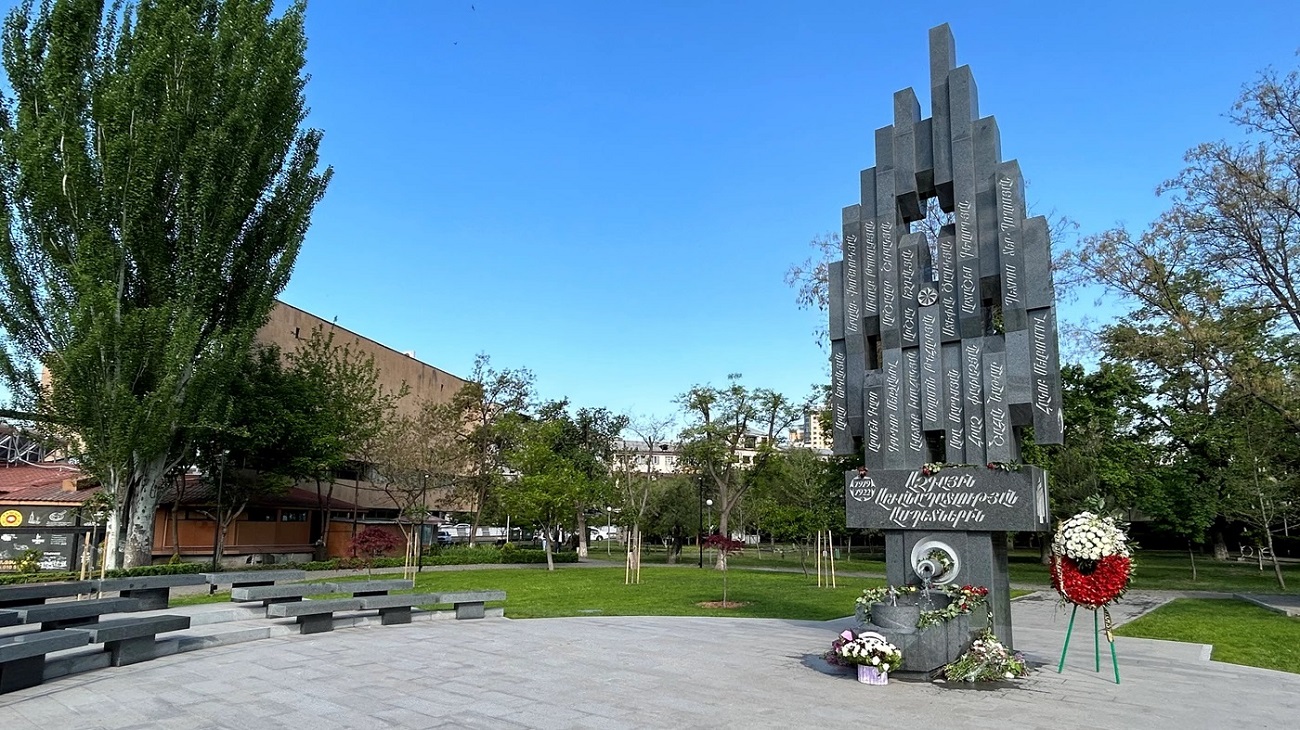
And last month, more than a century after the trial, the city council of Yerevan, the capital of Armenia, erected a memorial to honor 16 heroes of Operation Nemesis. Conducted between 1920–22, the campaign secretly authorized by the ruling party of the newly independent nation assassinated eight Turkish and Azerbaijani officials.

It was named after the Greek goddess of divine retribution.

Incorporating a fountain of flowing water, the memorial’s towering structure was built based on a petition from the Descendants of the Avengers of the Armenian Genocide. Tehlirian is at the center, beneath an empty space in the shape of a cross, directing one’s gaze upward to heaven.

Does heaven approve—now or then? “If I was at the planning meeting, I…

This article was originally published at Christianity Today, on May 30, 2023. Please click here to read the full text.

Categories
Americas Christianity Today Published Articles

Sola Scripturas: Can Evangelicals Befriend the ‘Protestant Reformers of Islam’?

Image: Illustration by Christianity Today / Source Images: Unsplash

If one pictures “radical Islam,” chances are the image resembles Osama bin Laden, Boko Haram in Nigeria, or the ISIS fighters of Iraq and Syria. And the connotation is that they are out to kill—or at least to turn the world into an Islamic caliphate.

They are known as Salafis: Muslims who bypass accrued tradition to imitate meticulously the example of Muhammad, his companions, and the first generation to follow them. After the death of the prophet in 632 A.D., the nascent faith’s collective zeal established a sharia-based global empire that did not end until the fall of the Ottoman Empire.

Muslims who look like these jihadist images are found in every major American community.

Matthew Taylor counterintuitively argues that, at least in the United States, Salafis actually compare better with evangelicals—the religious group with the most unfavorable perception of Muslims in general.

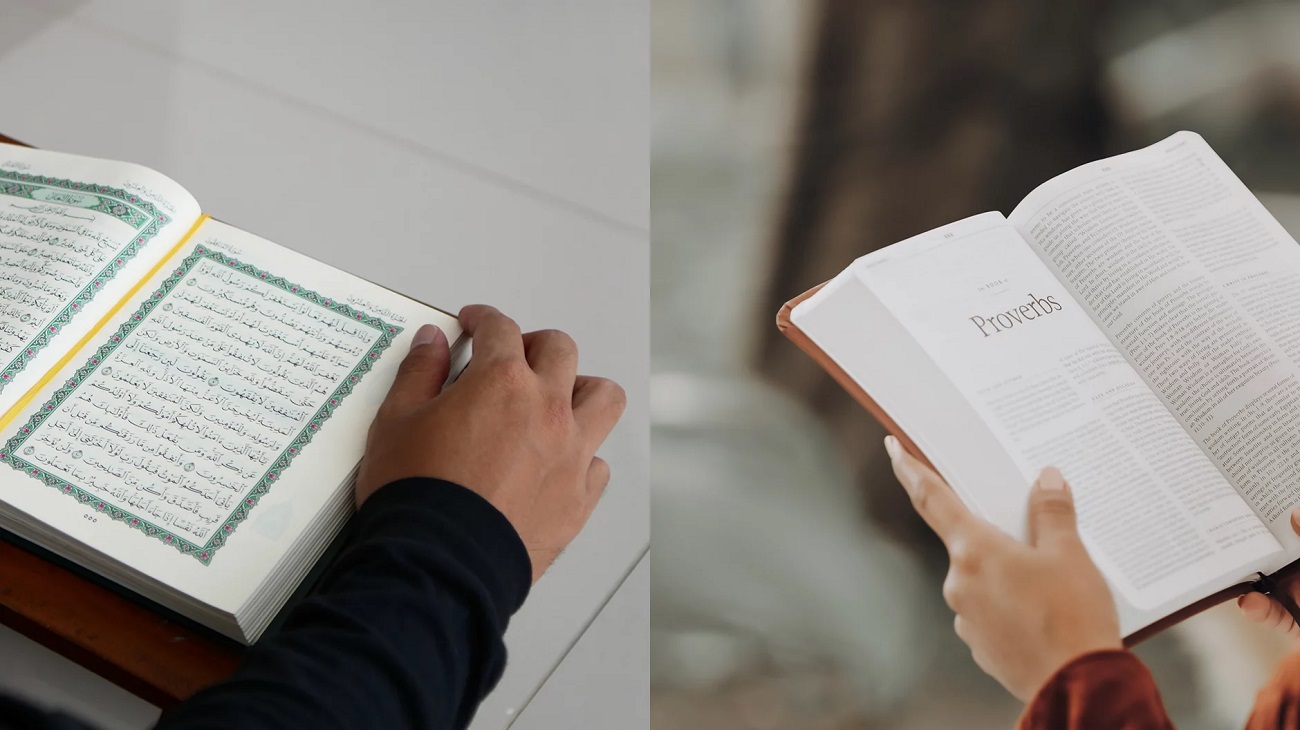
Author of the forthcoming Scripture People: Salafi Muslims in Evangelical Christians’ America, Taylor argues that the Salafi impulse to return to the origins of Islam parallels the evangelical desire to imitate the early church. And both communities, as the title implies, center their approach on sacred text.

The question is: Do the two scriptures take them in radically different directions?

CT asked the Fuller Seminary graduate, now a mainline Protestant scholar at the Institute for Islamic, Christian, and Jewish Studies in Baltimore, to address the common concern about Salafi extremism and to advise evangelicals on how to pursue a path of possible friendship:

What makes a Muslim a Salafi?

Salafism has very deep roots in the Muslim tradition, and the term Salaf refers to the first generations of Muslims. The idea is to get back to the original authentic practices and theology of Islam, before the tradition became corrupted or diluted.

The Salafi approach involves a direct approach to texts, a deep interest in the Hadith—a secondary scripture in Islam that includes the sayings and actions of Muhammad and the early Muslim community—and a downplaying of the traditional schools of jurisprudence. This is why many Salafis will analogize and call themselves “the Protestant Reformers of Islam.” They see their project as similar to what Martin Luther and John Calvin did in the 16th century.

Can you tell a Salafi simply by their appearance?

It is easier in non-US contexts. A beard is a strong signal that a man is an observant Muslim. And you’ll find Salafi discourse—based on specific hadiths—as very focused around the length of the beard as more than can be grasped in the hand. Traditionally, they adopt distinctive modes of clothing such as the thobe, a long, flowing robe with pants that come up just above the ankles.

Salafi women almost always wear the hijab and others the niqab, which covers the face. But after 9-11, the American security state had an intense focus on Salafis which prompted a process in which many integrated into the American Muslim mainstream, downplaying distinctive Salafi attire and even avoiding always expressly calling themselves Salafis.

How do they justify downplaying their distinctives? Salafis have a sophisticated understanding of the difference between…

This article was originally published at Christianity Today, on May 25, 2023. Please click here to read the full text.
Categories
Christianity Today Middle East Published Articles

Tim Keller Changed Church Planting, from City to City

Image: Illustration by Christianity Today / Source Images: Unsplash / Photo of Keller by Nathan Troester / Courtesy of Redeemer City to City

CT interviewed church planters in Barcelona, Beirut, Chennai, Hanoi, Melbourne, Quezon City, Recife, and Vienna about their respective city’s distinctive charms and challenges and how they are contextualizing the gospel there, all with this question in mind: To what extent has Keller’s approach to church planting influenced their ministry?

Marwan Aboul-Zelof in Beirut, Lebanon

  • Pastor of City Bible Church
  • The Reformed-Baptist church has a 70-strong congregation and holds services in English.
  • Sixty percent are locals and the rest of the congregation includes people from every continent.

Beirut is a beautiful and cosmopolitan city with an incredibly rich history. It’s much smaller than New York City, but has twice the population density. Tim Keller never visited the Middle East, although we had hoped that he would come. But he had a great impact on us through his writings, sermons, and social media posts.

Beirut, and our church, has gone through significant challenges in the past few years: revolution; the pandemic; economic and government collapse; and the 2020 explosion. Yet, the Lord remains faithful and gracious to us.

I remember being on a call with Tim, who talked about historical moves of God and how there was often a major crisis that served as a catalyst for those moments. He told me that Lebanon’s multiple major crises may develop greater openness to the gospel, acknowledged the difficulties I face as a church planter here, and encouraged me to remain faithful.

This article was originally published by Christianity Today on May 24, 2023. I contributed additional reporting. Please click here to read the full text.

Categories
Published Articles Christianity Today Religious Freedom

US Rates Religious Freedom of China, Iran, Russia Among 199 Nations

Image: Jonathan Ernst / Pool / AFP / Getty Images

For the last 25 years, the United States has promoted global fidelity to its First Amendment.

In 1998, President Bill Clinton signed the International Religious Freedom Act (IRFA) into law, mandating yearly reports to detail the respect given to this fundamental right in every nation of the world.

Not every nation is pleased.

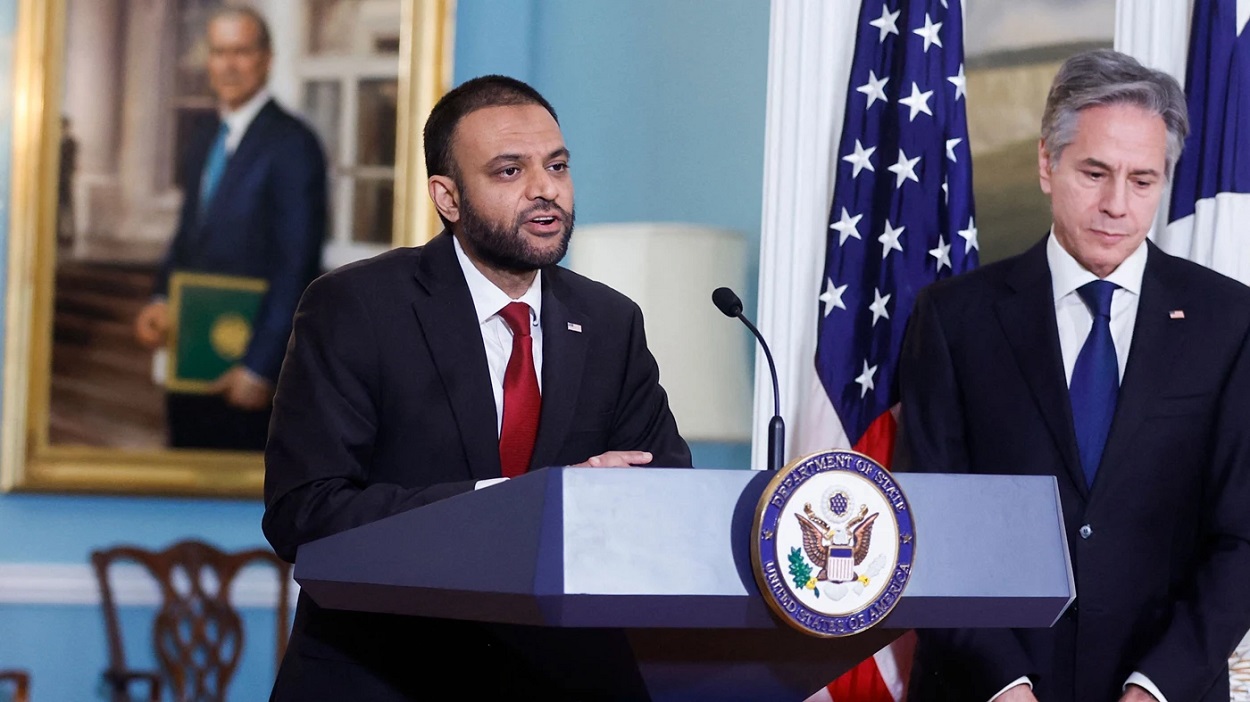
“We are sometimes asked,” stated Rashad Hussain, US ambassador at large for international religious freedom, “‘Who are you as the United States to speak to other countries about their human rights conditions?’”

Hussain, whose State Department position was also created by IRFA, replied to the rhetorical question during this week’s launch of the 2022 IRF report. Covering 199 countries—US allies and enemies alike—it prepares the ground for year-end designation of the worst offenders as Countries of Particular Concern (CPC), with second-tier violators placed on a Special Watch List (SWL).

His two-fold answer began with US leadership grounded in its unique and foundational Bill of Rights. But he continued with immigration, evidencing preference for American rights in so many of the same 199 nations studied.

“People come to the United States from all around the world and demand that their elected representatives and government official promote our values in their homelands,” said Hussain. “In many ways we are representatives of the rest of the world, gathered here in the United States.” The report’s Appendix G provides…

This article was originally published at Christianity Today, on May 17, 2023. Please click here to read the full text.
Categories
Christianity Today Middle East Published Articles

How Should We Then Live Among Muslims? Four Arab Christian Views

Image: JossK / Getty

Two Middle East nations share a city named Tripoli.

They share little else, apart from a Phoenician heritage and mutually near-unintelligible dialects of Arabic. One of their starkest contrasts concerns freedom of religion.

Libya sentenced six Christians to death earlier this month for converting from Islam. Lebanon, despite its sectarianism enshrined in politics, allows free movement between religions.

Libya’s Tripoli was commemorated in the official hymn of the US Marines in homage to American intervention on the shores of North Africa. Lebanon’s was an outpost of an eastern Mediterranean–focused American missionary movement that transformed society through gender-inclusive education.

The Italians colonized Libya; the French, Lebanon. Elsewhere, the Middle East is marked by British influence, Ottoman traditions, petrodollar economies, democratic structures, multicultural kingdoms, autocratic republics, and everything in between.

What unites them all is the preponderance of Islam.

But among the followers of Muhammad there is also difference. Some nations are secular; others enforce sharia. Some protect Christian minorities; others discriminate against them. It is difficult to offer a sweeping synopsis—or uniform lessons learned by local Christians.

Yet CT asked four Arab Christian leaders with deep roots in the region to make an attempt. Two currently live abroad; two live in their nation of origin. Yet each represents a space on the spectrum of strategies on how to best live as a Christian in a Muslim society.

One articulation of the spectrum, crafted by theologian Martin Accad, arranges common Christian responses into five categories: syncretistic (the blurring of faiths), existential (the dialogue of diversity), kerygmatic (the preaching of the apostles), apologetic (the defense of the gospel), and polemical (the interrogation of Islam).

The leaders engaged below were not asked to sort themselves accordingly, nor does this landscape article seek to label them. But each was asked the following question:

Whether in a context of oppression or embrace, how should believers in Jesus witness to their faith, keep social peace, and maintain unity with fellow Christians?

Martin Accad / Najib Awad / Harun Ibrahim / Barshar Warda

This article was originally published at Christianity Today, on May 17, 2023. Please click here to read the full text.
Categories
Christianity Today Middle East Published Articles

As Churches Offer Refuge, Sudanese Christians Refine Theology of War

Image: Ahmed Satti / Anadolu Agency / Getty Images

Hajj Atiya, an elderly Sudanese woman living in Khartoum, was already ill.

And then the war started.

“The planes bombed from above, the bullets were flying below,” she said. “We stayed in our house, afraid, while all outside was boom, boom, boom.”

All she had in the house was flour, to bake bread. At least she had that.

Mariam, who came to Khartoum from the Nuba Mountains to get medicine, went several days without water. And then a bomb hit the neighboring building, which collapsed upon her own.

“Whenever the airplanes disappeared overhead, we ran outside in search of food,” she said. “But we had to hide behind buildings to avoid the gunfire, with corpses strewn on our right and left.”

An unnamed doorman had it still worse.

“For ten days we couldn’t leave our home,” he said. “The shops are closed, and soldiers are in the streets.”

Every Sudanese of means in his Kafouri neighborhood of Khartoum had left town at the first sign of violence, which began April 15. He and the other guards were left behind to protect the properties. But the building owner, when the doorman called to ask for money or help, hung up on him.

Mariam found someone willing to provide transport out of the capital. But she couldn’t afford the 50-cent fare. All she had was oil and soap.

Atiya had only one option left.

“I prayed to God: Save us,” she said. “God answered, and someone came to take us away.”

Somehow, each escaped with their families 85 miles southeast to Wad Madani. Atiya found a place to rest under a tree. Mariam spent the night on the street. But each now numbers among the 122 families staying in two local evangelical schools, with dozens more sleeping in the city’s churches.

“The war is ongoing, and the people keep coming,” said Edward Hussein, an evangelical pastor. “The situation is difficult, and it is only getting worse.”

Only scant support has come from abroad. But local believers donated funds, food, and beds from their own homes. Until now, every arriving family has been given an aid package that includes lentils, flour, sugar, oil, tea, and soap.

But for how long?

“If the situation continues, what can we do?” asked Habil Thomas, country director for Nigeria-based Calvary Ministries. “God is the only one who can intervene, as we pray for peace in Khartoum and all Sudan.”

So far, Wad Madani has been spared.

Located three hours from Khartoum along the banks of the Blue Nile, the capital of Gezira state governs an agricultural center once anticipated to become a new breadbasket of Africa. While development has stalled, the abundance of crops and relatively lower cost of living—coupled with employment opportunities on the farms—has drawn many here to safety.

Because Khartoum is destroyed.

“If the fighting doesn’t stop, it will be a humanitarian crisis,” said Ezekiel Kondo, Anglican archbishop of Sudan. “Nobody can help anyone else here, because all are helpless.” His residence in All Saints Cathedral was situated one block from…

This article was originally published at Christianity Today, on May 12, 2023. Please click here to read the full text.

Categories
Christianity Today Europe Published Articles

Estonia Seminary Unites War-Weary Russians and Ukrainians in Christ

Credit: Marina Kisseljova

Since Russia’s invasion of Ukraine last year, few European institutions have welcomed both Slavic foes. A rare example is found right on the border, in a nation that wonders if it might be next.

Estonia, the northernmost of three small former Soviet republics on the Baltic Sea, immediately rallied in support of Ukraine. Given that Russia’s aggression began on February 24—coinciding with Estonia’s date of independence, first proclaimed in 1918—some wondered if it was a deliberate message.

The initial blitzkrieg toward Kyiv reminded Estonians of the Soviet occupation of the 1940s. Politicians donned blue and yellow ribbons; military brass sent weapons and aid. Citizens, including the 1 in 4 with Russian ethnicity, reacted to the atrocities in horror.

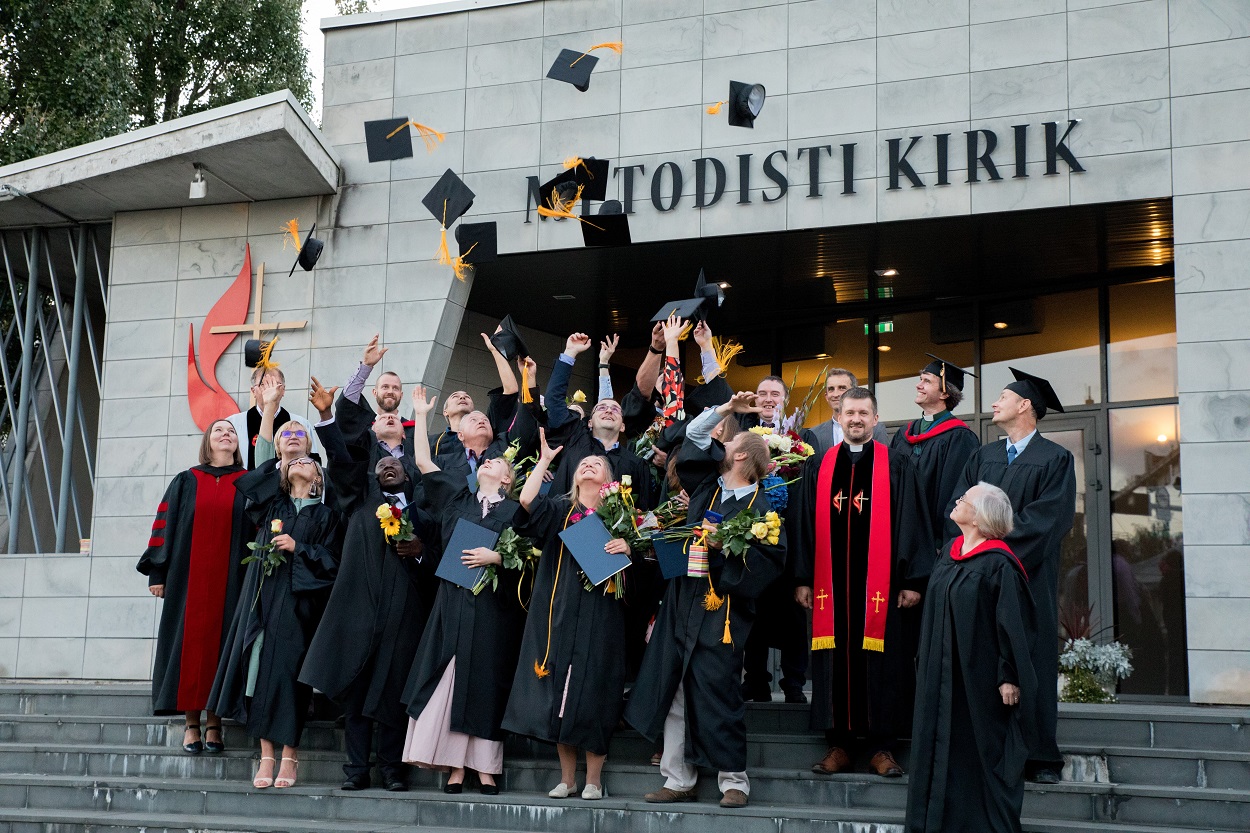
But as many universities closed their doors to students from Russia and allied Belarus, one evangelical institution bucked the trend. Baltic Methodist Theological Seminary (BMTS)—fully united with the national stance condemning the war—insisted instead on the unity of Christ.

“We did not hang a Ukrainian flag, but held a joint prayer of lament,” said Külli Tõniste, BMTS president. “Preservation of community is more important than an outward show of patriotism.”

Founded in 1994 and accredited by the state, the Methodist seminary hosts students from neighboring Latvia, nearby Finland, the United States, Israel, Nigeria, and Ghana. But it was the caldron of Russians, Belarusians, and Ukrainians—43 percent of the student body—that could have proved to be a tinderbox.

Yet sensing confusion and insecurity among many, Tõniste—an Asbury Theological Seminary alumna with a PhD from the London School of Theology—assured all students that her door was open to hear their stories. The Ukrainian refugee from Mariupol. The Estonian whose grandfather was killed by the Soviets. And the Russian of mixed family with Ukrainians who doesn’t know what to believe.

“Once admitted,” she said, “our students are safe with us.”

One example is Philip Kharchenko, a first-year student from Russian ally Belarus. A physical education teacher back home, he was “shocked” at the invasion—as initially all his colleagues were as well. But as his school and nation rallied behind Moscow, he felt increasingly uncomfortable.

Having long felt called to ministry, he found a home in Estonia.

“I thought they wouldn’t let me in,” he said. “But I am glad to be here, surrounded by people studying the Bible—it opens up a whole new experience of God.”

He has made quick friends with Russians and Ukrainians alike, comparing similar words in each of their languages. And at the annual Christmas celebration—which raised $1,600 for sister seminaries under fire—he watched in admiration as other Russian and Belarusian students included a Ukrainian-language song among their multi-language holiday medley.

Then all joined in an African-led dance.

“In the non-Christian world, I see great separation between peoples,” said Kharchenko. “But at seminary, our borders just dissolve.”

Two months later, it took administrative resolve to ensure this.

Simultaneous translation into Estonian, Russian, and English permits not only a diverse student body but also a diverse faculty. But as the one-year anniversary of the war approached, a visiting professor from Moscow—over Zoom—began to talk politics. Among his complaints was…

This article was originally published at Christianity Today, on May 9, 2023. Please click here to read the full text.
Categories
Christianity Today Published Articles Religious Freedom

Religious Freedom Violations Go West

Image: STR / AFP via Getty Images

While longstanding offenders in Asia and the Middle East remain epicenters of persecution, Latin America and Europe occupy more space in an annual chronicle by the US Commission on International Religious Freedom (USCIRF).

For the first time, Cuba and Nicaragua are labeled Countries of Particular Concern (CPC), according to the independent watchdog. Its 2023 report also makes special mention of the religious rights of indigenous communities in Mexico, Chile, and Colombia. And France, Germany, and Ukraine are highlighted as examples where minority believers have suffered for their faith.

The report’s greatest emphasis, however, is monotonously familiar.

The commission recommends the US State Department relist Burma (Myanmar), China, Eritrea, Iran, North Korea, Pakistan, Russia, Saudi Arabia, Tajikistan, and Turkmenistan as CPCs, in addition to Cuba and Nicaragua. Afghanistan, India, Nigeria, Syria, and Vietnam were recommended for additional designation.

Violations in these nations are “systematic, egregious, and ongoing.”

USCIRF chair Nury Turkel highlighted Iran in his opening remarks. The nation brutally represses its minority communities, he said, and this past year cracked down on protestors peacefully demonstrating against mandatory hijab laws.

Mahsa Amini, who died in custody, was the feature image of the 2023 report’s cover.

“USCIRF is disheartened by the deteriorating conditions for freedom of religion or belief in some countries,” said Turkel. “We strongly urge the Biden administration to implement USCIRF’s recommendations.” These include…

This article was originally published at Christianity Today, on May 2, 2023. Please click here to read the full text.
Categories
Christianity Today Middle East Published Articles

Khartoum Churches Damaged as Sudan Descends Closer to Civil War

Image: Ahmed Satti / Anadolu Agency / Getty Images

Sudan’s most Christian neighborhood is under attack.

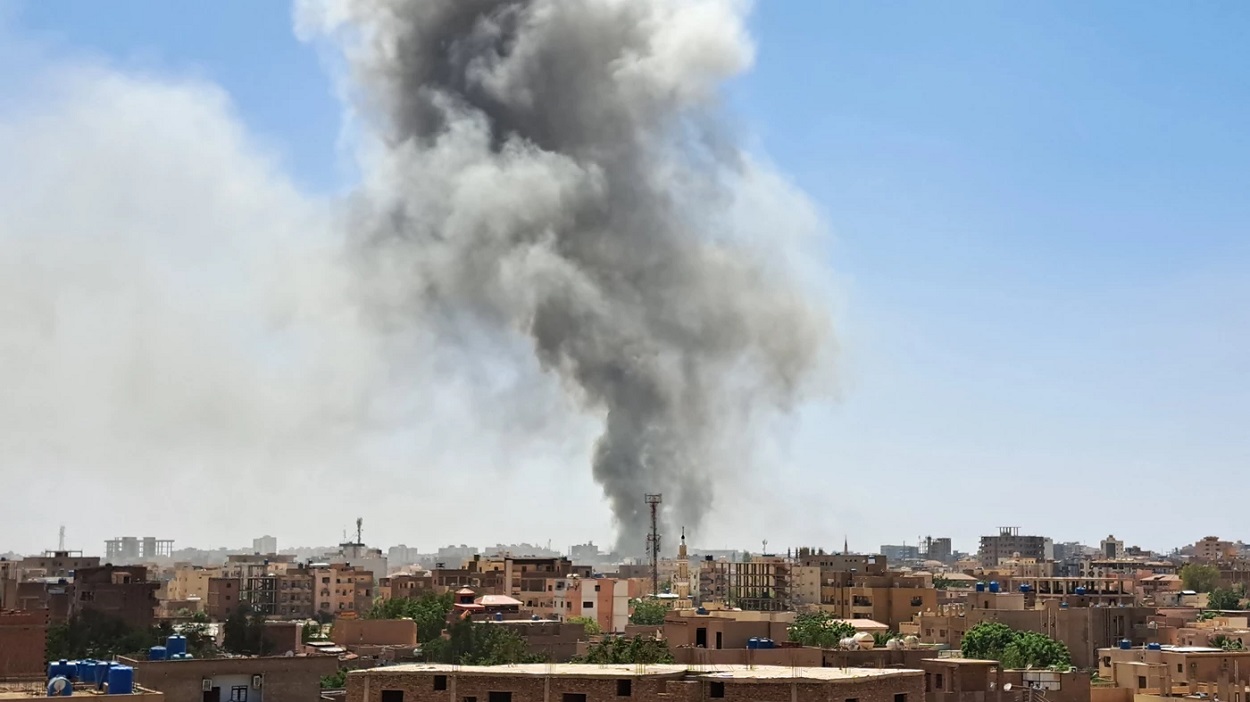
Collateral damage amid severe clashes between the army and its previously partnered militia, churches in the Bahri district of the capital Khartoum and surrounding areas have witnessed the worst of the past three weeks of fighting.

The Evangelical Presbyterian church suffered a fire as munitions exploded in a nearby market. The Coptic Orthodox church was struck by a rocket. And All Saints Anglican Cathedral was occupied by militant forces.

Over 500 people have been killed, with more than 4,000 injured.

“The situation is very serious,” said Ismail Kanani, general secretary of the Sudanese Bible Society. “I am trapped in my house, without power and water.”

Prices for food and fuel are skyrocketing, electricity supply has been cut off in much of the capital, and hospitals have been looted and are barely operating. A three-day truce has been agreed—and violated—to allow civilian escape and embassy evacuations.

Almost all Christians have left the area, said Abdalrahim Musa, director of the Evangelical Cultural Center of the Khartoum Presbyterian church. An eyewitness to the carnage, like many other Christians he fled three hours south to Wad Madani, an area relatively distant from the conflict.

But in their absence, he hears reports of widespread looting of their properties.

They are not the only ones displaced. More than 100,000 people have fled Sudan, according to the United Nations, with an additional 334,000 displaced within the country.

Foreign governments have frantically sought to evacuate their citizens. Under cover of armed drones, the US organized a land convoy for 300 Americans and other nationalities to the Red Sea city of Port Sudan. From there, many board a boat to Saudi Arabia for relocation elsewhere.

It is more difficult for Sudanese—and sometimes exploitative. One family stated it was stuck at the Egyptian border, unable to pay the $40,000 fare demanded for crossing. While there is no collected list of Christian casualties, three family members of the guard at Musa’s center were shot in the head, presumably caught in the crossfire. Two children from his church were also killed, as was his…

This article was originally published at Christianity Today, on May 2, 2023. Please click here to read the full text.

Categories
Christianity Today Middle East Published Articles

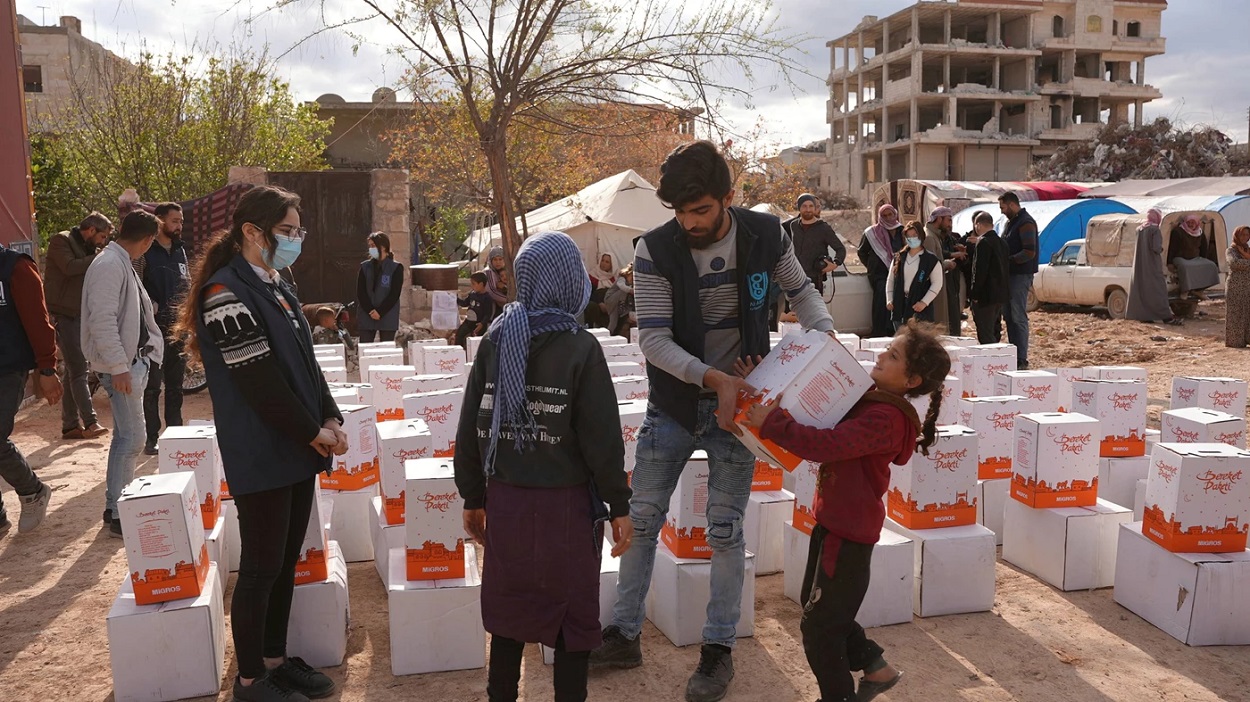
Syria Has Six Months to Receive Your Earthquake Aid

Image: Rami Alsayed / NurPhoto via AP

Syria has been suffering for 12 years, plagued by civil war, jihadist violence, foreign occupation, and autocratic governance. Yet widening US economic sanctions have made it increasingly harder to help—until now.

A February waiver offers a 180-day window for earthquake relief.

“If God has put it on your heart to give to Syria, be generous,” said Nabil Costa, executive director of the Lebanese Society for Educational and Social Development (LSESD), also known as the Baptist Society. “Find trusted organizations, because it is not easy to get it to the right place.”

On March 10, the World Evangelical Alliance (WEA) joined the World Council of Churches (WCC) and Catholic charity Caritas to detail the “chilling effect” sanctions have on the ability of faith-based and other NGOs to transfer money and goods to struggling Syrians. Most banks have deemed such transactions too risky to facilitate.

Therefore, unlike in neighboring Turkey, the February 6 earthquake was not followed by an immediate outpouring of international aid. Despite a death toll of 6,000 and an estimated 500,000 more displaced amid the rubble, United States and European Union policy—and distrust of the Bashar al-Assad government—prevented most nations and international humanitarian organizations from rushing to the scene.

A false step could result in a $1 million fine and 20 years in prison.

US sanctions against Syria began in 1979 with a declaration that it was a state sponsor of terrorism, and tightened in 2004 for its undermining of the war in Iraq. In 2011, Syria’s repression of civil protest resulted in additional sanctions, subsequently strengthened throughout its civil war—especially after the use of chemical weapons in 2017.

Two years later, after a whistleblower smuggled out alleged evidence of the torture of civilians, the Caesar Act implemented secondary sanctions against anyone conducting business with the Syrian government.

Legislation permitted humanitarian exemptions for food and medicine, and in 2022 allowance was made for unfettered aid into regions outside of government control. Turkey and various rebel entities occupy territory in northwest Syria, while a US military base supports Kurdish forces administering large swaths of the northeast.

The United Nations designated a number of humanitarian aid corridors from Turkey, but Russia and China vetoed all but one—in protest of their ally’s dwindling sovereignty. Iran and Hezbollah have also backed Assad militarily, while Israel occupies the Golan Heights and regularly bombs the alleged transport of weapons near its frontier and before crossing into Lebanon.

Amid it all, Syria’s Christians help who they can.

Following the earthquake, Aleppo’s churches hosted hundreds of frantic neighbors fleeing their cracked and crumbling homes. But the WEA report, written prior to the tragedy, outlined how many faith-based organizations lacked the resources and legal expertise necessary to navigate the myriad regulations to apply for permitted exemptions. Costa said LSESD did not attempt it, relying instead on “existing channels” to get aid into Syria.

“Everything we do is transparent,” he said, “but not everything is advertised.”

Even large NGOs like Caritas have struggled. “It should be like math, one plus one equals two,” said Karam Abi Yazbeck, Caritas’s regional coordinator for the Middle East and North Africa. “But I can’t make sense of…

This article was originally published at Christianity Today on April 3, 2023. Please click here to read the full text.
Categories
Christianity Today Middle East Published Articles

Amid the Languish of Lebanon, Christians Lead with Resilience and Prayer

Image: Lucas Neves / AP

For four days, Lebanon had two time zones.

Scheduled to switch for daylight savings on March 26, the nation’s Sunni and Shiite political heads postponed it until the end of Ramadan to ease Muslim fasting.

Christian politicians ignored it and carried on with the international standard. Airlines stuck to the government decision, throwing schedules into confusion. Some schools adjusted, others refused, and parents juggled clocks to show up at work on time.

Not that there is much work these days. The government eventually relented.

But these decisions were taken while Lebanon has no president, no prime minister, and a fractured parliament. The economy is in free fall, emigration is soaring, and justice still escapes the victims of the 2020 Beirut port explosion.

It is the last place one would look for lessons on leadership.

While laughing at the absurdity of the four days, Mike Bassous believes differently. Author of Leadership … in Crisis, published last July, he says Lebanon is uniquely situated to assist an entire region regularly subject to chaos. Surrounded by dictatorships, there are not many traditional examples to choose from.

“For books on leadership, the Arabic library of the Middle East is empty,” Bassous said. “But Lebanon can absorb the best of Western principles and contextualize them for the East.”

Such is the goal of his book, combining personal experience, the professional corpus, and Christian reflection. And as general secretary of the Lebanon Bible Society, he is offering his insight to Protestant, Catholic, and Orthodox friends around the region—starting in his home country.

Last year, 44 Lebanese leaders gathered in Cyprus for a retreat from the crisis in their country.

“We need this in our churches—from A to Z, we need it all,” said Linda Macktaby, principal of Blessed, a school in Beirut for special-needs children. “We teach the youth the Bible, but not how to lead.”

One of Bassous’ key principles is confrontation.

Serving at Blessed since 2010, Macktaby resolved to address the Arab assumptions about leadership head on. Contrary to the “typical manipulators” who avoid conflict, promising solutions while buying time amid acolytes reluctant to make any decisions, she instead empowers her staff. Each is given a “kingdom,” she called it, with authority to carry out assigned responsibilities.

And if she interferes, her staff is instructed to…

This article was originally published at Christianity Today on April 3, 2023. Please click here to read the full text.

Categories
Christianity Today Middle East Published Articles

Saudi Arabia Embraced Coptic Christmas. Could Its First Church Be Next?

Image: Markas Ishak / The Coptic Orthodox Church Press Office / Getty Image

Saudi Arabia stunned foreign policy observers this month by publicly agreeing to normalize relations with Iran, under Chinese sponsorship. The deal between the neighboring Sunni and Shia arch rivals, known for sectarian proxy fights, is expected to ease tensions within Islam.

Meanwhile, the kingdom has recently taken less publicized steps toward another religious normalization: public Christian faith.

In this case, Egypt is the supporting nation.

“Nine years ago, I was told, ‘Pray, but don’t publicize it,’” said Bishop Marcos of Egypt’s Coptic Orthodox Church. “This time, Saudi Arabia is publicizing it themselves.”

On January 7, Marcos headlined a month-long pastoral visit by celebrating the eastern Christmas liturgy amid 3,000 Coptic Christians residing in the kingdom. Facilitated by the Egyptian embassy, additional services in Riyadh, Jeddah, Dammam, Khobar, and Dhahran were “held under the full sponsorship of the Saudi authorities.”

It was the first public Christmas celebration admitted by the Islamic nation, home to the pilgrimage sites of Mecca and Medina. Muslim traditions cite Muhammad as forbidding the existence of two religions in Arabia, though scholars differ as to the geographic scope.

But Marcos’ trip was not the first Christian worship permitted.

He began praying about visits to Saudi Arabia after being sent in 2012 to help solve a dispute between authorities and an Egyptian Christian migrant worker. Marcos estimates there are about 50,000 Copts in the kingdom, among 2.1 million Christians—mostly Filipino Catholics.

None have a church to worship in. Open Doors’ World Watch List ranks Saudi Arabia No. 13 among the 50 countries where it is most difficult to be a Christian today. Visiting Coptic clergy used to meet the faithful in neighboring Bahrain.

But when Marcos returned in 2014, he said he conducted liturgies for about 4,000 believers. Leaks covered by the Qatari news network Al Jazeera resulted in some attention, but the Saudis told him they were not troubled by it. Weeks-long pastoral trips continued annually, and in 2016 Saudi King Salman bin Abdel Aziz visited Coptic Pope Tawadros II in Egypt.

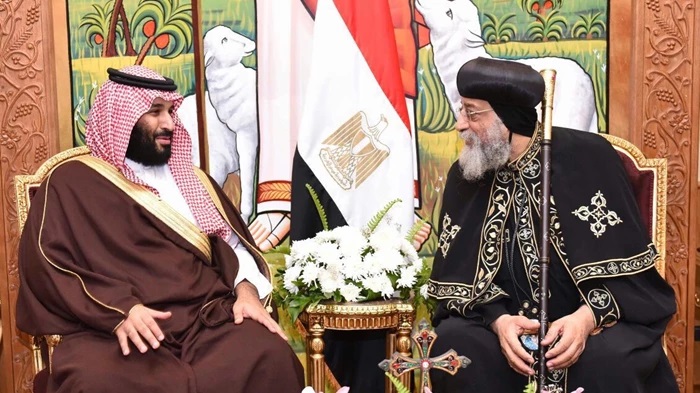
It was 2018 that led to further openness. Crown Prince Muhammad bin Salman (known as MBS) visited the Coptic Orthodox cathedral in Cairo in March, taking a famous photo with Tawadros in front of an icon of Jesus, the Good Shepherd. He invited the Coptic pope to visit Saudi Arabia, while encouraging continuation of Marcos’ visits.

That December, the first liturgies were officially reported. Not everyone was pleased. Medhat Klada, spokesman for the European Union of Coptic Organizations…

This article was originally published at Christianity Today, on March 29, 2023. Please click here to read the full text.
Categories
Christianity Today Europe Published Articles

Russian Christians Make Theological Case for Peace

Image: John Moore / Getty Images

On an Advent Sunday in a small Protestant church in St. Petersburg, a Russian pastor nervously approached the pulpit. While his senior leadership was publicly neutral about the war, he was about to preach from the Sermon on the Mount against the invasion of Ukraine.

And in the pews before him was another potential land mine.

A congregant had been bringing along a childhood friend, who happened to be a Wagner Group mercenary. Wounded during combat for Russia’s private paramilitary company, the man was not there to spy. Yet while the pastor knew his close-knit congregation well, he could not predict the fallout from his message.

Relations remained good with the pastor’s mentor afterward, while the mercenary recovered and returned to the front lines. For now, the pastor has been left free to continue in ministry and—whether known to the intelligence services or not—in clandestine theological work against the war.

“Of course, we could go out and protest, but this would get you in jail,” he said, requesting anonymity. “For us, the most effective means are to work within your spheres of influence—and ours are very small.”

Over the course of the yearlong conflict, only a tiny minority of Russian Christian leaders have voiced complaint publicly. The response from authorities has been uneven: Minor church figures have been fined or jailed, while others continue to use their names on social media.

But no major denomination in Russia has condemned the war outright.

The St. Petersburg pastor, along with about 25 of his scattered multifaith colleagues, desired to confront their silence at the biblical source. Christianity Today spoke with three of them, on condition of anonymity, for insight into the antiwar movement.

The group released its declaration to “all Christians of Russia” in advance of Christmas.

“We are terrified by the fact that many church officials and theologians … are distorting the truth of the Holy Scriptures,” the Russian Christians stated via their Christians4Peace website and Telegram channel. “[But] we are convinced that participation in this war—on the side of the aggressor—is unacceptable for any Christian.”

The provided Russian and Ukrainian downloads of the declaration include an appendix with an extended theological treatise. Last summer, the pastor and a few like-minded friends began a study group on…

This article was originally published at Christianity Today on March 17, 2023. Please click here to read the full text.

Categories
Christianity Today Europe Middle East Published Articles

Should Messianic Jews Return to Israel from Russia and Ukraine?

Image: Illustration by Christianity Today / Source Image: Pexels / Unsplash

Jews should leave Russia if they can.

The stark warning was issued by Pinchas Goldschmidt, the former chief rabbi of Moscow, as 2022 came to a close. After 30 years in office, he left two weeks after the invasion of Ukraine and later revealed the Kremlin pressured him to support the war—“or else.”

A student of history, he fears Jews will again become scapegoats as the government tries to “redirect the anger and discontent of the masses.”

The resulting question: Where does God want them to go?

Goldschmidt, currently in Israel, has been joined by 41,813 Russian Jewish immigrants since the war began a year ago, according to recent data released by the Knesset. Another 90,000 arrived without immigrant status. Israel’s immigration minister stated 600,000 Russians are currently eligible.

But according to its 2010 census, Russia has only 156,000 Jews.

The discrepancy comes from the concept of aliyah—the Hebrew word for “ascent”—in which Israel grants automatic citizenship to anyone who has at least one Jewish grandparent and has not converted to another religion. A controversial coalition deal in the new government includes revising the Law of Return to ensure these olim (immigrants) qualify under religious law—and thus reduce intermarriage. Over 70 percent of last year’s war-induced immigrants are not considered Jewish per Orthodox law, stated the Aliyah and Integration minister.

In many cases, Messianic Jews have been disqualified, and their status is disputed. But last September, the seventh World Conference of Russian-Speaking Messianic Leaders overwhelmingly declared the return to Zion to be a “blessing.”

The only dispute was whether it is also a commandment.

Russian Jews are not the only aspirants. The Knesset stated 13,490 Ukrainian Jews have also immigrated to Israel, as “Operation Homecoming” opened 18 aid centers in Ukraine and neighboring countries. An additional 1,990 Jews immigrated from Belarus.

A 2020 study identified 43,000 Jews in Ukraine—making it one of Europe’s largest Jewish communities—though those eligible to make aliyah could be as high as 200,000.

An estimated 5,000 worship Jesus as Messiah.

Of these, about 1,000 have gone to Germany, where they doubled the local community.

“Aliyah is a certain type of coming home—to the land that belongs to us,” said Vladimir Pikman, executive director of Beit Sar Shalom. “But I don’t see a direct commandment to go to Israel.”

Centered in Berlin, his is the largest Messianic Jewish organization in Europe. Its Hebrew name translates to “House of the Prince of Peace,” and has been a refuge to Ukrainian Jew and Gentile alike, providing translation, logistical help, and trauma care counseling. Of the Jews, believers in Jesus included, they took…

This article was originally published at Christianity Today, on March 7, 2023. Please click here to read the full text.