Categories
Personal

Thankful for Islamic Identity

Translation: We are those who pledge allegiance to Muhammad. The Battle for Identity, November 28. On the flag is the Muslim creed, there is no god but God, and Muhammad is his messenger.

Happy Thanksgiving to American friends and family, but as you are thankful today be aware about tomorrow, at least as concerns your interest in Egypt. Friday may be black here as well.

There are two reasons this could be true.

First, the Salafi Front has called for nationwide demonstrations, seeking a ‘Muslim Youth Uprising’. They announce their intention to ‘impose Islamic identity’, feeling it weakened by secular efforts against sharia. Within their propaganda are pictures of the black flag of Islam, used by the Islamic State in Syria and Iraq. This connection does not come through in their rhetoric (that I have seen), and the flag has a place in Islamic history beyond current use by jihadis. They do, however, support a caliphate in principle and have criticized the government for calling it terrorism.

Second, this same government has promised to meet the protests firmly, threatening live ammunition if they turn violent or destructive. If Egypt has another round of deaths the day will surely be black.

It is difficult to say if the turnout will be simple or substantial. Egypt’s largest Salafi party has condemned the protests, as have the official religious establishments. But noteworthy is that the Muslim Brotherhood has announced its support, though it has not publicly indicated if it will participate.

The Brotherhood statement indicates a desire to ‘preserve’ Islamic identity, avoiding the Salafi Front’s use of ‘impose’.

It would be good if they were able to be contacted within Egypt, to further explore their meaning. Certainly the Brotherhood needs others to protest with them, as they are in a very poor situation currently. If the regime is to fall, they need allies.

But here, it is the Brotherhood supporting others. And what does it mean that they have chosen these allies?

In the West there is understanding that the Muslim Brotherhood is a moderate Islamist organization. Indeed, since the fall of Morsi they have been consistent in their public posture not to employ violence. Whether or not this is truly the case is contested, but they present themselves as a democratic organization that can be trusted to govern well within the norms of the international system. If political change comes to the region, so goes the argument, better the Muslim Brotherhood through the ballot box than the jihadis through the sword.

In Egypt people have been aware of Muslim Brotherhood double-speak for some time. But in announcing their support for a rally to ‘impose Islamic identity’, could their intentions be clearer? Some room should be given for nuance, of course, and desperate people do desperate things. The enemy of my enemy is my friend, it could be argued.

Please monitor the news tomorrow, and see how events are reported. Will the demonstrators be labeled as Salafi crazies, akin to the Islamic State? Or will it be a ‘revolutionary’ action, against the ‘coup’?

And be thankful for your identity, whatever it is. In Egypt as in America there is much to be thankful for, no matter the current unrest. Many, of course, are disagreeing to the point of protest. Be thankful for this right as well, if you have it, but be wary about imposing.

Does an Islamic identity demand its imposing? This Thanksgiving, the Muslim world is being forced to confront the question. For the good of the world, be thankful the conversation is happening, and may all decide rightly.
 

Categories
Personal

Rain, One Day Later

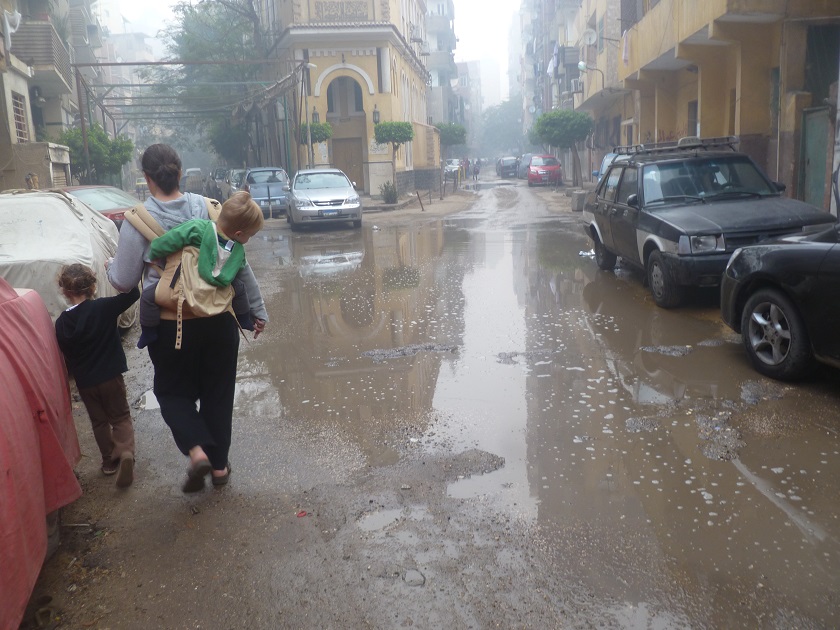
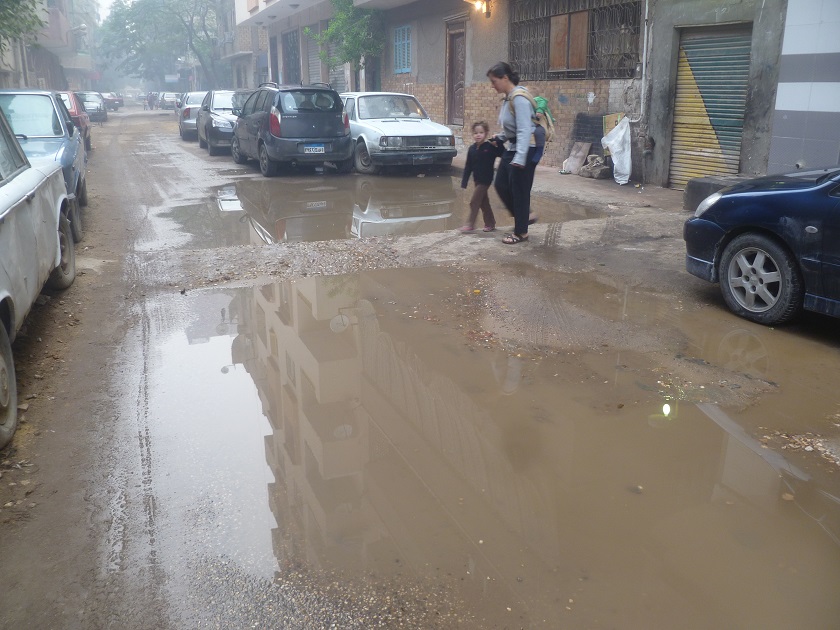
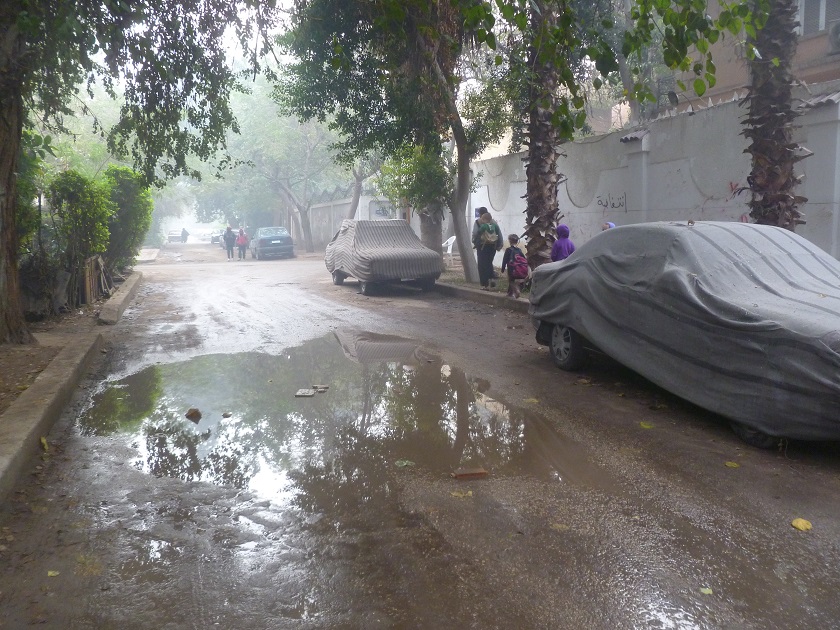
Yesterday Egypt experienced one of its very few yearly rainstorms, for which its roadways are terribly unprepared. I realize great swaths of the United States are covered with snow these days, so there is little room to complain.

But nonetheless, the puddles and mud left behind a day later complicate the daily walk to school. Here are a few pictures to share the adventure.

Setting out from our house we avoided the puddle on the street, choosing instead the slightly less muddy path on the sidewalk.
Usually Alexander is pushed in a stroller, but today we left it behind. The stroller also carries the girls' backpacks, and it wasn't long on the way they got tired of carrying them themselves.
Usually Alexander is pushed in a stroller, but today it was wise to leave it behind. The stroller also carries the girls’ backpacks, and it wasn’t long until they got tired of carrying them themselves, and saddled their mother instead.
This is the puddle right in front of the entrance to Emma's and Hannah's school. The black vehicle is a tuk-tuk, stuck in the mud-mud.
This is the puddle right in front of the entrance to Emma’s and Hannah’s school. The black vehicle is a tuk-tuk, stuck in the mud-mud.
Layla often skips along merrily on her way to preschool.
But she got a little weary of squeezing through gaps around the puddles.
The rain does little but move around Cairo's trash problem.
The rain does little but move around Cairo’s trash problem.
As we navigate the street approaching Layla's preschool, Alexander looks on attentively.
As we navigate the street approaching Layla’s preschool, Alexander looks on attentively.
Ok, we staged this one a bit. It wasn't absolutely necessary to traverse the speed bump to move along further, but it was a fun picture.
Ok, we staged this one a bit. It wasn’t absolutely necessary to traverse the speed bump to move along further, but it was a fun picture.

For comparison, four years ago we made a video of this walk to preschool, back when Hannah was going. Please click here for dry roads and our family at an earlier moment.

Categories
Prayers

Friday Prayers for Egypt: Deep Wounds

Flag Cross Quran

God,

When all is not well the wounds can go deep. Continued health demands paying attention.

The Muslim Brotherhood has stumbled badly. Tripped deliberately or drunk with power, their wound still feels fresh to many. And the United Arab Emirates throws salt on it by designating them – and allegedly connected organizations – as terrorist entities.

But the wound in the Gulf is treated carefully. Qatar, isolated politically from her neighbors, is restored into fellowship with Saudi Arabia and the Emirates. Agreeing to tone down her rhetoric against Egypt, they tone down support as well for the Brotherhood.

The wounds of many have been left to fester. The anniversary of the Mohamed Mahmoud clashes passed with little remembrance, as revolutionary activists lament missing justice. One former Brotherhood member beloved of most activists had long withdrawn from many in depression. She committed suicide only a few days earlier.

God, the Brotherhood is mentioned in all the above, but there are many wounded beside. Indeed, they caused much of the wounding. But whether activists or old guard, Islamists or Christians, Bedouins or police, tour guides or the average Egyptian, many are nursing their lingering bruise.

Having a wound implies neither innocence nor guilt. All it implies is the need for healing.

Some wounds demand amputation. God, help Egypt, the region, and the world judge the Brotherhood correctly.

But deal mercifully with all taken in by the promise of the Brotherhood, who currently at least have had their dreams derailed. Deal mercifully as well with those enamored of the revolution, who find their sacrifices have been in vain.

Guide them, God, so that they may reflect correctly. But heal them and restore them to wholeness.

But even treated wounds can leave a scar. And a scar can boost pride and intimidate others.

For those wounded early in the revolutionary period, many have rebounded. They were trampled on by the dreams of others, and many were enamored with their fall. May they now deal mercifully.

Guide them, God, so that they may reflect correctly. But heal them and restore them to wholeness.

But after their individual healing, God, judge righteously between them. Hold accountable all who have erred. Deal mercifully, but restore society to wholeness.

And if Egypt heals, may the Gulf as well. Not just politically, but in full conformity with your will. Bless the region, God, and all its people.

Her wounds are deep and stretch back decades, even centuries. May all pay attention, and in good health, continue.

Amen.

Categories
Excerpts

Baghdadi, the Prince of Criminals

Abu Bakr Bagdadi

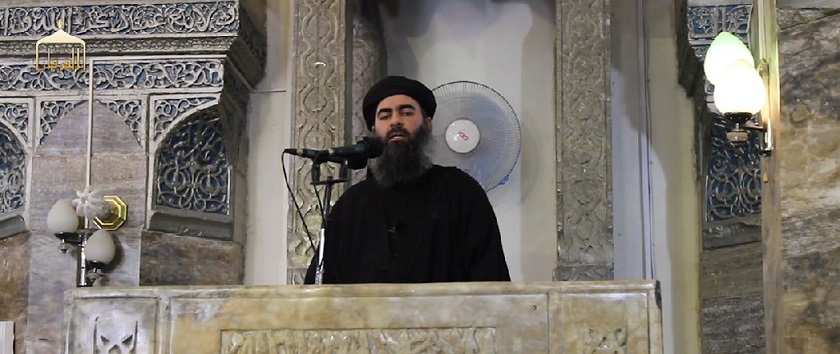
In traditional Islamic terminology the caliph is known as amir al-mu’mineen, or, the prince of the believers. In this new music video, Shaban Abdel Rahim adjusts the Arabic slightly to call him amir al-mugrimeen, the prince of criminals.

The video blasts the Islamic State for its conduct, and declares Islam to be innocent of their crimes. But there is political commentary also. Baghdadi is asked how much money he is receiving from Qatar, and the world is asked why Egypt is being left to fight its local terrorism alone.

These concerns are not unique to Egypt but certainly reflect much popular sentiment about the group. The video also hails the Egyptian army for its role in fighting terrorism in Sinai, where Ansar Bait al-Maqdis (Supporters of Jerusalem) has pledged its allegiance to ISIS. Egypt, however, has committed no troops to the coalition effort in Syria or Iraq.

In my opinion neither the song nor the satire is all that good, but the message is not missed by Baghdadi. According to Paul Attallah, to whom thanks are given for sharing the video and adding English subtitles, Abdel Rahim has already received death threats for his mocking.

Here is another humorous offering, from the Lebanese band, the Great Departed. It is called ‘The moulid of Sidi Baghdadi’, using phrases that laud him as a Sufi saint, an interpretation of Islam he vigorously opposes. The crowd laughs in delight.

Thanks to Arabist for this link, as well as a partial translation:

The song starts out showering traditional blessings and titles on Baghdadi, but quickly takes a turn into mockery. It has lines like this:

علشان الإسلام رحمة، رح ندبح ونوزع لحمة، وعلشان نخفف زحمة، حنفجر في خلق الله

عشان لا إكراه في الدين فلنقض عالمرتدين والشيعةوالسنيين والنصارى يا خسارة

(In Arabic it rhymes. My awkward translation is “Because Islam is merciful… we’ll butcher and hand out meat/To make it less crowded/We’ll blow folks up/Because there’s no compulsion in religion/we’ll kill unbelievers..and Shia and Sunnis and Christians, what a loss!”)

Arabist makes an interesting point. There is no doubting the cruelty of the group and its desire to be feared. Perhaps the best remedy, therefore, is not to take it seriously. Deny ISIS the strength it seeks.

Surely there are other more practical responses, but the response of humor to crisis is a particularly characteristic Egyptian trait. Military and religious efforts have their place, perhaps, but the cultural struggle may be paramount. It is here these two videos offer their contribution.


Categories
Prayers

Friday Prayers for Egypt: Allegiances

Flag Cross Quran

God,

Two declarations were issued this week, at complete opposite ends of the spectrum. From Sinai, Ansar Bait al-Maqdis pledged to obey the caliph of the Islamic State. From the Chamber of Commerce, a business delegation pledged to recruit other American companies to invest in Egypt.

One allegiance is to you, God, the other is to mammon. Both may be confused.

Therefore, guide them both.

A few days after the pledge to ISIS, terrorists struck at the Egyptian navy. Four boats in the Mediterranean targeted a naval vessel, opening a new chapter in the insurrection.

A few days before the pledge of investment, a UN hearing blasted the Egyptian record on human rights. But sixty-six companies targeted the private sector, opening a new chapter in the transition.

God, help Egypt to rebuild. Bring investment from abroad and from within, that a creative entrepreneurship might employ many. From a stronger economy build a stronger middle class. From a stronger middle class build a stronger civil society. And from a stronger civil society build a stronger respect for human rights.

But do not let it take that long. Amid the many troubles, hold the government accountable in treating people justly. And within these coming companies, may their corporate culture model good governance in the economic sphere.

And God, help Egypt to repel. Bring support from abroad and from within, that a humane determination might resist terrorism. From a deeper respect for human rights build a deeper sense of patriotism. From a deeper sense of patriotism build a deeper commitment to neighbor. And from a deeper commitment to neighbor build a deeper understanding of religion.

God, set the single-minded idealists of the Islamic State on the right path. Set the single-minded capitalists of the United States on the right path.

Once there, may their respective zeal and wealth benefit Egypt, the region, and the world. For without your guidance, God, they may trample it all.

Declare your goodness to Egypt, and recruit many to her aid. From abroad and from within, may all demonstrate allegiance to your principles.

Amen.

Categories
Personal

How Can Egyptians Smoke, Looking at This?

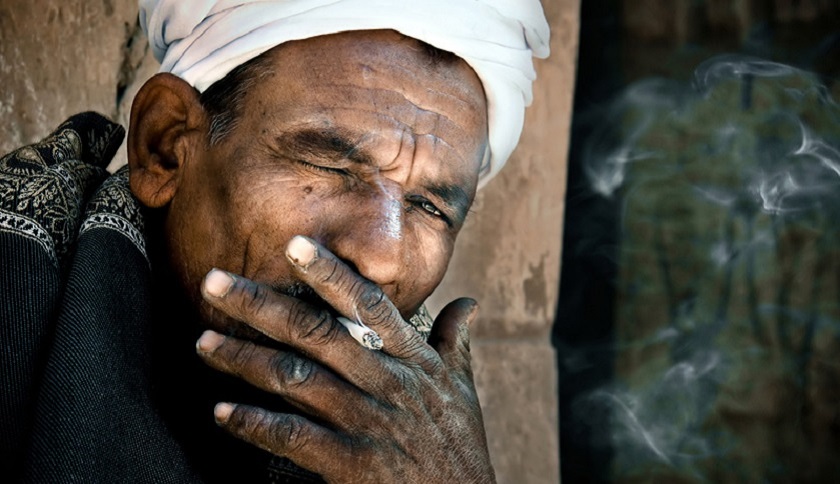
Old man smoking

A recent Ahram Online article quoted from the Egyptian minister of health, stating nearly a quarter of all Egyptians smoke, including 46 percent of adult males. This, he said, is one of the highest rates in the world.

But every time one of these Egyptians reaches to take a cigarette, one of these images stares him or her in the face:

Smoking Warning

The yellow bar advertises the local number to help quit smoking, warning it damages health and causes death. The images are more specific.

The old man: Smoking leads to senility and early impotence.

The child: Secondhand smoking afflicts children with lung disease and asthma.

The foot: Smoking causes gangrene of the foot.

The mouth: Smoking causes tongue cancer.

Here’s a larger image of the tongue:

Smoking Tongue

The campaign to label cigarette boxes is mandated by Egyptian participation in the UN’s Framework Convention on Tobacco Control. Earlier images were much less graphic, though one still touched on impotence as a motivating threat.

Cigarette impotence

The yellow warning reads: Warning, smoking ruins heath and causes death. The harmful effects of smoking afflict both the smoker and non-smoker.

Well and good, but what is meant to capture the attention is this: Over a long period of time, smoking affects marital relations.

This image is directed to women:

Smoking Baby

The yellow warning is the same, but the specific message says: Being among smokers harms the pregnant woman’s fetus and causes miscarriage.

These kindlier messages have been placed on cigarette boxes since 2008. The scarier images since 2012.

I’m not sure how many Egyptians smoked six years ago, but surely more should call the advertised number: 16805

Categories
Personal

The Immigration of Roots

Over the past several years, and increasingly over the past several months, Iraq has nearly been emptied of its historical Christian population. This short film by the newspaper al-Badeel explores how Egyptian Christians contemplate the issue of immigration. It is subtitled in English, and provides a very good overview of how many Copts view the subject.

Egypt, of course, has not faced nearly the same level of chaos and disintegration as Iraq. But the film is full of images of burned churches that remind of the difficulty the nation has endured. Egypt also comprises a far higher population – both overall and of Christian citizens – which make it better able to withstand a gradual emigration which has resulted in Coptic Orthodox churches the world over.

But emigration takes its toll, usually robbing a nation of its best and its brightest who can afford to move overseas and stand a decent chance at finding work. This theme is stated often by those interviewed, while the theme of religious persecution is generally nuanced though it lingers.

Have sympathy, and enjoy the window into a slice of Coptic consciousness. Alas.


Categories
Prayers

Friday Prayers for Egypt: Journalism, Rights Review

Flag Cross Quran

God,

Eyes were on Egypt this week, from inside and outside, to hold her accountable. May she be worthy and exceed all standards.

But some do not think so. Offended by their editors-in-chief, 400 Egyptian journalists signed a petition protesting media pledges to not undermine the government.

And in advance of a periodic human rights review by the United Nations, a consortium of NGOs and activists put forward several recommendations where they believe Egypt falls short.

Many in the UN criticized, while Egyptian officials defended their policies.

God, weigh between them, but only for good. May their disputes lead to dialogue and then to development.

Bless journalists for the courage of their convictions. Bless editors for their support of their nation. But keep the former from muckraking and the latter from sycophancy. Help the truth to be told with all transparency.

Bless activists for their dedication to human rights. Bless officials for application in difficult times. But keep the former from distortion and the latter from misrepresentation. Help life to be lived with all dignity.

But where there is fraud or injustice, God, root it out.

May those inside and outside both contribute. Make Egypt accountable, above all to your standard.

May all eyes find her worthy.

Amen.

Categories
Lapido Media Middle East Published Articles

Are Islamic Terror Plots in Egypt Just ‘Crazy Theories’?

Abdel Rahim Ali
Abdel Rahim Ali

A desperate Egypt reaches out to the West, trying to communicate the dire threat of terrorism.

A celebrity researcher ties this terrorism to the Muslim Brotherhood, and the West yawns.

But 33 soldiers died last Friday in separate brazen attacks on security personnel in Sinai, and now Egypt’s Christian leaders have picked up the mantle to call for help.

‘Egypt now needs the support of its friends,’ wrote Revd Mouneer Hanna, Anglican Bishop of the Diocese of Egypt, in an open letter on the diocesan website. ‘This support involves understanding of the real situation.’

One week earlier Revd Andrea Zaki, general director of the Coptic Evangelical Organization for Social Services, joined a semi-official Egyptian delegation to the United States. It was made up of diplomats, journalists, civil society members, and men of religion, who were eager to present Egypt’s perspective to a sceptical West.

On many issues Zaki found an agreeable reception. But their counterparts in Washington DC bluntly told the group that the Egyptian government has not provided ‘clear evidence’ linking the Muslim Brotherhood to the ongoing terrorism campaign.

Due process

Perhaps this is because Egypt appears to be giving this ‘evidence’ first to the people, and only later through judicial channels. This reversal of due process causes Western observers to be dismissive.

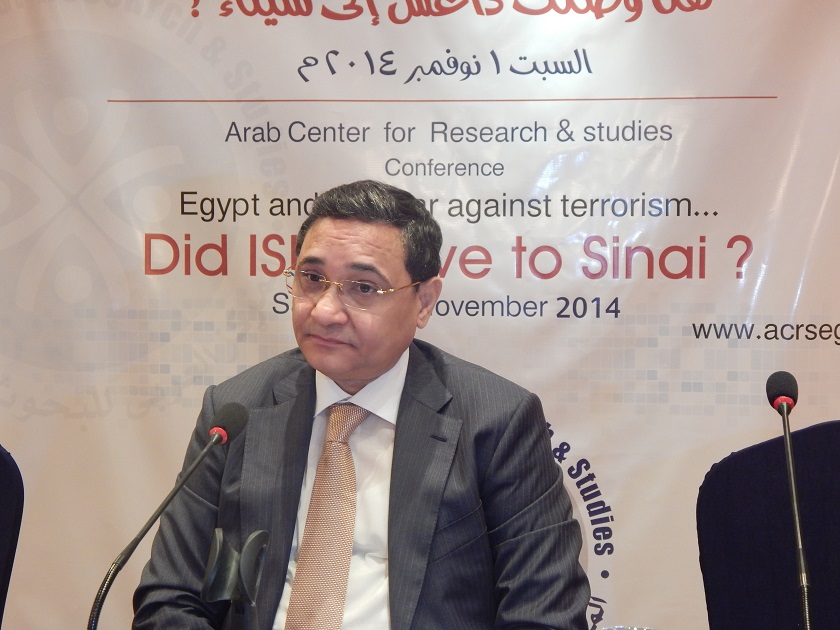
‘Isn’t he that guy on television with the crazy theories?’ remarked a European journalist as Abdel Rahim Ali walked into the room to hold a press conference on 1 November on the possible emergence of ISIS in Sinai. The mixed crowd of Egyptians and Westerners awaited his evidence.

Ali expects the ‘Supporters of Jerusalem’ – a home-grown terrorist outfit operating out of Sinai – to soon announce their allegiance to ISIS. Abu Hamza al-Muhajir, he said, was an associate of Abu Musad al-Zarqawi in the Islamic State of Iraq and believed to be killed by US forces in 2010.

But some evidence suggests he is still alive and operating out of the Sinai with the Supporters of Jerusalem, Ali said.

On 4 November, without mentioning al-Muhajir, Reuters confirmed Ali’s prediction of the merger with ISIS. But Egyptian state-run Ahram Online denied the news, quoting from what is alleged to be the Supporters of Jerusalem’s official Twitter account, @3Ansar_B_Almqds.

Leaked conversations

In Ali’s presentation, however, the source of his evidence was not provided, fitting with his general modus operandi. Host of the popular television show, ‘The Black Box’, and editor-in-chief of al-Bawaba newspaper, Ali regularly releases leaked conversations of revolutionary and Islamist figures.

Despite their illegal nature, Ali operates freely. And he freely admits his sources are connected to the security apparatus.

One of the most damning allegations concern leaked recordings of phone calls between President Morsi and Ayman al-Zawahiri, leader of al-Qaeda. In them an agreement is made to cease operations against Egypt while allowing jihadist groups to exist on Egyptian soil.

In this context, reference in Bishop Mouneer’s open letter about the Brotherhood finds verification. He spoke of the Muslim Brotherhood leader Mohamed el-Beltagi’s statement from the pro-Morsi sit-in at Rabaa in Cairo, prior to its bloody dispersal.

‘We do not control the situation on the ground,’ Beltagi said in a July 2013 video on YouTube. ‘But what is happening in Sinai …will stop the moment …the president [Morsi] returns to power.’

Bishop Mouneer told Lapido Media that, like many others, he is not happy that thousands of people are currently in prison without judicial rulings. He understands this makes the West feel Egypt is being very harsh with the Muslim Brotherhood.

But after listing a long litany of Brotherhood offenses – attacks on protestors, churches, and calls for jihad in Syria – he provides Egyptian perspective on this reversal of due process.

The courts are slow, he said, and Egypt is in a state of war against terrorism: ‘In times of war countries sometimes take extraordinary measures, such as America with Guantanamo Bay.

‘In order to educate the people and influence public opinion, [security] leaks some of these things.’

But of these recordings and allegations, Bishop Mouneer cannot say what is true and what is not, as long as Ali does not release his sources.

Similarly, Zaki does not feel compelled to make the case against the Muslim Brotherhood for the sake of his American audience. ‘This is the responsibility of the government,’ he told Lapido Media.

But he does want to convey Egypt’s general satisfaction with the situation following the post-30 June deposing of Morsi. The military answered the call of millions, he said, and the people ratified this action in subsequent elections.

Acceptance

This message is beginning to be heard. Zaki said the Americans expressed their acceptance of President Abdel Fattah al-Sisi’s government, as well as the necessary role of Egypt’s military in fighting terrorism.

Economic support will also be forthcoming at the expected 21 February economic summit in the resort city of Sharm el-Sheikh, the Americans told him. Egypt will present investment opportunities in fifteen projects worth $100 billion.

But the message of Egypt’s popular belief in Muslim Brotherhood culpability in terrorism is still awaiting judgment in the West. The Whitehall report authorised by the British government remains delayed.

‘I have no idea about the link between the Muslim Brotherhood and al-Qaeda,’ said Bishop Mouneer, expressing more caution than many Egyptians.

‘But I know one thing, we were going backwards during the time of Morsi.’

This article was originally published on Lapido Media.

Categories
Prayers

Friday Prayers for Egypt: Military Missions

Flag Cross Quran

God,

Bless the Egyptian military in its many responsibilities. They seem to be rapidly increasing.

The horrible explosion last week in Sinai killed 31 soldiers, and prompted the government to evacuate the area. A buffer zone is being created on the border of Gaza, with homes demolished and population relocated. The military is undertaking the effort.

The ongoing protests in university campuses has prompted the government to allow official security force intervention. Private security must be supplemented, and quick trials are necessary for saboteurs. The military is undertaking the effort.

The fiscal crises have prompted the government to stimulate the economy. New projects have been authorized everywhere, from building new apartments to building new soccer fields. The military is undertaking the effort.

God, may all tasks be done well.

But care also for those affected by these decisions. Have mercy on the evacuated; may they be treated justly in this sacrifice. Give patience to the students; may the accused have transparent trials and the rest find vibrant campus life. Help profit the businesses; may they employ many and expand their markets.

But are the tasks necessary, God? Are they good? Is this the place for the army?

Some say no, that the expansion of role damages the military and suffocates both public and private sectors. Some say yes, that in times of crisis the military can work quickly and avoid the bureaucratic corruption in the public and private sectors.

Judge rightly, God, and give discernment to the people. But give the government – military, police, and politicians – wisdom in combatting terrorism.

Give the government wisdom in promoting education. Give the government wisdom in facilitating business.

Above all, God, may the government be responsible. Bless it and the military, and Egypt altogether.

Amen.

Categories
Excerpts

The Face of the Former NDP

Suleiman al-Hout (L), with Prime Minister Ibrahim Mehlab. (via New Republic)

Much has been speculated about the coming Egyptian parliament being dominated by figures who used to belong to the National Democratic Party of former President Hosni Mubarak. Given the favor conveyed to the January 25 activists, this proposition scares many.

Perhaps it should. The understanding of the old parliamentary system was that it was a non-ideological patronage network, living off corruption while extending government, business, and other services. It certainly was neither clean nor efficient.

But it was human. Unfortunately, few carry the stories of such figures beyond their ugly caricature. Fortunately, this article from New Republic does, profiling Suleiman al-Hout.

In 2007, Suleiman al-Hout had a problem. Local officials in the Suez Canal city of Ismailia refused to license the food-cart from which he sold kebda, or fried liver, a common Egyptian street food. At first he asked a relative who sat on Ismailia’s local council to intercede on his behalf, but to no avail. So Hout took matters into his own hands. He walked into the local headquarters of then-President Hosni Mubarak’s National Democratic Party (NDP) with one simple question: “How can I vote for you?”

Within two years, Hout was a card-carrying NDP activist with excellent government and business connections, which he put to good use by “solving problems” for others. He frequently acted as an intermediary between local businessmen and the poor, between his neighbors and the electricity ministry, and, of course, between food-cart owners and the registration bureau. If your mother-in-law needed special medical care, he could get you into the top government-run hospital. If you had a problem at a nearby police station, he knew the officers. If there was a street fight, his “men”about 30–40 toughs, depending on the eveningtook care of it. And if street combatants didn’t accept his intervention? Well, that never happened. “They know that if they don’t respect me, I’ll take it personally,” he darkly boasts.

The author, Eric Trager, compares Hout to a different fruit cart vendor, Mohamed Bouazizi, the Tunisian who launched the Arab Spring when he set himself on fire to protest inability to obtain a license. But the question is fair: Whose reaction was superior?

Trager continues to chronicle Hout’s political activity during the revolution and throughout the period of Brotherhood rule. It is insightful and comical, a precious insight to how life was actually lived on the streets during this time, far from the rhetoric issued by both sides.

But Hout himself allows Trager to conclude with the common ‘ugly caricature’ that so infuriates many Egyptians, and certainly those who desire a transparent, non-patronage system:

But four months after Sisi’s inauguration, Hout feels let down. “I was among the first to call for Sisi to run for president,” he told me. “And I still haven’t made my money back yet. I have no job, no position, and it makes me angry. … He didn’t give us our rights.”

By “rights,” Hout means a high-level governmental appointment, such as serving as an assistant to a minister or governor. Hout was sure that this would be his reward for mobilizing his patronage network to support Sisi, since this is the way things have historically worked in Ismailia. “I deserve it!” Hout, who has a high school education, insisted. “I served this country. I am an eyewitness against the Brotherhood in two [court] cases. And I returned that vehicle to the police, which costs 450,000 Egyptian pounds.”

Instead, Hout is living off of the local businessmen who fund his patronage network, and growing more frustrated by the day. “[Sisi’s] chance is, maximum, one month,” Hout told me. “If he doesn’t give us our rights, it’s thank you, goodbye. … If I don’t take my rights, I will be very angry and you never know what my reaction might be.”

In lieu of a governmental appointment, Hout intends to run in the upcoming parliamentary elections. “I think I deserve to go [to parliament], and I wish to go,” he told me. “But it depends on the arrangements.” Hout explained that he’s still waiting for businessmen to back his campaign. “A businessman will pay, and I’ll be his face in the parliament,” Hout said. “This is normal.”

And apparently, this is normal Egyptian politics. It is also human.

Reform is necessary, and entrenched inertia is no excuse to refuse it. But have patience, and be sympathetic. This is life on the streets.

Categories
Atlantic Council Middle East Published Articles

Where is the Maspero Youth Union Now?

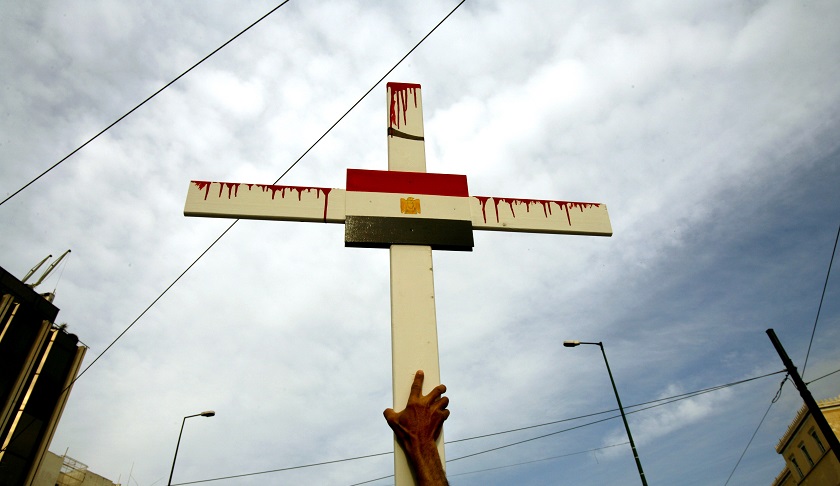
Egyptian Coptic Christian holds cross during a demonstration outside Egyptian embassy in Athens

Twenty-three Egyptian liberal activists were sentenced to three years in prison for demonstrating against the protest law on Sunday. Amid the ongoing clampdown on dissent, the common observer can sigh, but be forgiven for asking: Whatever happened to those Coptic youth activists? Did that massacre at Maspero all but end their influence? Or like most Copts do they support the current regime and its policies?

On October 9, 2011, twenty-seven Coptic Christians were killed during a protest against ongoing attacks on churches, the majority underneath the wheels of military vehicles, which plowed through their demonstration. The Maspero Youth Union, born in the spring of that year, was the most vocal and organized of an emerging Coptic activism that was considerably quieter thereafter.

Close observers of Egyptian politics will recall hearing their name here and there amid the tumults of the revolutionary struggle. They most recently appeared in a small candlelight vigil, commemorating the three year anniversary of the Maspero massacre and calling for justice against former top military brass.

But it is not true they have been silent, insisted Mina Magdy, general coordinator of the MYU. They have issued statements to the media, mobilized for elections without endorsing a candidate, and participated in government-sponsored youth outreach. They appeared before the constitutional committee to advocate for favorable clauses and communicated with thousands of Copts through social media.

Andrawus Ewida, head of the committee responsible for MYU work in the governorates, went further. MYU activists, he explained, were a prominent contributing force behind the Tamarrod protests against then-President Mohamed Morsi. But this mobilization was not advertised out of fear that their participation would allow labeling it as a Coptic movement. Affiliated members also carried out documentation of the subsequent August 14 attacks on churches across the nation, he said.

But even granting their continuing activity, the question is fair: What influence do they maintain on the Coptic street? What relevance do they have in the political process? For many Coptic observers, the answer is nil.

Ishak Ibrahim, a researcher with the Egyptian Initiative for Personal Rights, lauded the MYU for its role in mobilizing Copts into the political process through their protests. But after June 30, he said, the power and place of demonstrations has declined, and the MYU has not evolved sufficiently into a viable organization.

Youssef Sidhom, editor-in-chief of the Coptic newspaper Watani, agreed. He finds them genuine and positive in demanding justice for the incident of the Maspero massacre. But their composition as a religious-identity based group is not helping the Coptic cause, which is best addressed under Muslim leadership with great intermixing. And in the chief issue of the day—the shaping of liberal alliances in the coming parliamentary elections—the MYU has been absent, he finds.

Save for assertions of their influence among Coptic youth, the MYU largely agrees with these critiques. But the group is currently in a period of reorganization to set themselves right.

On October 17, Magdy won internal MYU elections against a challenge from Ewida, for a one year renewal of his position as general coordinator. He is tasked with reformulating the statutes and bylaws, while parsing the membership list and defining its criteria. He hopes to officially register the MYU with the government, and prepare for formal election of the group’s political office and six other standing committees.

Magdy realizes the MYU is not well connected to political or revolutionary groups, though he forswears participation with the April 6 Movement or the Revolutionary Socialists, due to their ongoing issues with the regime. However, he lends the MYU’s voice to calls to rescind the protest law and free imprisoned activists who protested against it. Ewida adds there is not enough transparency to distinguish between regular protestors and the terrorists of the Muslim Brotherhood.

Indeed, the two candidates for leadership of the MYU had similar perspectives on almost all matters, administrative and political. Besides their stance on the protest law, they argue for full freedom of expression and the regular litany of Coptic issues: building and rebuilding churches and a law against discrimination. Rather boldly, they also advocate rescinding the blasphemy law and regulating conversion both to and from Islam. They insist they do not want to be a sectarian organization, but rather a pressure group on any government.

But even within the election are signs they have a long way to go. Early on during the height of their street demonstrations, the MYU claimed 10,000 members. Now they measure their active members in the hundreds. Only those most active were given the right to vote—twenty-three.

This number included six representatives from the governorates, where MYU representatives operate in Alexandria, Port Said, Suez, and Ismailia. But Ewida contested the election vote, saying procedural issues prevented six others from casting ballots and that members in other governorates were not sufficiently recognized. The official tally was 16-6 for Magdy (with one unable to vote), and the MYU legal committee ruled against Ewida’s appeal.

Ewida described his candidacy, though, as an exercise in educational democracy. He did not plan to win, but wished to have the group experience a true election and witness an opposition. He hopes the results push Magdy to recognize minority questioning of his leadership, to seek group consensus for his decisions, and to be held accountable for efficient MYU reorganization.

For his part, Magdy is eager to see the elections demonstrate something more—a Coptic political group experiencing a peaceful election cycle. This experience, he hopes, will compare positively with so many other post-January 25 entities which have suffered splits and divisions. Perhaps this, above all, is what may win the Maspero Youth Union relevance. Now it is up to Magdy, Ewida, and their activist colleagues to demonstrate the utility of a democratic order.

This article was originally published at Egypt Source.

Categories
Excerpts

Who Will Run Egypt’s Parliament?

A soldier stands guard outside the parliament building during a meeting between U.S. Secretary of State Clinton and Egyptian Prime Minister Sharaf in Cairo

Ahram Online recently reported that Egypt’s minister of transitional justice appointed a military official as secretary-general of the parliament, now renamed the House of Representatives.

The news surprised me on different levels, most notably in that Egypt does not yet have a parliament. How can it then have a secretary-general? Whatever the position is, shouldn’t it be chosen by the parliament itself?

Eventually, it will be.

According to the executive regulations of the House of Representatives, issued in 1979, the speaker and his two deputies are entrusted with naming the House’s Secretary-general, but only under approval of two thirds of deputies.

“When a new parliament is formed in the first half of next year, the new speaker and his deputies will have the right to keep Al-Sadr in his position or name a new one,” said a legal expert with the House.

Much is open for debate about the composition of the coming parliament, but it may prove difficult to reach a consensus threshold, which may result in everyone agreeing to keep the acting secretary-general.

In a recent article, Nathan Brown argues that a similar pattern is emerging in which the executive branch issues laws which will eventually be subject to parliamentary review:

In the absence of a parliament, article 156 of the constitution gives the president the right to issue laws by decree provided that they concern emergency matters that do not permit delay and are submitted to the parliament for approval once that body has been elected and can meet.

Regardless of when parliamentary elections are held, the new body is unlikely to have either the coherence or the will to strike down legislation regarding purported emergency matters.

Brown sees this as an effort to preemptively establish authoritarianism, before the legislature can complicate policies:

For Sisi, there is also a temptation to use article 156 now, because it might soon become more difficult to enact authoritarian laws. Egypt’s 2014 constitution, like that of many other countries, often offers vague principles but defers the details to legislation. Aware of the way past rulers interpreted any vagueness in an authoritarian direction, the drafters of Egypt’s constitution inserted a provision (article 121) requiring that such laws giving precise meaning to general clauses—including those governing political parties, elections, the judiciary, and rights and freedoms—obtain a supermajority of two-thirds of the parliament.

The effect of this will be to keep any existing law frozen in place until the new parliament can organize such a vote. But it also gives the president a golden opportunity in the current interregnum to modify any law he likes before the parliament meets, without having to face this threshold. It remains unclear whether the parliament will have to muster such a supermajority to approve the laws when it does sit.

Regardless of the correctness of this opinion, it appears the government’s appointed secretary-general will have a good deal of bureaucratic influence on the workings of parliament. Returning to Ahram Online:

Regulations state that the secretary-general position is fully responsible for running the daily business of parliament, ranging from preparing the daily schedule of parliamentary debates, supervising the performance of 18 parliamentary committees, to managing the daily affairs of parliamentary staff and personnel.

The previous secretary-general held his position for many years, both under Mubarak and the Muslim Brotherhood-led parliament. He was a former judge, and may have been little more than an expert functionary.

But if the new expert functionary comes from a military background, what degree of supervision/control/influence will the military have over parliamentary affairs? Will it matter?

I am not an expert in the inner-legislative workings of any nation, and certainly not yet of Egypt. Anyone with more experience is invited to explain if this position is essentially irrelevant, or the lynchpin of efficient political process.

Categories
Prayers

Friday Prayers for Egypt: Travel Bans and Protest Law

Flag Cross Quran

God,

Who is free to come and go? Who is free to stay and protest? Who is authorized to define these rights? Who is permitted to defend them?

This week Asmaa Mahfouz, an original January 25 activist, was prevented from boarding a plane leaving Egypt. But Amr Hamzawi, an original liberal intellectual voice, had his travel ban lifted.

As recognizable names and faces, each has been accused of various offenses against the state in the effort of some to discredit the original revolution. Or, each has committed various offenses in the effort of some revolutionaries to discredit the original state.

Do Asmaa and Amr fall on different sides of this question? Both have certainly called for the right to protest, and engaged in the same.

And as pressure mounts on the government to amend the protest law – six political parties lent their weight – pressure mounts on the government despite it – pro-Morsi protests have ticked somewhat higher.

And within the mix, at least 26 army conscripts were killed as a car bomb hit their checkpoint in Sinai.

God, bring peace to Egypt. Establish a nation in which the right to protest exists with little reason to do so.

Establish a nation in which people are free to come and go, but far more want to come.

Establish a nation in which institutionalized authorities establish liberty, held accountable by a civil society with little to need to defend it.

God, bring Egypt through this phase of struggle and doubt, violence and conspiracy.

Weigh the cases of Asmaa, Amr, and all beside. Judge justly between them and the state.

But give vigilance and integrity to those on both sides of inverse principles. Order and stability, rights and freedoms – for both are social necessities.

Resolve the current conflicts, God. May the struggle be beneficial and all be worthy of respect.

May Egypt prove similarly worthy, God. Honor her among the nations. Honor her among her people.

Amen.

Categories
Arab West Report Middle East Published Articles

The Story of a Village Church

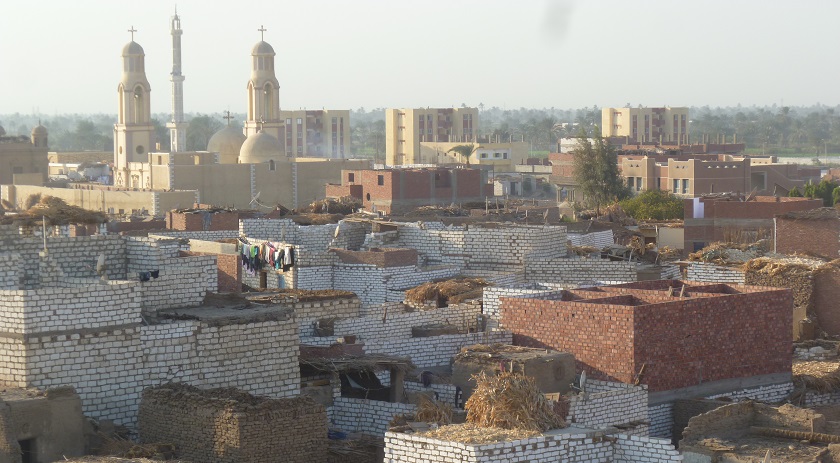
Qufada Skyline

From my recent article at Arab West Report:

A man named ‘lantern’ finds a buried treasure, and with the money builds a church and extends a priesthood. If only all tales of Coptic Orthodox churches were so adventurous. (Some are.)

The village of Qufada, home of the Virgin Mary and St. Abaskhiroun Church, is about a 30-45 minute drive from Maghagha, 160 kilometers south of Cairo, in the governorate of Minya.

The church was built in 1910 by Fanus Abaskhiroun [‘Fanus’ means ‘lantern’ in Arabic]. He was a building contractor of average means, when one day he discovered buried gold on a plot of land he was developing.

Fr. Yu’annis, one of two priests currently serving in the Qufada church, related this fact and the story which follows. He says the tale of the gold is probably 90 percent true. Even today ordinary Egyptians illegally mine for Pharaohnic treasure on restricted archeological sites, so Fanus simply had a hundred year head start.

Throughout Upper Egypt, there are many villages with churches, and many villages without – despite a local Christian population. Fr. Yu’annis, who descends from a priestly heritage stretching thirty generations, described it this way:

… historically the issue of building churches rested with the good will of Christian landowners. Where they feared God and cared for the people, as in the example of Fanus and Qillini Pasha, churches were built. Yet there are several other villages in Maghagha today which do not have a church yet did have wealthy Christian residents.

Please click here to read the full article at Arab West Report, including a description of the last four generations of lineage. Here is Fr. Yu’annis at work, with a few other additional pictures:

Yu'annis in church

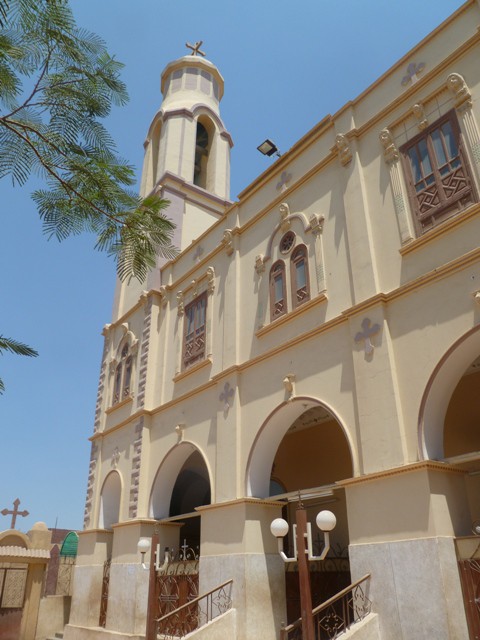
Qufada Church

Qufada church sign

The sign reads: Oh Lord, remember your servant Fanus Abaskhiroun and his children and his grandchildren, who have concerned themselves with this holy place in the kingdom of heaven. Amen. 1910 AD.

In front of the sign hangs an ostrich egg.

Categories
Personal

Update from Mhardeh, Syria

In my recent article for Christianity Today, I described one of the strategies Middle Eastern Christians are employing to face the threat from ISIS: Fight.

Sometimes, though, talking isn’t enough. This reality has driven Syrian pastor Maan Bitar to urge his congregation to take up arms and fight. His Presbyterian congregation is among the 22,000 all-Christian residents of Mhardeh in Syria. Their city is besieged by Islamist militants.

Mhardeh is shelled every day, Bitar said, killing at least 50 civilians and injuring hundreds more. The city’s Christians, alongside government forces, have so far been successful in preventing the militants from entering the city.

“I know I have the right as a human being to defend myself,” he said, “but I try to give my people a Christian justification.… Still, if I kill someone I need to say to Jesus, ‘I know I have sinned. I have not met your perfection.’”

This above article is recently updated based on an email received from Rev. Bitar. Here is his message in its entirety:

The city is besieged by FSA and Al Nusra, who drove away the civilian population of the neighboring villages to take over Mhardeh and make it their stronghold to fight the regular army from Mhardeh.

Now Mhardeh is shelled everyday by the Syrian rebels and Al Nusra fighters who have given dozens [of] ultimatums [and] threats: Leave your homes. Mhardeh is ours. It’s Halal (permissible under Islamic Sharia to conquer).

Mehardeh has been hit so far by 1500 mortar shells and rockets. The death toll of civilians has exceeded 50, and there are hundreds of injured, among the deaths and injured [are] women and children. Sometimes rockets are deliberately launched when school children are leaving school.

The Syrian regular army, with Mhardeh civil defense and volunteers, has prevented them from invading Mhardeh and has driven them away, and now it is targeting their strategic positions in other farther towns. However, they number [in the] thousands and are intent on causing much harm and damage to [the] Mhardeh population and town.

Categories
Personal

Other Stories from Kurdistan

The situation for refugees in Erbil, Kurdistan, Iraq is dire. I was pleased to be able to convey this perspective in a recent article for Lapido Media, highlighting the relief efforts of a local Cairo church, Kasr el-Dobara.

But there are other interesting stories to be told, more than could be honored in a reasonable word limit. Here then are a few other anecdotes that had to be cut in the editing:

KD Christian refugee

Coordinated with US airstrikes, Kurdish Peshmerga forces have begun to reclaim villages overrun by ISIS. But many displaced Christians in Erbil, the Kurdish Iraqi city which has received hundreds of thousands of refugees, have little confidence to return.

‘I don’t want to go back to the same neighbors who betrayed me,’ a roughly 60 year old blind man from Nineveh told Revd. Fawzi Khalil. ‘They surrendered me to the terrorists.’

Khalil is the director of relief ministries at Kasr el-Dobara Church in Cairo, Egypt, and is part of the church’s efforts to deliver much needed aid. He has spoken to dozens of individuals with similar stories; names and faces begin to blend together.

The man in the photo above is the blind man, supplied by Rev. Khalil. It is amazing to have met so many with such terrible stories.

KD Erbil refugees

Khalil explained that the majority Chaldean Catholic Church of Ankawa has done an excellent job of caring for Christian refugees. Erbil’s population includes roughly 160,000 Christians, and many have taken in their religious brethren.

As a consequence Erbil’s churches are packed, and the Mar Eliya refugee camp is located on the grounds of the church-run school. Nearby Mar Yousef camp is in a church itself, and hosts mostly Muslims and Yazidis.

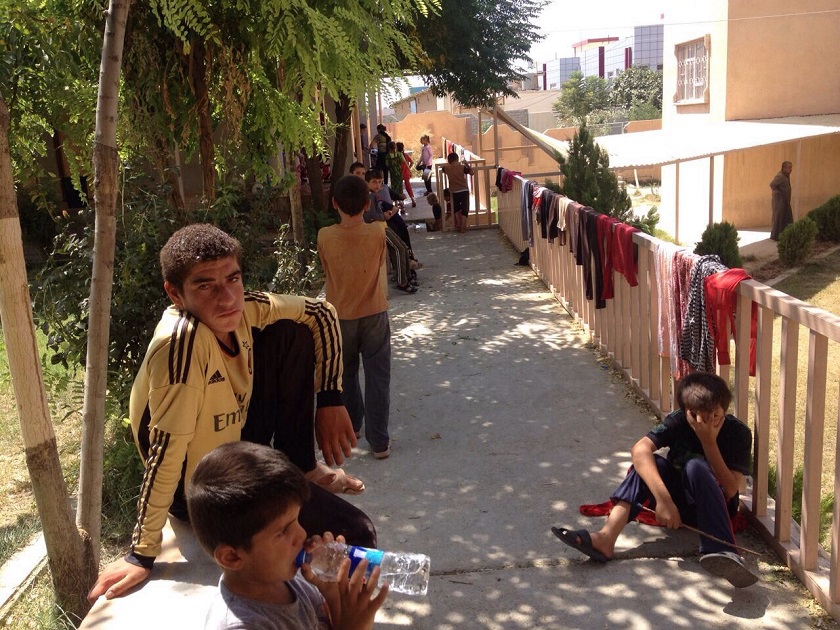
The photo above, also from Khalil, pictures what these campgrounds are like. People and their scant belongings sit around idly. I was surprised by how green the area is. But from another photo, not all refugees are so fortunate:

SAT7 refugee camp

This photo is from SAT-7, whose Ehab el-Kharrat was quoted extensively in the original article. Many campgrounds are located in the desert, and according to Eva Boutros, who was also interviewed, many have inadequate water supplies. Dozens of children gathered around a sole faucet, she witnessed, trying to get clean.

But Boutros also told a story of other children, who enjoyed with her relief team a special break from the agony of refugee life:

One of the Christian refugees is named Soha. Age 22, she graduated from university and was looking forward to her new job in Mosul before the ISIS onslaught. Now she must care for her brother’s three children who have been separated from their mother.

‘Now, all I have is a mattress, a donated plate of food, and two pairs of clothing,’ she told Eva Boutros. ‘This is the end of my youth.’

Boutros is the director of volunteer ministry for Kasr el-Dobara, but accompanied a joint Orthodox-Catholic-Protestant team organized by the Chaldean Church in Heliopolis, Cairo.

This team brought tents, medical supplies, blankets, and children’s underwear, all donated by Egyptian companies.

But Boutros recognized many of the refugees needed something more, and took 280 young women, including Soha, shopping at the local mall.

‘It was fun for us, and fun for them,’ she said, describing a moment of happiness amid a desperate situation.

Perhaps her woman’s touch gives her greater memory for personal detail, as opposed to Khalil. But she praises a different source.

‘I remember each person, their face and their story,’ she said. ‘The Lord sent us to tell them, we are suffering with you.

‘They need you to hug them, stay with them, and listen, listen, listen.’ Kasr el-Dobara’s team included a professional psychiatrist, who spent hours counseling women and children in their trauma. Childcare specialists did their best to entertain the kids each evening.

Finally, here is an amateur video made by the Kasr el-Dobara team, showing their team in action and giving thanks to those who have donated.

Categories
Arab West Report Middle East Published Articles

Musad Abul Fagr: The Bedouin in Egypt’s Constitutional Committee

Musad Abu Fagr

From my recent article at Arab West Report, continuing a series on the formation of Egypt’s constitution:

By self-description, Mus’ad Abū al-Fajr really wasn’t that important. In almost every categorization he was in the minority. But he also counts himself a ‘son of the revolution’ and fully worthy. And as a Bedouin, his participation in Egypt’s constitutional Committee of Fifty was itself one of its greatest accomplishments.

Selected as a ‘general personality’ independent of any institution, Abū al-Fajr isn’t sure why he was chosen. But he is confident it is linked to his status as a revolutionary from Sinai, active in protest in public squares since 2004. From 2007-2010 he was jailed on charges of ‘inciting riots’, and was released only a few months before the January 25 revolution. He immediately joined in on the National Movement for Change, found himself active in Tahrir Square, eventually became part of the National Salvation Front, and then worked on behalf of Tamarod to depose Muhammad Mursī.

But there were many revolutionary candidates to choose from for inclusion in the Committee of Fifty, so it was his status as a Bedouin that stood out. Therefore from the moment of his inclusion Abū al-Fajr considered that the region of Sinai was going to win at least a minimum of its rights. He knew that if he would withdraw from the committee – along with Hajāj Udūl of Nubia, with whom he cooperated extensively – it would cost the project much credibility and the symbolic vote of their regions. The task, then, was to achieve more, not just for the Sinai but for the people, for whom Abū Fajr described himself as continually defending.

Here is the gain:

His primary achievement, Article 236, represented the minimum. Treating Sinai along with the underdeveloped border areas of Nubia, Matrouh, and Upper Egypt, it promises a ‘comprehensive economic and urban development’ with ‘participation of the residents’. These are promised the ‘priority in benefiting from them’ in a manner that takes into account ‘the cultural and environmental patterns’ of each area. Ten years is given as the limit, with the law to spell out the particulars.

And here is why it wasn’t more:

But in fact, Sinai was to be mentioned more frequently. It was to be in the preamble, in the articles on cultural diversity, and those preventing discrimination based on geography. It was not the writing committee that played the chief role in removing it, he says, but direct pressure from the military seeking support for its own controversial article.

Abū al-Fajr described this as Article 204 on the military trial of civilians. He says he could have achieved more for Sinai had he simply agreed to it. He judges this from his experience in the work and discussions of the committee, but stood against it nonetheless. Besides himself, only five others voted to reject the article in the end.

Most of those interviewed described a few setbacks here and there, but were very positive about the document as a whole. Abul Fagr’s reaction is unique:

And the end result is a constitution he is happy with, recognizes a few flaws, but yet does not consider a revolutionary document, and is ultimately not worthy of Egypt. He does not even believe it will last.

Please click here to read the full article at Arab West Report.

Categories
Current Events

Do Egyptians Support ISIS? How about the Brotherhood?

Estimates say the number of Egyptian recruits in ISIS equal 8,000, perhaps 20-30 percent of their fighting force. A report indicates ISIS is in direct communication with Sinai-based terrorist groups to train in creating cells to attack security personnel.

But while some say the ISIS mentality is present among Egyptians, especially in Upper Egypt, there has been little quantifiable data to go by.

A recent poll published by the New Republic, relying on surveying efforts by the Fikra Forum, finds only three percent of Egyptians have a favorable opinion of ISIS. By contrast, and also noteworthy, 35 percent support the Muslim Brotherhood.

A few observations: First, three percent of 90 million people is still a very large number. How might you feel if your neighbor was one of the 2.7 million?

Second, the Egyptian government purports a link between groups like ISIS and the Muslim Brotherhood. Whether or not this is true operationally, on the ground there is a huge contrast. The great majority of Brotherhood supporters do not find common cause with the jihadis of Syria and Iraq.

Third, the common Western assertion is that Egypt following the coup is a polarized society divided against itself, while the common Egyptian assertion is that the country is united against the Muslim Brotherhood. This finding, if correct, undermines both claims.

If a full one-third of society rejects the political system, the claimed unity is an illusion that ignores or purposefully downplays a palpable frustration. On the other hand, if only one-third of an electorate opposes the majority political view, evidence is lent to the argument that Egypt was and still is greatly behind the June 30 revolution and the danger posed by Brotherhood leadership.

Of course, even here caution is needed. Some may have supported the removal of Morsi but still see the Muslim Brotherhood as an essentially good organization, serving society. And others may hold strong objections to the ideology of the Brotherhood yet believe they are still treated unfairly. The polling data released is not specific enough to nuance beyond the larger percentages.

But the percentages are significant even so. Egypt is mostly against the Brotherhood, and almost entirely against ISIS. The troubles lie in the many real people covered over by a minority statistic.

Important note: H.A. Hellyer, who has extensive experience in following Egyptian survey organizations and urges caution about their general reliability, does not recognize the Fikra Forum as a polling center.

Categories
Prayers

Friday Prayers for Egypt: Open, Closed, and Outlawed

Flag Cross Quran

God,

After a long delay, Egypt’s universities opened again, and with it a renewal of student protests.

After a long tenure, the Carter Center closed its Egypt operations, claiming the nation was unlikely to move toward democratic governance.

And after a long tolerance, the government formally outlawed the National Alliance to Support Legitimacy, the mostly Islamist effort to return President Morsi to power.

Weigh each step, God, and judge accordingly. The general rhetoric is well known and oft-repeated, but help each measure to be understood in turn.

Provide for students a good education, inclusive of political consciousness. But may the antics of some not disturb the studies of all.

Honor the Carter Center for their work these past three years in critiquing Egypt’s political state. But raise up others who can provide respected assessment of coming parliamentary elections.

And with the NASL, all that exists is the general rhetoric: Establish the truth within competing narratives.

God, give wisdom to the leaders, discernment to the people, and resolute integrity to all.

Egypt has long awaited good, efficient, and honest operation, God. In school, in elections, and in opposition, may all three be witnessed soon.

Amen.