Categories
Prayers

Lebanon Prayer: Proper Power

God,

Lebanon struggles to keep on the power.

Lebanon struggles with power.

Yours is the sovereignty, God. You delegate some.

And Lebanon struggles to keep it.

“Do not stay silent,” the patriarch urged, proposing a path of neutrality.

Hundreds arrived to his place in the hills, as he invites the global community

To act where the nation is stuck in its ways

And cannot form even a government.

Illegal arms. Unfaithful judges. And plots to passport Palestinians.

Stalled reforms. Dishonored martyrs. His list was long and passionate.

It was bold—the Shiite militia had warned it was war.

It was clear—the Lebanese knew his full meaning.

But was it of you?

Some say the patriarch is being political. Some say clerics themselves are at fault.

The sectarian root poisons all, they proclaim. Religion should not have power.

Maybe. But it does, God.

The question is: How is it used?

Will it lay down its life for its friend?

Politicians have power, and are also accused.

Some cut to the front of the line for vaccines.

Maybe they need to. By rights they serve. They shepherd the state of the nation.

If they fall ill who will rise to their place? Things fall apart if they fail.

So many wish them ill, God. So many say they are failures.

But not you.

You will judge them, yes. Their power is from you. They will answer for what they were given.

Yet still they are human, bearing your image.

We all fail you, in our sin.

You want our redemption. You long to restore.

Your grace invites even the evil.

So what of politicians?

Bless them.

We pray for them. We need them to do well.

We need—electricity.

And what of the clerics? Only the same.

We need their prayers—from humility.

God, pick and choose. Sort the wheat from the chaff.

Shape Lebanon how you desire.

Yet well said the patriarch in his command:

Speak out.

Each one has his share.

Give wisdom, God.

Help each one find it.

Help Lebanon find it.

Help Lebanon find itself—and with it, proper power.

Amen.


To receive Lebanon Prayer by WhatsApp, please click this link to join the closed comments group.

Lebanon Prayer places before God the major events of the previous week, asking his favor for the nation living through them.

It seeks for values common to all, however differently some might apply them. It honors all who strive on her behalf, however suspect some may find them.

It offers no solutions, but desires peace, justice, and reconciliation. It favors no party, but seeks transparency, consensus, and national sovereignty.

How God sorts these out is his business. Consider joining in prayer that God will bless the people and establish his principles, from which all our approximations derive.

Lebanon Prayer places before God the major events of the previous week, asking his favor for the nation living through them.

It seeks for values common to all, however differently some might apply them. It honors all who strive on her behalf, however suspect some may find them.

It offers no solutions, but desires peace, justice, and reconciliation. It favors no party, but seeks transparency, consensus, and national sovereignty.

How God sorts these out is his business. Consider joining in prayer that God will bless the people and establish his principles, from which all our approximations derive.


Sometimes prayer can generate more prayer. While mine is for general principles, you may have very specific hopes for Lebanon. You are welcome to post these here as comments, that others might pray with you as you place your desires before God.

If you wish to share your own prayer, please adhere to the following guidelines:

1) The sincerest prayers are before God alone. Please consult with God before posting anything.

2) If a prayer of hope, strive to express a collective encouragement.

3) If a prayer of lament, strive to express a collective grief.

4) If a prayer of anger, refrain from criticizing specific people, parties, sects, or nations. While it may be appropriate, save these for your prayers alone before God.

5) In every prayer, do your best to include a blessing.

I will do my best to moderate accordingly. Thank you for praying for Lebanon and her people.
Categories
Christianity Today Middle East Published Articles

If Muslims Can Build Churches in Egypt, Has Persecution Ended?

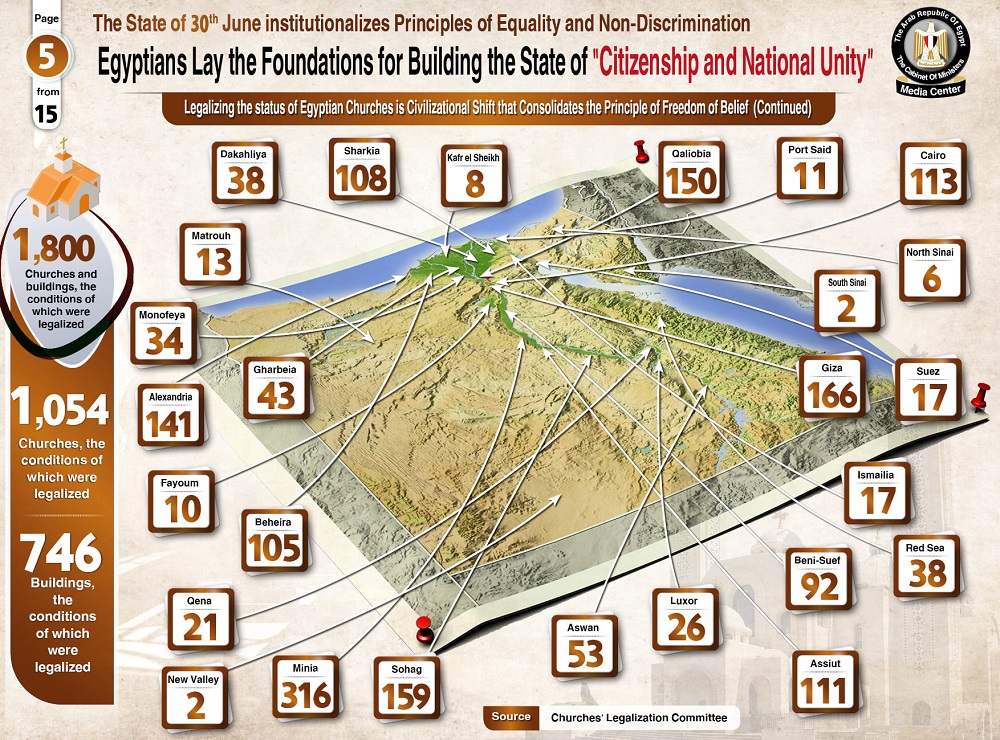
Image: Egypt Cabinet of Ministers Media Center
An Egyptian government infographic depicting recent progress in legalizing Christian churches.

Egyptian Christians have long struggled to build their churches.

But now, they can have Muslim help.

Last month, Egypt’s Grand Mufti Shawki Allam issued a fatwa (religious ruling) allowing Muslim paid labor to contribute toward the construction of a church. Conservative scholars had argued this violated the Quranic injunction to not help “in sin and rancor.”

The ruling is timely, as the governmental Council of Ministers recently issued an infographic highlighting the 2020 land allocation for 10 new churches in eight Egyptian cities. An additional 34 are currently under construction.

Prior to this, two prominent examples stand out. In 2018, President Abdel Fattah al-Sisi inaugurated the Church of the Martyrs of Faith and Homeland in al-Our, a village in Upper Egypt, to honor the Copts beheaded by ISIS in Libya. And in 2019, he consecrated the massive Cathedral of the Nativity of Christ in what will become the new administrative capital of Egypt, alongside its central mosque.

This is in addition to restoration work at 16 historic Coptic sites and further development of the 2,000-mile Holy Family Trail, tracing the traditional map of Jesus’ childhood flight from King Herod.

And since the 2018 implementation of a 2016 law to retroactively license existing church buildings, a total of 1,800 have now been registered legally.

Persecution has long been a term applied to Copts in Egypt, ranked No. 16 on the Open Doors 2021 World Watch List of nations where it is hardest to be a Christian. But shortly after the mufti’s fatwa, which restated a ruling last given in 2009, the Grand Imam of al-Azhar gave a pronouncement of his own…

[But there are dissenting cases also.]

Ramy Kamel, a 33-year-old activist, was once dodging tanks near Tahrir Square, protesting for Coptic equality. Ten years later, he is in jail for “spreading false news” about Coptic discrimination, and “financing a terrorist group.”

Soad Thabet, a 74-year-old Coptic grandmother, was in the Upper Egyptian village of al-Karm, minding her own business. Ten years later, she is fighting for justice after having been stripped naked and paraded through town, with her Muslim attackers acquitted.

These examples show that the term persecution remains “appropriate,” said Kurt Werthmuller, a USCIRF policy analyst specializing in Egypt…

This article was originally published at Christianity Today on February 22, 2021. Please click here to read the full text.

Categories
Christianity Today Middle East Published Articles

Who Will Save Algeria’s Closed Churches: the UN, US, or Hirak?

Image: STR / picture alliance / Getty Images
People in Algiers wave a big Algerian flag during a protest held today to mark the second anniversary of the mass demonstrations, commonly known as the Hirak Movement, that pushed long-time ruler Abdelaziz Bouteflika out of office in April 2019.

Algeria’s Christians hope that a one-two punch may reopen their churches.

Last December, a letter from the United Nations asked the North African government to give account. And in recent days, popular protests resumed after crackdowns and a COVID-19 hiatus.

Two years ago, Protestants cheered when the Algerian Hirak [Arabic for movement] forced the resignation of then 82-year-old president Abdelaziz Bouteflika, following his announcement that he would run for a fifth term in office. Protests continued, however, as the ruling clique was slow to make changes.

Hirak supports human rights, and I have no doubt they will help the churches,” said Youssef Ourahmane, vice president of the Algerian Protestant Church (EPA).

“And the letter from the UN shows something else is wrong, and now they will have to deal with it.”

Its language reads like a teacher scolding a recalcitrant student.

“Please explain in detail the factual and legal basis that justified the closure of the 13 places of worship and churches,” stated the 7-page letter, written in French.

“Please provide information on the re-registration procedure of the [EPA], and explain the reason why this has not been finalized to date.”

Signed by three UN experts specializing in the freedom of religion and belief, peaceful assembly, and minorities, the now-open letter represents the latest chapter of international advocacy for the persecuted Protestants of Algeria.

The nation ranks No. 24 on the Open Doors World Watch List of the most difficult countries for Jesus followers. Only three years ago, it ranked No. 42.

“2020 was a very difficult year for us Protestants, who have been deprived of our places of worship,” said Salah Chalah, president of the EPA. “[But] we love our country and we regularly pray for its prosperity.”

Algerian Protestants number between 50,000 and 100,000 believers, with the great majority concentrated in the Atlas Mountains regions populated with Kabyle, a non-Arab indigenous ethnic group.

Besides the 13 churches forcibly shut down, the UN noted 40 other Protestant places of worship threatened with closure. It also rebuked the “physical force” used against church members, as well as discriminatory treatment against Christians in airports and other border crossings.

In 2018, the Algerian government denied Christians were persecuted, stating churches were closed for “nonconformity with the laws.”

But in October 2019, Chalah was one of several kicked and beaten with batons while protesting the closure of the Full Gospel Church of Tizi-Ouzou, 60 miles east of the capital Algiers. Understood to be Algeria’s largest church, 300 of the congregation’s 1,200 members gathered in solidarity as 20 police officers sealed its doors.

“May everyone know that we have been beaten and abused for one reason only—our Christian faith,” Chalah said at the time. “And because that’s the cause of our pain…

This article was originally published at Christianity Today on February 22, 2021. Please click here to read the full text.

Categories
Prayers

Lebanon Prayer: A New Judge

God,

Six months. Starting over. Sort of.

The Beirut explosion now has a new judge.

A young man, respected, dares enter the fray.

First he must scour the thousands of notes

Left behind by the judge tossed aside for his work.

Then he must weigh if those efforts were true.

Were figures indicted the right ones to fall?

And are there still others, and how will he know?

Is there a trail that pinpoints the guilt?

Or if everyone shared in a system corrupted

Is any one person a scapegoat for all?

All this takes time, God.

Victims’ families have no closure.

Damaged shops await their claims.

With the nation stuck on neutral

People say: Its by design.

But Lebanon has other frustrations also.

Still no government. Still no aid.

Parliament questions exchange rate equations,

While the needy are suffering, someone else gains.

The Maronite patriarch pleads to the world:

Let the UN guide our path back to health.

The Shiite militia rejects this agenda.

“Our problems are here. We will solve them ourselves.”

There is honor in both answers, God.

But they also called it: War.

Judge between them, for the good.

Judge.

Judge.

But God, let us fear your judgment. You are righteous, we are not.

And your verdict is eternal.

Can the young man solve the mystery?

If pressured, can he walk this path?

Give him courage. Give him wisdom.

Protect his heart. Protect his life.

Too many have been killed already.

And what of the others, God?

Do they serve the nation? Do they serve their friends?

And what do we pray for? That our side would win?

Judge them, God.

They deign to speak for the country.

We do not know their hearts.

Expose the ones of selfish interest.

Promote the ones who fear your name.

And make us like them—faithful to the right, committed to the true.

Humble in assessment of ourselves.

Yet firm in conviction, where in line with yours.

Teach us to balance:

Judge with right judgement.

Judge not lest you be judged.

God, there is a way forward.

Let Lebanon find it.

Amen.


To receive Lebanon Prayer by WhatsApp, please click this link to join the closed comments group.

Lebanon Prayer places before God the major events of the previous week, asking his favor for the nation living through them.

It seeks for values common to all, however differently some might apply them. It honors all who strive on her behalf, however suspect some may find them.

It offers no solutions, but desires peace, justice, and reconciliation. It favors no party, but seeks transparency, consensus, and national sovereignty.

How God sorts these out is his business. Consider joining in prayer that God will bless the people and establish his principles, from which all our approximations derive.

Lebanon Prayer places before God the major events of the previous week, asking his favor for the nation living through them.

It seeks for values common to all, however differently some might apply them. It honors all who strive on her behalf, however suspect some may find them.

It offers no solutions, but desires peace, justice, and reconciliation. It favors no party, but seeks transparency, consensus, and national sovereignty.

How God sorts these out is his business. Consider joining in prayer that God will bless the people and establish his principles, from which all our approximations derive.


Sometimes prayer can generate more prayer. While mine is for general principles, you may have very specific hopes for Lebanon. You are welcome to post these here as comments, that others might pray with you as you place your desires before God.

If you wish to share your own prayer, please adhere to the following guidelines:

1) The sincerest prayers are before God alone. Please consult with God before posting anything.

2) If a prayer of hope, strive to express a collective encouragement.

3) If a prayer of lament, strive to express a collective grief.

4) If a prayer of anger, refrain from criticizing specific people, parties, sects, or nations. While it may be appropriate, save these for your prayers alone before God.

5) In every prayer, do your best to include a blessing.

I will do my best to moderate accordingly. Thank you for praying for Lebanon and her people.

Categories
Christianity Today Middle East Published Articles

Interview: The Middle East Church Must Resemble Salt, not Rabbits

Image: Courtesy of The Middle East Council of Churches

Pope Francis will make the first papal visit ever to Iraq in March to encourage the dwindling faithful. War and terrorism have hemorrhaged the nation’s Christians, but he hopes they might return.

Meanwhile in Lebanon, Michel Abs, recently selected as the new leader of the Middle East Council of Churches (MECC), agrees with the pontiff. But in an interview with CT, he said that schools and hospitals have distinguished Christians, who he hopes might even increase in number—and quality.

And Protestants, he said, have a lever effect that raises the whole. Representing only 7 percent of the regional Christian population, they have a full one-quarter share in the council.

The MECC was founded in 1974 by the Protestant, Greek Orthodox, and Oriental Orthodox denominations. Catholics joined in 1990 to complete its diverse Christian mosaic.

According to the Pew Research Center’s 2010 Global Christianity report, Orthodox believers represent 65 percent of the Middle East’s Christians, with Catholics an additional 27 percent.

But it was the Protestants who helped give birth to the ecumenical movement that joined them together. The 1934 United Missionary Council became the Near East Christian Council in 1956, and the Near East Council of Churches in 1964.

It was renamed the Middle East Council of Churches when the Orthodox joined 10 years later. Today it includes Protestant church associations in Egypt, Syria, Lebanon, Jordan, Palestine, Sudan, Iran, Kuwait, Algeria, and Tunisia.

Council leadership rotates between the four denominations. Last September, Patriarch John X. Yazigi of the Greek Orthodox Church nominated Abs for the Eastern Orthodox four-year term. (Protestants are next in line.)

“Despite the difficulties we face today, being one is the solution,” Abs said in his acceptance address last October.

“This vine that the Lord planted two millennia ago will continue to spread, to include ever-growing areas of the planet.”

A Lebanese Orthodox, Abs represents the ecumenical diversity of the Middle East. His father was educated by Protestants, and married a Catholic. An economist and sociologist, he is a lecturer at the Jesuit St. Joseph’s University in Beirut.

CT interviewed Abs about the regional influence of Christians, the nature of persecution, and the witness of the gospel in the Middle East:

Congratulations on your election as general secretary. From this position, how do you describe the current situation of Christians in the Middle East?

It has been a difficult decade. The emerging movement of fundamentalism has harmed both Christians and Muslims. Everyone is in danger. We have to deal with turbulent times with much wisdom and solidarity. We need a long-term vision.

But I don’t think we will be eradicated from this area. Maybe we will diminish in numbers, or increase later on, but numbers are not the most important thing, despite their importance and their psychological effects.

The quality of their presence is important too. Christians are known for the quality of what they do. With respect to others, they developed efficient institutions, like universities, schools, and media. This helps, but I am still concerned with…

This article was originally published at Christianity Today on February 19, 2021. Please click here to read the full text.

Categories
Prayers

Lebanon Prayer: Vaccine Doubt

God,

The vaccine is here, and yet people doubt.

What should be hope is cynicism.

But why should it be otherwise? Our lives are full of conspiracy.

Our lives are full of sin.

Some trust not the Western make. Others reject Russia.

Even in medicine rivalry reigns. A zero-sum game of interests.

But much of the questioning hits closer to home.

“Lebanon: corrupt and incompetent.”

Can it keep the vaccine cold?

Will it distribute fairly?

God, you know.

Few others do.

At the main COVID hospital the head figure urges.

And his overworked staff deserves first in line.

But less than a third signaled solid acceptance.

A full four-in-ten will not take it at all.

What then of the nation?

The lockdown makes the cases fall. But with it the economy.

Another week. And then two more. And still two stages evaluating.

But now: A prick. And then one more. Eventually four million.

Herd immunity.

Or are we sheep?

Or are we rats—trapped in a lab?

God, you are our shepherd.

You lead us beside still waters.

But through the valley of death.

COVID has taken many, conspiracy or not.

Corruption has taken many—but that death is eternal.

And it has poisoned Lebanon far more than any virus.

It has ruined trust.

So what now?

Take the vaccination? Wait it out and wear a mask?

See if others fall ill first?

But if no trust in Lebanon, what of the world?

Are scientists, chemists, complicit?

Errors are possible. Money is made.

But is the whole world out to get me?

All we know, God, is you are not.

And yet, in the end, I will die.

You control the times and seasons.

COVID, somehow, is of you.

But so is grace, and faith, and love.

So is trust—which we must give.

Help us build it ever slowly.

One-to-one, where friendships lie.

Then let us risk to trust the stranger.

Maybe, even, rivals too?

Trust demands we become vulnerable.

As, in fact, we always are.

COVID has reminded us. Death has no escape.

And love leads to a cross.

Do we trust you, God?

The vaccine is here, and some will doubt it. Who can say if they are wrong?

Bless them. Bless us.

Walk with us to unknown future.

Give us wisdom. Heal the sick.

Amen.


To receive Lebanon Prayer by WhatsApp, please click this link to join the closed comments group.

Lebanon Prayer places before God the major events of the previous week, asking his favor for the nation living through them.

It seeks for values common to all, however differently some might apply them. It honors all who strive on her behalf, however suspect some may find them.

It offers no solutions, but desires peace, justice, and reconciliation. It favors no party, but seeks transparency, consensus, and national sovereignty.

How God sorts these out is his business. Consider joining in prayer that God will bless the people and establish his principles, from which all our approximations derive.

Lebanon Prayer places before God the major events of the previous week, asking his favor for the nation living through them.

It seeks for values common to all, however differently some might apply them. It honors all who strive on her behalf, however suspect some may find them.

It offers no solutions, but desires peace, justice, and reconciliation. It favors no party, but seeks transparency, consensus, and national sovereignty.

How God sorts these out is his business. Consider joining in prayer that God will bless the people and establish his principles, from which all our approximations derive.


Sometimes prayer can generate more prayer. While mine is for general principles, you may have very specific hopes for Lebanon. You are welcome to post these here as comments, that others might pray with you as you place your desires before God.

If you wish to share your own prayer, please adhere to the following guidelines:

1) The sincerest prayers are before God alone. Please consult with God before posting anything.

2) If a prayer of hope, strive to express a collective encouragement.

3) If a prayer of lament, strive to express a collective grief.

4) If a prayer of anger, refrain from criticizing specific people, parties, sects, or nations. While it may be appropriate, save these for your prayers alone before God.

5) In every prayer, do your best to include a blessing.

I will do my best to moderate accordingly. Thank you for praying for Lebanon and her people.

Categories
Christianity Today Europe Published Articles

Hundreds of Churches Threatened by France’s Plan to End Muslim Separatism

Creator: Christophe Meneboeuf 

Frustrated by years of terrorism inflicted by radical Islamists, France’s parliament is debating a law to end Muslim separatism.

French evangelicals fear their churches will become collateral damage.

“This is the first time, as president of the Protestant Federation of France, that I find myself in the position of defending freedom of worship,” said François Clavairoly.

“I never imagined that in my own country something like this could happen.”

Officially named “the Law to Uphold Republican Principles,” the 459-page bill has been the subject of fierce debate this month, receiving over 1,700 proposed amendments.

The aim, interior minister Gerald Darmanin told parliament, is to stop “an Islamist hostile takeover targeting Muslims” that “like gangrene [is] infecting our national unity.”

With Muslims often crowded into the many impoverished banlieues of France’s major cities, officials fear imported extremist ideologies are leading the religious minority to avoid national integration. In addition, recent terrorist attacks have rallied popular demand for increased security measures.

In the last six years, France has suffered…

This article was originally published at Christianity Today on February 9, 2021. Please click here to read the full text.

Categories
Prayers

Lebanon Prayer: Lokman Slim

God,

By all accounts, a brave man died. But some dispute if he was good.

Yet all condemn his murder.

Suspicion falls on those who doubt. All his life they marred his name.

A Shiite in the south, the militia let him be.

And now most think they killed him.

But no one says so. None accuse. In truth they do not know.

Unknown gunmen pulled the trigger. His family says they beat him first.

He spoke against militia arms. He criticized its foreign ties.

But this is not all that Lokman did. He built an archive for the war.

Every sect contests the history. With documents they now can fight.

And maybe Lebanon can know.

Maybe Lebanon can heal.

Maybe Lokman now can rest?

The nation does not have the luxury. Politics will take no pause.

Christian allies signal distance. Their Shiite partnership has failed.

Helpful here, successful there—”It did not build a state of law.”

Do they tie this to Lokman? Do they tie to the port?

Germans uncovered a stash of explosives. Authorities busted a shipment of drugs.

Six months from the blast there still is no justice.

But two others were killed who had snooped around.

God, the nation hangs its head in horror. Resignation fills the soul.

Add to the list of targeted killings. Another assassin will never be known.

All authorities promised otherwise.

Like they promised for the port.

God, what do you want from the Lebanese people?

Will this time be different? From faith, must they hope?

Or does faith permit only the hope in hereafter? That one day, injustice will all be put right?

Shallow comfort for his family. Little help to fix the state.

So should the nation rage in anger? March again to Martyrs’ Square?

That hope, also, has faded.

Some look to Washington, Riyadh, or Paris. Others to Ankara, Damascus, Tehran.

Hope not in princes, your scripture says.

Then the Lebanese mountains? Lift up your eyes. Help comes from their maker.

To rest in their glory. To reside in their shade.

For refuge from virus. For reminder of you.

Ah, but God, it does not settle. Our lives are left disquiet here.

Already you can give your comfort. Not yet does it assuage us whole.

And Lebanon is left in the lurch.

Your kingdom coming. God, we long.

May we work on its behalf.

May we not confuse your aim.

We honor you in common good. Order, justice praise your name.

But something more is all eternal: The soul that now is in despair.

If Lebanon rises it may fall tomorrow.

The kings of the moment the next one will pass.

Yet the life you redeem is kept everlasting. The joy you bestow is abundant and true.

Give this to Lebanon—all those who seek it.

And with it: Hope.

For Lokman. For justice. For love.

Amen.

Note: The family has since conducted an autopsy, and accepts the result that no signs of torture were found on his body.


To receive Lebanon Prayer by WhatsApp, please click this link to join the closed comments group.

Lebanon Prayer places before God the major events of the previous week, asking his favor for the nation living through them.

It seeks for values common to all, however differently some might apply them. It honors all who strive on her behalf, however suspect some may find them.

It offers no solutions, but desires peace, justice, and reconciliation. It favors no party, but seeks transparency, consensus, and national sovereignty.

How God sorts these out is his business. Consider joining in prayer that God will bless the people and establish his principles, from which all our approximations derive.

Lebanon Prayer places before God the major events of the previous week, asking his favor for the nation living through them.

It seeks for values common to all, however differently some might apply them. It honors all who strive on her behalf, however suspect some may find them.

It offers no solutions, but desires peace, justice, and reconciliation. It favors no party, but seeks transparency, consensus, and national sovereignty.

How God sorts these out is his business. Consider joining in prayer that God will bless the people and establish his principles, from which all our approximations derive.


Sometimes prayer can generate more prayer. While mine is for general principles, you may have very specific hopes for Lebanon. You are welcome to post these here as comments, that others might pray with you as you place your desires before God.

If you wish to share your own prayer, please adhere to the following guidelines:

1) The sincerest prayers are before God alone. Please consult with God before posting anything.

2) If a prayer of hope, strive to express a collective encouragement.

3) If a prayer of lament, strive to express a collective grief.

4) If a prayer of anger, refrain from criticizing specific people, parties, sects, or nations. While it may be appropriate, save these for your prayers alone before God.

5) In every prayer, do your best to include a blessing.

I will do my best to moderate accordingly. Thank you for praying for Lebanon and her people.