Categories
Personal

Our Little Ones Watch a Protest

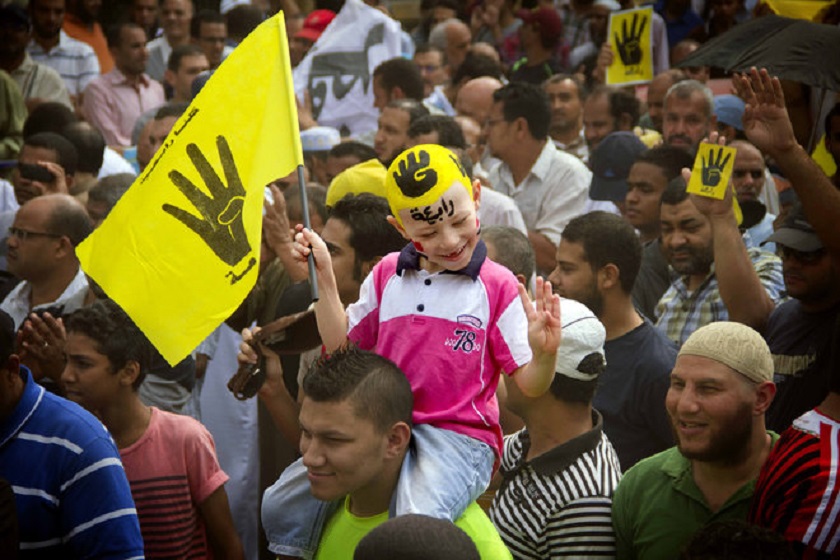
Rabaa Child
From a protest elsewhere in Maadi

The other day Emma’s best friend, Karoleen, and her younger brother, Boula, came over to play at our home following church. As the kids were gathered around the table working on crafts, I heard the familiar sounds of a protest approaching. A fair number have passed near the house in recent months, although they usually go down the main street perpendicular to ours. Since we live on the ground floor, we usually don’t get a good look despite the noise, but this time they turned and came in full view.

We had been looking for an opportunity to film a protest for a recent video we made about the changes in our neighborhood since we returned from a summer in America. So I dropped the construction paper I was cutting up for one of my daughters, grabbed the camera and ran to our play room, which is a glass-enclosed porch. This gave me the best view I could get of the marchers.

I opened the window and screen, just enough to stick the camera out, but I still felt conspicuous. I didn’t really want to attract any attention from the protesters, but I was willing to risk a bit for a decent line of sight. As they marched, I noticed that some of them looked at our house, but not, as best I could tell, in my direction.

But it was then I heard the shouts and screams from my own kids and their friends in the other room, as they watched the protest go by from our living room windows. That’s why they were looking our way.

Two weeks earlier a protest had gone past Karoleen’s house, about ten streets away from our home, while Emma and Hannah were playing there. Her mom told me afterward that it made Emma concerned, even for us in case the protest came towards our home. But Karoleen’s family lives on the 7th floor of her apartment building, far above the action.

So as I was filming, I was simultaneously hoping the kids weren’t too afraid now that they were outside our window. As it turns out I had nothing to worry about. The kids loved it.

They noticed the bright yellow hand signs, though they didn’t know what they meant. They especially took interest in the kids who were marching along in the protest. There were balloons and chanting, which sounded more like cheering to them. In this particular march, there was nothing to be afraid of. It was a friendly, jovial atmosphere.

When I returned to the table the kids talked excitedly about what they had seen. The planned craft was abandoned as they used the construction paper to make protest banners. Theirs, however, bore the name ‘Sisi’ as opposed to ‘Morsi’, in favor of the current military leader who many see as a hero. They teased each other about being ‘for Morsi’ as they bantered around the table. I didn’t realize what fun it would be for them to have political discussions, though this was not the first time our children had taken sides.

In the end, I got the video we had been looking for, and the kids received some unexpected entertainment. We appreciated the peacefulness of the protest, and wound up happy they turned down our street.

It wasn’t until later we were less pleased, noticing the graffiti they had sprayed on our walls. ‘Sisi is a killer,’ they wrote, and, ‘Against Oppression.’ The latter is a message we won’t mind our children seeing every day, but the first one is not so nice. Of course, neither was the explanation we had to give about the yellow signs, commemorating the hundreds of pro-Morsi protestors who were killed when their campsite was cleared.

Our kids, of course, pay little attention to the graffiti. It will be the image of the protest that will stay in their mind, which we invite you to share in also.

'Sisi is a Killer'
‘Sisi is a Killer’
'Against Oppression'
‘Against Oppression’
Categories
Prayers

Friday Prayers for Egypt: Protest Law

Flag Cross Quran

God,

Egypt may still be revolutionary, but if so it is now contrary to law. Perhaps every revolution is. Besides, there is nothing like a law to regulate protest to spark more protest.

It even brought non-Islamists back to the street. Many political parties and movements spoke out against its provisions, requiring prior notification, allowing security to modify or cancel, and imposing harsh penalties on violators. International bodies condemned as well. Revolutionaries tested it immediately, meeting tear gas and arrest.

Islamists, meanwhile, hit the street regardless. Though fellow protestors are not their allies, they are, perhaps, emboldened by the sight of others opposing the government as well.

The government, according to law, confronts them both.

God, society cannot continue forever in chaos. Nor should those with a word against authorities be silenced. Does this law balance appropriately? Or is it a tool to repress dissent? Even if so, do you approve for a time?

Give wisdom to the government, God. The revolution has unleashed a popular fury that will not be subdued. But it has also unleashed a powerful backlash that clamors for calm. Where should its allegiance lie?

May it be with that which is right. May they study the norms of human rights and craft a law for Egypt in consensus with national actors. If there is need to amend, make it clear to all.

Give wisdom also to these actors. All law enshrines principles and establishes precedent. May they know what is worth fighting for and if this issue applies. Help them to hold the government accountable, in a manner winsome for the nation.

And for those who remain outside the law altogether, give them wisdom in spades. They have made it clear they will not stop protesting. Should they demonstrate their peacefulness in compliance with the law? Might it work to their advantage, or just compromise their rhetoric?

God, so many are in a maze and subject to criticism no matter their choice. Bind them all to yourself in commitment to pure intention. Give all the confidence that comes from choosing the right over the expedient. Expose all who willfully deceive in pursuit of their goals, even if righteous. And bring together the men of purpose from all agendas who can hammer home a consensus with respect for all.

But if consensus was constant, God, there would be no need for either law or protest. But you counsel both for mankind, fully aware of our foibles. In both law and protest, then, may Egypt honor you. Honor her in turn, and give her peace.

Amen.

Categories
Personal

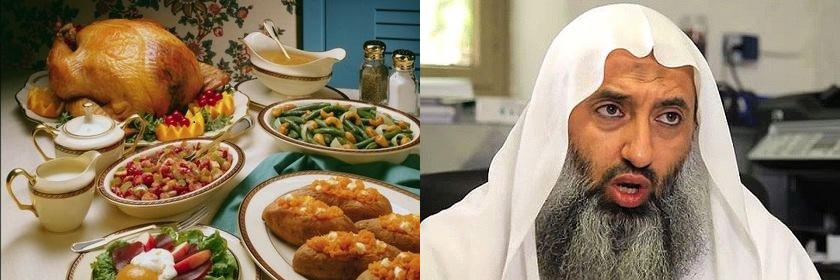
Salafi Muslims and American Thanksgiving

Salafi Thanksgiving

From Christianity Today, a very interesting article about an evangelical historian who challenges the received traditions of the Puritans:

In 1623, Plymouth Colony Governor William Bradford proclaimed the first Thanksgiving. “The great Father,” he declared, “has given us this year an abundant harvest…and granted us freedom to worship God according to the dictates of our own conscience.” He directed the Pilgrims to gather that November, “the third year since ye Pilgrims landed on ye Plymouth Rock, there to listen to ye Pastor and render Thanksgiving to ye Almighty God for all his blessings.”

Except Bradford didn’t write that. Someone—we don’t know who—fabricated this “proclamation” in the late 20th century.

The author takes note of how American Christians are at a bit of a crisis point concerning their national history:

American evangelicals seem to have reached a crisis point over the study of history, especially the history of the American founding. For decades, many evangelicals have turned to popular history writers who have presented America, especially of the colonial and Revolutionary era, as a straightforwardly Christian nation.

But take the popular belief that the pilgrims came to America in search of religious freedom. It is not wrong, he argues, but subject to misinterpretation:

He demonstrates that the quest for “religious freedom,” in the modern sense, did not really animate the Pilgrims. Yes, they wanted to find a place where they could worship God according to Scripture and the dictates of conscience. But they had already discovered those conditions in Holland, where a number of English dissenters had gone in the early 1600s.

The most pressing concern that led the Plymouth Separatists to leave Holland was that they found the Netherlands “a hard place to maintain their English identity and an even harder place to make a living.” They did not worry so much about religious persecution (at least not since they left England), but about “spiritual danger and decline.” They worried about the cultural corruption they saw around them in foreign Dutch culture, and struggled to find profitable employment that could nourish their common identity. America seemed to offer both better opportunity and a place to preserve their sense of covenanted community.

And, just to throw in one ugly incident:

We should remember, McKenzie cautions, than not long after the first Thanksgiving—which was indeed a peaceful, if tense meal between the English and their Wampanoag neighbors—the Pilgrims launched a preemptive assault on local Massachusetts Indians that resulted in violence and bitter resentments. The English even placed the severed head of one Native American on a pike outside their fort. Recalling this is telling the truth, not revisionist history.

What does any of this have to do with Salafi Muslims? Nothing at all, except by way of similarity.

The word ‘Salaf’ in Arabic means ‘forefathers’, and Salafi Muslims honor in particular the first three generations of Muslims. This was the golden age of Islam, when the community lived the teachings of the Prophet Muhammad. In all current religious interpretation – even in political and cultural matters – Salafis believe Muslims should study this period and apply its lessons accordingly to modern life.

Many Muslims honor this heritage without calling for the same level of imitation as Salafis. But most all of the faithful prefer not to open this history of these forefathers to questioning.

There are two issues at stake. The ancient challenge was given by Shia Muslims who said the community went wrong right after the death of Muhammad. Leadership, they say, should have been passed to Ali, within family lines. It was only the political scheming of these forefathers that prevented his immediate succession, and it was their further scheming that resulted in the loss of his role as caliph.

Sunni Muslims were the political and numerical victors of early Muslim in-fighting. But the Shia challenge contributed to the sanctification of these early generations who established the caliphate. They were also the assemblers of Muhammad’s sunna, his words and deeds not found in the Qur’an, so demonstrating their honesty was paramount. Just as Muslims find it terribly difficult to accept a word spoken against Muhammad, so do Salafi Muslims, and many beside, take offense if the Companions of Muhammad are questioned.

The modern challenge questions this sacred history as well. Using mostly Muslim sources, increasing numbers of historians are dissembling the received traditions about the development of the early Muslim communities. And similar to scholars who try to trace the human origins of the Bible, some also find other than divine influences in the Qur’an. The consequences can be dire for those engaged in revisionist history, or, let historians judge, telling the truth.

History, of course, is often deeply contested. Defining the past is a good way of determining the future.

For American Christians, revisiting the history of Thanksgiving is not nearly as threatening as the accusation that the Trinity was invented at the Council of Nicea, for example. But for a people confident in the idea that God has blessed America, there is often the implicit assumption that he has done so – from his sovereign purposes, of course – but also because of the Christian faithfulness of America’s founders. There is also often the modern application, with political overtones, that if America returns to her Christian heritage God’s blessing will come again.

It may well. ‘If my people, who are called by my name, will humble themselves and pray and seek my face and turn from their wicked ways, then will I hear from heaven and will forgive their sin and will heal their land,’ God said to Israel. Americans Christians consider themselves part of the family of God, his people. Should the land of America be considered a possible heir to this promise?

Either way, both American Christians and Salafis must face up to any possible ‘fabrications’ of their history. If this is a crisis point for evangelicals, it is hardly a blip on the radar for Salafis. But both groups have invested heavily in the sacred narrative of their secular traditions. As the author closes in his article:

The temptation toward idol-making seems much more pressing with the titans of America’s national history, those who line the mall in Washington, D.C. Jefferson, Lincoln, Washington: These are the ones that, despite limited evidence of orthodoxy, many of us want—or need—to be evangelical Christians, just like us. We desperately need help to know how to think about those Founders.

Similarly, what will Salafis do with the four ‘rightly guided caliphs’ – Abu Bakr, Omar, Uthman, and Ali? There were fine Muslims, surely, but what does it say that three of them were killed? What of other leaders who opposed Muhammad until the near-end, and then switched sides? Muslims are not ignorant of these controversies; in fact, Salafis study them diligently. But no one should go beyond the limits of the historic evaluation given to the Companions of Muhammad; no one should tar their reputation.

I must stop short of proscription for either community. This post began as an attempt to draw parallels between two communities not often associated together. But I am a historian of neither narrative, so I dare not make pronouncements that can be easily countered by the studied. Neither am I a theologian, certainly not of Islam to make cavalier statements about how to interpret God in their history.

But I hold as a conviction that fidelity to God requires fidelity to truth, come what may. The shaping of pious myths may aid in the development of social and cultural faith, but they are acts, ultimately, of manipulators. ‘God will bring to light what is hidden in darkness and will expose the motives of the heart.’

He may take a long time in doing so, but this Thanksgiving, let us be thankful that God will guide us into all truth.
Categories
Excerpts

A Foreign Journalist in an Egyptian Jail

From Vocative, a disturbing account that hits too close to home:

I was reporting on the marchers, and not long after I gave the policemen cigarettes, a young police recruit grabbed me by the back of the neck. He slapped me on the head repeatedly as his friend took my camera from around my neck and my phone from my pocket. He marched me toward a small alley that leads off Tahrir Street, where I could see a number of other Egyptian men being penned in by some riot police.

I fumbled in my wallet for my press pass, from the Cairo Press Center. A senior member of the riot police looked at it and saw that it said “British.” He looked up at me and back down at my photo a few times before saying, in English, “I’m sorry.”

Assuming I was free to go, I asked for my phone and motioned for my pass. But I got a hefty push in the back and suddenly found myself with the other detained men. I called to a nearby police recruit and told him I was a British journalist and said there was some misunderstanding. He told me to put my hands behind my back. When I reiterated my point, he slapped me in the face.

He describes the conditions inside the police station, and though he does not appear to have been singled out for poor treatment, it was poor all the same:

The temperature in the room was rising. A 50-year-old teacher nodded his head gently against my shoulder. I turned around and saw a face of genuine sympathy, “I am sorry,” he said.

“Look,” he motioned to a corner of the room. I had completely missed a man of at least 60 crumpled in the corner. Both his legs were covered with birdshot, blood slowly pooling around his feet. I looked at the blood, and the smell immediately became unbearable.

We could hear screams from outside the door, which would open only to reveal yet another poor man being flogged for no apparent reason. The officers smiled at one another as they beat the men. They fit the stereotype of despotic state security so perfectly it would have been funny if it weren’t so depressing.

After about 90 minutes, they decided to move us—to a minuscule, enclosed courtyard in the middle of the building. Sixty people squeezed in like sardines, sweat beading off us. The tiled floors were dusty and covered in rubbish and aberrant marks of dried blood. I was pushed to my knees once again. I turned and tried to reason with my captors, but was quickly cut off by a kick to the back. “Look straight ahead!” would be the catchphrase for the rest of the evening.

I finally turned and stayed turned, covering the back of my head. I noticed that everyone else was in exactly the same position.

This was by far the most painful part of the day. Kneeling for close to three hours, crammed so closely together there wasn’t space for me to put my hands on the floor to help shift my weight.

It does turn out ok in the end, at least for him and a few others:

Around 10 p.m., about six hours after I was arrested, we were suddenly asked to stand up. I almost collapsed as my knees. Leaning on the man in front of me, I steadied myself and we filed out of the room and upstairs. We were told to line up in front of a notice board. I read the yellowed certificates and newspaper clippings trumpeting the police station’s valiant work of the past decades.

Again, we were pulled aside, one by one, and our details recorded. I stayed there silently while they sorted us into two groups, one with around 12 men and the other with closer to 50. Everyone looked exhausted, the blood on their shirts now that dull brown color.

After some paperwork and backslapping, the policemen sent the larger group back downstairs. The smaller group and I were free to leave.

I wonder what it would have been like in an American jail? Surely nowhere is the experience pleasant, and perhaps six hours is a rather fast processing.

In either setting, I hope I never have to find out. Comfort, comfort, for all who do.

Categories
Atlantic Council Middle East Published Articles

Ebram Louis and the Contested Nature of Coptic Disappearances

Ebram Louis
Ebram Louis

From my recent article on Egypt Source:

Maryam Milad disappeared in 2012. Last seen in the church of St. Anthony in Shubra, her father believes his now eighteen year old daughter has been kidnapped and perhaps married off to a Salafi Muslim somewhere. Police, he says, have been uncooperative.

“I plead with all the authorities in Egypt,” he said at a prayer meeting highlighting more than a dozen similar cases. “Put yourselves in the place of us parents.”

According to Ebram Louis, founder of the Association for the Victims of Abductions and Enforced Disappearances (AVAED), this is just the tip of the iceberg. He has documented 500 such cases since the revolution.

The article describes his process of documentation, and reveals interesting statistics from AVAED’s findings:

But according to AVAED chief field researcher George Nushi, up to 60 percent of all cases are [stemming from initial love relations]. Most of these, he said, involve Muslims of bad intention. The girl becomes infatuated, but then she is told she cannot go home again.

There are violent cases, but they are limited in number. Even so, AVAED sees religious extremism involved prominently:

“We do not say ‘kidnapping’ in the beginning,” he said, “We say ‘disappearance.’” Nushi says only 5 percent of girls suffered violent kidnappings in the traditional sense.

How does he then have such certainty that malevolent, organized Salafi groups are involved? Of their 500 cases, ten have escaped to tell their story. These stories reveal patterns which indicate similar activity, locations, and even phone numbers.

This issue requires deep research and understanding of the Egyptian social and cultural settings, far deeper than the scope of this article. But please click here to read the rest at Egypt Source.

Categories
Prayers

Friday Prayers for Egypt: Tragedy Tripled

Flag Cross Quran

God,

The tragedies of this past week drove the government to declare three days of mourning. They serve also as a reminder of challenges, both old and new.

Twenty-seven people died when a microbus failed to stop at a crossing, colliding with an oncoming train.

Eleven soldiers died when a suicide bomber drove his car bomb into their convoy.

One security officer died when he was assassinated outside his home.

The first tragedy reminds of Egypt’s dilapidation. The last two portend of Egypt’s insurrection. God, fix and quell.

Fix the system that fails to build to code and perform regular maintenance. Fix the culture that avoids responsibility and allows corruption. And fix the human spirit that does not work as if unto you.

Quell the evil that will kill for an agenda. Quell the insurgency that targets the state. And quell the discontented spirit that places its own interests above those of others.

For there are many discontent, God, who have ample reason for their frustration. But save them from descent into either rage or resignation.

Give them hope, amid their differences. But give also the strength to resist the violence of those who force their way on others. And with it, give the greater strength of self-restraint and humility. Bring Egypt soon to consensus, that all would care for the concerns of the other.

God, tragedy often brings resolve. Increase it three-fold, that Egypt may prosper. Take the old, and make all things new.

Amen.

Categories
Atlantic Council Middle East Published Articles

Amr Darrag on the Brotherhood’s Mistakes, Sort of

Amr Darrag
Amr Darrag

From my recent article at Egypt Source:

During the lead-up to the June 30 protests demanding early elections through the violent dispersal of the pro-Morsi sit-ins, several Brotherhood members spoke in vague terms of their ‘mistakes.’ It was a conciliatory gesture of sorts, admitting Morsi’s less than stellar performance but arguing this was not enough to undo his democratic legitimacy.

It is a fair enough logic, but it was never accompanied by any details concerning these mistakes. The closest to an admission came from Salah Sultan, who apologized for the Brotherhood’s negotiating with Omar Suleiman, opening channels with the military, not being honest enough about the efforts of corrupt regime figures to sabotage the revolution, and failing to absorb youth and women in their project. His statement was posted on the webpage of the Freedom and Justice Party, but later removed and described as only a ‘personal’ viewpoint.

This has been one of my frustrations in listening to the Brotherhood post-Morsi. They speak of mistakes, but are rarely specific. I understand the political logic, but wish for greater transparency. So I was thankful for an opportunity to press the issue directly:

But Darrag, instead, is put off by the question. “I don’t actually agree on the prescription that there are mistakes that the Brotherhood has to acknowledge and apologize for,” he said. “Of course there are mistakes, I am not saying that we don’t make mistakes. But this has to come through a process that all political forces, if they want to learn from past experiences, acknowledge their mistakes.”

Rather, he anticipates this process eventually coming from those who sided with the removal of Morsi:

“It doesn’t make sense to ask one side to keep apologizing and apologizing and apologizing. I mean, this is not helping.”

Perhaps it is not helping the Brotherhood, but if they tried apologizing even once, it might help the original revolutionary cause. But consistent with his position, Darrag anticipates the reflection coming from the other side. “People think and reconsider,” he said. “I am sure that one day the majority will join us in the same way that happened on January 25th.

“But when, I don’t know.”

Please click here to read the full article on Egypt Source.

Categories
Prayers

Friday Prayers for Egypt: Morsi Speaks, Protests Diversify?

Flag Cross Quran

God,

Following the opening session of his trial, President Morsi was transferred to a public prison where he was able to release his first statement since he was deposed. He called his removal a coup, praised the people for their steadfast protests, and said Egypt would have no stability until his legitimacy was restored.

Meanwhile, the week upcoming marks the two year anniversary of some of the bloodiest protests from the interim period, when the military ruled and the Brotherhood left the revolutionary stage. Supporters of the current general are calling for a commemoration, but of the new unity between the people and the police. But it was the police who killed them, revolutionaries maintain, and the institution remains unreformed under any regime. They may protest afresh in counter-commemoration.

Will the protest movement widen? Will anti-Islamist revolutionaries recall their original ire against military rule? Or is it now nothing of the sort, and a true democratic transition is underway?

God, answer these questions in the hearts of Egyptians. May they hold their leaders accountable as they pray for them. May they join a consensual process as they protest all wrongdoings. Unite these dichotomies in both the diversity of the people and the uniqueness of the individual.

Give Morsi patience, discernment, and courage, God. He is frustrated, surely; give him hope. Judge both him and the nation, God, and bring both to a better place. Do likewise with all who support him.

Give patience, discernment, and courage to the revolutionaries as well, God. They have been frustrated for two years, having watched colleagues fall and justice fade. Will fresh protests renew their hope? Or has their hope come in newly minted unity? Reform the police institution, God, and show revolutionaries the best way to honor both their friends and their nation.

Protect Egypt, God. As she emerges after three months of a state of emergency and life under curfew, give self-discipline in place of security solutions. Amidst all her diversity in a cacophony of speaking, give her silence and reflection.

But whether within the din or its dearth, make the right voices heard. May yours be quietly audible, above all else. Then have Egypt’s roar follow.

Amen.

Categories
Books

Egypt, the Army, and the Early Christian Ethic of Life

by Ron Sider
by Ron Sider

From Christianity Today, an interview with Ron Sider, who compiled every early church writing on the subject of killing:

It’s not just just-war theory versus pacifism. The book covers war, capital punishment, gladiatorial games, infanticide, abortion, and so forth. Did the early Christian writers tie those together, or did they treat them as separate ethical issues?

They definitely tied them together. A number of times different authors—like Lactantius writing at the time of the Diocletian persecution, and earlier writers—are very clear. They explicitly say we don’t kill, and that means we don’t go to gladiatorial games, we’re opposed to abortion, capital punishment is not acceptable, and we don’t kill in war.

Did the early Christians oppose capital punishment as a social institution? Or did they just say that a Christian couldn’t be an executioner or a magistrate who might give someone a death sentence?

For early church fathers, a Christian could not have a political or judicial office where he would have the authority to pronounce a judgment of capital punishment.

They clearly stated the latter. They said Christians cannot participate in capital punishment. For them, a Christian could not have a political or judicial office where he would have the authority to pronounce a judgment of capital punishment.

Similarly, in the unanimous testimony of early Christian writers, this means Christians should not join the army:

Let’s talk about the reasons early Christians abstained from bloodshed: They talked about Jesus’ command to love our enemies, about the Mosaic command not to kill, and about the prophecy of messianic peace. Is any one of those reasons foundational to the rest?

Their most frequent statement is that killing is wrong. Killing a human being is simply something that Christians don’t do, and they’ll cite the Micah passage or Jesus’ “love your enemies” to support that. But the clear statement that Christians don’t kill is the foundation.

The most frequently stated reason that Christians didn’t join the army and go to war is that they didn’t kill. But it’s also true that in Tertullian, for example, idolatry in the Roman army is a second reason for not joining the military. But it’s not true that idolatry is the primary or exclusive reason that the early Christians refused to join the military. More often they just say killing is wrong.

But here is the rub for Egypt. The Coptic Orthodox Church honors the early church fathers, and I have not interacted with this issue to know how they treat this testimony. I would imagine that as the Catholic Church in the Roman Empire eventually came close enough to the centers of power, the Copts also developed a just war doctrine. Certainly they have a number of ‘soldier saints’ among their martyrs.

But for modern day Copts, the fact of participation in the army is often touted by political Islamists as the chief justification why the Islamic jizia tax is no longer required.

Sharia law required ‘People of the Book’ to submit to their Muslim rulers and exempted them from participation in the military in exchange for this tax. Within this system they were given the promise of domestic protection and freedom of worship within the status of second-class citizenship.

But those wars were for the benefit of the Muslim caliphate. The modern state of Egypt has a national army for defense of the borders. Two hundred years ago jizia was abolished and Copts served alongside their Muslim neighbors in the army.

But if per Sider’s testimony that proper Biblical understanding, as evidenced by the early church fathers, forbids a Christian from killing, this ‘arrangement’ is undone. If Copts sense they should abstain from war, does this open the door for the radical Islamist argument of restored jizia?

No Copt that I know of argues for conscientious objection, which does not exist in Egypt anyway, as best I know. Of course, like most Egyptians, like most humans, Copts are very reticent to kill. But they do not forbid it in the context of national duty.

But for any Christian pacifists outside of Egypt, which would you choose? You are only a pacifist out of conviction, of course, so I suspect it is unlikely you would balk at the imposition of a special tax for your refusal to fight. But would you accept the ‘second-class citizen’ part? Would you accept to be ruled by sharia law?

Even in the early days Christians faced the pragmatic question on pacifism. Here is the less than pragmatic answer:

It’s significant that Origen in the middle of the third century, 248–250, responds to the pagan critic Celsus. Celsus said, If everybody was like you Christians, the Roman Empire would collapse. Origen responded, if everybody was like us, the Roman Empire would be safe, and we wouldn’t need to kill people. So in the middle of the third century, the most prominent Christian author writing at the time responded in a way that only makes sense if Christians by and large didn’t join the military.

But the idea ‘if everyone was like us’ is woefully unrealistic. It is as if they say, please, join our movement and usher in the fall of our Empire.

Would an imagined pacifist Copt similarly argue to usher in the fall of our citizenship?

I am curious to know how church leaders today would interact with this issue.

Categories
Prayers

Friday Prayers for Egypt: Delaying Constitutional Confict

Flag Cross Quran

God,

It has been three months since Morsi’s ouster, and the first step in the announced transitional roadmap is still underway. It is, in many ways, the linchpin. The constitution is to be amended and presented to the people in referendum.

When it comes, the Brotherhood will have to make a choice: Vote no or boycott. But the primary Salafi party has made their choice to participate, while deferring the choice of consequence: Yes or no.

Salafis possess nearly inconsequential power in the mechanics of the constitution: They are one vote out of fifty. But they possess great legitimizing power. Without them on board the removal of Morsi is much more easily portrayed as an attack on Islam, or at the least, Islamism.

In exchange they want the religious identity and sharia provisions of the old constitution preserved. As the committee of fifty does its work to revise, they tackle the easier questions first. These are left for later.

God, the Salafi party has been praised for having great political acumen; give them also great wisdom, for they are not necessarily the same.

As the Islam and sharia principles are debated one-by-one, help them to know where to yield and where to stand firm. Where, God, is the proper point of consensus?

And as they go back to their supporters, give them the skill to communicate their choices. Having earlier been maximalist in their demands under Morsi, can they now justify an accepted minimalism? Will it be a valuable political lesson for newly politicized religious conservatives? Or will their earlier rhetoric eat them alive?

Or, might you use these men to lead their supporters deeper into the multi-particular national good?

But God, what if the national good is non-Salafi, as many of the fifty will argue? Give them wisdom if they don’t get enough of their way, or anything at all.

Should they accept? Should they vote no? Should they demonstrate? Should they mount a new revolution?

So give wisdom also to the committee at large. What of Salafi demands is in the national good? To be certain this good involves diligent discussion of a significantly popular viewpoint.

Perhaps there is wisdom, God, in handling easier articles first. There is still time to complete their task. But help the committee to avoid deadline deals from political expediency.

Rather, let this discussion find space now in the national debate: How should the political claims of Islam, as interpreted by some, be incorporated into the political system of a nation, as experienced by all? In their entirety, in continual negotiation, or not at all?

Your answer, God, determines how Egyptians should both pray and politic. Pull as many to your side as possible, in sincere conviction and purity of heart.

And for those who remain in other opinions, honor them also. May they never willfully fight against you, and may they never be fought against as if on your behalf. Knit these together into one nation, where you are present in the messy workings of men, in all their insincerity and impurity.

And in this, God, give them a wise and worthy constitution. Do not delay the conflict, but resolve it in the end, with embraces all around.

Amen.

Categories
Excerpts

The Shape of ‘Terrorism’ Outside Cairo

Following on the heels of Morsi’s trial, it is difficult to see how the Muslim Brotherhood is called a terrorist organization from within the urban settings of Cairo. But this article from the Daily Beast describes the embattled position of police elsewhere:

“We never imagined that the violence could reach this point,” said Qadry Said Refay as he lay in the police hospital. The 37-year-old cop based in Fayoum, about 60 miles south of Cairo, had multiple head wounds, a broken right arm, and a deep, guttural cough.

On the morning of August 14, the same day the Brotherhood demonstrators were cleared away by Al-Sisi’s forces in Cairo, Refay reported for duty as usual in the ancient farming town near Egypt’s biggest oasis. The police station got a call: Brotherhood sympathizers were massing for an attack. Refay thinks there were thousands of them. Probably the numbers were smaller than that. But the four officers and 20 cops soon found themselves under attack by men with guns and Molotov cocktails closing in on all four sides of their little compound. After several hours the mob started coming over the walls and breached one of the gates.

I was sure I would lose my life,” said Refay.  In the middle of the fray he took off his uniform shirt, untucked his t-shirt, and put his gun in the back of his belt. He tried for a few seconds to reason with the attackers, but they swarmed over him. They took his pistol. They slashed his face with knives. “The last thing I can remember,” he said, “is one of them reaching to the ground, picking up a stone, and smashing it on my head.”

To what degree is the Brotherhood responsible for such violence? There is a culture of revenge in Upper Egypt that is far more intrinsically grassroots than any social support for political Islam.

At the same time, when security forces recaptured some of the villages seized by local Islamists, Brotherhood statements portrayed them as peaceful villagers under police attack. Surely it was bloody on all sides, and revenge from both cannot be discounted. But the Brotherhood publicly stood with those who raided police stations and committed the atrocities described above.

The burned-out police station, its walls pocked with bullet holes, was covered with graffiti—“This is the price for injustice. God will have victory,” and “Sisi, you are next.”

But one Brotherhood leader paints the picture as one of simple revenge, and his organization as a restraining force:

“Families in Upper Egypt are not accepting condolences,” said El Magd. “So they will take vengeance. So I think killing will start in Upper Egypt. And I don’t think the [Brotherhood] movement can control this. In Upper Egypt, if families don’t accept condolences for their dead, then they set their minds to vengeance.”

El Magd had the practice of tha’r in mind. “This cannot be controlled. Nobody can control Upper Egypt vengeance. And now everybody has guns. They have guns in Kirdasah.  I am not saying that it will be civil war. But at least Upper Egypt will go back to the ‘70s or ‘80s, where people were shooting at police officers just because they were police officers.”

Upper Egypt is hard to understand. What is the difference between a blood feud and terrorism? Does the distinction even matter?

Truth, justice, and reconciliation are urgently needed in Egypt. Will Morsi’s trial be the beginning of this process, or just one more obfuscation to keep it from happening?

Categories
Excerpts

Egypt for Expats… Ugh?

Expat Map

We like it here, but many people don’t, it seems. From the Washington Post, reporting on a survey by HSBC bank:

The worst of these 34 countries to be an expat is Egypt, which has seen xenophobia rise considerably since this summer’s military coup and wave of populist nationalism.

East Asian nations rank highest, and among the lowest are Western European. The Middle East doesn’t fare well in general:

Middle Eastern countries tend be worse places for expats, owing to legislation that makes it tougher for foreigners to own property and to formal and informal social restrictions that can cut back on quality of life. The exceptions are Bahrain and Qatar, two very wealthy and very small Gulf states whose governments work to attract the wealthy expats they see as crucial to building businesses there. It should go without saying that HSBC’s study does not consider “guest workers” in its measurements. Gulf states, particularly Qatar, have notorious reputations for mistreating migrant laborers from South and Southeast Asia, who work in difficult conditions and with few protections.

Egyptians often ask us: We all want to leave, why did you come here? Let’s just say we’re suckers for xenophobia and populist nationalism, and leave it at that.

Why does anyone live anywhere? God ‘determined the times set for them and the exact places where they should live.’ What is more important is how to live wherever you are. For our thoughts on that matter, please read the opening post to our blog, also titled ‘A Sense of Belonging‘, and this post also considering our expat status, ‘The Sole of Belonging‘.

What does HSBC know anyway? Egypt is great.

Categories
Americas Christianity Today Published Articles

Move Over al-Jazeera: Arabic Christian TV Also Comes to America

SAT-7 North America

From my recent article at Christianity Today, published August 25, 2013, posted today to coincide with the launch of SAT-7 North America:

Al Jazeera America received a major boost this week in its controversial attempt to build a U.S. audience. But the Qatar-based news station, whose channel will now be carried by Time Warner Cable, is not the only Middle East satellite giant coming to penetrate the market.

Soon the Arab world’s top Christian broadcaster, SAT-7, will also start reaching into American homes.

Unlike Al Jazeera, which aims to reach 48 million U.S. homes, 17-year-veteran SAT-7 is aiming for only four million. This is the estimated number of Arabs in the United States and Canada.

“Since the start of the Arab uprisings in 2011, there has been an acceleration in the number of Arabs—especially Christian Arabs—leaving their homelands for North America,” Terry Ascott, SAT-7’s founder and CEO, told CT. “Launching now is a response to the growing number of people who are leaving and want to stay in touch with home.”

Please click here to read the rest of the article at Christianity Today.

Categories
Excerpts

Kerry’s Visit, as Reported in Cairo and Washington

First from Ahram Online, in very negative tones:

US Secretary of State John Kerry met with top Egypt officials to convey Washington’s “deep concern” about the transitional period and to offer the US’s goodwill should developments move “on the right track,” according to Western diplomats.

But on CNN, the focus brushes over any difficulties at all:

U.S. ties with Egypt go deeper than aid, America’s top diplomat said Sunday.

“Let me make it clear here today: President Obama and the American people support the people of Egypt,” U.S. Secretary of State John Kerry said. “We believe this is a vital relationship.”

Both articles report the general thrust of the speech, but their opening leads are indicative. The US wants to avoid a crisis while Egypt wants to project one.

I cannot speak very well about the messaging coming from Washington, but Egypt is currently filled with belief that the US backed the Muslim Brotherhood and is even now working behind the scenes against the popularly backed military move to depose President Morsi.

After all, for many here, the timing of Kerry’s visit is auspicious. He arrives one day before Morsi’s trial is to begin.

Categories
Prayers

Friday Prayers for Egypt: Trial, Satire

Flag Cross Quran

God,

Egypt’s tests continue. Popular talk show satirist Bassem Youssef returned to the air after a long absence and subsequently lost a lot of his popularity. Praised and hated for poking fun at President Morsi and fellow Islamists, he turned his attention to the adoration mania surrounding military leader General Sisi.

Not only did many complain, lawsuits are threatened.

Meanwhile, this week a more critical lawsuit begins. Deposed President Morsi stands trial on charges of espionage and inciting violence. Widespread protests are expected, as unlike the trial of Mubarak, Morsi maintains a significant social base. How the trial is handled may have much to say about the reality of the democratic transition.

God, help Egypt to pass these tests.

Youssef is pioneering, bringing the celebrated Egyptian humor to public expression, challenging the ingrained taboos on insulting authority. His popularity and international profile, perhaps, has kept him safe so far. Give him wisdom, God. Does he drag Egypt forward, or backwards?

He exposes hypocrisy and doublespeak, God, and this is deeply needed in Egypt, as everywhere. But he also undermines respect for authority, and this is deeply dangerous in Egypt, as everywhere.

But what if the authority does not deserve respect, having engaged in hypocrisy and doublespeak? This question, perhaps, is on trial with the president.

Validate or convict him, God, according to the truth. Just as important, may this truth be transparent. Give courage to the judge to fear you alone. May he stand strong, should pressure come from above or below. May he rule rightly.

But for those below, hold fast the discipline of their protest. Keep Morsi’s supporters peaceful; protect them from any external breach of the peace.

God, guide Egypt. Refine her culture, refine her politics, refine her dispensing of justice. In all her trials may she prove righteous.

Protect her from being an object of satire.

Amen.