Categories
Christianity Today Europe Published Articles

Expert: Ukraine’s Ban on Russian Orthodox Church Is Compatible with Religious Freedom

Roman Pilipey / Stringer / Getty

During Tuesday night’s presidential debate, Kamala Harris accused Donald Trump of a fondness for dictators, alleging that he supported a negotiated settlement with Vladimir Putin following Russia’s invasion of Ukraine. Trump, declining to affirm that a Ukrainian victory would serve US interests, replied that if he were still in the Oval Office, the war would never have happened, and he claimed that he could bring it to an end even as president-elect.

Both candidates failed to address the most salient current issue on Ukraine for evangelicals: religious freedom.

Last month, the Ukrainian parliament overwhelmingly approved a proposal to ban the activities of the Russian Orthodox Church (ROC) and compel the Ukrainian Orthodox Church (UOC) to break all ties with the patriarchate in Moscow. President Volodymyr Zelensky signed the bill into law, hailing his nation’s “spiritual independence.”

Some Republicans, including vice-presidential candidate J.D. Vance, have accused Ukraine of “assault[ing] traditional Christian communities.” Vance linked these alleged violations to the continuation of US military support, stating that military aid should be used as leverage to ensure religious freedom.

The charge is nonsense, said a leading Ukrainian expert in an interview with CT.

The law, said Maksym Vasin, director for international advocacy and research at the Institute for Religious Freedom in Kyiv, is meant to protect Orthodox believers in Ukraine from Russian propaganda. The State Service for Ethnic Policy and Freedom of Conscience (DESS) studied ROC and UOC documents to demonstrate the continuing link between the two churches, despite the UOC’s postwar assertion of independence. Each of the UOC’s 10,000 parishes has now been given nine months to demonstrate that it is not connected to the ROC, subject to court judgment.

However, the GOP is not alone in its concern.

Pope Francis stated last month that no church should be abolished “directly or indirectly” based on how its people pray. The World Council of Churches urged “caution.” And according to various reports, Ecumenical Patriarch Bartholomew I, considered first among equals in the Orthodox world, sent a delegation to Ukraine to inquire about canonical structure and whether individual UOC parishes are being forcibly transferred to the rival Orthodox Church of Ukraine (OCU).

The state said 1,500 parishes have voluntarily aligned with the OCU since 2018.

In 2019, Bartholomew granted autocephaly (canonical independence) to the OCU, a then-schismatic body that had earlier broken off ties with Moscow. The move, supported by the United States, shifted OCU allegiance to the ecumenical patriarch’s church in historic Constantinople.

Orthodoxy first spread among the Slavic people from Kyiv, which was joined to the ROC in 1686. Following passage of last month’s law, the OCU reached out to the UOC for dialogue, emphasizing the need for unity and reconciliation.

CT spoke with Vasin, who contributed a chapter analyzing an earlier draft of the law in last year’s Security, Religion, and the Rule of Law, about the response of Ukrainian evangelicals, the limits of individual criminal prosecution, and whether the law should be considered a “ban.”

Please explain the aim of the new law.

The law aims to terminate Russian influence on Ukrainian society through Russian religious centers and to limit the propaganda of the chauvinistic ideology of Russkiy Mir (Russian World) in Ukraine. Ever since Soviet times, Russia has systematically used religion and religious centers of various denominations, primarily the ROC, as a tool of propaganda to achieve its military and geopolitical goals.

Churches are then manipulated to exert totalitarian control over their citizens or are closed down if they refuse to cooperate. This repressive policy is clearly visible in the eastern and southern regions of Ukraine, annexed following the Russian invasion. There, the Russian authorities are carrying out brutal repression against Ukrainian Christian churches and religious communities of various denominations, including Muslims and Jews who do not support Russian aggression.

Putin and the Kremlin want to maintain a key instrument of influence in Ukraine, namely the ROC and its affiliated local Orthodox eparchies and parishes. For this reason, Russia is most vocal critic of the Ukrainian government’s initiatives aimed at protecting religious freedom from abuse.

Is the new law a “ban” of the UOC?

It is a ban of the ROC in Ukraine, because of its open support for Russia’s war.

It is not an immediate ban on the activities of the UOC, which is not even directly mentioned. The government will issue directives to break administrative and canonical subordination to the ROC or other Russian religious centers. If a religious community refuses to sever these ties, the government will have the right to apply to the court to terminate the activities of this legal entity, given the danger to national and public security. But if the defendant parish complies during these hearings, the court case will be dismissed.

Thus, it is wrong to say that this law bans the UOC. Instead, the law allows this church and any other religious associations in Ukraine to liberate themselves from the influence of Russian intelligence services and stop being mouthpieces for Russian propaganda.

It is up to the UOC priests and parishioners to decide whether they will continue to agree to be used by the Kremlin or whether they will end their dependence on the ROC and Russian authorities.

Your analysis of an earlier version of the law advised the government to concentrate on individual criminal proceedings against clerics who collaborated with Russia. Why is this not a sufficient safeguard against Russian interference?

Religious communities should not be responsible for the activities of their clerics, and a ban must be the last resort if other measures have been ineffective. But in recent years, it has become increasingly clear that…

This article was originally published at Christianity Today, on September 13, 2014. Please click here to read the full text.
Categories
Christianity Today Europe Published Articles

After Terrorists Kill 130, Russian Evangelicals Resist Revenge

Image: Olga Maltseva / Getty

Russian evangelicals used Sunday sermons to condemn a terrorist attack that killed more than 130 people at a Moscow concert hall.

As Russia’s Baptist union prayed for “God’s mercy and protection,” its Pentecostal union conveyed its “bitterness and sorrow.” Vitaly Vlasenko, general secretary of the Russian Evangelical Alliance, called it a “painful shock” that could unleash “unbridled revenge” against terrorism.

But many in Russia are wondering: Who are the terrorists?

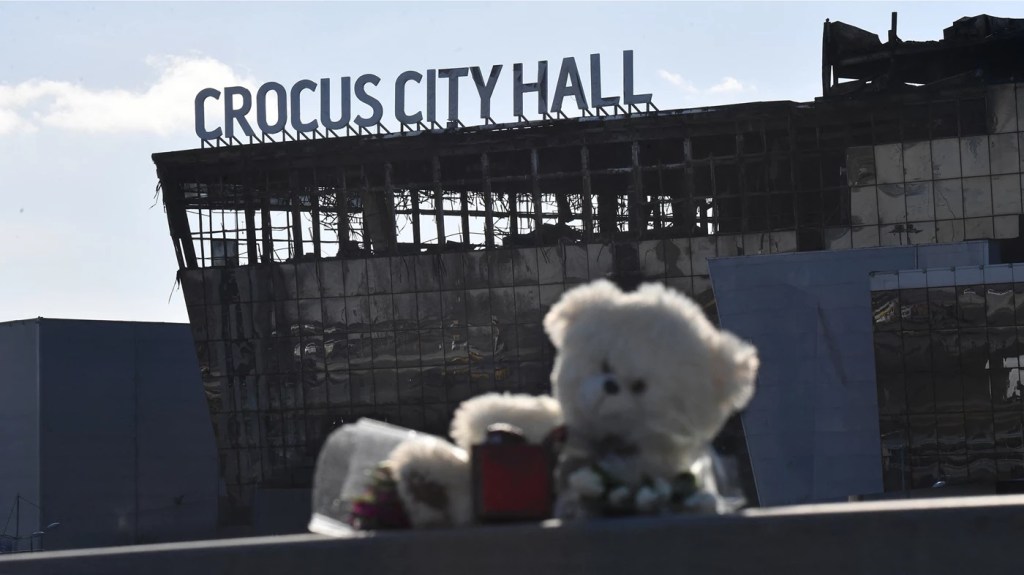
The attack on Friday that killed at least 137 people at the 6,200-seat Crocus City Hall was claimed by the ISIS affiliate in Afghanistan’s Khorasan Province (ISIS-K), which seeks an Islamic caliphate in Central Asia. Its statement emphasized it was targeting Christians and came in the “natural framework” of its war against the enemies of Islam.

Earlier this month, the US embassy in Moscow had issued a warning to avoid large gatherings. American officials stated they shared their intelligence with Russia. On March 7, Russia said it thwarted an attack on a synagogue, and a few days prior, security services killed six ISIS-K terrorists during a shootout in the nation’s Muslim Caucasus region.

The group was also linked to the 2017 St. Petersburg metro bombing that killed 15.

ISIS-K was formed by extremists seeking a more violent path than the Pakistani Taliban in 2015, the same year Russia formally intervened in Syria to support President Bashar al-Assad. A Sunni group, ISIS and its affiliates oppose Assad’s Alawite faith as heretical and considers Shiite Muslims as apostate.

In January, ISIS-K killed 95 Iranians in Kerman at a memorial service for Qasem Soleimani, leader of the Islamic Revolutionary Guard Corps who was assassinated by the US in 2020. And as American forces withdrew from Afghanistan in 2021, an ISIS-K attack on the Kabul airport killed 13 US soldiers and 170 civilians.

Analysts stated, however, that ISIS-K was increasingly targeting Russia.

Russia has arrested 11 suspects, with four alleged gunmen from Tajikistan now on trial.

But President Vladimir Putin, reelected March 17 with 88 percent of a vote Western observers declared was neither free nor fair, did not mention Islamic terrorism when he declared a national day of mourning. Official statements of blame have been vague, while the deputy head of Russia’s security council openly speculated that if Ukraine was involved, its leaders “must be tracked down and killed without mercy.”

“Are you sure it’s ISIS?” asked Russia’s foreign ministry spokesperson, suggesting the group was being used as a “bogeyman.” The Russian ambassador to the US denied receiving any advance information from the US. And a nationalist media outlet urged the Kremlin to give Ukrainians 48 hours to evacuate major cities.

Just a few hours prior to the concert hall massacre, in a wide barrage against Ukraine’s civilian infrastructure, Russia had targeted its largest hydroelectric dam, leaving more than one million people without electricity.

Ukraine has denied any involvement in the terrorist attack.

Its military intelligence spokesperson, however, suggested instead that it was a “deliberate act of provocation” by Putin, while President Volodymyr Zelensky stated it was typical of such “thugs” to divert blame. He also alluded to unproven accusations that terrorist attacks in 1999 were a false flag operation, and that Putin considered his own citizens to be “expendables.”

The US stated that ISIS-K alone carried out the attack, with Ukraine uninvolved.

Russian evangelical sources did not comment on the mutual accusations. They emphasized the outpouring of prayer, sympathy for victims, and the need to trust God and resist any urge for revenge.

“Evil is spreading across the earth,” said Alexey Markevich, vice rector for academic affairs for Moscow Theological Seminary, who has criticized the war in Ukraine. “Lord, give us peace, and prevent any of us from being consumed by evil.”

Christians4Peace, an anonymous…

This article was originally published at Christianity Today, on March 25, 2024. Please click here to read the full text.

Categories
Christianity Today Europe Published Articles

Tucker Carlson’s Putin Interview Explains Less Than Ukraine’s Evangelicals

Image: Gavriil Grigorov / Pool / AFP / Getty Images

Tucker Carlson is reviving American interest in Ukraine.

Approaching two years since the Russian invasion on February 24, 2022, the Slavic conflict has been eclipsed by the Israel-Hamas war in Gaza in the forefront of US media attention.

Many Americans, however sympathetic they remain, have tired of foreign wars in lieu of pressing domestic issues at home. Others, however, see continued US support for Ukraine as a low-cost check on Russian imperial ambitions.

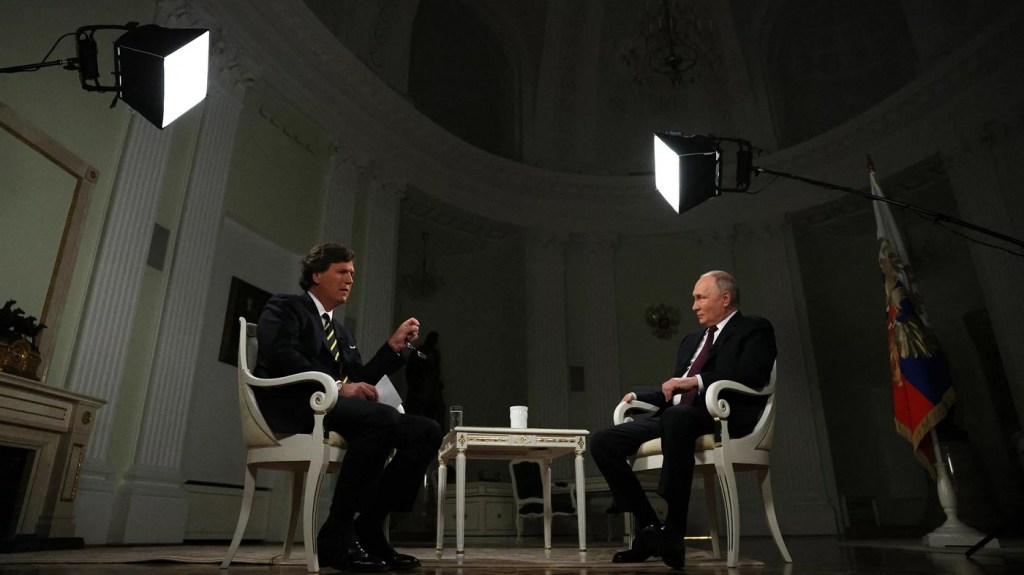
Carlson, the controversial pundit, is presenting the views of Vladimir Putin.

While many American outlets have requested an interview with the Russian president, Carlson was granted the interview as his perspective “is in no way pro-Russian, it is not pro-Ukrainian,” stated the Kremlin spokesman. “It is pro-American, but at least it contrasts with the position of the traditional Anglo-Saxon media.”

Carlson said it would allow viewers to see the “truth” obscured by Western reporting.

Christianity Today invited Ukrainian evangelical sources to comment on any religious remarks conveyed. Seven stated they had no intention to watch what one called a “propagandist” in conversation with “the killer of my people.”

Putin gave them little to work with during the two-hour interview.

He described of the coming of Christianity to Eastern Europe within a nearly uninterrupted half hour answer detailing Russian history, during which he called Ukraine an “artificial state.” Pressed how as a professing Christian he could order violence, Putin spoke only of Russia’s “moral values.” And probing Putin’s personal faith, Carlson asked him if he saw God at work in the world.

“No, to be honest,” the Russian president replied, after a pause. “I don’t think so.”

Christianity Today has provided extensive coverage of the Russia-Ukraine war, including descriptions of the polarized American public, Russian-American pastors combating propaganda, and advice for interpreting misinformation no matter the source.

To understand any conflict requires knowledge of its background. CT has published articles about how Christianity came to Ukraine and Russia, the 160-year spiritual history behind today’s divide, and why Ukraine calls upon Michael the archangel. Concerning more contemporary pre-war history, CT covered Ukrainian politics and the efforts of evangelicals to win influence, in addition to the tomos of autocephaly that gave ecclesial independence to one-half of Ukraine’s Orthodox church.

But while Ukrainian sources declined to engage Carlson’s effort to understand the war through the rhetoric of Putin, they have informed most of CT’s ongoing coverage.

As Russia marshaled troops on the border, two articles provided Ukrainian evangelical perspective while waiting in limbo. And after the invasion, two more described the reaction of Christian leaders to their new wartime reality. As the previous Mennonite-inspired pacifism of Ukraine was pushed aside in defense of the homeland, reporting also provided the response of the foreign missionary community. Subsequent articles described ways in which concerned Christians can help.

An immediate need was…

This article was originally published at Christianity Today on February 9, 2024. Please click here to read the full text.

Categories
Christianity Today Europe Published Articles

Russia Restricts Churches in Ukraine. Divided Orthodox Critique Both.

Image: Photo courtesy of Mission Eurasia

Religious freedom is under threat in Ukraine. Some question by whom?

A Ukrainian delegation to last week’s International Religious Freedom Summit in Washington, DC, had a clear answer: Russia. Led by Sergey Rakhuba, president of Mission Eurasia, it presented “Faith Under Fire,” a December report detailing the crimes of war in eastern Ukraine and elsewhere.

“Faith communities are under incredible pressure in occupied territories,” he told CT. “The ideology of the Russian world is to completely monopolize religion.”

International lawyer Robert Amsterdam, however, warned that Ukraine was attempting the same control over one half of its divided Orthodox church.

Initial legislation passed by the Ukrainian parliament in October, he said, threatened to “ban” the historic Ukrainian Orthodox Church (UOC), the branch canonically linked to the Russian Orthodox Church (ROC) patriarchate in Moscow. In response, Amsterdam sent a 25-page dossier to the US, UK, and European Union heads of state on the UOC’s behalf.

“There is now a very serious question mark over whether Ukraine can meet its commitments to human rights and the rule of law,” the dossier stated. “This will have dire ramifications for Ukraine’s entry into the European Union and its place in the Western world.”

The authors of both reports share a common enemy.

Mykhailo Brytsyn, the lead author of the Mission Eurasia report, is a Ukrainian pastor who was previously arrested by the Russians during a worship service in Melitopol, occupied by Russia since March 2022. He was later exiled, and the army seized his church and turned it into a military base. Amsterdam, a Canadian lawyer with offices in DC and London, was also previously arrested in Moscow for defending Russian dissidents and subsequently banned from the country.

The United Nations is monitoring both Russia and Ukraine.

At a November meeting of the body’s security council, the UN assistant secretary general for human rights noted the yet-to-be finalized law in Ukraine and chided the country for failing to properly investigate 10 documented cases of violence at houses of worship, instigated by the Orthodox Church of Ukraine (OCU) against the Moscow-linked UOC.

The OCU was granted autocephaly—national independence—by Ecumenical Patriarch Bartholomew I of Constantinople in 2019, supported by the United States under the principle of religious freedom. But the move was rejected by the ROC, which continued in ecclesial jurisdiction over the UOC.

The UN official, Ilze Brands Kehris, continued her testimony to state that Russia is violating international norms by applying its own law in occupied territory, detailing restrictions on minority believers.

Rakhuba noted that there are many such restrictions.

“This war is not just territorial, it is ideological,” he said. “Religious freedom is missing from Russian terminology.”

Citing a concept called Russki Miir—“Russian World”—Rakhuba, a Ukrainian who previously worked with the Union of Evangelical Christian Baptists in the Soviet Union, contended that the ROC works hand-in-hand with the Kremlin to marginalize other Christian denominations. Since the invasion, the Russian military authority in the occupied Donbas region has steadily replicated that formula.

Rakhuba described three phases. In the first, from the January 2022 invasion until April of that year, the Russian army…

This article was originally published at Christianity Today on February 6, 2024. Please click here to read the full text.

Categories
Christianity Today Europe Published Articles

Ukraine’s Top 10 Bible Verses of 2023

Image: Dmytro Larin / Global Images Ukraine / Getty Images

Perennial favorite John 3:16 may have nothing to do with the war against Russia.

Isaiah 41:10 speaks more clearly to times of conflict—though it boasts a leading position in many other nations as well.

But missing from the top 10 list in Ukraine—and no other nation highlighted by YouVersion—is Jeremiah 29:11: “‘For I know the plans I have for you,’ declares the Lord, ‘plans to prosper you and not to harm you, plans to give you hope and a future.’”

Evangelical leaders shared their reflections on why millions of citizens in the Orthodox majority country may have found inspiration in the top 10 verses, not others, and suggest personal favorites that shed light on life in a war-torn nation:

Igor Bandura, vice president of the Baptist Union of Ukraine:

The results released by YouVersion are informative, inspiring, and challenging. My heart cries out in unison with all of them, as they reflect God’s love as the source of life within our deep search for meaning under the pressure of war. It is no wonder that John 3:16 ranks first, giving comfort against the power of darkness in the midst of loss, suffering, and simple exhaustion.

The Bible remains our most powerful source of encouragement, wisdom, and strength.

Perhaps Jeremiah 29:11 is left out because while God plans not to harm us, Russia does—and the imaginable near-term consequences keep Ukrainians from contemplating an unimaginable future. Certainly, this is a challenge for faith. But mine has been strengthened through a different unlisted inspiring verse in Zechariah 9:12: “Return to your fortress, you prisoners of hope; even now I announce that I will restore twice as much to you.”

There are two possible interpretations. First, that despite being prisoners of our overwhelming circumstances, there is still hope available to us. And second, that God’s hope has made us prisoners, and that we cannot live any other way. Both are true—and we await the “double” that God has promised.

Maxym Oliferovski, a Mennonite Brethren pastor and project leader for Multiply Ukraine, Zaporizhzhia:

That these 10 Bible verses have been shared the most in Ukraine does not surprise me at all. The first five focus on love, protection, and strength, communicating God’s care for us during the many hardships caused by the invasion. Most meaningful to me has been 1 Peter 5:7, “Cast all your anxiety on him because he cares for you,” because I tend to live in the future. But in the uncertainty of war, even short-term plans become impossible. God then reminds me I must rest in him, greatly decreasing my worry and stress.

The second five verses, taken together, strike me as a prayer for faith, holiness, and bravery. It is so easy to lose focus and get depressed. Certainly, we need healing, which comes through his Word.

But we also realize that…

This article was originally published at Christianity Today, on December 22, 2023. Please click here to read the full text.

Categories
Christianity Today Europe Published Articles

Ukraine Passes Law to Ban Russia-Linked Orthodox Church

Image: UNESCO Heritage / iStock / Getty Images

Ukraine’s parliament overwhelmingly passed a preliminary vote last Thursday for a bill that could ban the Ukrainian Orthodox Church, which has close ties to the Russian Orthodox Church, from operating within Ukraine’s borders.

Law 8371 would give Ukrainian authorities power to examine the connection of religious groups in Ukraine to the Russian Federation and to ban those whose leadership is outside of Ukraine. The draft law, approved by a tally of 267–15, with two abstentions, still needs to undergo a second vote, where it may be amended. It would then move to President Volodymyr Zelensky for his approval before it becomes law.

Since the outbreak of full-scale war between Russia and Ukraine, Russian Orthodox priests in Ukraine and around the world have faced accusations of spying and otherwise working to advance Russia’s political interests. Moscow’s Patriarch Kirill, a close ally of the Putin regime, has provided religious justification for the conflict in sermons and public appearances.

“The Russian Orthodox Church’s connection to the Russian Special Services has a very long history,” Oleksandr Kyrylenko, a scholar of religion and Orthodox Christianity in Ukraine, told Religion News Service.

Last month, Bulgaria expelled three of the highest-ranking Russian Orthodox priests in the country. At the same time, the FBI warned Orthodox communities in the US that Russian intelligence services may be using their churches to recruit assets.

Since the 10th century, Russian and Ukrainian Orthodox Christians had been part of one church. The Moscow Patriarchate itself began as the Metropolis of Kiev and all Rus, the people who formed the first Russian nation.

The relationship between the Russian church and Ukrainian Orthodox Christians began to sour almost a decade ago after Russia’s support for separatist insurgents in Ukraine’s eastern Donbas region and Russia’s occupation of Crimea in 2014. In 2019, the Ecumenical Patriarch of Constantinople, considered “first among equals” in the Orthodox Christian world and a customary mediator among its many patriarchates, granted…

This article was originally published by Christianity Today, on October 23, 2023, with original reporting by RNS. Please click here to read the full text.
Categories
Christianity Today Europe Published Articles

Russian Evangelicals React to Moscow’s Most Wanted Baptist

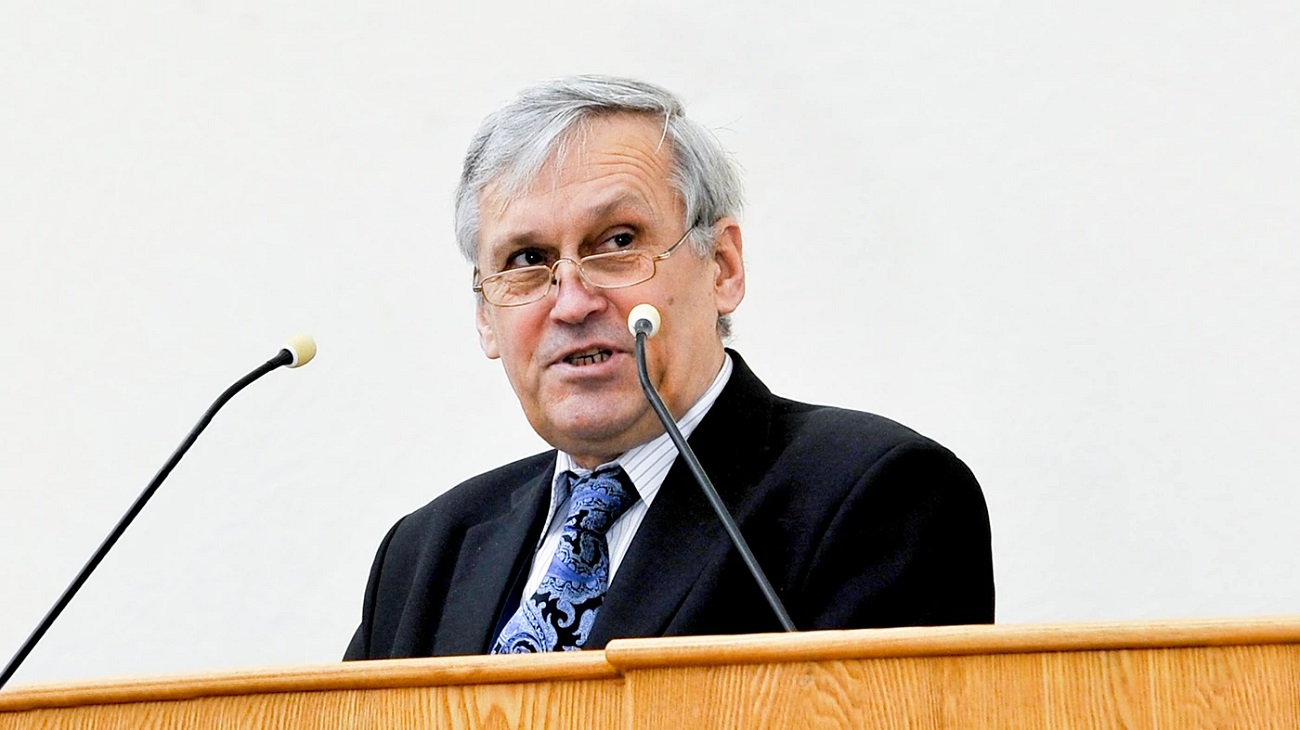
Yuri Sipko is the first to fall.

The 71-year-old former president of the Russian Union of Evangelical Christians-Baptists has been one of the few Russian religious leaders to publicly denounce the war in Ukraine. Although secular activists and a few Orthodox priests have been imprisoned for similar opposition, until last month no evangelicals had been targeted.

But on August 8, authorities filed charges against Sipko for publicly disseminating “knowingly false information” against the Russian military. They raided his home and temporarily detained his son. One week later, he was placed on the wanted list.

Tipped off by independent legal monitors, he fled the country on August 5.

“The sun is shining, and I have been provided for,” Sipko told CT in an interview from his refuge in Germany. “Praise the Lord there have been no problems, and policemen are far away from me.”

Waxing poetic, he hoped that the aspiration of Aleksandr Pushkin, the 19th-century Russian bard, might one day be fulfilled:

The heavy-hanging chains will fall,
The walls will crumble at a word;
And Freedom greet you in the light,
And brothers give you back the sword.

Sipko attributes his courage to God. His anti-war activism is inspired by Matthew 10:28, which says to not fear those who can only kill the body. As both a minister of the Word and a citizen of Russia, he feels it was his duty to reveal criminality.

But having long anticipated his arrest, he insists he is not guilty.

“This is a lawless law imposed by a lawless regime, against lawful people,” said Sipko. “The crime is the destruction of Ukraine. Silence, also, is a crime.”

With these words, he impugns nearly all of his evangelical colleagues. In Sipko’s view, they have not only betrayed their Ukrainian brothers and sisters, but in submitting to the Russian authorities, they have betrayed the kingdom of God. Their silence, he said, is shameful. Upon news of the charges against Sipko, Russian Baptist leadership

This article was originally published at Christianity Today, on September 13, 2023. Please click here to read the full text.

Categories
Christianity Today Europe Published Articles

Train Up a Child: Ukraine’s Christian Schools Model Wartime Education

Image: Christopher Furlong / Staff / Getty

As air raid sirens blared down the hallways, Tetiana Garkun hurried her middle school students outside the My Horizons Christian School campus into the designated bomb shelter.

Located in Khmelnytsky, 200 miles southwest of Kyiv, Ukraine’s capital, the school’s children moved in orderly fashion—a sign of how accustomed they’ve become to Russian missiles targeting military installations in nearby Lviv.

They prayed, waited for the all-clear signal, and returned to their Bible class.

Garkun’s own children, daughters aged 16 and 17, were similarly composed. Confident high schoolers who only a few years earlier were sharing their faith in Ukraine’s secular education system, they follow after their great-grandfather, a Pentecostal pastor sentenced to death by magistrates in the Soviet Union.

Times have changed, as have education authorities.

“The government encourages us to teach our students how to be Christians and live godly lives,” said Garkun. “They see that we are needed in these horrible days.”

She had earlier led the students in a discussion prompted by the official state health education curriculum: What helps us live a long life?

Model answers included a good diet, avoiding smoking, and participation in sports. But amid war, these answers no longer apply, she said, and even her prepared integration of Christian material hardly satisfied her own soul. In years past, she recited Ecclesiastes 7:17: “Do not be overwicked, and do not be a fool—why die before your time?”

However, she pondered, what about when the righteous are killed by Russian evil?

“When we follow God’s rules and truth, we lead happier and healthier lives,” Garkun said. “But I am honest. I have doubts. And I let the children know it is okay—we can be sincere with God.”

Daily devotions, regular chapel, and close-knit relations have helped sustain a teaching staff struggling to manage massive disruptions to work and family life. Garkun said her best friend, an Orthodox Ukrainian, has grown deeper in her faith since she joined the Christian school. But across the nation, 54 percent of teachers…

This article was originally published at Christianity Today, on June 22, 2023. Please click here to read the full text.
Categories
Christianity Today Europe Published Articles

Ukrainian Refugees Find Christian Welcome—in Russia

Image: Anadolu Agency / Contributor / Getty

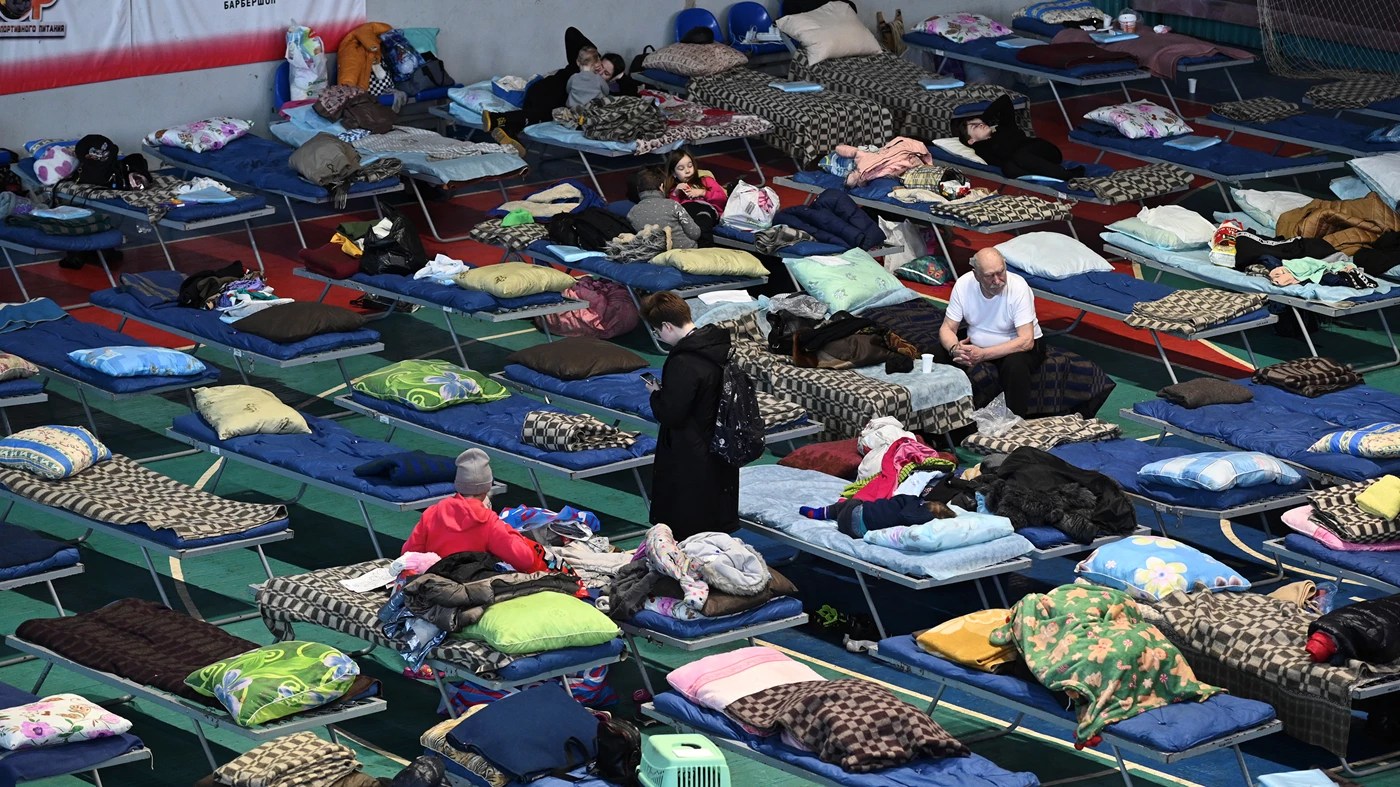
Disoriented and disheveled, the elderly Ukrainian woman stayed put in her seat. After several hours in a Temporary Accommodation Center (TAC) in Taganrog, Russia, 70 miles east of her month-long basement shelter in Mariupol, Ukraine, officials encouraged her to get on the bus—to somewhere else.

Earlier that day, she had been discovered by Russian soldiers and ushered through a humanitarian corridor to the first processing location east of Mariupol. From there she was dispatched to one of 800 such sites established throughout Russia, which are located anywhere from nearby Rostov to Moscow to Vladivostok on the Pacific coast.

Official papers registered her for temporary residency in Russia and access to its medical system. She was given a warm meal, new clothes, $142 in rubles, and a SIM card—though not a mobile phone. She could apply for citizenship if she desired.

All she wanted was to die.

Grandma, where are you going? Is someone coming to meet you?

No one is coming. Nobody wants me.

You have to go to a shelter. You can’t stay here.

I don’t want to live any longer. I wish I had died in the shelling.

Where are your children, or grandchildren?

I don’t know. They left. I can’t find them.

Government employees had done their duty. But after this exchange, a Russian evangelical volunteer sprang into action. After a few phone calls, she placed the woman with a local church family. The next day, she located the granddaughter.

“When we are genuinely involved in their lives, they see the love of Christ,” said Tanya Ivanenko. “They hug us, kiss us, and remember our names. Against the backdrop of war, we give them a little hope.”

Ivanenko did not provide the care, but she shared the grandmother’s story last year on a Russian evangelical church’s refugee coordination channel on Telegram, the region’s popular messaging app. The communication was verified by Pavel Kolesnikov, former co-chair of the advisory council for the heads of Protestant churches in Russia.

The council oversees relief, including over $3 million donated by affiliated unions, he said, impacting 200,000 Ukrainian refugees.

“The church in the West needs to know we are helping also,” he said. “The effort in Eastern Europe is more visible, but we are doing what we can.”

Since the war began, over 14 million Ukrainians have been displaced from their homes, with 8.2 million escaping abroad. The great majority of them have fled west, with Poland recording 1.6 million refugees and Germany 1 million. Through February, the United States has accepted more than 270,000.

But nearly 2.8 million have gone to Russia. Why would they flee into the arms of their enemy? It may not have been…

This article was originally published at Christianity Today, on June 21, 2023. Please click here to read the full text.

Categories
Christianity Today Europe Published Articles

Baptism by Flood: Kherson Christians Persevere After Ukraine Dam’s Destruction

Image: Felipe Dana / AP Images / Edits by CT

For eight months, the Ukrainian city of Kherson endured Russian occupation.

Now—along with at least seven churches—it is underwater.

Experts estimate that the collapse of the Nova Kakhovka dam, 44 miles upstream, released an amount of water equal to the Great Salt Lake. A new wave of evacuations is underway in southern Ukraine, with 25,000 people in Russian-controlled areas and 17,000 in Ukrainian-held territory advised to leave.

An estimated 2,000 houses have been flooded, with 16,000 people made homeless. A lack of drinking water, electricity shortages, and floating land mines have contributed to the humanitarian and ecological disaster.

The dam’s reservoir contributed 2,600 tons of fish to the local economy. Wheat prices have spiked, as 94 percent of Kherson’s irrigation system has lost its supply. And 150 tons of machine oil have been carried toward the Black Sea.

But that is just the physical damage.

Tavriski Christian Institute (TCI) in Kherson is a spiritual casualty. Liberated from Russian occupation last November, the seminary’s riverside properties suffered a new blow with the deluge. Early in the war, TCI president Valentin Siniy evacuated west with his wife, two children, and much of the student body. Today he continues education from Ivano-Frankivsk as he oversees relief efforts over 500 miles away.

CT spoke with Siniy about the state of the seminary campus, the emotional impact of the flood, and the rising challenges to faith that have led to newfound spiritual insights:

What is the situation with your seminary?

When the Russian military descended upon our cherished seminary, it was an emblem of knowledge and spiritual growth. They stripped it of its essence. Equipment from our printing shop vanished, books were burned, and I would say their very presence desecrated our sacred space.

A friend later retrieved one of my favorite pictures: an image of Jesus’ crucified feet.

But even after liberation, Russian missiles destroyed our buildings and sniper fire kept people away. I visited several times, but it was too dangerous to remain. Our once-vibrant campus, composed of five buildings, lay in ruins, mirroring the devastation that ravaged our nation.

And just when we thought we had faced the worst, the catastrophic flooding submerged our greenhouse farm. It had been a source of sustenance and support for our students and area residents—even as it remained in occupied territory on the east bank of the Dnipro River.

Now that the waters are slowly receding, our manager—also a local pastor—tells us that much can be repaired. But he has been threatened by the Russians, who also killed a pregnant volunteer woman while they confiscated the boats of those assisting others.

The Russian government is godless and immoral; it simply destroys people.

How have evangelicals been able to help?

There is a lot of dirt and debris floating about. Cemeteries and cesspools have been flooded; viruses and diseases are spreading. Our volunteers are helping on the liberated west bank, and we have delivered ten pumps with another ten on their way. Unfortunately, most of the damage has been in Russian-controlled areas.

Through the…

This article was originally published at Christianity Today, on June 12, 2023. Please click here to read the full text.
Categories
Christianity Today Europe Published Articles

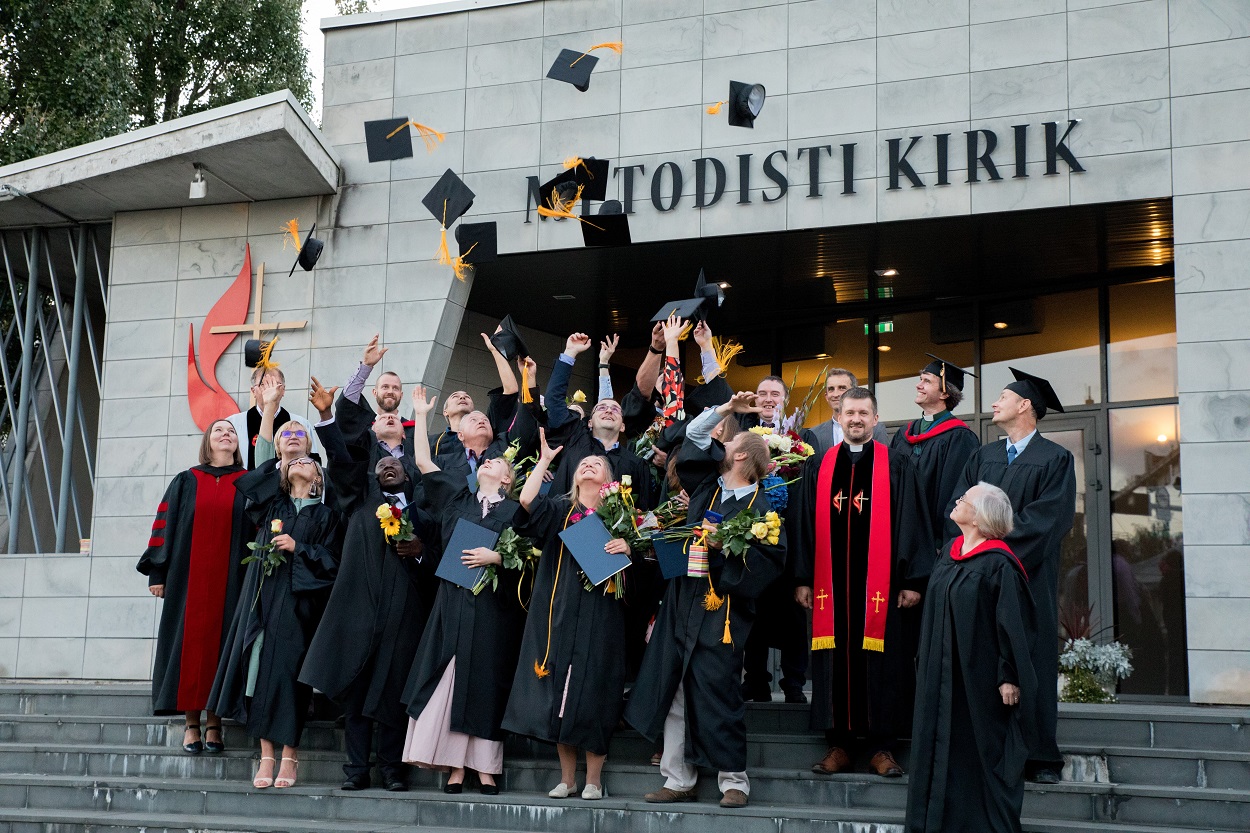
Estonia Seminary Unites War-Weary Russians and Ukrainians in Christ

Credit: Marina Kisseljova

Since Russia’s invasion of Ukraine last year, few European institutions have welcomed both Slavic foes. A rare example is found right on the border, in a nation that wonders if it might be next.

Estonia, the northernmost of three small former Soviet republics on the Baltic Sea, immediately rallied in support of Ukraine. Given that Russia’s aggression began on February 24—coinciding with Estonia’s date of independence, first proclaimed in 1918—some wondered if it was a deliberate message.

The initial blitzkrieg toward Kyiv reminded Estonians of the Soviet occupation of the 1940s. Politicians donned blue and yellow ribbons; military brass sent weapons and aid. Citizens, including the 1 in 4 with Russian ethnicity, reacted to the atrocities in horror.

But as many universities closed their doors to students from Russia and allied Belarus, one evangelical institution bucked the trend. Baltic Methodist Theological Seminary (BMTS)—fully united with the national stance condemning the war—insisted instead on the unity of Christ.

“We did not hang a Ukrainian flag, but held a joint prayer of lament,” said Külli Tõniste, BMTS president. “Preservation of community is more important than an outward show of patriotism.”

Founded in 1994 and accredited by the state, the Methodist seminary hosts students from neighboring Latvia, nearby Finland, the United States, Israel, Nigeria, and Ghana. But it was the caldron of Russians, Belarusians, and Ukrainians—43 percent of the student body—that could have proved to be a tinderbox.

Yet sensing confusion and insecurity among many, Tõniste—an Asbury Theological Seminary alumna with a PhD from the London School of Theology—assured all students that her door was open to hear their stories. The Ukrainian refugee from Mariupol. The Estonian whose grandfather was killed by the Soviets. And the Russian of mixed family with Ukrainians who doesn’t know what to believe.

“Once admitted,” she said, “our students are safe with us.”

One example is Philip Kharchenko, a first-year student from Russian ally Belarus. A physical education teacher back home, he was “shocked” at the invasion—as initially all his colleagues were as well. But as his school and nation rallied behind Moscow, he felt increasingly uncomfortable.

Having long felt called to ministry, he found a home in Estonia.

“I thought they wouldn’t let me in,” he said. “But I am glad to be here, surrounded by people studying the Bible—it opens up a whole new experience of God.”

He has made quick friends with Russians and Ukrainians alike, comparing similar words in each of their languages. And at the annual Christmas celebration—which raised $1,600 for sister seminaries under fire—he watched in admiration as other Russian and Belarusian students included a Ukrainian-language song among their multi-language holiday medley.

Then all joined in an African-led dance.

“In the non-Christian world, I see great separation between peoples,” said Kharchenko. “But at seminary, our borders just dissolve.”

Two months later, it took administrative resolve to ensure this.

Simultaneous translation into Estonian, Russian, and English permits not only a diverse student body but also a diverse faculty. But as the one-year anniversary of the war approached, a visiting professor from Moscow—over Zoom—began to talk politics. Among his complaints was…

This article was originally published at Christianity Today, on May 9, 2023. Please click here to read the full text.

Categories
Christianity Today Europe Published Articles

Russian Christians Make Theological Case for Peace

Image: John Moore / Getty Images

On an Advent Sunday in a small Protestant church in St. Petersburg, a Russian pastor nervously approached the pulpit. While his senior leadership was publicly neutral about the war, he was about to preach from the Sermon on the Mount against the invasion of Ukraine.

And in the pews before him was another potential land mine.

A congregant had been bringing along a childhood friend, who happened to be a Wagner Group mercenary. Wounded during combat for Russia’s private paramilitary company, the man was not there to spy. Yet while the pastor knew his close-knit congregation well, he could not predict the fallout from his message.

Relations remained good with the pastor’s mentor afterward, while the mercenary recovered and returned to the front lines. For now, the pastor has been left free to continue in ministry and—whether known to the intelligence services or not—in clandestine theological work against the war.

“Of course, we could go out and protest, but this would get you in jail,” he said, requesting anonymity. “For us, the most effective means are to work within your spheres of influence—and ours are very small.”

Over the course of the yearlong conflict, only a tiny minority of Russian Christian leaders have voiced complaint publicly. The response from authorities has been uneven: Minor church figures have been fined or jailed, while others continue to use their names on social media.

But no major denomination in Russia has condemned the war outright.

The St. Petersburg pastor, along with about 25 of his scattered multifaith colleagues, desired to confront their silence at the biblical source. Christianity Today spoke with three of them, on condition of anonymity, for insight into the antiwar movement.

The group released its declaration to “all Christians of Russia” in advance of Christmas.

“We are terrified by the fact that many church officials and theologians … are distorting the truth of the Holy Scriptures,” the Russian Christians stated via their Christians4Peace website and Telegram channel. “[But] we are convinced that participation in this war—on the side of the aggressor—is unacceptable for any Christian.”

The provided Russian and Ukrainian downloads of the declaration include an appendix with an extended theological treatise. Last summer, the pastor and a few like-minded friends began a study group on…

This article was originally published at Christianity Today on March 17, 2023. Please click here to read the full text.
Categories
Christianity Today Europe Middle East Published Articles

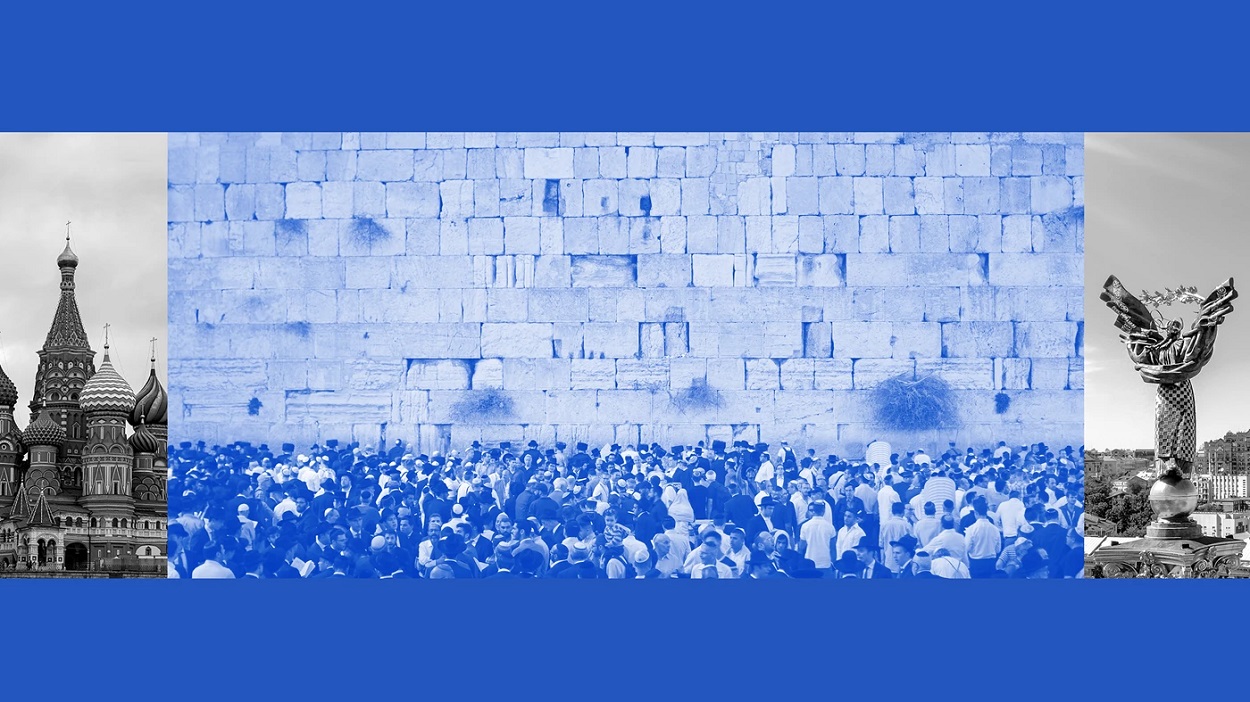
Should Messianic Jews Return to Israel from Russia and Ukraine?

Image: Illustration by Christianity Today / Source Image: Pexels / Unsplash

Jews should leave Russia if they can.

The stark warning was issued by Pinchas Goldschmidt, the former chief rabbi of Moscow, as 2022 came to a close. After 30 years in office, he left two weeks after the invasion of Ukraine and later revealed the Kremlin pressured him to support the war—“or else.”

A student of history, he fears Jews will again become scapegoats as the government tries to “redirect the anger and discontent of the masses.”

The resulting question: Where does God want them to go?

Goldschmidt, currently in Israel, has been joined by 41,813 Russian Jewish immigrants since the war began a year ago, according to recent data released by the Knesset. Another 90,000 arrived without immigrant status. Israel’s immigration minister stated 600,000 Russians are currently eligible.

But according to its 2010 census, Russia has only 156,000 Jews.

The discrepancy comes from the concept of aliyah—the Hebrew word for “ascent”—in which Israel grants automatic citizenship to anyone who has at least one Jewish grandparent and has not converted to another religion. A controversial coalition deal in the new government includes revising the Law of Return to ensure these olim (immigrants) qualify under religious law—and thus reduce intermarriage. Over 70 percent of last year’s war-induced immigrants are not considered Jewish per Orthodox law, stated the Aliyah and Integration minister.

In many cases, Messianic Jews have been disqualified, and their status is disputed. But last September, the seventh World Conference of Russian-Speaking Messianic Leaders overwhelmingly declared the return to Zion to be a “blessing.”

The only dispute was whether it is also a commandment.

Russian Jews are not the only aspirants. The Knesset stated 13,490 Ukrainian Jews have also immigrated to Israel, as “Operation Homecoming” opened 18 aid centers in Ukraine and neighboring countries. An additional 1,990 Jews immigrated from Belarus.

A 2020 study identified 43,000 Jews in Ukraine—making it one of Europe’s largest Jewish communities—though those eligible to make aliyah could be as high as 200,000.

An estimated 5,000 worship Jesus as Messiah.

Of these, about 1,000 have gone to Germany, where they doubled the local community.

“Aliyah is a certain type of coming home—to the land that belongs to us,” said Vladimir Pikman, executive director of Beit Sar Shalom. “But I don’t see a direct commandment to go to Israel.”

Centered in Berlin, his is the largest Messianic Jewish organization in Europe. Its Hebrew name translates to “House of the Prince of Peace,” and has been a refuge to Ukrainian Jew and Gentile alike, providing translation, logistical help, and trauma care counseling. Of the Jews, believers in Jesus included, they took…

This article was originally published at Christianity Today, on March 7, 2023. Please click here to read the full text.
Categories
Christianity Today Europe Published Articles

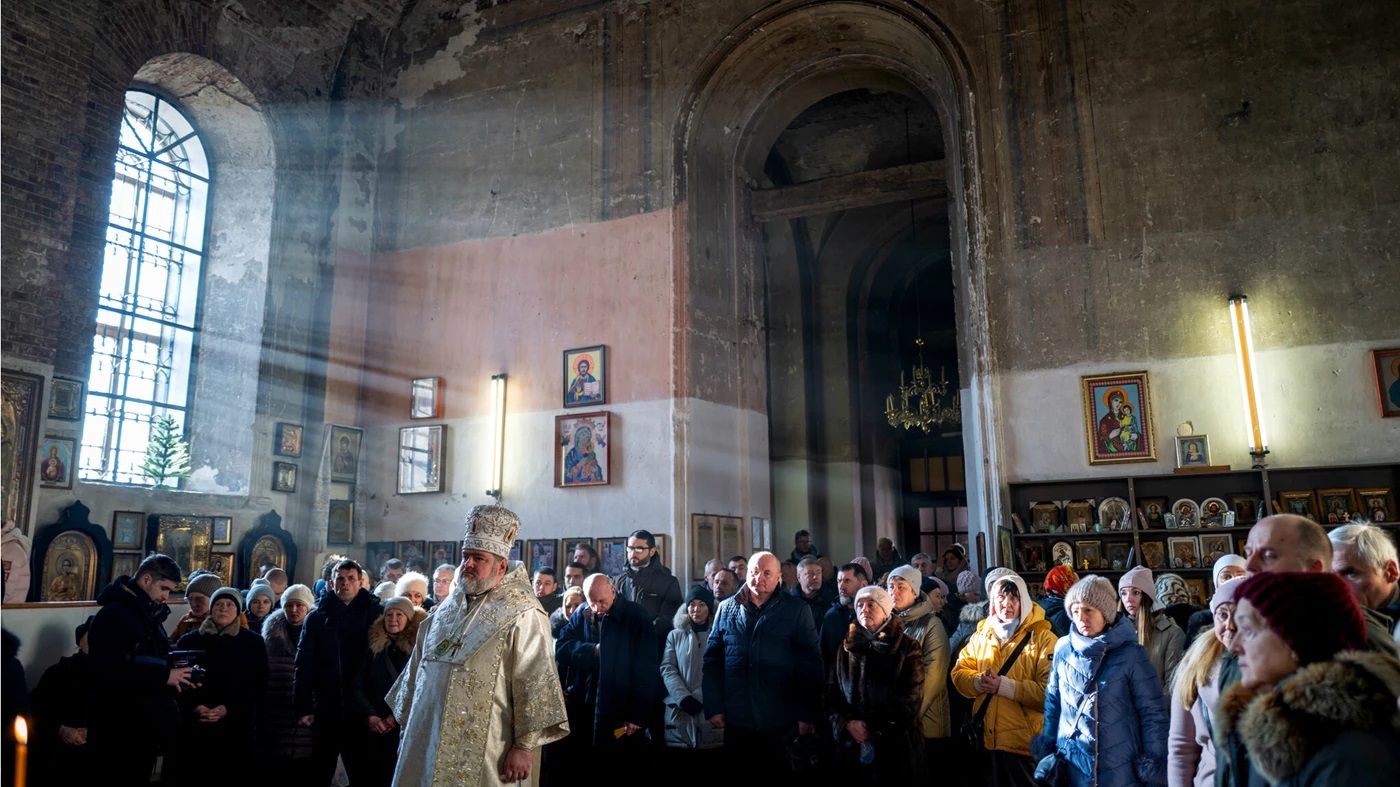
Christmas Epiphanies from the Ruins of Ukraine

Image: Spencer Platt / Getty Images

In advance of Putin’s unilateral declaration of a 36-hour truce over Orthodox Christmas today, Ukrainian seminary leaders shared their reflections on the impact of ten months of unabated conflict.

“War is exhausting—but this exhaustion does not happen overnight,” wrote Roman Soloviy, director of the Eastern European Institute of Theology. “Nevertheless, our mission continues.”

Reviewing his own emotional response since Russia invaded Ukraine on February 24, Soloviy cited the impossible choices forced upon his nation: Save your family or your neighbors? Flee the country or stay and help?

He could not read, listen to music, or watch movies for many months.

The stress only surged as reports proliferated about atrocities, complicated by the frustration that Ukrainian churches could not help everyone. Decisions needed to be made in darkness, while seeking to balance one’s own psychological health.

A Kherson seminary, Tavriski Christian Institute (TCI), was occupied by Russian forces in March and liberated in November. President Valentin Siniy recounted the grim chronology:

January: Talks about the war. Doubts about invasion.
February: Team. Responsibility. Daily Zoom calls to pray.
March: Massacre. Inhumanity. Generosity: flour, sugar, potatoes, seeds.
April–May: Russians want to reconcile, without repentance. Families separated.
June–July: Marriages. Fragility of life. Losses. Divorces.
August: TCI shelled. Books trashed. Valuables looted. Vandalism.
September: New location. Big enrollment.
October: Infrastructure destroyed. Nation freezing. Unity. Mutual assistance.
November: Liberation. Joy. First trip home. Ruined city.

For his December entry, Siniy wrote: “Christmas is the coming of God into a mean world to mean people. We pray that the Lord will show us how and where to serve.”

Oleksandr Geychenko, meanwhile, chose a different theme for the holiday. Yet it fit perfectly with Siniy’s October observations.

“This year’s Christmas for me is closely associated with the metaphor of light,” wrote the president of Odessa Theological Seminary. “Perhaps, this is my reaction to the uncertain power supply.”

Patriarch Kirill of the Russian Orthodox Church (ROC) first suggested the holiday truce, while 1,000 US-based faith leaders called for Ukraine to honor it. Nonetheless there has been exchange of shelling along the front lines, and many Ukrainians dismissed Putin’s initiative as a cynical ploy to buy time for his retreating troops. (Foreign analysts instead saw a PR bid for Russian Christian backing.)

But despite the battlefield losses, last month Russia specifically targeted Ukraine’s electrical grid, repeatedly plunging cities and civilians into darkness and cold.

Geychenko had taken his electricity for granted. Now, he sees a spiritual connection. “The light that comes from Jesus not only shines into human darkness,” he wrote, “it also…

This article was originally published at Christianity Today, on January 7, 2023. Please click here to read the full text.

Categories
Christianity Today Europe Published Articles

Will Ukraine’s Threatened Ban on Russia-Linked Churches Violate Religious Freedom?

Image: Jeff J. Mitchell / Getty Images

Ukraine, a bastion of religious freedom, is moving to possibly outlaw a church.

President Volodymyr Zelensky began the month by endorsing a draft law to “make it impossible” for the Ukrainian Orthodox Church (UOC), canonically linked to Moscow, to operate. His December 1 decree followed raids on several monasteries under the UOC’s jurisdiction.

Security services searched over 350 buildings and investigated 850 people.

“We will ensure complete independence for our state. In particular, spiritual independence,” stated Zelensky. “We will never allow anyone to build an empire inside the Ukrainian soul.”

The reaction from Russia was swift—but also illustrated the issue.

“The current Ukrainian authorities have openly become enemies of Christ and the Orthodox faith,” stated Dmitry Medvedev, deputy chairman of the Russian Security Council.

Kremlin spokesman Dmitry Peskov, however, was more specific, accusing Ukraine of “waging a war on the Russian Orthodox Church” (ROC).

His comment prompted a UOC spokesman to assert his church is not Russian.

The raids—centered on the 11th-century Kyiv-Pechersk Lavra complex, known as the Monastery of the Caves—uncovered large amounts of cash, “dubious” Russian citizens, and leaflets calling on people to join the Russian army, according to Ukrainian authorities. Other material cited as evidence included prayer texts of ROC patriarch Kirill and a video of hymn singing that celebrated Russia’s “awakening.”

Kirill has publicly blessed Russia’s invasion of its neighboring nation, even promising forgiveness of sin to soldiers who die in the war. Security services also described finding UOC priests in possession of literature denying Ukraine’s right to exist and contacting Russian intelligence agents.

Sanctions were announced on at least 10 UOC members, including the governor of Kyiv-Pechersk Lavra, a UNESCO heritage site. Another, the archbishop of the Kirovohrad diocese, was accused of subversive activities.

Zelensky stated the government would examine the Lavra’s jurisdiction.

Since then, sanctions have followed on seven additional members, while the UOC stated that local authorities have issued over 70 orders to ban its activities.

In 2019, the newer Orthodox Church of Ukraine (OCU) was formed from a merger of two breakaway jurisdictions from the ROC, after which it was declared an autocephalous (independent) body by Ecumenical Patriarch Bartholomew I of Constantinople.

The new church was rejected by Moscow and accepted by Greece and other national churches, while some in the Orthodox world stayed neutral. The UOC, meanwhile, continued under the leadership of the Moscow patriarchate.

Russia’s invasion in February 2022, however, placed the UOC in a bind. Although it is the largest church in Ukraine with about 12,000 parishes, polls indicate it now receives the support of only 4 percent of the population. As a further sign of its decline in favor, only 13 percent of Ukrainian citizens of Russian ethnicity support the church.

In May, Metropolitan Onufriy, head of the UOC, declared its parishes were no longer subordinate to the ROC, though he maintained Eucharistic communion with Moscow. By then, 387 parishes had already transferred allegiance to the OCU.

Onufriy has consistently spoken out against the war, and last month he deposed three top bishops, two of whom fled to Russia. And following the raids he declared support to UOC chaplains in the Ukrainian army, while the Holy Synod—speaking from the Lavra—reiterated that the church “consistently stands for the preservation of the sovereignty, independence, and territorial integrity of Ukraine.”

After the draft law’s disclosure this month, Ukraine dismissed Elena Bogdan, state official for ethnopolitics and freedom of conscience, reportedly for her opposition to banning the UOC. She had previously confirmed Onufriy’s statement that the church was no longer governed by the ROC.

Zelensky’s decree tasked her office with the determination of UOC’s continuing ties with the Moscow Patriarchate. “Increasingly as the war grinds on and winter advances, the weaponization of religion will continue,” said Catherine Wanner, professor of history, anthropology, and religious studies at Penn State University. “All of these dynamics conspire to clamp down on…

This article was originally published at Christianity Today, on December 21, 2022. Please click here to read the full text.
Categories
Christianity Today Europe Published Articles

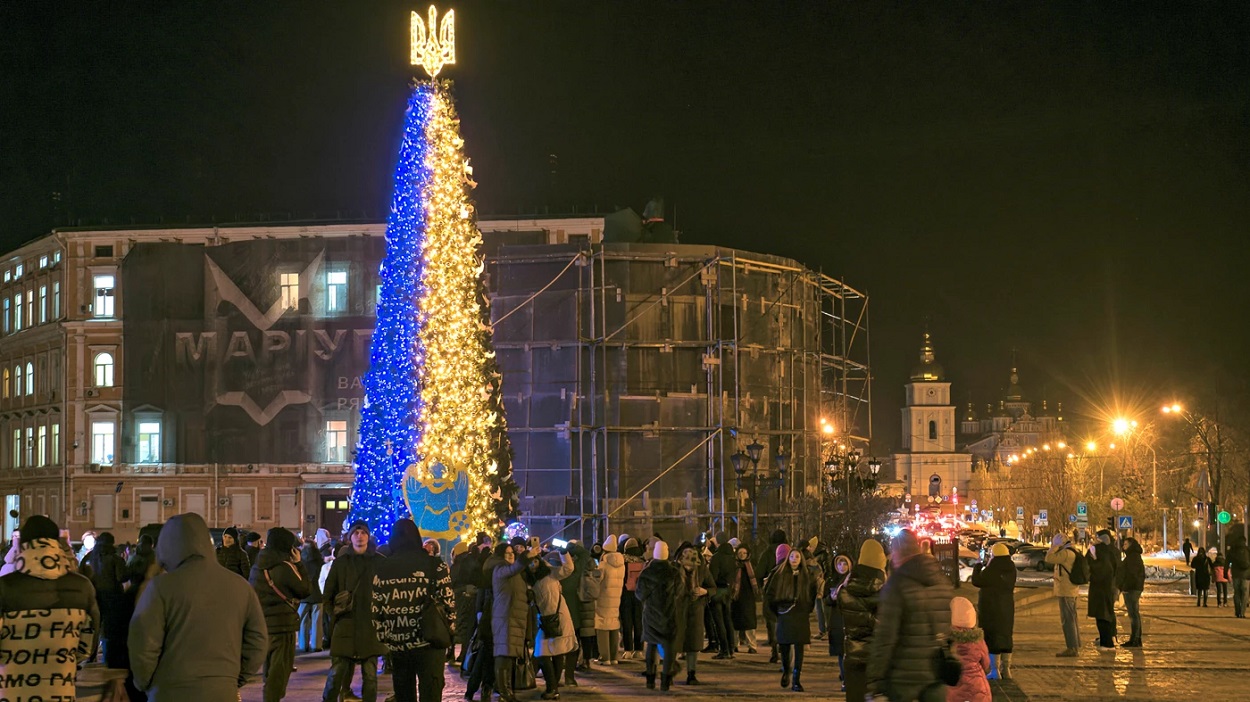
Ukraine Celebrates Christmas Twice. Now Its Orthodox Christians Can Too.

Image: Maxym Marusenko / NurPhoto / Getty Images

Thanks to Russia, Ukrainian Orthodox Christians may now partake in a Christmas feast on December 25.

The joyous, 12-dish celebration has been their timeless practice—on January 7, according to Eastern tradition. But this year, the Holy Synod of the Orthodox Church of Ukraine (OCU) has permitted its clergy to conduct religious services on the same date as Western tradition, granting a one-day exemption to the 40-day Nativity Fast.

Beginning after the feast day of St. Philip, observed by Ukrainian Orthodox on November 28, the faithful abstain from alcohol and most meat products until the first star appears on Christmas Eve, January 6. But with millions of refugees in Europe witnessing the revelry of fellow Christians in the West, the OCU decided to permit Ukrainians everywhere to decide parish by parish which date they would honor.

Liturgical reform has long been on the agenda, but war was the spark.

“For most bishops of the church, the calendar is not a dogmatic issue of faith,” said Archbishop Fedir, head of the youth department of the OCU. “Especially after the full-scale aggression of Russia, there is a desire to become part of the Western family of churches.”

Ukraine had already established December 25 as an additional official Christmas holiday in 2017, joining Belarus, Eritrea, Lebanon, and Moldova as nations that formally celebrate the birth of Christ twice.

But altering the calendar disrupts the entire church cycle. Saints’ days, sermons, and gospel readings are all impacted, with scholars engaged in response. The Holy Synod decision tasks priests with gauging the sentiment of parishioners and bishops with conducting follow-up research. Many believers love their traditions, Fedir said, and the hierarchy is wise to proceed cautiously.

The archbishop is responsible for the diocese of Poltava, 220 miles southeast of Kyiv, where one newly established congregation of young people has decided to switch from the Julian to the Gregorian calendar altogether, with his blessing. With blanket permission granted, he does not yet have a tally of how many parishes will join them—nor does the OCU’s Holy Synod.

But within her circle of Ukrainian friends, Nadiyka Gerbish finds none opposed.

“I expected it to happen, and wanted it to happen long ago,” said the author of A Ukrainian Christmas, updated and rereleased last month. “They want a solid line between them and the Russian Orthodox Church (ROC).” Gerbish, a member of Hosanna Evangelical Church in Zbarazh, a small town 250 miles west of Kyiv, condemned the support ROC patriarch Kirill has given to the invasion. And religiously, she sees the decision as part of a long-standing battle over…

This article was originally published at Christianity Today, on December 20, 2022. Please click here to read the full text.

Categories
Christianity Today Europe Published Articles

Ukraine’s Prison Fellowship Extended to Russian POWs

Image: Courtesy of Prison Fellowship Ukraine

Vyacheslav Kogut was so angry he could spit.

The Russian invasion once again drew him out of his normal ministry as executive director of Prison Fellowship Ukraine (PFU) and into relief work. The military counterattack had just liberated another village on the eastern front, where several civilians had been shot.

The source of his ire, however, was his summons back to prison.

“We have Russian prisoners of war who need clothing,” informed the warden.

“I’ll bring them skirts and dresses,” Kogut shot back, grumbling.

Internally seething at having to leave his injured compatriots, he then remembered his Bible: If your enemy is hungry, feed him—as well as, I needed clothes, and you clothed me.

He went into the storehouse that collected goods for displaced Ukrainians and took the best of its donated items. Security guards at the prison were amazed at the quality. And in addition to the regular food and supplies they offer to Russian POWs in ongoing weekly visits, his team now adds candy and sweets.

“It is a way to show many people, besides these prisoners, that God is love,” said Kogut. “And when they go back to Russia, they can never again return with guns and hatred.”

Affiliated with the international network of the Chuck Colson–founded ministry, PFU began work in Ukraine in 2002. The nation is home to a prison population of 48,000 in 85 still-surviving jails, and Kogut says his team ministers in all of them.

It was not always so. Despite its ecumenical approach from the beginning, PFU’s evangelical orientation worried some prison officials. But consistent ministry to inmates and guards alike won favor, as did the scope of entertainment options presented.

Soccer teams visited from Brazil, Eurovision stars put on performances, and—dearer to the hearts of the prisoners—summer camps were held to care for their children.

And in 2008, PFU began teaching courses on chaplaincy, receiving certificates from the central government to enter any prison in Ukraine. Within two years, Kogut said, the prejudice was overcome.

“Our mission is dependent on unity,” said Constantin Panteley, PFU secretary and a priest in the Ukrainian Greek Catholic Church. “We only bring misunderstanding about Christianity if we are divided.”

Many prisons now have separate chapels for Orthodox, Catholic, or Protestant services. But inmates often are a product of Soviet irreligion and have only nominal attachment to a denomination. Panteley has seen many converted, who then choose their favored service.

“We will win this war because of our unity of differences,” he said, drawing contrast to the persecution meted out to non-Orthodox in occupied areas of Ukraine’s eastern Donbas region. “Unlike Russia, we appreciate freedom.”

For instance, a priest may serve as a substitute if a Pentecostal pastor is not available to minister to an inmate. Even clergy from the Ukrainian Orthodox Church, which did not cut ties with Moscow until May this year, have stepped in when needed. Their cooperation survived the damage from the 2014 Russian-backed separatist movement in Donbas and the annexation of Crimea.

The strife, however, severed 20 percent of Ukraine’s prisons from the central government. But even in the contested region, PFU maintained connections with prisoners. Some hid cell phones to continue counseling. Sympathetic local citizens secretly delivered Bibles.

It all came to a halt with the Russian invasion. “The war resulted in a severe breakdown of the supply chain for food and medicine into prisons,” said James Ackerman, president of Prison Fellowship USA. “And as you might imagine, prisons…

This article was originally published at Christianity Today, on November 14, 2022. Please click here to read the full text.
Categories
Christianity Today Europe Published Articles

Christian Radio Reacts to Ukraine Restrictions on Russian Language

Image: Courtesy of NLR

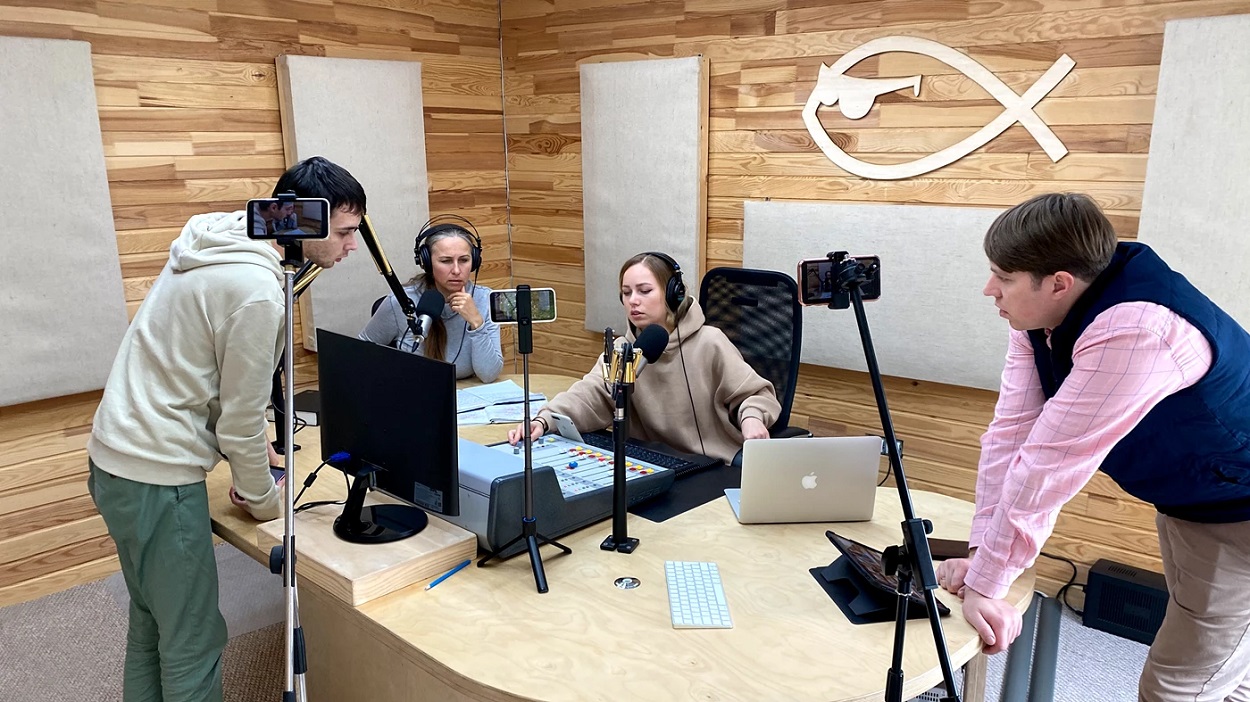
A new language law in Ukraine has complicated ministry to Russian-speaking citizens. Comparing restrictions to the Soviet era, one Christian broadcaster is relocating to Budapest, Hungary.

“I don’t want our staff busted on the air for reading the Bible in Russian,” said Dan Johnson, president of Christian Radio for Russia, which operates New Life Radio (NLR) from Odessa on Ukraine’s Black Sea coast. “We were expecting bombs to wreck our radio operations, but it turned out to be this law.”

Last month, Russian missiles landed one mile from their studio.

But earlier in July, President Volodymyr Zelensky signed into law a near-complete ban on Russian music on radio and television. Passed by parliament with a two-thirds majority, it exempts pre-independence classical artists like Tchaikovsky and Shostakovich as well as modern composers who have condemned the war.

About 65 percent of NLR airtime is music. Though local Christian anthems have inspired many during the war, Johnson said most contemporary worship songs are in Russian, even those originating from Ukraine.

A 2021 national survey identified 22 percent of the Ukrainian population as native Russian speakers, with 36 percent speaking the language primarily at home. Concentrated in the eastern Donbas and southern regions where Russian troops have prioritized attack, there are fears that Moscow is preparing to annex certain occupied areas.

Johnson has fled restrictions before. He moved to Russia in 1991 and by 1996 began radio ministry in Magadan, a featured city in Aleksandr Solzhenitsyn’s The Gulag Archipelago. Kicked out in 2006, he continued ongoing satellite-based radio work in Moscow, broadcasting throughout the former Soviet Union. But as the campaign against both free press and evangelical ministry tightened, in 2019 he relocated again.

Odessa promised an atmosphere of freedom—until now.

“There isn’t a government in the world that can stop the gospel,” Johnson said. “We will pivot and move on as always.”

NLR rents its studios and broadcasts by satellite and online, simplifying operations. Budapest was chosen because of its sizable Russian Christian population, Johnson said, which welcomed the ministry.

In the meanwhile, NLR continues to produce content in Russian, encrypting the signal to broadcast from outside the country. This should satisfy the law, he said, while also raising funds to build a Ukrainian language–only network in Odessa. In time, as a to-be Ukrainian broadcaster, he hopes to secure an FM license, alongside satellite and internet radio.

“I hope the authorities will leave us alone,” he said.

Sergey Rakhuba of Mission Eurasia called NLR collateral damage.

“I believe in freedom of speech,” he said, “but this is a state of war.” A native Russian speaker himself, an aspect of Rakhuba’s ministry has witnessed increased scrutiny…

This article was originally published at Christianity Today on August 30, 2022. Please click here to read the full text.
Categories
Christianity Today Europe Published Articles

Prayer in Ukraine After Six Months of War

Image: Scott Olson / Getty Images
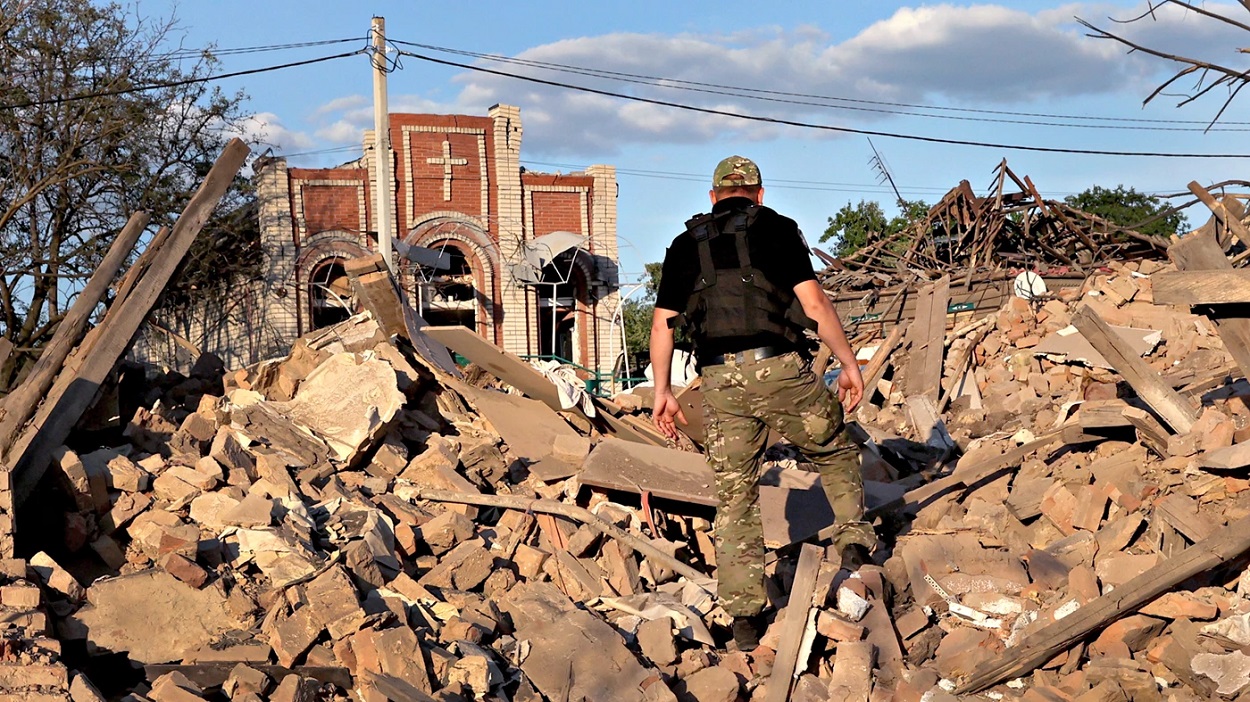
Sukovska Baptist Church was heavily damaged by a nearby missile strike in June in Druzhkivka, Ukraine, and has since conducted its Sunday services in a tent.

The World Evangelical Alliance (WEA) called for prayer.

“On this day of independence, we want to declare our dependence on God,” it stated on behalf of Ukraine, “the One who can bring true peace to the hearts of each individual person, each family, and even entire peoples.”

Joined by the affiliated European Evangelical Alliance, the WEA petition specified prayers to end the suffering, to spare the world from further repercussions, to strengthen the church’s response, and to marshal peace not through weapons, but through prayer.

Ukraine must defend itself, the WEA clarified; but Christians have a deeper hope.

“Throughout history, God has changed hopeless and dire situations in surprising ways,” stated the petition. “Let us also pray for healing and for reconciliation, and that Russia and Ukraine could live in peace as independent, sovereign nations.”

An accompanying guide for parents offers similar prayers for children.

It will not be easy. An Orthodox priest who performed last rites for the 116 people found in a mass grave in Bucha reflected on his spiritual calling.

“Saying the word forgive isn’t difficult,” Father Andriy told The Associated Press. “But to say it from your heart—for now, that’s not possible.”

As a followup to its March survey of the wartime prayers of Ukraine’s evangelicals, Christianity Today asked a sampling of Christian leaders to explain how the ongoing war has changed how they pray and what they pray for, how they understand unanswered prayers in difficult times, and how fellow Christians around the world can best pray for them now:

Denys Kondyuk, head of the missiology department at Ukrainian Evangelical Theological Seminary, Kyiv:

My prayers were more scheduled and structured before the invasion. Now they are dominated by requests for health and life, for obvious reasons. And I have seen God answer through many stories of deliverance from very dangerous situations; but of course, there are still many that suffer and die.

The prayer for the war to end is still unanswered.

Ukrainians have focused on verses that emphasize God’s justice, especially those which emphasize there is not much we can expect from people. Others, meanwhile, have found hope in the scriptures that promise our suffering is temporal, awaiting the kingdom of God.

Please pray that God guides us to serve where it is needed, and to be bold in what we do. And ultimately, for the victory of Ukraine—bringing justice to those who suffered and died.

Yuriy Kulakevych, foreign affairs director of the Ukrainian Pentecostal Church, Kyiv: We are all called to grow in Christ, which includes our prayer life. As pastor of God’s Peace Pentecostal Church in Kyiv, I am encouraging our people to…

This article was originally published at Christianity Today on August 24, 2022. Please click here to read the full text.
Categories
Christianity Today Europe Published Articles

The Hardship Is Plentiful But the Workers Aren’t Few: Evangelicals Unite on Ukraine

Image: Mission Eurasia
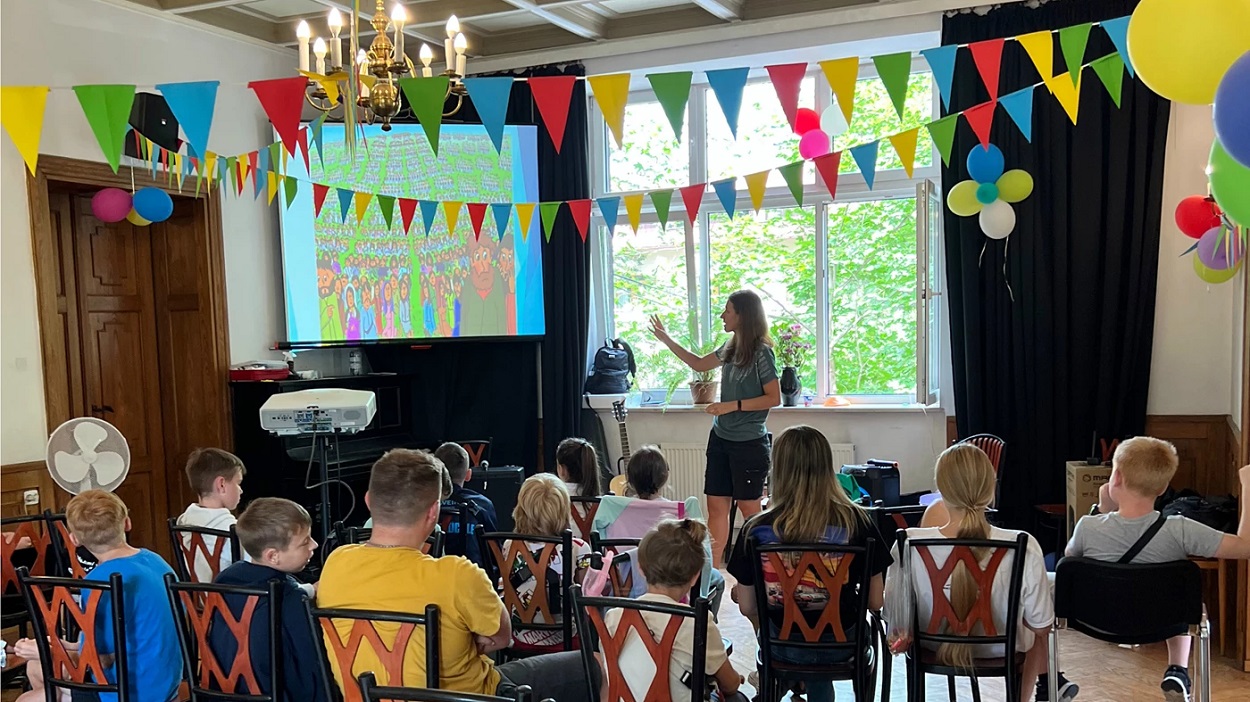
A Bible camp for displaced Ukrainian children

Her mother died of cancer. Her father was killed in the war. When her home in Donetsk was destroyed by a Russian missile, retreating Ukrainian troops brought the eight-year-old orphan and her grandparents and uncle to volunteers serving with the Chernivtsi Bible Seminary (CBS), 680 miles to the west.

Their only possessions were the clothes on their backs.

Resettled in temporary housing, last month the uncle was called back to the front lines. The girl has been sent to a Christian camp, and the seminary—serving as a ministry hub for the internally displaced—is doing what it can to assist.

“We did not think that serving a refugee is such a complicated process,” said Vasiliy Malyk, CBS president. “But no matter how difficult it may be, we can help them at least with some dignity.”

It is a team effort, and once tallied the numbers both stagger and pale in comparison to the need.

The Alliance for Ukraine Without Orphans (AUWO) has mobilized 3,000 volunteers to provide temporary housing for 6,000 people, mostly women and children. It has evacuated 38,000—more than two-thirds of which have been orphans. Nearly 59,000 people have received some sort of humanitarian aid.

“When the war started, everyone was focused on responding,” said Ruslan Maliuta, a former AUWO president and current network liaison for One Hope. “But then we realized the war is going to last, the crisis is huge, and the response will require us all to work together.”

To do so, in April the World Evangelical Alliance (WEA) launched The Response—Ukraine Special Taskforce (TRUST), with Maliuta as its leader. AUWO united with Ukraine’s Baptists, Pentecostals, and seven other national church and parachurch organizations to coordinate refugee relief efforts, alongside ten regional partners from Poland, Moldova, Slovakia, Hungary, and Romania.

“Having churches reach across denominational lines to work together has been one of the most encouraging things,” said Chris Guess, a Romanian pastor. “We have volunteers from across the globe, [as] God’s people have jumped in with us.” For example, volunteers from Argentina shipped 20,000 tons of rice.

Comparing notes from March onward, the evangelical network has mobilized 64,000 volunteers. Temporary housing has been offered to 271,000. Over 346,000 people have been evacuated, while nearly 600,000 have received humanitarian aid. Over $1.1 million has been distributed to partners.

“TRUST is coming alongside the admirable work of professional aid agencies with no intention of competing or creating a new relief organization,” said Thomas Schirrmacher, WEA secretary general. “TRUST offers a bridge that connects.”

Yet the United Nations underscores the grim reality: 6.2 million need shelter, 10.2 million need food, and 12.1 million need health assistance.

“People are on the edge of exhaustion,” said Rafal Piekarski, serving with Proem Ministries in Poland. “Our Polish resources are over. We don’t want to compete with each other, but be good stewards of what you can bring from your countries, your churches.” In May, Piekarski was one of…

This article was originally published at Christianity Today, on August 5, 2022. Please click here to read the full text.