Speakers address participants at a general session on Different Faiths Advancing Religious Freedom Together at the Ministerial to Advance Religious Freedom at the U.S. Department of State in Washington D.C. on July 17, 2019. [State Department photo / Public Domain]This article was first published at Christianity Today, on July 22, 2019.
In his opening remarks at the second US Ministerial to Advance Religious Freedom, Secretary of State Mike Pompeo welcomed almost 1,000 participants from civil society and more than 100 invited foreign delegations. He challenged every major world religion and secular society—and also invited them in.
“We all agree that fighting so that each person is free to believe, free to assemble, and to teach the tenets of his or her own faith is not optional,” said Pompeo. “Indeed, it is a moral imperative that this be permitted.”
But do all actually agree? A change in human rights language might make the difference.
And could Saudi Arabia improbably become the next champion…?
Please click here to read the full article at Christianity Today.
This article was first published in the June print edition of Christianity Today.
…The tension over praising limited gains is also a factor in Uzbekistan, a Muslim-majority secular nation whose citizens have the right to convert but which the United States has designated a Country of Particular Concern (CPC) since 2006 over religious freedom violations.
At the US State Department’s inaugural Ministerial for Advancing Religious Freedom in July 2018, Uzbek leaders outlined how they were streamlining registration for religious groups and reviewing a law that restricted religion. Last December, the Central Asian nation was removed from the CPC list—only the second nation to ever come off—and put on a watch list instead. But it ranks No. 17 on Open Doors’ list of countries where it’s hardest to be Christian.
Chris Seiple, president emeritus of the Institute for Global Engagement, has worked behind the scenes for 20 years to promote religious freedom in the nation he did his dissertation on. He says activists should publish a list of nations showing the most progress, not just the greatest offenders.
Relational diplomacy involves public praise for small, tangible steps to build trust while communicating practical ways to improve in private, he said. There is a secret to engaging authoritarian contexts: create a rumor so that reality follows…
Please click here to read the full article at Christianity Today.
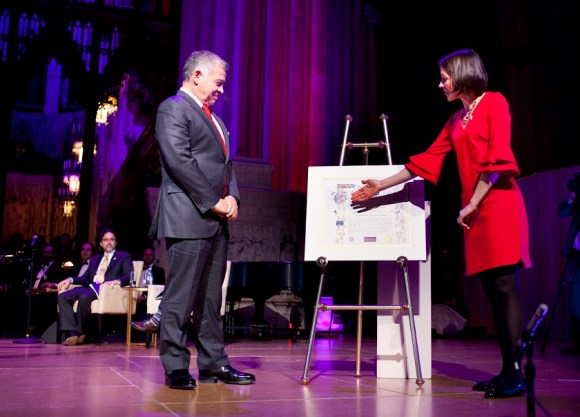
Heather Templeton Dill, president of the John Templeton Foundation, presents the Templeton Prize “Tree of Life” medallion to His Majesty King Abdullah II of Jordan, at the Templeton Prize Ceremony, Washington National Cathedral, November 13, 2018. (Photo credit: Templeton Prize-Clifford Shirley)
The pastor of the Amman International Church in Jordan had a problem.
Suspected intelligence agents were coming to church, asking questions, and attending Bible studies. His youth pastor was detained at the Israeli-Jordan border and denied reentry. Members of his church, some who had lived for years in Jordan, were suddenly denied visas.
“Politically speaking, we were the best protected church—half of our congregation were military or foreign service,” said Greg Griesemer, pastor since 2012.
“But after testing the waters with us, the government went more aggressively against the Jordanian evangelical churches.”
Griesemer eventually had to leave the country also, informed that the government had an alleged file accusing him of proselytizing Muslims. But he believed the government was checking to see if anyone would stand up for evangelicals in general, as the Vatican would do for Catholics. Unlike the historic churches of Jordan, evangelicals are not represented in the official national council of churches.
Despite a congregation filled with American citizens, appeals to the US embassy went nowhere, he said. And then quite unexpectedly, in came the cavalry.
Completely unrelated to local developments in Jordan, popular Christian author Joel Rosenberg had been developing a warm relationship with Jordan’s King Abdullah. An evangelical of Jewish background, Rosenberg writes political thrillers about the end times, weaving current events into a Biblical narrative of apocalyptic prophecy.
In one bestseller, the king and the Hashemite Kingdom were targets of a series of ISIS terrorist attacks. After reading the novel, Abdullah invited Rosenberg and his wife to Jordan for a five-day visit, and a friendship emerged. Later and at the king’s invitation, in November 2017 Rosenberg led a delegation of American evangelical leaders to see Jordan firsthand.
But not just any leaders. They included several who were politically connected, including close advisors to President Donald Trump. The group featured Tony Perkins, president of the Family Research Council, Jim Garlow, former senior pastor of Skyline Church in San Diego, who moved to Washington to minister to politicians, and Michele Bachmann, a former congresswoman from Minnesota, in addition to others.
Jordan was not their only priority. In the past 18 months Rosenberg also led the group to visit Egypt, the United Arab Emirates, and Saudi Arabia. Coming again with official invitations, he wished to forge better ties between evangelical Christians and Middle East governments and peoples. A key priority has been to support Christian minorities, who often feel under pressure in society, if not persecuted by Muslims of extremist ideology.
Also invited to participate was Mike Evans, leader of the Jerusalem Prayer Team and founder of the Friends of Zion Heritage Center, in Israel. A self-proclaimed Christian Zionist, he and several members of the delegation were well-known for their strong support of Israel.
Their reputation preceded them in Jordan, and some local evangelical leaders turned down invitations to meet. Though Jordan maintains a peace treaty with Israel, popular sentiment is strongly in favor of the Palestinians. They did not want to be associated with an ideology that would strain relations not only with Muslims, but also traditional Christian church leaders.
But Rosenberg’s delegation did come at the invitation of King Abdullah, and they had already met with several senior government officials, including the foreign minister and the chairman of Jordan’s joint chiefs of staff. Nearly 40 evangelical leaders and pastors did agree to sit down, representing many of the major denominations and ministries in Jordan. They included Emad Maayah, president of the Jordan Evangelical Council, and Imad Shehadeh, president of the Jordan Evangelical Theological Seminary, and they shared their perspectives and prayer requests in an off-the-record dialogue.
The pastors conveyed a deep sense of respect toward the king and appreciation for the freedom Jordan gives them and all Christians in the country. Some spoke reluctantly of issues they were facing, and Griesemer was also present to share his story. Notes were taken, discussed, and agreed to be shared tactfully with King Abdullah.
Mike Evans, a journalist by profession, took particular interest. During the delegation’s working lunch at the palace with the king later that day to conclude their visit, he spoke up first to relay the issues discussed. Others followed.
Photos were agreed upon, and a simple press release was issued by both palace and delegation.
In later, follow-up discussions with the palace Evans would mention a Jordanian pastor who was having his ministries shut down by the government, and how evangelical churches were losing the ability to offer volunteer visas to foreign staff.
Abdullah expressed surprise, that he had never heard of these troubles, and in front of the group assigned one of his closest advisors to look into it.
“Everyone was very encouraged,” Evans said. “I went back to the Jordanian believers, and told them I have good news.”
Such a response was fitting with the reputation of the king. Last year in November he was awarded the prestigious, $1.4 million Templeton Prize, celebrating exceptional contributions to “affirming life’s spiritual dimension.” First given to Mother Teresa, previous winners range from Billy Graham to the Dalai Lama. Abdullah was cited for his efforts to foster better inter-Islamic unity in rejection of terrorism, as well as leadership in fostering Muslim-Christian dialogue and peace.
Six weeks later came the salvo.
“For King Abdullah to receive the Templeton Prize for religious tolerance in view of this situation in Jordan is an absolute travesty,” wrote Evans in the Jerusalem Post. “It is the Templeton Prize for bigotry.”
What changed? Evans wrote that he worked with the king’s advisor for over a year, but things only got worse. The Jordanian pastor’s ministry was dismantled. Churches were being asked to submit membership lists to the government. It seemed fitting with a media campaign launched against evangelicals, as interpreted by some. A year earlier the Jordan Times published an article in which an Arab Christian leader called them “outlaws,” using an Arabic word frequently describing ISIS.
Frustrated, Evans went public, and Griesemer was pleased. He had pushed Evans to engage the press earlier.
“I value trying to work quietly through individuals and groups, but with the issue of Christian persecution the Jordanian government doesn’t care enough to deal with it until there is public pressure,” Griesemer said.
“It is clear the government was committed to its hypocrisy of waving the flag of religious freedom, but in the background persecute Christians.”
He cited a similar situation a decade earlier. Christian expats were being expelled from Jordan, some under accusations of proselytizing. In many cases no reason was given, though the government stated they were violating the terms of their residency visas. But once the press got involved, Griesemer said, international attention caused Jordan to backtrack and the wave of expulsions ceased, with some reversed.
Evans hopes a media strategy will be successful again, describing his obligation as the one who addressed these issues with King Abdullah, personally.
“I believe it can help the situation, because nothing else has,” he said. “I will speak up for them, no matter the cost.”
But who will pay it?
Imad Shehadeh, the seminary president, had to answer nonstop phone calls and messages about his role in the article. Evans did not check with us, he told them, and circulated published quotes in which he praised the king for winning the Templeton Prize.
“We are praying for protection and no further escalation,” said Shehadeh.
Evans believed he was doing Jordanian evangelicals a favor. In his article the only cases attached to names were ones where he had specific personal permission. But for everyone else, he anticipated their reaction.
“I don’t think they’ll be happy, and they are the ones who live there,” he said. “But they can always say, ‘We didn’t talk to him.’”
But Evans’ article also caught other members of the delegation by surprise. Joel Rosenberg said all conversations with the Jordanian Christians and palace were explicitly off the record. (Evans disputed this.)
“I was disappointed to see a friend of mine break our ground rules of confidentiality with both His Majesty and our Jordanian Christian brothers and sisters, and then publicly accuse King Abdullah of being a bigot,” Rosenberg said. “Nothing could be further from the truth, and it does not reflect the reality.”
After reading Evans’ article against the king, Rosenberg immediately reached out to the Royal Court as well as to Jordanian Evangelical leaders in an effort to limit the damage, even sending a personal note of apology to the king for the unfair attack by one of his delegation members.
In an interview with TMP, Rosenberg praised Abdullah as “far and away the leader of the pack” among other Middle East leaders working to protect Christians, allowing churches to operate openly, and promoting peaceful relations between Muslims and Christians.
“There is no question Jordanian Christians, like all Middle Eastern Christians, have challenges and problems, that is the reality of the region,” he said. “But my direct understanding from evangelical leaders throughout the Hashemite Kingdom is how much they appreciate the king and the freedom they have.
“Any argument by a few frustrated individuals has to be seen in the context of the respect Jordanian society has for Christians.”
Shehadeh spoke similarly, defending King Abdullah.
“Jordan is not a perfect country. No country is,” he said, describing Abdullah’s past interventions to solve Christian issues.
“But the king is in a very difficult position trying to work with people of opposing positions and has consistently done a remarkable job to bring sides together. Political leaders in other countries can learn a lot from him.”
The furor has now died down, Shehadeh described, thanks to Rosenberg’s response.
Award-winning journalist Daoud Kuttab, a committed Christian who lives in Jordan, also downplayed the long-term implications. Evans published in an Israeli newspaper, in English, so most of society was likely ignorant. But he published a response in the Jerusalem Post nonetheless, and called out Evans for shoddy journalism.
“It was a hit job,” he said. “Evans used partial information from renegade and non-mainstream people, without talking to all sides.”
Kuttab quoted the president of the Jordan Baptist Convention stating that only one evangelical church was closed down, but due to the attitude of the pastor Evans cited. (The pastor disputed this.)
“Sure there are problems,” Kuttab said, “but for Evans to call the king a bigot? He made evangelicals look like the reason.”
Evans, however, warned about becoming blind to the abuses of power, just to retain access. Why are Muslim leaders reaching out to them to begin with? Because of their connections to Trump.
“They want things from America, but I don’t think this can be one-sided,” he said. “We’re not official, and we don’t speak for the president.
“But we have influence, and we have to live with our own consciences. It is a matter of integrity and the word of God.”
Perhaps. But it is his call to make? Griesemer, the international church pastor, believes it is worth it, and that he himself paid a high price in having to leave his job, home, and community.
“Either be moderately persecuted in the dark, or speak out and maybe it gets better—or worse. Let God work out the details,” he said.
“I lived there for a decade. I had similar risks, though not the same.”
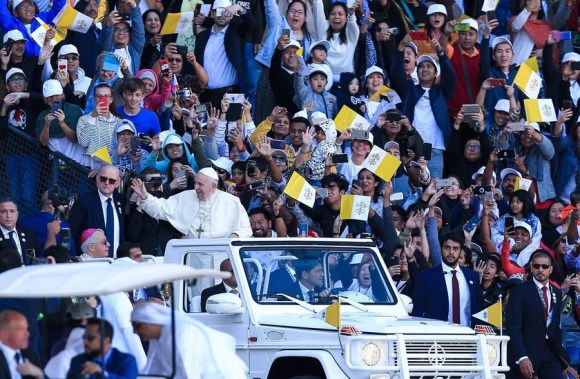
(Pope Francis arrives at the Zayed Sports City in Abu Dhabi for Mass. Victor Besa / The National)
This article was first published at Christianity Today, on Feb. 6, 2019.
Pope Francis must love creating cognitive dissonance.
This week, he became the first Catholic pontiff to ever visit the Arabian Peninsula, the heart of Islam, where conversion to Christianity is illegal. Francis lauded his hosts in the United Arab Emirates (UAE), saying they “strive to be a model for coexistence.”
The Gulf nation’s crown prince received him with a 21-gun salute. Francis then railed against the “miserable crudeness” of war.
Human rights groups pressed him to address migrant worker issues. Francis rejoiced in “a diversity that the Holy Spirit loves and wants to harmonize ever more, in order to make a symphony.”
The mere existence of a Christian community to visit in the Gulf states may surprise many. In 2015, CT visited the Emirates and reported on its “thriving” church, populated by more than a million Christians—primarily economic migrants from Asian nations such as Indonesia and the Philippines.
The Pew Research Center counts them as 13 percent of the population. They worship in over 40 churches, served by over 700 Christian ministries.
And in a region where the Vatican cited a decline of Christians from 20 percent to 4 percent of the Middle East population in the last 100 years, the Emirati government provided a day off and 1,000 buses to bring Catholics to mass.
Attendance reached 135,000, billed as the largest Christian gathering ever held in the Arabian Peninsula.
If the pope does enjoy sparking controversy, he succeeded also among local evangelical leaders…
Please click here to read the full article at Christianity Today.
This article was first published in the January print edition of Christianity Today.
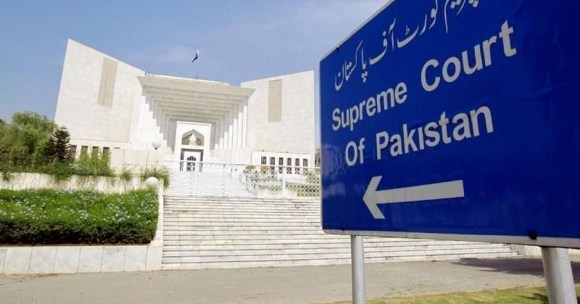
Christians breathed a sigh of relief last October when Pakistan’s Supreme Court acquitted Asia Bibi, a Christian mother of five on death row, of blasphemy charges against Islam. What many might not have noticed was the Islamic rationale.
Whether or not she spoke against Muhammad, Bibi was insulted first as a Christian, wrote the judge. And on this, the Qur‘an is clear: Do not insult those that invoke other than Allah, lest they insult Allah in enmity without knowledge.
The verdict also quoted Islam’s prophet himself: “Whoever is cruel and hard on a non-Muslim minority, or curtails their rights … I will complain against the person on the Day of Judgment.”
And finally, it referenced an ancient treaty that Muhammad signed with the monks of Mount Sinai: “Christians are my citizens, and by God, I hold out against anything that displeases them.… No one of the Muslims is to disobey this covenant till the Last Day.”
Today it can seem like Muslims violate this covenant the world over. But does the Bibi decision validate those who insist that Islam rightly practiced is a religion of peace? And should Christians join Muslims to share verses that comprise the Islamic case for religious freedom?
CT surveyed more than a dozen evangelical experts engaged with Muslims or scholarship on Islam who reflected on three key questions when considering interpretations of Islam that favor religious freedom.
[These questions are: Is it true? Is it helpful? Is it enough?]
Please click here to read the full article at Christianity Today.
Also: click here to read my related Christianity Today article about The Covenants of the Prophet Muhammad with the Christians of the World, the book which describes the Sinai treaty mentioned above, and others.
Finally, here is a sidebar from the Should Christians Quote Muhammad article, identifying sources in the Islamic tradition on which the evangelical scholarsreflected.
Quranic verses regarding Christians:
• Q5:82 – You will find the nearest of them in affection to the believers those who say, “We are Christians.” That is because among them are priests and monks and because they are not arrogant.
• Q2:62 – Indeed, those who believed and those who were Jews or Christians or Sabeans those who believed in Allah and the Last Day and did righteousness—will have their reward with their Lord, and no fear will there be concerning them, nor will they grieve.
• Q22:40 – And were it not that Allah checks the people, some by means of others, there would have been demolished monasteries, churches, synagogues, and mosques in which the name of Allah is much mentioned.
• Q29:46 – And do not argue with the People of the Scripture except in a way that is best.
• Q2:256 – There shall be no compulsion in religion. The right course has become clear from the wrong.
Texts used in Supreme Court of Pakistan acquittal of Asia Bibi:
• Christians are my citizens, and by God, I hold out against anything that displeases them. No compulsion is to be on them … The Muslims are to fight for them … Their churches are to be respected. No one of the Muslims is to disobey this covenant till the Last Day (Covenant with the Monks of Mount Sinai)
• “Beware! Whoever is cruel and hard on a non-Muslim minority, or curtails their rights, or burdens them with more than they can bear, or takes anything from them against their free will; I [Prophet Muhammad] will complain against the person on the Day of Judgment.” (Abu Dawud)
• Q6:108 – “And do not insult those they invoke other than Allah, lest they insult Allah in enmity without knowledge. Thus We have made pleasing to every community their deeds. Then to their Lord is their return, and He will inform them about what they used to do.”
Christians esteem the biblical progression of covenants—Abrahamic, Mosaic, Davidic—finalized by Jesus as he ushered in the New.
But for the sake of religious freedom in the Muslim world, should they embrace a further covenant: Muhammadian?
Recent scholarship suggests the potential promise, newly fulfilled in Pakistan.
After eight long years on death row, Asia Bibi was acquitted of blasphemy by the Muslim nation’s Supreme Court in late October. The Christian mother of five had been sentenced for uttering contempt for Muhammad, the prophet of Islam, while attempting to drink water from a well.
The three-judge panel ruled that contradictions in accuser testimony and Bibi’s forced confession by a local cleric rendered the charges invalid. But in the official court document, one justice went as far as to partially base his judgement on how Bibi’s accusers violated an ancient covenant of Muhammad to the Christian monks of Mount Sinai—“eternal and universal … not limited to [them] alone.”
“Blasphemy is a serious offense,” wrote judge Asif Khosa, “but the insult of the appellant’s religion … was also not short of being blasphemous.”
He referenced a 2013 book by John Morrow, a Canadian convert to Islam. The Covenants of the Prophet Muhammad with the Christians of the World is an academic study of six treaties commanding the kind treatment of Christians, reportedly dated to the seventh century.
Each similar in scope, they command Muslims not to attack peaceful Christian communities, to aid in the construction and repair of churches, and even to allow self-regulation of tax payments.
It is “nothing short of providential,” Morrow wrote, that they have been “rediscovered” at a time of widespread Islamist violence against the Christians of the Middle East.
“For Muslims, it means a wake-up call, an awareness that they have deviated from the Islamic tradition,” Morrow told Patheos, a popular religion and spirituality website.
“[It] requires that Muslims not only tolerate Christians, but love them as their brothers and sisters.”
This resonates with…
Please click here to read the full article at Christianity Today.
But for Durie, the issue is far greater than the right of one person to believe what they want – even as human rights always concern the individual, each and every one of which is sacred.
It is a lonely battle, he laments, though much depends upon it.
“This can be a disheartening, discouraging, and frustrating burden to carry,” he said. “But it is vitally important, not only for the believers themselves, but also for the health and honor of the whole world.”
via Mormon Newsroom and Mohamed Al Hammadi / Crown Prince Court – Abu Dhabi
Happy Thanksgiving to all American friends. Religious freedom is one item of gratitude, as well as positive signs it may be developing around the world.
Consider again these promising signs I’ve been privileged to report on the past two years:
Arab Gulf — Why Christianity is Surging in the Heart of Islam
Indonesia — World’s Biggest Muslim Organization Wants to Protect Christians
Morocco — Arab Christians and the Marrakesh Declaration
Not allisrosy, of course, and some nations pretend nothing is wrong.
Sudan is one of them. But in recent engagement, the United States has religious freedom on the agenda for improvement of ties and removal of sanctions.
A leading U.S. diplomat visiting Sudan said the United States is willing to work with the Sudanese government to help it achieve the conditions necessary to remove its designation as a “Country of Particular Concern” in the U.S. State Department’s annual International Religious Freedom Report.
Deputy Secretary of State John J. Sullivan was speaking on Nov. 17 at the Al-Neelain Mosque in Omdurman, located on the western bank of the Nile River, which separates it from the national capital.
Sullivan said “supporting human rights, including religious freedom, has been, and will continue to be, a critical part of the United States’ bilateral engagement with Sudan.”
The event at the mosque included leading Muslim and Christian clergy. Sudan is 97 percent Muslim, and the small Christian community has faced harassment, especially since the predominantly Christian and animist south of the country became the independent state of South Sudan in 2011.
The State Department’s 2016 International Religious Freedom Report cited reports of government arresting, detaining, or intimidating Christian clergy and church members, denying permits for the construction of new churches, closing or demolishing existing churches and attempting to close church schools, restricting non-Muslim religious groups and missionaries from operating in or entering the country, and censoring religious materials and leaders.
There is always room for cynicism, and perhaps frequently it is warranted.
Does the United States care more for counterterrorism and military contracts, and will let this item slide if progress is seen elsewhere?
Will Sudan put on a nice face and make superficial improvements, only to squeeze non-Muslim communities once the diplomats leave?
Maybe. But this Thanksgiving, let not cynicism be a landing place. Even the public rhetoric of religious freedom is something to celebrate. It sets a tone; attitudes can adjust over time.
And as the US ambassador told his Sudanese audience, it took a while in America.
“I am the grandson of Irish-Catholic immigrants who arrived in Boston, Massachusetts in the 1880s. At the time they arrived – and for many decades that followed – Catholics in the United States faced widespread prejudice based on their religion,” he said.
“When John F. Kennedy – another Catholic from my home state – ran for president of the United States in 1960, he even had to give a prominent speech to reassure the nation that his faith was compatible with the duties of the office of president.”
Sullivan said recalling such history “seems quaint” today, but added it took many decades – “it was not easy” – to reach the point where it is “nearly unthinkable” that one’s status as a Catholic in the United States would serve as a disadvantage to a person’s ambitions for life.
“The American experience in this regard underscores that respect for the human dignity of every person – regardless of religious belief or origin – is a key component of not only protecting human rights, but also fostering a society that can flourish, build upon each other’s strengths, and move forward together,” he said.
America has had flaws, too. She still has some, and may be developing others.
But today, around the table, give thanks to God for what exists — both at home and abroad.
Those who love God do not need freedom to follow their faith. But ample facilitation makes our world a better place.
Appreciate, and pray for more. And then, enjoy your turkey.
Kamal Fahmi sat with Mazen, a Yemeni teenager at a community center in Taiz, Yemen’s third-largest city and cultural capital. Mazen’s father was there, who arranged the meeting.
Impressed with the boy’s intelligence and demeanor, Fahmi learned of their troubling problem.
Mazen didn’t want to study Islam in school.
Fahmi had heard this story before. Visiting Yemen as he had in nations across the region, converts were considered Muslim by birth and in all official paperwork. And for those underage, Islamic education came as part of the package, even if they didn’t believe in it.
Fahmi was sympathetic, but tried to downplay the problem. After all, born into a Christian family in Sudan, he had studied Islam in school also. Hold to your faith, he counseled, but pass the tests.
Yet something in the boy stirred him, as well as the nature of his family. Mazen was not a convert, and neither was his father. His grandfather was, decades earlier. Three generations of Christians, yet still considered Muslims. The injustice gnawed at him.
“They love their country, they are not criminals, they are not spies,” Fahmi said. “If anything, they have become better citizens.
“They should be free to follow what they believe.”
It is not only an issue in the Muslim world, of course:
Worldwide, 26 percent of nations criminalize blasphemy, including Russia, Italy, Myanmar, and the Bahamas. But apostasy law is more characteristically Islamic, with only India and Nigeria as non-Muslim-majority countries.
Please click here to read the full article at The Media Project.
Two days ago, the Saudi-based Muslim World League met with the Italian Minister of the Interior to best secure Muslim rights in the traditionally Catholic nation.
The Catholic Church is separate from the government but does have a unique accord privileging it somewhat above the 12 other Christian denominations and religious groups. Accords are signed through the Ministry of the Interior, and grant tax-deductible status, state financial support, property rights, clergy recognition, and religious holiday waivers for students and employees. Non-accord groups can apply for these benefits on a case-by-case basis.
Muslims do not have an accord with the government.
Part of the issue may be that Muslims have no administrative entity governing their affairs. Among the topics discussed with the minister is the role of the Muslim World League to help unify the local Muslim community, and secure Islam as a recognized religion.
Italy lauded the MWL for its role in spreading the values of tolerance and coexistence.
A few days earlier the secretary-general of the MWL met Pope Francis, and agreed to set up a joint committee to pursue the values issued in their statement:
Religion and violence are incompatible
Religions have moral resources capable of contributing to fraternity and peace
The phenomenon of fundamentalism, in particular when violent, is troubling and joint efforts are required to counter it
Situations exist where freedom of conscience and of religion are not entirely respected and protected
There is an urgent need to remedy this, renewing religious discourse and reviewing school books
This is a worthy statement, though the urgent need would seem to require more than the suggested remedies. Yes, these would help change a culture over the long term. But laws guaranteeing freedom of conscience and religion are currently lacking in several countries within the Muslim World League.
Perhaps the statement is a polite and friendly way to begin to address this, without the shame associated with naming names – as does the US Report on International Religious Freedom.
The statement of religion and violence being incompatible is also curious. Islam has a well-defined tradition of religiously sanctioned jihad. It need not be equated with terrorism, but neither is it exactly equivalent to Christian just war theory. I find it strange the Muslim World League could sign on to such a clause, without further delineation.
But they are discussing the right things. The common criticism of interfaith statements of toleration is that Muslims do not practice what they preach in their own countries.
It remains to be seen if the Muslim World League will act on these principles, but it is encouraging that the Vatican has a joint committee to hold them responsible.
And, to be held responsible. In coordination with the MWL, Italy has taken steps to better ensure the religious freedom of minority faiths.
This article was originally published by Christianity Today, on September 13.
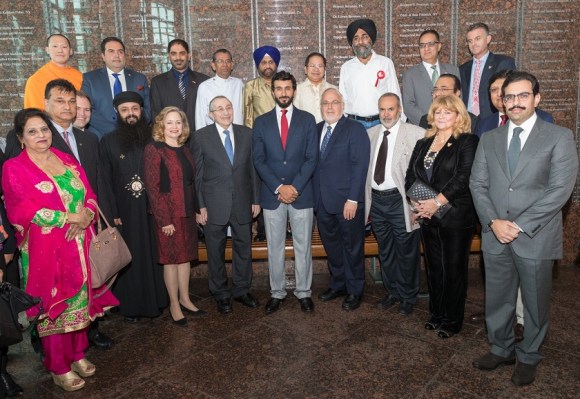
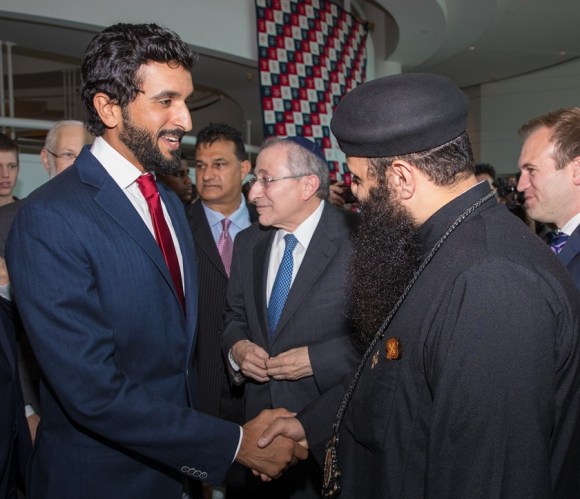
Prince Nasser bin Hamad al Khalifa (center), with Bahrain Declaration attendees. Credit: Simon Wiesenthal Center.
The cause of religious freedom received a significant boost from the Muslim world today. The island Kingdom of Bahrain—connected by bridge to Saudi Arabia—has declared “freedom of choice” to be a “divine gift.”
“We unequivocally reject compelled observance,” states the Bahrain Declaration for Religious Tolerance, released September 13 in Los Angeles with Muslim, Christian, and Jewish leaders in attendance. “Every individual has the freedom to practice their religion, providing they do no harm to others, respect the laws of the land, and accept responsibility, spiritually and materially, for their choices.”
Prince Nasser bin Hamad al Khalifa of Bahrain signed as an official envoy of the Gulf nation’s king. Johnnie Moore, a board member of the National Association of Evangelicals, and Rabbi Marvin Heir of the Simon Wiesenthal Center also participated, joining ambassadors from Saudi Arabia, the United Arab Emirates, Egypt, and Israel.
“The King is acting decisively, courageously, and seriously,” said Moore, noting also Bahrani sponsorship of a religious tolerance center in the capital city of Manama, as well as the sponsorship of a chair in religious coexistence at La Sapienza University in Rome.
“The declaration goes farther than any similar document that I’m aware of.” …
Please click here to read the full article at Christianity Today.
Prince Nasser bin Hamad al Khalifa, with a Coptic priest. Credit: Simon Wiesenthal Center.
Back in May I traveled to the Gulf – Persian or Arabian as per your geopolitical preference – to research the growth of Christianity among the extensive migrant population. What I learned became an article for Christianity Today: Why Christianity is Surging in the Heart of Islam.
The excerpt provided in my earlier post ended with a hook:
In Bahrain and Kuwait, Muslims can enter church compounds. In Qatar, guards allow only foreigners. Saudi Arabia’s Grand Mufti (the nation’s highest official of religious law) has called for all churches in the peninsula to be destroyed.
Surprising to many observers is how many of these churches there are.
Hopefully you clicked to read on. If not, the answer is that the Gulf region hosts more than 40 physical church buildings in 17 cities. Many of these host multiple congregations. All operate publicly with permission of national governments.
Alongside them are house churches, most of which operate in a legal limbo outside of formal permission but generally with the awareness of authorities who watch everything closely.
My article makes clear that religious freedom in these nations is not complete, certainly not along Western conceptions. But the existence of these buildings is remarkable in its own right. They are a concession to foreign workers, certainly. One leading church leader told me that Islam, at best, only ‘tolerates’ non-Muslims.
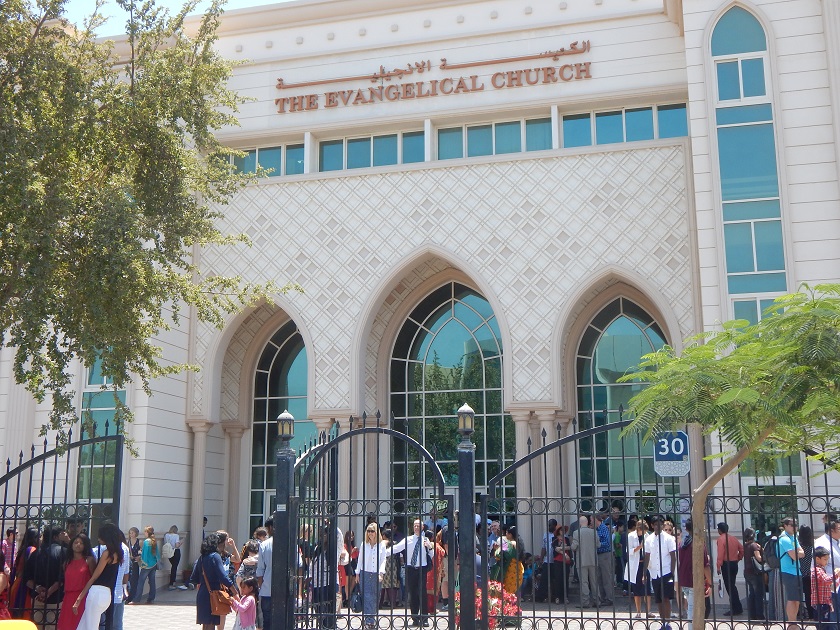
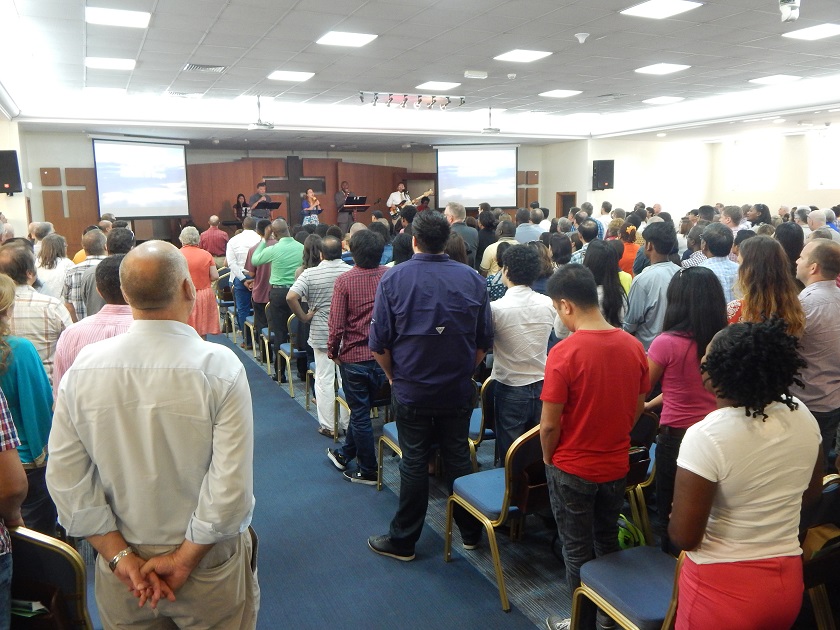
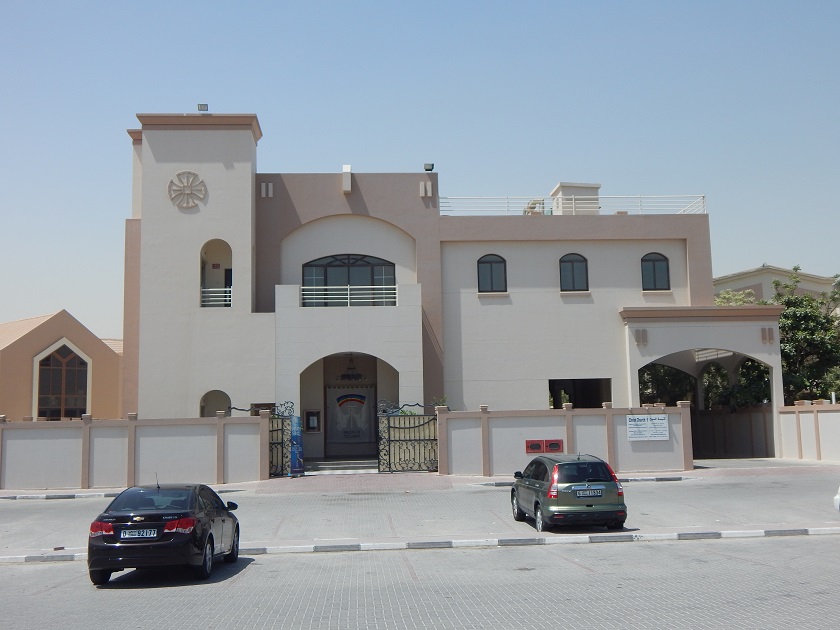
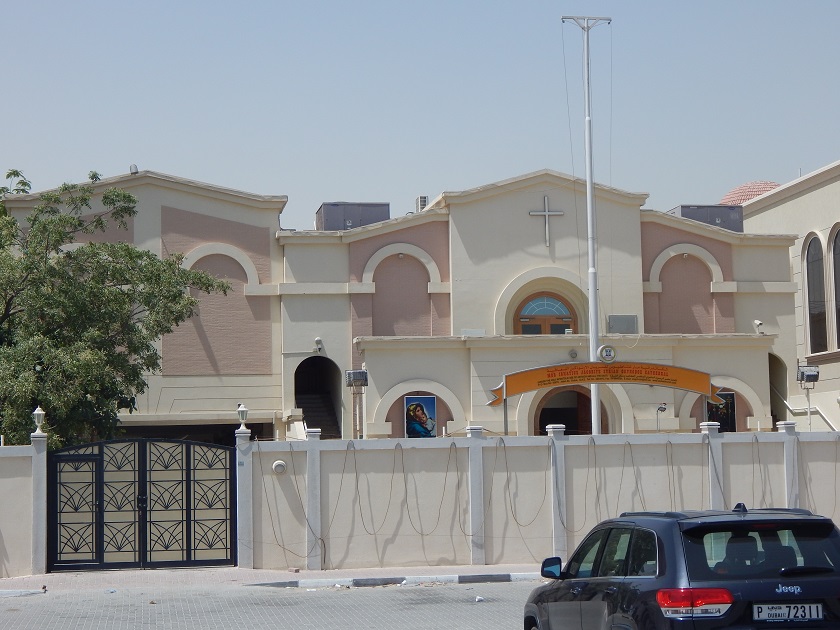
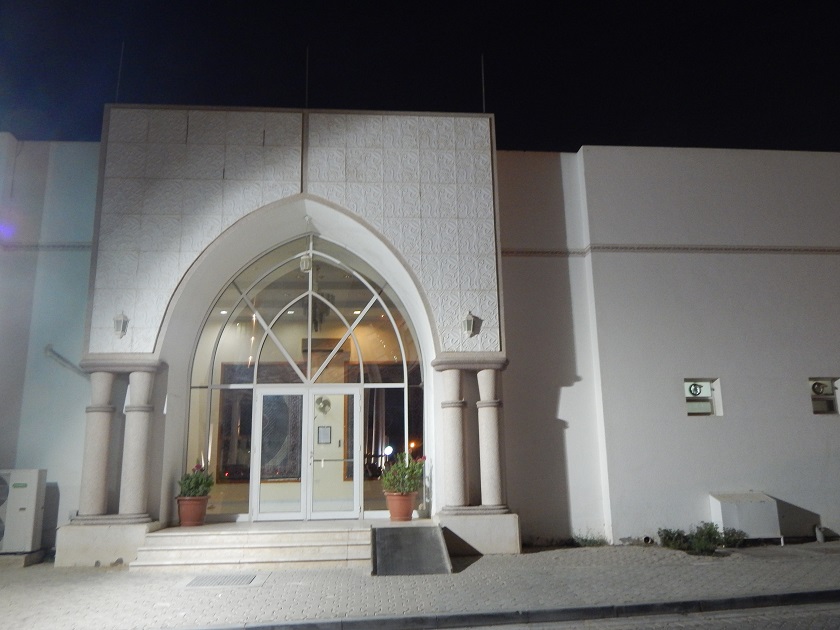
But let us not dismiss tolerance. Many of these buildings are not tucked away into foreign-only enclaves, eyesores to be hidden from embarrassed Muslims. No, they are downtown, in residential neighborhoods, near commercial centers … and massive. At least they are in the United Arab Emirates.
Please enjoy the pictures.
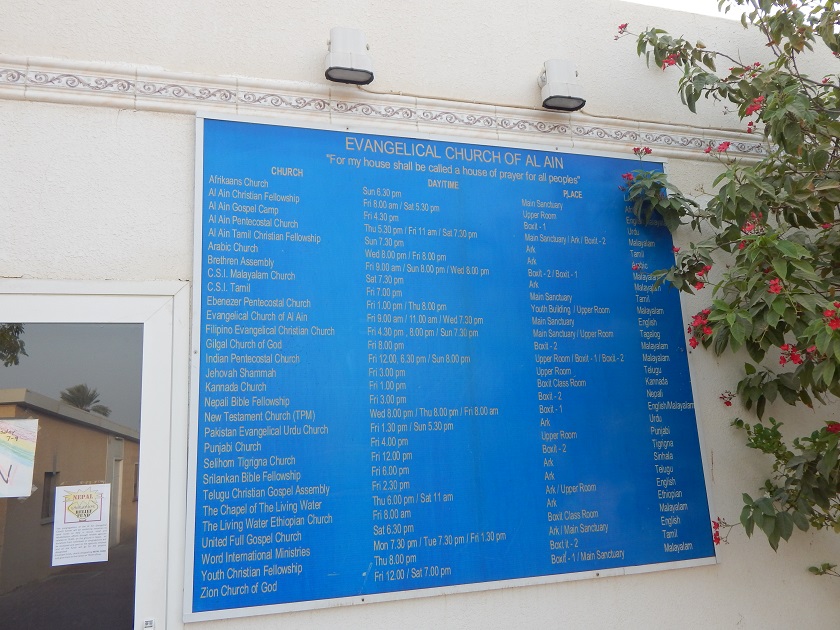
St. Andrew’s Anglican Church, Abu DhabiSt. Anthony’s Coptic Orthodox Church, Abu DhabiThe Evangelical Church of Abu DhabiService at the Evangelical Church of Abu DhabiList of Churches within the Evangelical Church of Abu DhabiBibles for Sale at the Evangelical Church of Abu DhabiAnglican Christ Church, DubaiDubai Evangelical Church CentreWorship Hall inside Dubai Evangelical Church CentreIndian Mar Thoma Church, DubaiMar Ignatius Syrian Orthodox Church, DubaiThe Dubai churches pictured above are in compound just for foreign worship. But it is right down the street from the famed Ibn Battuta mall. In the distance you can see the Evangelical Church, in the foreground is a Sikh Temple.Not all churches are in buildings. Inside the Gloria Hotel in Dubai is the Fellowship of the Emirates, featured in the article as an example of Christian gathering that is welcome but exists in legal limbo.Jim Burgess, pastor of the Fellowship of the Emirates, inside the not-yet-set-up church hall.The article describes how the presence of all these churches is connected to the medical missions of 100 years earlier. This is Oasis Hospital in al-Ain, the tribal home of the royal family. The modern building to the right is the new hospital the royal family paid for to expand Oasis’ service.Upon entering the hospital, the visitor first sees the words of Jesus from John 4:13, in English and Arabic.Also prominently available and in every patient room is a Gospel of Luke and a copy of the Jesus Film.The Evangelical Church of al-Ain, hosted on hospital grounds.Service at the Evangelical Church of al-AinList of Churches within the Evangelical Church of al-AinThe Bible Society of the Gulf, in the Evangelical Church of al-Ain. The Bible Society legally distributes over 40,000 Bibles per year throughout the Gulf, whether in small depots like this or in centers within larger Protestant and Catholic churches.
If the images are striking, far from what you may have imagined about the Muslim lands of the Arabian Peninsula, click here to read the article again with new eyes.
One Christian leader compared the church in the Gulf to a potted plant that is being removed and planted in the ground.
Their consensus voice conveys two wishes: For the Christian, pray – and come – that it might flourish. For all, be thankful for regional leadership that is far more tolerant than you might think.
THE social contract . . . limits on power . . . liberty of conscience . . . doctrine of toleration . . . human rights . . . Each is under attack around the world and Lord David Alton wants the government to do something about it.
The Independent Crossbench Peer has tabled a debate in the House of Lords this Thursday (16 July) to focus on the issue that underpins them all: religious freedom.
Alton has framed the debate to focus on the ‘clear links’ between freedom of conscience and both the prosperity of a nation and the litany of other rights its citizens enjoy.
It will also discuss ‘greater political and diplomatic priority’ in support of Article 18 of the UN’s Universal Declaration of Human Rights, guaranteeing freedom of thought and religion.
One debate participant is Lord Jonathan Sacks, former UK Chief Rabbi. Addressing a UK-Israel policy conference in late June he noted that ‘wars are won by weapons, but peace is won by ideas.’
And each of the above principles which shape the modern world, he said, ‘began life as religious ideas.’
Within the UK the debate over secularism may question the value of this assertion. But it is undeniable that international religious freedom has received greater attention across the political and social spectrum.
Rhetoric
Richard Honess is a board member of Atheists Alliance International and the international liaison officer for Atheism UK. Dr David Landrum is the director of advocacy for the Evangelical Alliance.
Unlikely bed-fellows, both have spoken forcefully in support of religious minorities around the world.
‘The right to religious freedom is essential,’ Honess told Lapido. ‘All we ask is in return that atheists also have that same right, the right not to believe.’
Honess finds the UK guilty of privileging Christianity and believes the foundation of freedoms to be personal liberty under the law—not faith. He looks at Africa and the Islamic world and finds witch hunts against homosexuals and the lashing of dissidents in the name of religion.
‘The Atheist Alliance International will continue to lobby the EU and the UN,’ he said, ‘but this has to stop and I fear that we are long way from that.’
Landrum, on the other hand, released a report to Parliament detailing how UK Christians’ freedoms are ‘restricted’. But he sees religious liberty as receiving a far higher profile than it used to, driven by horrors witnessed in the Middle East.
‘We need to educate society about the value of religious freedom for all freedoms,’ he told Lapido, ‘and keep our politicians focused on persecuted minorities abroad.’
A growing and influential segment of these politicians sees this as their key mission. The All Party Parliamentary Group for International Freedom of Religion or Belief was formed in 2012, and is co-chaired by Baroness Elizabeth Berridge.
In addition to a host of Christian organisations, it is supported also by the British Humanist Association and Sikh, Bahai, and Ahmadiya Muslim groups.
‘The level of awareness and involvement among MPs on issues of international freedom of religion was higher in the last parliament than at any point in the past twenty years, and there is every evidence that this is just as true now,’ said Stephen Rand, advocacy consultant for Open Doors and web editor for the APPG.
The election manifestos of the Conservative, Labour, Liberal Democrat, DUP, and Green parties all included language supporting religious freedom abroad.
‘But it is too early in the life of this government to judge whether the rhetoric will become reality,’ Rand added.
Safeguarding rights: Baroness Berridge and Bishop Angaelos. Photo: Brian Pellot/RNS
One sign of the rhetoric is the recent honour given to Coptic Orthodox Bishop Angaelos, appointed Officer of the Order of the British Empire by the Queen for his services to international religious freedom.
‘Greater acknowledgment of this issue,’ Angaelos told Lapido, ‘is fitting within the UK’s understanding of what it means to safeguard human rights.’
It was ‘imperative’, he added, for both individuals and nations to protect them.
Reality
There are signs the UK government is getting the message.
According to the Pew Research Center, 76 per cent of the world’s population live in countries with high or very high restrictions on religion.
The 2011 Foreign and Commonwealth Office Report on Human Rights and Democracy found that religious freedom was ‘crucial to ensuring conflict prevention and post-conflict peacebuilding.’ It has since been updated to include ‘countries of particular concern’, numbering 27 in the most recent edition.
Put negatively, the June 2015 volume of the Harvard International Law Journal noted ‘nations that criminalise blasphemy tend to foster an environment where terrorism is more prevalent, legitimised, and insidious.’
The FCO report insists it is ‘important’ to secure religious freedom as part of the government’s ‘wider security agenda’.
The report was quoted in ‘Article 18: An Orphaned Right’, prepared by the APPG in 2013. It will form the basis of the coming House of Lords debate.
It also contains ten recommendations to the government on how to ‘mainstream’ a religious freedom approach into foreign policy.
One year later Baroness Warsi chaired the first meeting for the Foreign OfficeAdvisory Group on Freedom of Religion or Belief, fulfilling recommendation three.
An additional three have been positively acted upon, with evidence suggesting all have been considered.
But is advice enough? Do reports translate into policy?
Lord Alton continues to push the debate. His own view is clear: ‘Countries have to make the cause of those who suffer for their religion or belief the great cause of our times,’ he wrote in GIS.
‘Christians, Jews and Muslims privileged to live in free societies have to challenge cold indifference and speak up and defend humanity.’















 Jayson Casper