Categories
Americas Christianity Today Published Articles

What Another Trump Presidency Means To Evangelicals Around the World

Illustration by Elizabeth Kaye / Source Images: Getty

As Americans headed to the polls Tuesday, the rest of the world watched to see who would become the 47th president of the United States. The election of Donald Trump affects many evangelical communities around the world in terms of foreign policy, foreign aid, religious freedom, and cultural trends. Nevertheless, Christian leaders in some countries noted that it didn’t make a difference to them who becomes the next president of the US.

CT asked 20 evangelical leaders around the world about their reaction to another Trump presidency and its practical impact on the situation of evangelicals in their countries. The responses are broken up by region: Africa, Asia, Europe, Latin America, North America, and the Middle East. CT will add more responses as they come in.


AFRICA

Nigeria

James Akinyele, secretary general, Nigeria Evangelical Fellowship

Top of Form

In light of Nigeria’s ongoing economic and political difficulties, this US election was not debated locally nearly as much as the prior two. For evangelicals, neither candidate was an easy option. Harris was considered more level-headed, but her strong support of abortion and LGBTQ rights made many uncomfortable. Trump’s moral stances resonated with our core evangelical convictions, but his own lack of morality and perceived white supremacy created some concerns. We hope he will become more open to immigration.

Some Nigerian Christian leaders said Trump’s victory is an answer to our prayers for a US president who will defend the Christian faith in Nigeria and around the world. Others said it should be accepted as God’s will, without positive or negative judgment. But just about everyone hopes he will become less controversial in his rhetoric and personal conduct. And many are sympathetic to his promise to maintain America’s role as the global policeman without being subservient to the rest of the world.

South Africa

Moss Ntlha, general secretary, Evangelical Alliance of South Africa

Trump’s win is a sad day for evangelicalism around the world. Prominent evangelicals in the US came out in full support of Trump, making it appear that to be Bible believing is to be Trump supporting. Their endorsement gives the impression that theological conservatism requires and leads to a right-wing political view that is dictatorial, opposes climate justice, sanctions genocide in the Holy Land, and approves what took place on January 6.

Many in South Africa who know the horrors of apartheid recognize how easily a populist politics that holds to a narrow vision of public morality can harm those on the margins. Trump already declared in his first term that African countries are “s—hole countries.” Lately, he has made it clear that when restored to the presidency, he would make sure that Israel has all it needs to “finish the job,” which many understand as the erasure of Palestinian existence.

We worry that having Trump in the White House will make it difficult to proclaim the gospel that “God so loved the world” that he sent Jesus to die for all, especially our Muslim neighbors. We worry that he will use the immense power of the US government to punish those who pursue foreign policies contrary to his own, such as South Africa for appealing to the International Court of Justice to adjudicate whether what we are witnessing in the Israel–Palestine conflict is genocide.

ASIA

China

A house church pastor in China

Donald Trump’s presidency could impact…

This article was first published at Christianity Today on November 7, 2024. Please click here to read the full text.

Categories
Christianity Today Middle East Published Articles

Gaza War Strains Bible Scholars’ Model of Christian Conversation

Mlenny / Getty

When Jesus told the 12 disciples to shake the dust off their feet in protest of any town that did not receive them, it is easy to forget their mission was among fellow believers in Yahweh. Jews were speaking to Jews, and the message was simple: The kingdom of God is near.

But Jesus foresaw even greater opposition than rejection, according to Matthew 10. His disciples would be dragged before councils, flogged in the synagogues, and betrayed to death by their own brothers, he warned. “I am sending you out like sheep among wolves.”

Christian discourse on the Holy Land conflict is often similarly contentious.

“A conversation is needed,” said Darrell Bock, senior research professor of New Testament at Dallas Theological Seminary (DTS). “People talk at each other, not to each other. But with the emotion and distance between the two positions, is it even possible to try?”

Not from what another Bible scholar witnessed when each camp gathers alone.

“Their conferences only preach to the choir,” said Rob Dalrymple, course instructor of New Testament and biblical interpretation at the Flourish Institute, the seminary for evangelical Presbyterians in the ECO denomination. “Nothing changes; it only reinforces how bad the other side is.”

Each academic belongs to a community traditionally associated with one or the other side of the Israel-Palestine conflict. DTS teaches dispensationalism, which anticipates the restoration of Jews to the Promised Land before the return of Christ. Presbyterians adhere to covenant theology, which interprets the promises given to Israel—including the land—as fulfilled in Christ.

The Jews of Jesus’ day also had factions. But while “shake the dust off” was the instruction given to disciples in the face of opposition to the gospel, to all who believed in him he gave a very different message in the Sermon on the Mount:

Take the log out of your own eye first.

One group of Bible scholars…

This article was originally published at Christianity Today on October 7, 2024. Please click here to read the full text.

Categories
Christianity Today Middle East Published Articles

Egyptian Christians Show ‘Love of Jesus’ to Displaced Palestinians

Courtesy of Christian Mission to Gaza

Almost six months have passed since Issa Saliba boarded a bus in Gaza with 15 other Christians to seek safety in Egypt. But he still relishes how they sang, clapped, and danced as they escaped devastation.

The air conditioning cooled his nerves, frayed from the harrowing journey to the border. Later that day, the wayside stop provided his first full meal.

Top of Form

As 1.9 million Palestinians—90 percent of Gaza’s population—remain internally displaced, less known is that 100,000 have managed to take refuge in Egypt. Saliba, allowed to depart because he is enrolled at the American University of Madaba in Jordan, left behind his father, two younger brothers, and the hundreds of other Christians remaining in the war-torn Mediterranean strip.

Saliba’s trip in April took him south along the damaged, dusty coastal road through Israeli checkpoints to the Rafah crossing. Then came a six-hour ride to Cairo. Saliba got out just in time: In May, Israel took control of Rafah’s Philadelphi Corridor and closed the border. The 8-mile-long strip of land remains a key sticking point in current negotiations over a ceasefire.

But from the first days of the Israel-Hamas war, the Egyptian government has resisted overtures to resettle displaced Palestinians in the adjacent Sinai Peninsula. Wary of terrorist infiltration but also fearful Israel will permanently refuse refugee reentry to Gaza, Egypt limited entry to people with medical emergencies, the financial means to pay up to thousands of dollars in fees, and international educational connections, like Saliba.

Evangelicals, though, are becoming known for giving food and supplies to refugees, whether Christian or Muslim. The Egyptian church, partnering with like-minded Palestinians, has even sent aid into Gaza for the believers huddled for safety in churches, as well as thousands of others displaced from their homes in makeshift camp communities.

“We show the love of God to everyone,” said Samuel Adel, chairman of the pastoral, outreach, and missions council of the Evangelical Presbyterian Church of Egypt, also called Synod of the Nile. “When people ask why, we tell them it comes from our love of Jesus.”

Soon after the Israel-Hamas war began on October 7, aid to refugees began…

The article was originally published at Christianity Today on September 16, 2024. Please click here to read the full text.
Categories
Christianity Today Middle East Published Articles

Palestinian Evangelicals Call Western Church to Repentance, Criticized in Return

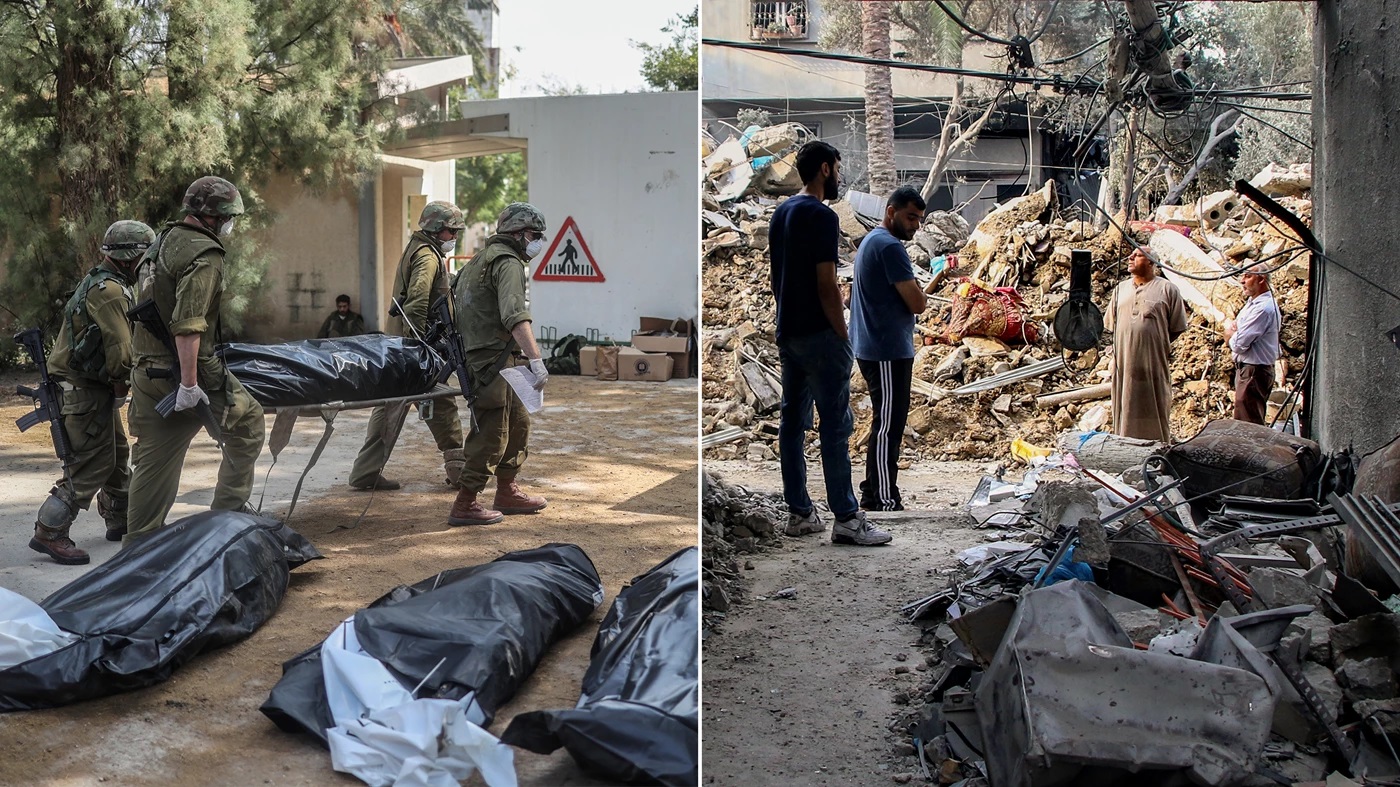
Image: Ali Jadallah / Anadolu / Getty Images

Since the outbreak of war after unprecedented terror attacks on Israel by Hamas, Middle Eastern churches, councils, and leaders have expressed their outrage over the killing of thousands of innocent civilians.

Many Arab Christian groups have issued public statements. Most emphasized the Christian call to be peacemakers. Several have been criticized for what some see as calls not specifically addressing the suffering of civilian Jews targeted for death by terrorists.

Originating from Palestine, Egypt, Jordan, and Lebanon—with most prompted by the tragic bombing of the Anglican hospital in Gaza—the public statements range in focus and intensity. Some assert the international community overlooks the context of occupation by the Israeli state; others remind the global church of the continued Christian presence in the land.

CT studied texts from nine Arab and four Western organizations, most of evangelical conviction, and queried the perspective of an Israeli Messianic Jew and a Lebanese Armenian evangelical. The review found that few Middle Eastern statements have named Hamas as the perpetrator of terrorism, while many specifically criticize Israel itself.

One of the most recent statements is from Musalaha, which names both.

The Jerusalem-based reconciliation ministry works with Israelis and Palestinians from diverse religious backgrounds using biblical principles to engage the issues that divide them in pursuit of peace. After two weeks painfully watching the widespread carnage, its public statement centered on “lament” and called for a reconciling response.

“We lament people who, in the name of justice, have allowed rage to perpetuate the cycle of dehumanization and excuse bloodshed; as seen with Hamas’ attacks and the Israeli army’s response,” stated Musalaha. “We invite both Palestinians and Israelis to see the dignity and humanity of the other by non-violently co-resisting together for a better future.”

The region’s most representative Christian body, however, was bluntly specific about the suffering it asserts the Jewish nation-state is imposing on Gaza.

“What the Palestinian people are exposed to in Gaza is not a military reaction to a military action,” stated the Middle East Council of Churches (MECC), “but rather a genocide and ethnic cleansing, targeting the detainees of the largest prison in human history—and with premeditation.”

Its statement, the starkest of the nine Arab ones surveyed, called the war a “war of extermination,” and called for “all honorable people” to intervene.

Michel Abs, secretary general of the MECC, told CT he recognized that what he calls “the Zionist entity” was attacked and responded—and that it should have stopped there.

The MECC focused on denouncing Israel for cutting off water in the densely populated coastal strip, the destruction of medical infrastructure, and the collateral deaths of defenseless citizens. It called to stop the aggression, to lift the siege of Gaza, and to hold what Abs called “the occupying forces” accountable.

Member churches in the MECC include Catholic, Orthodox, and many Protestant denominations—most of which are called “Evangelical,” per local usage. Yet while “mainline” differences known in the American Christian landscape are not as distinct in the Arab world, the World Evangelical Alliance (WEA) incorporates bodies not represented in the MECC.

“We are generally in agreement [with the MECC statement], without necessarily adhering to each word,” said Paul Haidostian, acting president of the Union of Armenian Evangelical Churches in the Near East, a reformed church of pietistic expression and not a WEA affiliate. “But are there elements of extermination in the current war? I would think yes.”

Jack Sara, general secretary of the regional Middle East and North Africa evangelical alliance, helped craft the official WEA response to the “Holy Land conflict.” But he agreed with the MECC statement as well.

“With thousands of Palestinians dying nonstop, it clearly describes the facts on the ground,” he said. “If anything, it falls short in beseeching the world to intervene.”

Analysts have noted that Hamas embeds itself in civilian areas, and that the Israel Defense Forces (IDF) often issues warnings before striking residential structures. In preparation of an anticipated ground invasion, the IDF called on noncombatants to evacuate northern Gaza; Hamas told them to remain in place.

The United Nations, however, has stated that Gaza already represents a humanitarian catastrophe with more than 6,500 killed and a million displaced as of October 26, according to the Palestinian Health Ministry. Responding to Hamas terrorism and the deaths of 1,400 citizens, mostly civilians, Israel’s dilemma is stark, as the urban warfare necessary to pursue terrorist leaders in Gaza will further deteriorate local conditions and increasingly inflame much global opinion.

But watching many in the United States and wider evangelical world rally behind Israel, Sara’s Bethlehem Bible College (BBC) cosigned a Palestinian Christian statement of significant rebuke, calling “Western church leaders and theologians” to repent.

It opened by quoting the prophet Isaiah: Learn to do right; seek justice; defend the oppressed (1:17). “Western attitudes towards Palestine–Israel suffer from…

This article was originally published at Christianity Today, on October 27, 2023. Please click here to read the full text.
Categories
Christianity Today Middle East Published Articles

Amid Israel-Hamas War, Local Christians Seek Righteous Anger and Gospel Hope

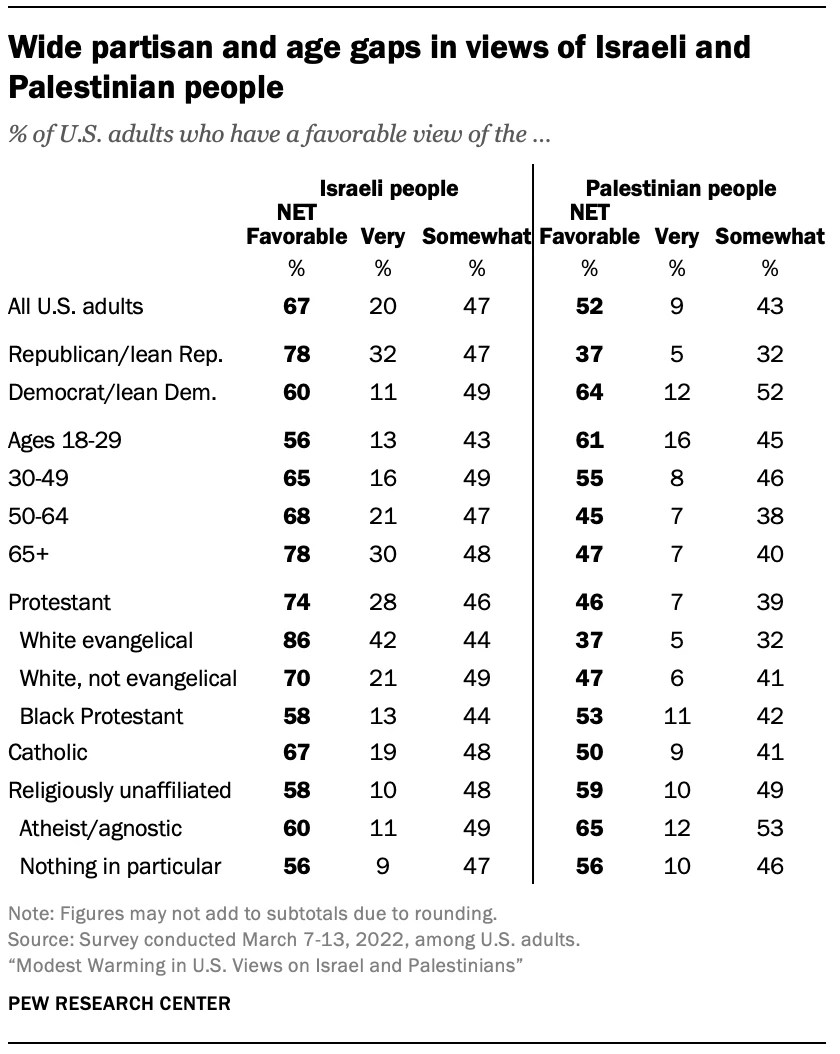
Image: picture alliance / Ahmad Hasaballah / Stringer / Getty / Edits by CT

With at least 1,200 Israelis and 1,100 Palestinians slain, it is not simply the Israel-Hamas war’s stunning casualty total that has outraged the world, but also the brutality of Hamas.

More than 200 youth were killed at a concert festival, villages and farms were raided and terrorized, and an estimated 150 hostages have been threatened with death if Israeli air strikes on the coastal strip do not cease.

With such cessation unlikely, casualty numbers will most assuredly increase.

Israel has called up 360,000 reservists, poised to begin a ground campaign into Gaza. Consistent with military strategy to meet terrorism with overwhelming force, past conflicts in the beleaguered 25-mile strip have previously produced striking totals, including 2014 clashes that resulted in 73 Israeli and 2,100 Palestinian deaths.

All the while, many Israelis have lived in fear. Since the September 2005 unilateral Israeli withdrawal from Gaza, the Jewish Virtual Library has counted 334 terrorism deaths and at least 20,648 rockets and mortars launched into Israeli territory.

Amid the stark tallies, there are signs of balance between local believers across the ethnic divide. Christianity Today interviewed three Messianic Jews, three Palestinian evangelicals, and two Gazan Christians currently outside their native strip.

Shared astonishment

“The level of hatred and evil displayed in these acts is truly shocking,” said Eli Birnbaum, a branch director for Jews for Jesus in Tel Aviv and Jerusalem. “It is unlike anything we have seen in decades and has deeply shaken the population.”

Attacks in his neighborhood have been so intense, he said, that people are remaining indoors. In constant communication with family, friends, and 50 full-time staff members, he said his community is doing its best to stay connected and offer encouragement.

On the Saturday of the attack, Birnbaum’s congregation came together to pray. Unsure of what to do, they distributed prayer sheets for the safe return of hostages. Some members simply lit candles.

Jews for Jesus collected supplies for displaced families and soldiers at the border.

At least one Messianic Jew has died for his nation. David Ratner was called a war hero by his commander, saving the lives of five fellow soldiers as their post was stormed by 400 Hamas fighters. Shot in the neck, he continued in combat for the next eight hours.

Birnbaum counseled his children to stand strong against the desire for hatred. He challenged Israelis to seek justice without vengeance. And he asked everyone to remain genuinely concerned for Jew and Palestinian alike—while praying for Gaza and its liberation from Hamas.

“What can we do to represent the Lord as our nation is in crisis?” he asked. “Please pray for us, that we choose wisely how to shine his light in a very dark place right now.”

Grace Al-Zoughbi, a Palestinian theological educator, is also searching for his light.

“The church is trying to cling to any glimmers of hope it can find,” she said. “The situation is deeply disturbing, the atrocities appalling.”

She also was shocked by rocket fire, landing from the opposite direction near her home in Bethlehem. Families rushed to the grocery store to stock up on goods, fearful of escalation. Representative of an already struggling population under lockdown, she said the loss of tourism will further devastate the economy as the church seeks to help as much as possible.

Its immediate reaction was fervent prayer to end the conflict.

“Lord, take all the evil, smash it as glass, and grind it to nothing,” Al-Zoughbi pleaded. “In this we hold our hope, that one day soon your ways will prevail.”

She asked believers on both sides to be peacemakers. She asked international Christians to avoid “evil misrepresentations.” And for herself, she focused on Psalm 122: Pray for the peace of Jerusalem. May all who love you be secure.

Shared distance

Hanna Massad, the former pastor of Gaza Baptist Church, turned himself to the terse psalm that follows: Have mercy on us, Lord, have mercy on us, for we have endured no end of contempt (123:3). Following 30 years of service as the first locally born pastor…

This article was first published at Christianity Today on October 11, 2023. Please click here to read the full text.
Categories
Christianity Today Middle East Published Articles

Pew: Israelis and Palestinians Find Favor in the Eyes of Americans

Americans prefer a less polarized Holy Land. But they themselves are as polarized about it as ever.

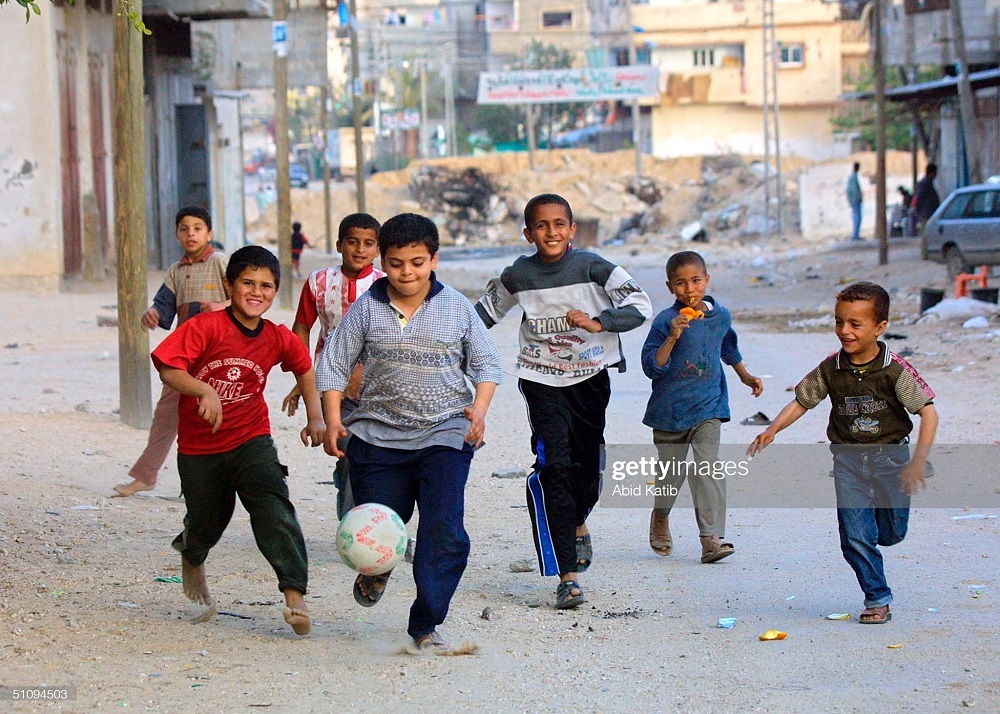
A new survey by the Pew Research Center—three years removed from when Donald Trump and Benjamin Netanyahu led the political scene—reveals rising favorability ratings for Israel and Palestine, across nearly every segment of Americans.

Most, however, still prefer Israel.

White evangelicals lead the way, with 86 percent viewing the Israeli people favorably and 68 percent viewing Israel’s government favorably, compared to 37 percent favorability for the Palestinian people and 14 percent favorability for their government.

Overall, 1 in 3 white evangelicals view both peoples favorably, but only 1 in 10 favor both governments.

These believers are out of step with the wider US, however.

Among Americans at large, the Israeli people have a 67 percent favorability rating, up from 64 percent. The Israeli government’s favorability rating increased from 41 to 48 percent. And a narrow majority of Americans now view Palestinians positively (52%, up from 46%), though less so their government (28%, up from 19%). Overall, 2 in 5 Americans view both peoples favorably (42%), but only 1 in 5 favor both governments.

“Americans naturally want to be favorable toward other peoples,” said Mark Tooley, president of the Institute on Religion and Democracy (IRD). “I’m surprised it is not higher.”

Theology may have something to do with the affinity. In a new question, Pew asked Americans if God gave the land that is now Israel to the Jews. White evangelicals agreed at a rate of…

This article was originally published at Christianity Today, on June 9, 2022. Please click here to read the full text.

Categories
Christianity Today Middle East Published Articles

Rockets, Riots, Sermons, and Soccer: Christian Views on the Conflict in Gaza and Israel

Palestinian Boys Play Game Of Soccer. (Photo By Abid Katib/Getty Images)

Bombs fall in Gaza as rockets target Israel.

Frustrated Arab rioters are met by extremist Jewish settlers.

And in the middle of it all, Danny Kopp sent his boys out to play soccer.

Numbers were down at the Jerusalem neighborhood park frequented by Jew and Arab alike, but his 13-, 10-, and 8-year-old sons still translated between the sides.

“These encounters, as small as they are, remind belligerents that coexistence is still viable,” said the chairman of the Evangelical Alliance in Israel.

“Wholesale vilifying is simply inaccurate.”

But it is easy to do, if attached to a favored narrative.

Since the outbreak of fighting on May 10, Israeli bombs have leveled almost 450 buildings in Gaza, including six hospitals, nine health centers, and the headquarters of the Associated Press. Hamas authorities count 232 dead, including 39 women and 65 children. More than 1,900 people have been injured, and 52,000 displaced from their homes.

But 160 of these have been militant fighters, said Israeli authorities. Hamas’s indiscriminate barrage has launched more than 4,000 rockets and killed 12 people—including two children—while injuring hundreds. Israel’s Iron Dome defense system has intercepted most rockets, but Iranian sponsorship of Hamas has led to a dramatic increase in missiles able to target Jerusalem.

Such long-range weapons represent 17 percent of the thousands of missiles fired this month. Nine years ago, they represented only 1 percent.

A ceasefire is now in place. President Joe Biden pledged to work through the United Nations and the Palestinian Authority to rebuild Gaza. The US would prevent such aid from restocking Hamas’s arsenal, while allowing the replenishing of the Iron Dome’s defenses.

The weapons evolve, though the animosity is familiar.

But what has shocked and saddened a dozen sources interviewed by CT—half Jewish and half Palestinian—is the ethnic violence that has torn through previously peaceful towns of coexistence. In Lod, Haifa, Nazareth, and elsewhere, Arab rioters have set 10 synagogues and more than 100 Jewish homes on fire, while looting or damaging hundreds more.

Israel called up 7,000 reservists to quell the violence. But reports say police have been far more lenient with Jewish settlers who have responded in kind, though with less damage. Video recordings, however, depict settler attempts to seize Arab Israeli properties.

The outbreak of violence is tied to Israeli legal proceedings to evict Palestinians from their homes in the East Jerusalem neighborhood of Sheikh Jarrah. The families have resided there for generations, and the land dispute has alternate explanations. Protests were met with violence, which then spread to the al-Aqsa Mosque. Hamas fired rockets in solidarity.

And amid the backdrop of this quagmire, Kopp sent out his children.

On Saturday, he preached the same message to his mixed Jewish-Arab Narkis Street Congregation in Jerusalem, asking his flock to purposefully hear both sides.

“Jesus constantly broke out of his information bubble,” he said, “engaging every kind of person imaginable and on a consistent basis.”

Across the separation wall, however, Munther Isaac’s Sunday sermon had a different tone. “What is required is not…”

This article was originally published at Christianity Today on May 20, 2021. Please click here to read the full text. Additional reporting by Jeremy Weber.

Categories
Christianity Today Middle East Published Articles

Why Many Christians Want to Leave Palestine. And Why Most Won’t.

In Bethlehem—the little town of Jesus’ birth—only 1 in 5 residents today are Christians (22%). A decade earlier, more than 4 in 5 were believers (84%).

The steep decline is reflected in other traditional Christian cities in the Holy Land. In Beit Jala, the Christian majority has fallen from 99 percent to 61 percent. In Beit Sahour, it has fallen from 81 percent to 65 percent.

When the Ottoman era ended in 1922, Christians were 11 percent of the population of Palestine—about 70,000 people. According to the 2017 census by the Palestinian Authority (PA), they now number 47,000—barely 1 percent.

There are competing explanations of what—or who—is to blame. Some identify the Israeli occupation. Others describe Muslim chauvinism.

The overwhelming answer, according to a new survey of local Christians by the Palestinian Center for Policy and Survey Research (PCPSR), is economics.

Nearly 6 in 10 respondents identified this as the main reason they consider emigration (59%).

The poll, commissioned by the Philos Project, a US-based initiative promoting positive Christian engagement in the Middle East, surveyed 995 Christians in 98 Palestinian locations throughout the West Bank and Gaza Strip in January and February.

Compared to the economy, other cited reasons paled in significance.

Security conditions were named by 7 percent. Another 7 percent cited better education. And another 7 percent blamed the political situation.

Only 4 percent blamed corruption, while 3 percent gave a religious explanation.

But this particular question measured the primary driver of desire to leave the Holy Land. What secondary factors might be involved? Philos “affirms the right of all Christians to…

This article was originally published at Christianity Today, on August 4, 2020. Please click here to read the full text, and here for the Arabic translation.

Categories
Christianity Today Middle East Published Articles

13 Christian Takes on Trump’s Peace Plan for Israel and Palestine

Trump Peace Plan

This article was first published at Christianity Today, on January 28, 2020.

After three years of anticipation—and dread—President Trump announced the launch of his “Deal of the Century” to achieve peace between Israel and Palestine.

With Israeli Prime Minister Benjamin Netanyahu at his side, he outlined details for a proposal that would recognize a Palestinian state following extensive land swaps and security arrangements.

Palestinian Authority President Mahmoud Abbas was not present, having broken off communication with the White House following several US decisions deemed biased toward Israel.

Abbas immediately rejected the plan, which Palestinians had long declared “dead on arrival.”

But Netanyahu’s acceptance was enthusiastic, declaring himself willing to begin negotiations with the Palestinians on such terms. A day earlier, Netanyahu’s challenger Benny Gantz also signaled his party’s agreement with Trump’s proposal.

With three Arab states lacking a peace treaty with Israel in attendance—Oman, Bahrain, and the United Arab Emirates—Trump hopes there will be a regional push to implement his plan.

And with $50 billion promised as investment for the nascent Palestinian state, the president believes all the necessary pieces are in place.

“All previous generations from Lyndon Johnson tried and bitterly failed,” Trump said. “But I was not elected to do small things, or shy away from big problems.”

It only required he approach peace in a “fundamentally different” manner…


Following a summary the article includes the perspective of

  • Joel Rosenberg, co-founder of the Alliance for the Peace of Jerusalem
  • Salim Munayer, head of the Jerusalem-based Musalaha reconciliation ministry
  • Daoud Kuttab, a Palestinian journalist and secretary of the Jordan Evangelical Council in Amman
  • Hanna Massad, a Palestinian pastor who led Gaza Baptist Church for 12 years and returns regularly
  • Gerald McDermott, Anglican Chair of Divinity at Beeson Divinity School who recently wrote The New Christian Zionism: Fresh Perspectives on Israel and the Land
  • Yohanna Katanacho, a Palestinian pastor and academic dean at Nazareth Evangelical College
  • Lisa Loden, the Messianic Jewish co-chair of the Lausanne Initiative for Reconciliation in Israel–Palestine
  • Joel Chernoff, general secretary of the Messianic Jewish Alliance of America
  • Martin Accad, chief academic officer at Arab Baptist Theological Seminary in Beirut
  • John Hagee, the founder and chairman of Christians United for Israel
  • Todd Deatherage, cofounder and executive director of Telos Group, which seeks to build a “pro-Israeli, pro-Palestinian, pro-peace movement”
  • Wissam al-Saliby, the Geneva-based advocacy officer for the World Evangelical Alliance
  • Ibrahim Nseir, Syrian pastor of the Presbyterian Church of Aleppo

Please click here to read the full article at Christianity Today.

Categories
Christianity Today Middle East Published Articles

Palestinian Evangelicals Gain Official Recognition

Palestine Evangelical Council
Bishop Efraim Tendero announces the legal recognition of a Palestinian Evangelical Alliance at the general assembly of the World Evangelical Alliance. (Image: Jeremy Weber)

This article was first published at Christianity Today on November 27.

After 12 years of waiting, evangelicals in Palestine now claim they have greater civil rights than their fellow believers in the Holy Land.

Earlier this month, the president of the Council of Local Evangelical Churches in the Holy Land—which represents congregations and ministries located in the West Bank, East Jerusalem, and the Gaza Strip—triumphantly held aloft his evidence at the once-a-decade general assembly of the World Evangelical Alliance (WEA).

“Here is the presidential decree signed by … President Mahmoud Abbas,” Munir Kakish told the approximately 800 WEA delegates from 92 nations gathered in Bogor, Indonesia. “Our hearts are full of thankfulness to God for this new declaration.”

When the Palestinian Authority (PA) was created in 1994 following the Oslo Accords, pastors of local evangelical churches met to create a council in order to have a voice with the new government, Kakish told CT.

Ministering in the Holy Land since 1978, Kakish pastors two churches: an independent congregation in Ramallah, Palestine, and a Baptist congregation in Ramla, Israel. They are only 30 miles apart, but divided by the Israeli separation wall.

“I knocked on [the PA’s] doors many times,” he said. “But now the timing was right, and the personnel … were understanding.

“Most of all, it was our persistence to obtain our civil rights as Palestinian citizens.”

Over time, the council—which Kakish has led since 2007—gained credibility as…

Please click here to read the full article at Christianity Today.

Categories
Christianity Today Middle East Published Articles

How Palestine Divides Messianic Jews

Messianic Jews
(Oded Balilty, AP)

This article was first published in the May print edition of Christianity Today.

Among Christians in America, Israel can be viewed as a fulfillment of prophecy, a democratic ally in a region of chaos, or an occupier oppressing stateless Palestinians. How to choose?

Given that 2 out of 3 US evangelicals have a positive perception of Israel, according to LifeWay Research, perhaps a better question is: How should evangelicals identify with the issues Israel faces?

Fortunately, there is a useful interpreter. “If the Christian community wants to understand Israel from a believing perspective,” said Jamie Cowen, an Israeli lawyer and a believer in Jesus, “going through Messianic Jews is best.”

However, the complexity of Israel divides even Messianic Jews in attitude toward Palestine, as illustrated by debate this year over an interview provocatively summarized as supporting ethnic cleansing.

“The only rights the Palestinians have are squatter’s rights,” Paul Liberman, executive director of the Alliance for Israel Advocacy (AIA), told The Intercept.

He described how the lobbying arm of the Messianic Jewish Alliance of America (MJAA) was pushing for a shift of US funding from UN–administered Palestinian aid ($364 million in 2017) to an Israeli-led effort offering money to relocate from the West Bank. The goal: eventual annexation of the territory in a one-state solution with fewer Palestinian citizens, maintaining Israel as a Jewish state.

First adopted by the MJAA in 2015, the idea reverberated within Messianic Jewish circles once TheIntercept highlighted efforts to harness evangelical influence in Congress and the White House.

“It is not a removal. It is an opportunity for a much better life,” said Joel Chernoff, CEO of the MJAA. “But the demographic issue is real.”

About 700,000 Jews and 1.5 million Arabs live in Judea and Samaria—the favored name in Israel for the West Bank. Chernoff desires more Jewish settlements there. And he believes many Palestinians already want to escape the territory’s corrupt Palestinian Authority. (A 2017 MJAA poll found half of residents were discussing a move abroad and were open to resettlement in exchange for about $5,000.)

The “ethnic cleansing” headline was a smear tactic by liberal and anti-Israel media, Chernoff said. The issue is not controversial among the MJAA’s 3,000 dues-paying members, 12,000 supporters, or 155 affiliated synagogues. But it is controversial to other Messianic Jews.

“There is not a consensus this is a good proposal,” said Monique Brumbach, executive director of the 75-member Union of Messianic Jewish Congregations (UMJC). “The Scriptures promised the land to the Jewish people. But there will always be other people within it.”

Nearly all Messianic Jews believe modern-day Israel is the fulfillment of biblical promises…

Please click here to read the full article at Christianity Today.

Categories
Americas Christianity Today Published Articles

Pew: US Christians Like the Israeli and Palestinian People More Than Their Governments

Pew Israel Palestine
(via Vox)

This article was originally published at Christianity Today, on April 24, 2019.

When it comes to the longstanding Israeli-Palestinian conflict, do American evangelicals favor one side or the other?

Research Center finds one-third actually feel favorable toward both—when it comes to their peoples. And one-third feel unfavorable toward both governments.

Politico Magazine recently profiled Telos, an evangelical group dedicated to changing the narrative on Israel. “Christian faith communities persistently advocate for one-sided postures towards the conflict,” states the group, whose name means purpose in Greek, on its website. “Our telos is the freedom, security, and dignity of every human being in the Holy Land.”

But the profile prompted a strong critique from Mark Tooley of the Institute on Religion and Democracy (IRD), who describes such “ambivalence” as actually harming both Israelis and Palestinians. Without solid evangelical support buttressing the US alliance with Israel, all sides will only entrench and deepen the conflict, he argues—making negotiation less likely.

“Impartiality and avoiding polemical stances are now de rigeur in much of nouveau Evangelicalism, so the Telos appeal has resonance,” he wrote on IRD’s blog. “Aren’t Christians supposed to be on everybody’s side?”

Pew’s new survey aimed to measure exactly that.

For decades, Pew has asked which side Americans sympathized with more: Israel or the Palestinians? But this year, researchers recognized a problem: this approach compared a country (Israel) with a people (Palestinians).

It was not apples-to-apples, nor did it allow for respondents to signal sympathy for both. So this year, they instead used separate questions asking about a favorable or unfavorable opinion toward the Israelis and the Palestinians as peoples, as well as toward their respective governments.

About 1 in 3 evangelical church attendees (34%) reported favorable opinions of both peoples.

However, the weight is still on the Israeli side…

Please click here to read the full article at Christianity Today.

Categories
Americas Christianity Today Published Articles

Will Trump’s ‘Deal of the Century’ on Israel-Palestine Please Evangelicals?

Trump Deal Century Israel Palestine Evangelical
Image: Illustration by Rick Szuecs / Source image: Senior Airman Delano Scott / JBA via CT

This article was first published at Christianity Today, on April 12, 2019.

When it comes to Israel, nearly all evangelicals hold dear the biblical maxim: Pray for the peace of Jerusalem.

But what does it mean after a fiercely contested election?

President Donald Trump will soon propose his vision of practical exegesis.

Two years in the making, Trump’s “Deal of the Century” is slated to be released soon, now that Israel has reelected Prime Minister Benjamin Netanyahu. His Likud party secured a virtual tie with challenger Benny Gantz’s Blue and White party, but Bibi’s right-wing coalition will push him over the top.

Neither leading candidate made the peace process with Palestinians a major plank of their campaign as the entire Israeli electorate has shifted to the right, emphasizing security over negotiation.

Other American presidents have tried and failed to advance official US policy of a two-state solution. But while Trump has brought a new energy—and unpredictability—to forge an elusive peace between Israelis and Palestinians, he may face two very skeptical partners.

Even so, Trump has shaken the system.

Last year in May, he moved the US embassy to Jerusalem.

In February, he stopped US funding to Palestinian aid programs.

Last month, he recognized Israeli sovereignty over the Golan Heights.

And more than any president prior, he has courted evangelical opinion. LifeWay Research shows that 67 percent of American adults with evangelical beliefs have positive perceptions toward Israel, with 80 percent believing Abraham’s covenant is for all time.

But while analysts have panned Trump’s decisions as decidedly one-sided against the Palestinians, he has dangled his own deal-making reputation as—at times—a warning to the Israelis.

“Israel will have to pay a higher price,” he said after ordering the embassy’s relocation, for the Palestinians “will get something very good, because it’s their turn next.”

What does Trump expect? And will it cost him his carefully cultivated evangelical support?

Details of his plan have not been publicly released, but in February US officials Jared Kushner and Jason Greenblatt toured Arab capitals seeking support.

A month later Greenblatt, Trump’s chief legal officer and special representative for international negotiations, checked in with US evangelicals in a special meeting at the White House.

Axios reported that several “raised concerns.”

CT surveyed 11 evangelical leaders—7 from the US and 4 from the Middle East—to take their pulse on expectations and gauge their red lines.

“Don’t divide Jerusalem, It would disappoint me if that was President Trump’s decision,” said…

Please click here to read the full article at Christianity Today.

Related: The attempt to bring Judeo-Christian politics to Israel

Categories
Christianity Today Middle East Published Articles

O Come, Ye Gazan Christians, to Bethlehem

Gaza Christians Bethlehem
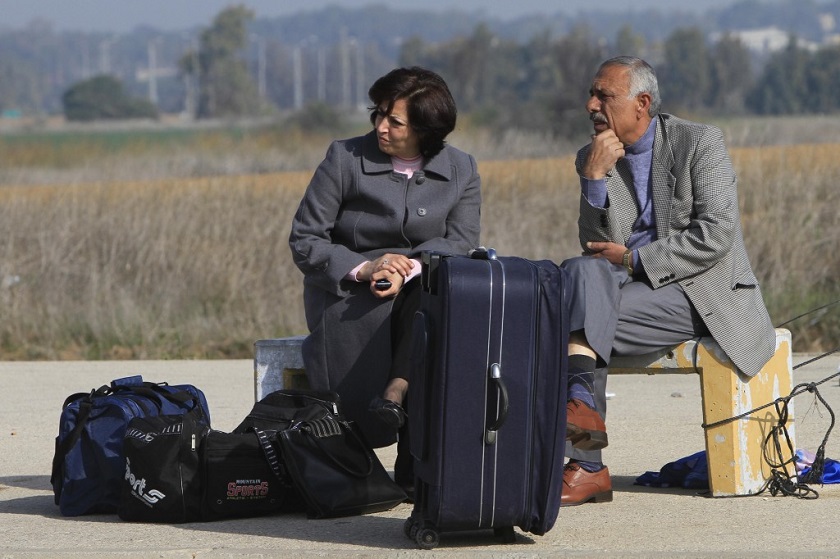
Palestinian Christian couple from the Gaza Strip leaves through the Israeli Erez crossing, Thursday, Dec. 24, 2009 (photo credit: Tsafrir Abayov/Flash90)

This article was first published at Christianity Today, on December 20.

Bethlehem’s Church of the Nativity has restored its sparkling mosaics and marble columns to their original glory for the first time in 600 years.

“It has become such a beautiful church,” Ziad al-Bandak, head of the local project committee of Christian leaders, told the AP. “Every Christian in the world would love to see it now.”

Palestinian Mayor Anton Salman expects 1.2 million tourists will make their way to Christ’s birthplace this year. Among them, following an Israeli reversal, will be those who most long to visit for Christmas—the Christians of the Gaza Strip.

“In Gaza, they talk about the West Bank as if it is heaven,” said Hanna Maher, Egyptian pastor of the Gaza Baptist Church. “People love to go for Christmas; there are so many churches.”

In Gaza, there are three. According to the 2017 census, 47,000 Christians live in the Palestinian territories (1% of the population), but only about 1,000 live in Gaza.

Last week the Christian advocacy group Middle East Concern (MEC) reported that nearly all who applied to enter Israel to visit the West Bank for Christmas failed to receive permits, except for those older than 55.

Applicants younger than 16 were also approved, consistent with restrictions instituted last Christmas and maintained through Easter. A previous policy limited travel to those between ages 16 and 35.

The MEC report was confirmed by Maher, who stated that initially just 200 travel permits had been granted, and Christians, sharing stories of the delayed permit applications, began to assume those outside the age limit would not be allowed to travel.

But their prayers were answered this week…

Please click here to read the full story at Christianity Today.

Categories
Christianity Today Middle East Published Articles

Under the Law: Israeli Christians Worry About Secondary Status in Jewish Nation-State

Israel Nation State
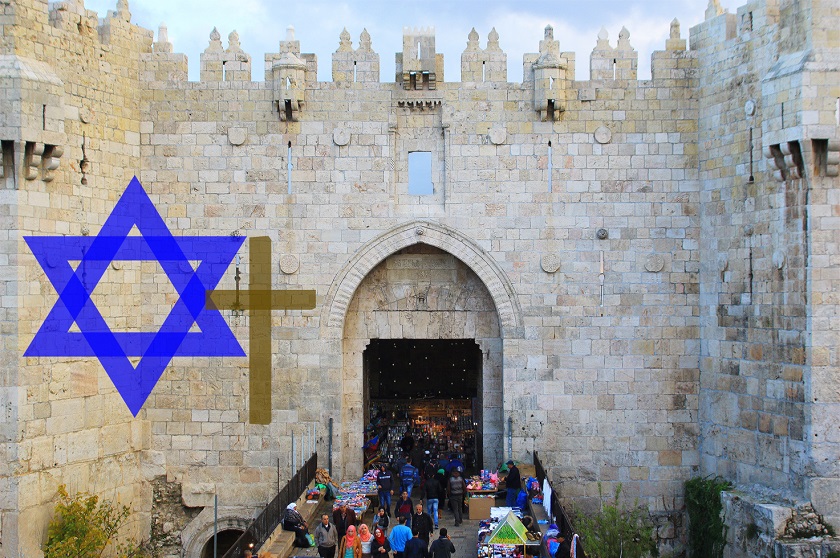
Judaism and Christianity symbols on the Jerusalem old city gate – MyHolyShop

This article was first published at Christianity Today, on July 31, 2018.

In a legislative act both obvious and inflammatory, this month Israel cemented its nature as a Jewish state.

By a narrow vote in the Knesset, Israel’s legislature, the law entitled “Basic Law: Israel as the Nation-State of the Jewish People” was adopted to serve alongside over a dozen other “basic laws” that serve as Israel’s de facto constitution.

A key clause states that national self-determination is “unique” to Jews. Other provisions formally establish the nation’s flag, emblem, and anthem. Jerusalem is confirmed as the complete and united capital. The Sabbath and Jewish festivals are declared official days of rest.

But two other clauses have raised considerable concern. Jewish settlement is a “national value” to be promoted. And Arabic is downgraded from an official language to one with “special status.”

“This law outlines that Israel’s democratic values are secondary for non-Jews,” said Shadia Qubti, a Palestinian evangelical living in Nazareth. “It sends a clear message that my language is not welcome and consequently, neither is my cultural and ethnic identity.”

Her fears are echoed by an Israeli lawyer.

“While the idea of the law is straightforward—it’s hard to argue that Israel isn’t a Jewish state—the actual provisions are controversial, discriminatory, and possibly racist,” said Jaime Cowen, former president of the Union of Messianic Jewish Congregations…

Please click here to read the full article at Christianity Today.

Categories
Christianity Today Middle East Published Articles

Christ at the Checkpoint in the Age of Trump


ALcheckpoint3
Checkpoint between Israel and Palestine; credit: Andrew Larson

This article was first published May 25 at Christianity Today.

Fares Abraham grew up in the West Bank village of Beit Sahour, where tradition says the angels sang “Peace on Earth” to the startled shepherds. But his clearest memory is of his mother shot in the back by an Israeli soldier as she shuffled him and the neighborhood kids into her house during the first intifada.

Now in his mid-30s, the Liberty University graduate created Levant Ministries five years ago to mobilize Arab youth to fulfill the Great Commission.

And when he comes back home, he is at peace with his upbringing.

“When I was young, I asked myself if I should join the resistance or be a bystander,” he said to the 500 attendees—including 150 local Palestinian Christians—gathered in Bethlehem from 24 countries at the fourth biennial Christ at the Checkpoint (CATC) conference in 2016.

“But now I can go up to a checkpoint, look a soldier in the eye, and say, ‘I forgive you and love you in the name of Jesus.’”

Working also with global partners, Abraham believes the younger generations are pro-peace, becoming increasingly pro-justice the more their lives are transformed by the gospel.

It is a message communicated at CATC, though its anti-Christian Zionism is often criticized as anti-Israel…

Please click here to read the full article at Christianity Today. 

CATC audience
Audience at CATC opening in 2016; credit: Andrew Larson


Categories
Christianity Today Middle East Published Articles

In Shadow of Death, Palestinian Christians and Messianic Jews Relapse on Reconciling


Embassy Gaza
AP, via Japan Times

This article was first published at Christianity Today, on May 21.

Hanna Maher’s wife is nine months pregnant, due any day now, with only four hours of daily electricity. Her two older boys scurry about in the dark, kept ignorant by parents about the dead at the border.

But it is hard to be ignorant in Gaza.

A Norwegian charity estimates 56 percent of children in the Palestinian territory suffer from traumatic nightmares. Suicide, rarely seen culturally, is a growing concern. Maher, an Egyptian-born Baptist pastor, says some at the border see death as the best option.

Two million people are squeezed into a coastal strip roughly the size of Philadelphia. Exit is severely restricted on one side by Israel. The waiting list into Egypt is 40,000 names long.

Unemployment is over 40 percent. Clean drinking water is hard to come by. And on May 14, as tens of thousands massed near a chain link fence demonstrating for their “Right to Return,” Israeli snipers picked off dozens.

“Monday was a hard day. But at least it is quiet now,” Maher said. “It has been bad for years. But conditions now are the worst I have seen.”

Maher went to Gaza in 2011, and married his local Palestinian wife a year later. His congregation is the strip’s only evangelical church, with about 60 regular members. Overall, Gaza’s Christian population is about 1,000, mostly Greek Orthodox; in the last 10 years, it has declined by a third.

Maher provides food aid to about 120 families. His marriage preparation classes are a crash course in how to nurture a family amid poverty.

And he says local Christians are critical of just about everyone…

Please click here to read the full article at Christianity Today.

Categories
Christianity Today Middle East Published Articles

Friends of Zion’s Christians?

Friends of Zion's Christians
Christian pilgrims carry palm branches during the Palm Sunday procession on the Mount of Olives in Jerusalem. UPI/Debbie Hill

This article was first published at Christianity Today, on December 15, 2017.

American evangelicals rediscovered their brethren in the Middle East in recent years. The promise of the Arab Spring, followed by the threat of ISIS. Beheadings and other martyrdoms, followed by forgiveness.

Many decided we must become better friends, and work harder for the persecuted church’s flourishing in the land of its birth.

However, President Donald Trump’s recognition of Jerusalem as the capital of Israel is putting that new friendship to the test, as Middle East Christian leaders have almost unanimously rallied against the decision.

Trump’s decision would “increase hatred, conflict, violence and suffering,” said the patriarchs and heads of churches in Jerusalem in a statement in advance of his anticipated announcement.

The Coptic Orthodox Church warned of “dangerous consequences.” The head of Egypt’s Protestant community said it was “against justice” and “not helpful.”

But the strongest testimony may have come from Jordan, where the national evangelical council pleaded against “uncalculated risks” that “may well expose Christians in this region to uncontrollable dangers.

Despite these dire cries, many conservative US evangelicals rejoiced in Trump’s announcement…

Please click here to read the full article at Christianity Today.


Categories
Christianity Today Middle East Published Articles

The Piece of Jerusalem: Middle East Christians Explain Trump’s Embassy Gambit

This article was first published at Christianity Today, on December 5.

Israel Embassy Jerusalem
The United States embassy currently located in Tel Aviv may be moved to Jerusalem. (Image: Jack Guez / AFP / Getty Images, via the LA Times.)

President Donald Trump is expected tomorrow to recognize Jerusalem as the capital of Israel.

Doing so would fulfill a campaign promise. It would upend decades of American foreign policy.

And it would simultaneously encourage and unnerve the Christians of the Middle East.

“I am obviously pleased, as an Israeli,” said David Friedman, a professor at the Messianic Jewish Theological Institute and former dean of King of Kings College in Jerusalem.

“Jerusalem is the capital of Israel, de facto, concretely. Our government sits there. So why should President Trump continue ignoring reality?”

But 65 miles north in Arab-majority Nazareth, another Christian educator has a dramatically different response.

“It is a bad idea,” said Botrus Mansour, a Baptist elder and co-chair of the Lausanne Initiative for Reconciliation between Israel and Palestine. “It will increase resentment and possibly spark unnecessary violence, making peace harder to obtain.

“America will lose any remaining legitimacy it had as a fair broker.”

Israel occupied Arab East Jerusalem in 1967, and passed a law in 1980 declaring the city its eternal, united, and undivided capital. The United Nations declared the act null and void, by a unanimous resolution in which the United States abstained.

Palestine also desires Jerusalem as the capital of a future state. So American policy has been…

Please click here to read the full article at Christianity Today.

Categories
Prayers

Friday Prayers for Egypt: Palestine, Parliament

Flag Cross Quran

God,

To make peace, to make law – men must meet together.

Egypt has played a primary role in fostering unity between Fatah and Hamas. There can be little progress in just peace with Israel when Palestinians are feuding.

And now Egypt’s parliament opens a new session. The first word: Do not defame the body. There can be little progress in stabilizing society in a house divided.

God, keep the unity of spirit through the bond of peace.

There is much bad blood in Palestine, with different visions and different pressures. It will not be easy to make amends, let alone to engage Israel.

And there is much bad blood in parliament, with accusations of subservience and sabotage. It will not be easy to check and balance, let alone to achieve consensus.

God, when men meet together not all is peace. Perhaps it must be so to get there. Give space for all grievance. Give patience with all charity.

Set the Holy Land straight, God. Make Egypt merciful.

May their peoples achieve peace, domestic and foreign, inside and out.

May they argue as necessary but meet together, and love.

Amen.