It is a simple matter, really. No matter how many people poured into the streets on June 30 to demand early presidential elections, Mohamed Morsi had a mandate to govern for four years. “We cannot accept the loss of legitimacy because this is not our demand to compromise,” said Ahmed Kamal, youth secretary for the Muslim Brotherhood’s Freedom and Justice Party (FJP) in Helwan. “It is the will of Egyptians who chose Morsi in the democratic process.”
Fair enough. But in the mind of his supporters in the Muslim Brotherhood, he had a mandate for far more. “The people chose us,” he continued. “The Islamic ideology is to apply to the whole of life, and this is the view of our party.” Kamal’s words are punctuated by one of the key issues Morsi’s supporters grasp at: legitimacy. “When Egyptians chose it – and we do not wish to impose it – we cannot accept the idea of jumping over its legitimacy.”
Many commentators over the past year have criticized the Brotherhood for a majoritarian view of democracy. Kamal’s comments appear to bear this out. Morsi’s narrow win in the presidential elections, perhaps coupled with the sizeable Islamist win in parliamentary elections, was enough to confirm and empower the triumph of Islam. In their view, opposing their political project, therefore, is opposing Islam itself.
The interview continues to include Kamal’s views on Christians, martyrdom, and the Brotherhood conception of peaceful protest. Please click here to read the rest of the article at Egypt Source.
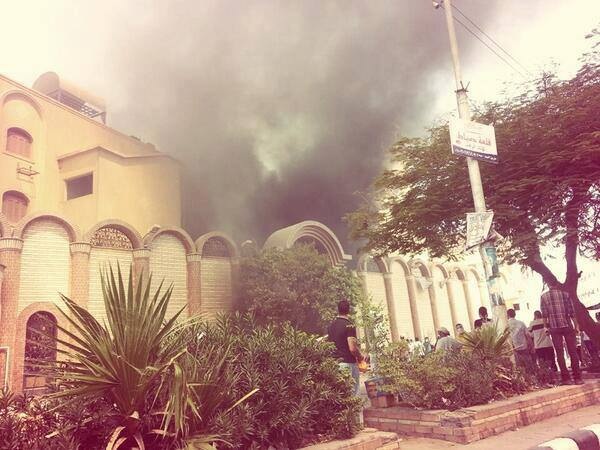
What mentality of man will burn a church? In Egypt, what should be known as a house of prayer is now the symbol of civil strife amid conflicting accusations of blame.
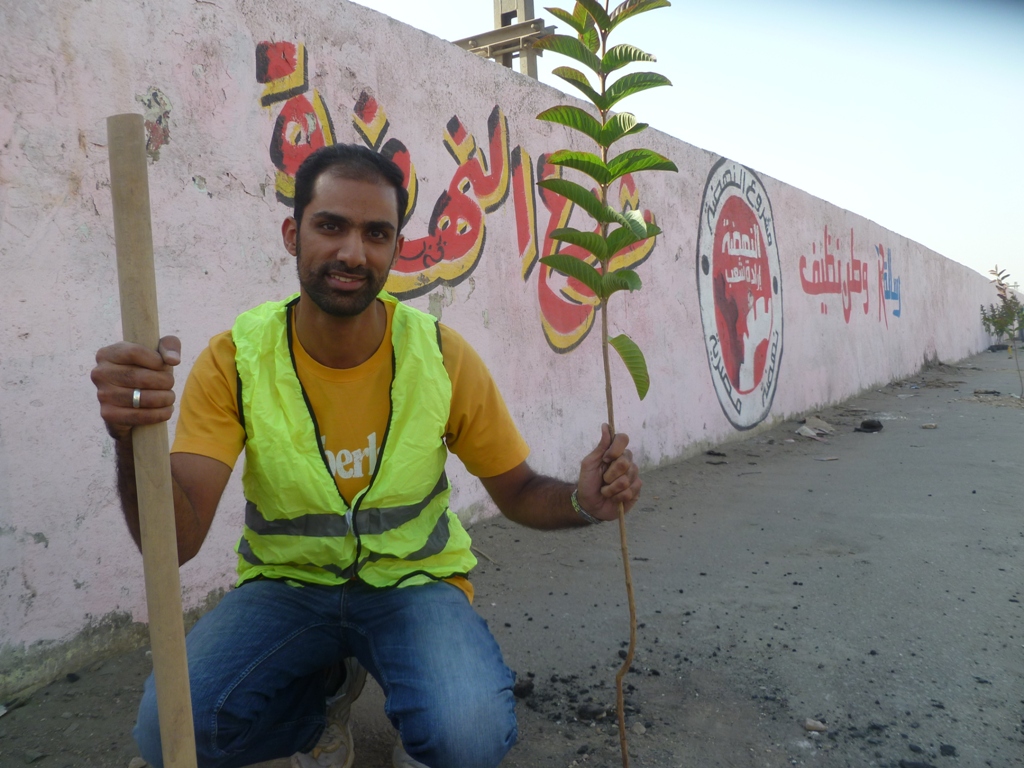
‘Attacks on churches are being done by the former regime and their thugs, not pro-Morsi demonstrators,’ said Ahmed Kamal, youth secretary for the Muslim Brotherhood’s Freedom and Justice Party (FJP) in Helwan, an industrial district to the south of Cairo.
But this is nonsense to Bishop Thomas, the head of the Coptic Orthodox Church in Qussia, 340 kilometers south of Cairo. His church was attacked by pro-Morsi protestors, but neighborhood Muslims rallied to defend it.
‘We recognize their faces and know who they are,’ said Thomas. ‘The Brotherhood is using us as a scapegoat to blame us for their failures.’
Anti-Christian rhetoric has been prominent among Islamists. Since Pope Tawadros, along with the Grand Sheikh of al-Azhar, appeared with General al-Sisi to announce the deposing of President Morsi, many Islamists believe Copts to be part of a grand conspiracy against not just their movement, but Islam itself.
‘We don’t oppose Christians,’ said Kamal, ‘but we are against the pope – as we are against the head of the Azhar – who interferes to direct people to a particular political direction.’
This second half of this message is reinforced by Kamal’s local party representation. The Helwan FJP’s Facebook page notes that ‘burning houses of worship is a crime’, but then all but justifies it in an attack on the church.
After listing a litany of the pope’s offenses, it declares, ‘After all this people ask why they burn the churches.
‘For the Church to declare war against Islam and Muslims is the worst offense. For every action there is a reaction.’
Kamal recognizes this message may have been too general. The Brotherhood sees Islam as both worship and ideology, only the latter of which has been rejected by the church and anti-Morsi protestors.
Incoherence
But for Arne Fjeldstad, CEO of The Media Project to promote religious literacy in journalism, this error reflects the reality on the ground for Islamists.
‘Whatever the Brotherhood says [about nonviolence] is not listened to or communicated on the street,’ he said. ‘So there is a large incoherence among them.’
More than 50 churches were destroyed since Wednesday last week, including two Bible Society bookshops – the first time in Egypt’s recent history. Some news organizations reported churches being marked for attack before the Brotherhood sit-ins were forcibly broken up.
Fjeldstad believes the Brotherhood will have a difficult time making theological sense about why God ‘turned against them’. But in the meanwhile, the sit-ins were filled with chants about martyrdom.
‘They have prepared the ground for future generations of warriors for Islam,’ he said.
Sarah Carr is an independent journalist and founder of mbinenglish.com, a web page which exposes the Arabic-only messages the Muslim Brotherhood, such as the FJP Facebook page above.
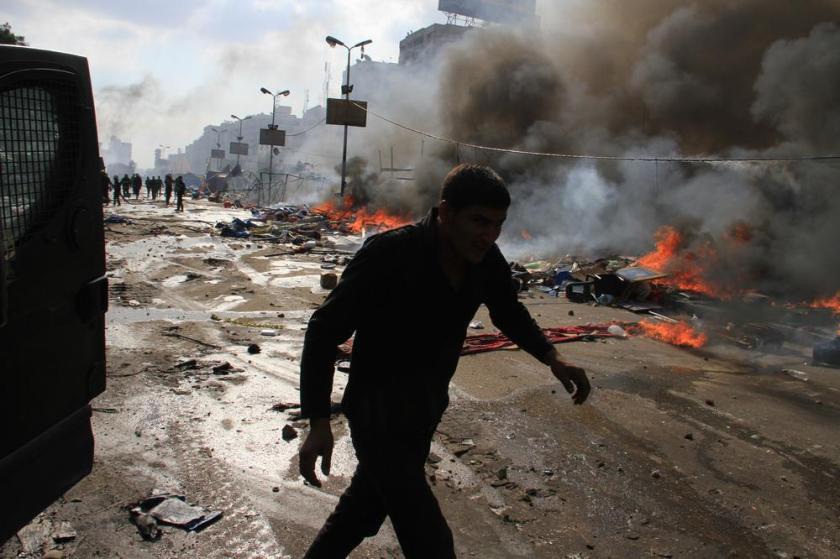
But she understands the rage of Islamist protestors, for she was a witness to the military-sponsored dispersal of the sit-in which killed over 600 people, not including 40 police personnel.
‘It was completely disproportional violence,’ she said, describing army vehicles mounted with automatic weapons firing into the crowds. Carr did not see any armed protestors, though she does not deny their presence.
‘The army needs to justify their terrorist narrative and use it to crush the Muslim Brotherhood,’ she said.
But the Brotherhood did resist. Political analyst Abdullah Schleifer notes that the Western tradition of nonviolent protest involves non-resistance to state-sponsored oppression.
‘Non-violence does not mean building barricades to hold off the Egyptian riot police and breaking up pavement stones to throw at them.’
Ahmed Kamal
Kamal freely admits the difference.
‘Gandhi is not necessarily our role model,’ he said. ‘He was good and his people were brave, but we have our peaceful model as well as per our book and principles.
‘We are unarmed in front of their weapons, but we will resist them. To be peaceful is not just to stay silent and wait for bloodshed. We must defend our lives even by throwing stones.’
But Emad Gad, a leading politician with the Egyptian Social Democratic Party, says they went far beyond throwing stones. His party is collecting evidence of protestors’ violent intent.
‘The army did not attack the people,’ he said. ‘They used tear gas and bulldozers and were attacked by armed protestors, and then they responded.’
For political analyst Eric Trager, both narratives make sense. The Brotherhood cannot win a battle against the security forces, but that may not be the point.
‘The Brotherhood seems to believe that if it can draw the military into a fight directly, it can create fissures within the military,’ he told World Affairs Journal.
To protect itself, the military must now push the issue to conclusion.
‘It [the army] entered into a direct conflict with the Muslim Brotherhood, perhaps even an existential one,’ Trager continued.
‘The military believes it not only has to remove Morsi, it has to decapitate the entire organization. Otherwise, the Brotherhood will re-emerge and perhaps kill the generals who removed it from power.’
Incitement
Bishop Mouneer of the Anglican Church in Cairo disagrees.
‘We witnessed bloodshed on our streets, vandalism and the deliberate destruction of churches and government buildings in lawless acts of revenge by the Muslim Brotherhood and their supporters,’ he said.
‘I appeal to everyone to avoid rushing to judge the authorities in Egypt.’
In attacking churches, though, Carr finds the Brotherhood playing into the hands of authorities – though society provides fertile ground.
‘We’ve seen for decades how you have one person with an agenda [to spark sectarian attacks] and then others are very happy to jump in,’ she said.
‘It doesn’t take much incitement from the Brotherhood or anyone else.’
Yet the authorities, she finds, are not innocent.
‘It is no good to go to conspiracy theories, but why did you break up the sit-in and not protect churches?’ she asks. ‘What should we conclude?’
The conclusion is a morass of relativity, reflective of a polarized society overlooking travesties on all sides.
‘The number of police killed is almost insignificant,’ said Kamal, ‘compared to the two thousand killed and ten thousand injured on our side.
‘This confirms our peacefulness.’
This article was originally published on Lapido Media.
The following is from the newsletter of Arab West Report, penned by Cornelis Hulsman. It is a good summation of events so far:
Cairo is burning. Normal Egyptians are scared and stayed as much as possible at home. The Friday of Rage was announced in a statement of the Muslim Brotherhood led Media team of the Anti-Coup, Pro-Democracy Alliance.
Statement: Friday of Rage
(Cairo, Friday, August 16)- Despite our deep pain and sorrow following the August 14 Rabaa massacre and others committed since the bloody coup, the crimes of the coup regime have only increased our steadfastness and firmness in rejecting it and determination to remove it.
The struggle to overthrow this illegitimate regime is an obligation, an Islamic, national, moral, and human obligation which we will not steer away from until justice and freedom prevail, and until repression is conquered.
Our revolution is peaceful, and we will continue to mobilize people to take to the streets without resorting to violence and without vandalism. Violence is not our approach. Vandalism only aims at distorting the image of our peaceful revolt and finding justifications for the coup leaders to continue to govern.
We call on the great Egyptian people to gather in all revolutionary squares on the Friday of Rage.
The starting points for the protests in Greater Cairo are the following mosques. (28 names of mosques were mentioned.)
Afterwards, all marches will meet at the nearest intersection, and will all head to Ramsis square. Meanwhile, million-man marches will be held in all other Egyptian governorates.
The anger of the Muslim Brotherhood is not unfounded. Maha Azzam, an associate fellow in the Middle East and North Africa programme at Chatham House (the Royal Institute of International Affairs) in London, explains in the Guardian of August 13the bitter irony. The January 25 Revolution was to bring democracy. Morsi (Mursī) was voted, albeit with a very small majority, as the first democratically-elected president. He was deposed on July 3 by the military, feeling that they had sufficient support from the masses, but, she writes “the fact remains that the ballot box is an essential part of the democratic process. Politically, what Egypt lacked during its experiment in democracy was a loyal opposition. Instead, the opposition that came together under the umbrella of the National Salvation Front decided to back a military coup.” Muslim Brothers feel they were trapped. Maha Azzam is clear in her opinion, that is that “the military and police state has returned in full force to Egypt. A country that for a brief period after 60 years of dictatorship was on a path of democratic transition saw a reversal of that process with the coup on 3 July against Egypt’s first freely elected president.”
Maha Azzam describes opinions that I hear often in talks with Muslim Brothers. They strongly feel they have been betrayed. That feeling is important to understand for the violence we are witnessing now.
The demonstrations followed fiery preaching in line with the belief that they have done injustice to. Well-known Muslim leaders as Youssef al-Qaradawi and Selim el-Awa have preached in this line of thinking. They did not call for violence, but as we have seen in previous demonstrations, armed thugs and snipers use the masses of people to mix among unarmed demonstrators and fire on whoever they believe to be their opponents.
These demonstrators were a mix of Islamists and thugs of very different backgrounds. Of course it was Brotherhood-organized and thus large numbers belong to this organization, but there were also Jamā’ah al-Islāmīya, Salafīs, and radicals of all kinds present and thus it is extremely difficult to determine to what organizations the people who engaged in violence belonged.
We have seen on videos large amounts of weapons found in different places. That shows preparation and makes the claim that this was spontaneous anger impossible.
Volkhard Windfuhr, the well-informed chairman of the Cairo Foreign Press Association is angry and wrote on Friday:
Unfortunately, some of our colleagues succumbed to fatal attacks. They were not just victims of chaos or normal fire exchange, they had been fired at on purpose. Not by police or army officers, but by the self-proclaimed ‘peaceful demonstrators’. Today I myself happily escaped a mean sniper attack on the 15 Mayo bridge at Zamalek. The criminal was not a policeman either, I have witnesses for that fact – normal Egyptian citizen by passers. I was not there for press coverage, but just heading for a coffee shop to meet friends.
It is outrageous what these aggressive ‘protestors’ commit. They attack people at random, attack their own state – attack public buildings and an ever increasing number of churches und houses and shops of Christians.
Most violence was at Ramsis Square, the most important and busiest intersection in Cairo where also the railway and bus stations are located. If this square was blocked the consequences for traffic in Cairo would be far worse than closing Tahrir square.
The Arab Contractors building, the largest building at the square, went up in flames. What purpose does such violence have? Arab Contractors is a very large Egyptian construction company that, for example, has built most bridges in Egypt. The destruction of this building will cause thousands of engineers to lose work for at least a certain period to come. In a country that is already economically suffering this is not what Egyptians need.
Muslim Brotherhood statements speak about a peaceful revolution, but what we have seen in the streets is different. Was this Brotherhood-organized as the opponents of the Brotherhood believe? Or were these thugs? Perhaps even security agents who wanted to create havoc? Conspiracy theories are flourishing!
It is certain, however, that many Muslim Brotherhood leaders do not want to give up resistance. Morsi’s son declared on Facebook: “We will not give up. We will either win or die.”
That is not an approach of seeking a middle ground; a compromise in order to avoid more bloodshed and destruction of Egypt. Morsi’s son is not the only one using this rhetoric, but stating “either win or die” sounds heroic to his followers, but at the expense of Egypt. Continued violence is also at the expense of the Muslim Brotherhood itself, which is rapidly becoming more closely associated with the carnage we are witnessing now and further validates calls to ban the organization.
Uncompromising attitudes will not only make the Brotherhood a loser of the conflict—the military and Egypt as a whole will suffer dearly as well. The conflict makes the role of the military domineering, but that may cost Egypt international support. Language of some people “that we don’t need this” is stupid. Foreign companies that had remained in Egypt thus far are now closing their doors, making the economic situation more difficult than it already is.
The Muslim Brotherhood is an organization with an estimated 1 million followers. Leaders in the past have told us they were proud of being so well organized. In the past two years well-informed Egyptians have told us on several occasions that the Brotherhood is capable of bringing at least 5.5 million voters to the ballot box. Just excluding such a large group of people from the political scene is not an option.
But what does the severe pressure on the Brotherhood mean for the unity in the group? Muslim Brotherhood member, Amr Amru, went public with a statement that there are around 200 Muslim Brotherhood members who want to file a complaint with the prosecutor against their own leaders because they have led them into this violence. Amr Amru spoke about the hierarchical Muslim Brotherhood structure with leaders giving instructions to branches that branches then have to simply execute. But we don’t know who Amr Amru and these 200 people are. Many others will continue to follow their leaders.
Amnesty International came with a strong statement about Egypt: “There must be a full and impartial investigation into the violent dispersal of sit-in protests in Cairo this week, where security forces used unwarranted lethal force and broke promises to allow the wounded to exit safely, Amnesty International said today on the basis of its research on the ground.”
Of course, many may disagree with the conclusions of Amnesty International, but the call for a full and impartial investigation is certainly justified and needed in order to heal the very deep wounds in a deeply fractured Egyptian society.
Pope Tawadros had been criticized for sitting with Azhar Shaykh, Ahmed el-Tayib, when General al-Sisi announced the sacking of President Morsi on July 3, but on Friday he again went public with a statement in support of the security and military. I do not think that to be wise. I have been traveling in the past years through Egypt and have seen people suffering. The Pope knows the consequences of his words and he knows that his statements can be used as an excuse for more violence against Christians. Then why make statements that could make ordinary Christians victims of angry Islamists?
We appreciate the responses we get to our newsletters, in particular if they come from Egypt. Please continue writing about your own experiences. May God bless Egypt and give Egypt peace!
(Note: The website for Arab West Report was hacked several weeks ago; efforts to restore archival content and continue publication have not yet been successful.)
Despite the deaths of more than 500 Muslim Brotherhood supporters and the resulting retaliation against Christian targets nationwide, Egypt’s Christian community stands with yesterday’s decision by the military-backed transitional government to break-up the pro-Morsi sit-ins.
“If a peaceful sit-in took place in Times Square and locked down the city, how long would it take American authorities to disperse it?” said Ramez Atallah, head of the Egyptian Bible Society. “The government spent six weeks trying to solve this crisis, and finally used force. What were the alternatives?”
Youssef Sidhom, editor-in-chief of Coptic newspaper Watani, explained why one alternative—to simply allow the protests to continue indefinitely—was not a better choice.
“If it had been a peaceful protest, we should leave it there. Have the army encircle it to prevent more weapons from entering, and wait for their morale to falter,” he said. “But the sit-in surrounded 20 to 30 high-rise apartment buildings, and the people had to submit to daily checks by the Muslim Brotherhood simply to go in and out of their neighborhood.
“They were terrorists, holding hostage thousands of residents.”
Please click here to read the full article at Christianity Today.
Many prayers have been offered for a winnowing of Egyptian politics. Are you now beginning this process? If so, will the wheat be yet known from the chaff?
Hundreds are dead, God, spawning both outrage and apathy. Churches are burned, spawning both outrage and condescension. Many prayers have been offered for unity and consensus. Have you now turned a deaf ear to this request?
The Muslim Brotherhood is now deemed a terrorist organization; are you pleased? They say the security forces have shown their true face as bloody putchists; do you agree? How many past sins must Egypt recompense in new blood, before her slate can be wiped clean? What will the new sins require of future suffering?
Or, if the Brotherhood is to be purged, have their sins fallen on themselves, giving now a new slate? Is this your answer to prayers past?
The response of pro-Morsi protestors to the dispersal of their sit-in was to attack churches throughout the nation. But, as security prepared to clear the grounds, they failed to prepare to guard religious institutions. God, is their sin of omission, or commission?
So, if the Brotherhood is to be purged, are they offered as a scapegoat to give now a new slate? Are they – with Christians – paying the price to undo the revolution?
Was the revolution wrong in the first place? If not, was it done the wrong way?
Was the mass movement to remove Morsi wrong in the first place? If not, was it done the wrong way?
God, there are too many questions. There are too many people who hold too strongly to their answers. Perhaps they are right there are too many failing to take sides in a moment of crisis.
Oh, God, give discernment for what is right. It is wrong to stand idly by and equivocate when truth contrasts with error. But give Egyptians wisdom to see clearly through the fog of misinformation and propaganda which seeks to obscure truth and highlight error.
This is a moment of crisis, God. Lift the fog. Help the people to stand firmly with the right, and not those who claim the right – either from truth or manipulation. Those men are necessarily a mix of sincerity and slime, as are all humanity.
But how can that be done, God? A principle cannot govern; only men can. If it must be that the most sincere must prosper, then make it so. Have mercy when their failings emerge.
Have mercy on the Muslim Brotherhood. If they must pay for their sins then spare those most innocent. Even of the guilty, may their punishment redeem and not torment. But if they are enduring the sins of others to any degree, may justice prevail.
Have mercy on the government. If they are enacting justice then may their hand be only as strong as necessary. But if they are cheating to any degree, expose them to the people and may justice come.
But God, oh God, have mercy on the people. Spare Egypt more violence. And do not turn your ear forever from the request: Help them find unity and consensus for their nation.
As violence continues in Cairo and cities throughout Egypt today, the Anglican Bishop Mouneer Hanna Anis has issued a statement urging people to pray. Here is his description of events:
Greetings in the Name of our Lord Jesus Christ!
As I write these words, our St. Saviour’s Anglican Church in Suez is under heavy attack from those who support former President Mursi. They are throwing stones and Molotov cocktails at the church and have destroyed the car of Rev. Ehab Ayoub, the priest-in-charge of St. Saviour’s Church. I am also aware that there are attacks on other Orthodox churches in Menyia and Suhag in Upper Egypt (see attached photo), as well as a Catholic church in Suez. Some police stations are also under attack in different parts of Egypt. Please pray and ask others to pray for this inflammable situation in Egypt.
Early this morning, the police supported by the army, encouraged protestors in two different locations in Cairo, to leave safely and go home. It is worth mentioning that these protestors have been protesting for 6 weeks, blocking the roads. The people in these neighborhoods have been suffering a great deal—not only these people, but those commuting through, especially those who are going to the airport. The police created very safe passages for everyone to leave. Many protestors left and went home, however, others resisted to leave and started to attack the police. The police and army were very professional in responding to the attacks, and they used tear gas only when it was necessary. The police then discovered caches of weapons and ammunition in these sites. One area near Giza is now calm, but there is still some resistance at other sites. There are even some snipers trying to attack the police and the army. There are even some rumors that Muslim Brotherhood leaders asked the protestors in different cities to attack police stations, take weapons, and attack shops and churches.
A few hours later, violent demonstrations from Mursi supporters broke out in different cities and towns throughout Egypt. The police and army are trying to maintain safety for all people and to disperse the protestors peacefully. However, the supporters of former President Mursi have threatened that if they are dispersed from the current sites, they will move to other sites and continue to protest. They also threatened to use violence. There have been a number of fatalities and casualties from among the police as well as the protestors, but it seems that the numbers are not as high as expected for such violence. However, the supporters of former President Mursi claim that there are very high numbers of casualties. The real numbers will be known later on.
Please pray that the situation will calm down, for wisdom and tact for the police and the army, for the safety of all churches and congregations, and that all in Egypt would be safe.
May the Lord bless you!
+Mouneer
In my quick reading of events, it seems clear that live gunfire is being exchanged on both sides. Either infiltrators were very quick to penetrate the protests and fire on police, or the lie is given that these demonstrations were completely peaceful. Reports the past few weeks indicated the protest organizers were keen to check the IDs and pat down everyone who entered the sit-in. Many, probably the great majority, of those present were unarmed. But apparently, reports which indicated weapons were present were also true.
As Bishop Mouneer stated, churches across the country are also being targeted. Interesting to note is this report:
The al-Gamaa al-Islamiya ultra-conservative movement called on supporters of toppled president Morsi to take to the streets to condemn what it termed “coup crimes.”
The statement by the hardline Islamist group – a close ally of Morsi’s Muslim Brotherhood – also urged its loyalists “enraged by police attacks on the Rabaa and Nahda sit-ins,” not to assault “Christians or their religious buildings.”
So at this point they read these attacks as actions of the pro-Morsi crowds, rather than a black flag of the security forces, which they warned about weeks earlier. The speculation would be if this is their public face covering over their own private rage and instruction. Anti-Christian rhetoric has been employed by several Islamist figures ever since the original protest movement against Morsi in December 2012 when he issued a constitutional declaration granting himself absolute power (later rescinded, but protecting of actions taken during that time).
But in this current climate, it is difficult to make sense of the situation. Patience is needed, for there will soon be a flood of propaganda.
Among the proposed solutions, none are pleasing to all. What then is the greatest common denominator?
An Islamist backed idea is to restore Morsi to the presidency, only to have him delegate all his powers to the cabinet, as possible under the now suspended constitution. The cabinet – presumably his original cabinet – would then call for parliamentary elections followed by presidential.
The current governmental idea is to begin dialogue officially with the Muslim Brotherhood, to invite them to participate in the new roadmap and contest elections. Morsi and other Islamist leaders could be offered a ‘safe exit’ for alleged crimes in exchange for ending the ongoing sit-ins.
Maximalists on both sides have other ideas. One calls for the arrest of ‘coup’ leaders and full restoration of the Morsi government. The other calls for full legal pursuit of Islamist ringleaders and a forced dispersal of the sit-ins. Perhaps both have softer messages behind the scenes, or, perhaps both have an itchy trigger finger.
Is it your will to cause one side to blink first?
God, teach Egyptians how to navigate in murky waters. Surely on one side there is more ‘right’ than on the other, but all seem mired in ‘wrong’.
May good principles prevail, God. Promote dialogue, justice, and consensus. Marginalize propaganda, deception, and manipulation.
But this is the same prayer as last week, God, and very similar to all offered recently. Perhaps in murky waters the people must persevere and never give up.
Do what is right in Egypt, God. Open the eyes of the people to weigh each person and movement. Give them humility to see what is good in their opponent, and what is evil in themselves. Then help them to act accordingly.
God, resolve Egypt’s standoff soon, but teach every lesson necessary in the process. May these two years in murkiness not be a failed education.
Egypt is taking a critical turn. The army has requested protests in its support, to combat ‘terrorism’. The Brotherhood and pro-Morsi demonstrators remain defiant, populating sit-ins and resisting calls to dialog with plotters of a ‘coup’. And the judiciary has opened investigations against Morsi and other Islamists for ‘crimes’ stretching back to the original revolution.
Some say, God, that these are all measures to pressure behind the scenes negotiations and secure maximum gains. If so, ordinary people are paying the price, though disputes exist as to how many have been killed.
This is how Syria got started, God. Keep Egypt from the same fate.
It is far too early for such a comparison, or even to know if it is fair in the first place. But while the Brotherhood accuses police of a ‘massacre’, the police respond they are ‘inventing crises’.
Credible reporting from trustworthy sources is needed from the ground, God. This was absent in Syria, but surely it is present in Egypt. Give courage to those doing this hard work. Give them integrity and space to publish their findings, in Egypt and abroad.
But God, find a better path to resolution, and cool heads who will pay the political price necessary to achieve it. Do not allow blood to be a bargaining chip, but for those offering it – honor their dedication, even if greater wisdom is needed. If this is a massacre, God, help them to stand strong and stay alive.
But if they are simply cannon fodder, pawns in pursuit of an objective, hold accountable those on both sides who are manipulating to place them there. For the people, God, help them to have discernment and stay alive.
In the crucial days to follow, God, give absolute impartiality to the judiciary. May transparent evidence decide the fate of those involved.
Place power in the hands of the good. Find them, God, and show them to the people. May they pursue the dual path of justice and reconciliation. Egypt needs consensus, and soon. Honor her, God, and bring her peace.
Amid continuing demonstrations by Islamists and supporters of President Morsi, the new Egyptian government is trying to get down to business. What that business should be is another matter.
They must rerun the election process. The country needs a constitution, parliament, and president, laws to set them in motion, and a campaign to convince the public it is worth their while to vote. Many are understandably skeptical.
They must solve the quandary of the economy. Newly received monies from the Gulf will buy some time, but the challenges Morsi could not solve will not go away. Maintain mountains of inefficient subsidies and the nation will go broke; eliminate them and the nation will buckle under.
They must achieve national reconciliation with a divided population. Most obvious are Islamists horrified by the turn of events, but in the background are old regime supporters demonized the past two years, and revolutionaries horrified by the reentry of the military. How can all these find common cause?
And within these three, God, they must prioritize. Perhaps it can also be said they must truly pursue each one – many doubt the rhetoric.
God, Egypt has been spinning its wheels, and a new set of men – some recycled – get at chance of getting things right. Help them, even as many argue over their legitimacy to be there in the first place.
Help them to amend the constitution to the approval of all, setting the rules of the game with fairness and equity. Encourage the people; help them to grasp the reins of government and not cede it idly through frustration.
Help them to make the hard decisions to put Egypt’s economy on solid footing. Give them wisdom for how that can be done, and wisdom on how to communicate it to the people. If sacrifices must be made, may they result in the betterment of the poor, the industrious, and the average man.
Help them to be humble with critics from all angles. What is reconciliation, God? Why should the Muslim Brotherhood engage again, except perhaps to win again and govern even more exclusively? Surely reconciliation is not this, nor is it their exclusion from the process. Help the Brotherhood, also, to be humble and recognize their mistakes and ambition. But whatever reconciliation is, it cannot be without all parties involved. For two years, God, they failed to come together; help them all to do so now.
Otherwise, God, we may soon see another government attempt all the above, again.
Whether them, this one, or any to come, God, give Egypt success.
From the New Yorker, providing an account of the dawn killings between the military and pro-Morsi protestors:
Fifty-one dead at dawn. A doctor who said he preferred not to give his name lives in an apartment building that overlooks the Republican Guard barracks in Cairo. He told me he woke for the dawn prayer before 4 A.M. Shortly afterward, he heard gunfire and went onto his neighbor’s balcony for a better view.
“I saw that the Army retreated about ten metres and began to fire tear-gas cannisters, about ten or fifteen of them,” he said. “I couldn’t see if the other side [the protesters] was shooting, but I heard people through megaphones encouraging jihad. Then I saw four to six motorcycles coming from the direction of the Rabaa intersection to the Republican Guard barracks. Some people were still praying, some were not, because the dawn prayer had finished by then. The men on the motorcycles were all masked, and it was hard to see them through the dark and the tear-gas smoke, but they seemed to be shooting, they were coming from behind the protesters, so they were shooting toward the protesters and the Army. Then the Army started firing. And the protestors were firing. I saw firing from both sides.” As for details, though—what they were firing, whether it was one or two protesters or something more organized—he said that it was dark and that he couldn’t exactly tell.
Men on motorcycles. It is a maddening detail, constantly repeated over the past two and a half years. It has parallels even in the January 25 incidents of snipers firing into Tahrir Square. Back then it was widely suspected to be the police, but to this day no one knows – as no one has been convicted.
If it was the police trying to disperse the crowds, it was a woefully unsuccessful strategy. If anything, the crowds increased and the nation turned against the government. The result, coupled with continual suspicion against the Muslim Brotherhood, made people argue the opposite: Snipers were with Hamas, who acted on behalf of the Brotherhood to help the revolution succeed. Here and there since then, the theory goes, Hamas reappeared to do the dirty work.
Liberal revolutionary activists I know hate this theory, as they believe it is old regime propaganda to let themselves off the hook. Even so, the commission which studied post-revolutionary transgressions on the part of the military – also often assumed to be old regime partial – gave its report to President Morsi, who let it sit on his desk. Did he hold it as leverage to use against the army? Leaked pages suggested their wrongdoing. Or did he hold it because Hamas was implicated therein? To this day – though the day is still early – we do not know.
What is in the report? And who rode the motorcycles? Was it Muslim Brotherhood sponsored, seeking to provoke the army and paint them as killing innocent civilian protestors? Was it the army itself, raising a false flag against the Brotherhood to paint them as extremists and justify jailing their leaders? Was it jihadists seeking to create chaos? Was it foreign powers wishing to do the same? Every conspiracy floats well in a sea of obscurity; they sink where transparent systems are in place.
So is Egypt trying to build one, or protect the old sea of mud? To close, here is the explanation offered by a friend:
First: MB ignored completely the Egyptian people who asked Morsi to leave as if they are just ghosts. They want to put in equation: MB and the military. It had been always the MB strategy: We (the civil state) vs. the army (military regime) and always neglected the Egyptian people as if there is a vacuum outside these two entities.
Second: Ignoring the Egyptian people we reach this conclusion: the army toppled Morsy and his regime.
Third: Reaching this result we get a new equation: Fighting the army is a national and religious duty.
Fourth: MB international mass media (CNN, Jazira and I would say Euro news) must confirm this equation putting the Egyptian army at the same ignoble level as the Syrian army.
Fifth: This will bring us to the big game in Sinai. The big battle against this “dirty” army will be deployed in Sinai.
It means that if you will not give us Egypt again we will get Sinai and establish our Emirate with the help of Hamas and all jihadists. Something is better than nothing.
Most probably the scenario they want to implement is to establish an Egyptian sub-state on the area Gaza/Arish under Morsi’s legitimacy (the legitimate president of Egypt). This State will be blessed by Israel and US.
Most probably, this is the reason why US don’t want to announce officially if what happened in Egypt is or is not a coup. They are keeping this card to the last moment.
If Hamas will get this area (Gaza/Arist) and will establish their new State, US will announce that 30th of January had been a coup. If Hamas and all other Jihadists will fail, US will announce that it was not a coup.
Suez Canal
On the other side, the army deployed military forces in Suez, Ismailia, Port Said and Suez Canal is under strict control.
Closing Suez Canal would be an excellent argument to allow international forces to occupy this vital passage. In this case, the Egyptian army will have problems to go to Sinai and will help the Jihadists to do whatever they want.
This is my reading of the events. I hope that I am wrong. No doubt that the best thing to do to stop this “crescendo” is to announce clearly, loudly and officially that 30th of June had not been a coup but the revolution of a people who are looking for their freedom.
Judge for yourself, but to reach a place of stability, Egypt needs to know who rode the motorcycles.
When push comes to shove, as it has in Egypt, who should American Christians support? The recent military move to oust an elected president was almost universally backed by Egyptian Coptic Christians, which make up roughly ten percent of the population. But the move, called by many a military coup, also violates our profound democratic sensibilities. With forty-two dead today at the hands of the army – which claims it was attacked first by armed terrorists – basic issues of humanity are also in play.
‘Our citizenship is in heaven,’ writes the apostle Paul, seemingly elevating our Christian brotherhood above national ties or ideological convictions. But, he writes elsewhere, ‘Let everyone be subject to the governing authorities, for there is no authority except that which God has established.’
President Muhammad Morsi, of the Muslim Brotherhood, was removed from office on July 3 following massive protests against his rule. The proximity to America’s Independence Day only heightens the tension of this question, demanding an introspection we are often loathe to consider. Before we sit in judgment on Egypt, was our own revolution contrary to God’s teaching?
But does not the Bible also demand a commitment to justice and solidarity with the rights of the oppressed? Certainly, and Egyptian Christians would be quick to assert the necessity of the putsch, not just for their own cause, but for millions of Egyptian Muslims beside.
The article then summarizes the situation in Egypt, and concludes:
Perhaps the most important question is this: No matter their fears, would aggrieved non-Islamists have done better to work within the system, no matter how flawed?
This last question is of political strategy, and Egypt’s Christians have clearly answered ‘no’. What now of American Christians?
It is important to note that American democracy – though also flawed for much of our history – has peacefully rotated power for over two centuries. Egypt is still trying to find its feet after a revolution. The American constitution, after all, followed thirteen years after independence.
Egypt currently is a political mess; within chaos, minorities are vulnerable. Christians have been used by all sides as a talking point. Liberals highlight their difficulties, the Muslim Brotherhood pays lip service to their equality, Islamist allies scapegoat them in conspiracies, and the old regime propaganda – ever present – erects the extremist boogeyman to maintain order.
Within this picture, American Christians have little to identify with. Our two options mirror our dual identity: As Americans, esteem the democracy; as Christians, condemn the persecution. Unfortunately, neither option correctly describes Egypt. Either one is a false choice.
What then, is the Biblical choice? Consider these words of Paul, perhaps to balance his advice given above: ‘But everything exposed by the light becomes visible, for it is light that makes everything visible. This is why it is said: “Wake up, O sleeper, rise from the dead, and Christ will shine on you.”’
The American Christian responsibility is not to take sides, nor to assert abstract principles. It is to find out what is happening, and support the light.
Whether through influence in Washington, or through influence in prayer, American Christian hope must be that Egypt will rise from the dead.
Does this latest episode help or hinder? Make Egypt visible, and then judge accordingly.
Please click here to read the whole article at Relevant Magazine.
From Ahram Online, perhaps the making of a hero, but the portrait of the man who designed the Rebel Campaign:
Far from being overawed, Badr was soon arguing with General Abdel-Fattah El-Sisi about the military’s roadmap for a political transition, and rejecting his suggestion that Morsi should call a referendum on his continued rule.
Millions of people were demonstrating for the recall of the president, not for a referendum, the activist told Sisi.
“I tell you, sir, you may be the general commander of the Egyptian army but the Egyptian people are your supreme commander, and they are immediately ordering you to side with their will and call an early presidential election,” he said.
The general surrendered. A bunch of kids in T-shirts had changed the course of the Arab world’s most populous nation by mobilising mass protests against the ruling Muslim Brotherhood, then threatening to turn on anyone who resists their demands.
“We own the streets because we stand with the people and the will of the people, and we will always do so,” Badr said.
Like many activists of the Facebook generation, he cut his political teeth in the uprising that toppled veteran autocrat Hosni Mubarak in 2011. He started working as a journalist and voted for Morsi a year ago but became disillusioned.
He told the generals that if they opted for a half-way solution, they would be lost. If they stuck to the referendum idea, he and his movement would walk out.
“I don’t have a blank cheque from the people,” he told Sisi. “People signed Tamarud’s petition for an early presidential election so I can’t go out and tell them anything else.
“If you are worried about the Brotherhood’s reaction, they will also refuse a referendum, so in that case you will lose both sides. Win the Egyptian people!”
A senior military source confirmed that Sisi dropped the idea of a referendum in deference to Tamarud’s argument.
Fascinating article, which includes speculation that the Rebel Campaign was eventually infiltrated by state security and old regime supporters.
But the Rebel Campaign did what many liberal politicians would or could not – work the street. The transition now is in the hands of politicians, and they will do well to remember where their authority comes from.
Must a prayer take sides? How can supporters and opponents of the president pray together now? Perhaps this is what must be asked: At the very least, let them seek you at the same time, if not for the same thing.
But if only platitudes, what can they agree upon? Establish democracy and sovereignty of the people, God; both sides claim they want this. Keep Egypt from the manipulation of foreign powers; both sides accuse the other of this. Prevent violence from spreading; all insist on being peaceful.
So then why have tens been killed and hundreds injured? God, perhaps thanks are given that these numbers are so low, given the stakes involved. May they go no higher.
But there appears no room left for consensus, God. The president is out; can he come back? These are the prayers of some while others see his removal as an answer to prayer.
But maybe each side can pray for the other. Where injustice has been done to Islamists, God, right their wrongs. Keep them from unlawful arrests and political marginalization. Restore their path to participation, even leadership if the people wish, and save them from the poison of bitter grudges. May they forgive and find mercy, both from and for themselves.
In their victory, God, give humility to the president’s opponents. Whatever mandate they have, help them realize great swaths of the people stand against this development. If there is justice to pursue against Islamists, may it be transparent. If there has been manipulation, expose them. With any democracy to come, may it be inclusive.
God, may this be only a severe hiccup on the way to consensus. Egypt must find a way to unite all its divergent peoples. Make this possible, and bring together honest men on all sides to create it.
Hold Egypt closely these days, God. Much can go very wrong. Give wisdom to the new president, especially in his interim status. May he be a man of peace and reconciliation, impossible though his task be to bear.
All politics may be dirty, God, but make Egypt clean. Heal her; as each side prays for what they find to be righteous, convict them to discover the sins of their own. Set all things right, God, set all things right.
Frustrated Egyptians will take to the streets June 30, on the one year anniversary of President Morsi’s inauguration. Dubbed the ‘Rebellion Campaign’, the grassroots movement announced the collection of fifteen million signatures to depose the president and demand early elections.
“The situation in Egypt is very serious,” wrote Bishop Mouneer Hanna of the Anglican Diocese of Egypt. “I do not know where this situation will take us. I feel that Egypt is at the verge of violent demonstrations, another revolution, or civil war.”
‘Rebellion’ organizers pledged their demonstrations will be non-violent, but Muslim Brotherhood leaders warn a violent turn – perhaps organized by supporters of the former regime – will undue the successes of the Egyptian revolution. Yet they insist on holding counter-demonstrations in advance of June 30, setting the stage for clashes between the two sides.
Please click here to read the full (brief) article on Christianity Today.
Watch over Egypt this weekend. Watch over her in what follows. Keep her future in your hands.
As the Rebellion campaign is in its final preparation hours for anticipated massive June 30 demonstrations at the presidential palace, other forces are also at work. An unrelated protest brought thousands and perhaps tens of thousands to Tahrir Square to demand President Morsi leave.
But pro-Morsi protestors have gathered in the tens and perhaps hundreds of thousands not far from the presidential palace, supporting his right to the remainder of his term. Meanwhile, especially in the Nile Delta, violence has flared as Muslim Brotherhood headquarters have been attacked in multiple cities.
Throughout the nation hundreds have been injured and a few have died. Many fear today was just a dry run, a dress rehearsal for the battle to come.
Each party, God, has pushed forward a D-Day scenario. How is it possible now for the right and the good on all sides to prevail? The president has electoral legitimacy, but from a constitution and post-revolutionary process many view as illegitimate. The opposition has legitimate grievances, but many of their supporters advance them in an illegitimate way. The president’s Islamist supporters claim religious legitimacy, but many speak as if they are fighting illegitimate infidels.
God, is it legitimate to be both sad and hopeful for Egypt? You are putting the nation through a crucible; tried by fire, will only the pure emerge?
May it be so. Fire proves the quality of men’s work. It tests their character and reveals their inner being. God, Egypt is in such great need of this evaluation. Give discernment to the people, and place sovereignty in their hands.
Or, God, is this your other fire? Is it punishment for sins collected, whether over long years or recent months? If so, be merciful. May your hand of judgment fall only on the deserving, and even for them, may it eventually redeem. Spare the innocent, shield the righteous, and aid the poor. Only you know their numbers, God, but do not pour your wrath upon the nation as a whole. She has suffered enough.
But God, perhaps there is no fire at all. Perhaps there is little legitimacy anywhere. Perhaps this is a drama construed simply for reshuffling the chairs of power. But may this not be so. Make life more than theater; honor men and their freedom of action. May manipulations and deception cease in Egypt.
God, bless the president. May he do what is wise and necessary for the peace and prosperity of the nation.
In advance of ‘Rebel’ protests on June 30, Egypt’s Islamists are not simply waiting to see what will happen. On the street and in the presidency they have taken a confrontational approach to the challenge. Today, after hundreds of thousands demonstrated in favor of President Morsi, the battle lines are clearly drawn. But what will ‘winning’ entail? What will it even look like?
If those gathered have their way, it will be an increasingly Islamic Egypt. A few days earlier Morsi replaced seventeen of the nation’s governors, appointing seven from the Muslim Brotherhood and one from the hardline al-Gama’a al-Islamiya. Several of these appointments sparked violent rejection.
And while officially the protest was simply in the name of democratic legitimacy and non-violence, some saw the coming launch of a truly Islamist revolution. Must one side thoroughly defeat the other?
The ball is now in the opposition’s court. The Rebel campaign claims to have collected over fifteen million signatures demanding early presidential elections – more than voted for Morsi in the first place. But can they match or exceed the Islamist numbers on the street? Do they need to? What if they succeed?
God, beyond the immediacy of the street, bless the new governors. Give them understanding of their region and the peculiarities of its needs. May they represent the people well.
God, honor the zeal of the demonstrators. Motivated either by democracy or their victory therein, many feel under threat of losing everything. Where influenced by fear or anger, God, comfort and condition them. May they stand firm in their convictions, but nurture love and acceptance of those believed to oppose their project.
But God, the days are ticking away. Will a dramatic show of forces lead Egypt down the path of mutual good? Is the show of forces necessary to bring political players back from the brink? Bring a solution, God, that is acceptable to all. May no one yield, but may all compromise. Either before or after the dramatics, bring Egypt to a place of peace.
But at the moment, each side confronts the other. Only you know if current and coming events are beneficial, God. But in whatever happens, secure Egypt’s good. Confrontation is within human nature, and part and parcel of politics. Just ensure it proves constructive.
June 30 looms, and Egypt’s political players are getting ready. The bulk of opposition parties have signed on to a grassroots campaign to call for early presidential elections. Named ‘Rebel’, they have collected millions of signatures, seek a total of fifteen-plus, and plan a massive rally at the presidential palace on the anniversary of Morsi’s ascent to the presidency.
Islamists are dismissive, and some are defiant. The latter are calling for preemptive sit-ins at the palace two days earlier, and counter demonstrations the day of throughout the country. Some accuse the opposition of seeking violence to pin upon Islamists; others advocate any-means-necessary to protect the president’s legitimacy. The Muslim Brotherhood has not yet decided a course of action, but like all Islamists they decry the Rebel campaign as outside the law with no true bearing on constitutionally approved political practice.
The question of violence is a cloud upon the day. Each side accuses the other as the rhetoric escalates. Some warn of a civil war or a sectarian conflict, but is this a possible reality beyond the now normal rock-throwing clashes? Even if the stage is set for a major street battle, will it really escalate into war?
But violence may well occur, as it has already at an ongoing sit-in at the Ministry of Culture where liberal artists and intellectuals call for the dismissal of the newly appointed minister. In an effort to dismiss them, a party of Islamists protested, clashed, and was separated by police.
Every angle is plausible, God. The opposition could seek violence to discredit the Islamists, police, and government. The Islamists could seek violence to discredit a popular campaign. Unknown or old regime elements could seek violence to further the chaotic and unstable state of the country. And some might simply be rumoring violence to keep down the numbers.
The first hope is simple, God: Prevent the occurrence of violence. Bring Egypt’s political actors to consensus through dialogue, negotiation, shared values, and love of country. Let all in demonstrations and counter-demonstrations express their demands and pressure accordingly.
But help each to esteem their opponent as Egyptian, however different in mindset. If their lines meet on the 30th, give them fruitful exchange and winsome discussion. But God, so much worse is feared, and the hope feels like a pipe dream.
Surely there are some who desire violence, or in a lesser evil, play with the idea for political ends. God, when will the day of reckoning come for this sort? Did it already come through the revolution, and now is on its last legs? Or is it yet to come for some in power and some illegitimately seeking it? May it come soon, God, but may you spare Egypt the collateral damage.
But that perhaps is a prayer to come, God, and perhaps June 30 will begin the process. But for now, God, give wisdom to citizen and politician alike in positioning. Should they aid the campaign, resist it, or ignore it altogether? In any and all choices, may decisions be sincere and not calculating, based on principle and not manipulation.
There is a counterpart to the Rebel campaign, God. The Impartiality campaign also claims millions of signatures in support of President Morsi. Surely the vast majority of signatories on both sides are of pure motivation; may their will – however contradictory – be achieved, somehow.
God, solve the somehow. It has been two years since the revolution and the somehow remains elusive. Perhaps June 30 factors into your best will, perhaps not. But position Egypt on the path to peace, prosperity, and consensus. It is forever a path, and destination coordinates are debated. But as Egypt veers, correct her.
From Ahram Online, official promotion of Egypt’s Christian heritage:
On Wednesday, Mostafa Amin, secretary general of the Supreme Council of Antiquities (SCA), inaugurated the Abbey Church of the Apostles in Atfih town in Giza governorate after the completion of its restoration with a budget that reached LE6 million.
The opening came within the framework of a drive by the Ministry of State for Antiquities (MSA) to save the Coptic shrine and to open more sites to tourists, in order to encourage the tourism industry.
The church, like other Coptic and Islamic monuments located in rural areas, had suffered serious damage, including from high sub-soil water levels, high levels of humidity, and an outdated and decayed sewerage system installed 100 years ago.
It is one thing to show respect to buildings, another thing to honor people and their right to freedom of belief and expression. Negative examples of the latter have proliferated over the past two years, but this news is nonetheless encouraging, especially as it takes place in a diocese which experienced the first sectarian tensions after the revolution.
There, a church was burned due to village family tensions and rumors of witchcraft practiced inside. The army stood by and watched, but amid outrage and protests the government sought reconciliation, part of which was an agreement to rebuild the church. Whether or not the two efforts are related is not stated in the article.
Is the Egyptian government schizophrenic, then? Maybe. The current cabinet is composed of many technocrats joined by members of the Muslim Brotherhood. While many ministers carry out the functions of state as before, others appear to be actively ignoring incidents against Copts or pursuing legal action against them for defamation of Islam. The Ministers of the Interior, Justice, and the Public Prosecutor are not members of the Brotherhood, but were appointed by Morsi. Other ministers he simply inherited.
But the Minister of Antiquities, under whose authority this restoration project falls, was also a Morsi appointment. He is considered an Islamist, but is an expert in both the Coptic and Islamic heritage of Egypt. Was this project an ongoing one whose file he received near completion, or an example of his own initiative? Either way, it is a needed break from the ongoing flow of bad news.
In order to justify removing a standing president, first an author must defend his democratic credentials. After an extended introduction, he writes:
This was last October, and up until that point I had been convinced that President Mohamed Morsi was the legitimate president of Egypt, and that even though I did not vote for him due to my conviction that neither his political experience, his mental capabilities nor his moral make-up qualifies him to rule Egypt, I still considered him not only to be a legitimate president, yet my personal president.
My respect for Mohamed Morsi stemmed from my awareness that his legitimacy emanated from the ballot box, from votes by citizens like myself, despite their different political inclinations. And I was looking forward to the day when another round of elections would come, and I would vote against him again, and hopefully bring him down, a thing which he makes easy for me by his poor administration and his deplorable record in the realms of security, economy, and politics.
So why then remove him now? In the opening the author described his chief reason for participating in the January 25 revolution was the systematic use of torture by the police force. Therefore, he is outraged because:
I expected that the Muslim Brotherhood, in particular, considering what they experienced in terms of oppression and injustice and torture at the hands of the past regime, would rush to restructure the security sector and put an end to the systemic torture still taking place in police stations, and to turn over those responsible for killing citizens to the authorities. Yet President Morsi and his Brotherhood opted to battle with the judiciary and the media, not the interior ministry, and they have turned a blind eye to daily horrors committed by the police.
Recall that January 25, the strategically chosen start date of the revolution, was the national holiday ‘Police Day‘. Many analysts suspect that the Muslim Brotherhood has played nice with the army and police and old regime in order to buy time to cement/protect their new found power. Some think they will still reform these sectors over the long term; others fear they only wish to replace the formerly ruling NDP and preserve the system.
Click here to see the Rebel Campaign petition translated into English.
From Arabist, translating an article by political commentator and liberal politician Amr Hamzawy:
The bifurcation of Egypt’s government into an official and unofficial administration – as has been noted before – is at the root of a serious crisis that is blighting the chances for democratic transition and the rule of law. One half of this dual administration is made up of the president, his team of advisors and his government as the executive wing on one hand and the Freedom and Justice Party as the legislative wing on the other. Meanwhile, the other half of this administration is composed of the Muslim Brotherhood and the shadowy figures that they have placed in influential political and executive positions that involve direct, decision-making authority. This dual administration now holds sway over the Egyptian state, its institutions and agencies, while giving birth to disastrous mix-ups and derailing plans to reform the state, to implement transparency and freedom of information, and to ensure accountability and equal opportunity.
If this has been noted before, it is often overlooked as part of the current reality of Egyptian politics. But not just in government is it noted that Western governments engage the wrong actor, but within the MB structures as well:
They give support to the idea of fixing the relationship between religion and politics, then they elevate the Muslim Brotherhood over the Freedom and Justice Party — that was founded as the Brotherhood’s political wing — through their ongoing communication with decision-makers in the Brotherhood concerning Shura Council legislation, economic and social issues, matters related to aid, etc. This is despite the fact that all these issues fall within the Freedom and Justice Party’s purview, not to mention that of the official administration consisting of President Mohamed Morsi, his team and his government.
I have had several non-political Egyptian liberals tell me they do not want to see President Morsi fail, but to fulfill his mandate and then be voted out of office. They say as well they do not oppose political Islam as a concept, but wish to see them active through the registered Freedom and Justice Party, rather than through the nebulous Muslim Brotherhood.
Basically, they want politics up front, legal, and transparent. Hamzawy is convinced it is not happening, and in fact, the West is abetting the very opposite.





 Jayson Casper