In Egypt’s current political struggle both sides are using the media to highlight their interpretation of events. State media is accused of turning the nation against the democratically elected president and his backers in the Muslim Brotherhood. Meanwhile, anti-Islamists target Western media in particular of having a bias toward the Brotherhood, against the military, and neglect the popular role in Morsi’s overthrow.
This survey was designed to test one overlapping segment within this struggle to establish a media narrative: foreign Christian residents.
Two assumptions were made of this community. First, they would be sympathetic to local Coptic opinion, which is strongly anti-Islamist. Second, they would be consumers of Western media and generally trust their journalistic professionalism.
Thirty-three individuals were surveyed, including both leaders and laity of the Catholic and Protestant foreign communities of Egypt. They were asked fifteen questions concerning recent political events beginning with the election of Mohamed Morsi as president. Each question was provided various options, reflecting the opinions and conspiracies of both camps.
Participants were allowed to choose more than one answer, if multiple interpretations were possible. They were asked only to choose according to their leanings and perceptions, not according to an elusive certainty or proof. Not all participants answered each question. In the results which follow, this explains why some percentages are provided with the qualifier ‘among those responding’.
Here are the questions as they were posed to participants:
1. Did Mohamed Morsi legitimately win the presidential election?
2. Were Egypt’s political problems caused by:
The desire of the Muslim Brotherhood to dominate
The deliberate non-cooperation of opposition parties
Normal competition after a revolution
3. Were Egypt’s economic problems caused by:
Morsi’s mismanagement
State sabotage of gas and supplies
Continuing deterioration since the revolution
4. Did Western powers support Morsi because:
He was the legitimately elected president
They desired the Muslim Brotherhood to replace Mubarak
They desired Islamist rule to weaken Egypt
They desired to discredit Islamism by letting it rule temporarily
5. Did Morsi and the Brotherhood desire:
To turn Egypt into an Islamic state
To recreate the Mubarak regime
To shepherd in a civil democracy
6. Was the Rebellion (tamarrud) Campaign:
A grass-roots movement expressing popular rejection
Aided by the military/state/businessmen
A conspiracy to end the Morsi presidency early
7. Should the military have:
Intervened to depose Morsi as actually happened
Waited longer to see how things would develop
Not intervened at all
8. Was the military action a coup d’etat?
9. Was the removal of Morsi:
Mostly positive for Egypt
Mostly negative for Egypt
Both positive and negative in different ways
Necessary for Egypt
10. Should the Rabaa al-Adawiya protest site:
Have been dispersed
Have been relocated to another area
Have been left to protest indefinitely
11. Why did so many people die:
Because of deliberate excess force used by the security services
Because of poor training in crowd control
Because of pro-Morsi armed resistance
12. Were the widespread attacks on Christians and their churches:
Orchestrated by the Muslim Brotherhood
A spontaneous reaction by pro-Morsi supporters
The action of criminals exploiting the situation
A conspiracy by the state to tarnish the Islamists
13. Should the Muslim Brotherhood:
Be labeled as a terrorist organization, banned, and prosecuted
Be invited into national reconciliation
Be allowed to participate in the new democratic roadmap
Be forbidden from politics but allowed a social role
14. Does the military desire:
To rule directly (perhaps through a retired general)
To have influence and guardianship from behind the scenes
To maintain its economic privileges
To secure a true and open democratic transition
To destroy the Muslim Brotherhood
To prevent Islamist rule in general
15. Will the coming months/years in Egypt witness:
The development of an emerging democracy
The return of an autocratic state
New economic prosperity
Continued economic deterioration
A reversal back to Islamist rule (democratic or otherwise)
Low-level, but violent Islamic insurgency
War (either civil or regional)
Each possibility was given a ‘yes’ or ‘no’ choice to indicate the perception of the participant.
Here are the key findings:
Did Mohamed Morsi legitimately win the presidential election?
52% said yes, 48% said no, roughly mirroring his percentage of winning
Egypt’s political problems were caused by:
97% of all surveyed believed it was due to the MB’s desire to dominate
45% also blamed deliberate non-cooperation on the part of the opposition
36% attributed it to normal competition after a revolution
Egypt’s economic problems were caused by:
82% blamed Morsi’s mismanagement
42% also blamed a state policy of sabotage
82% believed the poor economy following the revolution played a role
Western powers supported Morsi because:
73% believed it was because they recognized him as the legitimately elected leader
24% believed they desired the MB to continue Mubarak’s policies, with 9% support for other conspiracy theories
The political desire of the Muslim Brotherhood was:
100% to turn Egypt into an Islamic state
0% to turn Egypt into a civil democracy
The Tamarud Campaign was:
82% believed it to be a grass roots campaign
But 67% believed it also to be sponsored by the army, state, or businessmen
Even so, respondents divided evenly if it was a conspiracy to remove Morsi from power, though only 30% of everyone surveyed indicated this
On military intervention to depose Morsi:
70% agree with their decision to do so, as opposed to waiting longer or doing nothing
But 47% call it a coup anyway, while 53% believe it does not deserve that label
93% of those responding believe this action was mostly positive for Egypt
75% find that it was also somewhat negative
85% believed it was necessary
On dispersing the pro-Morsi sit-in:
79% agreed with the decision to do so
88% believe that many people died due to the MB’s decision to resist with arms
45% also believed the security forces deliberately used excess force
48% believed poor training on the part of the security forces contributed
On the subsequent attacks on churches:
76% believe these were orchestrated by the Muslim Brotherhood
58% believe it was a spontaneous action by Morsi supporters
48% also thought criminal elements were involved
9% believe it was at least also a state conspiracy to make Islamists look bad
The Muslim Brotherhood should be:
42% believed it should be labeled a terrorist organization and banned
Only 27% opposed this designation
Responders were roughly divided between inviting them to national reconciliation and allowing them political participation in the new elections, with slightly more positive response
The military desires:
Of those responding, 59% did not believe the military wants to rule directly
But 73% believe they want to maintain significant influence behind the scenes, and 52% to maintain their economic interests (0% opposition to this idea)
Of responders, 60% believe the military wants to conduct an open democratic transition, but 40% do not
48% believe they want to destroy the Muslim Brotherhood, and 61% believe they want to prevent Islamist rule in general
The future holds:
48% of all and 73% of responders are confident a real democracy will begin to emerge
At the same time, of those responding, half fear the return of another autocratic system
55% believe the economy will continue to deteriorate, with only 27% predicting new prosperity
Only 3% predict a return to Islamist rule, but 79% predict a continued low-level Islamist insurgency
9% predict war in Egypt’s near-term future
In quick summary, therefore, this sample of foreign Christian residents of Egypt indicates the community largely accepts the anti-Islamist narrative concerning the Muslim Brotherhood, while at the same time displaying significant, but not universal, distrust about the role and intentions of the military and state.
Determining whether their perceptions are correct or incorrect was not the goal of this survey. Rather, results indicate the following possibilities:
Foreign Christian residents are disproportionately influenced by local anti-Islamist sentiment or their own anti-Islamist inclinations
Western media has not exhibited sufficient pro-Islamist bias to sway their interpretation of events, but has contributed to a distrust of local actors
As residents, these foreign Christians are well placed to interpret local events.
Other interpretations are also possible, including combinations of these three.
Western media is understood to be professional in its coverage, though subject to the ability to find suitable local spokesmen to convey perspectives. Most actors in Egypt are polarized and subject to their own biases.
Egyptian state media, however professional, is understood to be the voice of the government, and independent media has been drawn into the local dispute. Pro-Islamist media has largely been shut down.
In wading between the two, one further assumption is necessary concerning foreign Christian residents: They will represent the truth as they perceive it. The value of this survey consists therein.
From Salama Moussa, writing with deep respect for the Coptic pope and the impossible leadership position thrust upon him during divisive political times. Still, he wonders if things could have been different:
Three months after the July 3 events it is still impossible to criticize Pope Tawadros II presence on the stage with General Sisi and Sheikh Al Azhar. It is, however, possible to think of an alternative history. In that history the Pope would have indicated his support privately but refrained from the public display to lessen his political burden, one that he insisted he did not want in the first place.
He could have also indicated privately that while disapproving of the ideology of the Muslim Brotherhood, and not wishing them an exclusive role in running Egypt, he could not sanction the killing of either the innocent or the guilty. In doing so he would have assumed the role of a father to the Muslim Brothers, of whose behavior he surely disapproves, but whom he must love as children of God. It is a tough task, fit only for a Patriarch.
Would such a stance have lessened the attacks against the Copts? Probably not. Would it have made the state serve them less? Possibly. The current feeble efforts can still be weaker. It would have placed the Pope among the ranks of the most exceptional men of the new century, and possibly given a template for reconciliation to the hardened hearts of the Egyptian political class. There is no doubt of the risk of such actions toward the Copts of Egypt, but maybe it is time for the Coptic Church to aim wider than just Egypt, and higher than just its needs.
It would also have been Christian in the literal sense; the sense that Christ’s ministry aimed for the fallen and deluded.
Moussa is cautious about issuing his opinions from afar, not being in Egypt. But perhaps this vision can still be considered, and not just viewed as a missed opportunity.
The Eid holiday should be one of rejoicing. Abraham’s dutiful obedience in sacrificing his son is replaced with elation as a substitute is given. Muslim families slaughter a sheep in celebration, distributing a third to the poor, a third to neighbors and relations, and enjoying a feast with the rest.
But this Eid opened with severe disappointment, if ultimately trivial compared to the state of the nation. There is fear it may close with disappointment as well, though far from trivial for the future of the nation.
Egypt has not participated in the World Cup since 1990, despite unparalleled success in the African Cup. This year all that stood in their way was a home-and-home series with Ghana. On the first day of the Eid, away, the Pharaohs lost 6-1. Their hopes are all but shattered.
The final days of the Eid brought a significant statement. A leader in al-Gama’a al-Islamiya and a staunch supporter of Morsi declared a political solution to Egypt’s divisions would soon emerge after the holiday. Negotiations were ongoing between the Muslim Brotherhood and the army, he said, with both realizing they cannot defeat the other. A compromise could be in the works.
God, perhaps this is the sensibility and breakthrough Egypt needs. Perhaps not. It is this latter thought that will have millions of Egyptians disappointed should it come to pass.
Non-Islamists have rejoiced, God. The nation is finally rid of the poisonous Brotherhood.
Islamists have fumed, God. The nation was usurped by the murderous army.
So if instead they cut a deal, what will become of the partisans who rallied on both sides? Can they accept their fervor was engineered and used as a negotiating tactic?
God, in whatever side is right, wherever there is right, bring transparency and justice. At the same time, bring dialogue and consensus. Holding together all these principles, sort out the details in fairness and respect.
But heal the souls of Egyptians torn asunder in this dispute. Honor their zeal, but assuage their anger. Reveal whatever is ugly in their pursuit of Egypt’s best.
Egypt could have benefitted from World Cup joy, God, but your providence did not see fit to yield it. Maybe the panacea would only mask the hurt the nation still suffers. Give them a real unity soon.
Perhaps the Eid was this beginning. Egyptians prayed together in squares and mosques throughout the country. Few tensions were reported. For a moment all was quiet.
May it last, God. Pursue all criminals. But may the good people of Egypt find ways to transcend their differences in a spirit of peace and humility.
Many Egyptians have been willing to sacrifice all they have, even their lives, for the triumph of a particular vision. Give them a fitting substitute, God. Give them all reason to rejoice.
This popular Egyptian song by Ali al-Haggar is titled ‘We are a People’. It was created around the time of the military action to remove President Morsi from power, showing scenes from the protests against him.
Fair enough, but the lyrics do not stop at the title. The refrain continues ‘… and you are a people’.
It is a very thinly veiled contrast of the Egyptian people with Islamists, and in particular the Muslim Brotherhood.
This could possibly, maybe, be fair enough. The Muslim Brotherhood is a transnational organization that aims for the unity of the Muslim peoples. Their opponents accuse them of using Egypt as a launching pad for a new caliphate, rather than being loyal to Egypt as a nation-state.
As such, they are a separate people, or so the song suggests.
This is very dangerous and divisive sentiment. Some may say these are dangerous and divisive times. It is good, they say, the Brotherhood has been removed from power before it is too late.
Perhaps. But the song continues, ‘Despite there being only one God, we have a God, and you have a God.’
One Salafi friend, profiled here, complained bitterly about this line before I was even aware of the song.
Islamists are often accused of being ‘takfiris’ – those who call anyone who does not agree with them an infidel. This song does the same in reverse.
‘Take your fatwas and go far away from our land,’ it sings. Early after the revolution some Salafis told Christians and liberals they could leave Egypt and go to Europe or America if they didn’t like the results of elections.
‘We have ibn Sina and ibn Rushd [two famous Arab philosophers], you have bin Laden [you know who he is],’ it also declared. Since dispersing the pro-Morsi sit-in the media had declared the crackdown on the Brotherhood as a ‘War against Terrorism.’
And perhaps it is. Few things are yet clear, but the dangerous and divisive lyrics of this song are one of them. Whatever criminal conspiracy the Brotherhood has possibly engaged in, there are hundreds of thousands of ordinary Egyptians who are partial, at least, to the slogans and promise of Islamism.
In order to reverse a coup d’état, Egypt needs a coup d’état. This, in brief, is the solution to Egypt’s crisis offered by Hani Fawzi, general secretary of the Cairo-based Salafi Asala Party. It must be prompted, however, by massive protests. No longer simply the domain of the Muslim Brotherhood and Salafis, the anti-coup movement is attracting both professionals and Christians – or so he believes.
Rather, this is what he prays for. A few days prior to the violent dispersal of the pro-Morsi sit-in at Raba’a al-Adaweya, Fawzi suffered a massive heart attack while sleeping in the near-by offices of the Asala Party in Nasr City. Found and hospitalized the next morning, unlike some of his colleagues he avoided the violence and mass arrests, but in his recovery has been reduced mostly to seeking divine intercession.
This, according to Fawzi, can come only through the army, as they are the only ones with the power to bring down Abdel Fattah al-Sisi, the Minister of Defense, and Mohamed Ibrahim, the Minister of the Interior. There have been indications, he hears, that not all generals have been pleased with Sisi’s leadership. The rumor mill has churned with such stories; a bearded taxi driver told me the other day that Sisi had three opposing generals killed.
Fawzi doesn’t want to put stock in rumors, but does notice that several generals have been very quiet. Should one of them undo the coup, it should set in motion what Morsi should have done upon his election. On this he admittedly draws on the rhetoric of Salafi firebrand Hazem Abu Ismail, who argued for a radical cleansing of the state apparatus. Fawzi finds him too divisive a figure, but Morsi could have made it work.
The rest of the article explains how, explains why he discounts Morsi’s opposition, and exculpates Islamists from the attacks on churches. Please click here to continue reading at Egypt Source.
Perhaps the United States felt she needed to take a stand. Perhaps this is a new wrinkle in an old story of feigned antagonism. Perhaps she backs the Muslim Brotherhood. Perhaps she backs democracy.
Perhaps she is against the killing of protestors. Perhaps she is muddled and has little idea of how to engage Egypt.
Whatever the reality, God, she has suspended aid.
Not all, of course, and not permanently. But it is a significant step of disengagement from a nation with which she has an entrenched political and military partnership. What will come of it?
Make Egypt, God, a country that needs no aid. Help her to stand on her feet, supply her own needs, and craft her own policies. May these be wise and righteous; may she be generous and able to aid others instead.
Make Egypt, God, a country free from external leverage. Help her to defend her nation as necessary, stand tall in balance of power, and speak into issues of regional justice. May she be strong and welcoming; may she love peace and pursue it.
But these are ideals, God. And even if achieved, Egypt will remain part of the global community in which none are independent. Within this web, she is more often a fly than a spider; give her reprieve.
US aid is the reality in which she lives. Help Egypt’s leaders to respond correctly. May good relations with America persist, even as they evolve. But may all stipulations be negotiated fairly, from strength to strength, on what is right and proper rather than from interest and pressure.
For Egypt can certainly pressure back. Perhaps you deem America immoral, God, as many Egyptians do. But there are certainly other immoralities to flirt with; may Egypt not run from one lover to the next.
There is a certain stability in the world, filled with injustices but facilitating peace as the absence of war. Egypt, if she wishes, can undo some of this. Suez, Sinai, Israel – her contribution to the web is substantial. Make right the injustices, God, but preserve and enhance any peace that exists.
And God, if American aid and leverage has positive ideals behind it, may a principled stand produce principled results. Domestically, hold leadership accountable to the demands of the people. Grant Egypt consensus and a governmental system that represents it.
The United States may be acting from any number of motivations, so give Egypt discernment. But whether aid is restored, lessened, made conditional, or eliminated, help Egypt also to take a stand.
For Egypt, may there be no wrinkles. May there be no antagonism. May there be no backed political entity. May there be no engineered democracy. May there be no killing. May there be no need for protests.
May there be no muddle. God, engage Egypt, and do not suspend your aid.
I will excerpt the conclusions for each, but the whole article is worth reading. If you would like to skip over the quotations for my brief commentary, please scroll down to the end.
First, on the possibility of Inclusion and Integration:
Assuming there are prudent, democratic interlocutors who are truly interested in mediating a settlement with the regime, such as Beshr and Darrag, can they really command the organization’s support? The answer, most likely, is no, given that most of the key positions in the group’s decisionmaking bodies, including the Guidance Bureau, the Shura Council, and administrative units, are occupied by individuals completely loyal to the Brotherhood’s incumbent leadership and tied to it through a multilayered network of business, familial, occupational, personal, and ideological connections.
Furthermore, the Brotherhood’s leadership has masterfully employed existential fears of regime repression among the group’s members to deter any serious call for self-critique or internal revision. Brotherhood leaders have so far adamantly refused to admit their grave mistakes and betrayal of the causes of revolution and democratization. The best they can concede, based on the dovish Darrag’s statement to the media, is to support the viewpoint that the only mistake the Brotherhood made while in power was underestimating the power of the Egyptian “deep state” and its capacity to spoil the political process. Darrag believes that the Brotherhood should have adopted a “more revolutionary strategy” in order to cleanse the state. But he expresses no regrets about the authoritarian constitution, the exclusionary political process, or the divisive policies put in place by the Brotherhood while in power. Moreover, even if Brotherhood leaders admit to grave mistakes during their rule, as long as the regime continues its repressive policies against the organization, the time will not be right to critique these leaders or hold them accountable for their shortcomings and wrong deeds. Therefore, internal Brotherhood fragmentation and secession will remain highly unlikely.
Nevertheless, even if some interlocutors can hypothetically solicit a degree of support—and hence start creating a real moderate faction within the Brotherhood—this scenario presents an invitation for the breakdown of the Brotherhood’s organizational unity. As long as there are no comprehensive transformations of the group’s ideology and mission, the recalcitrant Brotherhood mass will not accept these moderates’ offers of settlement on the regime’s terms, which will be depicted as an unpalatable act of treachery. The Brotherhood might come to a historical end, and more radical groups might emerge to the right of the Brotherhood, attracting its disgruntled former supporters. So, the first scenario, which is the resolution preferred by the United States and the European Union, is highly problematic and unlikely, at least in the short run.
Second, the Violence Scenario:
Nevertheless, Islamist violence may have reached its logistical and social limitations. First of all, violence on a large scale requires a large number of people willing to execute it and a social base willing to support it. Small pockets of disaffected, radical Islamists are not enough. Furthermore, unlike in Algeria in the 1990s, topographical conditions favorable to armed insurgency do not exist in Egypt. The country also lacks a clearly proviolence social constituency large enough to provide shelter and support for fighters.
Increasing social hostility to Islamism in general and to Islamist-driven violence in particular can isolate the politics of violence and further erode public support. While radical Islamic groups in Egypt waged an armed confrontation with the state in the 1980s and 1990s, it is important to recall that during that period the public remained either sympathetic to the Islamists or opposed to them but not motivated enough to throw its weight behind the government. This time the violent Islamists will face opposition from both the state and society (or at least wide segments of society), as demonstrated by the continuous street battles between Islamists and the Egyptian public in residential areas, popular neighborhoods, public squares, and marketplaces across different cities and towns in the months since November 2012.
The Syrian scenario is also unlikely. It is hard to believe that the Egyptian army can split along sectarian, political, or ideological lines like its counterpart in Syria.
The violence scenario, if it materialized, could arguably involve more low-intensity violence, limited to specific activities and locales. It might take the form of street conflicts between Islamists and anti-Islamist individuals in different urban neighborhoods. Street violence between common people and politicized actors has been a recurrent pattern since the early days of the transitional period. Many residents consider any politicized marches through their neighborhoods to be a transgression into their territory. Friction and clashes have occurred as a result, increasing in recent weeks, and are now focused on Brotherhood marches. Yet such low-intensity violence would likely fall short of anything like the Algerian or Syrian cases.
So both the accommodation scenario and the violence scenario are improbable. This leaves only one other possible outcome—a continuation of the status quo.
Third, the Continued Protest Scenario of De-legitimization:
The Brotherhood’s odds under the continued protest scenario are not terrible. In fact, the group can already claim that it has made headway through the troubled waters of the last month. The organization is arguably (at least in the minds of some Brotherhood activists) in a much better tactical position than when protests against Morsi began or even than when he was ousted, when public sympathy for Morsi’s cause was at its lowest and the faith in the interim regime’s transitional road map was at its zenith. The biggest problem with this scenario is its extremely risky nature. The pursuit of this option would risk losing the political gains the Brotherhood has made since Mubarak’s fall: official recognition, political participation, and power sharing. Such gains could be partially sustained if the accommodation scenario were to be embraced.
The bet the Brotherhood would be making with the continued protest scenario is that it can achieve longer-term gains, such as exhausting the transitional regime until it surrenders to the Brotherhood’s conditions, if it accepts certain near-term tactical forfeits. However, a complete defeat on the part of the military and the state is likely impossible as well. Ironically, the continued protest scenario in the long run may morph into a modified version of the accommodation option as the maximum that the Brotherhood can gain given the current balance of power.
The author does not dare to predict which path the Brotherhood will take. The best, that of internal self-reform and reflection, he believes is institutionally unlikely as well as near impossible under current circumstances.
But the difficulty lies in the nature of the Brotherhood itself, which he describes even before presenting the three options:
The Brotherhood is not a “moderate” Islamist movement that can be further moderated and democratized via inclusion. Instead, it has shown itself to be an assertive, even reckless movement, invested in Islamist ideology and dominated by an entrenched leadership structure. It has demonstrated a tendency to maintain multiple public discourses in an attempt to reconcile irreconcilable sets of political vocabulary. The soft-spoken English-speaking Brotherhood cadres who communicate with Western diplomats and analysts and propagate lofty statements about the compatibility of Brotherhood objectives with liberal democracy are not exactly representative of the real Muslim Brotherhood.
To truly understand the Brotherhood, one should examine the movement at the grassroots level, in the small towns and rural areas across the Delta and Upper Egypt—the organization’s real power base and the constituency that its leaders represent. At this level, the Brotherhood does not support pro-democracy rhetoric. Instead, it is more aligned with Salafist religious interpretations and understandings of the organization’s mission and goals as expressed by Sayyid Qutb, the renowned Muslim Brotherhood intellectual of the 1950s and early 1960s. Qutb was instrumental in advancing the notion of “organization first,” which suggests that the Islamist cause is inherently connected with the creation and sustenance of the Muslim Brotherhood society as an exclusive representation of Islam.
Intellectually and culturally, the Brotherhood encompasses different schools of Islamic thought, some of which are more open-minded and reformist than others. But based on the Brotherhood’s doctrinal literature and actual behavior, it is clear that the core of the organization centers on an ideology of an “Islamist state,” “Islamic transnationalism,” or “Paxa Islamica” and on notions of a government based on God’s sovereignty instead of the people’s sovereignty.
I have only one small quibble. The constitution produced under Brotherhood leadership specifically stated ‘sovereignty belongs to the people’, over the objections of Salafi members.
Of course, the constitution included several clauses which elevated the role of sharia, and thus of God’s practical sovereignty. The author might argue the constitution was necessarily a compromise document and was certainly a step in an Islamist direction, consistent with Brotherhood pragmatism.
As far as my read on their options, the current period is characterized by choice number three – of continued street protests. The Brotherhood can maintain this for a while, but only up until a coming critical event.
Once the amended (or new) constitution is put to popular referendum, assuming its approval, the Brotherhood claim of legitimacy takes a thorough blow. The people will have democratically sanctified the mass rallies which led to the military deposing of President Morsi.
At this moment, protests will not be enough. The Brotherhood will have to choose between active campaigning for a no vote or a boycott, or else sabotage the process. They must not allow a popular vote to go against them.
How will they do this? At that moment these three choices will come to a head. They can bide their time now with protests, but in another month or so, the die will be cast.
Ninety years, God, or six months? Which is now dissolved? A recent court decision declared the recently established Muslim Brotherhood NGO illegal, but added the ruling applied to all group activities.
Sixty years, God, or nine weeks? Which one dissolved it? Does the ruling issue from the legacy of Egypt’s military government, or from a post-revolutionary government with a renewed commitment to civil democracy?
This government postponed the implementation of the ruling until litigation against Brotherhood leaders in custody is settled. But despite the decapitation, protests continue with regularity.
God, speak to those in the Brotherhood. Help them to take stock of the situation and reflect upon the best path for the nation. Will you honor their commitment among the people? Or are they only alienating themselves further? Some have sought to apologize for their mistakes, while remaining leadership dismisses this. Give them humility, God, and may their level of sincerity be evident to all.
God, help their Islamist allies to encourage them appropriately. Some have called for them to give up their zero sum struggle. Is this capitulation, or wisdom? The right must never be surrendered, but how many wrongs is the Brotherhood masking? May those of like mind counsel them appropriately.
God, guide the path of the interim government. Publicly, they say invitations for reconciliation with the Brotherhood are still open. May all trials of their leaders be transparent, just, and quick. Resolve this momentous issue so the country can continue its democratic transition.
God, encourage those who seek to stand in between. Several revolutionary activists formed a front to oppose both the Brotherhood and the military. Strengthen them so their opposition is credible and positive, a public service to hold all to account.
And God, bless those outside the struggle entirely. Reports say they are re-depoliticizing; they are fatigued, frustrated, or just wishing the nation would go back to normal. Provide for the needs of the many poor, and lift the spirits of all so as not to surrender the positive ideals of the revolution.
The Brotherhood is unlikely to go away, God, and you know best if it should or shouldn’t. Neither the quasi-political role of the military, a similar judgment your providence disposes.
But Egypt remains, as do your principles. May these dissolve so completely into each other they may never be separated. Make of them both a completely new nature.
Many Egyptians believe the United States is deeply involved in their nation’s affairs. Some believe because of strong military ties, President Obama was behind the removal of President Morsi. Others believe because of a State Department search for a new reliable partner to do their bidding, President Obama was behind the ascent of the Muslim Brotherhood and is still working to hoist them upon a wary public.
Paul Atallah is among the latter. He frequently distributes a newsletter summing up Egyptian developments in local media and provides his own commentary. If you would like to receive it, his email address is: paul_attallah@hotmail.com
He has given me permission to share his latest take on the ‘weird speech’ President Obama offered at the United Nations.
Point 1: Mohammed Morsi was democratically elected, but proved unwilling or unable to govern in a way that was fully inclusive.
Point 2: The interim government that replaced him responded to the desires of millions of Egyptians who believed the revolution had taken a wrong turn,
Point 3: but it too has made decisions inconsistent with inclusive democracy – through an emergency law, and restrictions on the press, civil society, and opposition parties.
Comment: At this point, Obama did not mention anything about MB and Islamist terrorist actions committed during the last three months which had been the cause of this emergency law, etc. and this makes the whole difference.
Point 4: Of course, America has been attacked by all sides of this internal conflict, simultaneously accused of supporting the Muslim Brotherhood, and engineering their removal from power. In fact, the United States has purposely avoided choosing sides.
Comment:Liar!
Point 5: The United States will maintain a constructive relationship with the interim government.
Point 6: We will continue support in areas like education that benefit the Egyptian people.
Comment: This argument is normally used to say: We are against the regime but we cannot harm the people!
Point 7: Our approach to Egypt reflects a larger point: the United States will at times work with governments that do not meet the highest international expectations, but who work with us on our core interests.
Comment: So we have to deal with a dirty military dictatorship against our will!
Point 8: But we will not stop asserting principles that are consistent with our ideals, whether that means opposing the use of violence as a means of suppressing dissent, or supporting the principles embodied in the Universal Declaration of Human Rights.
We will reject the notion that these principles are simply Western exports, incompatible with Islam or the Arab World – they are the birthright of every person.
Comment: Condemning the Egyptian regime and nothing about MB monstrosities. I feel that he is speaking about Syria and not about Egypt.
Point 9: And while we recognize that our influence will at times be limited; although we will be wary of efforts to impose democracy through military force, and will at times be accused of hypocrisy or inconsistency – we will be engaged in the region for the long haul. For the hard work of forging freedom and democracy is the task of a generation.
Comment: I am not quite sure of what Obama meant by this statement? Does he mean that US at a certain moment would interfere to impose democracy by military force or is he talking of the military coup that happened in order to impose democracy?
If he meant the first one so it is a warning: At a certain point we will be obliged to impose democracy through military force. But I am not sure of this translation.
If the meant the second: How was it possible to get rid of a paramilitary/religious regime?
As an example of his newsletter, here are a few other links he provides about local analysis in the Egyptian press:
It is always fun to be an American in Egypt! In our experience, Egyptians, no matter which side of this divide they occupy, have always treated us kindly and with respect.
The official space has been claimed. First, in response to massive protests the military removed Morsi from power and installed a transitional civilian government. Second, they closed down media sympathetic to a Brotherhood viewpoint. Third, they removed the standing pro-Morsi protests with much resulting bloodshed. And fourth, they jailed many Islamist leaders who stand accused of promoting violence. Each step of the way negotiations failed.
In each of these steps the transitional government has claimed both popular authority and that of the state, forcing Brotherhood sympathizers to the margins.
From there the response has been varied. In Sinai armed rebellion rages. In Upper Egypt churches were attacked. In various villages police stations were assaulted. And in many streets throughout the nation, small peaceful protests continue.
God, you care for those in authority and those in the margins. But those occupying each choose to struggle against each other.
The police recently reclaimed two margins; a sustained assault returned state authority to villages in Upper Egypt and Giza. The Brotherhood called them an attack against the people, who oppose the coup.
The ongoing rallies are a response from the margin; a sustained assault on state authority emerges as Islamists lay claim to the mantle of the youthful revolution. So far, the state permits them.
There is much to sort, God, and too much to decipher. Where do your principles direct?
You install leaders, God, which never implies your endorsement. But you do grant them authority to govern and maintain order.
In this time of crisis, God, give them wisdom with this rod. Your concerns go beyond governance and order; you care for compassion and justice. Help them to rule not simply with might, but also with heart. May the state ensure a society of opportunity and freedom.
But from the perspective of Islamists, this now only exists in the margins. As they push back against authority they risk – or rather actively disobey – the stability of the state. The margins are distant from official power, but they can choke it. With state authority weakened since the revolution, how much of Egypt is margin altogether?
Your prophets, God, have generally come from the margins. They call out against an improper order which has turned away from your principles. They have marshalled your power, God, and not sought their own.
In this time of crisis, God, give Islamists wisdom with this heritage. Your concerns go beyond criticism and protest; you care for vision and righteousness. Help them to demonstrate not simply from frustration, but also with reflection. May their movement serve the building of a better Egypt.
God, you possess all authority and power, and yet you choose to dwell in the margins. Reveal yourself to those in both places, that the fabric which binds them together may not be torn irreparably.
From the Atlantic Council, following the Muslim Brotherhood’s English and Arabic discourse on Dalga, an Upper Egyptian village seized by Islamists and recently recovered by the security forces:
The Muslim Brotherhood has been quick to roll the Dalga raid into an on-going crackdown on the organization and its supporters, but has once again offered different reactions in English and in Arabic. Arabic Brotherhood media outlets make no mention of the sectarian violence that Christians in Dalga faced. In fact, they have gone so far as to accuse Copts in Dalga of lying to gain the sympathy of the world.
On the Freedom and Justice Party’s official website, they write: “A number of Christian families started to spread false news about being detained by locals of the village as hostages and claimed that some of the village residents burned their churches. The Coptic Diaspora exploited the news to prepare the international community, particularly, American politicians for a new massacre in Dalga.
The article shows a screenshot of the FJP website, and then continues:
In contrast in English, the Muslim Brotherhood’s London office sent a statement to journalists condemning the attacks on Dalga’s Copts, expressing “solidarity” with their “Christian brothers and sisters.”
The Brotherhood’s official website, Ikhwanweb, similarly condemned the attacks on Christians, expressing solidarity with Dalga’s Copts, and called on authorities to “protect all citizens and places of worship.”At the same time, however, the statement placed the blame of the sectarian attacks on the military and ‘thugs’. The official statement read:
“The Muslim Brotherhood strongly condemn attacks on places of worship, including attacks on Egyptian Copts and churches as well as indiscriminate attacks on the innocent civilians in Dalga by the military junta, which it claims to protect Christians from “Islamist Militants.” This is part of the military junta’s propaganda to push for sectarian strife and justify their atrocities against the innocent people of Dalga for their fierce opposition of the military coup.”
Of course, it is possible the Brotherhood’s opponents are also using doublespeak. On the one hand they are terrorists; on the other, they are invited to be part of the nation’s democratic transition.
But in claiming a religious higher ground, the Muslim Brotherhood only reveals a deeper hypocrisy. In a war of propaganda it is good to be reminded regularly of such discrepancies. Here, a pundit offers her advice to all.
From Ibrahim al-Hudaiby, a former Muslim Brotherhood youth leader, in Ahram Online. He writes that the primary reason for the fall of Morsi was his personal failures and those of his group.
His list is lengthy and worth reading, but this entry in particular is worth remembering:
After 30 June, Morsi did not call for a referendum. Had he done so, he would have prevented “military intervention.” Instead, he prioritised his group that crumbles in self-criticism when it fails with the masses and unites under threat; he chose to be ousted at the hands of the army 3 July, not by the masses on 30 June. He chose to cancel out the entire scene of the masses from the picture and consciousness (there were even comical statements about using Photoshop), in order to maintain the coherence of the group.
By choosing to fall to the army, Morsi and the Brotherhood can now frame their failures as a coup d’etat. The constitution, however, gave him legitimacy to call for a public referendum. He may have won or lost, but he would have been admitting the massive public uprising against his rule.
Houdaiby’s analysis is poignant. Speaking as a former member, he attributes this decision to the Brotherhood’s inability to accept internal criticism and reflection. They chose instead to rally their faithful against an enemy, as times of crisis do not permit introspection.
This decision, he argues, has led us to the dangerous impasse we are in. From his conclusion:
After that, the Muslim Brotherhood chose to play the most treacherous card, by claiming the army was divided (for the first two weeks we heard endless rumours about splits in the Second and Third armies, etc). The military, like the Muslim Brotherhood, was also a group that needed to demonise the other in order to maintain its unity, and so it did.
This pleased some media figures and members of state institutions, which paved the way to horrendous crimes against protestors.
And thus, each side came to demonise the other.
Sad. Demonization tears society apart as it seeks to patch over internal fissures and contradictions. Let us not put anything past the susceptibility of mankind to be manipulated and deceived, but inasmuch as this demonization is a construct, must it not fail eventually?
The question is if its failure will lead to only more destruction. Will the plugged-up fissures explode, or diffuse the situation by letting out necessary steam?
Salama Moussa writes about the Orwellian realities in Egypt today:
The narrative surrounding the January 2011 revolution has done damage to the goal of progress in Egypt. The accepted myth is that of an impossibly brave action against an exceptionally impregnable wall. While there is no denying the bravery, the Mubarak state was less an impregnable wall than a pile of rubble. Like a bridge with heft and no strength it awaited the first burst of wind under the right conditions to exhibit spectacular collapse. The Egyptian state will be made stronger and more durable by trimming rather than adding. Everything in Egypt today is the opposite of what it seems. The arbitrarily empowered policeman undermines law and order rather than enforce it. The hectoring Sheikh (or Abouna [i.e. priest]) does not promote morality, just false piety. The constantly declaiming politician does not enlighten, but obfuscates. The preening man in uniform does not protect, but menace. The deeply patriarchal men do not hold the family together, just rob it of half of its strength. The Islamists are menacing not because they are the “other” but because they are a reflection of a damaged self. A country this deep in the rabbit hole has to consider doing the exact opposite of what its instincts demand.
The goals of the 2011 revolution, Bread-Freedom-Social Justice, are catchy, vague and contradictory. The country needs a chicken in every pot not more poorly-baked and subsidized bread. Only an unfettered market will guarantee that, and such a market will initially run counter to social justice, although it will ultimately strengthen it in profound ways. Freedom is a vague concept, notable only by its absence. What will free Egypt from its current chaos is respect for the rules, which may seem initially counter to “Freedom”, but is ultimately its true servant and guardian. Incremental progress, not revolutionary action, may guarantee the most profound change in Egypt today.
He also provides an interesting lesson in (literal) bridge-building.
But speaking of the state, there is also the concept of Egypt’s ‘deep state’, which according to Amr Darrag, one of the few prominent Muslim Brothers not arrested, caused the fall of Morsi:
MM: What would you say were your biggest mistakes?
AD: We underestimated the power of the deep state. We thought that just having the revolution and elections, the deep state would diminish automatically or gradually.
When parliamentary elections took place and only 13 members from feloul [remnants of the Mubarak regime] parties made it, we thought it was a strong indication that they don’t have much influence. But maybe at that time they were still gathering themselves.
As time passed, we found that they have much more influence. They managed to have their candidate be the second top presidential candidate. If you go through the government, as I did as minister, you find out that they are really deeply rooted everywhere. A more revolutionary path would have been necessary to expedite reform.
When he says ‘everywhere’, Muslim Brothers often mean the Egyptian bureaucracy – bloated, inefficient, corrupt, and the mechanism through which most of the state moves. It can be bypassed, perhaps, but it must be placated.
The Brotherhood believed this ‘deep state’ was against them from the beginning and foiled their project. Darrag points out their ‘mistake’ was underestimating it, but let us suppose his point is true.
The mistake is not in underestimation, but in losing their revolutionary allies who would be willing to confront it with them. But I have yet to hear a Brother articulate this manner of ‘mistake’. What could they have done to keep their very fragile and distrustful coalition together?
Of course, others say the Brothers had no intention of reform, but of takeover. Either way, they failed.
But Salama Moussa’s labeling of the state as ‘brittle’ is at the heart of making sense of Egypt these days: What is the nature of the beast?
How can it be harnessed – either whittled or strengthened – for Egypt’s good? And, who can do it?
Here is his unfortunate conclusion:
The only open question is whether Egypt will be lucky enough to find leaders who can articulate this vision to its people in terms both understandable and respectful. It would run counter to the last decades of leadership, which has been alternately charismatic, theatrical, tedious, and stupid, but rarely effective.
Whenever Muslim Brotherhood journalist Islam Tawfiq files a story about the group’s struggle for survival for its newspaper Freedom and Justice, he fears his Internet address will tip off state security agents to his whereabouts.
Thousands of Brotherhood members have been arrested in a widening crackdown on the group since the army deposed Islamist President Mohamed Mursi on July 3.
Reporters for the newspaper, which still appears in a tiny fraction of its previous circulation, see themselves as the last people left to tell the Brotherhood’s side of the story in a country dominated by media that back the military crackdown.
The price, the journalists say, is an underground existence, moving from place to place, communicating from Internet cafes, rarely seeing family or friends.
“The greatest form of jihad is speaking up against an unjust authority,” Tawfiq, 27, said by telephone from an undisclosed location, citing the words of the Prophet Mohammad.
It also has two very interesting tidbits of information I did not know previously about the paper. The first concerns where it got its money:
He and about 50 others produce Freedom and Justice. It used to be a 16-page daily but is now half that length because, since the arrest of Saad al-Katatni, chairman of the Freedom and Justice Party and the newspaper’s financier, it has no money.
And the second concerns who printed it, and does still:
A mystery is why the government, which has closed down Islamist television channels, still allows the paper to be printed on the presses of the state-run newspaper Al-Ahram.
Some suggest it may help keep tabs on the movement, in the knowledge that the paper is struggling to stay afloat and reaching only a small audience. It also could provide a defense against accusations that the government is suppressing dissent.
The article also mentions that none of the paper’s employees are arrested, though it tells a horrific story of a photographer who was killed at a protest.
Now that we are back in Egypt after a long visit away, I am curious to find out the condition of mid-level Brotherhood members. I called one on the phone from the US and he spoke freely. Others, even prominent members, appear to speak freely in the press. Reports say that 100s have been arrested; do the rest live in immanent fear?
But courage to the FJP journalists who are still trying to tell their side of the story. I only hope they tell it objectively, rather than continuing in the pattern of partisan press they and others engaged in prior to the deposing of Morsi.
This is an unbelievable video of Safwat Hegazi in custody. In previous posts I summarized his controversial statements as conveyed in the media, and provided an interview with him conducted by AWR.
Here is a translation of the written Arabic caption in the video:
0:06 – I swear by God Almighty, I am not a member of the Muslim Brotherhood, but no one believes this.
0:15 – I swear by God, if I knew there was a single knife in Rabia al-Adawiya (site of the MB sit-in) meant to kill a soldier, I would have left them.
0:43 – If I could go back in time I would not have stood by the Brotherhood ([spoken, not in caption] – not because they are terrorists but) because they don’t know how to do anything right.
1:39 – I am not against the deposing of Morsi nor his trial. There is no one in the world above the court.
As the post-Morsi transition is on standby, filled with arrests, rumored negotiations, and half-hearted protests, we wait for what will come. If the primary actor is the military, their foil is the Brotherhood.
But what a foil. They are alternately a terrorist group, then worthy of cabinet positions. They are engaged in a secret deal with the US and Israel to divide Egypt and destabilize the region, then worthy of inclusion in the political process.
God, you know what they really are, for good or ill. However they are painted, their own pallet of self-definition varies considerably as well. And it is not as if they have one opposition; the struggles and strains of post-revolutionary Egypt are many faceted.
But however weak they are at the moment, they still possess considerable strength.
Kill them off, God, if they are a vile strain which has infected Egypt for decades. But if not, give them wisdom in these critical days.
Do kill the symptoms which seem inexorably to follow in their wake, however truly or falsely they are the cause. Rid Egypt of sectarianism, lack of transparency, and the manipulation of religion. These are poisons which have dragged down the nation.
But whatever the Brotherhood is as an organization, those in it are human beings – good, evil, and a mix of everything in-between. May they, in their humanity, know what you want from them.
But without much of their leadership, how do they strategize, negotiate, or even reflect? But maybe this is a blessing, God? If freed from groupthink, can these individual Brothers hear from you in new ways?
They were wronged, God. Their president was deposed outside the rules of the game, no matter how many people wanted him out. Their supporters were killed in the hundreds, no matter how many of them, or others, may have instigated violence. How should they stand against these wrongs? Few people stand with them in these matters.
They have won few friends, and lost the few they had, long before this trial. Mercy triumphs over judgment, God. If they deserve the latter, no one deserves the former. Find a way to prove true this principle, for the good of Egypt. Redeem, redeem, redeem – so many stand in need. But if you preserve the Brotherhood, or only the Brothers among them, may they be righteously humbled.
God, Egypt will soon be moving again. With or without the Brotherhood, may it be toward peace, transparency, and consensus. Whither this future, God, only you know.
The following is from the newsletter of Arab West Report. Unfortunately, it is not available at its website due to its recent hacking.
————————
On May 31, 2012, Jayson Casper wrote about the controversial preacher Dr. Safwat Hegazy (Safwāt Hijāzī) for Arab-West Report (AWR) on the basis of what he had found in media reporting and on the internet. Please click here to read this report.
Hegazy is controversial for statements through which he has been accused of inciting violence. On August 21 he was arrested in Siwa Oasis. He is demanded by the prosecution. The Cairo Appellate Court has scheduled a session on the 7th of September to start his trial. He has been recorded on the stage at Rāba’ah protests on July 28 saying, “if a person throws on Morsi water (figuratively: if someone approaches Morsi), we shall throw on him blood (figuratively: kill him).”
We met with Dr. Safwat Hegazy on Thursday, July 25, one day before the military initiated efforts to end the Rāba’ah protests. He made a very pleasant appearance and seemed secure.
Dr. Safwat Hegazy explained when, in his view, violence can be used: anyone can kill President Bashar al-Assad (Bashār al-Asad) because of his crimes against humanity. Also Israeli soldiers can be targeted since they are at war with Palestinians. By the same token, one can imagine what he could have said after the army used force to end the sit-ins—we are attacked and thus have the right to defend ourselves by force. He did not say this in this interview, but we have heard people expressing the opinion that violence is allowed to be used if attacked.
Several of his statements were different from what we had expected from the reporting about him. “Anyone has the right to insult Islam, oppose it or criticize it,” he says, but not the Prophet Muhammad. Safwat Hegazy has no problems with Coptic Christians in leading positions. He would not object to a Coptic governor or a Coptic president. He also stated that he helped to find an end of tensions in areas where churches had been attacked. But he also stated publicly that he believed that 60% of those who demonstrated against Mursi are Christians: “and this is the truth that we know and the Churches were calling for people to march and participate in these demonstrations, and the Churches and the priests and the chaplains, announced in many videos that they are against an Islamic president and against an Islamic parliament and that they refuse this system and that this system must change.” That sentiment explains, but does NOT justify, the massive violence we have witnessed against churches and Christian institutions on August 15 and 16.
Dr. Safwat Hegazy also explained the Islamist point of view on what they call the coup d’état on July 3. He agreed with us that there should have been parliamentary elections, but blames the Egyptian judiciary and liberals for creating obstacles to holding elections. He demanded President Muhammad Morsi’s (Mursī) return—a view that we have also heard from many others we have met at Rābaʽah al-‘Adawīyyah. One notices from Safwat Hegazy and many others a strong feeling that they were wronged.
Dr. Safwat Hegazy did not object to any question being asked. As a basis for our questions we used Jayson Casper’s previous article that was based on a media research since at that time he was not accessible for an interview.
There are noted differences between what we knew from Safwat Hegazy through media reporting and this interview with him. He is a conservative Muslim scholar, a man with strong beliefs and ideals who appears not to have been very strong in documenting his own work (references to videos, but texts are much weaker. He gave one statement to the military but did not keep a copy).
Safwat Hegazy was presented as the firebrand who wanted the Coptic governor of Qena to be removed, but from Hegazy’s story one learns that he was asked by the SCAF to go to Qena and quell the unrest by telling the people that the governor would be removed.
On the church burning in Sūl (2011), he said he was opposed to the burning and asked for rebuilding the church. Church building “should be solved by law and that the law should be enforced on who is wrong and who is right, and investigate the issue and judge the guilty. If a Muslim is wrong he should be judged according to the law, and if a Christian is wrong he should be judged according to the law. That was our recommendation to the Prime Minister and to the Military Council and they didn’t take it into consideration.”
From Safwat Hegazy story one can ask about the relations between Islamists, security, and the military. It appears that the security and military have been using Hegazy to end unrest in the streets, but neglected several of his recommendations that, from hearing his side of the story, do not seem to be unreasonable.
Dr. Wafaa Hefny, granddaughter of Hassan al-Banna, the founder of the Brotherhood, was also at the Rāba’ah al-‘Adawīyyah and told us after the interview (that she did not attend) that Safwat Hegazy is not a member of the Muslim Brotherhood. Hegazy also did not claim this. He is an independent Islamist with sympathies for both Salafīs and Muslim Brothers.
Dr. Safwat Hegazy was arrested on August 21 for his fiery preaching against the sacking of Morsi and it seems he will not be accessible for some time to come for interviews. It is sad that obvious political differences could not be addressed in dialogue.
The interview took place in Arabic. Questions were asked by Cornelis Hulsman. It was recorded and later, in our office, translated by Daniela De Maria and Ahmed Deiab.
Cornelis Hulsman: I would like to know about your background. You are a member of the Association of Sunnah Scholars. What organization is this?
Safwat Hegazy (Safwāt Hijāzī): The members of this association are only ulamāʾ(scholars), and must be Sunnī ulamāʾ, from the Four Schools of Islamic Jurisprudence: Hanafite, Malikite, Shafi’ite, and Hanbalite. This is what the association is in brief.
CH: You are the Secretary-General of the Revolution’s Board of Trustees. What organization is this? You said that you are focused on preaching but this is politics.
SH: No, it’s revolutionary. I have no relation with politics. I am not a member of any party or any group, but I was elected as a member of the Revolution’s Board of Trustees because I participated in the January 25, 2011 Revolution as one of the leaders and main figures. The Revolution’s Board of Trustees in Mīdān al-Tahrīr (Tahrir Square) was responsible for organization at the square; responsible for its safety, food, night-camping, cleaning, and for everything that is related to Mīdān al-Tahrīr and it’s made of a big group of revolutionaries and they chose me to be their general secretary. It is not a political entity, but a revolutionary entity to protect…
CH: But isn’t revolution politics?
SH: Maybe.
CH: A revolution is a part of politics.
SH: A revolution is a political action, but [the board] only deals with the revolutionary operations and actions, so the Revolution’s Board of Trustees was the one that organized most of the actions going on in Mīdān al- Tahrīr before the 2012 parliamentary elections. The Revolution’s Board of Trustees was the one to make counter-propaganda to the members of the old regime’s National Democratic Party in the parliamentary elections or any election. The Revolution’s Board of Trustees is the one is the first revolutionary entities to announce its support to the candidacy of Dr. Muhammad Morsi [for the presidential elections] and it was the first revolutionary entity to reject the current coup d’état and to call for this sit-in and to participate to it.
CH: You were the first to reject the July 3 coup [explanation: Hulsman was not at all intending to go in a debate here on whether this was coup d’état or revolution. For Safwat Hegazy there was no question about this, this was a coup d’état.
SH: Yes.
CH: Ok. So, what about the Islamic Legitimate Body of Rights and Reformation that you are a member off?
SH: It is an Egyptian association, legitimate, also made by ulamāʾ[Muslim religious scholars], but it is only Egyptian, and it is local, inside Egypt. There is an Association of Sunnah Scholars, but the Islamic Legitimate Body of Rights and Reformation is only in Egypt. It is made of ulamāʾ and established during the Egyptian Revolution. In the January 25 Egyptian Revolution there were ulamāʾ who refused the Revolution and refused to take part in it and ulamāʾ who supported the Revolution and took part in it. This association is made by the ulamāʾ who supported the Revolution and took part in it. The association cares about the Islamic [sharī’ah] side and the scientific side of political rights and rights in general. And I am a founding member of it.
CH: About your membership of the last association, well-known in the West… you are a member of the National Council for Human Rights.
SH: The National Council for Human Rights is a council present in Egypt and founded by Hosni Mubarak (Husnī Mubārak), who set its rules and system, and at the time of Hosni Mubarak it had a basic task which was to make Hosni Mubarak regime look better in front of the world in the context of human rights. And its members were selected, and the rules and regulations were set for this purpose.
After the election of President Muhammad Morsi, there was a reforming of this council, and I was elected as a member. In this phase it had a main objective, which was changing the old laws of the old National Council for Human Rights and to make the council an effective entity that controls and monitors human rights in Egypt. And indeed it became effective, but then this coup came and everything stopped.
CH: What is exactly your role in the National Council for Human Rights?
SH: I did mainly three things. The first one is participating in creating the new law and the new organization for the council. Secondly, I presented to the council a project for an Egyptian Charter for Human Rights. The council has the project in which I mainly addressed the laws for Egyptian human rights. The third point is developing of the project for an Egyptian Court for Human Rights. The laws for its organization are complete, but the decision was being studied, until then came the coup. These are the three main things that I did. There was a fourth thing for which I was responsible, which is the Council for the Rights of Palestinian Refugees. Thank God we were able to do many things for the rights of the Palestinian Refugees in Egypt.
CH: Thank you. Are all your activities documented and would you be willing to share this with us?
SH: Yes, of course, everything is documented, but I don’t have it with me right now.
CH: No, I don’t mean now, but I am looking for documentation because we make a lot of studies.
SH: Yes, the laws of the council are documented, and hopefully we will be able to e-mail them to you. The project for the Egyptian charter is documented, as well as the project for the Egyptian Court for Human Rights.
CH: So maybe can you send them to me?
SH: Yes, I will.
CH: Thank you.
About Syria: Western journalists wrote about the fatwá that you pronounced on President Bashar al-Assad (Bashār al-Asad), saying that anybody can kill him. What do you mean exactly by this? Because people keep on mentioning this about you.
SH: Yes, I pronounced this fatwá. Bashar al-Assad, according to human rights laws, is a war criminal. According to the Hague Court…
CH: In the Netherlands.
SH: Yes. According to their classification, Bashar is a war criminal. In Islam war criminals must be executed.
CH: But who decides he can be executed?
SH: It is not Safwat Hegazy who says that. I’m not the only person to make this fatwá, many Islamic associations made it.
CH: Who?
SH: Like the International Union for Muslim Scholars, the Association of Sunnī Scholars, Islamic Legitimate Body of Rights and Reformation, the Syrian Association of Sunnī Scholars… many.
CH: Did they make the same fatwá or this is only from you?
SH: The same fatwá.
CH: In the news was also written that any Muslim could kill any Israeli walking in the street.
SH: No, this is not true. This dates back to 2007… they refer to the war of 2007, the war between Hezbollah (Hizb’allah) and Israel…
CH: Yes, in Gaza.
SH: Yes, Operation Cast Lead. And it was after the war of Hezbollah in Lebanon against Israel. And I said it about the Israeli army.
CH: The army. So, not civilians?
SH: Not any Jews (civilians), I said “the Israeli army”, because they are militants and kill our brothers and our sons and they have no right to take our land.
CH: But, we all know that most Israelis served in their army, so what about civilians who are in the reserve?
SH: As long as he is still a soldier in the Israeli army and can carry weapons at any moment and kill an Arab civilian, he is an enemy. And it’s the same in Israel: Meir Kahane, and other Rabbis in Israel, they made a religious decree saying that any Arab should be killed.
CH: And anyone who talks against Islam should be killed? The American film against Islam, “Innocence of Muslims”. There were protests in front of the American embassy in Cairo last year because of this movie. Your idea is that anyone involved in producing such a film should be killed?
SH: No, no, no. Anyone has the right to insult Islam, oppose it or criticize it. I can never say that he should be killed for it, never. It is anyone’s right: your right, this girl’s right [pointing to one of our interns], to say that Islam is bad, that it is terrorism, that it is an extremist religion, that you don’t like Islam, it is your right. I will not judge you, or punish you, or beat you, or kill you—it is not my right.
CH: Because this was in the news and also a Coptic youth in Asyūt was sentenced for blasphemy, he wrote something on Facebook and it attracted a lot of media attention.
SH: No, no, no, I refuse these talks about killing a Copt or a Christian because he wrote something about Islam that I don’t like. No way, I refuse this. But there is a very crucial point and it is if a person says that [Prophet] Muhammad (peace be upon him) is crazy.
You have to respect me and my belief. This is the problem. But one who doesn’t like Islam, I could never kill him and if a Muslim kills a Copt because he doesn’t like Islam, he should be prosecuted.
CH: The thing is that the Copts in Egypt are scared.
SH: I’m not talking about the Copts in Egypt only, I’m talking about anybody in the world. Let alone the Copts in Egypt. They live with us and we live with them, they work with us and we work with them. Me, in my company, I have Coptic workers.
CH: You have Copts? Where?
SH: At work, I have Copts.
CH: Who?
SH: There is Jirjis Fawzi, who is the carpenter. We have a big contracting company, and the head of carpenters is Jirjis Fawzi. And he is an expert in carpentry, and he is the one who built my house, my villa, he is the one who made it. I have… the engineer (who made the aluminum windows)—he is Christian and his name is Tamir, Tamir Mikhael in my company, and he’s Christian. So there is no problem between the Copts and us, at all, not even daily life troubles. But as there are extremist Muslims, in the same way there are extremist Copts.
CH: But also about the Copts, you said that 60% of the….
SH: That 60% of the protesters in Ittihādīya were Copts.
Yes, I said that. And I say that 60% of those who joined the demonstrations on the 30th of June were Copts. Why do I say this? Because the Egyptian Church took this way. The Egyptian Church participated in the coup with the presence of Pope Tawadros, as well as al-Azhar took part in it with the presence of the Shaykh of al-Azhar. I object to the position of the al-Azhar Shaykh and Pope Tawadros in supporting the coup, and I request that the Shaykh and Pope Tawadros are dismissed. There is no difference for me between Muslims or Christians who took part in this coup. I said that 60% of who took part in the Ittihādīya demonstrations and the July 3 coup are Christians, and this is the truth that we know and the Churches were calling for people to march and participate in these demonstrations, and the Churches and the priests and the chaplains, announced in many videos that they are against an Islamic president and against an Islamic parliament and that they refuse this system and that this system must change.
CH: But do you understand why Copts are against an Islamic president and an Islamic parliament? Because they are scared. The problem is here in Egypt. I’ve been in this country for 35 years, but for the fear, there must be a dialogue. We must cooperate with each other. There is a great fear here, and fear is not good for anybody.
SH: What can we do to remove this fear? Shall we decide that Egypt will not have an Islamic president? Or shall we sit and talk and discuss and understand who has fear and what they have a fear of? Did we experience an Islamic president who oppressed the Copts? It did not happen. Did Muhammad Morsi, during the year of his ruling, oppress the Copts? Did he attack the rights of the Copts? Absolutely not. I am one of the people who suggested that we put in the Egyptian Constitution an article that says that when non-Muslims have a controversy it will be judged according to their religious law, in their beliefs and practices and in the individual personal status matters. I am the one who asked for it, I am the one who insisted for the presence of this article to guarantee the right for Copts in Egypt to worship according to their religion and deal with the civil matters, such as marriage and heritage, according to what their religion says.
CH: Is there a dialogue between you and any important Coptic figure, such as Bishop Moussa, for example? He has dialogues with many Muslims; he is very well known for it. I also know people who don’t want such dialogue, but he has a lot of dialogues with the Muslims. Do you know Bishop Moussa personally?
SH: Yes, I know him.
CH: What’s your opinion on Bishop Moussa and people like him?
SH: I absolutely have no problem in dialoguing or cooperating or living with the Copts. I strongly believe that we will solve any problem with the Copts from its bases, if there is any problem. However, we do have two or three main problems. The first problem is the media, the Egyptian media.
CH: Yes, I know [I know of several examples where Egyptian media have not given a fair picture of Islamists or Islamist views]
SH: The second problem is the old cultural heritage of the West. They act according to this heritage. The third problem is the fear, the fear from others, from any other person that is different. And it is human nature to walk away from things that scare me. I don’t see any problem. But there is a fourth problem, which is the Coptic emigrants, who want to create a big problem in Egypt. This is a very important problem.
CH: This is important but it comes from media. They don’t live here in Egypt, so it’s because they are influenced by the information on Egypt that comes from the media.
SH: Yes exactly, it’s the media.
CH: But Jirjis, who works with you, he knows you, so there is no problem.
SH: Yes Jirjis… After the Revolution, for a whole year the company didn’t have work, but the employees still receive their salaries. Jirjis, he got another job offer with a higher salary, so he came to me and said, “I received a job offer for a higher salary but I would like to stay with you, so paying for me a salary without me working, will it cause a problem?” I said, “No there is no problem”. He said, “Would you like me to stay here?” I said, “Yes, I want you to stay here”. So he refused the other job and continued with me. After one month he refused to take more than half of his salary and has been working with me for 8 years, and we’re getting along.
CH: Jayson mentioned in his article Shaykh Umar ‘Abd al-Kāfī. Who is he exactly and what is the relationship between the two of you?
SH: Umar ‘Abd al-Kāfī is one of the ulamāʾ who was living in Egypt in the eighties, and was giving weekly lectures in a mosque called Asad Ibn al-Furāt mosque. He had a huge audience, thousands of people, which caused a problem with the police. They accused him of incitement against Christians. I was a young boy and he was one of my teachers among the other Shaykhs, that’s it, that’s all the relationship between me and Umar ‘Abd al-Kāfī. After that he moved to the Emirates, where he lives until now.
CH: Until now?
SH: Until now.
CH: But he doesn’t talk about Egypt or the Revolution?
SH: No, absolutely. He has nothing to do with the Revolution or with the Christians in Egypt, nor with the leadership of Egypt, at all. He lives in the Emirates, in Dubai, and he is very close to the governors of the Emirates and to Muhammad Bin Rashīd, ruler of Dubai.
CH: I was befriended with Shaykh ‘Abd al-Mūatī al-Bayūmī. Do you know him?
SH: Yes.
CH: He was a great thinker.
[no response]
CH: Anyway, about Qena. In Qena there was a Christian governor, but it has been written that you opposed the presence of a Christian governor in Qena.
SH: It is absolutely not true.
CH: What exactly happened with the last Christian governor in Qena?
SH: In Qena, after the Revolution, Prime Minister ‘Issām Sharaf appointed a Christian governor. The people of Qena refused this decision and revolted against it in Qena, so the Military Council, which was governing the country at that time, represented by Colonel Hassan al-Rūīnī, called me and asked me to go to Qena to dismiss the revolt and solve the problem, because of my good relationship with Christians and Muslims, as there had been a previous problem between Muslims and Christian in a Church in ‘Atfīh, in the village of Sūl, and I was the one who solved it.
CH: I know the issue of Sūl. Let’s continue first on Qena and then we can talk about Sūl.
SH: So Hassan al-Rūīnī asked me and Shaykh Muhammad Hassan to go to Qena to solve the problem. So we went there and met the Muslims and we persuaded them that revolting and using violence is not a solution to the problem. Dr. ‘Issām Sharaf and Hassan al-Rūīnī called us and said that we could change the governor, but the people had to go back to their houses. So I told the people that we could change the governor on the bases of what the Prime Minister and the Military Council said. So people left and went back home and the governor was changed. That’s my whole story regarding Qena. But I never refuse that a Christian governor takes charge of any governorate in Egypt. That’s the story about Qena. I didn’t support the people’s revolt; I didn’t refuse the Christian governor, that didn’t happen. But it was according to the words of the Prime Minister and the Military Council.
Concerning the village of Sūl, what happened—without going into details—is that a church was destroyed and the Muslims revolted and clashed. I was also asked by the Prime Minister and the Military Council to go to Sūl, me and Shaykh Muhammad Hassan, to solve the problem. We convinced the people to dismiss and to rebuild the church and the army will rebuild the church. It’s not the right of Muslims to destroy a church owned by Christians. The youths listened to us, and left and the church was rebuilt. If Sawfat Hegazy opposed, hated or didn’t want the Copts in Egypt, would he have solved these problems?
CH: But on Sūl… I wrote about Sūl, I know people from Sūl—a Christian lawyer who is from Sūl, but lives in Cairo. There were mistakes there—that there was Christian man [in a relationship] with a Muslim girl that initiated tensions with Muslims
SH: That was our recommendation that we presented to the Military Council. The first problem was to get people [Christians] back to their houses and to leave the matter to the law, and this is the main point: that we got people back to their houses and that the church was rebuilt. And we wrote to the Prime Minister and to the Military Council that the problem should be solved by law and that the law should be enforced on who is wrong and who is right, and investigate the issue and judge the guilty. If a Muslim is wrong he should be judged according to the law, and if a Christian is wrong he should be judged according to the law. That was our recommendation to the Prime Minister and to the Military Council and they didn’t take it into consideration.
CH: Is that documented?
SH: Yes, it is documented, they have it.
CH: How? Our work needs documentation…
SH: That is documented in videos, we said that in videos. When I went to Hassan al-Ruiny, at the Military Council, he told me to write what I wanted to do, so I wrote what I wanted to do and I gave him the paper and this is why I don’t have a copy of it.
CH: Hopefully you will be able to give us the link to the video.
SH: Yes, if you go on YouTube and if you search the Sūl case, you will find my speeches in the village of Sūl.
CH: Now, Imbābah. What do you think about the burning of the church in Imbābah?
SH: On the burning of the Imbābah church—in Egypt they call me “The Firefighter”, who extinguished the fire. In Imbābah there was a problem in the church, we went there as the Revolution’s Board of Trustees because this happened immediately after the Revolution. We had nothing to do with the issue and we found out that the Ministry of Interior was responsible for the problem.
CH: What did the Ministry of Interior do?
SH: The information that I have, I’m not sure if it’s right or wrong. As a habit, if the information that I have is right, I say it, while if the information that I have is not verified, I say I don’t know. The information that we got is that what happened there is that a police officer opened fire on the church and he had a group of thugs with him. They threw Molotovs at the church. So the Muslims and Christians inhabitants stood against this and the problem happened. At that time the Ministry of Interior was causing many of these problems to hinder the Revolution; it was playing the role of what was known as “the third party” [when there is two parts against each other and a third one comes up and pushes both sides to fight], and my role was… Imbābah has many churches, nearly four churches, and what I did is that we took some Muslims youths from the revolutionaries to protect the other churches. They protected the rest of the churches so no one would attack any other church. That’s my entire role in Imbābah. After that, one of the main tasks of the Revolution’s Board of Trustees was to stand in front of the gates of the churches and ceremonies of the Copts, so that they can prevent any extremist Muslim from getting near the church.
CH: In Egypt journalists and TV representatives are talking about civil war in Egypt. There are Islamists and non-Islamists, Muslims and non-Muslims. My opinion is that Egypt is a country for all Egyptians, not the Islamists only, not the Christians only, not the Liberals only; everybody.
SH: Let me tell you something about my political view, which you can find shown in some TV programs. Can a Christian run for the presidency of Egypt? I say “yes”. If the Egyptian people chose a Christian to govern Egypt, that’s it, this is the people’s will. This is my principle. The person who the people want to be the ruler, should rule. If the people chose an Islamist to govern, he should govern. We should all support that president. If the people chose a Liberal, if the people chose a Christian, a Copt, then he governs, that’s it; that’s the people’s will and we should respect it. This…
CH: Yes, that’s right.
SH: This is my opinion. Therefore, when an article was proposed for the Constitution–I had a strong relationship with the Constitutional Committee—that the President of the Republic must be Muslim, I said, “No”. The President of the Republic must be Egyptian. Muslim, Christian, Liberal, Communist…
CH: … Jewish
SH: Jewish, if there were any Jews living in Egypt. In Egypt there are no more than 50 Jews.
All of them older than 70.
CH: I know, I know.
SH: That’s why I didn’t mention the word Jews. But he must be Egyptian. This is my principle and my political view. Can the Prime Minister be Christian? Yes, the Prime Minister can be Christian. In front of the civil law, Christians are exactly like Muslims. This is my opinion. And on this basis, the issue is not about Morsi being an Islamic President…
CH: Is he an Islamic president or an Egyptian president?
SH: No, I’m clarifying this to you. The issue is not about Morsi being an Islamic [president]. Instead, it is about being a president—Egyptian, civilian, elected through fair, free elections. And I said on this stage [of Rāba’a al-‘Adawīyah] that if Hamdīn Sabāhī was the President of the Republic and the army staged a coup against him, I would refuse that coup and take this same position and fill the squares in support of Hamdīn Sabāhī. This is the issue.
CH: Now, the people of the coup are not with the Islamists…
SH: Excuse me, before you continue. The Military Council, Abdel Fatah al-Sisi (’Abd al-Fattāh al-Sīsī), wanted to make the matter a religious matter. The coup and al-Sisi wanted to make Morsi’s matter a religious one. How? He brought Church’s Pope and from the Azhar Shaykh.
CH: I am sorry. That’s wrong.
SH: Isn’t it?
CH: That’s a mistake.
SH: Yes. So he changed the issue from a coup to a religious issue between Muslims and Christians. The Muslims were hurt by the fact that the Church’s Pope took part in deposing an Islamic President. Ahmad al-Tayyīb, Shaykh of al-Azhar, as a person, not as an authority, he is a man from the remnants of the old regime and sits in political committees and was supporting Ahmad Shafiq (Shafīq) in the presidential elections. And the presence of Ahmad al-Tayyīb gave a religious dimension to the issue and related it to the old regime. And this was the first step of al-Sisi leading to a civil war in Egypt. His second step, it’s yesterday’s speech, in which he invited his supporters to demonstrate in the streets. How do you invite your supporters to protest while your opposition is in the street? We are absolutely not considering going to Midān al-Tahrīr. Midān al-Tahrīr is our property from January 25. But we refused to go to Midān al-Tahrīr because there are some mercenaries. Concerning the possibility of a civil war in Egypt, we, as supporters of the President [Morsi], would never use a weapon against an Egyptian. Never.
CH: Yesterday al-Sisi made his statement. What is the situation now in Egypt? President Morsi obtained 51% of votes in the elections, while Shafiq got 49. Egypt now is divided. Some are with Morsi, some are against Morsi, but where is the dialogue in Egypt? For Egypt’s economy this is not good. All the people here… I see here, everyone wants to live, everyone wants to eat, this is the human being—that is the people.
SH: You are from the Netherlands, right?
CH: I have been living in Egypt for several years.
SH: But you are from Holland. And they are from Holland as well? [Referring to the interns.]
CH: No, no, they are from Italy and he’s from England.
SH: In Italy, in England, in Holland, do you accept that the army stages a military coup against democracy and takes over and oust the elected Prime Minister? Does anyone accept that?
CH: No, but in Europe, in England, in Italy, in Holland, there are democratic institutions and if anything happens the Parliament decides if the Prime Minister or the President will continue or not. Here, where is the parliament?
SH: This is what we are asking for and this is what the president, Muhammad Morsi, is asking for. President Muhammad Morsi says that we have been trying to run parliamentary elections and to constitute a parliament for a year now, but the Constitutional Court is hindering these elections, as are the Liberals. We want to continue the democratic experiment in Egypt. We elected a president and he became the elected president. With 51% or 50.5%, anyway what matters is he got the majority of votes and he became an elected president for Egypt. He must continue his term. The parliament is the only faction that can judge the president and depose the president and decide whether there should be early presidential elections or not. We told them to make elections and constitute a parliament and you as opposition to Morsi, since you claim to have 30 million people who went in the streets, you will surely win the elections. Depose Morsi according to the law. Am I wrong? This is what we asked for and what we are asking for. We will not go back again to the time of Gamal Abdel Nasser (Jamāl ‘Abd al- Nāsser) or Mubarak where the army rules. It’s impossible. You know that there is a temporary president for the country. Is he a real president? Does he do the tasks of the president? Does he have power? Does he get to make decisions? Who is ruling Egypt? Abdel Fatah al-Sisi. He is the one who is ruling. So this is what we are asking for.
We are asking for the following points: first, the return of the elected president to perform his tasks, without conditions or restrictions. Secondly, running parliamentary elections as soon as possible. Thirdly, the parliament gets to decide on the judgment or the deposal of the president. Whatever the parliament does, we will accept it. Fourth, forming a commission to amend the Egyptian Constitution. Fifth, forming a commission for national reconciliation. The return of the Egyptian Constitution; the return of the temporary Shūrá Council—this is what we ask for. Simple as that. We will go back to our houses and run elections and if they have the majority in the streets they will reach the majority in the parliament. If they have the majority in parliament they have the right to govern and to depose the president, and at that time we will support the deposal of the president, if it’s the parliament who deposes the president. But, if we go to the streets and claim to be 30 million or 20 million and we want to depose the president… I also can make the claim that we are 20 million, can you tell if I am honest or lying?
CH: But if there are parliamentary elections…
SH: This is what we are saying, me and the Revolution’s Board of Trustees, it’s what we are asking and this is what all the Islamic parties are saying.
CH: Thank you. About tomorrow: will something happen? [There were fears that on Friday July 26 there could be tensions and fights]
SH: Hopefully tomorrow nothing will happen. We don’t have weapons, we won’t carry weapons. We don’t know how to kill, we don’t kill anyone. This will continue being a peaceful revolution. I suggest that you take a walk in the square at night with Hussein from the Media Center or Walīd Haddād or anyone. You will see with your own eyes that there is no terrorism or weapons. Tomorrow I don’t expect anything to happen. I only think that there will be some thugs and those thugs are moved by the State Security. We are quite sure of this. They can cause some problems, as it happens every day. Some people from us might die and they could go to Tahrīr, the thugs, and kill some people so we are accused of it. If we wanted to take over Midān al-Tahrīr we would have done it long ago, but we don’t want that. And hopefully tomorrow everything will go fine.
CH: Hopefully. Our interns have questions.
Daniela De Maria: I read that you have been banned from entering France. Why?
SH: No, I’m not banned from entering France. In the time of Sarkozy there was an Islamic conference that me and a group of Shaykhs were invited to attend and to give a speech in. But the Ministry of Interior took the decision. The French Ministry of Interior or the French government was heading toward elections, so they wanted to win the votes of Jews and some French extremists in France…
CH: Did this happen during the time a Jewish school in France was attacked and children were killed?
SH: Yes.
So they wanted to prevent the Borjè conference from being held, but they failed because if they had done it they would have lost the votes of the Muslims in France so instead they decided to prevent from entering all the scholars that were supposed to participate in the conference that year, such as Shaykh al-Qaradāwī, Safwat Hegazy, ‘A’īd al-Qarnī, and a huge group, who don’t have any relationship with politics… Shaykhs like A’ed al-Qarnī or Mahmūd al-Masrī have nothing to do with politics, revolution, or anything else, but they were banned anyway for this trip only, but afterwards I went to France.
Rob Bental: What is your opinion on the role of foreign countries in Egypt right now and what do you think their role should be?
SH: In the current crisis?
RB: Yes.
SH: If this military coup was in any other country, would Europe or the European countries accept or recognize this coup or they would reject it? They would reject it, definitely. This is what we want from the European countries. We want the European countries to reject this coup and this government, and get back the elected president. I requested the European Union to come to supervise the next parliamentary elections. Europe must help and protect the Egyptian democratic experiment.
Safwat Hegazi has long been an interest of mine due to his inflammatory rhetoric in favor of Islamism. This article was written for Arab West Report before the removal of President Morsi from his office, in preparation for a hopeful interview. Cornelis Hulsman was able to secure this interview during the sit-in protest, and this will be published here in a subsequent post. Since then, Hegazi has been arrested for inciting violence. Unfortunately, the database of AWR remains inaccessible due to hacking.
………….
The Islamist landscape in Egypt is often seen through the lens of two dominant groupings: The Muslim Brotherhood and the Salafis, the latter of which have splintered into several smaller political parties. But Sunni Islam, lacking an organizational hierarchy, facilitates the emergence of independent scholars on the basis of their knowledge and charisma. Though the Brotherhood and Salafi Nour Party are rightly understood as the prime movers in Islamist politics, the influence of individual actors must not be discounted. Among the most prominent is Safwat Hegazi.
Despite his general independence, Hegazi is often identified – rightly or wrongly – as a member of the Muslim Brotherhood. Regardless, his strident pro-revolutionary and pro-Islamist positions frequently place him in support of President Muhammad Morsi in general, and in support of an even larger Islamist project in particular, as will be seen. These positions are not just his own, but reflect his position as the secretary-general of the Revolution’s Board of Trustees, one of many revolutionary groupings, and from membership in two Islamist/Salafi organizations, the Legitimate Association for Rights and Reform, and the Association of Sunnah Scholars, which he heads.
Most controversial, however, is Hegazi’s membership in the National Council for Human Rights. This semi-governmental watchdog was reconstituted by Morsi to replace the Mubarak and NDP dominated council with twenty-five new members. Liberals and leftists received a share of the seats, but critics complained of Islamist domination and the appointment of figures with no experience or demonstrated commitment to international human rights norms. Hegazi was singled out as an example.
Among the complaints is Hegazi’s willingness to shed blood.
He issued a fatwa not only licensing the assassination of Syrian President Bashār al-Asad, but also declaring ‘a sinner’ anyone who did not do so. ‘Killing Asad is a duty of the Islamic nation,’ he declared, taking legitimacy from other organizations who issued similar statements.
While Syria can be considered a domain of war, Hegazi’s pronouncement of death extends further. lAnother fatwa urges Muslims to kill any Israeli found walking in the streets, saying the day will come when Muslims rule the world. He also announced he would personally kill someone who insults Islam or the Prophet Muhammad, though he was careful to emphasize he was not asking the public to assume this responsibility.
Finally, in the context of demonstrations at the presidential palace over Morsi’s controversial constitutional declaration placing his decisions beyond judicial oversight, Hegazi warned demonstrating Copts. Repeating Islamist claims that over sixty percent of protesters were Christians, he saw a conspiracy to overthrow the president. Copts share this country with us, he admitted, but declared there were red lines. ‘Whoever threatens it [presidential legitimacy] with water,’ he said, ‘we will threaten him with blood.’
An anti-Christian sentiment can be detected as well in earlier incidents. Upon return of the fiery and polemical Islamist preacher ‘Umar ‘Abd al-Kāfī to Egypt after thirteen years in exile, Hegazi was there to meet him at the airport. But it was his conduct in Qena which speaks more fully to the issue.
After the revolution the ruling military council replaced Mubarak-era governors and appointed new ones in their stead. Qena, with a large Christian minority, had been the one governorate with a Coptic head, and his replacement with another Copt sparked huge protests and cutting of the railway line. Some rejected him for his role in suppressing protests as a member of the police force during the revolution, but much of the protest centered on his religious identity.
Hegazi was part of a team dispatched by the military council to help calm the situation, but instead took the side of the demonstrators. ‘Your demands are our responsibility,’ he declared. ‘No one can impose on us something we do not want.’ In a later, unrelated incident, Hegazi also condemned Shia Muslims, declaring their faith to be blasphemy.
In the accessed media, the motivation for Hegazi’s stances is unclear, but there is space to see it primarily as revolutionary, rather than as sectarian. His is an Islamist activism, but it is revolutionary all the same. Sometimes, these come into conflict.
This was apparent during a summer demonstration in Tahrir Square in 2011 against military rule. Hegazi had earlier withdrawn from a national consensus conference due to the presence of old regime figures, and in this his action was similar to liberal response. But in the square it was non-Islamists who felt the need to withdraw as Salafi protestors used the occasion to chant decidedly Islamist slogans. Hegazi rejected claims there was an agreement among all revolutionaries to use only consensus slogans and demands. Other Islamists admitted there was, however, though they interpreted it differently. In any case, Hegazi became a part of the deteriorating unity of the revolution and the decent into political polarization.
In an earlier example, following the burning of a church in Imbaba in May 2011, representing the first major sectarian attack after the revolution, Hegazi appeared at a massive joint Brotherhood-Salafi rally. He interpreted the attack as part of the counter-revolution, saying it was carried out by thugs, rather than by Islamists. He also took the opportunity to declare the soon coming of the United Islamic States, with one caliph to rule all Muslims.
This theme appeared again during the presidential election campaign, which Hegazi declined to participate in – possibly on behalf of al-Jamā’ah al-Islāmiyyah – due to the large number of worthy candidates, mentioning specifically the liberal Ayman Nūr along with other Islamist candidates. But eventually he threw his support behind Muhammad Morsi, declaring him the only candidate who promised to implement sharī‘ah law.
But Hegazi’s rhetoric went much further. He declared Morsi to be a new Salāh al-Dīn who would unite the Muslims and liberate Jerusalem. A few days later at a huge rally in the Delta, in front of Morsi and Brotherhood leadership Hegazi called for ‘millions of martyrs’ to go to Jerusalem, establishing it as the capital of a new caliphate. The green flag bearing the Islamic shahādah, he defended, belongs to Islam and not to Saudi Arabia.
Part of Hegazi’s motivation is revolutionary. Prior to the first round of elections he called for people to reject the former regime candidates, labeling especially ‘Umar Sulimān, Ahmad Shafīq, and ‘Amr Mūsa. But it is also fully Islamist; a few weeks later he said it was ‘against religion’ to elect a candidate with a vision for liberal, secular, communist, or socialist state. As for the Salafi political parties which endorsed ‘Abd al-Mun’im Abū al-Futūh for president, Hegazi called their leaders agents of state security.
Hegazi’s support for Morsi has continued after his election. He defended the sacking of military council leadership, saying it was not to monopolize power but to secure the demands of the revolution. He supported the constitutional declaration, as described above, and has even approved the practice of kissing the hands of religious leaders, placing Morsi among their number. His partisan positions have earned Hegazi a good deal of opposition – and possible maligning – in the press. An admitted NDP thug has accused him and Brotherhood leadership of orchestrating the revolutionary Battle of the Camel. He was also quoted as seeking to turn the political struggle in Egypt into a civil war, as the opposition was against God and his caliph, a statement he subsequently denied.
As a controversial Islamist in Egypt, Hegazi is not alone. Many have made comments even more outrageous, but none have received such official government endorsement. Appointment to the National Council of Human Rights is a major statement of presidential approval, in which President Morsi implicitly signals toleration of Hegazi’s rhetoric, if not appreciation and approval. France, meanwhile, has barred him from entering the country.
More than likely, Hegazi’s appointment is a political reward for necessary support, keeping secure the president’s right flank. Policy makers in the West appear content to allow Morsi to nurture sectarian discourse as long as practical international obligations are kept sacrosanct. These obligations, however, include a measure of respect for human rights; how far Islamists can transform domestic religious realities is yet to be delimited.
But President Morsi is accountable for the views of Hegazi. Having chosen the politically expedient road of endorsing him domestically, he must endure the politically difficult road of explaining him internationally. Egypt is free to create the society it wishes, but the global community is free to criticize accordingly, and determine the level it welcomes and aids Egypt’s ongoing transition.
These matters are not easy, either for the president or the international community. Safwat Hegazi, however, symbolically stands in the nexus. By all appearances he enjoys his position.
It is not as if this last week was encouraging. Many more died – including security forces in an alleged jihadist ambush and Brotherhood prisoners in an alleged escape attempt. But by comparison to the week before, it felt as if things were calming down.
If so, it wasn’t subtle. A state of emergency has been declared. Curfew begins at 7pm. Much of the Brotherhood leadership is in prison. But consequently, demonstrations in support of the deposed president have dwindled.
Or, perhaps the country is ready to move on, and the Brotherhood senses its defeat.
God, surely Egypt is not in a good place right now, but calm, at least, is a relative good. Justice and reconciliation are better; may they come soon and transparently.
Heal the psyche of the nation, God. This past week has left a deep scar among so many. Islamists suffer hundreds of fallen. Christians endure dozens of burned churches. Citizens across the country witness Egypt tearing apart, and many have yielded to the polarization.
God, in this period of calm, however brief or long, give Egyptians time to reflect. How did the nation get here? What went wrong? Where is my personal share?
In their reflection, God, help the Brotherhood to confess and seek forgiveness for any and all sins. Give them a spirit of deep questioning. Encourage a review among remaining leaders and youthful cadres. And to whatever level righteousness remains, help them to hold to it tenaciously.
In their reflection, God, help the revolutionaries to take stock of their country. If their ideals outpaced their possibilities, give them wisdom to see their errors, even as they champion their successes. But help them to favor principles over power, especially as power appears unavailable. Good principles will transform a nation over time, so may they not lose their focus.
In their reflection, God, help the people not to lose heart. Security is easier than freedom; apathy easier than commitment. Most people are not activists, nor is it asked of them. But they are citizens; may they not surrender to anything less.
God, engaged in enforcement, perhaps the government cannot reflect. But as they impose their will on events, may they do so humbly. May they not spoil the favor and patience the people currently lend them. But may they move quickly to provide security, economy, and political agency in return. May all benefit.
But a calm enforced is not calm at all. May it give space for reflection, and not remove it as a pressure cooker. Save Egypt from any coming worse.
Calm is not peace. God, may the two not be confused.
From the publication Animal, a very interesting photo-journal documenting an attack on an individual in the days before the dispersal of the pro-Morsi sit-in protest:
I spot a dozen men on the sidewalk, walking parallel to us, writing graffiti — “Morsi is my president,” “No CC,” and “CC is a murderer,” phonetically referring to the current leader and coup-mastermind General al-Sisi. They’re hitting everything — walls, awnings, buses — bombing in broad daylight.
I jump down, run over and ask permission to shoot, in Arabic. “Yeah, we’re not afraid,” they say. Then, this burly man runs up to the door of the Saint Fatima Church which the nearby square is named after. He spray-paints “Islameya.”
Islameya means “Islamic” and is short for masr Islameya. In this context, on that door, it’s “Egypt is Islamic.” An older protester runs right up, pleading with him to stop: That’s against Islam, because Lakum deenukum Waliya Deen — “For you is your religion, and for me is mine.”
The vandal clocks him. Several others run up, drag him away and egg the vandal on: “Write it! Write it!”
I’m snapping away. I’m stepping closer. The photos are getting better. I have permission. I’m cool… Until he turns around.
“Why are you taking pictures of me?!” he yells. Before I have time to think, he lunges at me, spray-can aimed.
The above paragraphs are interspersed with pictures, and then the account continues as the individual describes being attacked by the mob of protestors. Eventually they seize his camera and demand he go with them to the sit-in site to get it back.
What follows is very interesting, as it provides a street-level verification of Brotherhood complicity in the defacing of churches, something they have vehemently denied, especially after the numerous attacks on churches after the sit-in was dispersed. But the marking of ‘Islameya’ was meant to signal which buildings were to be attacked, according to Ramez Atallah of the Egyptian Bible Society.
Three more hours of this. Miles. We’re definitely not in my neighborhood anymore. Everyone’s screaming at everyone else. Chaos. Nothing happens, so I have to call my cousin who is in the Muslim Brotherhood. I don’t want to bother him on his brother’s wedding day, but I don’t want this story to end in Rabaa Al-Adawiya Square. I want my camera back.
“Well, why didn’t you say you were his cousin from the start, man?” Five minutes later, the camera’s in my hand, and the memory card too.
Please click here to read the full article and see the many photos at Animal.


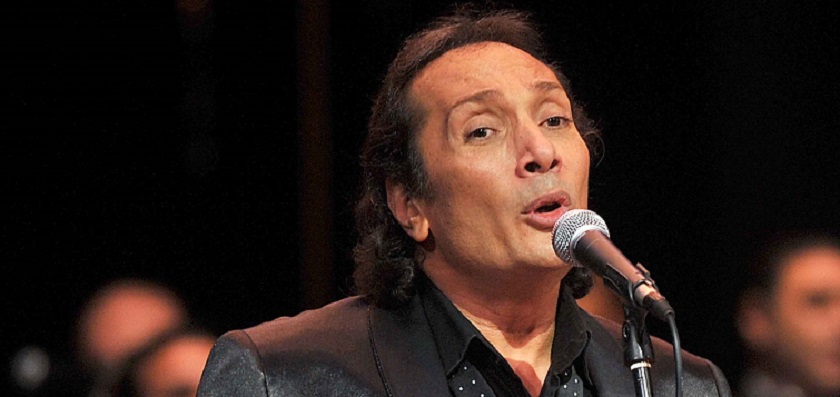
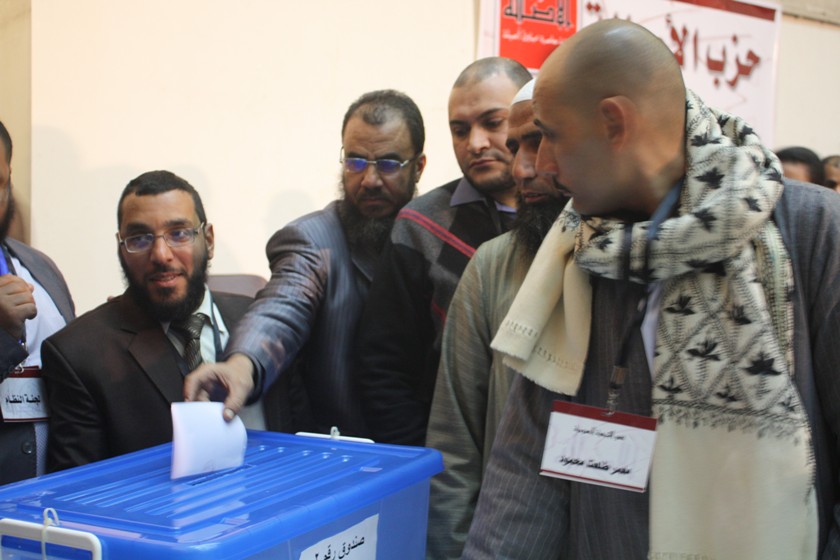
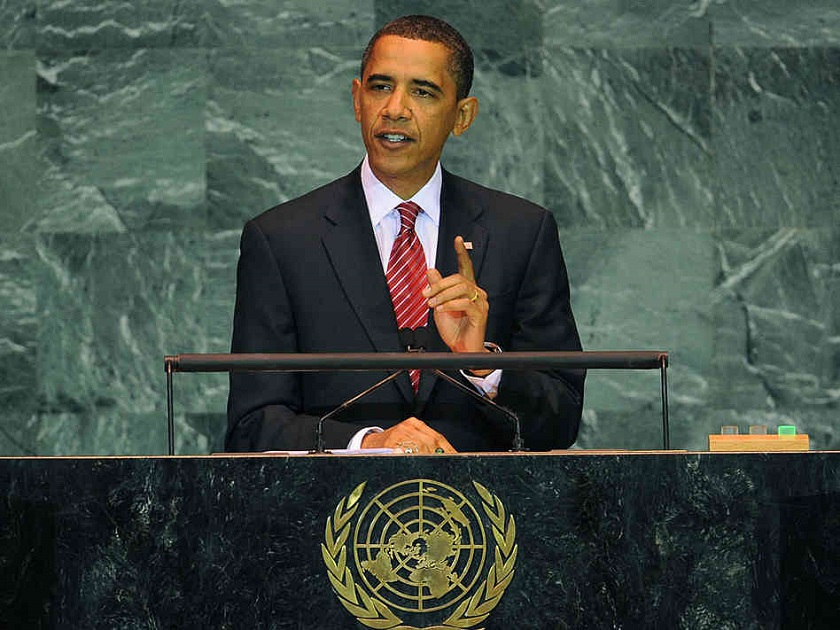


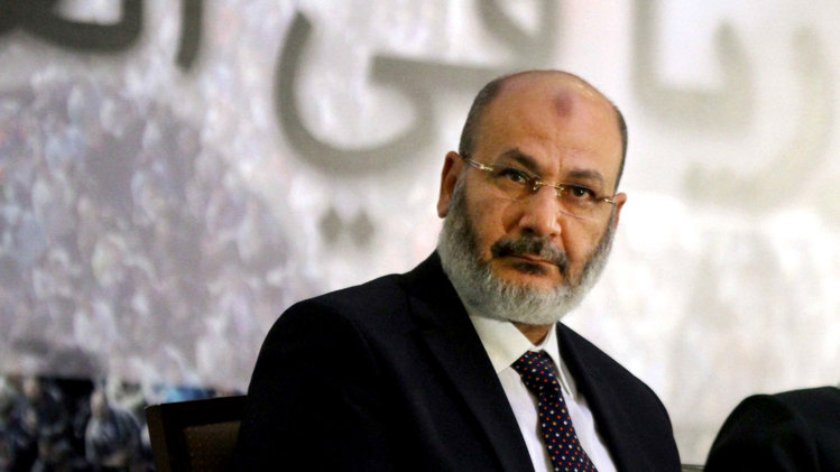

 Jayson Casper