Eight somber Muslims sat around white plastic tables on the gold-tinged red carpet of Sayyida Aisha Mosque in Sidon, Lebanon. Arabic sweets beckoned, but few partook. The seriousness of the occasion—reviewing their memories of Lebanon’s 15-year civil war that ended in 1990—seemed to make several uneasy. They did sip their tea.
Four were Lebanese native to Sidon. Four were Palestinian refugees. Several wore beards, some long and scraggly, others short and trimmed. One was a former fighter in the war. Another lost family members when a Christian militia massacred inhabitants in Tel al-Zaatar.
Beginning in 1975, Christians, Muslims, and Palestinians plunged Lebanon into a regional conflict that included Israel and Syria, leaving 150,000 dead. Those convening the meeting, a Lebanese evangelical and a Druze follower of Jesus, hoped to unravel the reasons behind the highly contested conflict. Their host, chief judge for the Sunni Muslim court in Sidon and imam of the mosque, lent his legitimacy to the sensitive proceedings.
As participants received a 12-page document presenting Lebanese history that preceded the war, they were taken aback by reading a fully Christian perspective. But then the story shifted to Muslim perspectives, divided between Lebanese and Palestinian views. Three versions of history, none legitimized over the other.
Many Christians do not call Lebanon’s tragedy a civil war. They emphasize how Palestinian refugees brought local destruction in their fight against Israel. Meanwhile, Palestinians emphasize displacement from their homeland and their need for a base from which to fight Israel. Lebanese Muslims sympathized with Palestine but aimed to change a sectarian political order that disproportionately favored Christians.
When the group finished reading the document, the evangelical stood up.
“Which narrative do you sympathize with the most?” he asked.
Martin Accad, president of the Beirut-based Near East School of Theology, spoke in his capacity as founder of Action Research Associates (ARA), which is working on a project that presents civil war history through multiple narratives. Cofounder Chaden Hani took notes. Their project is unique because, in schools, history books end shortly after the country’s independence in 1943 and avoid discussion of the sectarian struggles that followed.
A few participants dominated the mosque conversation with their viewpoints. An elderly Palestinian former fighter mostly sat silent. Accad asked about their emotions, which prompted different responses. “Sadness at what happened,” said one. “Fear it might happen again,” said another. A third noted, “I am happy we are finally trying to talk objectively about what took place.”
To move on from the conflict, Parliament passed a general amnesty law in 1991 that pardoned all political and civil war–related crimes. Former militia leaders became politicians and ignored the peace accord to write a unified history textbook as each sect clung to its narrative.
In 1997, Lebanon mandated a new educational approach. After three years of work, the cabinet formally adopted the history curriculum. But it was never implemented due to political interference behind the scenes.
“History is written by the winners,” said Accad. “But there was no winner in Lebanon.” Christians and Muslims fought each other, and as allegiances shifted, each religion split into rival factions that clashed as well.
Accad said history became…
This article was originally published at Christianity Today, on December 18, 2025. Please click here to read the full text.
Maya Yamout stared at the hardened jihadist sitting across from her over a plastic desk in the unkempt library prison. Books littered the floor. The man, a veteran al-Qaeda militant in the notorious Block B of Lebanon’s Roumieh jail pushed forward a glass of tea.
“Where’s the sugar?” Yamout asked.
The curt question fit their relationship. In their previous brief encounters, the prisoner called Yamout a spy, a pig, and all manner of insults that belittled her as a Muslim woman who did not wear a veil.
Yet this time, her mischievous smirk made the terrorist smile. Two weeks earlier, when he was sick, Yamout inquired about his health from prison guards and brought medicine and shampoo on her next visit. Once he recovered, he invited the visit, prompting the nervy but playful exchange. Sensing a breakthrough, Yamout proposed therapy. He accepted.
Eventually, filled with shame, he apologized for how poorly he treated her.
“To reach a prisoner, you have to bond over something,” said Yamout, the cofounder of Rescue Me, a Lebanese crime prevention and deradicalization organization.
But Yamout is clear: This something should not be religion. She’s found that speaking about faith often gets entwined in politics and leads to endless debate. It also rarely addresses what radicalized a militant in the first place.
Yet Marwan Ghanem, a priest in the Maronite Catholic church and president of the Lebanese chapter of Prison Fellowship International (PFI), takes the opposite approach. He centers his ministry on the story of Jesus and Zaccheus, believing the tax collector’s model of repentance can help any prisoner restore a debt to society.
Yamout and Ghanem worked independently in separate sections of Roumieh but met often for mutual encouragement. Despite their differences, when Yamout left in 2024 to pursue a PhD at the University of Swansea in the UK and budget restrictions at Rescue Me pinched its ability to go into prisons, she asked Ghanem to continue her work with extremists. She simply counseled him to go slow with religion, avoid provocation, be patient if insulted, and remember the prisoners’ humanity.
“Kill them with kindness,” Yamout said, “and kindness will prevail.”
Rescue Me, which Yamout and her sister Nancy founded in 2011, primarily worked among at-risk youth in the Hayy al-Gharbia neighborhood of Beirut until funding cuts in 2017 curtailed its service among the Lebanese poor as well as Syrian and Palestinian refugees.
Many in hopeless situations became easy targets for Islamic extremist groups, she discovered. And when prison overcrowding assigns ordinary criminals to Block B—designated for terrorist offenses—even the nonreligious can be radicalized through their need to belong, Yamout said.
She said Block B extremists fall into four categories. A quarter of her cases sought retribution for wrongs they suffered or the poverty they endured. Another quarter put a religious overlay on their frustration, while 35 percent did the same with politics. The remaining 15 percent are simple psychopaths—“I joined ISIS to smell the blood,” one told her.
Another prisoner she met fell into the second category. Born into Lebanon’s impoverished northern city of Tripoli …
This article was originally published at Christianity Today on December 3, 2025. Please click here to read the full text.
In September 2024, when Israel escalated its bombing campaign against Hezbollah in Lebanon, Shiite sheikh Rabih Koubayssi was one of the few clerics, Muslim or Christian, to stay in the targeted southern region. He was needed to bury the dead.
His first Islamic duty was to wash the bodies, which were often charred or missing a limb. He laid the body on an elevated table, turned it to face Mecca, and washed each part three times. Then he wrapped it in a burial cloth. Finally, he recited a Muslim prayer for Allah’s mercy. Assistants enclosed the body in a green bag, the color of Islam. He wrote the person’s name on the outside with a black marker.
On one occasion, a woman clad in an all-black abaya tossed flowers onto the hospital gurney carrying her dead father and brother. On another, Koubayssi discovered the body belonged to one of his students at the Islamic university.
Then on October 9, 2024, a Christian body arrived. Israel had bombed a civil defense center in the village of Derdghaya, damaging the church next to it. The strike killed five emergency workers, including Joseph al-Badawi, who had sent his parents and wife to safer areas while he remained on the job.
“How do I respect a Christian body?” Koubayssi asked himself.
The sheikh, a member of the Supreme Islamic Shiite Council of Lebanon, called Marious Khairallah, a Catholic priest in a village near Tyre who had also stayed behind during the war. The two had worked together in the local Forum for Religious Social Responsibility, run by Adyan Foundation, a Beirut-based interfaith organization.
Although the Christian cleric was only 10 minutes away by car, he could not come because of the bombings. Instead, he reassured his friend that Christians do not have similar rituals and that he should take care of the body as best he could.
Koubayssi wiped down Badawi’s body, leaving on the tattered clothes. He struggled to enclose the corpse in nylon as rigor mortis had steeled the right arm in a raised position above the head. Eventually, during a pause in the bombing, the sheikh and priest arranged to deliver a Christian coffin from a nearby Christian-Shiite village. Koubayssi also found a cross, which he laid inside.
The sheikh then coordinated with the Lebanese Army and Red Cross to ensure safe passage to Khairallah’s church, where the priest led Christian funeral rites. Badawi’s family watched over video, and Koubayssi added a Muslim prayer.
On October 26, Adyan honored the cleric during the group’s Spiritual Solidarity Day, which it celebrates annually on the last Saturday of the month. The interfaith group sought nominations to vote for who best demonstrated religious unity during the war, and Koubayssi won handily.
“[Muslim and Christian] blood mixed together,” he said of the Lebanese killed. “Allah created us all and wants us to support one another.”
Established in 2006, Adyan won the 2018 Japan-based Niwano prize, informally known as the Nobel Peace Prize for Religions, focused on peacemaking through interfaith cooperation.
Many consider the Lebanese south as a stronghold of Hezbollah. Koubayssi is a member of the more secular Shiite Amal party, working in its cultural department. He is also the secretary of the Committee for Muslim-Christian Encounter in Tyre, engaging with bishops and priests for religious harmony in the overwhelmingly Shiite region. He enrolls his children in a Catholic school, and sent them and their mother to seek shelter in a monastery during the war. A missile struck his apartment complex on the last day before the ceasefire, damaging his fourth-floor home.
Koubayssi’s favored proposal to fix Lebanon’s corrupt political system is to…
This article was first published at Christianity Today on October 28, 2025. Please click here to read the full text.
Illustration by Christianity Today / Source Images: Gett
The Middle East is a diverse region with Muslims, Jews, and Christians living together, along with each religion’s many sects or denominations. Ethnically, the region is peopled with Arabs, Jews, Kurds, Armenians, and Berbers. And despite speaking Arabic, many Assyrians, Copts, Samaritans, Yazidis, and Kakai maintain a separate ethnic identity.
Each sect, with its distinctive history and beliefs, is often deemed at least somewhat heretical by the others. While in Western countries theological disagreements do not usually end up harming the larger society, in the Middle East, sectarianism can lead to conflict and violence between different groups.
Sectarianism in the Middle Eastern context is defined in this article as the politicized prioritizing of one’s religious or ethnic group at the expense of a larger national identity.
Linda Macktaby, a Congregationalist pastor in the National Union of Evangelical Churches in Lebanon, illustrates the difficulty of dealing with sectarianism through a simple game she calls “Stick,” which is played during workshops she leads through Adyan Foundation, a Lebanon-based organization promoting interfaith dialogue and equal rights in the Middle East. Adyan means “religions” in Arabic.
The concept of the game is simple: Six individuals balance a single bamboo rod on their outstretched pointer fingers and lower it until they can lay it on the floor. They must cooperate and go slowly—if anyone’s finger loses contact with the stick, that person is replaced by someone from the crowd of about 20 people. Macktaby appoints from among attendees a referee, who watches carefully for any violation. The outside group can also collectively decide to swap out the original six players.
“We need someone shorter,” an onlooker may call out. “You’re going too fast,” says another. Multilingual Lebanese often speak Arabic, English, and French, but when mixed with other nationalities, one language prevails and the less fluent are quickly replaced for the sake of communication. Across the many sessions she’s led, Macktaby finds that, before long, the crowd tends to remove the tall people—who then stand on the sideline criticizing the shorter players. Those displaced by language sulk into the background. Sometimes the tide turns against the women.
But Macktaby makes it worse. She starts shouting advice to the players. She makes a blind suggestion that someone from the crowd would have a steadier hand. And she criticizes the referee, sometimes inserting herself to expel an offender. Tensions rise. The stick falls. Not once in all the workshops she’s led has Macktaby seen a group successfully reach the floor.
After the game, Macktaby explains that the task appears simple, but the rule of finger contact makes it nearly impossible. She gently rebukes the participants: “Why did you allow me to interfere? I undermined the judge and played you off against one another.” Without fail, the workshop attendees—all friends before the game—divide themselves into sects.
And this, she explains, is where sectarianism comes from.
In the game of Stick, the challenge is to lay down the bamboo stick. In nations around the world, including in the Middle East, the challenge is to create a functioning society. In both Stick and politics, the rules and behavior of the leader can erode trust and cooperation.
Many assume religion to be the root of division in the Arab world, but diverse beliefs…
This article was first published at Christianity Today on October 27, 2025. Please click here to read the full text.
William King Eddy Illustration by Christianity Today / Source Images: Courtesy of Nick Eddy
Pastor Michael Sbeit stood pensively in front of the marble gravestone in the evangelical cemetery of Sidon, a Lebanese city 25 miles south of Beirut. Mediterranean Cypress trees offered shade from the sweltering summer heat, while their fallen brown needles covered the ground and obscured the inscription engraved in both English and Arabic:
William King Eddy Born March 13, 1854 Died Nov. 4, 1906 Served the Lord in Syria 28 years
Next to the grave of William King Eddy (hereafter “King”), is the grave of his wife, Elizabeth Nelson Eddy. Her tombstone honors her 49 years of service. Several feet away lies the body of their son, William “Bill” Alfred Eddy, who died in 1962.
The Eddys were an American family who originally came as Protestant missionaries to late 19th-century Lebanon, then part of the Syrian region of the Ottoman Empire. Several family members, including King’s sister Mary Pierson Eddy, and their father William Woodbridge Eddy (hereafter “Woodbridge”) are buried in Beirut.
“They were pioneers of our church,” said Sbeit, who leads the Presbyterian congregation the Eddys’ missionary colleagues founded in Sidon. “We don’t have many like them anymore.”
Two generations of Eddys shared the gospel, built schools, and offered healthcare. The last of their line in Lebanon left a more colorful legacy. William Alfred Eddy’s gravestone notes nothing about service to the Lord and instead displays his rank of colonel in the US Marine Corps.
“Bill loved this city,” said Sbeit. “But he was different.”
This two-part story chronicles the Eddy family’s multigenerational commitment to Lebanon. The family’s modern biographer is Muslim: Sheikh Muhammad Abu Zaid, president of the Sunni Sharia Law Court in Sidon. In Forgotten Pages from the Ancient History of Sidon, he expresses his deep appreciation for their foreign service.
“It is not how we look at the Eddys,” he said. “But how they looked at us.”
Abu Zaid’s sympathetic portrayal of Protestant missionaries contrasts with the more conflicted views that many Lebanese Muslims and Christians have held. Some view them as “sheep stealers” trying to convert the original Catholic, Orthodox, Sunni, Shiite, or Druze populations. Others see them as Western agents advancing America’s political agenda. Still others defend them, citing their years of devoted social service. The Eddys offer evidence each narrative could note.
The family’s story began when Chauncey Eddy, a Presbyterian pastor from New York joined the American Board of Commissioners for Foreign Missions in 1823. But when poor health impeded a potential missionary career, he prayed that God would call his children in his stead. His son Woodbridge and his daughter-in-law Hannah moved to the Levant in 1851, a year after the Ottoman sultan issued a decree to include the Protestant faith among the empire’s legally recognized sects.
The couple’s ministry started in Aleppo by learning Arabic before moving to the Lebanese mountain village of Kfarshima. In 1857, Woodbridge and Hannah moved south to Sidon, where they served in an evangelical church planted two years earlier. They replaced missionary Cornelius van Dyke, who left to complete a translation of Arabic Bible still cherished by many Middle Eastern Christians today.
Chauncey visited his son a year later, delighted at the fulfillment of his prayers. He even…
This article was originally published at Christianity Today on September 4, 2025. Please click here to read the full text.
Lebanon has 12 officially registered Christian sects. Jesus prayed the church would be one. Once Mark Merhej did the math, the solution was worship. And in January 2024, the 29-year-old Maronite Catholic layman brought together representative patriarchs, bishops, and pastors from nearly every ecclesial family to pray collectively for the peace of Beirut.
Merhej began planning the event three years before the Israel-Hezbollah war, contemplating how to bring unity to the fractured Lebanese body of Christ. As the two belligerents exchanged missiles over the nation’s southern border, over 10,000 Lebanese Christians joined in worship with Merhej’s 300-person ecumenical choir and orchestra to pour out their hearts in pursuit of God’s presence.
“Worship is the communal experience of God’s lordship and grace,” Merhej said. “The world outside—the war—is irrelevant.”
Merhej aimed to bring a higher vision to the troubled Christian community. That January, during the official week of prayer for Christian unity—usually a perfunctory affair—he filled the Beirut Forum with soaring hymnodies of Byzantine chants and intoned hallelujahs. Members of the choir, inspired by their interdenominational harmony, wanted to keep performing. And the bishops, he sensed, resonated with his ecclesial vision.
But after the event, Merhej stepped back.
As Beirut wrestled with the war, Merhej wrestled with God. He came to believe God wanted him to withdraw not only from a vibrant music ministry but also from his budding relationships with senior clergy members. At first, he didn’t understand this directive, and for months he let others take the initiative. But as he grew in his personal faith, planning a scaled-back but similar event one year later helped him discern God’s purpose for his rest.
The heavenly realms
Growing up, Merhej was mostly unaware that local Christians divided themselves between six Catholic, five Orthodox, and one Protestant council that includes several denominations. Theological schisms had split the Levant church over the centuries, which further splintered as Vatican, British, and American missionaries competed for new church members from historic Christian traditions.
In 1974, the newly formed Middle East Council of Churches (MECC) brought together Eastern Orthodox, Oriental Orthodox, and Protestant clergy to strengthen relations among minority Christians. (Catholics joined in 1990.) Today, though the MECC community has organized numerous service projects and theological dialogues, spiritual unity has not extended to religious practice. Some churches will not take Communion together, nor participate in joint liturgical services.
Merhej grew up in the mountains of Lebanon in a Maronite Catholic community. Surrounded by Muslim…
This article was originally published at Christianity Today on February 17, 2025. Please click here to read the full text.
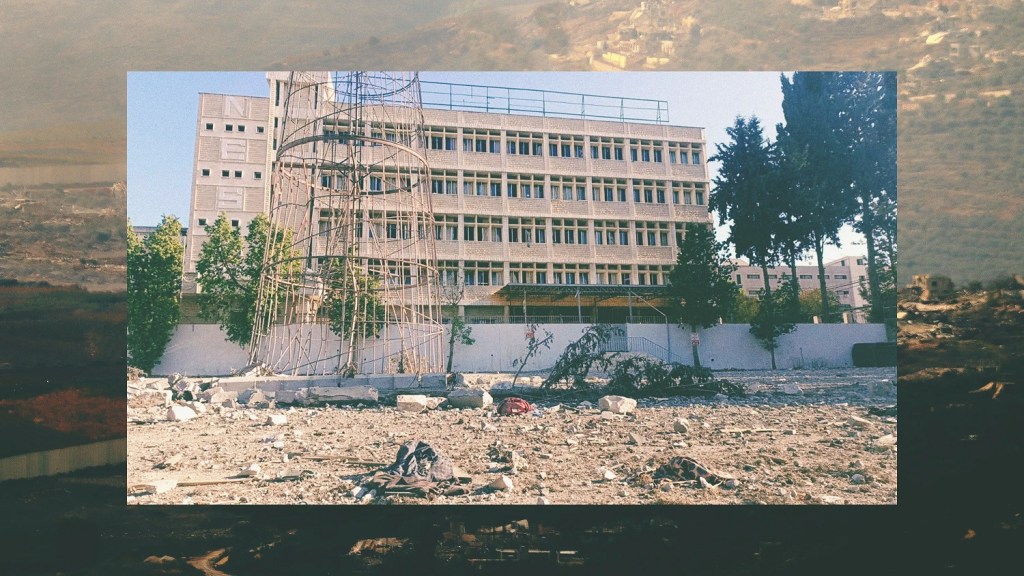
The predominantly Shiite city of Nabatieh in southern Lebanon once boasted the nation’s largest Christmas tree, erected to symbolize good relations between local Muslims and the tiny Christian minority of only 20 families.
The local evangelical school—with a 99 percent Shiite student body—had celebrated the holiday for years, and in 2018 it built a 100-foot wrought-iron conic structure topped with a radiant star. (The use of natural firs or pines is uncommon in Lebanon). Several of the hundreds of students, parents, neighbors, and dignitaries in attendance wore Santa hats. Many had trees in their homes and gifts to open on Christmas day.
Earlier that December, Ahmed Kahil, the Hezbollah-affiliated president of the municipality, continued the annual tradition of erecting a smaller tree in the souk, the traditional marketplace and heart of the city. And at both events—alongside Shadi El-Hajjar, the principal of the National Evangelical School of Nabatieh (NESN), heads of other private schools in the city, and various government and religious officials—Kahil wished Christians a Merry Christmas.
Top of Form
Lebanon’s economic crisis made 2018 the last year NESN could afford to erect its massive Yuletide construction. But over the following years, elementary school classrooms still featured Christmas trees, students exchanged secret Santa gifts, and teachers enjoyed the annual holiday dinner. “If Christmas isn’t found in your hearts,” the school reminded, “you won’t find it under a tree.”
But there was no Christmas celebration in Nabatieh last month, after over a year of war between Israel and Hezbollah. On October 8, 2023, the Shiite militia launched rockets into Israel in support of Hamas following its attack that killed 1,200 Israelis and took around 250 hostages. The subsequent daily missile exchange drove tens of thousands from the border regions of both nations.
A year later, most of Nabatieh’s 80,000 residents fled their homes as Israel intensified its military campaign against Hezbollah. On October 16, an Israeli missile killed Kahil and 10 others at the Nabatieh town hall as they coordinated the daily distribution of food and medicine to the 200 families who remained in the largely evacuated city.
Initially, NESN stayed open for its 1,400 students. Located 35 miles south of Beirut and only 7 miles from Israel, the historic evangelical institution won local respect over the years by offering a nonreligious but values-based educational environment that consistently ranked among the top high schools in Lebanon. The September 2024 pager attack delayed the start of the academic year, and the exodus from the city eventually shifted education online. But within a week NESN opened its doors as a shelter for the locally displaced.
Over the course of the war, its staff stood by the Shiite community, including one who rescued Kahil’s colleague after the October 16 strike.
“When you see your hometown destroyed and the damage at the school,” Hajjar said, “you have to ask: Why is this happening to those who are not involved?”
A safe haven
In the early stages of the war, Nabatieh mostly…
This article was originally published at Christianity Today on January 31, 2025. Please click here to read the full text.
In early October, in a Christian village in southern Lebanon, “Samira” (we’re using pseudonyms due to the political situation) decided to water her lemon trees. The autumn winds were dry this season. Rain was less frequent. The frail, hunched-over grandmother filled her bucket and went outside.
Samira’s husband had died two years earlier. Her children had long ago moved away, seeking better opportunities in Beirut, but her daughter owned the house next door and made frequent trips back, recently refurnishing the interior with modern decor. Samira loved the home’s colorful bedspreads in the rooms where her great-grandchildren often stayed.
But such visits were infrequent these days. A year earlier, Hezbollah had entered the Israel-Hamas war in Gaza by shooting missiles into Israel. Israel had pushed back, and the exchange of fire between the Shiite militia and Israel drove thousands from their homes on both sides of the border. And in late September, Israel increased its bombing campaign against suspected Hezbollah sites throughout the country. Nevertheless, Samira had remained, adamant that her Christian village was not a target.
Samira had just begun watering her lemon trees when everything went black…
This article was originally published at Christianity Today, on January 8, 2025. Please click here to read the full text.
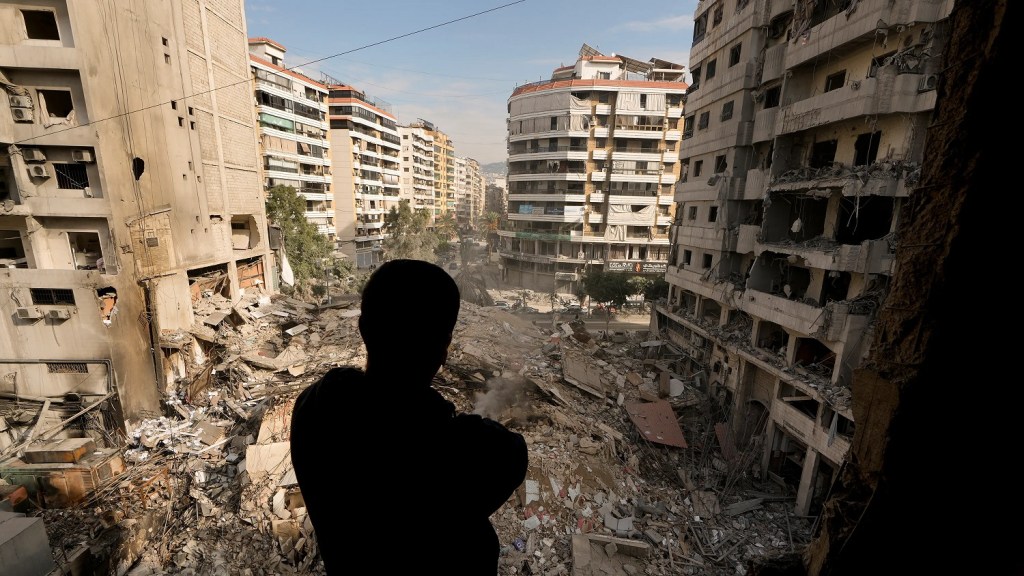
While an explosion reverberated across the valley from Beirut to the foothill village of Mansourieh, two men puffed on their cigarettes in resignation. Israeli jets were striking another apartment building in the Dahiyeh region of Beirut, Lebanon’s capital city, likely killing a Hezbollah militant or targeting an underground weapons depot within the tightly packed urban area.
Neither man cared about politics or the war, brought to their doorstep by last year’s decision of the Shiite Muslim militia to launch rockets into Israel to support Hamas. Tit-for-tat attacks had crossed the southern border for the 11 months that followed, as neither side wanted to engage in a larger conflict. That fighting displaced tens of thousands on both sides while leaving the rest of Lebanon largely unscathed—yet ever worried about an escalation.
It came in September. On the 17th, Israel declared the return of northern citizens to their homes to be an official war goal. Hours later, an Israeli sabotage operation exploded Hezbollah pagers, killing 13 and wounding around 4,000 militia-linked individuals. Then, on September 23, Israeli missiles struck throughout Lebanon, and hundreds of thousands fled their homes. Lubnan Assaf, a 42-year-old Shiite Muslim, and Awad Saab, a 72-year-old Greek Catholic, somehow found their way to the Arab Baptist Theological Seminary (ABTS) guesthouse—and became friends. At its peak, the evangelical institution housed almost 250 displaced individuals, about one-third of whom were fellow Christians.
ABTS offered daily chapels and provided three meals a day—but no televisions. Isolated from the news and away from static entertainment, couples walked in the seminary gardens while children rode scooters down the access road from the library. Assaf and Saab played a Rummy-like card game until 10 p.m., exchanging details about their abandoned neighborhoods.
Assaf gave Saab the daily update that his auto-accessory shop on the edge of Dahiyeh had not been looted. Saab replied that his eight-month pregnant daughter, one of 15 people who remained in their southern village on the frontline of the Israeli ground invasion, was still doing all right. Both whittled away the hours in relative boredom, as each over time expanded his spiritual horizons.
Assaf’s Story
Assaf’s apartment in the working-class Shiite neighborhood of Ouzai, located in Dahiyeh near the Beirut airport, overlooks a local café and the Mediterranean Sea. His shop serviced mostly middle-class Christians who frequented the area, well-known for its inexpensive furniture and manufactured goods.
Over the years, Assaf saved up enough money to build a home in his family village of Younine, 11 miles northeast of Baalbek, an ancient Roman city preserved in the Bekaa Valley, Lebanon’s agricultural heartland. Driving from Beirut means passing by marijuana fields that fuel an unofficial economy run by local Shiite tribes that reportedly collaborate loosely with Hezbollah.
Artful calligraphy from the Quran adorns the walls of Assaf’s home. His wife, Mira, and their 15-year-old daughter wear the hijab. When war came to Dahiyeh, they relocated for safety, while Assaf returned to Beirut to oversee his shop. The next day, an Israeli missile…
This article was originally published at Christianity Today on December 20, 2024. Please click here to read the full text.
Illustration by Christianity Today / Source Images: Getty / Courtesy of Brent Hamoud, Emad Botros, and Daniel Suter
The warning issued by the American embassy on October 14 could not have been clearer: US citizens in Lebanon are strongly encouraged to depart now. But this message, coming as Israel increased its attacks on Hezbollah, was only the latest in several weeks of diplomatic efforts to reduce the American presence.
Back on July 31, already fearing an escalation of violence, the embassy was discouraging would-be tourists with its highest of four alert levels: Do Not Travel. For those inside Lebanon, it urged: The best time to leave a country is before a crisis, if at all possible. Major airlines had already canceled flights to and from Beirut, leaving only the national carrier to facilitate evacuation—and its outbound flights were booked weeks in advance.
Ever since Hezbollah—a Shiite Muslim militia designated by the US as a terrorist entity—launched missiles across the border in support of Hamas’s attack last October, foreigners have lived under a cloud of uncertainty that Israel might eventually bomb the airport, as it did in the month-long war in 2006 that left many expats stranded. Americans would have little hope of leaving through Syria, and Lebanon has no official relationship with Israel to permit crossing the southern border.
And then Hezbollah pagers exploded throughout the country.
With dozens dead and thousands injured, the next day, September 18, the embassy warned of a reduction in routine care at hospitals. On September 21, it told citizens the Lebanese government could not ensure their safety, mentioning the possibility of increased crime, sectarian violence, or targeted kidnapping.
And on September 28, one day after a massive Israeli airstrike killed Hezbollah leader Hassan Nasrallah, the embassy sent its nonessential personnel home and opened registration for US citizens to request assistance in leaving.
Several US citizens paid thousands of dollars to place their families on private yachts to nearby Cyprus. Others frantically called Middle East Airlines (MEA) to secure embassy-reserved seats to anywhere else. And among the missionary community, the chatter was incessant: Are you leaving? What are your contingency plans? Will your organization make you go?
Some decided to stay.
CT interviewed four Christian foreigners to learn how they made the decision to remain in times of war.
Each had already endured the constant hum of Israeli drones hovering over their neighborhoods. They learned to distinguish between the noise of warplanes deliberately breaking the sound barrier and the similarly ear-popping sound of a missile strike bringing down a Beirut apartment complex. And some have wondered if they might become a target of random Shiite anger or if the Islamist kidnappings of foreigners during Lebanon’s civil war decades earlier could be repeated.
The sources represent different categories of Christian workers.
A Swiss family living in the foothills outside Beirut believes that angels closed their ears of their children at night, allowing for consistent sleep even when explosions—slightly muffled by the distance—woke the parents consistently at 3 a.m. An Egyptian with Canadian citizenship said the blasts were so loud he sometimes thought they had happened just across the street—only to look out the window and see smoke plumes rising across the valley two miles away, not far from his church outside Beirut.
An American married to a Lebanese woman said that while the bombings did not threaten him directly, he was deeply troubled as each missile resulted in more deaths and displaced families. And a single American woman raised in urban poverty amid gang warfare stated casually, “I grew up rough, but gunshots and bombs are not the same thing.”
A Shared Resilience
This woman, a Black millennial from Ohio, has…
This article was originally published at Christianity Today on November 1, 2024. Please click here to read the full text.
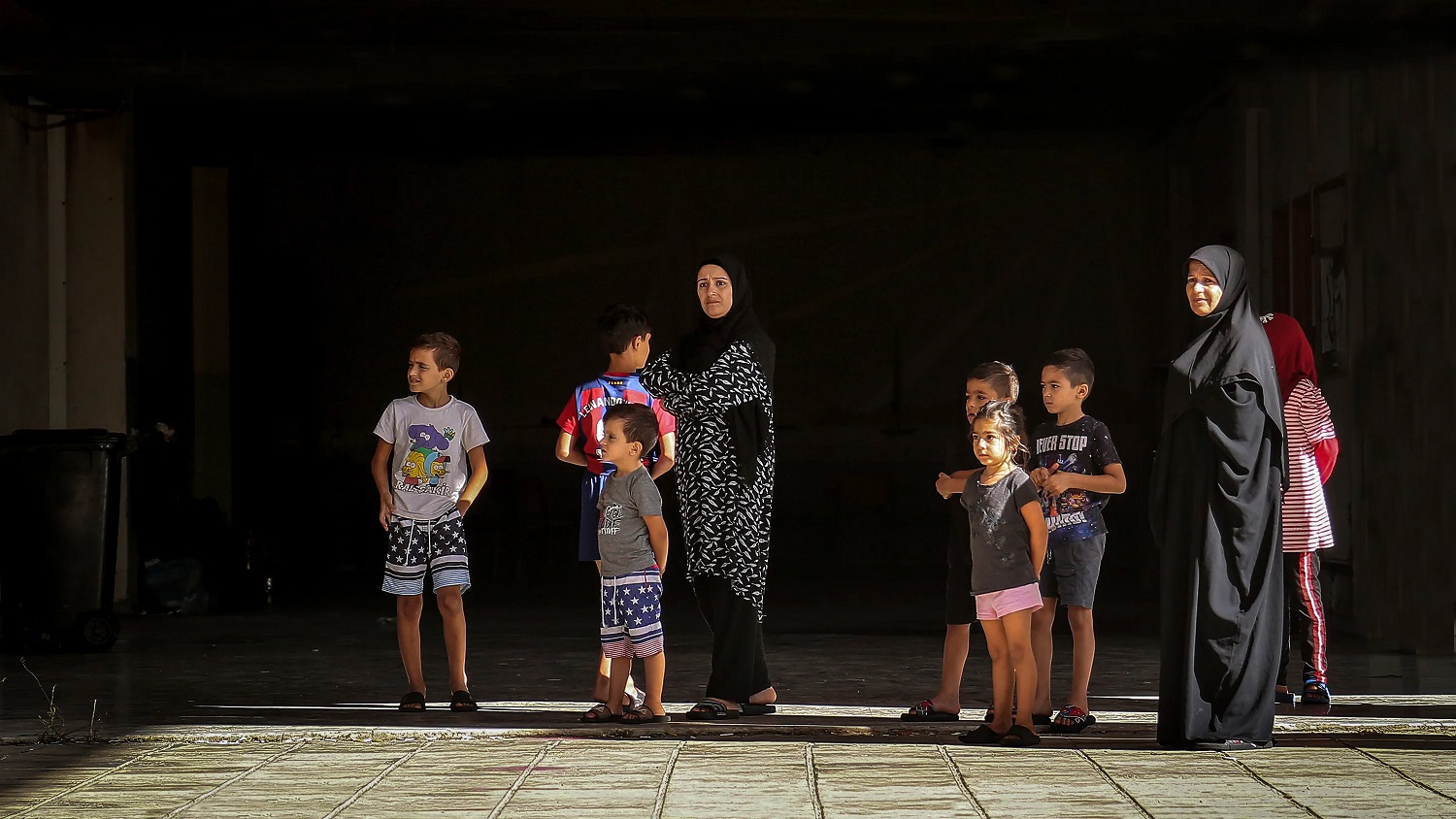
On September 23, Mustafa put his family of five on a small motorbike and drove seven hours north from Tyre to a village in the Lebanese mountains, weaving slowly through lines of gridlocked vehicles. Some in those cars—like his brother Hussein’s family of six—would not arrive for another two days.
The path normally takes two hours.
Mustafa, and thousands like him, were frantically fleeing Israeli bombs aimed at Hezbollah, the Shiite militia designated by the US government as a terrorist organization. Until that moment, he and his brother had been agricultural workers in a farm outside the city, living in a spartan two-bedroom apartment provided by his employers.
Top of Form
CT agreed to withhold his family name for security reasons. Mustafa is a Christian originally from Afrin, a Kurdish area in northwest Syria. Asked if he shared his brother’s faith, Hussein said, “Not yet.”
Their home nation does not recognize converts from Islam. And while Lebanon is the only Arab nation to grant freedom of conversion, Tyre is a socially conservative Shiite city under the political sway of Hezbollah.
This was Mustafa’s second displacement. In 2013, he and his brother fled the Syrian civil war. But over the past five years, as poverty rates tripled in Lebanon, the nominal Sunni Muslims found support from a local Christian ministry offering aid.
Eighteen months ago, Mustafa professed faith in Christ.
“I follow Jesus,” he said. “He saved me.”
When Israel began its ground invasion of Lebanon, it issued evacuation orders to both Muslim and Christian villages in the south. But the large majority of the displaced come from Shiite areas suspected of housing weapons depots and underground tunnels—where resident Shiites may or may not align with Hezbollah’s Islamist ideology.
According to a survey conducted in early 2024, while 78 percent of Shiites viewed positively the militia’s role in regional affairs, only 39 percent said they felt closest to Hezbollah among Lebanon’s political parties, compared to 37 percent of Shiites who felt closest to none.
Only 6 percent of Christians had “a lot of trust” in the Shiite militia.
Within these realities, Christians are eager—and cautious—to help. Gospel commitments and national solidarity require hospitality. Sectarian guardedness encourages suspicion. And Israel’s bombing campaign creates fear that welcoming the displaced might make them a target.
Many are helping anyway.
Mustafa and Hussein found shelter in living quarters offered by an evangelical church in the mixed Muslim-Christian village where they sought refuge. A plastic rug covered half of the cement floor in their private allotment, with thin mattresses pressed up against the walls. Blankets and pillows strewn about were evidence of their children’s fitful night of sleep.
“This is our message: to show love in action as we lead people to Christ,” the church’s pastor said. (CT is granting him anonymity due to the uncertain political situation in Lebanon.) “As they receive, we teach them to give.”
His congregation currently hosts about 100 people, displaced from their homes in the south and in Lebanon’s Bekaa Valley. More than half are from neighboring Syria; the rest are primarily Lebanese Shiites. The pastor said 60 percent of the total are believers in Jesus. Others, like Hussein, are their relatives or Muslims already closely connected to churches in their original area.
They all pitched in to prepare 500 tuna sandwiches for local distribution.
Not Just Talk
Hezbollah’s current conflict with Israel began last year on October 8, one day after Hamas invaded from Gaza and killed approximately 1,200 Israelis, taking 250 hostages. The Lebanese militia initiated what it called a “support front” for Hamas, launching missiles that caused 80,000 Israelis to flee from villages near the border.
A similar number of Lebanese also fled from Israel’s retaliation, and for 11 months the two sides had kept their missile exchange relatively contained, aiming to avoid a larger and perhaps regional conflict with Iran, which backs both Hamas and Hezbollah as proxy forces.
That status quo held despite…
This article was originally published at Christianity Today on October 17, 2024. Please click here to read the full text.
The oldest Protestant seminary in the Middle East has a new vision.
Officially founded in 1932 but with origins dating back to the 19th-century missionary movement, the Near East School of Theology (NEST) is operated by the Presbyterian, Anglican, Lutheran, and Armenian Evangelical denominations.
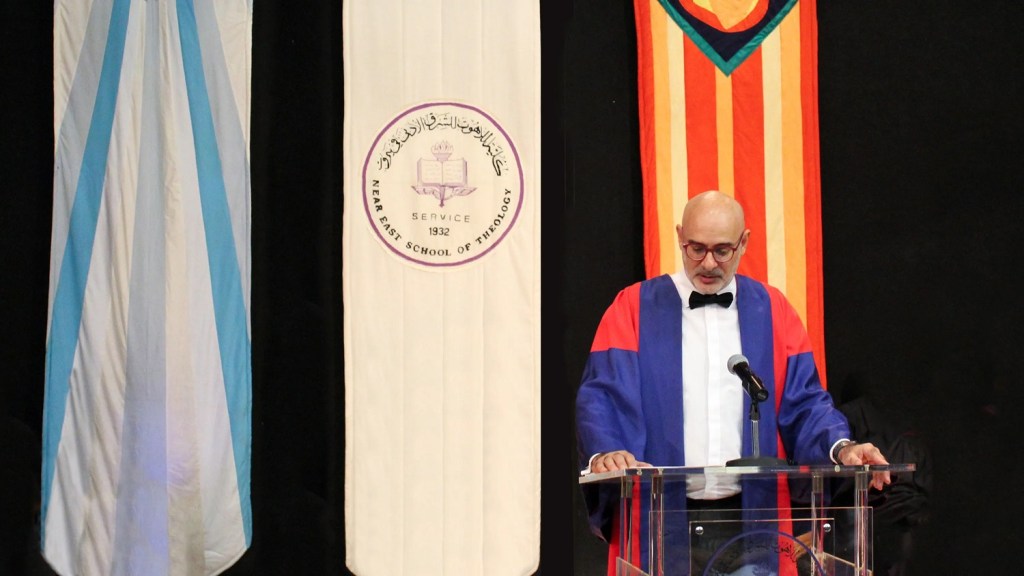
Installed this week, its 11th president is a nondenominational Lebanese evangelical.
Martin Accad, formerly academic dean at Arab Baptist Theological Seminary (ABTS), was installed on Sunday at the historic institution’s Beirut campus. He graduated from NEST in 1996 with a bachelor of theology degree, eventually earning his PhD from the University of Oxford. Awarded scholarships by the World Council of Churches and the evangelical Langham Partnership, Accad is a locally controversial theologian who, like NEST, straddles the liberal-conservative dichotomy.
Author of Sacred Misinterpretation: Reaching Across the Christian-Muslim Divide, Accad has urged believers to approach Islam in a manner that avoids the twin pitfalls of syncretism and polemics. But before joining NEST he resigned his prior academic position at ABTS to apply his biblical convictions within Lebanon’s contested political scene. Creating a research center, his last four years have been spent in pursuit of reconciliation between Lebanon’s often-divided sectarian communities.
Accad will now bring his vision to a new generation of Middle East seminarians.
Although doing public theology is novel for the institution, NEST has long sought, with some struggle, to balance the two streams of its early predecessors’ commitments to evangelistic outreach and service-oriented witness. Its founding in 1932 resulted from a merger of two programs, each with its own distinctives.
One stream of NEST’s roots dates to 1856, when American missionaries began what Accad describes as a discipleship training program in the mountains of Lebanon. Along with providing pastoral development, it functioned as a mission station for sharing the gospel in local villages with non-Protestant Christians and diverse Muslim communities. Its remote location was also designed to isolate these early “seminarians” from the corruption of city life in Beirut.
American outreach to Armenians and Arabs in the Ottoman Empire (modern-day Turkey) led to the creation of similar schools beginning in 1839. After the Armenian genocide in World War I, these efforts relocated to Athens where they coalesced into a seminary that adopted an ecumenical, Enlightenment-informed model, emphasizing the importance of social service. This was especially true in its approach to Islam—sympathetic and comparative with an eye toward reconciliation.
The merger of these two programs created NEST, which eventually settled in the cosmopolitan Hamra neighborhood of Lebanon’s capital. Although it is situated near three historic Protestant liberal arts colleges—now known as the American University of Beirut (AUB), the Lebanese American University (LAU), and the Armenian-led Haigazian University—early cooperation was shattered by the Lebanese civil war in 1975 and has not been re-established.
Accad wants to restore this collaboration and embody an integration of scholarship and discipleship. CT spoke with him about Protestant distinctives, “electric shock” pedagogy, and how to understand the mainline-evangelical divide in the Middle East.
Why does serving as president of NEST appeal to you?
We need to rethink what it means to be a seminary student today. This question is a key issue globally, but especially in the Middle East. Ideally, the seminary leads the church to be relevant in society. This requires beginning with society and determining its needs. And then the seminary addresses the church—what does the pastor need? Finally, it works backward and designs a program to fit this profile.
Historically, NEST has been an ordination track. This is the traditional model, and it is still necessary if the church believes that it is. But I want to explore with the churches their vision for seminary training, for congregational service, and for regional witness—and how NEST can help prepare leaders to implement this vision.
How do you plan to prepare leaders to serve the church?
Nontraditional, focused tracks are becoming the way people want to learn. Accrediting bodies speak of micro-credentials that may contribute toward academic goals but have value in and of themselves and fit into the bigger puzzle of what students want to do with their lives.
But this system of training should not be only for evangelicals. I want NEST to attract…
This article was originally published at Christianity Today on September 27, 2024. Please click here to read the full text.
One Friday evening, a young woman sat her toddler on her lap at Christ the King Evangelical Episcopal Church in Ma’alot-Tarshiha, a mixed Arab-Jewish town in northern Israel five miles from the border with Lebanon. Like mothers everywhere, she clapped her hands and beckoned a response.
What does the cow say? “Moo,” the child replied.
What does the dog say? “Woof” came the answer.
What does the bomb say? “Boom,” and they both laughed.
Only a few hours earlier, with Hezbollah rockets flying overhead, intercepted sometimes by Israel’s Iron Dome defense system, church elders had debated meeting at all. When the siren sounded during the service, members wondered if they should enter the concrete basement shelter.
The playful mimicry belies the seriousness of the less-reported conflict in the Galilee region, but it also reveals its everyday normalcy.
“By now the bombs have faded into the background,” said Talita Jiryis, the 28-year-old volunteer youth leader at Christ the King. “Dark humor is our mechanism to cope with fear and the uncertainty of tomorrow.”
That is, for the northern citizens who remain near the border. But a different uncertainty pains the tens of thousands evacuated from their homes. Arab Israeli Christians offered different assessments to CT, but all pray for peace in the land of their citizenship. The war in Gaza affects them too.
On October 8, one day after Hamas crossed the border into southern Israel and killed 1,200 Israelis, Hezbollah—the Shiite Muslim militia similarly aligned with Iran—launched its “support front” from Lebanon.
Daily exchange of rocket strikes and retaliatory fire has continued since.
But compared to Gaza, the casualties have been far fewer. In Lebanon, more than 450 people have been killed, mostly Hezbollah and other militant fighters but including over 80 civilians. In Israel, at least 16 soldiers and 11 civilians have been killed.
Within weeks, Israel ordered 42 northern communities neighboring Lebanon to evacuate, displacing between 60,000 and 80,000 residents with financial compensation provided. An additional 90,000 Lebanese have also fled the fighting, generally restricted to a stretch of land a few miles on either side of the border.
The violence has steadily escalated and expanded, though both Israel and Hezbollah have appeared reticent to engage in an all-out war. Ma’alot-Tarshiha was not ordered to evacuate; neither was nearby Rameh, where Jiryis was born and raised.
Mentioned in Joshua 19:29 as a border town of the tribe of Asher, Rameh lies a mere eight miles from the border. Yet the historically Christian village, populated also by Muslims and Islam’s heterodox Druze community, sits on a hill facing away from Lebanon. During the last outright conflict between Israel and Hezbollah in 2006, rockets struck only the peak or the valley below.
But it is not the relative safety that keeps Arab residents from evacuating. Jiryis said that many in Rameh are originally from nearby Iqrit, where in the 1948 Israeli war of independence, villagers were forced by Jewish soldiers to vacate. A promise they could return within two weeks was not honored; neither was the 1951 Israeli Supreme Court ruling on their behalf. The following Christmas, the Israeli Defense Forces (IDF) demolished each home.
Seventy-three years and one day later, a Hezbollah rocket struck Iqrit’s Greek Catholic church compound, the only building left standing. The rocket injured the 80-year-old caretaker, and nine IDF soldiers were wounded in subsequent fire as they sought to evacuate him.
Aware of the widespread grievance, Israeli authorities have issued only recommendations—not orders—for Arab communities to evacuate, Jiryis said. In the Christian village of Fassuta, women and children left while the men stayed behind, fearful that history might repeat itself.
Christ the King church, however, represents modern cooperation: Its land was donated three years ago by the Israeli government, and its bomb shelter is open to the public. Services are on the Israeli weekend in advance of the Sabbath, as many from the village work in the Jewish sector. Samaritan’s Purse, she added, helped the poor with a $130 food coupon, a first-aid kit, and battery-charged lamps.
“Jesus is the light of the world,” leaders stated during the distribution.
The church’s average attendance is about 80 people, including a dozen youth, mostly teens. Jiryis’s father is the pastor, and she extended his regional Maranatha family conference ministry with an interdenominational youth gathering planned for April. About 70 signed up from northern Brethren and Nazarene congregations, only for all to be thrown into disarray by Iran’s unprecedented missile barrage against Israel a few days prior to the event.
They held the conference anyway.
“We had to fully activate our faith,” she said. “Christians quote, ‘I will fear no evil.’ But this time, we couldn’t afford to pretend.”
Yet many are mentally exhausted, Jiryis said, and bury their fears rather than turn to God. During the week, she lives in the port city of Haifa, 25 miles southwest of her village, where she works as a psychologist in a government hospital. She has applied her skills through arts and crafts for the village children and insisted the adults continue to meet for mutual fellowship. Breathing exercises and emotional awareness are essential, Jiryis tells them.
Yet as she looks at the war, she is angry at injustice from both sides.
Jiryis knows the history at the heart of Jewish fear. Her mother is German; her great-grandfather was forced to fight in World War II. There are no winners in war, only losers was the mantra instilled in his son. This grandfather passed away when she was seven years old, but the sentiment has filtered into her identity today.
Her paternal grandfather was Palestinian, but like many young people of her generation, Jiryis said she struggles with how to define herself. Although she calls herself a Christian Arab citizen, she doesn’t feel fully Israeli because she is not Jewish, nor does she serve in the IDF. With many Arab and Jewish friends, as a rule she avoids politics and says instead, “Call me Switzerland”—a neutral nation where her father did biblical studies. Yet as an evangelical, she is a minority of a minority of a minority.
Her internal conflict is tangible, but she finds a solution.
“I focus on my heavenly identity,” Jiryis said. “But it is difficult here because you have to belong to something.”
She sees the surrender to community narratives even in the body of Christ. Some Messianic Jews admit they will not pray for the “future terrorists”—Palestinian children—who are dying in Gaza. Some Palestinian evangelicals say they cannot pray for a government committing “genocide.” While tension was always under the surface, relationships everywhere are getting worse.
But some, even apart from Jesus, are still praying together.
A Land of Life
Jiryis’s church is an example of believers praying together, having held joint meetings with Messianic Jews. But the identity issues she described are not uncommon in her community.
A 2015 survey of local evangelical leaders conducted by Nazareth Evangelical College (NEC) found that…
This article was originally published at Christianity Today on June 25, 2024. Please click here to read the full text.
Rabih Taleb looked out from the pulpit at the 30 nervous believers gathered at the Evangelical Presbyterian Church of Alma al-Shaab in southern Lebanon, located less than one mile from northwest Israel. One day earlier, Hamas terrorists had killed 1,200 mostly civilian Israelis 125 miles south on the Gaza border.
That Sunday morning, Hezbollah, the Lebanese Shiite militia designated as a terrorist entity by the United States government, fired rockets into the disputed Sheba Farms enclave occupied by Israel but claimed by Lebanon. And as Israel began its massive bombing campaign against Hamas in Gaza, it also shelled Hezbollah positions 35 miles east of Alma al-Shaab.
A few families immediately fled, including the elder who leads worship, forcing the hymns into a cappella. The rest of the congregation pressed Taleb for a shortened service, all eager to return home and prepare for the worst. But the sermon topic—the second in a series on distinctives of Reformed faith—appeared divinely appointed. Little adjustment was needed to discuss original sin, suffering, and pain.
“They ask me: Why are we always facing these difficulties?” Taleb said. “We are believers. Why is there always war, war, war?”
Sources said this was their seventh displacement in the last 50 years.
Alma al-Shaab, one of about a dozen entirely Christian villages near the Israeli border, has a year-round population of about 700 people, Taleb said. Today only about 20 remain, including the Maronite Catholic priest who conducts services—now welcoming all sects—when there are lulls in the fighting.
Taleb and his family left Alma al-Shaab on October 9 when a bomb fell in a field only a three-minute drive from his church, rattling his parsonage home. Most of its 40 Presbyterian families relocated to stay with relatives in Beirut, with others fleeing within Lebanon to the biblical cities of Sidon or Tyre. The local synod, serving seven Presbyterian churches near the border with Israel, opened its retreat center in Zahle in case of further escalation.
So far, only three families have stayed behind.
Taleb has returned to his home village in Minyara, 115 miles north near the border with Syria. But every day he consults with elders about the condition of his scattered flock, and every 7–10 days he returns to visit Alma al-Shaab, violence permitting.
While the war rages in Gaza…
This article was originally published at Christianity Today on November 16, 2023. Please click here to read the full text.
So stated Nabil Costa, chief executive officer of the Lebanese Society for Education and Social Development (LSESD), at his organization’s 25th anniversary celebration, held last week [Oct. 27] at LSESD’s Beirut Baptist School (BBS).
He was not calling for a change in geopolitical orientation. On the contrary, in attendance were dozens of financial partners primarily from Western nations he would not wish to offend.
But Costa continued, praising India and Saudi Arabia.
“Our vision is to equip churches to bear the thimar of faith,” he said, using the Arabic word for biblical fruit, “in the midst of a changing Arab world.”
BBS was founded by Baptist missionaries in 1955, who yielded their various ministries to local believers in 1998. Honoring their heritage at the gathering entitled “Celebrating Together,” Costa also announced LSESD’s name change to Thimar–LSESD, reflecting the spiritual impact of ministries in education, relief, special needs, community development, and publishing.
But speaking on behalf of the oft-called “Baptist Society,” he invited a wider evangelical collaboration.
“Christians are meant to be catalysts and have a responsibility in building bridges, reconciling communities, and spreading the perfume of Christ,” Costa said of the many regional like-minded evangelical ministries. “We see Lebanon as a hub and a gateway to the Middle East.”
China’s Belt and Road Initiative is a model, he said, as is India with its planned regional “economic corridor” and Saudi Arabia with its developing megacity of NEOM. If these nations recognize the importance of networks and cooperative partnerships—with “different hidden agendas”—Costa said evangelicals can do no less. And Lebanon, despite all its problems, is still a haven of religious freedom.
Some attendees thought the Middle East was headed toward greater regional integration and peace. Others doubted, anticipating renewed emergence of Christian persecution. But many took seriously Costa’s call to turn the conference into a think tank, casting vision for the next 25 years of evangelical service.
“The world around us is changing. We cannot sit still and watch,” he said. “But we are blessed with a ‘spiritual belt’ that forges corridors between continents and countries. Our Lord Jesus Christ has brought us from all over the world, to be one people.”
And to produce “fruit.” CT spoke with seven Arab and three Western attendees, for their vision of Middle East ministry to come.
Rosangela Jarjour, general secretary for the Fellowship of Middle East Evangelical Churches:
Our Lord Jesus commissioned his church with two golden words: preach and teach. While many congregations have communicated the gospel to the world, a neglected aspect of evangelical ministry has been the spiritual formation of disciples. Establishing the kingdom of God demands more than simple conversion.
In fact, when Paul addresses Timothy in his second epistle (2:2), he envisions four generations of impact. And his strategy is clear: hear, witness, entrust, teach. This is the “good fight” necessary, he adds two chapters later (4:7–8), to achieve the crown of righteousness.
In this advice, I address all Protestants in our region—Presbyterian, Baptist, charismatic, and others—for all call themselves “evangelical.” In the next 25 years, in unity together, our ministries must rededicate themselves to the task of discipleship, so that believers old and new will pass on their faith to the next generation of the Middle East church.
Stephanie Haykal, volunteer at Kafr Habou Baptist Church in Lebanon:
While evangelical ministry in the Middle East has been growing and strengthening, sometimes it appears to take on the appearance of a business. And as one from the north of Lebanon, it seems that many of our efforts are concentrated in Beirut and other big cities, while our local needs are neglected.
This is…
This article was originally published at Christianity Today, on October 6, 2023. Please click here to read the full text.
Image: Edits by Christianity Today / Source Image: Courtesy of Nabil Costa / Créel / Baptist World Alliance
Lebanese Baptists have reason to be proud. This month, two senior members of their community, Mona Khauli and Nabil Costa, were recognized for their faith-based work on behalf of their nation.
Mona Khauli, the 85-year-old executive director of the national Young Women’s Christian Association (YWCA), was honored by the Baptist World Alliance (BWA) for her human rights work.
“Honor comes from God,” she said. “Having been in his service all these years, I do not need any from people.” She did, however, note her acceptance may be useful to inspire others.
Costa, general secretary of the Association of Evangelical Schools in Lebanon (AESL), was locally recognized with the inaugural Créel award as one of the top luminaries hailing from his nation’s southern region for pioneering leadership in special needs education.
“As a son of Maghdoucheh, I am pleased to be honored here,” he said of his Greek Catholic agricultural village, located five miles southeast of Sidon, which hosted the ceremony. “But our victory comes only from the Lord.”
Khauli experienced such triumph firsthand amid constant loss due to the civil war.
Assuming her role in 1977 following many years of volunteering, Khauli was immediately plunged into the reality of ongoing bombardment in Muslim-dominated West Beirut. So she turned the YWCA headquarters into a women’s hostel, receiving displaced Lebanese of all religious confessions.
The Syrian general occupying their neighborhood assigned his men to mount a missile launcher on YWCA’s strategically-placed rooftop. Khauli rushed to confront him. We have women here, she told him. Would you accept men running through the quarters of your mother and sister?
Anxious the whole time, she had to think on her feet when the general mentioned the Muslims among them. Change the name of your organization, he said. How can Christians oversee Muslims?
Khauli refused, setting a pattern of fidelity to the YWCA’s faith foundations, later repeated in peacetime.
“You are under the authority of your president, who trusts you because you serve Syria,” she told the general. “We are under the authority of Christ, and therefore we serve everyone in his name.” Before the war, Khauli’s predecessor had helped establish Lebanon’s Young Women’s Muslim Association, under Islamic leadership. The Christian version developed a reputation for…
And an excerpt from the second half:
The BWA also welcomed new partners from Niger and the Palestinian territories, and established new membership categories in aid work, missions, and education. And the first organization recognized in the aid category is the Lebanese Society for Educational and Social Development (LSESD), with AESL’s Costa as CEO.
“Inclusive education is restoring the value of evangelicals in Lebanon,” said Costa, “just as the missionaries did a century ago.”
In the 19th century, Western Protestants came to Beirut in the then-Ottoman Empire province of Syria, and focused on education—including the groundbreaking formal instruction of girls. The American University of Beirut was founded in 1866, and the first Baptist church was planted in 1895. Today, though evangelicals represent only one percent of the population, the AESL serves 20,000 multifaith students in 35 affiliated school.
In 1998, American Baptist missionaries handed over Arab Baptist Theological Seminary, Beirut Baptist School, and Baptist Publications to local leadership, who formed LSESD as its umbrella entity. Under Costa’s leadership, LSESD later added a youth ministry wing that now focuses on outreach, as well as Middle East Revive and Thrive (MERATH) for disaster relief and community development.
In September, LSESD will celebrate its 25th anniversary.
But it was the SKILD Center (Smart Kids with Individual Learning Differences), founded in 2011, that won him the Créel award—created to inspire hope by highlighting the regional and often small-town origins of nationally influential leaders. Costa believes that special needs education—as a voice for the voiceless—is helping evangelicals move out from the fringes of society.
“Individuals who actively work towards the betterment of marginalized groups are truly rare,” said Joelle Bou Younes, founder of Créel, a media and event planning company. “They should be appreciated for their selflessness and dedication.”
Under the sponsorship of the Ministry of Tourism, the Maghdoucheh presentation followed a similar event in Tripoli that honored Lebanese from the north. Regional celebrations are also planned for Mount Lebanon and the Bekaa Valley. Other southern recipients included the former director of general security, business and media leaders, an internationally celebrated violinist, and the mayor of Sidon, who was educated in an AESL-affiliated evangelical school.
Costa received his award from the minister of social affairs, and honored in testimony by the president of Notre Dame University–Louaize (NDU). In partnership with SKILD, in 2019 it became the first Lebanese collage to offer a study program for those with special needs. Prior to this in 2013, Costa coordinated with the Ministry of Education and the British Council to launch Lebanon’s National Day for Students with Learning Difficulties. The same year, SKILD partnered with the Sunni Makassid school system to establish its special needs department. Today the country has…
This article was originally published at Christianity Today, on July 28, 2023. Please click here to read the full text.
Image: Illustration by Christianity Today / Source Images: Unsplash / Photo of Keller by Nathan Troester / Courtesy of Redeemer City to City
CT interviewed church planters in Barcelona, Beirut, Chennai, Hanoi, Melbourne, Quezon City, Recife, and Vienna about their respective city’s distinctive charms and challenges and how they are contextualizing the gospel there, all with this question in mind: To what extent has Keller’s approach to church planting influenced their ministry?
Marwan Aboul-Zelof in Beirut, Lebanon
Pastor of City Bible Church
The Reformed-Baptist church has a 70-strong congregation and holds services in English.
Sixty percent are locals and the rest of the congregation includes people from every continent.
Beirut is a beautiful and cosmopolitan city with an incredibly rich history. It’s much smaller than New York City, but has twice the population density. Tim Keller never visited the Middle East, although we had hoped that he would come. But he had a great impact on us through his writings, sermons, and social media posts.
Beirut, and our church, has gone through significant challenges in the past few years: revolution; the pandemic; economic and government collapse; and the 2020 explosion. Yet, the Lord remains faithful and gracious to us.
I remember being on a call with Tim, who talked about historical moves of God and how there was often a major crisis that served as a catalyst for those moments. He told me that Lebanon’s multiple major crises may develop greater openness to the gospel, acknowledged the difficulties I face as a church planter here, and encouraged me to remain faithful.
This article was originally published by Christianity Today on May 24, 2023. I contributed additional reporting. Please click here to read the full text.
Two Middle East nations share a city named Tripoli.
They share little else, apart from a Phoenician heritage and mutually near-unintelligible dialects of Arabic. One of their starkest contrasts concerns freedom of religion.
Libya sentenced six Christians to death earlier this month for converting from Islam. Lebanon, despite its sectarianism enshrined in politics, allows free movement between religions.
Libya’s Tripoli was commemorated in the official hymn of the US Marines in homage to American intervention on the shores of North Africa. Lebanon’s was an outpost of an eastern Mediterranean–focused American missionary movement that transformed society through gender-inclusive education.
The Italians colonized Libya; the French, Lebanon. Elsewhere, the Middle East is marked by British influence, Ottoman traditions, petrodollar economies, democratic structures, multicultural kingdoms, autocratic republics, and everything in between.
What unites them all is the preponderance of Islam.
But among the followers of Muhammad there is also difference. Some nations are secular; others enforce sharia. Some protect Christian minorities; others discriminate against them. It is difficult to offer a sweeping synopsis—or uniform lessons learned by local Christians.
Yet CT asked four Arab Christian leaders with deep roots in the region to make an attempt. Two currently live abroad; two live in their nation of origin. Yet each represents a space on the spectrum of strategies on how to best live as a Christian in a Muslim society.
One articulation of the spectrum, crafted by theologian Martin Accad, arranges common Christian responses into five categories: syncretistic (the blurring of faiths), existential (the dialogue of diversity), kerygmatic (the preaching of the apostles), apologetic (the defense of the gospel), and polemical (the interrogation of Islam).
The leaders engaged below were not asked to sort themselves accordingly, nor does this landscape article seek to label them. But each was asked the following question:
Whether in a context of oppression or embrace, how should believers in Jesus witness to their faith, keep social peace, and maintain unity with fellow Christians?
Martin Accad / Najib Awad / Harun Ibrahim / Barshar Warda
This article was originally published at Christianity Today, on May 17, 2023. Please click here to read the full text.
Scheduled to switch for daylight savings on March 26, the nation’s Sunni and Shiite political heads postponed it until the end of Ramadan to ease Muslim fasting.
Christian politicians ignored it and carried on with the international standard. Airlines stuck to the government decision, throwing schedules into confusion. Some schools adjusted, others refused, and parents juggled clocks to show up at work on time.
Not that there is much work these days. The government eventually relented.
But these decisions were taken while Lebanon has no president, no prime minister, and a fractured parliament. The economy is in free fall, emigration is soaring, and justice still escapes the victims of the 2020 Beirut port explosion.
It is the last place one would look for lessons on leadership.
While laughing at the absurdity of the four days, Mike Bassous believes differently. Author of Leadership … in Crisis, published last July, he says Lebanon is uniquely situated to assist an entire region regularly subject to chaos. Surrounded by dictatorships, there are not many traditional examples to choose from.
“For books on leadership, the Arabic library of the Middle East is empty,” Bassous said. “But Lebanon can absorb the best of Western principles and contextualize them for the East.”
Such is the goal of his book, combining personal experience, the professional corpus, and Christian reflection. And as general secretary of the Lebanon Bible Society, he is offering his insight to Protestant, Catholic, and Orthodox friends around the region—starting in his home country.
Last year, 44 Lebanese leaders gathered in Cyprus for a retreat from the crisis in their country.
“We need this in our churches—from A to Z, we need it all,” said Linda Macktaby, principal of Blessed, a school in Beirut for special-needs children. “We teach the youth the Bible, but not how to lead.”
One of Bassous’ key principles is confrontation.
Serving at Blessed since 2010, Macktaby resolved to address the Arab assumptions about leadership head on. Contrary to the “typical manipulators” who avoid conflict, promising solutions while buying time amid acolytes reluctant to make any decisions, she instead empowers her staff. Each is given a “kingdom,” she called it, with authority to carry out assigned responsibilities.
And if she interferes, her staff is instructed to…
This article was originally published at Christianity Today on April 3, 2023. Please click here to read the full text.
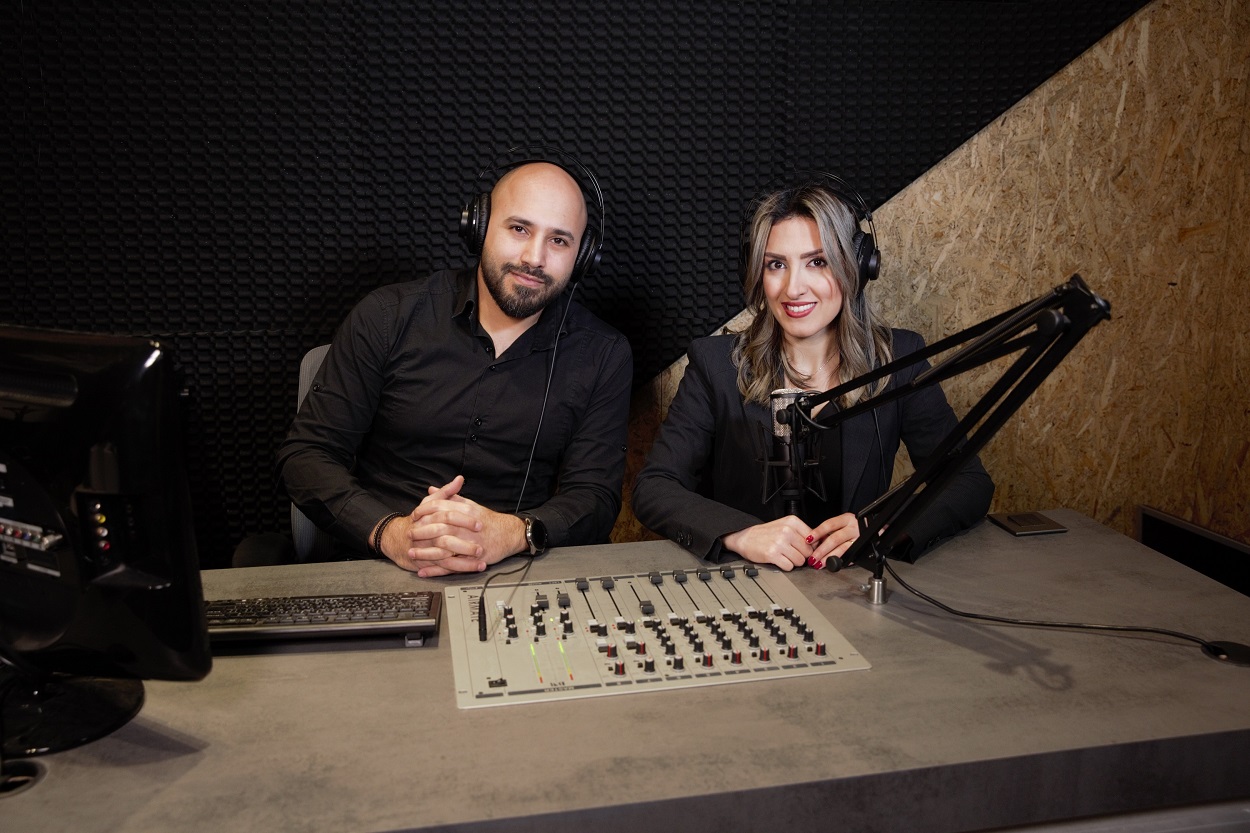
Radio first brought Nolla Azar fame. Then it brought her Jesus.
Today she uses it to bring others to him, via a new ministry.
“I know how to get women’s attention,” said the host of Listening to You, an afternoon talk show on Lebanon’s BeLight FM. “I use the same methods here, but for a higher purpose.”
Once working with Dubai-based MBC, one of the largest media companies in the Middle East, Azar returned to Lebanon in 2009 after desiring the warmth of home. Frustrated by the lack of opportunities she found in the local industry, she turned instead to social media and became a celebrated influencer.
Doing a podcast for women, she accumulated 275,000 followers on TikTok, boasting 17 million views. Still, she felt empty, complaining often to her mother about dissatisfaction with her finances, career, and love life.
In 2021, COVID-19 isolation sparked a spiritual search. Maronite Catholic by background, she read books about God, watched religious TV, stumbled upon a new and unheralded radio station, and gave her life to Christ.
Today, she is one of its top-rated hosts.
“When I first came [to BeLight], it was hard to balance between entertaining people and being ‘Christian,’” said Azar. “But it is God who brought me here, and when lifting people’s spirits, I redirect them to Jesus.”
She has contributed to the increasing professionalism among a motley crew that is quickly growing in popularity. BeLight began on Thanksgiving Day 2020 as an initiative of Arabs determined to launch a Protestant-led FM station in Lebanon. Many had backgrounds in TV production, but none in radio.
It began with 90-percent worship music, culled from English-language favorites and the mostly Egyptian-composed praise songs popular in Arab evangelical churches. Over time, BeLight increased its spoken content to almost 50 percent, at first through sermon recordings of Lebanese pastors and eventually developing its own unique programming.
And it has won itself an audience. According to an Ipsos advertising survey from last April, it now reaches 300,000 Lebanese, reeling from economic crisis and political turmoil. Its 7.5 percent market share trails the top-ranked pop music stations (which average 11 percent each), but puts it ahead of longstanding Catholic and Muslim offerings.
“We are trying our best,” said Mireille Eid, host of BeLight’s first talk show, Thought for Tomorrow, broadcasting five mornings per week. “People are happy listening to a message of hope, not just all bad news.”
She has grown with the job. With a sonorous voice but no radio training, Eid’s background was in theater and interior design. But her infectious style and transparent nature invites many to call in—requesting prayer or sharing their stories.
Lebanon boasts 18 official religious sects, with BeLight listeners hailing from many. “Good morning, you beautiful hearts who live in the hope that everything will be more beautiful,” said Sarah, from the Lebanese…
This article was originally published at Christianity Today, on February 8, 2023. Please click here to read the full text.








 Jayson Casper