Categories
Christianity Today Middle East Published Articles

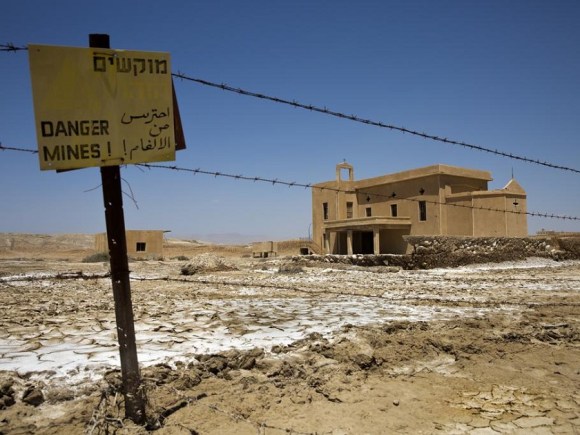
Jesus’ Baptism Site is a Minefield to Navigate. Literally.

Israel Baptism Landmines
(Heidi Levine for The National)

This article was originally published at Christianity Today on December 19.

For fifty years, John baptized Jesus in private.

But last week on the western bank of the Jordan River, landmines were cleared to allow visitors a first look at a faded fresco of the baptism in a crumbling Ethiopian monastery.

Trudging through mud while avoiding well-marked areas warning of live charges remaining from the Six-Day War, intrepid pilgrims once again received iconic witness of the beloved Son.

“Israel placed the mines between 1967 and 1971 because there was a war,” Marcel Aviv, head of the Israel National Mine Action of Authority, a branch of the Defense Ministry, told the Times of Israel, standing a few hundred yards from Jordan.

“But now it’s empty because it’s a border of peace.”

Israel partially reopened the Qasr al-Yahud baptismal site in 2011. But visitors…

Please click here to read the full story at Christianity Today.

Categories
Christianity Today Middle East Published Articles

Under the Law: Israeli Christians Worry About Secondary Status in Jewish Nation-State

Israel Nation State
Judaism and Christianity symbols on the Jerusalem old city gate – MyHolyShop

This article was first published at Christianity Today, on July 31, 2018.

In a legislative act both obvious and inflammatory, this month Israel cemented its nature as a Jewish state.

By a narrow vote in the Knesset, Israel’s legislature, the law entitled “Basic Law: Israel as the Nation-State of the Jewish People” was adopted to serve alongside over a dozen other “basic laws” that serve as Israel’s de facto constitution.

A key clause states that national self-determination is “unique” to Jews. Other provisions formally establish the nation’s flag, emblem, and anthem. Jerusalem is confirmed as the complete and united capital. The Sabbath and Jewish festivals are declared official days of rest.

But two other clauses have raised considerable concern. Jewish settlement is a “national value” to be promoted. And Arabic is downgraded from an official language to one with “special status.”

“This law outlines that Israel’s democratic values are secondary for non-Jews,” said Shadia Qubti, a Palestinian evangelical living in Nazareth. “It sends a clear message that my language is not welcome and consequently, neither is my cultural and ethnic identity.”

Her fears are echoed by an Israeli lawyer.

“While the idea of the law is straightforward—it’s hard to argue that Israel isn’t a Jewish state—the actual provisions are controversial, discriminatory, and possibly racist,” said Jaime Cowen, former president of the Union of Messianic Jewish Congregations…

Please click here to read the full article at Christianity Today.

Categories
Excerpts

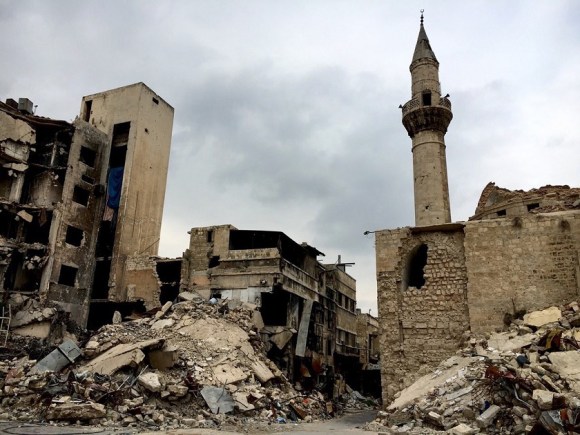
What Next for Syria?

Syrian city of Aleppo

The conflict has turned a corner as the Syrian government regained control of Damascus and begins pushing into rebel-held areas.

LobeLog interviewed Josh Landis of Syria Comment to ask him what happens next. The full interview is worth reading, but here are a few excerpts on competing regional policies.

Turkey:

Idlib was one of the poorer regions of Syria. It was a Muslim Brotherhood and rather Salafi place before the revolution. Now it’s become a dumping ground for all of the defeated rebel forces that have been pushed out of the various rebel pockets. They’ve all been pushed into Idlib, and it’s become this very unhappy collecting point.

Today we’re seeing lots of violence there internally, between militias that are vying for supremacy. But also, Turkey is protecting Idlib. Turkey does not want it to be conquered, because in doing so Assad would push tens of thousands of militia fighters into Turkey. That will make the refugee problem much more difficult for Turkey and saddle Turkey with up to 100,000 hardened rebel fighters, many of whom have links to al-Qaeda.

This gives Turkey a lot of incentive to take Idlib province and try to set up a satellite statelet that can act as a holding province for these rebels.

Israel:

Israel wants Syria to remain weak. The civil war has opened up a lot of potential for advances on Israel’s northern border. It’s destabilized that border, but at the same time it’s weakened Assad tremendously. He’s no longer a military threat to Israel, and the militias that are now along the border also don’t pose a threat.

Even if they have links to the Islamic State or al-Qaeda they’re small and have no missile capabilities or other advanced military technology. Israel would like to be able to preserve those gains and consolidate its control over the Golan. It’s now pressing the United States to follow up on its Jerusalem recognition by recognizing the Golan as Israeli territory.

United States:

The U.S. has closed off all of the major highways out of Syria to the east. International trade for Syria has been blocked off and sanctions tightened. The U.S. is dead set against international organizations playing any role in Syrian redevelopment so the U.S. can continue to strangle Syria and keep it extremely poor.

You might argue that this is bad from a counterterrorism perspective because it will create more instability, but I think the U.S. is willing to pay that price because it won’t hurt the U.S. directly.

We’re not sure exactly what the U.S. is promoting in Syria, but all the talk coming out of Washington reflects an effort to squeeze Syria politically, economically, diplomatically, and militarily in order to unseat Assad and replace him with a government that’s going to be pro-West and anti-Iran.

Any favorites?


Categories
Christianity Today Middle East Published Articles

Christ at the Checkpoint in the Age of Trump


ALcheckpoint3
Checkpoint between Israel and Palestine; credit: Andrew Larson

This article was first published May 25 at Christianity Today.

Fares Abraham grew up in the West Bank village of Beit Sahour, where tradition says the angels sang “Peace on Earth” to the startled shepherds. But his clearest memory is of his mother shot in the back by an Israeli soldier as she shuffled him and the neighborhood kids into her house during the first intifada.

Now in his mid-30s, the Liberty University graduate created Levant Ministries five years ago to mobilize Arab youth to fulfill the Great Commission.

And when he comes back home, he is at peace with his upbringing.

“When I was young, I asked myself if I should join the resistance or be a bystander,” he said to the 500 attendees—including 150 local Palestinian Christians—gathered in Bethlehem from 24 countries at the fourth biennial Christ at the Checkpoint (CATC) conference in 2016.

“But now I can go up to a checkpoint, look a soldier in the eye, and say, ‘I forgive you and love you in the name of Jesus.’”

Working also with global partners, Abraham believes the younger generations are pro-peace, becoming increasingly pro-justice the more their lives are transformed by the gospel.

It is a message communicated at CATC, though its anti-Christian Zionism is often criticized as anti-Israel…

Please click here to read the full article at Christianity Today. 

CATC audience
Audience at CATC opening in 2016; credit: Andrew Larson


Categories
Christianity Today Middle East Published Articles

In Shadow of Death, Palestinian Christians and Messianic Jews Relapse on Reconciling


Embassy Gaza
AP, via Japan Times

This article was first published at Christianity Today, on May 21.

Hanna Maher’s wife is nine months pregnant, due any day now, with only four hours of daily electricity. Her two older boys scurry about in the dark, kept ignorant by parents about the dead at the border.

But it is hard to be ignorant in Gaza.

A Norwegian charity estimates 56 percent of children in the Palestinian territory suffer from traumatic nightmares. Suicide, rarely seen culturally, is a growing concern. Maher, an Egyptian-born Baptist pastor, says some at the border see death as the best option.

Two million people are squeezed into a coastal strip roughly the size of Philadelphia. Exit is severely restricted on one side by Israel. The waiting list into Egypt is 40,000 names long.

Unemployment is over 40 percent. Clean drinking water is hard to come by. And on May 14, as tens of thousands massed near a chain link fence demonstrating for their “Right to Return,” Israeli snipers picked off dozens.

“Monday was a hard day. But at least it is quiet now,” Maher said. “It has been bad for years. But conditions now are the worst I have seen.”

Maher went to Gaza in 2011, and married his local Palestinian wife a year later. His congregation is the strip’s only evangelical church, with about 60 regular members. Overall, Gaza’s Christian population is about 1,000, mostly Greek Orthodox; in the last 10 years, it has declined by a third.

Maher provides food aid to about 120 families. His marriage preparation classes are a crash course in how to nurture a family amid poverty.

And he says local Christians are critical of just about everyone…

Please click here to read the full article at Christianity Today.

Categories
Prayers

Friday Prayers for Egypt: Gaza Again

Flag Cross Quran

God,

By now, the tragedy is well known. Dozens of Palestinians in Gaza were killed by Israeli fire at the border separating the two territories.

Some were crossing illegally. Others were protesting.

Decide between the narratives, God. There is only one truth, however nuanced.

There may be guilt widely spread. There may be ample justification.

But there is blood. And the blood draws attention to another tragedy: the situation itself.

Gaza is suffering. God, give them hope.

But give them more. Give them consistent electricity. Give them clean water. Give them movement.

Egypt has opened its border with Gaza to allow some flow of people and goods, throughout Ramadan.

But afterwards, God? What future with Egypt? What future with Israel? What future with the West Bank?

What future at all?

Give wisdom to all. There are security threats. There are humanitarian concerns. There are issues of basic dignity.

It is likely the protests at the border will continue. It is likely that some will grow increasingly desperate. Some of these will give up. Some of these will act out.

Where there is power, let it serve humbly. Where there is need, answer it graciously.

God, Gaza is just part of a larger, intractable struggle. Unstuck it.

Bring peace to the people on all sides of divide. Help Egypt be a friend to many.

Amen.

Categories
Prayers

Friday Prayers for Egypt: Uber, Iran

Flag Cross Quran

God,

If the world is being remade, make it well.

Peace is pending in North Korea, while Iran is thrown in doubt.

Taxis fall out of favor, as private conveyance newly legalizes.

And metro prices have risen again.

Give guidance to Egypt in wading the waters.

The region has already been shaken. Will it shake further? Tehran and Tel Aviv. Damascus and Golan. A new embassy.

Let there be peace, God. Let there be justice. Right the past wrongs, without making new ones.

But change will always displace. Care well for taxis, even as new earnings—and costs—come to be. Does it make the world better? It does make it different.

Is Egypt prepared to change? Is she prepared to preserve? Discernment, God, and quickly.

May she know her friends. May she know her principles.

Remake her, God, in your image. Lest she be remade by others.

Amen.

Categories
Christianity Today Middle East Published Articles

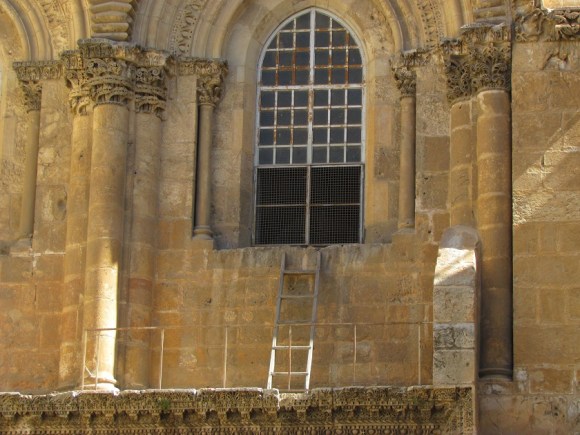
Holy Sepulcher Will Reopen After Jerusalem Suspends Church Tax Grab

Immovable Ladder Holy Sepulcher

This article was originally published on February 27, at Christianity Today.

Israel suspended a controversial tax plan and property legislation today in response to the unprecedented Christian decision on Sunday to close the Church of the Holy Sepulchre in Jerusalem.

Prime Minister Benjamin Netanyahu and Jerusalem Mayor Nir Barkat agreed to form a government committee to “formulate a solution” and negotiate with church officials.

In response, the leaders of the Roman Catholic, Greek Orthodox, and Armenian clergy will reopen the church on Wednesday, reports the Associated Press.

Barkat had stated that Jerusalem’s churches owed more than $180 million in taxes on church-owned commercial properties, and the municipality had frozen church accounts.

Meanwhile, legislation advancing in the Knesset had threatened to complicate the churches’ ability to sell their properties.

Now suspended, these actions were contrary to the historic agreement between churches and the various civil authorities which ruled Jerusalem, said Bishop Sani Azar.

His Evangelical Lutheran Church in Jordan and the Holy Land closed its Church of the Redeemer for one day in solidarity, pending consultations with sister churches in Jerusalem.

“All the churches are united, so this shows something is very wrong,” said Salim Munayer, head of the Musalaha reconciliation ministry in Jerusalem.

“It is an unbelievable step, though Christians in the West have a hard time understanding.”

Please click here to read the full article at Christianity Today.

Categories
Prayers

Friday Prayers for Egypt: Energy Hub

Flag Cross Quran

God,

It has long been an ambition. Now it is becoming reality. But strange the one who makes it happen.

Egypt is an energy hub.

Not long ago she sold off share at cut rate prices. Not long after that she was begging fuel from international partners.

Then an enormous natural gas field was discovered, giving promise of self-sufficiency.

Came the bombshell: Importing more.

Came the explanation: To liquify, and then export.

Came the confusion: Israel.

As some gasped at the deal the government nodded. Private sector, but an awaited development.

Given infrastructure and a large consumer market, Egypt positioned herself to profit from regional exploration and extraction.

Israel is the first client, having discovered large fields shortly before. Others may emerge.

God, may they find a good partner.

Help shared economics promote common peace. Egypt has strengthened ties with Greece and Cyprus; now even Israel is drawn closer.

Keep contested economics from sparking further tensions. Turkey eyes developments warily; Sudan and Ethiopia jostle over Nile water.

God, there are details to confirm and obstacles to overcome.

But bless Egypt in the management of her resources. May she build a foundation, and distribute well.

Let not her ambition trump her reality. She is still a long way from prosperity.

But God, let it happen. Allow Egypt to rise.

Amen.


Categories
Prayers

Friday Prayers for Egypt: Nation, City, River

Flag Cross Quran

God,

To present an idea, men come together. To discuss, they meet. Three conferences this week convened weighty issues.

Human contact helps relations. Human hubris may drive apart. But the ideas matter, and make a difference.

President Sisi presented the accomplishments of his four years in office. From national projects to economic reform, it may be the prelude to his reelection campaign.

God, give eyes to the people to see Egypt rightly. Where there is success, to celebrate. Where there is question, to examine. And whether or not he runs again, to vote.

The Azhar rallied for the sanctity of Jerusalem after US disruption of the status quo. Muslim and Christian, Palestinian and Arab, it aims to increase pressure from the international community.

God, give eyes to the world to see Israel rightly. Where there is negotiation, to encourage. Where there is posturing, to expose. And whether or not an embassy moves, to seek justice.

The Nile River commanded the attention of Egypt and Ethiopia. The two presidents met to revive deliberation on a steadily constructing dam.

God, give eyes to the nations to see water rightly. Where there is complication, to study. Where there is stalling, to speed. And whether or not consensus emerges, to drink.

Let the ideas settle. Let the conviction impact. Let the people reflect.

And in the end, God, reveal the right path forward. Let men meet and talk, but first pray. Be not absent, in any conference.

Amen.


Categories
Christianity Today Middle East Published Articles

Friends of Zion’s Christians?

Friends of Zion's Christians
Christian pilgrims carry palm branches during the Palm Sunday procession on the Mount of Olives in Jerusalem. UPI/Debbie Hill

This article was first published at Christianity Today, on December 15, 2017.

American evangelicals rediscovered their brethren in the Middle East in recent years. The promise of the Arab Spring, followed by the threat of ISIS. Beheadings and other martyrdoms, followed by forgiveness.

Many decided we must become better friends, and work harder for the persecuted church’s flourishing in the land of its birth.

However, President Donald Trump’s recognition of Jerusalem as the capital of Israel is putting that new friendship to the test, as Middle East Christian leaders have almost unanimously rallied against the decision.

Trump’s decision would “increase hatred, conflict, violence and suffering,” said the patriarchs and heads of churches in Jerusalem in a statement in advance of his anticipated announcement.

The Coptic Orthodox Church warned of “dangerous consequences.” The head of Egypt’s Protestant community said it was “against justice” and “not helpful.”

But the strongest testimony may have come from Jordan, where the national evangelical council pleaded against “uncalculated risks” that “may well expose Christians in this region to uncontrollable dangers.

Despite these dire cries, many conservative US evangelicals rejoiced in Trump’s announcement…

Please click here to read the full article at Christianity Today.


Categories
Prayers

Friday Prayers for Egypt: Jerusalem Recognition

Flag Cross Quran

God,

Friends don’t always agree. But not all issues are the same. Jerusalem is, and has often been, historically different.

Changing longstanding US policy, the American president recognized the city as Israel’s capital, and began the process of moving the embassy.

The Egyptian president warned against it, and then spoke against it. Most of the world sides with him.

Parliament is now debating sanctions against America. The Azhar and the Coptic Orthodox Church will not meet with the vice-president during his upcoming visit.

Sporadic protests have broken out. Pressure may – or may not – be mounting.

God, the three religions of Egypt consider Jerusalem important to you. Consequently, it is to them. So it is to many in America.

But though they read you differently, do they read you correctly?

Guide all in proper conviction toward land, promise, people, and politics. Give consensus.

But God, in this your will has long been unrealized. Decades. Centuries. Millenia.

For those with conviction, no matter how proper, give them patience with the others. Give them fair arguments. Give them fairer attitudes.

And until realization comes, give love.

Help them to talk. Help them to pray. Help them to see themselves. Help them to see your principles.

Grant justice. Grant peace.

Where there is sincerity, spare the cynicism. Where there is callousness, call it out. May all speak from the heart.

May they stay friends. May they become friends. May they repent. May they be different.

God, this change is historical. Make it more so. Perhaps you are the only one who knows how.

Amen.


Categories
Christianity Today Middle East Published Articles

The Piece of Jerusalem: Middle East Christians Explain Trump’s Embassy Gambit

This article was first published at Christianity Today, on December 5.

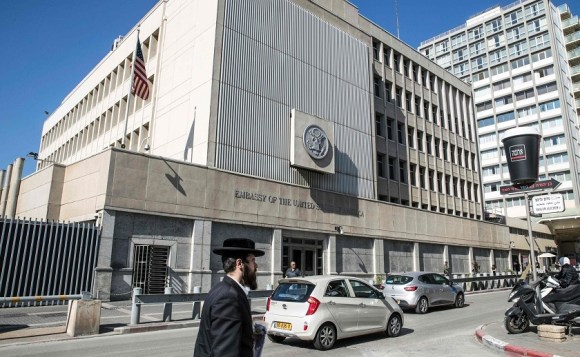
Israel Embassy Jerusalem
The United States embassy currently located in Tel Aviv may be moved to Jerusalem. (Image: Jack Guez / AFP / Getty Images, via the LA Times.)

President Donald Trump is expected tomorrow to recognize Jerusalem as the capital of Israel.

Doing so would fulfill a campaign promise. It would upend decades of American foreign policy.

And it would simultaneously encourage and unnerve the Christians of the Middle East.

“I am obviously pleased, as an Israeli,” said David Friedman, a professor at the Messianic Jewish Theological Institute and former dean of King of Kings College in Jerusalem.

“Jerusalem is the capital of Israel, de facto, concretely. Our government sits there. So why should President Trump continue ignoring reality?”

But 65 miles north in Arab-majority Nazareth, another Christian educator has a dramatically different response.

“It is a bad idea,” said Botrus Mansour, a Baptist elder and co-chair of the Lausanne Initiative for Reconciliation between Israel and Palestine. “It will increase resentment and possibly spark unnecessary violence, making peace harder to obtain.

“America will lose any remaining legitimacy it had as a fair broker.”

Israel occupied Arab East Jerusalem in 1967, and passed a law in 1980 declaring the city its eternal, united, and undivided capital. The United Nations declared the act null and void, by a unanimous resolution in which the United States abstained.

Palestine also desires Jerusalem as the capital of a future state. So American policy has been…

Please click here to read the full article at Christianity Today.

Categories
Christianity Today Middle East Published Articles

What Trump’s Evangelical Advisors Took Out of Egypt

Egypt Evangelical Delegation 2
Image: A. Larry Ross US evangelicals meet with Egypt’s grand mufti.

This article was first published at Christianity Today on November 14, 2017.

Jim Garlow walked cautiously through the cavernous halls of Egypt’s Ministry of Islamic Endowments. He prayed: Why am I here, God? What do you want me to see?

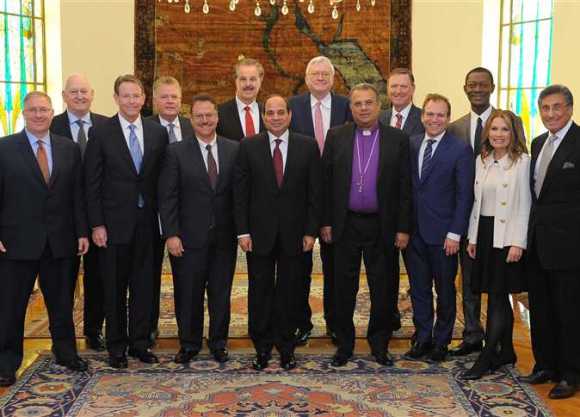
The pastor of Skyline Church in San Diego was part of a 12-member delegation of American evangelicals. Their mission: To offer friendship to the president of Egypt.

But as largely a Who’s Who of Christian Zionists and otherwise pro-Israel pastors and ministry leaders, the mission could easily go awry in a majority-Muslim nation where even the Coptic Orthodox Church still officially bans pilgrimage to neighboring Jerusalem.

Mike Evans, founder of the Friends of Zion Heritage Center in Jerusalem, is a lifelong friend of Israeli president Benjamin Netanyahu. Mario Bramnick, senior pastor of New Wine Ministries Church in Florida, is president of the Latino Coalition for Israel. Tony Perkins, president of the Family Research Council, leads tours to Israel. They were assembled by Joel Rosenberg, a Jewish Christian with dual US and Israeli citizenship and author of the fictional The Last Jihad series.

But Rosenberg had recently made a new friend, giving him confidence that this visit might be God’s will.

Last year in March, he spent five days in Jordan as a guest of King Abdullah, who had just read his book. Intrigued after noticing himself as a named character in Rosenberg’s latest series on the ISIS threat, the Muslim ruler wanted to know more. (Rosenberg assured Abdullah that his character didn’t die in the series, which the king went on to finish reading.)

Not long thereafter, God placed on Rosenberg’s heart a different Middle East leader: President Abdel Fattah al-Sisi of Egypt.

Invited as 1 of 60 Middle East experts to a forum held during Sisi’s state visit to President Donald Trump in April, Rosenberg walked up and boldly introduced himself.

“I’m Jewish,” he told CT. “I’ve got some chutzpah.”

Rosenberg thanked Sisi for rescuing Egypt and its Christians from the Muslim Brotherhood. He commended the president for reaching out to Jews and to Roman Catholics.

“But there is one group I don’t see: evangelicals,” he told Sisi. “It’s not your fault; probably we haven’t asked. But would you like us to bring a delegation of leaders to come and visit you?”

Seven months later, Garlow was in Cairo.

“Each step of the way I learned so much,” he said. “There were insights I had never known…”

Please click here to read the full article at Christianity Today.

Egypt Evangelical Delegation
Press el-Sisi: Egyptian President el-Sisi (front center) receives a first-ever delegation of American Evangelical leaders in the Presidential Palace after a frank and transparent dialogue about challenges in the region and opportunities for cooperation.
Categories
Christianity Today Middle East Published Articles

Want to Help Christians Stay in the Middle East? Start with Your Vacation

This article first appeared in the July print edition of Christianity Today.

Middle East Christian Tourism
(Credit: robertharding / Alamy)

Call Ann Fink crazy, but the intrepid grandmother has a tradition to uphold. She’s toured Israel, Jordan, and Egypt with 8 of her 13 granddaughters. Victoria, a preteen, is number 9.

“Her parents are not afraid,” said Fink, a Pennsylvania native, while visiting Egypt with Victoria. “We believe we can die at any time. Only God knows when and where.”

Neither tourist knew just how much visits like theirs support the region’s beleaguered Christians.

From a high-water mark of $7.2 billion in 2010, tourism revenue in Egypt has fallen by 76 percent following the unrest of the Arab Spring. The decline has devastated the economy and, with it, Egypt’s Christians.

Copts, an estimated 10 percent of the population, make up more than half of tour operators and more than a quarter of the tourism workforce, according to Adel el-Gendy, a general manager in the Tourism Development Authority. Christians have better connections to the West, he said, and are often more skilled with languages.

Gendy, a Muslim, has been assigned development of the Holy Family route—25 locations that, according to tradition, were visited by Jesus, Joseph, and Mary as they fled Herod’s wrath. Relaunched with government and church fanfare in 2014, the route is close to being designated as a World Heritage site by UNESCO, he said. But the project has struggled as tourists stay away.

The route runs through Old Cairo, which boasts churches dating back to the fourth century but feels like a ghost town. Souvenir shops are open, but their lights dim. “Our income has dropped by 90 percent,” said Angelos Gergis, the Coptic Orthodox priest at St. Sergius Church, built above a cave where tradition says the Holy Family stayed three months. “We are assigned to assist 100 poor families in the area, but we used to help so many more.”

There are no tourist fees at Christian religious sites, but many visitors leave donations. “You can see things in Egypt you won’t see anywhere else,” he said. “And if you have any sympathy for us, please come. Your visit does help…

Please click here to read the rest of the article at Christianity Today.

Categories
Christianity Today Middle East Published Articles

Should Christians Join Muslims in Breaking Ramadan’s Daily Fast?

This article was first published at Christianity Today, on June 22, 2017.

St. Andrews Iftar

For most American Christians, Ramadan is a novelty; something heard of, but rarely seen. For Middle Eastern Christians, it is everywhere.

For some, it is an annoyance. The month-long fast from sunrise to sunset can make for a cranky Muslim neighbor. Productivity tends to slow. Religiosity tends to rise.

But for other believers, it is an opportunity.

“The Evangelical Church of Maadi wishes all Egyptians a generous Ramadan,” proclaimed the flowery banner hung in the southern Cairo suburb. Such signage is not uncommon (and Muslims also display Merry Christmas wishes for Christians). But saluting “all Egyptians” is a statement.

“I want our brother Muslims to feel that we are one [as Egyptians], and it will make him happy in his heart,” said pastor Naseem Fadi. “We both celebrate Ramadan.”

Beside the need to have good relations with Muslims, Fadi also emphasized his biblical obligations. “Our faith tells us to love everyone,” he said. “And when we reach out to others, we teach them about ourselves.”

Across the Middle East, Christians join in the festive spirit—often by hosting an iftar, the traditional fast-breaking dinner…

Please click here to continue reading at Christianity Today.


Categories
Prayers

Friday Prayers for Egypt: Corruption, Resolution

Flag Cross Quran

God,

As Egypt made one statement, it deferred on another. May wisdom couple with pragmatism, but only where is right.

An official at one of the nation’s highest courts was exposed for taking bribes. As his case was paraded in the media, the extent of corruption is not yet clear.

But the president took occasion to renew the call to clean the system, asking that all be held accountable.

May it be so, God. Establish the systems necessary to create the fear of stepping out of line. And in conjunction, develop the integrity necessary that it might not be considered.

In process, move anti-corruption efforts from the spectacular to the mundane. Equip a cadre to ferret out irregularity. Expand their influence to change a culture.

And protect them, God. From without, from any enemies created. From within, from the enemy of the soul. How easily they themselves could be corrupted. How easily their work might manipulate in turn.

So as Egypt reaches out to assist those troubled by the economy, may it reach the needy at every level.

Support has been extended not only to the poor, but to struggling tourism facilities in need of renovation and to import-dependent businesses in fear of bankruptcy.

Meanwhile internationally, it is Egypt who stands in need of support. Keep her honorable in the pursuit thereof.

After raising a resolution at the UN against Israeli settlements, Egypt withdrew it in deference to Trump. She later voted in favor of a multi-national resolution she did not join in sponsoring.

Some say she buckled in support of the more needy Palestinians. Others say she brokered favor with the strong while not abandoning a principle.

God, decipher motivation and judge accordingly. But help Egypt to be true, and support her if she is.

For Egypt has also taken complicating positions toward Syria and Yemen. She dances with Saudi as the disputed Red Sea islands remain in court. She must resolve tourism issues with Russia and Britain. America gives millions in military aid; Israel is essential in border control.

God, give Egypt resolution. Free her from corruption.

Help her to wade through troubled waters with her head held high, with the confidence that comes only from uprightness.

Wisdom, God. Pragmatism, too. Peace, justice, prosperity. May they come in their fullness, and soon.

Amen.

Categories
Prayers

Friday Prayers for Egypt: Assassination, Funeral

Flag Cross Quran

God,

Egypt witnessed a frightful return, disturbing a relative quiet. The pattern subsided but not that long ago was a viable threat. May it not be a portent of things to come.

A car bomb detonated in an upper class neighborhood, injuring one bystander but missing the deputy prosecutor-general. Fifteen months ago, his positional superior was assassinated by similar means.

God, thank you for the escape. But the signs that such men continue to nurse their grudges through violence is a disturbing development. After a year of many targeted killings, Egypt outside of Sinai has successfully enforced an extended period of calm.

May the culprits be caught, God. May those behind them be exposed and disabled. May any legitimate grievances find peaceful solution, and may justice be extended to all.

For grievances are also finding expression in the funeral of former Israeli president Shimon Peres. Egypt’s foreign minister will attend as a representative of the state. But others are critical of paying homage to a man they deemed oppressive of Palestinians.

God, give both peace and justice to the peoples of this world. In Egypt in particular, help leaders and citizens alike to find the proper balance. It is right to honor the dead. It is right to review a legacy.

May truth prevail among hearts unhardened to humbly receive and boldly respond. May they rightly impact others too possessed by the pain of past grudges, justly held or otherwise.

May the victims of all conflicts rest in peace. May the living rest the same. Heal Egypt and the region, and save her from further harm.

Amen.

Categories
Christianity Today Middle East Published Articles

Pilgrims’ Process: Why Christians Closest to the Holy Land Visit the Least

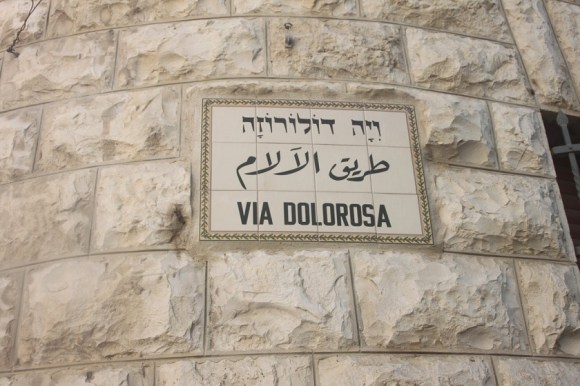
Via_dolorosa_Jerusalem

This article was first published at Christianity Today in the June print edition.

Walking down the Via Dolorosa, Nabil placed his hand on the wall where Jesus reportedly stumbled on his way to being crucified.

I am a lucky man, thought the 58-year-old. I can feel the Holy Spirit in my body.

This wasn’t how the Coptic Orthodox pilgrim had expected to feel in Jerusalem’s Old City. “Most Egyptian Christians want to visit as part of their faith,” he said, noting that he saw many elderly women dressed in black, weeping at each station of the cross. “Not me. I’m retired, I have nothing else to do, and I like to travel.”

Touring the Holy Land has been a transformational experience for Christians worldwide. In 2014, more than half of the 3.3 million tourists who visited Israel were Christians, according to the Israel Ministry of Foreign Affairs. Of these, one out of four was Protestant.

But among these tourism figures, the Arab Christian community is nearly a no-show. In 2014, Jordan sent only 17,400 tourists (which were not differentiated by religion). Egypt, only 5,200—all Copts. Lebanon forbids travel to Israel entirely.

So Close Yet So Far

There are many reasons Arab Christians don’t tour Israel. The ancient sites are right in their backyard, so familiarity breeds complacency. And economic and political conditions hamper travel.

“I grew up minutes from Mary’s Well in Nazareth, and walked to school daily past the Church of the Annunciation,” said Shadia Qubti, a Palestinian evangelical. “It’s where I met friends for coffee.”

Please click here to read the full article at Christianity Today.

Categories
Prayers

Friday Prayers for Egypt: Normalizing Ties?

Flag Cross Quran

God,

You desire good relations. But politics is often about particular interests, and sometimes relationships go sour. Sometimes they are damaged beyond repair. Perhaps in some cases, an outright break is necessary and best.

So with Israel, Turkey, and the Muslim Brotherhood, God, help Egypt arrange her affairs properly. Feelers have gone out that perhaps a thaw is in the offering.

Egypt has had longstanding peace with Israel, but it has usually been cold. Formal relations were handled by the intelligence and security sectors, but recently the foreign minister visited Tel Aviv.

Diplomatic relations carry more normalcy, which is controversial in Egypt. But use his effort to further peace between Israel and Palestine, God. And shape policies and attitudes among peoples, so that warm relations will be possible also with Cairo.

Turkey, also, has been mending fences with Israel, and Russia beside. Egyptian ties severed after Morsi was removed from power, and both sides continue to criticize each other.

But there are also hints that maybe things can change. Interests, justice, and legitimacies are sometimes hard to reconcile on the international stage, God. But Egypt and Turkey are regional powers; coordination is preferred to conflict.

God, may Egypt, Israel, and Turkey bless the region and the world. Much must change to experience your ideal. Forgive and be merciful when your ways are neglected.

At heart, this is a mark of the Egypt-Brotherhood relationship. Both sides accuse the other of bloody and traitorous conspiring. Though the Brotherhood is less than a nation, it is more than a person. And their members belong to Egypt, no matter the legitimacy or substance of mutual acrimony.

But does their ideology? God, give both sides great wisdom. Rule justly between them; may every crime find proper punishment.

Help member, group, government, and nation to come to terms. The issues are too disputed to pray simply for reconciliation, when some pray for retribution and others eradication. Many on both sides would see normalization as a terrible compromise, even a defeat.

Even so, it seems some are trying cautiously. If from good and righteous intention, God, bless them. Bless also those who from similar moral clarity are strident to apply justice.

Sideline those of selfish ambition, but for all others scrub away their every impurity. May good men lead the nation well.

Give Egypt discernment, God, at home and abroad. May all true ties be strengthened. May peace, in place of struggle, soon become normal.

Amen.