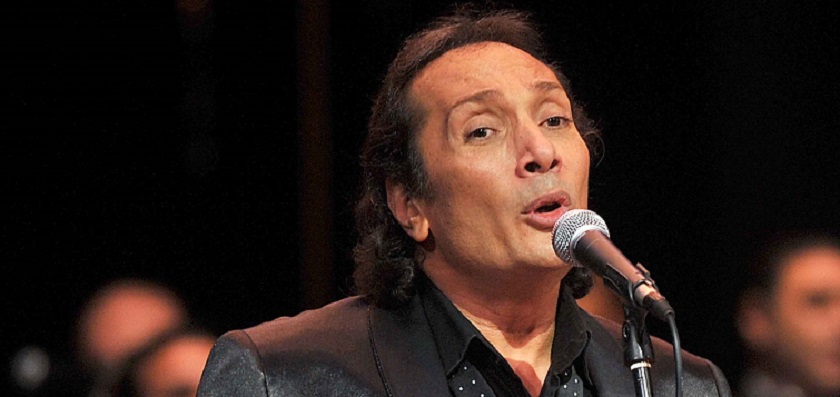
This popular Egyptian song by Ali al-Haggar is titled ‘We are a People’. It was created around the time of the military action to remove President Morsi from power, showing scenes from the protests against him.
Fair enough, but the lyrics do not stop at the title. The refrain continues ‘… and you are a people’.
It is a very thinly veiled contrast of the Egyptian people with Islamists, and in particular the Muslim Brotherhood.
This could possibly, maybe, be fair enough. The Muslim Brotherhood is a transnational organization that aims for the unity of the Muslim peoples. Their opponents accuse them of using Egypt as a launching pad for a new caliphate, rather than being loyal to Egypt as a nation-state.
As such, they are a separate people, or so the song suggests.
This is very dangerous and divisive sentiment. Some may say these are dangerous and divisive times. It is good, they say, the Brotherhood has been removed from power before it is too late.
Perhaps. But the song continues, ‘Despite there being only one God, we have a God, and you have a God.’
One Salafi friend, profiled here, complained bitterly about this line before I was even aware of the song.
Islamists are often accused of being ‘takfiris’ – those who call anyone who does not agree with them an infidel. This song does the same in reverse.
‘Take your fatwas and go far away from our land,’ it sings. Early after the revolution some Salafis told Christians and liberals they could leave Egypt and go to Europe or America if they didn’t like the results of elections.
‘We have ibn Sina and ibn Rushd [two famous Arab philosophers], you have bin Laden [you know who he is],’ it also declared. Since dispersing the pro-Morsi sit-in the media had declared the crackdown on the Brotherhood as a ‘War against Terrorism.’
And perhaps it is. Few things are yet clear, but the dangerous and divisive lyrics of this song are one of them. Whatever criminal conspiracy the Brotherhood has possibly engaged in, there are hundreds of thousands of ordinary Egyptians who are partial, at least, to the slogans and promise of Islamism.
I will excerpt the conclusions for each, but the whole article is worth reading. If you would like to skip over the quotations for my brief commentary, please scroll down to the end.
First, on the possibility of Inclusion and Integration:
Assuming there are prudent, democratic interlocutors who are truly interested in mediating a settlement with the regime, such as Beshr and Darrag, can they really command the organization’s support? The answer, most likely, is no, given that most of the key positions in the group’s decisionmaking bodies, including the Guidance Bureau, the Shura Council, and administrative units, are occupied by individuals completely loyal to the Brotherhood’s incumbent leadership and tied to it through a multilayered network of business, familial, occupational, personal, and ideological connections.
Furthermore, the Brotherhood’s leadership has masterfully employed existential fears of regime repression among the group’s members to deter any serious call for self-critique or internal revision. Brotherhood leaders have so far adamantly refused to admit their grave mistakes and betrayal of the causes of revolution and democratization. The best they can concede, based on the dovish Darrag’s statement to the media, is to support the viewpoint that the only mistake the Brotherhood made while in power was underestimating the power of the Egyptian “deep state” and its capacity to spoil the political process. Darrag believes that the Brotherhood should have adopted a “more revolutionary strategy” in order to cleanse the state. But he expresses no regrets about the authoritarian constitution, the exclusionary political process, or the divisive policies put in place by the Brotherhood while in power. Moreover, even if Brotherhood leaders admit to grave mistakes during their rule, as long as the regime continues its repressive policies against the organization, the time will not be right to critique these leaders or hold them accountable for their shortcomings and wrong deeds. Therefore, internal Brotherhood fragmentation and secession will remain highly unlikely.
Nevertheless, even if some interlocutors can hypothetically solicit a degree of support—and hence start creating a real moderate faction within the Brotherhood—this scenario presents an invitation for the breakdown of the Brotherhood’s organizational unity. As long as there are no comprehensive transformations of the group’s ideology and mission, the recalcitrant Brotherhood mass will not accept these moderates’ offers of settlement on the regime’s terms, which will be depicted as an unpalatable act of treachery. The Brotherhood might come to a historical end, and more radical groups might emerge to the right of the Brotherhood, attracting its disgruntled former supporters. So, the first scenario, which is the resolution preferred by the United States and the European Union, is highly problematic and unlikely, at least in the short run.
Second, the Violence Scenario:
Nevertheless, Islamist violence may have reached its logistical and social limitations. First of all, violence on a large scale requires a large number of people willing to execute it and a social base willing to support it. Small pockets of disaffected, radical Islamists are not enough. Furthermore, unlike in Algeria in the 1990s, topographical conditions favorable to armed insurgency do not exist in Egypt. The country also lacks a clearly proviolence social constituency large enough to provide shelter and support for fighters.
Increasing social hostility to Islamism in general and to Islamist-driven violence in particular can isolate the politics of violence and further erode public support. While radical Islamic groups in Egypt waged an armed confrontation with the state in the 1980s and 1990s, it is important to recall that during that period the public remained either sympathetic to the Islamists or opposed to them but not motivated enough to throw its weight behind the government. This time the violent Islamists will face opposition from both the state and society (or at least wide segments of society), as demonstrated by the continuous street battles between Islamists and the Egyptian public in residential areas, popular neighborhoods, public squares, and marketplaces across different cities and towns in the months since November 2012.
The Syrian scenario is also unlikely. It is hard to believe that the Egyptian army can split along sectarian, political, or ideological lines like its counterpart in Syria.
The violence scenario, if it materialized, could arguably involve more low-intensity violence, limited to specific activities and locales. It might take the form of street conflicts between Islamists and anti-Islamist individuals in different urban neighborhoods. Street violence between common people and politicized actors has been a recurrent pattern since the early days of the transitional period. Many residents consider any politicized marches through their neighborhoods to be a transgression into their territory. Friction and clashes have occurred as a result, increasing in recent weeks, and are now focused on Brotherhood marches. Yet such low-intensity violence would likely fall short of anything like the Algerian or Syrian cases.
So both the accommodation scenario and the violence scenario are improbable. This leaves only one other possible outcome—a continuation of the status quo.
Third, the Continued Protest Scenario of De-legitimization:
The Brotherhood’s odds under the continued protest scenario are not terrible. In fact, the group can already claim that it has made headway through the troubled waters of the last month. The organization is arguably (at least in the minds of some Brotherhood activists) in a much better tactical position than when protests against Morsi began or even than when he was ousted, when public sympathy for Morsi’s cause was at its lowest and the faith in the interim regime’s transitional road map was at its zenith. The biggest problem with this scenario is its extremely risky nature. The pursuit of this option would risk losing the political gains the Brotherhood has made since Mubarak’s fall: official recognition, political participation, and power sharing. Such gains could be partially sustained if the accommodation scenario were to be embraced.
The bet the Brotherhood would be making with the continued protest scenario is that it can achieve longer-term gains, such as exhausting the transitional regime until it surrenders to the Brotherhood’s conditions, if it accepts certain near-term tactical forfeits. However, a complete defeat on the part of the military and the state is likely impossible as well. Ironically, the continued protest scenario in the long run may morph into a modified version of the accommodation option as the maximum that the Brotherhood can gain given the current balance of power.
The author does not dare to predict which path the Brotherhood will take. The best, that of internal self-reform and reflection, he believes is institutionally unlikely as well as near impossible under current circumstances.
But the difficulty lies in the nature of the Brotherhood itself, which he describes even before presenting the three options:
The Brotherhood is not a “moderate” Islamist movement that can be further moderated and democratized via inclusion. Instead, it has shown itself to be an assertive, even reckless movement, invested in Islamist ideology and dominated by an entrenched leadership structure. It has demonstrated a tendency to maintain multiple public discourses in an attempt to reconcile irreconcilable sets of political vocabulary. The soft-spoken English-speaking Brotherhood cadres who communicate with Western diplomats and analysts and propagate lofty statements about the compatibility of Brotherhood objectives with liberal democracy are not exactly representative of the real Muslim Brotherhood.
To truly understand the Brotherhood, one should examine the movement at the grassroots level, in the small towns and rural areas across the Delta and Upper Egypt—the organization’s real power base and the constituency that its leaders represent. At this level, the Brotherhood does not support pro-democracy rhetoric. Instead, it is more aligned with Salafist religious interpretations and understandings of the organization’s mission and goals as expressed by Sayyid Qutb, the renowned Muslim Brotherhood intellectual of the 1950s and early 1960s. Qutb was instrumental in advancing the notion of “organization first,” which suggests that the Islamist cause is inherently connected with the creation and sustenance of the Muslim Brotherhood society as an exclusive representation of Islam.
Intellectually and culturally, the Brotherhood encompasses different schools of Islamic thought, some of which are more open-minded and reformist than others. But based on the Brotherhood’s doctrinal literature and actual behavior, it is clear that the core of the organization centers on an ideology of an “Islamist state,” “Islamic transnationalism,” or “Paxa Islamica” and on notions of a government based on God’s sovereignty instead of the people’s sovereignty.
I have only one small quibble. The constitution produced under Brotherhood leadership specifically stated ‘sovereignty belongs to the people’, over the objections of Salafi members.
Of course, the constitution included several clauses which elevated the role of sharia, and thus of God’s practical sovereignty. The author might argue the constitution was necessarily a compromise document and was certainly a step in an Islamist direction, consistent with Brotherhood pragmatism.
As far as my read on their options, the current period is characterized by choice number three – of continued street protests. The Brotherhood can maintain this for a while, but only up until a coming critical event.
Once the amended (or new) constitution is put to popular referendum, assuming its approval, the Brotherhood claim of legitimacy takes a thorough blow. The people will have democratically sanctified the mass rallies which led to the military deposing of President Morsi.
At this moment, protests will not be enough. The Brotherhood will have to choose between active campaigning for a no vote or a boycott, or else sabotage the process. They must not allow a popular vote to go against them.
How will they do this? At that moment these three choices will come to a head. They can bide their time now with protests, but in another month or so, the die will be cast.
Ninety years, God, or six months? Which is now dissolved? A recent court decision declared the recently established Muslim Brotherhood NGO illegal, but added the ruling applied to all group activities.
Sixty years, God, or nine weeks? Which one dissolved it? Does the ruling issue from the legacy of Egypt’s military government, or from a post-revolutionary government with a renewed commitment to civil democracy?
This government postponed the implementation of the ruling until litigation against Brotherhood leaders in custody is settled. But despite the decapitation, protests continue with regularity.
God, speak to those in the Brotherhood. Help them to take stock of the situation and reflect upon the best path for the nation. Will you honor their commitment among the people? Or are they only alienating themselves further? Some have sought to apologize for their mistakes, while remaining leadership dismisses this. Give them humility, God, and may their level of sincerity be evident to all.
God, help their Islamist allies to encourage them appropriately. Some have called for them to give up their zero sum struggle. Is this capitulation, or wisdom? The right must never be surrendered, but how many wrongs is the Brotherhood masking? May those of like mind counsel them appropriately.
God, guide the path of the interim government. Publicly, they say invitations for reconciliation with the Brotherhood are still open. May all trials of their leaders be transparent, just, and quick. Resolve this momentous issue so the country can continue its democratic transition.
God, encourage those who seek to stand in between. Several revolutionary activists formed a front to oppose both the Brotherhood and the military. Strengthen them so their opposition is credible and positive, a public service to hold all to account.
And God, bless those outside the struggle entirely. Reports say they are re-depoliticizing; they are fatigued, frustrated, or just wishing the nation would go back to normal. Provide for the needs of the many poor, and lift the spirits of all so as not to surrender the positive ideals of the revolution.
The Brotherhood is unlikely to go away, God, and you know best if it should or shouldn’t. Neither the quasi-political role of the military, a similar judgment your providence disposes.
But Egypt remains, as do your principles. May these dissolve so completely into each other they may never be separated. Make of them both a completely new nature.
From Egyptian Streets, elaborating on how Bishop Thomas defended his church in Upper Egypt, which I briefly mentioned in this report:
“We learned that extremists were going to attack us with machine guns, but we did not prepare ourselves for the attack with weapons. We did something simple,” says Bishop Thomas, about that day he received a message that armed hardliners were on their way to his episcopal residence in the Al Quosia-region of Lower Egypt.
Determined to defend themselves without violent means, the church fathers applied soap and water on the rocky path leading to Bishop Thomas’ residence.
“I saw them coming with their machine guns far down the road. They tried to get to the house, but they slipped and fell. They tried over and over again, without succeeding,” says the Bishop, smiling with grief as he talks about the episode.
The grief is over the many homes in his diocese which were attacked. But he is resisting the urge to demonize:
“Fear and anger does not come in my heart. Fear is the biggest enemy – this makes you lose wisdom and power,” said the Bishop gently when asked about the impact of the violence on life as a Copt. “Hatred is the biggest disease – full of revenge and the source of all evil.”
Doing so enables him to take a path different from many Copts, who have embraced the current crackdown on Islamists:
“I need to embrace the victims with love and communicate forgiveness. When the worst assaults are over, my task is to promote and facilitate reconciliation,” said the Bishop calmly while smiling. “The Coptic church is training people to see the situation from different perspectives, we teach them the difference between autocracy and democracy, and the meaning of a civil state. We are working against both a religious – and a marshal state.”
The attacks, some might say paradoxically, have brought the Muslims and Christians of his area closer together:
“Poor Muslim families brought blankets to the Christians who lost their homes, and together we formed a civil front– not Christians against Muslims– but civil society against extremism,” explained the Bishop.
Among the issues discussed jointly were defense-tactics and how to prevent any new attacks.
Images and video-clips from Muslims and Christians, who hand in hand formed a protective ring circle around churches, were shared on social media across the globe.
“No one who has not experienced sectarian violence close up will be able to imagine what this solidarity means to us, as a society,” said Bishop Thomas gratefully. “We did actually lose hope under Morsi. Now we are hoping and praying that the price Copts are paying now will benefit generations of Egyptians in the future.”
Here in Maadi, Cairo, life goes on as normal amid the political instability. This town in Minya is not so fortunate. From the AP:
A town of some 120,000 — including 20,000 Christians — Dalga has been outside government control since hard-line supporters of the Islamist Mohammed Morsi drove out police and occupied their station on July 3, the day Egypt’s military chief removed the president in a popularly supported coup. It was part of a wave of attacks in the southern Minya province that targeted Christians, their homes and businesses.
Since then, the radicals have imposed their grip on Dalga, twice driving off attempts by the army to send in armored personnel carriers by showering them with gunfire.
Local Christians are particularly suffering, at least those who have not fled:
Among the homes torched was that of Father Angelos, an 80-year-old Orthodox priest who lives close to the monastery. Yoannis’ home was spared a similar fate by his Muslim neighbors. A 60-year-old Christian who fired from his roof to ward off a mob was dragged down and killed, the activists said.
“Even if we had firearms, we would be reluctant to use them,” said Yoannis. “We cannot take a life. Firing in the air may be our limit.”
Those who remain pay armed Muslim neighbors to protect them. Yoannis said his brother paid with a cow and a water buffalo. Most Christian businesses have been closed for weeks.
Armed men can be seen in the streets, and nearly every day Islamists hold rallies at a stage outside the police station, demanding Morsi’s reinstatement.
Most Christians remain indoors as much as possible, particularly during the rallies. They say they are routinely insulted on the streets by Muslims, including children. Christian women stay home at all times, fearing harassment by the Islamists, according to multiple Christians who spoke to the AP. Most requested that their names not be published for fear of reprisals.
“The Copts in Dalga live in utter humiliation,” said local rights activist Ezzat Ibrahim. “They live in horror and cannot lead normal lives.”
The Islamic concept of jizia requires non-Muslims to pay a tax in exchange for their protection. Many Muslims argue today this principle is no longer applicable, as Christians join in the army and jointly defend their nation.
But here the Copts have no share nor desire to defend their village with these Islamists against the army. Therefore, it appears, the concept of jizia is demanded from them.
Here is an example of their protector, the man guarding the monastery-church:
At intervals, the 33-year-old father of three would stop talking, move carefully to the edge of a wall and stick his head out to check if someone was coming.
His big worry was the bearded Muslim at the gate, Saber Sarhan Askar.
Skinny with hawk-like hazelnut eyes, Askar is said by Dalga’s Christians to have taken part in the torching and looting of the monastery. Outside the monastery that day, Askar was telling priests he was there to protect it. But the orders he yelled to other priests left no doubt who was in charge.
“Bring us tea!” he barked at one priest. “I need something cold to drink!” he screamed at another soon after.
To my knowledge, this is the only incident of pro-Morsi supporters gaining a foothold in a local area. Elsewhere, they are on the run. Still, the security apparatus has tasked itself with a heavy burden.
How much blood will be shed recovering this village? If the state of the nation and economy does not improve over the next several months, might their be similar mutinies elsewhere? The state, in general, was weak before the revolution, and is weaker now.
Dalga is the only current example, and is likely to remain so. But the question is open. What will the future hold?
Safwat Hegazi has long been an interest of mine due to his inflammatory rhetoric in favor of Islamism. This article was written for Arab West Report before the removal of President Morsi from his office, in preparation for a hopeful interview. Cornelis Hulsman was able to secure this interview during the sit-in protest, and this will be published here in a subsequent post. Since then, Hegazi has been arrested for inciting violence. Unfortunately, the database of AWR remains inaccessible due to hacking.
………….
The Islamist landscape in Egypt is often seen through the lens of two dominant groupings: The Muslim Brotherhood and the Salafis, the latter of which have splintered into several smaller political parties. But Sunni Islam, lacking an organizational hierarchy, facilitates the emergence of independent scholars on the basis of their knowledge and charisma. Though the Brotherhood and Salafi Nour Party are rightly understood as the prime movers in Islamist politics, the influence of individual actors must not be discounted. Among the most prominent is Safwat Hegazi.
Despite his general independence, Hegazi is often identified – rightly or wrongly – as a member of the Muslim Brotherhood. Regardless, his strident pro-revolutionary and pro-Islamist positions frequently place him in support of President Muhammad Morsi in general, and in support of an even larger Islamist project in particular, as will be seen. These positions are not just his own, but reflect his position as the secretary-general of the Revolution’s Board of Trustees, one of many revolutionary groupings, and from membership in two Islamist/Salafi organizations, the Legitimate Association for Rights and Reform, and the Association of Sunnah Scholars, which he heads.
Most controversial, however, is Hegazi’s membership in the National Council for Human Rights. This semi-governmental watchdog was reconstituted by Morsi to replace the Mubarak and NDP dominated council with twenty-five new members. Liberals and leftists received a share of the seats, but critics complained of Islamist domination and the appointment of figures with no experience or demonstrated commitment to international human rights norms. Hegazi was singled out as an example.
Among the complaints is Hegazi’s willingness to shed blood.
He issued a fatwa not only licensing the assassination of Syrian President Bashār al-Asad, but also declaring ‘a sinner’ anyone who did not do so. ‘Killing Asad is a duty of the Islamic nation,’ he declared, taking legitimacy from other organizations who issued similar statements.
While Syria can be considered a domain of war, Hegazi’s pronouncement of death extends further. lAnother fatwa urges Muslims to kill any Israeli found walking in the streets, saying the day will come when Muslims rule the world. He also announced he would personally kill someone who insults Islam or the Prophet Muhammad, though he was careful to emphasize he was not asking the public to assume this responsibility.
Finally, in the context of demonstrations at the presidential palace over Morsi’s controversial constitutional declaration placing his decisions beyond judicial oversight, Hegazi warned demonstrating Copts. Repeating Islamist claims that over sixty percent of protesters were Christians, he saw a conspiracy to overthrow the president. Copts share this country with us, he admitted, but declared there were red lines. ‘Whoever threatens it [presidential legitimacy] with water,’ he said, ‘we will threaten him with blood.’
An anti-Christian sentiment can be detected as well in earlier incidents. Upon return of the fiery and polemical Islamist preacher ‘Umar ‘Abd al-Kāfī to Egypt after thirteen years in exile, Hegazi was there to meet him at the airport. But it was his conduct in Qena which speaks more fully to the issue.
After the revolution the ruling military council replaced Mubarak-era governors and appointed new ones in their stead. Qena, with a large Christian minority, had been the one governorate with a Coptic head, and his replacement with another Copt sparked huge protests and cutting of the railway line. Some rejected him for his role in suppressing protests as a member of the police force during the revolution, but much of the protest centered on his religious identity.
Hegazi was part of a team dispatched by the military council to help calm the situation, but instead took the side of the demonstrators. ‘Your demands are our responsibility,’ he declared. ‘No one can impose on us something we do not want.’ In a later, unrelated incident, Hegazi also condemned Shia Muslims, declaring their faith to be blasphemy.
In the accessed media, the motivation for Hegazi’s stances is unclear, but there is space to see it primarily as revolutionary, rather than as sectarian. His is an Islamist activism, but it is revolutionary all the same. Sometimes, these come into conflict.
This was apparent during a summer demonstration in Tahrir Square in 2011 against military rule. Hegazi had earlier withdrawn from a national consensus conference due to the presence of old regime figures, and in this his action was similar to liberal response. But in the square it was non-Islamists who felt the need to withdraw as Salafi protestors used the occasion to chant decidedly Islamist slogans. Hegazi rejected claims there was an agreement among all revolutionaries to use only consensus slogans and demands. Other Islamists admitted there was, however, though they interpreted it differently. In any case, Hegazi became a part of the deteriorating unity of the revolution and the decent into political polarization.
In an earlier example, following the burning of a church in Imbaba in May 2011, representing the first major sectarian attack after the revolution, Hegazi appeared at a massive joint Brotherhood-Salafi rally. He interpreted the attack as part of the counter-revolution, saying it was carried out by thugs, rather than by Islamists. He also took the opportunity to declare the soon coming of the United Islamic States, with one caliph to rule all Muslims.
This theme appeared again during the presidential election campaign, which Hegazi declined to participate in – possibly on behalf of al-Jamā’ah al-Islāmiyyah – due to the large number of worthy candidates, mentioning specifically the liberal Ayman Nūr along with other Islamist candidates. But eventually he threw his support behind Muhammad Morsi, declaring him the only candidate who promised to implement sharī‘ah law.
But Hegazi’s rhetoric went much further. He declared Morsi to be a new Salāh al-Dīn who would unite the Muslims and liberate Jerusalem. A few days later at a huge rally in the Delta, in front of Morsi and Brotherhood leadership Hegazi called for ‘millions of martyrs’ to go to Jerusalem, establishing it as the capital of a new caliphate. The green flag bearing the Islamic shahādah, he defended, belongs to Islam and not to Saudi Arabia.
Part of Hegazi’s motivation is revolutionary. Prior to the first round of elections he called for people to reject the former regime candidates, labeling especially ‘Umar Sulimān, Ahmad Shafīq, and ‘Amr Mūsa. But it is also fully Islamist; a few weeks later he said it was ‘against religion’ to elect a candidate with a vision for liberal, secular, communist, or socialist state. As for the Salafi political parties which endorsed ‘Abd al-Mun’im Abū al-Futūh for president, Hegazi called their leaders agents of state security.
Hegazi’s support for Morsi has continued after his election. He defended the sacking of military council leadership, saying it was not to monopolize power but to secure the demands of the revolution. He supported the constitutional declaration, as described above, and has even approved the practice of kissing the hands of religious leaders, placing Morsi among their number. His partisan positions have earned Hegazi a good deal of opposition – and possible maligning – in the press. An admitted NDP thug has accused him and Brotherhood leadership of orchestrating the revolutionary Battle of the Camel. He was also quoted as seeking to turn the political struggle in Egypt into a civil war, as the opposition was against God and his caliph, a statement he subsequently denied.
As a controversial Islamist in Egypt, Hegazi is not alone. Many have made comments even more outrageous, but none have received such official government endorsement. Appointment to the National Council of Human Rights is a major statement of presidential approval, in which President Morsi implicitly signals toleration of Hegazi’s rhetoric, if not appreciation and approval. France, meanwhile, has barred him from entering the country.
More than likely, Hegazi’s appointment is a political reward for necessary support, keeping secure the president’s right flank. Policy makers in the West appear content to allow Morsi to nurture sectarian discourse as long as practical international obligations are kept sacrosanct. These obligations, however, include a measure of respect for human rights; how far Islamists can transform domestic religious realities is yet to be delimited.
But President Morsi is accountable for the views of Hegazi. Having chosen the politically expedient road of endorsing him domestically, he must endure the politically difficult road of explaining him internationally. Egypt is free to create the society it wishes, but the global community is free to criticize accordingly, and determine the level it welcomes and aids Egypt’s ongoing transition.
These matters are not easy, either for the president or the international community. Safwat Hegazi, however, symbolically stands in the nexus. By all appearances he enjoys his position.
Among the difficulties in assessing the news of Egypt is the Cairo-centrism of journalism. A problem plaguing the nation in general, all major newspapers operate from the capital attracting the best talent away from other regions in search of promotions and a better life. Quality of information suffers; many newspapers simply investigate local developments through phone calls.
Finding a well-connected regional Egyptian journalist, therefore, is a contact to be treasured. On a recent visit to Upper Egypt Arab West Report met Mamduh Sarur, who appears to fit the bill.
Our conversation centered on the presence and nature of Islamic movements in the region:
Sarur confirms the existence of organized, trained groups of young men connected to the Islamist movements, especially al-Jama’ah al-Islamiya. In the opposition media these are often labeled ‘militias’, which Islamist consistently deny having. Al-Jama’ah al-Islamiya prefers to call them ‘popular committees’ using the terminology applied to each neighborhood in Egypt when they self-organized after the police vanished from the streets on January 28, 2011, during the revolution.
With his own eyes Sarur states to have seen these groups brandishing swords as they paraded through the streets. But he insists the Islamist leadership is practical and often floats test balloons before enacting their agenda. This is one of them, and reflects coordination between different Islamist organs.
Here is an example:
The talk of coordination between Islamist groups, therefore, requires nuance to see the divisions within that are either exploited by the Brotherhood or else a result of their charade. Al-Jama’ah al-Islamiya, for example, ran against the Brotherhood in alliance with the Nour Party during parliamentary elections. But Sarur asked, who funded al-Jama’ah al-Islamiya’s political arm – the Building and Development Party – in their campaign? Unlike the relatively wealthy Brotherhood, al-Jama’ah al-Islamiya leadership spent their years in prison, and upon release were continually harassed by security. The answer, he stated, was simple: Funding came from Brotherhood sources.
The mastermind is Brotherhood deputy guide and chief financier Khairat al-Shater. He plays the Islamist movements like chess pieces, moving different agents about in order to keep his organization above the fray. Hazim Abu Isma’il, for example, ostensibly operated independently as he led efforts to besiege Media Production City in protest of the opposition media. In reality they work closely together, and Abu Isma’il’s father was a Muslim Brotherhood stalwart. Al-Jama’ah al-Islamiya, meanwhile, took the lead in protesting against judges, and in particular the High Constitutional Court. As this activity damaged the reputation of their political arm, Asem Abd al-Majed recently resigned from the Building and Development Party in order to operate ‘independently’ against the counter-revolution. Sarur fully expects him to be appointed by Mursi to some government position in due time.
And here is what appears to be a more sinister example:
But one of the darker sides of Islamist symbiosis, if not coordination, concerns the economic pressures placed on the Copts. Many of the criminal, thug, and arms dealing elements in Upper Egypt come from the now-settled Bedouins as opposed to the traditional agricultural Egyptians of the Nile, Sarur explained. But al-Jama’ah al-Islamiya has a relationship with them. When a thug comes and illegally appropriates Coptic land, the owner will go to al-Jama’ah al-Islamiya because he knows they can solve the issue – as opposed to going to the police or the courts, which will take forever with uncertain outcome. Al-Jama’ah al-Islamiya takes a percentage of the land or a sum of money for their ‘mediation’, but there is not much else the set upon Copt can do.
Please click here to read the whole article at Arab West Report.
To secure a stable society, institutions matter more than people. But the people in the institutions matter greatly.
Preserve the institutions of Egypt, God, and populate them with good men. Assist whatever reform is needed; create the political will to see it through.
But the squabbling and innuendo, God; have things done right.
Egypt has an institution of prosecution, but everyone wants their man in it. Some want the Mubarak-era figure, finding him wrongly evicted by the president. Some want the president’s man, finding him approved by a clause in the constitution. And some want the judiciary to pick anew, finding in them a way forward and a guard on separation of powers.
The stakes could be high, if only we knew, God. Few crimes since the revolution have been prosecuted successfully. Old regime, businessmen, military, police, Brotherhood, activists – all have accusations swirling around them. Who is protecting who?
Bring Egypt to a place, God, where institutions can rise above politics. But it takes the right man. If only for as long as he lasts – and the court says he must go – equip him as man of integrity and principle. As pressure, scrutiny, and perhaps political instruction weigh down upon him, make justice his only goal. So much in Egypt’s transition depends upon his post.
But behind the scenes is another institution, brought out into the light in further squabbling. The nation’s intelligence apparatus is accused of undermining the president and destabilizing the country. Some say the president wants his men in charge.
Perhaps they should be, God. But ‘his men’ is the talk of individuals, not of institutions. All were quick to deny the comments in the media, praising intelligence for its loyalty and patriotism. At times one must speak as the occasion requires, God, but increase the sincerity of Egypt’s political discourse.
Many Islamists find the institutions of the state conspiring against them. Liberals, meanwhile, see Islamists seeking takeover of the institutions to use them at the behest of their own agenda. Who knows there isn’t validity in each charge?
But even the question flows from intelligence, as intelligence governs the flow of information. Is the president advised correctly? Is the opposition led to believe their stridency will be rewarded? Do ‘sources’ speak the truth or only inject useful speculation? Is intelligence a puppeteer pulling the strings of all? Or are they a boogeyman summoned to distract from real issues?
God, when so much is confusing, protect the mind from conspiracy. Give Egyptians discernment and conviction to tell right from wrong, which usually need not be so muddled a process. Conscience and common sense are strong weapons against obfuscation; distribute these gifts widely, God.
Unfortunately, neither human nor institutional behavior is simple. But if complexity is a given, single-mindedness is a possibility. Purity of heart is a necessity.
These are not common to politics, God, and perhaps they are not common to humanity in general. But you are good, and you can transform. Bless Egypt with your redemptive touch.
So where an institution can corrupt what is good in the Egyptian nature, strengthen their moral integrity. And where an institution can bind what is corrupt in the Egyptian nature, strengthen its framework to keep them in line.
But only men can create institutions, God. And only men can corrupt them. Within the struggle ongoing since the revolution, your men are needed to guard this difference. Supply them sufficiently. Be they found in few or many, through them may your will be done.
May they bless Egypt, and shape her anew for the good of all.
In the darkest days of the revolution, the police disappeared from the streets and neighborhoods across Egypt banded together to protect their properties. As criminals fled prisons, this spontaneous action contained the chaos and rallied the nation in support of Tahrir Square. Though many died, your grace was present, and Egypt avoided the fate of many of its neighbors. In less than three weeks, the revolution won.
Today, that opinion is deeply in question by many, even as circumstances tenuously repeat. In the two years that followed security was not restored, crime continued unabated, and political struggles began dripping into political violence. With police under attack and accused of attacking, many went on strike.
There are too many agendas at play to sort, God, but here is the recent development. The public prosecutor reminded the nation the penal code allows for citizens to make arrests under certain conditions, and Islamist groups responded by saying they would organize citizens to defend state institutions and curb crime.
God, bless the people of Egypt who will stand against crime and vandalism. Bless the Islamist leaders in their role of community organizers. Bless the prosecutor general, who reminded the people of their share in keeping the peace.
But God, so much seems wrong and manipulated. If this is a result of the media tarnishing good citizenship, then expose their discrediting campaign. May the people of Egypt take the reins of their nation, and steer it to the right path. As normal people act, God, multiply their effectiveness.
Yes, God, the police appear negligent, and fix this problem first and foremost. Wherever the will is lacking – officers or rank and file – strengthen their hand to police firmly and justly. Protect citizens, property, and institutions alike, through all official channels.
But has crime exploded exponentially in the last week? Is Egypt about to be burned to the ground? Or are Islamists flexing their muscles and seeking legitimacy as a power on the streets? Believing the conspiracy – not without evidence – that the police are against them, are they laying the groundwork for a parallel force?
This, even, amid accusations and denials they seek to infiltrate the Ministry of Interior, and amid ‘sources’ in the military harshly warning against the paragraph above.
God, may it not be. Egypt is in deep need of reform and an Islamist government presides over every institution. Grant the president wisdom to make hard and honest choices. Grant him thick skin to withstand the relentless criticism he faces no matter which way he chooses. Grant him advisors who will accurately represent the reality on the ground. Without these, God, he is lost.
May Egypt neither be lost with him, nor dependent upon him for her salvation. But protect him and use him, God, in service of the nation.
But in the end, strengthen each and every Egyptian community. In security and prosperity, grow this nation anew.
As with many things in Egypt, just because this opposition boycott is announced, does not mean it is final. But as for now the upcoming parliamentary elections will be without drama, unless you are an Islamist, seeing how the spoils will be divided. The primary indicator of worth will be how many people go to the polls.
But wisdom, God, is greatly contested. Should the opposition cede all branches of government to Islamists? Will this result in Islamists greater empowerment, or further discrediting? Or, is it sour grapes in advance, worried they would not win anyway?
Or should they run, accept any losses, but build a democratic process? This is well and good if all is fair; do opposition claims to the contrary ring shrill or true?
God, give Egypt ideas. If all the opposition serves is obstruction, of what value are they? Islamism has been an idea for a long time; finally it is being tested. Judge and prove its worth, God. Save Egypt from its specter if failure is coming, but is this the only way to dull its lure among the religiously-minded?
But if it is of great worth, God, may they endure these present tribulations. Develop their leaders into statesmen, figures who serve beyond themselves to bring hope and prosperity to all. The learning curve is steep and the obstacles are many. Amid all scenarios, God, may right prevail.
Especially as much is wrong, even if there is disagreement over identification. But you can bring order out of chaos, strength out of weakness, life out of death. Even evil cannot escape your purposes, which you transform into the greater good. God, Egypt longs for these days to come.
Help her then to join your redemption. May Egyptians lessen their desire for control, esteem their weakness, and die unto themselves. May they humble themselves, not just that you may lift them up, but that you, your name, and your way receive all due.
But do not make them wait for a miracle. In fact, chastise those who are. May they work hard, argue, and create. Give stomach to endure all difficulty; give heart to love their homeland.
Give mind to boycott, or not. Yes, God, give them elections; give Egypt sovereignty. But give them bread, freedom, and social justice too. Help Egypt to sort out the proper order.
Cynics throughout Egypt could only smirk. Thousands of Islamists protested against the recent wave of political violence, answering the call of one of its most notorious perpetrators, the Jama’a Islamiya. Throughout the 1990s they led an armed campaign against the Mubarak regime, as well as targeting tourists in a bid to discredit the state.
In the early 2000s, beaten and discredited themselves, the Jama’a Islamiya issued its famous ‘Revisions’. Jailed leaders reconsidered their violent philosophy, publishing tomes on the errors of their way. They also reconciled with the government, securing release from prison for many. Since then the group has largely laid low, at least until the revolution.
Like others in the formerly forbidden Islamist trend, the Jama’a Islamiya took advantage of new political freedom to form a party, Building and Development. They allied with the Salafi Nour Party but played second fiddle, offering their popular support especially in Upper Egypt in exchange for a handful of parliamentary seats. But as Egypt descended into a morass of political chaos and violence, it was the Jama’a Islamiya which took the lead in condemnation. The question is, why?
Cynical reasons abound.
The article then seeks to expose some of these cynical reasons through the testimony of protestors:
“When the Jama’a Islamiya says ‘no’ to violence, we have more credibility than anyone else,” said Sharaf al-Din al-Gibali, a party leader in Fayoum. “Why? We engaged in an armed struggle with the regime for over ten years. We finally realized violence is not a suitable path to power, under any circumstances.”
In fact, it is concern for the opposition that is a large part of their motivation. “We have tried this path already,” he continued, “so for those who are trying it now we are worried for them.”
But then other testimony reinforces the cynical:
“What is happening now is the empowerment of Islamists and if God wills he will help us soon to rise against Israel,” said Mohamed Ahmed, an unaffiliated clothes merchant who leans in support of the Jama’a Islamiya. “We are against violence among ourselves; God has forbidden a Muslim to shed the blood of another.”
By ‘among ourselves’ Ahmed meant all Egyptians, even though he labeled the opposition as troublemakers. He believed Mahmoud Shaaban’s recent fatwa authorizing their death was near-appropriate.
“ElBaradei and the others spread corruption in the land and call for rebellion against the authorized leader,” using a traditional phrase from Sunni Muslim jurisprudence. “Sheikh Shaaban simply mentioned the hadith that says such as these deserve death, but those with him on the program convinced him this issue must go to the Azhar.”
Ahmed has a distaste for politics in general, but the times are changing. “There is a jurisprudence of reality; if the people now want ballot boxes, we will use them,” he said.
“We entered into political parties to be able to reach the ability to govern, and not just preach. If you only preach they can shut you down.”
Please click here to read the whole article at EgyptSource.
From Ahram Online, an op-ed arguing on behalf of Islamists, that Islam is essentially political:
A final point. Some of the opposition figures keep invoking the term “political Islam,” as if the term were a source of shame to Islamists.
Well, political Islam is not the invention of the Muslim Brotherhood or other Islamists. It is rather solidly rooted in Islam and its holy scripture, the Quran.
I am not going to discuss certain arguments made by anti-Islam secularists who claim that the rule of Sharia is not a must upon Muslims and that Muslims might opt for modern Western-style democracy without violating the tenets of their faith. These arguments are quite nonsense, even for first grade Muslim children.
But I do want to point out that one cannot reject political Islam as a matter of principle, without rejecting Islam itself.
Yes, one might disagree with certain Islamist modalities, behaviours and interpretations. We all reject violence and terror committed in the name of religion. And we all would like to see a kinder and gentler practice of Islam everywhere.
But we must never allow ourselves as Muslims to compromise the main principles of our faith in order to appear more in tune with the age, and more acceptable to the West.
As a non-Muslim, it is never wise to argue what Islam is or is not. This, ultimately, is for Muslims to decide. But just as many demonize Islam saying it is a terrorist and illiberal religion, others assert the opposite, making it a personal faith akin to the Christianity of the West.
Religion and culture easily bleed together; certainly many Western Muslims do practice a personal faith. This voice, however, asserts that Islam is inherently political. It may be (and is) able to live peacefully as a minority faith, but it is not content here.
Consider a similar example: Does the word ‘Jew’ represent a faith or an ethnicity? Many Jews are agnostic or atheist; some convert to Christianity yet still consider themselves Jews. Perhaps there are few converts to Judaism outside of the ethnicity, but the line is sufficiently blurred to be confusing. Are you an anti-Semite if you deny the historicity of Moses?
Along the same lines, is Islam a faith or an ideology? Many Muslims are non-political, but does the faith demand more? Those who have claimed the mantle of leadership in the Arab Spring overwhelmingly say yes. Do they distort their religion? Or, do they compromise the many western Muslims who are forced to defend themselves from polemicists suspicious of them as a fifth column?
Judaism was birthed as the religion of a chosen family, marked by circumcision, wary of outsiders. Islam was birthed as the religion of a state, marked by confessions of loyalty, enveloping the outsider. Each one today houses the paradoxes of its emergence.
Can anyone attempt a similar consideration of Christianity?
Dozens of Copts assembled in front of the governorate building, over incidents such as these:
Adel Wadie Fahmi said his house was seized by eight thugs, who forged contracts to prove ownership of the house land, and asked him to pay two million Egyptian pounds, roughly 300,000 USD, to give the house back to him. Fahmi said that he filed a report with the Samalout police.
The security services inspected Fahmi’s house and managed to arrest one of the thugs and Samalout prosecutor remanded him in custody for 15 days pending investigation, but Fahmi’s house has yet to be restored to him.
Medhat Lewis Guirguis said a group of thugs demolished a wall encircling a plot he owns, and when he objected they showed him a false contract of their ownership of the land. Said thugs called on Guirguis to pay 450,000 pounds to leave the land. Upon filing a report with Samalout police, five of the accused were arrested and imprisoned for 15 days pending investigation. Guirguis, however, has received new threats urging him to pay the required amount.
Other incidents are listed as well. The above is a good example of wishing you could be in all places at once. Many stories described as kidnapping reflect simply a young woman who has run away with a lover. Even when this is the case, however, there are often breaches of law that go ignored by authorities. If someone was there, they could better investigate.
So we are left with this investigation, which probably is only a recounting of the claims of those demonstrating. Might some be claiming sectarian discrimination over simple land disputes, perhaps even if they are in the wrong?
Maybe, but there is no joy in being a cynic. Rather, this demonstration is a warning about the real possibility of sectarian aggression against Copts, especially in Upper Egypt. The region has always been rather lawless; amid further decline, might some encroach further, taking advantage of lax enforcement and a slow or absent judiciary, to enrich themselves at the expense of Copts?
Do similar instances happen among Muslims, but are as infrequently reported in the regular press and altogether ignored in Christian-focused publications such as this one? Does Islamist dominance of the public square mean such incidences against Christians will be less rebuffed than normal? Why should it, are there not simple matters of right and wrong at stake? Do Islamists care only about advancing their fellow Muslims? Or should they not be men of principle more than the earlier administrations, and take a stand to investigate and stop such transgression?
So many questions. Would I be able to know better the answers if I was there? I am in Cairo, and there is so much here I don’t know, so why would it be different?
But I wish someone did, and there was a publication that could be trusted. Thank you, MidEast Christian News, for bringing these stories to attention, but I wish you investigated more thoroughly.
From EgyptSource, arguing this is the best bet for the opposition, where dialogue should become shura (official consultation):
On the first point, the prevailing opinion – which may even be the consensus – is that Shura is mandatory. Hence, in Islam, the ruler must resort to Shura to obtain the opinion of experts, politicians, and scholars. National dialogue, in fact, is a form of Shura. The second point, and this is the crux of the matter, revolves around the results of the Shura — whether this opinion is binding on the ruler or merely “a consultative opinion” (in contemporary jargon) or “a guiding opinion” (in the vocabulary of Islamic jurisprudence). This issue has many nuances, and this article lacks room to address all of them, but the prevailing opinion among jurists and Islamic scholars is that Shura is binding on the ruler. This means that the opinion resulting from consultation or dialogue is a binding opinion on the ruler, and he must enact it regardless of whether the opinion was the consensus or majority opinion of those consulted.
Curious to see if the opposition sees it this way, as an opportunity. Curious further to see if Morsi does, as an obligation.
There is no way around political discourse in Egypt involving Islam. The question for secularists is how much does even useful recourse to Islam establish the playing ground on Islamist footing?
Egypt’s Grand Mufti Ali Gomaa has approved a death sentence delivered in absentia for seven Coptic Egyptian expats accused of producing and acting a movie deemed insulting to Islam.
The declaration was made Tuesday by a judge at the Cairo Criminal Court.
Egypt’s State Security Court had sentenced the defendants in November to death and referred the verdict to the mufti for approval.
I hope politics did not come into this decision. The Mufti is generally known as a wise and moderate figure, who enjoys friendship with many Christian leaders. Among them is Bishop Mouneer of the Anglican Church, who has called for the criminalization of defamation of religion at the UN, but certainly not the death penalty.
The politics could come because the Mufti (as well as the Grand Sheikh of al-Azhar) are targeted figures by the emerging Islamist parties who are salivating over control of Egypt’s religious institutions. Both the Mufti and the Grand Sheikh are holdovers from the Mubarak era. The Mufti may not feel comfortable standing in the way of this decision and watching the Islamists explode. Given that all the accused are resident outside of Egypt, perhaps he feels the damage is limited.
Only the damage will come to Islam in the eyes of the West. Does Islam truly call for the death of all who insult its prophet? Yes, the film was offensive and insulting – its round and absolute condemnation is necessary.
But the Mufti’s decision sets a precedent in the new Egypt. As the new constitution calls for the religious institutions to have a greater role in determining legislation, it is a moderate figure who first authorized one of Islam’s most controversial rulings.
The eyes of the West will be offended, but the real damage to Islam may well resoundlocally.
The proposed Egyptian constitution offers something to everyone, and its supporters know how to address the audience.
Article 3 gives Christians and Jews the right to govern their communities according to the internal rules of their religion. Articles 31-80 give liberally-minded citizens assurances on a litany of basic rights, including expression, belief, education, and even playing sports.
Less heard in the West, however, is the local message: articles designed for conservative Salafi Muslims may undermine every other guarantee.
‘This constitution has restrictions [on rights and freedoms] that have never been included in any Egyptian constitution before,’ said Sheikh Yasser al-Burhami, Egypt’s leading Salafi and founder of the Salafi Call, on a YouTube video attempting to convince his community to vote for a document many of them find not restrictive enough.
Ibrahim Eid is another leading spokesman for those who seek to return Egypt to the ancestral ways and beliefs of Arabia. An ophthalmologist and media coordinator for Students of Sharia, a Salafi association, he told Lapido: ‘There are two aspects to this constitution: that which designs a political system, and that which legitimizes it. I reject its legitimacy completely’.
Sovereignty belongs to God alone, he says.
Article 5 is therefore an anathema. It states: ‘Sovereignty is for the people alone and they are the source of authority. The people shall exercise and protect this sovereignty, and safeguard national unity in the manner specified in the Constitution.’
‘Is it reasonable to justify God’s law by a constitution, or to submit it to a referendum? Not at all!’ he said.
‘But we agree to its political necessity for the sake of the stability of the nation.
‘Let’s move through this crisis, elect a new parliament, and then the first thing they will do is change the defective articles.’
Bishop Mouneer Anis of Egypt’s Episcopal (Anglican) Church finds defective articles as well, but of the opposite kind.
‘This constitution does not lead to social cohesion, but to division,’ he told Lapido Media, as preliminary results of the first round referendum suggested 43 per cent of the population reject it. ‘It does not ensure the freedom of the minority to the extent Egypt was expecting.
‘But it ensures the rule of the majority and has many questionable, vague expressions.’
These are the very expressions Burhami celebrates, witnessed chiefly in the dispute over Article 2, defining the identity of the Egyptian state.
In the previous constitution, Article 2 declared the ‘principles’ of Sharia law to be the primary source of legislation. Egypt’s High Constitutional Court consistently interpreted the word ‘principles’ in a general fashion, avoiding direct reference to specific Islamic laws.
Liberal members of the 100-person Islamist-dominated committee writing the constitution were able to fend off Salafi demands to remove the word ‘principles’ and force legislation toward Sharia alone.
But to satisfy the Salafis, the committee added Article 219, to interpret ‘principles’ in accordance with traditional Islamic jurisprudence. Furthermore, Article 4 assigns an unelected body of Islamic scholars the right of consultation on legislation.
Burhami’s chief pride, however, is in Article 81, concluding the extended section on rights and freedoms. It seeks an elusive compromise.
‘No law that regulates the practice of the rights and freedoms shall include what would constrain their essence,’ reads the text. But what follows defines this essence:
‘Such rights and freedoms shall be practised in a manner not conflicting with the principles pertaining to state and society included in Part One of this constitution.’
Part One however includes Article 2 which is defined by Article 219, subjecting all freedom to Islamic Sharia.
Gamal Nassar, Freedom and Justice Party
‘What is the problem with being an Islamic state? Egypt is Islamic and there is nothing else to be said,’ the Muslim Brotherhood’s Gamal Nassar tells Lapido.
Nassar is a founding member of the Brotherhood’s Freedom and Justice Party. He believes the discussion of these details ignores the agreement on 90 percent of the constitution.
‘No one, even among the liberals, opposes the Sharia. This is at heart a political struggle,’ he said.
‘All freedoms must be regulated and not go against the nature of Egyptian society, which is Muslim.’
Nassar sees the nature of the politics in the behaviour of the church, which resigned from the constitution writing committee.
He accuses church representatives of negotiating the agreement of all articles, including Article 219, and then withdrawing suddenly to cause controversy and discredit the committee’s work.
Revd. Safwat el-Baiady, president of the Protestant Churches of Egypt and one of these official representatives, disagrees – and strongly. He sees a different type of politics at play.
‘This article [219] was added late and not discussed in any sub-committee,’ he told Lapido Media. ‘Because of its controversy it was postponed until the end, and dealt with only in the concluding consensus committee.’
The problem with this he said was that this consensus committee was no consensus at all, but a small number of members handpicked by the assembly head. It included a Christian, but no official members of the church.
Church representatives, and liberal Muslim members, resigned in protest en masse only once it dawned on them that Article 219 and other controversial aspects were to be presented as if it were the will of the entire body – which was not the case.
A constitution is ideally built on consensus, but it is fleshed out though law. Egypt’s constitution, if it passes, gives something to everyone.
The gift to Salafis, offered freely by the Muslim Brotherhood, is an open door to Sharia law and the conformity of legislation to it.
Egypt’s future freedoms hinge on the make-up of the next parliament, tasked with the contentious business of interpretation.
Note: The 2011 Egyptian parliament, dissolved by court order, was led by the Muslim Brotherhood-led Democratic Alliance, claiming 45 per cent of 498 seats. The Islamist Bloc, led by the Salafi Nour Party, finished second with a quarter (25 per cent) of seats. Two liberal parties received roughly 7 per cent each. Two Copts were elected to parliament, and of the ten members appointed by the then-ruling military council, five were Copts.
Article 229 of the proposed constitution declares procedures for electing the new parliament will begin no less than 60 days after it is ratified, possibly this weekend, following the second referendum vote.
Tomorrow, Egypt will vote. Many say she should not be, as the process was rushed, non-consensual, and dictatorial in its final stages.
Others say the opposition hopes Egypt never votes, fearing the real choice of the people.
God, whatever the reality which brought Egypt to this point, the people have a choice. The problem is their choice is framed differently.
Is the choice ‘for’ a vote for stability? Is it a vote for sharia? Is it a vote for the revolution?
Is the choice ‘against’ a vote for consensus? Is it a vote against the Muslim Brotherhood? Is it a vote for the revolution?
God, you know. You know what is best. You know what Egypt needs. You know what is right and good and honorable.
In framing this choice, God, it appears many have been less than these. Each accuses the other of unrighteousness, and you know, God, if all are right.
Yet as you do the king, God, you hold the heart of these men in your hand. Forgive them, have mercy on them, and bring them to repentance. But for the referendum tomorrow, God, it is too late.
Therefore, turn the heart of the people towards you. Turn them to what is best, to what is needed, to what is right and good and honorable. Turn them to check the box of your choice.
But Egypt needs far more than several million boxes, God. She needs trust, dialogue, and commitment to a common will. Regardless of tomorrow’s outcome, may the result push people closer to each other. All political momentum is driving them apart; for the health of the nation, reverse this.
Have mercy, God. Give Egypt stability, justice, integrity, and consensus. Tomorrow, and in all that follows, give her wisdom and peace.
I was invited to comment on an article posted on the Mission of God blog, concerning the inevitability of the Arab Spring turning Islamist, and then the rejection of Islamism for Christianity. Please click here for the video post; my response (slightly edited) follows below.
I think Dr. Cashin’s core point is correct: A system that does not allow questioning of itself cannot stand. But there were a few points which lacked sufficient nuance. A great number of the Arabs in their revolution (at least in Egypt) did not choose Islamists out of love for Islam, but because they were the only viable alternative. While many others did so because they believed (or were told) it was God’s will, what is happening is not a massive choice for Islam.
Now, the MB in Egypt may well become a dictatorial force. Some signs are there as is the lack of organized opposition. Yet this is more likely to be along the lines of a Mubarak-NDP system than an Iranian imitation.
But, there are other indications which suggest the Islamism of the MB is akin to Protestantism, causing a shaking of the traditional religious establishments, such as the Azhar. I don’t predict an open, liberal system for Egypt, nor a full freedom for religious contemplation, but it could happen.
The recent Pew Survey of the world’s Muslims suggests that the level of religiosity among younger Muslims is much less than of the older generation. And while I maintain suspicion over MB promises to lead Egypt into democracy, I do imagine the economic and educational systems will improve. These factors are more likely to free the societies from the constraints of religious dogma, much like happened in European Christendom.
So, yes, if the MB seeks to impose religious hegemony over Egypt, it will eventually fail. But will this result in a massive turning to Christianity? It is fair to imagine, simply speaking sociologically – not in terms of faith claims in either direction – and as Dr. Cashin states, Iran provides an interesting case study. But the more likely result is the general turning away from religion – a process already underway among many youths. The nominal holding of a faith is far easier than the deliberate acceptance of another. The MB will bring an Islamic religious revival to many, but it will only hold if they foster freedom.
Dr. Cashin’s point is that they cannot – Islam as a religion constrains them. It is a fair point and there are examples to back him up. But Europe’s Christian culture also constrained questioning of Christianity, and if OT examples are used there are good Biblical texts that forbid religion from being questioned. Yet society moved on. Will it in the Arab world? It will be messy, but I think the answer is ultimately yes. Perhaps in this Dr. Cashin and I are agreed, but I leave open the possibility for the MB to be a partner in the process.
A very useful discussion though, and there are few certainties at all.
President Morsy caused a stir this week by recalling parliament in defiance of the Supreme Constitutional Court which ruled it was illegal and the military council which implemented its dissolution. Many were up in arms, though the president explained he was not violating the court ruling, only delaying its implementation. Morsy promised new elections would be held after the new constitution is formed.
There are too many ways to view events, God. Give Egyptians the wisdom to know who tells them the truth, and who is working on their behalf.
It may be that Morsy is defending democracy against a recalcitrant military. It may be Morsy is angling for Islamists to control all state institutions in violation of the law. It may be Morsy is playing along with the military to present the president as a man of the people. Or it may be they agreed to give Morsy a chance to save face publically while submitting privately to ongoing military behind-the-scenes dominance.
For its part, parliament met for only fifteen minutes, taking action only to refer its legal standing back to the courts.
There is a place for play acting, God, but to symbolize an otherwise untenable situation. There is less place for spin, manipulating opinion, or outright deception.
Egypt deserves a parliament, God, and it also deserves the rule of law. But is this parliament what Egypt deserves, and is this rule of law one that is honest and just? These questions are harder to answer, and the balancing of principles is difficult.
Amidst this confusion, God, bring Egypt forward. Keep Egypt from conflict between the military and the Brotherhood, but keep Egypt’s future out of their backroom negotiations. If the United States is involved, may she be a neutral arbiter and not a further manipulator.
Guide President Morsy, God. May he make stands from right principle and defend the right of the people to rule. Guide the military council as well, God. May their stands also be right and good, guarding the democratic transition to democracy from the power of any one element, even their own.
Guide also those who are unaffiliated, God, whose numbers are many. May they find a voice and a worthy leader, to keep this struggle from being defined along two poles only. May they know with whom to take sides, when, and how to switch as necessary. May they be guided also by principle and what is right and best for Egypt.
Bless also the ongoing work on the constitution, God. May this document honor the nation.
Bless Egypt, her people, and her leaders – all together. Chasten as necessary, but spare them from harm.
A friend of mine asked me the other day what I think of this quote from the Economist:
‘The best way to tame the Islamists, as Turkey’s experience shows, is to deny them the moral high ground to which repression elevates them, and condemn them instead to the responsibilities and compromises of day-to-day government.’
For a while now, even reflecting on the situation in Palestine where the West helped overturn election results bringing Hamas to power, I have had sympathy with this viewpoint. But there are a few other nuances to highlight.
As concerns ‘condemned to rule’, we should not start by saying that governance is a curse. On the contrary, it is a privilege, a trust. That Islamists have this now is their opportunity, even if the thrust of the quote is true.
As concerns ‘tame’, it must be distinguished from another sentiment often lying underneath such analysis. Many would substitute subconsciously the word ‘defeat’.
The capriciousness of government will keep Islamists from extremism – this is how they are tamed. But it has also lessened their popularity, as they do lose the moral high ground. Many find the military has yielded power to Islamists first in parliament to give them opportunity to discredit themselves. That they now have the presidency is only further rope with which to hang themselves.
So if the author of the quote is quietly hoping for such an outcome, there is another sense in which being in power is not ‘condemnation’ – it is their opportunity to cement themselves in the system.
While on the one hand it is fine and good for Islamists to gain credibility as a political player, it is also widely suspected the Brotherhood will use its opportunity to infiltrate the system and get their people in every nook and cranny.
Then, even if ‘defeated’ at some stage in the political process, having been yielded governance even for a spell, it will have advanced their overall cause. I have no evidence other than anti-Brotherhood testimony this is their plan, but the testimony is ample and often specific.
Finally, taking Turkey as an example – the Islamists might just do well in terms of governance, and then they win.
This is a good outcome for Egypt, of course, as Turkey is an example of improved economy and civil society. But Turkey is also not the best example. From what I understand, Turkey is among the worst nations in terms of freedom of the press.
While Islamists might keep winning free elections there, and by extension in Egypt, questions exist as to how they may be softly manipulating society. This is very different from the hard corruption of a dictator, but is less than free and open democracy in a transparent system.
Finally, it should be stated that Islamism is different from the Muslim Brotherhood. Islamism in general simply represents the idea that religion should play a definitive role in shaping the political system. The Brotherhood is an organization dedicated to this goal, which may or may not be acting honestly for the good of society independent of itself. It is quite possible to be an Islamist outside the structure of the Brotherhood.
In any case, these are more questions to explore than convictions I possess. As to the overall aptness of the quote above, if these points are taken into consideration, I think it is on the whole correct.






 Jayson Casper