Generally speaking, the customary rules of politics issue and evolve from hard earned consensus historically and informally negotiated among public figures and society. Eventually these are crafted into constitutions and laws to formalize the political system along grounds to which all agree. The success of the political system rests in the degree to which all political forces submit to the system and recognize its equity.
Under the nearly thirty year presidential administration of Mubarak customary rules of politics did exist, and political forces largely submitted to the system. Even the Muslim Brotherhood, though outside the formal structure of politics, acceded informally to the relationship between society and state. Few, however, either inside the system or outside it – and the vast majority of the Egyptian population was outside – recognized its equity. Eventually this disquiet, among many other factors, led to the Egyptian revolution.
Now eight months into the transition to democracy, the rupture caused to customary politics has not yet been repaired. Egypt does have a liberal democratic tradition to recall, but its benefit is largely in legacy, as the experience was lost through successive autocratic presidencies. Meanwhile, there is great debate over the nature of the constitution to come, let alone the specific formal rules of the political system. Depending on the rhetoric, civil and Islamic political forces either agree in substance on nearly all but nomenclature, or else have vastly different visions for the future polity of Egypt. This is natural, for building anew a political system forces even the most fundamental questions to be reconsidered. Who are we, and how will we get along to balance our interests?
During this interim period one of the old rules of the system was recalled, though perhaps customarily adjusted to new realities. It has long been forbidden in Egypt for a political party to be based on religion. This was one of the difficulties facing the Muslim Brotherhood, and caused their candidates for parliament to formally run as independents. There was no deception, for everyone knew the nature of the arrangement, which also signaled essential Brotherhood submission to customary politics, even as they railed against it.
Post-revolution, then, though it was clear the Muslim Brotherhood would no longer be an outlawed political force, what structure would emerge to legalize them, and others like them? Guarding the fabric of religious life and protecting national unity, the ruling military council maintained the law forbidding religious political parties. The nuance which emerged, however, allowed for political parties with a religious reference. The difference is not at all clear, but a practical result has been an effort to enroll at least some Christians into the new Islamic-reference parties. The Muslim Brotherhood’s Freedom and Justice Party, for example, includes a Christian vice-president, and boasts 100+ Copts among their 10,000 members. Though I am unaware if other Islamic-reference parties also have Christian members, the precedent set for the Freedom and Justice Party of the Brotherhood has led also to a party for al-Jama’a al-Islamiya and various Salafi trends. No semblance of a Coptic party has yet emerged, but the Free Egyptian Party, financed by wealthy Coptic businessman Naguib Siwaris, is composed 30% of Copts, far above their percentage in population.
Like their Muslim counterparts, Egyptian Copts have been long depoliticized. Many are fearful of the Islamist developments in politics, at least partially explaining their membership in the Free Egyptian Party, representing liberal trends. Yet the effort to draw Copts further into the emerging political system has been slow going, and leads also to an anecdote illustrating the in-flux nature of customary and legal politics.
My family and I attend St. Mark’s Orthodox Church in Maadi, Cairo. My wife regularly attends a mostly women’s Sunday School meeting, and on this particular day it advertised the speaker would address the topic of ‘Raising Political Consciousness’. Eager to hear how the topic would be presented, I also joined in the meeting.
The speaker was a member of the church, though not of the meeting, and delivered an engaging lecture on the basics of civics. There are different types of political systems, he explained, and went through the basics of American democracy, various European examples, as well as the Egyptian system under President Mubarak. He explained the technical aspects of the new election laws, in which half of the representatives would be selected in a winner-take-all election, and the other half in a list-based party arrangement. As an American, I recognized our standard winner-take-all individual candidacy approach, but I took closer interest in the unfamiliar list-based system, used more frequently in Europe.
Under this arrangement, political parties submit a list of candidates for election, which may be done in coalition with other parties. Voters then select one entire list among the different choices offered, and the percentage of votes received determine the percentage of candidates elected. If the list contained ten names and this party received 30% of the total vote, for example, the top three candidates named on the list would be victorious.
It is still unclear how the combination of winner-take-all and list-based elections will exist side-by-side, and most political parties are unsatisfied with the system issued by the military council and interim government. Yet the speaker tried to educate the group about a possible deception which might occur as parties lobby for Coptic votes, especially on the part of Islamic-reference trends. For example, the Freedom and Justice Party (not specifically named by the speaker) might place a few of its hundred Coptic members on their official list, and proclaim how they are not just a Muslim party but also seeking election of Coptic representatives. Yet if these Coptic names appear near the bottom of the list, it will be extremely unlikely they will reach the percentage threshold necessary to be elected. If a party placed a Coptic candidate near the top of a list, or in the winner-take-all election, that would be a different gesture entirely.
In conclusion, the speaker recommended that his listeners do indeed take part in shaping the emerging political system, especially as many are fearful their rights could be trampled upon if the next government is Islamic. Up until now the lecture was basic, educational, and a very valid plea to overcome lingering de-politicization. When he stated clearly they should enroll in liberal political parties, however, my American ears began perking up. When he further mentioned the political party of his participation, and invited anyone to come and take literature about it, my eyes began to bulge.
In American politics it is both customary and illegal for churches to endorse particular parties or candidates. There is customary leniency on issues, but the non-profit and tax-exempt church is forbidden from using its religious leverage to serve a political cause. As stated earlier, the laws in Egypt are still emerging, and customary procedures are under debate.
To be certain, the literature made available was rather innocuous. It stated very little about the particular party, and instead was a general call to recognize politics as an essential part of life – the best means to defend your rights. In fact, it specifically states,
It is not important that you become a member in a party, it is important that you work for the benefit of your neighborhood.
Furthermore,
If there is any respectable man you would be honored to have him represent you, encourage him to nominate himself. If the ideas of any party impress you, join it.
By no means was this partisan literature, yet the name, logo, and contact information for the party were clearly and prominently visible. The speaker was careful not to be forceful in his invitation; rather, he was almost sheepish. He stated later, however, that he did not take permission before making the party literature available. No one in the audience seemed to be offended; some approached for literature while others left and went their way. One person I asked later did state that the action was a bit controversial, and may have been uncustomary, but that it was not a big deal.
St. Mark’s Orthodox Church in Maadi is in an upscale neighborhood, and many of its members have lived or studied in foreign countries, and are familiar with (and envious of) their political cultures. To a degree this may help explain the hesitation experienced in the meeting. Yet according to many media reports, such decorum is completely missing in many of Egypt’s mosques. This is not surprising, given that Western, Christian influenced societies have largely accepted the notion of separation of church and state. Many Muslims, however, and especially Islamists, believe that politics is an essential component of religion, as Islam encompasses all of life.
The upshot was most visible during the constitutional referendum of March 19, in which the population was asked to either validate or reject the military council roadmap to amend the current constitution, paving the way for legislative elections, which would select the council to draft a new constitution, followed by presidential elections.
Though it is true the referendum was somewhat hastily organized, and the consequences of either choice were not clear, many Islamist leaders urged Muslims to vote ‘yes’, with a few even declaring it to be a religious duty. Not a few liberals also voted yes, finding the rapid return of the military to its barracks to be the best outcome of the transitional process. Still, the religious influence was unquestionable (though probably not decisive), and 77% of voters approved the referendum.
Following the approval of this roadmap, liberals realized the gain made by Islamist parties. Weak liberal penetration into the countryside and among the poor was well known, and likely Islamist success in elections was admitted. Yet the roadmap dictated the current uncertain rules of politics during the transition would be formalized by the coming parliament. If the legislature would be dominated by Islamists, perhaps they would craft laws to their advantage, and in establishment of an Egyptian Islamic identity. Or, maybe they would not, and would respect the will of the revolution and promises made to liberal parties to establish a civil democratic state through cooperation. Egyptian politics has since been dominated by the elusiveness of this answer, with most liberals leaning toward distrust.
America endured thirteen years from its declaration of independence to the ratification of its constitution. This period was full of sharp rhetoric between federalist and anti-federalist political camps, each with a radically divergent belief on the best shape of governance. America inherited a customary political process from England, but its formalization was much more difficult, negotiated in light of her particular history. In the end the federalist position triumphed, and political forces fell in line. Significant evolution in American democracy has continued to the present day.
It is hoped this history may be of encouragement to Egypt. Yes, issues being discussed now are of vital and foundational importance. After seven months, however, the renegotiation of customary politics into formalized structures has only just begun. It is contentious, and it should be. It requires, however, all parties to play the game, and eventually to fall in line. If not there will be either a reemergence of autocracy or a descent into anarchy. Politics being the art of compromise, though it may take significant time, all things being equal, Egypt will find its way.
Civil society is one of the hallmarks of a strong nation. Conspicuously, it was rather absent in pre-revolutionary Egypt. President Mubarak did his best to depoliticize the people, with even extension of social services neglected. While religious groups such as the Muslim Brotherhood and the Orthodox Church picked up the slack on both counts, this also contributed to the increasing polarization of the two religious communities, especially Christians, who felt discriminated against in the public square and thereafter largely abandoned it.
These faults have been recognized since the revolution; overcoming them is the current challenge. Yousry Fu’ad Abdel Latif is one man who is trying.
Yousry is a lawyer, aged 44, who lives in Hadayak al-Maadi. Following the revolution he has created and coordinated the Coalition of Dar al-Salaam Youth, submitting paperwork to establish it as a legally recognized community association. Dar al-Salaam is a traditional, working class area to the north of the affluent Cairo suburb of Maadi; Hadayak al-Maadi belongs more properly within its ensign.
I stumbled upon this group quite by accident. Wandering through the Hadayak neighborhood I saw signs posted calling the youth of the area to join in a trash cleanup campaign. Two things were noteworthy: One, the signs were posted on both the mosque and the church, opposite one another across the street. Two, the campaign was taking place the very hour I was passing by. I met three or four of the youth, wearing surgical gloves and mouth coverings, hauling garbage bags behind them. They introduced me to Yousry, and we set up an appointment.
Poster for the Coalition of Dar al-Salaam Youth
The goal of the coalition is to begin transforming Egypt from the local community outward. Individuals must take responsibility for themselves and their area, seeking reform, development, moral consciousness, social justice, and cultural awareness. It is meant to deliberately include Muslims and Christians together, ultimately producing a democratic society in which all are free to participate. Though the coalition organizes seminars and medical testing to accomplish its goals, garbage collection was the starting point. It is the practical work that will forge youth of the area together as a team.
Yousry introduced me to a few members of the coalition. Mahir Fayiz is a 24 year old Copt, of Orthodox heritage but involved with an evangelical social group. He possesses a high school diploma and works in his family’s neighborhood shop, selling rugs and tapestries. One day he heard the calls of a few youth, who he knew but was not necessarily friends with, to come out and clean the streets of Hadayak. Thinking it was a good idea, he joined in.
Mahir asked specifically if he could clean the steps of the mosque, and was so designated. He saw the goals of the coalition as worthy in their own right, and wished to promote community integration by taking this symbolic act of service. He stated that doing so earned him respect among his peers in the coalition, most of whom were Muslim. “The more we focus on our nation,” he says, “the more our country will grow. The more we focus on religion, the more we will divide.” Yousry was particularly impressed by his attitude and actions.
Sharif Muhammad Zakaria is a 21 year old Muslim. He possesses a high school technical degree and works as an interior painter. He knew of Yousry previously as a neighborhood lawyer, and as such has been involved from the beginning. What originally took his attention for the garbage cleanup campaign, however, was the pile of trash accumulated on the side wall of the church. This was unacceptable, he said, and dishonorable for a place of worship. Sharif is a practicing Muslim, but finds groups like the Muslim Brotherhood to focus too much on religion. “Religion is for God,” he says, “but the coalition is united around service to our country, which is for all.”
Yet despite the intentions of the coalition to integrate community Muslims and Christians, so far it has been slow going. Yousry states there are about 70-80 committed members of the group, but only 3-4 of these are Christians.[1] Meanwhile, though the coalition consists of eight separate committees, none are coordinated by Christians.
Fayiz stated that he hoped to bring other Christians into the coalition, but as his friends are primarily among the fewer evangelicals in Hadayak, he is not part of the much larger Orthodox youth group. Sharif stated he has found a good reception to the coalition among his friends in general, but he has not yet invited the one Christian friend he has. He plans to, however.
Yousry noted this was an issue, and stated he desires to increase Christian participation in the coalition. He noted his instructions to the youth to ask permission at the church and mosque before posting their flyers. In separate conversation with Fr. Arsanius of the local Orthodox church in Hadayak, he signaled receptivity to meet Yousry, which was appreciated when I relayed the news. Hopefully, the two will be able to sit down soon.
Yet instead of critiquing the coalition makeup, it should be remembered the effort is only five months old. The forces which have worked to separate Muslims and Christians in Egypt have been operating for decades, largely overcoming the inherent national inclination for tolerance and cooperation. What is necessary now is commitment to fight the status quo.
Sharif noted that about 80% of his friends reacted positively to the ideal of the group, but far fewer have joined. “They are used to initiatives coming to nothing,” he says. Post-revolution Egypt has given new hope, but old mindsets are hard to change. The power of inertia requires great effort to reverse.
Time will tell if Yousry and his team possess the dedication necessary. Time will tell if Christian youth will emerge from the church to join a Muslim majority community effort. Yet Yousry’s focus may appeal to their Christian virtue: “Love is the basis of my organizing. If they feel you love them, they will follow you.”
Love can be a fickle emotion, or it can be the most powerful force in the world. To be the latter, it requires commitment to serve the interest of the other. May the youth of Dar al-Salaam find the means to discover it together.
[1] This equals about 4%, whereas the Christian population in Egypt is about 6-7%. I am unaware of the percentage split in the Dar al-Salaam area.
The Church of the Virgin Mary in Imbaba was burned deliberately by Salafi Muslims, in an effort to spread division in society and culminate ultimately in an Islamic state. This is the testimony of Fr. Mityas Eliyas, priest of the church, in an interview with Arab West Report.
The Event
The attack began at St. Mina Church, two kilometers away from the Church of the Virgin Mary. An originally small group of approximately thirty Salafi Muslims and their sheikhsarrived and demanded to search the church, looking for Abeer, a supposed Coptic convert to Islam held against her will. Church guards consulted by phone with the priests of St. Mina, who authorized the sheikhs to search the church. When they found nothing, they exited but protested further, asserting the church had secret rooms in which she was kept. From here, the basic narrative is known. Scuffles broke out between the armed group and eventually hundreds of local Copts, who had come to its defense making a human chain. The number of assailants multiplied rapidly, and the conflict resulted in twelve deaths and over 200 injuries.
Fr. Mityas then relates the particular story at the Church of the Virgin Mary, which was constructed in 1969, and where he has served since 1981. Approximately 50% of the population around the church is Christian, in his estimation. His testimony comes from eyewitnesses in the church, though he himself was not present until after the fire was ablaze.
While the altercations were concentrated originally at St. Mina Church, three Salafi Muslims came to the Church of the Virgin Mary and began pounding on the doors. Getting no response from the guards inside, they shot at the locks, and eventually used an iron bar to pry open the gate. One guard, Salah, had his throat cut. From the other, Malak, they demanded he turn over the weapons cache of the church. In addition to rumors about captive Coptic women converts to Islam being held in churches and monasteries, rumors exist that Copts keep weapons in their houses of worship. In the 1970s and periodically since then there has been a pernicious rumor that the churches of Upper Egypt, in Asyut in particular, were storing weapons in preparation for violent efforts to overthrow local government and declare a Coptic state in the region.
Malak insisted there were no weapons, so they accosted him and seized his papers and cash (the equivalent of approximately $300 US). By this time, however, neighbors became aware of the altercation, and local Muslims rescued Malak from harm.
Eyewitnesses report that Salafi Muslims had cartons of flammable material with them, though whether this was gasoline or Molotov cocktails was not known to Fr. Mityas. What is clear is the damage done. The Church of the Virgin Mary occupies a relatively small amount of surface area, but ascends six stories tall. The ground floor houses a simple chapel, with the main sanctuary above it. This sanctuary has two levels of balcony seating, creating a stadium effect in which worshippers are able to look down on proceedings. Above these are two stories of general office space.
The bottom chapel, including the altar and iconostasis, was incredibly charred. The main sanctuary had extensive damage, reaching up to each balcony. Heavy soot plastered the walls. All electrical and mechanical equipment was destroyed; all books and papers were burned. Salah, the church guard, was found ‘as charcoal’, as Fr. Mityas insisted his description be rendered. Remarkably, despite the damage, Sunday, the day after the attack, the church still conducted Holy Communion.
The following are pictures of the fire damage:
The Political Response
Since the attacks, Egypt has rallied to condemn the sectarian outbreak in Imbaba. Mohamed el-Baradei, a presidential candidate, and other civil leaders participated in a 2000 person march through Imbaba to demonstrate solidarity with victims. They asserted the now common chant, ‘Muslim, Christians, one hand!’
Meanwhile, Sheikh Mazhar Shahin, imam of the Omar Makram Mosque near Tahrir Square, visited Maspero and joined the Coptic demonstration there. He stated that Egypt must resurrect the popular committees which protected mosques and churches during the revolution. Safwat Higazi, a Salafi leader, stated the attackers were ‘thugs, not Muslims’. The Muslim Brotherhood, for its part, condemned intolerance and secret hands trying to spread chaos in society. The liberal Wafd Party echoes this claim.
Within Imbaba, Sheikh Muhammad Ali of the Toba Mosque relates his version of the story. He was approached by the husband of Abeer, but did not believe his story. He told Muslims around him the man was a liar, and this group left, chanting Muslims and Christians are one hand. When he went with an official to the church to inform them the issue was concluded, local Christians assumed they were trying to enter the church, and began pelting them with bottles from the balconies. Soon thereafter, gunfire erupted, and the situation spiraled out of control.
The ‘secret hands’ mentioned by the Muslim Brotherhood have been identified by the ruling Supreme Council of the Armed Forces. A military source has revealed the discovery of a plot by remnants of the former regime to plunge the country into civil war through inciting sectarian tensions. 190 people have been arrested, and the death penalty has been threatened. Among the arrested are Abeer’s husband, and a local Christian café owner. The Copt is accused of firing his gun into the air to disperse gathered Muslims, which set off the protests.
The local governorate has pledged that it will rebuild the church, starting within ten days, in an operation that will take three months and over one million US dollars. Victims will be compensated: approximately $1000 US for those killed and $400 US for the injured. Security is being increased at all churches in the governorate.
Claims exist that the Salafi movement in Egypt is funded by Wahhabi Muslim states from the Gulf. The attacks, however, have been condemned by both Saudi Arabia and the United Arab Emirates.
The Explanation
Fr. Mityas has another explanation. He states Abeer, seven months ago, converted to Islam as she married a Muslim, but then ran away from him and returned to Christianity. The whole Imbaba episode, then, developed from the following lie: A call went to Abeer’s husband by someone from the area, stating Abeer claimed she was being held in the church against her will, asking for help to escape. The attack was planned, Fr. Mityas believed, and had no relation to the Camilia Shehata interview a few hours earlier, in which she, though believed by Salafis to be captive in a monastery, declared publically her Christianity. Some have argued the Imbaba troubles gained steam in spontaneous reaction to her appearance on television. Sheikh Muhammad Zughbi, however, seized on the story of Abeer, went on television, and swore three times to God: I will take the people and we will storm the churches and monasteries.
Fr. Mityas posited the slaughter of Salah and the theft of money from Malak was to make the attack appear perpetrated by thugs, rather than Salafis, who are understood to be pious, however strict. Salafis, he said, have a strategy of playacting. While one will light a fire, another will come behind him and help put it out.
Their strategy, Fr. Mityas stated, was to spread sectarian conflict, but then work after the fact to repair relations. This was seen in the instances of previous conflict blamed on Salafis, such as in Qena, where an appointed Christian governor was refused, and in Atfih, where another church had been burned. In each instance Salafi leaders were sent by authorities to settle the situation and preach tolerance. Their message of tolerance, however, is one of protection: Islam guarantees the sanctity of Christians. The implied message, states Fr. Mityas, is that in a democratic civil state there is chaos.
While not blaming the ruling military council directly, Fr. Mityas states that Salafis have been given room to operate. Criticism is leveled, however, for continuing the policy of balance and ‘reconciliation’ conducted by Sadat and Mubarak. If a Muslim is arrested, a corresponding Christian must be arrested. Ultimately, justice is given to none when religious leaders are assembled to pronounce reconciliation, and culprits are released. Indeed, states Fr. Mityas, of the 190 individuals arrested in Imbaba, several were Christians who were taken out of their homes, having never been anywhere near the church. He was, however, was unaware of the total number of Christians taken into custody. Yet he asks, ‘Where is the spirit of 25 January? Where is the rule of law?’
Unfortunately, Arab West Report was unable to visit any Muslim sources during the visit to Imbaba.
The Religious Response
Fr. Mityas insisted that as Christians, Copts should never carry weapons except in the army when called upon to defend their country. ‘We never encourage anyone to violence; we have a religion of love.’
Yet Fr. Mityas also spoke that many people will spiritualize the message of Jesus to his disciples, in which he exhorted them to sell their cloak and buy a sword in Luke 22. Though he later commanded the sword to be left in its place, the principle put forward is that Christians should not allow themselves to be seen as weak. Instead, their enemies must view them as strong. ‘He must know you have a sword, while he also knows you will not use it against him.’
In the context of rumors about Christians possessing weapons, Fr. Mityas made absolutely clear he was not encouraging Copts to arm themselves. Rather, he stated that Copts must be strong in society, not weak, and from this strength their love and virtues would be better respected.
For example, one can only love the enemy from a position of strength. Fr. Mityas stated there were three commands given for how to perform this love, according to Luke 6. First, do good to those who hate you. Second, bless those who curse you. Third, pray for those who mistreat you. This can only be attempted by one who is strong, even if his enemy attacks him.
Fr. Mityas declared that over time, if you offer love, the enemy will feel it and be affected. If blessing and prayer are done in the individual heart, however, only doing good can extend this love so as to be felt. This is done in three ways: by offering food to him if hungry, service if in need, and words of kindness in every instance. This does not result in becoming friends, he clarified. ‘Can I be friends with Muhammad Zughbi? But I can love him and pray for him.’
Yet Fr. Mityas stated it is not true that the only means of positively affecting the enemy are through doing good. Prayer on his behalf can lead him to change his religion, his morals, or his nature. This is God’s work, but the strong Christian can ask God for it to be done.
Are there strong Christians in Imbaba for this to happen? Fr. Mityas stated that he, first and foremost, needed to repent. The church, however, has a weak faith, it has unrepentant sin, and has love which has failed to be expressed. ‘We can blame no one else,’ he said, ‘we are at fault with ourselves.’
As a prime example he listed the Christian man who engaged in a relationship with a Muslim woman in Atfih. This small personal sin later exploded, resulting in the local church being burned. ‘If we all lived as we were supposed to, then lions would be transformed into lambs.’
Epilogue
Upon our arrival in Imbaba we were escorted though the military cordon which cut off traffic from the main road and surrounded the church on the corner of the street. Only a few short moments after sitting down to interview the priest, a flare up began outside. A Coptic passerby raised his mobile phone and took a picture of the church with the soldiers surrounding it. Immediately the soldiers accosted him, a few other Copts became involved, and the priest exited to try and calm the situation and usher everyone inside. The altercation lasted about five minutes, with shouts, commotion, and accusations of abusive treatment. (From my limited vantage point, there was none, though individuals were forcibly detained while resisting.)
When the situation settled outside, it exploded inside. Two Copts raged incessantly against the army, proclaiming they did nothing wrong. Their friends held them back, shouting back at them to calm down, but the pent up rage present in the community had everyone on edge. It was a good fifteen or twenty minutes until peace presided.
The Coptic photographer was released shortly thereafter, and two senior army officials entered the church and apologized to Fr. Mityas for what took place.
There are lions about everywhere, yet there are many lambs among them. May love and right-doing be the purpose of all, that at the very least, the two may lie together.
Over 10 people were killed and more than 200 injured in an attack on the St. Mina Church in Imbaba, Cairo, which took place overnight on May 7, 2011. The following information is taken directly from the testimony of two Christians of the church, one named Rimon, the other wishing to remain anonymous.
Approximately 4pm following afternoon prayers, Imam Muhammad Zughbi led between 150-200 armed Muslims a distance of one kilometer to the St. Mina Church. There he inquired about a Coptic woman who, he believed, had converted to Islam who, he believed, was being held in the church. Both sources believe this rumor was completely unfounded, and this was only a ruse by these Muslims to instigate conflict.
Shortly after their arrival church officials called the police. The police were invited to enter and search the premises, but found nothing. They carried this report back to the crowd, and then withdrew.
Having originally arrived with weapons of all varieties – clubs, swords, and automatic guns – the Muslim group began to use them. Christians rallied to defend the church, largely weaponless, but with a few simple pistols. One source said local Muslims participated in the defense of the church; the other denied this, saying they joined in the attack. It is possible both reports are true. Sources say that community relations between Muslims and Christians had been good.
Around 5:30pm Muslims from other nearby areas – Warraq, Haram, Faysal, Umraniyya – heard the news and joined the attack, increasing the number to over 400. Eventually their total was estimated at 3,000. The dead and injured were carried into the church, and fighting continued at the local homes as Christian residents hurled stones from their balconies. In all, three homes near the church were burned, and over 50 shops were vandalized in the area.
The army did not arrive until 10pm, at which point it launched tear gas at the church. Sources stated this was aimed at them, even landing inside the walls, rather than at the Muslim attackers. The Muslims also began attacking the army, launching Molotov cocktails. The army responded by firing into the air, and sources stated they did not actively intervene to end the rampage. Instead, they arrested those in the immediate vicinity as they were able, including many Christians.
The presence of the army did disperse the assailants, who then scattered and attacked other area churches. The nearby Church of the Holy Virgin was set ablaze and completely destroyed around 2am. Three other local churches also suffered damage.
Gunshots continued throughout the night. The next day the army placed the area in complete lockdown mode, arresting anyone coming out of their home. Sources say the area around the church also had water and electricity cut. The minister of the interior and governor were set to visit the area, which was under a 24 hour curfew.
Both sources identified the attackers as Salafi Muslims, due to their appearance with beards and white robes, typical of their traditional dress. They cried ‘Allahu Akbar’ during the attacks. Salafi Muslims are adherents of a conservative interpretation of Islam that desires strict application of the sharia in imitation of the era of Muhammad and his companions. Following the revolution they have been vocal in calling for an Islamic state and have been accused of multiple sectarian attacks on both Christians and other Muslims. Though admitting to their particular religious interpretation, Salafi leaders have either denied their involvement or condemned such violent incidents.
Regardless of the original intention of the attack organizers, accusations of the illegal imprisonment of Coptic converts to Islam in churches or monasteries have been rampant both pre- and post-revolution. A woman named Camilia Shehata, to be mentioned below, is the cause célèbre in this effort. Following the attack on a church in Baghdad in October of 2010, al-Qaeda declared Coptic Christians to be fair game for attack for this alleged crime. Yet rumors are also rampant that sectarian conflict in Egypt was stoked by the former security forces under the Mubarak regime, which have allegedly continued this policy since his resignation.
The above testimony was provided by two sources directly involved in the evening’s altercation. Independent verification of their testimony is not possible at this time.
Since the attacks public response has been both swift and polarized. Prime Minister Sharaf cancelled a scheduled visit to the Gulf region and called an emergency cabinet meeting. The army has arrested 190 individuals and will try them in military courts. Furthermore, the Supreme Council of the Armed Forces, currently governing the nation, has threatened the death penalty for anyone found inciting sectarian strife. Salafi leaders and popular preachers, for their part, labeled attackers ‘thugs, not Muslims’, and fully condemned the action. Similarly, many Imbaba Muslims harshly condemned the action as un-Islamic, and said the thugs were tied to the old regime.
Meanwhile, Copts took to the street to protest. A small group went to the US Embassy to demand a meeting with the US ambassador and ask international protection. A much larger and more representative group began assembling at Maspero, site of the Egyptian Radio and Television headquarters. Here, only a few weeks earlier, thousands of Copts protested over several days to demand official inquiry into an attack on a church in Atfih, an area to the south of Cairo. Instinctively, following this conflict, they return again.
Along the way they were met with derision and minor attacks from Muslim youths and other ‘thugs’. Once there, a few suffered injuries as stones were thrown upon them from the balconies above. Yet they were joined by significant numbers of Muslims, including fully covered women, declaring that Muslims and Christians in Egypt were ‘one hand’. Eventually, the opposition settled down and the protest is ongoing.
The rumor about the convert to Islam being protected has received more investigation since the initial altercation. Apparently, a woman named Abeer from Upper Egypt married a Muslim and adopted his faith. Though not required by Islam it is the near cultural necessity, especially in traditional areas, as both religious groups ostracize members who either convert to another faith or marry outside their faith community. Apparently, Abeer later on ran away from her husband, who later received a phone call that she was in hiding near the St. Mina Church in Imbaba. The official version related by the government is that her husband contacted Salafi groups in the area, and asked for their intervention.
Other sources relate that the incident/rumor circulated widely on Facebook and Twitter, identifying the location of the woman by the very street name of the church. The campaign picked up speed, and resulted in large numbers of protestors demanding Abeer’s release. Yet to date, no woman fitting this story has been identified at all.
Of consequence is that the social media campaign began a mere hours after Camilia Shehata appeared on a foreign Christian satellite program, denying she had ever converted to Islam. Previously, Salafi groups had organized seventeen separate demonstrations to demand her release from the monastery where she was allegedly being held. Pictures appeared of her wearing a hijab, but may have been easily Photoshopped. Meanwhile the church released a video of her Christian confession, but this was either ignored or dismissed by Salafis. Poignantly, she never appeared in a live setting to settle the matter once and for all. That is, until this satellite program, which was announced a day before.
Does this suggest the assault on the church was planned in advance, and that the rumor, however true the story of Abeer may be, was constructed to play on the emotions of disturbed Salafis reacting to their mistaken fury over Camilia Shehata?
This is impossible to ascertain at this point, but the location of Imbaba would have been well chosen as a Cairo neighborhood easily ignited by such a spark. Imbaba is one of the poorer districts of Cairo, hastily and haphazardly constructed in the 1970s following large scale population transfers from Upper Egypt to the city. Basic services such as water, sewage, and paved roads were absent, and the poverty combined with the resurgence of strident religious identity drove many toward extremist Islam. The conditions led local Muslim leaders to declare themselves ‘the Emirate of Imbaba’, which successfully secured practical independence from the state, keeping out all unwanted visitors, including police, for a period of weeks. During this time, there were few Christians in the area at all.
After the police broke the siege and reestablished government control, in the 1980s Egypt cooperated with USAID, an American aid agency, to bolster living conditions. The program was largely successful, improving infrastructure and microenterprise, but was also subject to local criticisms. Over time, Upper Egyptian Christians also relocated to Imbaba, and though there were occasional sectarian tensions between them and Muslims, nothing to the extent of this attack had ever been witnessed before. Yet given that community growth was random in constitution, the centuries-long historical bond between Muslims and Christians in traditional village settings, however tested on occasion, was absent from Imbaba.
What is next? It is too difficult to judge all the different conclusions being paraded. Christians are furious at the police and armed forces for taking so long to contain the violence. Accusations are that they deliberately stood aside, yet it may well be they were simply ill equipped to confront such a large, apparently organized attack in an urban setting. Some in Maspero were heard chanting, similar to the revolutionary cry, ‘the people want the downfall of the general’.
Others say this and other sectarian conflicts have been engineered by forces of counterrevolution. Most major former regime members are in prison, and Mubarak himself was recently cleared by doctors to be interred with them as well. Salafis traditionally and in their theology had always sided with the Mubarak government as being established by God. Assumptions abound that they are heavily financed by Saudi Arabia, which was loath to see an autocratic ally ousted from power, and now under judicial trial. With these allegations, the army could either still be implicitly aligned with the old order even as they ‘protect’ the revolution, or, such incidents are meant as a wedge to drive people against the army, invalidating their popular stand with the revolutionaries. Or, it could simply be the interweaving independent errors of misguided action coalescing into deep conspiracy.
Yet on the side of the Christians there is conspiracy-worthy evidence as well. Why was Camilia Shehata silent for so long, only to appear on a foreign, not Egyptian, program? Her lawyer chastised her publically for going against his advice to speak on Egyptian television, and legally with the public prosecutor. This was only days after he procured a photo with her reconciled with her husband, with public documentation he was entitled to speak on her behalf that she was a Christian, never having converted to Islam. Interestingly, even if irrelevantly, the satellite program she appeared on is produced in the United States, and carries frequent testimonies of Muslim converts to Christianity. Provocation could have been anticipated.
Arab West Report has been able to secure an interview with Camilia and her husband. She admitted to marital problems which caused her to run away. Likely ashamed, as often occurs in such situations in Upper Egypt, local Christians and perhaps her family instigated protests claiming she was kidnapped by Muslims. This played into a known narrative which Muslims picked up on, then assuming the reality that she did in fact convert to Islam.
As protests about her increased, Camilia testified she was a Christian online, but this failed to convince the hardened Salafi audience, believing the YouTube video was a fake. She grew and is increasingly terrified for potential violence against her, understandable given the events in Imbaba. All the same, her testimony in this case puts aside the many conspiracy theories surrounding her. She is simple a woman who made a mistake, which amplified exponentially and engulfed a nation.
Yet to return to conspiracy along the same lines, the subsequent Coptic protest at Maspero was their natural destination point. Why then did a few hundred gather at the US Embassy, demanding international protection? This call is consistently rejected by local Christians as being traitorously fatal to their interests as citizens of Egypt. It is heard from Copts abroad, but almost never internally. Simultaneous to their denouncing of the Imbaba attacks, Salafi leaders criticized Copts for appealing to America. Are elements of the Coptic Church or community, perhaps even the United States, also aligned with counterrevolutionary forces?
Or, does all this simply represent the coalescence of error in the midst of confusion? In all likelihood, yes. Deep conspiracy helps to make sense of facts difficult to connect together. Egypt is undergoing significant changes, and these are uncomfortable for all. Conspiracies such as these are on the lips of many, which do not help the effort to foster national unity and democratic development.
Yet it could also be said that once again this tragedy has engendered demonstrations of Muslim support for their Christian kinsmen. The revolution unleashed clear evidence of Muslim-Christian unity from Tahrir Square, confirming the solidarity witnessed after the church bombing in Alexandria. Then, Muslims around the country surrounded churches and joined Copts inside, willing to die with them should the act be repeated.
Now, Christians are worried that Islam in the hearts of Muslims will ultimately make them side against Christians in times of strife. Unfortunately, Imbaba offers evidence of this. Yet even during the hours of attack in Imbaba, groups of Muslims came together in demonstration, proclaiming Muslims and Christians to be ‘one hand’. Post-revolutionary freedom has also unleashed Salafi activity and fervor, threatening the revolution in the eyes of many. Or, could Salafi drum-beating cloud over the essential unity which normal Muslims assert has always been characteristic of Egypt?
Many Egyptians are tired. They have crafted a great revolution but are now running into the realities of their success. Interruption of the national economy has exasperated an already poor multitude. Freedom of expression has brought unwelcome views to the forefront, regardless of perspective. Governance is entrusted to military forces simultaneously valuing stability and seeking to carry out revolutionary demands, all the while having little experience in day to day management and public relations. Political factions argue over issues both major and minor, with consensus rarely apparent.
It is understandable to be tired; yet now more than ever commitment and resolve are necessary. Christians must cling to faith, both in God and their fellow citizens. Democrats must navigate political streams yet maintain unity in the reconstruction of government. Islamists must curb their quest for influence developed over long years of oppression, while continuing sensibly to shape society as they believe God intends. Salafis … I don’t know what is needed here; may God guide them as he guides all the above. May each commit to the other as an Egyptian, and refuse to allow legitimate differences to divide them in essentials. Egyptians have always been one people; perhaps there are forces, both internal and external, which seek their unfastening. Yet these are days of opportunity; a great future is before them. May the issues of Imbaba be brought justice in all its forms; may these be the labor pains following a great revolutionary conception. May belief be held that a baby is soon to be celebrated.
The wicked plot against the righteous and gnash their teeth at them; but the Lord laughs at the wicked, for he knows their day is coming. (Psalm 37:12-13)
As surely as I live, declares the Sovereign Lord, I take no pleasure in the death of the wicked. (Ezekiel 33:11)
As news of the death of Osama bin Laden rippled through the American consciousness, people of God must now contemplate which attribute of God to imitate. Many citizens rejoiced as the man responsible for the death of thousands of Americans on September 11, 2001 has received the judgment articulated to Noah: Whoever sheds the blood of man, by man shall his blood be shed. Justice is established; is this right warrant for celebration?
As a reminder of the dangers in spontaneity, Americans were horrified by images of pockets of Muslims around the world who danced in the streets when the Twin Towers fell. Equivalency is not suggested, but perceptions are telling: Some Muslims viewed 9/11 as comeuppance to a superpower aligned against their people, allowing the innocents as a casualty of war. Regretfully, some Americans have scant consciousness of the thousands of casualties in Afghanistan resulting, ostensibly, from the pursuit of bin Laden. Each will be judged in the intentions of their heart, not the reactions of the other. Yet the question of reception is fair: Crowds evidence the instinctual manifestation of the values of a people; what now will others see in us?
God is perfect in his judgment; as man rebels against his moral will God responds in both righteous sovereignty and empathetic longing. His laugh is at the futility of sin seeking imposition of an order other than his own. His lament is over the finality of such sin. As Ezekiel continues plaintively from the above: …but rather that they turn from their ways and live. Turn! Turn from your evil ways! Why will you die?
The American demonstrators can be forgiven their collective exhale at the sense of closure following senseless loss of life and a ten year war on terror. Furthermore, continued vigilance against those who threaten the innocent is demanded. Reflection on these celebrations, however, may give time for pause. What values do we pursue chiefly and model to the world? Justice, of course, is among them. Can there be room, even primacy, for mercy, forgiveness, and love?
President Obama rightly reemphasized this action was not against Islam. In doing so he pays tribute to an American value of fairness, refusing to attribute wrongly the sins of another. Governments may or may not be held to different standards of morality than individuals, but is there a way for the latter, at the least, to extend the value of goodness? Creative thinking is needed, but how might we view bin Laden and his ilk through the lens of transformation? How might the enemy hear, and then receive from us the call of Ezekiel?
The Bible closes with a scene from heaven, in which its inhabitants are urged, concerning the destruction of wicked Babylon: Rejoice over her, O heaven! Rejoice, saints and apostles and prophets! God has judged her for the way she treated you.
We are not in heaven yet. In this world, the overarching power of perspective can blind us to our own sins, blind us to the way we have treated others. Without the absolute wisdom of the end, we should not be so quick to assume the position of saints and apostles. Rather, as Jesus commended: Lord, have mercy on me, a sinner. When we have received the ‘Well done, you good and faithful servant’, perhaps then, and only then, can we laugh along with God.
Until then, the proverb speaks best: Do not gloat when your enemy falls; when he stumbles do not let your heart rejoice, for the Lord will see and disapprove and turn his wrath away from him.
From God’s perspective, the heart of triumph and rejoicing will lose the war on terror. Be careful, America.
For an introductory essay to this text, please click here.
On August 19, 2010 AWR interviewed Dr. Rafik Habib, an Egyptian Christian scholar who has devoted his research to the realm of Christianity and Islam contemplating on Muslim-Christian relations, Islamic civilization, and the role of the state in the Egyptian society.
Dr. Rafik Habib was born in 1959 in Minya, Upper Egypt, into the family of Samuel Habib, an evangelical pastor who later became the President of the Evangelical Denomination in Egypt (1980-1997). Dr. Habib refers to himself as an ordinary Christian who came to Cairo to attend ‘Ain Shams University after finishing his secondary education in his hometown. He obtained a masters degree in psychology (1985) and later a PhD in the same field (1988). During his studies Dr. Habib researched significant issues in the Christian community, and later published Psychology of Religiosity for Copts in Egypt. He has since published over twenty other titles. Despite this, though he sought work in a university or academic research center such as al-Ahram, he was never accepted. Many suggested that it was due to the fact that he is a Christian. But, Dr. Habib is of a contrary opinion:
I found it to be a matter of social relationships. To have someone support you in this kind of issue is more important, in many cases, than if I am a Christian or a Muslim.
Dr. Rafiq Habib has been influenced by his family, as he himself acknowledges, and his father was a leading evangelical personality in Egypt at that time. Nonetheless, he is well-known for his ideological affiliation with the Muslim Brotherhood, an entirely Muslim organization.
Dr. Habib has never attempted to join the organization, nor would he be able to, but his adherence to its ideas led him to join the Wasat Party, a political organization based on the moderate ideas of the Muslim Brotherhood. As he points out, religious movements (be they Islamic or Christian) are exclusive to their denomination, but organizations working at the political or social level should be open for anyone.
Yet being a Christian and a scholar, he has sought out dialogue with the political Islamists. Dr. Habib has been interacting with the Muslim Brotherhood, al-Jama’a al-Islamyyia, and other Muslim groups since 1989. His has primarily involved himself with the peaceful groups, but has also received criticism for engaging with violent entities. He is quick to distinguish nuances:
At that time, it is important to notice that this organization (Islamic Jihad) was violent, when they murdered Anwar Sadat. But after that, they continued to be a preaching organization with a militant wing, a very weak one. (…) You could meet a member in al-Jama’a al-Islamyyia, who is not a militant. (…) In my opinion al-Jihad was a revolutionary organization from its basis, but al-Jama’a al-Islamyyia is in its basis a preaching group in its organization.
Nevertheless, Dr. Habib maintains that for a researcher is important to learn about the different groups, even those that are militant. Dialogue, however, is not possible with militant personalities, only with those who are peaceful within a militant organization. According to Dr. Habib, extremists reject dialogue altogether, making them inaccessible.
Who are the extremists? What is extremism for Dr. Habib?
Dr. Habib finds this difficult to answer as the term is drawn from western definition. Nevertheless, he asserts that extremism is not a permanent condition but a temporary phenomenon. In his opinion, most of the Islamic movements are becoming more moderate. But,
(Extremism is a) part of the Islamic project, where some make the most clear-cut points; all issues are white and black, even the values and variables. (…) Similarly some take a clear-cut position towards Christians, thinking the Islamic society is for Muslims only. For these, Christians can be present in an Islamic state, but only within their Christian community subsumed by Islamic society, not as a part of Islamic society.
How do Christians have a place in Islamic society? Dr. Habib offers his perspective based on his doctoral study of the national character of the Egyptian society. He maintains that Egypt is a part of Islamic culture and civilization, which is in fact a continuation of Pharaonic culture and civilization. Religion (first Christianity, later Islam) did not destroy the ancient culture, but rather reshaped it. Therefore, he argues that:
I think that the national character, culture, and values of the Christians in Egypt are similar to that of the Muslims, and I found that Christians themselves belong to the Islamic character and culture of Egypt. Muslims and Christians have the same national character and identity.
Based on the argument that Muslims and Christians in Egypt share the same national identity Dr. Habib believes that:
We can have a chance in the future for Christians and Muslims to discover their shared values and rebuild the Islamic culture together.
Nowadays, their mutual relations are negatively affected by developments of the 1970s. Dr. Habib argues that at the time of Anwar Sadat Egyptian society began to dissolve. Both communities began to develop separate religious identities leading to the enclosure of Christian community within the Church and to the establishment of numerous Islamic movements. These communities preferred their particular religious identity (Muslim or Christian) over the prior Islamic-Egyptian cultural identity. According to Dr. Habib, the separation of the communities happened because the state was unable to represent both Christians and Muslims in the same value system. Instead the state pushed a secular agenda foreign to both religious groups.
In order to restore the previous order – to bridge both communities again – Dr. Habib suggests a controversial idea:
The Egyptian society will continue to be an Islamic society and the Christians must return to their conservative identity and join it in one identity as happened before. If we go back 50 years, the whole society looked conservative and very Islamic, though the Christians were a little cautious of the Islamic identity. But if we go more than 100 years back, we find that Christians were unified with the Islamic society under Islamic Sharia and under the Islamic state and there was no problem.
Dr. Habib identifies the main obstacles to such a return as the secular nature of the state, the pressure from Western countries to secularize further, and the Christian community that wants to protect itself under secularization.
The core idea of Dr. Habib theory is that the revival of Islamic state would bridge the communities again. Originally, the Muslim Brotherhood aimed to restore the Islamic state following the end of Ottoman caliphate and the establishment of an imposed secular nation-state model. Dr. Habib argues that the secular state model did not reflect the religiosity of the society which rebelled against it. The Brotherhood rallied such opposition, but was double crossed:
The Nasserists came to the power with the support of the Muslim Brotherhood. It turned out to be a historical mistake, when they supported Gamal Abdel Nasser. Because after he took power with their support, he said I am not building an Islamic state.
Nasser introduced instead his own nationalistic vision of Arabism that was, to some extent, related to Islamism, in that Arabic identity can shelter both Christian and Muslim identity. The development of Arabism was, however, stopped by the 1967 defeat to Israel. The Six Day War significantly challenged the existing societal and political order in Egypt, initiating deep consequences:
When you’re defeated you return back to your deep, deep identity, and try to protect yourself inside the protection-point: your identity and social consciousness. And, the strong protection-point in our society is the religion. Then both Christians and Muslims returned back to their religions.
Dr. Habib provides an example of the daily routine at the universities in the 1970s:
If you entered a classroom, there was a special place for Christians guarded by members of the “Coptic Family” and for Muslims guarded by the “Religious Group”. But there was no conflict or violence between them; it came spontaneously. The different societies wanted to feel secure, and they turned to religion.
Therefore, Dr. Habib maintains that in order to bridge the communities again, it is necessary to return to the Islamic culture, value system, and civilization as the identity of the society, as both Christian and Muslim values in Egypt have been shaped by the same surroundings. Dr. Habib argues that these conservative religious values are embodied in the Egyptian society and therefore the existing project of the secular nation-state is failing. To succeed, the state must reflect the value system of the society which it is not the case in Egypt:
I think that this model (the secular nation-state) will not work in Egypt or in other Arabic countries, because it depends on the power of law, whereas society depends on the power of religion, which means the power of morals. If you want to organize society by the power of law, the society will not obey it. (…) All society thinks of the state as an enemy, because the state will not accept the societal identity; the state is meaning of law. (…) There is no reason for Egyptian Arab Muslims to obey the secular state, because the reason which is to be found in Western countries is not here. Western societies obey the state instead of the church. They obey the state, because it is the way of progression, and they think that if they obey the church, they will not progress.
Dr. Habib’s argument is based on the significant role religion plays in the societal order. He assumes that:
If the state obeys religion, then the people will obey the state. Because people will always obey the religion in their life, they will not obey anything other than religion, and if you want them to obey the state the state must obey the religion.
Conversely, if the state does not obey religion, the people do not find the justification to obey the laws imposed by the state. In Islam, people are to obey the ruler, even a corrupt one, as long as he applies Islamic Sharia. According to Dr. Habib, the Egyptian state fails to apply Islamic Sharia, even though it is embodied in Article 2 of the constitution.
If the present state applied Article 2 it would not be an issue, because Sharia as a basis can reshape the nation-state to Islamic state in 2 or 3 years if applied.
The proper application of Article 2 would enable the establishment of the Islamic state – an ideal type – restoring the harmony between society and the state. Dr. Habib goes further arguing that the society would be more free and powerful. The church, al-Azhar, and NGO’s would all be independent, as well as the fields of health care and education policy. There would be no interference of the state in civic society. The ideal form of the Islamic state would be a completely decentralized parliamentary system. In sum, it would mean less government in all sectors of society.
When society becomes powerful, it builds its frame of reference and it chooses its ultimate values, and then the state is obliged to behave according to these values.
Nonetheless, Dr. Habib notifies that there are several models of the Islamic state, e.g. the Iranian or Saudi models that are not desirable. He prefers the concept of the civil Islamic state where the authority is political, maintaining only the Islamic value frame of reference. Religious authority would be non-existent as there is no religious authority in Sunni Islam. The state would be governed by the rules of religion, but no one would have religious authority. Islamic scholars would have the right to say their opinion, but the people would have the right to choose which opinion to follow. Once both scholars and society agree upon something, it would become enforced.
Understandably, the question what the position of religious minorities would be like in the Islamic state arises. Dr. Habib offers two rationales that would secure the position of Christians in the Islamic state scenario. First, the freedom of confession would be guaranteed:
Nowadays Christianity exists inside the church but is limited to the Christian community. Thus, secularism surrounds Christianity and the church and weakens its role in society. Under the Islamic state it can be completely different because the main function of the Islamic state is to protect religion, not to restrict it.
Second, the majority of those significantly influencing the character of the state are moderate Muslims with moderate thoughts representing the underlying idea of the Islamic culture. Therefore, Dr. Habib maintains that it is essential for Christians to interact with the moderate mainstream (implicitly meaning the Muslim Brotherhood):
I call on Christians to interact or just even dialogue with the mainstream, because if you are against the mainstream, you make the extremists more powerful. I have a problem here, because the state and the secular elite are always against the mainstream. By weakening the mainstream and having a powerful nation-state, the extremists will take the state.
Dr. Habib defeats the plea that dialogue between Christians and Islamists is difficult to achieve, utilizing a love-your-enemy argument:
Because of Christian values you must love all of Egyptian society, not only your neighbor or the persons you know. Within Christianity there is the fundamental idea that the Christian is to love his enemy. If we apply Christian values in that way with our traditions, which are very social, we can make bridges with the Muslim community, Islamic movements, and other trends. But, the political issue here is ruining the whole situation, especially when the church became in coalition with the state, as the role of the church should be societal.
Accordingly, the current linkage of the church and the secular state harms the reestablishment of harmony between the two religious communities. Dr. Habib claims that once the church accepted the coalition with the state, it became a part of a secular political agenda which completely contradicts the Islamist movements. Dr. Habib asserts that:
The state knows that if the Christian community agreed upon a project with the Islamic movement the secular state will end. This is because the secular discourse here in Egypt uses the existence of Christians as a reason why the Islamic state cannot be established, and the government uses Christianity to say that they are protecting it and therefore the West must support it.
By maintaining a relationship with the government the church adopts the position of a supporter of the secular nationalistic model of state. As such, the Christian community is now in a unique situation: It is separated from society, preaching and practicing Christian love inside its own community, implicitly or explicitly supporting western interference in its homeland. Finding a way out of this situation, according to Dr. Habib, is very difficult.
Dr. Rafik Habib is a unique Egyptian Christian scholar who has not been afraid to stand out and address sensitive issues in Muslim-Christian relations in Egypt. He has devoted his academic career to enhance the mutual understanding of both groups. Though his findings might be controversial, it should not be forgotten that all has been done in his best belief to contribute to a better and healthier atmosphere between Christians and Muslims in Egypt.
The thought of loving your enemy with any practicality at all is nearly unfathomable for most people. Though Christians may be among the few to state the effort is even commendable, it is safe to gather that many hold the virtue as proof their faith is more sublime than others, rather than as a lived habit or lifestyle choice. But who can blame them? How does one even begin to consider what might be done otherwise? Perhaps one can curb retaliation, but to actively do good? Anticipated consequences immediately shut down all efforts. These are obvious enough – evil advancing as the victim enables – but there are unanticipated consequences as well, as shall be seen with one man who tried.
In Egypt there is no public, or even private, talk of enemies. Christians are in a minority position, and though they encounter various difficulties as a community, they also know that using a pejorative term like ‘enemy’ would only make matters worse. Yet there is an undertone of sentiment that throws its frustration in various directions – Muslims, Islam as a system, government – in a manner not far from common understandings of ‘enemy’. This is not true of all, of course, and may not even be justified. But it exists.
Many Christians strive to secure their rights by promoting a secular state and open civil society. As such, the political enemy, or at least boogeyman, is the Muslim Brotherhood. In Egyptian politics the Brotherhood is known as a somewhat moderate Islamist movement, forswearing violence in their effort to shape an Islamic society and state. There are other movements less so, though the government has stamped most of them out. Yet Christians and Muslim secularists consistently hold the Brotherhood as the foil against their democratic reform efforts. For Christians the reason is clear, even if the reality is not necessarily so: A Brotherhood triumph will make Christians second class citizens.
Christians are not without cause in fearing the Brotherhood, but like many political movements, it is difficult to sort out the rhetoric from the reality. Muslim Brothers today do not speak out against Christians, and claim they desire an open civil society as well. Is this a temporary ploy to curry favor and secure power, after which their true colors will be seen? This is the fear. Certainly there is valid enough fear to understand why Christians engage the group as if they are the enemy. Again, though, the term is never invoked.
One man, however, refuses this wholesale rejection. Rafik Habib is the son of a now-deceased prominent evangelical Christian leader. Samuel Habib directed CEOSS, the Coptic Evangelical Organization for Social Services. This group enjoys a good reputation in Egypt, both for its work among the evangelical poor, but also for their cross-service to other Christians and the Muslim community.
Rafik, however, directed his efforts toward academia. Specifically, he wished to uncover the core culture of Egypt, made up of different strands from Pharaohnic, Mediterranean, and Arab influences. Additionally, he made purposeful effort to dialogue with the Islamist elements of Egypt, entertaining the question of the place of Christians in an Islamic state.
His findings will be summarized in the post to follow. I had the chance to interview Rafik Habib, and an intern from Arab West Report wrote the summary of our conversation. As a preview, however, suffice it to say that nearly no Christian in Egypt sympathizes with him, nor shares his perspective on interreligious matters of governance. It has been wondered if he is, in fact, a Muslim himself.
In his confession, he is not, he is a Christian. Yet his effort to engage ‘the enemy’ of many of his co-religionists has marginalized him among his own community. When I met him I had the feeling I was speaking with a man alone. Alone with his convictions, to be sure; a source of strength that was also apparent.
What was not apparent was if he was alone in his love. Rafik Habib did not explain himself in this terminology, preferring to stay in the technical language of academia. Therefore, while I might read this motivation into his conduct, it would be unfair to attribute it to him.
If it was not love, however, it was conduct not far removed, unless deeper and more cynical explanations become unearthed. Regardless, two consequences are revealed in his life.
One, he has suffered rejection from his own kind. There are certainly different types of love, one of which focuses on the self-preservation of the group. This love is real, and will protect the group, even sacrificially, when its interests are threatened. The love that reaches out to the other, however, can be seen to jeopardize the group, removing barriers of distinction. The bridge of love, extending to an enemy, can be burned from either direction.
Two, though this will be seen more clearly in the interview to follow, Rafik has been changed through his interactions. Love is often said to be blind; perhaps, but it also has eyes to see what others cannot. This consequence can help justify one’s group in their rejection, but can also weigh heavily on the individual seeking to love. Bearing the burden of a new version of reality can be a troubling task. It can be hard to serve two masters, especially when they are at odds with one other.
Christians, and lovers of God from different confessions, have only one master. Yet that master wishes them to have many objects of their service. The decision to love may result in rejection, but will almost certainly result in the transformation of self. The promise, however, is that it may also result in the transformation of the other. Be it the enemy or the group, the one who loves must be prepared to suffer. It may well be, as Jesus demonstrates for Christians, that the suffering is essential. Egyptian Christians and Islamists alike, as humanity everywhere, stand in need of transformation. May many more, like Rafik Habib, stand accordingly.
Note: This article is based on an interview conducted with Habib before the revolution. I would very much like to follow up with him upon our return to Egypt, to see how he interprets the current situation.
In the aftermath of the Egyptian revolution, many have wondered about the strength of the Islamist movement, and whether or not it would come to power in free elections. A more vital question concerns whether or not it would cede power in subsequent elections, should the population so desire. Yet the diversity within the Islamist movement is often not appreciated. In recent days various groups with Islamic identities illustrate this reality.
The Muslim Brotherhood
The most recognizable organization, at least to Western political awareness, is the Muslim Brotherhood. Founded in the 1920s, this grandfather of the Islamic movement has had a distinct evolution. Both a social organization to call Muslims to God and provide for the needs of the poor, as well as a political institution dedicated to creating a state based on God’s law, the Brotherhood early on violently confronted the state and assassinated public figures. Yet for decades now it has renounced violence, yet still found itself at odds with an autocratic state, resulting in an official ban. As such, Brotherhood activity tended toward a policy of preservation, which caused the once dynamic organization to gentrify and become reactionary in contemporary politics. This helps explain their reticence to join the revolution, as well as their decision to negotiate with the Mubarak regime during its final days in power.
These decisions, however, caused great internal division within the Muslim Brotherhood. Younger members enrolled in the revolutionary struggle, and are credited with a lead role in the defense of Tahrir during the Battle of the Camel, when pro-Mubarak thugs sought to displace the protesters from the square. These younger members have now organized a reformation conference, which has been denounced by senior leadership. The youth claim they are not trying to break rank, but to revitalize the Brotherhood. They argue for greater leadership inclusion of Muslim Sisters, and express divergent views on whether or not the Brotherhood should found a formal political party. Senior leadership has established the Freedom and Justice Party, which is widely viewed as a simple political extension of the Brotherhood. Yet some youths argued that politics must be kept separate so the Brotherhood can focus on its social mission. If a party emerges, it must represent Islamist thought, to be sure, but must include a minimum quota for Christian members as well. One liberal Islamist, Abdel Munim Abdel Futuh, has already violated senior leadership’s dictate that all Brotherhood members must support the Freedom and Justice Party, by announcing the launch of an independent party, Nahdat Masr (Egypt’s Renaissance). Yet perhaps the dominant theme of the youth conference was a call for greater internal democratization. They accuse the group of mirroring the autocracy of the state, even as they rallied against it.
Al-Jama’a al-Islamiyya
Internal democracy, however, is exactly the proclamation of a long suppressed Islamic movement, al-Jama’a al-Islamiyya. During the 1970s when the Muslim Brotherhood renounced violence, al-Jama’a vowed to continue the jihad against the state, and suffered accordingly. They and other extremist groups were pursued ruthlessly by the state security apparatus, and effectively disarmed by the 1990s. Though made marginal, its leadership, led by Akram Zuhdi, also maneuvered into a non-violent posture.
Following the revolution, however, al-Jama’a reentered the political scene, seeking to be part of the emerging system. A key preliminary step is the revitalization of its internal organization. General assembly elections have begun, starting at the local level and proceeding until full governorate positions are chosen by members across the country. Leadership has announced these elections will be fully supervised by Egyptian civil society organizations, which has not been true of the Brotherhood, nor of the Egyptian state. Yet leadership will not consist of Akram Zuhdi, who has resigned from his role following cantankerous internal debates about the direction of the group. He states that he wishes to return to the function of calling people to God; does this signal a reversal of al-Jama’a’s orientation? Perhaps the democratic trend is assuaging, but what of the departure of a dovish leading figure?
The Salafis
If a democratic spirit is emerging in the two Islamic groups mentioned above, it is actively opposed by a third association, the Salafi movement. Similar to and influenced by Wahhabism in Saudi Arabia, the Salafi call is to imitation of Muhammad and his contemporaries in their cultural and political outlook. Politically, this means submission to the ruling powers, and unlike the Brotherhood, Salafis cooperated with the Mubarak regime, even if they would recognize aspects of his governance as un-Islamic. In turn, their preachers were allowed to operate certain mosques, and freedom was given to demonstrate against certain policies of the Coptic Church.
During the recent referendum on constitutional amendments, Salafi preachers urged a ‘yes’ vote, corresponding to the perceived will of the military. Yet they argued their position not on reasoned political grounds, but on the fact that it was God’s will, which should not be opposed. Recently, they have been distributing flyers stating that democracy itself is a perversion of God’s law, taken instead from non-Muslim sources. It is the Islamic scriptural sources, they say, which constitute political authority, and not the will of the people. As such, they oppose a civil state, whereas many Muslim Brotherhood members support it, variously defined. Yet perhaps paradoxically, certain Salafi leading figures have announced their intention to form a political party and advocate for their position. If some fear a reversal of democracy, their apprehensions may have legitimacy here.
The Sufis
In contrast to the above groups, the Sufi movement has historically maintained an inclusive focus. Generally seen to prefer a spiritual over a literal interpretation of religion, Sufis rarely reject other Muslims as apostate, and often have welcoming perspectives on the legitimacy of Christian faith as well. Fittingly, Sufi leader Mohamed Alaa Abul Azayem has called for an initiative to unite these various and divergent streams of the Islamic movement. Though Sufis tend to reject the mixing of religion and politics, Azayem believes they share the commitment of the Brotherhood and the Salafis to call believers to God. He also believes politics has a role in society, and as such has founded his own party, called Tahrir (Liberation).
The Church
Though The Coptic Orthodox Church represents Christian interests, there is interplay with the Islamic movements, though initiative sometimes comes from the outside. The Muslim Brotherhood, especially, is aware of the fear that should they gain power, they will return Copts to a dhimmi-like second class status. As such, sincerely or not (most Coptic Christians believe their assertions to be insincere), many proclaim their desire for a civil state in which Copts would be equal citizens. A major debate within Brotherhood circles currently is whether or not a Copt should be allowed to be president, not whether or not he or she should be allowed a vote.
Within their effort to assuage these fears, the Brotherhood has stated it will conduct official dialogue with the youth of the Orthodox Church. Though Pope Shenouda has denied negotiations have taken place, Brotherhood members state this only represents a misunderstanding, and that discussions will indeed take place. Meanwhile, Pope Shenouda has officially welcomed dialogue with the Azhar, the chief institution of Sunni Islam, but also with the Salafis. The church argues forcibly for a civil state, yet it finds itself intertwined in the politics of Islamist groups as well.
Egypt has now entered the difficult period of post-revolutionary politics. The future is not yet clear, though outlines are emerging in preparation for legislative elections, likely held in September. Islamic groups do not represent all Muslims, nor are they monolithic. Their share in a democratic future is certain, their victory is not. The cooperation, or lack of, which emerges between Islamist, secular, and to a lesser but influential degree, Christian orientations may play a deciding role in the outcome. May God guide all to mutual respect, understanding, and love, even as each legitimately, and hopefully genuinely, pursues its vision of God’s will.
The pace of popular protest and change in the Middle East has been bewildering. In such cases limited information, new realities, and subtle biases make the resort to conspiracy theory understandable. Tunisia caught everyone by surprise. When the demonstrations erupted in Egypt suddenly a connection was seen, and widely feared. Who was running the show? What forces were at work?
We had the privilege of being eyewitnesses to much of what took place in Egypt, and we can state that if there were greater forces at work, we did not see them. But, this is the nature of conspiracy theory; it is below the surface, unseen.
Conspiracy theories work off of truths, and therefore have merit. But they also tend to look for unified solutions, and I would argue this often betrays them. Life is complex; multiple forces are at work, a grand narrative is near impossible.
Yet while due to our experiences I believe we have a decent handle on the complexity of Egypt, the situation in Bahrain is beyond me. The Egyptian English website of the popular independent newspaper al-Masry al-Youm carries two articles on the situation there. The first is an analysis of the return of ‘stability’ as the protests have largely come to a halt. It seems that security forces have succeeded in driving back the momentum of the demonstrators, and may be undertaking a quiet crackdown against key leaders.
The second is an interview with Dr. Abdullatif al-Mahmood, the spokesman for the National Unity Gathering proposed by the government to lead dialogue between oppositional forces. The situation has certainly moved past dialogue as a solution, but some of his words may betray his status as a neutral, trusted interlocutor.
The problem with the Shias is that most of them have no loyalty to the homeland. Their loyalty to the sect and its plots comes first. How can we trust them when they put up pictures of Khomeini everywhere they go when he was the military leader of Iran, as well as the religious and secular political leader? How can the state trust them?
A quick primer on the issues at stake: Bahrain has been ruled by a Sunni monarchy for the past two hundred years, supported by Saudi Arabia and other Gulf states. It rules, however, over a majority Shia population. I am unable to say if its rule has been just, or if it has been successful in developing a sense of national unity. Nor am I able to say if the Shia population is loyal to Iran, or if there has been Iranian interference in Bahraini sovereignty. In his interview Dr. al-Mahmood raises interesting points, which are worthy for consideration.
Yet now we run into the problem of lack of familiarity and information. Can his words be trusted? Within the article he makes this startling accusation:
This is all within the framework of a US plan to create a vast Shia state loyal to Iran in the Gulf and in Iraq.
Al-Masry: How is the US aiming for the region to become governed by Shias loyal to Iran, despite the hostility between the two countries?
Al-Mahmood: This is not true. The truth is that there is no hostility between Iran and the US. There are mutual interests and roles between the two. International relations are governed by interests and not by good or bad relations.
And the conspiracy theory deepens. But it deepens in an unexpected way. Not only is this particular uprising (at least) directed by Iran, it is orchestrated in conjunction with the United States.
Before outright dismissal, where might the truth in such an assertion lie? The United States’ interest lies firmly, if uneasily, with Saudi Arabia as the dominant regional power, if only for the open pipeline of oil supplies. Moreover, media coverage of Bahraini protests, from both al-Jazeera and CNN, has been significantly less than what was given to Egypt. Furthermore, US administration comments took President Mubarak harshly to task, whereas pressure on Bahrain’s monarchy has not moved significantly beyond the call to respect human rights. When Gulf Cooperation Council forces landed in Bahrain to help pacify the situation, the US hardly blinked. This conveys the conventional wisdom in Bahrain. Saudi interests dominate, especially since it has a minority population of Shia, and the first domino must not fall. The US will back Saudi Arabia, especially in curbing an Iranian urge to increase its regional influence.
Where then is the deeper, conspiratorial narrative? If it exists, it could go like this. In this part of the world I have heard just enough US-Iran rumors as well as assumed Western anti-Islamic biases to see a logic:
If united, the Arab world, or, variously constructed, the Islamic world could be a powerful competition to Western hegemony. Following World War I and the abolition of the Ottoman Caliphate, the Western powers, namely Britain and France, divided the region into little nation-states. These were reared on the principles of nationalism, in order to give them separate identities and keep them squabbling among themselves. The British, it is said, also nurtured radical Islamic ideologies (Muslim Brotherhood in Egypt and Wahabbism in Saudi Arabia) to further divide internal populations along religious lines. Extending the thought, the state of Israel was also planted to be a thorn in the side of the Arab world.
The biggest fault line in the Middle East, however, is the Sunni-Shia divide. (I have even heard one voice saying that modern Shiism itself is a British invention.) 90% of the world’s Muslims are Sunni, and the remaining 10% is concentrated in Iran and Iraq, with pockets elsewhere such as Lebanon, Syria, and the Arabian Peninsula. Shia Islam believes that Islamic leadership should remain within the family of Muhammad, whereas Sunni Islam developed a political theology that was more egalitarian, or, interpreted differently, justified obedience to whoever usurped leadership in the Muslim community. At one point in history a minority Shia power emerged from Tunisia and ruled much of the Arab Sunni population from Egypt. Today, it is minority Sunni governments which rule over Shia populations in Bahrain, and formerly, in Saddam-era Iraq and previously.
Returning to the conspiracy theory, then, in terms of good relations with the Islamic world and unhampered flow of oil, the US would do well to favor Sunni nations such as Saudi Arabia. Yet, if the US inherits what was (if indeed it was) British policy of divide-and-conquer, under-the-table arrangements to strengthen the minority Shia and promote Iranian interests can make sense too. After all, Iran has abundant petrol resources also, as does Bahrain.
Crazy, you might say? Isn’t Iran ruled by a maniacal despot bent on the destruction of Israel and the Great Satan of America? It certainly seems so. Does anyone believe Iran is not seeking nuclear weapons, despite their statements to the contrary? But, in the Middle East, there has often been a vast difference between public posturing and private sentiment. Could it not be so in the US as well?
Egypt is seen as a bulwark in defense of the Israeli state, being a signatory to the Camp David Accords. With the fall of Mubarak many worry that an anti-Israeli popular sentiment may undue this historic peace. Yet what is often not realized is that all the while Mubarak reaped the benefits of US support upon which preservation of peace hinged, his administration allowed if not promoted the popular sentiment against normalization of the Egyptian-Israeli relationship. The same can possibly also be seen in Syria, where President Assad’s popularity is supported by a strong anti-Israel rhetoric. Yet some analysis sees Israel currently worried if the ongoing demonstrations there unseat this ‘enemy’.
Could the official and popular sentiment in the United States against Iran also be manufactured? If so, it would provide the administration cover to maintain good ties with Saudi Arabia while it fans the flames of Shia-Sunni conflict, laying the groundwork in case a formal shift in ties to Iran ever becomes necessary. Such a scenario is easy to imagine: Saudi Arabians have links to al-Qaeda, and the nation has little semblance of democracy or respect for human rights. Iran, meanwhile, is also undergoing popular demonstrations. Should these topple Ahmedinijad, or at the least lead to a coup d’etat, might we find among the Persians a better civilizational friend? Would not the virtues of their people compare favorably to the (now labeled) backward Bedouin terrorists and debauched sheikhs of Saudi Arabia?
I am not arguing for the conspiracy theory by any means. But all conspiracy theories, at some level, make sense. What I am putting forward, especially as it concerns Bahrain, is that I don’t know much of anything. This ignorance, plus a little knowledge, is fertile ground for conspiracy. But just because you’re paranoid, doesn’t mean they’re not after you, either.
Unfortunately, this is where our world is these days. In time the confusion will dissipate and we will get used to the new realities, becoming comfortable in our illusion of understanding. Yet paradoxically, it is understanding that is vitally necessary. What I have written above is a narrative current in the Middle East. I hope I have carried it forward in a manner respecting its plausibility. Why? Not so that we might lend it credence, but so that we understand and better respect those who hold to it. They are struggling to make sense of the rapid pace of change as much as we are.
Or, they may be manipulators. If so, better understanding will help us to navigate a tricky world of power and self-interest. Those committed to good must be able to see clearly through deceit and ill motivation. Yet they themselves must not yield to the power of an overarching conspiracy theory, neglecting the complexity of each situation. Where demonstrated manipulation exists, it must be rejected. Yet they themselves must know their own heart, that in their commitment to good they are often tempted similarly to smaller manipulations. At least, they are believed smaller. Are others any different?
Among the demonstrators in Bahrain are human rights activists who appear to be committed to democracy and liberal principles of government. Perhaps they are not, or perhaps these are being manipulated by others with more sinister motivations. It is hard to know the right from the wrong. May we have humility in all we profess, conviction to profess what is good, and hope that the profession of good may be mirrored even by those of whom we doubt. Above all, perhaps faith is necessary, that God will sort out our human mess, and redeem every impulse of good, so that all intertwine in a mosaic of his good, just, and eternal principles. May we aid, and not stand in the way.
So far the demonstrations in Egypt have been remarkable in that there have been few signs of religion. Though widely reputed as one of the most religious countries in the world, protests have been absent of either Muslim or Christian slogans. Tens of thousands of people have taken to the streets in cities throughout the nation to call for economic reform, lifting the state of emergency, dissolving the Parliament, and dismissing the president. The effort has been driven by social media-savvy youth from the disenfranchised middle and upper classes, but has also involved the urban man on the street. It has not involved Allahu Akbar.
The reality of the secular nature of these protests provides both its strength and its potential weakness. The strength is seen in the unmasking of the typical government plea and Western fear that if democratic change is introduced in the Arab world, the result will be Islamic rule and law, detrimental to Western interests. This position was articulated recently by Egyptian Finance Minster and Copt, Yūsuf Butrus Ghālī, in an op-ed to the Washington Post in the lead-up to the legislative elections. He wrote concerning his ruling National Democratic Party,
The main alternative to our vision is offered by those who would steer the country away from economic liberalism, religious tolerance and social progress and toward greater fundamentalism, eventually creating a religious state in a country that has always embraced diversity. Imagine for a moment an Egypt in the hands of fundamentalist mullahs, fomenting instability and allied with rogue regimes.
Certainly it is too early to tell in which direction these protests will evolve, or if they will succeed at all. The fact that they have not been religious, however, has prevented the government and its allies from squelching the outcry in defense of a secular state. Instead, their call is clear – it is a vote of no confidence in the ruling system, a pining for freedom and democratic reform. Whether they are right or wrong is another matter, but without religious overtones there is no confusion about their purpose.
The potential weakness in the secular nature of the protests is that Egyptians are largely not secular people. This is not to say that the average citizen favors an Islamic state or Christian independence; rather, it is that events and their importance are filtered through a religious lens. Will they rally behind a secular cause?
It is difficult to be precise about the makeup of the demonstrations. Certainly, tens of thousands of people are bound to include elements of every stripe. Yet observations suggest that poorer, lower class Egyptians – the majority of society – have not dominated the scene. This is in line with the general assessment of Egyptian character as anti-revolutionary and fatalistic. Though a generalization to be sure, until sixty years ago Egyptians endured the presence of foreign rulers on their soil since the days of Alexander the Great. Are they liable to join an uprising now? Can an uprising succeed without them?
In the past few days of protests the numbers have dwindled as the opposition has fortified. Friday, however, portends as a decisive day, potentially in one of two directions.
The first direction is signaled by the return of Muhammad al-Barād‘ī. The Egyptian statesman and would-be presidential candidate has drawn the ire of many opposition figures for his extended periods abroad, away from the struggles of the Egyptian street. For his part, he has stated that if the people lead, he will follow, but that otherwise, he cannot take on the ruling party alone. Apparently, enough people are leading, and al-Barād‘ī has announced he will participate in the protests on Friday, and seek to manage the anticipated transitional change. Himself a secular figure, he could prove to be a rallying point and titular head of an otherwise largely leaderless movement. Yet will the Egyptian street support him? It is an open question.
Yet, why return Friday? The second direction is signaled by the social media call of protestors to conduct a nationwide demonstration following the conclusion of Friday prayers. In and of itself, this is not a call to religion, simply to organization. The youth movements driving the protests tend to be secular in orientation in comparison to the population at large. Yet as millions of Muslims gather to pray in the mosques, if mobilized they would be an unstoppable force exiting en masse in demonstration against the government. Here is the key question: What slogans will they be chanting?
Before exploring this question it is useful to survey the few expressions of religion that have emerged around the demonstrations. Following the self-immolation that spurred on the uprising in Tunisia several Egyptians acted similarly. Islamic authorities here, however, were quick to condemn such economic or political suicide on religious grounds. Meanwhile the Muslim Brotherhood put forth an Islamist perspective that the Egyptian regime must quickly reform to preserve its control.
Yet despite initial indications, the Muslim Brotherhood maintained that it did not organize a presence during the Police Day protests. Another group that declined to participate was the church of Egypt in all its denominations, which, though no official statement was made, urged through senior bishops, priests, and pastors that Christians not join in such sedition. Instead, the Orthodox Church held an exceptional mass on Police Day to pray for Egypt. Meanwhile, many Islamic scholars from the Azhar ruled that participation in the protests did not conflict with Islamic law.
As the demonstrations continued but waned in numbers, Twitter chatter created a strategy to regroup from a position of strength, suggesting the next large demonstration organize around Friday prayers. Today this sentiment picked up steam. The Muslim Brotherhood, of which individual members joined in protest but had no official participation, declared it would join in but not seek to dominate the Friday gatherings. The rumor-slash-plan then prompted the government to warn protestors against using the mosque as a launching pad for anti-government activity. Meanwhile, there has been significant Christian backlash against the stance of the church, and many Twitter postings of solidarity with Muslims, to ‘guard their backs’ as they pray. Perhaps some were inspired to reciprocate Muslim efforts to stand as human shields and participate in Christmas mass following the bombing of the church in Alexandria.
It is interesting to note the unique religion-state relationship that exists in Egypt, which makes ironic much of the above news. Islamic institutions such as the Azhar, Dār al-Ifta’, and the Endowments Ministry which supervises all mosque activity are all under the authority of the government. As such, no matter their attainment in scholarship and erudition, these high officials and most imāms in the country can be understood as civil servants. Their job involves representing the government. As such, the allowances granted to join in the protests represent a significant departure from the government position. No one would maintain that official Islamic scholars always toe the line, but in the middle of a crisis of legitimacy, their statement is substantial.
From an opposite perspective, so is the stance of the church. While Islamic institutions and mosques are in some sense an extension of government bureaucracy, the church is fully independent. Its churches and financial endowments exist outside the sphere of government control and supervision. So while the church and state have maintained an often strained but inherently stable relationship of cooperation, the decision of church leadership to abjure participation in the protests was fully voluntary, at least officially. As Rev. Radi Atallah of the Attarine Evangelical Church in Alexandria explained, there are nervous wonderings that these protests could be an activity of the Muslim Brotherhood, but that as a rule, if minorities join protests in the wrong direction, they could lose everything. It is the wiser course of action, he believed, for the church to simply observe. Individual Christians, though, should be allowed diversity of thought and action, as long as their participation remained peaceful at all times.
This comparison calls for a return to the original question: What slogans will they be chanting? Given that the majority of mosques are overseen by government affiliated imāms, it is fully unlikely that Muslims will receive encouragement to protest during the Friday sermon. Scripting guidelines for the sermon will be a tremendous task for the government, which must walk a fine line between not becoming overly political as if it were a press release, while urging the faithful to personal piety and respect for order. In all likelihood, the sermon will be received by most of those itching for protest as irrelevant. Their minds are made up, but will the sermon help or hinder the expansion of the movement? Perhaps for these it will be irrelevant also. The movement has been largely secular; the exit from the mosque as a location will not change this.
Yet, there are hundreds of mosques that are not affiliated with the government. In these the imām simply represents the makeup of his constituency. Many perhaps are simply pious Muslims with no Islamist leanings, but many others are decisively such. These will rally hard against the government, and may whip their followers into a religious frenzy. If these began chanting Islamic slogans, will other normal Muslim protestors follow? Might it marginalize Christian supporters? Could it lead to sectarian clashes?
Some Twitter statements have encouraged Christians to exit their churches into demonstrations, but timing issues will complicate matters. Friday mass typically ends around 11am, while during winter months the mosque sermon and prayers finish around 1pm. Christian numbers will likely be statistically insignificant in and of themselves, if indeed they protest. Yet if they move toward the mosque to wait and possibly defend, how will this be received by security forces? Will there be an effect on the national unity of the protests? Will it change the nature of the slogans?
These are some of the issues at stake for the protestors on Friday. If calmer heads prevail, unofficial leaders of the movement will take all steps possible to limit the religious nature of the demonstration. Having a religious nature is part and parcel of being Egyptian, and thus the addition of religious sanction, no matter how unofficial, can only aid their chance of success. But religious fervor in a charged, highly emotional climate can easily get out of hand. There has been significant sectarian tension in Egypt in recent years, even weeks. There have also been efforts to combat this through emphasized national unity. But if things go wrong, especially in poorer areas, there is potential for clashes. This must not be overstated lest it fuel the fears of authorities and Western analysts. Egyptians, like all human beings, tend towards rationality and moderation. Yet like all human beings, they are capable of error and excess. There is no Egyptian or Islamic predisposition to violence, but all should be wary of simple human nature.
In this vein, to end the text where it began, it is of utmost importance for protestors that their image on Friday does not yield to a preponderance of Islam. This is to speak nothing against the faith; it is that many – through misunderstanding or deliberate distortion – may seize on this transformation to label the demonstrations as a threat to the prevailing world secular order. A sectarian clash would spell the end of world sympathy; even simple Muslim slogans with no vitriol towards Christians could be interpreted as evidence of a sinister plot for Islamic regional dominance. It is understood that in suppressing the protests the government has shot itself in the foot; on Friday, protestors will have opportunity to do the same. In coordinating activity at the mosque they stand the chance to multiply their numbers and influence; they also stand the chance, however limited, that things could spiral out of control.
Besides, the world waits for what will come. Is the Muslim Brotherhood lurking in the background, allowing the idealistic youth the stage so that they with their greater organizational prowess and appeal to religion may win the popular struggle in the end? This is the fear of many Christians. Is it legitimate? Is the Brotherhood democratic, or do they play at democracy? If successful, will the protests lead to greater freedom, or to chaos? Is the ruling system in Egypt the best guardian for the interests of the Egyptian people? On Friday, answers may begin to appear. The day may be decisive, in any number of directions. Religion has been on the sideline of this story so far, but on Friday, it may make an appearance. Tension is high, as are expectations. Let us pray for the good of all. This is right religion; it must also be the foundation for decisive conduct.
Joel Osteen, Joyce Meyer, T.D. Jakes, Amr Khaled. To American Christian readers of this blog, the last name may not be as familiar as the first three. All the same, the phenomenon is similar. Amr Khaled is a popular Islamic television personality, very different than the traditional sheikh dressed in a robe and speaking of fatwas. He dresses sensibly, encourages his listeners in Islamic morality, and relates stories from the Qur’an and hadith to the everyday life of the middle class. In short, he and others like him present Islam to Muslims of the modern age.
As such, he can be very controversial. Islamic sermons are still disproportionately the domain of traditional scholars who may view these modern preachers as a liberal compromise with a culture becoming increasingly ‘Western’. On the other hand, secular Muslims may be troubled by the fervor such preaching instills for Islamic orthodoxy among the middle and upper classes who might otherwise be ‘untroubled’ by religion. Popularity breeds both followers and detractors, and the charge is made that such personalities profit handsomely from their spiritual work.
The topic of these Islamic Televangelists was taken on by one of our interns here at Arab West. The result is a brief but informative study that examines their message and impact on the Arab World. It even includes YouTube footage, though without translation, so you can watch and see if the presentation reminds you of programming available on a Sunday morning or Christian cable television. The link to read the report is here. I hope you enjoy, and get a good picture of what the talented interns at our center can produce.
Note: This post today was originally written in February of 2010, but never published on the blog, only at Arab West Report. I was reminded of it by the controversy in recent weeks concerning the proposed Muslim community center / mosque at Ground Zero. The leader of the project visited Egypt several months ago, and I attended his lecture. Imam Faisal Abdul Raouf was not a household name at that time, though the Ground Zero plans were already contemplated, if not underway.
The essay which follows has nothing to do with his Ground Zero plans, but addresses the larger question of the place of Islam in the West. The post is a bit lengthy, but I hope you progress through to the end to read along with my efforts to look inward at the psyche of America, indeed my own misgivings and hope, in order to find the best way forward. I wish that in light of the issues being raised at Ground Zero, my conclusion might help us find that way.
On a lighter note before we begin, I have experimented with placing a survey at two places in the post. I’ll be very interested to see your vote, and will look forward to any comments you have to offer. Thanks.
In recent days I have had the opportunity to encounter a picture of Islam as a message of love and tolerance from two very different Muslim voices, Imam Faisal Abdul Raouf and Sheikh Ahmad al-Sayih. Imam Faisal is head of the Cordoba Initiative, an independent organization seeking to promote international understanding and acceptance between the Western and Islamic worlds. He is the son of Egyptian sheikhs from al-Azhar, but was educated in Great Britain and served many years as an imam in a New York City mosque. He visited Egypt and presented his work at the Sawy Culture Wheel, sponsored by the US Embassy, in which he outlined his vision, distributed an Arabic translation of his book, and sought to recruit support and partners for his international organization. A summary of his presentation can be found here.
Sheikh Ahmad, meanwhile, is an Egyptian sheikh from al-Azhar, now retired. He has taught in Egypt, Qatar, and Saudi Arabia, and currently is concerned to combat the growing Wahhabi influence on Islam, both in Egypt and worldwide. He believes this is a corruption of Islam as it tends to reject the religious other, whereas Islam in its essence is the same message as that which was revealed in the earlier religions. Sheikh Ahmad is from the region near Nag Hamadi, where six Christian young men were recently killed exiting Christmas mass, along with one Muslim police officer, and has spoken out against this crime. I interviewed him in this context, hoping both to better understand the situation and gain counsel on how to assist in peacemaking there. A summary of this interview can be found here.
This essay will be an attempt to compare and contrast these two Muslim voices based on the reactions they produce, first in their Arabic audience, second in me, as a Western Christian. Though I was unable to interview Imam Faisal, the question and answer period of his presentation revealed the controversy his ideas elicited from the predominantly Egyptian audience. Conversely, though I have not personally witnessed the effect of Sheikh Ahmad’s teachings on Egyptian public opinion, he himself highlighted much of the controversy he has engendered. As mentioned above, both men preach a message of Islamic love and tolerance. Why should love and tolerance produce any controversy at all?
This essay will begin from the starting point of Islam as a world religion, and therefore like all its peers it is comprised of vast and flexible source material. Believers in Islam can find ample texts to support a variety of positions, and while each may argue with the other over best interpretations, inasmuch as they work from the same basis and maintain the accepted boundaries of faith—themselves open to dispute at times—they represent a message which is intrinsically Islamic. As a non-Muslim it is not my place to comment on the message of love and tolerance as opposed to extremist thought; it will be the perspective here that Islam, like all religions, can support many emphases, which can be highlighted or downplayed according to the person, movement, culture, or age.
Both Imam Faisal and Sheikh Ahmad highlight Islam as a message of love and tolerance. They differ widely, however, in their presentation and audience. Imam Faisal, though born to Azhari Egyptian parents is thoroughly comfortable in the Western cultural world, to which he speaks primarily. His English pronunciation is perfect and his dress impeccable. He declared that his motivation to help Americans understand Islam grew exponentially after the attacks of September 11, 2001, when he and his community were put to the test in defending their faith against the actions of Islamic terrorists. He discovered that America was not necessarily against Islam, but needed to see an Islam which was not a threat, first to its safety, second to its cultural values. In the course of explaining the true message of Islam over and over he saw also the need for Muslims in the West to practice their faith within this culture, so as to win a place of natural being and acceptance. Concerning the controversy in Switzerland over the building of minarets, he urged Swiss Muslims to build Swiss mosques, acceptable to the culture so as to become part of the established and normal landscape. His message was for Islam to become Swiss. He noted, also, that in his presentations he discovered a growing Western hunger for spirituality, which many were finding in Islam.
Sheikh Ahmad, meanwhile, speaks no English whatsoever, dresses like a traditional Azhari scholar, and converses even informally in Arabic diction fit for the Friday pulpit. Through his many years teaching in the Persian Gulf states he became very familiar with Wahhabi teaching, which he grew more and more to find was poisoning the precious Islamic message of love and tolerance. He writes and speaks extensively to expose the false foundations of Wahhabi thought, which he finds grounded in some of the traditions of the Prophet Muhammad, most of which his scholarly study has found to be baseless. Among these traditions is source material for violent and separatist preaching highlighted by some Muslims today, which in actuality, he believes, were composed when the later Islamic community was growing apart from the Christian milieu of the fading Byzantine Empire which it had largely conquered. His message was to return to the original preaching of Muhammad, which emphasized the community with and respect for other religions, Christianity in particular. He had special praise for the monks of Makarius Monastery in Egypt, in whom he found the real Islamic spirit of love and tolerance.
The controversy of Sheikh Ahmad’s views is found in his calling into question many of the inherited traditions of Islam. In doing so he disturbs the traditional acceptance which many Muslims have given to the traditions in general, potentially prompting a reevaluation of the faith, as so much currently accepted as Islam is built from this source. Sheikh Ahmad declares, actually, that 60% of current Islam stems from faulty traditions, and therefore must be jettisoned. This is not an easy message for ordinary Muslims to hear.
The controversy Imam Faisal’s views produced was different, as he questioned not the religious sources of Islam, but its cultural ones. Though only a quarter of the world’s Muslims are Arabs, its foundations are still largely Arabic, certainly through the language, and also through the culture of Arabia which birthed the faith and established its early patterns, generally accepted as normative. Imam Faisal, however, highlighted that in history Muslims have always adapted their faith to the local culture, and urges Muslims today to do the same in the West. If Islam there remains foreign—Arab, Pakistani, etc.—it will not become accepted. Though not as controversial as the source criticism of Sheikh Ahmad, for the Muslims of Egypt attending the Sawy Culture Wheel presentation, proud of their self-identity as leaders of the Arab world, this is not an easy message to hear.
Therefore, though the vast majority of the Egyptian Muslim audience of both Muslim voices would agree with the message of Islam as love and tolerance, the manner of establishment was discomforting for many. One called into question the accepted cultural basis of the religion, the other the accepted religious basis. The discomfort should not be surprising, for most believers of any religion inherit their values without much thought or questioning. For these, Islam is love and tolerance. Practitioners of religion, however, especially those who are forced to consider their faith outside its comfortable context, must deal with the faith in its entirety and complexity. Imam Faisal has found the fear of Islam in the West to be tied to the foreignness of the culture of its adherents. By removing the cultural component the message of love and tolerance is better received. Sheikh Ahmad, however, has found that Islam is threatened by Wahhabi emphasis on certain traditions. By invalidating this religious component the message of love and tolerance is better established. Yet in explaining why Islam is a message of love and tolerance to those who already believe this, they cause ordinary believers to think about their received faith, and examine it. This is not an easy process to bear, and controversy is the natural result.
Thinking about received traditions is not limited to Egyptian Muslims, and this Western Christian found himself in similar territory. This next section of the essay is meant as exploration of psyche, and not necessarily evaluation of ideas, certainly not confidence of convictions. Yet as I was interacting with both Muslim voices I found myself drawn to and favorable toward one, while I was questioning of and guarded against the other. I wonder which the reader, especially the Muslim reader, might suspect of me before I continue. In which ways have my biases been experienced so far?
It is important to emphasize that the message of Islam as love and tolerance is an easy one for the Western Christian to accept, and the promotion of this message within Islam would certainly call for rejoicing. The Western Christian, inasmuch as he or she knows Islam, either condemns it as a religion of violence or commends it as a religion of peace and tolerance. The more generally educated Western Christian comment on Islam may be seen in that thought with which I began this essay: Islam is composed of vast and flexible source material, from which self-described Muslim voices draw both messages. The Western Christian may or may not be as conscious that both the Western and the Christian traditions are similarly variable, but this fact is true of almost all world systems of thought. It is impossible for worldviews to hold historical and international sway unless they are of this nature.
Therefore, the Western Christian of any ideology would be glad to find love and tolerance promoted within Islam. For the Westerner, this means that adherents of the religion will not threaten us, in either our safety or our cultural values. For the Christian, this means that the dominant expression of faith can find common ground in what is often seen as a rival, and thus oppositional, religion. In theory, though practice is always a different and more difficult matter, joint declarations of love and tolerance presents Islam as an ally of both.
Yet the voice of Sheikh Ahmad is much easier to digest. From this point forward I must state that I am describing my own palpitations of heart; though I believe these to be representative of an average Western (or at least American) Christian, I can speak with no certainty about this matter. Each is invited to speak for himself.
Sheikh Ahmad dares to critique the received traditions of Islam, commenting directly on the sources which promote interpretations of violence. Should the Western Christian crassly rejoice in the long awaited exposure of Islam, he or she does so poorly. Sheikh Ahmad is purifying Islam from what he believes are false accretions from pure religion; yet what remains is still pure Islam. Still, he speaks to the Western Christian fear that violence, though certainly not the only message of Islam, exists truly within the heart of this faith. By stating it does not, he puts his foreign audience at ease. We have no idea if he is or is not correct in his assessment, but we are glad to hear it nonetheless.
Drawing only from the presentation of Imam Faisal, combining with experiences of other Western Muslim preachers, this thorny issue of sources is often left unaddressed. The message of love and tolerance is appreciated, but if background issues of both textual and historical violence remain only in the background, the Western Christian remains wary. Is love and tolerance the message of Islam when it is a minority faith, or in a weakened state, which will give way to sources, emphasized currently by some adherents of Islam, which highlight differences and propose superiority, when its foundations are stronger? Put another way, is Islam about love and tolerance in its essence, or is this a means to attract enough support until power is adequately accumulated? At that point, of course, love and tolerance will not disappear, but other messages may come out from the background. All religions must answer this question; given the complex relationship between the Western Christian and the Islamic worlds throughout history, it is asked contemporarily of Islam. Perhaps Muslims should also ask it of us.
The question I wished to pose to Imam Faisal during his presentation was this: Pope John Paul II had been a leading critic of Western violence, as in the current Iraqi war. He has also strongly condemned and apologized for Christian uses of violence, as in the Crusades, Inquisitions, and Christianization of Latin America. Most Muslims and you today condemn the attacks of September 11; are Muslims in general, and are you in particular, ready to condemn those who have committed violence in the name of Islamic empire, common to all empires, as being against the nature of true Islamic faith? Specifically, were the wars of Islamic expansion (al-futuhat al-Islamiya), in violation of Islam? Middle Age believers of both faiths mixed religion and empire without apology. Many 21st Century Christians now apologize for this; are 21st Century Muslims able to do the same?
I wavered considerably in asking this question. In the end I decided against it, for I felt I would be asking not of sincere inquiry, but of combativeness and challenge. The question may be valid, but I would not have been asking from a proper spirit. Furthermore, my question would rightly be seen as a trap. If he were to answer ‘no’, he would undue his message of love and tolerance in the eyes of the West, authenticating the suspicion of it being the message of Islam as minority or weakened faith alone. Yet if he were to answer ‘yes’, especially given his Egyptian audience, he would likely unleash a torrent of controversy, as Muslims rightly celebrate their golden ages of civilizational superiority. Yet would Islam in essence declare the manner of establishing this civilization as faulty, flawed, and sinful?
Yet there is another, more pernicious question that gets raised in the heart of the Western Christian, one which undermines his own values of love and tolerance. The message of Sheikh Ahmad is more easily digested because Sheikh Ahmad, no matter the symmetry of his values and those of the Western Christian, remains ‘other’. He remains foreign. Imam Faisal, on the other hand, is a Westerner. He is one of us, but he is a Western Muslim. Does being a Westerner overpower his Muslim identity, making it easier to accept him as ‘us’? Or is his Western state simply a garb under which beats a Muslim soul, making his acceptance more difficult, threatening to group him with ‘them’? Yet, regardless of his constitution, why do these questions concern us so?
The values of Western Christian civilization have in recent ages extended a welcome to people of all faiths. Freedom of religion is a cherished and inviolable right, and nations of the West added to their melting pot Muslims, Hindus, Buddhists, Jews, Sikhs, and allowed all to build their houses of worship, practice their rites, and even spread their religious beliefs. Perhaps America has integrated these communities better than Europe, but all have held that religion should not be a barrier to welcome and participation in society. If the reality falls short of the rhetoric it reveals the sublime ideal for which to aim.
Yet despite the declining significance of religion in Western life the cultural foundation maintains its Christian basis. This is an understated value for Westerners in general, though it is present below the surface, but it is cherished by the Western Christian. The inclusion of foreign faiths has not bothered either group, for until now they have been welcomed as full participants in society—but here is the unspoken reality—as long as their faiths remain foreign. The Muslim in the West is generally free to construct a mosque, conduct his prayers, and fast as he wishes. Yet these values, no matter if the response is of condescension or respect, remain imported, cherished by a welcomed ethnic group, but belonging to them and not to us. This Muslim may play on the work sports team, join in the national day neighborhood celebrations, and attend parent-teacher meetings at school. He is free to be an Arab, or Pakistani, or whatever citizen of the West. His Islam, or his Buddhism, or whatever, is his own, and not ours.
This is a very delicate matter, and it would not be spoken like this publically. The discourse esteems the right of religion, and the Westerner, including the Western Christian, will rejoice that the Muslim is free to have his or her Islam. Imam Faisal, however, has recognized that the natural result of immigration is transformation of culture; his efforts threaten to disturb the balance by making Islam ‘ours’.
This is not an accusation against him; in his focus and words he is very wise. More so, his discourse is inevitable. As long as communities of Muslims exist in the West, no matter their place of origin, there will emerge a Western Islam. This speaks back to the opening premise of religion as being vast and flexible. Western values and Islamic values have been and will increasingly negotiate together to produce a new, and viable, interpretation of the religion, one which will likely express itself in congruity with the greater host culture. Imam Faisal wishes to speed up this process, but it will happen with or without him. All families wish to live in peace with those around them; as Muslim families live in peace with Western culture, they will invariably be shaped by it. Their expression of Islam will likewise bend to this reality. In dominant Islamic cultures the purists, though they be misnamed, may protest, as was seen at the presentation of Imam Faisal, but these cries will be futile, falling on the deaf ears of an emerging Muslim community.
The careful reader, however, will notice that the second half of the familiar couplet has fallen out of the last paragraph. This is what will happen in the West, but what is the effect on the Western Christian? He can only be confronted by his schizophrenia. As a Westerner he is powerless to protest, for the process of assimilation is a cherished part of his being. His own ancestors negotiated this path long ago, between Protestants, Catholics, and Jews, and of which he or she is a result. Yet as a Western Christian this assimilation of other religious groups undermines the particular Christian nature of the culture. Perhaps with Islam this is felt more deeply because of ingrained historical attitudes between the faiths. If Islam becomes Western then it becomes ‘us’. Yet there is that within Christianity, as with exclusivist tendencies in all religions, to restrict ‘us’ to those likeminded. The Western Christian has no problem inviting the Muslim to become ‘us’ in a Western sense, but this entails leaving Islam as his personal, foreign expression of faith.
This is further complicated by uncertainties about Imam Faisal, here and hereafter used as an expression of Western Islamic preaching. Is he a missionary? He is free to be, of course; Western Christian values demand this. When the odd Westerner converts to Islam and dons a traditional robe, grows a long beard, and changes his name to Muhammad so-and-so, this causes little concern, for every individual is free, and he has clearly left many expressions of his culture to adopt those of the peculiar foreigners. Yet Imam Faisal is urging Western Muslims to become, and presumably to remain in the case of a convert, Western. It is more of a challenge to accept the reality of Jeremy Smithson, Muslim, wearing a three piece suit, or perhaps jeans, t-shirt, and baseball cap.
Therefore Imam Faisal is open to the challenge: Is his bridge building work done in order to make fertile ground for Islam, so that over time Islam becomes part of the Western cultural identity, and more and more Westerners find peace within its fold? Again, it is his right, but is this his message? If it is, is it admitted? The Westerner may feel the suspicion under the surface, whereas the Western Christian may be immediately more defensive. Yet how can one know? It is uncharitable to toss around accusations, and as a Westerner, the Christian cannot protest. He can only lament the declining status of his faith within his own culture, at least inasmuch as Christianity is the primary, or among the leading, informants of the culture.
Of course there are several other options available. The Western Christian can adjust and resign himself to the inevitable social demographic patterns of life. He or she can renew internal Christian energy and seek re-evangelization of the culture and the inhabitants thereof. He or she can become angry and hostile toward these new Muslim interlopers, and seek the defamation of their faith, warning of the hidden agenda behind the slogans of love and tolerance. At least, this can be done within the allowable limits of Western culture. Passing special favor onto a man like Sheikh Ahmad might be seen as a clever passive-aggressive expression of this last option.
I dare not choose between these options listed, but if there is a path to be proclaimed as ideal, it may have to decouple two of the often used expressions of this essay. The first to be dissolved is ‘Western Christian’. In doing so it leaves each identity free to be honest with its own nature, and exposes the unholy alliance between the two. Western Christian culture is the last remaining remnant of Western Christendom, which coupled Christian faith with temporal power. It is not as if there was no good produced from this union; the humanistic values of the West were ultimately formed in negotiation between faith and power. Perhaps the same could be said of the great and tolerant Islamic civilizations of history. Yet in clinging to the desire for Christian culture the Western Christian is longing for superiority, dominance, and control. Though never to be expressed in this way, when spoken in these terms it exposes the distinct unchristian nature of this desire.
This does not mean that Western and Christian should become oppositional; on the contrary they make keen allies. Yet why should not Islam, or Hinduism, or Buddhism also become allies in this endeavor? Most Western Christians have already transformed the once despised Jews into participants in an acclaimed ‘Judeo-Christian culture’. The questions posed to Islam in this essay are essential for determining if indeed this religion can become an ally in the equation, but is there any reason to suspect that possessors of a vast and flexible religious heritage could not become as such?
The second decoupling involves the epithet ‘love and tolerance’. Tolerance is a negative virtue. It speaks to the right to leave one alone to do as he wishes and to believe what he will, provided respect is granted similarly for the rights of others. As such, it is the perfect, correct, and cherished value of Western culture. The Western Christian, however, needs to evaluate where his truest identity lies. Christianity speaks not of tolerance—though it is not absent from the discourse—but of love. Love extends welcome. Love shares resources. Love forgives faults. Love hopes for the best. Love humbles itself. Love sacrifices for the success of others. Love is willing to perish rather than deny its nature.
It is difficult to translate these sentiments into practical reality, but I believe this is the necessary attitude Western Christians must adopt toward the emerging Muslim communities within their midst, as well as toward Islam worldwide, and all other religious adherents beside. If in the end these prove themselves ungracious recipients then this is the risk associated with love itself. It is poured upon all, worthy and unworthy. Christians should be conscious of their own tradition which declares them to be unworthy recipients of the love of God; how then can they be miserly toward others? If these take such love and trample upon it, undoing the very nature of the societies which welcomed them then this is the risk associated with love itself. Christians should be conscious of their own tradition in which Christ, in obedience to love became obedient to death, even death on a cross.
At this the Western Christian will long again for the Western nature of his identity; after all, from this base of power he or she can find protection. The answer of God, however, is resurrection and redemption. This hope, however, is only in God; it is the attitude of Christ which Christians must hold.
Within this arrangement the Christian, now potentially free of his limiting couplet, must face the question earlier posed to Imam Faisal: Are you a missionary? The Christian is free to be, of course, inasmuch as anyone is free to be a salesman for a preferred commodity. In fact, the commodity is valuable, both for the individual and for the world. It would do well to be marketed. Love, however, seeks not its own. The Christian must consider long and hard his motivations. Is a desire to see one’s faith in the lives of others emerging from the natural and human desire for strength, importance, and triumph, however defined? If so, these are the very attitudes denounced by Christian faith. If not from love nothing is gained, though mountains be moved in the process. Given the vagaries of the human condition, who can confess to a pure heart? God is gracious; he will redeem all which comes from love, and allow all else to be burned as chaff. Where in this equation falls the desire to see ‘love’ proclaimed by the lips of others? May each Christian, may each human, submit this question only to God.
It is imagined, not unreasonably, that Sheikh Ahmad, Imam Faisal, and the author of this essay trust that within ourselves there is the desire to please God; though this be submitted to him, it is only through our actions these desires become of use to people around us. Please judge, but be charitable. May we all extend such charity to one another.
For the first time in the history of modern Egypt Muslims and Christians engaged in public dialogue at the popular level. On May 15 an evangelical pastor and a Muslim preacher discussed the topic: The Concept of Salvation in Christianity and Islam. Nearly 250 people crowded into the downtown lecture hall of the Sawy Culture Wheel on the banks of the Nile River in Cairo. They received a complete presentation, replete with Bible and Qur’anic verses, and were given ample time for questions and answers. An event with almost no precedent, it proceeded with both excitement and respect, in sharp contrast to general practices of inter-religious communication.
Representing the Christian position was Pastor Nagy Maurice of the largest evangelical church in Egypt and the Arab world, Qasr al-Dobara, located in the heart of downtown Cairo. Initiative for the seminar, however, came from the Muslim preacher Fadel Soliman, director of Bridges Foundation, an organization dedicated to the peaceful worldwide presentation of Islam, and long time leader of a mosque in New Jersey. Knowing the difficulty Islam has to gain a hearing in the Western world he did not want the same error repeated in Egypt. When first approached to lecture on this topic he insisted a Christian leader join him to speak about his faith. Perhaps normal in the West, the Sawy Culture Wheel agreed to take this risk.
An increasing religiosity among both Muslims and Christians has made the discussion of religion among the most sensitive topics in society. On the one hand, dialogue between top level religious dignitaries projects the image of national harmony, which correctly describes historic relations and official policy but downplays a growing sectarian tension. On the other hand satellite preachers from both religions frequently engage the opposing creed with polemics and occasional vitriol. The result is a wary culture that knows the topic can lead easily to troubles, and a government that desires to avoid these troubles at all costs.
Soliman first sought out a representative from the Coptic Orthodox Church, which composes 90-95% of the Christians in Egypt. His overtures were met with caution and then polite refusal, prompting his frustration. “They are missing an opportunity to speak of their faith. They have created in their minds a belief of persecution, and then act according to it.” Yet according to Sawsan Gabra, director of the Center for Arab West Understanding, “Orthodox would only welcome such an event if it were held in the church. They do not like public gatherings.” Indeed, there was no official Orthodox representation, even in the audience, reluctant to join an unsanctioned event. According to Sheikh Sa’d al-Din Fadel, director of religious programming at the Sawy Culture Wheel, though their events are published in advance, “We did not inform the authorities of this seminar, being unsure about their reaction.”
Each presenter was given twenty minutes to describe the position of his faith, and then five minutes for summation. The moderator emphasized this was a dialogue, not a debate, and pressed the need for respect upon the audience. Fadel estimated the crowd to be about 75% Muslim, but was likely more as it included over 100 Muslim women clothed in hijab, the head covering seen as normative by most Egyptian Muslims. By the time Maurice began his remarks the original chairs were all filled, and organizers were busy trying to accommodate the overflow, which spilled into the aisles making for standing room only.
The atmosphere was both expectant and curious, as people listened attentively to Maurice and Soliman present clearly the message of salvation as described in the divergent scriptures. Neither disparaged the beliefs of the other, and applause was given to all in the end. There was nary a disruption in the audience from either side.
During the question and answer period the majority of queries elicited further explanation about Christian theology. According to Mohamed Hassan, an Islamic Studies Masters student in the audience, this was appropriate. “Most people in Egypt are unable to discuss religion without it leading to trouble, because they are ignorant of the other’s beliefs. Today we started to break down this wall.” The normalization of religious dialogue is quietly but historically underway.
Note: Sorry for a lack of new news and stories. There a number of good ideas floating around in my head, three texts in production, but nothing finalized yet. Instead, here is an interesting review I wrote for Arab West Report from a few months ago. It depicts the nature of discourse on the religious question in Egypt, as described by some of its leading thinkers. I hope you enjoy.
There is no religious strife (fitna) in Egypt, but there is religious tension; there is no Christian persecution in Egypt, but there is Christian discrimination. This, in summary, was the message presented in a seminar organized by the Coptic Evangelical Organization for Social Services (CEOSS), hosted by the Evangelical Church of Heliopolis, on February 17, 2010. The session was moderated by Dr. Nabil Abadir, secretary general of CEOSS, and included three prominent members of Egyptian society. Dr. Mustafa al-Fikki is the president of the committee for foreign relations in parliament, and was described as a leader in promoting national unity, being a member of the National Council for Human Rights. Dr. Abd al-Muti al-Bayoumi is professor of philosophy and Islamic law at al-Azhar University, and is greatly concerned with the renewal of Islamic thought in the modern age. Dr. Makram Naguib is pastor of the Heliopolis Evangelical Church, and maintains friendly relations with both of these figures. Each of these distinguished guests participated in the seminar under the title, “Social and Sectarian Tensions: Towards Societal Peace”.
Dr. Abadir opened the seminar by stating that Egyptian society is changing. Whether these changes come from inside or outside the country is open for debate and is often a point of contention; what is clear, however, is that these changes have religious implications. The tension which is gripping Egypt in many sectors is social tension. Though it cannot be tied directly to the religious differences which exist between Muslims and Christians, it takes residence within them, presenting the tension as a religious issue. The important question is how to resist these negative changes while keeping respect to society, culture, human rights, and civil society? How can national peace be preserved?
Dr. Fikki supported the words of Dr. Abadir that sectarian troubles are a part of social troubles in general, adding that these stem from a lack of political transparency and social stagnation. The government, he declared, bears responsibility over the long run for its failures to purify the educational curriculum and political discourse from sectarian spirit. Education and military service are the two primary means of instilling national unity into the population, as it provides a place of contact and cooperation between members of the two religions. Instead, the government has allowed the language of absolutes—religion, to mix with the language of relativism—politics. The government is not the primary perpetrator, but it has stood by while this societal transformation has taken place. Citizens, meanwhile, remain largely ignorant of one another and of the other’s religious beliefs. Such knowledge, however, are the building blocks of good relationships. Dr. Fikki ended his presentation with a renewal of the call for the government to pass a unified law for building houses of worship. This could be done within twenty-four hours if the will was found, and is a crucial step in signaling to the nation the equality of all citizens. Political changes can lead the way for subsequent social advancement.
Dr. Bayoumi opened his address by confirming that there is no religious strife in Egypt, but that tension certainly exists. He believed this was due to the national project being lost among many in society, having been replaced by certain elements[i] with a religious project for the nation. Islam, however, does not support this change. Religion, as Dr. Fikki mentioned, is the realm of absolutes, and Islam defines God and religion in these terms. At the same time, the religion demands interaction with the world, and as such there are elements of Islamic practice which are relative to ages, countries, and cultures. Dr. Bayoumi esteemed common origin of all Abrahamic religions, stating that God in Islam exhorted Christians and Jews to follow the teachings of their books. Muslims have erred in calling these groups ‘unbelievers’ and their books ‘corrupted’. They have erred further in seeking political rule over them in particular and over society in general. Prophetic government was a civilian rule; Islamic government is found in the application of its principles. As Muhammad Abdu has stated, Islamic government is often found among non-Muslims (Editor: Dr. Bayoumi wrote his PhD about Muhammad Abdu, an Islamic reformer of the first part of the 20th century). Dr. Bayoumi closed his remarks with a call for renewing the educational system, which currently focuses on rote memorization. Though this is necessary for all of society it is also imperative for Islamic scholars, that they may be freed from the tyranny of the text in order to share in a necessary cultural revolution, which allows religion to change with the times and ceases to divide its particular adherents.
Dr. Naguib confirmed the importance of Dr. Bayoumi’s religious remarks by asserting that the pattern of co-existence is the norm for human relations, from the first chapters of Genesis, but that it is so easily disturbed, as seen in the story of the Tower of Babel. The problem in Egypt is similar, as Muslims and Christians speak the same language but cannot understand each other. This is due to the fact that society has become increasingly religious, a process aided by government procrastination in taking real measures consistent with its positive rhetoric. The slowness in creating democracy and civil society is causing many to lose faith, and these take refuge in their religion, both Islam and Christianity. It is not that Egypt has made no effort in this direction; on the contrary it has a long history of liberal values. The problem is that Egypt is like Sisyphus; once it has nearly rolled the rock of a civil state to the summit it crashes back down. From here, the agenda of the civil state starts again, but unfortunately it begins at ground zero, with nothing gained from previous attempts. Dr. Naguib expressed his fear that the crisis of co-existence will only become more dangerous in the days to come, and urged the government to decisively reform the educational curriculum. All ideas of religious absolutism and particularism—for any religion—must be removed in favor of engendering the multiplicity of thought, which will lead to a culture which embraces all.
Following the presentations there was an extended time of audience participation, asking questions and presenting their comments. Though it seemed that Christians represented a majority of the audience as seen through the questions posed, the general theme of response was supported also by Muslim inquiries. These included criticism of the media, print and television, for failing to support national unity and educate about Christian belief. There was also a general questioning of the effort to insist on unity between the religions. Rather than seeking for commonality, would it not be better to simply admit differences but accept each other anyway? Egypt in general, it was said, lacked a culture of accepting differences. Finally, there were proposed various criticisms of the government, and wonderings about who would implement the fine words of this seminar.
This final point was my lasting impression of the time spent. Though I was pleased to hear the dialogue both from the presenters and from the audience, I wondered about the point of the meeting. What good would any of this do? My impression, given the location in upper class Heliopolis and furthermore in a church, was that it was a service for airing grievances among those discouraged but distant from the tensions in society, especially the Christians among them. The seminar provided an opportunity for prominent members in government linked agencies like the Azhar and the National Council for Human Rights to express their opposition to societal trends. Such a word could provide comfort for troubled hearts, as well as evidence that within government voices exist for co-existence, national unity, and social development. This is necessary and useful civil society behavior.
Yet what good will it do? I suppose that the voices which spoke today have been speaking for some time, and will continue to speak. Yet my focus is not on actualizing change in the government but in society. Specifically, how will the value of these words reach those who are engaged in sectarian tensions—the grassroots people who give worry to the denizens of Heliopolis? Proposed solutions offered included the reform of the education system, the passing of a unified law for building houses of worship, and changing the culture of traditional Islamic education. While each solution is good and will have an effect over time, who is preaching the message of co-existence to the masses? Government and civil society organizations bear much responsibility for the long term trends and the institutional constructs. Who, however, is touching human hearts? Seminars such as these renew the political discourse, but who is renewing social integration and cooperation? Furthermore, where are the plans to do so?
Certainly each sphere has its due, and is deserving of encouragement. Yet I am eager to meet those implementing such ideals on the ground. I was glad to have been in attendance, for I met some of the major spokesman of these ideals. It is the macro picture wherein power and influence lie. Perhaps becoming familiar with this world will assist in understanding how it works, and provide introductions to those who labor in the grassroots. It is in the micro that change and redemption take place. Though by the end I was weary of words, words play an important role in motivating deeds. May these words find connection with living hands and feet.
[i] It was not clear to the author, perhaps for language reasons, if he defined what these ‘certain elements’ were or who was behind them.
A few weeks ago I had the opportunity to attend a public lecture given in Cairo, featuring Imam Faisal Abdul Rauf and his wife Sally Khan in a gathering sponsored by the US Embassy. Though not necessarily a household name, he has been in the news recently for efforts to build a mosque and community center near Ground Zero in New York City (see story here). Imam Faisal is the son of Egyptian Azhar scholars, but was born in Kuwait and raised in the United States. He is the chairman of the Cordoba Initiative which is an independent effort to engage both governmental and non-governmental entities in promoting a new vision of Islam for the modern age as well as breaking down barriers which exist between Muslim majority nations and the West. The initiative also sponsors programs to foster youth and women’s empowerment, in twin initiatives entitled Muslim Leaders of Tomorrow and Women’s Islamic Initiative in Spirituality and Equality. He is also the author of a book — What’s Right with Islam: A New Vision for Muslims and the West — of which an Arabic translation was presented free of charge to all in attendance. His book deals with explaining the basic message of Islam to a Western audience steeped in misunderstandings and suspicions. Yet it also speaks of the necessary modern translation of Islam into Western culture, many aspects of which will challenge the traditional interpretations held by so many in the Arab and Islamic worlds. The bringing together of all these diverse groups and ideas is a principle cherished by Imam Faisal, as well as the Sawy Culture Wheel, and the interview conducted between the imam and Mohamed Sawy, founder of the center, provided details about this vision.
Imam Faisal acknowledged that there were substantial forces opposing a broader rapprochement between the Islamic world and the West, but that even though the problems facing this goal are deep, he holds hope that there is no problem that cannot be solved if proper resources are dedicated to it. The scientific knowledge necessary for sending a man to the moon, he mentioned, existed over 200 years ago, but it took the vision, commitment, and resource allocation of President Kennedy to make it a reality. Imam Faisal hopes that he may play a similar role in creating a reality of peace between these two mutually misunderstood civilizations. Solutions are never easy, but history has shown they can sometimes appear out of nowhere, even from the unlikeliest of sources. If we do not commit our best thinkers to this goal, from every diverse ideology and interest group, we may find, somewhere, the ‘science’ to the solution, but the commitment to create the new reality will be missing. As in a soccer game, however, the closer a team comes to scoring a goal, the more resolute the defense becomes.
Imam Faisal has hope for this solution. He recognizes that the West already understands that Islam is not the enemy, as President Bush declared in a mosque shortly after September 11, 2001. On the contrary, whenever he speaks in churches, synagogues, universities, or think tanks, he is always impressed by the intellectual curiosity of Americans. They want not only to know what Islam is, but also what it ‘feels like’ to be a Muslim. Even those who have critical questions always do their best to understand and get to the root of the issues. This quality has also led some in the West to find spiritual peace in Islam. Having been disappointed by the material message preached in the West, they find the answer to their heart’s hunger for the face of God in the Muslim religion. Inevitably, through these but more so through the Muslim immigrants and their descendents in the West, Islam will become Western, in thought, culture, and values, all the while holding on to its Islamic essentials.
The obstacle to this mostly lies with Muslims themselves. Though 99% of the world’s Muslims, he claims, are peaceful people who only want a decent life for themselves and their families, the political movements in the Islamic world have increasingly borne a religious character. This frightens the West; though they understand political liberation movements of all varieties, this religious element leads many to believe such violent struggle is a necessary feature of the religion. This fear is amplified by the increasing demographic expansion of Islam in Western societies, especially Europe. Many believe they will be overrun by a foreign culture that is at odds with their own. These are legitimate fears, Imam Faisal believes, and Muslims must work hard to correct them.
This issue is seen in a nutshell over the controversy of building minarets in Switzerland. The government has decreed that minarets, though not mosques, may not be constructed, causing an uproar in many parts of the Islamic world. Rather than criticizing the Swiss for supposed intolerance—criticism in any sense only creates enemies and decreasing the chance for your message to be heard—he calls on Swiss Muslims to build Swiss mosques. What this should look like is unknown, but the challenge is not. In every country in which Islam took root the features of the religion adopted the culture, architecture, and ethos of the society. Yet in Western countries the features of Islam remain Eastern, as immigrant people transfer their culture abroad. Instead, they must strive to translate Islam to a new society, so that it can be acceptable and trusted among the majority people. This is the way Islam has always behaved, but modern Muslims are failing in this regard.
Towards the end of the presentation Imam Faisal and his wife spoke of their various initiatives, recruiting Egyptians to join their efforts. They spoke of their great desire to unite Muslims of all varieties, liberal and conservative, modern and traditional, Sufi and Salafi, so that their interactions would first produce understanding and acceptance, even amidst difference, and secondly spark a creativity which might locate solutions to problems faced by all, without demanding that one solution fit for all involved. Egyptians were invited to participate in this network, and many submitted their names for further information.
Imam Faisal spoke, however, to an Egyptian concern about himself. He stated unequivocally that he was not an agent of the US government. In fact, he has turned down a position offered him so that he may stay independent. Governments cannot take the lead in this cause, he said, because governments have their own interests which they must represent and protect. Nevertheless, he cooperates closely with government, since in finding resources for the cause these can aid substantially. He wishes to find friends wherever possible, and governments are among his friends, because they pursue together the cause of peace. Without peace there is no security and no development; increased peace in the world, especially between the Islamic world and the West, is a cause that everyone can rally around.
In a closing remark he illustrated the power of ideas within a collaborative network. In his book, What’s Right with Islam, he included a chapter on ideal American foreign policy, given the struggles which exist between the two civilizations, and the reaction which results in the defamation of America around the world. These ideas, he claimed, featured prominently in informing the speech of President Obama delivered in Cairo shortly after his election. While the American government will always follow its own interests—as it should—he was pleased that his ideas helped guide the current administration in determining these interests, and the manner in which they should be pursued.
In summary, Imam Faisal presented a picture of Islam translated into the Western world. While familiar to American ears, it prompted much thought and a bit of controversy among the mostly Egyptian audience. This, it is believed, was his very purpose. Time will illustrate if the gains he seeks will be realized, in whose interests these may be, and if from them further good may come to the world.
Dr. Nadia Mostafa is a professor of international relations and the director of the Program for Civilizational Studies and Dialogue at Cairo University. A devoted Muslim, she shared her thoughts about building and developing civil society in Egypt. The conversation began with Dr. Mostafa’s efforts to discover at bit about me and how I had come to visit in her office. While discussing briefly my association with Arab West Report she also asked about my education, and I answered stating at the end my master’s pursuit in Islamic Studies. She was intrigued, and we talked about this for a while. Within this subject we talked about her friendship with, but not membership in, the Moral Rearmament Association, a local Egyptian non-governmental organization, as well as her participation in multi-party efforts at civil society construction.
Dr. Mostafa admires the work of groups like the MRA for seeking to craft an ethical basis for civil society. This is a good and worthy endeavor, but she hesitates to commit herself to their effort because, being a political scientist, she cannot accept their indifference to political aspects. In taking this civil stance they still are making a political decision. Morality is an important part of civil society discourse, but there are realities of power which must be addressed, both nationally and internationally. Specifically, she takes aim at the Egyptian government for stifling political debate within the country. All groups, whether Communist, Socialist, or Islamist, should have full political participation in shaping public policy. The failure to include them results in the increase of violent protest as well as the lethargy in public political participation in general.
Dr. Mostafa also commented that though she freely and eagerly cooperates with non-governmental initiatives to strengthen civil society, she also takes issue with many of their presumptions. First, she mentioned that nearly all of the groups working on behalf of this shared goal were Christian or Western. Islamic groups tend to exclusively work in charity, and she implicitly criticized Muslims for neglecting this important task, while qualifying this is due to the constraints and pressures the authorities put on their activities. Second, the Christian and Western groups which rightly aim at strengthening civil society tend to view Islam as the problem which needs to be addressed. While partnering extensively with Muslims, they see Islam as deficient in promoting a worldview of tolerance, acceptance, and diversity. This, however, is faulty; Islam has proved a source of human rights more than any other thought or religious system. On an international and national government plane, this bias is utilized within the human rights discourse to exclude a priori any Islamist participation in politics. Though this is not the stated goal of non-governmental Christian and Western groups, they are often aligned with the government in pursuit of a secular order, which they label a “civil state”. Islam, however, though rightly understood as more than a religion by the West, is also more than a political system. Islam promotes a strong human ethic and social justice commitment which admits plurality and the legitimacy of difference. The Islamic world view does not challenge the West as such, but the materialistic, hegemonic faces of modernization and globalization. Therefore, “civil society” should not be addressed as the opposite of religion or as having a religion-free frame of reference. Islamic visibility in the public sphere is not a threat to multiculturalism and civility.
At this I looked to probe a little deeper, and I referenced our earlier discussion about my Islamic studies. I highlighted that one aim of my research was to demonstrate that what is called ‘liberal’ Islam, that is, a Western preference for Muslims who also favor principles of democracy, tolerance, and human rights, etc., has a legitimate connection to Islam as a religion. It is often seen that liberal political Muslims may also be seen, perhaps by the more conservative faithful, as also being liberal religious Muslims, in that they have moved away from aspects of their faith. My claim was not to assert that either conservative or liberal Islam is the proper interpretation, only that liberal political Islam does not need to be seen as apostate – it may be embraced as a faithful expression of interpretation in the modern world.
Dr. Mostafa appreciated this line of study, but I asked her perspective on areas where I am still lacking. In defense of Christian and Western civil society proponents, while their bias may be evident, can it be understood, and perhaps justified? Specifically, the goal of civil society is to create the principles of citizenship. Many, however, see within Islam a call for dhimmitude. Admitting that the dhimmi system was superior to Western treatment of minorities for much of history, it is clear that the principles of the system do not equal the principles of citizenship. Proposing the question, is dhimmitude a necessary part of Islam, or is it a historical divergence from the religion?
Dr. Mostafa responded by speaking of the true persecution suffered by minorities under dhimmitude during certain epochs of history, but related this to Muslim-Christian geopolitical struggle, which then rebounded upon the Christians within Islamic territory. When Muslim nations have been strong, however, she stated that minorities were treated well. While her analysis was correct, I wondered if it contained an essential defense of the system. She distinguished between dhimmitude as a principle, norm and value, and dhimmitude as a system of procedures that organizes the state of non-Muslims. The earlier reflects a religious Muslim recognition of other previously revealed religions. So their adherents should be respected and fully protected as human beings who enjoy complete religious freedom. The latter is not fully described in Quran; it has been influenced, positively or negatively, according to the national or international context, but the negative one was an exception in history. Currently, when prominent Islamist thinkers and activists talk about citizenship, their ijtihad (reasoning) is not taken seriously by secular or by Coptic extremists. These stress Islamic visibility in the public sphere as a threat to their citizenship rights, which is fully wrong.
In a similar manner Dr. Mostafa had earlier criticized President Obama’s speech in Cairo in a slight way. While his delivery was good and positive, it was incomplete, for it presented only a peaceful, largely personal vision of Islam, in accordance with Western appreciation for religion in general. He avoided, she said, any reference to jihad, which though widely misunderstood as forceful imposition of personal belief, is part and parcel of true Islamic thought, and should not be apologized for. Jihad is incumbent as armed defense of their faith when Muslims are under oppression and occupation. Though this confession was clearer than that of dhimmitude, Dr. Mostafa revealed, openly and proudly, her Islamic core.
Yet at the same time, Dr. Mostafa denied that dhimmitude is a necessary expression of Islam in the modern world, and lives out this belief by her enthusiastic participation in crafting civil society. Islam, she believes, is open, tolerant, and accepting of others, and is not a clerical system like that found in Iran. Instead, the caliphate has always been a political phenomenon, and politics is subject to change. While she never issued an absolute claim that dhimmi status categorically is against the principles of Islam, she gives strong assurance to Christians and proponents of human rights that Muslims and their religion share equal goals as equal members of a society to be built upon the foundation of citizenship.
These Christian and Western groups, however, often go too far, specifically in their demand to cancel article two of the Egyptian constitution which establishes Islam as the religion of the state and the principles of Islamic Sharia as the main source of legislation. Every society has its order which defines the state, and by attacking the constitution in this way some extremist Copts are attacking the order of society.
Furthermore, Christian and Western groups do more harm than good as they constantly discuss civil society in terms of overcoming religious sectarianism. Religious relations in Egypt are healthy and strong; this over-focus only highlights the aberrant incidents, and communicates they are more prominent than in reality. As a consequence, civil society is weakened as accusations are exchanged across religious lines, rather than seeing these incidents as usually non-religious in their origin.
As we progressed we were conscious of the time, and I thanked Dr. Mostafa for sharing her views and helping my Egyptian education, but I also wanted to discuss some aspects of our work. I spoke of her colleague who informed me of the reconciliation sessions held in the Dar al-Ifta’ for Muslims who find themselves in personal conflicts with each other, be it business, family, or otherwise. She tracked with me in that if such a sheikh could be paired with a respected representative of the church, perhaps such reconciliation meetings could also be held between Muslims and Christians. She suggested, however, a different source of information. She told me of the Coptic Evangelical Organization for Social Services, who arranges extensive interreligious dialogue and cooperation. She believed they might be a better path to arrange inquiries about our peacemaking efforts. I agreed this was a good idea, but that our sources, unfortunately, are already primarily Christian, and it would be good also if she would not mind helping to arrange a meeting with the sheikh.
She did not mind, and gave me his phone number also. The man in question is the director of training in the Dar al-Ifta’, and she has worked with him previously, though not currently. She, with others, had assisted in helping imams expand their knowledge base from simply Islamic jurisprudence and Islamic studies to also include awareness of culture, politics, and society. Apparently, somewhere along the way this program was scaled back, so that this aspect of it no longer exists. Dr. Mostafa was not currently aware of what the remaining training program entailed, or for whom it was designed. In the past however, it was not just for aspiring imams before their appointment, but included even the imams of prominent mosques.
With this I thanked Dr. Mostafa once more for her time and assistance. Though we did not speak extensively of the subject for which I came, she did supply me with the requested reference, and I had opportunity to make a relationship with one who is often mentioned as a sympathetic supporter of our organization.
Another report I had earlier prepared, published in www.arabwestreport.info and on our peacemaking project webpage at www.enawu.com, is now posted here. This is a fascinating tale about how Christians can build churches in Egypt. This is a controversial subject, and human rights lawyers from both Islam and Christianity highlight the lack of one law to guide both mosque and church construction. Even so, the story told here of Fr. Yu’annis, who earlier was featured for his comments on Nag Hamadi, shows the power of personal relationships in getting a job done in Egypt. For those of you who have heard that in Egypt a presidential decree is necessary even to change a light bulb in a church, you are encouraged to read on…
On January 6 six Coptic Christians were murdered as they exited Christmas Eve mass in the town of Nag Hamadi, Qena. This event followed recent attacks on Christians in the towns of Farshut, Dayrut, Izbet Bushra, and elsewhere. While events like these are usually tied to other issues in the communities in which they occur, and not simply devices of persecution aimed at the Christian population, many Copts have interpreted these events as evidence of the weakness of the government in providing protection, if not willful negligence of their rights. They then succumb to the idea that the nation is Islamic and against them, and this attitude colors their every perception, including the advantages which Copts enjoy today.
Another area which mobilizes Coptic frustration against the state is in its policy of church building. Since early Islamic times the so-called Pact of Omar, the third caliph of the Islamic state, allowed Christians many freedoms of worship in their own community, but forbade the construction of new churches or the renovation of old ones, without the specific authorization of the head of state. While this policy has been unevenly applied throughout history, it is true that Christians have suffered because of it. Often cited in more recent history is the Hamayonic Script, which was employed in the Ottoman Empire to regulate ecclesiastic matters. Although popular consciousness, both Muslim and Christian, still operate under the assumption of this ruling, according to Dr. Nabil Luka Bebawy, a Coptic member of the Shura Council, it has no standing whatsoever in Egyptian law.
Nevertheless, it is apparent that the difficulty experienced in building churches differs from the relative ease in which mosques are constructed. Christians complain that even when permission to build a church is granted, the local security authorities will often prevent them. While this can be in fear of offending local Muslim sentiments and bringing on sectarian strife, Christians sometimes accuse security itself of Islamic bias in preventing construction. Human rights advocates, both Muslim and Christian, have called on the government to pass the Unified Law for Building Houses of Worship, which would streamline the process and place each community on equal footing. Though this issue has stalled in Parliament, the approval for building churches was shifted from the national authority to the regional, and each governor is now responsible for issuing or denying the request to build.
The following story is about Fr. Yu’annis of Qufada, a village in the bishopric of Maghagha and the governorate of Assiut. It will illustrate the frustrations of the Christian community, but also provide an example of how they can be transcended. While the difficulties faced in building churches are true and real in many parts of the country, the conduct of Christians can make a difference in alleviating them. At the very least, it will demonstrate that discrimination against Christians is not systematic, and that building churches to meet community needs is possible.
In 1996, Fr. Yu’annis was a forty year old priest. Though he was still relatively young he had already acquired seventeen years of experience, serving in the historic Holy Family site and village of Shanin al-Nasara. This village was then in the bishopric of Beni Suef, under the authority of Bishop Athanasius. After the death of the bishop in 2001 the bishopric was divided into five smaller districts, and Fr. Yu’annis found himself situated in the newly created bishopric of Maghagha. The successes of Fr. Yu’annis, however, all date previous to the bishop’s death, which was to be an ominous date for another reason in the story to be told.
Bishop Athanasius was acclaimed as a wise and generous leader, looking beyond the interests of the Christian community. He was aware not only that Muslims suffered the same difficulties as Christians—unemployment, underdevelopment, unsanitary conditions—but also that the best way to ensure Christian success in the area was to knit the two religious communities together. In the neighboring governorate of Assiut there had been a rise in Islamic militancy, and had produced a counter-reaction of Christian withdrawal from society. In hopes of alleviating this social trend, Bishop Athanasius created a charitable non-governmental organization, Better Life, which though administrated by Christians actively and intentionally served both communities. As a result, Bishop Athanasius enjoyed great popularity and influence in the region.
During his tenure Bishop Athanasius consecrated many priests, many of which followed his example. Fr. Yu’annis was one of them, and spoke very highly of his bishop, whose lead he tried to follow. The recognition of the importance of good relations with the authorities, however, did not come right away, though ignorance or naiveté may have been a cause.
As mentioned earlier, Shanin al-Nasara is a Holy Family site, reputed to be the first landing place of Jesus, Mary, and Joseph in Upper Egypt after they departed from Maadi, Cairo. Here they rested seven days, and drank from a well whose location is still preserved today. Due to this fact the town receives thousands of pilgrims every year, and local leadership under the initiative of Fr. Yu’annis decided it would be fruitful to build a conference center adjacent to the ancient church. As construction began, however, security immediately arrived and stopped the building. Fr. Yu’annis was taken to the police station for questioning. He would later testify that he did not think he was doing anything wrong, as he was not building a church, but a center for services.
The police did not see it that way. According to Fr. Yu’annis he spent the night in the station, not behind bars but yet under guard. The next day the policeman interrogated him very harshly, insulting both him and his mother. Upon insisting he was not building a church the officer mocked him, “President Clinton insisted he did nothing with Monica, and we should believe that you are telling the truth?” Nevertheless, after several hours Fr. Yu’annis affixed his name to a document stating his intentions for the building, and was released.
Fr. Yu’annis left the station and traveled immediately to Cairo. In typical modern day Coptic fashion he was thinking, in all probability correctly, of demanding his rights. Knowing a Christian there who had a relationship with the Ministry of the Interior, Gen. Habib Adli, he asked for an audience. Though the minister was unavailable he did succeed in meeting his deputy, Gen. Rida al-Habbal, and told him what had happened. The general responded sympathetically to his story, and sent him back to Minia to meet Gen. Muhammad Sadek, an inspector for State Security. Incidentally, the two men’s wives were sisters to each other.
Gen. Sadek received Fr. Yu’annis warmly and asked him what was wrong. Upon recounting the incidents he began to cry, and the general placed his hand on the priest’s shoulder, telling him he would take care of everything. Security clearance to build the service center was granted, and the officer who maltreated him was docked pay, reassigned elsewhere, and reduced in rank. The greatest offer, however, came next.
Gen. Sadek asked Fr. Yu’annis if the church was experiencing any other difficulties with its houses of worship. “Most certainly,” he replied, and he began telling the officer about each one. Upon completion he was asked if he wished to be the official church representative before the security agency, so that there would be good contact between them and the church. Fr. Yu’annis smiled broadly, and took his leave to present this idea to Bishop Athanasius.
The bishop was of course pleased by this arrangement, and sent Fr. Yu’annis back to meet Gen. Sadek, presenting him with an ornate Qur’an, complete with gold tinged pages and raised lettering, as an expression of thanks. The general accepted this gift, and their relationship began. Bishop Athanasius had earlier explained to Fr. Yu’annis that there is an important distinction between a blessing and a bribe. A bribe is given when one asks for that which is outside his right; a blessing is given as encouragement and thanks for one who will help obtain that right. A Christian should have no part in the former, but the latter is quite normal and necessary in Egypt. As the years went by Fr. Yu’annis and Gen. Sadek would mutually exchange several gifts, including sheep and chocolate on the occasions of holiday. They maintain their friendship to this day.
Each time Fr. Yu’annis would approach Gen. Sadek with a church building issue he would present the facts, making certain to be accurate, never exceeding that which was necessary for Christian worship in a particular community. With this report the security would investigate the area in question, agree on the assessment of the church, and grant authority to build, renovate, or expand under certain conditions. As all—bishop, priest, and security—were conscious of the sensibilities of local Muslims and their possible disturbance by the building of a church, everything was done through consensus and avoidance of ostentation. The church tower, for example, was kept below the height of the village mosque minaret. Aware that the church was a tool for worship, not for projection of identity, neither the bishop nor the priest had any objections, which kept also the objections of local Muslims at bay. In the positive atmosphere previously created by the social development activities of Bishop Athanasius, Fr. Yu’annis helped facilitate the approval of building, renovating, or expanding twenty-four churches, which will be listed below.
These churches were built over a period of five years which ended in 2001. This year marked two unfortunate occurrences for the area. First, Bishop Athanasius died, and his bishopric was divided into smaller districts. The bishops newly consecrated for these areas by definition lack the experience and insight of their predecessor, and have not yet been able to earn the same level of respect. Second, Gen. Sadek was promoted outside of the area to a position in Cairo, and Fr. Yu’annis has not succeeded in cultivating as close a relationship with his successor. Perhaps personal mistakes have been made; perhaps the sectarian climate affects both Muslims and Christians. The result, however, is that since 2001 there have been only two authorizations granted for building activity in the area.
This story lends credence to both sides of the Coptic debate about the society they live in. On the one hand, it both begins and ends with the fact of difficulty in obtaining authorization. There is no Unified Law for Building Houses of Worship, and everything seems to depend on the whims of personal relationship. Yet on the other hand the reality of personal relationship suggests that Christians can find wide freedom to erect structures as necessary, provided they consider the contexts in which they live. Though this does not provide the clear cut rule of law which so many desire, it is fitting with Egyptian society at all levels; Egypt is not a country of rules but of relationships. Within these relationships Christians, like all Egyptians, can live and worship freely. Without them Christians, like all Egyptians, can be lost.
Churches in Maghagha
1) The Church of the Archangel
2) The Church of St. Dimyana
3) Lighthouse Church of the Holy Virgin
4) The Church of St. Mark – Seat of the Bishopric
Village Churches around Maghagha
5) The Church of St. Mark, Abbad Sharuna
6) The Church of the Archangel, Sharuna
7) The Church of St. George, Gazirat Sharuna
8) The Church of St. George, Belhasa
9) The Church of St. George, Sheikh Masud
10) The Church of St. George, Barmasha
11) The Church of the Holy Virgin, Beni Walims
12) The Church of St. Mark, Nazlet Asr
13) The Church of St. George, Sheikh Ziyad
14) The Church of the Archangel, Dahrut
15) Social Service Building, Shanin al-Nasara
16) The Church of the Holy Virgin and Bishop Samuel, Izbet Rizq
Continuing a viewing of material which we prepared for our peacemaking project reporting which has not yet been posted here on the blog, I here list below an interview I had with a fairly prominent and controversial sheikh from the Azhar University. During our conversation we spoke about two subjects primarily: First, his very modern and reformist views of Islam; second, his opinion on the events which took place in Nag Hamadi. For the first comments I encourage you simply to read on; for the second I can preview that he provides an insightful view of how many Muslims of Egypt view this tragedy. For a balancing perspective on how most Christians view the event, please click here for an interview I had with a Cairo bishop in the Orthodox Church. If you would like to read my reflection on these divided perspectives, you may click here. Now follows the report from the Azhar sheikh, for your reading pleasure:
Dr. Ahmad al-Sayih is a controversial figure in Egypt, though I was not aware of this before seeking an interview with him. Instead, I had met him informally for the first time at a meeting of the Moral Rearmament Association, an Egyptian NGO with which he is friendly, but not a member, during which he made very open comments about Islam and Christianity being one religion and of the necessity cooperation between them. This put the idea in my head of speaking with him about potential assistance with the Center for Arab West Understanding in our efforts to promote social peace and reconciliation in Egyptian areas which have experienced conflict. Though I filed this information away for later use, a more pressing reason to interview him came after the incidents of Nag Hamadi, in which six Christians were killed upon exiting Christmas Eve mass, along with a Muslim policeman assigned to guard the church. Shortly thereafter I learned Sheikh Ahmad was from the governorate of Qena in which Nag Hamadi is located; might he be an acceptable spokesperson to travel and speak of peace?
As it turns out, Sheikh Ahmad is from a small village which bears his family name, situated only 30 kilometers from Nag Hamadi. Izbet al-Sayih, where he is from, has only five to six Christian families—which live in peace with their more numerous Muslim neighbors who guarantee their safety—but is part of the larger community of al-Qara, which is one-third Christian. Sheikh Ahmad testified that local Christians speak of him as ‘their’ sheikh. Continuing up the administrative ladder, al-Qara is connected to Abu Tisht, which is equal in level and population to Farshut, where it is reported that a Christian young man raped a Muslim girl, leading in the belief of many to the violence experienced both there and in Nag Hamadi. Abu Tisht, meanwhile, is connected to the regional capital of Qena.
Sheikh Ahmad received me in his home in Madinat Nasr, a suburb of Cairo, and immediately gave me insight into his prodigious volume of authorship as well as his favored subjects of controversy. He has written 157 books and hundreds of articles in Arabic newspapers and journals around the world. Many of these books are concerned with commentary on the Qur’an or on commentators of the Qur’an, resurrecting ancient manuscripts and updating their language and relevance to the Islamic community. The other prominent subject of his attention is combating the un-Islamic nature of Islamist movements, most notably the Wahhabis of Saudi Arabia and many strains of the Muslim Brotherhood. This critique would be controversial enough, as their ideas have wide if not full acceptance by many in Egypt. He proceeded, however, to carve deeper into general Muslim understanding.
Sheikh Ahmad produced for me two recent newspaper articles which conveyed this thoughts—and the strong reactions against them—declaring both polygamy and the ‘torture of the grave’ to be heretical. Common Islamic belief holds that a man may marry up to four wives at one time, provided he can care for them equally, and that upon death all people, including Muslims, undergo a ‘squeezing’ as the angels interrogate them about their faith, measuring them against true doctrine. These ideas, especially the latter, have been debated among Muslims for centuries but are widely held today as correct belief. Sheikh Ahmad challenges these prevailing ideas, and furthermore declares that 60% of what Muslims believe today to be accumulated superstition (khurafa).
These superstitions were attributed to falsified words and stories attributed to the Prophet Muhammad by his early followers. He specifically blamed the Gnostic sect (al-Ghunusia) for many of these forgeries, which have worked their way into the holy sources of Islam through authenticated collections of these hadith. I asked if the great researchers of these collections, including Bukhari and Muslim, were part of this ‘conspiracy’. He nodded in great enthusiasm that I had understood him properly.
These were not always the beliefs of Sheikh Ahmad, though the story of his ‘conversion’ was not discussed during this interview. After leaving Qena he studied directly at al-Azhar University, and was in time enrolled among its professors. After many years he was seconded for five years to a university in Qatar, where he drew the attention of Um al-Qura University in Mecca. Al-Azhar was unwilling to allow him to transfer under a similar arrangement asking him instead to teach five years in Egypt before taking the post. With this understanding he completed his doctoral studies in Islamic doctrine and philosophy and attained the position of dean in the faculty of dawa (the call to Islam). Thereafter he resigned to take the more lucrative paying post in Saudi Arabia, where he taught for nine years. He spoke of his deep exposure to Islamist ideas during his time abroad, with which he grew increasingly frustrated. He also commented that he had attended over fifty international Sufi conferences, professing a great preference for this line of though, though he himself was not a Sufi as he was not attached to a teacher (murid) in an established school (tariqa). He described how in a visit to Makarius Monastery in Wadi Natrun, Egypt, he recited the opening sura of the Qur’an over the relics of John the Baptist and Elisha, praying in their churches, and esteemed the Christian monks there and elsewhere as the truest of Sufis, who are the best of all Muslims.
Following our discussion of Islamic doctrine I asked Sheikh Ahmad specifically about Nag Hamadi. He mentioned three main tribes, but concentrated on two of them, one of which he divided into three smaller tribal units. He spoke first of the Arab, which he divided into the Qulaiyat, of which he is a member, Washishat, and Samaana groupings. He stated that there were over three million Qulaiyat spread throughout Upper Egypt, but that 60% of the governorate of Qena was from the Ashraf tribe, which claims descent from the Prophet Muhammad. Historically the Ashraf were at odds with all tribes in the region, but are no longer characterized as such. The other tribe he described was the Hawara, who had originally migrated from the Maghreb many generations ago, and with whom the Arabs still have tension. Christians, he described, are not related to these tribes by blood, as they predate the tribes, but come under association with the dominant tribes of their village. This gives them status of near-members, and the Christians associate themselves proudly with the village they occupy as well as with its prominent tribe. Christians will participate in defending the honor of the village and the Muslim tribes provide protection for the Christian inhabitants. Sheikh Ahmad described this as the normal set of relations.
In this context I offered the question that there was no sectarian struggle in Nag Hamadi, and Sheikh Ahmad immediately agreed, stating that the whole affair was first the fault of a Christian, and secondarily of the government. Once the promiscuous relationship between the Muslim girl and the Christian young man, who was an employee of her family, was discovered in her village of al-Shaqifi, traditional customs called for the death of both. This would be regardless of their relationship being consensual or not, or if the girl was underage or not. As to these matters Sheikh Ahmad professed no knowledge. The honor of the family was violated, however, so the young man should be killed, after which the girl would be killed by her own father, as all marriage prospects would hereafter be forfeit.
The young man is from a village called Qum al-Ahmar, which has only one or two Christian families. If he had been killed straightaway none of the subsequent troubles would have happened. He, however, fled to his relatives in Farshut to seek protection. Tribal revenge was then exacted on Christian businesses in the city. The sheikh himself volunteered the information that the Christian businessmen of Farshut are very wealthy and control area finances, but when I asked him if there was financial motive in the attack or else a deliberate play against Christian influence, he denied this, stating that the only establishments attacked belonged to the young man’s relatives. This would be an important indication of the validity of his analysis, which needs to be verified through other sources.
During this time the young man was arrested, coming under police protection, making the customary right of the family to take revenge impossible. Sheikh Ahmad placed much blame on the local security forces for miscalculations and lack of consideration of the consequences of their arrest. Had they allowed tribal custom to run its course, meaning he would have been killed, all would have been fine. I asked him about the relationship of Islam to these customs, and he strongly asserted that there was none. Why then, I questioned, could he state this? Granted that it is the reality of the situation, with which all people must adapt, but as a man of religion how could he believe this was the best situation? Sheikh Ahmad agreed that while Islam would call for the punishment of a sex offender, the religion called for this to carried out by legitimate authorities, not by vendetta.
The situation became further complicated when the families of the Christian young man fled from Qum al-Ahmar to the seat of the bishopric in Nag Hamadi. Here they received welcome and protection, but according to the sheikh also made the bishopric a viable target for revenge, as it had interfered in a blood feud. This, he believed, is why the church was subsequently attacked.
This explanation prompted two serious questions. First, why did the families flee the village if they were under the protection of the dominant Arab tribe? Sheikh Ahmad had previously explained that Qulayiat would prevent the entrance of any foreign tribal element that sought to harm local inhabitants. Regardless of the guilt or innocence of the young man, the village would protect its own, and avenge any act perpetrated against its sons or daughters, Christian or Muslim.
Sheikh Ahmad did not have a satisfactory answer for this question. He imagined that perhaps someone in the bishopric convinced the families they would be better off under its protection, as life in the city of Nag Hamadi was less governed by the dominance of tribal altercations. Still, though an understandable sentiment it made me wonder about the realities of protection offered to the Christians of the area. A previous testimony from Nag Hamadi, from the Coptic community, described the Christians in good relations with the Hawara tribe, which was at odds with the Arabs, who among the tribes were the most antagonistic toward the Christians. Without putting too much confidence in his description, might the Arab Qulaiyat of Qum al-Ahmar been divided in their tribal loyalties? The Muslim girl also belonged to the tribe of Qulaiyat. Aware of any hint of vacillation perhaps the Christian families felt their safety strongest in the church? Of course, the testimony of the sheikh about the refuge of these families in the bishopric demands confirmation, as it is the first we have heard of this connection to the attacks of Christmas Eve.
The second question was answered more confidently. Many commentators, both Coptic and Muslim, have questioned the attack on the church as a violation of tribal custom. They state that revenge must be enacted upon the extended family of the accused; never would shots be fired recklessly into a crowd of innocents. Even if the families were stationed inside, the gunmen opened fire randomly. Many have alleged this is not traditional tribal practice.
Sheikh Ahmad related a story which may refute this line of argument. A few years ago a policeman in the region assaulted a villager, kicking him repeatedly in the groin and stomach, inflicting injuries from which he later died. The police officer was from outside the area but his origin was known; the villager was a member of the Washishat tribe of the Arabs. Shortly thereafter the Washishat organized an attack on the local police headquarters where this officer was stationed. No effort was made to travel to seek out his family. It was sufficient to attack the symbol of his authority and exact revenge on the group, even though his fellow officers were not relatives and had nothing to do with the excesses of the guilty policeman. Perhaps being frustrated in their inability to kill the young man the sense of revenge was then turned against the symbol of his community.
I asked Sheikh Ahmad about another item of information learned earlier, that the ‘Baltaga’, the violent underclass which was responsible for most civil unrest, and from whom, it is said, the gunman of Nag Hamadi originated, had great representation among the Arab tribe. He agreed that this was correct, but added that all the tribes had their ‘Baltaga’. Asked about their self-identity he related that these would view themselves as heroes (abtal). They are the ones who carry out the dirty work of tribal revenge, which this element takes very seriously. They could alternatively be described as guns-for-hire. Sheikh Ahmad stated that it would not be fitting for a respectable member of the tribe to take a gun himself and exact revenge if the honor of his family demanded it. Instead, he would commission the ‘Baltaga’ to do the job, and it would get done. There are known families famous for their participation in this ‘trade’, and when I suggested the word ‘mafia’ he signaled that I had understood.
Earlier in our conversation Sheikh Ahmad stated his desire to travel to Nag Hamadi with members of the Moral Rearmament Association as soon as the security situation would allow. He mentioned that he wished to speak about the message of humanity which binds all men together, and not simply of Islam, no matter its true relation to the principles of humanity. He wished to emphasize that Muslims and Christians were brothers and that such a crime was an assault against all. Despite his understanding of tribal customs in no manner did he wish to communicate his support; after all, the Prophet declared that the life of a person was more inviolable than the sanctity of the Ka’aba.
I esteemed this message, but emphasized that a general message of religious tolerance did not seem to be necessary based on his assessment of interreligious relations in the area. Instead the situation appeared to call for a religious assault on the culture of revenge killings, emphasizing patience and forgiveness over the desire to retaliate. Might it be possible, for example, to go to the ‘Baltaga’ and instruct them about their violation of Islam in fulfilling their tribal customs? This, he conjectured, would be useless. These patterns have been ingrained in the population since Pharaonic times, and could not be changed through personal communication. His solution was gradual and broad, of which he was optimistic in its success. It would take fifty years, he declared, but the greater culture of openness and tolerance is already spreading in Upper Egypt. There was a time, as previously mentioned, that the Ashraf tribe was at war with everyone; now, they live in peace with the others. His own tribe until recently forbid intermarriage with other groupings, and even maintained a practice of slavery. Today these remnants of traditional culture have passed away. This transformation is slowly penetrating even smaller villages, and it will not be long until a better moral consciousness has settled into the majority. Though this infiltration is happening primarily through television and media, he is hopeful that his general message soon to be delivered may play a role, however small.
With this comment we exchanged good wishes for success and cooperation as we jointly wish to promote this general culture of peace. Sheikh Ahmad referenced the similar work being done through Dr. Rifaat Ahmad of the Jaffa Center, with whom we have had previous acquaintance. He also agreed to provide a review for the peacemaking paper summarizing our findings in preventing and assuaging incidents of conflict, provided we translate the document into Arabic. In all of these matters it is hoped that we may have found another friend in contributing to a network of social peace and reconciliation, one who has been involved far longer than we have. No matter how controversial some of his views may be, we desire to work with all, and Sheikh Ahmad appears to be a powerful contributor.
One of the most interesting projects and papers which have been produced over the past few months was a survey of diocesan priests we conducted under the authority of the bishop of Beni Suef. This was done following the incident at Izbet Bushra, described in the last post, in an effort to determine how this was experienced by other priests in the area. More importantly, it asked a number of questions concerning their community interactions with Muslims. From this we made an elementary statistical analysis which produced insightful finding for good practices which lead toward peace. I have printed the abstract below, under which is a link to the full report, which is quite a bit shorter than previous ones to which I have linked. I hope you enjoy.
The clashes between Muslims and Christians in Izbet Bushra on June 21, 2009 resulted from a dispute in the village over using a private residence for community prayer services. Though details from the event are hard to confirm, it appears that Christians anticipated many difficulties in gaining permission to build a traditional church structure, and therefore used deception to build a residence for the priest with a prayer hall under the guise of being a factory. Though much critique has been leveled at the government of Egypt concerning the right of Christians to build churches, from the example of Izbet Bushra and elsewhere, this paper seeks to look at the issue from another perspective. What are the community patterns necessary to avoid the occurrence of religious tension? Though the practical question is not addressed it is a worthy introduction: Had there been good relations between the Muslims and Christians of Izbet Bushra to begin with, might the Christian desire to build a church have engendered any controversy at all?
In the aftermath of the conflict we obtained permission from Bishop Stephanos of Beba and el-Fashn to conduct a survey of the priests in his diocese. In it we asked a number of questions designed to discover the patterns of relationship between the Christian and Muslim communities within each priest’s jurisdiction. We also asked a number of questions concerning their knowledge and opinion of the incident which took place in Izbet Bushra.
From the survey results we were able to make basic observations establishing several patterns to the key question asked each priest: How are would you describe relations between Muslims and Christians in your area of service? The three options given were: Improving, About the Same or Stable, and Deteriorating. There are definite correlations which emerge when studying the data. Among the questions asked are:
Does your area employ private residences for worship?
What is your relationship like with the area imam?
Are there joint projects between Muslims and Christians in your area?
Do Christians in your area serve in the police or security forces?
Do Muslims and Christians frequent the same area shops?
What is your method for dealing with clashes?
Who is the first person you would inform in the case of a clash?
What is the demographic data from your area, population of Muslims and Christians, number of mosques and churches, registration status of each, etc.
These questions and others produce observations which make strong suggestions about ideal community practices which lead toward improving religious relations or away from a condition of deterioration. As such, they are offered as suggestions to the Christian community in general, in hope of producing interreligious harmony which may prevent the incident of violent conflict over the normal and natural disputes which occur whenever people exist together in community. One may easily surmise that community involvement and personal interaction lead toward improving relations between residents of an area; this paper presents statistical information which demonstrates the correlation.
Not too long ago Prof. Asef Bayat, presented a lecture at the American University of Cairo on the topic “Life as Politics: How Ordinary People Change the Middle East”, taken from his recently published book of the same name. Prof. Bayat is a professor of sociology and Middle Eastern studies and holds the Chair of Society and Culture of the Modern Middle East at Leiden University, the Netherlands. The summary below presents a very interesting look at how Middle Eastern society is evolving, without direction or organization from the powers-that-be, either from inside or outside the region.
Many theorists around the world wonder when change will finally come to the Middle East. They see the monumental political and economic developments in Eastern Europe and Southeast Asia, and look with resignation at the Arab world which seems stagnated in autocracy and conservatism. Likewise, Arab activists themselves find the pace of change too slow, working to implement democracy and civil society but are increasingly frustrated by governments more intent on holding on to power. What spells the correct answer?
A closer consideration would note that much change has already transformed the Middle East. Over the past several decades the phenomena of globalization, Islamization, and urbanization have impacted the region, and historically Arabs have been involved in nationalist movements against colonizing influences. Even so, both regional and international scholars have identified three general positions concerning change.
The first is not widely held to popularly in the Middle East, but there are those who state that if change is to come it must originate from outside the region. Since people are not seen as effectual actors, influences must begin abroad; President Bush’s doctrine of regime change is witnessed here. The second position is that one must wait for change to happen. They hope for, think about, and educate for change, but are limited in what they can actually do to bring it about. After all, revolutions cannot be planned, but what should one do while waiting, especially if some potential outcomes of revolution might be worse than the status quo?
The third position is that of the activists who strive to make change. While social and governmental restrictions exist, there has been much progress on the part of some movements like those of women’s rights and labor unions. Still, progress has been slow overall, which has led many social scientists, though not activists, to look elsewhere in the region for examples of change. Prof. Bayat identifies these in what he calls a ‘non-movement’.
While traditional movements tend to be the activities of leisure, however passionate, of those with at least some social standing, and is a result of a planned activity coordinated with others, a non-movement is fragmented, disperse, and chaotic. Instead, it is the collective representation of individual actions on a massive scale. Specifically, Prof. Bayat highlights three: the urban migration into the cities, the activity of women, and youth identity.
The capital cities of the Middle East are a magnet attracting the rural poor in search of some economic benefit. Their arrival, however, causes disruption of property rights and legitimate commerce as shanty towns are erected and sidewalk shops sell knock-off brands and ignore copyright protection. Yet the numbers are so large that governments are impotent to do anything about it other than small scale intervention, and thus these new émigrés settle into the landscape of the city, prompting the question, who really owns it? They are a threat, to be sure, but they also represent a profound change in the makeup of society, but as a non-movement are traditionally overlooked as agents of change.
Women are more commonly seen as agents of change, but they better qualify as a non-movement alongside more traditional avenues of women’s activism. Yet the pattern of their individual actions dictates that diverse outcomes result from their participation in life. On the one hand the increasing use of a hijab or niqab signals a religious protest against a perceived un-Islamic, authoritarian regime. Yet on the other hand women are increasingly participating in life, even in the mundane activities of going to the bank, mechanic, or university. Over time the increased opportunity for reflection on life outside of domestic isolation causes women to ask the questions of necessity and curiosity – why is my inheritance limited, why are child custody laws in favor of men? Be it seen in increasing religiosity or liberation, these actions are planned by no one, yet have dramatically affected the social relations of Middle Eastern society.
Youth activity is similar. Increasing population rates have created a burgeoning youth demographic which is corralled and controlled through education. Wary of the power of unencumbered youth the government has attempted to co-opt their participation in its favor by celebrating their role in the formation of the state, at the same time using all available resources and pressures to keep them in check. Yet the public space provided in the schools and the universities allows for the congregation and self-consciousness of youth, who in different ways express their identity through dress, hairstyle, and hobby. While kept from a politics of protest, they nonetheless express a politics of presence and practice that has left a distinctive mark on the region, yet because it is not a traditional movement in the manner of engagement often seen in youth, it is generally unobserved.
The distinguishing characteristic of these non-movements is that they reflect the ordinary activity of ordinary people leading an ordinary life. There is no leader, no collaboration, and no grand strategy. As such, an authoritarian government has nothing to fight. The vast co-incidence of common activity overwhelms its ability to respond, and positive change develops from the bottom up. Though an activist would be left unsatisfied with the scope of change, social advancement occurs for the poor, liberation for the woman, and identity for the youth. In a region marked by oppressive and restrictive social controls, these developments are not insignificant.
These observations demonstrate the platitude that there is always a way to express a will for change. The subtitle of the book, however, is a bit misleading. The impression is given that the text will describe activity and thought—how is it possible for ordinary people to change their society? Instead the book is written as sociology—how is change occurring as ordinary people live, without acting or thinking? The study is noteworthy, but not proscriptive. There is much to analyze as one views the region from a bird’s-eye view, but little to communicate to the people of the Middle East. In fact when questioned about how an activist might utilize or mobilize a non-movement on behalf of a cause, Prof. Bayat warned this could undo all progress. Activism would bring the non-movement to the attention of the government, and provide a target for repression. By becoming self-conscious the strength is lost.
Unfortunately, this seems to leave the local actor in the dilemma posed above. Should change be initiated from outside, be waited upon inside, or be created by joint action? Each of these positions comes fraught with danger and difficulty, but the study of non-movements offers no solution. If anything it proposes that the option to wait is the only recourse. While surely Prof. Bayat would not endorse this conclusion, it seems the result for the Middle East is that change happens, but it cannot be made to happen. So while a theoretician may be thankful for more data to study in the process of change in the region, the activist is left unsatisfied. Is this not the natural state for an activist, however, facing the question of how to create change from nothing? Life as politics leaves no room for politics, only sociology. Change occurs for the ordinary person, but the ordinary activist longs for a movement, not a non-movement. He or she must look elsewhere for the answers.
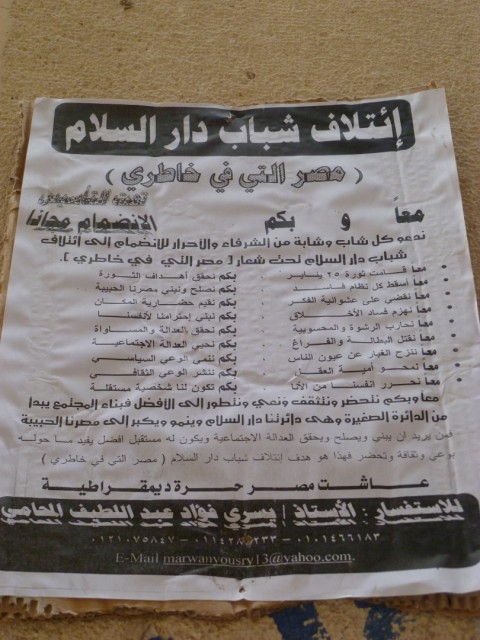
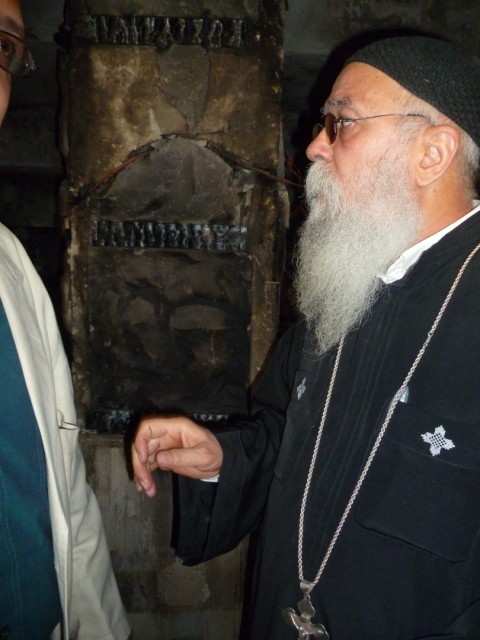

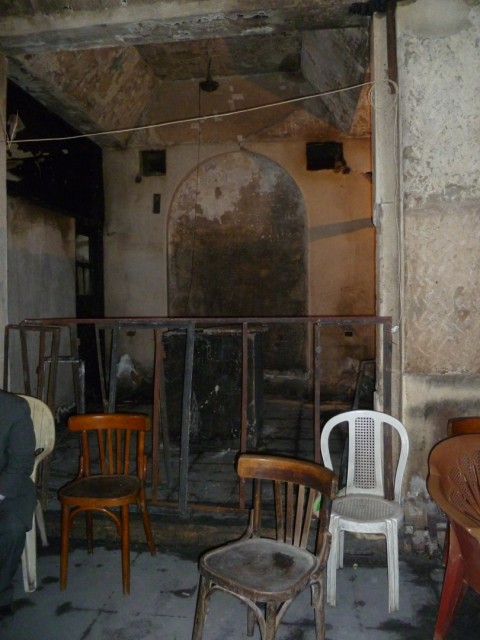

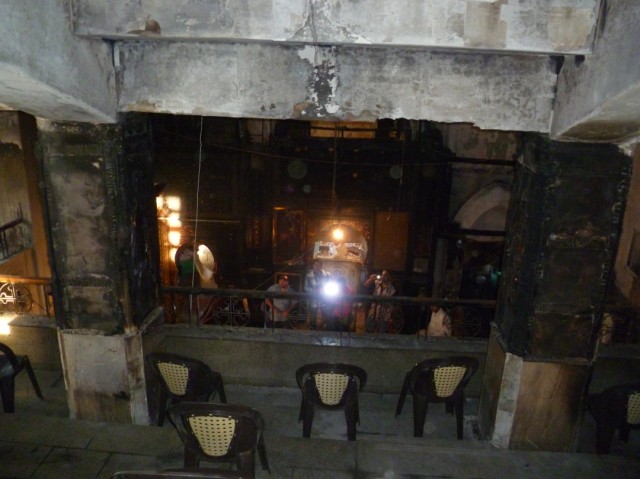


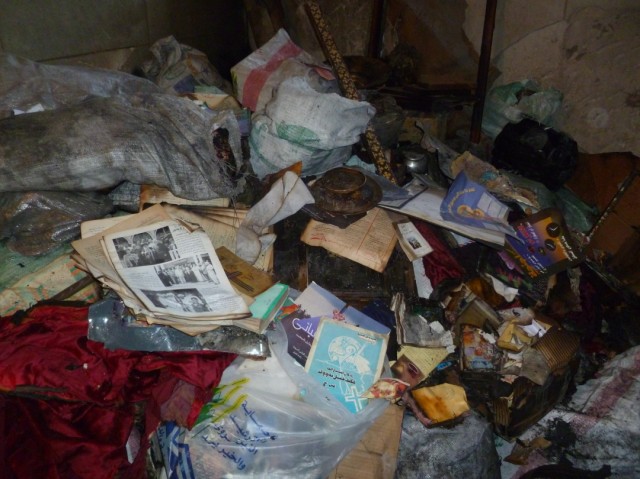


 Joel Osteen, Joyce Meyer, T.D. Jakes,
 — of which an Arabic translation was presented free of charge to all in attendance. His book deals with explaining the basic message of Islam to a Western audience steeped in misunderstandings and suspicions. Yet it also speaks of the necessary modern translation of Islam into Western culture, many aspects of which will challenge the traditional interpretations held by so many in the Arab and Islamic worlds. The bringing together of all these diverse groups and ideas is a principle cherished by Imam Faisal, as well as the Sawy Culture Wheel, and the interview conducted between the imam and Mohamed Sawy, founder of the center, provided details about this vision.
 Jayson Casper