During the 2013 terror attack at the Westgate Mall in Nairobi, Kenya, al Shabaab gunmen paused for a moment and made an announcement in Swahili: All Muslims could come forward and leave.
Among those trying to escape was Joshua Hakim, who covered up the Christian name on his ID as he showed it to the gunmen.
“They told me to go,” Hakim later told The Guardian. “Then an Indian man came forward, and they said, ‘What is the name of Muhammad’s mother?’ When he couldn’t answer, they just shot him.”
Other terror attacks by al Shabaab, a Somali terrorist group with ties to al Qaeda, have followed a similar pattern. Those who could prove they were Muslim—by reciting a prayer in Arabic or answering questions about Islam—were allowed to go free. Those who couldn’t were killed.
As a result, some Kenyans have begun to share tips online about how to pretend to be Muslim, just in case. This includes learning to recite the shahada—Islam’s main creed—in Arabic.
This pragmatic response to terror attacks is understandable. But is it biblically sound? Kenyan Christian leaders are divided on the issue.
No, says David Oginde, head of Christ is the Answer Ministries, one of Kenya’s largest parachurch organizations with 45,000 members. “A true Christian must be ready to live and to die for the faith,” he said.
But two professors at St. Paul’s University, a conservative Anglican institution in Nairobi, say the answer isn’t that clear-cut. Reciting the shahada doesn’t amount to denying Christ, says Samuel Githinji, a theology lecturer.
The article also included Arab theologians, who mostly responded that pretending to be a Muslim is not acceptable, but forgiveness should be offered to those who succumb. It also touched on similar themes in Christian history, during the Roman era.
Here is the conclusion:
The persecutions of old backfired, bringing many into the Christian fold. It is too early to write of the impact today. But Ajaj is hopeful, and counsels faithfulness when called upon.
“I hope they give a good testimony, and glory to God’s name.”
Of course nothing is certain. Martyrdom may not change a hardhearted terrorist. Pretending may not save your life either.
But for the record, the mother of Muhammad is Aminah bint Wahb.
Please click here to read the full article at Christianity Today.
Multiple assassinations and repeated threats fail to make Egypt’s judges buckle.
The hammer of terrorism meets the rock of faith, with Muslim and Christian alike proclaiming a reality of inner peace.
‘What is the worst that can happen?’ Judge Adel Maged, vice-president of the Court of Cassation, the highest judicial court in Egypt, asks. ‘If they kill us, we become martyrs in our holy mission to dispense justice.’
Western media is full of explosive images of ISIS and others seeking death for the sake of Islam. Maged calls it ‘distorted’, seeking political gain.
Quietly, Egypt’s judges paint a different picture as the fight comes to them.
Bombs have been planted outside the homes of several. In mid-May bullets riddled the car of three judges travelling to their courthouse in the Sinai.
Six weeks later the Islamic State published agonising video of the atrocity. Hours afterwards a remotely detonated bomb killed Egypt’s public prosecutor, Hisham Barakat, on his way to work.
No one has yet claimed responsibility for the outrage on 29 June, and investigations are ongoing.
‘It is wrong for the tyrants to jail our brothers,’ Islamic State’s affiliate in Sinai said in a statement, referring to the judges in an audio message translated by Reuters one month earlier. ‘Poison their food . . . surveil them at home and in the street . . . destroy their homes with explosives if you can.’
But it is not just hardline extremists threatening judges. Lapido Media previously detailed Muslim Brotherhood endorsement of a document calling for ‘retribution’.
At issue is the death sentence issued to former president Mohamed Morsi and several hundred of his supporters. Thousands of others languish in prison.
Duty
The 52-year-old Maged thinks it is ‘ironic’ that such groups, like himself, see death as martyrdom. But while God will judge between them, he says, it will not deter him from his religious duty with the law.
‘The Quran says, “Do not let the hatred of a people prevent you from being just,”’ said Maged, a founding member of the research group Islam, Law and Modernity at Durham University, UK, where he is an honorary professor.
‘These threats will never stop us from treating all parties fairly and impartially, regardless of their social, political, or religious affiliation.’
Despite the threats against the judiciary, Maged’s daughter is following in his footsteps, studying law in Cairo. His eight-year-old son is undergoing British schooling. His family is nervous, and his wife is praying for the circles of violence to cease in all Arab countries.
Those under the direct target of terrorists should be given more security, Maged said. But the killing of random judges in the Sinai show that all are vulnerable.
But though he has taken ‘extra precautions’ at home in his upscale suburb in Cairo, Maged is undaunted. ‘We are used to working with all sorts of criminals,’ he said. ‘These incidents will never make us afraid, as God is our protector.’
Ramzy: ‘Everything is in God’s hands’. Photo: Ahram.org.eg
Meanwhile, on his way to work Judge Amir Ramzy lazily gazes at the water buffalo browsing in green fields alongside the agricultural canals.
It is a strange serenity for someone whose name is on a death list.
Ramzy is among those directly targeted, his name found on a list on a terrorist captured in January 2014. Even then he declined an offer of extra security.
It is no different now.
‘I believe in God and everything is in his hand,’ the president judge of the criminal court in Benha told Lapido. ‘But I will die when it is written, no one can add a single day to his life,’ referencing the Biblical wisdom.
Ramzy’s driver navigates narrow roads and frequent speed humps during the 55-kilometer-trek north of Cairo through the Nile Delta.
His courthouse is fitted out with extra security, much of which he can bypass due to his position.
At the door to his chambers two policemen stand guard.
Cameras should be installed at every entrance, he says, but there are simply too many judges to guard on a personal basis. And so he commutes, alone.
Religion
Ramzy counts 7,000 judges and 6,000 prosecutors in Egypt. Ninety per cent, he believes, are as religious as he is.
‘All of us know very well that we are targets for these murderers,’ said the 41-year-old father of two, a boy of 14 and girl of 11.
‘My family is afraid, but we are Christians and we pray every morning, putting our lives in God’s hands.’
But religious or not, fear is natural. Remaining anonymous, some judges express it.
‘I am concerned about going to work,’ one judge told Egypt Source after the public prosecutor was killed, adding that other colleagues were concerned for their safety.
‘We feel a lot of pressure now,’ he continued. ‘If they can get to him, they can get to anyone.’
Perhaps. But for Maged, he and his fellow judges have a sacred duty.
‘Ours is a practice of the Prophet that must be performed,’ he said. ‘We are going about our normal lives.’
Both images are from the web. Copyright applied for.
Two of Emma’s religion textbooks. The main text of both reads: Christian religious education
Egyptian schools are known for large class sizes and a not-so-great student-teacher ratio. But our third-grade daughter, in one class at least, has a private lesson.
Despite being in a class of 31 students, Emma studies religion one-on-one with the teacher. The Egyptian system separates Muslims and Christians for religious education, and Emma is the only one of the latter.
Christians make up about 10 percent of the population, so it is not unusual to be outnumbered. Still, Emma’s case is a bit odd.
When she started in the Egyptian school system in kindergarten, Emma was one of the seven Christian students in her class of 30. If this percentage seems large, consider that the school placed all Christians in the same class. The entire kindergarten consisted of around 150 students.
Placing all Christians together makes scheduling classes much easier. Traditionally, the less numerous Christian students leave the classroom for the religion subject, and a specialized Muslim teacher comes to instruct in Islam. The specialized Christian teacher often has to jostle for a classroom, but at least all students come to her at once.
As Emma moved on to first grade a few kids transferred to other schools, leaving only five Christians in her class. By second grade, there were three Christians, and now in third grade, she is alone.
Her singleness resulted from an administrative error, of sorts. This year the school introduced ‘smart boards’ in all class subjects for those parents willing to pay slightly higher tuition. The technology was not so important to us, but since kindergarten Emma’s class had been kept together, and most parents were opting for the smart boards.
But for some reason, in the two smart board classes that emerged, Emma was separated from the two other Christian students. We did not discover this until a bit into the new school year, and rearranging would have been difficult. But as a result she has religion by herself.
Fortunately, Emma’s best Muslim friends are in her class, and she was happy to stay.
Fortunately also, she has had the same Christian teacher since kindergarten. The standard curriculum consists of Bible stories familiar to Sunday school students the world over, in addition to Coptic prayers and the lives of the saints.
Egyptian education has been criticized for focusing too much on memorization, but in this case Emma puts us to shame. Last year she memorized the I Corinthians 13 passage about love. This semester she is working on Psalm 23. In Arabic, of course.
The government curriculum for Christianity is based on the Orthodox tradition, since that represents the vast majority of Christians in Egypt. Emma’s teacher, however, is Catholic. And thus, the lone Christian in class is our Protestant American daughter, being taught Coptic Orthodoxy, by an Egyptian Catholic.
Egypt is a place of many oddities, but we hope through it all that Emma will love God, love others, and hide God’s Word in her heart. So far we are encouraged.
Sheikh Saeed Ibrahim was very keen to see my parents. He canceled an appointment to meet them, making sure the opportunity was not missed before they returned to America.
He wanted this picture taken, and he wants you to see it. He would be very pleased if you share.
“I want the world to see that normal Americans can meet a Muslim leader, and be friends,” he said. “Too many are equating Islam with what they see in ISIS and other extremist groups.
“We have to change this picture.”
I met Ibrahim during training sessions for the Egyptian Family House. He was one of 70 religious leaders – half Muslim, half Christian – learning to be friends with one another and then partner together in their local area to preserve and promote national religious unity.
Ibrahim mentioned it is slow going, and that due to various reasons his overtures to area priests have not yet succeeded.
So he was especially interested to go international.
Not that he has not been active at home. The Azhar is Egypt’s central Muslim institution, perhaps the most influential in the wider Sunni world. Its graduates lead the great majority of the nation’s mosques, and generally control the national religious discourse.
Ibrahim is a supervisor of Azhar preachers in Giza. In addition to this task he delivers a sermon each Friday, offers daily religious lessons, and gives a weekly lecture to police, youth, and women.
In recent months he has been especially active. Following the election of President Sisi the Azhar launched a campaign called Love of Country. Following an international Azhar conference last December to condemn ISIS, it launched Eliminating Violence and Terrorism.
Since then he has spoken in at least an additional 100 area schools, with a three-fold message:
First, Islam does not know terrorism nor call for it because it is a religion of peace and security.
Second, Islam in its doctrine accepts the religious other no matter the religion.
Third, Islam treats all people well and with proper morality.
So while Ibrahim and his colleagues work to spread this message to Egyptians young and old, he holds a special burden to communicate with foreigners.
He wants tourism to return to the country, and he wants the image of Islam to improve. He hopes that as they take pictures together, the world will become more aware.
If any in Egypt read this and take note, I would be happy to introduce you. It would be good to draw in also a Coptic priest, and encourage the Family House in working together.
“We are doing this because of the circumstances our country is going through,” Ibrahim said, “but the reward we receive is from God.”
Yesterday I posted about religious contradiction in Saudi Arabia. Today posts a Guardian article about Iran, in the other direction:
The 32-year-old midfielder, known as Ando – or Samurai, due to his hairstyle – is not shy of showing his Christianity, often crossing himself on the field. In April, Teymourian, who has played for Bolton Wanderers and Fulham, became the first Christian to lead Iran’s football team as its permanent captain. “I’m happy that as a Christian I play in a Muslim team,” he said in a recent interview. “I have Armenian roots but I hold the Iranian passport and I’m proud of that, I hold my flag high. I hope I can enhance the good reputation of Armenian people in Iran.” Ethnic Armenians make up the majority of Iran’s estimated 300,000 Christians.
This is their situation:
Although Islam is Iran’s official religion, it recognises Christians, Jews and Zoroastrians as accepted religious minorities. They are permitted their house of worship and usual religious services, and have reserved seats in the Iranian parliament. In a country where alcohol and pigmeat are forbidden, Christians are allowed to distil booze and eat pork. There are at least 600 churches in Iran, including the sixth-century St Mary Church of Tabriz, mentioned by Marco Polo in his travel book. The adjacent province of West Azerbaijan boasts the ancient St Thaddeus Monastery, a Unesco world heritage site. When Hassan Rouhani came to power in 2013, he appointed Ali Younesi, a former intelligence minister, to serve as his special assistant in minorities’ affairs. It was the first time such a position had been created. Significant improvements have since been made but many big challenges remain.
Among them:
Iran also remains highly sensitive towards the issue of conversion. Muslims who convert to other religions risk being arrested. More than 90 are behind bars, including pastor Saeed Abedini, who holds an Iranian American citizenship. Muslims whose denominations are not accepted by Iran, such as Gonabadi dervishes, face persecution, with many of their members in jail.
Perhaps Iran is trying to polish up its image, especially vis-a-vis Saudi Arabia. In their regional battle for supremacy, everything counts. But being the captain of the national soccer team is a big deal. I’m guessing they don’t play political games with that. But here is an interesting question for Christians in the West:
As Iran’s national football team prepared to head to the World Cup last year, Andranik Teymourian stood next to his teammates while they lined up to kiss the holy Islamic book, the Qur’an, as part of the farewell ceremony. Although he is not a Muslim, the Iranian Armenian didn’t want to rock the boat and so performed the ritual for travellers, which is a quintessential part of Iranian culture. The cleric holding up the Qur’an could hardly disguise his amusement at the scene.
The description here doesn’t seem quite right. If it is ‘a quintessential part of Iranian culture’ surely he has done it already, before becoming captain. And if so, why would the cleric be in amusement? Or, did they previously allow him to decline, but as captain he thought best to do so and represent his team? More information is necessary, but let us assume the article is correct in both this description and in the sincerity of Teymourian’s Christian faith. There is always a mix between religion and culture, but Western Christians don’t often have to think too deeply about this, as the mix is in their favor. Perhaps this is changing, some would say. But for Christians within a different mix, where should the lines be drawn? Teymourian has been honored for his play and leadership. Did he do well, or compromise? What would you have done?
Staff, students, and local friends of the al-Amana Center
Imagine David Cameron in Norfolk, about to speak on ‘British values’. He then invites forward a Muslim Brotherhood leader, and asks him to explain Islam.
And in the Zippo’s Circus-like atmosphere, the audience leaves pleased.
Transfer the scene to the Sultanate of Oman, and witness an American Christian pastor make clear the gospel in the austere heartland of Ibadi Islam.
Now picture a tolerance that predates Britain’s embrace of multiculturalism—on the border of Saudi Arabia.
The analogy is not perfect. Sultan Qaboos bin Said is an absolute monarch, ruling since 1970. Proselytisation is forbidden in any direction.
But the Shiva Temple in the capital of Muscat has served the Hindu community for over 200 years. Since the early 1900s the government has given land to build churches.
Saudi Arabia’s chief cleric has repeatedly called for all non-Muslim houses of worship in the Arabian Peninsula to be destroyed in accordance with sharia law.
Clearly, Oman does not share Wahhabi convictions. There appears a similarity in strict practice, but not in the approach to others. The Ibadi branch of Islam is far older than the eighteenth-century Saudi creed, dating to its formative scholar from the old capital in Nizwa in AD 711.
And to this region where Islam originally took hold, the Ministry of Religious Affairs invited Revd Douglas Leonard to speak.
Heritage
Leonard is the director of al-Amana Centre in Muscat, an outgrowth of the Reformed Church in America’s (RCA) mission dating back to 1893. Today its focus is on interfaith dialogue.
Leonard expected a quiet discussion with twenty imams. He found a huge tent full with 500 people, over a thousand outside, and twenty imams seated in the front row. Three television stations were present, broadcasting his lecture to the whole nation.
It was a lecture, not a Billy Graham crusade. But it focused on countering misconceptions about Christianity, dealing with differences and not content to settle for ‘common ground’.
A kindly reception was guaranteed by his official introduction as part of the heritage of ‘Dr Thoms’, an RCA missionary-surgeon remembered fondly. Omani’s eyes soften, Leonard said, and tell stories of how he healed their grandparents, or delivered then when they were born.
Leonard also teaches a course each semester at the College for Sharia Sciences. Its thousand strong student body goes on to become imams, jurists, lawyers, and bureaucrats.
‘The government wants every Omani to gain appreciation of other religions,’ he said.
Piety
Ibadism sees tolerance amid conviction as the essence of original Islam.
Twenty years after the death of Muhammad the nascent caliphate was in civil war. Unlike the eventual Shia, they rejected Caliph Ali when he agreed to negotiate with Muslim rebels deemed insufficiently pious. And unlike the eventual Sunni, they did not reconcile with the rebels after their victory established a hereditary throne.
History records one of the leading rejectionist parties as the Kharijites, a violent and puritanical sect who declared anyone in disagreement a non-Muslim, much like ISIS today. But though they emerged from the same political position, Ibadis separated completely from the Kharijites and became quietists. They insist on piety but do not judge, as only God can know one’s heart.
Ibadis are less than one per cent of Muslims worldwide. But in Oman they are a majority, with a substantial Sunni minority. Shia are roughly five per cent, though the government does not keep official statistics. In law and practice, all mosques are open to all faith interpretations.
According to the CIA World Factbook, Oman’s population is 3.2 million, 30 per cent of which are foreign workers. An estimated 85 per cent are from India, mostly from the southeastern state of Kerala where Hindus and Christians together have shaped the culture.
Centuries of trade across the Indian Ocean have nurtured an open spirit. A few Hindus and Christians have become citizens.
But nearly all Omanis are Muslim, and the demographic explosion of foreigners since the oil boom has put pressure on traditional society. Sultan Qaboos has developed interior cities such as Nizwa, but despite employing extensive foreign labor the city has not been allotted a church.
Doing so would be sensitive, Leonard said, just as building a mosque can be sensitive in parts of the West. But in his experience the people are kind and the government wants to do all it can to facilitate the ability of foreign Christians to worship.
Appreciation
And one reason Leonard is trusted is because he does all he can to facilitate the ability of Omani and Christian alike to appreciate the other.
Over the past five years al-Amana has hosted 42 American university students in a semester-abroad program. Besides taking introductory classes on Arabic and Islam, they have been matched with 40 Omanis in ‘scriptural reasoning’.
Much interfaith dialogue does not go into the details of religious difference, afraid to cause offense or devolve into argument. Scriptural reasoning seeks to honor each faith at its core, studying the texts as holy in the eyes of the other, and not just stop at common ground.
Each year for the past four the Omani government has sent ten religious sector employees to Cambridge University for training, where Leonard is an instructor. One became emotional reading the Sermon on the Mount, saying he would now tell other Muslims that what they say about Christians is wrong.
An experience mirroring that of Kory McMahan, a junior at Northwestern College in Iowa and al-Amana’s most recent graduate.
‘At my school there is no Muslim voice, but it deserves to be heard,’ he told Lapido Media. ‘I can’t speak for Muslims but I can share what I have seen and learned.’
Leonard hopes the pattern of religious tolerance in Oman can be replicated throughout the Middle East, as well as combat anti-Muslim sentiment in the West.
‘Ours is a 120 year example of Muslims and Christians working together,’ he said. ‘Imagine what would happen if instead of being suspicious, we came together for the common good.’
Whether in Norfolk or Nizwa, British and Omani values may not be that far apart.
This article was originally published at Lapido Media.
Do you remember what the Egyptian revolution was like? In an op-ed on Ahram Online, Hani Shukrallah gives these poignant paragraphs in a long essay considering if Egypt is now less ‘Islamic’.
For background context, he considers the recent call to remove the veil, the emergence of television programs questioning traditional Islamic interpretation, and the renewed effort of the Azhar to assert its prerogative in all such matters. These are reactions to an old paradigm, he believes, that was dealt a blow by the revolution in a peculiar way:
The Egyptian Revolution was profoundly secular, if not secularist. After more than nearly four decades of the inexorable rise of Islamism came a popular revolution of millions that conspicuously made a point of putting religion (with all its uncomfortable impedimenta) on the backburner. Similarly to all the Arab Spring uprisings, Egyptians in motion spoke not of Sharia, rule by what God ordained or the restoration of the Caliphate. As the whole world came to know, the banner of Tahrir was freedom, democracy and social justice. They did not speak of an Islamic nation, but rather reclaimed the flag, redefining Egyptian nationhood as one arising from the fundamental human dignity of its citizens.
It went even further. As if picking up from where the previous popular revolution in their history (the revolution of 1919) had left off, the young men and women of Tahrir and elsewhere around the country took the hitherto stunted notions of citizenship and equality to new and unprecedented heights. Women, veiled or unveiled, were now fully equal to men — their bodies, which for decades had been put at the very heart of the symbolic battle over the nation’s identity, its political, social and cultural makeup, its present and future, were rendered a non-issue. The Egyptian Revolution did not debate the hijab; it ignored it — and in doing so dismantled its very basis, symbolically and practically.
Similarly, Coptic/Muslim Brotherhood was an overriding theme of the Egyptian Revolution. Previously inconceivable images of demonstrators holding aloft the Quran and the Cross, Coptic human shields around Muslims performing their prayers, seemed to roll back, within weeks, decades of effective disenfranchisement of Egypt’s Christian minority, holding Copts hostage to the Islamist/police state contestation, with each side taking a swipe at what had become the country’s preferred whipping boy.
And herein lay a fundamental feature of the Egyptian Revolution (indeed, the whole Arab Spring), which many commentators have failed to grasp. And this is that in neither targeting nor deploying religion, it sidelined it, pushed it out of the political realm, and rendered it politically, ideologically and culturally neutral. It was not anti-Islamic or pro-Islamic; it simply was non-Islamic. Not anti-religious but non-religious.
This is the very definition of secular.
The Egyptian revolution was many things, fueled by many parties with diverse goals. But fundamentally he is right, at least in presentation. All these groups, including the religious ones, largely put forward a secular image if only for pragmatic reasons. It was not named ‘secular’, but acted so.
His is an astute observation in retrospect, however much he longs for it to have been true, or at least, to have continued truly.
In case anyone needed reminding, the use of religion to further militant political goals is not exclusive to Islam. The Intercept reports from Ukraine, where middle aged Dmytro Korchynsky has formed a private battalion, the Jesus Christ Hundred, dedicated to St. Mary, to fight the Russians.
In the 1990s he fought alongside Muslims in the Caucasus. Now he consciously borrows from them:
Korchynsky points approvingly to Lebanon. There, Hezbollah participates in government as a political party, while its paramilitary wing wages war independent of the state (and is thus considered, by the United States and the European Union, a terrorist organization). Korchynsky believes that sort of dual structure would be beneficial for Ukraine. He sees himself as the head of an informal “revolutionary community” that can carry out “higher order tasks” that are beyond the formal control of government.
That’s the theory. In practice, Korchynsky wants the war in eastern Ukraine to be a religious war. In his view, you have to take advantage of the situation: Many people in Ukraine are dissatisfied with the new government, its broken institutions and endemic corruption. This can only be solved, he believes, by creating a national elite composed of people determined to wage a sort of Ukrainian jihad against the Russians.
“We need to create something like a Christian Taliban,” he told me. “The Ukrainian state has no chance in a war with Russia, but the Christian Taliban can succeed, just as the Taliban are driving the Americans out of Afghanistan.”
The article is long and interesting, but here are his Christian foundations:
Just as Islamic extremists selectively highlight Quranic passages that endorse violence, the St. Mary’s Catechism opens with the words of Jesus from the Gospel of Matthew: “Think not that I am come to send peace on earth: I came not to send peace, but a sword.” The Catechism then adds its own interpretation: “Christianity should be treated like a sword, and not as a pillow.”
And like the jihadi emphasis on the glories of martyrdom and life in the afterworld, the Catechism explains that only those who follow the path prescribed by the Brotherhood shall receive the highest reward in heaven: “The end of the world is joyous, the destruction of the solar system will be a great celebration, and the second coming of Jesus to earth will be unexpected, and the terrible Final Judgment will become joyful. In the name of the Father, the Son and the Holy Spirit, Amen.”
The battalion naturally has a chaplain. Here is how he came to fight:
When the fighting first started, he saw supporters of the separatist Donetsk People’s Republic bullying young girls on Ukrainian Independence Day simply because they wore traditional Ukrainian embroidery. One time, he says, the separatists brutally punished a woman for wearing the embroidery. They drove nails into her feet and forced her to walk through the street.
It was pure evil, he explains, and is why it’s now necessary to fight. Father Volodymyr invoked the words of St. Paul, who said, “if you do that which is evil, be afraid; for he bears not the sword in vain: for he is the minister of God, an avenger to execute wrath upon him that does evil.”
Here is the testimony of one of his fighters:
“Everything with us is based on faith in Jesus Christ,” says Partisan. “We believe that only a religious community can win in today’s world, and in a society where all our values have declined in importance, and only faith survives. War makes this evident. There is no place for atheists when there are mortars and rockets firing.”
In posting this story, I do not wish to claim an equivalency between Christianity and Islam, concerning violence. This topic is deep and nuanced, deserving of careful analysis. But the misuse of religion for any goal is as well known as the inspiration of religion toward any ideal. Drawing the lines between them is crucial.
And besides, Korchynsky does not claim an equivalency either:
I asked what distinguishes his organization from Islamic jihadists. The radical Islamists in Afghanistan and the Middle East are, according to Korchynsky, interested in destroying the world order. Not so with the St. Mary’s Battalion.
“We really like civilization,” he explained. “We want to have hot water in the bath and a functional sewage system, but we also want to be able to fight for our ideals.”
Maybe he has something to teach the Christian pacifists of this world, rightly divining the goals of jihadists through purer methods? Maybe not. Here is the article’s closing quote:
Korchynsky wants to move the war to Russian territory, and he says his people have already formed underground structures there. Like the Islamic State, one day his “brothers” will receive orders and begin their work.
Too much should not be made of these markers, but they may reveal a mindset of some. Long on the defensive, Egypt’s non-Islamists feel empowered.
Among the results are a book burning at a school, seized from the Brotherhood. And a call for women to remove their head coverings, at a summer rally in Tahrir.
Give wisdom, God, for both substance and form.
The Azhar as an institution is non-Islamist, but it is also conservative, and pushing back. Subject to attacks in the media, it defends itself and traditional Islamic belief.
Egypt is still in flux, and the push and pull from various visions will take time to settle. In the meanwhile, each advocates its cause.
So how to pray? May all who invoke you in their vision pray from a pure heart. However different, may they seek the good of society. However conflicting, may liberal and conservative virtues all be honored, neither accused nor corrupting into vice.
Let books be written, and critiqued. Let heads be covered, if from faith. Let religion speak, with humility.
Let society find a way to incorporate all, amid respect. Let those who push find freedom, but failure – if they push too far.
Sort them out, God, and define the limits. Help Egypt arrive at the optimal place, with each in a mindset of peace.
Given the terrorism practiced by certain Muslim groups at the head of which is the so-called Islamic State, many are saying – wishing – that a Reformation might come to Islam. An article in the Revealer does an excellent job of explaining it has already come.
For centuries four traditional law schools defined sharia in rather flexible ways according to the circumstances of the time and place. But as the world modernized, sharia interpretation did not. What was flexible became fixed, and none were allowed to interact with the patterns of jurisprudence in new and necessary ways.
Islamic modernism witnessed both this stagnant heritage and the success of Europe, and tried to remedy the situation by going back to the original sources of Islam. One trend attempted to find the foreign values of the West within the Islamic tradition, and adapt accordingly. To do so it bypassed the legal schools and provided its own redefinition of traditional concepts. Shura, for example, always meant the obligation of the ruler to seek the counsel of those he ruled. To liberal Islamic modernists, this became ‘democracy’.
But not all modernists were liberal. Another trend also returned to the original sources of Islam and attempted their reapplication in the modern world. Here, there was no offense at appropriating technology and other tools of nation-states. But the goal was to seek God’s favor through better fidelity to and direct access of his original texts, and the medieval heritage of jurisprudence stood in the way. So conservative Islamic modernists also bypassed these legal schools, and emphasized the individual work of scholars to apply scriptural lessons to contemporary issues, often in illiberal patterns.
Both, in the Protestant sense, represent a ‘Reformation’. And in the article the implications are described well. But there is one section I take issue with:
The battle underway is not primarily between the young and the old, but between radically different approaches to understanding Islam: one that stresses proper legal training and respect for judicial precedent, and one that urges Muslims to open their Qur’ans and decide for themselves. The Reformation, you see, is already here. It just doesn’t look like we hoped it would.
Given the author’s great understanding of this topic, the conclusion surprised me. I think she may have been simplifying so as to better sum up her argument.
But the conservative version of Islamic modernism, which is often called Salafism, does not suffer so much from every Muslim deciding to interpret scripture on his own. Yes, this is an outcome of some trends of the Protestant Reformation, where God’s Spirit is understood to guide each person in interpretation.
Salafism, however, places great emphasis on scholarship and deep knowledge of the sources of Islam. Yes, it bypasses the traditional schools of law, and for this many Muslims criticize. But among themselves Salafis usually defer to the most knowledgeable among the community. Disciples gather around sheikhs, and indeed, these sheikhs can go terribly awry as they operate outside the bounds of traditional scholarship.
But it is not a matter of each Muslim interpreting for themselves. In fact it is the opposite. Salafis tend to defer judgment to their sheikh, even as they discuss and study together.
As for the author’s ultimate conclusion – ‘it just doesn’t look like we hoped it would’ – she displays great understanding of the oft-spoken desire of Westerners to see their own interpretive heritage within the alien world of Islam. The article is recommended.
Muslims and Muslim majority nations, including Egypt, have roundly condemned the terrorist attack on the Charlie Hebdo satirical newspaper. But the ideology that informs such an attack is present not just among those with access to weapons. This Mada Masr article contains a full survey of Egyptian reactions, most of which stand against the murders. But interesting are the ordinary voices that express sympathy with the attack:
Many Egyptian social media users were not fully sympathetic toward the cartoonists killed in the incident. Business intelligence consultant Ramy Mahrous, 28, told Mada Masr that he only respects non-Muslims who are respectful of his religion.
“Otherwise, I wish anyone attacking my religion to burn alive, and I would be very happy seeing him burning,” he said.
Twitter user Ahmed Adel told Mada Masr that attacking religious symbols and religion in general is a “red line,” but Muslims generally do not take serious actions against such offenses, while the offending parties “reap the fruit of their actions.”
“Islam forced us to defend our sacred principles. [The shooting] is not an attack, it is self-defense,” he argued.
Adel recounted some incidents from Prophet Mohamed’s life that he interpreted as supportive of his position.
“All of this should make us more ardent [defenders] of our religion, if we love our religion in the first place,” he added.
In a similar vein, Sahar al-Sherbiny told Mada she believes that fervent belief could lead a Muslim to kill someone offending his or her religion.
“I don’t know many details of what happened in France, but if I saw someone offending Prophet Mohamed in front of me and I had a weapon, I would verbally warn him first. If he continued, I would kill him,” she tweeted.
Better would have been interviews with people on the street. Social media provides an artificial atmosphere that encourages the expression of more extreme views. But perhaps the relative safety also allows full disclosure.
It is wrong to generalize a people and their religion, either positively or negatively. But where there is such dissonance between cultures, it is important to see the other as a real person, and hear their real voice. It is only then that alternate policies and perspectives might make a real difference.
From the Times Literary Supplement, a book review on the reception of Charles Darwin’s evolutionary ideas in the Arab world. First, and especially for Arabic students, the trouble of language:
For a long time, the reception of Darwinism was bedevilled by the need to find either neologisms or new twists to old words. As Marwa Elshakry points out, there was at first no specific word in Arabic for “species”, distinct from “variety” or “kind”. “Natural selection” might appear in Arabic with the sense “nature’s elect”. When Hasan Husayn published a translation of Haeckel, he found no word for evolution and so he invented one. Tawra means to advance or develop further. Extrapolating from this verbal root, he created altatawwur, to mean “evolution”. Darwiniya entered the Arabic language. Even ‘ilm, the word for “knowledge” acquired the new meaning, “science”. With the rise of scientific materialism came agnosticism, al-la’adriya, a compound word, literally “the-not-knowing”.
There is generally a great cultural component to knowledge and science, upon which peoples develop a sense of superiority. There are struggles first to appropriate the new ideas into a new setting, and then, to deny (or ignore) the uniqueness of the culture that produced it.
This process is often seen in the Western (American, at least) historical pedagogy that basically skips from Greece and Rome to the colonial era, with a nod in the direction of the Dark Ages that preceded the Reformation and Renaissance.
But our Dark Ages were a period of great Arab advancement, and the rediscovery of Greek thought was translated through the scholars of the then-dominant Muslim civilization. I’m not sure how much education has changed since I was in school, but this is a theme generally left to the specialists at university level or beyond.
Similarly, the modern Arab world has struggled with resurgent Western superiority. This article demonstrates the point through the theory of evolution, and all the controversy surrounding it:
There were those, like the journalist, philosopher and social reformer Shibli Shumayyil (1853–1917), who welcomed Darwinism and, more specifically, the theory of spontaneous generation as reinforcing the materialist case against Islam. Yet there were also apologists who, like Abduh, claimed that Islam was more compatible with science than Christianity, since Islam was less burdened with excess theological baggage and superstition.
Beyond that there were those, like al-Afghani (eventually), who held that not only had Darwin and his allies and rivals come to the right conclusions, but that Muslim Arabs beat them to it. The Kitab al-Hayawan (“Book of Animals”) by the ninth-century Basran essayist al-Jahiz was often compared to The Origin of Species, and al-Mazhar cited al-Jahiz’s account of how two varieties of dung beetles copulated to produce a third kind as prefiguring Darwin. The tenth-century Syrian poet Abu al-‘Ala al-Ma‘arri was another imaginary ancestor of evolutionary theory and Afghani cited a verse of Ma‘arri’s referring to the transformation of minerals into plants and plants into animals as evidence of this. As far as Afghani was concerned, Darwin had merely recycled ancient ideas about evolution.
… The quest for Arab precursors of Darwinism was not solely or even mainly a matter of cultural pride, for there was also a need to make Darwinism more acceptable by inserting it into a familiar cultural tradition.
This is the example of adaptation, but rejection also mirrored Western patterns, though the review, and the book, does not tease this out as much:
Muslim polemicists against Darwinism gratefully borrowed the Protestant theologian William Paley’s analogy of a watch found abandoned on a beach, since the intricate design of such an instrument surely argued irrefutably for a designer.
… As Elshakry notes, enthusiasm for Darwin and his followers fell away after the Second World War and that enthusiasm turned to outright hostility from around 1970 onwards. The reasons for this lie beyond the scope of Reading Darwin in Arabic. Perhaps the intellectual prestige of the British declined as their empire was dismembered. Perhaps Muslim scholars took their lead from American creationists. The rise of a militant political Islam may also have been a factor.
In my years in the Arab world, I have never engaged anyone over evolution at the scientific level, basically because I have not known many scientists. But at a cultural level I have never found it to be an animating issue. Most have just shrugged it off, either dismissing the idea as antithetical to Qur’anic creationism, or with an general sense that all the West has produced in science has precursors in the Qur’an.
A good number have argued passionately about the ‘scientific miracle’ of the Qur’an (whether for, against, or moderating evolutionary ideas), while a few have identified positively with the prevailing views of the scientific community in favor. Maybe these imprecise percentages would be similar to the views of religious conservatives in America?
The difference would be that a literal reading of the Qur’an is used in both directions, for and against evolution. The pro-evolution category of Muslim literalism believes that the scripture is a book of science; that the mind of God produced it and revealed secrets which make sense only centuries later. Muslims generally believe the Qur’an is unmediated by man, and therefore Muhammad and his cultural setting do not need to be decoded to understand the message. Mankind just needs to advance sufficiently to comprehend what is already there, and sometimes non-Muslims do so first.
A literal reading of the Bible, however, is generally only employed against evolution and in defense of creationism. These maintain a similar idea of the Bible as a science book, or at least trustworthy in its historical and scientific offerings, properly understood. But even the idea of ‘properly understood’ reveals the Christian distinctive vis-a-vis Islam that human and cultural factors influence the Biblical text and our understanding, without giving up the doctrine of God’s inspiration.
Christians, then, who accept evolutionary ideas in part or in full do so with Biblical fidelity to ideas like intelligent design, granting theological truth and divine inspiration to the creation account, without literal acceptance of a seven-day historical sequence. The spectrum, and perhaps slippery slope, in which this and similar accommodations is acceptable is greatly debated. Abduh, above, hints at the larger doctrinal issues at stake.
There is much we can learn from each other, from science, from God. In all, humility is necessary, for no learning can take place without it.
Who should be allowed to preach in Egypt’s mosques? A recent exam offered by the Ministry of Religious Endowments is accused of seeking a selective answer:
Over the last two months, the Egyptian Ministry of Religious Endowments held two such exams. Many of the questions used are known for being disputed by Salafists, most notably those about the ruling of Islam regarding the military salute, standing during the national anthem, women in the judiciary, the concept of the caliphate, the reconstruction of places of worship for non-Muslims, bank profits, women wearing the veil and the establishment of museums for ancient Egyptian and Pharaonic artifacts. Salafists have well-known and radical opinions about all these issues, as they believe that Islam forbids such things. (from al-Monitor)
An issue-specific approach appears to have won the desired results:
The crisis between the Salafists and the Egyptian Ministry of Religious Endowments escalated when 600 Salafist imams took the ministry’s test and only 18 passed. Their disqualification prompted the Salafist Call to demand that the presidency resolve the crisis and support Salafist imams, who supported the road map on June 30, 2013.
Salafis bet on survival when the backed the overthrow of Morsi, and on this account have received their gains. They do not appear to have profited much beside, to this point. Their ultimate fate is still an open question, but it appears this institution is lined up against them. Should it be? One figure from the ministry is critical:
In a phone interview with Al-Monitor, Sheikh Salem Abdul Jalil, the former deputy minister of Religious Endowments, said the crisis is mostly political, as parliamentary elections are approaching in Egypt. The move is intended to ensure that Salafist clerics are kept away from the pulpits where they win popularity. “Salafist groups have always been a problem for the government, just like the Muslim Brotherhood,” he added.
……
“Unfortunately, both parties have a unilateral message. For instance, the Ministry of Religious Endowments wants the preachers to tell the people that growing a beard is not obligatory, while Salafists want to tell people that having a beard is obligatory. Thus, there are two parties — the first desperately wants to impose its views, and the other is a government party that has no vision and ideology.”
Stay tuned for more wrestling, and if things go sour, potentially for fireworks.
“God is allowing ISIS to expose Islam,” said Khalil’s fellow pastor, Atef Samy. “They are its true face, showing what Islam is like whenever it comes to power.”
But the savagery of ISIS, which has overwhelmed Kurdistan with more than 850,000 refugees, has prompted other Middle Eastern Christians to embrace their Muslim neighbors. This theme was heard often from members of the Fellowship of Middle Eastern Evangelical Churches (FMEEC), who met in Cairo last month for a conference on the dwindling Christian presence in the region.
“We must be a voice for Islam,” said Munib Younan, bishop of the Evangelical Lutheran Church in Jordan and the Holy Land. “We must not allow the West to see ISIS, the Muslim Brotherhood, or others like them as the face of Islam.”
Others were more reflective of the diversity among both Muslims and non-Muslims.
The article opens with a brief description of an evangelical relief trip to help refugees in Kurdistan, which I also wrote about here. It also describes cooperation attempts in the Egyptian Family House, uniting Muslims and Christians, which I hope to profile in a few days. There are other strategies described by those who attended a recent conference in Cairo, whose opinions on US-led military action I wrote about here.
But please click here to read the full article at Christianity Today.
From my article at Arab West Report, from before Egyptian presidential elections but pertinent now with the escalation in Gaza:
Arab West Report, Editor-in-Chief Cornelis Hulsman recently highlighted the mutual recourse to anti-Semitic accusations on the part of both opponents and supporters of the current government. He referenced research complied by MEMRI, in which General Sīsī and the Muslim Brotherhood are simultaneously declared to be Jewish in origin and committed to a Zionist agenda.
The prominent Sufi sheikh, ‘Alaa al-Dīn Abū al-‘Azā’im, recently offered an example of such rhetoric. In an interview designed to explore both the Sufi contribution to the June 30 revolution deposing President Mursī, and the motivation thereof, ‘Azā’im consistently inserted accusations of the Muslim Brotherhood and Salafis being allied to Israel. Despite efforts to focus on the local issues involving Sufi citizens, ‘Azā’im could not help himself from resorting to international conspiracies.
Examples include the following:
The article lists his charges, but here is an excerpt from his response at the end of the interview about whether or not the Western world is right in considering such comments anti-Semitic:
First, he said the Qur’an commands us to be merciful to everyone – Jews, Christians, the whole world, even unbelievers. Mohamed’s constitution in Medina was civil, giving everyone the right to choose his own religion and pray as he wishes, again, emphasizing this right was given even to unbelievers. Jews are welcome to live in Egypt, and before 1967 when they were plentiful, he had good relations with them. While a student in Asyut University, ‘Azā’im’s Jewish colleague tried to persuade him to marry his sister. He referenced Pope Shenouda, stating he said we all worship one God – Muslims, Christians, and Jews – so he should gather us together rather than us fighting each other.
But second, this fighting is what earns Israel his animosity. Jihad in the Muslim sense may only be waged if a country attacks you, or has attacked you. Look at what Israel does, he said, killing Muslims every day. They occupied our land, so it should be jihad, until they leave.
There is a necessary difference between Israel and the Jews. Arabs often conflate the two; do Westerners as well? Where is the line properly drawn?
Please click here to read the full article at Arab West Report.
A friend of mine, a politically liberal Muslim with little attachment to religion, has often accused the Muslim Brotherhood of seeking to create a Protestant type of Islam. It is a little difficult to catch the connections, as well as to tell if he believes such a transformation would be good or bad for Egypt. He certainly thinks Brotherhood control of this situation would be bad, but I’m less sure as concerns the greater idea.
This article in The Immanent Frame helps explain what might have been happening along these lines, before the overthrow of Morsi.
First, the context of Islam in Egypt:
In this respect, the law and court rulings do not recognize the existence of a congregation of Muslims who can worship—that is, engage in formal rites—outside the bounds of the state. This legal status seems to be a vestige of the Islamic caliphate (دولة المسلمين, “state of Muslims”), where the congregation of Muslims was conceived as a politico-religious entity, as it first took shape under the leadership of the Prophet Muhammad. While this conception often accrues to the power and advantage of Muslims in the aggregate, it restricts the religious freedom of Muslim groups or individuals who do not wish to align themselves to the political or religious orientation of the political authority.
Post-Morsi, the state has been working diligently to reassert control over the system of mosques, seeking to eliminate divergent Muslim Brotherhood voices. Incidentally, the article states Morsi’s government treated unorthodox voices similarly, continuing the policy of preventing Shi’ite or some extreme Sufi trends from operating local mosques.
But the Muslim Brotherhood also wanted to cement its control over mosques already within its influence, and gain control over mosques that were not. To do so it revived an old government practice of establishing boards to administer mosque affairs, appointed by the state, but with no influence on its religious discourse or choice of imam. The government started this program in the 1980s for the practical reason of its limited resources for direct control, but abandoned it altogether a decade later due to arising conflicts and competition.
When the Brotherhood government assumed control of the Ministry of Endowments, reviving the role of the mosque boards was on the agenda of the Freedom and Justice Party (FJP), the Brotherhood’s political arm. Minister Talaat Afifi issued a decree reconstituting the boards under the name “mosque development boards,” giving them prerogatives similar to those of the old boards. The boards still had no influence over religious and preaching activity, which remained the exclusive purview of the ministry, but, controversially, the boards were to be elected.
In doing so, the Brotherhood established a system in which they could not be accused of appointing their cronies to administer mosques, but instead take advantage of their powerful network through which ‘the people’ would exercise control. But, who are the constituent ‘people’?
But how to determine which Muslims possessed the right to vote in elections for this or that board? The official decree stipulated that “a general assembly of mosque patrons” be created from among registered residents of the neighborhood in which the mosque was located, as well as those who applied to the ministry-appointed imam to affirm that they were regular attendees and registered as members of the general assembly.
Of course this move created a great deal of controversy and opposition, notably from the existing system of imams who saw the risk of their power diminishing. But there was a great religious objection as well, not tied to politics:
The decree also raised the hackles of imams and scholars who believed that it would give rise to local “churches” in Islam; churches have a discrete membership and members have certain prerogatives.
The decision to elect mosque development boards did not resolve the problem or mitigate conflicts, but only inflamed them further, partly because the idea was grafted on to a centralized administrative order and partly because it ran up against the idea of “every mosque for every Muslim”—a central tenet of Islam—making it “every mosque for every Muslim in this neighborhood.”
Morsi’s government suspended the decision to elect boards, and after his overthrow even the appointed boards were dissolved and reconstituted with traditional Azhar scholars and local patrons opposed to the Brotherhood. Politics is a determining factor, certainly, but the philosophical decision seems to have been correct, or at least consistent with traditional reasoning:
There is a traditional Islamic discourse that takes pride in the fact that there is no central religious authority in Islam—no church, no priesthood, no clerical class to govern the religious (and certainly not political) lives of Muslims. This discourse is well grounded in doctrine and Islamic jurisprudence, which indeed contain no reference to the specific shape of Muslims’ religious communities or clerical prerogatives. Historical practice also holds no precedents.
But to return to the central question about whether or not such a Protestantizing of Islam would be ‘good’ for Egypt:
The problem is that Islamic doctrine, jurisprudence, and historical practice do, in fact, both assume and fundamentally rely on the existence of a single Muslim polity with authority over Muslims’ religious affairs and the religious scholar class. The alternative is to abandon the Muslim state for a modern nation-state that fully embraces the concept of citizenship, which would entail the disappearance of political authority over religious affairs and open the door to religious freedom. Otherwise, the modern state will continue to draw on this legacy of religious authority inherited from the caliphate.
…
In engineering its policies for managing Islam, the state proceeds from the belief that Muslims’ religious unity is part and parcel of preserving political unity and the patriotic line, and it legally suppresses any activity or attempt on the part of Muslim groups or individuals to freely worship outside the bounds of the centralized state administration or beyond the scope of a centralized, religious orthodoxy described as “proper religion.”
Here in Egypt the Coptic Orthodox Church behaves similarly. A Christian is at home, theoretically, in one church building as he is in another. A man appointed deacon may show up in any church, don his robe, and join in serving communion. There is the thought in Christianity that the priest should only serve this communion to one who is in good standing – requiring local relationships to know – but this does not seem to be practiced. Instead, the confessional relationship may occur with a priest from any church, diocese, or monastery. The judgment of receiving communion is usually left to the conscience of the believer.
In majority Christian lands where the Protestant Church is established in relationship with the government, perhaps there is a parallel as well. But in America as well as Egypt the pattern is toward local independence with varying levels of denominational cooperation. The multitude of Protestant denominations certainly contributes, which is a phenomena not generally mirrored in Islam.
But Islam exhibits great diversity, certainly cultural diversity in its many international expressions. What it does not generally do is sanction this diversity as an option for local communities of Muslims. Outside the Muslim world it certainly exists, as mosques are established for minorities along lines of freedom given to churches, and generally funded by the community or by donations from abroad. Such freedom, however, is not extended by many Muslim states to their majority Muslim populations. In this, it seems, they follow not necessarily the rule of Muhammad, but the ideal practice of the faith current during his time.
And perhaps they dare not do otherwise, for equally historical reasons. After Muhammad the early caliphal period and afterwards witnessed an explosion of Muslim diversity that nearly tore the nascent state apart. Many of these movements were political in orientation, no matter how much religious piety and practice played a role. It took all the skill of ‘the rightly guided caliphs’ to hold things together, and the task fell to later jurists to shape sharia so as to allow a degree of diversity to law schools while maintaining the overall unity of the faith. It also fell to later caliphs to secure the support of scholars to maintain legitimacy for their rule. These processes evidence elements of manipulation and duplicity alongside sincere devotion to faith, a legacy that continues in the mosque-state relationship to this day.
Can it be developed differently along Protestant lines? Should it be? Perhaps the Muslim Brotherhood tried, and as in many of their efforts, failed. In a neutral environment, if such freedom existed, Muslim Brotherhood groups would gain control over certain mosques in certain neighborhoods – maybe many. But would the success of allowing full local control of mosques contribute to a greater climate of freedom, or simply initiate a religio-political anarchy that would tear government and society apart?
As with most experiments, all that awaits is the trying. Will Egypt, or similar nations succeeding the caliphal system, dare take the risk? Or is the very idea inimical to Islam altogether?
Please feel free to weigh in with your own ideas and experiences.
From Christianity Today, a very interesting article about an evangelical historian who challenges the received traditions of the Puritans:
In 1623, Plymouth Colony Governor William Bradford proclaimed the first Thanksgiving. “The great Father,” he declared, “has given us this year an abundant harvest…and granted us freedom to worship God according to the dictates of our own conscience.” He directed the Pilgrims to gather that November, “the third year since ye Pilgrims landed on ye Plymouth Rock, there to listen to ye Pastor and render Thanksgiving to ye Almighty God for all his blessings.”
Except Bradford didn’t write that. Someone—we don’t know who—fabricated this “proclamation” in the late 20th century.
The author takes note of how American Christians are at a bit of a crisis point concerning their national history:
American evangelicals seem to have reached a crisis point over the study of history, especially the history of the American founding. For decades, many evangelicals have turned to popular history writers who have presented America, especially of the colonial and Revolutionary era, as a straightforwardly Christian nation.
But take the popular belief that the pilgrims came to America in search of religious freedom. It is not wrong, he argues, but subject to misinterpretation:
He demonstrates that the quest for “religious freedom,” in the modern sense, did not really animate the Pilgrims. Yes, they wanted to find a place where they could worship God according to Scripture and the dictates of conscience. But they had already discovered those conditions in Holland, where a number of English dissenters had gone in the early 1600s.
The most pressing concern that led the Plymouth Separatists to leave Holland was that they found the Netherlands “a hard place to maintain their English identity and an even harder place to make a living.” They did not worry so much about religious persecution (at least not since they left England), but about “spiritual danger and decline.” They worried about the cultural corruption they saw around them in foreign Dutch culture, and struggled to find profitable employment that could nourish their common identity. America seemed to offer both better opportunity and a place to preserve their sense of covenanted community.
And, just to throw in one ugly incident:
We should remember, McKenzie cautions, than not long after the first Thanksgiving—which was indeed a peaceful, if tense meal between the English and their Wampanoag neighbors—the Pilgrims launched a preemptive assault on local Massachusetts Indians that resulted in violence and bitter resentments. The English even placed the severed head of one Native American on a pike outside their fort. Recalling this is telling the truth, not revisionist history.
What does any of this have to do with Salafi Muslims? Nothing at all, except by way of similarity.
The word ‘Salaf’ in Arabic means ‘forefathers’, and Salafi Muslims honor in particular the first three generations of Muslims. This was the golden age of Islam, when the community lived the teachings of the Prophet Muhammad. In all current religious interpretation – even in political and cultural matters – Salafis believe Muslims should study this period and apply its lessons accordingly to modern life.
Many Muslims honor this heritage without calling for the same level of imitation as Salafis. But most all of the faithful prefer not to open this history of these forefathers to questioning.
There are two issues at stake. The ancient challenge was given by Shia Muslims who said the community went wrong right after the death of Muhammad. Leadership, they say, should have been passed to Ali, within family lines. It was only the political scheming of these forefathers that prevented his immediate succession, and it was their further scheming that resulted in the loss of his role as caliph.
Sunni Muslims were the political and numerical victors of early Muslim in-fighting. But the Shia challenge contributed to the sanctification of these early generations who established the caliphate. They were also the assemblers of Muhammad’s sunna, his words and deeds not found in the Qur’an, so demonstrating their honesty was paramount. Just as Muslims find it terribly difficult to accept a word spoken against Muhammad, so do Salafi Muslims, and many beside, take offense if the Companions of Muhammad are questioned.
The modern challenge questions this sacred history as well. Using mostly Muslim sources, increasing numbers of historians are dissembling the received traditions about the development of the early Muslim communities. And similar to scholars who try to trace the human origins of the Bible, some also find other than divine influences in the Qur’an. The consequences can be dire for those engaged in revisionist history, or, let historians judge, telling the truth.
History, of course, is often deeply contested. Defining the past is a good way of determining the future.
For American Christians, revisiting the history of Thanksgiving is not nearly as threatening as the accusation that the Trinity was invented at the Council of Nicea, for example. But for a people confident in the idea that God has blessed America, there is often the implicit assumption that he has done so – from his sovereign purposes, of course – but also because of the Christian faithfulness of America’s founders. There is also often the modern application, with political overtones, that if America returns to her Christian heritage God’s blessing will come again.
It may well. ‘If my people, who are called by my name, will humble themselves and pray and seek my face and turn from their wicked ways, then will I hear from heaven and will forgive their sin and will heal their land,’ God said to Israel. Americans Christians consider themselves part of the family of God, his people. Should the land of America be considered a possible heir to this promise?
Either way, both American Christians and Salafis must face up to any possible ‘fabrications’ of their history. If this is a crisis point for evangelicals, it is hardly a blip on the radar for Salafis. But both groups have invested heavily in the sacred narrative of their secular traditions. As the author closes in his article:
The temptation toward idol-making seems much more pressing with the titans of America’s national history, those who line the mall in Washington, D.C. Jefferson, Lincoln, Washington: These are the ones that, despite limited evidence of orthodoxy, many of us want—or need—to be evangelical Christians, just like us. We desperately need help to know how to think about those Founders.
Similarly, what will Salafis do with the four ‘rightly guided caliphs’ – Abu Bakr, Omar, Uthman, and Ali? There were fine Muslims, surely, but what does it say that three of them were killed? What of other leaders who opposed Muhammad until the near-end, and then switched sides? Muslims are not ignorant of these controversies; in fact, Salafis study them diligently. But no one should go beyond the limits of the historic evaluation given to the Companions of Muhammad; no one should tar their reputation.
I must stop short of proscription for either community. This post began as an attempt to draw parallels between two communities not often associated together. But I am a historian of neither narrative, so I dare not make pronouncements that can be easily countered by the studied. Neither am I a theologian, certainly not of Islam to make cavalier statements about how to interpret God in their history.
But I hold as a conviction that fidelity to God requires fidelity to truth, come what may. The shaping of pious myths may aid in the development of social and cultural faith, but they are acts, ultimately, of manipulators. ‘God will bring to light what is hidden in darkness and will expose the motives of the heart.’
He may take a long time in doing so, but this Thanksgiving, let us be thankful that God will guide us into all truth.
It has been three months since Morsi’s ouster, and the first step in the announced transitional roadmap is still underway. It is, in many ways, the linchpin. The constitution is to be amended and presented to the people in referendum.
When it comes, the Brotherhood will have to make a choice: Vote no or boycott. But the primary Salafi party has made their choice to participate, while deferring the choice of consequence: Yes or no.
Salafis possess nearly inconsequential power in the mechanics of the constitution: They are one vote out of fifty. But they possess great legitimizing power. Without them on board the removal of Morsi is much more easily portrayed as an attack on Islam, or at the least, Islamism.
In exchange they want the religious identity and sharia provisions of the old constitution preserved. As the committee of fifty does its work to revise, they tackle the easier questions first. These are left for later.
God, the Salafi party has been praised for having great political acumen; give them also great wisdom, for they are not necessarily the same.
As the Islam and sharia principles are debated one-by-one, help them to know where to yield and where to stand firm. Where, God, is the proper point of consensus?
And as they go back to their supporters, give them the skill to communicate their choices. Having earlier been maximalist in their demands under Morsi, can they now justify an accepted minimalism? Will it be a valuable political lesson for newly politicized religious conservatives? Or will their earlier rhetoric eat them alive?
Or, might you use these men to lead their supporters deeper into the multi-particular national good?
But God, what if the national good is non-Salafi, as many of the fifty will argue? Give them wisdom if they don’t get enough of their way, or anything at all.
Should they accept? Should they vote no? Should they demonstrate? Should they mount a new revolution?
So give wisdom also to the committee at large. What of Salafi demands is in the national good? To be certain this good involves diligent discussion of a significantly popular viewpoint.
Perhaps there is wisdom, God, in handling easier articles first. There is still time to complete their task. But help the committee to avoid deadline deals from political expediency.
Rather, let this discussion find space now in the national debate: How should the political claims of Islam, as interpreted by some, be incorporated into the political system of a nation, as experienced by all? In their entirety, in continual negotiation, or not at all?
Your answer, God, determines how Egyptians should both pray and politic. Pull as many to your side as possible, in sincere conviction and purity of heart.
And for those who remain in other opinions, honor them also. May they never willfully fight against you, and may they never be fought against as if on your behalf. Knit these together into one nation, where you are present in the messy workings of men, in all their insincerity and impurity.
And in this, God, give them a wise and worthy constitution. Do not delay the conflict, but resolve it in the end, with embraces all around.
From Ahram Online, telling a story that is not unusual:
Saber says those who filed the lawsuit took his words out of context, adding that he did not defame religion in his short stories.
“In my stories, the characters are wondering where God is in the face of all the grievances and evils that they face. It’s like they’re asking him to interfere; this is not in contempt of religion, it is merely posing a question,” Saber explained.
Here is an angle, though, what while also not unusual, is less known by many:
According to a statement made by a coalition of Egyptian right human rights organisations, the prosecutors undertaking the investigation consulted the church in Beni Suef as well as Al-Azhar to seek out their opinion as to whether the accusations were correct.
The church told the prosecution that the content of Saber’s literary work contradicted divine religions, ridiculed the divine, and invented stories that stray from noble and sophisticated literature.
Al-Azhar affirmed the church’s stance, stating that the work destroys intellectual values and tears apart the fabric of Egyptian society.
The church in Egypt is a very conservative institution that is not shy to seek the power of the state as a defense against encroachment on religious values. I do not know anything about the content of the book, if it targets Islam, Christianity, or religion in general. The author’s name also does not infer his religious background.
But the church would do well to review its own literature. Habbakuk the prophet does little but rail against God’s apparent inaction in the face of injustice:
How long, Lord, must I call for help,
but you do not listen?
Or cry out to you, “Violence!”
but you do not save?
Why do you make me look at injustice?
Why do you tolerate wrongdoing?
Destruction and violence are before me;
there is strife, and conflict abounds.
Therefore the law is paralyzed,
and justice never prevails.
The wicked hem in the righteous,
so that justice is perverted.
And his answer is simply to trust God, even when he does not ‘deliver’:
Though the fig tree does not bud
and there are no grapes on the vines,
though the olive crop fails
and the fields produce no food,
though there are no sheep in the pen
and no cattle in the stalls,
yet I will rejoice in the Lord,
I will be joyful in God my Savior.
It is unfortunate when religious leaders ‘protect’ their flock from the very same doubts and questions that fill their scriptures. But this, also, is not an unusual story.
I believe events like this conference in Jordan, excerpted below, are absolutely necessary, even if they don’t really go anywhere. But agreement can never be achieved unless they go at all. Here, from al-Monitor, is an example illustrating absolutely different worldviews:
So an obvious question was posed to the Islamists: Do you accept, alongside your Islamic laws and alongside the personal status laws for other communities, that in your countries there is also one civil personal status law that is optional? In other words, do you accept that a person is given the choice to either follow the laws of his sect or leave his sect and resort to the civil law under the confines and protection of the state?
Faced with this question, the Islamists did not hesitate to assert their absolute refusal of the proposal: a civil law, even if optional, is forbidden — a person may not leave his religion. By “person” they mean a “Muslim,” because current laws allow non-Muslims to convert to Islam. Sometimes they even encourage it as a means to either escape harassment or obtain a government job reserved for Muslims, in addition to dozens of other reasons.
In lieu of agreement, the article states attendees suffered ‘a vicious cycle of pleasantries’. Such a description characterizes much inter-religious dialogue, and is useful in its own right. Pleasantries can lead to friendship.
But what is necessary, especially in Egypt, is for Christians and Islamists to wrestle over the future of their nation. Christians may not be able to force their way, but if Islamists were to seek their blessing, and do all that is necessary to get it, they just might succeed.
The Islamists did not hesitate to confirm they have the right to reach power as they see it and practice it. They kept repeating the following mantra: “We will only resort to democracy that emanates from the ballot box.” Many tried to explain to them that democracy is not just the ballot box, but the Islamists did not pay them much attention. The Islamists’ main concern was to assert their rejection of what happened in Egypt and confront the rule of the “coupists,” as they call Gen. Abdel Fattah al-Sisi’s rule, against the legitimate authorities. Regarding the concerns of their fellow Christian citizens, it seemed to a large extent to not be part of their concerns today or tomorrow.
Unfortunately, this has largely been Egypt’s experience.
It is hard for anyone to be humble. Many Islamists might find it even more difficult to seek this Christian blessing, as they see themselves as the possessors of the completed and perfected faith, and furthermore, they are numerically superior. How arrogant, they might think, of Christians not to yield. Don’t we give them protection under sharia law?
Ah, but this means little to them:
One last example that illustrates the dialogue’s difficulties was the discussion about personal status laws in countries dominated by Islamists. The Islamists usually try to show that they are open to other groups by supporting, as a rule, that other sects are given their own personal status laws — whereby every sect is given its own laws governing marriage, divorce, inheritance, adoption, transfer of ownership and other family matters. But at the same time, the Islamists insist that Islamic law is a “major” or a “principal” source of legislation of the state. Discussion by Christian participants at the conference showed that this rule is not sufficient, fair or balanced. In fact, it often conceals a gradual process to subdue non-Muslim citizens in those countries by degrading the minorities’ demographic and geographic presence, Islamicizing society and eliminating pluralism.
Islamists either smile slyly at this complaint, choose to ignore it, or else they cannot even comprehend it – confident in their understanding of God’s will in sharia law as best both for them and for Christians. True humility is harder for the one who believes that he already humbly and generously gives to his ‘lesser’. They have a point, but humility does not prove points. It loves and embraces.
So what should humility look like for the Christians? No one must ever abandon principles and convictions. Humility is not a game of power and pressure. Rather, it must come in an acknowledgment that Islamism is a strong societal impulse, and those who possess it are their fellow citizens.
Here is where it is easy, and necessary, for me to duck out of the discussion. If both sides came humbly, what would they decide? Here, I have no say. Even in asking both sides to come to the table I have nearly gone to far. Why should they yield even that initial bargaining position, when sides are viewed in mutual distrust?
I don’t know, and I can’t convince them. All I can do is trust that it is ‘right’. All I can hope for is that God would honor it, and dishonor all who seek first their particular benefit.
After all, the status quo is not working. Christians are often ignored or used as pawns, and Islamists have failed to successfully establish their project anywhere there is religious diversity.
It is not dialogue that is necessary, though it is helpful. It is wrestling. It is the sort that, like Jacob with the angel, would not let go until he secures a blessing. It is the sort that engages in respect and will not cease until it is mutual.
I don’t know, maybe that is not humility at all. But humility might be able to avoid Jacob’s fate. Though he obtained his blessing, he lived the rest of his life with a dislocated hip.
Christians and Islamists have dislocated far more. Perhaps it cannot be otherwise. Perhaps their ideas are completely incompatible.
Fair enough. Ideas cannot be humble, they can only seek their own. But people are more flexible. People can wrestle.
People can bless. It is time Christians and Islamists begin this strategy with one another, even if unilaterally.


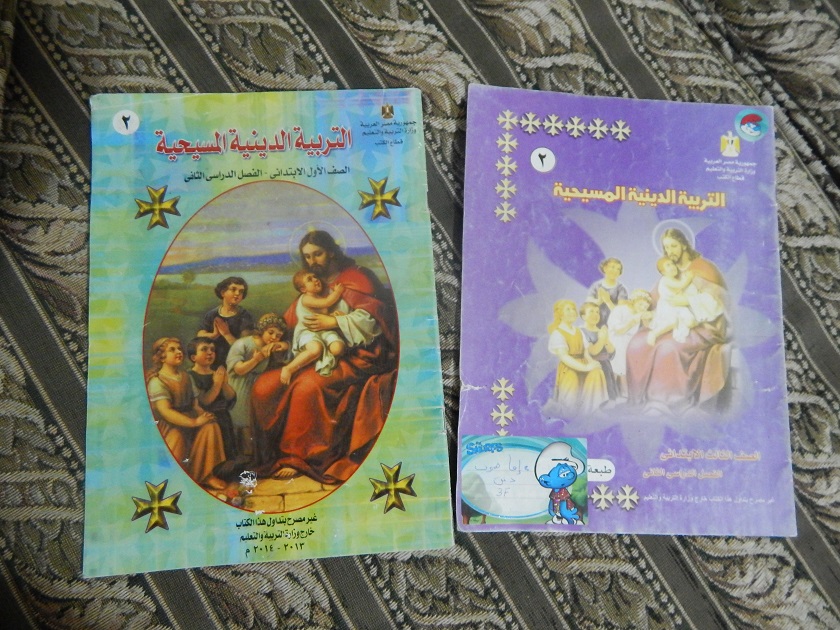


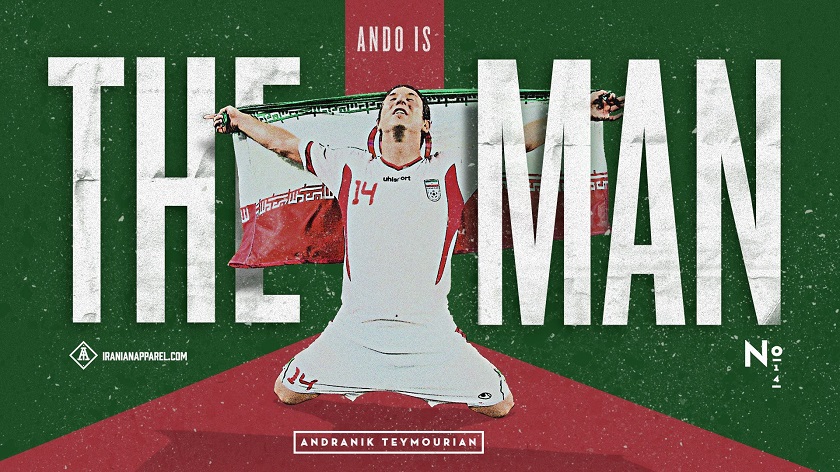


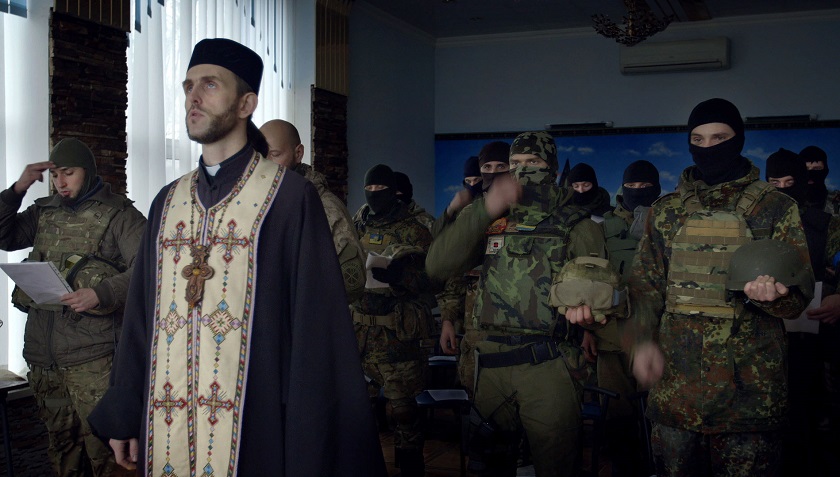



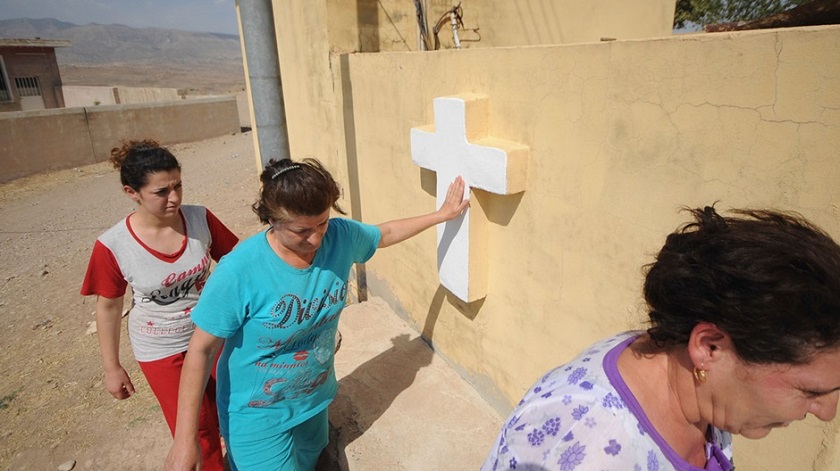

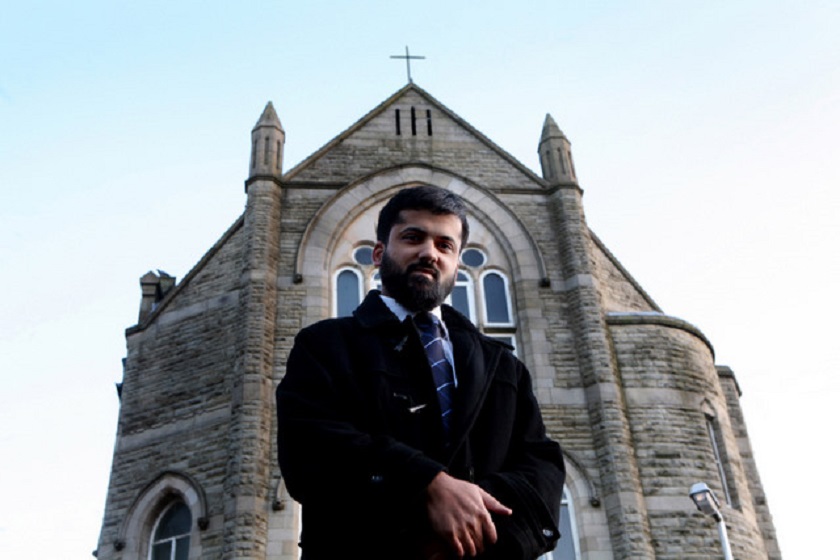
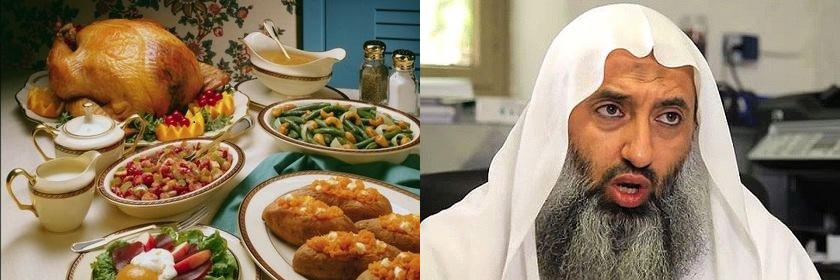
 Jayson Casper