Categories
Middle East Published Articles Christianity Today

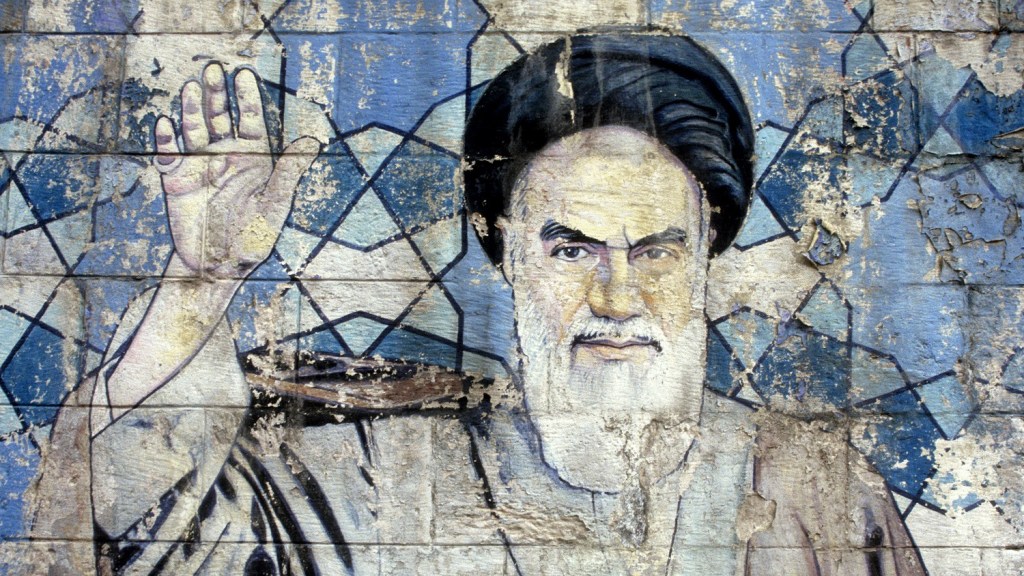
A Marxist and an Ayatollah Shaped Iran’s Islamic Republic

Kaveh Kazemi / Contributor / Getty

(This is part four of a four-part series on Shiite Islam and the Iranian regime. Please click here to read parts one, two, and three.)

While the first three parts of the series explored the history of Shiite Islam and how the lack of an earthly imam formed Shiite political culture, today we look at modern Iran and the rise of the Islamic republic.

Although other Shiite sects exist, Iran adopted the Twelver faith—based on a line of 12 imams. The last of these disappeared, and in the centuries that followed, the sect waited for the Twelfth Imam to return as Mahdi, a messiah-type figure, and establish global Islamic governance. In his absence, Shiites submitted to political authority without admitting its ultimate legitimacy.

Something began to shift in mid-19th century Iran as Western influence seeped into the still-Shiite but increasingly secular monarchy. In 1890, the shah granted an English business monopoly over the local tobacco industry, and in response, the masses protested the blow to national sovereignty and their personal economic interests.

Sitting at home, a leading Twelver scholar then issued a fatwa (legal opinion) declaring that continuing to smoke represented a war against the Twelfth Imam himself. The wave of support for the fatwa drove the shah to reverse his policy, and clerics began to sense their secular influence. Five years later, some joined the push for a national constitution.

Most clerics stayed quiet, however, focusing on ordinary religious affairs. But decades later in the 1960s, frustration with an unpopular shah led Ali Shariati, a Paris-educated sociologist from a clerical family, to apply a Marxist reading to the story of Hussein, the grandson of the prophet Muhammad.

Hailed as “Lord of the Martyrs,” Hussein gathered a small contingent of faithful followers and set out from Medina, the city of Muhammad in today’s Saudi Arabia, to oppose the unjust caliph who ruled from Damascus, Syria. Along the way in Karbala, Iraq, the caliph’s army intercepted Hussein’s approach, and a siege ensued. After ten days of negotiation, the army killed Hussein and his supporters.

The standard Twelver narrative held that as an imam, Hussein had divine foreknowledge of the massacre yet went to his death anyway. Faithful Shiites treated it as a redemptive act compensating for the failure of their ancestors to follow the imam. A Shiite tradition quotes Muhammad as saying, “[Hussein] shall die for the sake of my people.”

By visiting Hussein’s shrine and lamenting during the yearly commemoration of Ashura, they seek fulfillment of another traditional saying: “A single tear shed for Hussein washes away a hundred sins.” Extreme Shiites will even whip themselves with ropes or chains to demonstrate their remorse.

Shariati pushed back on that interpretation, calling for a “Red Shiism” that returned the faith to an activist posture against oppression and away from the “Black Shiism” of mourning. Shariati said Hussein had died valiantly. Though he had failed, in imitation Shiites might yet succeed in taking down the unjust shah. Shariati popularized a new phrase to remember: Every day is Ashura. Every land is Karbala.

The clergy…

This article was originally published at Christianity Today on July 11, 2025. Please click here to read the full text.

Categories
Christianity Today Middle East Published Articles

Shiites Await a Savior. How Should They Govern Now?

HUSSEIN FALEH / Contributor / Getty

(This is part three of a four-part series on Shiite Islam and the Iranian regime. Please click here to read parts one and two.)

The previous articles centered on the origins of Shiite Islam and its political history to examine the Shiite basis for Iran’s vision of government, one that is based on the central concept of wilayat al-faqih, translated literally as “guardianship of the jurist,” meaning the rule of a sharia expert. 

A brief recap: The two primary theological concerns of Shiism are Islamic justice and leadership, both represented in the figure of the imam. The large majority of Shiites, including most in Iran, are called Twelvers since they follow the line of 12 imams beginning with Ali, Muhammad’s cousin, whom they believe should have immediately inherited the prophet’s political position—but was wrongly denied.

Top of Form

Iran returned Shiites to power. Prior to the Islamic Republic, the ruling shah belonged to the sect but was a secular and modernizing leader. But does the restoration of religious government honor or betray the Shiite heritage? To evaluate, we will now examine the end of the lineage of imams and the two rare instances when Twelver dynasties ruled in Iran—without a rightful imam.

Ali did eventually lead the Islamic community as the fourth caliph, and Sunni Muslims agree his governance was just. Yet when civil war and assassination ended Ali’s rule, Sunnis controlled the empire and often persecuted Shiites as rival claimants to Muhammad’s mantle. The imams counseled patience to the Shiite community, knowing they were a vulnerable political minority. They focused on religion, guiding their followers in the right understanding of Islam.

But in AD 874, the Twelfth Imam, a five-year-old boy, disappeared.

This threw the Twelver community into confusion, and many drifted toward a rival Shiite sect called Ismailism, which had broken off from the Twelvers in AD 765 and ruled a powerful dynasty from Cairo. But Twelvers said that the child did not simply vanish but that Allah had preserved his life in occultation.

In astronomy, the term refers to one celestial body passing in front of another and blocking its view. Here Shiites said that Allah was hiding the imam from public view—especially from the Sunni authorities—until he could grow up and restore Shiites to Islamic political leadership. In the immediate aftermath, the treasurer of the deceased 11th imam continued to collect the Shiite tithe and answer believers’ questions, claiming to communicate with the child in secret. After nearly 70 years passed without the imam’s reappearance, this “minor” (or short-term) occultation gave way to a “major” occultation that lasts to this day.

Twelver scholars held that…

This article originally published at Christianity Today on July 10, 2025. Please click here to read the full text.
Categories
Middle East Published Articles Christianity Today

Imam’s the Word

HUSSEIN FALEH / Contributor / Getty

(This is part two of a four-part series on Shiite Islam and the Iranian regime. Please click here to read part one.)

The previous article introduced the Shiite concept of justice through Ali ibn Abi Talib, cousin of Islam’s prophet Muhammad. Ali is a linchpin for understanding the difference between Sunni and Shiite Islam, the former representing the majority of Muslims in the world and the latter representing the majority in Iran. In 1979, Iran led a revolution that resulted in the world’s only Shiite government, establishing wilayat al-faqih, the “guardianship of the jurist,” meaning the rule of an expert scholar in sharia law.

This article will continue our examination of Shiite history, starting with the way Shiites see the Quran as containing both literal commands and mystical values. Shiites say it takes spiritual insight to understand the Quran correctly. And there are a multitude of traditions—the Sunna, from which Sunnis take their name—describing what Muhammad said and did.

Sunni scholarship recognizes many of these reports as authentic and others as uncertain or outright invented to support a political cause. They exist in the thousands, and although the standards of determining authenticity are internally rigorous, the task is a human endeavor.

Shiites say the Sunni criteria are necessarily insufficient. They believe proper Islamic leadership requires supernatural insight passed directly from Muhammad to his offspring—those who knew him best. Ali married the prophet’s daughter Fatimah, and they had two sons, Hasan and Hussein. Recall that Ali was assassinated in an Islamic civil war and leadership passed into Sunni hands. In AD 680, Hussein led a revolt against Yazid, the sixth caliph, whom many Sunnis consider impious. Yazid’s army slaughtered Hussein with his small contingent in Iraq, marking another blow to Shiites while reinforcing…

This article was originally published at Christianity Today on July 9, 2025. Please click here to read the full text.
Categories
Christianity Today Middle East Published Articles

How Iran Became an Islamic Republic

NurPhoto / Contributor / Getty

When asked last month about his goals in attacking Iran, Israeli prime minister Benjamin Netanyahu stated that he sought to stop a nuclear threat. Yet he also expressed hope for a regime change.

“The decision to act,” he said, “is the decision of the Iranian people.”

Although Iranian sentiment is hard to measure, some surveys suggest widespread disillusionment with the country’s rulers. According to the nonprofit Freedom House, Iran ranks No. 20 on its list of the least-free nations in the world. But if Iranians were free to decide, on what basis would they decide what is right?

Shiite Islam offers Iranians a standard it views as just. Iran calls itself an Islamic republic. Many Iranians may appreciate the Western understanding of human rights. But long before Freedom House existed, their sect prized two concepts through which the Shiite people can judge their governments: justice and leadership.

Najam Haider, assistant professor of religion at Columbia University, calls these the core theological beliefs of Shiite Islam. Iran’s constitution purports to enshrine them via the judiciary in wilayat al-faqih, the “guardianship of the jurist.” In plain terms, the religious scholar, an expert in sharia law, is to rule and ensure fidelity to Islam. Iranians can theoretically vote politicians out of office but the chief religious scholar is in charge. He can be removed from his post—but only by fellow religious scholars.

To understand the Iranian government we need to understand Shiite political history. This article is the first in a four-part survey, based on Haider’s Shi’i Islam, Vali Nasr’s The Shia Revival, Mark Bradley’s Iran and Christianity, and interviews with Shiite experts.

Part one is the origin story, describing why Shiites view themselves as cheated out of Muslim leadership. Part two looks at how different branches within the sect responded to this loss. Although Shiite rule is historically rare, part three considers how two premodern dynasties shed light on later developments in Iran. And part four describes two Iranian personalities who played a key role in politicizing the Shiite faith.

The starting point: Politics is never far from Islam, as the Muslim prophet Muhammad also became a head of state. But for centuries, most Shiites waited for divine intervention on their behalf, and did not push to create a government themselves.

Iran is one of only four majority Shiite countries in the world—Iraq, Bahrain, and Azerbaijan are the others—but is unique as the only nation with specifically Shiite governance. The global majority Sunni population may admire Iran for its centrality of religion, its anti-Western posture, or its opposition to Israel. But Sunnis reject the theological basis of wilayat al-faqih.

This article will focus on what Shiites think. An anecdote about…

This article was originally published at Christianity Today, on July 8, 2025. Please click here to read the full text.

Categories
Christianity Today Middle East Published Articles

Iranian Christians Question Reformist Credentials of New President

Image: Majid Saeedi / Stringer / Getty

The surprise election in Iran of the sole reformist candidate for president was met with an unsurprising reaction from the United States.

Heart surgeon Masoud Pezeshkian tallied 53 percent of the vote for a clear but narrow victory over hard-line former nuclear negotiator Saeed Jalili in an electoral process the State Department labeled “not free or fair.”

It followed the May 19 death of the previous president in a helicopter crash.

With “no expectation [of] fundamental change,” the perspective from Washington echoed that of Javaid Rehman, the United Nations Special Rapporteur on the Situation of Human Rights in Iran. The Pakistani-British lawyer stated that a new president is unlikely to improve the Islamic Republic’s record.

Iranian Christian sources in the diaspora agree.

“The result highlights a superficial change in leadership,” said Robert Karami, an Iranian Church of England pastor outside London and a board member of Release International, a UK-based advocate for the persecuted church. “It does not matter who holds the presidential office as long as the Supreme Leader remains in power.”

Pezeshkian, age 69, was one of six candidates permitted to run by Iran’s 12-member Guardian Council, appointed by head of state Grand Ayatollah Ali Khamenei. Dozens of candidates were disqualified, including former president Mahmoud Ahmadinejad. Analysts speculated the inclusion of Pezeshkian was intended to increase voter turnout—but if so, the strategy initially failed and may have backfired.

Only 40 percent of the electorate participated in the first round held on June 28, the lowest tally since the 1979 Iranian revolution. It resulted in the first runoff since 2005, leading to a hostile campaign in which leading figures claimed Jalili would rule Iran like the Taliban in Afghanistan. Voters partially responded, as election day on July 5 witnessed an increased turnout of 50 percent.

But not Mansour Borji, who boycotted the diaspora ballot stations in the UK.

“I participated in the election by…

This article was originally published by Christianity Today on July 9, 2024. Please click here to read the full text.

Categories
Christianity Today Middle East Published Articles

Report: Iran Arrested 166 Christians in 2023, Targeting Bible Distributors

Religious reeducation did not work on Esmaeil Narimanpour.

First arrested by the Iranian government in 2021, he and seven other converts to Christianity were cleared by the state prosecutor, who stated that their change of religion was not a crime under Iranian law. The following year, he was ordered with several others to attend ten sessions with Muslim clerics to “guide” him back to Islam.

Last December, Narimanpour was arrested again, this time on Christmas Eve.

The case is one of several highlighted by “Faceless Victims: Rights Violations Against Christians in Iran,” the 2024 annual report released jointly by advocacy organizations Article18, Open Doors, Middle East Concern, and CSW and presented at the British Parliament.

“This is a great example of agencies working together,” stated Mervyn Thomas, founding president of CSW (formerly Christian Solidarity Worldwide), at the event. “Iran claims to ensure freedom of religion or belief for all; but that is nonsense, as this report shows.”

Not yet convicted, Narimanpour is one of 166 Christians arrested and 103 detained by Iran during the 2023 reporting period. Another 22 have been sentenced, and 21 imprisoned.

While sentencings decreased by 8 from 2022, this year witnessed an additional 32 arrests and 41 detainments. Article18 has tracked incidents in Iran since 2015, when arrests were at a peak of 193. Detainments have fluctuated yearly between 26 in 2018 and this year’s high, while sentencings ranged between 12 in 2015 and a high of 57 in 2020.

The British parliament gathering included testimony from former prisoner Farhad Sabokrooh. Arrested with his wife in 2011, the couple served one year in prison and had their previously registered church closed down after 25 years. Accused of being a spy for Israel and the United States, he told the gathering that he was forced into a false confession, sentenced without his lawyer present, and once released was threatened with death if he did not leave Iran within one month.

“My plea to you is to hold the regime accountable,” Sabokrooh stated. He later noted, “They somehow feel Christians are orphans and have no one to protect them. We have to reverse that.”

The 36-page sixth report was released on February 19 to coincide with…

This article was originally published at Christianity Today on February 21, 2024. Please click here to read the full text.
Categories
Christianity Today Middle East Published Articles

Meet the Iranian Christians Crafting an Evangelical Alliance

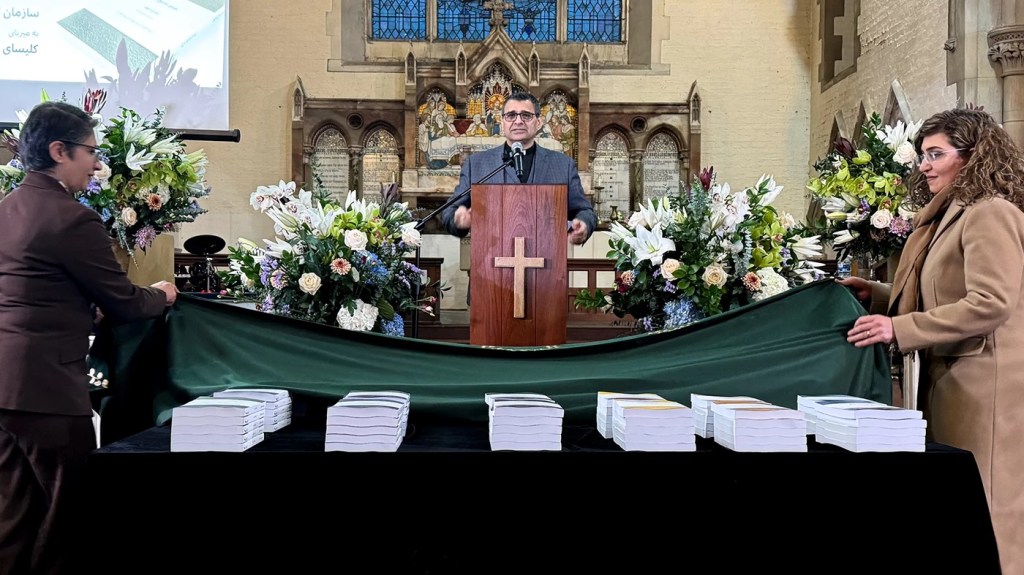
Photo courtesy of Pars Theological Centre

Last week in Tehran, thousands rallied to commemorate the 45th anniversary of the Islamic revolution that established Iran’s modern theocracy. Last October in London, 130 Iranian Christians gathered to worship and pray, and celebrated a quiet decision to establish an evangelical alliance.

Time will tell which gathering was more consequential.

In 1979, one month after the fall of the shah, 98 percent of Iranian citizens voted to approve a constitution installing an Islamic government. Four decades of religious authoritarianism later, an online poll indicated that only 16 percent of the population would vote for it again.

An earlier survey, furthermore, found that only one-third of Iran’s population call themselves Shiite Muslims. More than half identified as either atheist, agnostic, no religion, vaguely spiritual, or Iran’s ancient Zoroastrian faith.

Those responding “Christian” totaled almost a million.

Thousands more Christians have fled persecution, taking refuge among the extensive Iranian diaspora in the West. Some have established ministries to evangelize among them, while others broadcast satellite TV programs, engage in remote discipleship efforts, or preside over a network of underground house churches.

Many multitask, while few collaborate—until now.

At the London gathering, members from over 40 diaspora churches and ministries voted almost unanimously to partner together in an evangelical alliance. Further votes were taken to choose a seven-member steering committee to represent the whole, tasked to take a year to study and recommend best practices, as an additional 60 leaders observed proceedings online.

Momentum had been building for years. Named the Iranian Leaders Forum (ILF), previous gatherings met in 2015 and 2018 until COVID-19 disrupted the triannual effort. While unity had been discussed previously in principle amid believers of different theological perspectives, 2023 represented the first practical step to formally establish it.

But the first mention of an alliance quieted the room. Gathered leaders—one-third of whom were female—had been beaming with joy at the reunion with colleagues separated by time and space. Hints of lingering tensions were whispered in the hallways, but worship was loud and heartfelt; prayers were passionate and pleading.

The ministries, however, were not used to cooperation, and many wondered what was intended. While a representative ILF steering committee planned the announcement of an alliance, it was not expected by most participants. Would such an alliance seek administrative control, establish a single denomination, or venture into politics?

Over the course of the five-day conference, leaders addressed the uncertainties. The motivation came from Jesus’ prayer for unity, to strengthen the witness of the Iranian church and to allow for one Christian voice where consensus exists. Breakout groups put diverse ministries in communication about what would be acceptable to all. But the purpose, organizers assured, was to agree on the benefit of forming a network of mutual relationships and then to take the time necessary to figure out the details.

A single denomination was ruled out, as was a political party. Currently under discussion is if membership will include only believing Protestants or if those of evangelical conviction in other denominations will also be welcomed. And while much of the house church movement is connected with gathered ministries, only God knows the full extent of the church within Iran.

Participants gave CT their various recommendations for success:

  • Avoid hierarchical structures and minimize administrative control.
  • Craft a clear strategy and process for decision-making.
  • Ensure election of capable and representative leadership.
  • Facilitate communication channels appropriate for active ministries.
  • Honor the theological and practical diversity of members.
  • Be mindful of inherited cultural authoritarian patterns.
  • Address the impact of Western money and denominational pressure.
  • Discuss competition over resources and ministry duplication.
  • Discern the role of women and non-Iranian participation.

Time will tell if the overwhelming agreement will hold. But CT asked a selection of participants to contribute short biographies of their ministries, along with their hopes for what an Iranian evangelical alliance can accomplish. Listed in alphabetical order, prayers are requested for all involved…

This article was originally published at Christianity Today on February 19, 2024. Please click here to read the full text and ministry biographies.

Categories
Christianity Today Middle East Published Articles

Iranians Gain 12 New Ways to Read the Bible

Image: Courtesy of Korpu

Home to the world’s fastest-growing church, with up to an estimated 1 million Christians, Iran has many underground fellowships that had previously worshiped in the Farsi language. But according to a 1991 survey of new mothers in Iran, only 46 percent reported Farsi as their mother tongue.

Minority Gilaki, Mazandarani, and other citizens can now read the New Testament in their own language, thanks to the publication of 12 new Bible translations. Far from a Persian monolith, Iran has 62 distinct languages, according to the Korpu translating agency, 9 of which number more than 1 million speakers.

And God’s concern for Iran goes beyond their individual souls.

“Translating the Bible is God’s way not simply to save people,” said Yashgin, a Korpu exegete-in-training, “but to return glory to humiliated minority peoples.”

Now living in Turkey and a Christian since 2007, Yashgin requested anonymity to protect her believing family back in Shiraz, 525 miles south of Tehran. A member of the Qashqai Turkic minority of Iran, she fled the country after two brief detentions in jail for her faith, connecting with Korpu in 2017.

Seven years later, she helped birth the first Qashqai New Testament.

Yashgin said she was mocked as a child over her accent and Turkish name. (Minority Rights Group (MRG) states that Iran represses its minority languages, mandating Farsi alone in education and civil affairs.) But studying the Bible, she learned that God called Israel as a minority people (Deut. 7:7), and translation, she said, proves the truth of John 3:16.

God loves the world, not just the majority.

“No one cares for us more than our mother,” Yashgin said. “God showed us he cares also, by speaking her language.” Language and ethnicity figures are contested in Iran, whose 88 million people reside in a territory roughly the size of…

This article was originally published at Christianity Today on January 24, 2024. Please click here to read the full text.

Categories
Christianity Today Middle East Published Articles

First Graduates of Persian Seminary Prepared to Serve a Traumatized Iran

Image: Courtesy of Pars Theological Centre

Iran’s Islamic republic is driving its citizens away from religion—and into trauma and depression. But as Christianity grows among a disillusioned public, the church is not exempt from complications, whether at home or in the extensive diaspora.

“Many Iranian Christians struggle with high levels of anxiety and post-traumatic stress disorder, stemming from persecution but also from the general oppression of a totalitarian regime,” said Shadi Fatehi, associate director of Pars Theological Centre. “We see the marks in many of our students.”

Last month, the London-based institute celebrated its first graduating class.

Fifteen students completed the Farsi-language, three-year bachelor’s in theology degree. Accredited as an institution by the World Evangelical Alliance–associated European Council for Theological Education, nearly half of Pars’s over 600 students live in Iran, with almost a third in Turkey.

Its hybrid education model is primarily online, with a yearly residential program.

Located in 23 nations overall, the seminary launched the Pars Counseling Centre five years ago and began deliberately integrating it within the academic program. While the World Health Organization estimates five percent of the world population suffers from depression, peer-reviewed studies describe far greater numbers in Iran.

Between 15–31 percent of Iranians experience some form of mental disorder, with that number increasing to 37 percent in Tehran. Saeed Moeedfar, president of Iran’s Sociological Association, described a “terrifying despair” gripping society, as one in five prescriptions are issued for antidepressants or sleep-inducing medications. And a 2021 study found that political repression “contributes significantly” to mental health problems.

Meanwhile, a 2020 GAMAAN study found that nearly one million Iranians called themselves Christian, while only 32 percent of Iranians identified as Shiite Muslim. Officially, however, Iran puts that number at 95 percent.

Citing oppression and economic troubles, one anonymous secular Tehran-based NGO came up with a somewhat spiritual solution. Fighting a culture of mental health stigma, it combines both pro- and anti-regime patients within group counseling sessions. Alumni describe a “second household” atmosphere and readily volunteer to extend what they call “the chain of love.”

Pars similarly calls its theological model “the centrality of love,” centered around spiritual (love of God), personal (self), communal (church), and missional (world) formation. Many converts to Christianity suffer rejection from their family, Fatehi said, and new life in Christ does not automatically heal their wounds. In fact, given the nature of the Iranian underground church, it can even amplify them.

“Believers often suddenly find themselves as leaders in a house church,” she said. “But only having seen authoritarian models, traumatized people tend to exert controlling power over others out of self-preservation.”

Pars offers three courses in servant leadership, she said.

“Our background in Shiite Islam leads us to believe that the pastor represents the image of God and that we should accept his teachings without question,” said Samira Fooladi, a graduating student in Turkey. “My goal now is to develop healthy women’s leadership.”

Experts say the Iranian church is largely female, reflected in 57 percent of Pars students.

Despite growing up in a religious family in Isfahan, Fooladi followed her older sister to underground services during university studies in Tehran. Non-practicing herself, she compared the Quran and Bible while praying that God would show her the right way. She gave her life to Christ in 2000 at the age of 18. Fooladi quickly became a cell group leader, but it was not until…

This article was originally published at Christianity Today, on November 8, 2023. Please click here to read the full text.

Categories
Christianity Today Middle East Published Articles

Evangelical Alliance Accepts Iran Invite. Critics Claim Broken Engagement.

Image: Fabrice Coffrini / AFP / Getty

Last June, the World Evangelical Alliance (WEA) received a peculiar invitation. On the sidelines of the 53rd meeting of the United Nation’s Human Rights Council (HRC) in Geneva, the government of Iran organized a forum entitled “The Role of Religions in Promoting Human Rights.”

The WEA was the only Christian group invited.

Upon its acceptance, the alliance—representing 600 million evangelicals—under UN protocol became an official forum co-sponsor with the Islamic Republic, designated by the United States as a state sponsor of terrorism since 1984.

Ranked No. 8 on Open Doors’ World Watch List (WWL) of the 50 nations where Christians experience the most persecution, Iran also partnered on the event with Pakistan, ranked No. 7 (both are considered “severe” offenders). Another co-sponsor was the Organization of Islamic Cooperation; 35 of its 57 members rank on the 2023 watchlist.

The intersection of topics, however, secured the participation of the HRC itself, the Office of the UN High Commissioner for Human Rights, and the Geneva School of Diplomacy. The official title of the WEA presentation was diplomatically bland: “Harnessing the immense potential of religions in cultivating pluralistic societal cohesion and global peace.”

But behind the scenes, Iran wanted something different.

“They asked us to explain: What can evangelicals contribute to the good of society?” said Thomas Schirrmacher, WEA secretary general. “I would have a bad conscience if we did not use such opportunities to testify in the court of the world.”

American critics of the UN, however, believe “kangaroo” is this court’s most suitable adjective. One month after President Donald Trump’s 2018 withdrawal from the Iran Deal, the US similarly withdrew from the HRC—protesting the hypocrisy of electing China, Cuba, Saudi Arabia, and other dictatorships among its 47 member nations. (Three years later, President Joe Biden reversed Trump’s decision.)

The WEA presentation was delivered by Gaetan Roy, the WEA’s permanent representative to the UN in Geneva. Citing the propriety of his role as a behind-the-scenes actor, Roy declined to be interviewed about his interactions with Iranian diplomats. But Schirrmacher summarized Roy’s remarks as giving specific examples of what evangelicals believe and how they defend the freedom of religion or belief for all.

“It was amazing, a result of our diligent work over many years,” he said. “In many of these countries we are seen as troublemakers, if not terrorists.”

But did the message translate? Iranian press summarized Roy’s remarks as emphasizing “the importance of the role of dialogue.” And some critics lambasted the WEA for “legitimizing” Iran in the public arena, seeming to support its propaganda as a purported defender of human rights.

“The UN is where human rights concerns should be most addressed, and the WEA should be a prophetic voice there,” said Johnnie Moore, who formerly served on the US Commission on International Religious Freedom (USCIRF). “But they are hobnobbing with diplomats and drinking tea, becoming part of the problem.”

Moore co-authored a book about Islamic terrorism in Nigeria, called The Next Jihad, together with current USCIRF chair Abraham Cooper, a Jewish rabbi. Cooper’s associated Simon Wiesenthal Center stated it was “difficult to put into words the damage done” by the WEA.

Coming in the waning days of anti-hijab, women-led protests, the WEA’s public co-sponsorship has emboldened a “murderous” Iranian regime, the center stated. And contrary to the title of the forum, it stated evangelical leaders demonstrated instead how religion can “degrade” human rights.

“For Iran, it means business as usual,” Cooper told CT. “And for the beleaguered innocents, it means their martyrdom, suffering, and muffled pleas are forsaken—by a group they were counting on for public support.”

One such Iranian woman called the WEA’s participation a “comedic drama.”

She requested anonymity as a formerly imprisoned convert from Islam. Though she is now in asylum in Europe, Iranian agents have continued to harass her.

“Every day Christians are arrested, in every corner of Iran,” she said. “WEA participation was not wise, and does not help Christianity at all.”

Also in opposition is Hormoz Shariat, president of the US-based Iran Alive ministry. If the WEA were to engage Iran in such a forum, he said, it should only be if Christian persecution is at the top of the agenda, with a pre-negotiated agreement on the principles of religious freedom.

But even then, it likely would not make a difference.

“Iranians are the masters of deception and manipulation,” Shariat said, himself a convert to Christianity. “And evangelicals are naïve when dealing with Muslims, thinking everyone behaves according to a similar moral code.”

He cited the practice of taqiyya, which he said permits a Shiite Muslim to lie.

Yes, the theological concept exists in Shiite Islam, said Sasan Tavassoli, senior lecturer at the London-based Pars Theological Institute. But its application is disputed and Christians should not be overly concerned. He is a “huge advocate” for dialogue with Iran, and lauds the WEA for seeking to build a positive relationship.

“We can hold Iranian Muslims accountable for their statements, just like everyone else,” he said. “Jesus commands us to love our enemies, and by showing respect in these gatherings, we are following him.”

Having been involved in evangelical interfaith dialogue with Iran since 2004, Tavassoli said the WEA can help “tone down” the common accusations that converts from Islam are part of a deviant cult, an imperialist tool of “Zionist Christianity.” And for former Muslims imprisoned for this reason, such connections can help quietly advocate on their behalf.

Schirrmacher said the WEA has performed this role already, securing the release of several pastors and other believers in Iran. “Such success only follows when…

This article originally published at Christianity Today, on August 10, 2023. Please click here to read the full text.

Categories
Christianity Today Published Articles

Iran’s House Churches Are Not Illegal, Says Supreme Court Justice (Updated)

The nine converts are officially acquitted. Branch 34 of the Tehran Court of Appeals agreed with the reasoning of the Supreme Court judge who ruled last November that the preaching of Christianity does not amount to acting against Iran’s national security.

On Monday, judges Seyed Ali Asghar Kamali and Akbar Johari accepted the converts’ lawyer’s testimony that their house church was “in accordance with the teachings of Christianity,” where they are taught to live in “obedience, submission, and support of the authorities.”

The precedent is strong, said Mansour Borji, advocacy director for Article 18, because the judges extensively outlined nine reasons in the acquittal, in line with the Iranian constitution and Islamic tradition.

But it may take time until the ruling becomes normative. One of the nine, Abdolreza Ali-Haghnejad, is already back in jail on a six-years-old separate charge of propagating Christianity, for which he was previously acquitted. And two others, Behnam Akhlaghi and Babak Hosseinzadeh, who made video appeals for freedom of worship, were charged with a separate crime of propaganda against the state.

Iranian Christians welcome the verdict, said Borji, but remain wary.

“This ruling is unlike any other of its type that I have seen,” he said. “[But] at least a dozen others … are still in prison—or enforced internal exile—following their own convictions on similar charges.”

This article updates a previously published piece at Christianity Today, from December 3, 2021. Please click here to read the full text.
Categories
Christianity Today Middle East Published Articles

Iran’s House Churches Are Not Illegal, Says Supreme Court Justice (Updated)

Image: Courtesy of Article 18

Update: The 9 converts to Christianity made eligible for release by November’s Supreme Court ruling remain in prison for their faith, according to Mansour Borji, advocacy director for Article 18. The judge had ruled that promotion of Christianity through house churches is not illegal.

But another case is contributing to the establishment of precedent.

A revolutionary court prosecutor in the city of Dezful, 450 miles southwest of Tehran, declined to bring charges against eight converts to Christianity. Four were arrested in April, with four others later added to the case.

Hojjat Khalaf, Esmaeil Narimanpour, Alireza Varak-Shah, Mohammad Ali Torabi, Alireza Zadeh, Masoud Nabi, Mohammad Kayidgap, and Mohsen Zadeh were facing criminal accusations for “propaganda against the Islamic Republic of Iran.”

The judge provided a written explanation on November 30. According to Middle East Concern, he stated that although apostasy is a crime according to Islamic sharia, it is not an offense according to the laws of Iran. Borji said the decision was unrelated to the recent Supreme Court ruling (below), as this case had not yet even made it to court.

“The prosecutor was simply not convinced with made up charges by intelligence officers with no shred of evidence,” he said. “But his reasoning is very important.”

This update was added by Christianity Today on December 21, 2021, for an article originally published on December 3. Please click here to read the full text.

Categories
Christianity Today Middle East Published Articles

Iran’s House Churches Are Not Illegal, Says Supreme Court Justice

Image: Courtesy of Article 18.

Currently at least 20 Christians are jailed in Iran because their faith was deemed a threat to the Islamic republic’s national security. Of the more than 100 Iranian believers imprisoned since 2012, all have faced similar charges.

But a recent decision by a Supreme Court justice gives hope to them all.

“Merely preaching Christianity … through family gatherings [house churches] is not a manifestation of gathering and collusion to disrupt the security of the country, whether internally or externally,” stated the judge, Seyed-Ali Eizadpanah.

“The promotion of Christianity and the formation of a house church is not criminalized in law.”

Two years ago, nine converts from the non-Trinitarian Church of Iran in Rasht, 200 miles northeast of Tehran near the Caspian Sea, were arrested in raids on their homes and church.

Sentenced to a five-year prison term in October 2019, Abdolreza Ali Haghnejad, Shahrooz Eslamdoust, Behnam Akhlaghi, Babak Hosseinzadeh, Mehdi Khatibi, Khalil Dehghanpour, Hossein Kadivar, Kamal Naamanian, and Mohammad Vafadar are now eligible for release.

The ruling, announced November 24, is “unprecedented,” according to multiple Iranian Christians and international advocates.

“The judge’s main argument is what we have been saying for years,” said Mansour Borji, advocacy director for Article 18, a UK-based organization promoting freedom of religion in Iran that tallied the cases noted above from available public records.

“But it astonished us to hear it at such a high level.” It also cuts against the grain of international understanding. The US State Department’s latest religious freedom report on Iran…

This article was originally published at Christianity Today on December 3, 2021. Please click here for the full text.

Categories
Americas Christianity Today Published Articles

Trump and Biden Disagree on Sanctions. So Do Evangelicals Outside the US.

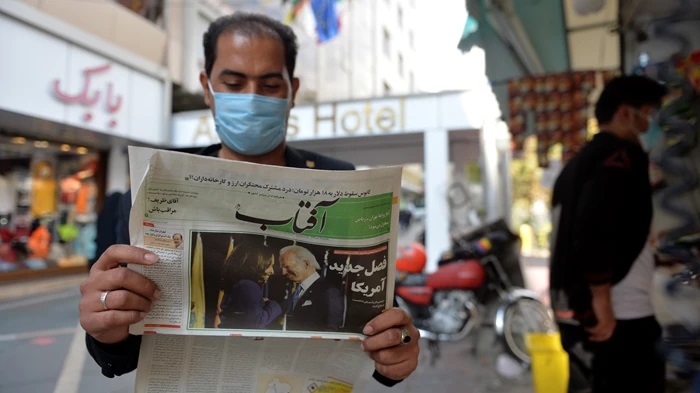
Image: Anadolu Agency / Getty Images The headline reads: A New Era for America

If President-elect Joe Biden makes good on his campaign rhetoric, his sanctions policy will meet the approval of the World Evangelical Alliance (WEA).

Back in April, as even the strongest nations reeled from COVID-19, then-candidate Biden petitioned the Trump administration for sanctions relief on the hardest-hit nations—including Iran and Syria.

“In times of global crisis, America should lead,” he said.

“We should be the first to offer help to people who are hurting or in danger. That’s who we are. That’s who we’ve always been.”

In September, the WEA joined Caritas, the World Council of Churches, and others to similarly petition the United Nations’s Human Rights Council.

“We are deeply concerned about the negative economic, social, and humanitarian consequences of unilateral sanctions,” read their statement, ostensibly singling out the United States and its European allies.

“It is a legal and moral imperative to allow humanitarian aid to reach those in need, without delay or impediment.”

One month later at the UN, China led 26 nations—including sanctions-hit Cuba, North Korea, Iran, Russia, Syria, and Venezuela—to assert that the economic impact impedes pandemic response and undermines the right to health.

This is “disinformation,” said Johnnie Moore, appointed by President Donald Trump to serve on the independent, bipartisan US Commission on International Religious Freedom (USCIRF).

He called the WEA statement “almost indefensible.”

“Sanctions against countries that imperil their citizens and the world is good policy,” Moore said. “It has proven to be an effective alternative to save lives, alongside diplomatic channels to coerce long-term positive behavior.”

Western nations had already issued fact sheets to undermine China’s claim.

Detailing food, medical, and humanitarian exemptions, the US and European Union (EU) demonstrated that sanctions target regimes and their supporters, not the general population. Christian Solidarity International, however…

This article was originally published by Christianity Today on January 15, 2021. Please click here to read the full text.

Categories
Prayers

Lebanon Prayer: Peg to Iran

God,

Lebanon has long lived in days of opaqueness.

Everyone knows, but no one will say.

It is not a good way to run a country. Truth must be told.

Maybe it is starting to change?

An Iranian general took credit for missiles.

Resistance to Israel flows from Tehran.

Meanwhile the Christians all spoke out in protest.

“No partners in sovereignty, we have our own state.”

But the top Shiite cleric made clear his viewpoint.

“No sovereignty at all, without Soleimani’s gift.”

Completing the image, his statue was raised.

God, the Shiite militia is a check on its neighbor.

Their weapons are held apart from the state.

Their influence in government is a fact of the matter.

Their people are citizens, with all rights therein.

But some things remain opaque.

Do they kill their opponents? Do they launder their cash?

Some accuse. They deny. Some defend. Others sanction.

Terrorists or patriots? God fearing or corrupt?

The Druze politician thinks he sifts through to the essence:

“Nothing is left but a missile launching pad.”

“Let their bloc end the pretense, and govern themselves.”

Meanwhile in finance reality is spoken.

The central bank governor buried the peg.

The era is over, once bailout is managed.

The dollar economy will soon simply float.

Good or bad, God – you know.

But national wealth will soon be what it is.

God, let the national heart ache.

Comfort in part through international good will.

But make the societal response resolute.

After the individual repentance of all.

A man cannot come to you in pretense.

Our sins cannot stay opaque.

The truth must be told—and in crisis it can be.

The truth also hurts—but from humility, health.

Reveal all parties engaged in deception.

Let everyone know, and everyone say:

Amen.


To receive Lebanon Prayer by WhatsApp, please click this link to join the closed comments group.

Lebanon Prayer places before God the major events of the previous week, asking his favor for the nation living through them.

It seeks for values common to all, however differently some might apply them. It honors all who strive on her behalf, however suspect some may find them.

It offers no solutions, but desires peace, justice, and reconciliation. It favors no party, but seeks transparency, consensus, and national sovereignty.

How God sorts these out is his business. Consider joining in prayer that God will bless the people and establish his principles, from which all our approximations derive.

Lebanon Prayer places before God the major events of the previous week, asking his favor for the nation living through them.

It seeks for values common to all, however differently some might apply them. It honors all who strive on her behalf, however suspect some may find them.

It offers no solutions, but desires peace, justice, and reconciliation. It favors no party, but seeks transparency, consensus, and national sovereignty.

How God sorts these out is his business. Consider joining in prayer that God will bless the people and establish his principles, from which all our approximations derive.


Sometimes prayer can generate more prayer. While mine is for general principles, you may have very specific hopes for Lebanon. You are welcome to post these here as comments, that others might pray with you as you place your desires before God.

If you wish to share your own prayer, please adhere to the following guidelines:

1) The sincerest prayers are before God alone. Please consult with God before posting anything.

2) If a prayer of hope, strive to express a collective encouragement.

3) If a prayer of lament, strive to express a collective grief.

4) If a prayer of anger, refrain from criticizing specific people, parties, sects, or nations. While it may be appropriate, save these for your prayers alone before God.

5) In every prayer, do your best to include a blessing.

I will do my best to moderate accordingly. Thank you for praying for Lebanon and her people.

Categories
Asia Christianity Today Published Articles

Armenians Fight to Hold Ancient Homeland Within Azerbaijan

Fierce fighting has broken out in the Caucasus mountains between the Caspian and Black seas, pitting Christian Armenians versus Muslim Azeris.

But is it right to employ their religious labels?

“Early Sunday morning [Sept. 27], I received a phone call from our representative in the capital city,” said Harout Nercessian, the Armenia representative for the Armenian Missionary Association of America (AMAA).

“He said they are bombing Stepanakert. It is a war.”

One week later, the fighting continues. At stake is control over the Armenian-majority enclave of Nagorno-Karabakh, home to 170,000 people in a Delaware-sized mountainous region within Azerbaijan.

More than 200 people have reportedly died, though Azerbaijan has not released its number of casualties.

Administered by ethnic Armenians ever since a ceasefire was declared in 1994, locals call the region the Republic of Artsakh. Military skirmishes have not been unusual. There have been more than 300 incidents since 2015, according to the International Crisis Group.

This escalation is the most serious since 2016, with Azerbaijani forces attacking multiple positions along the 120-mile “line of contact.”

But the shelling of civilian cities represents a worrisome development.

As does the role of Turkey—and the Syrian militants it allegedly recruited—which has pledged full support for Azerbaijan.

Russia, France, and the United States—partners in the “Minsk Group” which has overseen negotiations between the two nations since 1992—have called for an immediate ceasefire. But Turkey has encouraged Azerbaijan President Ilham Aliyev’s refusal, conditioning a ceasefire on…

This article was originally published at Christianity Today, on October 6, 2020. Please click here to read the full text.

Categories
Christianity Today Middle East Published Articles

Satellite Ministries Cross Boundaries. That’s Their Promise and Peril.

Image: Illustration by Nicole Xu

GOD TV celebrated too soon.

The 25-year-old Christian broadcasting corporation was granted a license for a new Hebrew-language channel in Israel, and the CEO wanted to praise the Lord.

“God has supernaturally opened the door for us to take the gospel of Jesus into the homes and lives and hearts of his Jewish people,” said CEO Ward Simpson, former director of the Brownsville Revival School of Ministry, in a video posted online. “They’ll watch secretly. They’ll watch quietly. . . . God is restoring his people. God is removing the blindness from their eyes.”

It was a public relations disaster. An outcry from Orthodox Jews and anti-missionary groups led Israel’s Cable and Satellite Broadcasting Council to reconsider GOD TV’s seven-year license. Council chairman Asher Biton claimed the company had misrepresented the channel as something that offered content for Christians when it was really programming designed to convert Jews.

GOD TV scrambled to take down Simpson’s video and clarify its purpose. GOD TV would not try to convert Jews to Christianity. But it would preach Jesus as the Jewish Messiah, consistent with the beliefs of Israel’s approximately 20,000 Messianic Jews. It wasn’t enough. Eight weeks after GOD TV was awarded the license…

Additional reporting by Jeremy Weber.

This article was originally published in the September 2020 print edition of Christianity Today. Please click here to read the full text.
Categories
Christianity Today Middle East Published Articles

Researchers Find Christians in Iran Approaching 1 Million

Missiologists have long spoken of the explosive growth of the church in Iran.

Now they have data to back up their claims—from secular research.

According to a new survey of 50,000 Iranians—90 percent residing in Iran—by GAMAAN, a Netherlands-based research group, 1.5 percent identified as Christian.

Extrapolating over Iran’s population of approximately 50 million literate adults (the sample surveyed) yields at least 750,000 believers. According to GAMAAN, the number of Christians in Iran is “without doubt in the order of magnitude of several hundreds of thousands and growing beyond a million.”

The traditional Armenian and Assyrian Christians in Iran number 117,700, according to the latest government statistics.

Christian experts surveyed by CT expressed little surprise. But it may make a significant difference for the Iranian church.

“With the lack of proper data, most international advocacy groups expressed a degree of doubt on how widespread the conversion phenomenon is in Iran,” said Mansour Borji, research and advocacy director for Article 18, a UK-based organization dedicated to the protection and promotion of religious freedom in Iran.

“It is pleasing to see—for the first time—a secular organization adding its weight to these claims.” The research, which asked 22 questions about…

This article was originally published at Christianity Today, on September 3, 2020. Please click here to read the full text.

Categories
Christianity Today Middle East Published Articles

Iran Releases a Third of Christian Prisoners Due to Coronavirus Concerns

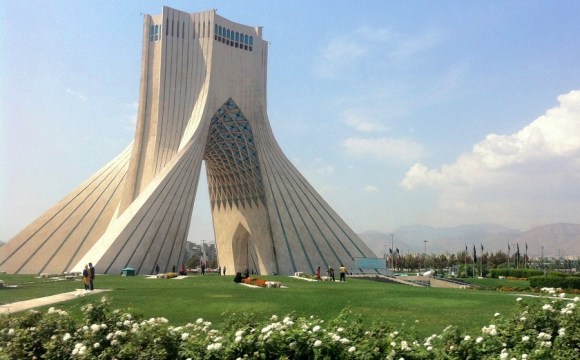
Azadi Tower Iran

This article was first published at Christianity Today, on March 23, 2020.

Forced by the new coronavirus, Iran took the tiniest of steps to placate global advocacy for religious freedom.

A temporary release of about 85,000 prisoners to curb the spread of COVID-19 disease included Ramiel Bet Tamraz, an Assyrian Christian serving a four-month sentence for holding illegal church meetings.

He was one of seven Christians set free, some on bail.

The release—which also pardoned 10,000 prisoners in advance of this past weekend’s celebration of Nowruz, the Persian new year—did not include four Christians recently granted a retrial.

Ramiel’s father Victor was the pastor of the Assyrian Pentecostal Church of Tehran until 2009, when it was shut down by the government for holding services in Farsi, the Iranian national language. Arrested in 2014 for conducting services at home, in 2017 he was given a 10-year jail sentence. Released earlier on bail with his wife Shamiram, they are awaiting the outcome of court appeals.

Ramiel’s sister Dabrina has advocated for her family all the way to the White House.

“Raising awareness always helps,” she told CT, prior to her brother’s release. “When the US and international bodies speak out and address persecuted Christians, they have an enormous amount of influence.”

According to the latest annual report of violations against Christians in Iran, 17 believers ended 2019 in prison on account of their faith. Culled from public statistics describing sentences from 4 months to 10 years, the report—released in January and jointly produced by Open Doors, Article 18, Middle East Concern, and Christian Solidarity Worldwide—warned the true number could be much higher.

Open Doors, which ranks Iran No. 9 among the world’s worst persecutors of Christians, reports at least 169 Christians were arrested from November 2018 to October 2019.

Compared to those who decline advocacy, Dabrina said…

Please click here to read the full article at Christianity Today.

Categories
Christianity Today Middle East Published Articles

Soleimani’s Death Doesn’t End Iran’s Influence on Middle East Christians

Soleimani Funeral
(via Fars News Agency)

This article was first published at Christianity Today, on January 28, 2020.

Middle East Christians might shrug their shoulders. They might even fret and worry. But perhaps Qassem Soleimani got what he deserved.

“We regret what happened. We do not want anyone to die, because Christianity wants the good of all,” said Ashty Bahro, former head of the Kurdistan Evangelical Alliance.

“But a person leads himself to his own destiny.”

Soleimani, head of Iran’s special operations Quds Force, was killed by a US rocket strike on January 3. It was a rapid escalation following the Iran-linked death of an American contractor, a retaliatory attack on the responsible Iraqi militia, and the storming of the US embassy in Baghdad.

According to the US State Department, Soleimani, who reported directly to Iranian Supreme Leader Ayatollah Khamenei, was responsible for 17 percent of American deaths in Iraq from 2003 to 2011.

He also enraged Sunni Muslims by engineering the subsequent Iranian defense of Syria’s regime, led by President Bashar al-Assad. With Russia and the Iran-backed military wing of Lebanon’s Hezbollah, the shelling of rebel-held cities resulted in the displacement of thousands during Syria’s civil war.

But Soleimani was also acclaimed for his role in fighting ISIS, personally directing Iraqi militias from the front lines.

Thus, Middle East Christians have mixed feelings about his death—and the immediate aftermath.

Some Syrian believers see no benefit to anyone.

“Iran was working with the US government in certain agreements. Why did you destroy them?” asked Maan Bitar, pastor of the Presbyterian churches in Mhardeh and Hama, noting both the fight against ISIS and the nuclear deal.

“This will prompt a severe reaction that will hurt…”

Please click here to read the full article at Christianity Today.