Categories
Christianity Today Middle East Published Articles

Grassroots Efforts Bring Together Diverse Sects in Iraq

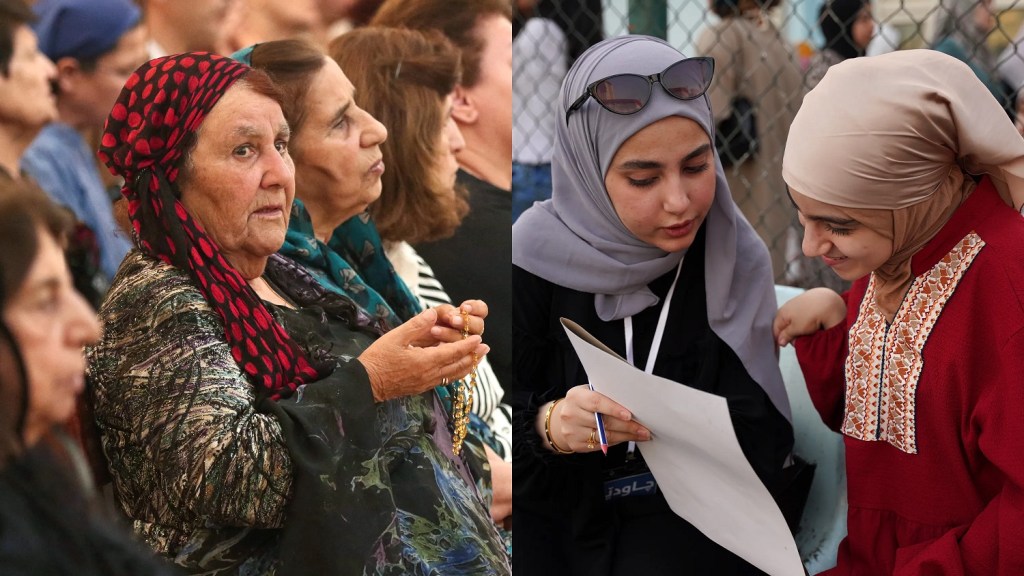
Illustration by Christianity Today / Source Images: Getty

Three years ago in Iraqi Kurdistan, an adherent of the Kakai faith posted on social media that he had been called an infidel by a Sunni Muslim sheikh.

Kakai is a synthesis of Zoroastrianism and Shiite Islam, with between 110,000 and 200,000 followers in Iraq. Persecuted throughout their history, some Kakai consider themselves an independent religion, others a sect of Islam. But most Kurds are Sunni. The offending adherent felt a clear threat; some interpretations of Islam call for the killing of infidels.

Abdo Saad, regional programs director for Adyan Foundation, a Lebanon-based organization promoting interfaith dialogue and equal rights, reached out from his office in Erbil, Iraq, to the local ministry for religious affairs, alerting officials to the danger the Kakai follower may have faced. The authorities intervened and spoke to the sheikh privately. The Kakai man told Saad the issue had been resolved. But the ministry took no further action against the cleric.

Saad was not satisfied. In the honor-shame culture of the Middle East, it is often possible to resolve issues of religious freedom behind the scenes. Many converts to Christianity, for example, can live in relative peace if their Muslim families are not devout. Most authorities are not out to arrest believers.

However, if a conservative cousin publicizes the convert’s new faith, trouble may ensue. Wise officials may calm the situation, perhaps by relocating the convert to a different part of the city. They do not want Muslim extremists to discover the offense and call into question the religious legitimacy of a government that does not enforce the Islamic ban on apostasy.

Yet in the Middle East, only Lebanon allows a convert to officially register his or her new faith. For other nations in the region, religious scruples often trump religious freedom. Governments resolve many social issues along similar patterns, but human rights advocates lament that—as with the Sunni sheikh and Kakai Kurd—officials do not take a public stand.

Lebanon boasts one of the Arab world’s more robust expressions of political and cultural commitment to religious freedom. But Saad said the concept of rights-based citizenship has not sufficiently taken hold in any nation to enable a transition to a free and open democracy. He counsels Christians and Muslims to listen well to each other’s concerns so they can reform their nations together.

“I don’t have the answer for what this should look like,” he said. “I hope our grassroots work will push the leaders, but I don’t know.”

His uncertainty is warranted for Iraq as well. Under the dictatorship of Saddam Hussein, a Sunni, the nation had a nominally secular regime that integrated allied elites from different sects into its authoritarian governing structure. During the transition to democracy under US occupation, Iraqi political parties immediately organized along religious lines, and the majority Shiites captured power.

Sunni insurgencies followed, culminating in the creation of ISIS. Shiite militias backed by Iran joined the international coalition to defeat the jihadist threat but then kept their weapons and eroded national sovereignty. Neighboring Syria may witness a similar transition to conservative Sunni power now that a former al-Qaeda member has overthrown the Alawite-led regime.

Adyan registered in Iraq in 2022. An early project aimed to replicate the Lebanon success of Alwan, a school-based program to foster religious diversity and acceptance. Alwan means “colors” in Arabic. The Iraqi government welcomed the effort but insisted on calling it by the less kid-friendly name “Education on Active and Inclusive Citizenship,” as the original name made them think of the LGBTQ rainbow. Due to local sensitivities, the interfaith group accepted.

Other projects worked on social cohesion, Saad said. In a Chaldean Catholic city in the northern area of Nineveh, a Christian, Muslim, and Yazidi led joint efforts to renovate a public square damaged by ISIS. They restored electricity, installed benches, and held a public dinner. Some played backgammon long into the evening.

Similarly, in the southern city of Basrah, Iraq, with an overwhelmingly Shiite population, Adyan helped a Shiite and a Sunni lead a festival of diversity in the main city square. Artists and singers entertained onlookers, when a member of the minority Mandaean religion took the stage. He told Saad this was the first time he felt comfortable speaking publicly about his faith, in which John the Baptist is the greatest prophet.

Within a sectarian society, good social relations are possible—even common. It is harder to…

This article was originally published at Christianity Today, on October 29, 2025. Please click here to read the full text.

Categories
Christianity Today Middle East Published Articles

Evangelism Isn’t Allowed in Oman. Sharing Is.

Image courtesy of Justin Meyers

In the ancient city of Muscat in the Sultanate of Oman on the northeastern shores of the Arabian Peninsula, several American Christian college students and local Muslims sat cross-legged on an oriental rug around printed passages from the Bible and the Quran. In the traditional Omani reception room lined with plush red mattresses and matching pillows, they discussed the phrase in John chapter 1 “the Word became flesh” and its Islamic parallels.

Two senior leaders—one Christian and one Muslim—guided the proceedings. They instructed the Americans to not place copies of the holy texts on the floor and assured the Omanis that these papers would not be thrown in the trash. Their primary goal that May afternoon was to avoid debating or comparing the texts academically, but rather to engage in a process called “scriptural reasoning.”

Though the concept was developed in the 1990s by Christian, Muslim, and Jewish philosophers, the term scriptural reasoning is a bit of a misnomer. Participants read and reflect on the selected passages with inquisitive curiosity, not logic. The point is self-discovery—and sharing—of one’s personal reasons for faith.

The Christians approach the Bible with love and reverence, describing the message they see within. Muslims do the same with the Quran, and the two groups exchange observations and ask questions, seeking to understand the passages’ meanings from the other side. Both Christians and Muslims listen attentively, free from the burden of convincing the other.

In Oman, where proselytization is illegal, al-Amana Center (AAC) uses exercises like scriptural reasoning to help bridge divides between Muslims and Christians, Arabs and Americans. Leaders said such activities by the current incarnation of the Reformed Church in America’s (RCA) 130-year ministry in Oman, now an independent partner institution, builds trust and mutual respect.

Justin Meyers, executive director of AAC, led the May session of scriptural reasoning. The students came from Hope College, a small Christian school from Michigan, as part of a senior seminar course involving an immersive exploration of Arab and Islamic culture. AAC’s Arabic teacher, Mohammed al-Shuaili, led the Muslim contingent and had already done this exercise dozens of times.

“It becomes hard to tell the Bible and Quran apart,” Shuaili said. “Scriptural reasoning brings people together, to discover the common threads.”

The scriptural reasoning website offers 34 topics—including things like modesty, fasting, and reconciliation—and looks at how passages in the Hebrew Bible, New Testament, and Quran discuss these themes. Shuaili said he especially appreciated its focus on Abraham’s hospitality.

Meyers, an RCA pastor from Grand Rapids, described how Christians get to experience the impact of quranic recitation while Muslims discover the beauty of the biblical text. By creating safe spaces for religious conversation, he said, interfaith relations are strengthened in Oman, the Persian Gulf region, and the world.

Oman’s nearly 5 million people are a diverse mix of Sunni, Shiite, and Ibadi Muslims as well as Christians (4%) and Hindus (5%), mostly from the substantial immigrant community.

While appreciating sincere Muslim engagement with the Bible, many evangelicals may view scriptural reasoning as a step down from evangelism. Shuaili’s response suggests he equates the two religious texts and downplays the differences. In a good-humored comment of commonality, he said he expects to see Meyers in heaven one day, where they can play pickleball together. But at no time, the scriptural reasoning website emphasizes, is anyone called to compromise their faith commitment.

Prior to AAC, Shuaili was a strict and traditional Muslim who would have never interacted with believers of other religions. This indicates the promise of interfaith relations to better integrate communities, but is Christian-Muslim dialogue a proper substitute for the RCA’s once-vibrant missionary heritage?

Open Doors ranks Oman at No. 32 on its World Watch List of nations where it is hardest to be a Christian. (Part 2 of this series discusses why AAC disputes this ranking.) Yet while Open Doors’ annual report praised AAC for “helping to create a more tolerant attitude towards Christians,” it also said that the center is “very much intended to boost Omani diplomatic ties.” With churches monitored and proselytizing illegal in the country, the report said that government support for AAC’s interfaith dialogue helps Oman keep a “friendly face” toward the world. 

The AAC website states it differently. The center…

This article was originally published at Christianity Today on October 14, 2025. Please click here to read the full text.
Categories
Christianity Today Middle East Published Articles

Loving Muslim Neighbors Without Watering Down Your Faith

MOHAMMED HOSSAM / Contributor / Getty

When Wageeh Mikhail was a boy, a Muslim mob attacked his Presbyterian church and killed his Sunday school teacher in the Upper Egyptian city of Minya. Though he remembers little about the event itself, he recalls praying for the assailants. And he still feels emotional remembering how he honored the childhood lessons that told him to love his enemies.

It was not the last time he had to.

Three decades later, in the aftermath of the Arab Spring, Islamist supporters of Egyptian president Mohamed Morsi alleged that Christians had collaborated against him and used that pretext to set dozens of churches on fire. In some locations, Muslims defended the local houses of worship.

Among these was Mikhail’s childhood church. The subsequent Sunday, grieving members worshiped in the burned-out pews—this was the extent of their protest. And across the country, Christians refused to escalate the conflict. 

Though Mikhail was living in Cairo at the time, he mourned from afar and again remembered his Sunday school lessons. Today, Mikhail is the director of the Network of Centers for Christian-Muslim Relations (NCCMR) and has a clear message: Muslims are not the enemies of Christians.

“Islam has been a practical and theological challenge to the Christian faith,” he said. “But we must work together.”

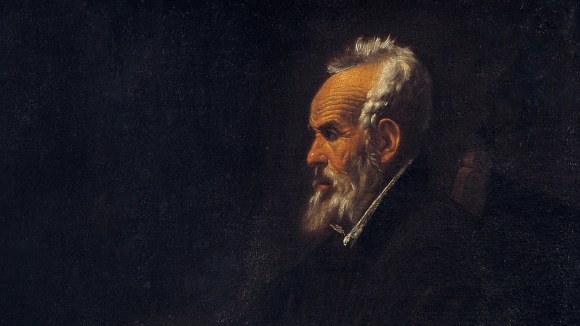
CT previously introduced Ramon Llull, a 13th-century Franciscan hermit from the re-Christianized island of Majorca in modern-day Spain, who advocated winsome relations between Muslims, Christians, and Jews. During the Crusades, he penned a novel in which a representative sage from each religion argued persuasively about his faith, without rancor, and the three remained friends.

NCCMR is similarly countercultural today but in a different direction. In a world in which interfaith dialogue can seek a relativistic commonality among the monotheistic religions, NCCMR’s partners, representing 18 centers in 13 countries with five additional applicants, recognize the call to conversion as an essential part of each religion. At formal events, the members agree to forgo Christian evangelism and comparable Muslim da’wa. Yet as individuals they are free to witness. Mikhail emphasized that all participants believe in freedom of religion—and its propagation.

“Christians have to evangelize,” he said. “The one who said ‘Do not kill’ also said ‘Go and make disciples.’”

NCCMR has faced sensitive issues beyond evangelism. During last year’s inaugural meeting, several attendees voiced concerns over rumors of an international conspiracy to merge Islam and Christianity into one religion. Mikhail assured them the network’s mutual commitment was to honor each faith as an exclusive religion with claims to divine truth.

Keeping in spirit with Llull’s characters, members agreed to avoid arguments and direct challenges over their respective religion’s superiority. Yet the network also made clear that NCCMR is not for religious leaders who assert that all paths will lead to God.

Mikhail appreciates Llull. But his vision for dialogue comes from his ancestors. In the early 1990s, he studied at the Evangelical Theological Seminary in Cairo (ETSC). Though many of his professors were Egyptian, they used textbooks largely imported from the US. From this he assumed that all good theology came from the West. An American reoriented his theological geography.

In Mikhail’s third year…

This article was originally published by Christianity Today on July 23, 2025. Please click here to read the full text.

Categories
Christianity Today Europe Middle East Published Articles

How a 13th-Century Spaniard Modeled Interfaith Friendship

WikiMedia Commons / Edits by CT

Sitting with a student distraught by religious war, a God-fearing academic lamented the chaos in Syria, the destruction of Iraq, and the existential tensions seemingly ever-present in the Holy Land.

“What a great fortune it would be if … every man on earth could be under one religion,” he said. “[Then] there would be no more rancor or ill will among men, who hate each other because of the contrariness of beliefs.”

The academic’s answer, unfortunately, underestimates the human capacity for conflict. Beyond the bloody geopolitics, Islam, Christianity, and Judaism have split into sects and factions, to the point of killing fellow believers who share the same text yet hold different beliefs.

But for some, the “rancor and ill will” have prompted a corrective impulse to unite the faiths through interfaith dialogue. And the impulse is not new. The God-fearing academic? He’s a character from a book written in the 13th century by Ramon Llull, a Franciscan hermit and early proponent of an initiative still controversial among many believers today. Countercultural even then, The Book of the Gentile and the Three Wise Men addressed a world severely lacking in peaceful religious pluralism.

When Llull published his book in the 1270s, Crusaders were strengthening castles in Syria. The Mongol horde had sacked Muslim Baghdad—but then suffered defeat in Palestine, in the fields of Galilee. Llull wrote from what is now Spain, during the Reconquista, a military campaign to restore the Iberian Peninsula to Christendom. The Muslim realm, which they named Al-Andalus and became known as Andalucia, had been comparatively tolerant of Christians and Jews.

Llull lived on the island of Majorca, where his father settled after James I of Aragon declared victory in 1229. In the decades that followed, Christian kings in the liberated lands increased restrictions on non-Christian monotheists resident since the 8th century Islamic conquest. Some they forcibly converted, and within a few centuries, they expelled nearly all Muslims and Jews.

Llull, writing in Latin, Arabic, and his native Catalan, advocated for converting the non-Christians by rational argument, not the sword. While he did defend the Christian conquest of Muslim lands, he also founded missionary schools and traveled to North Africa, where he disputed with Islamic scholars.

Few of his contemporaries…

This article was originally published by Christianity Today on July 22, 2025. Please click here to read the full text.

Categories
Books Christianity Today Published Articles

The Best Books for Understanding Islam and Connecting with Your Muslim Neighbors

Image: Illustration by Christianity Today / Source Images: Wikimedia Commons / Getty

The world’s second-largest religion, Islam has long exercised the minds of Christians. Dating to A.D. 610, when Muhammad is said to have received his first revelations from God, the faith quickly conquered Christian lands in the Middle East, North Africa, and Europe, establishing the two faiths on an adversarial basis that has continued through eras of caliphates, crusades, and colonization.

Muhammad originally viewed his communications with God as a continuation of the message received through the biblical tradition, calling Jews and Christians “People of the Book.” But though the treatment of non-Muslims cycled through periods of peace and persecution, the teaching of the Quran ensured theological distinction. Islam esteems Jesus only as a human prophet and denies his crucifixion.

Yet there is much that unites Christians and Muslims. The five pillars of Islam espouse monotheism, prayer, fasting, almsgiving, and pilgrimage. Certain expressions desire mystical communion with God, while others pursue pietistic fidelity to his law. Both religions seek to spread the faith and care for society, anticipating the judgment to come. And while adherents to each faith debate the place of militancy, history clearly testifies to the blood shed in the name of God.

While Islam has not experienced the same levels of schism as Christianity, Muslims debate within—and divide asunder—what they call the umma, the worldwide community of Islam.

Muslim diversity is also cultural. Though Islam was birthed in present-day Saudi Arabia and is generally associated with the Arab Middle East, the most populous Muslim nation is Indonesia, and its greatest rate of growth is in Africa. Nearly 50 nations boast Muslim majorities, while large minorities exist in India and China, with Islam established through migrating communities and individual conversion in Europe and the Americas. Each region has put its unique imprint on the religion, and Muslims encounter the same popular tendencies toward syncretism and secularism as experienced by Christians.

In the series of book lists that follows, CT has asked regional experts to select the best resources for evangelical Christians to understand and learn about Islam, both from Muslims themselves and from Christians who have devoted years to building relationships with the community.

The selected books not only offer paths of evangelism but also encourage cooperation for the common good. They reflect the diversity of Islam and, to some degree, the diversity of evangelical approaches toward Islam. While none bear the stamp of our full endorsement, we offer them—to Muslim and Christian alike—in the hope of better understanding, peace, and love between our two communities.

Read well, pray, and discern.

This article was originally published at Christianity Today, on December 18, 2023. Please click here to read the expert bios and to explore the different geographic regions. I contributed additional reporting for the article introduction.

Categories
Christianity Today Middle East Published Articles

Finding Common Ground in a Big Fish

Image: Tim Peacock

Twenty miles south of Beirut is a sandy beach called Jiyeh. It’s a rare interlude in Lebanon’s rocky coastline, and if you were out in the Mediterranean, crying for deliverance as currents swirled about you, waves and breakers sweeping over you, this is where you’d want God to command a fish to vomit you onto dry land.

And this is, in fact, the spot where ancient legend says that the Hebrew prophet Jonah was delivered safely to shore.

Jonah has long been honored here. Mosaics found in the ruins of a 1,500-year-old Byzantine church show the prophet who tried to run away from his mission to Nineveh getting turned around by a large fish. And today there is a Muslim mosque on the site with a shrine to Jonah.

The Hebrew story of the reluctant prophet is beloved not only by Christians but also by those who hold the Qur’an to be the final revelation of God. And chiseled on the shrine is the verse that he prayed from the belly of the fish, which Muhammad urged Muslims to recite when in trouble.

“The most common prayer of Muslims during times of crisis is the prayer of Jonah,” Emad Botros, professor of Old Testament at Arab Baptist Theological Seminary in Beirut, told CT. “We share a heritage with Muslims. And what is better to share than stories?”

Botros is one of a few scholars turning to Jonah as a site of common interest connecting Christians and Muslims. He has written a book, Jonah: Bible Commentaries from Muslim Contexts, the second volume in a series on reading the Bible in the context of Islam. He thinks the story of the prophet—along with other shared stories—can help start a conversation across the faiths.

“The prophets of old were the heroes of Muhammad,” Botros said. “Knowing his reflections helps us communicate our biblical stories more effectively.” The Qur’an’s account of Jonah—which Muslims believe was divinely revealed through the archangel Gabriel—is different from the version in the Hebrew Bible. In the Muslim version, the city he’s going to is…

This article was originally published in the December print edition of Christianity Today. Please click here to read the full text.
Categories
Christian Century Published Articles Reconciliation

The Redemption of Interfaith Dialogue

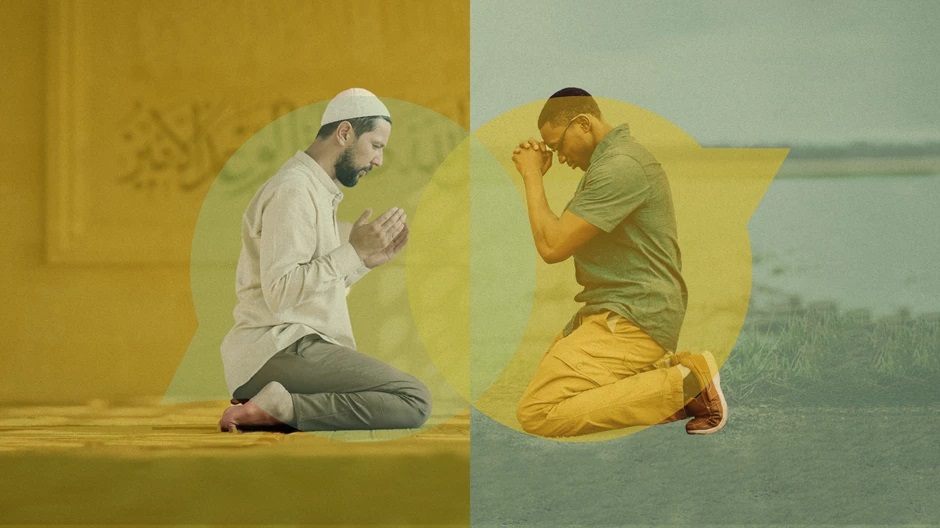
Image: Ozgurdonmaz / Getty / Ben White / Lightstock

The Egyptian delegation of Muslim sheikhs settled in for the opening session of the interfaith conference. Their mainline Protestant hosts welcomed them to the hallowed halls of a historic New York seminary with pleasantries and platitudes about shared humanity and common values.

Then the moderator startled the senior scholars from Al-Azhar University, the foremost center of learning in the Sunni Muslim world, with what sounded like an ultimatum: “Anyone who believes their religion is the only way is not welcome here.”

Quietly, the Muslim men rose to leave. Their impromptu translator, Joseph Cumming, a delegate from Fuller Theological Seminary, quickly intervened. “No, no, don’t be offended,” he told them. “He is not referring to you—he is speaking about us.”

Cumming is an American evangelical who has been ministering in the Islamic world since 1982. Many evangelicals, he explained to the Muslim guests, have been very critical of interfaith dialogue. They argue it cedes too much ground, reducing religion to the lowest common denominator and undermining any commitment to absolute truth. Peace is made too high a priority with so much focus on agreement, avoiding the crucial differences over salvation.

Yet Cumming was there anyway. Despite what the moderator said, he believed it was possible—even important—for evangelicals to participate in interfaith dialogue without losing any of their passionate commitment to the truth of the Bible.

The Muslim scholars, reassured, sat back down. And the conversation continued. It continues still. That conference was nearly two decades ago, and Cumming has remained engaged in interfaith dialogue. He has dedicated the second half of his Christian ministry to maintaining respectful dialogue with Muslims and overcoming stereotypes between Christians and Muslims while remaining as passionate as ever about bearing witness to his faith in Christ. Cumming didn’t always think this way. He had to be converted to the possibility of interfaith dialogue. At first he thought it was just…

This article was first published in the July/August print edition of Christianity Today. Please click here to read the full article.