A small congregation in the Tartous countryside of western Syria held an unusual Mother’s Day service this March.
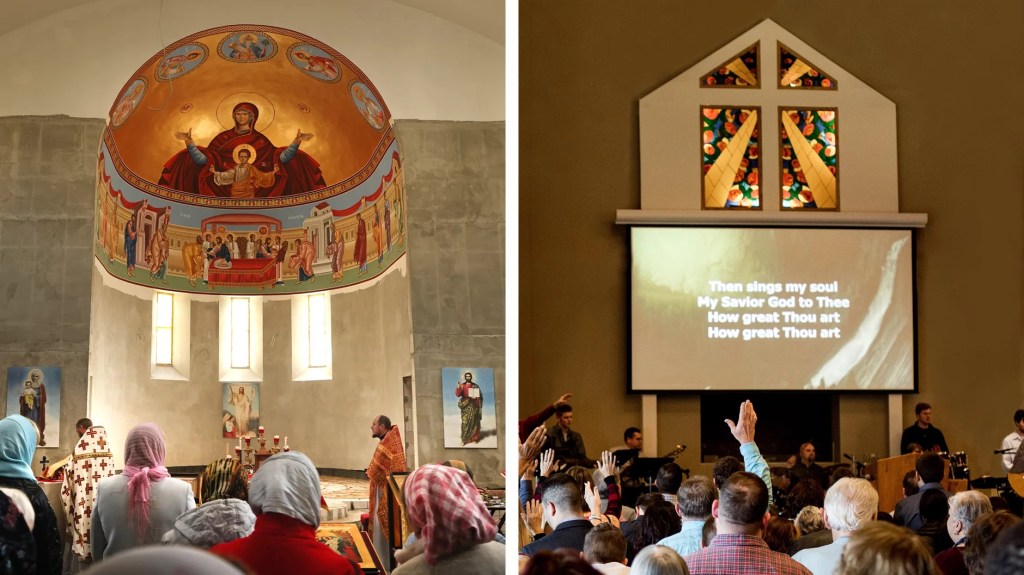
The passages were customary, as the pastor read from Proverbs 31 and 1 Corinthians 13. So were the praise songs, including an Arabic version of “How Great Thou Art.”
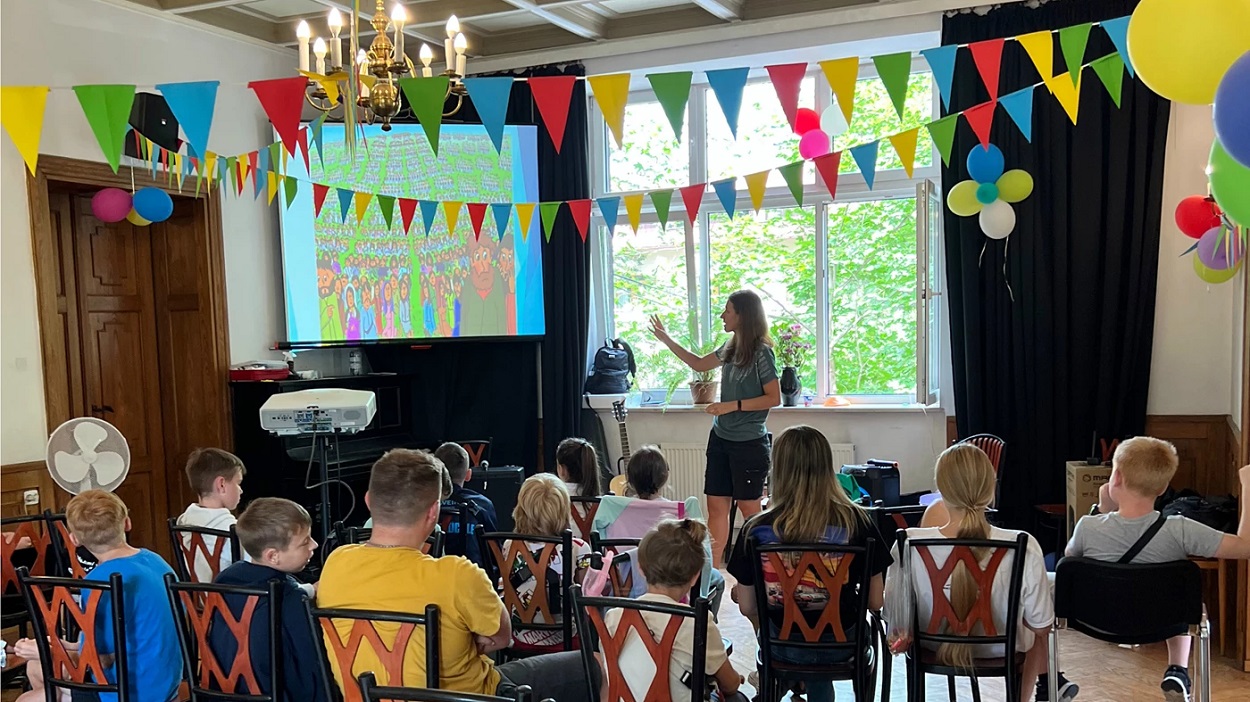
The crafts, snacks, and cake were like those served at any youth-focused event. Fifty moms and their kids enjoyed the cool weather at a lakeside pavilion under pleasant gray skies. Enthusiastic girls acted out the parable of the prodigal son, emphasizing that God’s love is for everyone. This, too, was a typical message.
The unusual aspect was who was in the audience. Half the families were Syrian Alawites, a heterodox Muslim sect, three weeks removed from a massacre that killed more than 1,700 men, women, and children from their community.
In Syria, Mother’s Day is celebrated on March 21, and the event offered a small measure of joy amid great tragedy. The service was so successful the church repeated it twice more in the following weeks, according to Bassem Khoury, the church’s pastor. Christianity Today agreed not to use his real name as the country remains unstable.
“Suffering is an opportunity to direct people to God’s love,” Khoury said.
Khoury described how his evangelical church ministered to hundreds of Alawites fleeing the coastal villages of Jableh and Baniyas and as far away as Hama and Homs, cities 50 miles to the east. Local Christians offered food, medicine, and words of comfort. Khoury preached about Jesus—but also about reconciliation between Syria’s diverse religious groups, Sunni Muslims, Alawites, and Greek Orthodox Christians. And the families witnessed a unity the pastor prays his nation may one day reflect.
Khoury served from extensive experience. Throughout the 14-year Syrian civil war…
This article was first published on June 23, 2025. Please click here to read the full text.
Illustration by Mallory Rentsch Tlapek / Source Images: Getty
Back in November, Christianity Today spoke with 26 evangelical leaders around the world to gauge their reactions to the US electing Donald Trump for a second presidential term. At the time, the responses ranged from jubilant to indifferent to despairing.
During Trump’s first 100 days in office, he has made monumental changes impacting not only American citizens but also people around the world, including cutting international aid, levying tariffs, ending refugee resettlement, and deporting undocumented immigrants.
To see how Trump’s policies have affected Christians globally and whether his first 100 days have changed Christians’ minds about him, CT reached out to seven Christian leaders from around the world—including Mexico, Nigeria, Russia, and Nepal—who initially expressed excitement about Trump. CT has edited responses for clarity and length.
Mexico
Rubén Enriquez Navarrete, secretary, Confraternidad Evangélica de Mexico
In Mexico, Christians have mixed feelings about Trump’s presidency. For the more conservative and the upper middle class, the sentiment has been positive because they believe he is sticking to biblical principles. For the middle and lower classes, it has been negative due to his actions against migrants. This has led to doubts…
This article was originally published at Christianity Today on April 30, 2025. I contributed the entries for Nigeria and Russia. Please click here to read the full text.
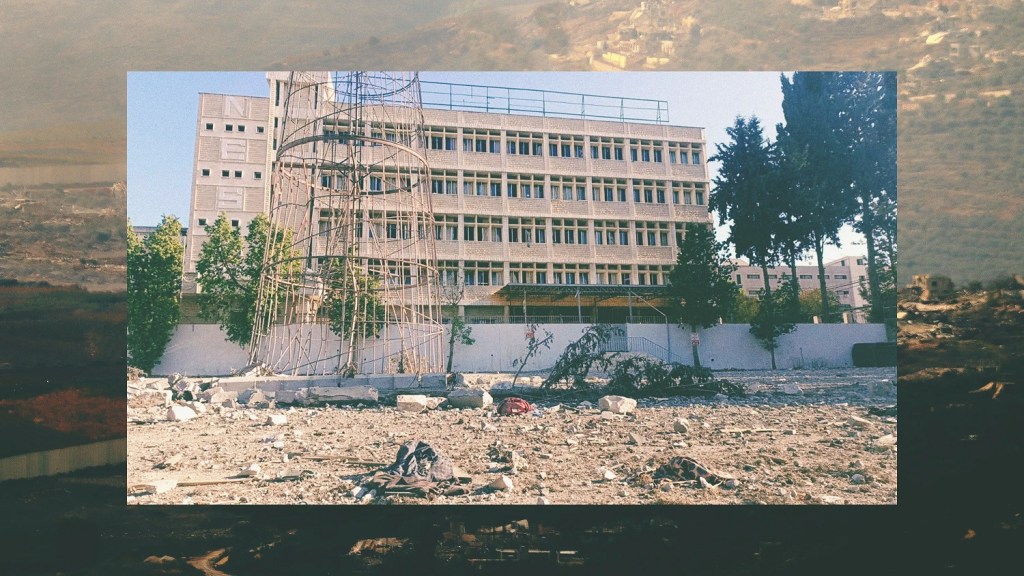
The predominantly Shiite city of Nabatieh in southern Lebanon once boasted the nation’s largest Christmas tree, erected to symbolize good relations between local Muslims and the tiny Christian minority of only 20 families.
The local evangelical school—with a 99 percent Shiite student body—had celebrated the holiday for years, and in 2018 it built a 100-foot wrought-iron conic structure topped with a radiant star. (The use of natural firs or pines is uncommon in Lebanon). Several of the hundreds of students, parents, neighbors, and dignitaries in attendance wore Santa hats. Many had trees in their homes and gifts to open on Christmas day.
Earlier that December, Ahmed Kahil, the Hezbollah-affiliated president of the municipality, continued the annual tradition of erecting a smaller tree in the souk, the traditional marketplace and heart of the city. And at both events—alongside Shadi El-Hajjar, the principal of the National Evangelical School of Nabatieh (NESN), heads of other private schools in the city, and various government and religious officials—Kahil wished Christians a Merry Christmas.
Top of Form
Lebanon’s economic crisis made 2018 the last year NESN could afford to erect its massive Yuletide construction. But over the following years, elementary school classrooms still featured Christmas trees, students exchanged secret Santa gifts, and teachers enjoyed the annual holiday dinner. “If Christmas isn’t found in your hearts,” the school reminded, “you won’t find it under a tree.”
But there was no Christmas celebration in Nabatieh last month, after over a year of war between Israel and Hezbollah. On October 8, 2023, the Shiite militia launched rockets into Israel in support of Hamas following its attack that killed 1,200 Israelis and took around 250 hostages. The subsequent daily missile exchange drove tens of thousands from the border regions of both nations.
A year later, most of Nabatieh’s 80,000 residents fled their homes as Israel intensified its military campaign against Hezbollah. On October 16, an Israeli missile killed Kahil and 10 others at the Nabatieh town hall as they coordinated the daily distribution of food and medicine to the 200 families who remained in the largely evacuated city.
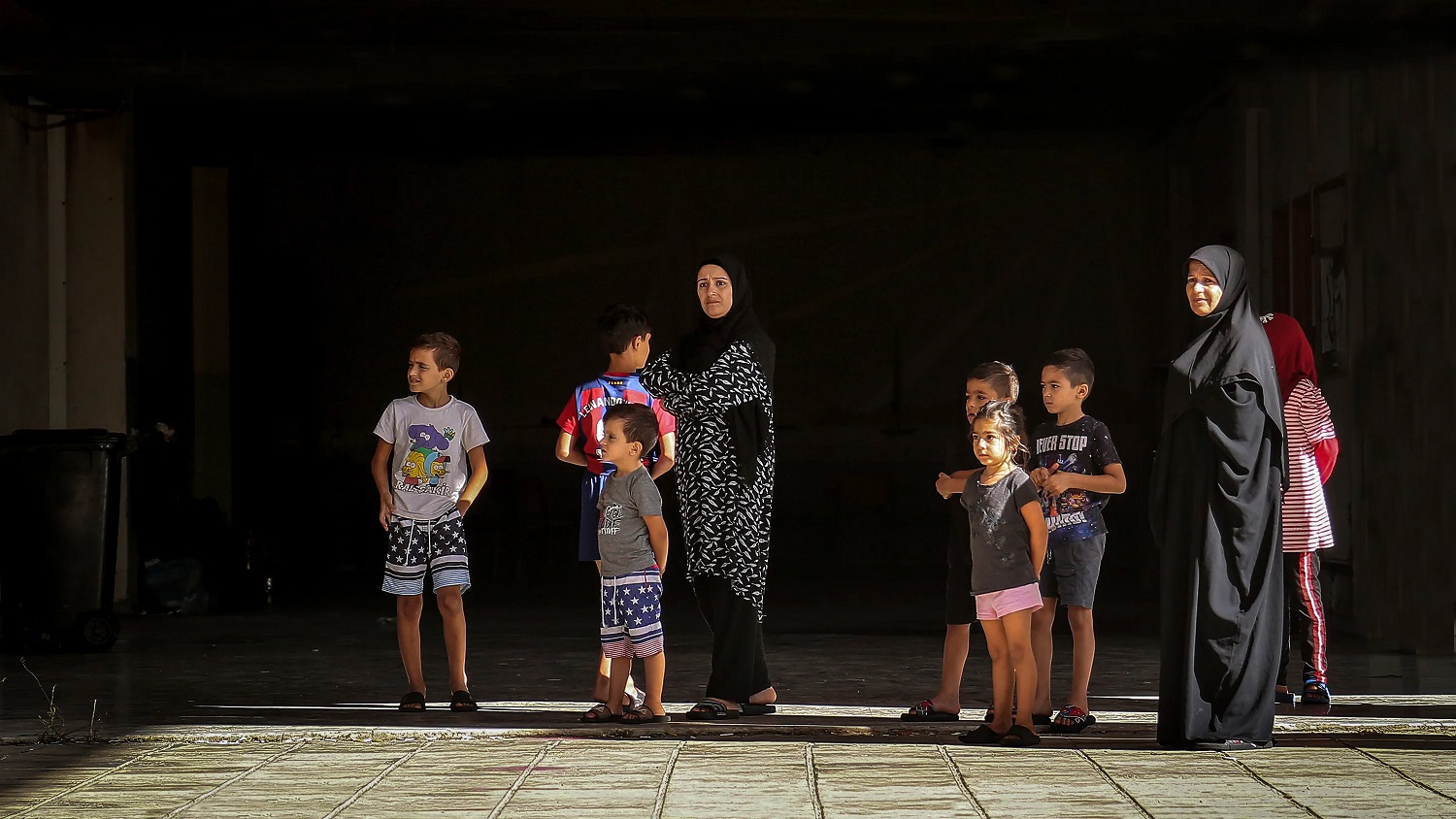
Initially, NESN stayed open for its 1,400 students. Located 35 miles south of Beirut and only 7 miles from Israel, the historic evangelical institution won local respect over the years by offering a nonreligious but values-based educational environment that consistently ranked among the top high schools in Lebanon. The September 2024 pager attack delayed the start of the academic year, and the exodus from the city eventually shifted education online. But within a week NESN opened its doors as a shelter for the locally displaced.
Over the course of the war, its staff stood by the Shiite community, including one who rescued Kahil’s colleague after the October 16 strike.
“When you see your hometown destroyed and the damage at the school,” Hajjar said, “you have to ask: Why is this happening to those who are not involved?”
A safe haven
In the early stages of the war, Nabatieh mostly…
This article was originally published at Christianity Today on January 31, 2025. Please click here to read the full text.
Illustration by Elizabeth Kaye / Source Images: Getty
As Americans headed to the polls Tuesday, the rest of the world watched to see who would become the 47th president of the United States. The election of Donald Trump affects many evangelical communities around the world in terms of foreign policy, foreign aid, religious freedom, and cultural trends. Nevertheless, Christian leaders in some countries noted that it didn’t make a difference to them who becomes the next president of the US.
CT asked 20 evangelical leaders around the world about their reaction to another Trump presidency and its practical impact on the situation of evangelicals in their countries. The responses are broken up by region: Africa, Asia, Europe, Latin America, North America, and the Middle East. CT will add more responses as they come in.
AFRICA
Nigeria
James Akinyele, secretary general, Nigeria Evangelical Fellowship
Top of Form
In light of Nigeria’s ongoing economic and political difficulties, this US election was not debated locally nearly as much as the prior two. For evangelicals, neither candidate was an easy option. Harris was considered more level-headed, but her strong support of abortion and LGBTQ rights made many uncomfortable. Trump’s moral stances resonated with our core evangelical convictions, but his own lack of morality and perceived white supremacy created some concerns. We hope he will become more open to immigration.
Some Nigerian Christian leaders said Trump’s victory is an answer to our prayers for a US president who will defend the Christian faith in Nigeria and around the world. Others said it should be accepted as God’s will, without positive or negative judgment. But just about everyone hopes he will become less controversial in his rhetoric and personal conduct. And many are sympathetic to his promise to maintain America’s role as the global policeman without being subservient to the rest of the world.
South Africa
Moss Ntlha, general secretary, Evangelical Alliance of South Africa
Trump’s win is a sad day for evangelicalism around the world. Prominent evangelicals in the US came out in full support of Trump, making it appear that to be Bible believing is to be Trump supporting. Their endorsement gives the impression that theological conservatism requires and leads to a right-wing political view that is dictatorial, opposes climate justice, sanctions genocide in the Holy Land, and approves what took place on January 6.
Many in South Africa who know the horrors of apartheid recognize how easily a populist politics that holds to a narrow vision of public morality can harm those on the margins. Trump already declared in his first term that African countries are “s—hole countries.” Lately, he has made it clear that when restored to the presidency, he would make sure that Israel has all it needs to “finish the job,” which many understand as the erasure of Palestinian existence.
We worry that having Trump in the White House will make it difficult to proclaim the gospel that “God so loved the world” that he sent Jesus to die for all, especially our Muslim neighbors. We worry that he will use the immense power of the US government to punish those who pursue foreign policies contrary to his own, such as South Africa for appealing to the International Court of Justice to adjudicate whether what we are witnessing in the Israel–Palestine conflict is genocide.
ASIA
China
A house church pastor in China
Donald Trump’s presidency could impact…
This article was first published at Christianity Today on November 7, 2024. Please click here to read the full text.
Illustration by Christianity Today / Source Images: Getty / Courtesy of Brent Hamoud, Emad Botros, and Daniel Suter
The warning issued by the American embassy on October 14 could not have been clearer: US citizens in Lebanon are strongly encouraged to depart now. But this message, coming as Israel increased its attacks on Hezbollah, was only the latest in several weeks of diplomatic efforts to reduce the American presence.
Back on July 31, already fearing an escalation of violence, the embassy was discouraging would-be tourists with its highest of four alert levels: Do Not Travel. For those inside Lebanon, it urged: The best time to leave a country is before a crisis, if at all possible. Major airlines had already canceled flights to and from Beirut, leaving only the national carrier to facilitate evacuation—and its outbound flights were booked weeks in advance.
Ever since Hezbollah—a Shiite Muslim militia designated by the US as a terrorist entity—launched missiles across the border in support of Hamas’s attack last October, foreigners have lived under a cloud of uncertainty that Israel might eventually bomb the airport, as it did in the month-long war in 2006 that left many expats stranded. Americans would have little hope of leaving through Syria, and Lebanon has no official relationship with Israel to permit crossing the southern border.
And then Hezbollah pagers exploded throughout the country.
With dozens dead and thousands injured, the next day, September 18, the embassy warned of a reduction in routine care at hospitals. On September 21, it told citizens the Lebanese government could not ensure their safety, mentioning the possibility of increased crime, sectarian violence, or targeted kidnapping.
And on September 28, one day after a massive Israeli airstrike killed Hezbollah leader Hassan Nasrallah, the embassy sent its nonessential personnel home and opened registration for US citizens to request assistance in leaving.
Several US citizens paid thousands of dollars to place their families on private yachts to nearby Cyprus. Others frantically called Middle East Airlines (MEA) to secure embassy-reserved seats to anywhere else. And among the missionary community, the chatter was incessant: Are you leaving? What are your contingency plans? Will your organization make you go?
Some decided to stay.
CT interviewed four Christian foreigners to learn how they made the decision to remain in times of war.
Each had already endured the constant hum of Israeli drones hovering over their neighborhoods. They learned to distinguish between the noise of warplanes deliberately breaking the sound barrier and the similarly ear-popping sound of a missile strike bringing down a Beirut apartment complex. And some have wondered if they might become a target of random Shiite anger or if the Islamist kidnappings of foreigners during Lebanon’s civil war decades earlier could be repeated.
The sources represent different categories of Christian workers.
A Swiss family living in the foothills outside Beirut believes that angels closed their ears of their children at night, allowing for consistent sleep even when explosions—slightly muffled by the distance—woke the parents consistently at 3 a.m. An Egyptian with Canadian citizenship said the blasts were so loud he sometimes thought they had happened just across the street—only to look out the window and see smoke plumes rising across the valley two miles away, not far from his church outside Beirut.
An American married to a Lebanese woman said that while the bombings did not threaten him directly, he was deeply troubled as each missile resulted in more deaths and displaced families. And a single American woman raised in urban poverty amid gang warfare stated casually, “I grew up rough, but gunshots and bombs are not the same thing.”
A Shared Resilience
This woman, a Black millennial from Ohio, has…
This article was originally published at Christianity Today on November 1, 2024. Please click here to read the full text.
On September 23, Mustafa put his family of five on a small motorbike and drove seven hours north from Tyre to a village in the Lebanese mountains, weaving slowly through lines of gridlocked vehicles. Some in those cars—like his brother Hussein’s family of six—would not arrive for another two days.
The path normally takes two hours.
Mustafa, and thousands like him, were frantically fleeing Israeli bombs aimed at Hezbollah, the Shiite militia designated by the US government as a terrorist organization. Until that moment, he and his brother had been agricultural workers in a farm outside the city, living in a spartan two-bedroom apartment provided by his employers.
Top of Form
CT agreed to withhold his family name for security reasons. Mustafa is a Christian originally from Afrin, a Kurdish area in northwest Syria. Asked if he shared his brother’s faith, Hussein said, “Not yet.”
Their home nation does not recognize converts from Islam. And while Lebanon is the only Arab nation to grant freedom of conversion, Tyre is a socially conservative Shiite city under the political sway of Hezbollah.
This was Mustafa’s second displacement. In 2013, he and his brother fled the Syrian civil war. But over the past five years, as poverty rates tripled in Lebanon, the nominal Sunni Muslims found support from a local Christian ministry offering aid.
Eighteen months ago, Mustafa professed faith in Christ.
“I follow Jesus,” he said. “He saved me.”
When Israel began its ground invasion of Lebanon, it issued evacuation orders to both Muslim and Christian villages in the south. But the large majority of the displaced come from Shiite areas suspected of housing weapons depots and underground tunnels—where resident Shiites may or may not align with Hezbollah’s Islamist ideology.
According to a survey conducted in early 2024, while 78 percent of Shiites viewed positively the militia’s role in regional affairs, only 39 percent said they felt closest to Hezbollah among Lebanon’s political parties, compared to 37 percent of Shiites who felt closest to none.
Only 6 percent of Christians had “a lot of trust” in the Shiite militia.
Within these realities, Christians are eager—and cautious—to help. Gospel commitments and national solidarity require hospitality. Sectarian guardedness encourages suspicion. And Israel’s bombing campaign creates fear that welcoming the displaced might make them a target.
Many are helping anyway.
Mustafa and Hussein found shelter in living quarters offered by an evangelical church in the mixed Muslim-Christian village where they sought refuge. A plastic rug covered half of the cement floor in their private allotment, with thin mattresses pressed up against the walls. Blankets and pillows strewn about were evidence of their children’s fitful night of sleep.
“This is our message: to show love in action as we lead people to Christ,” the church’s pastor said. (CT is granting him anonymity due to the uncertain political situation in Lebanon.) “As they receive, we teach them to give.”
His congregation currently hosts about 100 people, displaced from their homes in the south and in Lebanon’s Bekaa Valley. More than half are from neighboring Syria; the rest are primarily Lebanese Shiites. The pastor said 60 percent of the total are believers in Jesus. Others, like Hussein, are their relatives or Muslims already closely connected to churches in their original area.
They all pitched in to prepare 500 tuna sandwiches for local distribution.
Not Just Talk
Hezbollah’s current conflict with Israel began last year on October 8, one day after Hamas invaded from Gaza and killed approximately 1,200 Israelis, taking 250 hostages. The Lebanese militia initiated what it called a “support front” for Hamas, launching missiles that caused 80,000 Israelis to flee from villages near the border.
A similar number of Lebanese also fled from Israel’s retaliation, and for 11 months the two sides had kept their missile exchange relatively contained, aiming to avoid a larger and perhaps regional conflict with Iran, which backs both Hamas and Hezbollah as proxy forces.
That status quo held despite…
This article was originally published at Christianity Today on October 17, 2024. Please click here to read the full text.
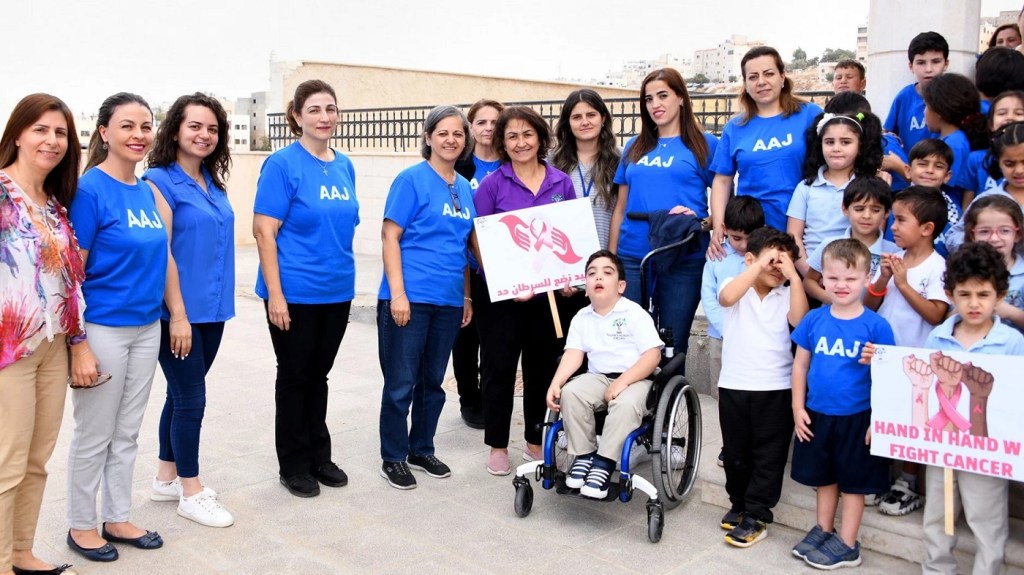
Ten years ago, evangelicals in Jordan helped pioneer inclusive education for students with disabilities. A decade later the minister of education patronized their commencement event.
Founded in 2014, Alliance Academy Jordan (AAJ), owned by the local Christian and Missionary Alliance (CMA) church, began with 54 students in kindergarten through second grade. Adding a grade level each year, its first graduating class of two students completes a now 350-student body—17 of which have disabilities ranging from cerebral palsy to autism and ADHD.
Another 31 have different levels of learning disabilities that require special class support and attention. Over the years, AAJ has enrolled 71 such students altogether.
It is a drop in the bucket.
In 2017, the Jordanian government launched a 10-year plan for nationwide inclusive education. AAJ was on the initial advisory committee of the Higher Council for the Rights of Persons with Disabilities that prepared it.
American funding is helping Jordan meet its goal of 30 public inclusive schools in its major cities by 2025, mandating professional development for all. Another 30 schools are planned for less-developed areas after that.
A 2020 study found that only 19 percent of teachers in Jordan were trained appropriately for special needs education. And while 11 percent of youth above the age of 5 have some sort of disability, 79 percent receive no form of schooling at all.
Last year the Higher Council selected AAJ as one of six members to form a public-private school association to share expertise and help in implementation. With an average class size of 17, AAJ is uniquely positioned to serve special needs students as it aids the national endeavor toward their social integration.
And beginning in 2025, the school plans to offer an American diploma.
CT spoke with AAJ general director Salam Madanat about challenges faced by the school, its diversity beyond disability, and how it maintains a Christian vision.
How did you come to your position?
I was happy in retirement at the time, volunteering in ministry through my church. But in 2019, the CMA asked me to join the AAJ board of trustees, due to my background with the Alliance church and in management and human resources with the Arab Bank. Three years later I was tasked to lead the search for a new school director. The position had been held by an American from the CMA mission since inception, but we were looking to transition to Jordanian leadership.
But as the search tarried, my husband whispered: I think you should do it. I didn’t want to wake at 6 a.m. every day and carry such a heavy weight. But as others shared similar encouragement at the school and in the church, I prayed and God assured me: This is my work, I’m responsible for it.
I am a devout Christian, so I knew he just wanted me to obey. All I could do is place my two copper coins into his hands, trusting him for what I could not see (Luke 21:1–4). But I am confident AAJ was founded by the will of God for a purpose, and it will remain so.
What is this purpose? The goal was to provide affordable education for all children—not just the rich, smart, or able—and show the love of God through this ministry. Many good schools in Jordan…
This article was originally published at Christianity Today on July 2, 2024. Please click here to read the full text.
Overlooked by crises in Gaza and Ukraine, Sudan has now endured one year of civil war. Nearly 16,000 people have been killed, with 8.2 million fleeing from their homes—including 4 million children. Both figures are globalhighs for internal displacement.
The United Nations stated that the “world’s worst hunger crisis” is looming, warning that one-third of Sudan’s 49 million people suffer acute food insecurity and 222,000 children could die of starvation within weeks. Yet an international emergency response plan, endorsed by UN agencies including the Cindy McCain-led World Food Program, is only six percent funded.
Sudanese Christians feel like “no one cares.”
Five years earlier, they had great hope. In 2019 a popular revolution overthrew longtime dictator Omar al-Bashir, wanted for war crimes against his people. The new civilian government repealed the law of apostasy, removed Islamist elements from the bureaucracy, and implemented other democratic reforms. But in 2021 the general of the army, in cooperation with the leader of the Rapid Support Forces (RSF)—a government-aligned paramilitary group accused of the atrocities in Darfur—deposed the prime minister.
Continuing negotiations with civilian leaders demanded a merger of the two armed forces, but neither general could agree on terms. And while it is not clear who fired the first shot, last year on April 15 the conflict exploded in the capital of Khartoum. Much of the North African nation is now a war zone.
Yet somehow, an evangelical alliance has formed and joined two regional bodies.
Rafat Samir, secretary general of the Sudan Evangelical Alliance, witnessed the outbreak of violence firsthand. Now resident in Egypt, he oversaw the dialogue between his own Evangelical Presbyterian synod and the Sudanese Church of Christ, shuttling between safe havens in his home country and in neighboring Ethiopia.
Earlier this month, these denominational partners, which Samir says represent at least 75 percent of Sudanese evangelicals, successively affiliated with the World Evangelical Alliance (WEA) regional associations for both the Arab world and sub-Saharan Africa. Catholics, Anglicans, Coptic Orthodox, and various Protestant denominations account for about 4 percent of the population of Sudan, which ranks No. 8 on the Open Doors World Watch List of countries where it is hardest to be a Christian.
CT asked Samir about the impact of civil war on the church, why its WEA identity exists in two directions, and why his only remaining hope is in God:
Where were you on April 15 last year?
My home is in the Bahri neighborhood, where both the army and the RSF have bases, and antiaircraft guns were firing right outside my bedroom window, with bombing campaigns morning and night. Electricity and water services were cut. As it was Ramadan, one day I went out at sunset to find food, thinking there would be a lull in the fighting. A bullet missed me by mere centimeters.
I wanted to flee immediately, but my brother preferred to wait it out, as we have witnessed clashes before, and he anticipated it would end after a few days, as previously. Bodies lie dead in the streets, and we covered them with sand to suppress the smell. But after enduring these harsh conditions with his wife and two daughters for 15 days, he agreed to leave when a bomb hit his neighboring house.
How did you escape?
We searched three days just to find a vehicle to get us out of the city, and eventually had to pay $500 USD to travel only two kilometers (1.2 miles). We then negotiated getting a small bus with 40 other people to take us to the Egyptian border, but then the driver upped the price upon our arrival to $10,000 total. We had room only for our personal documents, leaving everything else behind.
But leaving Khartoum was entirely dependent on God’s timing.
The battle was still raging, with barrel bombs damaging the road out of town. An earlier bus was stopped by the RSF, who killed the people and stole their money. We heard that, at an army checkpoint, a later bus experienced the same thing. We were lucky—soldiers only searched our vehicles for weapons and simply wanted a bribe to let us move onward.
A friendly family in the city before Egypt gave us a place to sleep and running water. But the next day, the border was so crowded it took us three days to pass through. Some slept in the mosque, others under the scattered trees. When I finally made it to Aswan, an Egyptian friend met me and gave me a place in the German mission hospital guesthouse. He cried when he saw me.
I didn’t know why until I finally settled in and looked at myself in the mirror.
Where are others in your church?
We have over…
This article was originally published at Christianity Today, on April 16, 2024. Please click here to read the full text.
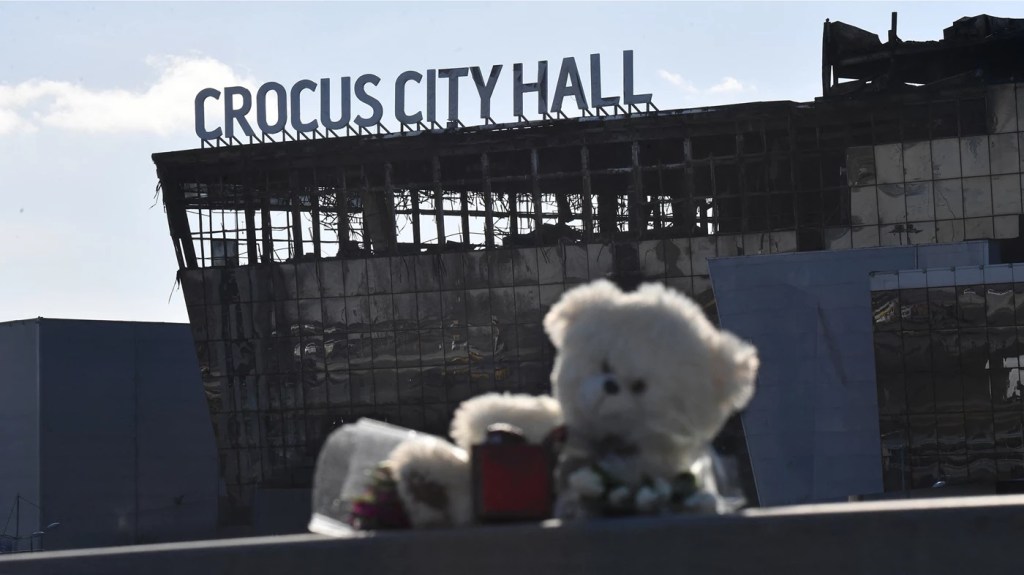
Russian evangelicals used Sunday sermons to condemn a terrorist attack that killed more than 130 people at a Moscow concert hall.
As Russia’s Baptist union prayed for “God’s mercy and protection,” its Pentecostal union conveyed its “bitterness and sorrow.” Vitaly Vlasenko, general secretary of the Russian Evangelical Alliance, called it a “painful shock” that could unleash “unbridled revenge” against terrorism.
But many in Russia are wondering: Who are the terrorists?
The attack on Friday that killed at least 137 people at the 6,200-seat Crocus City Hall was claimed by the ISIS affiliate in Afghanistan’s Khorasan Province (ISIS-K), which seeks an Islamic caliphate in Central Asia. Its statement emphasized it was targeting Christians and came in the “natural framework” of its war against the enemies of Islam.
Earlier this month, the US embassy in Moscow had issued a warning to avoid large gatherings. American officials stated they shared their intelligence with Russia. On March 7, Russia said it thwarted an attack on a synagogue, and a few days prior, security services killed six ISIS-K terrorists during a shootout in the nation’s Muslim Caucasus region.
The group was also linked to the 2017 St. Petersburg metro bombing that killed 15.
ISIS-K was formed by extremists seeking a more violent path than the Pakistani Taliban in 2015, the same year Russia formally intervened in Syria to support President Bashar al-Assad. A Sunni group, ISIS and its affiliates oppose Assad’s Alawite faith as heretical and considers Shiite Muslims as apostate.
In January, ISIS-K killed 95 Iranians in Kerman at a memorial service for Qasem Soleimani, leader of the Islamic Revolutionary Guard Corps who was assassinated by the US in 2020. And as American forces withdrew from Afghanistan in 2021, an ISIS-K attack on the Kabul airport killed 13 US soldiers and 170 civilians.
Analysts stated, however, that ISIS-K was increasingly targeting Russia.
Russia has arrested 11 suspects, with four alleged gunmen from Tajikistan now on trial.
But President Vladimir Putin, reelected March 17 with 88 percent of a vote Western observers declared was neither free nor fair, did not mention Islamic terrorism when he declared a national day of mourning. Official statements of blame have been vague, while the deputy head of Russia’s security council openly speculated that if Ukraine was involved, its leaders “must be tracked down and killed without mercy.”
“Are you sure it’s ISIS?” asked Russia’s foreign ministry spokesperson, suggesting the group was being used as a “bogeyman.” The Russian ambassador to the US denied receiving any advance information from the US. And a nationalist media outlet urged the Kremlin to give Ukrainians 48 hours to evacuate major cities.
Just a few hours prior to the concert hall massacre, in a wide barrage against Ukraine’s civilian infrastructure, Russia had targeted its largest hydroelectric dam, leaving more than one million people without electricity.
Ukraine has denied any involvement in the terrorist attack.
Its military intelligence spokesperson, however, suggested instead that it was a “deliberate act of provocation” by Putin, while President Volodymyr Zelensky stated it was typical of such “thugs” to divert blame. He also alluded to unproven accusations that terrorist attacks in 1999 were a false flag operation, and that Putin considered his own citizens to be “expendables.”
The US stated that ISIS-K alone carried out the attack, with Ukraine uninvolved.
Russian evangelical sources did not comment on the mutual accusations. They emphasized the outpouring of prayer, sympathy for victims, and the need to trust God and resist any urge for revenge.
“Evil is spreading across the earth,” said Alexey Markevich, vice rector for academic affairs for Moscow Theological Seminary, who has criticized the war in Ukraine. “Lord, give us peace, and prevent any of us from being consumed by evil.”
Christians4Peace, an anonymous…
This article was originally published at Christianity Today, on March 25, 2024. Please click here to read the full text.
Last week in Tehran, thousands rallied to commemorate the 45th anniversary of the Islamic revolution that established Iran’s modern theocracy. Last October in London, 130 Iranian Christians gathered to worship and pray, and celebrated a quiet decision to establish an evangelical alliance.
Time will tell which gathering was more consequential.
In 1979, one month after the fall of the shah, 98 percent of Iranian citizens voted to approve a constitution installing an Islamic government. Four decades of religious authoritarianism later, an online poll indicated that only 16 percent of the population would vote for it again.
An earlier survey, furthermore, found that only one-third of Iran’s population call themselves Shiite Muslims. More than half identified as either atheist, agnostic, no religion, vaguely spiritual, or Iran’s ancient Zoroastrian faith.
Those responding “Christian” totaled almost a million.
Thousands more Christians have fled persecution, taking refuge among the extensive Iranian diaspora in the West. Some have established ministries to evangelize among them, while others broadcast satellite TV programs, engage in remote discipleship efforts, or preside over a network of underground house churches.
Many multitask, while few collaborate—until now.
At the London gathering, members from over 40 diaspora churches and ministries voted almost unanimously to partner together in an evangelical alliance. Further votes were taken to choose a seven-member steering committee to represent the whole, tasked to take a year to study and recommend best practices, as an additional 60 leaders observed proceedings online.
Momentum had been building for years. Named the Iranian Leaders Forum (ILF), previous gatherings met in 2015 and 2018 until COVID-19 disrupted the triannual effort. While unity had been discussed previously in principle amid believers of different theological perspectives, 2023 represented the first practical step to formally establish it.
But the first mention of an alliance quieted the room. Gathered leaders—one-third of whom were female—had been beaming with joy at the reunion with colleagues separated by time and space. Hints of lingering tensions were whispered in the hallways, but worship was loud and heartfelt; prayers were passionate and pleading.
The ministries, however, were not used to cooperation, and many wondered what was intended. While a representative ILF steering committee planned the announcement of an alliance, it was not expected by most participants. Would such an alliance seek administrative control, establish a single denomination, or venture into politics?
Over the course of the five-day conference, leaders addressed the uncertainties. The motivation came from Jesus’ prayer for unity, to strengthen the witness of the Iranian church and to allow for one Christian voice where consensus exists. Breakout groups put diverse ministries in communication about what would be acceptable to all. But the purpose, organizers assured, was to agree on the benefit of forming a network of mutual relationships and then to take the time necessary to figure out the details.
A single denomination was ruled out, as was a political party. Currently under discussion is if membership will include only believing Protestants or if those of evangelical conviction in other denominations will also be welcomed. And while much of the house church movement is connected with gathered ministries, only God knows the full extent of the church within Iran.
Participants gave CT their various recommendations for success:
Avoid hierarchical structures and minimize administrative control.
Craft a clear strategy and process for decision-making.
Ensure election of capable and representative leadership.
Facilitate communication channels appropriate for active ministries.
Honor the theological and practical diversity of members.
Be mindful of inherited cultural authoritarian patterns.
Address the impact of Western money and denominational pressure.
Discuss competition over resources and ministry duplication.
Discern the role of women and non-Iranian participation.
Time will tell if the overwhelming agreement will hold. But CT asked a selection of participants to contribute short biographies of their ministries, along with their hopes for what an Iranian evangelical alliance can accomplish. Listed in alphabetical order, prayers are requested for all involved…
This article was originally published at Christianity Today on February 19, 2024. Please click here to read the full text and ministry biographies.
Image: Gavriil Grigorov / Pool / AFP / Getty Images
Tucker Carlson is reviving American interest in Ukraine.
Approaching two years since the Russian invasion on February 24, 2022, the Slavic conflict has been eclipsed by the Israel-Hamas war in Gaza in the forefront of US media attention.
Many Americans, however sympathetic they remain, have tired of foreign wars in lieu of pressing domestic issues at home. Others, however, see continued US support for Ukraine as a low-cost check on Russian imperial ambitions.
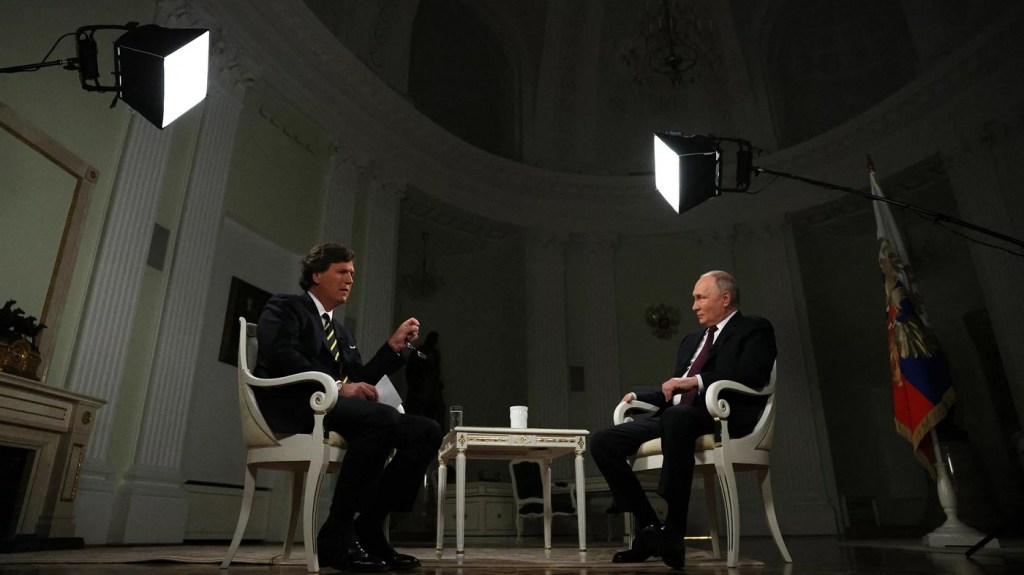
Carlson, the controversial pundit, is presenting the views of Vladimir Putin.
While many American outlets have requested an interview with the Russian president, Carlson was granted the interview as his perspective “is in no way pro-Russian, it is not pro-Ukrainian,” stated the Kremlin spokesman. “It is pro-American, but at least it contrasts with the position of the traditional Anglo-Saxon media.”
Carlson said it would allow viewers to see the “truth” obscured by Western reporting.
Christianity Today invited Ukrainian evangelical sources to comment on any religious remarks conveyed. Seven stated they had no intention to watch what one called a “propagandist” in conversation with “the killer of my people.”
Putin gave them little to work with during the two-hour interview.
He described of the coming of Christianity to Eastern Europe within a nearly uninterrupted half hour answer detailing Russian history, during which he called Ukraine an “artificial state.” Pressed how as a professing Christian he could order violence, Putin spoke only of Russia’s “moral values.” And probing Putin’s personal faith, Carlson asked him if he saw God at work in the world.
“No, to be honest,” the Russian president replied, after a pause. “I don’t think so.”
To understand any conflict requires knowledge of its background. CT has published articles about how Christianity came to Ukraine and Russia, the 160-year spiritual history behind today’s divide, and why Ukraine calls upon Michael the archangel. Concerning more contemporary pre-war history, CT covered Ukrainian politics and the efforts of evangelicals to win influence, in addition to the tomos of autocephaly that gave ecclesial independence to one-half of Ukraine’s Orthodox church.
But while Ukrainian sources declined to engage Carlson’s effort to understand the war through the rhetoric of Putin, they have informed most of CT’s ongoing coverage.
Are evangelicals and Orthodox allies in the faith?
While both confess the Nicene Creed, Orthodoxy’s smaller population in America remains obscure to most US believers, especially when compared with Catholics. Many think of Orthodoxy as a nominal religion with empty cathedrals in Eastern Europe and Russia.
Yet there is also an awareness of not-insignificant numbers of evangelical conversion to Orthodoxy, drawn by its ancient roots and sacramental practice.
Bradley Nassif knows both words. Raised in Kansas, where his Lebanese immigrant grandparents helped establish St. Mary’s Antiochian Orthodox Church, his spiritual transformation came through his local congregation, a Billy Graham sermon, and participation in a high school Bible study. But though he remained in his church of origin, he became an academic director at Fuller Seminary and is now professor of New Testament and Orthodox-Protestant dialogue at the California-based Antiochian House of Studies.
Oxford University professor John McGuckin said that Nassif, a leader in the Lausanne-Orthodox Initiative (LOI), is “the leading world expert” on Orthodox-Evangelical dialogue. CT talked with Nassif about his 2021 book, The Evangelical Theology of the Orthodox Church.
You have said, “I am Orthodox, and therefore evangelical.” How does Orthodoxy address the general markers of evangelical faith?
Eastern Orthodoxy embraces the classic Bebbington quadrilateral of biblicism, crucicentrism, conversionism, and activism, but transcends it through a maximalist vision of the Incarnation in its liturgical, sacramental, and spiritual life. The gospel permeates the church—not only about Jesus dying for our sins and the need for personal faith but including the whole story of Jesus from creation to consummation. This implies that the fullness, the catholicity, of the faith is formally present in the Orthodox church. So, yes, I am Orthodox, and therefore evangelical, in an incarnational, Trinitarian, wholistic sense of the word gospel.
What are the most significant theological differences between us?
Many are found in the way we appropriate the past and in our understanding of the nature of the church. Evangelicals and Orthodox share a common interest in Christian history, but the Orthodox are more organically linked to the past than our evangelical brothers and sisters, whose communities are only loosely connected to the fullness of the faith and polity of historic Christianity.
Evangelicals seem unaware that the early church is the Orthodox church. The congregations they meet in the pages of antiquity are treated as if they were an invisible body of believers, instead of a visible community of local Orthodox churches. Those churches shared the same faith and sacraments, led by bishops in communion with each other in apostolic succession, continuing to the present day.
In contrast, evangelicals stress the invisible body of Christ as the basis of unity and seem content to permit the visible disunity that exists in Christianity today. The Orthodox, however, maintain that this is a detrimental counter-witness to the truth of the gospel.
Another critical difference in mindset lies in the hermeneutics of biblical interpretation. We agree on the Bible as the source of divine revelation and the standard by which all claimed Christian belief must be evaluated. But we disagree on the role of the Christian community in testing our exegetical conclusions, in light of the apostolic tradition that has been handed down in the life of the church. The Holy Spirit inspired not only the writing of the Scriptures but also their interpretation.
That difference helps to account for why Orthodox churches have escaped the destructive aspects of liberal Protestant theology that permeate mainline denominations and progressive circles today. A reliance on Holy Tradition keeps biblical interpreters from an idolatrous confidence in their own exegetical conclusions, by testing them against the common faith of the wider Christian community.
Can there yet be an ancient and preserved consensus of error?
Not everything received from the past is of equal value or necessarily true. The Orthodox mind “follows the holy Fathers,” as stated in the preamble of the Chalcedonian Definition (A.D. 451), but it does not merely appeal to the past as if that alone is the source of truth. Antiquity itself is no proof of truth; it may simply be old error! To “follow the holy Fathers” is to embrace not only their witness to the faith, but also their method of theological reasoning.
For example…
This article was originally published at Christianity Today, on December 1, 2023. Please click here to read the full text.
As civilian casualties mount in Gaza in collateral damage from the Israeli-Hamas war, 16 evangelical alliances and fellowships are calling for an immediate humanitarian ceasefire.
But their November 1 statement of lament, repentance, and condemnation aims deeper.
“We call on the Church and people of faith to increase and intensify just peacemaking in the region which promotes restorative justice in the region, and to do so while demonstrating empathy and humility,” the group stated. “Peace can only be achieved when the cycles of violence are broken and when perpetrators and victims are set free from their sinful desire for vengeance.”
Signed by World Evangelical Alliance (WEA) regional associations in the Middle East, Asia, and Latin America, endorsements included representative bodies from Algeria, Egypt, Ethiopia, India, Iraq, Jordan, Kenya, Kurdistan, Nepal, Qatar, South Africa, and Sri Lanka, as well as an Arabic-speaking alliance in Europe.
Recognizing their “incomplete” understanding of geopolitical complexity and God’s eschatological purposes, the statement lamented the tragic loss of life, repented of insufficient support for peacemaking, and denounced the global community for failing to “ensure respect” of international humanitarian law.
But the joint call, posted by WEA affiliates in India and Latin America, was also clearer in areas where other statements on the war have been accused of falling short.
The alliances condemned all forms of antisemitism, called on Hamas to release all hostages, and repudiated as “deplorable and despicable” the “largest killing of Jewish civilians on a single day since the Holocaust.”
Yet it also states that “Israel, in pursuit of Hamas, has caused more civilian deaths.” And it situated the violence within a “decades-long” conflict in which, “without ensuring justice, equality, and flourishing to all in the Holy Land, no people group will achieve security.”
This message, many believed, is why other statements have fallen short.
“We joined in this effort to bring attention to the varying perspectives within the global evangelical community,” said Vijayesh Lal, general secretary of the Evangelical Fellowship of India, a charter member of the WEA. “Primarily for a comprehensive understanding, but also to promote peace, there is a need to present diverse viewpoints other than the ones that normally get labeled as ‘the evangelical position.’”
South Africa said…
This article was originally published at Christianity Today, on November 3, 2023. Please click here to read the full text.
Since the outbreak of war after unprecedented terror attacks on Israel by Hamas, Middle Eastern churches, councils, and leaders have expressed their outrage over the killing of thousands of innocent civilians.
Many Arab Christian groups have issued public statements. Most emphasized the Christian call to be peacemakers. Several have been criticized for what some see as calls not specifically addressing the suffering of civilian Jews targeted for death by terrorists.
Originating from Palestine, Egypt, Jordan, and Lebanon—with most prompted by the tragic bombing of the Anglican hospital in Gaza—the public statements range in focus and intensity. Some assert the international community overlooks the context of occupation by the Israeli state; others remind the global church of the continued Christian presence in the land.
CT studied texts from nine Arab and four Western organizations, most of evangelical conviction, and queried the perspective of an Israeli Messianic Jew and a Lebanese Armenian evangelical. The review found that few Middle Eastern statements have named Hamas as the perpetrator of terrorism, while many specifically criticize Israel itself.
One of the most recent statements is from Musalaha, which names both.
The Jerusalem-based reconciliation ministry works with Israelis and Palestinians from diverse religious backgrounds using biblical principles to engage the issues that divide them in pursuit of peace. After two weeks painfully watching the widespread carnage, its public statement centered on “lament” and called for a reconciling response.
“We lament people who, in the name of justice, have allowed rage to perpetuate the cycle of dehumanization and excuse bloodshed; as seen with Hamas’ attacks and the Israeli army’s response,” stated Musalaha. “We invite both Palestinians and Israelis to see the dignity and humanity of the other by non-violently co-resisting together for a better future.”
The region’s most representative Christian body, however, was bluntly specific about the suffering it asserts the Jewish nation-state is imposing on Gaza.
“What the Palestinian people are exposed to in Gaza is not a military reaction to a military action,” stated the Middle East Council of Churches (MECC), “but rather a genocide and ethnic cleansing, targeting the detainees of the largest prison in human history—and with premeditation.”
Its statement, the starkest of the nine Arab ones surveyed, called the war a “war of extermination,” and called for “all honorable people” to intervene.
Michel Abs, secretary general of the MECC, told CT he recognized that what he calls “the Zionist entity” was attacked and responded—and that it should have stopped there.
The MECC focused on denouncing Israel for cutting off water in the densely populated coastal strip, the destruction of medical infrastructure, and the collateral deaths of defenseless citizens. It called to stop the aggression, to lift the siege of Gaza, and to hold what Abs called “the occupying forces” accountable.
Member churches in the MECC include Catholic, Orthodox, and many Protestant denominations—most of which are called “Evangelical,” per local usage. Yet while “mainline” differences known in the American Christian landscape are not as distinct in the Arab world, the World Evangelical Alliance (WEA) incorporates bodies not represented in the MECC.
“We are generally in agreement [with the MECC statement], without necessarily adhering to each word,” said Paul Haidostian, acting president of the Union of Armenian Evangelical Churches in the Near East, a reformed church of pietistic expression and not a WEA affiliate. “But are there elements of extermination in the current war? I would think yes.”
Jack Sara, general secretary of the regional Middle East and North Africa evangelical alliance, helped craft the official WEA response to the “Holy Land conflict.” But he agreed with the MECC statement as well.
“With thousands of Palestinians dying nonstop, it clearly describes the facts on the ground,” he said. “If anything, it falls short in beseeching the world to intervene.”
Analysts have noted that Hamas embeds itself in civilian areas, and that the Israel Defense Forces (IDF) often issues warnings before striking residential structures. In preparation of an anticipated ground invasion, the IDF called on noncombatants to evacuate northern Gaza; Hamas told them to remain in place.
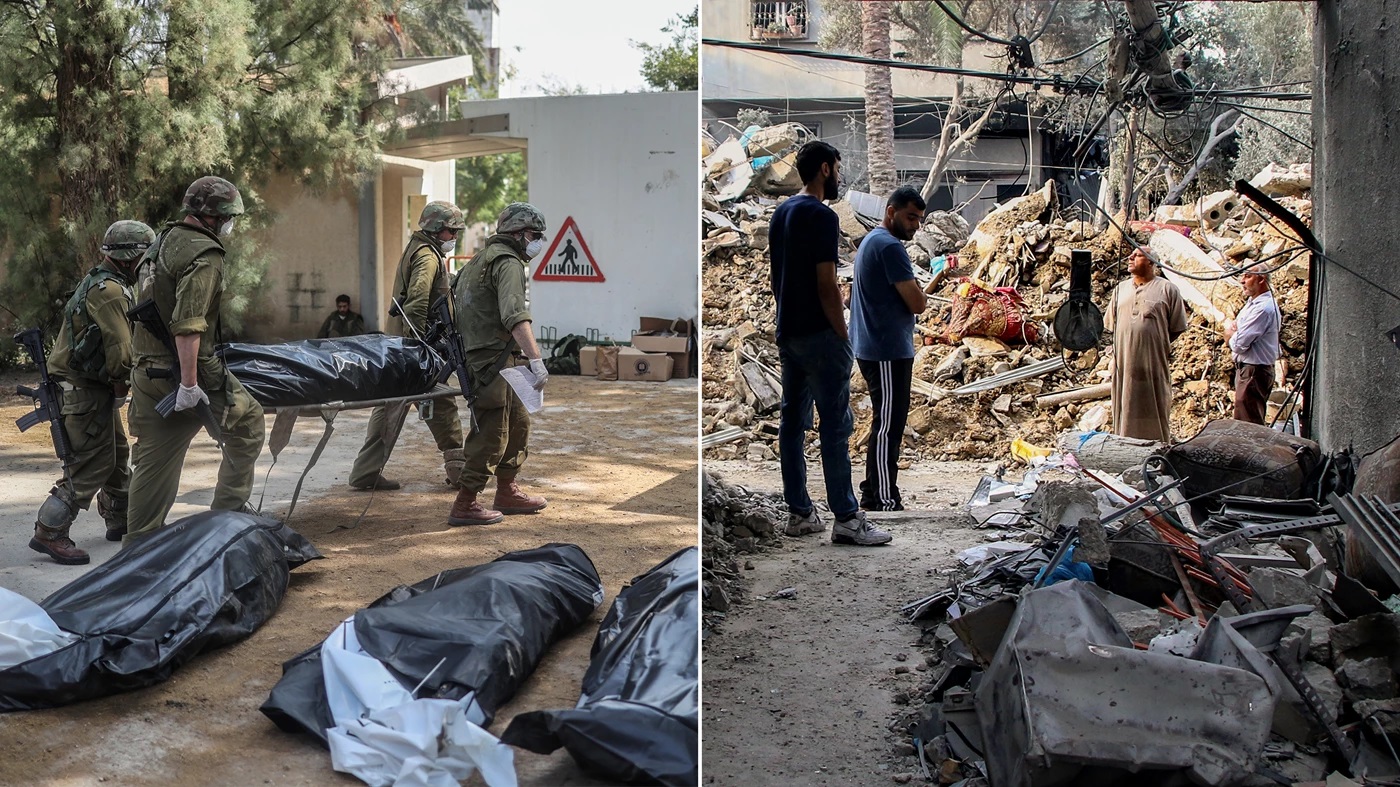
The United Nations, however, has stated that Gaza already represents a humanitarian catastrophe with more than 6,500 killed and a million displaced as of October 26, according to the Palestinian Health Ministry. Responding to Hamas terrorism and the deaths of 1,400 citizens, mostly civilians, Israel’s dilemma is stark, as the urban warfare necessary to pursue terrorist leaders in Gaza will further deteriorate local conditions and increasingly inflame much global opinion.
But watching many in the United States and wider evangelical world rally behind Israel, Sara’s Bethlehem Bible College (BBC) cosigned a Palestinian Christian statement of significant rebuke, calling “Western church leaders and theologians” to repent.
It opened by quoting the prophet Isaiah: Learn to do right; seek justice; defend the oppressed (1:17). “Western attitudes towards Palestine–Israel suffer from…
This article was originally published at Christianity Today, on October 27, 2023. Please click here to read the full text.
Image: picture alliance / Ahmad Hasaballah / Stringer / Getty / Edits by CT
With at least 1,200 Israelis and 1,100 Palestinians slain, it is not simply the Israel-Hamas war’s stunning casualty total that has outraged the world, but also the brutality of Hamas.
More than 200 youth were killed at a concert festival, villages and farms were raided and terrorized, and an estimated 150 hostages have been threatened with death if Israeli air strikes on the coastal strip do not cease.
With such cessation unlikely, casualty numbers will most assuredly increase.
Israel has called up 360,000 reservists, poised to begin a ground campaign into Gaza. Consistent with military strategy to meet terrorism with overwhelming force, past conflicts in the beleaguered 25-mile strip have previously produced striking totals, including 2014 clashes that resulted in 73 Israeli and 2,100 Palestinian deaths.
All the while, many Israelis have lived in fear. Since the September 2005 unilateral Israeli withdrawal from Gaza, the Jewish Virtual Library has counted 334 terrorism deaths and at least 20,648 rockets and mortars launched into Israeli territory.
Amid the stark tallies, there are signs of balance between local believers across the ethnic divide. Christianity Today interviewed three Messianic Jews, three Palestinian evangelicals, and two Gazan Christians currently outside their native strip.
Shared astonishment
“The level of hatred and evil displayed in these acts is truly shocking,” said Eli Birnbaum, a branch director for Jews for Jesus in Tel Aviv and Jerusalem. “It is unlike anything we have seen in decades and has deeply shaken the population.”
Attacks in his neighborhood have been so intense, he said, that people are remaining indoors. In constant communication with family, friends, and 50 full-time staff members, he said his community is doing its best to stay connected and offer encouragement.
On the Saturday of the attack, Birnbaum’s congregation came together to pray. Unsure of what to do, they distributed prayer sheets for the safe return of hostages. Some members simply lit candles.
Jews for Jesus collected supplies for displaced families and soldiers at the border.
At least one Messianic Jew has died for his nation. David Ratner was called a war hero by his commander, saving the lives of five fellow soldiers as their post was stormed by 400 Hamas fighters. Shot in the neck, he continued in combat for the next eight hours.
Birnbaum counseled his children to stand strong against the desire for hatred. He challenged Israelis to seek justice without vengeance. And he asked everyone to remain genuinely concerned for Jew and Palestinian alike—while praying for Gaza and its liberation from Hamas.
“What can we do to represent the Lord as our nation is in crisis?” he asked. “Please pray for us, that we choose wisely how to shine his light in a very dark place right now.”
Grace Al-Zoughbi, a Palestinian theological educator, is also searching for his light.
“The church is trying to cling to any glimmers of hope it can find,” she said. “The situation is deeply disturbing, the atrocities appalling.”
She also was shocked by rocket fire, landing from the opposite direction near her home in Bethlehem. Families rushed to the grocery store to stock up on goods, fearful of escalation. Representative of an already struggling population under lockdown, she said the loss of tourism will further devastate the economy as the church seeks to help as much as possible.
Its immediate reaction was fervent prayer to end the conflict.
“Lord, take all the evil, smash it as glass, and grind it to nothing,” Al-Zoughbi pleaded. “In this we hold our hope, that one day soon your ways will prevail.”
She asked believers on both sides to be peacemakers. She asked international Christians to avoid “evil misrepresentations.” And for herself, she focused on Psalm 122: Pray for the peace of Jerusalem. May all who love you be secure.
Shared distance
Hanna Massad, the former pastor of Gaza Baptist Church, turned himself to the terse psalm that follows: Have mercy on us, Lord, have mercy on us, for we have endured no end of contempt (123:3). Following 30 years of service as the first locally born pastor…
This article was first published at Christianity Today on October 11, 2023. Please click here to read the full text.
So stated Nabil Costa, chief executive officer of the Lebanese Society for Education and Social Development (LSESD), at his organization’s 25th anniversary celebration, held last week [Oct. 27] at LSESD’s Beirut Baptist School (BBS).
He was not calling for a change in geopolitical orientation. On the contrary, in attendance were dozens of financial partners primarily from Western nations he would not wish to offend.
But Costa continued, praising India and Saudi Arabia.
“Our vision is to equip churches to bear the thimar of faith,” he said, using the Arabic word for biblical fruit, “in the midst of a changing Arab world.”
BBS was founded by Baptist missionaries in 1955, who yielded their various ministries to local believers in 1998. Honoring their heritage at the gathering entitled “Celebrating Together,” Costa also announced LSESD’s name change to Thimar–LSESD, reflecting the spiritual impact of ministries in education, relief, special needs, community development, and publishing.
But speaking on behalf of the oft-called “Baptist Society,” he invited a wider evangelical collaboration.
“Christians are meant to be catalysts and have a responsibility in building bridges, reconciling communities, and spreading the perfume of Christ,” Costa said of the many regional like-minded evangelical ministries. “We see Lebanon as a hub and a gateway to the Middle East.”
China’s Belt and Road Initiative is a model, he said, as is India with its planned regional “economic corridor” and Saudi Arabia with its developing megacity of NEOM. If these nations recognize the importance of networks and cooperative partnerships—with “different hidden agendas”—Costa said evangelicals can do no less. And Lebanon, despite all its problems, is still a haven of religious freedom.
Some attendees thought the Middle East was headed toward greater regional integration and peace. Others doubted, anticipating renewed emergence of Christian persecution. But many took seriously Costa’s call to turn the conference into a think tank, casting vision for the next 25 years of evangelical service.
“The world around us is changing. We cannot sit still and watch,” he said. “But we are blessed with a ‘spiritual belt’ that forges corridors between continents and countries. Our Lord Jesus Christ has brought us from all over the world, to be one people.”
And to produce “fruit.” CT spoke with seven Arab and three Western attendees, for their vision of Middle East ministry to come.
Rosangela Jarjour, general secretary for the Fellowship of Middle East Evangelical Churches:
Our Lord Jesus commissioned his church with two golden words: preach and teach. While many congregations have communicated the gospel to the world, a neglected aspect of evangelical ministry has been the spiritual formation of disciples. Establishing the kingdom of God demands more than simple conversion.
In fact, when Paul addresses Timothy in his second epistle (2:2), he envisions four generations of impact. And his strategy is clear: hear, witness, entrust, teach. This is the “good fight” necessary, he adds two chapters later (4:7–8), to achieve the crown of righteousness.
In this advice, I address all Protestants in our region—Presbyterian, Baptist, charismatic, and others—for all call themselves “evangelical.” In the next 25 years, in unity together, our ministries must rededicate themselves to the task of discipleship, so that believers old and new will pass on their faith to the next generation of the Middle East church.
Stephanie Haykal, volunteer at Kafr Habou Baptist Church in Lebanon:
While evangelical ministry in the Middle East has been growing and strengthening, sometimes it appears to take on the appearance of a business. And as one from the north of Lebanon, it seems that many of our efforts are concentrated in Beirut and other big cities, while our local needs are neglected.
This is…
This article was originally published at Christianity Today, on October 6, 2023. Please click here to read the full text.
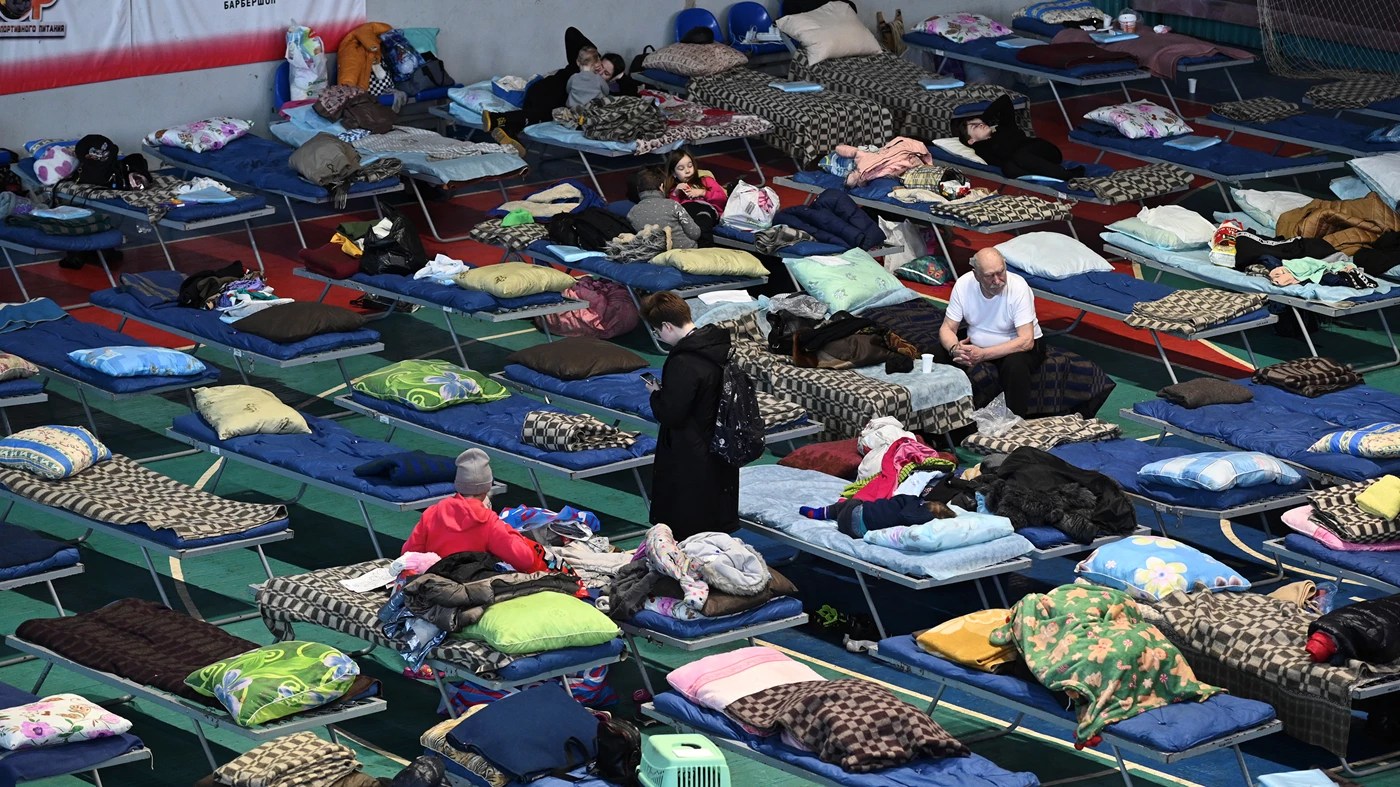
Disoriented and disheveled, the elderly Ukrainian woman stayed put in her seat. After several hours in a Temporary Accommodation Center (TAC) in Taganrog, Russia, 70 miles east of her month-long basement shelter in Mariupol, Ukraine, officials encouraged her to get on the bus—to somewhere else.
Earlier that day, she had been discovered by Russian soldiers and ushered through a humanitarian corridor to the first processing location east of Mariupol. From there she was dispatched to one of 800 such sites established throughout Russia, which are located anywhere from nearby Rostov to Moscow to Vladivostok on the Pacific coast.
Official papers registered her for temporary residency in Russia and access to its medical system. She was given a warm meal, new clothes, $142 in rubles, and a SIM card—though not a mobile phone. She could apply for citizenship if she desired.
All she wanted was to die.
Grandma, where are you going? Is someone coming to meet you?
No one is coming. Nobody wants me.
You have to go to a shelter. You can’t stay here.
I don’t want to live any longer. I wish I had died in the shelling.
Where are your children, or grandchildren?
I don’t know. They left. I can’t find them.
Government employees had done their duty. But after this exchange, a Russian evangelical volunteer sprang into action. After a few phone calls, she placed the woman with a local church family. The next day, she located the granddaughter.
“When we are genuinely involved in their lives, they see the love of Christ,” said Tanya Ivanenko. “They hug us, kiss us, and remember our names. Against the backdrop of war, we give them a little hope.”
Ivanenko did not provide the care, but she shared the grandmother’s story last year on a Russian evangelical church’s refugee coordination channel on Telegram, the region’s popular messaging app. The communication was verified by Pavel Kolesnikov, former co-chair of the advisory council for the heads of Protestant churches in Russia.
The council oversees relief, including over $3 million donated by affiliated unions, he said, impacting 200,000 Ukrainian refugees.
“The church in the West needs to know we are helping also,” he said. “The effort in Eastern Europe is more visible, but we are doing what we can.”
Since the war began, over 14 million Ukrainians have been displaced from their homes, with 8.2 million escaping abroad. The great majority of them have fled west, with Poland recording 1.6 million refugees and Germany 1 million. Through February, the United States has accepted more than 270,000.
But nearly 2.8 million have gone to Russia. Why would they flee into the arms of their enemy? It may not have been…
This article was originally published at Christianity Today, on June 21, 2023. Please click here to read the full text.
Image: Illustration by Christianity Today / Source Images: Unsplash
If one pictures “radical Islam,” chances are the image resembles Osama bin Laden, Boko Haram in Nigeria, or the ISIS fighters of Iraq and Syria. And the connotation is that they are out to kill—or at least to turn the world into an Islamic caliphate.
They are known as Salafis: Muslims who bypass accrued tradition to imitate meticulously the example of Muhammad, his companions, and the first generation to follow them. After the death of the prophet in 632 A.D., the nascent faith’s collective zeal established a sharia-based global empire that did not end until the fall of the Ottoman Empire.
Muslims who look like these jihadist images are found in every major American community.
Matthew Taylor counterintuitively argues that, at least in the United States, Salafis actually compare better with evangelicals—the religious group with the most unfavorable perception of Muslims in general.
Author of the forthcoming Scripture People: Salafi Muslims in Evangelical Christians’ America, Taylor argues that the Salafi impulse to return to the origins of Islam parallels the evangelical desire to imitate the early church. And both communities, as the title implies, center their approach on sacred text.
The question is: Do the two scriptures take them in radically different directions?
CT asked the Fuller Seminary graduate, now a mainline Protestant scholar at the Institute for Islamic, Christian, and Jewish Studies in Baltimore, to address the common concern about Salafi extremism and to advise evangelicals on how to pursue a path of possible friendship:
What makes a Muslim a Salafi?
Salafism has very deep roots in the Muslim tradition, and the term Salaf refers to the first generations of Muslims. The idea is to get back to the original authentic practices and theology of Islam, before the tradition became corrupted or diluted.
The Salafi approach involves a direct approach to texts, a deep interest in the Hadith—a secondary scripture in Islam that includes the sayings and actions of Muhammad and the early Muslim community—and a downplaying of the traditional schools of jurisprudence. This is why many Salafis will analogize and call themselves “the Protestant Reformers of Islam.” They see their project as similar to what Martin Luther and John Calvin did in the 16th century.
Can you tell a Salafi simply by their appearance?
It is easier in non-US contexts. A beard is a strong signal that a man is an observant Muslim. And you’ll find Salafi discourse—based on specific hadiths—as very focused around the length of the beard as more than can be grasped in the hand. Traditionally, they adopt distinctive modes of clothing such as the thobe, a long, flowing robe with pants that come up just above the ankles.
Salafi women almost always wear the hijab and others the niqab, which covers the face. But after 9-11, the American security state had an intense focus on Salafis which prompted a process in which many integrated into the American Muslim mainstream, downplaying distinctive Salafi attire and even avoiding always expressly calling themselves Salafis.
How do they justify downplaying their distinctives? Salafis have a sophisticated understanding of the difference between…
This article was originally published at Christianity Today, on May 25, 2023. Please click here to read the full text.
Radio first brought Nolla Azar fame. Then it brought her Jesus.
Today she uses it to bring others to him, via a new ministry.
“I know how to get women’s attention,” said the host of Listening to You, an afternoon talk show on Lebanon’s BeLight FM. “I use the same methods here, but for a higher purpose.”
Once working with Dubai-based MBC, one of the largest media companies in the Middle East, Azar returned to Lebanon in 2009 after desiring the warmth of home. Frustrated by the lack of opportunities she found in the local industry, she turned instead to social media and became a celebrated influencer.
Doing a podcast for women, she accumulated 275,000 followers on TikTok, boasting 17 million views. Still, she felt empty, complaining often to her mother about dissatisfaction with her finances, career, and love life.
In 2021, COVID-19 isolation sparked a spiritual search. Maronite Catholic by background, she read books about God, watched religious TV, stumbled upon a new and unheralded radio station, and gave her life to Christ.
Today, she is one of its top-rated hosts.
“When I first came [to BeLight], it was hard to balance between entertaining people and being ‘Christian,’” said Azar. “But it is God who brought me here, and when lifting people’s spirits, I redirect them to Jesus.”
She has contributed to the increasing professionalism among a motley crew that is quickly growing in popularity. BeLight began on Thanksgiving Day 2020 as an initiative of Arabs determined to launch a Protestant-led FM station in Lebanon. Many had backgrounds in TV production, but none in radio.
It began with 90-percent worship music, culled from English-language favorites and the mostly Egyptian-composed praise songs popular in Arab evangelical churches. Over time, BeLight increased its spoken content to almost 50 percent, at first through sermon recordings of Lebanese pastors and eventually developing its own unique programming.
And it has won itself an audience. According to an Ipsos advertising survey from last April, it now reaches 300,000 Lebanese, reeling from economic crisis and political turmoil. Its 7.5 percent market share trails the top-ranked pop music stations (which average 11 percent each), but puts it ahead of longstanding Catholic and Muslim offerings.
“We are trying our best,” said Mireille Eid, host of BeLight’s first talk show, Thought for Tomorrow, broadcasting five mornings per week. “People are happy listening to a message of hope, not just all bad news.”
She has grown with the job. With a sonorous voice but no radio training, Eid’s background was in theater and interior design. But her infectious style and transparent nature invites many to call in—requesting prayer or sharing their stories.
Lebanon boasts 18 official religious sects, with BeLight listeners hailing from many. “Good morning, you beautiful hearts who live in the hope that everything will be more beautiful,” said Sarah, from the Lebanese…
This article was originally published at Christianity Today, on February 8, 2023. Please click here to read the full text.
Image: Mission Eurasia A Bible camp for displaced Ukrainian children
Her mother died of cancer. Her father was killed in the war. When her home in Donetsk was destroyed by a Russian missile, retreating Ukrainian troops brought the eight-year-old orphan and her grandparents and uncle to volunteers serving with the Chernivtsi Bible Seminary (CBS), 680 miles to the west.
Their only possessions were the clothes on their backs.
Resettled in temporary housing, last month the uncle was called back to the front lines. The girl has been sent to a Christian camp, and the seminary—serving as a ministry hub for the internally displaced—is doing what it can to assist.
“We did not think that serving a refugee is such a complicated process,” said Vasiliy Malyk, CBS president. “But no matter how difficult it may be, we can help them at least with some dignity.”
It is a team effort, and once tallied the numbers both stagger and pale in comparison to the need.
The Alliance for Ukraine Without Orphans (AUWO) has mobilized 3,000 volunteers to provide temporary housing for 6,000 people, mostly women and children. It has evacuated 38,000—more than two-thirds of which have been orphans. Nearly 59,000 people have received some sort of humanitarian aid.
“When the war started, everyone was focused on responding,” said Ruslan Maliuta, a former AUWO president and current network liaison for One Hope. “But then we realized the war is going to last, the crisis is huge, and the response will require us all to work together.”
To do so, in April the World Evangelical Alliance (WEA) launched The Response—Ukraine Special Taskforce (TRUST), with Maliuta as its leader. AUWO united with Ukraine’s Baptists, Pentecostals, and seven other national church and parachurch organizations to coordinate refugee relief efforts, alongside ten regional partners from Poland, Moldova, Slovakia, Hungary, and Romania.
“Having churches reach across denominational lines to work together has been one of the most encouraging things,” said Chris Guess, a Romanian pastor. “We have volunteers from across the globe, [as] God’s people have jumped in with us.” For example, volunteers from Argentina shipped 20,000 tons of rice.
Comparing notes from March onward, the evangelical network has mobilized 64,000 volunteers. Temporary housing has been offered to 271,000. Over 346,000 people have been evacuated, while nearly 600,000 have received humanitarian aid. Over $1.1 million has been distributed to partners.
“TRUST is coming alongside the admirable work of professional aid agencies with no intention of competing or creating a new relief organization,” said Thomas Schirrmacher, WEA secretary general. “TRUST offers a bridge that connects.”
Yet the United Nations underscores the grim reality: 6.2 million need shelter, 10.2 million need food, and 12.1 million need health assistance.
“People are on the edge of exhaustion,” said Rafal Piekarski, serving with Proem Ministries in Poland. “Our Polish resources are over. We don’t want to compete with each other, but be good stewards of what you can bring from your countries, your churches.” In May, Piekarski was one of…
This article was originally published at Christianity Today, on August 5, 2022. Please click here to read the full text.










 Jayson Casper